Background of invention
Provided herein are systems and methods related to obesity treatment and weight loss by a gastric restriction device, and that is implemented at least in part by transabdominal access to the gastric environment. The gastric restriction device corresponds to a size-varying gastric balloon that can be inflated to a deployed volume that occupies a significant fraction of the stomach volume and that is reliably anchored so as to prevent unwanted balloon migration.
In recent years obesity and related disorders, such as diabetes and atherosclerotic cardiovascular disease, have increased substantially. When compliance with diet, exercise and behavioral therapy fail to achieve weight loss, pharmacotherapy may be instituted. However, pharmacotherapy has had only modest success and may be discontinued if a patient experiences unpleasant side-effects. Long term safety of pharmaceutical use for treatment of obesity is uncertain, and patients generally regain lost weight when the therapy is discontinued. A variety of surgical treatments have recently become available for obesity, but typically as a last resort. Those surgical treatments have the advantage of more rapid initial weight loss and remission of diabetes mellitus than other non-invasive therapies. However, surgery is expensive, subject to risks of morbidity and mortality, and its efficacy may be reduced by patient noncompliance with post-surgical dietary restrictions. If patients fail to limit food intake, their bodies may undergo compensatory anatomical changes that partially overcome the effects of surgery. The most invasive surgical procedures tend to achieve the greatest long term percent change in weight, but also tend to be the most costly, require longer periods of recuperation and careful long term management of nutrients to avoid malnutrition.
Although there have been various attempts to treat obesity by minimally invasive procedures, those attempts still suffer from significant disadvantages including one or more of being relatively complex, difficult to modify or remove, result in permanent anatomical changes, or undergo efficacy degradation with time. The systems and related methods provided herein address these limitations in that the gastric-occupying devices are robust and long-lasting, while being easily inserted, positioned, manipulated and removed from a patient using a minimally invasive procedure.
Summary of the invention
A common problem with gastric balloons that are inflated to function as a gastric restriction device is that they can be difficult to control and maintain in an optimum position within the stomach. During use and over extended periods of time, the balloons tend to migrate and may increase the risk of malfunction, gastric obstruction or the like, and patient discomfort requiring active intervention and potentially balloon removal. Those drawbacks are a reflection of the difficulty in reliably anchoring the balloon to the stomach wall. One reason for this difficulty is that it is a challenge to handle and manipulate the balloon within the stomach lumen and reliably anchor the balloon to the stomach in a manner that does not adversely impact balloon function and the gastric environment.
Endoscopic procedures are limited in that the devices must be able to be inserted through the esophagus without causing undue irritation. This, therefore, inherently constrains the number and size of devices that can employed. Furthermore, it can be difficult to reliably control and position multiple endoscopes to specific locations. For these reasons, endoscopic procedures tend to be relatively simple with one endoscope and confined to the upper GI tract, generally the esophagus, stomach and duodenum so as to avoid increasing risk of complications.
Because of the inherent limitations of endoscopic procedures, laparoscopic procedures are also used for introduction of a medical instrument through the abdominal wall, thereby accessing the body's organs in an extra-luminal manner. In contrast to an endoscopic procedure where an instrument is introduced through the mouth, laparoscopy requires an opening be made through the abdominal wall for medical instrument access to the inside of the patient, such as the intraperitoneal space. This is typically achieved by using a trocar or other instrument having a sharp distal tip and a passage to provide a working passage for a medical instrument. Those trocars, however, suffer from inherent disadvantages and associated risks. First, the peritoneal membrane must be actively punctured from outside the patient to provide instrument access. This can result in increased risk of infection or other complications. Second, it can be difficult to reliably secure the trocar or other cannula-type element, including for extended periods of time with attendant movements on the trocar from instrument use during the surgical procedure. Lack of a safe, stable, and reliable working channel that traverses the abdominal wall can lead to unwanted complications. Furthermore, current technology requires that if a laparoscopic physician wishes to place a trocar into the gastric lumen via standard laparoscopic technique, they must make multiple abdominal incisions which will allow them to grasp the external wall of the stomach and then fix it to the abdominal wall by multiple suture/staple or other fixation methods. Once the stomach has been fixed in a safe and stable manner, the physician must make an external full thickness incision through the gastric wall and then externally place a surgical trocar that can be used for both passage and manipulation of laparoscopic instruments into the gastric lumen. The trocar must be air-tight to allow air insufflation of the stomach for both internal vision as well as manipulation of instruments. Trocars usually have internal air-tight seals for passage of instruments. The surgeon, however, must ensure an air-tight seal around the external aspect of the trocar to prevent air leakage on an external surface where the trocar contacts the gastric wall. This procedure is complex, with an attendant risk to establish intra-gastric access via laparoscopic surgery, and reflects the inherent difficulty in trocar insertion into a non-solid organ, such as a stomach. The problem of gastric lumen access for balloon manipulation and handling is addressed herein by specially configured trans-abdominal gastric systems having a cannula that provides a reliable and robust working channel to the gastric lumen. The working channel is easily achieved without any of the above-reference drawbacks. The working channel, or multiple working channels as desired, provides the ability to reliably and readily triangulate medical instruments to for superior control within the gastric lumen. In combination with a size-varying gastric balloon and attendant balloon anchors, precise and reliable balloon placement within the gastric lumen is achieved, in a non-permanent and non-surgical manner. For example, the balloon may be anchored to the gastric wall via one or more balloon anchors. This avoids direct suturing or stapling of the balloon to the gastric wall. If the balloon is to be removed from the patient, the anchors are simply released from the gastric wall, thereby avoiding the complications associated with cutting of sutures or removal of staples which directly attach the balloon to the gastric wall. Accordingly, the systems and methods provided herein avoid direct connections between the balloon to the gastric wall without sacrifice of reliable and long-term balloon positioning that minimizes the risk of gastric obstruction.
Provided are systems and related methods for obesity treatment. In particular, size-varying balloons positioned in the stomach lumen are inflated so as to occupy a substantial fraction of the stomach lumen. The balloons are configured to avoid unwanted migration during use by the use of specially configured anchors and attendant balloon and tissue manipulation through a transabdominal gastric cannula. In addition, the cannula may be used to deliver a fluid (e.g., liquid or air) from a location outside the patient to inside the balloon to expand its volume, such as via a fluid conduit positioned through the cannula lumen. Alternatively, a fluid port may be endoscopically accessed for introduction/removal of fluid to control balloon volume and, therefore, the fraction of the stomach lumen occupied by the balloon. The balloon itself may be specially shaped to mimic sleeve gastrectomy without permanent surgical resection. In fact, the systems described herein are readily controllable and removable, thereby avoiding adverse impacts should a subsequent surgical procedure arise.
Specific advantages of the systems and methods of the present invention include, adjustable balloon size permits the ability to tailor the procedure to the individual patient. In addition, the unique shape of certain balloons that mimic sleeve gastrectomy achieves the benefit of surgical sleeve gastrectomy without the disadvantages associate with permanent surgical resection. The anchors of the present invention avoid more permanent type fastening means that are more difficult to reverse without impacting the ability to prevent balloon migration. The systems and procedures are less invasive and are not associated with a permanent anatomic change. Furthermore, general endotracheal anesthesia (GETA) is avoided, and there is decreased mortality and risk of malnutrition.
In an embodiment, the invention is a gastric balloon system for treatment of obesity in a patient. The system may be broadly described in terms of certain general components. One important component is a size-varying gastric balloon, whose function is to provide a feeling of fullness or satiety to a patient, thereby decreasing appetite. Particularly useful size-varying gastric balloons are those having an annulus and elements to avoid distal migration after deployment in the stomach lumen, such as one or more gastric anchor configured to connect the balloon to the stomach wall, where the anchors still, however, permit constrained movement. Another important component, in certain aspects, is a transabdominal gastric cannula, also referred herein as a transabdominal gastric system. Examples of various such gastric cannula systems are provided herein, and also in, for example, U.S. patent application Ser. No. 14/451,108 titled “Transabdominal Gastric Surgery System and Method” filed Aug. 4, 2014, and Ser. No. 14/554,337 titled “Transabdominal Gastric Device and Method” filed Nov. 26, 2014 which are specifically incorporated by reference herein for any of the systems disclosed therein for use with any of the balloons provided herein. The transabdominal gastric cannula provides certain functions, including as a reliable anchor for one or more of balloon insertion, manipulation, inflation, deflation and/or attachment. Furthermore, additional transabdominal gastric cannula may be used to provide added flexibility with respect to balloon handling. Finally, a malabsorptive sleeve may be used in combination with a gastric balloon and/or a transabdominal gastric cannula. Each of those three components is independently selectable and compatible with the other components, so that any balloon may be used with any transabdominal gastric cannula and/or with any malabsorption sleeve.
In an embodiment the gastric balloon system for treatment of obesity comprises a transabdominal gastric cannula for gastric balloon insertion and/or manipulation in a stomach lumen and a gastric balloon. The cannula is a passage that, during use, provides access to the gastric environment by a working channel. Accordingly, the working channel is an important aspect in that improved balloon manipulation, such as for balloon anchoring to a gastric wall is achieved. The gastric cannula may comprise an outer end, an inner end, and a central portion having an outer-facing surface that extends between the inner end and the outer end, and an inner-facing surface that defines a lumen configured to receive a portion of a medical instrument that traverses between the outer end and the inner end. An internal anchor is connected to the inner end and has a surface shape configured to secure the system against an interior surface of a gastric wall or peritoneal surface. In this aspect, connected is used broadly to include a single piece of material having a portion defined as an internal anchor from which a cannula extends. Alternatively, the connection may refer to two separate pieces, the cannula and internal anchor, which are permanently or removably connected. An external anchor is removably and translationally connected to the cannula outer-facing surface and has a surface shape configured to secure the system against a skin surface. an outer end. A size-varying gastric balloon is configured for delivery or insertion to a stomach lumen through the transabdominal gastric cannula or endoscopically via the patient's esophagus. The gastric balloon may comprise a gastric balloon surface; an internal volume defined by the gastric balloon surface; a gastric balloon anchor connected to the gastric balloon surface configured to reliably position and anchor the size-varying gastric balloon in a gastric environment. For control of the internal volume of the size-varying gastric balloon, a fluid conduit or port may be fluidically connected thereto. The fluid conduit or port may have a first fluid end and a second fluid end, wherein the first fluid end is fluidically connected to the size-varying gastric balloon internal volume and the second fluid end is positioned externally or internally relative to the patient for connection to a fluid source. The fluid conduit is configured to introduce a fluid to gastric balloon internal volume to increase the internal volume to a deployed internal volume and provide a gastric balloon deployed configuration. The second end of the fluid conduit may be positioned outside the patient for a convenient access point for a fluid source or sink for balloon inflation or deflation, respectively, or via a subcutaneous port. Alternatively, the second end of the fluid conduit may be positioned internally and a fluid source introduced endoscopically, such as via a needle and port through the balloon wall. The fluid, as desired, may be a gas, a liquid, or a viscoelastic material that flows under an applied force, such as a gel.
An important aspect of the instant invention is the ability to precisely position and maintain the gastric balloon in the stomach lumen. This reduces risk of balloon migration and attendant gastric obstruction and patient discomfort. In an aspect, the gastric balloon anchor is connected to the transabdominal gastric cannula, thereby tethering the gastric balloon in a desired position within the stomach lumen. Alternatively, or in addition thereto, the balloon is anchored independently to the stomach wall by one or more anchors connected to the balloon outer surface.
Accordingly, in another aspect the invention is a gastric balloon anchor, such as an anchor configured for use with any type of size-varying gastric balloon. The gastric balloon anchor may be used to retro-fit a conventional size-varying gastric balloon, so that any balloon known in the art may be used with the gastric cannulas provided herein for reliable anchoring, thereby facilitating long-term balloon insertion without unwanted side effects. The anchor may be further described as providing constrained movement or motion. “Constrained motion” refers to the anchor that provides some degree of movement relative to the balloon and the gastric wall. In an aspect, constrained motion refers to an at least partial rotational motion movement in the anchor. Such constrained motion can accommodate various forces and motions in the stomach and movement of the stomach wall. This provides a functional benefit of prolonging balloon lifetime and avoiding patient discomfort commonly associated with conventional gastric balloons.
In an aspect, the anchor comprises an anchor mount having an opening for receiving one or more pre-sutures or preclosure sutures. A fastener has a first end that is connected to the gastric balloon surface and a second end connected to the anchor mount. The connection may be a movable connection, so that the anchor mount can move relative to the fastener second end to the sutures or corresponding stomach wall after suture closure.
The anchor mount may be a ring that receives a second end that is a fastener coupling, such as a fastener ring. In this manner, the two interlocking rings may move relative to each other, but in a manner that is constrained, thereby ensuring unwanted balloon migration is avoided while also avoiding undesired effects associated with a more rigid anchor connection.
The fastener first end may be embedded in the size-varying gastric balloon wall, such as during balloon manufacture. Alternatively, an already constructed size-varying gastric balloon may be retrofitted with the anchor, such as by affixing the fastener first end to the balloon outer surface, such as by an adhesive.
In an aspect, any of the gastric balloon systems further comprise any of the gastric balloon anchors provided herein.
In an aspect, the fluid conduit is connected to an anterior portion of the size-varying gastric balloon and traverses the cannula lumen. In this aspect, therefore, the fluid cannula may serve the dual functions of being an anchor (such via the transabdominal gastric cannula) and to provide balloon inflatability/deflatability.
In another embodiment, the fluid conduit is connected to a cephalad portion of the size-varying gastric balloon and traverses a patient's esophagus. “Cephalad portion” refers to the portion of the balloon that is oriented toward the top of the stomach and accessible by the esophagus.
Any of the systems and methods describe may have a second gastric cannula, such as to provide independent access to a medical device, implant, or the like. In an aspect, the system further comprises a second fluid conduit and a second transabdominal gastric cannula through which each fluid conduit independently traverses, each first fluid conduit end connected to an anterior portion of the size-varying gastric balloon with the connections separated from each other by a fluid conduit separation distance that is greater than or equal to 15 cm to provide a two inflation ports, deflation and inflation ports, or two deflation ports. Use of two gastric cannulas provides the ability of instrument triangulation and further improved control and manipulation of the balloon, anchor and stomach wall tissue. In this manner, fundamentally improved balloon anchoring is achieved.
The configuration of the transabdominal gastric cannula provides the ability for reliable removal, so that after activation of a gastric balloon deployed configuration, the transabdominal gastric cannula may be removed from the patient, including providing reliable balloon anchoring and tissue defect closure in a single, convenient and reliable step. Alternatively, the system may be configured for long-term use of the transabdominal gastric cannula. For example, for a transabdominal gastric cannula having a low profile, and after deployment to the gastric balloon deployed configuration, the transabdominal gastric cannula may be retained in the patient.
The fluid conduit may be configured to remove a fluid from the internal volume to decrease the gastric balloon internal volume, such as from a deployed state to a relaxed state, such as ahead of balloon removal or for a controlled decrease in the internal volume, such as by at least 10%, 20%, 50% or 90%.
The fluid conduit may be connected to a fluid source external to the patient for introducing a fluid to the internal volume to control the size-varying gastric balloon shape and size. The fluid may be a gas, a liquid or a gel. For a balloon having air, the gas source may simply be the surrounding environment. For a liquid the liquid may be water or saline, for example.
Any of the systems provided herein may have a fluid conduit connected to the transabdominal gastric cannula. Alternatively or in addition thereto, a fluid conduit that is positioned within the gastric lumen may be accessed by an endoscopically introduced fluid source and/or a laparoscopically introduced fluid source through the gastric cannula working channel.
In an embodiment, provided is a size-varying gastric balloon having an annulus in a deployed configuration configured to align in the stomach to pass food and liquid in a direction from an esophageal exit toward a pyloric sphincter. The annulus facilitates movement of materials naturally through the stomach and minimizes risk of a gastric obstruction, without unduly sacrificing the feeling of fullness by the patient. This further enhances deployed balloon stability, longevity, and decrease in complications associated with other balloons. Furthermore, the transabdominal gastric cannula provides an important functional benefit of enhanced handling in the stomach lumen and attendant improvement in balloon anchoring and positioning.
The annulus may have an average diameter that is greater than or equal to 0.5 cm and less than or equal to 5 cm and a deployed volume that occupies at least 75% of the stomach lumen. “Average diameter” may be determined in any number of ways, and is a reflection that given the flexible nature of the balloon and curved nature of the annulus, the diameter may not be constant. For example, a diameter may be obtained for a select number of points along the annulus, and an attendant average calculated from those points. The annulus may be further described in terms of a length, such as a length that is greater than or equal to 5 cm and less than or equal to 50 cm.
The annulus may be a straight line passage or may be curved. During use the annulus has an entry end configured to be aligned and separated from a patient's esophageal exit; and an exit end configured to be aligned and separated from a patient's pyloric sphincter. In this context, “alignment” refers to the ability of a material to pass from the esophagus into the annulus inlet or from out of the annulus exit and out the stomach via the pyloric sphincter, without substantial risk of blockage. The outermost edge of the balloon may be separated from the inner surface of the gastric balloon, but at a sufficiently low value to minimize or avoid food being trapped between the balloon and the stomach wall.
The gastric balloon system of the instant invention may be described as having, during use, at least 75% of the stomach lumen occupied by a deployed balloon and less than 25% of the stomach lumen unoccupied by the deployed balloon, wherein at least 60% of the unoccupied stomach lumen volume is in a distal stomach portion adjacent to a pyloric sphincter to avoid gastric obstruction; and less than 20% of the unoccupied stomach lumen is in a proximal stomach portion adjacent to an esophageal sphincter. In another aspect, the annulus has an entry end that is separated from the esophageal exit by an esophageal distance that is between 2 cm and 5 cm; and said annulus exit end is separated from the pyloric sphincter by a pyloric distance that is between 2 cm and 5 cm. In this manner, the likelihood of a gastric obstruction is minimized or avoided. The unique construction of the balloon and balloon anchors ensures that the balloon does not migrate in a distal direction during use, thereby maintaining the large unoccupied distal stomach portion relative to the proximal stomach portion.
In an embodiment, during use the entry end and the exit end are substantially fixably positioned within a gastric environment by a plurality of gastric balloon anchors. In this context, “substantially fixably positioned” refers to minimal migration of the ends in a distal direction, such as less than 1 cm or less than 5 mm over the course of the treatment. The systems and methods are designed for a treatment course of greater than 1 month, greater than 3 months, greater than 6 months, or between about 1 month and three years. The specially-configured anchors that connect the balloon to the gastric wall and accessed by the working channel(s) provides some movement, described herein as constrained motion that allows much longer balloon implant function compared to conventional systems.
The gastric balloon anchors may each comprise a first end operably connected to the gastric balloon surface and a second end configured to connect to a gastric wall during use. Alternatively, the anchor can connect to the transabdominal gastric cannula, such as via a tether-type mechanism. This aspect is particularly useful for those applications where the gastric cannula remains in the patient long-term. Any of the gastric balloon anchors may have one end that is integrally inserted into the balloon wall. Alternatively, the end may be affixed to the outer-surface of the balloon, such as with an adhesive. In this manner, any conventional gastric balloon known in the art may be retro-fitted with an anchor for use with any of the systems or methods provided herein.
An example of another type of gastric balloon anchor is the fluid conduit connected to the internal volume that corresponds to a percutaneous catheter that passes through and is connected to the transabdominal gastric cannula.
Any of the systems and methods provided herein may further comprise an elongated sleeve configured for insertion into a portion of a patient's small intestine, the elongated sleeve having a lumen and a proximal end connected thereto, the proximal end configured for positioning at or adjacent to a pyloric sphincter and aligned with the gastric balloon annulus during use.
In an embodiment, the invention is a gastric balloon system for treatment of obesity comprising a size varying gastric balloon having: an outer-facing surface; an inner-facing surface, wherein the inner-facing surface defines an annulus in a deployed configuration, said annulus having an entry, an exit, an annulus length between the entry and exit that is greater than or equal to 5 cm and less than or equal to 50 cm; and an annulus diameter that is greater than or equal to 0.5 cm and less than or equal to 5 cm; an interior volume defined by the outer-facing surface and the inner-facing surface; a fluid port or cannula having a first end fluidically connected to the interior volume for controllably introducing a fluid to increase a volume of the size-varying gastric balloon. Such a balloon geometry advantageously avoids gastric obstruction and can optionally be used with any of a wide variety of transabdominal gastric cannula.
One example is a transabdominal gastric cannula having a lumen or working channel along which the percutaneous cannula traverses and that positionably secures the size-varying gastric balloon in a stomach lumen. The transabdominal gastric cannula may further comprise an internal anchor configured to secure said transabdominal gastric cannula to a gastric surface; and an external anchor configured to contact a skin surface. The internal and external anchors reliably anchor the transabdominal gastric cannula to the gastric surface during use. In an aspect, the fluid port may be a percutaneous cannula that traverses the working channel to provide the ability to inflate/deflate the gastric balloon in the stomach lumen.
As desired, a second transabdominal gastric cannula for introducing one or more instruments to the gastric environment may be used, such as an instrument to assist with balloon and anchor manipulation and/or insertion of a malabsorption sleeve in the small intestine.
The gastric balloon system may have one or more gastric balloon anchors, each having a first end connected to the outer facing balloon surface, and a second end configured to connect to a gastric surface. The anchors can be specially configured to provide constrained balloon motion and movement, thereby increasing balloon lifetime with attendant improved patient outcome with respect to weight loss without substantial side effects. In a gastric balloon deployed configuration, the gastric balloon and annulus each may be curved in a longitudinal direction with a substantially cylindrical outer shape to substantially align the longitudinal direction with a stomach lumen during use; and at least 75%, at least 80%, or at least 90% of the stomach lumen is occupied by the gastric balloon. One advantage of the size-varying balloon, is the ability to adjust balloon volume depending on individual patient needs or responsiveness.
Also provided are various methods for treating obesity by using any of the systems described herein. In an embodiment, the method of treating obesity in a patient is by inserting a size-varying gastric balloon in an undeployed configuration into a stomach lumen, wherein the size-varying gastric balloon optionally has an annulus; securing the size-varying gastric balloon to a stomach wall or a transabdominal gastric cannula, such as via one or more gastric anchors, wherein the optional annulus is positioned in a longitudinal orientation relative to the stomach lumen; and introducing a fluid to an internal volume of the size-varying gastric balloon to provide the size-varying gastric balloon in a deployed configuration that occupies at least 75% of the stomach lumen, wherein the annulus is substantially aligned with the esophageal and pyloric sphincters to reduce risk of a stomach blockage during use.
The deployed configuration may provide a balloon-pyloric sphincter open space volume that is greater than a balloon-esophageal sphincter open space volume throughout a treatment window. This aspect is important to minimize the risk of a gastric block and/or patient discomfort associated with food-material build-up in the pyloric sphincter region by ensuring sufficient and maintained separation between the balloon distal end and the pyloric sphincter.
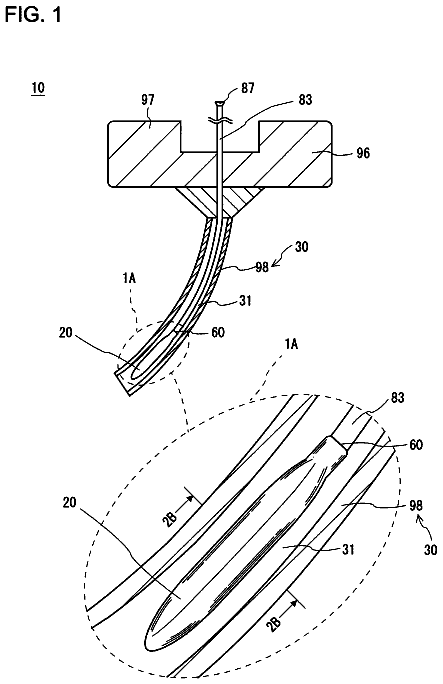
In an aspect, the inserting step comprises inserting a transabdominal gastric surgical system through an abdominal wall by a retrograde introduction, the inserted transabdominal gastric surgical system having a cannula lumen with an inner end connected to an internal anchor and an outer end connected to an external anchor, with a patient's abdominal wall positioned therebetween. The gastric balloon introduced from outside the patient may be endoscopically introduced, or introduced via the working channel, along the cannula lumen, and into the stomach lumen. Optionally, the gastric balloon is anchored to the transabdominal gastric system, such as at the internal anchor with a tether and/or via a fluid conduit that is fluidically connected to balloon and traverses the cannula lumen and through an instrument port or that is connected to a pressure port.
A second transabdominal gastric surgical system may be inserted through the abdominal wall at a different location than the first through which the balloon is inserted. The introduced gastric balloon may be manipulated with a medical instrument that traverses the second transabdominal gastric surgical system. The manipulation may refer to placement of the balloon with a grasper and/or fastening of a balloon anchor to the gastric wall. Multiple working channels from multiple gastric cannula provide a convenient platform to triangulate instruments at a desired anchor point, including by visualization with an endoscope.
In an aspect, the securing step comprises attaching one or more gastric balloon anchors to a top portion and/or a sidewall portion of the stomach wall to prevent distal migration of the deployed balloon in a direction toward a pyloric sphincter. The sidewall attachments may comprise about three or four anchors circumferentially spaced and separated toward the proximal or top of the stomach to further minimize risk of distal migration.
In an embodiment, the introducing step comprises fluidically connecting a fluid cannula to the gastric balloon interior volume through a transabdominal wall of the patient such as via the cannula working channel, or through an endoscope, the fluid cannula having an outer end positioned outside the patient; and introducing a fluid to said gastric balloon internal volume via the fluid cannula outer end, thereby increasing the gastric balloon internal volume, including to the deployed state so as to occupy at least 75% of the stomach lumen.
The method may further comprise the step of introducing a malabsorption sleeve to at least a portion of a small intestine of the patient, wherein a malabsorption sleeve inlet is positioned at or adjacent to a pyloric sphincter and substantially aligned with an exit of the annulus.
In an aspect, the anchoring step further comprises placing one or more pre-sutures or preclosure sutures through an anchor mount opening, so that during tissue wall defect closure with the sutures during removal of the gastric cannula, the anchor is also secured to the gastric wall. Such a configuration allows fast and reliable wall closure and anchoring in a single step.
As part of the weight loss device to which the balloon is anchored, accessed, and/or inserted into the body, provided herein is a trans-abdominal gastric surgical system or, more generally, a transabdominal gastric cannula that provides access to a patient's abdominal cavity from outside the patient through the abdominal wall with a uniquely inserted, secured and removable cannula, including any of the systems described in U.S. patent application Ser. No. 14/451,108 filed Aug. 4, 2014, which is specifically incorporated by reference herein. The unique structure and implementation of the systems described herein provide a number of important functional benefits that increase the likelihood of a successful outcome and minimizes risk of an adverse event. First, the gastric cannula is readily and easily deployed, with a retrograde introduction from the oral-pharynx, esophagus, to the stomach lumen, and into the abdominal wall, with an internal anchor in contact with an inner-facing surface of the stomach wall by a simple pulling force on a guidewire connected to the system that passes through an incision in the abdominal wall. Once in place, the cannula portion is readily anchored through the use of opposed anchors, an internal anchor that is anchored to the gastric or peritoneal surface and an external anchor opposed to the internal anchor that is anchored to the skin surface. This results in an extremely reliable and robust positioning of the cannula, through which a surgeon can access internal regions of a patient, including a gastric balloon, anchors, and the lumen-facing portion of the stomach wall. Furthermore, a fluid conduit can be readily positioned through the lumen of the transabdominal gastric cannula to provide controlled inflation and/or deflation of the gastric balloon. Closure elements may be inserted at the start of the procedure, making system removal and incision closure simple, quick and reliable with an attendant decrease in scarring-related issues, tissue sensitivity, pain, infection and wound re-opening. In particular, the closure elements may be integrated with the anchor, so that upon tissue closure, balloon anchoring to the stomach wall is simultaneously achieved in a rapid, reliably and robust manner.
Optionally, the balloon is preconnected to the gastric cannula ahead of a retrograde introduction, such as to the internal anchor prior to gastric cannula introduction to the patient, so that after the gastric cannula is introduced the balloon is prepositioned in an undeployed state in the stomach lumen. Alternatively, the balloon is inserted into the stomach lumen after the gastric cannula is placed in the patient, such as via an endoscopic introduction through the esophagus or a laparoscopic introduction via the gastric cannula. The balloon may then be inflated from an undeployed to a deployed configuration by introduction of a fluid to the balloon lumen. The working channel(s) of one (or more than one) gastric cannula is an important aspect that facilitates precise and reliable balloon anchoring to the gastric wall, and attendant functional benefits.
The systems are compatible with a wide range of applications including related to the ability to manipulate tissues, manipulate and anchor implanted devices such as balloons and/or sleeves, provide internal sutures, and accommodate a variety of anastomotic devices. An application of interest herein, is weight loss via balloon inflation in the stomach lumen and the attendant medical instruments introduced through the gastric cannula, such as graspers and manipulators for balloon and/or sleeve positioning and anchoring. Further advantages include the ability to maintain a desired spatial orientation during a surgical procedure as well as providing the ability to multitask via the introduction of a plurality of medical instruments that do not interfere with each other. If there is an adverse event during a surgical procedure, the systems herein allow for rapid management and mitigation, including any of a number of intraperitoneal complications such as a hemorrhage event, balloon failure, or the like. Other advantages include the ability to triangulate on a specific region of interest in either a one-cannula or two-cannula configuration. This is particularly useful for the balloon anchoring aspect, where it is otherwise impractical to manipulate the balloon, anchor and pre-sutures. Furthermore the systems provided herein are compatible with any generic endoscopic or laparoscopic instrument to provide a degree of control not previously possible. Such control is an important part of ensuring appropriate balloon positioning.
The minimally invasive and low complication incidence provided by the instant systems means unwanted physiological events are avoided along with attendant decrease in training efforts and costs, with both improved patient outcomes and decreased healthcare costs that are otherwise associated with failure to address obesity adequately. The simplicity and elegance of the systems ensure a rapid learning curve is achieved by a spectrum of caregivers.
In an embodiment, provided herein is a trans-abdominal gastric surgical system that can be used with any of the balloons provided herein.
In use, the transabdominal gastric system provides two opposed surfaces connected to and securing the cannula to the abdominal wall, with the internal anchor securing the system in a direction from the gastric environment to the abdominal wall, and a counter-directed force from the external anchor toward the abdominal wall.
The systems and related methods provided herein are a useful platform for a number of applications. Depending on the application of interest, the system accommodates a medical instrument that extends from outside the body to inside the body, via the working channel or cannula passage. Examples of medical instruments include, but are not limited to, laparoscopic and endoscopic instruments for minimally invasive surgery such as for tissue incision, removal, handling, illumination, surgery, suturing, stapling and the like.
In an embodiment, the internal anchor surface shape is adjustable, deployable, or both. Examples include an internal anchor selected from the group consisting of: a balloon; a hinged umbrella; and a flexible bumper. In a more basic implementation, the internal anchor surface does not substantially change shape, but instead is shaped and sized to permit endoscopic introduction from the mouth to the stomach while maintaining the ability to reliably secure the device against an internal-facing surface, such as the gastric wall or a peritoneal surface.
The description continues in the full USPTO document.
 Lapsed, fee not paid12 drawings