Field of the invention
The present invention relates to novel Ruthenium-based transition metal complex catalysts, their preparation and their use in hydrogenation processes.
Background of the invention
In Ind. Eng. Chem. Res. 1991, 30, 1086-1092, Macromolecules 1992, 25, 883-886, J. Mol. Catal. A: Chem. 1998, 135, 121-132 and Rubber Chem. Technol. 2008, 81, 227-243 the Rhodium-based catalyst tris(triphenylphosphine)rhodium(I)chloride of formula
is disclosed for hydrogenation and hydrosilylation reactions of rubbers. However, high costs are associated with this catalyst which additionally requires the use of triphenylphosphine as co-catalyst. The catalyst degrades at 145° C.
##str00001##
In Chem. Comm. 1967, 305-306, Chem. Eur. J. 2010, 16, 12214-12220 and Tetrahedron Lett. 1966, 4871-4875 it is disclosed that the complex tris(triphenylphosphine) hydrido ruthenium chloride of formula
can be used in a transfer hydrogenation for converting alkynes to alkenes. However, such catalyst does not efficiently hydrogenate nitrile rubbers and it is not selective for only olefins.
##str00002##
According to Organometallics 2004, 23, 86-94, the catalyst of formula
as shown below can be prepared from RuHCl(PPh.sub.3).sub.3 and two equivalents of SIMes.sub.2 with the formation of SIMes.sub.2.HCl as a by-product. However, no hydrogenation data is reported. It is not possible to displace PPh.sub.3 with SIMes.sub.2 without CH activation of the methyl groups.
In Organometallics 2006, 25, 99-110, Dalton Trans. 2008, 2603-2614. Organometallics 2009, 28, 1758-1775. Inorg. Chim Acta. 2010, 363, 625-632 and Organometallics, 2010, 29, 5450-5455 the catalyst of formula
as shown below is prepared from RuHCl(CO)(AsPh.sub.3).sub.3 and IMes.sub.2. Such preparation method, however, is not favourable due to the presence of AsPh.sub.3. The catalyst further contains a CO group. Such catalyst is described for transfer hydrogenation of aromatic ketones with alcohols. It also hydrogenates olefins and ketones using H.sub.2, however, it is not selective for olefins.
In J. Am. Chem. Soc. 1961, 83, 1262-1263, Chem. Ear. J. 2010, 16, 12214-12220, Am. Chem. Soc. 2010, 132, 16756-16758 and J. Mol. Catal A: Chem. 2003, 206, 13-21 the catalyst of formula
as shown below is used as a transfer hydrogenation catalyst for alkynes to alkenes and for hydrogenation of amides to alcohols and amines under H.sub.2. However, such a catalyst is not selective for olefins and contains a CO group.
In Chemical Industries 2005, 104, 125-134 the catalyst of formula
as shown below is described for the hydrogenation of rubbers. High costs, facile catalyst deactivation and low thermal stability are some of detrimental attributes of this catalyst.
##str00003##
Summing up various catalysts are already available for hydrogenation reactions, however, many of them contain unfavourable ligands, are difficult to prepare and not sufficiently active and/or selective.
Therefore, it was the object of the present invention to provide an inexpensive, thermally robust, and olefin selective novel catalyst for hydrogenation reactions particularly for hydrogenating polymers and even more particularly for hydrogenating nitrile rubbers.
Summary of the invention
The above-mentioned objects have now been solved by providing novel Ruthenium-based complex catalysts according to general formula (I)
##STR00004## wherein X.sup.1 and X.sup.2 are identical or different and represent anionic ligands, X.sup.3 represents a non-coordinating anion, t is either 0 or 1, t′ is either 0 or 1, u is either 0 or 1, wherein u and t may not both represent 0 at the same time, L.sup.1, L.sup.2 and L.sup.3 represent identical or different ligands, wherein at least one of L.sup.1, L.sup.2 and (if u=1) L.sup.3 represents either a ligand having the general structure (Ia*) or (Ib*)
##STR00005## or a ligand having the general structure (Ic*) or (Id*)
##STR00006## in which formulae (Ia*), (Ib*), (Ic*) and (Id*) n is identical or different and represents an integer in the range of from 1 to 20, D is identical or different and represents hydroxy, alkoxy, aryloxy, thiol, thiolate, thioether, selenol, selenoether, amine, phosphine, phosphate, phosphite, arsine, sulfoxide, sulfone, alkyl, phosphinimine, aminophosphine, carbene, selenoxide, imidazoline, imidazolidine, phosphine oxide, phosphine sulfide, phosphine selenide, ketone, ester, pyridyl, substituted pyridyl or any moiety able of acting as a two electron donor, R is identical or different and represents H, alkyl or aryl, and E is identical or different and represents a divalent moiety able of acting as a two electron donor selected from the group consisting of —O—, —S—, —Se—, —N(R)—, —P(R)—, —As(R)—, —S(═O)—. —PR(═S)—, —PR(═O)—, —C(═O)—, —C(═S)—, 2,6-pyridylene, substituted 2,6-pyridylene and any other divalent moiety able of acting as a two electron donor, and R.sup.5 are identical or different in a respective moiety (Ia*), (Ib*), (Ic*) or (Id*) and represent H, alkyl, aryl, halide, preferably chloride, or in the alternative two R.sup.5 together with the two adjacent carbon atoms to which they are bound in a moiety (Ia*), (Ib*), (Ic*) or (Id*) form a fused-on five- or six-membered saturated or unsaturated ring.
Brief description of the drawings
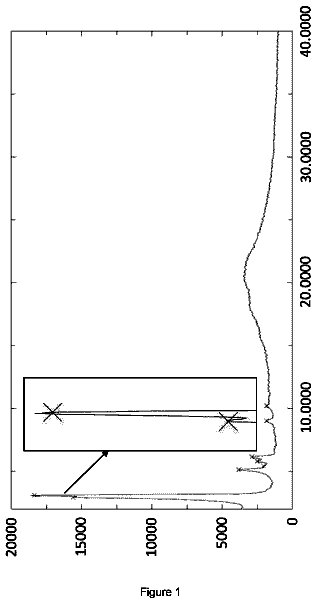
FIG. 1 shows an IR emission spectrum of the nitrile rubber Perbunan®T 3435 before hydregenation.
FIG. 2 shows an IR emission spectrum of the Perbunan®T 3435 after hydrogenation with a catalyst according to an emobodiment of the invention.
Detailed description of the invention
The novel Ruthenium-based catalysts are excellently suited for hydrogenation reactions, are thermally robust, use less expensive ruthenium as transition metal and more importantly are selective for olefin hydrogenation.
The term “substituted” used for the purposes of the present patent application means that a hydrogen atom on an indicated radical or atom has been replaced by one of the groups indicated in each case, with the proviso that the valency of the atom indicated is not exceeded and the substitution leads to a stable compound.
For the purposes of the present patent application and invention, all the definitions of radicals, parameters or explanations given above or below in general terms or in preferred ranges can be combined with one another in any way, i.e. including combinations of the respective ranges and preferred ranges.
In a preferred embodiment the present invention relates to Ruthenium-based complex catalysts according to general formula (I)
##STR00007## wherein X.sup.1 and X.sup.2 are identical or different and represent anionic ligands, X.sup.3 represents a non-coordinating anion, t is either 0 or 1, t′ is either 0 or 1, u is either 0 or 1, wherein u and t may not both represent 0 at the same time, L.sup.1, L.sup.2 and L.sup.3 represent identical or different ligands, wherein at least one of L.sup.1, L.sup.2 and (if u=1) L.sup.3 represents either a ligand having the general structure (Ia) or (Ib)
##STR00008## or a ligand having the general structure (Ic) or (Id)
##STR00009## in which formulae (Ia), (Ib), (Ic) and (Id) n is identical or different and represents an integer in the range of from 1 to 20, D is identical or different and represents hydroxy, alkoxy, aryloxy, thiol, thiolate, thioether, selenol, selenoether, amine, phosphine, phosphate, phosphite, arsine, sulfoxide, sulfone, alkyl, phosphinimine, aminophosphine, carbene, selenoxide, imidazoline, imidazolidine, phosphine oxide, phosphine sulfide, phosphine selenide, ketone, ester, pyridyl, substituted pyridyl or any moiety able of acting as a two electron donor, R is identical or different and represents H, alkyl or aryl, and E is identical or different and represents a divalent moiety able of acting as a two electron donor selected from the group consisting of —O—, —S—, —Se—, —N(R)—, —P(R)—, —As(R)—, —S(═O)—. —PR(═S)—, —PR(═O)—, —C(═O)—, —C(═S)—, 2,6-pyridylene, substituted 2,6-pyridylene and any other divalent moiety able of acting as a two electron donor.
In a further preferred embodiment the present invention provides a catalyst according to general formula (I) wherein L.sup.1, L.sup.2, L.sup.3 represent identical or different ligands, wherein at least one of L.sup.1, L.sup.2 and (if u=1) L.sup.3 represents either a ligand having the general structure (Ia) or (Ib) or a ligand having the general structure (Ic) or (Id) and wherein n, R and E have the same meanings as outlined above, and D is identical or different and represents hydroxy, alkoxy, aryloxy, thiol, thiolate, thioether, sulfoxide, sulfone, phosphine oxide, phosphine sulfide, ketone, ester, or any moiety able of acting as a two electron donor.
In a more preferred embodiment the present invention relates to Ruthenium-based complex catalysts according to general formula (I) wherein X.sup.1, X.sup.2, X.sup.3, t, t′, u, have the same meanings as outlined above for formula (I) and wherein u and t may not both represent 0 at the same time, L.sup.1, L.sup.2 and L.sup.3 represent identical or different ligands, wherein at least one of L.sup.1, L.sup.2 and (if u=1) L.sup.3 represents either a ligand having the general structure (Ia) or (Ib) or a ligand having the general structure (Ic) or (Id) with n, R, E and D having the above meanings and wherein all remainder ligands L.sup.1, L.sup.2 and (if u=1) L.sup.3 represent two electron donor ligands.
In an even more preferred embodiment the present invention relates to Ruthenium-based complex catalysts according to general formula (I) wherein X.sup.1, X.sup.2, X.sup.3, t, t′, u, have the same meanings as outlined above for formula (I) and wherein u and t may not both represent 0 at the same time, L.sup.1, L.sup.2 and L.sup.3 represent identical or different ligands, wherein at least one of L.sup.1, L.sup.2 and (if u=1) L.sup.3 represents either a ligand having the general structure (Ia) or (Ib) or a ligand having the general structure (Ic) or (Id) with n, R, E and D having the above meanings, and wherein the remainder ligands of L.sup.1, L.sup.2 and (if u=1) L.sup.3 are selected from the group consisting of PPh.sub.3, P(p-Tol).sub.3, P(o-Tol).sub.3, PPh(CH.sub.3).sub.2, P(CF.sub.3).sub.3, P(p-FC.sub.6H.sub.4).sub.3, P(p-CF.sub.3C.sub.6H.sub.4).sub.3, P(C.sub.6H.sub.4—SO.sub.3Na).sub.3, P(CH.sub.2C.sub.6H.sub.4—SO.sub.3Na).sub.3, P(isopropyl).sub.3, P(CHCH.sub.3(CH.sub.2CH.sub.3)).sub.3, P(cyclopentyl).sub.3, P(cyclohexyl).sub.3, P(neopentyl).sub.3 P(benzyl).sub.3 and from an imidazoline or imidazolidine ligand having the general formulae (IIa), or (IIb),
##STR00010## wherein, under the proviso that the ligand(s) according to formulae (IIa) and (IIb) are different from those of the general formulae (Ia), (Ib), (Ic) and (Id), R.sup.1, R.sup.2, R.sup.3, R.sup.4 are identical or different and are each hydrogen, straight-chain or branched C.sub.1-C.sub.30-alkyl, C.sub.3-C.sub.20-cycloalkyl, C.sub.2-C.sub.20-alkenyl, C.sub.2-C.sub.20-alkynyl, C.sub.6-C.sub.24-aryl, C.sub.1-C.sub.20-carboxylate, C.sub.1-C.sub.20-alkoxy, C.sub.2-C.sub.20-alkenyloxy, C.sub.2-C.sub.20-alkynyloxy, C.sub.6-C.sub.20-aryloxy, C.sub.2-C.sub.20 alkoxycarbonyl, C.sub.1-C.sub.20-alkylthio, C.sub.6-C.sub.20-arylthio, C.sub.2-C.sub.20-alkylsulphonyl, C.sub.1-C.sub.20-alkylsulphonate, C.sub.6-C.sub.20-arylsulphonate or C.sub.1-C.sub.20-alkylsulphinyl, or in the alternative R.sup.3 and R.sup.4 have the above mentioned meanings and R.sup.1 and R.sup.2 jointly form a C.sub.6-C.sub.10 fused-on five or six-membered cyclic structure together with the two adjacent carbon atoms in the imidazoline or imidazolidine ring. Ligand Definition:
In the catalysts of the general formula (I), X.sup.1 and X.sup.2 are identical or different and represent two anionic ligands.
X.sup.1 and X.sup.2 can be, for example, hydride, halide, pseudohalide, alkoxide, amide, triflate, phosphate, borate, carboxylate, acetate, halogenated acetate, halogenated alkylsulfonate, tosylate or any weakly coordinating anionic ligands. X.sup.1 and X.sup.2 can also be, for example, straight-chain or branched C.sub.1-C.sub.30-alkyl or C.sub.6-C.sub.24-aryl.
In a preferred embodiment, X.sup.1 and X.sup.2 are identical or different and shall mean hydride, halide, in particular fluoride, chloride, bromide or iodide, phosphate, borate, carboxylate, acetate, trifluoroacetate, trifluormethylsulfonate or tosylate.
In a particularly preferred embodiment, X.sup.1 and X.sup.2 are different and shall mean hydride or halide. In particular X.sup.1 and X.sup.2 are different and represent hydride and chloride.
X.sup.3 represents a non-coordinating anion acting as a counterion. It represents a counterion with a single negative charge or an equivalent thereof. In one embodiment X.sup.3 can have the meaning (ERV.sup.1.sub.4).sup.− in which E means B, Al, or Ga and R.sup.1 are identical or different having the same meanings as outlined above for X.sup.1 and X.sup.2. X.sup.3 represents e.g. BF.sub.4.sup.−; ClO.sub.4.sup.−, [B(3,5-(CF.sub.3).sub.2C.sub.6H.sub.3).sub.4].sup.−, B(C.sub.6F.sub.5).sub.4.sup.−, B(CF.sub.3SO.sub.3).sub.4.sup.−, B(RSO.sub.3).sup.− (with R having the same meanings as defined above for structures (Ic) and (Id)) and Al(OC(CF.sub.3).sub.3).sub.4.sup.−. In the alternative X.sup.3 represents e.g. PF.sub.6.sup.− or AgBr.sub.2.sup.−.
In the general formula (I), the symbols L.sup.1, L.sup.2 and L.sup.3 represent identical or different ligands and are preferably uncharged electron donors with the following proviso: At minimum at least one of the ligands L.sup.1, L.sup.2 and (if u=1) L.sup.3 represents a ligand having the following structure (Ia) or (Ib)
##STR00011## or a ligand having the structure (Ic) or (Id)
##STR00012## in which formulae (Ia), (Ib), (Ic) and (Id) n is identical or different and represents an integer in the range of from 1 to 20 D is identical or different and represents hydroxy, alkoxy, aryloxy, thiol, thiolate, thioether, selenol, selenoether, amine, phosphine, phosphate, phosphite, arsine, sulfoxide, sulfone, alkyl, phosphinimine, aminophosphine, carbene, selenoxide, imidazoline, imidazolidine, phosphine oxide, phosphine sulfide, phosphine selenide, ketone, ester, pyridyl, substituted pyridyl, or any moiety able of acting as a two electron donor, R is identical or different and represents H, alkyl, or aryl, and E is identical or different and represents a divalent moiety able of acting as a two electron donor selected from the group consisting of —O—, —S—, —Se—, —N(R)—, —P(R)—, —As(R)—, —S(═O)—, —PR(═S)—, —PR(═O)—, —C(═O)—, —C(═S)—, 2,6-pyridinylene, substituted 2,6-pyridinylene and any other divalent moiety able of acting as a two electron donor.
In one embodiment of the novel catalysts the alkyl and aryl groups R can be substituted by one or more substituents, such substituents representing preferably straight-chain or branched C.sub.1-C.sub.10-alkyl, C.sub.3-C.sub.8-cycloalkyl, C.sub.1-C.sub.10-alkoxy or C.sub.6-C.sub.24-aryl, where these substituents may in turn be substituted by one or more functional groups, preferably functional groups selected from the group consisting of halide, C.sub.1-C.sub.5-alkyl, C.sub.1-C.sub.5-alkoxy, phenyl and substituted phenyl.
The ligands pursuant to formulae (Ia) and (Ib) may act as monodentate, but in some cases also as bi- or tridentate ligands depending on their structure as well as depending on the other ligands in the complex. The ligands pursuant to formulae (Ic) and (Id) may act as bidentate ligands, but in some cases also as tridentate ligands depending on their structure as well as depending on the other ligands in the complex.
In a preferred embodiment catalysts of the general formula (I) are provided in which at least one of the ligands L.sup.1, L.sup.2 and (if u=1) L.sup.3 represents a ligand having the structure (Ia) or (Ib) in which n is identical or different and represents an integer in the range of from 1 to 10 and D is identical or different and represents C.sub.1-C.sub.20-alkoxy, C.sub.6-C.sub.24-aryloxy or C.sub.1-C.sub.10-thioether.
In a more preferred embodiment at least one of the ligands L.sup.1, L.sup.2 and (if u=1) L.sup.3 represents a ligand having the structure (Ia) or (Ib) in which n is identical or different and represents an integer in the range of from 1 to 5, and D is identical or different and represents C.sub.1-C.sub.10-alkoxy or C.sub.6-C.sub.14-aryloxy.
In a particularly preferred embodiment one ligand of L.sup.1, L.sup.2 and (if u=1) L is selected from the formulae (Ia-1) and, (Ib-1)
##str00013##
In another preferred embodiment at least one ligand of L.sup.1, L.sup.2 and (if u=1) L.sup.3 represents a ligand having the structure (Ic) or (Id) in which n is identical or different and represents an integer in the range of from 1 to 10, E is identical or different and represents oxygen or sulfur, and R is identical or different and represents C.sub.1-C.sub.20-alkyl or C.sub.6-C.sub.24-aryl.
In a more preferred embodiment at least one ligand of L.sup.1, L.sup.2 and (if u=1) L represents a ligand having the structure (Ic) or (Id) in which n is identical or different and represents an integer in the range of from 1 to 5, E is identical or different and represents oxygen or sulfur, and R is identical or different and represents C.sub.1-C.sub.10 alkyl or C.sub.6-C.sub.14 aryl.
In a particularly preferred embodiment one ligand of L.sup.1, L.sup.2 and (if u=1) L.sup.3 represents a tridentate ligand having the formula (Ic-1)
##STR00014## Definition of Remainder Ligands of L.sup.1, L.sup.2 and (if u=1) L.sup.3
Apart from this proviso that at least one of L.sup.1, L.sup.2 and (if u=1) L.sup.3 in general formula (I) represents either a ligand having the general structure (Ia) or (Ib) or a ligand having the general structure (Ic) or (Id) the remaining ligand(s) of L.sup.1, L.sup.2 and (if u=1) L.sup.3 can, for example, be, independently of one another and as long as they are different from the definitions according to formulae (Ia), (Ib), (Ic) and (Id) phosphine, sulfonated phosphine, substituted sulfonated phosphine, phosphine oxide, phosphine sulfide, phosphine selenide, phosphinimine, aminophosphine, phosphate, phosphinite, substituted phophinite, phosphonite, phosphite, substituted phosphite, arsine, substituted arsine, stibine, an amine, substituted amine, amide, sulfoxide, sulfone, carboxyl, nitrosyl, pyridine, substituted pyridine, alkyl, carbene, alkoxy, aryloxy, thiol, thioether, selenol, selenoether, selenoxide, ketone, ester, an imidazoline or imidazolidine ligand other than the above or any other moiety able of acting as a two electron donor.
Apart from this proviso that at least one of L.sup.1, L.sup.2 and (if u=1) L.sup.3 in general formula (I) represents either a ligand having the general structure (Ia) or (Ib) or a ligand having the general structure (Ic) or (Id) the remaining ligand(s) of L.sup.1, L.sup.2 and (if u=1) L.sup.3 preferably represent, independently of one another and as long as they are different from the definitions according to formulae (Ia), (Ib), (Ic) and (Id) phosphine, sulfonated phosphine, substituted sulfonated phosphine, phosphinimine, aminophosphine, phosphinite, substituted phophinite, phosphonite, phosphite, substituted phosphite, arsine, substituted arsine, stibine, an amine, substituted amine, amide, carboxyl, nitrosyl, pyridine, substituted pyridine, carbene, thiol, selenol, an imidazoline or imidazolidine ligand other than the above or any other moiety able of acting as a two electron donor.
Under compliance with the above proviso that at least one of L.sup.1, L.sup.2 and (if u=1) L.sup.3 in general formula (I) represents either a ligand having the general structure (Ia) or (Ib) or a ligand having the general structure (Ic) or (Id) preference is given to the remaining ligand(s) of L.sup.1, L.sup.2 and (if u=1) L.sup.3 being, independently of one another, a C.sub.6-C.sub.24-arylphosphine, C.sub.1-C.sub.10-alkylphosphine or C.sub.3-C.sub.20-cycloalkylphosphine ligand, a sulfonated C.sub.6-C.sub.24-arylphosphine or sulfonated C.sub.1-C.sub.10-alkylphosphine ligand, a C.sub.6-C.sub.24-arylphosphinite or C.sub.1-C.sub.10-alkylphosphinite ligand, a C.sub.6-C.sub.24-arylphosphonite or C.sub.1-C.sub.10-alkylphosphonite ligand, a C.sub.6-C.sub.24-aryl phosphite or C.sub.1-C.sub.10-alkyl phosphite ligand, a C.sub.6-C.sub.24-arylarsine or C.sub.1-C.sub.10-alkylarsine ligand, a C.sub.6-C.sub.24-arylamine or C.sub.1-C.sub.10-alkylamine ligand, an optionally substituted pyridine ligand, a C.sub.6-C.sub.24-aryl sulfoxide or C.sub.1-C.sub.10-alkyl sulfoxide ligand, a C.sub.6-C.sub.24-aryloxy or C.sub.1-C.sub.10-alkyloxy ligand or a C.sub.6-C.sub.24-arylamide or C.sub.1-C.sub.10-alkylamide ligand, each of which may be substituted by a phenyl group which may in turn be substituted by a halogen-, C.sub.1-C.sub.5-alkyl or C.sub.1-C.sub.5-alkoxygroup.
The term “phosphine” includes, for example, PPh.sub.3, P(p-Tol).sub.3, P(o-Tol).sub.3, PPh(CH.sub.3).sub.2, P(CF.sub.3).sub.3, P(p-FC.sub.6H.sub.4).sub.3, P(p-CF.sub.3C.sub.6H.sub.4).sub.3, P(C.sub.6H.sub.4—SO.sub.3Na).sub.3, P(CH.sub.2C.sub.6H.sub.4—SO.sub.3Na).sub.3, P(isopropyl).sub.3, P(CHCH.sub.3(CH.sub.2CH.sub.3)).sub.3, P(cyclopentyl).sub.3, P(cyclohexyl).sub.3, P(neopentyl).sub.3 and P(benzyl).sub.3.
The term “phosphinite” includes, for example, phenyl diphenylphosphinite, cyclohexyl dicyclohexylphosphinite, isopropyl diisopropylphosphinite and methyl diphenylphosphinite.
The term “phosphite” includes, for example, triphenyl phosphite, tricyclohexyl phosphite, tri-tert-butyl phosphite, triisopropyl phosphite and methyl diphenyl phosphite.
The term “stibine” includes, for example, triphenylstibine, tricyclohexylstibine and trimethylstibine.
The term “sulphonate” includes, for example, trifluoromethanesulphonate, tosylate and mesylate.
The term “sulfoxide” includes, for example, (CH.sub.3).sub.2S(═O) and (C.sub.6H.sub.5).sub.2S═O.
The term “thioether” includes, for example, CH.sub.3SCH.sub.3, C.sub.6H.sub.5SCH.sub.3, CH.sub.3OCH.sub.2CH.sub.2SCH.sub.3 and tetrahydrothiophene.
For the purposes of the present application, the term “pyridine” is used as a collective term for all nitrogen-containing ligands as are mentioned by, for example, Grubbs in WO-A-03/011455. Examples are: pyridine, picolines (α-, β- and γ-picoline), lutidines (2,3-, 2,4-, 2,5-, 2,6-, 3,4- and 3,5-lutidine), collidine (2,4,6-trimethylpyridine), trifluoromethylpyridine, phenylpyridine, 4-(dimethylamino) pyridine, chloropyridines, bromopyridines, nitropyridines, quinoline, pyrimidine, pyrrole, imidazole and phenylimidazole.
If one or two of the remaining ligands of L.sup.1, L.sup.2 and (if u=1) L.sup.3 is/are an imidazoline or imidazolidine ligand other than the ligands having the formulae (Ia), (Ib), (Ic) or (Id), this imidazoline or imidazolidine ligand by definition usually has a structure corresponding to the general formulae (IIa), or (IIb),
##STR00015## wherein, under the proviso that these ligands according to formulae (IIa) and (IIb) are different from the general formulae (Ia), (Ib), (Ic) and (Id), R.sup.1, R.sup.2, R.sup.3, R.sup.4 are identical or different and are each hydrogen, straight-chain or branched C.sub.1-C.sub.30-alkyl, C.sub.3-C.sub.20-cycloalkyl, C.sub.2-C.sub.20-alkenyl, C.sub.2-C.sub.20-alkynyl, C.sub.6-C.sub.24-aryl, C.sub.1-C.sub.20-carboxylate, C.sub.1-C.sub.20-alkoxy, C.sub.2-C.sub.20-alkenyloxy, C.sub.2-C.sub.20-alkynyloxy, C.sub.6-C.sub.20-aryloxy, C.sub.2-C.sub.20-alkoxycarbonyl, C.sub.1-C.sub.20-alkylthio, C.sub.6-C.sub.20-arylthio, C.sub.1-C.sub.20-alkylsulphonyl, C.sub.1-C.sub.20-alkylsulphonate, C.sub.6-C.sub.20-arylsulphonate or C.sub.1-C.sub.20-alkylsulphinyl or in the alternative R.sup.3 and R.sup.4 have the above mentioned meanings and R.sup.1 and R.sup.2 jointly form a C.sub.6-C.sub.10 cyclic structure together with the two adjacent carbon atoms in the imidazoline or imidazolidine ring.
Again under the proviso that the ligands according to formulae (IIa) and (IIb) are different from the ligand structures (Ia), (Ib), (Ic), and (Id) one or more of the substituents R.sup.1, R.sup.2, R.sup.3, R.sup.4 can, if appropriate, independently of one another, be substituted by one or more substituents, preferably straight-chain or branched C.sub.1-C.sub.10-alkyl, C.sub.3-C.sub.8-cycloalkyl, C.sub.1-C.sub.10-alkoxy or C.sub.6-C.sub.24-aryl, where these abovementioned substituents may in turn be substituted by one or more functional groups, preferably functional groups selected from the group consisting of halogen, in particular chlorine or bromine, C.sub.1-C.sub.5-alkyl, C.sub.1-C.sub.5-alkoxy and phenyl.
Merely for the sake of clarity, it may be added that the structures of the imidazoline or imidazolidine ligands depicted in the general formulae (IIa) and (IIb) in the present application are equivalent to the structures (IIa′), and (IIb′) which are frequently also found in the literature for this type of ligands and emphasize the carbene character of the imidazoline or imidazolidine ligand. This applies analogously to the associated preferred structures (III-a)-(I-o) depicted below and to the structure (Ia), (Ib), (Ic) and (Id).
##str00016##
For all following preferred embodiments the same proviso as mentioned above shall apply, i.e. in any case the meanings of R.sup.1, R.sup.2, R.sup.3, R.sup.4 shall be chosen in a way that the imidazoline or imidazolidine ligands having the formulae (IIa) and (IIb) (or (IIa′) and (IIb′) and (III-a)-(III-o), respectively) must be different from the ligands having the formulae (Ia), (Ib), (Ic) or (Id).
In a preferred embodiment of the catalysts of the general formula (I), R.sup.1 and R.sup.2 are each, independently of one another, hydrogen, C.sub.6-C.sub.24-aryl, particularly preferably phenyl, straight-chain or branched C.sub.1-C.sub.10-alkyl, particularly preferably propyl or butyl, or together with the carbon atoms to which they are bound form a C.sub.6-C.sub.10 cycloalkyl or C.sub.6-C.sub.10 aryl substituent, preferably a phenyl ring in structure (IIa) (structure (IIa′) respectively) where all the above mentioned substituents may in turn be substituted by one or more further substituents selected from the group consisting of straight-chain or branched C.sub.1-C.sub.10-alkyl, C.sub.1-C.sub.10-alkoxy, C.sub.6-C.sub.24-aryl and a functional group selected from the group consisting of hydroxy, thiol, thioether, ketone, aldehyde, ester, ether, amine, imine, amide, nitro, carboxylic acid, disulphide, carbonate, isocyanate, carbodiimide, carboalkoxy, carbamate and halogen.
In a preferred embodiment of the catalysts of the general formula (I), the substituents R.sup.3 and R.sup.4 are identical or different and are each straight-chain or branched C.sub.1-C.sub.10-alkyl, particularly preferred i-propyl or neopentyl, C.sub.3-C.sub.10-cycloalkyl, particularly preferred adamantyl, C.sub.6-C.sub.24-aryl, particularly preferred phenyl, C.sub.1-C.sub.10-alkylsulphonate, particularly preferred methanesulphonate, C.sub.6-C.sub.10-arylsulphonate, particularly preferred p-toluenesulphonate.
The abovementioned substituents as meanings of R.sup.3 and R.sup.4 may be substituted by one or more further substituents selected from the group consisting of straight-chain or branched C.sub.1-C.sub.5-alkyl, in particular methyl, C.sub.1-C.sub.5-alkoxy, optionally substituted aryl and a functional group selected from the group consisting of hydroxy, thiol, thioether, ketone, aldehyde, ester, ether, amine, imine, amide, nitro, carboxylic acid, disulphide, carbonate, isocyanate, carbodiimide, carboalkoxy, carbamate and halogen.
In particular, the substituents R.sup.3 and R.sup.4 can be identical or different and are each i-propyl, neopentyl, adamantyl, mesityl or 2,6-diisopropylphenyl.
Particularly preferred imidazoline or imidazolidine ligands have the following structures (III-a) to (III-o), where Ph is in each case a phenyl substituent, Bu is a butyl substituent, Mes is in each case a 2,4,6-trimethylphenyl substituent and (iPr).sub.2Ph is in all cases 2,6-diisopropylphenyl.
##STR00017## ##STR00018## Definition of Preferred Catalysts:
A preferred catalyst has the general formula (I) in which X.sup.1 and X.sup.2 are identical or different and represent hydride, halide, in particular fluoride, chloride, bromide or iodide, pseudohalide, alkoxide, amide, tosylate, triflate, phosphate, borate, carboxylate, acetate, halogenated acetate, halogenated alkylsulfonate or a weakly coordinating anion, one ligand of L.sup.1, L.sup.2, and (if u=1) L.sup.3 has the general structure according to formulae (Ia) or (Ib), wherein n is identical or different and represents an integer in the range of from 1 to 20, D is identical or different and represents hydroxy, alkoxy, aryloxy, thiolate, thiol, thioether, selenol, selenoether, amine, phosphine, phosphate, phosphite, arsine, sulfoxide, sulfone, alkyl, phosphinimine, aminophosphine, carbene, selenoxide, imidazoline, imidazolidine, phosphine oxide, phosphine sulfide, phosphine selenide, ketone, ester, pyridyl, substituted pyridyl, or any other moiety able of acting as a two electron donor, with the remainder ligand(s) of L.sup.1, L.sup.2, and (if u=1) L.sup.3 being (a) ligand/ligands different from the one of formulae (Ia) and (Ib) and X.sup.3, u, t and t′ having the meanings outlined for general formula (I).
A more preferred catalyst has the general formula (I) in which X.sup.1 and X.sup.2 are identical or different and represent hydride, halide, in particular fluoride, chloride, bromide or iodide, pseudohalide, alkoxide, amide, tosylate, triflate, phosphate, borate, carboxylate, acetate, halogenated acetate, halogenated alkylsulfonate or a weakly coordinating anion, one ligand of L.sup.1, L.sup.2, and (if u=1) L.sup.3 has the general structure according to formulae (Ia) or (Ib), wherein n is identical or different and represents an integer in the range of from 1 to 10, D is identical or different and represents C.sub.1-C.sub.20-alkoxy, C.sub.6-C.sub.24-aryloxy or C.sub.1-C.sub.10-thioether, with the remainder ligand(s) of L.sup.1, L.sup.2, and (if u=1) L.sup.3 being a ligand/ligands different from the one of formulae (Ia) and (Ib) and X.sup.3, u, t and t′ having the meanings outlined for general formula (I).
Another very preferred catalyst has the general formula (I) in which X.sup.1 and X.sup.2 are identical or different and represent hydride, halide, in particular fluoride, chloride, bromide or iodide, pseudohalide, alkoxide, amide, tosylate, triflate, phosphate, borate, carboxylate, acetate, halogenated acetate, halogenated alkylsulfonate or a weakly coordinating anion, one ligand of L.sup.1, L.sup.2, and (if u=1) L.sup.3 has the general structure according to formulae (a) or (Ib), wherein n is identical or different and represents an integer in the range of from 1 to 10, D is identical or different and represents C.sub.1-C.sub.20-alkoxy, C.sub.6-C.sub.24-aryloxy or C.sub.1-C.sub.10-thioether, with the remainder ligand(s) of L.sup.1, L.sup.2, and (if u=1) L.sup.3 being independently of one another, a C.sub.6-C.sub.24-arylphosphine, C.sub.1-C.sub.10-alkylphosphine or C.sub.3-C.sub.20-cycloalkylphosphine ligand, a sulfonated C.sub.6-C.sub.24-arylphosphine or sulfonated C.sub.1-C.sub.10-alkylphosphine ligand, a C.sub.6-C.sub.24-arylphosphinite or C.sub.1-C.sub.10-alkylphosphinite ligand, a C.sub.6-C.sub.24-arylphosphonite or C.sub.1-C.sub.10-alkylphosphonite ligand, a C.sub.6-C.sub.24-aryl phosphite or C.sub.1-C.sub.10-alkyl phosphite ligand, a C.sub.6-C.sub.24-arylarsine or C.sub.1-C.sub.10-alkylarsine ligand, a C.sub.6-C.sub.24-arylamine or C.sub.1-C.sub.10-alkylamine ligand, an optionally substituted pyridine ligand, a C.sub.6-C.sub.24-aryl sulfoxide or C.sub.1-C.sub.10-alkyl sulfoxide ligand, a C.sub.6-C.sub.24-aryloxy or C.sub.1-C.sub.10-alkyloxy ligand or a C.sub.6-C.sub.24-arylamide or C.sub.1-C.sub.10-alkylamide ligand, each of which may be substituted by a phenyl group which may in turn be substituted by a halogen-, C.sub.1-C.sub.5-alkyl or C.sub.1-C.sub.5-alkoxygroup, and X.sup.3, u, t and t′ having the meanings outlined for general formula (I).
An even more preferred catalyst has the general formula (I) in which X.sup.1 and X.sup.2 are identical or different and represent hydride, halide, in particular fluoride, chloride, bromide or iodide, pseudohalide, alkoxide, amide, tosylate, triflate, phosphate, borate, carboxylate, acetate, halogenated acetate, halogenated alkylsulfonate or any weakly coordinating anion, one ligand of L.sup.1, L.sup.2, and (if u=1) L.sup.3 has the general structure according to formulae (Ia) or (Ib), wherein n is identical or different and represents an integer in the range of from 1 to 5, D is identical or different and represents C.sub.1-C.sub.10 alkoxy or C.sub.6-C.sub.14 aryloxy, with the remainder ligand(s) of L.sup.1, L.sup.2, and (if u=1) L.sup.3 being a ligand/ligands different from the one of formulae (Ia) and (Ib), preferably selected from the group consisting of PPh.sub.3, P(p-Tol).sub.3, P(o-Tol).sub.3, PPh(CH.sub.3).sub.2, P(CF.sub.3).sub.3, P(p-FC.sub.6H.sub.4).sub.3, P(p-CF.sub.3C.sub.6H.sub.4).sub.3, P(C.sub.6H.sub.4—SO.sub.3Na).sub.3, P(CH.sub.2C.sub.6H—SO.sub.3Na).sub.3, P(isopropyl).sub.3, P(CHCH.sub.3(CH.sub.2CH.sub.3)).sub.3, P(cyclopentyl).sub.3, P(cyclohexyl).sub.3, P(neopentyl).sub.3 and P(benzyl).sub.3, and X.sup.3, u, t and t′ having the meanings outlined for general formula (I).
A particularly preferred catalyst has the general formula (I) in which X.sup.1 and X.sup.2 are different and hydride and halide, most preferably chloride, one ligand of L.sup.1, L.sup.2, and (if u=1) L.sup.3 has the general structure according to formulae (Ia) or (Ib), wherein n is identical or different and represents an integer in the range of from 1 to 5, D is identical or different and represents C.sub.1-C.sub.10 alkoxy or C.sub.6-C.sub.14 aryloxy, with the remainder ligand(s) of L.sup.1, L.sup.2, and (if u=1) L.sup.3 being a ligand/ligands different from the one of formulae (Ia) and (Ib), preferably selected from the group consisting of PPh.sub.3, P(p-Tol).sub.3, P(o-Tol).sub.3, PPh(CH.sub.3).sub.2, P(CF.sub.3).sub.3, P(p-FC.sub.6H.sub.4).sub.3, P(p-CF.sub.3C.sub.6H.sub.4).sub.3, P(C.sub.6H.sub.4—SO.sub.3Na).sub.3, P(CH.sub.2C.sub.6H.sub.4—SO.sub.3Na).sub.3, P(isopropyl).sub.3, P(CHCH.sub.3(CH.sub.2CH.sub.3)).sub.3, P(cyclopentyl).sub.3, P(cyclohexyl).sub.3, P(neopentyl).sub.3 and P(benzyl).sub.3, and X.sup.3, u, t and t′ having the meanings outlined for general formula (I).
Another particularly preferred catalyst has the general formula (I) in which X.sup.1 and X.sup.2 are identical or different and represent hydride, halide, in particular fluoride, chloride, bromide or iodide, pseudohalide, alkoxide, amide, tosylate, triflate, phosphate, borate, carboxylate, acetate, halogenated acetate, halogenated alkylsulfonate or any weakly coordinating anion, one ligand of L.sup.1, L.sup.2, and (if u=1) L.sup.3 has the general structure according to formulae (Ia-1) or (Ib-1)
##STR00019## with the remainder ligand(s) of L.sup.1, L.sup.2, and (if u=1) L.sup.3 being a ligand/ligands different from the one of formulae (Ia) and (Ib), preferably selected from the group consisting of PPh.sub.3, P(p-Tol).sub.3, P(o-Tol).sub.3, PPh(CH.sub.3).sub.2, P(CF.sub.3).sub.3, P(p-FC.sub.6H.sub.4).sub.3, P(p-CF.sub.3C.sub.6H.sub.4).sub.3, P(C.sub.6H.sub.4—SO.sub.3Na).sub.3, P(CH.sub.2C.sub.6H.sub.4—SO.sub.3Na).sub.3, P(isopropyl).sub.3, P(CHCH.sub.3(CH.sub.2CH.sub.3)).sub.3, P(cyclopentyl).sub.3, P(cyclohexyl).sub.3, P(neopentyl).sub.3 and P(benzyl).sub.3, and X.sup.3, u, t and t′ having the meanings outlined for general formula (I).
Another preferred catalyst has the general formula (I) in which X.sup.1 and X.sup.2 are identical or different and represent hydride, halide, in particular fluoride, chloride, bromide or iodide, pseudohalide, alkoxide, amide, tosylate, triflate, phosphate, borate, carboxylate, acetate, halogenated acetate, halogenated alkylsulfonate or a weakly coordinating anion, one ligand of L.sup.1, L.sup.2, and (if u=1) L.sup.3 has the general structure according to general structure (Ic) or (Id) wherein n is identical or different and represents an integer in the range of from 1 to 20, R is identical or different and represents H, alkyl or aryl, and E is identical or different and represents a divalent moiety able of acting as a two electron donor selected from the group consisting of —O—, —S—, —Se—, —N(R)—, —P(R)—, —As(R)—, —S(═O)—, —PR(═S), —PR(═O)—, —C(═O)—, —C(═S)—, 2,6-pyridylene, substituted 2,6-pyridylene and any other divalent moiety able of acting as a two electron donor. with the remainder ligand(s) of L.sup.1, L.sup.2, and (if u=1) L.sup.3 being a ligand/ligands different therefrom, and X.sup.3, u, t and t′ having the meanings outlined for general formula (I).
Another more preferred catalyst has the general formula (I) in which X.sup.1 and X.sup.2 are identical or different and represent hydride, halide, in particular fluoride, chloride, bromide or iodide, pseudohalide, alkoxide, amide, tosylate, triflate, phosphate, borate, carboxylate, acetate, halogenated acetate, halogenated alkylsulfonate or a weakly coordinating anion, one ligand of L.sup.1, L.sup.2, and (if u=1) L.sup.3 has the general structure according to general structure (Ic) or (Id) wherein n is identical or different and represents an integer in the range of from 1 to 10, R is identical or different and represents C.sub.1-C.sub.20-alkyl or C.sub.6-C.sub.14-aryl, E is identical or different and represents oxygen or sulfur, and with the remainder ligand(s) of L.sup.1, L.sup.2, and (if u=1) L.sup.3 being a ligand/ligands different therefrom and X.sup.3, u, t and t′ having the meanings outlined for general formula (I).
Another very preferred catalyst has the general formula (I) in which X.sup.1 and X.sup.2 are identical or different and represent hydride, halide, in particular fluoride, chloride, bromide or iodide, pseudohalide, alkoxide, amide, tosylate, triflate, phosphate, borate, carboxylate, acetate, halogenated acetate, halogenated alkylsulfonate or a weakly coordinating anion, one ligand of L.sup.1, L.sup.2, and (if u=1) L.sup.3 has the general structure according to general structure (Ic) or (Id) wherein n is identical or different and represents an integer in the range of from 1 to 10, R is identical or different and represents C.sub.1-C.sub.20-alkyl or C.sub.6-C.sub.14-aryl, E is identical or different and represents oxygen or sulfur, and with the remainder ligand(s) of L.sup.1, L.sup.2, and (if u=1) L.sup.3 being independently of one another, a C.sub.6-C.sub.24-arylphosphine, C.sub.1-C.sub.10-alkylphosphine or C.sub.3-C.sub.20-cycloalkylphosphine ligand, a sulfonated C.sub.6-C.sub.24-arylphosphine or sulfonated C.sub.1-C.sub.10-alkylphosphine ligand, a C.sub.6-C.sub.24-arylphosphinite or C.sub.1-C.sub.10-alkylphosphinite ligand, a C.sub.6-C.sub.24-arylphosphonite or C.sub.1-C.sub.10-alkylphosphonite ligand, a C.sub.6-C.sub.24-aryl phosphite or C.sub.1-C.sub.10-alkyl phosphite ligand, a C.sub.6-C.sub.24-arylarsine or C.sub.1-C.sub.10-alkylarsine ligand, a C.sub.6-C.sub.24-arylamine or C.sub.1-C.sub.10-alkylamine ligand, an optionally substituted pyridine ligand, a C.sub.6-C.sub.24-aryl sulfoxide or C.sub.1-C.sub.10-alkyl sulfoxide ligand, a C.sub.6-C.sub.24-aryloxy or C.sub.1-C.sub.10-alkyloxy ligand or a C.sub.6-C.sub.24-arylamide or C.sub.1-C.sub.10-alkylamide ligand, each of which may be substituted by a phenyl group which may in turn be substituted by a halogen-, C.sub.1-C.sub.5-alkyl or C.sub.1-C.sub.5-alkoxygroup, and X.sup.3, u, t and t′ having the meanings outlined for general formula (I).
The description continues in the full USPTO document.