Cross reference to related applications
This is the U.S. national stage of application No. PCT/JP2014/071317, filed on Aug. 12, 2014. Priority under 35 U.S.C. §119(a) and 35 U.S.C. §365(b) is claimed from Japanese Application No. 2013-176844, filed Aug. 28, 2013, the disclosure of which is also incorporated herein by reference.
Technical field
The present invention relates to a technique of a remote server that advises an operation with low fuel consumption.
Background art
Conventionally, a technique of evaluating an operation status from the viewpoint of reducing a fuel consumption amount (energy saving) is known. For example, Patent Literature 1 discloses a configuration that teaches an operator improvement of a fuel consumption amount. According to the fuel-saving operation evaluation system disclosed in Patent Literature 1, how much the fuel can be saved can be quantitatively obtained.
However, according to the fuel-saving operation evaluation system disclosed in Patent Literature 1, the fuel consumption amount in the average operation time needs to be set in advance. Also, the above fuel-saving operation evaluation system has a configuration in which an on-vehicle controller performs calculation, and thus, it is difficult to compare an operator with other operators in real time. Further, according to the above fuel-saving operation evaluation system, it is also difficult to compare an operation with a past operation history due to a limit in storage capacity. CITATION LIST Patent Literature
PTL1: JP 2006-090177 A SUMMARY OF INVENTION Technical Problem
An object of the present invention is to provide a configuration that can teach an operator improvement of a fuel consumption amount and that facilitates a comparison with other operator in real time and a comparison with a past operation history, without requiring presetting of a fuel consumption amount during an average operation time. Solutions to Problem
The remote server of the present invention receives information for machine identification, information on an operating day, position information, information on a load factor, information on a rotational speed of an engine, information on a moving speed, and information on a fuel consumption amount, from a terminal server provided in a machine. The remote server identifies a working position by a GPS, identifies from the working position a farm field in which work is currently performed, selects, based on the information for machine identification, past working periods during which a same machine in a same farm field is in an operation status corresponding to a current load factor, selects a period during which the fuel consumption amount is minimum in the selected past working periods, and compares a current fuel consumption amount with the past minimum fuel consumption amount. If the current fuel consumption amount is larger than the past minimum fuel consumption amount, the remote server transmits the information on the rotational speed of the engine and a speed change pattern of each working unit during a working period of the minimum fuel consumption amount to a predetermined communication terminal corresponding to the information for machine identification.
The remote server of the present invention receives information for machine identification, information on an operating day, position information, information on a load factor, information on a rotational speed of an engine, information on a moving speed, and information on a fuel consumption amount, from a terminal server provided in a machine. The remote server identifies a working position by a GPS, identifies from the working position a farm field in which work is currently performed, identifies a working season from the operating day, identifies past working periods during which a machine type same as a machine type identified based on the information for machine identification has a same load factor in a same working season in a same farm field, identifies a period during which a fuel consumption amount is minimum in the identified past working periods, and compares a fuel consumption amount of a working machine being currently working with the minimum fuel consumption amount. If the fuel consumption amount of the working machine of being currently working is larger than the minimum fuel consumption amount, the remote server transmits the information on the rotational speed of the engine and a speed change pattern of each working unit of the working machine whose fuel consumption amount is minimum during the period of the minimum fuel consumption amount to a predetermined communication terminal corresponding to the information for machine identification.
The remote server of the present invention receives information for machine identification, information on a load factor, information on a rotational speed of an engine, information on a moving speed, and information on a fuel consumption amount, from a terminal server provided in a machine. The remote server identifies a type of the engine based on the information for machine identification, identifies the rotational speed of the engine, torque, output, and a characteristic map of the fuel consumption amount which correspond to the type of the engine, identifies corresponding output in the characteristic map from the rotational speed of the engine and the load factor, and transmits, based on the characteristic map, the rotational speed of the engine and a speed change pattern of each working unit at an operating point of a minimum fuel consumption amount in the specified output, to a predetermined communication terminal corresponding to the information for machine identification. Advantageous Effects of Invention
According to the remote server of the present invention, if a current fuel consumption amount is larger than a minimum fuel consumption amount within a past operation history of the same working machine in a similar operating condition, an operation status during a working period of the minimum fuel consumption amount can be recognized.
Further, if a current fuel consumption amount is larger than a minimum fuel consumption amount within a past operation history of a working machine of the same type in a similar operating condition, an operation status during a working period of the minimum fuel consumption amount can be recognized.
Further, an operation status of the engine using the minimum fuel consumption amount can be recognized in real time.
Brief description of drawings
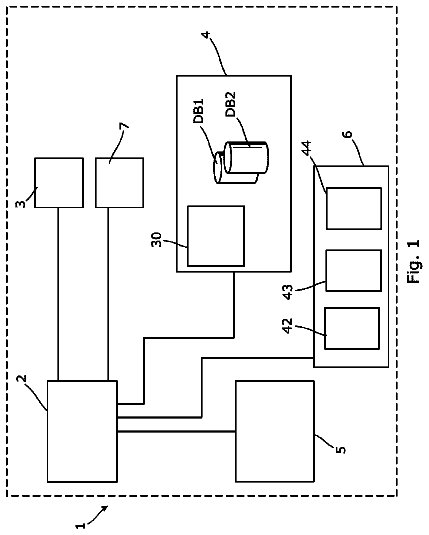
FIG. 1 is a schematic diagram showing a configuration of a remote server.
FIG. 2 is another schematic diagram showing a configuration of the remote server.
FIG. 3 is a flowchart of a low-fuel-consumption advice control S 100 .
FIG. 4 is a flowchart of a low-fuel-consumption advice control S 200 .
FIG. 5 is a graph showing a map of a fuel consumption amount.
FIG. 6 is a flowchart of a low-fuel-consumption advice control S 300 .
Description of embodiments
A remote server system 100 will be described with reference to FIG. 1 .
FIG. 1 schematically shows the remote server system 100 .
The remote server system 100 is a system relating to a remote server according to an embodiment of the present invention. The remote server system 100 is a system that provides service to remote users. The remote server system 100 of the present embodiment is a system that provides service from a remote information center 110 to users who use combine harvesters 3 as agricultural machines, via an overseas communications company 130 in each country of the world and a domestic communications company 120 .
The remote server system 100 will be further described with reference to FIG. 2 .
FIG. 2 schematically shows the remote server system 100 .
The remote server system 100 of the present embodiment is a system that advises a user who uses the combine harvester 3 of an operation with low fuel consumption.
The remote server system 100 is configured such that a remote server 5 provided in the remote information center 110 (refer to FIG. 1 ) and terminal servers 6 provided in combine harvesters 3 can communicate with each other, for example. The remote server 5 is configured to be able to communicate with terminal servers 6 that are provided in many combine harvesters 3 .
In the present embodiment, it is assumed that each terminal server 6 transmits, to the remote server 5 , at least a type of the combine harvester 3 as information for machine identification, year, month, and day of operation and working time of the combine harvester 3 as information on an operating day of the combine harvester 3 , a working position as position information, a traveling speed V as information on a moving speed, an engine rotational speed Ne as information on a rotational speed of the engine, an engine load factor L as information on a load factor of the engine, and a fuel consumption amount C as information on a fuel consumption amount. The fuel consumption amount C is a fuel consumption amount per unit time.
The working position is identified by a GPS, and is transmitted to the remote server 5 . For the traveling speed V, the traveling speed V detected by the traveling speed sensor is transmitted to the remote server 5 . For the engine rotational speed Ne, the engine rotational speed Ne detected by the engine rotational speed sensor is transmitted to the remote server 5 .
For the engine load factor L, a rate of an injection quantity instructed by an ECU (Engine Control Unit) to a maximum injection quantity at the engine rotational speed Ne is transmitted to the remote server 5 . For example, in a mechanical governor engine, a rack position detected by a rack position sensor is the engine load factor L. In an electronic governor engine, an accelerator rotation amount detected by an accelerator opening sensor is the engine load factor L. First Embodiment
A flow of a low-fuel-consumption advice control S 100 will be described with reference to FIG. 3 .
FIG. 3 is a flowchart showing the flow of the low-fuel-consumption advice control S 100 .
The low-fuel-consumption advice control S 100 is a control of the first embodiment performed by the remote server of the present invention. The low-fuel-consumption advice control S 100 is a control that advises the combine harvester 3 which is working, of an operation with low fuel consumption, based on the past operation history of the same combine harvester 3 .
In step S 110 , the remote server 5 obtains a working position, an engine load factor L, an ON/OFF status of a clutch of each working unit (a traveling unit, a reaping unit, a conveying unit, or a threshing unit), and a fuel consumption amount C of the combine harvester 3 which is currently working.
In step S 120 , the remote server 5 identifies a farm field in which the combine harvester 3 is currently working, from the obtained working position of the combine harvester 3 .
In step S 130 , the remote server 5 identifies past working periods of the combine harvester 3 in the same farm field at the same engine load factor L in the same ON/OFF status of the clutch of each working unit. It is assumed that the same engine load factor L is ±3% of the current engine load factor L.
In step S 140 , the remote server 5 identifies a period during which the fuel injection amount C is a minimum fuel-injection amount Cmin, in the working periods identified in step S 130 .
In step S 150 , the remote server 5 subtracts the minimum fuel-injection amount Cmin identified in step S 130 from the fuel injection amount C obtained in step S 110 , and determines whether the difference is equal to or larger than a predetermined value.
If the difference is equal to or larger than the predetermined value, the process proceeds to step S 160 . On the other hand, if the difference is less than the predetermined value, the remote server 5 determines that the combine harvester 3 is currently working with low fuel consumption, and ends the low-fuel-consumption advice control S 100 .
In step S 160 , the remote server 5 reports to the operator the engine rotational speed Ne and a speed change pattern of each working unit during the period of the minimum fuel-injection amount Cmin identified in step S 130 . As means for reporting to the operator, there is considered reporting to the terminal (a portable telephone or the like) of the operator.
An effect of the low-fuel-consumption advice control S 100 will be described.
According to the low-fuel-consumption advice control S 100 , if the current fuel consumption amount is larger than a minimum fuel consumption amount within a past operation history of the same combine harvester 3 in a similar operating condition, an operation status at an operating day of the minimum fuel consumption amount can be recognized. Second Embodiment
A flow of a low-fuel-consumption advice control S 200 will be described with reference to FIG. 4 .
FIG. 4 is a flowchart showing the flow of the low-fuel-consumption advice control S 200 .
The low-fuel-consumption advice control S 200 is a control of the second embodiment performed by the remote server of the present invention. The low-fuel-consumption advice control S 200 is a control that advises the combine harvester 3 which is working, of an operation with low fuel consumption, based on the past operation history of the same machine type.
In step S 210 , the remote server 5 obtains a working position, a machine type, an engine load factor L, and a fuel consumption amount C of the combine harvester 3 which is currently working.
In step S 220 , the remote server 5 identifies a farm field in which the combine harvester 3 is currently working, from the obtained working position of the combine harvester 3 .
In step S 230 , the remote server 5 identifies a working season from the obtained working day of the combine harvester 3 . When the working season is identified, working content (reaping work and the like) is also identified.
In step S 240 , the remote server 5 identifies past working periods of the combine harvester 3 of the same machine type in the same farm field in the same working season at the same engine load factor L. It is assumed that the same engine load factor L is ±3% of the current engine load factor L.
In step S 250 , the remote server 5 identifies a period during which the fuel injection amount C is a minimum fuel-injection amount Cmin, in the working periods identified in step S 240 .
In step S 260 , the remote server 5 subtracts the minimum fuel-injection amount Cmin identified in step S 250 from the fuel injection amount C obtained in step S 210 , and determines whether the difference is equal to or larger than the predetermined value.
If the difference is equal to or larger than the predetermined value, the process proceeds to step S 270 . On the other hand, if the difference is less than the predetermined value, the remote server 5 determines that the combine harvester 3 is currently working with low fuel consumption, and ends the low-fuel-consumption advice control S 200 .
In step S 270 , the remote server 5 reports to the operator the engine rotational speed Ne and a speed change pattern of each working unit during the period of the minimum fuel-injection amount Cmin identified in step S 250 . As means for reporting to the operator, there is considered reporting to the terminal (a portable telephone or the like) of the operator.
An effect of the low-fuel-consumption advice control S 200 will be described.
According to the low-fuel-consumption advice control S 200 , if a current fuel consumption amount is larger than the minimum fuel consumption amount Cmin within the past operation history of the combine harvester 3 of the same machine type in a similar operating condition, an operation status during a working period of the minimum fuel consumption amount Cmin can be recognized. Third Embodiment
A fuel consumption amount map 50 will be described with reference to FIG. 5 .
In FIG. 5 , the horizontal axis indicates the engine rotational speed Ne, and the vertical axis indicates torque T. The fuel consumption amount map 50 is shown as a graph.
The fuel consumption amount map 50 is a map showing a characteristic of the engine. The fuel consumption amount map 50 shows a characteristic of the engine based on the engine rotational speed Ne, the torque T, the fuel consumption amount C, and an output P, for each type of the engine.
The output P indicated by an output curve (a solid line in the graph) increases toward the upper left in the graph. A fuel consumption amount C indicated by a fuel-consumption-amount curve (a broken line in the graph) increases toward the upper right in the graph. The load factor L is a rate of the torque T in a maximum torque determined by the engine rotational speed Ne.
A flow of a low-fuel-consumption advice control S 300 will be described with reference to FIG. 6 .
FIG. 6 is a flowchart showing the flow of the low-fuel-consumption advice control S 300 .
The low-fuel-consumption advice control S 300 is a control of the third embodiment performed by the remote server of the present invention. The low-fuel-consumption advice control S 300 is a control that advises the combine harvester 3 which is working, of an operation with low fuel consumption, based on the fuel consumption amount map 50 of the mounted engine.
In step S 310 , the remote server 5 obtains a machine type, a load factor L, an engine rotational speed Ne, a traveling speed V, and a fuel consumption amount C of the combine harvester 3 at a position where the combine harvester 3 is currently working.
In step S 320 , the remote server 5 identifies a type of the engine which is mounted in the combine harvester 3 , from the obtained machine type of the combine harvester 3 .
In step S 330 , the remote server 5 identifies the fuel consumption amount map 50 which is unique to the engine, from the obtained type of the engine.
In step S 340 , the remote server 5 calculates the output P based on the obtained engine rotational speed Ne, load factor L, and fuel consumption amount map 50 . Then, the remote server 5 calculates the minimum fuel consumption amount Cmin at the calculated output P.
In step S 350 , the remote server 5 subtracts the minimum fuel-injection amount Cmin identified in step S 340 from the fuel injection amount C obtained in step S 310 , and determines whether the difference is equal to or larger than a predetermined value.
If the difference is equal to or larger than the predetermined value, the process proceeds to step S 360 . On the other hand, if the difference is less than the predetermined value, the remote server 5 determines that the combine harvester 3 is currently working with low fuel consumption, and ends the low-fuel-consumption advice control S 300 .
In step S 360 , the remote server 5 reports to the operator the engine rotational speed Ne and a speed change pattern of each working unit during the period of the minimum fuel consumption amount Cmin identified in step S 340 . As means for reporting to the operator, there is considered reporting to the terminal (a portable telephone or the like) of the operator.
An effect of the low-fuel-consumption advice control S 300 will be described.
According to the low-fuel-consumption advice control S 300 , the engine operation status of the minimum fuel consumption amount Cmin can be recognized in real time.
Industrial applicability
The present invention can be utilized for a remote server.
Reference signs list
3 Combine harvester 5 Remote server 6 Terminal server 50 Fuel consumption amount map 100 Remote server system
 Lapsed, fee not paid16 drawings