 Lapsed, fee not paid4 drawings
Telecom & Networks · US 9,826,397 B2
System and method for transferring wireless network access passwords
The present disclosure provides an access node for transferring and/or assigning network passwords.
US 9,826,421 B2 · Assignee: NEC CORPORATION · Inventors: Sashihara; Toshiyuki
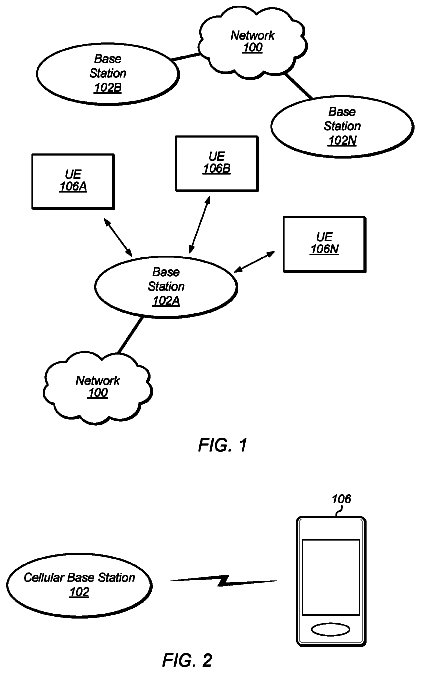
Sheet 1 of 21 from the published document. All sheets in the USPTO PDF
In order to set optimal wireless parameters, a wireless base station includes: a wireless parameter control unit ( 402 ) configured to determine whether it is necessary to perform wireless parameter optimization in an own wireless base station; and a determination unit ( 404 ) configured to determine whether another wireless base station performs wireless parameter optimization in the another wireless base station when the wireless parameter control unit determines that it is necessary to perform the wireless parameter optimization. The wireless parameter control unit ( 402 ) performs wireless parameter optimization in the own wireless base station when the determination unit determines that the another wireless base station does not perform wireless parameter optimization in the another wireless base station. The wireless parameter control unit cancels to perform wireless parameter optimization in the own wireless base station when the determination unit determines that the another wireless base station performs wireless parameter optimization in the another wireless base station.
In a mobile phone network such as LTE (Long Term Evolution) and the like, in order to reduce an operation cost of the network, there is used an SON (Self Organizing Network) technique for autonomously optimizing various types of wireless-parameters. In this technique, in general, the need for optimizing the network is determined by using measurement results in a UE (User Equipment) that is a communication terminal and an eNB (evolved Node B) that is a wireless base station and information of a peripheral eNB acquired via an X2 interface. When it is determined that the optimization is necessary, an optimum wireless-parameter value for the network is determined using the aforementioned information, and the wireless parameter value is changed to a determined value. In the method disclosed in PTL 1, for example, an optimum transmission power of a pico BS (Base Station) is determined by using
1 of 21 drawing sheets so far from the published document, cropped to the drawing. Every sheet is in the USPTO PDF.
What the patent claimed, word for word. All of it is now free to use.
This application is a National Stage Entry of PCT/JP2015/002372 filed on May 11, 2015, which claims priority from Japanese Patent Application 2014-098365 filed on May 12, 2014, the contents of all of which are incorporated herein by reference, in their entirety.
The present disclosure relates to a wireless base station that executes optimization processing of wireless parameters, a communication system, a wireless-parameter optimization method, and a storage medium.
In a mobile phone network such as LTE (Long Term Evolution) and the like, in order to reduce an operation cost of the network, there is used an SON (Self Organizing Network) technique for autonomously optimizing various types of wireless-parameters. In this technique, in general, the need for optimizing the network is determined by using measurement results in a UE (User Equipment) that is a communication terminal and an eNB (evolved Node B) that is a wireless base station and information of a peripheral eNB acquired via an X2 interface. When it is determined that the optimization is necessary, an optimum wireless-parameter value for the network is determined using the aforementioned information, and the wireless parameter value is changed to a determined value.
In the method disclosed in PTL 1, for example, an optimum transmission power of a pico BS (Base Station) is determined by using an RSRP (Reference Signal Received Power) value measured in a pico UE, and a transmission power of a pico eNB is changed. At that time, even when another pico eNB exists in a neighborhood, the transmission power of the pico eNB is optimized without considering a state of optimization execution of the pico eNB existing in the neighborhood.
Further, PTL 2, for example, discloses a system in which state control information in a wireless base station is reported to an adjacent wireless base station via a control station, and wireless parameters are efficiently set to appropriate values. CITATION LIST Patent Literature
PTL 1: International Publication No.
WO2012/081150
PTL 2: International Publication No. WO2010/104143 SUMMARY OF INVENTION Technical Problem
When an optimization function using an optimization method as described in PTL 1 operates in a plurality of eNBs at the same time, optimized wireless parameters may not be the expected results. Specifically, such a case includes the case where an eNB that is scheduled to be optimized exists in a neighborhood of an eNB to which a certain optimization is performed. Hereinafter, description will be made more specifically using drawings.
FIG. 20 is a diagram illustrating one form of a common communication system.
As illustrated in FIG. 20 , within a macro cell 61 that is a coverage of a macro eNB 2 that is a wireless base station connected to a core network 1 , there are a macro UE 3 that is a communication terminal and pico eNBs 4100 - 1 and 4100 - 2 that are wireless base stations. Further, a pico cell 6200 - 1 that is a coverage of the pico eNB 4100 - 1 and a pico cell 6200 - 2 that is a coverage of the pico eNB 4100 - 2 are adjacent to each other. Further, the pico eNB 4100 and the pico eNB 4200 each incorporate a wireless-parameter control device that controls wireless parameters. Further, the pico eNBs 4100 - 1 and 4100 - 2 are each connected to the core network 1 .
In such a form, in the pico eNBs 4100 - 1 and 4100 - 2 , in order to adjust wireless parameters so that a place where a number of communication terminals is small becomes a cell edge, it is likely that simultaneous collection of measurement reports of wireless quality from pico UEs 51 - 1 to 51 - 3 that are communication terminals may occur. At that time, the pico eNB 4100 - 1 has not recognized that the pico eNB 4100 - 2 tries to change wireless parameters. Therefore, the pico eNB 4100 - 1 adjusts wireless parameters of the pico eNB 4100 - 1 so that a place where a number of communication terminals is small becomes a cell edge, assuming that the pico eNB 4100 - 2 does not change wireless parameters. On the other hand, in the same manner, the pico eNB 4100 - 2 also adjusts wireless parameters of the pico eNB 4100 - 2 so that a place where a number of communication terminals is small becomes a cell edge, assuming that the pico eNB 4100 - 1 does not change wireless parameters.
FIG. 21 is a diagram illustrating one example of a state of changes of the pico cells 6200 - 1 and 6200 - 2 after the pico eNBs 4100 - 1 and 4100 - 2 illustrated in FIG. 20 change wireless parameters at the same time.
As illustrated in FIG. 21 , a result of the pico eNBs 4100 - 1 and 4100 - 2 changing the wireless parameters at the same time, pico cells illustrated with a dashed line change to the pico cells 6200 - 1 and 6200 - 2 illustrated with a solid line. Thereby, the pico UE 51 - 3 may go out of the pico cells 6200 - 1 and 6200 - 2 that are coverages of the pico eNBs 4100 - 1 and 4100 - 2 , respectively.
In this manner, when optimization is performed individually in each pico eNB, it is difficult to recognize a performance state of wireless-parameter optimization in a neighboring pico eNB. Therefore, each pico eNB determines optimum wireless parameters, assuming that a neighboring pico eNB maintains a state of wireless-parameters, and applies the determined optimum wireless parameters. When the neighboring pico eNB has changed the wireless parameters at the stage of applying the optimum wireless parameters, the precondition that the above-described optimum wireless parameters are optimum may collapse. As a result, there occurs a problem that it is possible to lapse into even more inappropriate state.
Further, also in a system as described in PTL 2, it is difficult to recognize a performance state of wireless-parameter optimization in a neighboring wireless base station, and therefore the same problem arises.
An object of an exemplary embodiment is to provide a wireless base station, a communication system, a wireless-parameter optimization method, and a storage medium that solve the above-described problems. Solution to Problem
A wireless base station of an exemplary embodiment includes:
a wireless-parameter control unit that determines whether it is necessary to perform wireless-parameter optimization in an own wireless base station; and
a determination unit that determines whether another wireless base station is performing wireless-parameter optimization in the another wireless base station when the wireless-parameter control unit determines that it is necessary to perform the wireless-parameter optimization,
the wireless-parameter control unit performing wireless-parameter optimization in the own wireless base station when the determination unit determines that the another wireless base station is not performing wireless-parameter optimization in the another wireless base station, and cancelling to perform wireless-parameter optimization in the own wireless base station when the determination unit determines that the another wireless base station is performing wireless-parameter optimization in the another wireless base station.
Further, a communication system of another exemplary embodiment is
a communication system including a plurality of wireless base stations, the system including:
a wireless-parameter control unit that determines whether it is necessary to perform wireless-parameter optimization in the wireless base stations; and
a determination unit that determines, when the wireless-parameter control unit determines that it is necessary to perform the wireless-parameter optimization, whether wireless-parameter optimization is being performed in a wireless base station other than a wireless base station determined to be necessary to perform the wireless-parameter optimization among the plurality of wireless base stations,
the wireless-parameter control unit performing wireless-parameter optimization in the wireless base station determined to be necessary to perform the wireless-parameter optimization when the determination unit determines that wireless-parameter optimization is not being performed in the wireless base station other than the wireless base station determined to be necessary to perform the wireless-parameter optimization among the plurality of wireless base stations, and cancelling to perform wireless-parameter optimization in the wireless base station determined to be necessary to perform the wireless-parameter optimization when the determination unit determines that wireless-parameter optimization is being performed in the wireless base station other than the wireless base station determined to be necessary to perform the wireless-parameter optimization among the plurality of wireless base stations.
Further, a wireless-parameter optimization method of another exemplary embodiment executes:
processing for determining whether it is necessary to perform wireless-parameter optimization in a wireless base station;
processing for determining, when it is determined that it is necessary to perform the wireless-parameter optimization, whether wireless-parameter optimization is being performed in a wireless base station other than a wireless base station determined to be necessary to perform the wireless-parameter optimization among a plurality of wireless base stations configuring a communication system;
processing for performing wireless-parameter optimization in the wireless base station determined to be necessary to perform the wireless-parameter optimization when it is determined that wireless-parameter optimization is not being performed in the wireless base station other than the wireless base station determined to be necessary to perform the wireless-parameter optimization among the plurality of wireless base stations; and
processing for cancelling to perform wireless-parameter optimization in the wireless base station determined to be necessary to perform the wireless-parameter optimization when it is determined that wireless-parameter optimization is being performed in the wireless base station other than the wireless base station determined to be necessary to perform the wireless-parameter optimization among the plurality of wireless base stations.
Further, a storage medium of another exemplary embodiment is
a storage medium storing a program for causing a computer to execute:
the step of determining whether it is necessary to perform wireless-parameter optimization in a wireless base station;
the step of determining, when it is determined that it is necessary to perform the wireless-parameter optimization, whether wireless-parameter optimization is being performed in a wireless base station other than a wireless base station determined to be necessary to perform the wireless-parameter optimization among a plurality of wireless base stations configuring a communication system;
the step of performing wireless-parameter optimization in the wireless base station determined to be necessary to perform the wireless-parameter optimization when it is determined that wireless-parameter optimization is not being performed in the wireless base station other than the wireless base station determined to be necessary to perform the wireless-parameter optimization among the plurality of wireless base stations; and
the step of cancelling to perform wireless-parameter optimization in the wireless base station determined to be necessary to perform the wireless-parameter optimization when it is determined that wireless-parameter optimization is being performed in the wireless base station other than the wireless base station determined to be necessary to perform the wireless-parameter optimization among the plurality of wireless base stations. Advantageous Effects of Invention
As described above, in the exemplary embodiment, optimum wireless parameters can be set.
FIG. 1 is a diagram illustrating a first embodiment of a wireless base station of an exemplary embodiment.
FIG. 2 is a flowchart for illustrating one example of a wireless-parameter optimization method in a pico eNB illustrated in FIG. 1 .
FIG. 3 is a diagram illustrating a second embodiment of the wireless base station of the exemplary embodiment.
FIG. 4 is a diagram illustrating one example of an internal configuration of a pico eNB illustrated in FIG. 3 .
FIG. 5 is a flowchart for illustrating a first example of a wireless-parameter optimization method in the embodiment illustrated in FIG. 3 .
FIG. 6 is a diagram illustrating a first example of a format of a message transmitted from the pico eNB illustrated in FIG. 3 .
FIG. 7 is a flowchart for illustrating a second example of the wireless-parameter optimization method in the embodiment illustrated in FIG. 3 .
FIG. 8 is a diagram illustrating a second example of a format of a message transmitted from the pico eNB illustrated in FIG. 3 .
FIG. 9 is a flowchart for illustrating one example of processing for transmitting an optimization-in-progress message by a communication unit illustrated in FIG. 4 .
FIG. 10 is a flowchart for illustrating a third example of the wireless-parameter optimization method in the embodiment illustrated in FIG. 3 .
FIG. 11 is a flowchart for illustrating a fourth example of the wireless-parameter optimization method in the embodiment illustrated in FIG. 3 .
FIG. 12 is a diagram illustrating a third example of a format of a message transmitted from the pico eNB illustrated in FIG. 3 .
FIG. 13 is a flowchart for illustrating a fifth example of the wireless-parameter optimization method in the embodiment illustrated in FIG. 3 .
FIG. 14 is a diagram illustrating a fourth example of a format of a message transmitted from the pico eNB illustrated in FIG. 3 .
FIG. 15 is a diagram illustrating a modified example of the embodiment illustrated in FIG. 3 .
FIG. 16 is a diagram illustrating a third embodiment of the wireless base station of the exemplary embodiment.
FIG. 17 is a sequence diagram for illustrating a first example of a wireless-parameter optimization method in the embodiment illustrated in FIG. 16 .
FIG. 18 is a sequence diagram for illustrating a second example of the wireless-parameter optimization method in the embodiment illustrated in FIG. 16 .
FIG. 19 is a sequence diagram for illustrating a third example of the wireless-parameter optimization method in the embodiment illustrated in FIG. 16 .
FIG. 20 is a diagram illustrating one form of a common communication system.
FIG. 21 is a diagram illustrating one example of a state of changes of pico cells after two pico eNBs illustrated in FIG. 20 change wireless parameters at the same time.
Hereinafter, the exemplary embodiment will be described with reference to the drawings.
(First Exemplary Embodiment)
FIG. 1 is a diagram illustrating a first embodiment of the wireless base station of the exemplary embodiment.
As illustrated in FIG. 1 , the wireless base station (pico eNB 41 ) in the present embodiment consists of a wireless-parameter control unit 402 and a determination unit 404 . In FIG. 1 , from among components included in the wireless base station (pico eNB 41 ) in the present embodiment, one example of main components according to the present exemplary embodiment is illustrated.
The wireless-parameter control unit 402 determines whether it is necessary to perform wireless-parameter optimization in the pico eNB 41 serving as its own wireless base station. This determination method may be a method as disclosed in above-described PTL 1, for example. Further, the wireless-parameter control unit 402 performs wireless-parameter optimization in the pico eNB 41 when the determination unit 404 determines that a pico eNB serving as another wireless base station is not performing wireless-parameter optimization in the pico eNB. The method for this wireless-parameter optimization processing may be a method as disclosed in above-described PTL 1, for example. Further, the wireless-parameter control unit 402 cancels performing wireless-parameter optimization in the pico eNB 41 when the determination unit 404 determines that the pico eNB serving as another wireless base station is performing wireless-parameter optimization in the pico eNB.
When the wireless-parameter control unit 402 determines that it is necessary to perform wireless-parameter optimization, the determination unit 404 determines whether a pico eNB serving as another wireless base station is performing wireless-parameter optimization in the pico eNB. This determination method will be described later.
Hereinafter, a wireless-parameter optimization method in the pico eNB 41 illustrated in FIG. 1 will be described.
FIG. 2 is a flowchart for illustrating one example of the wireless-parameter optimization method in the pico eNB 41 illustrated in FIG. 1 .
First, the wireless-parameter control unit 402 determines whether it is necessary to perform wireless-parameter optimization in the pico eNB 41 (step S 1 ). When the wireless-parameter control unit 402 determines that it is necessary to perform wireless-parameter optimization, the determination unit 404 determines whether a pico eNB serving as another wireless base station is performing wireless-parameter optimization in the pico eNB (step S 2 ).
When the determination unit 404 determines that the pico eNB serving as another wireless base station is not performing wireless-parameter optimization in the pico eNB, the wireless-parameter control unit 402 performs optimization processing of wireless parameters in the pico eNB 41 (step S 3 ). On the other hand, when the determination unit 404 determines that the pico eNB serving as another wireless base station is performing wireless-parameter optimization in the pico eNB in step S 2 , the wireless-parameter control unit 402 cancels performing optimization processing of wireless parameters in the pico eNB 41 (step S 4 ). In other words, in this case, the wireless-parameter control unit 402 does not perform optimization processing of wireless parameters in the pico eNB 41 .
In this manner, upon performing optimization processing of wireless parameters, execution of optimization processing in an own wireless base station is cancelled when another wireless base station is performing optimization processing. Thereby, it is possible to avoid a fault of wireless parameters caused by optimization processing performed by one wireless base station while the other wireless base station performs optimization processing.
(Second Exemplary Embodiment)
FIG. 3 is a diagram illustrating a second embodiment of the wireless base station of the exemplary embodiment.
As illustrated in FIG. 3 , the present embodiment is a communication system in which a macro eNB 2 and pico eNBs 42 - 1 and 42 - 2 are connected to a core network 1 . In the following description, it is assumed that “another wireless base station” of the pico eNB 42 - 1 illustrated in FIG. 3 is the pico eNB 42 - 2 , however, when there is a wireless base station other than the pico eNB 42 - 2 , it goes without saying that the wireless base station is also “another wireless base station”.
The core network 1 is a higher-level network of the macro eNB 2 and the pico eNBs 42 - 1 and 42 - 2 . The macro eNB 2 is a wireless base station in which a macro cell 61 is formed as a coverage. The pico eNB 42 - 1 is a wireless base station in which a pico cell 62 - 1 is formed as a coverage. The pico eNB 42 - 2 is a wireless base station in which a pico cell 62 - 2 is formed as a coverage. There is a macro UE 3 that is a communication terminal in a range of the macro cell 61 . There is a pico UE 51 - 1 that is a communication terminal in a range of the pico cell 62 - 1 . There is a pico UE 51 - 2 that is a communication terminal in a range of the pico cell 62 - 2 . Further, there is a pico UE 51 - 3 that is a communication terminal in an overlapping range of the pico cell 62 - 1 and the pico cell 62 - 2 . The macro eNB 2 and the pico eNBs 42 - 1 and 42 - 2 that are respective wireless base stations each relay traffic between a communication terminal existing in the own coverage and the core network 1 . Further, the pico eNB 42 - 1 and the pico eNB 42 - 2 are connected via a communication medium 7 . In the communication medium 7 , for example, an X2 link may be established.
FIG. 4 is a diagram illustrating one example of an internal configuration of the pico eNB 42 - 1 illustrated in FIG. 3 .
The pico eNB 42 - 1 illustrated in FIG. 3 includes, as illustrated in FIG. 4 , a wireless communication unit 401 , a wireless-parameter control unit 402 , a communication unit 403 , and a determination unit 404 . Note that in FIG. 4 , from among components included in the pico eNB 42 - 1 illustrated in FIG. 3 , one example of main components according to the present exemplary embodiment is illustrated. Further, an internal configuration of the pico eNB 42 - 2 illustrated in FIG. 3 may be the same as the internal configuration illustrated in FIG. 4 .
The wireless communication unit 401 performs wireless communication with communication terminals (the pico UEs 51 - 1 and 51 - 3 in the embodiment illustrated in FIG. 3 ) existing within the pico cell 62 - 1 . The wireless communication unit 401 transmits downlink wireless signals in which control data and user data are encoded to the pico UEs 51 - 1 and 51 - 3 . Further, the wireless communication unit 401 receives uplink wireless signals transmitted from the pico UEs 51 - 1 and 51 - 3 and decodes reception data from the received uplink wireless signals. The wireless communication unit 401 outputs, to the wireless-parameter control unit 402 , measurement data necessary for determining whether it is necessary to perform optimization processing of wireless parameters, from among the decoded reception data. The wireless communication unit 401 outputs the user data from among the decoded reception data, to the communication unit 403 .
The wireless-parameter control unit 402 determines whether it is necessary to perform optimization processing of wireless parameters in the pico eNB 42 - 1 . Specifically, the wireless-parameter control unit 402 determines whether it is necessary to perform optimization processing of wireless parameters using the measurement data output from the wireless communication unit 401 . The wireless-parameter control unit 402 reports, when determining that it is necessary to perform optimization processing of wireless parameters, the necessity to the determination unit 404 . The wireless-parameter control unit 402 performs wireless-parameter optimization in the pico eNB 42 - 1 when the result reported from the determination unit 404 indicates that the pico eNB 42 - 2 serving as another wireless communication base station is not performing wireless-parameter optimization in the pico eNB 42 - 2 . On the other hand, the wireless-parameter control unit 402 cancels performing wireless-parameter optimization in the pico eNB 42 - 1 when the result reported from the determination unit 404 indicates that the pico eNB 42 - 2 is performing wireless-parameter optimization in the pico eNB 42 - 2 . In the optimization processing of wireless parameters performed by the wireless-parameter control unit 402 , a common method as disclosed in PTL 1 is used to calculate optimum wireless parameters. The wireless-parameter control unit 402 then controls the wireless communication unit 401 using the calculated result.
The determination unit 404 determines whether the pico eNB 42 - 2 is performing wireless-parameter optimization in the pico eNB 42 - 2 , when the wireless-parameter control unit 402 reports that optimization processing of wireless parameters is necessary. This determination method will be described by citing the following two specific examples.
First, a first example will be described. The determination unit 404 determines that the pico eNB 42 - 2 is performing wireless-parameter optimization in the pico eNB 42 - 2 during a period from transmission of a start message from the pico eNB 42 - 2 to transmission of a termination message therefrom. This start message is a message indicating that the pico eNB 42 - 2 starts wireless-parameter optimization in the pico eNB 42 - 2 . Further, this termination message is a message indicating that the pico eNB 42 - 2 has terminated the wireless-parameter optimization being performed in the pico eNB 42 - 2 .
Next, a second example will be described. The determination unit 404 determines that the pico eNB 42 - 2 is performing wireless-parameter optimization in the pico eNB 42 - 2 when the pico eNB 42 - 2 is transmitting an optimization-in-progress message at a predetermined cycle. This optimization-in-progress message is a message indicating that the pico eNB 42 - 2 is performing wireless-parameter optimization in the pico eNB 42 - 2 .
Further, the determination unit 404 reports the determination result to the wireless-parameter control unit 402 .
The communication unit 403 receives a message transmitted from the pico eNB 42 - 2 and transmits a predetermined message to the pico eNB 42 - 2 . In a system using the above-described first example as the determination method in the determination unit 404 , the communication unit 403 transmits, when the wireless-parameter control unit 402 starts wireless-parameter optimization, a start message indicating the start of the optimization and transmits, when the optimization is terminated, a termination message indicating the termination of the optimization. Further, in a system using the above-described second example as the determination method in the determination unit 404 , the communication unit 403 transmits, when the wireless-parameter control unit 402 is performing wireless-parameter optimization, an optimization-in-progress message indicating that the optimization is being performed, at a predetermined cycle. Further, the communication unit 403 performs transmission/reception of information to and from a higher-level network such as the core network 1 . Further, the communication unit 403 supports an inter-base station interface (an X2 interface of LTE or the like) and performs transmission/reception of information to and from another wireless base station such as the pico eNB 42 - 2 .
It is possible that the pico eNB 42 - 1 does not include the determination unit 404 and the wireless-parameter control unit 402 additionally executes the above-described processing of the determination unit 404 .
Hereinafter, a wireless-parameter optimization method in the embodiment illustrated in FIG. 3 will be described.
FIG. 5 is a flowchart for illustrating a first example of the wireless-parameter optimization method in the embodiment illustrated in FIG. 3 .
First, the wireless-parameter control unit 402 aggregates measurement data measured by the wireless communication unit 401 and determines, on the basis of the aggregated result, whether it is necessary to perform wireless-parameter optimization in the pico eNB 42 - 1 (step S 11 ). The aggregation of measurement data may be performed using a method of performing aggregation at every certain cycle. When the wireless-parameter control unit 402 determines that it is necessary to perform wireless-parameter optimization, the determination unit 404 determines whether the pico eNB 42 - 2 serving as another wireless base station is performing wireless-parameter optimization in the pico eNB 42 - 2 (step S 12 ). At that time, during a period from transmission of a start message from the pico eNB 42 - 2 to transmission of a termination message therefrom, the determination unit 404 determines that the pico eNB 42 - 2 is performing wireless-parameter optimization in the pico eNB 42 - 2 . Otherwise, the determination unit 404 determines that the pico eNB 42 - 2 is not performing wireless-parameter optimization in the pico eNB 42 - 2 .
FIG. 6 is a diagram illustrating a first example of a format of a message transmitted from the pico eNB 42 - 2 illustrated in FIG. 3 .
As illustrated in FIG. 6 , the message transmitted from the pico eNB 42 - 2 illustrated in FIG. 3 consists of a cell identifier 501 and a message type 502 . The cell identifier 501 is identification information previously set for each cell to identify to which cell a message relates. The cell identifier 501 may use, for example, ECGI (E-UTRAN Cell Global ID). The message type 502 is information indicating whether the message is a start message indicating that optimization processing of wireless parameters is started or a termination message indicating that the optimization processing of wireless parameters is terminated. In the example illustrated in FIG. 6 , “ 1 ” is set for the message type 502 when the message indicates a start message, and “ 2 ” is set for the message type 502 when the message indicates a termination message.
When the determination unit 404 determines that the pico eNB 42 - 2 is not performing wireless-parameter optimization in the pico eNB 42 - 2 , the communication unit 403 transmits a start message to the pico eNB 42 - 2 via the communication medium 7 to report that optimization processing is started (step S 13 ). The start message transmitted here is a message in which a cell identifier of the pico cell 62 - 1 of the pico eNB 42 - 1 is set for the cell identifier 501 and “ 1 ” is set for the message type 502 , in the format illustrated in FIG. 6 .
Subsequently, the wireless-parameter control unit 402 collects measurement data necessary for performing optimization processing of wireless parameters (step S 14 ). This collection method may be a common method as disclosed in PTL 1. The wireless-parameter control unit 402 performs optimization processing of wireless parameters in the pico eNB 42 - 1 using the collected measurement data (step S 15 ). Specifically, the wireless-parameter control unit 402 calculates optimum wireless parameters using the collected measurement data and applies the calculated optimum wireless parameters to the wireless communication unit 401 .
Thereafter, when the optimization processing of wireless parameters is terminated, the communication unit 403 transmits a termination message to the pico eNB 42 - 2 via the communication medium 7 to report that the optimization processing is terminated (step S 16 ). The termination message transmitted here is a message in which the cell identifier of the pico cell 62 - 1 of the pico eNB 42 - 1 is set for the cell identifier 501 and “ 2 ” is set for the message type 502 , in the format illustrated in FIG. 6 .
On the other hand, in step S 12 , when the determination unit 404 determines that the pico eNB 42 - 2 is performing wireless-parameter optimization in the pico eNB 42 - 2 , the wireless-parameter control unit 402 cancels performing optimization processing of wireless parameters in the pico eNB 42 - 1 (step S 17 ). In other words, in this case, the wireless-parameter control unit 402 does not perform optimization processing of wireless parameters in the pico eNB 42 - 1 . In a case where a plurality of other wireless base stations exist, when any one of the plurality of wireless base stations is performing wireless-parameter optimization, the wireless-parameter control unit 402 cancels performing optimization processing of wireless parameters in the pico eNB 42 - 1 .
FIG. 7 is a flowchart for illustrating a second example of the wireless-parameter optimization method in the embodiment illustrated in FIG. 3 .
First, the wireless-parameter control unit 402 aggregates measurement data measured by the wireless communication unit 401 and determines, on the basis of the aggregated result, whether it is necessary to perform wireless-parameter optimization in the pico eNB 42 - 1 (step S 21 ). The aggregation of measurement data may be performed using a method of performing aggregation at every certain cycle. When the wireless-parameter control unit 402 determines that it is necessary to perform wireless-parameter optimization, the determination unit 404 determines whether the pico eNB 42 - 2 serving as another wireless base station is performing wireless-parameter optimization in the pico eNB 42 - 2 (step S 22 ). At that time, when an optimization-in-progress message is being transmitted from the pico eNB 42 - 2 at a predetermined cycle, the determination unit 404 determines that the pico eNB 42 - 2 is performing wireless-parameter optimization in the pico eNB 42 - 2 . Otherwise, the determination unit 404 determines that the pico eNB 42 - 2 is not performing wireless-parameter optimization in the pico eNB 42 - 2 . Further, the above-described cycle is set previously.
FIG. 8 is a diagram illustrating a second example of a format of a message transmitted from the pico eNB 42 - 2 illustrated in FIG. 3 .
As illustrated in FIG. 8 , the message transmitted from the pico eNB 42 - 2 illustrated in FIG. 3 consists of a cell identifier 601 and a message type 602 . The cell identifier 601 is identification information previously set for each cell to identify to which cell a message relates. The cell identifier 601 may use, for example, ECGI. The message type 602 is information indicating whether the message is an optimization-in-progress message indicating that optimization processing of wireless parameters is in progress. When the message indicates an optimization-in-progress message, a predetermined value is set for the message type 602 .
When the determination unit 404 determines that the pico eNB 42 - 2 is not performing wireless-parameter optimization in the pico eNB 42 - 2 , the communication unit 403 starts periodically transmitting an optimization-in-progress message to the pico eNB 42 - 2 via the communication medium 7 to report that optimization processing is in progress (step S 23 ). The optimization-in-progress message transmitted here is a message in which the cell identifier of the pico cell 62 - 1 of the pico eNB 42 - 1 is set for the cell identifier 601 and a predetermined value is set for the message type 602 , in the format illustrated in FIG. 8 .
FIG. 9 is a flowchart for illustrating one example of processing for transmitting an optimization-in-progress message by the communication unit 403 illustrated in FIG. 4 .
The communication unit 403 transmits an optimization-in-progress message (step S 31 ). Thereafter, the communication unit 403 waits for a previously set time (step S 32 ). In other words, the communication unit 403 does not transmit the optimization-in-progress message during the previously set time. This time is a time equal to or shorter than a cycle for determining reception of an optimization-in-progress message by the determination unit 404 in step S 22 . The communication unit 403 transmits the optimization-in-progress message again after waiting for the previously set time.
When the communication unit 403 transmits the optimization-in-progress message, the wireless-parameter control unit 402 collects measurement data necessary for performing optimization processing of wireless parameters (step S 24 ). This collection method may be the same as the method used in step S 14 . The wireless-parameter control unit 402 performs optimization processing of wireless parameters in the pico eNB 42 - 1 using the collected measurement data (step S 25 ). Specifically, the wireless-parameter control unit 402 calculates optimum wireless parameters using the collected measurement data and applies the calculated optimum wireless parameters to the wireless communication unit 401 .
Thereafter, when the optimization processing of wireless parameters is terminated, the communication unit 403 stops transmitting the optimization-in-progress message (step S 26 ).
On the other hand, when the determination unit 404 determines that the pico eNB 42 - 2 is performing wireless-parameter optimization in the pico eNB 42 - 2 in step S 22 , the wireless-parameter control unit 402 cancels performing optimization processing of wireless parameters in the pico eNB 42 - 1 (step S 27 ). In other words, in this case, the wireless-parameter control unit 402 does not perform optimization processing of wireless parameters in the pico eNB 42 - 1 . In a case where a plurality of other wireless base stations exist, when any one of the plurality of wireless base stations is performing wireless-parameter optimization, the wireless-parameter control unit 402 cancels performing optimization processing of wireless parameters in the pico eNB 42 - 1 .
In this manner, a message indicating the execution of optimization processing of wireless parameters is repeatedly transmitted at a predetermined cycle, and therefore even when a loss of the message occurs on the communication medium 7 , it is possible to eliminate a mismatch between states generated on the transmission side and the reception side.
FIG. 10 is a flowchart for illustrating a third example of the wireless-parameter optimization method in the embodiment illustrated in FIG. 3 .
First, the wireless-parameter control unit 402 aggregates measurement data measured by the wireless communication unit 401 and determines, on the basis of the aggregated result, whether it is necessary to perform wireless-parameter optimization in the pico eNB 42 - 1 (step S 41 ). The aggregation of measurement data may be performed using a method of performing aggregation at every certain cycle. When the wireless-parameter control unit 402 determines that it is necessary to perform wireless-parameter optimization, the determination unit 404 determines whether the pico eNB 42 - 2 serving as another wireless base station is performing wireless-parameter optimization in the pico eNB 42 - 2 (step S 42 ). At that time, during a period from transmission of a start message from the pico eNB 42 - 2 to transmission of a termination message therefrom, the determination unit 404 determines that the pico eNB 42 - 2 is performing wireless-parameter optimization in the pico eNB 42 - 2 . Otherwise, the determination unit 404 determines that the pico eNB 42 - 2 is not performing wireless-parameter optimization in the pico eNB 42 - 2 . A format of the start message and the termination message may be the one illustrated in FIG. 6 .
When the determination unit 404 determines that the pico eNB 42 - 2 is performing wireless-parameter optimization in the pico eNB 42 - 2 , the wireless-parameter control unit 402 determines whether the pico eNB 42 - 2 is a wireless base station included in a previously set list (step S 43 ). This list is previously stored on the pico eNB 42 - 1 . Further, the list may be set by an input from the outside of the pico eNB 42 - 1 or stored by being distributed from the core network 1 , and an acquisition method therefor is not specifically defined. Further, the list stores an identifier of a wireless base station having a coverage adjacent to the pico cell 62 - 1 that is a coverage of the pico eNB 42 - 1 . As examples of the list, there are a cell list for cell reselection and a cell list for handover.
When the wireless-parameter control unit 402 determines that the pico eNB 42 - 2 is not a wireless base station included in the previously set list, the communication unit 403 transmits a start message to the pico eNB 42 - 2 via the communication medium 7 to report that optimization processing is started (step S 44 ). The start message transmitted here is a message in which the cell identifier of the pico cell 62 - 1 of the pico eNB 42 - 1 is set for the cell identifier 501 and “ 1 ” is set for the message type 502 , in the format illustrated in FIG. 6 .
On the other hand, when the determination unit 404 determines that the pico eNB 42 - 2 is not performing wireless-parameter optimization in the pico eNB 42 - 2 in step S 42 , the pico eNB 42 - 1 does not execute the processing of step S 43 but executes the processing of step S 44 .
The description continues in the full USPTO document.
About 6,508 words. The USPTO PDF has it with every drawing.
Fees are due 3.5, 7.5 and 11.5 years after grant. This patent expired on November 21, 2025, so the fee marked "not paid" was the one that went unpaid.
WIRELESS BASE STATION, COMMUNICATION SYSTEM, WIRELESS-PARAMETER OPTIMIZATION METHOD, AND STORAGE MEDIUM
Filed May 2015 · published Feb 2017Wireless base station, communication system, wireless-parameter optimization method, and storage medium
Filed May 2015 · granted Nov 2017Earlier publications, parents and continuations. None of them can still be enforced, or this patent would not be listed.
Prior art cited by the examiner or applicant. Useful when you check your own idea for novelty.
Everything on this page comes from the documents linked above.