Technical field
The present invention relates to a method and an apparatus for transmitting and receiving data by using Bluetooth which is a short range communication technology and more specifically, a method and an apparatus for exchanging human activity data through Bluetooth Low Energy (BLE).
Background art
Bluetooth is a short-range wireless technology standard that may wirelessly connect various types of devices and allows them to exchange data over short distances. To enable wireless communication between two devices using Bluetooth communication, a user has to perform the process of discovering Bluetooth devices to communicate with and making a connection request. As used herein, the term “device” refers to an appliance or equipment.
Here, the user may discover a Bluetooth device according to a Bluetooth communication method intended to be used using the Bluetooth device, and subsequently perform a connection.
The Bluetooth communication method may be classified as a BR/EDR method and an LE method. The BR/EDR method may be termed Bluetooth Classic. The Bluetooth Classic method includes a Bluetooth technology led from Bluetooth 1.0 and a Bluetooth technology using an enhanced data rate (EDR) supported by Bluetooth 2.0 or a subsequent version.
A Bluetooth low energy (LE) technology applied, starting from Bluetooth 4.0, may stably provide information of hundreds of kilobytes (KB) at low power consumption. Such a Bluetooth low energy technology allows devices to exchange information with each other by utilizing an attribute protocol. The Bluetooth LE method may reduce energy consumption by reducing overhead of a header and simplifying an operation.
Among the Bluetooth devices, some products do not have a display or a user interface. Complexity of connection, management, control, and disconnection among various types of Bluetooth devices and Bluetooth device employing similar technologies has increased.
Bluetooth supports a high speed at relatively low power consumption and at relatively low cost. However, since a transmission distance thereof is 100 m at the maximum, and thus, Bluetooth is appropriately used within a limited space. DISCLOSURE Technical Problem
An object of the present invention is to provide a method for transmitting and receiving data through Bluetooth communication.
Also, an object of the present invention is to provide a method for exchanging human activity data measured by a sensor through Bluetooth LE communication.
Also, an object of the present invention is to define data and parameters for a sensor to measure human activities.
Also, an object of the present invention is to define types of human activity data measured by a sensor through Bluetooth LE communication.
Also, an object of the present invention is to define a data structure by which to store human activity data measured by a sensor.
The technical objects to achieve in this document are not limited to those technical objects described above, but other technical objects not mentioned above can be clearly understood by those skilled in the art to which the present invention belongs from the specifications give below. Technical Solution
To resolve the technical problem described above, the present invention provides a method and an apparatus for transmitting and receiving data through Bluetooth LE (Low Energy) technology.
More specifically, a method for transmitting and receiving data through Bluetooth LE (Low Energy) according to one embodiment of the present invention comprises transmitting an advertising message indicating support of a measurement service for a user's activity to a second device; receiving a first request message requesting measurement of a specific activity of the user from the second device; transmitting a first response message to the second device in response to the first request message, when the specific activity is supported by the first device; and measuring the specific activity, wherein the first request message includes activity type indicating type of the specific activity.
Also, the present invention further comprises transmitting an error message to the second device, when the specific activity is not supported by the first device; receiving from the second device a second request message requesting activity information of user supported by the first device; transmitting to the second device a second response message including the activity information of supported user in response to the second request message; receiving a third request message requesting measurement of an activity included in the activity information of the user; and transmitting a third response message in response to the third request message.
Also, the activity information of the supported user according to the present invention includes an activity type indicating type of body activity of the user and measured data type information.
Also, the data type information according to the present invention includes at least one of speed information, calorie information, time information, distance information, or activity number information indicating how many times the activity has been performed.
Also, the present invention further comprises receiving a second request message requesting a measurement value of the specific activity from the second device; and transmitting a second response message including the measurement value in response to the second request message.
Also, the present invention further comprises receiving a second request message requesting configuration of a transmission period of measurement value of the specific activity; and transmitting the measurement value to the second device for each transmission period.
Also, the present invention further comprises receiving a control message requesting a specific operation from the second device; and performing the specific operation based on the control message, wherein the specific operation is one of activation of measurement operation of the specific activity, deactivation, reset of measured data, download of measured data, change of the specific activity, change of measured data, or change of transmission period.
Also, the present invention further comprises receiving a connection request message from the second device based on the advertising message; and establishing a Bluetooth LE connection with the second device.
Also, the present invention comprises transmitting an advertising message including activity information of supported user to a second device; receiving a first request message requesting activity type information being measured from the second device; transmitting a first response message including the activity type information being measured to the second device based on the first request message; receiving a second request message requesting specific data of activity type being measured from the second device; and transmitting a second response message including the specific data to the second device in response to the second request message, wherein the activity information includes activity type indicating type of body activity of the user and measured data type information.
Also, the present invention further comprises receiving a control message requesting a specific operation from the second device; and performing the specific operation based on the control message, wherein the specific operation is one of activation of measurement operation of the specific activity, deactivation, reset of measured data, download of measured data, change of the specific activity, change of measured data, or change of transmission period.
Also, the present invention further comprises receiving a connection request message from the second device based on the advertising message; and establishing a Bluetooth LE connection with the second device.
Also, the data type information according to the present invention includes at least one of speed information, calorie information, time information, distance information, or activity number information indicating how many times the activity has been performed.
Also, a device according to the present invention comprises a communication unit for communicating with the outside in a wireless or wired manner; and a processor functionally connected to the communication unit, wherein the processor is configured to transmit an advertising message indicating support of a measurement service for a user's activity to a second device; receive a first request message requesting measurement of a specific activity of the user from the second device; transmit a first response message to the second device in response to the first request message, when the specific activity is supported by the first device; and measure the specific activity, wherein the first request message includes activity type indicating type of the specific activity.
Also, a device according to the present invention comprises a communication unit for communicating with the outside in a wireless or wired manner; and a processor functionally connected to the communication unit, wherein the processor is configured to transmit an advertising message including activity information of supported user to a second device; receive a first request message requesting activity type information being measured from the second device; transmit a first response message including the activity type information being measured to the second device based on the first request message; receive a second request message requesting specific data of activity type being measured from the second device; and transmit a second response message including the specific data to the second device in response to the second request message, wherein the activity information includes activity type indicating type of body activity of the user and measured data type information. Advantageous Effects
According to a method for transmitting and receiving data by using Bluetooth LE according to one embodiment of the present invention, human activity can be measured continuously.
Also, according to a method for transmitting and receiving data by using Bluetooth LE according to one embodiment of the present invention, different data according to human activity types can be measured.
Also, according to a method for transmitting and receiving data by using Bluetooth LE according to one embodiment of the present invention, different data according to human activity types can be provided.
Also, according to a method for transmitting and receiving data by using Bluetooth LE according to one embodiment of the present invention, measured human activity information data can be exchanged efficiently.
The advantageous effects that can be obtained from the present invention are not limited to the effects described above, but other advantageous effects not mentioned above can be clearly understood by those skilled in the art to which the present invention belongs.
Brief description of the drawings
FIG. 1 illustrates one example of a wireless communication system based on Bluetooth LE according to the present invention.
FIG. 2 illustrates one example of an internal block diagram of a device in which methods according to the present invention can be implemented.
FIG. 3 illustrates one example of Bluetooth LE topology.
FIG. 4 illustrates one example of Bluetooth communication architecture to which method according to the present invention can be applied.
FIG. 5 illustrates one example of GATT profile structure of Bluetooth LE.
FIG. 6 illustrates one example of displaying human activities in a temporal order according to the present invention.
FIG. 7 illustrates one example of the overall structure of human activity data according to the present invention.
FIGS. 8 to 10 illustrate one example of data measurement according to activity of a user according to the present invention.
FIG. 11 is a flow diagram illustrating one example of a method for data measurement and exchange according to the present invention.
FIG. 12 is a flow diagram illustrating another example of a method for data measurement and exchange according to the present invention.
FIG. 13 is a flow diagram illustrating a yet another example of a method for data measurement and exchange according to the present invention.
FIG. 14 is a flow diagram illustrating one example of transmitting a control message for data measurement according to the present invention.
FIG. 15 is a flow diagram illustrating a still another example of a method for data measurement and exchange according to the present invention.
FIG. 16 is a flow diagram illustrating an additional example of a method for data measurement and exchange according to the present invention.
FIG. 17 is a flow diagram illustrating one example of a method for controlling a device through a control message according to the present invention.
Mode for invention
The aforementioned objects, features and advantages of the present invention will become more apparent through the following detailed description with respect to the accompanying drawings. Hereinafter, the embodiments of the present invention will be described with reference to the accompanying drawings, in which like numbers refer to like elements throughout the specification. In describing the present invention, a detailed description of known techniques associated with the present invention unnecessarily obscure the gist of the present invention, it is determined that the detailed description thereof will be omitted.
Hereinafter, a terminal related to the present invention will be described in detail with reference to the accompanying drawings. In the following description, usage of suffixes such as ‘module’, ‘part’ or ‘unit’ used for referring to elements is given merely to facilitate explanation of the present invention, without having any significant meaning by itself.
Electronic devices in this document may include a cellular phone, smartphone, laptop computer, digital broadcasting terminal, personal digital assistants (PDA), portable multimedia player (PMP), navigation terminal, and temperature/pressure/body data sensor; however, it should be clearly understood by those skilled in the art that except for those specific cases applicable only to a mobile terminal, the structure according to the embodiments of the present invention can also be applied to fixed terminals such as a digital TV and a desktop computer.
A signal described in this document can be transmitted in the form of not only a message but also a frame. A wireless communication interface and a wireless communication means are assigned or used interchangeably by taking into account only the convenience of writing the specification of the present invention and do not have individual implications or provide individual roles that can be distinguished from each other.
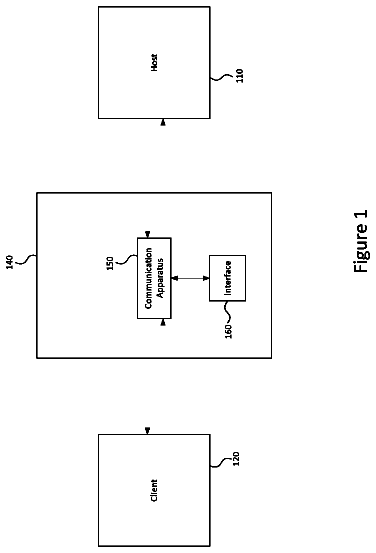
FIG. 1 illustrates one example of a wireless communication system based on Bluetooth LE according to the present invention.
A wireless communication system 100 includes at least one server device 120 and at least one client device 110 .
The server device and the client device perform Bluetooth communication using a Bluetooth low energy (BLE) technology.
First, compared with a Bluetooth basic rate/enhanced data rate (BR/EDR), the BLE technology has a relatively small duty cycle, may be produced at low cost, and significantly reduce power consumption through a low data rate, and thus, it may operate a year or longer when a coin cell battery is used.
Also, in the BLE technology, an inter-device connection procedure is simplified and a packet size is designed to be small compared with the Bluetooth BR/EDR technology.
In the BLE technology,
the number of RF channels is forty,
a data rate supports 1 Mbps,
topology has a scatternet structure,
latency is 3 ms,
a maximum current is 15 mA or lower,
output power is 10 mW (10 dBm) or less, and
the BLE technology is commonly used in applications such as a clock, sports, healthcare, sensors, device control, and the like.
The server device 120 may operate as a client device in a relationship with other device, and the client device may operate as a server device in a relationship with other device. That is, in the BLE communication system, any one device may operate as a server device or a client device, or may operate as both a server device and a client device if necessary.
The server device 120 may also be called as data service device, slave device, slave, server, conductor, host device, gateway, sensing device, monitoring device, first device, or the like, and the client device 110 may also be called as master device, master, client, member, sensor device, sink device, collector, second device, and the like.
The server device and the client device correspond to major components of the wireless communication system, and the wireless communication system may include components other than the server device and the client device.
The server device refers to a device which receives data from the client device and provides data to the client device in response when a corresponding request is received from the client device, through direct communication with the client device.
Also, in order to provide data information to the client device, the server device sends a notification message or an indication message to the client device in order to provide data information to the client device. Also, the server device receives a confirmation message corresponding to the indication message from the client device.
Also, in the process of transmitting and receiving notification, indication, and confirmation messages to and from the client device, the server device may provide data information to a user through a display unit or may receive a request input from the user through a user input interface.
Also, in the process of transmitting and receiving message to and from the client device, the server device may read data from a memory unit or may write new data to the corresponding memory unit.
Also, the single server device may be connected with a plurality of client devices, and may be easily re-connected with client devices using bonding information.
The client device 120 refers to a device which requests data information and data transmission from the server device.
The client device receives data through a notification message or an indication message from the server device, and when an indication message is received from the server device, the client device sends an acknowledgement message in response to the indication message.
Similarly, in the process of transmitting and receiving messages to and from the server device, the client device may also provide information to the user through a display unit or may receive an input from the user through a user input interface.
Also, in the process of transmitting and receiving messages with the server device, the client device may read data from a memory unit or may write new data to the corresponding memory unit.
Hardware components such as the display units, the user input interfaces, and the memory units of the server device and the client device will be described in detail with reference to FIG. 2 .
Also, the wireless communication system may configure personal area networking (PAN) through the Bluetooth technology. For example, in the wireless communication system, a private piconet may be established between devices to quickly and safely exchange files, documents, and the like.
Also, although a plurality of devices already measure human body activities by using a specific device, there have been no such device transmitting measured data through Bluetooth to the user to show specific data values.
Therefore, to resolve the aforementioned problem, the present invention measures human body activities, transmits measured data through Bluetooth LE, processes the measured data, and provides the processed data to the user.
FIG. 2 illustrates one example of an internal block diagram of a device in which methods according to the present invention can be implemented.
As illustrated in FIG. 2 , a server device includes a display unit 111 , a user input interface 112 , a power supply unit 113 , a processor 114 , a memory unit 115 , a Bluetooth interface 116 , other interface 117 , and a communication unit (or transceiver unit) 118 .
The display unit 111 , the user input interface 112 , the power supply unit 113 , the processor 114 , the memory unit 115 , the Bluetooth interface 116 , other interface 117 , and the communication unit 118 are functionally connected to each other to perform a method proposed in this disclosure.
Also, the client device includes a display unit 121 , a user input interface 122 , a power supply unit 123 , a processor 124 , a memory unit 125 , a Bluetooth interface 126 , and a communication unit (or transceiver unit) 128 .
The display unit 121 , the user input interface 122 , the power supply unit 123 , the processor 124 , the memory unit 125 , the Bluetooth interface 126 , other interface 127 , and the communication unit 128 are functionally connected to each other to perform a method proposed in this disclosure.
The Bluetooth interfaces 116 and 126 refer to units (or modules) able to transmit data such as a request/a response, a command, a notification, an indication/confirmation message between devices.
The memory units 115 and 126 are units implemented in various types of devices, in which various types of data are stored.
The processors 114 and 124 refer to modules controlling a general operation of the server device or the client device, which control requesting transmission of a message through the Bluetooth interface and other interface and processing a received message therethrough.
The processors 114 and 124 may also be termed a controller, a control unit, and the like.
The processors 114 and 124 may include an application-specific integrated circuit (ASIC), other chip set, a logic circuit and/or data processing unit.
The processors 114 and 124 control the communication units to receive an advertising message from the server device, control the communication unit to transmit a scan request message to the server device and receive a scan response message as a response to the scan request from the server device, and control the communication unit to transmit a connection request message to the server device in order to establish a Bluetooth connection with the server device.
Also, after the Bluetooth LE connection is established through the connection procedure, the processors 114 and 124 control the communication units to read or write data by using an attribute protocol from the server device.
The memory units 115 and 125 may include a read-only memory (ROM), a random access memory (RAM), a flash memory, a memory card, a storage medium and/or other storage device.
The communication units 118 and 127 may include a baseband circuit for processing a wireless signal. When an embodiment is implemented by software, the aforementioned technique may be implemented as a module (process, function, etc.) performing the aforementioned function. The module may be stored in a memory unit and may be executed by a processor.
The memory units 115 may be present within or outside of the processors 114 and 124 , and may be connected to the processors 114 and 124 through various well-known units.
The display units 111 and 121 refer to modules providing status information of the devices, message exchange information, and the like, to the user through a screen.
The power supply units 113 and 123 refer to modules receiving external power or internal power and supplying power required for operations of the respective components under the control of the controllers 114 and 124 .
As described above, BLE technology uses a small duty cycle and capable of reducing power consumption considerably through low data transmission rate, by which the power supply unit can provide power required to operate individual elements even with small output power (less than 10 mw (10 dBm)).
The user input interfaces 112 and 122 refer to modules providing a user input such as a screen button to the controllers to enable the user to control an operation of the devices.
FIG. 3 illustrates one example of Bluetooth LE topology.
Referring to FIG. 3 , a device A corresponds to a master in a piconet (piconet A, the shaded portion) having a device B and a device C as slaves.
Here, the piconet refers to an aggregation of devices in which any one of them is a mater and the other devices occupy a shared physical channel connected to the master device.
The BLE slave does not share a common physical channel with the master. Each of the slaves communicates with the master trough a separate physical channel. There is another piconet (piconet F) having a master device F and a slave device G.
A device K is present in a scatternet K. Here, the scatternet refers to a group of piconets connected to other piconets.
The device K is a master of a device L and a slave of a device M.
A device O is also in the scatter net O. The device O is a slave of a device P and a slave of a device Q.
As illustrated in FIG. 2 , five different device groups are present.
1. Device D is an advertiser and device A is an initiator (group D).
2. Device E is a scanner and Device C is an advertiser (group C).
3. Device H is an advertiser, and devices I and J are scanners (group H).
4. Device K is also an advertiser, and device N is an initiator (group K).
5. Device R is an advertiser, and device O is an initiator (group R).
The devices A and B use a single BLE piconet physical channel.
The devices A and C use another BLE piconet physical channel.
In group D, the device D advertises using an advertisement event connectable in an advertisement physical channel, and the device A is an initiator. The device A may establish a connection with the device D and add a device to the piconet A.
In group C, the device C advertises on an advertisement physical channel by using a certain type of an advertisement event captured by the scanner device E.
The group D and the group C may use different advertisement physical channels or different times in order to avoid collision.
In the piconet F, a single physical channel is present. The devices F and G use a single BLE piconet physical channel. The device F is a master, and the device G is a slave.
In group H, a single physical channel is present. The devices H, I, and J use a single BLE advertisement physical channel. The device H is an advertiser, and the devices I and J are scanners.
In the scatternet K, the devices K and L use a single BLE piconet physical channel. The devices K and M use another BLE piconet physical channel.
In group K, the device K advertises by using an advertisement event connectable on an advertisement physical channel, and the device N is an initiator. The device N may establish a connection with the device K. Here, the device K may be a slave of two devices and a master of one device at the same time.
In the scatternet O, the devices O and P use a single BLE piconet physical channel. The devices O and Q use another BLE piconet physical channel.
In group R, the device R advertises by using an advertisement event connectable on an advertisement physical channel, and the device O is an initiator. The device O may establish a connection with the device R. Here, the device O may be a slave of two devices and a master of one device at the same time.
FIG. 4 illustrates one example of Bluetooth communication architecture to which method according to the present invention can be applied.
Referring to FIG. 4 , (a) of FIG. 4 illustrates an example of a protocol stack of a Bluetooth basic rate (BR/enhanced data rate (EDR) that supports GATT (Generic Attribute Profile), and (b) of FIG. 4 illustrates an example of a protocol stack of Bluetooth low energy (LE).
In detail, as illustrated in (a) of FIG. 4 , the Bluetooth BR/EDR protocol stack may include an upper controller stack 10 and a lower host stack 20 with respect to a host controller interface (HCI) 18 .
The host stack (or host module) 20 refers to hardware for transmitting or receiving a Bluetooth packet to and from a wireless transceiver module receiving a Bluetooth signal of 2.4 GHz, and is connected to a Bluetooth module, the controller stack 10 , to control the Bluetooth module and performs an operation.
The host stack 20 may include a BR/EDR PHY layer 12 , a BR/EDR baseband layer 14 , and a link manager 16 .
The BR/EDR PHY layer 12 is a layer transmitting and receiving a 2.4 GHz wireless signal, and in case of using Gaussian frequency shift keying (GFSK) modulation, the BR/EDR PHY layer 12 may transmit data by hopping 79 RF channels.
The BR/EDR baseband layer 14 serves to transmit a digital signal, selects a channel sequence hopping 1400 times per second, and transmits a time slot having a length of 625 us for each channel.
The link manager layer 16 controls a general operation (link setup, control, security) of a Bluetooth connection by utilizing a link manager protocol (LMP).
The link manager layer 16 may perform the following functions. The link manager layer 16 may perform ACL/SCO logical transport, logical link setup, and control Detach: The link manager layer 16 stops connection and informs a counterpart device about the reason for stopping connection. The link manager layer 16 performs power control and role switch. The link manager layer 16 performs security (authentication, pairing, encryption) function.
The host controller interface layer 18 provides an interface between the host module and the controller module to allow the host to provide a command and data to the controller and allow the controller to provide an event and data to the host.
The host stack (or host module) 20 includes a logical link control and adaptive protocol (L2CAP) 21 , Security manager(sm) 22 , an attribute protocol (ATT) 23 , a generic attribute profile (GATT) 24 , a generic access profile (GAP) 25 , and a BR/EDR profile 26 .
The logical link control and adaptive protocol (L2CAP) 21 may provide a two-way channels for transmitting data to a specific protocol or a profile.
The L2CAP 21 may multiplex various protocols and profiles provided from a Bluetooth higher position.
The L2CAP of the Bluetooth BR/EDR uses a dynamic channel, supports a protocol service multiplexer, retransmission, and a streaming mode, and provides segmentation and reassembly, per-channel flow control, and error control.
The generic attribute profile (GATT) 24 may operate as a protocol how the attribute protocol 23 is used in configuring services. For example, the generic attribute profile 23 may operate how ATT attributes are grouped together with services, and operate to describe features associated with services.
Thus, the GATT 24 and the ATT 23 may use features in order to describe status and services of a device and describe how the features are related and used.
The attribute protocol 23 and profiles 26 define a service profile using Bluetooth BR/EDR and application protocol for exchanging related data, and the Generic Access Profile (GAP) 25 defines a scheme by which to discover and connect a device and to provide information for the user; and provides privacy.
As illustrated in (b) of FIG. 4 , the Bluetooth LE protocol stack includes a controller stack 30 operable to process a wireless device interface for which timing is important, and a host stack 40 operable to process high level data.
First, the controller stack 30 may be implemented by using a communication module that may include a Bluetooth wireless device, for example, a processor module that may include a processing device such as a microprocessor.
The host stack may be implemented as part of an OS operated on a processor module or may be implemented as instantiation of a package on the OS.
In some examples, the controller stack and the host stack may be operated or executed on the same processing device within a processor module.
The controller stack 30 includes a physical layer (PHY) 32 , a link layer (LL) 34 , and a host controller interface (HCI) 36 .
The physical layer (PHY) (wireless transceiver module 32 ), a layer for transmitting and receiving a 2.4 GHz wireless signal, uses a Gaussian frequency shift keying (GFSK) modulation and a frequency hopping technique including forty RF channels.
The link layer (LL) 34 serving to transmit or receive a Bluetooth packet provides a function of generating a connection between devices after performing an advertising and scanning function using three advertising channels, and exchanging data packets of a maximum of 257 bytes through thirty-seven data channels.
The host stack may include a generic access profile (GAP) 40 , a logical link control and adaptation protocol (L2CAP) 41 , a security manager (SM) 42 , an attribute protocol (ATT) 43 ), a generic attribute profile (GATT) 44 , a generic attribute profile (GAP) 45 , and an LE profile 46 . However, the host stack 40 is not limited thereto and may include various protocols and profiles.
The host stack multiplexes various protocols and profiles provided from a Bluetooth higher position by using the L2CAP.
First, the L2CAP 41 may provide a single two-way channel for transmitting data to a specific protocol or profile.
The L2CAP 41 may operate to multiplex data between higher layer protocols, segment and reassemble packages, and manage a multicast data transmission.
Bluetooth LE uses three fixed channels (one for signaling channel, one for security manager, and one for attribute protocol).
On the other hand, BR/EDR (Basic Rate/Enhanced Data Rate) uses a dynamic channel and supports protocol service multiplexer, retransmission, and streaming mode.
The SM 42 is a protocol for certifying a device and providing a key distribution.
The ATT 43 defines a rule for accessing data of a counterpart device by a server-client structure. The ATT 43 includes six types of messages (request, response, command, notification, indication, and confirmation) as follows.
{circle around (1)} Request and Response message: Request message is used for a client device to request specific information from a server device, and Response message is a response message to the Request message, which is transmitted from a server device to a client device.
{circle around (2)} Command message: A message transmitted from a client device to a server device to command a specific operation, which the server device does not transmit a response with respect to the command message to the client device.
{circle around (3)} Notification message: It is a message transmitted from the server device to the client device in order to notify an event, or the like. The client device does not transmit a confirmation message with respect to the notification message to the server device.
{circle around (4)} Indication and confirmation message: It is a message transmitted from the server device to the client device in order to notify an event, or the like. Unlike the notification message, the client device transmits a confirmation message regarding the indication message to the server device.
In the present invention, when the GATT profile using the attribute protocol (ATT) 43 requests long data, a value regarding a data length is transmitted to allow a client to clearly know the data length, and a characteristic value may be received from a server by using a universal unique identifier (UUID).
The generic access profile (GAP) 45 , a layer newly implemented for the Bluetooth LE technology, is used to select a role for communication between Bluetooth LED devices and to control how a multi-profile operation takes place.
Also, the generic access profile (GAP) 45 is mainly used for device discovery, connection generation, and security procedure part, defines a scheme for providing information to a user, and defines types of attributes as follows.
{circle around (1)} Service: It defines a basic operation of a device by a combination of behaviors related to data
{circle around (2)} Include: It defines a relationship between services
{circle around (3)} Characteristics: It is a data value used in a server
{circle around (4)} Behavior: It is a format that may be read by a computer defined by a UUID (value type).
The LE profile 46 comprises profiles having dependency on the GATT and are mostly applied to Bluetooth LE devices. For example, LE profile can include Battery, Time, FineMe, Proximity, Time, and Object Delivery Service, and specific descriptions of the GATT-based profiles are as follows.
{circle around (1)} Battery: Battery information exchanging method
{circle around (2)} Time: Time information exchanging method
{circle around (3)} FindMe: Provision of alarm service according to distance
{circle around (4)} Proximity: Battery information exchanging method
{circle around (5)} Time: Time information exchanging method
The generic attribute profile (GATT) 44 may operate as a protocol describing how the attribute protocol (ATT) 43 is used when services are configured. For example, the GATT 44 may operate to define how ATT attributes are grouped together with services and operate to describe features associated with services.
Thus, the GATT 44 and the ATT 43 may use features in order to describe status and services of a device and describe how the features are related and used.
Hereinafter, procedures of the Bluetooth low energy (BLE) technology will be briefly described.
The BLE procedure may be classified as a device filtering procedure, an advertising procedure, a scanning procedure, a discovering procedure, and a connecting procedure.
Device Filtering Procedure
The device filtering procedure is a method for reducing the number of devices performing a response with respect to a request, indication, notification, and the like, in the controller stack.
When requests are received from all the devices, it is not necessary to respond thereto, and thus, the controller stack may perform control to reduce the number of transmitted requests to reduce power consumption.
An advertising device or scanning device may perform the device filtering procedure to limit devices for receiving an advertising packet, a scan request or a connection request.
Here, the advertising device refers to a device transmitting an advertisement event, that is, a device performing an advertisement and is also termed an advertiser.
The scanning device refers to a device performing scanning, that is, a device transmitting a scan request.
In the BLE, in a case in which the scanning device receives some advertising packets from the advertising device, the scanning device should transmit a scan request to the advertising device.
However, in a case in which a device filtering procedure is used so a scan request transmission is not required, the scanning device may disregard the advertising packets transmitted from the advertising device.
Even in a connection request process, the device filtering procedure may be used. In a case in which device filtering is used in the connection request process, it is not necessary to transmit a response with respect to the connection request by disregarding the connection request.
Advertising Procedure
The advertising device performs an advertising procedure to perform undirected broadcast to devices within a region.
Here, the undirected broadcast is advertising toward all the devices, rather than broadcast toward a specific device, and all the devices may scan advertising to make an additional information request or a connection request.
In contrast, directed advertising may make an additional information request or a connection request by scanning advertising for only a device designated as a reception device.
The advertising procedure is used to establish a Bluetooth connection with an initiating device nearby.
Or, the advertising procedure may be used to provide periodical broadcast of user data to scanning devices performing listening in an advertising channel.
The description continues in the full USPTO document.
 Lapsed, fee not paid19 drawings