Background
Consumer electronics platforms such as smart televisions (TVs), laptops, tablets, cell phones, gaming consoles, etc., may include hardware to render graphics and/or perform parallel computation tasks. Known frameworks that provide a top-level abstraction for hardware as well as memory and execution models to deal with parallel code execution may be scalar or single instruction multiple thread (SIMT) frameworks. For example, SIMT shader programs that break a problem into work performed in parallel by independent work items (or threads) may require access to shared memory (e.g., shared local memory, thread group shared memory, etc.) when the work items need to cooperate to compute a result. Hardware computing power and/or hardware performance may suffer since, for example, a load operation and/or a store operation involving shared local memory may be relatively inefficient.
Additionally, shared local memory may add complexity to programming frameworks. For example, Open Computing Language (or OpenCL, a trademark of Khronos Group) SIMT shader programs may include an async work group built-in function that requires a source and a destination to be explicitly defined, synchronization events to ensure safe read or overwrite of the shared local memory, and so on. In addition, SIMT programs may require that each work item in a sub-group (or thread in a warp) have its own memory address to access data for a load operation, a store operation, and so on. Moreover, SIMT application programming interfaces (APIs), which allow SIMT work items to share data using a shuffle built-in function, only apply to rearranging data in a register and not to operations involving, for example, data transfer.
Brief description of the drawings
The various advantages of the embodiments of the present invention will become apparent to one skilled in the art by reading the following specification and appended claims, and by referencing the following drawings, in which:
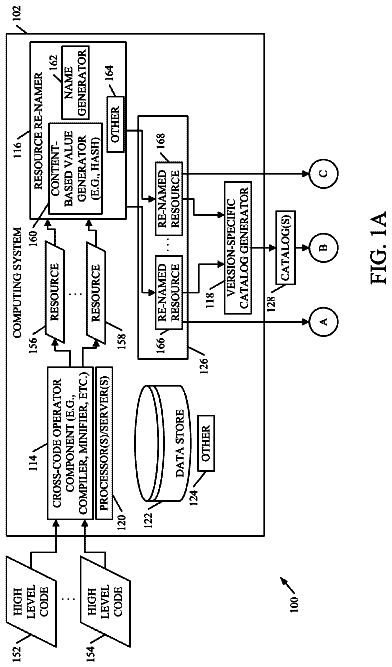
FIG. 1A is a block diagram of an example of a block operation apparatus according to an embodiment;
FIG. 1B is a block diagram of an example of a flow of a block operation by a block operation apparatus according to an embodiment;
FIG. 2A is a block diagram of an example of a media block load operation according to an embodiment;
FIG. 2B is a block diagram of an example of a media block store operation according to an embodiment;
FIG. 2C is a block diagram of an example of a media block convolve operation according to an embodiment;
FIG. 2D is a block diagram of an example of a media block video motion estimation operation according to an embodiment;
FIG. 3 is a flowchart of an example of a method of implementing a block operation according to an embodiment;
FIG. 4 is a flowchart of an example of a method of implementing a block operation according to an embodiment;
FIG. 5 is a block diagram of an example of a block operation computing system according to an embodiment;
FIG. 6 is a block diagram of an example of a system including a block module according to an embodiment; and
FIG. 7 is a block diagram of an example of a system having a small form factor according to an embodiment.
Detailed description
FIG. 1A shows a block operation apparatus 10 according to an embodiment. The illustrated apparatus 10 may include any computing platform such as a laptop, personal digital assistant (PDA), wireless smart phone, media content player, imaging device, mobile Internet device (MID), server, gaming console, wearable computer, any smart device such as a smart phone, smart tablet, smart TV, and so on, or any combination thereof. The apparatus 10 may include one or more processors, such as a central processing unit (CPU), a graphical processing unit (GPU), a visual processing unit (VPU), and so on, or combinations thereof. For example, the apparatus 10 may include one or more hosts (e.g., CPU, etc.) to control one or more compute devices (e.g., CPU, GPU, etc.), wherein each compute device may include one or more compute units (e.g., cores, single instruction multiple data units, etc.) having one or more execution elements to execute functions, described below.
The illustrated apparatus 10 includes a system memory 12 , which may be external and coupled to one or more of the processors by, for example, a memory bus. The system memory 12 may also be integral to one or more of the processors, for example on-chip. The system memory 12 may include volatile memory, non-volatile memory, and so on, or combinations thereof. For example, the system memory 12 may include dynamic random access memory (DRAM) configured as one or more memory modules such as, for example, dual inline memory modules (DIMMs), small outline DIMMs (SODIMMs), etc., read-only memory (ROM) (e.g., programmable read-only memory, or PROM, erasable PROM, or EPROM, electrically EPROM, or EEPROM, etc.), phase change memory (PCM), and so on, or combinations thereof. The system memory 12 may include an array of memory cells arranged in rows and columns, partitioned into independently addressable storage locations. Thus, access to the system memory 12 may involve using a memory address including, for example, a row address identifying the row containing the storage memory location and a column address identifying the column containing the storage memory location.
The system memory 12 may reside at a different physical level and/or access level of a memory hierarchy relative to a shared local memory 14 of the apparatus 10 . For example, the system memory 12 may include main memory, global memory, etc., when the shared local memory 14 includes a relatively lower-latency memory physically nearer to one or more of the processors (e.g., an L1 cache). In addition, data such as, for example, graphics data (e.g., a tile of an image, etc.) may be transferred from the system memory 12 to the shared local memory 14 to provide relatively faster access to the data. For example, a problem may be partitioned into work to be performed in parallel by two or more execution elements (e.g, work items, threads, etc.), wherein the two or more execution elements may be grouped together into one or more element blocks 16 , 18 , . . . X (e.g., sub-group, warp, etc.) of an element group 20 (e.g., work group, thread block, etc.). Thus, a processor may create, schedule, and/or execute the element blocks 16 , 18 , . . . X when the processor is given the element group 20 , wherein the shared local memory 14 may be visible to all of the execution elements of the element group 20 with the same lifetime as the element group 20 to provide relatively faster access to the data.
The apparatus 10 may also include one or more registers, such as an address register for address data (e.g, memory address, etc.), an instruction register for instruction data (e.g., X86 instruction, etc.), and so on, or combinations thereof. In the illustrated example, the apparatus 10 includes one or more data registers 22 , 24 , . . . X, which may be dynamically assigned to one or more element blocks. For example, the data register 22 may be assigned to the element block 16 , the data register 24 may be assigned to the element block 18 , and so on. In addition, the data registers 22 , 24 , . . . X may include hardware data registers, of any size. For example, the data registers 22 , 24 , . . . X may each include a single instruction multiple data (SIMD) hardware register which is 256 bits wide, 512 bits wide, and so on. The data registers 22 , 24 , . . . X may hold any data for a data-parallel computation. For example, the data registers 22 , 24 , . . . X may hold signal processing data, simulation data, finance computational data, chemical/biological computational data, and so on, or combinations thereof. A display, such as a liquid crystal display (LCD), a light emitting diode (LED) display, a touch screen, etc., may render the data. For example, the data may be rendered in a spreadsheet format, a text format (e.g., Rich Text, etc.), a markup language format (e.g., Hypertext Markup Language, Extensible Markup Language, etc.), and so on, or combinations thereof.
The data registers 22 , 24 , . . . X may also hold graphics data for image and/or media (e.g., video, etc.) processing applications such as, for example, one-dimensional (1D) rendering, two-dimensional (2D) rendering, three-dimensional (3D) rendering, post-processing of rendered images, video codec operations, image scaling, stereo vision, pattern recognition, and so on, or combinations thereof. In one example, the data registers 22 , 24 , . . . X may hold pixel data, vertex data, texture data, and so on, or combinations thereof. The data registers 22 , 24 , . . . X may also hold data to be utilized by a shader program such as, for example, a single instruction multiple thread (SIMT) shader, a vertex shader, a geometry shader, a pixel shader, a unified shader, and so on, or combinations thereof. The shader program may utilize the data in the data registers 22 , 24 , . . . X for variety of operations involving, for example, hue, saturation, brightness, contrast, blur, bokeh, shading, posterization, bump mapping, distortion, chorma keying, edge detection, motion detection, and so on, or combinations thereof. A display, such as an LCD, an LED display, a touch screen, etc., may render the graphics data. For example, the graphics data may be rendered in an image format (e.g., joint photographic experts group (JPEG) data, etc.), in a video format (e.g., moving picture experts group (MPEG) data, etc.), and so on, or combinations thereof.
The apparatus 10 may implement one or more built-ins to cause the element blocks 16 , 18 , . . . X to perform one or more block operations. For example, the block operations may include a load operation, a store operation, a transform operation, a motion estimation operation, a feature extraction operation, and so on, or combinations thereof. In one example, the block operation may include a data transfer event involving the system memory 12 to be performed by the element blocks 16 , 18 , . . . X independently (e.g., without, excluding, bypassing, etc.) of the shared local memory 14 . In another example, the block operation may include a data transfer event involving the system memory 12 to be performed by the element blocks 16 , 18 , . . . X using one memory address. In a further example, the block operation may include a data transfer event involving one or more of the data registers 22 , 24 , . . . X (e.g., transfer of a data block into and/or out of a data register, etc.).
A display may render data based on a block operation such as, for example, signal processing data, simulation data, finance computational data, chemical/biological computational data, graphics data, and so on, or combinations thereof. The data may be rendered utilizing, for example, the system memory 12 , the shared local memory 14 , the data registers 22 , 24 , . . . X, and so on, of combinations thereof. In one example, data based on a block transfer operation may include graphics tile data (e.g., a tile of an image), which may be rendered by the display. In another example, data based on a transform operation (e.g., convolution) may include graphics convolution data (e.g., filtered data), which may be rendered by the display. In a further example, data based on a feature extraction operation (e.g., pass in an image and a coordinate and return a coordinate where a feature is located in the image) may include feature data (e.g., the feature), which may be rendered by the display. Thus, data based on the block operation and rendered by the display may include, for example, data transferred to and/or from memory, data transferred to and/or from a register, data processed and loaded and/or stored, data obtained using a result (e.g., a feature obtained using a coordinate), and so on, or combinations thereof.
The apparatus 10 may also implement other operations such as, for example, sharing the data in the data registers 22 , 24 , . . . X. For example, one or more built-ins may be used to cause the execution elements in the element block 16 to share the data in the register 22 , to cause the execution elements in the element block 18 to share the data in the register 24 , and so on, or combinations thereof. In particular, known general purpose graphical processing unit (GPGPU) application programming interfaces (APIs) may allow scalar, or SIMT programs, to share data among work items (or threads) without using local memory. In one example, a Compute Unified Device Architecture (or CUDA, a trademark of NVIDIA Corporation) programming language may allow a thread running as part of the same warp to share data via a shuffle (e.g., _shfl( ) family of built-ins. In another example, OpenCL, 2.0 (OpenCL is a trademark of Khronos Group) may include built-ins to synchronize work items running in the same sub-group. Thus, for example, an SIMD built-in for the scalar, or SIMT program, may be invoked to cause a block of data to be transferred to and/or from the system memory 12 , the registers 22 , 24 , . . . X, and so on, wherein the SIMT built-in may be invoked to cause execution elements in an element block to share data in a data register 22 , to cause the execution elements in the element block 18 to share the data in the register 24 , and so on, or combinations thereof.
Turning now to FIG. 1B , an example of a flow of a block operation by the apparatus 10 is shown according to an embodiment. In the illustrated example, each of the element blocks 16 , 18 include corresponding execution elements EE 0 , EE 1 , . . . EE n, which may execute in parallel to perform an operation (e.g., a function, etc.). The execution elements EE 0 , EE 1 , . . . EE n may be defined by a scalar module such as, for example, a scalar program (e.g., a SIMT shader program, etc.) and grouped into respective the element blocks 16 , 18 to be executed by a compute device (e.g., a processor, etc.). The apparatus 10 may also include a block module to be invoked by the scalar module and to implement a block operation on a data block. The block module may include an instruction, which may cause the element block 16 to perform a load block operation including a data transfer event involving the system memory 12 independently of the shared local memory 14 , such as:
TABLE-US-00001 //“Load” gentype intel_simd_block_read ( _global gentype *p)
The illustrated SIMD built-in instruction (e.g., argument intel_simd_block_read) does not require the shared local memory 14 . In particular, the illustrated block operation includes a data transfer event including the data register 22 and excluding shared local memory 14 . In the illustrated example, the load block operation includes a load of the data block by the element block 16 from the system memory 12 directly to the data register 22 . For example, the element block 16 accesses the system memory 12 at time T 1 using one memory address 26 (e.g., argument *p) to obtain the data block, and transfers the data block to the register 22 at time T 2 . Of note, the memory address may depend on the context, and/or includes a pointer for a memory buffer (e.g., a memory buffer address including a row/column address), a memory coordinate address for an image (e.g., an x,y Cartesian coordinate for a 2D image, etc.), and so on. Thus, there may be one address for the entire data block instead of requiring one address per execution element EE 0 , EE 1 , . . . EE n of the element block 16 .
In another example, the block module may include an instruction, which may cause the element block 18 to perform a store block operation including a data transfer event involving the system memory 12 independently of the shared local memory 14 , such as:
TABLE-US-00002 //“Store” gentype intel_simd_block_write ( _global gentype *p, gentype data)
The illustrated SIMD built-in instruction (e.g., argument intel_simd_block_write) does not require the shared local memory 14 . In particular, the illustrated block operation includes a data transfer event including the data register 24 and excluding shared local memory 14 . In the illustrated example, the store block operation includes a store of the data block by the element block 18 from the register 24 directly to the system memory 12 . For example, the element block 18 accesses the register 24 at time T 1 to obtain the data block, and transfers the data block to the system memory 12 at time T 2 using one memory address 28 (e.g., argument *p) to store the data block. Of note, the memory address may depend on the context, and/or includes a pointer for a memory buffer (e.g., a memory buffer address including a row/column address), a memory coordinate address for an image (e.g., an x,y coordinate for a 2D image, etc.), and so on. Thus, there may be one address for the entire data block instead of requiring one address per execution element EE 0 , EE 1 , . . . EE n of the element block 18 .
The load block operation and/or the store block operation may execute with relatively high performance since, for example, the registers 22 , 24 are used and/or since the shared local memory 14 is bypassed in the block operations. In addition, performance may be improved since no synchronization is required. Moreover, performance degradation associated with requiring an execution element to have and pass its own memory address may be reduced. For example, all processing elements (e.g., work items, threads, etc.) performing known load or a store operations may be required to pass their own individual address. Since one memory address 26 , 28 may be utilized for the entire element blocks 16 , 18 , respectively, the element block 16 may perform the load block operation and the element block 18 may perform the store block operation.
Additionally, the amount of data which is to be loaded (e.g., read out of system memory, written to a register, etc.) or stored (e.g., read out of a register, written to system memory, etc.) may be implicitly defined. For example, a known built-in function may require that the size of the data be explicitly defined (e.g., argument size_t num_gentypes in an async_work_group copy built-in, etc.). The width of the data block may be implicitly defined, however, by the number of execution elements that are running as part of the element blocks 16 , 18 . Thus, given an element block size of 8 or 16 execution elements for example, the first execution element EE 0 in the element block 16 may obtain a first element of data in the data block from the system memory 12 which may be n-bits wide (e.g., 32, etc.), the second element EE 2 may obtain a second element of the data in the data block from the system memory 12 which is n-bits wide (e.g., 32 bits, etc.), and so on, such that the data block size may be implicitly and/or dynamically defined to be 256 bits wide for 8 execution elements, 512 bits wide for 16 execution elements, and so on. Similarly, the width of the data block may be implicitly and/or dynamically defined by the number of execution elements that are running as part of the element block 18 for a store block operation, wherein the first execution element EE 0 in the element blocks 18 may obtain a first element of data in the data block from the register 22 which may be n-bits wide (e.g., 32, etc.), and so on.
Additionally, at least the destination of the data block may be implicitly defined, which may reduce complexity of the scalar framework. For example, a known built-in function may require copying data from global memory (e.g., argument local gentype *src in an async_work_group_copy built-in, etc.) to a destination (e.g., argument_local gentype *dst in an async_work_group_copy built-in, etc.). The destination of the data block for the load block operation, however, may be implicitly defined by the block since, for example, the register 22 may be assigned to the element block 16 wherein a part of the register 22 may be allocated to the execution element EE 0 of the element block 16 , a next (or second) part of the register 22 may be assigned a next (or second) execution element EE 1 , and so on. Thus, the element block 16 may load the data block into the single hardware register 22 without the need to explicitly define the destination of the data block in the load block operation. Similarly, the source of the data block for the store block operation may be implicitly defined since, for example, the execution elements EE 0 , EE 1 , . . . EE n of the element block 18 obtain an element of data out of the assigned register 18 . Thus, the SIMD built-in functions allow each execution element to simply load and/or copy its corresponding data to and/or from assigned registers rather than needing explicit local memory as in known scalar, or SIMT built-in functions.
It should be understood that a block operation may be performed independently, in any order, in parallel, in series, and so on, or combinations thereof. In addition, it should be understood that one or more element groups 20 may be scheduled and/or executed in any order across any number of cores, allowing programs to be written which scale with, for example, the number of cores. Moreover, it should be understood that a block operation may be as relatively simple as loading a data block to facilitate the sharing of the loaded data block (e.g., via shfl( ) built-ins, etc.) without requiring shared local memory, may be relatively complex as estimating motion to determine where two or more images are moving, convolution, and/or any other type of image and/or video analytics. A block operation may also include a memory operation, a data block transfer operation, a data block processing operation, and so on, or combinations thereof. For example, a block operation may include moving blocks of data using one address (and/or one memory access event), moving blocks of data into and/or out of system memory, moving blocks of data into and/or out of a register, processing blocks of data and/or moving a result into or out of memory, a register, and so on, or combinations thereof.
Additionally, the apparatus 10 may include further components such as, for example, a power source (e.g., battery) to supply power to the apparatus 10 , storage such as hard drive, a display (e.g., a touch screen, an LED display, an LCD display, etc.), and so on, or combinations thereof. In another example, the apparatus 10 may include a network interface component to provide communication functionality for a wide variety of purposes, such as cellular telephone (e.g., W-CDMA (UMTS), CDMA2000 (IS-856/IS-2000), etc.), WiFi (e.g., IEEE 802.11, 1999 Edition, LAN/MAN Wireless LANS), Bluetooth (e.g., IEEE 802.15.1-2005, Wireless Personal Area Networks), WiMax (e.g., IEEE 802.16-2004, LAN/MAN Broadband Wireless LANS), Global Positioning Systems (GPS), spread spectrum (e.g., 900 MHz), and other radio frequency (RF) telephony purposes.
Some embodiments may provide an SIMD block built-in function that may be invoked by a scalar, or SIMT shader program, and that does not require shared local memory. Thus, for example, block operations may be used within SIMT programming languages without requiring the use of shared local memory. In addition, some embodiments may provide an SIMD media block operation that includes reading from and/or writing to an image (e.g., a 2D image) at specified coordinates. A block operation may be as simple as a block memory access, wherein a block of data is transferred from memory to each SIMT work-item, to a complex media operation such as video motion estimation (VME) or two-dimensional (2D) convolution. Moreover, a block operation may utilize and/or be implemented in fixed function hardware in, for example, a graphical processing unit (GPU) that has improved performance and/or power performance relative to non-block operations. Thus, for example, interleaving SIMD block operations with standard SIMT instructions may provide additional processing benefit.
FIG. 2A to FIG. 2D illustrate block diagrams of example block operations according to an embodiment. FIG. 2A shows a block diagram of an example media block load operation 200 according to an embodiment. In one example, an element block may perform the media block load operation 200 in response to an instruction such as, for example:
TABLE-US-00003 //2-Row “Load” uint2 intel_ simd_media_block_read ( image2d_t image, int2 coord)
The illustrated SIMD built-in instruction (e.g., argument simd_media_block_read) may not require shared local memory. In particular, the illustrated block operation may include a data transfer event including a data register and excluding shared local memory. In the illustrated example, the media block load operation 200 includes a load of a data block 214 of an image 212 (e.g., argument image2d_t image), which may reside in memory such as, for example, system memory. The media block load operation 200 may be performed by an element block including two or more execution elements SIMD ID 0 , SIMD ID 1 . . . , SIMD ID n, wherein n may indicate the total number of execution elements in the element block. Accordingly, n may equal thirty-one when the element block includes thirty-two execution elements.
The media block load operation 200 may involve, for example, directly transferring the data block 214 from the image 212 to a data register. For example, the element block may access the data block 214 using one memory coordinate address 216 (e.g., argument int2 coord) at time T 1 . The memory coordinate address 216 may include, for example, a two-dimensional position in the image 212 which is some distance (e.g., approximately one-half) in one coordinate (e.g., y coordinate, etc.) and some distance (e.g., approximately one-fifth) in another coordinate (e.g., x coordinate, etc.) of a 2D image. The image 212 may include, however, data in more or less dimensions such as, for example, a 3D image wherein an additional dimension may be defined in the memory coordinate address 216 (e.g., z coordinate, etc.). In addition, there may be one memory coordinate address 216 for the entire data block 214 instead of requiring one address per execution element SIMD ID 0 , SIMD ID 1 . . . , SIMD ID n of the element block.
The data in the data block 214 may be returned as a return value 218 and loaded to the register at time T 2 , which may be shared by the execution elements SIMD ID 0 , SIMD ID 1 . . . , SIMD ID n to compute a result. For example, the execution elements SIMD ID 0 , SIMD ID 1 . . . , SIMD ID n may share the data using a shuffle operation. Thus, the media block load operation 200 may be performed once by the entire element block, and/or the data may be extracted from the image 212 and placed in the register unchanged. In addition, the media block load operation 200 may include a data transfer event involving one or more rows of data (e.g., 2 Row “Load”) at one time. For example, the data block 216 may include data at row R 0 and at row R 1 . Thus, the return value 218 may include 2 uint worth of data (e.g., uint2 argument) wherein each execution element SIMD ID 0 , SIMD ID 1 . . . , SIMD ID n may return one piece of data from R 0 (e.g., in the .x channel) and one piece of data from R 1 (e.g., in the .y channel).
Additionally, the amount of data to be loaded (e.g., read out of an image, written to a register, etc.) may be implicitly defined. For example, the return type in the illustrated example is a uint 2 (e.g., a uint may indicate a vector of n 32-bits unsigned integer values), and therefore the size of data may include 32 bits of data for each uint. In addition, the width of the data block 216 may be implicitly based on the number of execution elements SIMD ID 0 , SIMD ID 1 . . . , SIMD ID n in the element block which are to be processed in parallel. Thus, the amount of data may be implicitly and/or dynamically defined by the return type and the number of execution elements in the element block. Moreover, at least the destination of the data block 214 may be implicitly defined, which may reduce complexity of the scalar framework.
FIG. 2B shows a block diagram of an example of a media block store operation 220 according to an embodiment. In one example, the element block may perform the media block store operation 220 in response to an instruction such as, for example:
TABLE-US-00004 //2-Row “Store” void intel_simd_media_block_write ( image2d_t image, int2 coord, uint 2 data)
The illustrated SIMD built-in instruction (e.g., argument simd_media_block_write) may not require shared local memory. In particular, the illustrated block operation may include a data transfer event including a data register and excluding shared local memory. In the illustrated example, the media block store operation 220 includes a store of a data block 224 of a register to an image 222 (e.g., argument image2d_t image), which may reside in memory such as, for example, system memory. The media block store operation 220 may be performed by an element block including two or more execution elements SIMD ID 0 , SIMD ID 1 . . . , SIMD ID n, wherein n may indicate the total number of execution elements in the element block. Accordingly, n may equal to thirty-one when the element block includes thirty-two execution elements.
The media block store operation 220 may involve, for example, directly transferring the data block 224 from the data register to the image 222 . For example, the element block may access the data block 224 in the register at time T 1 and pass the data as a function argument value 228 to store the data in the image 222 using one memory coordinate address 226 (e.g., argument int2 coord) at time T 2 . The memory coordinate address 226 may include, for example, a two-dimensional position in the image 222 which is some distance (e.g., approximately one-half) in one coordinate (e.g., y coordinate, etc.) and some distance (e.g., approximately one-fifth) in another coordinate (e.g., x coordinate, etc.) of a 2D image. The image 222 may include, however, data in more or less dimensions such as, for example, a 3D image wherein an additional dimension may be defined in the memory coordinate address 226 (e.g., z coordinate, etc.). In addition, there may be one memory coordinate address 226 instead of requiring one address per execution element SIMD ID 0 , SIMD ID 1 . . . , SIMD ID n of the element block.
The data in the data block 224 may be passed as the function argument value 228 and loaded to the register at time T 2 . Thus, the block operation 220 may be performed once by the entire element block, and/or the data may be extracted from the register and placed in the image 222 unchanged. In addition, the media block store operation 220 may include a data transfer event involving one or more rows of data (e.g., 2 Row “Store”) at one time. For example, the data block 224 may include data from two rows. Thus, the function argument value 228 may include 2 uint worth of data (e.g., uint2 argument) wherein each execution element SIMD ID 0 , SIMD ID 1 . . . , SIMD ID n returns one piece of data to be stored at R 0 (e.g., from the .x channel) and one piece to be stored at R 1 (e.g., from the .y channel).
Additionally, the amount of data to be stored (e.g., read out of a register, written to an image, etc.) may be implicitly defined. For example, the return type in the illustrated example is a uint 2 (e.g., a uint n may indicate a vector of n 32-bits unsigned integer values), and therefore the size of data may include 32 bits of data for each uint. In addition, the width of the data block 216 may be implicitly defined based on the number of execution elements SIMD ID 0 , SIMD ID 1 . . . , SIMD ID n in the element block which are to be processed in parallel. Thus, the amount of data may be implicitly and/or dynamically defined by the return type and the number of execution elements in the element block. Moreover, at least the source of the data block 214 may be implicitly defined, which may reduce complexity of the scalar framework.
FIG. 2C shows a block diagram of an example of a media block convolve operation 230 according to an embodiment. In one example, an element block may perform the media block convolve operation 230 in response to an instruction such as, for example:
TABLE-US-00005 //2D Convolve short intel_simd_convolve_2d ( image2d_t image, convolve_accelerator_intel_t_a, float2 coord)
The illustrated SIMD built-in instruction (e.g., argument intel_simd_convolve_2d) may not require shared local memory. In particular, the illustrated block operation may include a data transfer event including a data register and excluding shared local memory. In the illustrated example, the media block convolve operation 230 includes a convolution of a data block 234 of an image 232 (e.g., argument image2d_t image), which may reside in memory such as, for example, system memory. The media block convolve operation 230 may be performed by an element block including two or more execution elements SIMD ID 0 , SIMD ID 1 . . . , SIMD ID n, wherein n may indicate the total number of execution elements in the element block. Accordingly, n may equal to thirty-one when the element block includes thirty-two execution elements.
The media block convolve operation 230 may involve, for example, directly transferring a result of the convolution operation (e.g., modified data) on the data block 234 of the image 232 to a data register. For example, the element block may access the image 232 using one memory coordinate address 236 (e.g., argument int2 coord) at time T 1 . The memory coordinate address 236 may include, for example, a two-dimensional position in the image 232 which is some distance (e.g., approximately one-half) in one coordinate (e.g., y coordinate, etc.) and some distance (e.g., approximately one-fifth) in another coordinate (e.g., x coordinate, etc.) of a 2D image. The image 232 may include, however, data in more or less dimensions such as, for example, a 3D image wherein an additional dimension may be defined in the memory coordinate address 236 (e.g., z coordinate, etc.). In addition, there may be one memory coordinate address 236 for the entire data block 234 instead of requiring one address per execution element SIMD ID 0 , SIMD ID 1 . . . , SIMD ID n of the element block.
There may be specialized hardware to process the data block 234 and generate modified data from the data block 234 . For example, the media block convolve operation 230 may define a convolve accelerator (e.g., argument convolve_accelerator_intel_t a) to provide one or more filter weights 237 at time T 2 to be applied to the data block 234 . In the illustrated 3×3 convolution, the memory coordinate address 236 may point to the data block 234 (e.g., to the data of interest such as a block of pixels) and the element block may apply the filter weights 237 to surrounding data (e.g., surrounding pixels relative the data of interest) to generate the modified data from the raw data. Thus, each execution element SIMD ID 0 , SIMD ID 1 . . . , SIMD ID n may apply the filter weights 237 to corresponding neighbor data (e.g., relative to its corresponding data of interest) and return corresponding modified data in a return value 238 at one time.
The modified data from the data block 226 may be returned as the return value 238 and loaded to the register at time T 3 , which may be shared by the execution elements SIMD ID 0 , SIMD ID 1 . . . , SIMD ID n to compute a result. For example, the execution elements SIMD ID 0 , SIMD ID 1 . . . , SIMD ID n may share the data using one or more shuffle operations. Thus, the media block convolve operation 230 may be performed once by the entire element block, and/or the data may be extracted from the image 232 and placed in the register changed. In addition, the media block operation 230 may include a data transfer event involving one or more rows of data at one time. For example, an element block may perform a media block convolve operation in response to an instruction such as, for example:
TABLE-US-00006 //4-Row 2D Convolution short intel_simd_convolve_2d ( image2d_t image, convolve_accelerator_intel_t_a, float2 coord)
Thus, a data block may include data at four rows of an image such as, for example, the image 232 (e.g., 4 Row 2D Convolution) to be processed and/or modified by the element block in a multi-row media block convolution operation.
Additionally, the amount of data to be convolved may be implicitly defined. For example, the return type in the illustrated multi-row example is a short 4, wherein the numeral 4 may signify a 4-row version of the convolution operation with four times as much data needed compared to the illustrated one-row convolution, and wherein a short (e.g., a 16 bit integer) may be provided. Thus, the size of the data may include an unsigned integer four times a short (e.g., 64 bits of data) for the illustrated multi-row example. In addition, the width of the data block, such as the data block 226 for the one-row example, may be implicitly based on the number of execution elements SIMD ID 0 , SIMD ID 1 . . . , SIMD ID n in the element block which are to be processed in parallel. Thus, the amount of data may be implicitly and/or dynamically defined by the return type and the number of execution elements in the element block. Moreover, at least the destination of the data block, such as the data block 234 , may be implicitly defined, which may reduce complexity of the scalar framework.
FIG. 2D shows a block diagram of an example of a media block video motion estimation (VME) operation 240 according to an embodiment. In one example, an element block may perform the media block VME operation 240 in response to an instruction such as, for example:
TABLE-US-00007 //VME short2 intel_simd_motion_estimation ( read_only image2d_t src_image, read_only image2d_t ref_image, int2 coord)
The illustrated SIMD built-in instruction (e.g., argument intel_simd_motion_estimation) may not require shared local memory. In particular, the illustrated block operation may include a data transfer event including a data register and excluding shared local memory. In the illustrated example, the media block video motion estimation (VME) operation 240 includes a VME for a data block 244 of a source image 242 (e.g., argument image2d_t src_image), which may reside in memory such as, for example, system memory. The media block VME operation 240 may be performed by an element block including two or more execution elements (not shown).
The media block motion estimation operation 240 may involve, for example, directly transferring a motion vector 247 to a data register. For example, the element block may access the data block 244 using one memory coordinate address 246 (e.g., argument int2 coord) at time T 1 . The memory coordinate address 246 may include, for example, a two-dimensional position in the image which is some distance in one coordinate (e.g., y coordinate, etc.) and some distance in another coordinate (e.g., x coordinate, etc.) of a 2D image. The image 242 may include, however, data in more or less dimensions such as, for example, a 3D image wherein an additional dimension may be defined in the memory coordinate address 246 . (e.g., z coordinate, etc.). In addition, there may be one memory coordinate address 246 for the entire data block 244 instead of requiring one address per execution element of the element block.
The description continues in the full USPTO document.
 Lapsed, fee not paid5 drawings