Cross-reference to related application
The present application claims priority to Korean Patent Application No. 10-2016-0032329, filed Mar. 17, 2016, the entire contents of which is incorporated herein for all purposes by this reference.
Background of the invention
Field of the Invention
The present invention relates to an automatic transmission for a vehicle.
Description of Related Art
Research on realizing more shift-stages of an automatic transmission has been undertaken to achieve enhancement of fuel consumption and better drivability, and recent increases in oil prices are triggering stiff competition in enhancing fuel consumption of a vehicle.
In this sense, research on an engine has been undertaken to achieve weight reduction and to enhance fuel consumption by so-called downsizing and research on an automatic transmission has been performed to simultaneously provide better drivability and fuel consumption by achieving more shift stages.
In order to achieve more shift stages for an automatic transmission, the number of parts is typically increased, which may deteriorate installability, production cost, weight and/or power flow efficiency.
Therefore, in order to maximally enhance fuel consumption of an automatic transmission having more shift stages, it is important for better efficiency to be derived by a smaller number of parts.
In this respect, an eight-speed automatic transmission has been recently introduced, and a planetary gear train for an automatic transmission enabling more shift stages is under investigation.
An automatic transmission of eight or more shift-stages typically includes three to four planetary gear sets and five to six control elements (frictional elements), and may easily become lengthy, thereby making installability more difficult.
In this regard, disposing planetary gear sets in parallel or employing dog clutches instead of wet-type control elements has been attempted. However, such an arrangement is not widely applicable, and using dog clutches may easily deteriorate shift-feel.
The information disclosed in this Background of the Invention section is only for enhancement of understanding of the general background of the invention and should not be taken as an acknowledgement or any form of suggestion that this information forms the prior art already known to a person skilled in the art.
Brief summary
Various aspects of the present invention are directed to providing a planetary gear train of an automatic transmission for a vehicle having advantages of obtaining shift-stages of at least nine forward speeds and at least one reverse speed by minimal number of parts, improving power delivery performance and fuel consumption by multiple speed-stages of an automatic transmission, and improving driving stability of a vehicle by utilizing a low rotation speed of an engine.
According to various aspects of the present invention, a planetary gear train of claim of an automatic transmission for a vehicle may include an input shaft for receiving an engine torque, an output shaft for outputting a shifted torque, a first planetary gear set including first, second, and third rotation elements, a second planetary gear set including fourth, fifth, and sixth rotation elements, a third planetary gear set including seventh, eighth, and ninth rotation elements, a fourth planetary gear set including tenth, eleventh, and twelfth rotation elements, a first shaft interconnecting the first rotation element and the fourth rotation element and directly connected with the input shaft, a second shaft connected with the second rotation element and directly connected with the output shaft, a third shaft connected with the third rotation element, a fourth shaft interconnecting the fifth rotation element and the ninth rotation element, a fifth shaft connecting the sixth rotation element and the tenth rotation element, and selectively connectable with the second shaft and the third shaft, a sixth shaft connected with the seventh rotation element, a seventh shaft connecting the eighth rotation element and the eleventh rotation element, and selectively connectable with at least one of the first shaft and a transmission housing, and an eighth shaft connected with the twelfth rotation element and selectively connectable with the third shaft.
The sixth shaft may be selectively connectable with the transmission housing.
The first, second, and third rotation elements may include a first sun gear, a first planet carrier, and a first ring gear, the fourth, fifth, and sixth rotation elements may include a second sun gear, a second planet carrier, and a second ring gear, the seventh, eighth, and ninth rotation elements may include a third sun gear, a third planet carrier, and a third ring gear, and the tenth, eleventh, and twelfth rotation elements may include a fourth sun gear, a fourth planet carrier, and a fourth ring gear.
The planetary gear train may further include a first clutch selectively connecting the first shaft and the seventh shaft, a second clutch selectively connecting the second shaft and the fifth shaft, a third clutch selectively connecting the third shaft and the fifth shaft, a fourth clutch selectively connecting the third shaft and the eighth shaft, a first brake selectively connecting the sixth shaft and the transmission housing, and a second brake selectively connecting the seventh shaft and the transmission housing.
According to various aspects of the present invention, a planetary gear train of claim of an automatic transmission for a vehicle may include an input shaft for receiving an engine torque, an output shaft for outputting a shifted torque, a first planetary gear set including first, second, and third rotation elements, a second planetary gear set including fourth, fifth, and sixth rotation elements, a third planetary gear set including seventh, eighth, and ninth rotation elements, and a fourth planetary gear set including tenth, eleventh, and twelfth rotation elements, in which the input shaft may be directly connected with the first rotation element, the output shaft may be directly connected with the second rotation element, the first rotation element may be directly connected with the fourth rotation element, the fifth rotation element may be directly connected with the ninth rotation element, the sixth rotation element may be directly connected with the tenth rotation element and selectively connectable with the second rotation element and third rotation element, the eighth rotation element may be directly connected with the eleventh rotation element and selectively connectable with the at least one of the fourth rotation element and the transmission housing, and the twelfth rotation element may be selectively connectable with the third rotation element.
The seventh rotation element may be selectively connectable with the transmission housing.
The planetary gear train may further include a first clutch selectively connecting the fourth rotation element and the eighth rotation element, a second clutch selectively connecting the second rotation element and the sixth rotation element, a third clutch selectively connecting the third rotation element and the sixth rotation element, a fourth clutch selectively connecting the third rotation element and the twelfth rotation element, a first brake selectively connecting the seventh rotation element and the transmission housing, and a second brake selectively connecting the eleventh rotation element and the transmission housing.
According to various embodiments of the present invention, shift-stages of at least nine forward speeds and at least one reverse speed are realized by combination of four planetary gear sets and six control elements.
In addition, a planetary gear train according to various embodiments of the present invention may substantially improve driving stability by realizing shift-stages appropriate for rotation speed of an engine due to multiple speed-stages of an automatic transmission.
Furthermore, a planetary gear train according to various embodiments of the present invention maximizes engine driving efficiency by multiple speed-stages of an automatic transmission, and improves power delivery performance and fuel consumption.
It is understood that the term “vehicle” or “vehicular” or other similar terms as used herein is inclusive of motor vehicles in general such as passenger automobiles including sports utility vehicles (SUV), buses, trucks, various commercial vehicles, watercraft including a variety of boats and ships, aircraft, and the like, and includes hybrid vehicles, electric vehicles, plug-in hybrid electric vehicles, hydrogen-powered vehicles and other alternative fuel vehicles (e.g., fuel derived from resources other than petroleum). As referred to herein, a hybrid vehicle is a vehicle that has two or more sources of power, for example, both gasoline-powered and electric-powered vehicles.
The methods and apparatuses of the present invention have other features and advantages which will be apparent from or are set forth in more detail in the accompanying drawings, which are incorporated herein, and the following Detailed Description, which together serve to explain certain principles of the present invention.
Brief description of the drawings
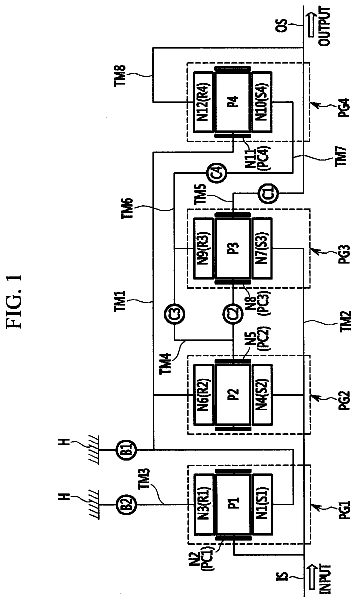
FIG. 1 is a schematic diagram of a planetary gear train according to various embodiments of the present invention.
FIG. 2 is an operational chart for respective control elements at respective shift-stages in the planetary gear train according to various embodiments of the present invention.
It should be understood that the appended drawings are not necessarily to scale, presenting a somewhat simplified representation of various features illustrative of the basic principles of the invention. The specific design features of the present invention as disclosed herein, including, for example, specific dimensions, orientations, locations, and shapes will be determined in part by the particular intended application and use environment.
Detailed description
Reference will now be made in detail to various embodiments of the present invention(s), examples of which are illustrated in the accompanying drawings and described below. While the invention(s) will be described in conjunction with exemplary embodiments, it will be understood that the present description is not intended to limit the invention(s) to those exemplary embodiments. On the contrary, the invention(s) is/are intended to cover not only the exemplary embodiments, but also various alternatives, modifications, equivalents and other embodiments, which may be included within the spirit and scope of the invention as defined by the appended claims.
FIG. 1 is a schematic diagram of a planetary gear train according to various embodiments of the present invention.
Referring to FIG. 1 , a planetary gear train according to various embodiments of the present invention includes first, second, third, and four planetary gear sets PG 1 , PG 2 , PG 3 , and PG 4 arranged on a same axis, an input shaft IS, an output shaft OS, seven shafts TM 1 to TM 7 interconnecting rotation elements of the first, second, third, and four planetary gear sets PG 1 , PG 2 , PG 3 , and PG 4 , four clutches C 1 to C 4 and two brakes B 1 and B 2 as control elements, and a transmission housing H.
Torque input from the input shaft IS is shifted by cooperative operation of the first, second, third, and fourth planetary gear sets PG 1 , PG 2 , PG 3 , and PG 4 , and then output through the output shaft OS.
The planetary gear sets are arranged in the order of first, second, third, and fourth planetary gear sets PG 1 , PG 2 , PG 3 , and PG 4 , from an engine side.
The input shaft IS is an input member and the torque from a crankshaft of an engine is input into the input shaft IS, after being torque-converted through a torque converter.
The output shaft OS is an output member, and being arranged on a same axis with the input shaft IS, delivers a shifted driving torque to a drive shaft through a differential apparatus.
The first planetary gear set PG 1 is a single pinion planetary gear set, and includes a SS, a first planet carrier PC 1 that supports first pinion gear P 1 externally engaged with the first sun gear S 1 , and a first ring gear R 1 that is internally engaged with the first pinion gear P 1 . The first sun gear S 1 acts as a first rotation element N 1 , the first planet carrier PC 1 acts as a second rotation element N 2 , and the first ring gear R 1 acts as a third rotation element N 3 .
The second planetary gear set PG 2 is a single pinion planetary gear set, and includes a SS, a second planet carrier PC 2 that supports second pinion gear P 2 externally engaged with the second sun gear S 2 , and a second ring gear R 2 that is internally engaged with the second pinion gear P 2 . The second sun gear S 2 acts as a fourth rotation element N 4 , the second planet carrier PC 2 acts as a fifth rotation element N 4 , and the second ring gear R 2 acts as a sixth rotation element N 6 .
The third planetary gear set PG 3 is a single pinion planetary gear set, and includes a SS, a third planet carrier PC 3 that supports third pinion gear P 3 externally engaged with the third sun gear S 3 , and a third ring gear R 3 that is internally engaged with the third pinion gear P 3 . The third sun gear S 3 acts as a seventh rotation element N 7 , the third planet carrier PC 3 acts as an eighth rotation element N 8 , and the third ring gear R 3 acts as a ninth rotation element N 9 .
The fourth planetary gear set PG 4 is a single pinion planetary gear set, and includes a SS, a fourth planet carrier PC 4 that supports fourth pinion gear P 4 externally engaged with the fourth sun gear S 4 , and a fourth ring gear R 4 that is internally engaged with the fourth pinion gear P 4 . The fourth sun gear S 4 acts as a tenth rotation element N 10 , the fourth planet carrier PC 4 acts as a eleventh rotation element N 11 , and the fourth ring gear R 4 acts as a twelfth rotation element N 12 .
In the first, second, third, and fourth planetary gear sets PG 1 , PG 2 , PG 3 , and PG 4 , the first rotation element N 1 is directly connected with the fourth rotation element N 4 , the fifth rotation element N 5 is directly connected with the ninth rotation element N 9 , the sixth rotation element N 6 is directly connected with the tenth rotation element N 10 , and the eighth rotation element N 8 is directly connected with the eleventh rotation element N 11 , by eight shafts TM 1 to TM 8 .
The eight shafts TM 1 to TM 8 are hereinafter described in detail.
Each of the eight shafts TM 1 to TM 8 may be a rotational member that directly interconnects the input and output shafts and rotation elements of the planetary gear sets PG 1 , PG 2 , PG 3 , and PG 4 , or may be a fixed member fixed to the transmission housing H.
The first shaft TM 1 directly connects the first rotation element N 1 (the first sun gear S 1 ) and the fourth rotation element (the N 4 , second sun gear N 4 ), and is directly connected with the input shaft IS, thereby continuously acting as an input element.
The second shaft TM 2 is connected with the second rotation element N 2 (first planet carrier PC 1 ), and directly connected with the output shaft OS, thereby continuously acting as an output element.
The third shaft TM 3 is connected with third rotation element N 3 (first ring gear R 1 ).
The fourth shaft TM 4 directly connects the fifth rotation element N 5 (the second planet carrier PC 2 ) and the ninth rotation element N 9 (the third ring gear R 3 ).
The fifth shaft TM 5 directly connects the sixth rotation element (the N 6 , second ring gear R 3 ) and the tenth rotation element N 10 (the fourth sun gear S 4 ), and is selectively connectable with the second shaft TM 2 and the third shaft TM 3 , respectively.
The sixth shaft TM 6 is connected with the seventh rotation element N 7 (third sun gear S 3 ), and selectively connectable with the transmission housing H, thereby selectively acting as a fixed element.
The seventh shaft TM 7 directly connects the eighth rotation element N 8 (the third planet carrier PC 3 ) and the eleventh rotation element N 11 (the fourth planet carrier PC 4 ), and is selectively connectable with the first shaft TM 1 directly connected with the input shaft IS thereby selectively acting as an input element or selectively connectable with the transmission housing H thereby selectively acting as a fixed element.
The eighth shaft TM 8 is connected with the twelfth rotation element N 12 (fourth ring gear R 4 ), and selectively connectable with the third shaft TM 3 .
The eight shafts TM 1 to TM 8 , the input shaft IS, and the output shaft OS may be selectively interconnected with one another by control elements of four clutches C 1 , C 2 , C 3 , and C 4 .
The eight shafts TM 1 to TM 8 may be selectively connectable with the transmission housing H, by control elements of two brake B 1 and B 2 .
The four clutch C 1 to C 4 and the two brake B 1 and B 2 are arranged as follows.
The first clutch C 1 is arranged between the first shaft TM 1 and the seventh shaft TM 7 , and selectively connects the first shaft TM 1 and the seventh shaft TM 7 , thereby controlling power delivery therebetween.
The second clutch C 2 is arranged between the second shaft TM 2 and the fifth shaft TM 5 , and selectively connects the second shaft TM 2 and the fifth shaft TM 5 , thereby controlling power delivery therebetween.
The third clutch C 3 is arranged between the third shaft TM 3 and the fifth shaft TM 5 , and selectively connects the third shaft TM 3 and the fifth shaft TM 5 , thereby controlling power delivery therebetween.
The fourth clutch C 4 is arranged between the third shaft TM 3 and the eighth shaft TM 8 , and selectively connects the third shaft TM 3 and the eighth shaft TM 8 , thereby controlling power delivery therebetween.
The first brake B 1 is arranged between the sixth shaft TM 6 and the transmission housing H, and selectively connects the sixth shaft TM 6 to the transmission housing H.
The second brake B 2 is arranged between the seventh shaft TM 7 and the transmission housing H, and selectively connects the seventh shaft TM 7 to the transmission housing H.
The respective control elements of the first, second, third, and fourth clutches C 1 , C 2 , C 3 , and C 4 and the first and second brakes B 1 and B 2 may be realized as multi-plate hydraulic pressure friction devices that are frictionally engaged by hydraulic pressure.
FIG. 2 is an operational chart for respective control elements at respective shift-stages in a planetary gear train according to various embodiments of the present invention.
Referring to FIG. 2 , a planetary gear train according to various embodiments of the present invention realizes nine forward speeds and one reverse speed by operating three control elements among the first, second, third, and fourth clutches C 1 , C 2 , C 3 , and C 4 and the first and second brakes B 1 and B 2 at respective shift-stages.
In the forward first speed shift-stage D 1 , the second and fourth clutches C 2 and C 4 and the second brake B 2 are operated.
As a result, the second shaft TM 2 is connected with the fifth shaft TM 5 by the operation of the second clutch C 2 , and the third shaft TM 3 is connected with the eighth shaft TM 8 by the operation of the fourth clutch C 4 . In this state, the torque of the input shaft IS is input to the first shaft TM 1 .
In addition, the seventh shaft TM 7 acts as a fixed element by the operation of the second brake B 2 , thereby realizing the forward first speed by cooperative operation of respective shafts and outputting a shifted torque to the output shaft OS connected with the second shaft TM 2 .
In the forward second speed shift-stage D 2 , the third and fourth clutches C 3 and C 4 and the second brake B 2 are operated.
As a result, the third shaft TM 3 is connected with the fifth shaft TM 5 and the eighth shaft TM 8 by the operation of the third clutch C 3 and the fourth clutch C 4 . In this state, the torque of the input shaft IS is input to the first shaft TM 1 .
In addition, the seventh shaft TM 7 acts as a fixed element by the operation of the second brake B 2 , thereby realizing the forward second speed by cooperative operation of respective shafts and outputting a shifted torque to the output shaft OS connected with the second shaft TM 2 .
In the forward third speed shift-stage D 3 , the fourth clutch C 4 and the first and second brakes B 1 and B 2 are operated.
As a result, the third shaft TM 3 is connected with the eighth shaft TM 8 by the operation of the fourth clutch C 4 . In this state, the torque of the input shaft IS is input to the first shaft TM 1 .
In addition, the sixth, seventh shaft TM 6 and TM 7 acts as a fixed element by the operation of the first and second brakes B 1 and B 2 , thereby realizing the forward third speed by cooperative operation of respective shafts and outputting a shifted torque to the output shaft OS connected with the second shaft TM 2 .
In the forward fourth speed shift-stage D 4 , the third and fourth clutches C 3 and C 4 and the first brake B 1 are operated.
As a result, the third shaft TM 3 is connected with the fifth shaft TM 5 and the eighth shaft TM 8 by the operation of the third clutch C 3 and the fourth clutch C 4 . In this state, the torque of the input shaft IS is input to the first shaft TM 1 .
In addition, the sixth shaft TM 6 acts as a fixed element by the operation of the first brake B 1 , thereby realizing the forward fourth speed by cooperative operation of respective shafts and outputting a shifted torque to the output shaft OS connected with the second shaft TM 2 .
In the forward fifth speed shift-stage D 5 , the second and fourth clutches C 2 and C 4 and the first brake B 1 are operated.
As a result, the second shaft TM 2 is connected with the fifth shaft TM 5 by the operation of the second clutch C 2 , and the third shaft TM 3 is connected with the eighth shaft TM 8 by the operation of the fourth clutch C 4 . In this state, the torque of the input shaft IS is input to the first shaft TM 1 .
In addition, the sixth shaft TM 6 acts as a fixed element by the operation of the first brake B 1 , thereby realizing the forward fifth speed by cooperative operation of respective shafts and outputting a shifted torque to the output shaft OS connected with the second shaft TM 2 .
In the forward sixth speed shift-stage D 6 , the first and fourth clutches C 1 and C 4 and the first brake B 1 are operated.
As a result, the first shaft TM 1 is connected with the seventh shaft TM 7 by the operation of the first clutch C 1 , and the third shaft TM 3 is connected with the eighth shaft TM 8 by the operation of the fourth clutch C 4 . In this state, the torque of the input shaft IS is input to the first shaft TM 1 .
In addition, the sixth shaft TM 6 acts as a fixed element by the operation of the first brake B 1 , thereby realizing the forward sixth speed by cooperative operation of respective shafts and outputting a shifted torque to the output shaft OS connected with the second shaft TM 2 .
In the forward seventh speed shift-stage D 7 , the first, third, and fourth clutches C 1 , C 3 , and C 4 are operated.
As a result, the first shaft TM 1 is connected with the seventh shaft TM 7 by the operation of the first clutch C 1 , the third shaft TM 3 is connected with the fifth shaft TM 5 by the operation of the third clutch C 3 , and the third shaft TM 3 is connected with the eighth shaft TM 8 by the operation of the fourth clutch C 4 . In this state, the torque of the input shaft IS is input to the first shaft TM 1 .
In this case, entire planetary gear sets PG 1 , PG 2 , PG 3 , and PG 4 integrally or monolithically rotate, and a torque is outputted as inputted, thereby forming the forward seventh speed and outputting the inputted torque to the output shaft OS connected with the second shaft TM 2 .
In the forward eighth speed shift-stage D 8 , the first and third clutches C 1 and C 3 and the first brake B 1 are operated.
As a result, the first shaft TM 1 is connected with the seventh shaft TM 7 by the operation of the first clutch C 1 , and the third shaft TM 3 is connected with the fifth shaft TM 5 by the operation of the third clutch C 3 . In this state, the torque of the input shaft IS is input to the first shaft TM 1 .
In addition, the sixth shaft TM 6 acts as a fixed element by the operation of the first brake B 1 , thereby realizing the forward eighth speed by cooperative operation of respective shafts and outputting a shifted torque to the output shaft OS connected with the second shaft TM 2 .
In the forward ninth speed shift-stage D 9 , the first and second clutches C 1 and C 2 and the first brake B 1 are operated.
As a result, the first shaft TM 1 is connected with the seventh shaft TM 7 by the operation of the first clutch C 1 , and the second shaft TM 2 is connected with the fifth shaft TM 5 by the operation of the second clutch C 2 . In this state, the torque of the input shaft IS is input to the first shaft TM 1 .
In addition, the sixth shaft TM 6 acts as a fixed element by the operation of the first brake B 1 , thereby realizing the forward ninth speed by cooperative operation of respective shafts and outputting a shifted torque to the output shaft OS connected with the second shaft TM 2 .
In the reverse speed REV, the second clutch C 2 and the first and second brakes B 1 and B 2 are operated.
As a result, the second shaft TM 2 is connected with the fifth shaft TM 5 by the operation of the second clutch C 2 . In this state, the torque of the input shaft IS is input to the first shaft TM 1 .
In addition, the sixth and seventh shafts TM 6 and TM 7 act as fixed elements by the operation of the first and second brakes B 1 and B 2 , thereby realizing the reverse speed by cooperative operation of respective shafts and outputting a reverse torque to the output shaft OS connected with the second shaft TM 2 .
As described above, a planetary gear train according to various embodiments of the present invention may realize at least nine forward speeds and at least one reverse speed by operating four planetary gear sets PG 1 , PG 2 , PG 3 , and PG 4 by controlling the four clutches C 1 , C 2 , C 3 , and C 4 and the two brake B 1 and B 2 .
In addition, a planetary gear train according to various embodiments of the present invention realizes shift stages appropriate for rotation speed of an engine due to multiple speed-stages of an automatic transmission and improves driving stability of a vehicle by utilizing a low rotation speed of an engine.
Furthermore, a planetary gear train according to various embodiments of the present invention maximizes engine driving efficiency by multiple speed-stages of an automatic transmission, and improves power delivery performance and fuel consumption.
For convenience in explanation and accurate definition in the appended claims, the terms “upper”, “lower”, “inner” and “outer”, “up,” “down,” “upper”, “lower,” “upwards,” “downwards”, “front”, “rear”, “back”, “inside”, “outside”, “inwardly,” “outwardly,” “interior”, “exterior”, “inner,” “outer”, “forwards” and “backwards” are used to describe features of the exemplary embodiments with reference to the positions of such features as displayed in the figures.
The foregoing descriptions of specific exemplary embodiments of the present invention have been presented for purposes of illustration and description. They are not intended to be exhaustive or to limit the invention to the precise forms disclosed, and obviously many modifications and variations are possible in light of the above teachings. The exemplary embodiments were chosen and described in order to explain certain principles of the invention and their practical application, to thereby enable others skilled in the art to make and utilize various exemplary embodiments of the present invention, as well as various alternatives and modifications thereof. It is intended that the scope of the invention be defined by the Claims appended hereto and their equivalents.
 Lapsed, fee not paid2 drawings