 Lapsed, fee not paid5 drawings
Hardware & Electronics · US 9,798,424 B2
Transparent conductive film
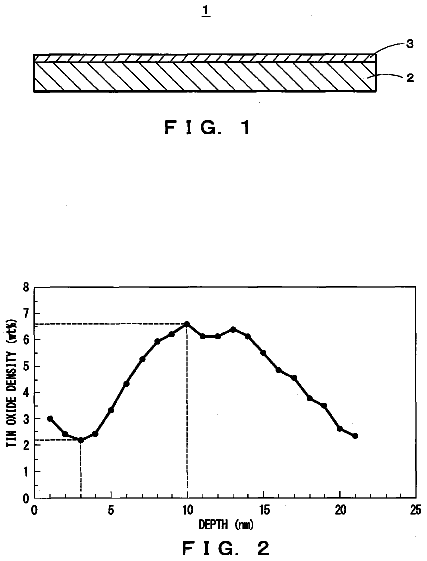
A transparent conductive film includes a film base, and a polycrystalline layer of indium tin oxide formed on the film base.
US 9,798,821 B2 · Assignee: Telenav, Inc. · Inventors: Yang; Jianyi et al.
Sheet 1 of 6 from the published document. All sheets in the USPTO PDF
A method of operation of a navigation system includes: generating a signal weight with a control unit based on a feature extracted from a user activity; generating an activity model based on the signal weight for representing the feature as a positive weight or a negative weight depending on an activity type, a category of interest, or a combination thereof; classifying a user entry based on comparing the feature of the user entry to the feature represented in the activity model; and determining a user's intention based on the user entry classified for presenting a point of interest on a device.
Modern portable consumer and industrial electronics, especially client devices such as navigation systems, cellular phones, portable digital assistants, and combination devices, are providing increasing levels of functionality to support modern life including location-based information services. Research and development in the existing technologies can take a myriad of different directions. As users become more empowered with the growth of mobile location based service devices, new and old paradigms begin to take advantage of this new device space. There are many technological solutions to take advantage of this new device location opportunity. One existing approach is to use location information to provide navigation services such as a global positioning system (GPS) for a car or on a mobile device such as a cell phone, portable navigation device (PND) or a personal digital assistant (P
All 6 drawing sheets from the published document, cropped to the drawing.
What the patent claimed, word for word. All of it is now free to use.
The present invention relates generally to a navigation system, and more particularly to a system with classification mechanism.
Modern portable consumer and industrial electronics, especially client devices such as navigation systems, cellular phones, portable digital assistants, and combination devices, are providing increasing levels of functionality to support modern life including location-based information services. Research and development in the existing technologies can take a myriad of different directions.
As users become more empowered with the growth of mobile location based service devices, new and old paradigms begin to take advantage of this new device space. There are many technological solutions to take advantage of this new device location opportunity. One existing approach is to use location information to provide navigation services such as a global positioning system (GPS) for a car or on a mobile device such as a cell phone, portable navigation device (PND) or a personal digital assistant (PDA).
Location based services allow users to create, transfer, store, and/or consume information in order for users to create, transfer, store, and consume in the “real world.” One such use of location based services is to efficiently transfer or route users to the desired destination or service.
Navigation systems and location based services enabled systems have been incorporated in automobiles, notebooks, handheld devices, and other portable products. Today, these systems aid users by incorporating available, real-time relevant information, such as maps, directions, local businesses, or other points of interest (POI). The real-time information provides invaluable relevant information.
However, a navigation system improving classification mechanism to categorize entry has become a paramount concern for the consumer. The inability decreases the benefit of using the tool.
Thus, a need still remains for a navigation system with classification mechanism to categorize the entry. In view of the increasing mobility of the workforce and social interaction, it is increasingly critical that answers be found to these problems. In view of the ever-increasing commercial competitive pressures, along with growing consumer expectations and the diminishing opportunities for meaningful product differentiation in the marketplace, it is critical that answers be found for these problems. Additionally, the need to reduce costs, improve efficiencies and performance, and meet competitive pressures adds an even greater urgency to the critical necessity for finding answers to these problems. Solutions to these problems have been long sought but prior developments have not taught or suggested any solutions and, thus, solutions to these problems have long eluded those skilled in the art.
The present invention provides a method of operation of a navigation system including: generating a signal weight with a control unit based on a feature extracted from a user activity; generating an activity model based on the signal weight for representing the feature as a positive weight or a negative weight depending on an activity type, a category of interest, or a combination thereof; classifying a user entry based on comparing the feature of the user entry to the feature represented in the activity model; and determining a user's intention based on the user entry classified for presenting a point of interest on a device.
The present invention provides a navigation system, including a control unit for: generating a signal weight with a control unit based on a feature extracted from a user activity, generating an activity model based on the signal weight for representing the feature as a positive weight or a negative weight depending on an activity type, a category of interest, or a combination thereof, classifying a user entry based on comparing the feature of the user entry to the feature represented in the activity model, determining a user's intention based on the user entry classified, and a communication interface, coupled to the control unit, for communicating the user's intention for displaying a point of interest on a device.
The present invention provides a navigation system having a non-transitory computer readable medium including: generating a signal weight based on a feature extracted from a user activity; generating an activity model based on the signal weight for representing the feature as a positive weight or a negative weight depending on an activity type, a category of interest, or a combination thereof; classifying a user entry based on comparing the feature of the user entry to the feature represented in the activity model; and determining a user's intention based on the user entry classified for presenting a point of interest on a device.
Certain embodiments of the invention have other steps or elements in addition to or in place of those mentioned above. The steps or element will become apparent to those skilled in the art from a reading of the following detailed description when taken with reference to the accompanying drawings.
FIG. 1 is a navigation system with classification mechanism in an embodiment of the present invention.
FIG. 2 is an example of a geographic area traveled by the user of the navigation system.
FIG. 3 is an example of the navigation system determining a user's intention.
FIG. 4 is an exemplary block diagram of the navigation system.
FIG. 5 is a control flow of the navigation system.
FIG. 6 is a flow chart of a method of operation of the navigation system in a further embodiment of the present invention.
The following embodiments are described in sufficient detail to enable those skilled in the art to make and use the invention. It is to be understood that other embodiments would be evident based on the present disclosure, and that system, process, or mechanical changes may be made without departing from the scope of the present invention.
In the following description, numerous specific details are given to provide a thorough understanding of the invention. However, it will be apparent that the invention may be practiced without these specific details. In order to avoid obscuring the present invention, some well-known circuits, system configurations, and process steps are not disclosed in detail.
The drawings showing embodiments of the navigation system 100 are semi-diagrammatic and not to scale and, particularly, some of the dimensions are for the clarity of presentation and are shown exaggerated in the drawing FIGs. Similarly, although the views in the drawings for ease of description generally show similar orientations, this depiction in the FIGs. is arbitrary for the most part. Generally, the invention can be operated in any orientation. The embodiments have been numbered first embodiment, second embodiment, etc. as a matter of descriptive convenience and are not intended to have any other significance or provide limitations for the present invention.
One skilled in the art would appreciate that the format with which navigation information is expressed is not critical to some embodiments of the invention. For example, in some embodiments, navigation information is presented in the format of (X, Y), where X and Y are two ordinates that define the geographic location, i.e., a position of a user.
In an alternative embodiment, navigation information is presented by longitude and latitude related information. In a further embodiment of the present invention, the navigation information also includes a velocity element including a speed component and a heading component.
The term “relevant information” referred to herein includes the navigation information described as well as information relating to points of interest to the user, such as local business, hours of businesses, types of businesses, advertised specials, traffic information, maps, local events, and nearby community or personal information.
The term “module” referred to herein can include software, hardware, or a combination thereof in the present invention in accordance with the context in which the term is used. For example, the software can be machine code, firmware, embedded code, and application software. Also for example, the hardware can be circuitry, processor, computer, integrated circuit, integrated circuit cores, a pressure sensor, an inertial sensor, a microelectromechanical system (MEMS), passive devices, or a combination thereof. Further, if a module is written in the apparatus claims section below, the modules are deemed to include hardware circuitry for the purposes and the scope of apparatus claims.
Referring now to FIG. 1 , therein is shown a navigation system 100 with classification mechanism in an embodiment of the present invention. The navigation system 100 includes a first device 102 , such as a client or a server, connected to a second device 106 , such as a client or server, with a communication path 104 , such as a wireless or wired network.
For example, the first device 102 can be of any of a variety of mobile devices, such as a cellular phone, personal digital assistant, a notebook computer, automotive telematic navigation system, or other multi-functional mobile communication or entertainment device. The first device 102 can be a standalone device, or can be incorporated with a vehicle, for example a car, truck, bus, or train. The first device 102 can couple to the communication path 104 to communicate with the second device 106 .
For illustrative purposes, the navigation system 100 is described with the first device 102 as a mobile computing device, although it is understood that the first device 102 can be different types of computing devices. For example, the first device 102 can also be a non-mobile computing device, such as a server, a server farm, or a desktop computer. In another example, the first device 102 can be a particularized machine, such as a mainframe, a server, a cluster server, rack mounted server, or a blade server, or as more specific examples, an IBM System z10™ Business Class mainframe or a HP ProLiant ML™ server.
The second device 106 can be any of a variety of centralized or decentralized computing devices. For example, the second device 106 can be a computer, grid computing resources, a virtualized computer resource, cloud computing resource, routers, switches, peer-to-peer distributed computing devices, or a combination thereof.
The second device 106 can be centralized in a single computer room, distributed across different rooms, distributed across different geographical locations, embedded within a telecommunications network. The second device 106 can have a means for coupling with the communication path 104 to communicate with the first device 102 . The second device 106 can also be a client type device as described for the first device 102 . Another example, the first device 102 or the second device 106 can be a particularized machine, such as a portable computing device, a thin client, a notebook, a netbook, a smartphone, a tablet, a personal digital assistant, or a cellular phone, and as specific examples, an Apple iPhone™, Android™ smartphone, or Windows™ platform smartphone.
For illustrative purposes, the navigation system 100 is described with the second device 106 as a non-mobile computing device, although it is understood that the second device 106 can be different types of computing devices. For example, the second device 106 can also be a mobile computing device, such as notebook computer, another client device, or a different type of client device. The second device 106 can be a standalone device, or can be incorporated with a vehicle, for example a car, truck, bus, or train.
Also for illustrative purposes, the navigation system 100 is shown with the second device 106 and the first device 102 as end points of the communication path 104 , although it is understood that the navigation system 100 can have a different partition between the first device 102 , the second device 106 , and the communication path 104 . For example, the first device 102 , the second device 106 , or a combination thereof can also function as part of the communication path 104 .
The communication path 104 can be a variety of networks. For example, the communication path 104 can include wireless communication, wired communication, optical, ultrasonic, or the combination thereof. Satellite communication, cellular communication, Bluetooth, Infrared Data Association standard (IrDA), wireless fidelity (WiFi), and worldwide interoperability for microwave access (WiMAX) are examples of wireless communication that can be included in the communication path 104 . Ethernet, digital subscriber line (DSL), fiber to the home (FTTH), and plain old telephone service (POTS) are examples of wired communication that can be included in the communication path 104 .
Further, the communication path 104 can traverse a number of network topologies and distances. For example, the communication path 104 can include direct connection, personal area network (PAN), local area network (LAN), metropolitan area network (MAN), wide area network (WAN) or any combination thereof.
Referring now to FIG. 2 , there is shown an example of a geographic area 202 traveled by the user of the navigation system 100 . For clarity and brevity, the discussion of the embodiment of the present invention will focus on the first device 102 delivering the result generated by the navigation system 100 . However, the second device 106 of FIG. 1 and the first device 102 can be discussed interchangeably.
The geographic area 202 is defined as a representation of a physical area. For example, the geographic area 202 can represent a digital representation of a neighborhood, city, county, state, country, or a combination thereof. The geographic area 202 can include a geographic location 204 , which is defined as a representation of a physical location. For example, the first device 102 can display the geographic location 204 as a digital representation of the physical location.
A current location 206 is defined as a representation of where the first device 102 is located. For example, the navigation system 100 can detect the current location 206 representing the digital representation of the physical location where the user of the first device 102 is detected.
The geographic area 202 can include a point of interest 208 , which is defined as a representation of a physical location desired. For example, the point of interest 208 can represent a restaurant searched by the user of the navigation system 100 . For a different example, the point of interest 208 can represent a physical location targeted as a destination for the user's travel.
The point of interest 208 can be categorized by a category of interest 210 . The category of interest 210 is defined as classification of the point of interest 208 . For example, the category of interest 210 can include restaurant, shopping, arts and entertainment, hotels and travel, health and medical, nightlife, or a combination thereof.
The user traveling through the geographic area 202 can be situated in a travel context 212 . The travel context 212 is defined as a situation or environment surrounding the first device 102 . For example, the travel context 212 can include a travel condition 214 , such as a timeframe 216 , a road type, the current location 206 , a travel history 218 , or a combination thereof. The road type can include dirt road, local road, arterial road, expressway, freeway, or a combination thereof.
The travel condition 214 is defined as a factor that influences the user's travel. The timeframe 216 is defined as a period of time. For example, the timeframe 216 can represent time of day, week, month, year, season, or a combination thereof. The travel history 218 is defined as user's travel record. For example, the travel history 218 can represent the user's travel record for traversing a particular instance of the geographic area 202 . A travel threshold 220 is defined as minimum frequency for traveling. For example, the travel threshold 220 can represent the minimum number of times that the user had travel to the geographic area 202 , the geographic location 204 , the current location 206 , the point of interest 208 , or a combination thereof.
Referring now to FIG. 3 , there is shown an example of the navigation system 100 determining a user's intention 302 . For example, the first device 102 and the second device 106 can exchange data to determine the user's intention 302 . The user's intention 302 is defined as user's purpose. For example, the user's intention 302 for making a user entry 304 to the navigation system 100 can represent searching for the point of interest 208 of FIG. 2 representing the category of interest 210 for restaurant.
The user entry 304 can represent an input made to the first device 102 . For example, the user entry 304 can include manual input, audio command, gesture, or a combination thereof. The user entry 304 can include a search query 306 . The search query 306 is defined as input requesting the navigation system 100 to generate a result. For example, the search query 306 can represent a request by the user to the navigation system 100 to locate the point of interest 208 representing a restaurant near the current location 206 of FIG. 2 .
The navigation system 100 can track the user entry 304 made by generating an activity history 308 of a user activity 310 . The activity history 308 is a record of action performed with the first device 102 . For example, the user activity 310 can represent the user entry 304 for the search query 306 made on the first device 102 . An activity type 312 is defined as a classification of the user activity 310 .
An entry pattern 314 is defined as a tendency of the user entry 304 . For example, the entry pattern 314 can indicate that the user tends to make the user entry 304 after eating at a restaurant to write a review about the food. For a different example, the entry pattern 314 can represent the user's habit to search on the navigation system 100 for place to have coffee at a different location from where he or she had dinner.
An entry relevancy 316 is defined as an association between a plurality of the user entry 304 . For example, if the plurality of the user entry 304 is made after watching the same movie, the navigation system 100 can determine the entry relevancy 316 between the plurality of the user entry 304 related to that particular movie. The entry relevancy 316 can represent an association between the plurality of the user entry 304 made by the same user, different users, or a combination thereof. The entry relevancy 316 can represent the relationship amongst a plurality of the user entry 304 .
For further example, the navigation system 100 can categorize the user entry 304 with an entry category 318 . The entry category 318 is defined as a classification of the user entry 304 . More specifically as an example, the entry category 318 can correlate to the category of interest 210 by associating the user entry 304 to a specific instance of the category of interest 210 .
For example, if the user entry 304 is related to a drug name, the user entry 304 can be categorized to the entry category 318 representing medical or healthcare. For further example, the navigation system 100 can calculate a category score 320 for categorizing the user entry 304 . The category score 320 is defined as a value used to classify the user entry 304 . The category score 320 can represent an alphanumeric value.
The navigation system 100 can extract a feature 322 from the search query 306 . The feature 322 is defined as information from the user activity 310 . For example, the feature 322 can include a unique word from the search query 306 . The unique word can include proper noun, the timeframe 216 of FIG. 2 , the point of interest 208 , the category of interest 210 of FIG. 2 , the device type, or a combination thereof. For another example, the feature 322 can represent the user activity 310 logged in the activity history 308 . More specifically as an example, the feature 322 can represent driving at the timeframe 216 representing 5 pm.
A signal weight 324 is an indicator value. For example, the signal weight 324 can indicate whether user's interest is towards a particular instance of the category of interest 210 or different instance of the category of interest 210 . The signal weight 324 can represent an alphanumeric value. More specifically as an example, the signal weight 324 can include a positive weight 326 , a negative weight 328 , or a combination thereof.
The positive weight 326 can represent the signal weight 324 above a weight threshold 330 . The negative weight 328 can represent the signal weight 324 below the weight threshold 330 . The weight threshold 330 is defined as a divider value to classify whether the signal weight 324 is positive or negative. For example, the weight threshold 330 can represent an alphanumeric value.
A weight type 332 is a classification of the signal weight 324 . For example, the weight type 332 of the signal weight 324 can be classified according to the activity type 312 , the category of interest 210 , or a combination thereof. For further example, certain instance of the weight type 332 can have a higher instance of a weight priority 334 over another instance of the weight type 332 . The weight priority 334 is defined as a superiority of certain instance of the weight type 332 over another instance of the weight type 332 .
An activity model 336 is defined as a representation of the user activity 310 . For example, the navigation system 100 can build and train the activity model 336 to refine the representation of the user activity 310 . For example, the activity model 336 can represent a representation of how the user performs the search query 306 . For another example, the activity model 336 can represent the user's intention 302 for certain instance of the activity type 312 .
Referring now to FIG. 4 , therein is shown an exemplary block diagram of the navigation system 100 . The navigation system 100 can include the first device 102 , the communication path 104 , and the second device 106 . The first device 102 can send information in a first device transmission 408 over the communication path 104 to the second device 106 . The second device 106 can send information in a second device transmission 410 over the communication path 104 to the first device 102 .
For illustrative purposes, the navigation system 100 is shown with the first device 102 as a client device, although it is understood that the navigation system 100 can have the first device 102 as a different type of device. For example, the first device 102 can be a server.
Also for illustrative purposes, the navigation system 100 is shown with the second device 106 as a server, although it is understood that the navigation system 100 can have the second device 106 as a different type of device. For example, the second device 106 can be a client device.
For brevity of description in this embodiment of the present invention, the first device 102 will be described as a client device and the second device 106 will be described as a server device. The present invention is not limited to this selection for the type of devices. The selection is an example of the present invention.
The first device 102 can include a first control unit 412 , a first storage unit 414 , a first communication unit 416 , a first user interface 418 , and a location unit 420 . The first control unit 412 can include a first control interface 422 . The first control unit 412 can execute a first software 426 to provide the intelligence of the navigation system 100 . The first control unit 412 can be implemented in a number of different manners. For example, the first control unit 412 can be a processor, an embedded processor, a microprocessor, a hardware control logic, a hardware finite state machine (FSM), a digital signal processor (DSP), or a combination thereof. The first control interface 422 can be used for communication between the first control unit 412 and other functional units in the first device 102 . The first control interface 422 can also be used for communication that is external to the first device 102 .
The first control interface 422 can receive information from the other functional units or from external sources, or can transmit information to the other functional units or to external destinations. The external sources and the external destinations refer to sources and destinations physically separate from the first device 102 .
The first control interface 422 can be implemented in different ways and can include different implementations depending on which functional units or external units are being interfaced with the first control interface 422 . For example, the first control interface 422 can be implemented with a pressure sensor, an inertial sensor, a microelectromechanical system (MEMS), optical circuitry, waveguides, wireless circuitry, wireline circuitry, or a combination thereof.
The location unit 420 can generate location information, current heading, and current speed of the first device 102 , as examples. The location unit 420 can be implemented in many ways. For example, the location unit 420 can function as at least a part of a global positioning system (GPS), an inertial navigation system, a cellular-tower location system, a pressure location system, or any combination thereof.
The location unit 420 can include a location interface 432 . The location interface 432 can be used for communication between the location unit 420 and other functional units in the first device 102 . The location interface 432 can also be used for communication that is external to the first device 102 .
The location interface 432 can receive information from the other functional units or from external sources, or can transmit information to the other functional units or to external destinations. The external sources and the external destinations refer to sources and destinations physically separate from the first device 102 .
The location interface 432 can include different implementations depending on which functional units or external units are being interfaced with the location unit 420 . The location interface 432 can be implemented with technologies and techniques similar to the implementation of the first control interface 422 .
The first storage unit 414 can store the first software 426 . The first storage unit 414 can also store the relevant information, such as advertisements, points of interest (POI), navigation routing entries, or any combination thereof.
The first storage unit 414 can be a volatile memory, a nonvolatile memory, an internal memory, an external memory, or a combination thereof. For example, the first storage unit 414 can be a nonvolatile storage such as non-volatile random access memory (NVRAM), Flash memory, disk storage, or a volatile storage such as static random access memory (SRAM).
The first storage unit 414 can include a first storage interface 424 . The first storage interface 424 can be used for communication between the location unit 420 and other functional units in the first device 102 . The first storage interface 424 can also be used for communication that is external to the first device 102 .
The first storage interface 424 can receive information from the other functional units or from external sources, or can transmit information to the other functional units or to external destinations. The external sources and the external destinations refer to sources and destinations physically separate from the first device 102 .
The first storage interface 424 can include different implementations depending on which functional units or external units are being interfaced with the first storage unit 414 . The first storage interface 424 can be implemented with technologies and techniques similar to the implementation of the first control interface 422 .
The first communication unit 416 can enable external communication to and from the first device 102 . For example, the first communication unit 416 can permit the first device 102 to communicate with the second device 106 , an attachment, such as a peripheral device or a computer desktop, and the communication path 104 .
The first communication unit 416 can also function as a communication hub allowing the first device 102 to function as part of the communication path 104 and not limited to be an end point or terminal unit to the communication path 104 . The first communication unit 416 can include active and passive components, such as microelectronics or an antenna, for interaction with the communication path 104 .
The first communication unit 416 can include a first communication interface 428 . The first communication interface 428 can be used for communication between the first communication unit 416 and other functional units in the first device 102 . The first communication interface 428 can receive information from the other functional units or can transmit information to the other functional units.
The first communication interface 428 can include different implementations depending on which functional units are being interfaced with the first communication unit 416 . The first communication interface 428 can be implemented with technologies and techniques similar to the implementation of the first control interface 422 .
The first user interface 418 allows a user (not shown) to interface and interact with the first device 102 . The first user interface 418 can include an input device and an output device. Examples of the input device of the first user interface 418 can include a keypad, a touchpad, soft-keys, a keyboard, a microphone, a camera, or any combination thereof to provide data and communication inputs.
The first user interface 418 can include a first display interface 430 . The first display interface 430 can include a display, a projector, a video screen, a speaker, a headset, or any combination thereof.
The first control unit 412 can operate the first user interface 418 to display information generated by the navigation system 100 . The first control unit 412 can also execute the first software 426 for the other functions of the navigation system 100 , including receiving location information from the location unit 420 . The first control unit 412 can further execute the first software 426 for interaction with the communication path 104 via the first communication unit 416 .
The second device 106 can be optimized for implementing the present invention in a multiple device embodiment with the first device 102 . The second device 106 can provide the additional or higher performance processing power compared to the first device 102 . The second device 106 can include a second control unit 434 , a second communication unit 436 , and a second user interface 438 .
The second user interface 438 allows a user (not shown) to interface and interact with the second device 106 . The second user interface 438 can include an input device and an output device. Examples of the input device of the second user interface 438 can include a keypad, a touchpad, soft-keys, a keyboard, a microphone, a camera, or any combination thereof to provide data and communication inputs. Examples of the output device of the second user interface 438 can include a second display interface 440 . The second display interface 440 can include a display, a projector, a video screen, a speaker, a headset, or any combination thereof.
The second control unit 434 can execute a second software 442 to provide the intelligence of the second device 106 of the navigation system 100 . The second software 442 can operate in conjunction with the first software 426 . The second control unit 434 can provide additional performance compared to the first control unit 412 .
The second control unit 434 can operate the second user interface 438 to display information. The second control unit 434 can also execute the second software 442 for the other functions of the navigation system 100 , including operating the second communication unit 436 to communicate with the first device 102 over the communication path 104 .
The second control unit 434 can be implemented in a number of different manners. For example, the second control unit 434 can be a processor, an embedded processor, a microprocessor, a hardware control logic, a hardware finite state machine (FSM), a digital signal processor (DSP), or a combination thereof.
The second control unit 434 can include a second control interface 444 . The second control interface 444 can be used for communication between the second control unit 434 and other functional units in the second device 106 . The second control interface 444 can also be used for communication that is external to the second device 106 .
The second control interface 444 can receive information from the other functional units or from external sources, or can transmit information to the other functional units or to external destinations. The external sources and the external destinations refer to sources and destinations physically separate from the second device 106 .
The second control interface 444 can be implemented in different ways and can include different implementations depending on which functional units or external units are being interfaced with the second control interface 444 . For example, the second control interface 444 can be implemented with a pressure sensor, an inertial sensor, a microelectromechanical system (MEMS), optical circuitry, waveguides, wireless circuitry, wireline circuitry, or a combination thereof.
A second storage unit 446 can store the second software 442 . The second storage unit 446 can also store the relevant information, such as advertisements, points of interest (POI), navigation routing entries, or any combination thereof. The second storage unit 446 can be sized to provide the additional storage capacity to supplement the first storage unit 414 .
For illustrative purposes, the second storage unit 446 is shown as a single element, although it is understood that the second storage unit 446 can be a distribution of storage elements. Also for illustrative purposes, the navigation system 100 is shown with the second storage unit 446 as a single hierarchy storage system, although it is understood that the navigation system 100 can have the second storage unit 446 in a different configuration. For example, the second storage unit 446 can be formed with different storage technologies forming a memory hierarchal system including different levels of caching, main memory, rotating media, or off-line storage.
The second storage unit 446 can be a volatile memory, a nonvolatile memory, an internal memory, an external memory, or a combination thereof. For example, the second storage unit 446 can be a nonvolatile storage such as non-volatile random access memory (NVRAM), Flash memory, disk storage, or a volatile storage such as static random access memory (SRAM).
The second storage unit 446 can include a second storage interface 448 . The second storage interface 448 can be used for communication between the location unit 420 and other functional units in the second device 106 . The second storage interface 448 can also be used for communication that is external to the second device 106 .
The second storage interface 448 can receive information from the other functional units or from external sources, or can transmit information to the other functional units or to external destinations. The external sources and the external destinations refer to sources and destinations physically separate from the second device 106 .
The second storage interface 448 can include different implementations depending on which functional units or external units are being interfaced with the second storage unit 446 . The second storage interface 448 can be implemented with technologies and techniques similar to the implementation of the second control interface 444 .
The second communication unit 436 can enable external communication to and from the second device 106 . For example, the second communication unit 436 can permit the second device 106 to communicate with the first device 102 over the communication path 104 .
The second communication unit 436 can also function as a communication hub allowing the second device 106 to function as part of the communication path 104 and not limited to be an end point or terminal unit to the communication path 104 . The second communication unit 436 can include active and passive components, such as microelectronics or an antenna, for interaction with the communication path 104 .
The second communication unit 436 can include a second communication interface 450 . The second communication interface 450 can be used for communication between the second communication unit 436 and other functional units in the second device 106 . The second communication interface 450 can receive information from the other functional units or can transmit information to the other functional units.
The second communication interface 450 can include different implementations depending on which functional units are being interfaced with the second communication unit 436 . The second communication interface 450 can be implemented with technologies and techniques similar to the implementation of the second control interface 444 .
The first communication unit 416 can couple with the communication path 104 to send information to the second device 106 in the first device transmission 408 . The second device 106 can receive information in the second communication unit 436 from the first device transmission 408 of the communication path 104 .
The second communication unit 436 can couple with the communication path 104 to send information to the first device 102 in the second device transmission 410 . The first device 102 can receive information in the first communication unit 416 from the second device transmission 410 of the communication path 104 . The navigation system 100 can be executed by the first control unit 412 , the second control unit 434 , or a combination thereof.
For illustrative purposes, the second device 106 is shown with the partition having the second user interface 438 , the second storage unit 446 , the second control unit 434 , and the second communication unit 436 , although it is understood that the second device 106 can have a different partition. For example, the second software 442 can be partitioned differently such that some or all of its function can be in the second control unit 434 and the second communication unit 436 . Also, the second device 106 can include other functional units not shown in FIG. 4 for clarity.
The functional units in the first device 102 can work individually and independently of the other functional units. The first device 102 can work individually and independently from the second device 106 and the communication path 104 .
The functional units in the second device 106 can work individually and independently of the other functional units. The second device 106 can work individually and independently from the first device 102 and the communication path 104 .
For illustrative purposes, the navigation system 100 is described by operation of the first device 102 and the second device 106 . It is understood that the first device 102 and the second device 106 can operate any of the modules and functions of the navigation system 100 . For example, the first device 102 is described to operate the location unit 420 , although it is understood that the second device 106 can also operate the location unit 420 .
The description continues in the full USPTO document.
About 6,546 words. The USPTO PDF has it with every drawing.
Fees are due 3.5, 7.5 and 11.5 years after grant. This patent expired on October 24, 2025, so the fee marked "not paid" was the one that went unpaid.
NAVIGATION SYSTEM WITH CLASSIFICATION MECHANISM AND METHOD OF OPERATION THEREOF
Filed Dec 2014 · published Jun 2015Navigation system with classification mechanism and method of operation thereof
Filed Dec 2014 · granted Oct 2017Earlier publications, parents and continuations. None of them can still be enforced, or this patent would not be listed.
Prior art cited by the examiner or applicant. Useful when you check your own idea for novelty.
Everything on this page comes from the documents linked above.