Lapsed, fee not paidUS 9,797,015 B2
Biotech & Lab · US 9,797,015 B2
Genetic variants associated with lithium response in bipolar disorder
Described herein is a method of determining lithium responsiveness in a bipolar disorder patient.
US 9,797,908 B2 · Assignee: The Scripps Research Institute · Inventors: Deiters; Alexander et al.
Sheet 1 of 28 from the published document. All sheets in the USPTO PDF
This invention provides compositions and methods for producing translational components that expand the number of genetically encoded amino acids in eukaryotic cells. The components include orthogonal tRNAs, orthogonal aminoacyl-tRNA synthetases, orthogonal pairs of tRNAs/synthetases and unnatural amino acids. Proteins and methods of producing proteins with unnatural amino acids in eukaryotic cells are also provided.
The genetic code of every known organism, from bacteria to humans, encodes the same twenty common amino acids. Different combinations of the same twenty natural amino acids form proteins that carry out virtually all the complex processes of life, from photosynthesis to signal transduction and the immune response. In order to study and modify protein structure and function, scientists have attempted to manipulate both the genetic code and the amino acid sequence of proteins. However, it has been difficult to remove the constraints imposed by the genetic code that limit proteins to twenty genetically encoded standard building blocks (with the rare exception of selenocysteine (see, e.g., A. Bock et al., (1991), Molecular Microbiology 5:515-20) and pyrrolysine (see, e.g., G. Srinivasan, et al., (2002), Science 296:1459-62). Some progress has been made to remove these constraints, although th
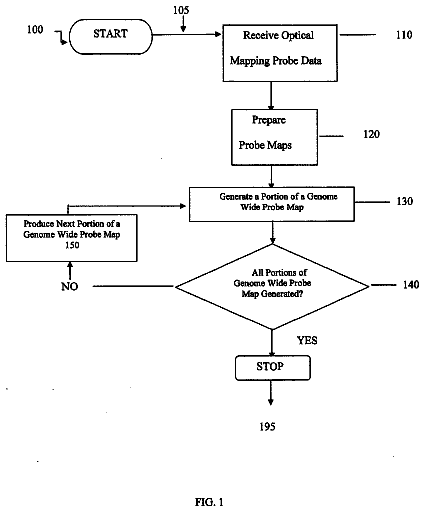
1 of 28 drawing sheets so far from the published document, cropped to the drawing. Every sheet is in the USPTO PDF.
What the patent claimed, word for word. All of it is now free to use.
The invention pertains to the field of translation biochemistry in eukaryotic cells. The invention relates to methods for producing and compositions of orthogonal tRNAs, orthogonal synthetases and pairs thereof, in eukaryotic cells. The invention also relates to compositions of unnatural amino acids, proteins and methods of producing proteins in eukaryotic cells that include unnatural amino acids.
The genetic code of every known organism, from bacteria to humans, encodes the same twenty common amino acids. Different combinations of the same twenty natural amino acids form proteins that carry out virtually all the complex processes of life, from photosynthesis to signal transduction and the immune response. In order to study and modify protein structure and function, scientists have attempted to manipulate both the genetic code and the amino acid sequence of proteins. However, it has been difficult to remove the constraints imposed by the genetic code that limit proteins to twenty genetically encoded standard building blocks (with the rare exception of selenocysteine (see, e.g., A. Bock et al., (1991), Molecular Microbiology 5:515-20) and pyrrolysine (see, e.g., G. Srinivasan, et al., (2002), Science 296:1459-62).
Some progress has been made to remove these constraints, although this progress has been limited and the ability to rationally control protein structure and function is still in its infancy. For example, chemists have developed methods and strategies to synthesize and manipulate the structures of small molecules (see, e.g., E. J. Corey, & X.-M. Cheng, The Logic of Chemical Synthesis (Wiley-Interscience, New York, 1995)). Total synthesis (see, e.g., B. Merrifield, (1986), Science 232:341-7 (1986)), and semi-synthetic methodologies (see, e.g., D. Y. Jackson et al.,
Science 266:243-7; and, P. E. Dawson, & S. B. Kent, (2000), Annual Review of Biochemistry 69:923-60), have made it possible to synthesize peptides and small proteins, but these methodologies have limited utility with proteins over 10 kilo Daltons (kDa). Mutagenesis methods, though powerful, are restricted to a limited number of structural changes. In a number of cases, it has been possible to competitively incorporate close structural analogues of common amino acids throughout proteins. See, e.g., R. Furter, (1998), Protein Science 7:419-26; K. Kirshenbaum, et al., (2002), ChemBioChem 3:235-7; and, V. Doring et al., (2001), Science 292:501-4.
In an attempt to expand the ability to manipulate protein structure and function, in vitro methods using chemically acylated orthogonal tRNAs were developed that allowed unnatural amino acids to be selectively incorporated in response to a nonsense codon, in vitro (see, e.g., J. A. Ellman, et al., (1992), Science 255:197-200). Amino acids with novel structures and physical properties were selectively incorporated into proteins to study protein folding and stability and biomolecular recognition and catalysis. See, e.g., D. Mendel, et al., (1995), Annual Review of Biophysics and Biomolecular Structure 24:435-462; and, V. W. Cornish, et al. (Mar. 31, 1995), Angewandte Chemie - International Edition in English 34:621-633. However, the stoichiometric nature of this process severely limited the amount of protein that could be generated.
Unnatural amino acids have been microinjected into cells. For example, unnatural amino acids were introduced into the nicotinic acetylcholine receptor in Xenopus oocytes (e.g., M. W. Nowak, et al. (1998), In vivo incorporation of unnatural amino acids into ion channels in Xenopus oocyte expression system, Method Enzymol. 293:504-529) by microinjection of a chemically misacylated Tetrahymena thermophila tRNA (e.g., M. E. Saks, et al. (1996), An engineered Tetrahymena tRNAGln for in vivo incorporation of unnatural amino acids into proteins by nonsense suppression, J. Biol. Chem. 271:23169-23175), and the relevant mRNA. This has allowed detailed biophysical studies of the receptor in oocytes by the introduction of amino acids containing side chains with unique physical or chemical properties. See, e.g., D. A. Dougherty (2000), Unnatural amino acids as probes of protein structure and function, Curr. Opin. Chem. Biol. 4:645-652. Unfortunately, this methodology is limited to proteins in cells that can be microinjected, and because the relevant tRNA is chemically acylated in vitro, and cannot be re-acylated, the yields of protein are very low.
To overcome these limitations, new components were added to the protein biosynthetic machinery of the prokaryote Escherichia coli ( E. coli ) (e.g., L. Wang, et al., (2001), Science 292:498-500), which allowed genetic encoding of unnatural amino acids in vivo. A number of new amino acids with novel chemical, physical or biological properties, including photoaffinity labels and photoisomerizable amino acids, keto amino acids, and glycosylated amino acids have been incorporated efficiently and with high fidelity into proteins in E. coli in response to the amber codon, TAG, using this methodology. See, e.g., J. W. Chin et al., (2002), Journal of the American Chemical Society 124:9026-9027; J. W. Chin, & P. G. Schultz, (2002), ChemBioChem 11:1135-1137; J. W. Chin, et al., (2002), PNAS United States of America 99:11020-11024: and, L. Wang, & P. G. Schultz, (2002), Chem. Comm., 1-10. However, the translational machinery of prokaryotes and eukaryotes are not highly conserved; thus, components of the biosynthetic machinery added to E. coli cannot often be used to site-specifically incorporate unnatural amino acids into proteins in eukaryotic cells. For example, the Methanococcus jannaschii tyrosyl-tRNA synthetase/tRNA pair that was used in E. coli is not orthogonal in eukaryotic cells. In addition, the transcription of tRNA in eukaryotes, but not in prokaryotes, is carried out by RNA Polymerase III and this places restrictions on the primary sequence of the tRNA structural genes that can be transcribed in eukaryotic cells. Moreover, in contrast to prokaryotic cells, tRNAs in eukaryotic cells need to be exported from the nucleus, where they are transcribed, to the cytoplasm, to function in translation. Finally, the eukaryotic 80S ribosome is distinct from the 70S prokaryotic ribosome. Thus, there is a need to develop improved components of the biosynthetic machinery to expand the eukaryotic genetic code. This invention fulfills these and other needs, as will be apparent upon review of the following disclosure.
The invention provides eukaryotic cells with translation components, e.g., pairs of orthogonal aminoacyl-tRNA synthetases (O-RSs) and orthogonal tRNAs (O-tRNAs) and individual components thereof, that are used in eukaryotic protein biosynthetic machinery to incorporate an unnatural amino acid in a growing polypeptide chain, in a eukaryotic cell.
Compositions of the invention include a eukaryotic cell (e.g., a yeast cell (such as a Saccharomyces cerevisiae cell), a mammalian cell, a plant cell, an algae cell, a fungal cell, an insect cell, etc.) comprising an orthogonal aminoacyl-tRNA synthetase (O-RS) (e.g., derived from a non-eukaryotic organism, such as Escherichia coli, Bacillus stearothermophilus , etc.), where the O-RS preferentially aminoacylates an orthogonal tRNA (O-tRNA) with at least one unnatural amino acid in the eukaryotic cell. Optionally, two or more OtRNAs can be aminoacylated in a given eukaryotic cell. In one aspect, an O-RS aminoacylates an O-tRNA with the unnatural amino acid, e.g., at least 40%, at least 45%, at least 50%, at least 60%, at least 75%, at least 80%, or even 90% or more as efficiently as does an O-RS having an amino acid sequence, e.g., as set forth in SEQ ID NO.: 86 or 45. In one embodiment, an O-RS of the invention aminoacylates the O-tRNA with the unnatural amino acid, e.g., at least 10-fold, at least 20-fold, at least 30-fold, etc., more efficiently than the O-RS aminoacylates the O-tRNA with a natural amino acid.
In one embodiment, the O-RS or a portion thereof is encoded by a polynucleotide sequence as set forth in any one of SEQ ID NO.: 3-35 (e.g., 3-19, 20-35, or any other subset of sequences 3-35), or a complementary polynucleotide sequence thereof. In another embodiment, the O-RS comprises an amino acid sequence as set forth in any one of SEQ ID NO.: 36-63 (e.g., 36-47, 48-63, or any other subset of 36-63), and/or 86, or a conservative variation thereof. In yet another embodiment, the O-RS comprises an amino acid sequence that is, e.g., at least 90%, at least 95%, at least 98%, at least 99%, or at least 99.5% or more, identical to that of a naturally occurring tyrosyl aminoacyl-tRNA synthetase (TyrRS) and comprises two or more amino acids from groups A-E. Group A includes valine, isoleucine, leucine, glycine, serine, alanine, or threonine at a position corresponding to Tyr37 of an E. coli TyrRS. Group B includes aspartate at a position corresponding to Asn126 of an E. coli TyrRS. Group C includes threonine, serine, arginine, asparagine or glycine at a position corresponding to Asp182 of an E. coli TyrRS. Group D includes methionine, alanine, valine, or tyrosine at a position corresponding to Phe183 of an E. coli TyrRS; and, group E includes serine, methionine, valine, cysteine, threonine, or alanine at a position corresponding to Leu186 of an E. coli TyrRS.
Any subset of combinations of these groups are a feature of the invention. For example, in one embodiment, the O-RS has two or more amino acids selected from valine, isoleucine, leucine, or threonine occurs at a position corresponding to Tyr37 of E. coli TyrRS; threonine, serine, arginine, or glycine at a position corresponding to Asp182 of E. coli TyrRS; methionine, or tyrosine at a position corresponding to Phe183 of E. coli TyrRS; and, serine, or alanine at a position corresponding to Leu186 of E. coli TyrRS. In another embodiment, the O-RS includes two more amino acids selected from glycine, serine, or alanine at a position corresponding to Tyr37 of E. coli TyrRS, aspartate at a position corresponding to Asn126 of E. coli TyrRS, asparagine at a position corresponding to Asp182 of E. coli TyrRS, alanine, or valine, at a position corresponding to Phe183 of E. coli TyrRS, and/or methionine, valine, cysteine, or threonine, at a position corresponding to Leu186 of E. coli TyrRS.
In another embodiment, the O-RS has one or more improved or enhanced enzymatic properties for the unnatural amino acid as compared to a natural amino acid. For example, the improved or enhanced properties for the unnatural amino acid as compared to a natural amino acid include any of, e.g., a higher Km, a lower Km, a higher kcat, a lower kcat, a lower kcat/km, a higher kcat/km, etc.
The eukaryotic cell also optionally includes an unnatural amino acid(s). The eukaryotic cell optionally includes an orthogonal tRNA (O-tRNA) (e.g., derived from a non-eukaryotic organism, such as Escherichia coli, Bacillus stearothermophilus , and/or the like), where the O-tRNA recognizes a selector codon and is preferentially aminoacylated with the unnatural amino acid by the O-RS. In one aspect, the O-tRNA mediates the incorporation of the unnatural amino acid into a protein with, e.g., at least 45%, at least 50%, at least 60%, at least 75%, at least 80%, at least 90%, at least 95%, or 99% or the efficiency of a tRNA that comprises or is processed in a cell from a polynucleotide sequence as set forth in SEQ ID NO.: 65. In another aspect, the O-tRNA comprises the sequence of SEQ ID NO.:65, and the O-RS comprises a polypeptide sequence selected from an amino acid sequence set forth in any one of SEQ ID NO.: 36-63 (e.g., 36-47, 48-63, or any other subset of 36-63), and/or 86, and/or a conservative variation thereof.
In another embodiment, the eukaryotic cell comprises a nucleic acid that comprises a polynucleotide that encodes a polypeptide of interest, where the polynucleotide comprises a selector codon that is recognized by the O-tRNA. In one aspect, the yield of the polypeptide of interest comprising the unnatural amino acid is, e.g., at least 2.5%, at least 5%, at least 10%, at least 25%, at least 30%, at least 40%, 50% or more, of that obtained for the naturally occurring polypeptide of interest from a cell in which the polynucleotide lacks the selector codon. In another aspect, the cell produces the polypeptide of interest in the absence of the unnatural amino acid, with a yield that is, e.g., less than 35%, less than 30%, less than 20%, less than 15%, less than 10%, less than 5%, less than 2.5%, etc., of the yield of the polypeptide in the presence of the unnatural amino acid.
The invention also provides a eukaryotic cell comprising an orthogonal aminoacyl-tRNA synthetase (O-RS), an orthogonal tRNA (O-tRNA), an unnatural amino acid, and a nucleic acid that comprises a polynucleotide that encodes a polypeptide of interest. The polynucleotide comprises a selector codon that is recognized by the O-tRNA. In addition, the O-RS preferentially aminoacylates the orthogonal tRNA (O-tRNA) with the unnatural amino acid in the eukaryotic cell, and the cell produces the polypeptide of interest in the absence of the unnatural amino acid, with a yield that is, e.g., less than 30%, less than 20%, less than 15%, less than 10%, less than 5%, less than 2.5%, etc., of the yield of the polypeptide in the presence of the unnatural amino acid.
Compositions that include a eukaryotic cell comprising an orthogonal tRNA (O-tRNA) are also a feature of the invention. Typically, the O-tRNA mediates incorporation of an unnatural amino acid into a protein that is encoded by a polynucleotide that comprises a selection codon that is recognized by the O-tRNA in vivo. In one embodiment, the O-tRNA mediates the incorporation of the unnatural amino acid into the protein with, e.g., at least 45%, at least 50%, at least 60%, at least 75%, at least 80%, at least 90%, at least 95%, or even 99% or more the efficiency of a tRNA that comprises or is processed in a cell from a polynucleotide sequence as set forth in SEQ ID NO.: 65. In another embodiment, the O-tRNA comprises or is processed from a polynucleotide sequence as set forth in SEQ ID NO.: 65, or a conservative variation thereof. In yet another embodiment, the O-tRNA comprises a recyclable O-tRNA.
In one aspect of the invention, the O-tRNA is post-transcriptionally modified. The invention also provides a nucleic acid that encodes an O-tRNA in a eukaryotic cell, or a complementary polynucleotide thereof. In one embodiment, the nucleic acid comprises an A box and a B box.
The invention also features methods of producing translational components, e.g., O-RSs or O-tRNA/O-RS pairs (and translational components produced by these methods). For example, the invention provides methods of producing an orthogonal aminoacyl-tRNA synthetase (O-RS) that preferentially aminoacylates an orthogonal tRNA with an unnatural amino acid in a eukaryotic cell. The method includes, e.g., (a) subjecting to positive selection, in the presence of an unnatural amino acid, a population of eukaryotic cells of a first species, where the eukaryotic cells each comprise: i) a member of a library of aminoacyl-tRNA synthetases (RSs), ii) an orthogonal tRNA (O-tRNA), iii) a polynucleotide that encodes a positive selection marker, and iv) a polynucleotide that encodes a negative selection marker; where cells that survive the positive selection comprise an active RS that aminoacylates the orthogonal tRNA (O-tRNA) in the presence of an unnatural amino acid. The cells that survive the positive selection are subjected to negative selection in the absence of the unnatural amino acid to eliminate active RSs that aminoacylate the O-tRNA with a natural amino acid. This provides the O-RS that preferentially aminoacylates the O-tRNA with the unnatural amino acid.
In certain embodiments, the polynucleotide that encodes the positive selection marker is operably linked to a response element and the cells further comprise a polynucleotide that: a) encodes a transcriptional modulator protein (e.g., a eukaryotic transcriptional modulator protein, etc.) that modulates transcription from the response element, and b) comprises at least one selector codon. The incorporation of the unnatural amino acid into the transcriptional modulator protein by the O-tRNA aminoacylated with the unnatural amino acid results in transcription of the positive selection marker. In one embodiment, the transcriptional modulator protein is a transcriptional activator protein (e.g., GAL4, etc.), and the selector codon is an amber stop codon, e.g., where the amber stop codon is located in or substantially near a portion of the polynucleotide that encodes a DNA binding domain of the transcriptional activator protein.
The positive selection marker can be any of a variety of molecules. In one embodiment, the positive selection marker comprises a nutritional supplement for growth and the selection is performed on a medium that lacks the nutritional supplement. In another embodiment, the polynucleotide that encodes the positive selection marker is, e.g., an ura3, leu2, lys2, lacZ gene, his3 (e.g., where the his3 gene encodes an imidazole glycerol phosphate dehydratase, detected by providing 3-aminotriazole (3-AT)), and/or the like. In yet another embodiment, the polynucleotide that encodes the positive selection marker comprises a selector codon.
As with the positive selection marker, the negative selection marker can also be any of a variety of molecules. In certain embodiments, the polynucleotide that encodes the negative selection marker is operably linked to a response element from which transcription is mediated by the transcriptional modulator protein. The incorporation of a natural amino acid into the transcriptional modulator protein by the O-tRNA aminoacylated with a natural amino acid results in transcription of the negative selection marker. In one embodiment, the polynucleotide that encodes the negative selection marker is, e.g., an ura3 gene and the negative selection is accomplished on a medium that comprises 5-fluoroorotic acid (5-FOA). In another embodiment, the medium used for negative selection comprises a selecting or screening agent that is converted to a detectable substance by the negative selection marker. In one aspect of the invention, the detectable substance is a toxic substance. In one embodiment, the polynucleotide that encodes the negative selection marker comprises a selector codon.
In certain embodiments, the positive selection marker and/or the negative selection marker comprises a polypeptide that fluoresces or catalyzes a luminescent reaction in the presence of a suitable reactant. In one aspect of the invention, the positive selection marker and/or the negative selection marker is detected by fluorescence-activated cell sorting (FACS), or by luminescence. In certain embodiments, the positive selection marker and/or negative selection marker comprises an affinity based screening marker, or a transcriptional modulator protein. In one embodiment, the same polynucleotide encodes both the positive selection marker and the negative selection marker.
In one embodiment, the polynucleotide that encodes the positive selection marker and/or negative selection marker of the invention can comprises at least two selector codons, which each or both can comprise at least two different selector codons or at least two of the same selector codons.
Additional levels of selection/screening stringency can also be used in the methods of the invention. In one embodiment, the methods can comprise, e.g., providing a varying amount of an inactive synthetase in step (a), (b) or both (a) and (b), where the varying amount of the inactive synthetase provides an additional level of selection or screening stringency. In one embodiment, step (a), (b) or both steps (a) and (b) of the method for producing an O-RS includes varying a selection or screening stringency, e.g., of the positive and/or negative selection marker. The method optionally includes subjecting the O-RS that preferentially aminoacylates the O-tRNA with the unnatural amino acid to an additional selection round, e.g., an additional positive selection round(s), an additional negative selection round(s) or combinations of both additional positive and negative selection rounds.
In one embodiment, the selecting/screening comprises one or more positive or negative selection/screening chosen from, e.g., a change in amino acid permeability, a change in translation efficiency, a change in translational fidelity, etc. The one or more change is based upon a mutation in one or more polynucleotide that encodes a component of orthogonal tRNA-tRNA synthetase pair is used to produce protein.
Typically, the library of RSs (e.g., a library of mutant RSs) comprises RSs derived from at least one aminoacyl-tRNA synthetase (RS), e.g., from a non-eukaryotic organism. In one embodiment, the library of RSs is derived from an inactive RS, e.g., where the inactive RS is generated by mutating an active RS. In another embodiment, the inactive RS comprises an amino acid binding pocket and one or more amino acids that comprise the binding pocket are substituted with one or more different amino acids, e.g., the substituted amino acids are substituted with alanines.
In certain embodiments, the method of producing an O-RS further includes performing random mutation, site-specific mutation, recombination, chimeric construction, or any combination thereof, on a nucleic acid that encodes an RS, thereby producing the library of mutant RSs. In certain embodiments, the method further includes, e.g., (c) isolating a nucleic acid that encodes the O-RS; (d) generating from the nucleic acid a set of polynucleotides that encode mutated O-RSs (e.g., by random mutagenesis, site-specific mutagenesis, chimeric construction, recombination or any combination thereof); and, (e) repeating steps (a) and/or (b) until a mutated O-RS is obtained that preferentially aminoacylates the O-tRNA with the unnatural amino acid. In one aspect of the invention, steps (c)-(e) are performed at least two times.
Methods of producing O-tRNA/O-RS pairs are also a feature of the invention. In one embodiment, the O-RS is obtained as described above and the O-tRNA is obtained by subjecting to negative selection a population of eukaryotic cells of a first species, where the eukaryotic cells comprise a member of a library of tRNAs, to eliminate cells that comprise a member of the library of tRNAs that is aminoacylated by an aminoacyl-tRNA synthetase (RS) that is endogenous to the eukaryotic cells. This provides a pool of tRNAs that are orthogonal to the eukaryotic cell of the first species. In one aspect of the invention, the library of tRNAs comprises tRNAs derived from at least one tRNA, e.g., from a non-eukaryotic organism. In another aspect of the invention, the library of aminoacyl-tRNA synthetases (RSs) comprises RSs derived from at least one aminoacyl-tRNA synthetase (RS), e.g., from a non-eukaryotic organism. In yet another aspect of the invention, the library of tRNAs comprises tRNAs derived from at least one tRNA from a first non-eukaryotic organism. The library of aminoacyl-tRNA synthetases (RSs) optionally comprises RSs derived from at least one aminoacyl-tRNA synthetase (RS) from a second non-eukaryotic organism. In one embodiment, the first and second non-eukaryotic organisms are the same. Alternatively, the first and second non-eukaryotic organisms can be different. Specific O-tRNA/O-RS pairs produced by the methods of the invention are also a feature of the invention.
Another feature of the invention is a method for producing translational components in one species and introducing the selected/screened translational components into a second species. For example, the method of producing a O-tRNA/O-RS pair in a first species (e.g., a eukaryotic species, such as a yeast and the like) further includes introducing a nucleic acid that encodes the O-tRNA and a nucleic acid that encodes the O-RS into a eukaryotic cell of a second species (e.g., a mammal, an insect, a fungus, an algae, a plant and the like). The second species can use the introduced translational components to incorporate an unnatural amino acid into a growing polypeptide chain in vivo, e.g., during translation.
In another example, a method of producing an orthogonal aminoacyl-tRNA synthetase (O-RS) that preferentially aminoacylates an orthogonal tRNA with an unnatural amino acid in a eukaryotic cell includes: (a) subjecting to positive selection, in the presence of an unnatural amino acid, a population of eukaryotic cells of a first species (e.g., a eukaryotic species, such as a yeast or the like). The eukaryotic cells of the first species each comprise: i) a member of a library of aminoacyl-tRNA synthetases (RSs), ii) an orthogonal tRNA (O-tRNA), iii) a polynucleotide that encodes a positive selection marker, and iv) a polynucleotide that encodes a negative selection marker. The cells that survive the positive selection comprise an active RS that aminoacylates the orthogonal tRNA (O-tRNA) in the presence of an unnatural amino acid. The cells that survive the positive selection are subjected to negative selection in the absence of the unnatural amino acid to eliminate active RSs that aminoacylate the O-tRNA with a natural amino acid, thereby providing an O-RS that preferentially aminoacylates the O-tRNA with the unnatural amino acid. A nucleic acid that encodes the O-tRNA and a nucleic acid that encodes the O-RS are introduced into a eukaryotic cell of a second species (e.g., mammal, an insect, a fungus, an algae, a plant and/or the like). These components, when translated in the second species, can be used to incorporate unnatural amino acids into a protein or polypeptide of interest in the second species. In one embodiment, the O-tRNA and/or the O-RS are introduced into a eukaryotic cell of a second species.
In certain embodiments, the O-tRNA is obtained by subjecting to negative selection a population of eukaryotic cells of a first species, where the eukaryotic cells comprise a member of a library of tRNAs, to eliminate cells that comprise a member of the library of tRNAs that is aminoacylated by an aminoacyl-tRNA synthetase (RS) that is endogenous to the eukaryotic cells. This provides a pool of tRNAs that are orthogonal to the eukaryotic cell of the first species and the second species.
In one aspect, the invention comprises a composition comprising a protein, wherein the protein comprises at least one unnatural amino acid and at least one post-translational modification, wherein the at least one post-translational modification comprises attachment of a molecule comprising a second reactive group by a [3+2] cycloaddition to the at least one unnatural amino acid comprising a first reactive group.
Thus, proteins (or polypeptides of interest) with at least one unnatural amino acid are also a feature of the invention. In certain embodiments of the invention, a protein with at least one unnatural amino acid includes at least one post-translational modification. In one embodiment, the at least one post-translational modification comprises attachment of a molecule (e.g., a dye, a polymer, e.g., a derivative of polyethylene glycol, a photocrosslinker, a cytotoxic compound, an affinity label, a derivative of biotin, a resin, a second protein or polypeptide, a metal chelator, a cofactor, a fatty acid, a carbohydrate, a polynucleotide (e.g., DNA, RNA, etc.), etc.) comprising a second reactive group by a [3+2] cycloaddition to the at least one unnatural amino acid comprising a first reactive group. For example, the first reactive group is an alkynyl moiety (e.g., in the unnatural amino acid p-propargyloxyphenylalanine) (this group is also sometimes refer to as an acetylene moiety) and the second reactive group is an azido moiety. In another example, the first reactive group is the azido moiety (e.g., in the unnatural amino acid p-azido-L-phenylalanine) and the second reactive group is the alkynyl moiety. In certain embodiments, a protein of the invention includes at least one unnatural amino acid (e.g., a keto unnatural amino acid) comprising at least one post-translational modification, where the at least one post-translational modification comprises a saccharide moiety. In certain embodiments, the post-translational modification is made in vivo in a eukaryotic cell.
In certain embodiments, the protein includes at least one post-translational modification that is made in vivo by a eukaryotic cell, where the post-translational modification is not made by a prokaryotic cell. Examples of post-translational modifications include, but are not limited to, acetylation, acylation, lipid-modification, palmitoylation, palmitate addition, phosphorylation, glycolipid-linkage modification, and the like. In one embodiment, the post-translational modification comprises attachment of an oligosaccharide to an asparagine by a GlcNAc-asparagine linkage (e.g., where the oligosaccharide comprises (GlcNAc-Man).sub.2-Man-GlcNAc-GlcNAc, and the like). In another embodiment, the post-translational modification comprises attachment of an oligosaccharide (e.g., Gal-GalNAc, Gal-GlcNAc, etc.) to a serine or threonine by a GalNAc-serine, a GalNAc-threonine, a GlcNAc-serine, or a GlcNAc-threonine linkage. In certain embodiments, a protein or polypeptide of the invention can comprise a secretion or localization sequence, an epitope tag, a FLAG tag, a polyhistidine tag, a GST fusion, and/or the like.
Typically, the proteins are, e.g., at least 60%, at least 70%, at least 75%, at least 80%, at least 90%, at least 95%, or even at least 99% or more identical to any available protein (e.g., a therapeutic protein, a diagnostic protein, an industrial enzyme, or portion thereof, and/or the like), and they comprise one or more unnatural amino acid. In one embodiment, a composition of the invention includes a protein or polypeptide of interest and an excipient (e.g., a buffer, a pharmaceutically acceptable excipient, etc.).
The protein or polypeptide of interest can contain at least one, at least two, at least three, at least four, at least five, at least six, at least seven, at least eight, at least nine, or ten or more unnatural amino acids. The unnatural amino acids can be the same or different, e.g., there can be 1, 2, 3, 4, 5, 6, 7, 8, 9, 10 or more different sites in the protein that comprise 1, 2, 3, 4, 5, 6, 7, 8, 9, 10 or more different unnatural amino acids. In certain embodiments, at least one, but fewer than all, of a particular amino acid present in a naturally occurring version of the protein is substituted with an unnatural amino acid.
Examples of a protein (or polypeptide of interest) include, but are not limited to, e.g., a cytokine, a growth factor, a growth factor receptor, an interferon, an interleukin, an inflammatory molecule, an oncogene product, a peptide hormone, a signal transduction molecule, a steroid hormone receptor, erythropoietin (EPO), insulin, human growth hormone, an Alpha-1 antitrypsin, an Angiostatin, an Antihemolytic factor, an antibody, an Apolipoprotein, an Apoprotein, an Atrial natriuretic factor, an Atrial natriuretic polypeptide, an Atrial peptide, a C—X—C chemokine, T39765, NAP-2, ENA-78, a Gro-a, a Gro-b, a Gro-c, an IP-10, a GCP-2, an NAP-4, an SDF-1, a PF4, a MIG, a Calcitonin, a c-kit ligand, a cytokine, a CC chemokine, a Monocyte chemoattractant protein-1, a Monocyte chemoattractant protein-2, a Monocyte chemoattractant protein-3, a Monocyte inflammatory protein-1 alpha, a Monocyte inflammatory protein-1 beta, RANTES, 1309, R83915, R91733, HCC1, T58847, D31065, T64262, a CD40, a CD40 ligand, a C-kit Ligand, a Collagen, a Colony stimulating factor (CSF), a Complement factor 5a, a Complement inhibitor, a Complement receptor 1, a cytokine, DHFR, an epithelial Neutrophil Activating Peptide-78, a GROα/MGSA, a GROβ, a GROγa MIP-1α, a MIP-1δ, a MCP-1, an Epidermal Growth Factor (EGF), an epithelial Neutrophil Activating Peptide, an Erythropoietin (EPO), an Exfoliating toxin, a Factor IX, a Factor VII, a Factor VIII, a Factor X, a Fibroblast Growth Factor (FGF), a Fibrinogen, a Fibronectin, a G-CSF, a GM-CSF, a Glucocerebrosidase, a Gonadotropin, a growth factor, a growth factor receptor, a Hedgehog protein, a Hemoglobin, a Hepatocyte Growth Factor (HGF), a Hirudin, a Human serum albumin, an ICAM-1, an ICAM-1 receptor, an LFA-1, an LFA-1 receptor, an Insulin, an Insulin-like Growth Factor (IGF), an IGF-I, an IGF-II, an interferon, an IFN-α, an IFN-β, an IFN-γ, an interleukin, an IL-1, an IL-2, an IL-3, an IL-4, an IL-5, an IL-6, an IL-7, an IL-8, an IL-9, an IL-10, an IL-11, an IL-12, a Keratinocyte Growth Factor (KGF), a Lactoferrin, a leukemia inhibitory factor, a Luciferase, a Neurturin, a Neutrophil inhibitory factor (NIF), an oncostatin M, an Osteogenic protein, an oncogene product, a Parathyroid hormone, a PD-ECSF, a PDGF, a peptide hormone, a Human Growth Hormone, a Pleiotropin, a Protein A, a Protein G, a Pyrogenic exotoxins A, B, or C, a Relaxin, a Renin, an SCF, a Soluble complement receptor I, a Soluble I-CAM 1, a Soluble interleukin receptors, a Soluble TNF receptor, a Somatomedin, a Somatostatin, a Somatotropin, a Streptokinase, a Superantigens, a Staphylococcal enterotoxins, an SEA, an SEB, an SEC1, an SEC2, an SEC3, an SED, an SEE, a steroid hormone receptor, a Superoxide dismutase (SOD), a Toxic shock syndrome toxin, a Thymosin alpha 1, a Tissue plasminogen activator, a tumor growth factor (TGF), a TGF-α, a TGF-β, a Tumor Necrosis Factor, a Tumor Necrosis Factor alpha, a Tumor necrosis factor beta, a Tumor necrosis factor receptor (TNFR), a VLA-4 protein, a VCAM-1 protein, a Vascular Endothelial Growth Factor (VEGEF), a Urokinase, a Mos, a Ras, a Raf, a Met; a p53, a Tat, a Fos, a Myc, a Jun, a Myb, a Rel, an estrogen receptor, a progesterone receptor, a testosterone receptor, an aldosterone receptor, an LDL receptor, a SCF/c-Kit, a CD40L/CD40, a VLA-4/VCAM-1, an ICAM-1/LFA-1, a hyalurin/CD44, a corticosterone, a protein present in Genebank or other available databases, and the like, and/or a portion thereof. In one embodiment, the polypeptide of interest includes a transcriptional modulator protein (e.g., a transcriptional activator protein (such as GAL4), or a transcriptional repressor protein, etc.) or a portion thereof.
Compositions of a GAL4 protein, or portion thereof, in a eukaryotic cell are also a feature of the invention. Typically, the GAL4 protein or portion thereof comprises at least one unnatural amino acid.
A eukaryotic cell of the invention provides the ability to synthesize proteins that comprise unnatural amino acids in large useful quantities. For example, proteins comprising an unnatural amino acid can be produced at a concentration of, e.g., at least 10 μg/liter, at least 50 μg/liter, at least 75 μg/liter, at least 100 μg/liter, at least 200 μg/liter, at least 250 μg/liter, or at least 500 μg/liter or more of protein in a cell extract, a buffer, a pharmaceutically acceptable excipient, and/or the like. In certain embodiments, a composition of the invention includes, e.g., at least 10 μg, at least 50 μg, at least 75 μg, at least 100 μg, at least 200 μg, at least 250 μg, or at least 500 μg or more of protein that comprises a unnatural amino acid.
In certain embodiments, the protein or polypeptide of interest (or portion thereof) is encoded by a nucleic acid. Typically, the nucleic acid comprises at least one selector codon, at least two selector codons, at least three selector codons, at least four selector codons, at least five selector codons, at least six selector codons, at least seven selector codons, at least eight selector codons, at least nine selector codons, or even ten or more selector codons.
The invention also provides methods for producing, in a eukaryotic cell, at least one protein comprising at least one unnatural amino acid (as well as proteins produced by such methods). The methods include, e.g., growing, in an appropriate medium, a eukaryotic cell that comprises a nucleic acid that comprises at least one selector codon and encodes the protein. The eukaryotic cell also comprises an orthogonal tRNA (O-tRNA) that functions in the cell and recognizes the selector codon and an orthogonal aminoacyl tRNA synthetase (O-RS) that preferentially aminoacylates the O-tRNA with the unnatural amino acid, and the medium comprises an unnatural amino acid. In one embodiment, the O-RS aminoacylates the O-tRNA with the unnatural amino acid e.g., at least 45%, at least 50%, at least 60%, at least 75%, at least 80%, at least 90%, at least 95%, or even 99% or more as efficiently as does an O-RS having an amino acid sequence, e.g., as set forth in SEQ ID NO.: 86 or 45. In another embodiment, the O-tRNA comprises, is processed from, or is encoded by SEQ ID NO.: 64 or 65, or a complementary polynucleotide sequence thereof. In yet another embodiment, the O-RS comprises an amino acid sequence as set forth in any one of SEQ ID NO.: 36-63 (e.g., 36-47, 48-63, or any other subset of 36-63), and/or 86.
In one embodiment, the method further includes incorporating into the protein the unnatural amino acid, where the unnatural amino acid comprises a first reactive group; and contacting the protein with a molecule (e.g., a dye, a polymer, e.g., a derivative of polyethylene glycol, a photocrosslinker, a cytotoxic compound, an affinity label, a derivative of biotin, a resin, a second protein or polypeptide, a metal chelator, a cofactor, a fatty acid, a carbohydrate, a polynucleotide (e.g., DNA, RNA, etc.), etc.) that comprises a second reactive group. The first reactive group reacts with the second reactive group to attach the molecule to the unnatural amino acid through a [3+2] cycloaddition. In one embodiment, the first reactive group is an alkynyl or azido moiety and the second reactive group is an azido or alkynyl moiety. For example, the first reactive group is the alkynyl moiety (e.g., in unnatural amino acid p-propargyloxyphenylalanine) and the second reactive group is the azido moiety. In another example, the first reactive group is the azido moiety (e.g., in the unnatural amino acid p-azido-L-phenylalanine) and the second reactive group is the alkynyl moiety.
In certain embodiments, the encoded protein comprises a therapeutic protein, a diagnostic protein, an industrial enzyme, or portion thereof. In one embodiment, the protein that is produced by the method is further modified through the unnatural amino acid. For example, the unnatural amino acid is modified through, e.g., a nucleophilic-electrophilic reaction, through a [3+2] cycloaddition, etc. In another embodiment, the protein produced by the method is modified by at least one post-translational modification (e.g., N-glycosylation, O-glycosylation, acetylation, acylation, lipid-modification, palmitoylation, palmitate addition, phosphorylation, glycolipid-linkage modification, and the like) in vivo.
The description continues in the full USPTO document.
About 6,085 words. The USPTO PDF has it with every drawing.
Fees are due 3.5, 7.5 and 11.5 years after grant. This patent expired on October 24, 2025, so the fee marked "not paid" was the one that went unpaid.
Unnatural reactive amino acid genetic code additions
Filed Apr 2004 · published Dec 2004Unnatural reactive amino acid genetic code additions
Filed Apr 2004 · published Nov 2006Unnatural reactive amino acid genetic code additions
Filed Apr 2004 · granted Feb 2011Unnatural reactive amino acid genetic code additions
Filed Apr 2004 · granted Aug 2011Unnatural reactive amino acid genetic code additions
Filed Jun 2011 · published Jan 2012Unnatural reactive amino acid genetic code additions
Filed Jun 2011 · granted May 2013Unnatural Reactive Amino Acid Genetic Code Additions
Filed Mar 2013 · published Sep 2013Unnatural reactive amino acid genetic code additions
Filed Mar 2013 · granted Aug 2014UNNATURAL REACTIVE AMINO ACID GENETIC CODE ADDITIONS
Filed Jul 2014 · published Jan 2015Unnatural reactive amino acid genetic code additions
Filed Jul 2014 · granted Oct 2017Earlier publications, parents and continuations. None of them can still be enforced, or this patent would not be listed.
Prior art cited by the examiner or applicant. Useful when you check your own idea for novelty.
Everything on this page comes from the documents linked above.