 Lapsed, fee not paid10 drawings
Biotech & Lab · US 9,790,459 B2
Periodic symmetry defined bioreactor
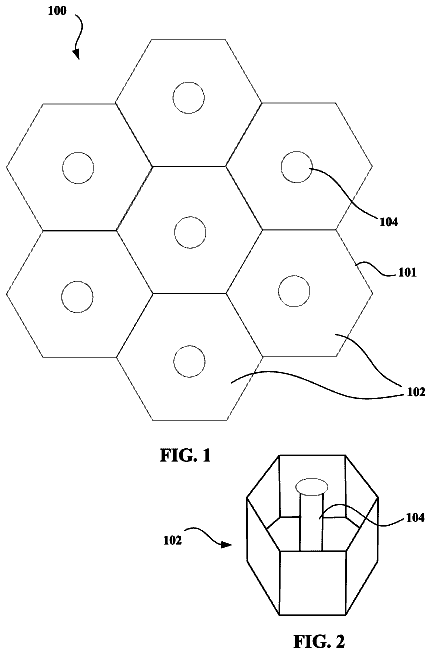
A bioreactor can include a plurality of unit cells.
US 9,790,474 B2 · Assignee: University of Georgia Research Foundation, Inc. · Inventors: Sellers; Holly S.
Sheet 1 of 9 from the published document. All sheets in the USPTO PDF
The present invention provides the isolation and characterization of a new infectious bronchitis virus (IBV) variant, the IBV GA-13 variant, and the production of attenuated isolates thereof, including, but not limited to, the attenuated IBV GA13 isolate 103505 Kd E86, and the use of such IBV isolates in materials and methods for combating infectious bronchitis virus in poultry and reducing the economic impact that infectious bronchitis disease has on poultry production.
Infectious bronchitis virus (IBV) is a group 3 avian coronavirus that causes a highly contagious upper-respiratory tract disease in chickens characterized by tracheal rales, coughing, and sneezing. In addition, the disease may affect the kidneys, and in laying flocks there is usually a drop in egg production and egg quality. Mortality may occur in young chicks due to respiratory or kidney manifestations of the infection. The disease is prevalent worldwide with significant economic consequences. Control of the disease is extremely important because IBV predisposes birds to potentially lethal secondary pathogens. Attenuated live vaccines and killed vaccines are used in an attempt to prevent the disease. However, extensive genetic diversity and a high mutation rate results in many different types of the virus that do not serologically cross-react, making it important to vaccinate chickens w
1 of 9 drawing sheets so far from the published document, cropped to the drawing. Every sheet is in the USPTO PDF.
What the patent claimed, word for word. All of it is now free to use.
The instant application contains a Sequence Listing which has been submitted electronically in ASCII format and is hereby incorporated by reference in its entirety. Said ASCII copy, created on Sep. 18, 2015, is named 235.02500101_SL.txt and is 14,658 bytes in size.
Infectious bronchitis virus (IBV) is a group 3 avian coronavirus that causes a highly contagious upper-respiratory tract disease in chickens characterized by tracheal rales, coughing, and sneezing. In addition, the disease may affect the kidneys, and in laying flocks there is usually a drop in egg production and egg quality. Mortality may occur in young chicks due to respiratory or kidney manifestations of the infection. The disease is prevalent worldwide with significant economic consequences.
Control of the disease is extremely important because IBV predisposes birds to potentially lethal secondary pathogens. Attenuated live vaccines and killed vaccines are used in an attempt to prevent the disease. However, extensive genetic diversity and a high mutation rate results in many different types of the virus that do not serologically cross-react, making it important to vaccinate chickens with the type of IBV causing the disease. IBV variant viruses are consistently circulating in commercial poultry and are capable of causing disease outbreaks. There is little cross-protection between different serotypes of IBV.
Control of IBV relies primarily on the use of mass applied modified live vaccines. Poultry producers face several challenges when trying to control IBV infections in the field. First, very little to no cross-protection is afforded between serotypes of IBV. Therefore, successful vaccination programs must include the serotypes of the prevailing IBV field challenge. Second, IBVs are prone to genetic variation through several distinct genetic mechanisms that may or may not give rise to a new serotype. A few changes in the sequence of the spike glycoprotein can result in a new serotype. It has been documented that as little as a 5% difference in the S1 sequence of IBV can result in a loss of cross-protection between otherwise similar isolates (Cavanagh, 2003 , Avian Pathol; 32:567-582).
Identifying the type of IBV causing disease in commercial chickens is the first step in controlling this highly infectious virus, but it is of little value if commercially available vaccines do not protect against it. Thus there is a need for the characterization of newly arising IBV variant and the development of vaccines effective against these variants.
The present invention includes an attenuated infectious bronchitis virus (IBV) GA13 isolate, wherein the attenuated IBV GA13 isolate includes an attenuated isolate of GA13 PDRC accession number 103505.
In some aspects, an attenuated IBV GA13 isolate of the present invention includes a S1 glycoprotein subunit with at least one amino acid difference from the S1 glycoprotein subunit of IBV GA13 isolate GA13 PDRC accession number 103505.
In some aspects, an attenuated IBV GA13 IBV isolate of the present invention includes an attenuated isolate of GA13 PDRC accession number 103505 Kd E3.
In some aspects, the present invention includes an attenuated IBV GA13 having been attenuated by passage through embryonated eggs. In some aspects, attenuation includes any number of passages from 1 to 150 (EN, wherein N is an integer from 1 to 150). In some aspects, attenuation includes at least about 86 passages.
In some aspects, an attenuated IBV GA13 isolate of the present invention includes the IBV GA13 isolate 103505 KdE86.
In some aspects, the present invention includes an attenuated IBV GA13 isolate having an S1 glycoprotein subunit comprising an amino acid sequence comprising at least about 90% sequence identity, at least about 91% sequence identity, at least about 92% sequence identity, at least about 93% sequence identity, at least about 94% sequence identity, at least about 95% sequence identity, at least about 96% sequence identity, at least about 97% sequence identity, at least about 98% sequence identity, at least about 99% sequence identity, or 100% sequence identity to SEQ ID NO:2 and/or SEQ ID NO:4.
In some aspects, the present invention includes an attenuated IBV GA13 isolate having a S1 glycoprotein subunit comprising any one, any two, any three, any four, or all five of the following amino acids residues: a glutamine at position 48; a valine at position 69; a methionine at position 121; a glycine at position 188; and/or an arginine at position 325.
In some aspects, the present invention includes an attenuated IBV GA13 isolate having a S1 glycoprotein subunit having at least one nucleotide sequence alteration and/or at least one amino acid alteration in comparison to a naturally occurring IBV isolate.
In some aspects, the present invention includes an attenuated IBV GA13 isolate having a S1 glycoprotein subunit encoded by a nucleotide sequence having at least about 90% sequence identity, at least about 91% sequence identity, at least about 92% sequence identity, at least about 93% sequence identity, at least about 94% sequence identity, at least about 95% sequence identity, at least about 96% sequence identity, at least about 97% sequence identity, at least about 98% sequence identity, at least about 99% sequence identity, or 100% sequence identity to SEQ ID NO:1 and/or SEQ ID NO:3.
In some aspects, an attenuated IBV GA13 isolate of the present invention is lyophilized.
In some aspects, the present invention includes a composition including an attenuated IBV GA13 isolate of the present invention. In some aspects, a composition further includes other viral material.
In some aspects, the present invention includes a method including introducing an attenuated IBV GA13 isolate of the present invention, or a composition thereof, into the body of poultry. In some aspects, administration includes spraying.
In some aspects, the present invention includes a method of producing an immune response to the IBV virus in poultry, the method including administering an attenuated IBV GA13 isolate of the present invention, or a composition thereof, to poultry. In some aspects, administration includes spraying.
In some aspects, the present invention includes a method of preventing an IBV infection in poultry, the method including administering an attenuated IBV GA13 isolate of the present invention, or a composition thereof, to poultry. In some aspects, administration includes spraying.
The present invention includes an isolated polynucleotide sequence with at least about 90% sequence identity, at least about 91% sequence identity, at least about 92% sequence identity, at least about 93% sequence identity, at least about 94% sequence identity, at least about 95% sequence identity, at least about 96% sequence identity, at least about 97% sequence identity, at least about 98% sequence identity, at least about 99% sequence identity, or 100% sequence identity to SEQ ID NO:1 and/or SEQ ID NO:3. In some aspects, the present invention includes a vector including such an isolated nucleotide sequence.
The present invention includes an isolated polypeptide with at least about 90% sequence identity, at least about 91% sequence identity, at least about 92% sequence identity, at least about 93% sequence identity, at least about 94% sequence identity, at least about 95% sequence identity, at least about 96% sequence identity, at least about 97% sequence identity, at least about 98% sequence identity, at least about 99% sequence identity, or 100% sequence identity to SEQ ID NO:2 and/or SEQ ID NO:4.
The terms “comprises” and variations thereof do not have a limiting meaning where these terms appear in the description and claims.
Unless otherwise specified, “a,” “an,” “the,” and “at least one” are used interchangeably and mean one or more than one.
The term “and/or” means one or all of the listed elements or a combination of any two or more of the listed elements.
The words “preferred” and “preferably” refer to embodiments of the invention that may afford certain benefits, under certain circumstances. However, other embodiments may also be preferred, under the same or other circumstances. Furthermore, the recitation of one or more preferred embodiments does not imply that other embodiments are not useful, and is not intended to exclude other embodiments from the scope of the invention.
Also herein, the recitations of numerical ranges by endpoints include all numbers subsumed within that range (e.g., 1 to 5 includes 1, 1.5, 2, 2.75, 3, 3.80, 4, 5, etc.).
For any method disclosed herein that includes discrete steps, the steps may be conducted in any feasible order. And, as appropriate, any combination of two or more steps may be conducted simultaneously.
The above summary of the present invention is not intended to describe each disclosed embodiment or every implementation of the present invention. The description that follows more particularly exemplifies illustrative embodiments. In several places throughout the application, guidance is provided through lists of examples, which examples can be used in various combinations. In each instance, the recited list serves only as a representative group and should not be interpreted as an exclusive list.
Unless otherwise indicated, all numbers expressing quantities of components, molecular weights, and so forth used in the specification and claims are to be understood as being modified in all instances by the term “about.” Accordingly, unless otherwise indicated to the contrary, the numerical parameters set forth in the specification and claims are approximations that may vary depending upon the desired properties sought to be obtained by the present invention. At the very least, and not as an attempt to limit the doctrine of equivalents to the scope of the claims, each numerical parameter should at least be construed in light of the number of reported significant digits and by applying ordinary rounding techniques.
Notwithstanding that the numerical ranges and parameters setting forth the broad scope of the invention are approximations, the numerical values set forth in the specific examples are reported as precisely as possible. All numerical values, however, inherently contain a range necessarily resulting from the standard deviation found in their respective testing measurements.
FIG. 1 . Phylogenetic tree of S1 nucleotide sequences. The phylogenetic tree was generated following multiple alignment of the S1 nucleotide sequences (1-1,600 base pairs) using ClustalW (MegAlign, DNAStar, v.12). 1,000 bootstrap replicates were performed and values >70 are listed. GA-13 isolates are highlighted in the top block, commercial vaccines are highlighted in the bottom three blocks, and the isolate with the highest similarity, PA/171/99, is also highlighted.
FIG. 2 . Clinical signs and macroscopic lesions observed at necropsy (at 36 days of age). The group identifications are as follows: NEG C=unvaccinated and unchallenged birds, CHALL C=unvaccinated birds challenged with GA13 at 10.sup.4 EID.sub.50 per bird at 31 days of age, A/98=Ark/GA98 vaccination at 1 day of age, boosted with Ark/GA98 at 17 days of age and challenged at 31 days of age with GA13 at 10.sup.4 EID.sub.50 per bird, A/98/08=Ark/GA98/GA08 vaccination at 1 day of age, boosted with Ark/GA98/GA08 at 17 days of age and challenged at 31 days of age with GA13 at 10.sup.4 EID.sub.50 per bird, A/98/M=A/98/M vaccination at 1 day of age, boosted with Ark/GA98/MASS at 17 days of age and challenged at 31 days of age with GA13 at 10.sup.4 EID.sub.50 per bird, A/98/08/M=Ark/GA98/GA08 vaccination at 1 day of age, boosted with Ark/GA98/MASS at 17 days of age and challenged at 31 days of age with GA13 at 10.sup.4 EID.sub.50 per bird. Total numbers of birds in each group were as follows: NEG C=5, CHALL C=6, A/98=9, A/98/08=10, A/98/M=8, A/98/08/M=7.
FIG. 3 . Tracheal lesion scores at 36 days of age. Scatter plot of individual tracheal lesion scores from histological evaluation of tracheas collected at necropsy (36 days of age, 5 days post challenge). Tracheal rings were individually scored on a scale of 1-4 where a score of 1=normal (no inflammatory cells, cilia is present, goblet cells or mucous glands are present with little to no mucous in the lumen); score 2=epithelial hyperplasia, presence of inflammatory cells, deciliation, attenuation of epithelium (healing), mucous in lumen, increased numbers of goblet cells or mucous glands; score 3=any type of necrosis, can have hemorrhage associated with necrosis or not. Inflammation present; score 4=any amount of ulceration (no matter the cause), can have hemorrhage associated with ulcer or not. Vertical capped lines represent the standard deviation while horizontal lines represent the mean for the group. Statistical analyses were performed using the Mann Whitney Rank Sum test. Significant differences between groups are designated by different letters at values p<0.035.
FIG. 4 . Mean tracheal ciliostasis scores per group. Five tracheal sections were harvested from each bird in the upper, middle and lower trachea and ciliostasis scored on a scale of 0-4. Scores of 0=all cilia beating, 1=75-99% beating cilia, 2=50-75% beating cilia, 3=25-50% beating cilia, and 4=less than 25% beating cilia (based on the system described by Cook et al., 1999 , Avian Pathology; 28:477-485).
FIG. 5 . IBV Ct values at 36 days of age. Scatter plot of individual IBV real time RT-PCR cycle threshold (Ct) values from tracheal swabs taken at 36 days of age (5 days post GA-13 challenge). Vertical capped lines represent the standard deviation while horizontal lines represent the mean for the group. In this assay Ct values >35 are considered negative. The lower the Ct score, the higher the number of viral genome copies in a given sample. Statistical analyses were performed using one way Analysis of Variance (ANOVA). Significant differences between groups are designated by different letters at p=0.05.
FIG. 6 . Alignment of the full-length S1 glycoprotein (IBV S1) nucleic acid sequence of the IBV GA13 isolate 103505 Kd E3 (nucleotides 1-1,614 of SEQ ID NO:1) compared with the full-length S1 glycoprotein (IBV S1) nucleic acid sequence of the attenuated IBV GA13 103505KdE86 isolate (SEQ ID NO:3). ClustalW (Slow/Accurate, IUB) analysis.
FIG. 7 . Alignment of the deduced full-length S1 glycoprotein (IBV S1) amino acid sequence of the IBV GA13 isolate 103505 Kd E3 (residues 1-537 of SEQ ID NO:2) compared with the deduced full-length S1 glycoprotein amino acid sequence of the attenuated IBV GA13 103505KdE86 isolate (residues 1-537 of SEQ ID NO:4). ClustalW (Slow/Accurate, Gonnet) analysis.
FIG. 8 . Tracheal lesion scores for GA13 E86 MSV. Mean tracheal lesion scores at 21 days of age and post-inoculation for groups 1) NEG=negative controls, 2) birds administered GA13 E86 MSV at 10.sup.5.5 EID.sub.50 via eye drop per bird and 3) birds administered GA13 E86 MSV intratracheally at 10.sup.5.5 EID.sub.50 per bird.
FIG. 9 . Mean tracheal lesion scores on fixed tracheal rings (scale 1 to 4).
The present invention relates to new materials and methods in the field of poultry virology, particularly in the field of the infectious bronchitis virus (IBV). IBV is a highly contagious virus that causes respiratory, reproductive and renal disease in poultry. As is the case with many viruses, the IBV virus has multiple serotypes. More than 20 serotypes within IBV have been recognized worldwide (see, for example, Lee and Jackwood, 2000 , Arch Virol; 145:2135-48). IBV can change rapidly in nature to yield variant viruses with new serotypes and causing disease in a susceptible host (Jackwood et al., 2005 , Avian Dis; 49(4):614-8). Significant serotype-altered variants arise periodically and are suspected when vaccinated poultry flocks become symptomatic of the disease. The emergence of variant IBVs has been well documented, especially in areas of high density poultry production.
The present invention includes the identification, isolation, characterization, and attenuation of a new IBV variant, the IBV GA-13 variant, isolated from outbreaks of infectious bronchitis virus in vaccinated broilers in Georgia and North Carolina. This new GA-13 variant was genetically characterized by RT-PCR of the S1 subunit of the spike glycoprotein, sequenced, and compared to previous GA variants (GA07 and GA08), U.S. vaccines and other IBVs.
The present invention includes an isolated GA13 infectious bronchitis virus having the serotype and/or genotype of a GA13 viral isolate as described herein. Such a GA13 IBV viral isolate may include, for example, any of those described in Table 1, including, but not limited to, GA13 PDRC accession number 98430, GA13 PDRC accession number 98441, GA13 PDRC accession number 98593, GA13 PDRC accession number 98812, GA13 PDRC accession number 99121, GA13 PDRC accession number 99340, GA13 PDRC accession number 99342, GA13 PDRC accession number 99343, GA13 PDRC accession number 99536, GA13 PDRC accession number 99626, GA13 PDRC accession number 100306, GA13 PDRC accession number 103116, GA13 PDRC accession number 103505, GA13 PDRC accession number 103506, GA13 PDRC accession number 103831, GA13 PDRC accession number 103969, GA13 PDRC accession number 104011, GA13 PDRC accession number 104253, GA13 PDRC accession number 104316, GA13 PDRC accession number 104317, GA13 PDRC accession number 104354, GA13 PDRC accession number 104355, GA13 PDRC accession number 104383, GA13 PDRC accession number 104393, GA13 PDRC accession number 104417, GA13 PDRC accession number 104444, GA13 PDRC accession number 104542, GA13 PDRC accession number 104544, GA13 PDRC accession number 104580, GA13 PDRC accession number 104581, GA13 PDRC accession number 104595, GA13 PDRC accession number 104780, GA13 PDRC accession number 104809, GA13 PDRC accession number 105006, GA13 PDRC accession number 105214, GA13 PDRC accession number 105228, GA13 PDRC accession number 105288, GA13 PDRC accession number 105289, GA13 PDRC accession number 105290, GA13 PDRC accession number 105343, GA13 PDRC accession number 105780, GA13 PDRC accession number 105781, GA13 PDRC accession number 105782, GA13 PDRC accession number 105783, GA13 PDRC accession number 105798, GA13 PDRC accession number 105883, and/or GA13 PDRC accession number 106282. Such an isolate of GA13 may have been isolated from any of a variety of tissues, such as, for example, kidney (Kd), trachea (Tr), CT, or Ceca. Such an isolate may have been passaged one, two, three, four, five, or more times in an embryo prior to isolation. For example, an isolated may have been passaged in a tissue and/or embryo. Such an isolate of GA13 may be virulent, also referred to herein as “pathogenic.” That is, poultry, such as chickens, when exposed to such an isolate exhibit one or more of the clinical symptoms of IBV infection.
In some embodiments, a GA13 isolate may be the IBV variant GA13 PDRC accession number 103505.
In some embodiments, a GA13 isolate may be the IBV variant GA13 PDRC accession number 103505 Kd E3, with the original tissue of isolation being kidney and the third embryo passage.
The present invention also includes attenuated isolates of a pathogenic GA13 IBV strain. Attenuated isolates demonstrate limiting virulence. Any of the various attenuation process known in the art may be used. For example, attenuated isolates may be obtained by passage through specific pathogen free (SPF) chicken embryos and/or by heat treatment. Examples of such attenuation processes include, but are not limited to, those described, for example, in WO 2009/143332 and U.S. Pat. No. 8,679,504 (each of which are hereby incorporated by reference in their entirety). For example, attenuated isolates may be obtained by passaging virulent isolates of the present invention in a culture on a suitable medium a sufficient number of times to reduce its pathogenicity while retaining its immunogenicity. A preferred medium for such passaging is a SPF embryonated egg. Inoculation of the eggs can be via the allantoic cavity, chorioallantoic membrane, yolk sac, amniotic cavity or even direct into the embryo. The virus can be passaged at regular intervals of from 7 hours up to 4 days. Commonly, passaging takes place between 16 to 36 hours, preferably every 24 hours. Alternatively, attenuation may also be achieved by passaging the isolate in avian cell culture, such as chick embryo kidney cells.
Attenuated GA13 IBV isolates include, but are not limited to, attenuated isolates of GA13 PDRC accession number 98430, GA13 PDRC accession number 98441, GA13 PDRC accession number 98593, GA13 PDRC accession number 98812, GA13 PDRC accession number 99121, GA13 PDRC accession number 99340, GA13 PDRC accession number 99342, GA13 PDRC accession number 99343, GA13 PDRC accession number 99536, GA13 PDRC accession number 99626, GA13 PDRC accession number 100306, GA13 PDRC accession number 103116, GA13 PDRC accession number 103505, GA13 PDRC accession number 103506, GA13 PDRC accession number 103831, GA13 PDRC accession number 103969, GA13 PDRC accession number 104011, GA13 PDRC accession number 104253, GA13 PDRC accession number 104316, GA13 PDRC accession number 104317, GA13 PDRC accession number 104354, GA13 PDRC accession number 104355, GA13 PDRC accession number 104383, GA13 PDRC accession number 104393, GA13 PDRC accession number 104417, GA13 PDRC accession number 104444, GA13 PDRC accession number 104542, GA13 PDRC accession number 104544, GA13 PDRC accession number 104580, GA13 PDRC accession number 104581, GA13 PDRC accession number 104595, GA13 PDRC accession number 104780, GA13 PDRC accession number 104809, GA13 PDRC accession number 105006, GA13 PDRC accession number 105214, GA13 PDRC accession number 105228, GA13 PDRC accession number 105288, GA13 PDRC accession number 105289, GA13 PDRC accession number 105290, GA13 PDRC accession number 105343, GA13 PDRC accession number 105780, GA13 PDRC accession number 105781, GA13 PDRC accession number 105782, GA13 PDRC accession number 105783, GA13 PDRC accession number 105798, GA13 PDRC accession number 105883, or GA13 PDRC accession number 106282 obtained by methods including, but not limited to, passage through embryonated eggs and/or heat treatment. Such an attenuated GA13 isolate includes, but is not limited to, attenuated isolates obtained by passage of a GA13 viral isolate through embryonated eggs obtained after, for example, with 10 or more passages, 20 or more passages, 50 or more passages, 70 or more passages, 80 or more passages, 85 or more passages, 90 or more passages, 95 or more passages, or 100 or more passages. Such an attenuated GA13 isolate includes, but is not limited to, attenuated isolates obtained by passage of a GA13 viral isolate through embryonated eggs obtained after, for example, about 10 passages, about 20 passages, about 50 passages, about 70 passages, about 80 passages, about 85 passages, about 90 passages, about 95 passages, or about 100 passages. Such an isolate may be obtained after, for example, about 3 passages (E3), about 6 passages (E6), 12 passages (E12), 16 passages (E16), 17 passages (E17), 20 passages (E20), 22 passages (E20), 37 passages (E37), 42 passages (E42), 52 passages (E52), 57 passages (E57), 62 passages (E62), 70 passages, (E70), 71 passages (E71), 86 passage (E86), 93 passages (E93), or any number of passages from 1 to 150 (EN, wherein N is an integer from 1 to 150).
In some embodiments, an attenuated GA13 isolate may be an attenuated isolate of GA13 PDRC accession number 103505. In some embodiments, such an attenuated isolate of GA13 PDRC accession number 103505 may be obtained by passage of GA13 PDRC accession number 103505 through embryonated eggs, for example, with 10 or more passages, 20 or more passages, 50 or more passages, 70 or more passage, 80 or more passages, 85 or more passages, 90 or more passages, 95 or more passages, or 100 or more passages. Such an attenuated GA13 isolate includes, but is not limited to, attenuated isolates obtained by passage of a GA13 viral isolate through embryonated eggs obtained after, for example, about 10 passages, about 20 passages, about 50 passages, about 70 passages, about 80 passages, about 85 passages, about 90 passages, about 95 passages, or about 100 passages. Such an isolate may be obtained after, for example, 3 passages (E3), 6 passages (E6), 12 passages (E12), 16 passages (E16), 17 passages (E17), 20 passages (E20), 22 passages (E20), 37 passages (E37), 42 passages (E42), 52 passages (E52), 57 passages (E57), 62 passages (E62), 70 passages, (E70), 71 passages (E71), 86 passages (E86), 93 passages (E93), or any number of passages from 1 to 150 (EN, wherein N is an integer from 1 to 150).
In some embodiments, an attenuated GA13 isolate may be an attenuated isolated of GA13 PDRC accession number 103505 Kd E3. In some embodiments, such an attenuated isolate of GA13 PDRC accession number 103505 Kd E3 may be obtained by passage of GA13 PDRC accession number 103505 Kd E3 through embryonated eggs, for example, with 10 or more passages, 20 or more passages, 50 or more passages, 70 or more passage, 80 or more passages, 85 or more passages, 90 or more passages, 95 or more passages, or 100 or more passages. Such an attenuated GA13 isolate includes, but is not limited to, attenuated isolates obtained by passage of a GA13 viral isolate through embryonated eggs obtained after, for example, about 10 passages, about 20 passages, about 50 passages, about 70 passages, about 80 passages, about 85 passages, about 90 passages, about 95 passages, or about 100 passages. Such an isolate may be obtained after, for example, 3 passages (E3), 6 passages (E6), 12 passages (E12), 16 passages (E16), 17 passages (E17), 20 passages (E20), 22 passages (E20), 37 passages (E37), 42 passages (E42), 52 passages (E52), 57 passages (E57), 62 passages (E62), 70 passages, (E70), 71 passages (E71), 86 passages (E86), 93 passages (E93), or any number of passages from 1 to 150 (EN, wherein N is an integer from 1 to 150).
In some embodiments, an attenuated GA13 isolate may be an attenuated isolated of GA13 PDRC accession number 103505 Kd E86, obtained after 86 passages of GA13 PDRC accession number 103505 Kd through embryonated eggs.
An IBV isolate of the present invention, pathogenic or attenuated, may be deposited with the American Type Culture Collection (ATCC®) 10801 University Boulevard, Manassas, Va. 20110-2209, USA. Such a deposit may be in accordance with the Budapest Treaty on the International Recognition of the Deposit of Microorganisms for the Purposes of Patent Procedure.
Avian infectious bronchitis virus strain GA-13 103505 Kd E86 was deposited with the American Type Culture Collection (ATCC®), 10801 University Boulevard, Manassas, Va. 20110-2209, USA on Mar. 15, 2017, in accordance with the Budapest Treaty on the International Recognition of the Deposit of Microorganism for the Purposes of Patent Procedure and assigned ATCC Designation PTA-124038.
The enveloped IBV virus has a single stranded-positive sense RNA genome that codes for the viral RNA-dependent RNA-polymerase, three major structural proteins (the nucleocapsid, membrane, and spike (S) proteins), and numerous regulatory proteins (Masters, 2006 , Adv Vir Res; 66:193-292). The spike glycoprotein of IBV is translated as a precursor protein (So) and then cleaved into two subunits, the N-terminal S1 glycoprotein and the C-terminal S2 glycoprotein by host cell serine proteases. The S1 and S2 glycoproteins mediate cell attachment, virus-cell membrane fusion, and play an important role in host cell specificity, forming club shaped projections on the surface of the virus. The S1 glycoprotein induces virus-neutralizing and hemagglutination-inhibiting antibodies.
The IBV virus has multiple serotypes, with more than 20 serotypes within IBV recognized worldwide (Lee and Jackwood, 2000 , Arch Virol; 145:2135-48). New variant strains arise due to rapid recombination, insertions, deletions, or point mutation events, predominantly in the S1 spike protein gene. Along with the use of serologic based tests, PCR and partial sequencing of the S1 gene can be used to group and type IBV isolates. The sequence from the hypervariable regions of the IBV S1 gene often correlates well with virus neutralization tests and can be reliably used to serotype an IBV isolate (Lee et al., 2003 , J Vet Diagn Invest; 15:344-348). In the S1 subunit, three hypervariable regions (HVR) have been identified, located within amino acids 38-67, 91-141, and 274-387 (see, for example, Cavanagh et al., 1988 , Virus Res; 11:141-150; Koch et al., 1990 , J Gen Virol; 71:1929-1935; and Moore et al., 1997 , Arch Virol; 142:2249-2256).
The GA13 isolates described herein represent a new, genetically distinct group of IBVs that are not similar to previously known, endemic IBVs. Based on sequence analysis of the S1 region, including the hypervariable regions of S1, GA13 represents a new, unique S1 serotype and S1 genotype in comparison to previously known IBV S1 sequences.
The present invention includes IBV viral isolates with a nucleotide sequence encoding an S1 polypeptide of a S1 serotype and/or genotype defined by the GA13 isolate described herein. Such a nucleotide sequence may be a nucleotide sequence encoding an S1 polypeptide from a pathogenic isolate of GA13, including, but not limited to, any one of the pathogenic GA13 isolates described herein, or an attenuated isolate, including, but not limited to, any of those described herein. For example, the present invention includes polynucleotide sequences with at least about 60% sequence identity, at least about 65% sequence identity, at least about 70% sequence identity, at least about 75% sequence identity, at least about 80% sequence identity, at least about 85% sequence identity, at least about 86% sequence identity, at least about 87% sequence identity, at least about 88% sequence identity, at least about 89% sequence identity, at least about 90% sequence identity, at least about 91% sequence identity, at least about 92% sequence identity, at least about 93% sequence identity, at least about 94% sequence identity, at least about 95% sequence identity, at least about 96% sequence identity, at least about 97% sequence identity, at least about 98% sequence identity, or at least about 99% sequence identity to the polynucleotide sequence of SEQ ID NO:1 and/or SEQ ID NO:3. The present invention includes IBV viral isolates with a nucleotide sequence of SEQ ID NO:1. The present invention includes IBV viral isolates with a nucleotide sequence of SEQ ID NO:3.
The present invention includes IBV viral isolates with an S1 polypeptide encoded by such a nucleotide sequence. For example, an IBV isolated may have an S1 polypeptide with an amino acid sequence with at least about 60% sequence identity, at least about 65% sequence identity, at least about 70% sequence identity, at least about 75% sequence identity, at least about 80% sequence identity, at least about 85% sequence identity, at least about 86% sequence identity, at least about 87% sequence identity, at least about 88% sequence identity, at least about 89% sequence identity, at least about 90% sequence identity, at least about 91% sequence identity, at least about 92% sequence identity, at least about 93% sequence identity, at least about 94% sequence identity, at least about 95% sequence identity, at least about 96% sequence identity, at least about 97% sequence identity, at least about 98% sequence identity, or at least about 99% sequence identity to the amino acid sequence of SEQ ID NO:2 and/or SEQ ID NO:4. The present invention includes an IBV viral isolate with an S1 polypeptide with an amino acid sequence of SEQ ID NO:2. The present invention includes an IBV viral isolate with an S1 polypeptide with an amino acid sequence of SEQ ID NO:4.
In some embodiments, the present invention includes a GA13 IBV variant having an S1 polypeptide with an amino acid sequence that includes any one, any two, any three, any four, or all five of the following amino acids residues: a glutamine at position 48; a valine at position 69; a methionine at position 121; a glycine at position 188; and/or an arginine at position 325.
The present invention includes a nucleotide sequence encoding an S1 polypeptide of a GA13 IBV isolate as described herein, including, for example, a polynucleotide sequence with at least about 60% sequence identity, at least about 65% sequence identity, at least about 70% sequence identity, at least about 75% sequence identity, at least about 80% sequence identity, at least about 85% sequence identity, at least about 86% sequence identity, at least about 87% sequence identity, at least about 88% sequence identity, at least about 89% sequence identity, at least about 90% sequence identity, at least about 91% sequence identity, at least about 92% sequence identity, at least about 93% sequence identity, at least about 94% sequence identity, at least about 95% sequence identity, at least about 96% sequence identity, at least about 97% sequence identity, at least about 98% sequence identity, or at least about 99% sequence identity to the polynucleotide sequence of SEQ ID NO:1 and/or SEQ ID NO:3. The present invention includes a polynucleotide sequence of SEQ ID NO:1. The present invention includes a polynucleotide sequence of SEQ ID NO:3. Sequence identity may be determined, for example, using BLAST analysis. “BLAST analysis” is intended to mean the nucleotide or protein sequence analysis program available from the United States National Center for Biotechnology, and as described in more detail herein.
The present invention includes polynucleotide sequences that hybridize to the nucleotide sequence of SEQ ID NO:1 and/or SEQ ID NO:3, or a complement thereof, under various stringency conditions, and fragments thereof. Stringency conditions include, but are not limited to, moderate and high stringency. High stringency hybridization conditions may be, for example, 6×SSC, 5×Denhardt, 0.5% sodium dodecyl sulfate (SDS), and 100 μg/ml fragmented and denatured salmon sperm DNA hybridized overnight at 65° C. and washed in 2×SSC, 0.1% SDS at least one time at room temperature for about 10 minutes followed by at least one wash at 65° C. for about 15 minutes followed by at least one wash in 0.2×SSC, 0.1% SDS at room temperature for at least 3 to 5 minutes. The present invention includes polypeptides encoded by such hybridizing polynucleotide sequences.
A polynucleotide sequence may be DNA, RNA, or a modification thereof. A polynucleotide sequence may be single or double stranded, sense (positive) or antisense (negative) sequences.
Also included in the present invention are polynucleotide fragments. A polynucleotide fragment is a portion of an isolated polynucleotide as described herein. Such a portion may be several hundred nucleotides in length, for example about 100, about 200, about 300, about 400, about 500, about 600, or about 700, nucleotides in length. Such a portion may be about 10 nucleotides to about 100 nucleotides in length, including but not limited to, about 14 to about 40 nucleotides in length. Fragments of about 12 to about 100 nucleotides may be used as primers to, for example, amplify all or part of an IBV S1 gene or modify an IBV S1 gene by site-specific mutagenesis. Fragments of about 10 to about 30 nucleic acids can be used, for example, in single stranded forms, double stranded forms, short hairpin RNAs, microRNAs or small interfering RNAs to alter the expression of the an IBV S1 gene by RNA interference or other DICER-mediated mechanisms. Fragments of about 20 to about 1000 nucleotides can be used, for example, in a variety of blot-based assays, including dot blots, northern blots, southern blots, and in situ hybridization assays.
Also included in the present invention are complements of the polynucleotides described herein. As used herein, “complement” and “complementary” refer to the ability of two single stranded polynucleotides to base pair with each other, where an adenine on one polynucleotide will base pair to a thymine on a second polynucleotide and a cytosine on one polynucleotide will base pair to a guanine on a second polynucleotide. Two polynucleotides are complementary to each other when a nucleotide sequence in a polynucleotide base pairs with a nucleotide sequence in a second polynucleotide. For instance, 5′-ATGC and 5′-GCAT are complementary. Typically two polynucleotides are complementary if they hybridize under the standard conditions referred to herein.
The present invention includes polynucleotide sequences having a substitution of one, two, three, four, five, six, seven, eight, nine, ten, or more nucleotides from that of SEQ ID NO:1 and/or SEQ ID NO:3. The present invention also includes the polynucleotide sequences described herein in which codon usage has been adapted to optimize expression in a given host cell. For example, codon usage may be adapted to optimize for expression in host cells including, but not limited to, baculovirus, yeast, E. coli , poultry, or human cells. Such adaptation can be carried out by techniques know in the art.
The present invention provides a recombinant vector containing one or more of the nucleotide sequences described herein. Such a recombinant vector may also include other sequences such as expression control sequences, markers, amplifying genes, signal sequences, promoters, and the like, as is known in the art. Useful vectors for this purpose are plasmids, and viruses such as baculoviruses, paramyxovirus, coronavirus, herpes virus (for example, herpes virus of turkeys (HVT)) and pox viruses, for example, fowl pox virus, and the like. Such a vector may be an expression vector selected for expression in vitro or in vivo or expression in prokaryotic cells or eukaryotic cells. The nucleic acids of the present invention may be used to produce constructs that express antigens. Such antigens may be utilized, for example, to produce antibodies, which may be used for identifying field or laboratory isolates of the present invention.
The present invention also includes host cells transformed with a polynucleotide sequence described herein and host cells transformed with a recombinant vector described herein. The host cell may be, for example, a eukaryotic or a prokaryotic host cell. Suitable examples are E. coli , insect cell lines such as Sf-9, chicken embryo fibroblast (CEF) cells, chicken embryo kidney (CEK) cells, African green monkey Vero cells and the like.
The present invention includes polypeptides having an amino acid sequence of an S1 polypeptide of the S1 serotype and/or genotype defined by a GA13 isolate as described herein. Such an amino acid sequence may be from a pathogenic isolate of GA13 or an attenuated isolate of GA13, including, but not limited to, GA13 isolate 103505 KdE3 or an attenuated isolate thereof, including, but not limited to, attenuated GA13 isolate 103505 KdE86.
The description continues in the full USPTO document.
About 6,159 words. The USPTO PDF has it with every drawing.
Fees are due 3.5, 7.5 and 11.5 years after grant. This patent expired on October 17, 2025, so the fee marked "not paid" was the one that went unpaid.
ATTENUATION OF INFECTIOUS BRONCHITIS VIRUS VARIANT GA-13
Filed Jul 2015 · published Feb 2016Attenuation of infectious bronchitis virus variant GA-13
Filed Jul 2015 · granted Oct 2017Earlier publications, parents and continuations. None of them can still be enforced, or this patent would not be listed.
Prior art cited by the examiner or applicant. Useful when you check your own idea for novelty.
Everything on this page comes from the documents linked above.