Cross-reference to related application
This Application is a National Phase Application of PCT/EP2014/061969, filed Jun. 10, 2014, which claims priority to European Application No. 13171772.0, filed Jun. 13, 2013, each of which being incorporated herein by reference.
Field
The present invention relates to a process for preparing polyethercarbonate-polyoxymethylene block copolymers, comprising the step of polymerizing formaldehyde in the presence of a polyethercarbonate having at least one Zerewitinoff-active hydrogen atom. The present invention further relates to polyethercarbonate-polyoxymethylene block copolymers obtainable by such a process and to the use thereof for preparing polyurethane polymers.
Background
Block copolymers comprising polyoxymethylene units, in addition to other polymer and polycondensate units, are described for example in GB 807589, EP 1 418 190 A1, U.S. Pat. No. 3,754,053, US 2002/0016395, JP 04-306215, GB 1164997 and U.S. Pat. No. 4,352,914. The other polymer or polycondensate units present, in addition to polyoxymethylene units, comprise polyalkylene glycol units, in particular polytetramethylene glycol and polyethylene glycol units, also vinyl acetate-crotonic acid copolymers, methyl methacrylate-vinyloxyethylamine copolymers, vinyl acetate-allyl acetoacetate copolymers, vinyloxyethylamine-isobutyl methacrylate copolymers, dihydroxylated polybutadiene and difunctionalized polyethylene units.
Polyethercarbonates having at least one Zerewitinoff-active hydrogen atom can be prepared by catalytic reaction of alkylene oxides (epoxides) and carbon dioxide in the presence of H-functionalized starter substances (“starters”) and has been the subject of intensive study for more than 40 years (e.g. Inoue et al., Copolymerization of Carbon Dioxide and Epoxide with Organometallic Compounds; Die Makromolekulare Chemie 130, 210-220, 1969). This reaction is shown in schematic form in scheme (I), where R is an organic radical such as alkyl, alkylaryl, arylalkyl or aryl, each of which may also contain heteroatoms, for example O, S, Si, etc., and where a, b, c and d are each integers and R may differ in different repeating units, and where the product shown here in scheme (I) for the polyethercarbonate should merely be understood in such a way that blocks having the structure shown may in principle be present in the polyethercarbonate obtained, but the sequence, number and length of the blocks and the OH functionality of the starter may vary, and is not restricted to the polyethercarbonate shown in scheme (I). This reaction (see scheme (I)) is environmentally very advantageous, since it constitutes the conversion of a greenhouse gas such as CO.sub.2 to a polymer. A further product, actually a by-product, formed here is the cyclic carbonate shown in scheme (I) (for example, when R═CH.sub.3, propylene carbonate).
##str00001## summary
Block copolymers comprising polyoxymethylene units in addition to polyethercarbonate units have not been described before.
The problem addressed was therefore that of providing polyethercarbonate-polyoxymethylene block copolymers, which react with isocyanates and can thus be used in the polyurethane sector.
This object was achieved according to the invention by a process for preparing polyethercarbonate-polyoxymethylene block copolymers, comprising the step of polymerizing formaldehyde, wherein formaldehyde is polymerized in the presence of a polyethercarbonate having at least one Zerewitinoff-active hydrogen atom. In this case, a polyethercarbonate-polyoxymethylene block copolymer is obtained.
Brief description of the drawing
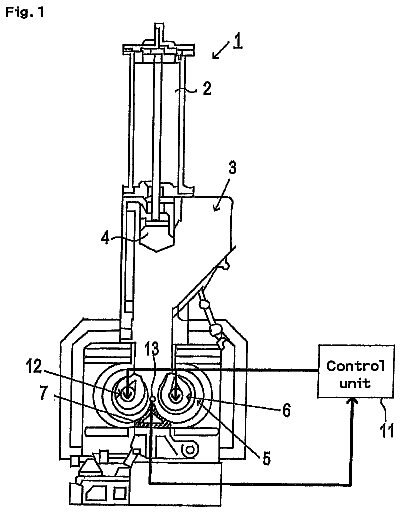
FIG. 1 is an illustration of a reactor arrangement suitable for carrying out the process of the invention.
Detailed description
It has been found, surprisingly, that the preparation of polyethercarbonate units from epoxides, carbon dioxide and a starter compound and the polymerization of formaldehyde can be carried out successively in the same reaction vessel without a prior purification of the polyethercarbonate intermediate being necessary.
The resulting polyethercarbonate-polyoxymethylene block copolymers offer a number of advantages over existing mono-, bi- or higher-functionality polymers. For instance, certain physical properties such as glass transition temperatures, melting ranges and/or viscosities can be specifically controlled via the length of the polyoxymethylene blocks and the polyethercarbonate blocks, the ratio of their respective length to each other and also the composition of the polyethercarbonate blocks, particularly the carbonate content thereof.
Compared to polyoxymethylene homopolymers of the same molecular weight, partial crystallinity in the polyethercarbonate-polyoxymethylene block copolymers according to the invention is typically lowered, which typically likewise leads to a lowering of glass transition temperatures, melting points and/or viscosities. The presence of the polyethercarbonate blocks additionally leads typically to an increase in the chemical and thermal stability. The thermal stability can be characterized, for example, by means of the decomposition temperature and/or the temperature-dependent relative weight loss. This may be determined, for example, by thermogravimetric analysis (TGA), as described in the experimental section. Thus, thermally more stable polymers are characterized by a relatively high decomposition temperature and/or a relatively low weight loss on heating to a certain temperature or a certain temperature range.
Polyoxymethylene homopolymers are typically restricted to a functionality F≦2. Via the use of polyethercarbonates having a functionality F≧2 (for example ≧3), in contrast, access to polyethercarbonate-polyoxymethylene block copolymers having a functionality F≧2 is possible.
Compared to polyether blocks of the same molecular weight, polyethercarbonate blocks have the advantage that the proportion of polyoxyalkylene units, prepared from the corresponding alkylene oxides, is reduced with respect to the carbonate proportion. This exchange of alkylene oxide units for carbon dioxide leads firstly to an advantageous energy balance and secondly to an increased proportion of renewable raw materials in the product. The incorporation of formaldehyde in the form of polyoxymethylene units leads to a further reduction of the proportion of alkylene oxide, which leads to an additional improvement to the energy balance of the product. Since formaldehyde can be obtained from renewable raw materials such as biomethanol or CO.sub.2, the proportion of renewable raw materials in the product can thereby also be increased.
Polyethercarbonate-polyoxymethylene block copolymers (also referred to interchangeably as polyoxymethylene-polyethercarbonate block copolymers in the context of the invention) in the context of the invention refer to polymeric compounds comprising at least one polyoxymethylene block and at least one polyethercarbonate block.
A polyoxymethylene block in the context of the invention refers to a polymeric structural unit (CH.sub.2O).sub.x where x≧1, comprising at least one CH.sub.2 group attached to two oxygen atoms, which is bonded via at least one of the oxygen atoms to further methylene groups or other polymeric structures. Polyoxymethylene blocks (CH.sub.2O).sub.x preferably comprise an average of x≧1 and x≦500, more preferably an average of x≧1.1 and x≦150 and particularly preferably an average of x≧1.5 and x≦50 oxymethylene units.
A polyethercarbonate block in the context of the invention refers to a polymeric structural unit —O[(C.sub.2R.sup.1R.sup.2R.sup.3R.sup.4O).sub.x(CO.sub.2)(C.sub.2R.sup.1R.sup.2R.sup.3R.sup.4O).sub.y].sub.z—, where x≧1, y≧0 and z≧1, wherein R.sup.1, R.sup.2, R.sup.3 and R.sup.4 are each independently hydrogen, an alkyl or aryl residue optionally additionally comprising heteroatoms such as nitrogen, oxygen, silicon, sulfur or phosphorus and may differ in different repeating units. The term “alkyl” in the context of the overall invention generally comprises substituents from the group of n-alkyl such as methyl, ethyl or propyl, branched alkyl and/or cycloalkyl. The term “aryl” in the context of the overall invention generally comprises substituents from the group of mononuclear carbo- or heteroaryl substituents such as phenyl and/or polynuclear carbo- or heteroaryl substituents, which may optionally be substituted with further alkyl groups and/or heteroatoms such as nitrogen, oxygen, silicon, sulfur or phosphorus. The residues R.sup.1, R.sup.2, R.sup.3 and/or R.sup.4 may be linked to one another within a repeating unit such that they form cyclic structures, such as a cycloalkyl residue, which is incorporated into the polymer chain via two adjacent carbon atoms.
Various polyoxymethylene and/or polyethercarbonate blocks can be directly or indirectly linked to one another via spacers. The spacers present can be, for example, 1,3-propanediol, 1,4-butanediol, hexamethylenediol, 4-hydroxybutyric acid, 4-hydroxypentanoic acid, 6-hydroxyhexanoic acid, maleic acid, phthalic acid, glutaric acid, bisphenol A, bisphenol F, trimethylolpropane, glycerol, castor oil, pentaerythritol or sorbitol, each in their respective deprotonated form.
Formaldehyde can be used in the gaseous state, optionally as a mixture with inert gases, for example nitrogen or argon, or as a mixture with gaseous, supercritical or liquid carbon dioxide, or in the form of a formaldehyde solution. Formaldehyde solutions may be aqueous formaldehyde solutions having a formaldehyde content between 1% and 37% by weight, which may optionally contain up to 15% by weight of methanol as stabilizer. Alternatively, it is possible to use solutions of formaldehyde in polar organic solvents, for example methanol or higher mono- or polyhydric alcohols, 1,4-dioxane, acetonitrile, N,N-dimethylformamide (DMF), N,N-dimethylacetamide, dimethyl sulfoxide (DMSO), cyclic carbonates, e.g. ethylene carbonate or propylene carbonate, N-methylpyrrolidone (NMP), sulfolane, tetramethylurea, N,N′-dimethylethyleneurea or mixtures thereof with one another, or with water and/or other solvents. The presence of further substances in solution is likewise included as well. Preference is given to use of mixtures of gaseous formaldehyde with argon, nitrogen and/or carbon dioxide. Likewise preferred is the use of solutions of formaldehyde in aprotic polar organic solvents, for example 1,4-dioxane, acetonitrile, N,N-dimethylformamide (DMF), N,N-dimethylacetamide, dimethyl sulfoxide (DMSO), cyclic carbonates, e.g. ethylene carbonate or propylene carbonate, N-methylpyrrolidone (NMP), sulfolane, tetramethylurea, N,N′-dimethylethyleneurea or mixtures thereof with one another and/or other solvents.
Alternatively, formaldehyde can be generated in situ from a suitable formaldehyde source. Formaldehyde sources used may be substances which contain chemically bound formaldehyde, typically in the form of oxymethylene groups, and are capable of releasing formaldehyde under suitable conditions. Suitable conditions for the release may include, for example, elevated temperatures and/or the use of catalysts and/or the presence of acids, bases or other reagents which lead to the release of monomeric formaldehyde. Preferred formaldehyde sources are 1,3,5-trioxane, paraformaldehyde, high molecular weight polyoxymethylene (POM), dimethyl acetal, 1,3-dioxolane, 1,3-dioxane and/or 1,3-dioxepane, particular preference being given to 1,3,5-trioxane and paraformaldehyde.
The polyethercarbonates in the context of the invention are mono-, bi- or higher-functionality oligomeric or polymeric compounds, which can be formed, for example, from epoxides and carbon dioxide as starting materials, and comprise structural units —O[(C.sub.2R.sup.1R.sup.2R.sup.3R.sup.4O).sub.x(CO.sub.2)(C.sub.2R.sup.1R.sup.2R.sup.3R.sup.4O).sub.y].sub.z—, where x≧1, y≧0 and z≧1 and R.sup.1, R.sup.2, R.sup.3 and R.sup.4 are each independently hydrogen, an alkyl or aryl residue optionally additionally comprising heteroatoms such as nitrogen, oxygen, silicon, sulfur or phosphorus and may differ in different repeating units. The residues R.sup.1, R.sup.2, R.sup.3 and/or R.sup.4 may optionally be linked to one another such that they form cyclic structures, such as a cycloalkyl residue, which is incorporated into the polymer chain via two adjacent carbon atoms. The polyethercarbonates in the context of the invention may comprise, in addition to the structural units —O[(C.sub.2R.sup.1R.sup.2R.sup.3R.sup.4O).sub.x(CO.sub.2)(C.sub.2R.sup.1R.sup.2R.sup.3R.sup.4O).sub.y].sub.z—, further structural units which are used as starter compounds in the preparation of the polyethercarbonates. Such further structural units are, for example, bi- or higher-functionality alcohols such as ethylene glycol, diethylene glycol, propylene glycol, dipropylene glycol, glycerol, 1,3-propanediol, 1,4-butanediol, hexamethylenediol, bisphenol bisphenol F, trimethylolpropane, castor oil, pentaerythritol or sorbitol, di- or polycarboxylic acids such as maleic acid, phthalic acid, glutaric acid, hydroxycarboxylic acids such as 4-hydroxybutyric acid, 4-hydroxypentanoic acid, 6-hydroxyhexanoic acid, and also OH-terminated polyethers such as polyethylene glycol, polypropylene glycol, optionally in their respective deprotonated form. The polyethercarbonates are preferably prepared from the starting materials starter compound, epoxide and carbon dioxide.
The functionality of the polyethercarbonates is established via deprotonatable functional groups comprising heteroatoms and are terminal or arranged along the polymer chain, for example hydroxyl groups, thiol groups, amino groups, carboxylic acid groups or carboxylic acid derivatives, for example amides.
Solvents used may, for example, be water, methanol or higher mono- or polyhydric alcohols, nonpolar organic solvents, for example linear or branched alkanes or alkane mixtures, toluene, the various xylene isomers or mixtures thereof, mesitylene, mono- or polyhalogenated aromatics or alkanes such as chlorobenzene, dichlorobenzene, dichloromethane, dichloroethane or tetrachloroethane, open-chain or cyclic ethers, for example tetrahydrofuran (THF) or methyl tert-butyl ether (MTBE), open-chain or cyclic esters, or polar aprotic solvents, for example 1,4-dioxane, acetonitrile, N,N-dimethylformamide (DMF), N,N-dimethylacetamide, dimethyl sulfoxide (DMSO), cyclic carbonates, for example ethylene carbonate or propylene carbonate, N-methylpyrrolidone (NMP), sulfolane, tetramethylurea, N,N′-dimethylethyleneurea or mixtures thereof with one another, with water and/or with other solvents. It is also possible to use liquid or supercritical carbon dioxide as solvent in neat form or as a mixture with one of the abovementioned solvents. Preference is given to open-chain or cyclic ethers, for example tetrahydrofuran (THF) or methyl tert-butyl ether (MTBE), mono- or polychlorinated aromatics or alkanes such as chlorobenzene, dichlorobenzene, dichloromethane, dichloroethane or tetrachloroethane, open-chain or cyclic esters, polar aprotic solvents, for example 1,4-dioxane, acetonitrile, N,N-dimethylformamide (DMF), N,N-dimethylacetamide, dimethyl sulfoxide (DMSO), cyclic carbonates, e.g. ethylene carbonate or propylene carbonate, N-methylpyrrolidone (NMP), sulfolane, tetramethylurea, N,N′-dimethylethyleneurea or mixtures thereof with one another and/or with other solvents, and liquid or supercritical carbon dioxide. Particular preference is given to the reaction in the absence of solvents.
The reaction is effected by polymerization of formaldehyde in the presence of a polyethercarbonate having at least one Zerewitinoff-active hydrogen atom. The polyethercarbonate preferably has at least two Zerewitinoff-active hydrogen atoms. Examples of Zerewitinoff-active hydrogen atoms are those in OH, SH, primary or secondary amino groups. Hydrogen bonded to N, O or S is referred to as a Zerevitinov-active hydrogen (or as “active hydrogen”) when it gives methane by reaction with methylmagnesium iodide by a process discovered by Zerevitinov.
The reaction can be conducted in a batchwise process, in a semi-batchwise process or in a continuous process. In the preferred semi-batchwise process, a polyethercarbonate, optionally in a mixture with a catalyst and/or a solvent, is initially charged, and formaldehyde or the formaldehyde source in neat form as a gas or liquid or in solution is metered into the reaction. The amount of formaldehyde or of formaldehyde equivalents present in the formaldehyde source which is metered in is chosen so as to attain the desired molecular weight.
In an alternative, likewise preferred continuous process, a polyethercarbonate, optionally in a mixture with a catalyst and/or a solvent, is initially charged, and formaldehyde or the formaldehyde source in neat form as a gas or liquid or in solution is metered into the reaction. On reaching the maximum fill level of the reactor, a portion of the reaction mixture is continuously removed, while polyethercarbonate and optionally catalyst and/or a solvent, and also formaldehyde or the formaldehyde source in neat form as a gas or liquid or in solution, is metered into the reaction. The ratios between the amount of polyethercarbonate and formaldehyde or of formaldehyde equivalents present in the formaldehyde source which is continuously metered in are chosen so as to attain the desired molecular weight.
The reaction is conducted, for example, at a temperature between 20 and 200° C., preferably between 20 and 120° C. and more preferably between 40 and 120° C. In the case of the use of a formaldehyde source comprising chemically bound formaldehyde, the reaction temperature is above the temperature required for release of formaldehyde, or incorporation thereof in the form of oxymethylene units, under the given conditions. In the presence of suitable catalysts which accelerate the release of formaldehyde or incorporation thereof, the reaction temperature may be below the temperature needed for the non-catalyzed release of formaldehyde or incorporation thereof. In some cases, the catalysts for the preparation of the polyethercarbonate-polyoxymethylene block copolymers according to the invention may likewise function as catalysts for the release of formaldehyde or incorporation thereof in the form of oxymethylene units.
The pressure during the polymerization of formaldehyde or the formaldehyde equivalents in the presence of the polyethercarbonate is generally 1 to 200 bar. In the case of use of gaseous formaldehyde, the pressure is preferably 3 to 100 bar, more preferably 5 to 50 bar.
The reaction time for the polymerization is, for example, 0.05 to 120 hours, preferably 0.5 to 48 hours, more preferably 1 to 24 hours. The reaction time is considered to be the period of time during which formaldehyde and polyethercarbonate and optionally catalyst are in direct contact at reaction temperature. Particularly in the case of performance in a semi-batchwise process, for example in the case of introduction of gaseous formaldehyde into the reaction mixture, the reaction time is guided by the amount of formaldehyde metered in, or of formaldehyde equivalents metered in, required to reach the desired molecular weight.
Embodiments of the process of the invention are described hereinafter. They can be combined with one another as desired, unless the opposite is clear from the context.
In one embodiment of the process according to the invention, the formaldehyde is polymerized also in the presence of a catalyst. The catalyst is preferably selected from the group of the basic catalysts and/or the Lewis-acid catalysts. Catalysts used are compounds which catalyze the polymerization of formaldehyde. Particular preference is given to Lewis-acid catalysts.
Examples of basic catalysts are tertiary or aromatic basic amines, for example triethylamine and other trialkylamines, pyridine and mono- or polysubstituted pyridine derivatives, N-alkyl- or N-arylimidazole, 1,4-diazabicyclo[2.2.2]octane (DABCO), 4-(dimethylamino)pyridine (DMAP), 1, 8-diazabicyclo[5.4.0]undec-7-ene (DBU), triazabicyclo[4.4.0]dec-5-ene (TBD) and 7-methyl-1,5,7-triazabicyclo[4.4.0]dec-5-ene (MTBD).
Lewis-acid catalysts comprise, as the Lewis-acidic center, one or more coordinatively unsaturated metal atoms, for example metals of the third, fourth or fifth main group, for example boron, aluminum, tin, antimony or bismuth, metals of the third and fourth transition group, for example scandium, yttrium, lanthanum, titanium, zirconium or hafnium and metals of the lanthanoid series, vanadium, molybdenum, tungsten, metals of the eighth, ninth or tenth transition groups, especially iron, cobalt, nickel, rhodium, iridium, palladium, platinum, copper or zinc. It is a feature of the coordinatively unsaturated Lewis-acidic center that nucleophilic molecules can bind thereto. The coordinatively unsaturated Lewis-acidic center may already be present in the compound used as catalyst or forms in the reaction mixture, for example as a result of elimination of a weakly bound nucleophilic molecule. Very particular preference is given to Lewis-acid catalysts comprising, as the Lewis-acidic center, one or more zinc, tin or molybdenum atoms, for example zinc di-2-ethylhexanoate, dibutyltin dilaurate (DBTL), dibutyltin oxide, tin di-2-ethylhexanoate or lithium molybdate. Very particular preference is also given to double metal cyanide catalysts (DMC catalysts) comprising zinc and cobalt as Lewis-acidic centers.
The catalyst is typically used in a molar ratio of 1:10 000 to 10:1, preferably 1:1000 to 1:1, more preferably 1:1000 to 1:10, relative to the functional groups present in the polyethercarbonate.
It is also possible to polmerize formaldehyde in the presence of a catalyst which is identical to the catalyst used for preparing the polyethercarbonate. In a specific embodiment, the catalyst used for preparing the polyethercarbonate-polyoxymethylene block copolymer is identical to the DMC catalyst used to prepare the polyethercarbonate.
In the process according to the invention, the polyoxymethylene units are linked to the polyethercarbonates either directly or indirectly via one or more comonomers or spacers. It is also possible for a plurality of polyoxymethylene units to be linked to one another via one or more comonomers. Therefore, in a further embodiment of the process according to the invention, the polymerization is additionally effected in the presence of a comonomer. Comonomers used may, for example, be cyclic ethers, especially epoxides, for example ethylene oxide, propylene oxide, cyclohexene oxide or styrene oxide, oxetane, THF, dioxane, cyclic acetals, for example 1,3-dioxolane or 1,3-dioxepane, cyclic esters, for example γ-butyrolactone, γ-valerolactone, ε-caprolactone, or cyclic acid anhydrides, for example maleic anhydride or phthalic anhydride, or mixtures of two or more of the abovementioned comonomers in any composition. Preferred comonomers are epoxides, cyclic acetals and cyclic esters; particularly preferred comonomers are ethylene oxide, propylene oxide, 1,3-dioxolane, 1,3-dioxepane and ε-caprolactone.
The metered addition of the comonomers can be effected in neat form or in solution. In an alternative embodiment, the metered addition of the comonomers is effected in a mixture with formaldehyde or the formaldehyde source. The metered addition of the comonomers can be effected prior to the metered addition, parallel to the metered addition or after the metered addition of formaldehyde or the formaldehyde source.
In a specific embodiment, the comonomers are at least in part identical to the epoxides used for preparing the polyethercarbonates.
In a further embodiment of the process of the invention, the formaldehyde is introduced into the reaction vessel in the form of gaseous formaldehyde.
In a specific embodiment, the polyethercarbonate used for preparing the polyethercarbonate-polyoxymethylene block copolymers is prepared by reaction of a starter compound having an active hydrogen atom with carbon dioxide and with at least one epoxide (alkylene oxide), wherein the reaction is carried out in the presence of a double metal cyanide catalyst (DMC catalyst) and wherein the crude product of this reaction, with the exception of a possible distillation step, undergoes no further purification.
The starter compounds having active hydrogen atoms used for preparing the polyethercarbonates (also referred to as H-functional starter substances) are preferably compounds having (number-average) molecular weights of ≧18 g/mol to 2000 g/mol, preferably ≧62 g/mol to ≦2000 g/mol and having a number of hydroxyl groups per molecule of ≧1 to ≦8, preferably ≧2 to ≦4. Examples of these are ethylene glycol, diethylene glycol, triethylene glycol, 1,2-propylene glycol, dipropylene glycol, 1,4-butanediol, hexamethylene glycol, bisphenol A, bisphenol F, trimethylolpropane, glycerol, castor oil, pentaerythritol, sorbitol, sucrose, degraded starch and/or water.
Particularly preferred H-functional starter substances (starter compounds) used are those compounds having number-average molecular weights of ≧450 g/mol to ≦2000 g/mol or a mixture composed of a) compounds having number-average molecular weights of ≧62 g/mol to ≦450 g/mol (also referred to below as “low molecular weight starter compounds”) and b) compounds having number-average molecular weights of ≧450 g/mol to ≦2000 g/mol (also referred to below as “starter polyols”), which preferably comprise in each case ≧1 to ≦8, preferably ≧2 to ≦5 hydroxyl groups.
Examples of low molecular weight starter compounds are ethylene glycol, diethylene glycol, triethylene glycol, 1,2-propylene glycol, dipropylene glycol, 1,4-butanediol, hexamethylene glycol, bisphenol A, bisphenol F, trimethylolpropane, glycerol, castor oil, pentaerythritol, sorbitol and/or sucrose. Examples of starter polyols are, for example, polyether polyols, which were prepared from the abovementioned low molecular weight starter compounds and epoxides, or poly(oxyalkylene)carbonate polyols, which were prepared, for example, from the abovementioned starter compounds, epoxides and CO.sub.2, wherein these starter polyols each have number-average molecular weights of ≧450 g/mol to ≦2000 g/mol.
The epoxide (alkylene oxide) used for preparing the polyethercarbonate compounds of the general formula (I) are:
##STR00002## wherein R.sup.1, R.sup.2, R.sup.3 and R.sup.4 are each independently hydrogen or an alkyl or aryl residue optionally additionally comprising heteroatoms such as nitrogen, oxygen, silicon, sulfur or phosphorus and may optionally be linked to one another such that they form cyclic structures such as a cycloalkylene oxide for example.
It is also possible to use mixtures of various epoxides in the process according to the invention, provided that the constituents of the epoxide mixture all fall under the general formula (I). When using mixtures of different epoxides it is also possible to alter the mixing ratio of the epoxides during the metered addition in a stepwise or continuous manner. In general, for the method according to the invention, it is possible to use epoxides having 2-24 carbon atoms. The alkylene oxides having 2-24 carbon atoms are, for example, one or more compounds selected from the group consisting of ethylene oxide, propylene oxide, 1-butene oxide, 2,3-butene oxide, 2-methyl-1,2-propene oxide (isobutene oxide), 1-pentene oxide, 2,3-pentene oxide, 2-methyl-1,2-butene oxide, 3-methyl-1,2-butene oxide, 1-hexene oxide, 2,3-hexene oxide, 3,4-hexene oxide, 2-methyl-1,2-pentene oxide, 4-methyl-1,2-pentene oxide, 2-ethyl-1,2-butene oxide, 1-heptene oxide, 1-octene oxide, 1-nonene oxide, 1-decene oxide, 1-undecene oxide, 1-dodecene oxide, 4-methyl-1,2-pentene oxide, butadiene monoxide, isoprene monoxide, cyclopentene oxide, cyclohexene oxide, cycloheptene oxide, cyclooctene oxide, styrene oxide, methylstyrene oxide, pinene oxide, mono- or polyepoxidized fats as mono-, di- and triglycerides, epoxidized fatty acids, C.sub.1-C.sub.24 esters of epoxidized fatty acids, epichlorohydrin, glycidol, and derivatives of glycidol, for example methyl glycidyl ether, ethyl glycidyl ether, 2-ethylhexyl glycidyl ether, allyl glycidyl ether, phenyl glycidyl ether, glycidyl methacrylate and epoxy-functional alkyloxysilanes, for example 3-glycidyloxypropyltrimethoxysilane, 3-glycidyloxypropyltriethoxysilane, 3-glycidyloxypropyltripropoxysilane, 3-glycidyloxypropylmethyldimethoxysilane, 3-glycidyloxypropylethyldiethoxysilane and 3-glycidyloxypropyltriisopropoxysilane. The epoxide of the general formula (I) is preferably a terminal epoxide, wherein R.sup.1, R.sup.2 and R.sup.3 are hydrogen, and R.sup.4 may be hydrogen, an alkyl or aryl residue optionally additionally comprising heteroatoms such as nitrogen, oxygen, silicon, sulfur or phosphorus and may differ in different repeating units. The alkylene oxides particularly preferably used are ≧0% by weight to ≦30% by weight (based on the total amount of epoxide (I) used) of ethylene oxide and/or ≧30% by weight to ≦100% by weight (based on the total amount of epoxide (I) used) of propylene oxide, particular preference being given to using pure propylene oxide.
The double metal cyanide catalysts (DMC catalysts) suitable for preparing the polyethercarbonates are known in principle from the prior art (see, for example, U.S. Pat. No. 3,404,109, U.S. Pat. No. 3,829,505, U.S. Pat. No. 3,941,849 and U.S. Pat. No. 5,158,922). DMC catalysts, which are described, for example, in U.S. Pat. No. 5,470,813, EP-A 700 949, EP-A 743 093, EP-A 761 708, WO 97/40086, WO 98/16310 and WO 00/47649, have a very high activity in the homopolymerization of epoxides and enable the preparation of polyether polyols at very low catalyst concentrations (25 ppm or lower), such that removal of the catalyst from the finished product is generally not required. A typical example is that of the highly active DMC catalysts which are described in EP-A 700 949 and contain, as well as a double metal cyanide compound (e.g. zinc hexacyanocobaltate(III)) and an organic complex ligand (e.g. tert-butanol), also a polyether having a number-average molecular weight greater than 500 g/mol.
It is also possible to use the alkaline DMC catalysts disclosed in EP application number 10163170.3.
To prepare the double metal cyanide compounds, suitable cyanide-free metal salts preferably have the general formula (II), M(X).sub.n (II) where M is selected from the metal cations Zn.sup.2+, Fe.sup.2+, Ni.sup.2+, Mn.sup.2+, Co.sup.2+, Sr.sup.2+, Sn.sup.2+, Pb.sup.2+ and Cu.sup.2+; M is preferably Zn.sup.2+, Fe.sup.2+, Co.sup.2+ or Ni.sup.2+, X refers to one or more (i.e. different) anions, preferably an anion selected from the group of the halides (i.e. fluoride, chloride, bromide, iodide), hydroxide, sulfate, carbonate, cyanate, thiocyanate, isocyanate, isothiocyanate, carboxylate, oxalate and nitrate; n=1 when X=sulfate, carbonate or oxalate and n=2 when X=halide, hydroxide, cyanate, thiocyanate, isocyanate, isothiocyanate or nitrate, or suitable cyanide-free metal salts have the general formula (III), M.sub.r(X).sub.3 (III) where M is selected from the metal cations Fe.sup.3+, Al.sup.3+ and Cr.sup.3+, X refers to one or more (i.e. different) anions, preferably an anion selected from the group of the halides (i.e. fluoride, chloride, bromide, iodide), hydroxide, sulfate, carbonate, cyanate, thiocyanate, isocyanate, isothiocyanate, carboxylate, oxalate and nitrate; r=2 when X=sulfate, carbonate or oxalate and r=1 when X=halide, hydroxide, cyanate, thiocyanate, isocyanate, isothiocyanate, carboxylate or nitrate, or suitable cyanide-free metal salts have the general formula (IV), M(X).sub.s (IV) where M is selected from the metal cations Mo.sup.4+, V.sup.4+ and W.sup.4+, X refers to one or more (i.e. different) anions, preferably an anion selected from the group of the halides (i.e. fluoride, chloride, bromide, iodide), hydroxide, sulfate, carbonate, cyanate, thiocyanate, isocyanate, isothiocyanate, carboxylate, oxalate and nitrate; s=2 when X=sulfate, carbonate or oxalate and s=4 when X=halide, hydroxide, cyanate, thiocyanate, isocyanate, isothiocyanate, carboxylate or nitrate, or suitable cyanide-free metal salts have the general formula (V), M(X).sub.t (V) where M is selected from the metal cations Mo.sup.6+ and W.sup.6+, X refers to one or more (i.e. different) anions, preferably an anion selected from the group of the halides (i.e. fluoride, chloride, bromide, iodide), hydroxide, sulfate, carbonate, cyanate, thiocyanate, isocyanate, isothiocyanate, carboxylate, oxalate and nitrate; t=3 when X=sulfate, carbonate or oxalate and t=6 when X=halide, hydroxide, cyanate, thiocyanate, isocyanate, isothiocyanate, carboxylate or nitrate,
Examples of suitable cyanide-free metal salts are zinc chloride, zinc bromide, zinc iodide, zinc acetate, zinc acetylacetonate, zinc benzoate, zinc nitrate, iron(II) sulfate, iron(II) bromide, iron(II) chloride, cobalt(II) chloride, cobalt(II) thiocyanate, nickel(II) chloride and nickel(II) nitrate. It is also possible to use mixtures of different metal salts.
Metal cyanide salts suitable for preparation of the double metal cyanide compounds preferably have the general formula (VI) (Y).sub.aM′(CN).sub.b(A).sub.c (VI) where M′ is selected from one or more metal cations from the group consisting of Fe(II), Fe(III), Co(II), Co(III), Cr(II), Cr(III), Mn(II), Mn(III), Ni(II), Ru(II), V(IV) and V(V); M′ is preferably one or more metal cations from the group consisting of Co(II), Co(III), Fe(II), Fe(III), Cr(III), Ir(III) and Ni(II), Y is selected from one or more metal cations from the group consisting of alkali metal (i.e. Li.sup.+, Na.sup.+, K.sup.+, Rb.sup.+, Cs.sup.+) and alkaline earth metal (i.e. Be.sup.2+, Ca.sup.2+, Me.sup.2+, Sr.sup.2+, Ba.sup.2+), A is selected from one or more anions of the group consisting of halides (i.e. fluoride, chloride, bromide, iodide), hydroxide, sulfate, carbonate, cyanate, thiocyanate, isocyanate, isothiocyanate, carboxylate, oxalate or nitrate and a, b and c are integers, where the values of a, b and c are chosen so as to give electronic neutrality of the metal cyanide salt; a is preferably 1, 2, 3 or 4; b is preferably 4, 5 or 6; c preferably has a value of 0.
Examples of suitable metal cyanide salts are potassium hexacyanocobaltate(III), potassium hexacyanoferrate(II), potassium hexacyanoferrate(III), calcium hexacyanocobaltate(III) and lithium hexacyanocobaltate(III).
Preferred double metal cyanide compounds present in the inventive DMC catalysts are compounds of the general formula (VII) M.sub.x[M′.sub.x,(CN).sub.y].sub.z (VII), in which M is as defined in formula (II) to (V) and M′ is as defined in formula (VI), and x, x′, y and z are integers and are chosen so as to give electronic neutrality of the double metal cyanide compound.
Preferably,
x=3, x′=1, y=6 and z=2,
M=Zn(II), Fe(II), Co(II) or Ni(II) and
M′=Co(III), Fe(III), Cr(III) or Ir(III).
Examples of suitable double metal cyanide compounds are zinc hexacyanocobaltate(III), zinc hexacyanoiridate(III), zinc hexacyanoferrate(III) and cobalt(II) hexacyanocobaltate(III). Further examples of suitable double metal cyanide compounds can be found, for example, in U.S. Pat. No. 5,158,922 (column 8 lines 29-66). Particular preference is given to using zinc hexacyanocobaltate(III).
The organic complex ligands added in the preparation of the DMC catalysts are disclosed, for example, in U.S. Pat. No. 5,158,922 (see especially column 6 lines 9 to 65), U.S. Pat. No. 3,404,109, U.S. Pat. No. 3,829,505, U.S. Pat. No. 3,941,849, EP-A 700 949, EP-A 761 708, JP 4 145 123, U.S. Pat. No. 5,470,813, EP-A 743 093 and WO-A 97/40086. For example, the organic complex ligands used are water-soluble, organic compounds having heteroatoms such as oxygen, nitrogen, phosphorus or sulfur, which can form complexes with the double metal cyanide compound. Preferred organic complex ligands are alcohols, aldehydes, ketones, ethers, esters, amides, ureas, nitriles, sulfides and mixtures thereof. Particularly preferred organic complex ligands are aliphatic ethers (such as dimethoxyethane), water-soluble aliphatic alcohols (such as ethanol, isopropanol, n-butanol, isobutanol, sec-butanol, tert-butanol, 2-methyl-3-buten-2-ol and 2-methyl-3-butyn-2-ol), compounds containing both aliphatic or cycloaliphatic ether groups and aliphatic hydroxyl groups (for example ethylene glycol mono-tert-butyl ether, diethylene glycol mono-tert-butyl ether, tripropylene glycol monomethyl ether and 3-methyl-3-oxetanemethanol). Most preferred organic complex ligands are selected from one or more compounds from the group consisting of dimethoxyethane, tert-butanol, 2-methyl-3-buten-2-ol, 2-methyl-3-butyn-2-ol, ethylene glycol mono-tert-butyl ether and 3-methyl-3-oxetanemethanol.
Optionally, in the preparation of the DMC catalysts, one or more complex-forming component(s) from the compound classes of the polyethers, polyesters, polycarbonates, polyalkylene glycol sorbitan esters, polyalkylene glycol glycidyl ethers, polyacrylamide, poly(acrylamide-co-acrylic acid), polyacrylic acid, poly(acrylic acid-co-maleic acid), polyacrylonitrile, polyalkyl acrylates, polyalkyl methacrylates, polyvinyl methyl ethers, polyvinyl ethyl ethers, polyvinyl acetate, polyvinyl alcohol, poly-N-vinylpyrrolidone, poly(N-vinylpyrrolidone-co-acrylic acid), polyvinyl methyl ketone, poly(4-vinylphenol), poly(acrylic acid-co-styrene), oxazoline polymers, polyalkyleneimines, maleic acid and maleic anhydride copolymers, hydroxyethyl cellulose and polyacetals, or of the glycidyl ethers, glycosides, carboxylic esters of polyhydric alcohols, gallic acids or salts, esters or amides thereof, cyclodextrins, phosphorus compounds, α,β-unsaturated carboxylic esters or ionic surface- or interface-active compounds, are used.
Preferably, in the preparation of the DMC catalysts, in the first step, the aqueous solutions of the metal salt (e.g. zinc chloride), used in a stoichiometric excess (at least 50 mol %) based on metal cyanide salt (i.e. at least a molar ratio of cyanide-free metal salt to metal cyanide salt of 2.25:1.00), and the metal cyanide salt (e.g. potassium hexacyanocobaltate) are converted in the presence of the organic complex ligand (e.g. tert-butanol), such that a suspension is formed comprising the double metal cyanide compound (e.g. zinc hexacyanocobaltate), water, excess cyanide-free metal salt, and the organic complex ligands. This organic complex ligand may be present in the aqueous solution of the cyanide-free metal salt and/or of the metal cyanide salt, or it is added directly to the suspension obtained after precipitation of the double metal cyanide compound. It has been found to be advantageous to mix the aqueous solutions of the cyanide-free metal salt and of the metal cyanide salt and the organic complex ligands by stirring vigorously. Optionally, the suspension formed in the first step is subsequently treated with a further complex-forming component. The complex-forming component is preferably used in a mixture with water and organic complex ligand. A preferred process for performing the first step (i.e. the preparation of the suspension) is effected using a mixing nozzle, more preferably using a jet disperser, as described in WO-A 01/39883.
In the second step, the solid (i.e. the precursor of the inventive catalyst) is isolated from the suspension by known techniques, such as centrifugation or filtration.
The description continues in the full USPTO document.