 Lapsed, fee not paid10 drawings
Cameras, Displays & Optics · US 9,788,025 B2
Reproduction device, encoding device, and reproduction method
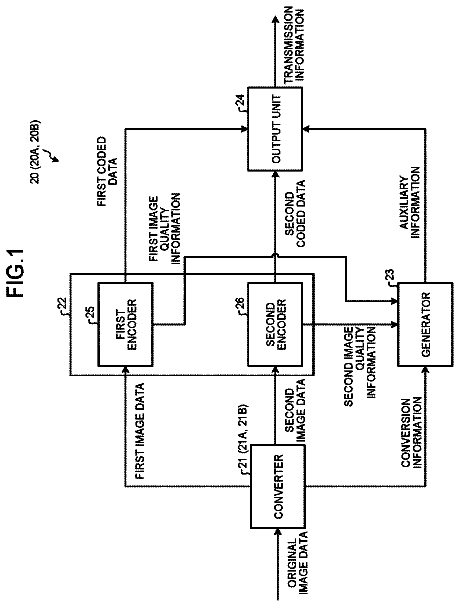
According to an embodiment, a reproduction device includes an acquirer, a decoder, and a synthesizer.
US 9,788,041 B2 · Assignee: Yahoo Holdings, Inc. · Inventors: Mowrey; David et al.
Sheet 1 of 7 from the published document. All sheets in the USPTO PDF
Methods and system for generating companion content for rendering on a secondary device during presentation of content on a main device include detecting execution of a local application on the secondary device by a server application. The local application establishes a wireless connection through an application programming interface (API) with the secondary device and a device that interfaces with the main device and accesses metadata defining content being rendered on the main device. The local application transmits the metadata received from the device to the server application. Historical data is generated based on the metadata received from the secondary device. The metadata within the historical data is analyzed to identify surfing paths of one or more users over time. Companion content is generated based on the surfing paths of the one or more users and forwarded to the secondary device for rendering while the secondary device is connected to the device that interfaces with the main device.
Field of the Invention The present invention relates to the field of entertainment, and more particularly, to automatically providing entertainment content related to television viewing with recommended and favorite shows. Description of the Related Art Watching a television is not what it used to be. The TV landscape has changed tremendously over generations. With more players providing content, more distributions channels offering content and more devices/ways for viewing content, it has become increasingly hard to keep track of what is being offered on what channels and at what times. The advance in technology has provided some relief on some fronts but has made it more complicated on other fronts. For instance, with the introduction of digital video recording options (DVR) and extended services, such as whole-house DVR, it is easier to record some of the shows in advance in some devi
All 7 drawing sheets from the published document, cropped to the drawing.
What the patent claimed, word for word. All of it is now free to use.
Field of the Invention
The present invention relates to the field of entertainment, and more particularly, to automatically providing entertainment content related to television viewing with recommended and favorite shows.
Description of the Related Art
Watching a television is not what it used to be. The TV landscape has changed tremendously over generations. With more players providing content, more distributions channels offering content and more devices/ways for viewing content, it has become increasingly hard to keep track of what is being offered on what channels and at what times. The advance in technology has provided some relief on some fronts but has made it more complicated on other fronts. For instance, with the introduction of digital video recording options (DVR) and extended services, such as whole-house DVR, it is easier to record some of the shows in advance in some devices located in certain parts of the house and watch them later in other devices located in some other parts of the house. However, with the wide variety of shows and equally wide selection of channels, it is becoming increasingly hard to keep track of the shows, channels and times for viewing or recording. Further, with the ubiquitous nature of TV and with multiple TVs per house, TV viewing has become more individualistic adding to additional complication of keeping track of each individual's TV viewing preferences.
Conventional devices, such as remote controls, provide users the ability to pull up a program guide on a television screen, view the details and surf the guide to select various shows of interest. However, with the sheer number of channel offerings and quality of programs, users are faced with a daunting challenge of having to surf through hundreds of channels leading to user frustration and confusion. Further, when a user needs to preview additional offerings on the TV while watching a show on the TV screen, they have to recall the program guide on the TV screen to sort through the channel selections thereby interfering with their TV viewing.
It would be advantageous to provide a way for the users to manage the various shows of their likings in a simple and straight forward way without interfering with their television viewing while enriching the users TV viewing experience.
It is in this context that the embodiments of the invention arise.
Embodiments of the present invention describe methods and systems that provide multimedia show content that is tailored to a particular user's preference. A user's preference of various multimedia shows is determined by identifying the surfing paths followed by the user on a multimedia viewing device, such as a television, over time. A local application executing on a secondary device communicates with a server application to provide metadata for the content viewed at the multimedia viewing device. The metadata captures data related to the user, such as demographics data, and data from user switch stream. The metadata received from the secondary device is used by the server application to generate historical data for the user . The historical data is analyzed at the server to identify the surfing paths of the user. The surfing paths define viewing metrics of the user over time by identifying the type of shows that the user has selected for viewing, point-to-point traversals wherein the point represents a particular channel/show selected for viewing, resident time at each traversal point and the time of day. Companion content is generated based on the analysis and forwarded to the secondary device for rendering while the secondary device is connected to the device that interfaces with the main device. The companion content rendered on the secondary device includes a tailored list of shows based on the user's traversals as disclosed in the metadata from the click stream collected over time. The user does not have to surf through the hundreds of channels to select shows of interest. The rendered list is interactive, enabling the user to select one or more multimedia show from the displayed list of content for viewing on the main device. Further, the list of content is rendered on the secondary device instead of on the main device, enabling the user to enjoy a selected program without compromising on the quality of TV viewing on the main device.
Conventional applications use the real-estate space on the main device to render a list of shows that is available to a user, for viewing. For instance, an application associated with a main device enables a control device, such as a remote control, to provide a listing of all the shows available for viewing in the form of a program guide. This program guide is rendered on the main device either alongside a show that the user is currently viewing or separately. Such rendering results in unnecessary consumption of the limited real-estate space on the main device causing hindrance to TV viewing and eventually compromising on the quality of TV viewing. Additionally, with the interactive television, the user is bombarded with promotional content, such as advertisement, based on the multimedia show that the user is watching. Such promotional content is also rendered on the main device alongside the multimedia show content further cluttering the real-estate space on the main device leading to additional hindrance during television viewing.
The embodiments of the invention, as briefly described above, address some of the problems faced by the users by using the real-estate space at the display devices of the main and the secondary devices in an optimally efficient manner. The user is able to navigate through the tailored list of content at the secondary device while continuing to watch and control his/her favorite shows on the main device unhindered. The content list at the secondary device is a focused and manageable list that is specific to the user based on the user's viewing preferences collected in switch stream over time. It should be appreciated that the present invention can be implemented in numerous ways, such as, methods, systems and an apparatus. Several inventive embodiments of the present invention are described below.
In one embodiment, a method for generating companion content for rendering on a secondary device during presentation of content on a main device is disclosed. The method includes detecting execution of a local application on the secondary device by a server application. The local application establishes a wireless connection through an application programming interface (API) between the secondary device and a device that interfaces with the main device. The API provides access to metadata regarding content being rendered on the main device and access to control selection of what is to be rendered on the main device. The local application interfaces with the server application over the internet. The server application communicates with the local application to receive at least a portion of the metadata from the secondary device. The portion of metadata includes the metadata received from the device that interfaces with the main device and metadata associated with the secondary device. The metadata associated with the secondary device includes data related to a particular user, such as user attributes in the form of demographic data, and metadata from the device that interfaces with the main device captures data related to user switch stream. The demographic data includes gender, geo location, age group, etc. Historical data is generated for the particular user using the metadata received from the secondary device. The historical data is analyzed to identify surfing paths of the particular user. Companion content is generated based on the user attributes and surfing paths of the particular user. The companion content is forwarded to the local application for rendering on the secondary device while the secondary device is connected to the device that interfaces with the main device.
In another embodiment, a method for generating companion content for rendering on a secondary device during presentation of content on a main device is disclosed. The method includes, for a plurality of users, detecting execution of a local application on the secondary device by a server application. The local application establishes a wireless connection between the secondary device and a device that interfaces with the main device through an application programming interface (API) so as to access the main device through the device. The API provides access to metadata regarding content being rendered on the main device and access to control selection of what is to be rendered on the main device. The local application is interfaced over the internet with the server application. The server application communicates with the local application over the internet to receive at least a portion of the metadata from the secondary device. The portion of metadata includes the metadata received from the device that interfaces with the main device and metadata associated with the secondary device. The metadata related to the secondary device includes data related to each of the plurality of users, such as demographic data defining the user attributes, and the metadata from the device interfacing with the main device captures switch stream associated with each of the plurality of users. The metadata is used to generate historical data associated with the plurality of users. The historical data is analyzed to identify the surfing paths of each of the plurality of users and companion content is generated for a particular user based on the surfing paths of a subset of the plurality of users whose user attributes match the user attributes of the particular user. The companion content is forwarded to the local application for rendering on the secondary device while the secondary device is connected to the device that interfaces with the main device rendering the content.
A system for generating companion content for rendering on a secondary device during presentation of content on a main device is disclosed. The system includes a main device, a secondary device executing a local application and a server device executing a server application. The main device is connected to a network through a device, such as a set-top box. The set-top box (STB) includes an application programming interface (API) to interact over the network. The API of the STB is configured to interact with the secondary device to share data associated with the content, such as switch stream that identifies show parameters for the multimedia shows, being rendered on the main device based on user selection. The local application through an API in the secondary device is configured to interact with the API of the STB to obtain the switch stream that identifies metadata regarding content, such as multimedia show, being rendered at the main device. The API of the secondary device provides access to control selection of what is to be rendered on the main device. The local application is interfaced over the internet with the server application. The server application detects execution of the local application on the secondary device and communicates with the local application over the internet to receive at least a portion of metadata from the secondary device, wherein the portion of metadata includes metadata received from the device that interfaces with the main device and metadata associated with the secondary device. The metadata associated with the secondary device includes data, such as user attributes in the form of demographic data, related to a particular user and the metadata from the device that interfaces with the main device captures data related to user switch stream. The server application generates historical data associated with a particular user or a plurality of users using the metadata received from the secondary device, analyzes the metadata within the historical data to identify surfing paths of the particular user or each of the plurality of users and generates companion content for the particular user based on the user attributes and surfing paths of the particular user or the plurality of users. The generated companion content is forwarded to the local application for rendering on the secondary device while the secondary device is connected to the device that interfaces with the main device rendering the content.
Thus, the embodiments of the invention provide an effective and efficient tool that uses the real-estate space on the main device and the secondary device optimally while providing the relevant companion content to the user without compromising the quality or content of the multimedia show rendered at the main device. The rendered companion content is tailored to the particular user based on the surfing path of the particular user or based on the surfing paths of a subset of the plurality of users whose user attributes match the user attributes of the particular user. Other aspects of the invention will become apparent from the following detailed description, taken in conjunction with the accompanying drawings, illustrating by way of example the principles of the invention.
The invention may best be understood by reference to the following description taken in conjunction with the accompanying drawings.
FIG. 1 illustrates a simplified block diagram of a system equipped with an algorithm for delivering companion content to a secondary device, in one embodiment of the invention.
FIG. 1 a illustrates data flow through the system during the generation of the companion content, in one embodiment of the invention.
FIG. 2 illustrates a sample switch stream data of a sub-set of users stored in historical data and extracted during mining for generating companion content, in one embodiment of the invention.
FIG. 2 a illustrates a point-to-point transition followed by a plurality of users that are captured in the switch streams used during generation of companion content, in one embodiment of the invention.
FIG. 3 illustrates a sample switch stream data of a particular user stored in historical data and extracted during generation of companion content, in one embodiment of the invention.
FIG. 4 illustrates a flow chart of process operations used in generating companion content for a particular user using viewing metrics of a plurality of users, in one embodiment of the invention.
FIG. 5 illustrates a flow chart of process operations used in generating companion content for a particular user using the viewing metrics of the particular user, in an alternate embodiment of the invention.
Broadly speaking, the embodiments of the present invention provide methods and systems for providing companion content at a secondary device that is tailored for a particular user based on surfing patterns followed by the particular user or a plurality of users on a main device. The companion content lists multimedia shows that are favorites of the particular user or are popular amongst a subset of the plurality of users whose one or more user attributes match the user attributes of the particular user. The companion content presented on the secondary device associated with the particular user is interactive and the user is able to access or select to change a multimedia show rendered on the main device.
The main device is configured to interact with media programming providers over a network, such as the internet, to access and select content for rendering on the main device. The secondary device executes a local application that is configured to interact with a device associated with the main device to obtain switch stream data associated with content being rendered or selected for rendering on the main device. Metadata from the switch stream gathered over time identifies surfing paths followed by a plurality of users over the course of time. A server application executing on a server detects the local application executing on the secondary device; interrogates and obtains the metadata from the switch stream for the content rendering or selected for rendering on the main device associated with a particular user or a plurality of users; constructs historical data that identifies point-to-point transitions (i.e. channel-to-channel traversals) for the particular user/plurality of users defining their surfing paths; analyzes the point-to-point transitions to determine a predictive pattern of viewing followed by the particular user/plurality of users; and generates companion content for rendering on the secondary device of the particular user based on the analysis.
The companion content generated for rendering on the secondary device is tailored to the particular user and identifies multimedia show that closely follows the particular user's viewing pattern or is deemed relevant to the user of the secondary device based on the user's attributes. This tailored content enables a user to efficiently view and navigate through a relevant sub-set of multimedia show options that really matter to the user thereby avoiding having to wade through hundreds of multimedia show options available to the user. Directing the rendering of the companion content to the secondary device provides for optimal use of the real-estate space on the secondary device while reserving the limited real-estate space on the main device for watching the multimedia show thereby enriching the user's TV viewing experience without compromising on the quality. In addition to the companion content, one or more promotional content that are geared specifically to the user or content may also be directed and rendered on the secondary device based on the user attributes of the particular user or companion content information resulting in further de-cluttering the main device while providing un-hindered multimedia show viewing.
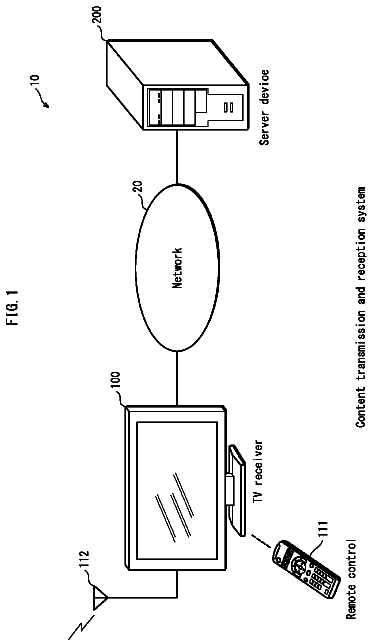
With this brief overview of the benefits and advantages of the invention, various embodiments of the invention will now be described in detail with reference to the figures. FIG. 1 illustrates a simplified block diagram of a system used to deliver companion content to a secondary device during presentation of multimedia content on a main device, in one embodiment of the invention. The system includes a main device 100 . The main device may be a television (TV) with associated screen/monitor or a display device to render the multimedia show at the request of a user. The main device is communicatively connected to a network 300 , such as an Internet, through a connection interface 110 to request and receive multimedia show distributed by one or more media programming providers (MPP) 400 -b.
The connection interface 110 provides a communication interface between the main device 100 and the internet 300 and between the main device 100 and a satellite (not shown) to enable the main device 100 to receive one or more multimedia shows distributed by the MPP 400 -b directly through the internet 300 or through the satellite. The connection interface 110 includes one or more set-top boxes (STB) and one or more routers that establish communication connection between the main device 100 and the MPP 400 -b over the Internet 300 . The STB is equipped with programming logic, such as application programming interface (API), and circuitry to receive request from the main device 100 or a control device associated with the main device for a multimedia show, forward the request to the MPP 400 -b, receive the multimedia show from the MPP 400 -b directly through the internet 300 or through a satellite, transmit the multimedia show to the main device 100 for rendering, detect control actions and status of the multimedia show at the main device and interact with the MPP 400 -b accordingly. In one embodiment, the STB is configured to share show parameters of the multimedia show that is being rendered on the main device with other devices. The show parameters are provided as switch streams and include the metadata of the multimedia show that is being rendered or selected for rendering on the main device.
The system also includes a secondary device 200 , such as a connected device, that is communicatively connected to the main device 100 through the API at the STB and to the same network (internet 300 ) as the main device. The secondary device could be a laptop computer, a desktop or personal computer (PC), a tablet computing device, such as a iPad (registered TM), a mobile computing device, such as a personal digital assistant (PDA), mobile phone, or the like that is communicatively configured to interact with the main device. The secondary device is not limited to the aforementioned list of computing devices but may include other types of mobile/desktop devices that are capable of being communicatively connected to the main device and the internet 300 . The secondary device 200 includes a display/rendering device for rendering information obtained from the internet.
The secondary device 200 executes a local application 210 that is configured to interact with the device connected to the main device through an API. The local application 210 of the secondary device 200 obtains the switch streams from the device that is connected to the main device through the API and identifies the metadata related to the content rendered/selected for rendering on the main device. The metadata is used to identify surfing patterns/paths followed by the particular user over time and is used to generate companion content for the particular user. The companion content, as used in this application, is a listing of multimedia content along with brief description of each of the multimedia content. The local application may process at least a portion of the metadata received from the device that interfaces with the main device 100 . Thus, in one embodiment, in addition to the content information, the metadata provided by the secondary device may also include user attributes of a particular user and any device specific information associated with the secondary device 200 based on the processing of the metadata by the local application at the secondary device 200 .
The secondary device 200 is connected to a server 400 executing a server application 410 over the internet 300 . The server application 410 detects the local application 210 executing on the secondary device 200 upon the triggering of the local application 210 triggered for execution at the secondary device 200 . The server application 410 then queries the local application 210 and retrieves at least a portion of the processed metadata that includes switch stream metadata obtained by the local application 210 from the device connected to the main device 100 and user/device attributes associated with the secondary device. In one embodiment, the metadata obtained from the secondary device 200 is used to generate historical data for the particular user. The historical data of the particular user is analyzed to identify surfing paths followed by the particular user over time to define predictive pattern of viewing. In one embodiment, the switch stream metadata is used to identify point-to-point traversals followed by the particular user and select the multimedia content accordingly. The server application 410 generates companion content based on the surfing paths of the particular user and forwards the companion content to the local application 210 for rendering on the secondary device 200 while the secondary device 200 is connected to the device that interfaces with the main device 100 . In one embodiment, for generating companion content for a particular user, the server application first identifies a time period for which the companion content is being generated. The server application then determines content available for rendering on the main device for the identified time period using the metadata from the switch stream. The metadata from the switch stream includes information related to point-to-point traversals, resident time at each point and time of day, among other data. Since the multimedia content available for rendering on the main device varies depending on days and times of days, it is essential that the server application identify what content is available for rendering for the specific period of time and what content was viewed during the related time period before generating a recommended companion content list that is relevant for the day, time and user for which the companion content is sought.
The system may also include a repository, such as a content aggregator 420 , to store the historical data generated for the particular user using the metadata from the user's switch streams received from the secondary device 200 . The user's switch streams define the user's interaction at the main device 100 over time. In one embodiment, the historical data of the particular user is mined for a specific period of time and companion content is generated for the particular user based on the analysis of the mined data. For instance, the historical data associated with the particular user may be mined for data from a particular time in a particular day of a week over a period of one month and the mined data may be analyzed to generate the companion content for the particular user. The details of generating companion content for a particular user will be explained in greater detail with reference to FIG. 3 .
In another embodiment, the server application 410 on the server device 400 may be used to query and obtain metadata from a plurality of secondary devices 200 associated with a plurality of users over a period of time. The metadata associated with the plurality of users is gathered and used to generate historical data of the plurality of users. The metadata from the secondary device 200 may include user surfing data obtained as switch streams from the device (i.e. STB) that is connected to the main device 100 and user attributes provided by the secondary devices 200 . The generated historical data for the plurality of users is maintained in a database, such as a content aggregator database 420 . The server application 410 , in this embodiment, further queries and obtains user attributes of a particular user associated with a particular secondary device 200 . The server application 410 then mines the historical data of the plurality of users to identify data associated with a sub-set of the plurality of users whose user attributes match at least a portion of the user attributes of the particular user. The user attributes may include user demographic data and any other data that describe the user, such as age group, geo location, gender, race, etc., of the user.
In one embodiment, user switch streams recording switch-through activity of a plurality of users at the corresponding main devices 100 are obtained when the users selected a particular multimedia show or switched from one multimedia show to another for viewing at the respective main devices 100 . The switch click streams are obtained by the server application 410 from the local application 210 executing in the plurality of secondary devices 200 associated with the plurality of users, along with related metadata exposed by the device connected to the main devices 100 and relevant user attributes of each of the plurality of users. The server application 410 generates the historical data encompassing the data in the user switch streams, which includes switch stream metadata and user attributes and stores the generated historical data in content aggregator 420 for subsequent mining.
The server application 410 mines the historical data of the plurality of users to obtain the surfing paths of the plurality of users. The server application 410 may then construct point-to-point transitions of the plurality of users using the information from the surfing paths; analyze the point-to-point transitions using analysis metrics to determine one or more predictive patterns of viewing of the plurality of users; and generate companion content identifying a list of multimedia shows that are popular with the plurality of users based on the analysis. The analysis metrics, in one embodiment, may identify one or more attributes that may be used in filtering/matching mined data during analysis. For instance, the analysis metrics may identify a time period for analyzing the mined historical data (such as a particular time slot for a particular day in a week), level or percentage of similarity matches required for user attributes and/or viewing history data, in order to declare any two users surfing path data as being similar. Other analysis metrics may be employed as deemed appropriate.
Still referring to FIG. 1 , the identified list of multimedia shows within the companion content may be formatted using a template and returned to the secondary device 200 for rendering on a display device associated with the secondary device 200 so as to provide a particular user with a preferred sub-set of multimedia shows available for viewing based on what is popular with users that have similar demographic data/user attributes as the particular user. The multimedia shows in the companion content is interactive in that a multimedia show within the list may be selected for rendering on the main device 100 or for changing whatever is being rendered on the main device 100 . The identifying of the surfing paths, constructing of historical data, analyzing the historical data and generating companion content are all performed automatically by the server application 410 based on a user action at the secondary device. The user action at the secondary device may be a login action where a user enters one or more user metrics (i.e. user attributes) identifying the user and or the secondary device. The formatted and rendered companion content is a tailored list of the multimedia show that is relevant to the user.
FIG. 1 a illustrates the data flow through the system during the generation of the companion content, in one embodiment of the invention. As illustrated, switch stream from a particular user, user A, or a plurality of users, user A , user B, . . . User N, are accessed and retrieved by a local application executing on a secondary device through an API of a device that interacts with the main device where the content is rendered. The switch stream data is transmitted by the secondary device to a server application executing on a server. The server application stores the switch stream data in a history repository for subsequent mining and analysis. An analyzer within the server application mines the data in the history repository of a particular user or a plurality of users and analyzes the data to identify predictive patterns of viewing by the particular user or the plurality of users. The analyzer constructs point-to-point traversals/transitions associated with the particular user or the plurality of users using the mined data and determines the transition pattern followed by the particular user/plurality of users. Based on the analysis, a set of companion content is identified and transmitted to the secondary device of the particular user for rendering. Along with the companion content, one or more promotional content in the form of advertisements, etc., are also returned for rendering at the secondary device.
FIG. 2 illustrates a sample switch stream data of a sub-set of users stored in historical data and extracted during mining for generating companion content, in one embodiment of the invention. As depicted, each user switch stream includes user surfing path data and user attributes that identifies the user's demographic data. For instance, the user demographic data may include age or age group, gender, geo location, race/ethnicity, and other user attributes that may be relevant to identify a particular user. The user switch streams identifies the particular user's surfing path data including the point-to-point traversals that the user made during a particular period of time. For instance, as illustrated in FIG. 2 , user 1 traversed from sports channel 1 to news and then to a miniseries during a particular time period on Monday night. During the same time period and same night, user 2 traversed from sports channel 1 to sports channel 2 and then to sports channel 3 ; user 3 traversed from movie channel 1 to movie channel 2 , user 4 traversed from news channel 1 to news channel 2 to news channel 3 and then to news channel 4 ; user 5 traversed from news channel 1 to news channel 2 and then to news channel 4 ; and so on. The server application 410 , in one embodiment, may analyze the viewing history data from a plurality of users for the specific time period using analysis metrics and the information from the user switch streams, determine the surfing paths of each of the plurality of users for the particular period of time, and determine which set of users surfing path and user attributes match. For e.g., from the example illustrated in FIG. 2 , it can be seen that users 4 and 5 have a surfing path similarity. Based on the analysis, the server application 410 , in one embodiment, generates companion content for rendering on the secondary device of a particular user, in response to activation of the local application at the corresponding secondary device. The companion content generated includes information related to multimedia content identified in the surfing paths of the majority of the plurality of users at the given time.
In another embodiment, in addition to the surfing path data, the server application may identify and use user attributes of the plurality of users available within the user switch stream for generating companion content for a particular user. The server application may use a pre-defined threshold level during the analysis to determine which user's data can be considered for generating the companion content. For instance, from the sample user switch stream depicted in FIG. 2 , the server application may determine that the surfing paths of users 4 and 5 are similar. However, the user attributes associated with User 4 is not similar to the user attributes associated with User 5 . Accordingly, the server application determines that the surfing paths of User 4 and User 5 as being dissimilar, based on the mismatch in the user attributes of users 4 and 5 . Upon further analysis, the server application may find that Users 5 and 6 have user attributes that match with each other.
Based on the match in the user attributes, the server application analyzes the surfing paths of the users 5 and 6 and determines a certain level of match, which might not be as high as that found with the surfing paths of users 4 and 5 but are at least at the predefined threshold level. Consequently, the server application may use the surfing paths identified by the switch stream from Users 5 and 6 to generate companion content for the particular user in response to activation of the local application on the corresponding secondary device.
In one embodiment, the server application may analyze and generate the companion content using the time of day or time period, in addition to user attributes and surfing paths of a plurality of users, for mining data from the historical data. As different multimedia content, such as TV shows, is available on different days and times, it is only appropriate to use the time of day/time period during analysis for mining user switch streams within the historical data of the plurality of users in order to generate companion content for a particular user. The mining of data for a time period/time of day would result in identifying companion content that is most appropriate for the particular user for the accessed time period.
In one embodiment, the server application may query and receive user attributes of a particular user from a secondary device associated with the particular user. In another embodiment, the user attributes of a particular user are provided by the secondary device in response to user action at the secondary device. The user attributes sufficiently identify the user and may provide insight into the particular user's viewing interest. Upon receiving the user attributes of the particular user, the server application then mines the historical data to identify user switch streams associated with a sub-set of the plurality of users whose user attributes match the user attributes of the particular user. The surfing paths from the identified user switch streams are used to generate point-to-point transitions that are analyzed using analysis metrics to determine path analysis similarity amongst the identified sub-set of users at least to a predetermined threshold level. Based on the analysis, the companion content for the particular user are generated and returned to the secondary device for rendering, in response to activating the local application on the secondary device. The above example illustrated in FIG. 2 uses a very small sampling of user switch streams in order to generate companion content for illustration purpose. Accordingly, it should be noted that the actual sampling of users may involve hundreds or even thousands of users switch streams for analyzing and generating companion content.
FIG. 2 a illustrates a point-to-point transition followed by a plurality of users that are captured in the switch streams retrieved by the local application executing on the secondary device from the device that interfaces with the main device. The switch streams identify the metadata related to the content that is currently rendering or is selected for rendering on the main device. As can be seen, user A starts viewing a Disney show content for some time before transitioning to sports channel, ESPN1®, and watches the show for a brief period before transitioning to a second sports channel, ESPN2®, where he stays for an extended period before transitioning to the Disney show again. From the Disney show, user A transitions to CNN® news and then onto MSNBC news channel. Accordingly, based on the point-to-point traversals of user A, it can be seen that user A is interested in sports and news with a small interest in the Disney channel. Accordingly, if the server application has to provide companion content for this user, it will provide companion content related primarily to sports and news with a mix of Disney or like channels included.
Continuing with FIG. 2 a , user B starts at sports channel, ESPN 1®, transitions after a period of time to Disney channel and then onto CNN news where he spends a considerable amount of time before transitioning to MSNBC. The analyzer of the server application would look at the point-to-point transitions of Users A and B, the resident time at each transition point and time of day associated with users A and B and determine that the two users surfing paths are similar. The analyzer may also determine that the two users' attributes are also similar. Based on this analysis the analyzer may generate companion content for a third user, which includes the shows that are similar to the ones that users A and B are viewing, in response to a user action at a corresponding secondary device by the third user. During the generation of the companion content for the third user, the analyzer, in one embodiment, may also try to match the user attributes of the third user with that of the first and second users to ensure that the companion content is suitable and relevant for the third user.
The description continues in the full USPTO document.
About 6,424 words. The USPTO PDF has it with every drawing.
Fees are due 3.5, 7.5 and 11.5 years after grant. This patent expired on October 10, 2025, so the fee marked "not paid" was the one that went unpaid.
Entertainment Content Rendering Application
Filed Aug 2011 · published Jul 2012Entertainment content rendering application
Filed Aug 2011 · granted Oct 2017Earlier publications, parents and continuations. None of them can still be enforced, or this patent would not be listed.
Prior art cited by the examiner or applicant. Useful when you check your own idea for novelty.
Everything on this page comes from the documents linked above.