Technical field
The present disclosure generally relates to image recognition, and more particularly, to a method, a television (TV) set and a system for recognizing a TV station logo.
Background
When a television program is shown on a TV set, it is desirable that the TV set can recognize the current channel broadcasting the television program and notify the channel name to the user. Generally, digital TV sets can identify the currently broadcasted channel based on a comparison list provided by a set-top box provider, while analog TVs usually identify the current channel based on a frequency point list. Since the frequency point for a same channel varies across the country, it is very difficult to identify the channel shown by the analog TV set with the frequency point list.
The channel shown by the analog TV set may also be identified through TV station logo recognition. Since each channel has its own unique TV station logo, it is easy to know the channel name after recognizing the TV station logo of the current channel. A conventional method for recognizing TV station logo includes: obtaining a TV screen image, selecting a top quadrant area of the TV screen image as a matching area, then performing a graphic retrieval by substituting all the standard TV station logos pre-stored in a database into the matching area one by one, and finally selecting the standard TV station logo with a highest matching probability according to the matching probabilities obtained by the graphic retrieval as the TV station logo of the current TV channel. The graphic retrieval indicates matching the standard TV station logos in the database with the image in the matching area.
However, nowadays TV screens become larger as well as the selected matching area, which increases the resultant calculation required for the recognition. Thus, the TV station logo recognition according to the above method may be too slow.
Summary
Accordingly, the embodiments of the present disclosure provide a method, a TV set and a system for recognizing TV station logo. The technical solutions are as follows.
According to a first aspect of embodiments of the present disclosure, there is provided a method for recognizing a TV station logo, including: obtaining a TV screen image; for each pre-stored standard TV station logo, selecting a matching area of the standard TV station logo from the TV screen image according to position information of the standard TV station logo, the position information indicating a position of the standard TV station logo in a TV screen; and recognizing a TV station logo in the TV screen image by matching the standard TV station logos with their respective matching areas.
According to a second aspect of embodiments of the present disclosure, there is provided a TV set, including: one or more processors; a TV screen and a memory, wherein the processor is configured to execute instructions for: obtaining a TV screen image; for each of a plurality of pre-stored standard TV station logos, selecting a matching area of the standard TV station logo from the TV screen image according to position information of the standard TV station logo, the position information indicating a position of the standard TV station logo in a TV screen; and recognizing a TV station logo in the TV screen image by matching the standard TV station logos with their respective matching areas.
According to a third aspect of embodiments of the present disclosure, there is provided a system for recognizing TV station logos, including a TV set and a server connected with the TV set, wherein the TV set is the TV set according to the second aspect.
According to a fourth aspect of embodiments of the present disclosure, there is provided a non-transitory computer-readable storage medium having stored therein instructions that, when executed by one or more processors of a TV set, cause the TV set to perform: obtaining a TV screen image; for each of a plurality of pre-stored standard TV station logos, selecting a matching area of the standard TV station logo from the TV screen image according to position information of the standard TV station logo, the position information indicating a position of the standard TV station logo in a TV screen; and recognizing a TV station logo in the TV screen image by matching the standard TV station logos with their respective matching areas.
The technical solutions provided by the embodiments of the present disclosure may have the following advantages.
For the embodiments of the present disclosure, after obtaining the TV screen image, the area corresponding to the position information of the standard logo is selected from the TV screen image according to the position information as the matching area of the standard logo for each pre-stored standard logo. Then the TV station logo in the TV screen image is recognized based on the results of matching respective standard logos with the corresponding matching areas. Such implementation reduces the size of the matching area to substantially the same as the size of the standard logo, thereby solving the problem of low speed logo recognition of the conventional method due to the large size of the matching area selected from the TV screen image. Furthermore, the size of matching area is reduced and the speed for logo recognition is improved for the embodiments of the present disclosure.
It is to be understood that both the foregoing general description and the following detailed description are exemplary and explanatory only and are not restrictive of the invention as claimed.
Brief description of the drawings
In order to explain the embodiments of the present disclosure more clearly, the simple introduction of the drawings used for describing the embodiments will be given below. It is apparent that the accompanying drawings only illustrate some embodiments of the present disclosure, and other drawings may be obtained by the person skilled in the art according to these drawings without inventive labor.
FIG. 1 is an exemplary block diagram of an application environment for applying a method for recognizing TV station logos according to an embodiment of the present disclosure;
FIG. 2 is an exemplary flow chart of a method for recognizing TV station logos according to an embodiment of the present disclosure;
FIG. 3A is an exemplary flow chart of a method for recognizing TV station logos according to another embodiment of the present disclosure;
FIGS. 3B and 3C are exemplary positions of standard TV station logos used in the method for recognizing TV station logos according to an embodiment of the present disclosure;
FIG. 3D illustrates how to obtain position information of a matching area in the method for recognizing TV station logos according to an embodiment of the present disclosure;
FIG. 4 is an exemplary flow chart of a method for recognizing TV station logos according to another embodiment of the present disclosure;
FIG. 5 is an exemplary block diagram of a device for recognizing TV station logos according to an embodiment of the present disclosure;
FIG. 6 is an exemplary block diagram of a device for recognizing TV station logos according to another embodiment of the present disclosure;
FIG. 7 is an exemplary block diagram of a system for recognizing TV station logos according to an embodiment of the present disclosure; and
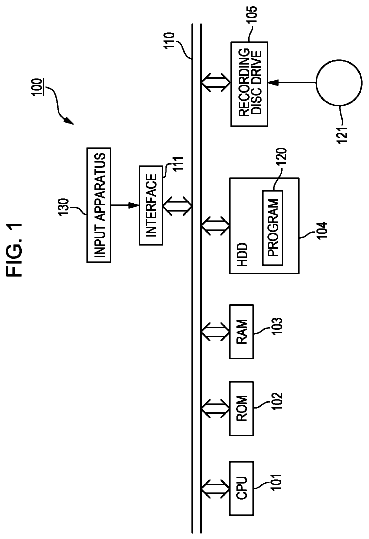
FIG. 8 is an exemplary block diagram of a TV set for applying several embodiments of the present disclosure.
Specific embodiments in this disclosure have been shown by way of example in the foregoing drawings and are hereinafter described in detail. The figures and written description are not intended to limit the scope of the inventive concepts in any manner. Rather, they are provided to illustrate the inventive concepts to a person skilled in the art with reference to particular embodiments.
Detailed description
In order to make the purposes, the technical solutions and the advantages of the present disclosure more apparent, the present disclosure will be further described in detail with reference to the accompanying drawings. It is apparent that the described embodiments are only a part of embodiments of the present disclosure, but not all the embodiments. Based on the embodiments in the present disclosure, all the other embodiments obtained by the person skilled in the art without inventive labor will fall within the protection scope of the present disclosure.
Referring to FIG. 1 , which illustrates an exemplary block diagram of an application environment for applying a method for a recognizing TV station logo according to an embodiment of the present disclosure. The application environment includes a TV set 110 and a server 120 .
In an exemplary embodiment, the TV set 110 can be an analog TV set. However, the present disclosure does not limit the TV set as the analog TV set. Instead, those of skill in the art will recognize that the techniques described herein also support digital TV sets or other electronic devices which can be functioned as a TV set.
The TV set 110 is coupled to the server 120 via a wired network or a wireless network.
The server 120 may be a single server, or a server group consisted of several servers, or a cloud computing service center. A standard TV station logo (hereinafter “standard logo”) database is included in the server 120 , which stores basic information of a plurality of standard logos. The plurality of standard logos corresponds to a plurality of TV stations or channels. The basic information for each standard logo includes feature information of the standard logo, and position information of the standard logos. The feature information of the standard logo includes information for differentiate the standard logo from other logos, such as an image of the standard logo. In some examples, the basic information may further include at least one selected from the group consisting of a matching threshold value of the standard logo, and a channel name or a channel network ID (Identity) corresponding to the standard logo.
Referring to FIG. 2 , which illustrates an exemplary flow chart of a method for a recognizing TV station logo according to an embodiment of the present disclosure. The method for recognizing the TV station logo can be implemented at the TV set side of the application environment shown in FIG. 1 . The method for recognizing the TV station logo may include the following steps.
In Step 202 , a TV screen image is obtained.
In Step 204 , for each of the plurality of pre-stored standard logos, a matching area of the standard logo is selected from the TV screen image according to position information of the standard logo. The position information is a position of the standard logo in the TV screen.
In Step 206 , a TV station logo in the TV screen image is recognized by matching the standard logos with their respective matching areas.
In summary, for the method for recognizing TV station logos according to the embodiment of the disclosure, after obtaining the TV screen image, the area corresponding to the position information of the standard logo is selected from the TV screen image according to the position information as the matching area of the standard logo for each pre-stored standard logo. Then the logo in the TV screen image is recognized based on the result of matching respective standard logos with the corresponding matching areas. Such implementation reduces the size of the matching area to substantially the same as the size of the standard logo, thereby solving the problem of low speed logo recognition for the conventional method due to the large size of the matching area selected from the TV screen image. Furthermore, the size of matching area is reduced and the speed for logo recognition is improved.
Referring to FIG. 3A , which illustrates an exemplary flow chart of a method for recognizing a TV station logo according to another embodiment of the present disclosure. The method for recognizing the TV station logo can be applied in the application environment shown in FIG. 1 . The method for recognizing the TV station logo may include the following steps.
In Step 301 , the server obtains a TV screen image of a channel.
The server may obtain the TV screen image of the channel by two ways. The first way is to obtain the TV screen image of the channel by itself from the Internet or a TV service provider. The second way is to receive the TV screen image from the TV set side if the TV set can not recognize the TV station logo in the TV screen image.
In Step 302 , the server recognizes a standard logo in the TV screen image and position information of the standard logo.
The server recognizes the standard logo in the TV screen image and obtains position information of the standard logo according to a control instruction input by technician and the pre-stored standard logos. The standard logos pre-stored in the server may be obtained by downloading the standard logos from the Internet in advance, classifying the standard logos and determining the size of each standard logo by the technician, and then storing them in the server.
The position information of the standard logo is the position of the standard logo in a TV screen image. The standard logos of different channels have different positions in the TV screen with the same size and the same aspect ratio. As shown in FIG. 3B , the position of standard logo A is upper left to the position of standard logo B. In addition, the same standard logo has different positions in TV screens with different sizes or different aspect ratios. As shown in FIG. 3C , the position of standard logo A in a 16:9 TV screen is different from that in a 4:3 TV screen.
Specifically, Step 302 includes the following sub-steps.
First, a coordinate system is established.
As shown in FIG. 3D , a coordinate system is established by taking an upper-left corner of the TV screen as the origin of the coordinate system, and taking two adjacent sides of the upper-left corner as two coordinate axes of the coordinate system, wherein the length of a pixel is taken as a unit length.
Second, position information of each standard logo is read in the coordinate system.
As shown in FIG. 3D , two vertices, i.e., an upper-left corner and a lower-right corner of the standard logo are selected as two feature points. Assuming that the coordinate of the feature point a1 at the upper-left corner is (50, 50) and the coordinate of the feature point a2 at the lower-right corner is (200, 100), the coordinates of the feature points a1 and a2 are obtained and stored as the position information of the standard logo.
In some cases, two other vertices, i.e., a lower-left corner and an upper-right corner of the standard logo A may alternatively be selected as two feature points. Or four vertices, i.e., the upper-left, lower-left, upper-right and lower-right corners of the standard logo A may be selected as four feature points. In addition, the position information can also be represented by an upper-left corner of the standard logo A and the length and width of the standard logo A. In short, there are a variety of ways for representing the position information of the standard logo, as long as the specific position of the standard logo in the TV screen can be represented. The present disclosure is not limited thereto.
In Step 303 , the server generates basic information of the standard logo based on the image of the standard logo and the position information of the standard logo.
The basic information of each standard logo includes the image of the standard logo and the position information of the standard logo. The image of the standard logo is associated with the position information of the standard logo. In the embodiments of the present disclosure, the feature information of the standard logo refers to logo graphic of the standard logo.
In Step 304 , the server sends the basic information of the standard logo to the TV set.
When communicatively coupled to the server, the TV set may download the basic information of the standard logo from the server, and store the downloaded basic information of the standard logo to a local logo database.
Correspondingly, the TV set receives the basic information of the standard logo sent from the server.
In Step 305 , the TV set obtains a TV screen image.
When the user searches TV channels or changes the TV channel, the TV set automatically captures the TV screen image of the current channel shown in the TV set. There are many ways to capture the TV screen image. For example, the TV signal processed by the TV set can be obtained through a third-party application or certain script, and then the TV screen image at a certain moment can be captured from a series of consecutive screen images of the TV signal.
In Step 306 , the TV converts a color space of the TV screen image into a converted color space in which a luminance and a chrominance of the TV screen image are separated.
Typically, the color space of the original TV screen image is RGB (the color space represented by a tricolor model of a red, green, and blue). In order to eliminate the influence of mixing the luminance and chrominance, the color space of the TV screen image needs to be converted from the RGB color space to the color space in which the luminance and the chrominance of the TV screen image are separated. In TV applications, the YUV color space can usually be used, wherein, Y represents a luminance signal, and U and V represent chrominance signals, respectively. The YUV color space is used due to its luminance signal Y and chrominance signals U, V being separated. For the method for recognizing TV station logos according to the present embodiment, the logo recognition is achieved by calculating and comparing the magnitudes of the luminance signal Y, thus the recognition accuracy is high. The magnitude of the luminance signal Y ranges from 0 to 255, wherein the Y value of black is 0, and the Y value of white is 255.
In Step 307 , for each of the pre-stored standard logos, the TV selects a matching area of the standard logo from the TV screen image according to position information of the standard logo.
The present embodiment is exemplified by using an example in which a standard logo pre-stored by the TV set has only a piece of position information. Specifically, assuming that the position information of standard logo A has two feature points (50, 50) and (200, 100), then the point having a coordinate (50, 50) in the TV screen image is selected as an upper-left corner vertex of the matching area of the standard logo A, the other point having a coordinate (200, 100) in the TV screen image is selected as a lower-right corner vertex of the matching area of the standard logo A, and a rectangular area defined by the upper-left corner vertex (50, 50) and the lower-right corner vertex (200, 100) is used as the matching area of standard logo A. Assuming that the position information of a standard logo B has two feature points (80, 65) and (230, 115), then the point having a coordinate (80, 65) in the TV screen image is selected as an upper-left corner vertex of the matching area of the standard logo B, the other point having a coordinate (230, 115) in the TV screen image is selected as a lower-right corner vertex of the matching area of standard logo B, and a rectangular area defined by the upper-left corner vertex and the lower-right corner vertex is used as the matching area of standard logo B.
Further, in some cases a standard logo has two or more pieces of position information corresponding to different screen aspect ratios, respectively. As described in above Step 302 , the same standard logo has different positions in the TV screens with different sizes or different aspect ratios. Therefore, when there are two or more pieces of position information for the same standard logo pre-stored in the TV set, the TV set needs to obtain the screen aspect ratio of the TV screen image, and then selects the matching area of the standard logo from the TV screen image according to the position information of the standard logo corresponding to the obtained screen aspect ratio of the TV screen image.
In Step 308 , for each standard logo, the TV set calculates a difference between a luminance value of each pixel of the standard logo and a luminance value of a corresponding pixel in the matching area.
Before Step 308 , the TV also needs to convert the color space of the standard logo downloaded from the server into the converted color space in which the luminance and the chrominance are separated. If the color space of the TV screen image is converted into the YUV color space in Step 306 , it is also needed to convert the color space of each standard logo into the YUV color space. In some examples, in order to reduce the calculation amount at the TV set side and improve the recognition speed, the step for converting the color space of each standard logo into the converted color space in which the luminance and the chrominance are separated is generally executed by the server. Then the TV set may directly download the converted standard logos from the server.
For each standard logo, the TV set calculates the difference between the luminance value of each pixel of the standard logo and the luminance value of the corresponding pixel in the matching area. For example, the luminance value of a certain pixel of standard logo A is 86, and the luminance value of the corresponding pixel in the matching area of the standard logo A is 85, then the difference thereof is 1. Generally, the difference is an absolute value of the value obtained by subtracting the luminance value of the pixel of the standard logo from the luminance value of the pixel of the TV screen image, or vice versa.
Further, in order to reduce the calculation amount and improve the recognition accuracy, Step 308 may include the following sub-steps.
First, for each pixel in the standard logo, the TV set detects whether the luminance value of the pixel is 0.
When selecting and processing each standard logo, the background of the standard logo is generally set black, and the luminance value of the pixel within the black background is 0. Thus, before calculating the difference between the luminance value of each pixel of the standard logo and the luminance value of the corresponding pixel in the matching area, it may be detected whether the luminance value of the pixel is 0. If the luminance value of the pixel is 0, the calculation may not be performed. The calculation is only performed for the portion of the standard logo in which the luminance values of the pixels are not 0, for example, the pixels in the non-background portion of the standard logo may be processed for calculation.
In addition to reducing the calculation amount and improving the recognition speed, this step can also improve the recognition accuracy. Due to existence of noise points, the luminance values between the pixels in the standard logo and those corresponding pixels in the TV screen image are different. Thus, it is preferred to select fewer pixels for calculation, thereby reducing the influence of the error caused by the noise points and improving the recognition accuracy.
Second, if the luminance value of the pixel is not 0, the TV set calculates the difference between the luminance value of the pixel and the luminance value of the corresponding pixel in the matching area of the TV screen image.
This embodiment only performs calculation on the portion of the standard logo in which the luminance values of the pixels is not 0, i.e., only the pixels in the non-background portion of the standard logo are processed for calculation.
In Step 309 , the TV set sums the differences for all the calculated pixels so as to obtain a matching value.
In the case that the position information of standard logo A has the feature points (50, 50) and (200, 100), and the unit length of the coordinate is the length of the pixel, then the standard logo A has totally (200−50)×(100−50)=7500 pixels. In the case that there is no black pixel in standard logo A, the matching value is obtained by summing the differences of the luminance values obtained by calculating for the 7500 pixels. It is assumed that the calculated matching value of standard logo A is 30. Further, if there are black pixels in standard logo A, it is necessary to remove such black pixels from the calculation.
In Step 310 , the TV set obtains a matching threshold value corresponding to the standard logo with a minimum matching value.
The matching value of the standard logo increasingly depends on the difference between the luminance value of the standard logo and the luminance value of the matching area. Thus, a smaller matching value of the standard logo indicates a higher similarity between the standard logo and the TV station logo in the TV screen image. Therefore, the standard logo with the minimum matching value is most likely the TV station logo in the TV screen image.
However, the standard logo with the minimum matching value is not inevitably the TV station logo in the TV screen image. For example, the TV set does not pre-store the standard logo of a new channel, then it is inappropriate to select the standard logo with the minimum matching value as the TV station logo of the new channel. Thus, Step 310 may include the following sub-steps.
The server provides a matching threshold value for each standard logo, and the matching threshold value is usually around 50-70. For example, a same matching threshold value such as 60 may be set for all the standard logos. However, in order to improve the accuracy of logo recognition, different matching threshold values may be set for different standard logos. The larger the size of the standard logo is, the greater the influence of the noise points is, and the larger the calculated matching values is. Conversely, the smaller the size of the standard logo is, the less the influence of the noise points is, and the smaller the calculated matching values is. Therefore, different matching threshold values may be set for different standard logos based on the size of the standard logos, respectively, and the matching threshold value is positively correlated with the size of the standard logo.
To further validate whether the standard logo with the minimum matching value is the TV station logo in the TV screen image, the TV set obtains the matching threshold value corresponding to the standard logo with the minimum matching value. In addition to the image of the standard logo and the position information of the standard logo, the basic information of the standard logo downloaded from the server may further include the matching threshold value of the standard logo.
In Step 311 , the TV set compares the minimum matching value with the matching threshold value.
After obtaining the matching threshold value corresponding to the standard logo with the minimum matching value, the TV set compares the minimum matching value with the matching threshold value.
In Step 312 , if the minimum matching value is larger than the matching threshold value, the recognition fails, and the TV screen image is sent to the server.
When the minimum matching value is larger than the matching threshold value of the standard logo corresponding to this matching value, it indicates that the similarity between the matching area and the standard logo corresponding to the minimum matching value is not enough, thereby the standard logo with the minimum matching value is probably not the logo of the current channel shown in the TV set. At this point, it is deemed that a new channel is shown, i.e., the TV set has not pre-stored the standard logo of the new channel. The TV set sends the TV screen image to the server, then the server recognizes the image of the standard logo in the TV screen image and the position information of the standard logo, generates the basic information of the standard logo and send it to the TV set by performing Steps 301 - 304 . Afterwards, the TV set performs Step 305 and the subsequent steps to re-recognize the TV station logo.
In Step 313 , if the minimum matching value is less than the matching threshold value, the standard logo with the minimum matching value is recognized as the TV station logo in the TV screen image.
When the minimum matching value is less than the matching threshold value of the standard logo corresponding to this matching value, it indicates that the similarity between the matching area and the standard logo corresponding to the minimum matching value is high, thereby the standard logo with the minimum matching value is deemed as the TV station logo of the current channel shown in the TV set, and the standard logo with the minimum matching value is recognized as the TV station logo in the TV screen image.
Further, after recognizing the TV station logo in the TV screen image, the channel name of the current channel may be obtained according to a relationship between the TV station logo and the channel name.
In summary, for the method for recognizing TV station logos according to the present embodiment, after obtaining the TV screen image, the area corresponding to the position information of the standard logo is selected from the TV screen image according to the position information as the matching area of the standard logo for each pre-stored standard logo. Then the logo in the TV screen image is recognized based on the result of matching respective standard logos with the corresponding matching areas. Such implementation reduces the size of the matching area to substantially the same as the size of the standard logo, thereby solving the problem of low speed logo recognition for the conventional method due to the large size of the matching area selected from the TV screen image. Furthermore, the size of matching area is reduced and the speed for logo recognition is improved.
Also, for the method for recognizing TV station logo according to the present embodiment, the color space in which the luminance and the chrominance are separated, such as YUV color space, is used to calculate the difference between the luminance values of the matching area and the standard logo, so as to realize the logo recognition. This algorithm is simple and has a high accuracy.
Additionally, for the method for recognizing TV station logo according to the present embodiment, it is detected whether the luminance value of the pixel is 0, then only the difference between the luminance value of each pixel in the standard logo in which the background is not 0 and the luminance value of corresponding pixel in the matching area is calculated, which reduces the calculation amount and improves the recognition accuracy.
Furthermore, for the method for recognizing TV station logo according to the present embodiment, the matching threshold value is set for each standard logo, after obtaining the matching value of each standard logo by calculation, the minimum matching value is compared with the matching threshold value. When the minimum matching value is larger than the matching threshold value, the TV screen image is sent to the server and then the server returns basic information of a new standard logo, which solves the problem in the prior art that new logos can not be recognized, and brings the unexpected effect that the new logos can be recognized.
It should be noted that many standard logos have a translucent portion. When calculating the luminance value of such translucent portion of the standard logos, the matching value is relatively large because the matching area is significantly affected by the background of the TV screen image, which may produce errors. Accordingly, the methods according to embodiments of the present disclosure only maintain the opaque portions of the standard logo for each standard logo stored in the server, which improves the recognition accuracy.
Refer to FIG. 4 , which illustrates an exemplary flow chart of a method for recognizing TV station logo according to another embodiment of the present disclosure. The method for recognizing TV station logo can be implemented at the TV set side of the application environment shown in FIG. 1 . The method for recognizing TV station logo may include the following steps.
In Step 401 , it is detected whether basic information of a standard logo stored in the server is updated. The basic information includes an image of the standard logo and position information of the standard logo, or further includes a matching threshold value of the standard logo.
In the case that the TV set is communicatively coupled to the server, the TV set logins into the server each time the TV set is turned on, to detect whether the basic information of the standard logo stored in the server is updated. The basic information includes the image of the standard logo, the position information of the standard logo, or further includes the matching threshold value of the standard logo. The use of the matching threshold value for the standard logo is discussed with reference to the embodiment shown in FIG. 3 , which will not be elaborated in this embodiment. When it is required to recognize a new TV station logo, the basic information of the standard logo can be downloaded from the server. The basic information includes the image of the standard logo and the position information of the standard logo. The basic information may also include the matching threshold value of the standard logo, and channel name and channel network ID corresponding to the standard logo, etc.
In Step 402 , if the basic information of the standard logo is updated, the basic information is downloaded from the server and is updated at the TV set.
Specifically, Step 402 may include the following sub-steps.
First, local region information is sent to the server.
The number and type of the receivable TV channels varies with the receiving region. For example, thirty TV channels can be received in Jiangsu, and fifty TV channels can be received in Beijing. Therefore, in order to reduce the cache occupancy in the TV set and increase the speed of logo recognition, only the basic information of the standard logos corresponding to the TV channels receivable at the local region will be downloaded.
Second, the basic information of at least one standard logo fed back by the server based on the local region information is received.
At the server side, the stored basic information of the standard logos may be pre-classified based on different region information. Then the basic information of the standard logos of the region where the TV set locates is fed back to the TV set.
In Step 403 , a TV screen image is obtained.
The TV set obtains the TV screen image when the user searches channels or changes the channel.
In Step 404 , for each pre-stored standard logo, a matching area of the standard logo is selected from the TV screen image according to the position information of the standard logo.
In Step 405 , a TV station logo in the TV screen image is recognized by matching the standard logos with their respective matching areas.
The process of the above Step 403 to Step 405 can be referred to Steps 305 - 313 of the method discussed with reference to FIG. 3 , which will not be elaborated in this embodiment.
In Step 406 , continuous n recognition results of a channel corresponding to the TV screen image are recorded, wherein n>1.
A local cache for recording the recently continuous n recognition results of each channel may be added in the TV set. Assume n is 10. Further, in order to explain more clearly, the channel network ID is used to represent the recognition result. Similar to the standard logo, different channels correspond to different standard logos, channel names and channel network IDs. After recognizing the TV station logo in the TV screen image, the recognition result can be represented by the channel network ID. Thus, information recorded in the local cache may be as shown in Table-1 below.
TABLE-US-00001 TABLE 1 Recognition result (represented by the channel network ID) Channel 1 2 3 4 5 6 7 8 9 10 0 5 5 5 5 5 5 6 5 5 5 1 7 8 8 8 8 8 8 8 8 8 2 22 22 22 22 22 4 22 22 13 22 3 54 54 11 54 54 54 54 54 54 54 . . . . . . . . . . . . . . . . . . . . . . . . . . . . . . . . .
In Step 407 , whether there are the same more than m recognition results in the continuous n recognition results is detected, wherein 1 m<n.
When implementing the present invention, an experiment is performed on 30 receivable channels. It is found that, when recognizing any TV screen image using the above Step 403 to Step 405 , the recognition accuracy for recognizing TV station logos for any one channel only once is about 80%. If it is desired to improve the recognition accuracy to 99.99% or higher, the recognitions should be repeated for at least seven times. The equation for calculating the recognition accuracy (P) is: P=1−(1−80%)^7=99.99%.
In this embodiment, n=10 and m=7. In this way, the recognition accuracy can reach 99.99% or higher.
In Step 408 , if there are the same more than m recognition results, the same recognition result is selected as a correct recognition result, and the correct recognition result is correlated with the channel.
In the case that n=10 and m=7, when beginning to recognize a TV station logo, it is detected whether there are the same more than 7 recognition results in the continuous 10 recognition results. If there are the same more than 7 recognition results, the same recognition result is selected as the correct recognition result. Also, the correct recognition result is correlated with the channel.
As shown in the above Table-1, a channel network ID corresponding to Channel 0 is 5; a channel network ID corresponding to Channel 1 is 8; a channel network ID corresponding to Channel 2 is 22; a channel network ID corresponding to Channel 3 is 54. The recognition result is represented by the channel network ID.
Specifically, when there are not the same more than m recognition results in the continuous n recognition results, the recognition result may not be correlated with the channel. The recognition result is not correlated with the channel until there are the same more than m recognition results in continuous n recognition results after repeating the recognition for several times. For example, the channel network IDs of Channel 4 in the continuous 10 recognition results are 6, 15, 15, 6, 15, 15, 15, 22, 15 and 15, respectively, thus there are not the same more than 7 recognition results. As there are only a maximum of the same six recognition results. The network channel ID 15 is not correlated with Channel 4, and then proceed with the following Step 409 to Step 412 .
In Step 409 , an earliest recognition result in the continuous n recognition results is replaced by a latest recognition result of the channel corresponding to the TV screen image.
It is assumed that the 11.sup.th recognition result for the TV station logo of Channel 4 is channel network ID 15. Then the earliest recognition result in the continuous 10 recognition results, i.e. 6, is replaced by 15. Thus, the updated latest continuous 10 recognition results are 15, 15, 6, 15, 15, 15, 22, 15, 15 and 15, respectively. The recognition results are updated no matter whether the latest recognition result is the same as the earliest recognition result in the original continuous 10 recognition results.
In Step 410 , whether there are the same more than m recognition results in the continuous m recognition results is re-detected.
It is detected whether there are not the same more than 7 recognition results in the continuous 10 recognition results. It is found that there are the same more than 7 recognition results, wherein the channel network ID is 15.
In Step 411 , if there are the same more than m recognition results, continue to detect whether the same recognition result is the same as the last correct recognition result.
The description continues in the full USPTO document.
 Lapsed, fee not paid16 drawings