Joint research agreement
The claimed invention, in the field of functional genomics and the characterization of plant genes for the improvement of plants, was made by or on behalf of Mendel Biotechnology, Inc. and Monsanto Company as a result of activities undertaken within the scope of a joint research agreement in effect on or before the date the claimed invention was made.
Field of the invention
The present invention relates to plant genomics and plant improvement, increasing a plant's water use efficiency and abiotic stress tolerance, and the yield that may be obtained from a plant.
Background of the invention
The Effects of Various Factors on Plant Yield.
Yield of commercially valuable species in the natural environment may be suboptimal as plants often grow under unfavorable conditions, such as at an inappropriate temperature or with a limited supply of soil nutrients, light, or water availability. Various factors that may affect yield, crop quality, appearance, or overall plant health include:
Nutrient Limitation
Nitrogen (N) and phosphorus (P) are critical limiting nutrients for plants. Phosphorus is second only to nitrogen in its importance as a macronutrient for plant growth and to its impact on crop yield.
Nitrogen and carbon metabolism are tightly linked in almost every biochemical pathway in the plant. Carbon metabolites regulate genes involved in nitrogen acquisition and metabolism, and are known to affect germination and the expression of photosynthetic genes (Coruzzi et al., 2001) and hence growth. Gene regulation by C/N (carbon-nitrogen balance) status has been demonstrated for a number of nitrogen-metabolic genes (Stitt, 1999); Coruzzi et al., 2001). A plant with altered C/N sensing may exhibit improved germination and/or growth under nitrogen-limiting conditions.
Increased tolerance to abiotic stresses, such as water deprivation, salt, freezing and other hyperosmotic stresses, and cold, and heat, may improve germination, early establishment of developing seedlings, and plant development.
In water-limited environments, crop yield is a function of water use, water use efficiency (WUE; defined as aerial biomass yield/water use) and the harvest index (HI; the ratio of yield biomass to the total cumulative biomass at harvest). WUE is a complex trait that involves water and CO.sub.2 uptake, transport and exchange at the leaf surface (transpiration). Improved WUE has been proposed as a criterion for yield improvement under drought. Water deficit can also have adverse effects in the form of increased susceptibility to disease and pests, reduced plant growth and reproductive failure. Genes that improve WUE and tolerance to water deficit thus promote plant growth, fertility, and disease resistance. Enhanced tolerance to these stresses would lead to yield increases in conventional varieties and reduce yield variation in hybrid varieties. Altering the timing of flowering can also enhance the ability to a plant to maintain yield under water limited conditions. For example, acceleration of flowering and maturation may allow a plant to set seed earlier in the growing season and thereby avoid severe water limitation which occurs late in the season.
Plant pathogen injury may affect any part of a plant, and include defoliation, chlorosis, stunting, lesions, loss of photosynthesis, distortions, necrosis, and death. All of these symptoms ultimately result in yield loss in commercially valuable species.
Fortunately, a plant's traits, including its biochemical, developmental, or phenotypic characteristics that enhance yield or tolerance to various abiotic or biotic stresses, may be controlled through a number of cellular processes. One important way to manipulate that control is through transcription factors—proteins that influence the expression of a particular gene or sets of genes. Transformed and transgenic plants that comprise cells having altered levels of at least one selected transcription factor, for example, possess advantageous or desirable traits. Strategies for manipulating traits by altering a plant cell's transcription factor content can therefore result in plants and crops with commercially valuable properties. We have identified polynucleotides encoding transcription factors, including G1760 and closely-related sequences, developed numerous transformed or transgenic plant lines using these polynucleotides, and analyzed the plants for improved traits, such as altered C/N sensing, water or nutrient use efficiency, tolerance to abiotic stresses, such as water deprivation, cold, heat, low nitrogen conditions, and/or resistance to disease. In so doing, we have identified important polynucleotide and polypeptide sequences for producing commercially valuable plants and crops as well as the methods for making them and using them. Other aspects and embodiments of the invention are described below and can be derived from the teachings of this disclosure as a whole.
Summary of the invention
The invention is directed to transformed seed produced by any of the transformed or transgenic plants of the invention, wherein the transformed seed comprises a transcription factor sequence of the invention. The presently disclosed subject matter also provides methods for producing a transformed plant seed. In some embodiments, the method comprises (a) transforming a plant cell with a nucleic acid construct (for example, an expression vector, an expression cassette, or a DNA preparation) comprising a polynucleotide sequence encoding or targeting a transcription factor polypeptide of the invention, or a fragment or derivative thereof; (b) regenerating a plant from the transformed plant cell; and (c) isolating a transformed seed from the regenerated plant. In some embodiments, the seed may be grown into a plant that has greater tolerance to cold, water deficit, hyperosmotic stress, or low nitrogen conditions than a control plant, for example, a non-transformed plant of the same species, or a non-transformed parental line, or a wild-type plant of the same species. The transformed plant may be a eudicot or dicot plant. The polynucleotide sequence may be derived from a eudicot or dicot plant, such as, for example, soy, rice, maize, Antirrhinum , or Arabidopsis.
The invention also pertains to an expression vector that comprises a recombinant nucleic acid sequence of the invention, such as any of SEQ ID NO: 1, 3, 5, 7, 9, 11, 13, 15, 17, 19, 21, 23, 25, 27, 29 or 31, or a sequence that is homologous to any of these sequences, or a sequence that hybridizes to any of these sequences under stringent conditions. The recombinant nucleic acid sequence encodes a polypeptide. The polypeptide shares an amino acid identity with any of SEQ ID NO: 2, 4, 6, 8, 10, 12, 14, 16, 18, 20, 22, 24, 26, 28, 30, 32, 33, 34, 35, 36, 37, 38, 39, 40, 41, 42, 43, 44, 45, 46, 47, or 48, wherein the percent amino acid identity is selected from the group consisting of at least about 55%. The recombinant nucleic acid sequence may specifically hybridize to the complement of the sequence set forth in SEQ ID NO: 1, 3, 5, 7, 9, 11, 13, 15, 17, 19, 21, 23, 25, 27, 29, or 31 under stringent conditions comprising two wash steps at least as stringent as 6×SSC at 65° C. of 10-30 minutes for each wash step (greater stringency may be achieved by, for example, two wash steps of 0.5×SSC, 0.1% SDS at 65° C., or 0.2×SSC, 0.1% SDS at 65° C.). When the polypeptide is overexpressed in a plant, the polypeptide regulates transcription and confers at least one regulatory activity resulting in an altered trait in the plant as compared to a control plant. The altered trait may be, for example, increased tolerance to low nitrogen conditions, altered carbon-nitrogen balance sensing, increased tolerance to cold, increased tolerance to water deficit conditions, increased tolerance to sucrose, or increased tolerance to hyperosmotic stress.
The invention also pertains to a transgenic plant, or a transformed seed produced from said transgenic plant, where the transgenic plant (or a plant grown from the transformed seed) comprises the aforementioned and above-described nucleic acid construct, and the transgenic plant has earlier flowering, longer floral organ retention (that is, delayed floral organ abscission), greater tolerance to low nitrogen conditions, altered carbon-nitrogen balance sensing, greater tolerance to cold, greater tolerance to water deficit conditions, greater tolerance to sucrose, or greater tolerance to hyperosmotic stress, as compared to a control plant.
The invention also encompasses a method for increasing the tolerance of a plant to low nitrogen conditions, hyperosmotic stress or cold as compared to a control plant, the method comprising:
(a) providing a nucleic acid construct comprising a recombinant nucleic acid sequence encoding a polypeptide sharing an amino acid identity with any of SEQ ID NO: 2, 4, 6, 8, 10, 12, 14, 16, 18, 20, 22, 24, 26, 28, 30, 32, 33, 34, 35, 36, 37, 38, 39, 40, 41, 42, 43, 44, 45, 46, 47, or 48, wherein
when the polypeptide is overexpressed in a plant, the polypeptide regulates transcription and confers at least one regulatory activity resulting in an altered trait in the plant as compared to a control plant;
wherein the percent amino acid identity is selected from the group consisting of at least about 55%; and
the altered trait is selected from the group consisting of: increased tolerance to low nitrogen conditions, altered carbon-nitrogen balance sensing, increased tolerance to cold, increased tolerance to water deficit conditions, increased tolerance to sucrose, and increased tolerance to hyperosmotic stress; and
(b) transforming a target plant with the nucleic acid construct to produce a transformed plant;
wherein the transformed plant has greater tolerance to low nitrogen conditions, hyperosmotic stress or cold than the control plant.
Brief description of the sequence listing and drawings
The Sequence Listing provides exemplary polynucleotide and polypeptide sequences of the invention. The traits associated with the use of the sequences are included in the Examples.
The copy of the Sequence Listing, being submitted electronically with this patent application, provided under 37 CFR §1.821-1.825, is a read-only memory computer-readable file in ASCII text format. The Sequence Listing is named “MBI0090DIV1.ST25.txt”, the electronic file of the Sequence Listing was created on Oct. 30, 2007, and is 114,688 bytes in size (112 kilobytes in size as measured in MS-WINDOWS). The Sequence Listing is herein incorporated by reference in its entirety.
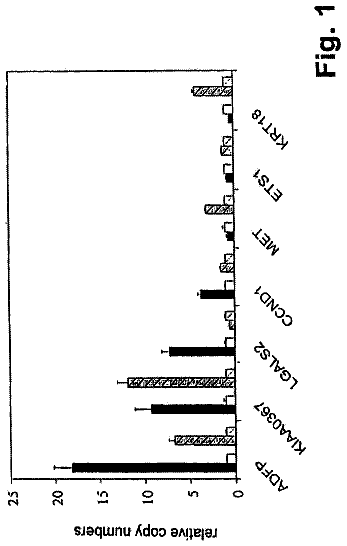
FIG. 1 shows a conservative estimate of phylogenetic relationships among the orders of flowering plants (modified from Soltis et al., 1997). Those plants with a single cotyledon (monocots) are a monophyletic clade nested within at least two major lineages of dicots; the eudicots are further divided into rosids and asterids. Arabidopsis is a rosid eudicot classified within the order Brassicales; rice is a member of the monocot order Poales. FIG. 1 was adapted from Daly et al., 2001.
FIG. 2 shows a phylogenic dendogram depicting phylogenetic relationships of higher plant taxa, including clades containing tomato and Arabidopsis ; adapted from Ku et al., 2000; and Chase et al., 1993.
FIG. 3 shows a phylogenetic tree of G1760 and closely-related related full length proteins that was constructed using MEGA3 (www.megasoftware.net) software. ClustalW multiple alignment parameters were as follows: Gap Opening Penalty: 10.00 Gap Extension Penalty: 0.20 Protein weight matrix: Gonnet series Residue-specific Penalties: ON Hydrophobic Penalties: ON Gap Separation Distance: 4 End Gap Separation: OFF Use negative matrix: OFF
The phylogenetic tree was generated in MEGA3 using the neighbor joining algorithm and a p-distance model. Alignment gaps were handled using a pairwise deletion algorithm. A test of phylogeny was done via bootstrap with 1000 replications and Random Seed set to default. Cut off values of the bootstrap tree were set to 50%.
FIG. 4 is an alignment of the G1760 Arabidopsis clade member sequences and soy clade member G3980. Structural domains (adapted from Immink 2002, Davies 1996, and Huang 1996) are indicated by bars above alignment (MADS DNA binding domain, I nuclear localization domain, K protein interaction domain, and C-terminal activation domain). SEQ ID NOs: are found in the parentheses, and are shown as follows: G152 (SEQ ID NO:4); G1760 (SEQ ID NO:2); G860 (SEQ ID NO:16); G153 (SEQ ID NO:14); and G3980 (SEQ ID NO:10); from top to bottom.
FIGS. 5A-5F are a multiple sequence alignment of full length G1760 and closely-related proteins prepared using ClustalX software and the full-length protein sequences. These polypeptides were identified by BLAST and phylogenetic analysis. The conserved MADS domain is found within the box in FIG. 5A . Asterisks generated by Clustal indicate complete identity, colons represent highly similar residues, and dots represent similar residues throughout the alignment. SEQ ID NOs: are found in the parentheses, and are shown as follows: G152 (SEQ ID NO:4); G1760 (SEQ ID NO:2); G3980 (SEQ ID NO:10); G3981 (SEQ ID NO:12); G3485 (SEQ ID NO:8); G860 (SEQ ID NO:16); G3982 (SEQ ID NO:6); G3479 (SEQ ID NO:18); G3488 (SEQ ID NO:30); G3480 (SEQ ID NO:20); G3489 (SEQ ID NO:24); G3481 (SEQ ID NO:22); G153 (SEQ ID NO:14); G3484 (SEQ ID NO:26); G3483 (SEQ ID NO:32); and G3487 (SEQ ID NO:28); from top to bottom.
Detailed description
The present invention relates to polynucleotides and polypeptides for modifying phenotypes of plants, particularly those associated with increased abiotic stress tolerance and increased yield with respect to a control plant (for example, a wild-type plant or a plant transformed with an “empty” expression vector lacking a DNA sequence of the invention). Throughout this disclosure, various information sources are referred to and/or are specifically incorporated. The information sources include scientific journal articles, patent documents, textbooks, and World Wide Web browser-inactive page addresses. While the reference to these information sources clearly indicates that they can be used by one of skill in the art, each and every one of the information sources cited herein are specifically incorporated in their entirety, whether or not a specific mention of “incorporation by reference” is noted. The contents and teachings of each and every one of the information sources can be relied on and used to make and use embodiments of the invention.
As used herein and in the appended claims, the singular forms “a”, “an”, and “the” include the plural reference unless the context clearly dictates otherwise. Thus, for example, a reference to “a host cell” includes a plurality of such host cells, and a reference to “a stress” is a reference to one or more stresses and equivalents thereof known to those skilled in the art, and so forth.
Definitions
“Polynucleotide” is a nucleic acid molecule comprising a plurality of polymerized nucleotides, e.g., at least about 15 consecutive polymerized nucleotides. A polynucleotide may be a nucleic acid, oligonucleotide, nucleotide, or any fragment thereof. In many instances, a polynucleotide comprises a nucleotide sequence encoding a polypeptide (or protein) or a domain or fragment thereof. Additionally, the polynucleotide may comprise a promoter, an intron, an enhancer region, a polyadenylation site, a translation initiation site, 5′ or 3′ untranslated regions, a reporter gene, a selectable marker, or the like. The polynucleotide can be single-stranded or double-stranded DNA or RNA. The polynucleotide optionally comprises modified bases or a modified backbone. The polynucleotide can be, e.g., genomic DNA or RNA, a transcript (such as an mRNA), a cDNA, a PCR product, a cloned DNA, a synthetic DNA or RNA, or the like. The polynucleotide can be combined with carbohydrate, lipids, protein, or other materials to perform a particular activity such as transformation or form a useful composition such as a peptide nucleic acid (PNA). The polynucleotide can comprise a sequence in either sense or antisense orientations. “Oligonucleotide” is substantially equivalent to the terms amplimer, primer, oligomer, element, target, and probe and is preferably single-stranded.
A “recombinant polynucleotide” is a polynucleotide that is not in its native state, e.g., the polynucleotide comprises a nucleotide sequence not found in nature, or the polynucleotide is in a context other than that in which it is naturally found, e.g., separated from nucleotide sequences with which it typically is in proximity in nature, or adjacent (or contiguous with) nucleotide sequences with which it typically is not in proximity. For example, the sequence at issue can be cloned into a nucleic acid construct such as an expression vector or cassette, or otherwise recombined with one or more additional nucleic acids.
An “isolated polynucleotide” is a polynucleotide, whether naturally occurring or recombinant, that is present outside the cell in which it is typically found in nature, whether purified or not. Optionally, an isolated polynucleotide is subject to one or more enrichment or purification procedures, e.g., cell lysis, extraction, centrifugation, precipitation, or the like.
“Gene” or “gene sequence” refers to the partial or complete coding sequence of a gene, its complement, and its 5′ or 3′ untranslated regions. A gene is also a functional unit of inheritance, and in physical terms is a particular segment or sequence of nucleotides along a molecule of DNA (or RNA, in the case of RNA viruses) involved in producing a polypeptide chain. The latter may be subjected to subsequent processing such as chemical modification or folding to obtain a functional protein or polypeptide. A gene may be isolated, partially isolated, or found with an organism's genome. By way of example, a transcription factor gene encodes a transcription factor polypeptide, which may be functional or require processing to function as an initiator of transcription.
Operationally, genes may be defined by the cis-trans test, a genetic test that determines whether two mutations occur in the same gene and that may be used to determine the limits of the genetically active unit (Rieger et al., 1976). A gene generally includes regions preceding (“leaders”; upstream) and following (“trailers”; downstream) the coding region. A gene may also include intervening, non-coding sequences, referred to as “introns”, located between individual coding segments, referred to as “exons”. Most genes have an associated promoter region, a regulatory sequence 5′ of the transcription initiation codon (there are some genes that do not have an identifiable promoter). The function of a gene may also be regulated by enhancers, operators, and other regulatory elements.
A “polypeptide” is an amino acid sequence comprising a plurality of consecutive polymerized amino acid residues e.g., at least about 15 consecutive polymerized amino acid residues. In many instances, a polypeptide comprises a polymerized amino acid residue sequence that is a transcription factor or a domain or portion or fragment thereof. Additionally, the polypeptide may comprise: (i) a localization domain; (ii) an activation domain; (iii) a repression domain; (iv) an oligomerization domain; (v) a protein-protein interaction domain; (vi) a DNA-binding domain; or the like. The polypeptide optionally comprises modified amino acid residues, naturally occurring amino acid residues not encoded by a codon, non-naturally occurring amino acid residues.
“Protein” refers to an amino acid sequence, oligopeptide, peptide, polypeptide or portions thereof whether naturally occurring or synthetic.
“Portion”, as used herein, refers to any part of a protein used for any purpose, but especially for the screening of a library of molecules which specifically bind to that portion or for the production of antibodies.
A “recombinant polypeptide” is a polypeptide produced by translation of a recombinant polynucleotide. A “synthetic polypeptide” is a polypeptide created by consecutive polymerization of isolated amino acid residues using methods well known in the art. An “isolated polypeptide,” whether a naturally occurring or a recombinant polypeptide, is more enriched in (or out of) a cell than the polypeptide in its natural state in a wild-type cell, e.g., more than about 5% enriched, more than about 10% enriched, or more than about 20%, or more than about 50%, or more, enriched, i.e., alternatively denoted: 105%, 110%, 120%, 150% or more, enriched relative to wild type standardized at 100%. Such an enrichment is not the result of a natural response of a wild-type plant. Alternatively, or additionally, the isolated polypeptide is separated from other cellular components with which it is typically associated, e.g., by any of the various protein purification methods herein.
“Homology” refers to sequence similarity between a reference sequence and at least a fragment of a newly sequenced clone insert or its encoded amino acid sequence.
“Identity” or “similarity” refers to sequence similarity between two polynucleotide sequences or between two polypeptide sequences, with identity being a more strict comparison. The phrases “percent identity” and “% identity” refer to the percentage of sequence similarity found in a comparison of two or more polynucleotide sequences or two or more polypeptide sequences. “Sequence similarity” refers to the percent similarity in base pair sequence (as determined by any suitable method) between two or more polynucleotide sequences. Two or more sequences can be anywhere from 0-100% similar, or any integer value therebetween. Identity or similarity can be determined by comparing a position in each sequence that may be aligned for purposes of comparison. When a position in the compared sequence is occupied by the same nucleotide base or amino acid, then the molecules are identical at that position. A degree of similarity or identity between polynucleotide sequences is a function of the number of identical, matching or corresponding nucleotides at positions shared by the polynucleotide sequences. A degree of identity of polypeptide sequences is a function of the number of identical amino acids at corresponding positions shared by the polypeptide sequences. A degree of homology or similarity of polypeptide sequences is a function of the number of amino acids at corresponding positions shared by the polypeptide sequences.
“Alignment” refers to a number of nucleotide bases or amino acid residue sequences aligned by lengthwise comparison so that components in common (i.e., nucleotide bases or amino acid residues at corresponding positions) may be visually and readily identified. The fraction or percentage of components in common is related to the homology or identity between the sequences. Alignments such as those of FIGS. 5A-5F may be used to identify conserved domains and relatedness within these domains. An alignment may suitably be determined by means of computer programs known in the art, such as MACVECTOR software, (1999; Accelrys, Inc., San Diego, Calif.).
A “conserved domain” or “conserved region” as used herein refers to a region in heterologous polynucleotide or polypeptide sequences where there is a relatively high degree of sequence identity between the distinct sequences. With respect to polynucleotides encoding presently disclosed polypeptides, a conserved domain is preferably at least nine base pairs (bp) in length. Transcription factor sequences that possess or encode for conserved domains that have a minimum percentage identity and have comparable biological activity to the present polypeptide sequences, thus being members of the same clade of transcription factor polypeptides, are encompassed by the invention. Overexpression in a transformed plant of a polypeptide that comprises, for example, a conserved domain having DNA-binding, activation or nuclear localization activity results in the transformed plant having similar improved traits as other transformed plants overexpressing other members of the same clade of transcription factor polypeptides.
A fragment or domain can be referred to as outside a conserved domain, outside a consensus sequence, or outside a consensus DNA-binding site that is known to exist or that exists for a particular polypeptide class, family, or sub-family. In this case, the fragment or domain will not include the exact amino acids of a consensus sequence or consensus DNA-binding site of a transcription factor class, family or sub-family, or the exact amino acids of a particular transcription factor consensus sequence or consensus DNA-binding site. Furthermore, a particular fragment, region, or domain of a polypeptide, or a polynucleotide encoding a polypeptide, can be “outside a conserved domain” if all the amino acids of the fragment, region, or domain fall outside of a defined conserved domain(s) for a polypeptide or protein. Sequences having lesser degrees of identity but comparable biological activity are considered to be equivalents.
As one of ordinary skill in the art recognizes, conserved domains may be identified as regions or domains of identity to a specific consensus sequence (see, for example, Riechmann et al., 2000a, 2000b). Thus, by using alignment methods well known in the art, the conserved domains of the plant polypeptides may be determined.
The conserved domains for many of the polypeptide sequences of the invention are listed in Table 1. Also, the polypeptides of Table 1 have conserved domains specifically indicated by amino acid coordinate start and stop sites. A comparison of the regions of these polypeptides allows one of skill in the art (see, for example, Reeves and Nissen, 1995, to identify domains or conserved domains for any of the polypeptides listed or referred to in this disclosure.
“Complementary” refers to the natural hydrogen bonding by base pairing between purines and pyrimidines. For example, the sequence A-C-G-T (5′->3′) forms hydrogen bonds with its complements A-C-G-T (5′->3′) or A-C-G-U (5′->3′). Two single-stranded molecules may be considered partially complementary, if only some of the nucleotides bond, or “completely complementary” if all of the nucleotides bond. The degree of complementarity between nucleic acid strands affects the efficiency and strength of hybridization and amplification reactions. “Fully complementary” refers to the case where bonding occurs between every base pair and its complement in a pair of sequences, and the two sequences have the same number of nucleotides.
The terms “highly stringent” or “highly stringent condition” refer to conditions that permit hybridization of DNA strands whose sequences are highly complementary, wherein these same conditions exclude hybridization of significantly mismatched DNAs. Polynucleotide sequences capable of hybridizing under stringent conditions with the polynucleotides of the present invention may be, for example, variants of the disclosed polynucleotide sequences, including allelic or splice variants, or sequences that encode orthologs or paralogs of presently disclosed polypeptides. Nucleic acid hybridization methods are disclosed in detail by Kashima et al., 1985, Sambrook et al., 1989, and by Haymes et al., 1985, which references are incorporated herein by reference.
In general, stringency is determined by the temperature, ionic strength, and concentration of denaturing agents (e.g., formamide) used in a hybridization and washing procedure (for a more detailed description of establishing and determining stringency, see the section “Identifying Polynucleotides or Nucleic Acids by Hybridization”, below). The degree to which two nucleic acids hybridize under various conditions of stringency is correlated with the extent of their similarity. Thus, similar nucleic acid sequences from a variety of sources, such as within a plant's genome (as in the case of paralogs) or from another plant (as in the case of orthologs) that may perform similar functions can be isolated on the basis of their ability to hybridize with known related polynucleotide sequences. Numerous variations are possible in the conditions and means by which nucleic acid hybridization can be performed to isolate related polynucleotide sequences having similarity to sequences known in the art and are not limited to those explicitly disclosed herein. Such an approach may be used to isolate polynucleotide sequences having various degrees of similarity with disclosed polynucleotide sequences, such as, for example, encoded transcription factors having 55% or greater identity with the conserved domain of disclosed sequences.
The terms “paralog” and “ortholog” are defined below in the section entitled “Orthologs and Paralogs”. In brief, orthologs and paralogs are evolutionarily related genes that have similar sequences and functions. Orthologs are structurally related genes in different species that are derived by a speciation event. Paralogs are structurally related genes within a single species that are derived by a duplication event.
The term “equivalog” describes members of a set of homologous proteins that are conserved with respect to function since their last common ancestor. Related proteins are grouped into equivalog families, and otherwise into protein families with other hierarchically defined homology types. This definition is provided at the Institute for Genomic Research (TIGR) World Wide Web (www) website, “tigr.org” under the heading “Terms associated with TIGRFAMs”.
In general, the term “variant” refers to molecules with some differences, generated synthetically or naturally, in their base or amino acid sequences as compared to a reference (native) polynucleotide or polypeptide, respectively. These differences include substitutions, insertions, deletions or any desired combinations of such changes in a native polynucleotide of amino acid sequence.
With regard to polynucleotide variants, differences between presently disclosed polynucleotides and polynucleotide variants are limited so that the nucleotide sequences of the former and the latter are closely similar overall and, in many regions, identical. Due to the degeneracy of the genetic code, differences between the former and latter nucleotide sequences may be silent (i.e., the amino acids encoded by the polynucleotide are the same, and the variant polynucleotide sequence encodes the same amino acid sequence as the presently disclosed polynucleotide. Variant nucleotide sequences may encode different amino acid sequences, in which case such nucleotide differences will result in amino acid substitutions, additions, deletions, insertions, truncations or fusions with respect to the similar disclosed polynucleotide sequences. These variations may result in polynucleotide variants encoding polypeptides that share at least one functional characteristic. The degeneracy of the genetic code also dictates that many different variant polynucleotides can encode identical and/or substantially similar polypeptides in addition to those sequences illustrated in the Sequence Listing.
Also within the scope of the invention is a variant of a nucleic acid listed in the Sequence Listing, that is, one having a sequence that differs from the one of the polynucleotide sequences in the Sequence Listing, or a complementary sequence, that encodes a functionally equivalent polypeptide (i.e., a polypeptide having some degree of equivalent or similar biological activity) but differs in sequence from the sequence in the Sequence Listing, due to degeneracy in the genetic code. Included within this definition are polymorphisms that may or may not be readily detectable using a particular oligonucleotide probe of the polynucleotide encoding polypeptide, and improper or unexpected hybridization to allelic variants, with a locus other than the normal chromosomal locus for the polynucleotide sequence encoding polypeptide.
“Allelic variant” or “polynucleotide allelic variant” refers to any of two or more alternative forms of a gene occupying the same chromosomal locus. Allelic variation arises naturally through mutation, and may result in phenotypic polymorphism within populations. Gene mutations may be “silent” or may encode polypeptides having altered amino acid sequence. “Allelic variant” and “polypeptide allelic variant” may also be used with respect to polypeptides, and in this case the terms refer to a polypeptide encoded by an allelic variant of a gene.
“Splice variant” or “polynucleotide splice variant” as used herein refers to alternative forms of RNA transcribed from a gene. Splice variation naturally occurs as a result of alternative sites being spliced within a single transcribed RNA molecule or between separately transcribed RNA molecules, and may result in several different forms of mRNA transcribed from the same gene. Thus, splice variants may encode polypeptides having different amino acid sequences, which may or may not have similar functions in the organism. “Splice variant” or “polypeptide splice variant” may also refer to a polypeptide encoded by a splice variant of a transcribed mRNA.
As used herein, “polynucleotide variants” may also refer to polynucleotide sequences that encode paralogs and orthologs of the presently disclosed polypeptide sequences. “Polypeptide variants” may refer to polypeptide sequences that are paralogs and orthologs of the presently disclosed polypeptide sequences.
Differences between presently disclosed polypeptides and polypeptide variants are limited so that the sequences of the former and the latter are closely similar overall and, in many regions, identical. Presently disclosed polypeptide sequences and similar polypeptide variants may differ in amino acid sequence by one or more substitutions, additions, deletions, fusions and truncations, which may be present in any combination. These differences may produce silent changes and result in a functionally equivalent polypeptide. Thus, it will be readily appreciated by those of skill in the art, that any of a variety of polynucleotide sequences is capable of encoding the polypeptides and homolog polypeptides of the invention. A polypeptide sequence variant may have “conservative” changes, wherein a substituted amino acid has similar structural or chemical properties. Deliberate amino acid substitutions may thus be made on the basis of similarity in polarity, charge, solubility, hydrophobicity, hydrophilicity, and/or the amphipathic nature of the residues, as long as a significant amount of the functional or biological activity of the polypeptide is retained. For example, negatively charged amino acids may include aspartic acid and glutamic acid, positively charged amino acids may include lysine and arginine, and amino acids with uncharged polar head groups having similar hydrophilicity values may include leucine, isoleucine, and valine; glycine and alanine; asparagine and glutamine; serine and threonine; and phenylalanine and tyrosine. More rarely, a variant may have “non-conservative” changes, e.g., replacement of a glycine with a tryptophan. Similar minor variations may also include amino acid deletions or insertions, or both. Related polypeptides may comprise, for example, additions and/or deletions of one or more N-linked or O-linked glycosylation sites, or an addition and/or a deletion of one or more cysteine residues. Guidance in determining which and how many amino acid residues may be substituted, inserted or deleted without abolishing functional or biological activity may be found using computer programs well known in the art, for example, DNASTAR software (see U.S. Pat. No. 5,840,544).
“Fragment”, with respect to a polynucleotide, refers to a clone or any part of a polynucleotide molecule that retains a usable, functional characteristic. Useful fragments include oligonucleotides and polynucleotides that may be used in hybridization or amplification technologies or in the regulation of replication, transcription or translation. A “polynucleotide fragment” refers to any subsequence of a polynucleotide, typically, of at least about 9 consecutive nucleotides, preferably at least about 30 nucleotides, more preferably at least about 50 nucleotides, of any of the sequences provided herein. Exemplary polynucleotide fragments are the first sixty consecutive nucleotides of the polynucleotides listed in the Sequence Listing. Exemplary fragments also include fragments that comprise a region that encodes an conserved domain of a polypeptide. Exemplary fragments also include fragments that comprise a conserved domain of a polypeptide.
Fragments may also include subsequences of polypeptides and protein molecules, or a subsequence of the polypeptide. Fragments may have uses in that they may have antigenic potential. In some cases, the fragment or domain is a subsequence of the polypeptide which performs at least one biological function of the intact polypeptide in substantially the same manner, or to a similar extent, as does the intact polypeptide. For example, a polypeptide fragment can comprise a recognizable structural motif or functional domain such as a DNA-binding site or domain that binds to a DNA promoter region, an activation domain, or a domain for protein-protein interactions, and may initiate transcription. Fragments can vary in size from as few as 3 amino acid residues to the full length of the intact polypeptide, but are preferably at least about 30 amino acid residues in length and more preferably at least about 60 amino acid residues in length.
The invention also encompasses production of DNA sequences that encode polypeptides and derivatives, or fragments thereof, entirely by synthetic chemistry. After production, the synthetic sequence may be inserted into any of the many available expression vectors and cell systems using reagents well known in the art. Moreover, synthetic chemistry may be used to introduce mutations into a sequence encoding polypeptides or any fragment thereof.
“Derivative” refers to the chemical modification of a nucleic acid molecule or amino acid sequence. Chemical modifications can include replacement of hydrogen by an alkyl, acyl, or amino group or glycosylation, pegylation, or any similar process that retains or enhances biological activity or lifespan of the molecule or sequence.
The term “plant” includes whole plants, shoot vegetative organs/structures (for example, leaves, stems and tubers), roots, flowers and floral organs/structures (for example, bracts, sepals, petals, stamens, carpels, anthers and ovules), seed (including embryo, endosperm, and seed coat) and fruit (the mature ovary), plant tissue (for example, vascular tissue, ground tissue, and the like) and cells (for example, guard cells, egg cells, and the like), and progeny of same. The class of plants that can be used in the method of the invention is generally as broad as the class of higher and lower plants amenable to transformation techniques, including angiosperms (monocotyledonous and dicotyledonous plants), gymnosperms, ferns, horsetails, psilophytes, lycophytes, bryophytes, and multicellular algae (see for example, FIG. 1 , adapted from Daly et al., 2001, FIG. 2 , adapted from Ku et al., 2000; and see also Tudge, 2000.
The description continues in the full USPTO document.