 Lapsed, fee not paid2 drawings
Biotech & Lab · US 9,782,354 B2
Enteric active substance delivery
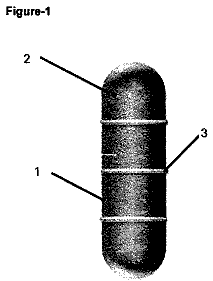
An oral enteric delivery system includes an outer shell assembled from multiple solid shell segments joined together by a binder.
US 9,782,363 B2 · Assignee: Case Western Reserve University · Inventors: Shoham; Menachem et al.
Sheet 1 of 5 from the published document. All sheets in the USPTO PDF
A method of reducing the virulence of a bacterium that expresses accessory gene regulator A (AgrA) or an ortholog of AgrA includes administering to the bacterium an amount of a pharmaceutical composition effective to inhibit the synthesis of one or more virulence factors by the bacterium, the pharmaceutical composition including an AgrA antagonist.
Resistance to existing antibiotics coupled with the decline in the development of new alternatives necessitates the search for agents to prevent and treat serious bacterial infections. Methicillin-Resistant Staphylococcus Aureus (MRSA) is the most widespread bacterial pathogen in the United States1 and in the developed world. MRSA causes a wide range of infections ranging from skin and soft tissue to more invasive forms, such as pneumonia, endocarditis, meningitis, bacteremia and sepsis. The increase in S. aureus infections has been associated with hospitalization, affecting preferentially immune compromised individuals. Recently, such infections also increasingly occur in the community in healthy individuals, such as athletes, students, prisoners, etc. These community-associated infections (CA-MRSA) are generally more virulent than hospital associated infections (HA-MRSA). Treatment of
1 of 5 drawing sheets so far from the published document, cropped to the drawing. Every sheet is in the USPTO PDF.
What the patent claimed, word for word. All of it is now free to use.
This application relates to anti-virulence compositions and methods for treating bacterial infections and more particularly to compositions and methods for reducing the virulence of bacterium that expresses accessory gene regulator A (AgrA) or an ortholog of AgrA.
Resistance to existing antibiotics coupled with the decline in the development of new alternatives necessitates the search for agents to prevent and treat serious bacterial infections. Methicillin-Resistant Staphylococcus Aureus (MRSA) is the most widespread bacterial pathogen in the United States1 and in the developed world. MRSA causes a wide range of infections ranging from skin and soft tissue to more invasive forms, such as pneumonia, endocarditis, meningitis, bacteremia and sepsis. The increase in S. aureus infections has been associated with hospitalization, affecting preferentially immune compromised individuals. Recently, such infections also increasingly occur in the community in healthy individuals, such as athletes, students, prisoners, etc. These community-associated infections (CA-MRSA) are generally more virulent than hospital associated infections (HA-MRSA). Treatment of S. aureus infections is hampered by the steady increase of resistance against conventional antibiotics. Over two thirds of S. aureus infections are resistant to methicillin, a second-generation β-lactam antibiotic. Vancomycin, linezolid and daptomycin are the antibiotics of last resort against MRSA. Alarmingly, strains recently have emerged that are resistant to vancomycin. Therefore, the development of new therapeutic solutions against MRSA represents an urgent medical need.
Antivirulence agents present alternatives to conventional antibiotics. In contrast to antibiotics, antivirulence agents are not bactericidal, and generally are not even bacteriostatic. Their mechanism of action is based upon curtailing the pathogen's ability to elicit toxins against the host's immune system. An unimpaired immune system may be able to fight off the infection on its own. Alternatively, a boost in the form of a low-dose conventional antibiotic in combination with an antivirulence agent may become a successful strategy against more invasive infections. Antivirulence therapy offers the attractive prospect of bringing back conventional and affordable antibiotics into the clinic.
Embodiments described herein relate to anti-virulence compositions and methods for treating bacterial infections and more particularly to compositions and methods for reducing the virulence of bacteria that express accessory gene regulator A (AgrA) or an ortholog of AgrA. The anti-virulence compositions described herein can act gene regulator A (AgrA) antagonists to inhibit activation of AgrA in the bacteria and inhibit virulence of the bacteria.
In some embodiment, the AgrA antagonist includes the following general formula:
##STR00001## wherein R.sub.3 and R.sub.4 are each independently hydrogen, substituted or unsubstituted C.sub.1-C.sub.24 alkyl, C.sub.2-C.sub.24 alkenyl, C.sub.2-C.sub.24 alkynyl, C.sub.3-C.sub.20 aryl, heteroaryl, heterocycloalkenyl containing from 5-6 ring atoms (wherein from 1-3 of the ring atoms is independently selected from N, NH, N(C.sub.1-C.sub.6 alkyl), NC(O)(C.sub.1-C.sub.6 alkyl), O, and S), C.sub.6-C.sub.24 alkaryl, C.sub.6-C.sub.24 aralkyl, halo, —Si(C.sub.1-C.sub.3 alkyl).sub.3, hydroxyl, sulfhydryl, C.sub.1-C.sub.24 alkoxy, C.sub.2-C.sub.24 alkenyloxy, C.sub.2-C.sub.24 alkynyloxy, C.sub.5-C.sub.20 aryloxy, acyl (including C.sub.2-C.sub.24 alkylcarbonyl (—CO-alkyl) and C.sub.6-C.sub.20 arylcarbonyl (—CO-aryl)), acyloxy (—O-acyl), C.sub.2-C.sub.24 alkoxycarbonyl (—(CO)—O-alkyl), C.sub.6-C.sub.20 aryloxycarbonyl (—(CO)—O-aryl), C.sub.2-C.sub.24 alkylcarbonato (—O—(CO)—O-alkyl), C.sub.6-C.sub.20 arylcarbonato (—O—(CO)—O-aryl), carboxy (—COOH), carboxylato (—COO.sup.−), carbamoyl (—(CO)—NH.sub.2), C.sub.1-C.sub.24 alkyl-carbamoyl (—(CO)—NH(C.sub.1-C.sub.24 alkyl)), arylcarbamoyl (—(CO)—NH-aryl), thiocarbamoyl (—(CS)—NH.sub.2), carbamido (—NH—(CO)—NH.sub.2), cyano (—CN), isocyano (—N.sup.+C.sup.−), cyanato (—O—CN), isocyanato (—O—N.sup.+═C.sup.−), isothiocyanato (—S—CN), azido (—N═N.sup.+═N.sup.−), formyl (—(CO)—H), thioformyl (—(CS)—H), amino (—NH.sub.2), C.sub.1-C.sub.24 alkyl amino, C.sub.5-C.sub.20 aryl amino, C.sub.2-C.sub.24 alkylamido (—NH—(CO)-alkyl), C.sub.6-C.sub.20 arylamido (—NH—(CO)-aryl), imino (—CR═NH where R is hydrogen, C.sub.1-C.sub.24 alkyl, C.sub.5-C.sub.20 aryl, C.sub.6-C.sub.24 alkaryl, C.sub.6-C.sub.24 aralkyl, etc.), alkylimino (—CR═N(alkyl), where R=hydrogen, alkyl, aryl, alkaryl, aralkyl, etc.), arylimino (—CR═N(aryl), where R=hydrogen, alkyl, aryl, alkaryl, etc.), nitro (—NO.sub.2), nitroso (—NO), sulfo (—SO.sub.2—OH), sulfonato (—SO.sub.2—O.sup.−), C.sub.1-C.sub.24 alkylsulfanyl (—S-alkyl; also termed “alkylthio”), arylsulfanyl (—S-aryl; also termed “arylthio”), C.sub.1-C.sub.24 alkylsulfinyl (—(SO)-alkyl), C.sub.5-C.sub.20 arylsulfinyl (—(SO)-aryl), C.sub.1-C.sub.24 alkylsulfonyl (—SO.sub.2-alkyl), C.sub.5-C.sub.20 arylsulfonyl (—SO.sub.2-aryl), phosphono (—P(O)(OH).sub.2), phosphonato (—P(O)(O.sup.−).sub.2), phosphinato (—P(O)(O.sup.−)), phospho (—PO.sub.2), phosphino (—PH.sub.2), and combinations thereof; p is an integer from 0-5; and pharmaceutically acceptable salts thereof.
In other embodiments, R.sub.3 is selected from the group consisting of H, halo, hydroxyl, substituted or unsubstituted C.sub.1-C.sub.24 alkyl, C.sub.2-C.sub.24 alkenyl, C.sub.2-C.sub.24 alkynyl, C.sub.3-C.sub.20 aryl, heteroaryl, and heterocycloalkenyl; R.sub.4 is selected from the group consisting of H, halo, nitro, hydroxyl, substituted or unsubstituted C.sub.1-C.sub.24 alkyl, C.sub.2-C.sub.24 alkenyl, C.sub.2-C.sub.24 alkynyl, C.sub.3-C.sub.20 aryl, heteroaryl, heterocycloalkenyl, C.sub.2-C.sub.24 alkoxycarbonyl (—(CO)—O-alkyl), C.sub.6-C.sub.20 aryloxycarbonyl (—(CO)—O-aryl), C.sub.2-C.sub.24 alkylcarbonato (—O—(CO)—O-alkyl), C.sub.6-C.sub.20 arylcarbonato (—O—(CO)—O-aryl), carboxy (—COOH), and carboxylato (—COO.sup.−); p is an integer from 0-5, and pharmaceutically acceptable salts thereof.
In yet other embodiments, R.sub.3 is selected from the group consisting of H, substituted or unsubstituted 5-C.sub.1-C.sub.6 alkyl, and 6-OH; R.sub.4 is selected from the group consisting of halo, nitro, substituted or unsubstituted C.sub.1-C.sub.6 alkyl, C.sub.3-C.sub.20 aryl, COOH, OCH.sub.3, and COOCH.sub.3; wherein p is an integer from 0-5; and pharmaceutically acceptable salts thereof.
In still other embodiments, R.sub.3 is selected from the group consisting of H, 5-Et, 6-OH, 5-Me, 5-Pr, and 5-Hexyl; R.sub.4 is selected from the group consisting of F, Cl, Br, I, NO.sub.2, Me, i-Pr, Ph, COOH, t-Bu, OCH.sub.3, and COOCH.sub.3; wherein p is an integer from 0-5; and pharmaceutically acceptable salts thereof.
In some embodiments, the AgrA antagonist can be provided in a pharmaceutical composition with a pharmaceutically acceptable carrier. The composition can be, for example, a topical composition.
Other embodiments described herein relate to a method of treating a bacterial infection in a subject. The method includes administering to the subject an amount of an AgrA antagonist effective to inhibit the synthesis of one or more virulence factors by the bacteria. The AgrA antagonist can include the following general formula:
##STR00002## wherein R.sub.3 and R.sub.4 are each independently hydrogen, substituted or unsubstituted C.sub.1-C.sub.24 alkyl, C.sub.2-C.sub.24 alkenyl, C.sub.2-C.sub.24 alkynyl, C.sub.3-C.sub.20 aryl, heteroaryl, heterocycloalkenyl containing from 5-6 ring atoms (wherein from 1-3 of the ring atoms is independently selected from N, NH, N(C.sub.1-C.sub.6 alkyl), NC(O)(C.sub.1-C.sub.6 alkyl), O, and S), C.sub.6-C.sub.24 alkaryl, C.sub.6-C.sub.24 aralkyl, halo, —Si(C.sub.1-C.sub.3 alkyl).sub.3, hydroxyl, sulfhydryl, C.sub.1-C.sub.24 alkoxy, C.sub.2-C.sub.24 alkenyloxy, C.sub.2-C.sub.24 alkynyloxy, C.sub.5-C.sub.20 aryloxy, acyl (including C.sub.2-C.sub.24 alkylcarbonyl (—CO-alkyl) and C.sub.6-C.sub.20 arylcarbonyl (—CO-aryl)), acyloxy (—O-acyl), C.sub.2-C.sub.24 alkoxycarbonyl (—(CO)—O-alkyl), C.sub.6-C.sub.20 aryloxycarbonyl (—(CO)—O-aryl), C.sub.2-C.sub.24 alkylcarbonato (—O—(CO)—O-alkyl), C.sub.6-C.sub.20 arylcarbonato (—O—(CO)—O-aryl), carboxy (—COOH), carboxylato (—COO.sup.−), carbamoyl (—(CO)—NH.sub.2), C.sub.1-C.sub.24 alkyl-carbamoyl (—(CO)—NH(C.sub.1-C.sub.24 alkyl)), arylcarbamoyl (—(CO)—NH-aryl), thiocarbamoyl (—(CS)—NH.sub.2), carbamido (—NH—(CO)—NH.sub.2), cyano (—CN), isocyano (—N.sup.+C.sup.−), cyanato (—O—CN), isocyanato (—O—N.sup.+═C.sup.−), isothiocyanato (—S—CN), azido (—N═N.sup.+═N.sup.−), formyl (—(CO)—H), thioformyl (—(CS)—H), amino (—NH.sub.2), C.sub.1-C.sub.24 alkyl amino, C.sub.5-C.sub.20 aryl amino, C.sub.2-C.sub.24 alkylamido (—NH—(CO)-alkyl), C.sub.6-C.sub.20 arylamido (—NH—(CO)-aryl), imino (—CR═NH where R is hydrogen, C.sub.1-C.sub.24 alkyl, C.sub.5-C.sub.20 aryl, C.sub.6-C.sub.24 alkaryl, C.sub.6-C.sub.24 aralkyl, etc.), alkylimino (—CR═N(alkyl), where R=hydrogen, alkyl, aryl, alkaryl, aralkyl, etc.), arylimino (—CR═N(aryl), where R=hydrogen, alkyl, aryl, alkaryl, etc.), nitro (—NO.sub.2), nitroso (—NO), sulfo (—SO.sub.2—OH), sulfonato (—SO.sub.2—O.sup.−), C.sub.1-C.sub.24 alkylsulfanyl (—S-alkyl; also termed “alkylthio”), arylsulfanyl (—S-aryl; also termed “arylthio”), C.sub.1-C.sub.24 alkylsulfinyl (—(SO)-alkyl), C.sub.5-C.sub.20 arylsulfinyl (—(SO)-aryl), C.sub.1-C.sub.24 alkylsulfonyl (—SO.sub.2-alkyl), C.sub.5-C.sub.20 arylsulfonyl (—SO.sub.2-aryl), phosphono (—P(O)(OH).sub.2), phosphonato (—P(O)(O.sup.−).sub.2), phosphinato (—P(O)(O.sup.−)), phospho (—PO.sub.2), phosphino (—PH.sub.2), and combinations thereof; p is an integer from 0-5; and pharmaceutically acceptable salts thereof.
A further aspect of the application relates to a method of treating a bacterial infection related disease or disorder in a subject. The method includes administering to the subject an amount of an AgrA antagonist effective to inhibit the synthesis of one or more virulence factors by a bacterium in the subject. The pharmaceutical composition includes an AgrA antagonist having the general formula: The AgrA antagonist can include the following general formula:
##STR00003## wherein R.sub.3 and R.sub.4 are each independently hydrogen, substituted or unsubstituted C.sub.1-C.sub.24 alkyl, C.sub.2-C.sub.24 alkenyl, C.sub.2-C.sub.24 alkynyl, C.sub.3-C.sub.20 aryl, heteroaryl, heterocycloalkenyl containing from 5-6 ring atoms (wherein from 1-3 of the ring atoms is independently selected from N, NH, N(C.sub.1-C.sub.6 alkyl), NC(O)(C.sub.1-C.sub.6 alkyl), O, and S), C.sub.6-C.sub.24 alkaryl, C.sub.6-C.sub.24 aralkyl, halo, —Si(C.sub.1-C.sub.3 alkyl).sub.3, hydroxyl, sulfhydryl, C.sub.1-C.sub.24 alkoxy, C.sub.2-C.sub.24 alkenyloxy, C.sub.2-C.sub.24 alkynyloxy, C.sub.5-C.sub.20 aryloxy, acyl (including C.sub.2-C.sub.24 alkylcarbonyl (—CO-alkyl) and C.sub.6-C.sub.20 arylcarbonyl (—CO-aryl)), acyloxy (—O-acyl), C.sub.2-C.sub.24 alkoxycarbonyl (—(CO)—O-alkyl), C.sub.6-C.sub.20 aryloxycarbonyl (—(CO)—O-aryl), C.sub.2-C.sub.24 alkylcarbonato (—O—(CO)—O-alkyl), C.sub.6-C.sub.20 arylcarbonato (—O—(CO)—O-aryl), carboxy (—COOH), carboxylato (—COO.sup.−), carbamoyl (—(CO)—NH.sub.2), C.sub.1-C.sub.24 alkyl-carbamoyl (—(CO)—NH(C.sub.1-C.sub.24 alkyl)), arylcarbamoyl (—(CO)—NH-aryl), thiocarbamoyl (—(CS)—NH.sub.2), carbamido (—NH—(CO)—NH.sub.2), cyano (—CN), isocyano (—N.sup.+C.sup.−), cyanato (—O—CN), isocyanato (—O—N.sup.+═C.sup.−), isothiocyanato (—S—CN), azido (—N═N.sup.+═N.sup.−), formyl (—(CO)—H), thioformyl (—(CS)—H), amino (—NH.sub.2), C.sub.1-C.sub.24 alkyl amino, C.sub.5-C.sub.20 aryl amino, C.sub.2-C.sub.24 alkylamido (—NH—(CO)-alkyl), C.sub.6-C.sub.20 arylamido (—NH—(CO)-aryl), imino (—CR═NH where R is hydrogen, C.sub.1-C.sub.24 alkyl, C.sub.5-C.sub.20 aryl, C.sub.6-C.sub.24 alkaryl, C.sub.6-C.sub.24 aralkyl, etc.), alkylimino (—CR═N(alkyl), where R=hydrogen, alkyl, aryl, alkaryl, aralkyl, etc.), arylimino (—CR═N(aryl), where R=hydrogen, alkyl, aryl, alkaryl, etc.), nitro (—NO.sub.2), nitroso (—NO), sulfo (—SO.sub.2—OH), sulfonato (—SO.sub.2—O.sup.−), C.sub.1-C.sub.24 alkylsulfanyl (—S-alkyl; also termed “alkylthio”), arylsulfanyl (—S-aryl; also termed “arylthio”), C.sub.1-C.sub.24 alkylsulfinyl (—(SO).sup.−alkyl), C.sub.5-C.sub.20 arylsulfinyl (—(SO)-aryl), C.sub.1-C.sub.24 alkylsulfonyl (—SO.sub.2-alkyl), C.sub.5-C.sub.20 arylsulfonyl (—SO.sub.2-aryl), phosphono (—P(O)(OH).sub.2), phosphonato (—P(O)(O.sup.−).sub.2), phosphinato (—P(O)(O.sup.−)), phospho (—PO.sub.2), phosphino (—PH.sub.2), and combinations thereof; p is an integer from 0-5; and pharmaceutically acceptable salts thereof.
FIG. 1 is a schematic drawing of S. aureus agr operon for toxin production.
FIGS. 2 (A-B) illustrates a (A) a reaction scheme and (B) compounds formed using the reaction scheme.
FIG. 3 is a graph that shows hemolysis and growth at 1 μ/ml.
FIG. 4 illustrates electrophoretic mobility shift assay.
FIG. 5 illustrates and image showing MRSA mouse wound infection model.
FIG. 6 illustrates MRSA Survival curves of insect larvae ( Galleria Mellonella ) in the presence compound F12 and cephalothin.
Methods involving conventional molecular biology techniques are described herein. Such techniques are generally known in the art and are described in detail in methodology treatises, such as Current Protocols in Molecular Biology , ed. Ausubel et al., Greene Publishing and Wiley-Interscience, New York, 1992 (with periodic updates). Unless otherwise defined, all technical terms used herein have the same meaning as commonly understood by one of ordinary skill in the art to which the present invention pertains. Commonly understood definitions of molecular biology terms can be found in, for example, Lodish et al., Molecular Cell Biology, 6th Edition, W. H. Freeman: New York, 2007, and Lewin, Genes IX , Jones and Bartlett Publishers: Mass., 2008. The definitions provided herein are to facilitate understanding of certain terms used frequently herein and are not meant to limit the scope of the application.
The articles “a” and “an” are used herein to refer to one or to more than one (i.e., to at least one) of the grammatical object of the article. By way of example, “an element” means one element or more than one element.
The terms “comprise,” “comprising,” “include,” “including,” “have,” and “having” are used in the inclusive, open sense, meaning that additional elements may be included. The terms “such as”, “e.g.”, as used herein are non-limiting and are for illustrative purposes only. “Including” and “including but not limited to” are used interchangeably.
The term “or” as used herein should be understood to mean “and/or”, unless the context clearly indicates otherwise.
As used herein, the term “about” or “approximately” refers to a quantity, level, value, number, frequency, percentage, dimension, size, amount, weight or length that varies by as much as 15%, 10%, 9%, 8%, 7%, 6%, 5%, 4%, 3%, 2% or 1% to a reference quantity, level, value, number, frequency, percentage, dimension, size, amount, weight or length. In one embodiment, the term “about” or “approximately” refers a range of quantity, level, value, number, frequency, percentage, dimension, size, amount, weight or length ±15%, ±10%, ±9%, ±8%, ±7%, ±6%, ±5%, ±4%, ±3%, ±2%, or ±1% about a reference quantity, level, value, number, frequency, percentage, dimension, size, amount, weight or length.
The terms “reducing”, “suppressing” and “inhibiting” have their commonly understood meaning of lessening or decreasing.
The terms “effective,” “effective amount,” and “therapeutically effective amount” refer to that amount of an AgrA antagonist and/or a pharmaceutical composition thereof that inhibits the synthesis of one or more virulence factors by a bacterium or that results in amelioration of symptoms or a prolongation of survival in a subject with a bacteria related disease or disorder.
The phrases “parenteral administration” and “administered parenterally” are art-recognized terms, and include modes of administration other than enteral and topical administration, such as injections, and include, without limitation, intravenous, intramuscular, intrapleural, intravascular, intrapericardial, intraarterial, intrathecal, intracapsular, intraorbital, intracardiac, intradermal, intraperitoneal, transtracheal, subcutaneous, subcuticular, intra-articular, subcapsular, subarachnoid, intraspinal and intrastemal injection and infusion.
The term “treatment” or “treating” refers to any therapeutic intervention in a mammal, including: (i) prevention, that is, causing the clinical symptoms not to develop, e.g., preventing infection from occurring and/or developing to a harmful state; (ii) inhibition, that is, arresting the development of clinical symptoms, e.g., stopping an ongoing infection so that the infection is eliminated completely or to the degree that it is no longer harmful; and/or (iii) relief, that is, causing the regression of clinical symptoms, e.g., causing a relief of fever and/or inflammation caused by an infection.
The term “preventing” is art-recognized and includes stopping a disease, disorder or condition from occurring in a subject, which may be predisposed to the disease, disorder and/or condition but has not yet been diagnosed as having it. Preventing a condition related to a disease includes stopping the condition from occurring after the disease has been diagnosed but before the condition has been diagnosed.
The term “pharmaceutical composition” refers to a formulation containing the disclosed compounds in a form suitable for administration to a subject. In a preferred embodiment, the pharmaceutical composition is in bulk or in unit dosage form. The unit dosage form is any of a variety of forms, including, for example, a capsule, an IV bag, a tablet, a single pump on an aerosol inhaler, or a vial. The quantity of active ingredient (e.g., a formulation of the disclosed compound or salts thereof) in a unit dose of composition is an effective amount and is varied according to the particular treatment involved. One skilled in the art will appreciate that it is sometimes necessary to make routine variations to the dosage depending on the age and condition of the patient. The dosage will also depend on the route of administration. A variety of routes are contemplated, including oral, pulmonary, rectal, parenteral, transdermal, subcutaneous, intravenous, intramuscular, intraperitoneal, intranasal, inhalational, and the like. Dosage forms for the topical or transdermal administration of a compound described herein includes powders, sprays, ointments, pastes, creams, lotions, gels, solutions, patches, nebulized compounds, and inhalants. In a preferred embodiment, the active compound is mixed under sterile conditions with a pharmaceutically acceptable carrier, and with any preservatives, buffers, or propellants that are required.
The terms “pharmaceutically acceptable” or “therapeutically acceptable” refers to a substance which does not interfere with the effectiveness or the biological activity of the active ingredients and which is not toxic to the host.
The phrase “pharmaceutically acceptable carrier” is art-recognized, and includes, for example, pharmaceutically acceptable materials, compositions or vehicles, such as a liquid or solid filler, diluent, excipient, solvent or encapsulating material, involved in carrying or transporting any subject composition from one organ, or portion of the body, to another organ, or portion of the body. Each carrier must be “acceptable” in the sense of being compatible with the other ingredients of a subject composition and not injurious to the patient. In certain embodiments, a pharmaceutically acceptable carrier is non-pyrogenic. Some examples of materials which may serve as pharmaceutically acceptable carriers include:
sugars, such as lactose, glucose and sucrose;
starches, such as corn starch and potato starch;
cellulose, and its derivatives, such as sodium carboxymethyl cellulose, ethyl cellulose and cellulose acetate;
powdered tragacanth;
malt;
gelatin;
talc;
excipients, such as cocoa butter and suppository waxes;
oils, such as peanut oil, cottonseed oil, sunflower oil, sesame oil, olive oil, corn oil and soybean oil;
glycols, such as propylene glycol;
polyols, such as glycerin, sorbitol, mannitol and polyethylene glycol;
esters, such as ethyl oleate and ethyl laurate;
agar;
buffering agents, such as magnesium hydroxide and aluminum hydroxide;
alginic acid;
pyrogen-free water;
isotonic saline;
Ringer's solution;
ethyl alcohol;
phosphate buffer solutions; and
other non-toxic compatible substances employed in pharmaceutical formulations.
The compounds of the application are capable of further forming salts. All of these forms are also contemplated herein.
“Pharmaceutically acceptable salt” of a compound means a salt that is pharmaceutically acceptable and that possesses the desired pharmacological activity of the parent compound. For example, the salt can be an acid addition salt. One embodiment of an acid addition salt is a hydrochloride salt. The pharmaceutically acceptable salts can be synthesized from a parent compound that contains a basic or acidic moiety by conventional chemical methods. Generally, such salts can be prepared by reacting the free acid or base forms of these compounds with a stoichiometric amount of the appropriate base or acid in water or in an organic solvent, or in a mixture of the two; generally, non-aqueous media like ether, ethyl acetate, ethanol, isopropanol, or acetonitrile being preferred. Lists of salts are found in Remington's Pharmaceutical Sciences, 18th ed. (Mack Publishing Company, 1990).
The compounds described herein can also be prepared as esters, for example pharmaceutically acceptable esters. For example, a carboxylic acid function group in a compound can be converted to its corresponding ester, e.g., a methyl, ethyl, or other ester. Also, an alcohol group in a compound can be converted to its corresponding ester, e.g., an acetate, propionate, or other ester.
The compounds described herein can also be prepared as prodrugs, for example pharmaceutically acceptable prodrugs. The terms “pro-drug” and “prodrug” are used interchangeably herein and refer to any compound, which releases an active parent drug in vivo. Since prodrugs are known to enhance numerous desirable qualities of pharmaceuticals (e.g., solubility, bioavailability, manufacturing, etc.) the compounds can be delivered in prodrug form. Thus, the compounds described herein are intended to cover prodrugs of the presently claimed compounds, methods of delivering the same and compositions containing the same. “Prodrugs” are intended to include any covalently bonded carriers that release an active parent drug in vivo when such prodrug is administered to a subject. Prodrugs are prepared by modifying functional groups present in the compound in such a way that the modifications are cleaved, either in routine manipulation or in vivo, to the parent compound. Prodrugs include compounds wherein a hydroxy, amino, sulfhydryl, carboxy, or carbonyl group is bonded to any group that may be cleaved in vivo to form a free hydroxyl, free amino, free sulfhydryl, free carboxy or free carbonyl group, respectively.
Examples of prodrugs include, but are not limited to, esters (e.g., acetate, dialkylaminoacetates, formates, phosphates, sulfates, and benzoate derivatives) and carbamates (e.g., N,N-dimethylaminocarbonyl) of hydroxy functional groups, ester groups (e.g., ethyl esters, morpholinoethanol esters) of carboxyl functional groups, N-acyl derivatives (e.g., N-acetyl)N-Mannich bases, Schiff bases and enaminones of amino functional groups, oximes, acetals, ketals and enol esters of ketone and aldehyde functional groups in compounds of Formula I, and the like, See Bundegaard, H. “Design of Prodrugs” p 1-92, Elesevier, New York-Oxford (1985).
The term “protecting group” refers to a grouping of atoms that when attached to a reactive group in a molecule masks, reduces or prevents that reactivity. Examples of protecting groups can be found in Green and Wuts, Protective Groups in Organic Chemistry, (Wiley, 2.sup.nd ed. 1991); Harrison and Harrison et al., Compendium of Synthetic Organic Methods, Vols. 1-8 (John Wiley and Sons, 1971-1996); and Kocienski, Protecting Groups, (Verlag, 3.sup.rd ed. 2003).
A “patient,” “subject,” or “host” to be treated by the subject method may mean either a human or non-human animal, such as a mammal, a fish, a bird, a reptile, or an amphibian. Thus, the subject of the herein disclosed methods can be a human, non-human primate, horse, pig, rabbit, dog, sheep, goat, cow, cat, guinea pig or rodent. The term does not denote a particular age or sex. Thus, adult and newborn subjects, as well as fetuses, whether male or female, are intended to be covered. In one aspect, the subject is a mammal. A patient refers to a subject afflicted with a disease or disorder.
The term “in vitro” refers to an artificial environment and to processes or reactions that occur within an artificial environment. In vitro environments include, but are not limited to, test tubes and cell culture. The term “in vivo” refers to the natural environment (e.g., an animal or a cell) and to processes or reaction that occur within a natural environment. The term “in silico” refers to a process that is performed on a computer or is simulated on a computer or in virtual reality.
The term “AgrA antagonist” refers to any molecule with the capability of substantially reducing or inhibiting the activity of AgrA, for example, by blocking with at least some degree of effectiveness, the phospho-histidine pocket of AgrA. This invention focuses most strongly on small molecules as AgrA antagonists described and further identified by the methods set forth herein.
The term “small molecule” can refer to lipids, carbohydrates, polynucleotides, polypeptides, or any other organic or inorganic molecules.
The phrase “having the formula” or “having the structure” is not intended to be limiting and is used in the same way that the term “comprising” is commonly used.
The term “analog” can mean a compound in which one or more individual atoms have been replaced, either with a different atom or with a different functional group, and where replacement of the atom does not substantially eliminate or reduce the compound's ability to act as an AgrA antagonist.
The term “ortholog” denotes the well-known meaning of this term. In this art, orthologs are genes in different species which evolved from a common ancestral gene. Due to their separation following a speciation event, orthologs may diverge, but usually have similarity at the sequence and structure levels; furthermore, orthologs usually have identical functions. Orthology is a type of homology. In this application, the term ortholog is used to include the ortholog gene (DNA or RNA) or the peptide/protein product of the ortholog. Sometimes the peptide/protein product of the ortholog is referred to as “ortholog product” or simply “ortholog”. The meaning is evident from the context (e.g., an anti-virulence compositions of the present invention may include an anti-virulence agent capable of reducing the virulence of bacterium that expresses peptides or proteins that may be referred to as orthologs of AgrA-that is, products of an ortholog gene of Staphylococcus aureus AgrA from another bacterium, such as Streptococcus pyogenes ). In certain aspects, an ortholog of AgrA produces proteins/peptides that share greater than about 70%, about 80%, or about 90% identity with the amino acid sequence of the gene product of AgrA.
The terms “prophylactic” or “therapeutic” treatment is art-recognized and includes administration to the host of one or more of the subject compositions. If it is administered prior to clinical manifestation of the unwanted condition (e.g., disease or other unwanted state of the host animal) then the treatment is prophylactic, i.e., it protects the host against developing the unwanted condition, whereas if it is administered after manifestation of the unwanted condition, the treatment is therapeutic (i.e., it is intended to diminish, ameliorate, or stabilize the existing unwanted condition or side effects thereof).
The terms “therapeutic agent”, “drug”, “medicament” and “bioactive substance” are art-recognized and include molecules and other agents that are biologically, physiologically, or pharmacologically active substances that act locally or systemically in a patient or subject to treat a disease or condition. The terms include without limitation pharmaceutically acceptable salts thereof and prodrugs. Such agents may be acidic, basic, or salts; they may be neutral molecules, polar molecules, or molecular complexes capable of hydrogen bonding; they may be prodrugs in the form of ethers, esters, amides and the like that are biologically activated when administered into a patient or subject.
The phrase “therapeutically effective amount” or “pharmaceutically effective amount” is an art-recognized term. In certain embodiments, the term refers to an amount of a therapeutic agent that produces some desired effect at a reasonable benefit/risk ratio applicable to any medical treatment. In certain embodiments, the term refers to that amount necessary or sufficient to eliminate, reduce or maintain a target of a particular therapeutic regimen. The effective amount may vary depending on such factors as the disease or condition being treated, the particular targeted constructs being administered, the size of the subject or the severity of the disease or condition. One of ordinary skill in the art may empirically determine the effective amount of a particular compound without necessitating undue experimentation. In certain embodiments, a therapeutically effective amount of a therapeutic agent for in vivo use will likely depend on a number of factors, including: the rate of release of an agent from a polymer matrix, which will depend in part on the chemical and physical characteristics of the polymer; the identity of the agent; the mode and method of administration; and any other materials incorporated in the polymer matrix in addition to the agent.
The term “ED50” is art-recognized. In certain embodiments, ED50 means the dose of a drug, which produces 50% of its maximum response or effect, or alternatively, the dose, which produces a pre-determined response in 50% of test subjects or preparations. The term “LD50” is art-recognized. In certain embodiments, LD50 means the dose of a drug, which is lethal in 50% of test subjects. The term “therapeutic index” is an art-recognized term, which refers to the therapeutic index of a drug, defined as LD50/ED50.
The terms “IC.sub.50,” or “half maximal inhibitory concentration” is intended to refer to the concentration of a substance (e.g., a compound or a drug) that is required for 50% inhibition of a biological process, or component of a process, including a protein, subunit, organelle, ribonucleoprotein, etc.
With respect to any chemical compounds, the present application is intended to include all isotopes of atoms occurring in the present compounds. Isotopes include those atoms having the same atomic number but different mass numbers. By way of general example and without limitation, isotopes of hydrogen include tritium and deuterium, and isotopes of carbon include C-13 and C-14.
When a bond to a substituent is shown to cross a bond connecting two atoms in a ring, then such substituent can be bonded to any atom in the ring. When a substituent is listed without indicating the atom via which such substituent is bonded to the rest of the compound of a given formula, then such substituent can be bonded via any atom in such substituent. Combinations of substituents and/or variables are permissible, but only if such combinations result in stable compounds.
When an atom or a chemical moiety is followed by a subscripted numeric range (e.g., C.sub.1-6), it is meant to encompass each number within the range as well as all intermediate ranges. For example, “C.sub.1-6 alkyl” is meant to include alkyl groups with 1, 2, 3, 4, 5, 6, 1-6, 1-5, 1-4, 1-3, 1-2, 2-6, 2-5, 2-4, 2-3, 3-6, 3-5, 3-4, 4-6, 4-5, and 5-6 carbons.
The term “alkyl” is intended to include both branched (e.g., isopropyl, tert-butyl, isobutyl), straight-chain e.g., methyl, ethyl, propyl, butyl, pentyl, hexyl, heptyl, octyl, nonyl, decyl), and cycloalkyl (e.g., alicyclic) groups (e.g., cyclopropyl, cyclopentyl, cyclohexyl, cycloheptyl, cyclooctyl), alkyl substituted cycloalkyl groups, and cycloalkyl substituted alkyl groups. Such aliphatic hydrocarbon groups have a specified number of carbon atoms. For example, C.sub.1-6 alkyl is intended to include C.sub.1, C.sub.2, C.sub.3, C.sub.4, C.sub.5, and C.sub.6 alkyl groups. As used herein, “lower alkyl” refers to alkyl groups having from 1 to 6 carbon atoms in the backbone of the carbon chain. “Alkyl” further includes alkyl groups that have oxygen, nitrogen, sulfur or phosphorous atoms replacing one or more hydrocarbon backbone carbon atoms. In certain embodiments, a straight chain or branched chain alkyl has six or fewer carbon atoms in its backbone (e.g., C.sub.1-C.sub.6 for straight chain, C.sub.3-C.sub.6 for branched chain), for example four or fewer. Likewise, certain cycloalkyls have from three to eight carbon atoms in their ring structure, such as five or six carbons in the ring structure.
The term “substituted alkyls” refers to alkyl moieties having substituents replacing a hydrogen on one or more carbons of the hydrocarbon backbone. Such substituents can include, for example, alkyl, alkenyl, alkynyl, halogen, hydroxyl, alkylcarbonyloxy, arylcarbonyloxy, alkoxycarbonyloxy, aryloxycarbonyloxy, carboxylate, alkylcarbonyl, arylcarbonyl, alkoxycarbonyl, aminocarbonyl, alkylaminocarbonyl, dialkylaminocarbonyl, alkylthiocarbonyl, alkoxyl, phosphate, phosphonato, phosphinato, cyano, amino (including alkylamino, dialkylamino, arylamino, diarylamino, and alkylarylamino), acylamino (including alkylcarbonylamino, arylcarbonylamino, carbamoyl and ureido), amidino, imino, sulfhydryl, alkylthio, arylthio, thiocarboxylate, sulfates, alkylsulfinyl, sulfonato, sulfamoyl, sulfonamido, nitro, trifluoromethyl, cyano, azido, heterocyclyl, alkylaryl, or an aromatic or heteroaromatic moiety. Cycloalkyls can be further substituted, e.g., with the substituents described above. An “alkylaryl” or an “aralkyl” moiety is an alkyl substituted with an aryl (e.g., phenylmethyl (benzyl)). If not otherwise indicated, the terms “alkyl” and “lower alkyl” include linear, branched, cyclic, unsubstituted, substituted, and/or heteroatom-containing alkyl or lower alkyl, respectively.
The term “alkenyl” refers to a linear, branched or cyclic hydrocarbon group of 2 to about 24 carbon atoms containing at least one double bond, such as ethenyl, n-propenyl, isopropenyl, n-butenyl, isobutenyl, octenyl, decenyl, tetradecenyl, hexadecenyl, eicosenyl, tetracosenyl, cyclopentenyl, cyclohexenyl, cyclooctenyl, and the like. Generally, although again not necessarily, alkenyl groups can contain 2 to about 18 carbon atoms, and more particularly 2 to 12 carbon atoms. The term “lower alkenyl” refers to an alkenyl group of 2 to 6 carbon atoms, and the specific term “cycloalkenyl” intends a cyclic alkenyl group, preferably having 5 to 8 carbon atoms. The term “substituted alkenyl” refers to alkenyl substituted with one or more substituent groups, and the terms “heteroatom-containing alkenyl” and “heteroalkenyl” refer to alkenyl or heterocycloalkenyl (e.g., heterocylcohexenyl) in which at least one carbon atom is replaced with a heteroatom. If not otherwise indicated, the terms “alkenyl” and “lower alkenyl” include linear, branched, cyclic, unsubstituted, substituted, and/or heteroatom-containing alkenyl and lower alkenyl, respectively.
The term “alkynyl” refers to a linear or branched hydrocarbon group of 2 to 24 carbon atoms containing at least one triple bond, such as ethynyl, n-propynyl, and the like. Generally, although again not necessarily, alkynyl groups can contain 2 to about 18 carbon atoms, and more particularly can contain 2 to 12 carbon atoms. The term “lower alkynyl” intends an alkynyl group of 2 to 6 carbon atoms. The term “substituted alkynyl” refers to alkynyl substituted with one or more substituent groups, and the terms “heteroatom-containing alkynyl” and “heteroalkynyl” refer to alkynyl in which at least one carbon atom is replaced with a heteroatom. If not otherwise indicated, the terms “alkynyl” and “lower alkynyl” include linear, branched, unsubstituted, substituted, and/or heteroatom-containing alkynyl and lower alkynyl, respectively.
The terms “alkyl”, “alkenyl”, and “alkynyl” are intended to include moieties which are diradicals, i.e., having two points of attachment. A nonlimiting example of such an alkyl moiety that is a diradical is —CH.sub.2CH.sub.2—, i.e., a C.sub.2 alkyl group that is covalently bonded via each terminal carbon atom to the remainder of the molecule.
The term “alkoxy” refers to an alkyl group bound through a single, terminal ether linkage; that is, an “alkoxy” group may be represented as —O-alkyl where alkyl is as defined above. A “lower alkoxy” group intends an alkoxy group containing 1 to 6 carbon atoms, and includes, for example, methoxy, ethoxy, n-propoxy, isopropoxy, t-butyloxy, etc. Preferred substituents identified as “C.sub.1-C.sub.6 alkoxy” or “lower alkoxy” herein contain 1 to 3 carbon atoms, and particularly preferred such substituents contain 1 or 2 carbon atoms (i.e., methoxy and ethoxy).
The description continues in the full USPTO document.
About 5,125 words. The USPTO PDF has it with every drawing.
Fees are due 3.5, 7.5 and 11.5 years after grant. This patent expired on October 10, 2025, so the fee marked "not paid" was the one that went unpaid.
ANTI-VIRULANCE COMPOSITIONS AND METHODS
Filed Oct 2013 · published Sep 2015Anti-virulance compositions and methods
Filed Oct 2013 · granted Oct 2017Earlier publications, parents and continuations. None of them can still be enforced, or this patent would not be listed.
Prior art cited by the examiner or applicant. Useful when you check your own idea for novelty.
Everything on this page comes from the documents linked above.