Field
This disclosure relates generally to data communication networks, and more particularly to reducing latency times in data communication networks.
Background
High-speed, high-capacity data communication networks are desirable in a wide variety of industries. Generally, such networks operate to transmit large amounts of electronic data from one location to another location at a relatively high rate of speed. For some applications, the bandwidth or capacity (e.g., data transfer rate) of the data communication network may be more desirable than the speed of the network. In other applications, however, the latency or speed of the data communication network (e.g., the time it takes data to be transmitted between a source and a destination within the network) may be more important than the capacity. Networks with a low latency may improve both the efficiency and profitability of a given application for which the network is being used.
The latency of a data communication network can be affected by the capacity and physical characteristics of the network. Although saturated usage of a network with a relatively low capacity may cause congestion, which can lead to increased latency, in many situations, latency is more closely aligned with the inherent limitations of the electrical characteristics of the physical circuit defining the network. Data or energy pulses travel at different speeds in different mediums. Accordingly, a data communication network that transmits data using one type of medium (e.g., air) may have a lower latency, or higher speed, than a data communication network that uses another type of medium (e.g., metal). Recently, to decrease latency, some data communication networks have employed high-speed mediums to increase data transfer speeds and reduce latency. For example, many conventional data communication networks use fiber-optic cables, free-space radio waves (e.g., microwaves), and free-space optical technologies (e.g., laser links) to transmit data.
High-frequency trading (HFT) is one industry that relies on high-speed data communication networks. HFT is the automated, algorithmic, and rapid buying and selling of securities, such as stocks. According to some strategies, HFT includes monitoring disparate (e.g., geographically separated) financial markets for securities that can be bought low in one market and sold high in another market. Because changes in price of a security in one market are usually quickly reflected in other market, the buying and selling of securities must be performed rapidly for HFT to be successful. Accordingly, HFT providers rely heavily on the processing speed of the trades, which is dependent on the latency and speed of the data communication network being employed. For this reason, many HFT providers use data communication networks that utilize low-latency mediums, such as air, to execute the HFT process.
Summary
The subject matter of the present application has been developed in response to the present state of the art, and in particular, in response to the shortcomings of high-speed data communication networks for use with various applications, such as high-frequency trading (HFT), that have not yet been fully solved by currently available networks. Long-distance fiber-optic cables, while increasing the speed of data communication networks over conventional metal cables, such as coaxial cables, do not provide the necessary speeds to optimize the efficiency and profitability of certain applications, such as HFT. Further, although some data communication networks using free-space techniques transmit data at higher speeds than data communication networks that rely on long-distance cables, thus improving the efficiency and profitability of a given application, such data communication networks still suffer from several shortcomings.
Free-space data communication networks use on-ground nodes between which data is transmitted through the air using free-space communication signals, such as radio waves or laser signals. Because free-space communication signals propagate through the air, they require line-of-site between the source or origin of the signals and the destination for complete transmission between the source and destination. Various large obstacles, such as terrain, geographical formations, curvature of the earth, etc., can limit the range of free-space data communication networks and ability to transmit data. Some HFT service providers have removed large obstacles. Other HFT service providers add excessive quantities of on-ground nodes to the system in order to go around or over obstacles. These previous techniques to overcome the shortcomings of free-space communication signals added excessive and burdening time and cost to the implementation of the corresponding data communication networks. Some obstacles, such as the curvature of the earth, cannot be remedied with conventional data communication techniques.
The subject matter of the present application has been developed to provide an apparatus, system, and method that overcome at least some of the above-discussed shortcomings of prior art data communication techniques. More particularly, described herein is a data communication system that removes the negative impact of all or most of the obstacles associated with free-space communication techniques. In certain implementations, a data communication system uses aircraft as data transmission nodes for transmitting data through the air above the ground to provide high speed transmission of data without line-of-site obstacles associated with conventional open-space networks.
According to one embodiment, a system for communicating data includes a first data source that transmits data through the air, and a second data source that is remote from the first data source. The second data source at least one of receives and transmits data through the air. The system further includes at least one aircraft that receives data through the air from the first and second data sources, and transmits data through the air to at least one of the first and second data sources.
In some implementations of the system, at least one of the first and second data sources is located on the ground. In one implementation, both of the first and second data sources are located on the ground.
According to certain implementations of the system, at least one of the first and second data sources is or forms part of an aircraft. In one implementation, both the first and second data sources are or form part of an aircraft. In some implementations, the at least one aircraft is an unmanned aerial vehicle.
In certain implementations of the system, the at least one aircraft transmits data received from the first data source to the second data source. The second data source can include a processing module that processes the data received from the at least one aircraft to generate response data. The second data source also transmits the response data through the air to the at least one aircraft. The at least one aircraft may transmit the response data through the air to the first data source. In some implementations, the processing module generates the response data by comparing the data received from the at least one aircraft to data stored at the second data source.
According to some implementations, the first data source transmits first data through the air to the aircraft and the second data source transmits second data through the air to the aircraft. The aircraft can include a processing module that generates response data based on a comparison between the first and second data. The aircraft transmits the response data through the air to the first data source.
In certain implementations, the at least one aircraft includes a plurality of aircraft. The at least one aircraft can include a first aircraft and a second aircraft. The first aircraft may receive data through the air directly from the first data source and transmit the data through the air to the second aircraft. The second aircraft may receive the data through the air from the first aircraft and transmit the data through the air directly to the second data source. The at least one aircraft can further include a third aircraft that receives the data through the air directly from the first aircraft and transmits the data through the air directly to the second aircraft.
In some implementations, the system further includes a ground node located on the ground. The at least one aircraft includes a first and a second aircraft. The first aircraft receives the data through the air from the first data source and transmits the data through the air to the ground node. The ground node transmits the data through the air to the second aircraft. The second aircraft transmits the data through the air to the second data source. The first data source can transmit first data through the air to the first aircraft, and the first aircraft can transmit the first data through the air to the ground node. The second data source can transmit second data through the air to the second aircraft, and the second aircraft can transmit the second data through the air to the ground node. The ground node can include a processing module that generates response data based on a comparison between the first and second data. The ground node transmits the response data through the air to the first aircraft and the first aircraft transmits the response data through the air to the first data source.
According to certain implementations, the first data source includes a first securities exchange located in a first geographical location and the second data source includes a second securities exchange located in a second geographical location remote from the first geographical location. In one implementation, the data transmitted through the air from the first securities exchange to the at least one aircraft can include first stock price data generated at the first securities exchange. The second securities exchange can receive the first stock price data through the air from the at least one aircraft. The second securities exchange may transmit stock execution order data through the air to the at least one aircraft, and the at least one aircraft transmits the stock execution order data through the air to the first securities exchange. The stock execution order data being based on a comparison between the first stock price data and second stock price data generated at the second securities exchange. In another implementation, second stock price data generated at the second securities exchange is transmitted through the air to the at least one aircraft, where the at least one aircraft generates stock execution order data based on a comparison between the first stock price data and second stock price information.
In another embodiment, a method for rapid communication of data includes transmitting first data from a first source through the air to at least one aircraft in flight. The method also includes processing the first data to generate response data based on second data from a second source remote from the first source. Additionally, the method includes transmitting the response data from the at least one aircraft in flight through the air to the first source.
According to some implementations, the method also includes transmitting the first data from the at least one aircraft in flight through the air to the second source. The second source processes the first data to generate the response data and transmits the response data through the air to the at least one aircraft in flight.
In yet some implementations, the method further includes transmitting the second data from the second source through the air to the at least one aircraft in flight. The at least one aircraft in flight processes the first data to generate the response data.
According to certain implementations of the method, the first data is transmitted from the first source through the air to a first aircraft in flight, and the response data is transmitted from the first aircraft in flight through the air to the first source. The method can further include transmitting the first data from the first aircraft in flight to a ground node, and transmitting the first data from the ground node through the air to a second aircraft in flight. Additionally, the method can include transmitting the first data from the second aircraft in flight through the air to the second source, where the second source processes the first data to generate the response data. The method may also include transmitting the response data from the second source through the air to the second aircraft in flight. Further, the method can include transmitting the response data from the second aircraft in flight through the air to the ground node, and transmitting the response data from the ground node to the first aircraft in flight.
In certain implementations, the method can further include transmitting the first data from the first aircraft in flight to a ground node, transmitting the second data from the second source through the air to a second aircraft in flight, and transmitting the second data from the second aircraft in flight through the air to the ground node. The ground node processes the first data to generate the response data. The method also includes transmitting the response data from the ground node to the first aircraft in flight.
According to some implementations of the method, the first data is transmitted from the first source through the air to a first aircraft in flight, and the response data is transmitted from the first aircraft in flight through the air to the first source, and the first data is transmitted from the first aircraft in flight through the air to a second aircraft in flight.
In yet some implementations of the method, the first data is transmitted from the first source through the air to a first aircraft in flight, the response data is transmitted from the first aircraft in flight through the air to the first source, and the response data is transmitted from a second aircraft in flight through the air to the first aircraft in flight.
According to another embodiment, a method for high-frequency trading includes transmitting stock price information from a first market through the air to an aircraft. The method also includes generating a securities execution order based on a comparison between the stock price information from the first market and stock price information from a second market remote from the first market. Additionally, the method includes transmitting the securities execution order through the air from the aircraft to the first market. The method further includes executing the securities execution order at the first market.
The described features, structures, advantages, and/or characteristics of the subject matter of the present disclosure may be combined in any suitable manner in one or more embodiments and/or implementations. In the following description, numerous specific details are provided to impart a thorough understanding of embodiments of the subject matter of the present disclosure. One skilled in the relevant art will recognize that the subject matter of the present disclosure may be practiced without one or more of the specific features, details, components, materials, and/or methods of a particular embodiment or implementation. In other instances, additional features and advantages may be recognized in certain embodiments and/or implementations that may not be present in all embodiments or implementations. Further, in some instances, well-known structures, materials, or operations are not shown or described in detail to avoid obscuring aspects of the subject matter of the present disclosure. The features and advantages of the subject matter of the present disclosure will become more fully apparent from the following description and appended claims, or may be learned by the practice of the subject matter as set forth hereinafter.
Brief description of the drawings
In order that the advantages of the subject matter may be more readily understood, a more particular description of the subject matter briefly described above will be rendered by reference to specific embodiments that are illustrated in the appended drawings. Understanding that these drawings depict only typical embodiments of the subject matter and are not therefore to be considered to be limiting of its scope, the subject matter will be described and explained with additional specificity and detail through the use of the drawings, in which:
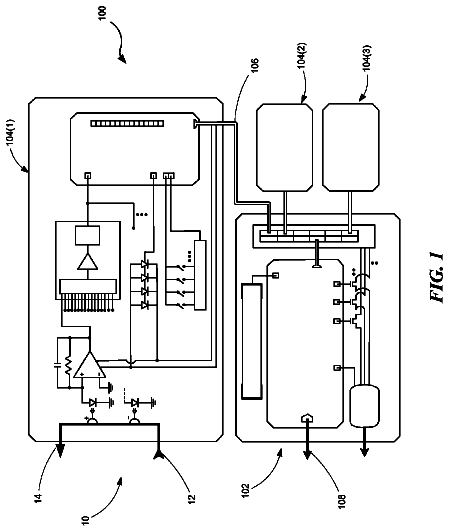
FIG. 1 is a schematic view of a data communication system according to one embodiment;
FIG. 2 is a schematic view of a control module of a data communication system according to one embodiment;
FIG. 3 is a schematic flow diagram of a data communication system according to one embodiment;
FIG. 4 is a schematic flow diagram of a data communication system according to another embodiment;
FIG. 5 is a schematic flow diagram of a data communication system according to yet another embodiment;
FIG. 6 is a schematic flow diagram of a data communication system according to one embodiment;
FIG. 7 is a schematic flow diagram of a method for communicating data according to one embodiment; and
FIG. 8 is a schematic flow diagram of a method for high-frequency trading according to one embodiment.
Detailed description
Reference throughout this specification to “one embodiment,” “an embodiment,” or similar language means that a particular feature, structure, or characteristic described in connection with the embodiment is included in at least one embodiment of the present disclosure. Appearances of the phrases “in one embodiment,” “in an embodiment,” and similar language throughout this specification may, but do not necessarily, all refer to the same embodiment. Similarly, the use of the term “implementation” means an implementation having a particular feature, structure, or characteristic described in connection with one or more embodiments of the present disclosure, however, absent an express correlation to indicate otherwise, an implementation may be associated with one or more embodiments.
Referring to FIG. 1 , one embodiment of a data communication system 10 is shown. The data communication system 10 includes a first data source 30 and a second data source 40 both positioned on the ground 12 . The first data source 30 is geographically remote or distanced from the second data source 40 . Each data source 30 , 40 includes data stored permanently or temporarily in memory or other data storage devices. The data can be any of various types of data regarding any of various types of information.
In one particular embodiment, the first data source 30 is or forms part of a first securities exchange or market and the second data source 40 is or forms part of a second securities exchange or market. A securities exchange is a marketplace in which securities, commodities, derivatives, and/or other financial instruments are traded. The securities exchange functions to ensure fair and orderly trading, including dissemination of price information for financial instruments and providing a platform for buying and selling such financial instruments. According to a particular implementation, the first data source 30 corresponds with the New York Stock Exchange, and the second data source 40 corresponds with the Chicago Stock Exchange. In other implementations, the first data source 30 corresponds with any securities exchange throughout the world, and the second data source 40 corresponds with any other securities exchange throughout the world.
The first securities exchange associated with the first data source 30 operates independently from the second securities exchange associated with the second data source 40 . In other words, although the first and second securities exchanges may trade the same financial instruments, the exchanges facilitate trading (e.g., buying and selling) of the financial instruments independently of each other. For example, a particular company may offer stocks for trading on both the first and second securities exchanges, but the price for such stocks and the mechanisms for buying and selling the stocks on the first and second securities exchanges are separate. Notwithstanding the operational interdependence between first and second securities exchanges, trading trends and pricing of a financial instruments on one exchange are typically closely aligned with the trading trends and pricing of the corresponding financial instruments on the other exchange. However, while being closely aligned, financial instrument price and trading patterns on one exchange may briefly lag in time with the other exchange. So-called high frequency trading (HFT), as described above, is designed to benefit from the potential lag between the prices of financial instruments on disparate securities exchanges.
Each of the first and second data sources 30 , 40 is configured to transmit and/or receive data communication signals through the air 14 . In one implementation, the first data source 30 includes at least one data communication signal transceiver 32 that transmits and receives first data communication signals 52 . In certain implementations, the first data source 30 can include separate data communication signal transmitter and receiver devices instead of a transceiver 32 . The second data source 40 may also include a transceiver 42 (or separate transmitter and receiver) that transmits and receives first data communication signals 52 . In yet some implementations, as will be described in more detail below, the second data source 40 is configured to only transmit first data communication signals 52 . In other words, in such implementations, the second data source 40 does not receive first data communication signals 52 . The first data communication signals 52 can be defined as data communication signals transmitted between an on-ground data source and an aircraft in flight.
The data communication system 10 also includes at least one aircraft. Although the data communication system 10 can include any number of aircraft, in the illustrated embodiment of FIG. 1 , the data communication system 10 includes three aircraft: a first aircraft 20 A, a second aircraft 20 B, and a third aircraft 20 C. Each aircraft 20 A-C can be one of various types of non-orbiting aircraft, such as airplanes, drones, and helicopters. The aircraft of the data communication system 10 can be the same type of aircraft or different types of aircraft. In some implementations, each aircraft 20 A-C is an unmanned (e.g., pilotless) aircraft or unmanned aerial vehicle (UAV). The unmanned aerial vehicle can be a high-altitude, long-endurance (HALE) aircraft configured to fly at substantial heights and remain in flight for extended periods of time. According to some implementations, a UAV of the data communication system 10 may fly at altitudes between about 60,000 feet and about 130,000 feet, and remain in flight without landing for days, weeks, and months. Such UAVs may be powered via solar power, or other self-sustaining energy sources. In one implementation, one or more of the aircraft 20 A- 20 C of the data communication system 10 may be a “Phantom Eye” HALE UAV, manufactured by Boeing® of Chicago, Ill.
The aircraft 20 A-C each includes a control module 22 A-C, respectively. Each control module 22 A-C is configured to control the receipt and transmission of data communication signals through the air. In some implementations, the aircraft of the data communication system 10 receives second data communication signals 54 from and transmits second data communication signals 54 to other aircraft. For example, second data communication signals 54 are transmitted between the second and third aircraft 20 B, 20 C. The second data communication signals 54 can be defined as data communication signals transmitted between aircraft in flight. The aircraft 20 A-C each includes a transceiver (or separate transmitter and receiver) for transmitting and receiving data communication signals. The transceiver (or separate transmitter and receiver) of each aircraft can be communicatively and controllably coupled to the control module of the corresponding aircraft. Each aircraft 20 A-C can be equipped with a large and complex avionics suite that may include processors capable of executing complex algorithms and databases sufficiently large and advanced to store and organize data used by the algorithms.
Referring to FIG. 2 , in one embodiment, the control modules 22 A-C of each aircraft 20 A-C can be represented by a control module 22 . The control module 22 includes a communications module 60 , a processing module 62 , and a database 64 having a memory 66 . The communications module 60 is configured to receive and interpret incoming communications 68 , and generate and transmit outgoing communications 70 . The incoming and outgoing communications 68 , 70 can be free-space data communication signals, such as signals 52 , 54 , 56 . Alternatively, in some embodiments, such as when the control module 22 forms part of the first and/or second data sources 30 , 40 , the incoming and/or outgoing communications 68 , 70 can be other types of data communication signals transmitted over wired communication links. In some embodiments, the control module 22 includes only the communications module 60 . In such embodiments, the control module 22 functions merely as a repeater or passthrough device to transmit the same data out of the control module as received into the control module.
The processing module 62 is configured to process the data transmitted via the incoming communications 68 . The incoming data can be processed or analyzed for any of various reasons using any of various processing or analysis techniques. In some embodiments, the processing module 62 includes one or more processors configured to execute an algorithm relying on the incoming data as input. The processing module 62 may also rely on other data as input, such as data from the database 64 , which will be described in more detail below. The processing module 62 executes the algorithm and generates output data that the communications module 60 can convert into outgoing communications 70 .
The database 64 is configured to store and organize data. The data can be stored in the memory 66 . Furthermore, the data can be any of various data received from any of various sources. For example, the data can be raw or source data received from a data source, such as the first and second data sources 30 , 40 . Alternatively, the data can be processed data, such as data received from the processing module 62 .
In some implementations, the data communication system 10 may additionally include at least one ground node 50 positioned on the ground 12 . The ground node 50 is configured to transmit and receive data communication signals through the air. In one implementation, the ground node 50 includes at least one data communication signal transceiver 51 (or separate transmitter and receiver) that transmits and receives third data communication signals 56 . The third data communication signals 56 can be defined as data communication signals transmitted between a ground node 50 and an aircraft in flight. The ground node 50 , as well as the first and/or second data sources 30 , 40 , may also include a control module with features analogous to the control modules of the aircraft 20 A-C. Although the data communication system 10 of the illustrated embodiment includes a ground node 50 , in other embodiments, the system includes no ground nodes such that all data communication between the first and second data sources 30 , 40 is performed via aircraft in flight. The ground node 50 can be fixed or movable relative to the ground. Furthermore, the ground 12 can be land or water. Accordingly, in one implementation, the ground node 50 is or forms part of a boat. In the same manner that the ground node 50 acts as a node of the network embodied by the system 10 , the aircraft can be considered or defined as nodes of the network located in the air.
The first, second, and third data communication signals 52 , 54 , 56 can be any of various types of data communication signals capable of transmission through air. In some implementations, the data communication signals 52 , 54 , 56 are free-space radio waves, such as microwaves. In yet some implementations, the data communication signals 52 , 54 , 56 are free-space optical signals, such as laser links. The free-space data communication signals 52 , 54 , 56 can be generated, transmitted, received, and interpreted according to conventional methods known in the art. For example, the signals 52 , 54 , 56 may communicate data using any of various network protocols known in the art, such as TCP/IP, FTP, HTTP, PPP, SFTP, and the like.
In a general embodiment, the data communication system 10 facilitates the rapid transmission of source data from the first data source 30 to the second data source 40 . Source data generated by and/or stored at the first data source 30 is transmitted through the air 14 to the first aircraft 20 A via a free-space data communication signal 52 . The first aircraft 20 A receives the data communication signal 52 and, in the illustrated implementation, transmits the source data through the air 14 directly to the ground node 50 via a free-space data communication signal 56 . The ground node 50 then transmits the source data through the air 14 to the second aircraft 20 B via a free-space data communication signal 56 . In another implementation, such as when the system 10 does not include a ground node 50 or when bypassing the ground node is desirable, the first aircraft 20 A transmits the source data through the air 14 directly to the second aircraft 20 B via a free-space data communication signal 54 . The second aircraft 20 B transmits the source data through the air to the third aircraft 20 C via a free-space data communication signal 54 . Then, the third aircraft 20 C transmits the source data through the air to the second data source 40 via a free-space communication signal 52 .
It is recognized that in some implementations, the data communication system 10 may include fewer or more than three aircraft. For example, in one implementation, the data communication system 10 includes a single, such as the first aircraft 20 A, that transmits the source data from the first data source 30 through the air directly to the second data source 40 via a free-space data communication signal 56 . Alternatively, in another implementation, the data communication system 10 includes only two aircraft, such as the first and second aircraft 20 A, 20 B, and source data from the first data source 30 is transmitted through the air from the first aircraft directly to the second aircraft and from the second aircraft directly to the second data source 40 .
In the illustrated embodiment of FIG. 1 , once received, the second data source 40 processes the source data originating from the first data source and generates response data. In one implementation, the second data source 40 processes the source data by executing an algorithm that utilizes the source data as input and generates the response data as output. In this manner, the response data is based on or depends from the source data. The algorithm may utilize other source data as input, such as source data generated by and/or stored at the second data source 40 . Accordingly, in some implementations, the second data source 40 is configured to generate response data based on or depending from source data form the first data source 30 and source data from the second data source 40 . Where the first and second data sources 30 , 40 are first and second securities exchanges, respectively, the source data from the first data source can be price information of a financial instrument at the first securities exchange, and the source data from the second data source can be price information of the financial instrument at the second securities exchange. The response data can be an execution order to buy or sell the financial instrument at the first securities exchange, which is determined based on a comparison between the price information of the financial instrument at the first and second securities exchanges.
The response data generated by the second data source 40 is rapidly transmitted from the second data source to the first data source 30 via the data communication system 10 . For example, in the illustrated embodiment, the response data is transmitted through the air 14 from the second data source 40 to the third aircraft 20 C via a data communication signal 52 , from the third aircraft to the second aircraft 20 B, from the second aircraft to the ground node 50 via a data communication signal 56 , from the ground node 50 to the first aircraft 20 A via a data communication signal 56 , and from the first aircraft to the first data source 30 via a data communication signal 52 . Of course, as described above, in other embodiments, the response data can be transmitted through the air 14 from the second data source 40 to the first data source 30 via only aircraft in flight (e.g., without using a ground node). Further, in certain embodiments, the response data can be transmitted between fewer or more than three aircraft to reach the first data source 30 . After the response data is received at the first data source 30 , the first data source 30 is configured to process the response data and execute or not execute an action based on the response data. For example, if the response data is an execution order to buy a financial instrument at the first securities exchange, then the first data source 30 buys the financial instrument at the first securities exchange in response to the response data.
Referring to FIGS. 3-6 , several respective embodiments of a data communication system are shown schematically. The data communication systems of FIGS. 3-6 include some features similar to the features of the data communication system 10 of FIG. 1 , with like numbers referring to like features. Therefore, the description of features of the system 10 can be applied to analogous features of the systems of FIGS. 3-6 . Each system includes and is configured to transmit data between first and second data sources 130 , 140 via free-space data communication signals. Accordingly, unless otherwise noted, the communications or transmissions of data between the described elements of the systems are effectuated by free-space data communication signals transmitted through the air. The systems utilize aircraft to facilitate a high-speed transmission of data conducive to certain industries, such as HFT, and provide data processing functionality. However, each system transmits the data and/or processes the data differently.
The data communication system 100 of FIG. 3 transmits first source data 180 from the first data source 130 to the second data source 140 via multiple aircraft, such as the first, second, and third aircraft 120 A-C. The second data source 140 processes the first source data and generates response data 182 . In certain implementations, the second data source 140 may rely on second source data obtained or generated by the second data source as input for generating the response data 182 . For example, the response data 182 may be based on a comparison between the first source data 180 and the second source data. The response data 182 is transmitted from the second data source 140 to the first data source 130 via the same, or different, aircraft used to transmit the first source data 180 . The first data source 130 then processes the response data. In one implementation, the first source data 180 includes first stock price data in a first stock exchange at the first data source 130 , and the response data 182 includes stock execution order data or an order to execute a buy or sell of a first stock. The second source data is used by the second data source 140 to generate the stock execution order data in some implementations, with the second source data including second stock price data in a second stock exchange at the second data source. The first and second stock price data are associated with the price of the same stock in the first and second stock exchanges, respectively.
In another embodiment, the data communication system 102 of FIG. 4 is similar to the data communication system 100 of FIG. 3 . For example, the data communication system 102 transmits first source data 180 from the first data source 130 to multiple aircraft, such as the first aircraft 120 A and a second aircraft 124 , and the same, or different, aircraft transmit response data 182 to the first data source 130 . However, instead of the second data source 140 processing the first source data 180 to generate the response data 182 as with the data communication system 100 , in the data communication system 102 , an aircraft (e.g., the second aircraft 124 ) is equipped to process the first source data 180 to generate the response data. Moreover, the aircraft generates the response data 182 based on a comparison between the first source data 180 and second source data 184 , which is received via a free-space data communication signal from the second data source 140 . In one implementation, the first source data 180 includes first stock price data in a first stock exchange at the first data source 130 , the second source data 184 includes second stock price data in a second stock exchange at the second data source 140 , and the response data 182 includes stock execution order data or an order to execute a buy or sell of a first stock.
In yet another embodiment, the data communication system 104 of FIG. 5 is similar to the data communication system 100 of FIG. 3 , except that a ground node 150 has effectively replaced the second aircraft 120 B. Accordingly, the data communication system 104 transmits first source data 180 from the first data source 130 to the ground node 150 via an aircraft, such as the first aircraft 120 A, and the ground node transmits the first source data 180 to the second data source 140 via another aircraft, such as the third aircraft 120 C. The second data source 140 processes the first source data 180 and generates response data 182 in a similar manner as described above. The response data 182 is then transmitted from the second data source 140 to the first data source 130 via the same, or different, aircraft and ground node combination used to transmit the first source data 180 .
According to another embodiment, the data communication system 106 of FIG. 6 is similar to the data communication system 102 of FIG. 4 , except that a ground node 150 has effectively replaced the second aircraft 124 . Accordingly, the data communication system 104 transmits first source data 180 from the first data source 130 to the ground node 150 via an aircraft, such as the first aircraft 120 A. Then, instead of an aircraft, the ground node is equipped to process the first source data 180 to generate the response data 182 . The ground node 150 can generate the response data 182 based on a comparison between the first source data 180 and second source data 184 received from the second data source 140 .
Although the embodiments of the data communication systems of FIGS. 3-6 are shown and have been described as having a specific number of aircraft and ground nodes, it is recognized that the data communication systems can have any number of aircraft and ground nodes as desired to facilitate rapid transmission and processing of data.
The description continues in the full USPTO document.
 Lapsed, fee not paid12 drawings