Lapsed, fee not paid3 drawings
Software & Apps · US 9,778,934 B2
Power efficient pattern history table fetch in branch predictor
A method and apparatus for branch prediction is disclosed.
US 9,778,958 B2 · Assignee: FUJITSU LIMITED · Inventors: Okumiya; Kazuaki
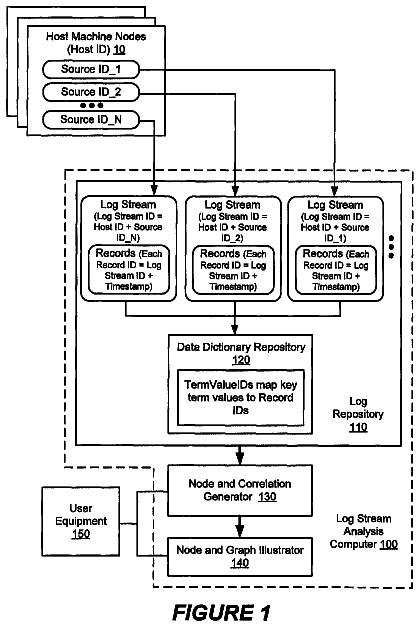
Sheet 1 of 25 from the published document. All sheets in the USPTO PDF
A management method executed by a management apparatus that manages a plurality of information processing apparatuses, the management method includes specifying a first time that is a time at which a predetermined number of information processing apparatuses that execute parallel processing are securable, by referring to information associating a content of processing to be executed by each of the plurality of information processing apparatuses, with a period in which the processing is to be executed; specifying one or more information processing apparatuses respectively having a first period, which is earlier than the first time and in which no processing is to be executed, from among the plurality of information processing apparatuses; and assigning the first period of each of the one or more information processing apparatuses, to preprocessing to be executed before the parallel processing.
In an information processing system that executes a job according to an instruction from a user, when user instructions are concentrated in a specific time frame, computing resources are insufficient and thus, it is difficult to execute a job. Therefore, in a related technique, a mechanism (hereinafter referred to as “scheduler”) that manages a job execution schedule is provided in an information processing system, to avoid a shortage of computing resources during job execution. A job including parallel processing is called a parallel job. The parallel job includes not only the parallel processing but also processing except for the parallel processing. The processing except for the parallel processing includes, for example, processing to prepare for the parallel processing (called “preprocessing”), processing to complete the parallel processing (called “postprocessing”), and the like. Th
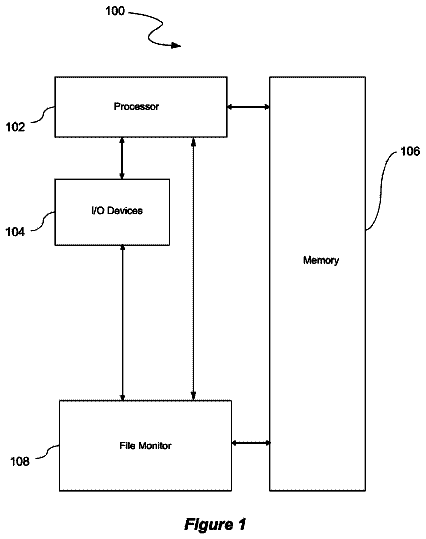
1 of 25 drawing sheets so far from the published document, cropped to the drawing. Every sheet is in the USPTO PDF.
What the patent claimed, word for word. All of it is now free to use.
This application is based upon and claims the benefit of priority of the prior Japanese Patent Application No. 2014-191614, filed on Sep. 19, 2014, the entire contents of which are incorporated herein by reference.
The embodiment discussed herein is related to a management method, a management apparatus, and an information processing system.
In an information processing system that executes a job according to an instruction from a user, when user instructions are concentrated in a specific time frame, computing resources are insufficient and thus, it is difficult to execute a job. Therefore, in a related technique, a mechanism (hereinafter referred to as “scheduler”) that manages a job execution schedule is provided in an information processing system, to avoid a shortage of computing resources during job execution.
A job including parallel processing is called a parallel job. The parallel job includes not only the parallel processing but also processing except for the parallel processing. The processing except for the parallel processing includes, for example, processing to prepare for the parallel processing (called “preprocessing”), processing to complete the parallel processing (called “postprocessing”), and the like.
The processing except for the parallel processing may be executed without securing the same number of computing nodes as the number of computing nodes used for execution of the parallel processing. Therefore, during execution of the processing except for the parallel processing, some of the computing nodes assigned to the parallel job may be unused and thus, utilization of the computing resources in the information processing system may decrease. The above-described related technique does not focus on such a problem. In the information processing system, effectively utilizing the computing nodes that execute the parallel job is desirable. As related art, for example, Japanese Laid-open Patent Publication Nos. 2001-282551 and 2011-096110 are disclosed.
According to an aspect of the invention, a management method executed by a management apparatus that manages a plurality of information processing apparatuses, the management method includes specifying a first time that is a time at which a predetermined number of information processing apparatuses that execute parallel processing are securable, by referring to information associating a content of processing to be executed by each of the plurality of information processing apparatuses, with a period in which the processing is to be executed; specifying one or more information processing apparatuses respectively having a first period, which is earlier than the first time and in which no processing is to be executed, from among the plurality of information processing apparatuses; and assigning the first period of each of the one or more information processing apparatuses, to preprocessing to be executed before the parallel processing.
The object and advantages of the invention will be realized and attained by means of the elements and combinations particularly pointed out in the claims.
It is to be understood that both the foregoing general description and the following detailed description are exemplary and explanatory and are not restrictive of the invention, as claimed.
FIG. 1 is a diagram illustrating an overview of a system according to an embodiment;
FIG. 2 is a diagram illustrating an example of a connection mode of computing nodes;
FIG. 3 is a diagram illustrating an example of a space shape designated by a user;
FIG. 4 illustrates a functional block diagram of a management apparatus;
FIG. 5 is a diagram illustrating an example of a parallel-job execution program stored in an input-data storage section;
FIG. 6 is a diagram illustrating an example of data stored in a resource-map storage section;
FIG. 7 is a diagram illustrating a main processing flow;
FIG. 8 is a diagram illustrating a processing flow of division processing;
FIG. 9 is a diagram illustrating a processing flow of assignment processing;
FIG. 10 is a diagram illustrating an example of data used to manage a size of each file;
FIG. 11 is a diagram illustrating a processing flow of the assignment processing;
FIG. 12 is a diagram illustrating an example of an assignment table;
FIG. 13 is a diagram provided to explain a state transition of the assignment table;
FIG. 14 is a diagram provided to explain a state transition of the assignment table;
FIG. 15 is a diagram provided to explain a state transition of the assignment table;
FIG. 16 is a diagram provided to explain a state transition of the assignment table;
FIG. 17 is a diagram illustrating a processing flow of the assignment processing;
FIG. 18 is a diagram illustrating an example of data stored in a transfer table;
FIG. 19 is a diagram provided to explain a state transition of the assignment table;
FIG. 20 is a diagram provided to explain a state transition of the assignment table;
FIG. 21 is a diagram provided to explain a state transition of the assignment table;
FIG. 22 is a diagram provided to explain a state transition of the assignment table;
FIG. 23 is a diagram provided to explain a state transition of the assignment table;
FIG. 24 is a diagram illustrating a processing flow of processing to be executed by an execution control section; and
FIG. 25 is a functional block diagram of a computer.
FIG. 1 illustrates an overview of a system according to an embodiment. A management apparatus 1 , which executes main processing in the present embodiment, and a user terminal 9 to be operated by a user are connected to a network 7 that is, for example, the Internet. The management apparatus 1 is connected to a file management apparatus 5 including a file storage section 51 , and an information processing system 3 including computing nodes 31 , via, for example, a network such as a local area network (LAN).
The user terminal 9 transmits an execution request for a parallel job, to the management apparatus 1 . The management apparatus 1 performs scheduling for the parallel job designated in the execution request. Further, the management apparatus 1 causes the computing nodes 31 in the information processing system 3 to execute the parallel job according to a schedule. The computing nodes 31 in the information processing system 3 execute the parallel job. A file to be used by the computing nodes 31 in parallel processing in the parallel job is stored in the file storage section 51 of the file management apparatus 5 .
FIG. 2 illustrates an example of a connection mode of the computing nodes 31 . The computing nodes 31 are connected in a mesh, as illustrated in FIG. 2 . In the present embodiment, a shape of a space formed by the computing nodes 31 that execute the parallel processing may be designated by a user. For example, in FIG. 3 , the computing nodes 31 are assigned to a job J 1 , a job J 2 , a job J 3 , and a job J 4 . The shape of a space occupied by the computing nodes 31 that execute each job is a rectangular solid. In this way, the computing node 31 that does not execute the parallel processing may be absent, among the computing nodes 31 that execute the parallel processing. This allows suppression of generation of a communication processing load, in the computing node 31 that does not execute the parallel processing.
FIG. 4 illustrates a functional block diagram of the management apparatus 1 . The management apparatus 1 includes an input-data storage section 101 , a division section 103 , a post-division data storage section 105 , a first scheduler 107 , a resource-map storage section 109 , a temporary data storage section 111 , a second scheduler 113 , a transfer-table storage section 115 , an assignment-table storage section 117 , an execution control section 119 , and an application programming interface (API) control section 121 .
The division section 103 executes processing based on data stored in the input-data storage section 101 . The division section 103 then stores a processing result, in the post-division data storage section 105 . The first scheduler 107 executes processing, by using data stored in the post-division data storage section 105 and data stored in the resource-map storage section 109 . The first scheduler 107 then stores a processing result, in the temporary data storage section 111 . The second scheduler 113 performs processing, by using data stored in the post-division data storage section 105 , data stored in the resource-map storage section 109 , data stored in the temporary data storage section 111 , and data stored in the transfer-table storage section 115 . The second scheduler 113 then stores a processing result, in the resource-map storage section 109 and the assignment-table storage section 117 . The API control section 121 receives information to be passed to the next processing, from the computing nodes 31 in the information processing system 3 , and outputs the received information to the execution control section 119 . The execution control section 119 controls execution of a parallel job by the computing nodes 31 in the information processing system 3 , by using data stored in the post-division data storage section 105 , data stored in the resource-map storage section 109 , data stored in the assignment-table storage section 117 , and the information received from the API control section 121 .
FIG. 5 illustrates an example of a parallel-job execution program stored in the input-data storage section 101 . The parallel-job execution program is included in the execution request received from the user terminal 9 . The parallel-job execution program includes a part for parallel processing (including parallel processing code in FIG. 5 ), and a part for processing except for the parallel processing. The part for the processing except for the parallel processing includes a part for preprocessing (including preprocessing code in FIG. 5 ), a part for postprocessing (including postprocessing code in FIG. 5 ), and other part. The other part includes, for example, information about file transfer (for example, identification information of a file to be used in the parallel processing, and identification information of a file to be generated by the parallel processing).
The preprocessing includes, for example, processing of transferring a file to be used in initialization processing and the parallel processing to the information processing system 3 . The postprocessing includes processing of updating a file stored in the file storage section 51 , with a file updated by the parallel processing. The file to be used in the parallel processing is transferred to the information processing system 3 . Therefore, the computing nodes 31 that execute the parallel processing are allowed to access the file rapidly. As a result, a length of time taken by the parallel processing is reduced.
FIG. 6 illustrates an example of data stored in the resource-map storage section 109 . In the example of FIG. 6 , for each of the computing nodes 31 , information indicating processing to be executed by the computing node 31 in each time frame is stored.
Next, operation of the management apparatus 1 will be described using FIG. 7 to FIG. 24 . First, the management apparatus 1 receives an execution instruction for a parallel job from the user terminal 9 , and stores an execution program included in the execution instruction into the input-data storage section 101 . The management apparatus 1 initializes the post-division data storage section 105 , the temporary data storage section 111 , the assignment-table storage section 117 , and the transfer-table storage section 115 . In response to this initialization, the division section 103 executes division processing ( FIG. 7 : S 1 ). The division processing will be described using FIG. 8 .
First, the division section 103 determines whether there is a not-yet-processed line in the execution program read from the input-data storage section 101 ( FIG. 8 : S 21 ). When it is determined that there is no not-yet-processed line (S 21 : No route), the processing returns to calling processing.
When determining that there is a not-yet-processed line (S 21 : Yes route), the division section 103 identifies one not-yet-processed line in the execution program (S 23 ). When executing S 23 for the first time, the division section 103 identifies the first line in the execution program as a not-yet-processed line. When executing S 23 not for the first time, the division section 103 identifies a line with the smallest line number, among not-yet-processed lines.
The division section 103 determines whether the line identified in S 23 is a division instruction line for preprocessing (S 25 ). The division instruction line is a line registered beforehand and to become a mark for division. For example, in FIG. 5 , each of a line beginning with “#pre”, a line beginning with “#run”, and a line beginning with “#after” is the division instruction line. The division instruction line for preprocessing is the line beginning with “#pre”.
When determining that the line identified in S 23 is the division instruction line for preprocessing (S 25 : Yes route), the division section 103 stores code starting from the identified division instruction line and ending at a line immediately before the next division instruction line (for example, a division instruction line for parallel processing), in an area for storage of a program for preprocessing, in the post-division data storage section 105 (S 27 ). The flow then returns to S 21 .
When determining that the line identified in S 23 is not the division instruction line for preprocessing (S 25 : No route), the division section 103 determines whether the line identified in S 23 is the division instruction line for parallel processing (S 29 ). For example, in FIG. 5 , the division instruction line for parallel processing is the line beginning in “#run”.
When determining that the line identified in S 23 is the division instruction line for parallel processing (S 29 : Yes route), the division section 103 stores code starting from the identified division instruction line and ending at a line immediately before the next division instruction line (for example, a division instruction line for postprocessing), in an area for storage of a program for parallel processing, in the post-division data storage section 105 (S 31 ). The flow then returns to S 21 .
When determining that the line identified in S 23 is not the division instruction line for parallel processing (S 29 : No route), the division section 103 determines whether the line identified in S 23 is the division instruction line for postprocessing (S 33 ). For example, in FIG. 5 , the division instruction line for postprocessing is the line beginning with “#after”.
When determining that the line identified in S 23 is the division instruction line for postprocessing (S 33 : Yes route), the division section 103 stores code starting from the identified division instruction line and ending at the last line, in an area for storage of a program for postprocessing, in the post-division data storage section 105 (S 35 ). The flow then returns to S 21 .
When determining that the line identified in S 23 is not the division instruction line for postprocessing (S 33 : No route), the division section 103 stores code of the line identified in S 23 , in an area for storage of other program, in the post-division data storage section 105 (S 37 ). The flow then returns to S 21 .
By executing the processing described above, a program of a parallel job may be divided, and a program may be generated each time processing is executed. Therefore, scheduling may be performed processing by processing in a job, not job by job.
Referring back to FIG. 7 , the first scheduler 107 detects storage of data into the post-division data storage section 105 . Subsequently, based on the data stored in the resource-map storage section 109 , the first scheduler 107 identifies the earliest time at which the computing node 31 satisfying a condition for the parallel processing is securable. The first scheduler 107 then assigns this computing node 31 to the parallel processing (S 3 ). The first scheduler 107 generates a copy of the data stored in the resource-map storage section 109 . The first scheduler 107 then updates the generated copy based on a processing result of S 3 , and stores the updated copy in the temporary data storage section 111 .
The condition for the parallel processing includes, for example, a condition of the number of the computing nodes 31 to execute the parallel processing, and a condition of a time length to be taken by the parallel processing. In the example of FIG. 5 , a part indicating “node=n 2 , time=m 2 ” in the line beginning with “#run” corresponds to the condition for the parallel processing. In this case, the first scheduler 107 ensures that the identified time is the earliest time at which the n 2 computing nodes 31 may be secured, and that the n 2 computing nodes 31 may be secured for m 2 (minutes) starting from the identified time.
The second scheduler 113 detects storage of a processing result of the first scheduler 107 into the temporary data storage section 111 . In response to this detection, the second scheduler 113 sets a start time T of the parallel processing, as a reference time t (S 5 ). The start time T of the parallel processing is the time identified in S 3 .
Next, the second scheduler 113 executes assignment processing for the preprocessing (S 7 ). The assignment processing will be described using FIG. 9 to FIG. 23 .
First, the second scheduler 113 calculates a sum of sizes of respective files to be used in the parallel processing ( FIG. 9 : S 43 ). For example, the files to be used in the parallel processing are designated by the other program stored in the post-division data storage section 105 . For example, in FIG. 5 , pieces of identification information of the respective files are included in a line beginning with “#stgin”, and the files indicated by these pieces of identification information are to be used in the parallel processing. The other program includes information representing the size of each file to be used in the parallel processing, and therefore, the sum of the sizes of the respective files to be used in the parallel processing may be calculated. As for the information representing the size of the file to be used in the parallel processing, the second scheduler 113 may manage data illustrated in FIG. 10 , for example. In other words, the second scheduler 113 may acquire beforehand the identification information of the file to be used in the parallel processing and the size of the file, and may store the acquired identification information and size, into a storage area.
Referring back to FIG. 9 , the second scheduler 113 calculates a time length T.sub.all to be taken to transfer all files by the one computing node 31 , based on the sum of the sizes of the respective files (S 45 ). A transfer rate of the computing node 31 is determined beforehand. Therefore, the second scheduler 113 calculates “T.sub.all”, based on “T.sub.all=(sum of sizes of respective files)/(transfer rate)”.
The second scheduler 113 sets 0, as T.sub.sum that is a sum of the time lengths assigned to the preprocessing (S 47 ).
By using the data stored in the resource-map storage section 109 , the second scheduler 113 searches for the computing node 31 whose start time of a free state (for example, a state where no processing is executed) is earlier than the reference time t set in S 5 (S 49 ). For instance, in the example illustrated in FIG. 6 , when the reference time t is 14:25, a computing node CN 1 and a computing node CN 2 are detected.
When no computing node 31 whose start time of a free state is earlier than the reference time t is detected in S 49 (S 51 : No route), the processing returns to the calling processing. On the other hand, the computing node 31 whose start time of a free state is earlier than the reference time t is detected (S 51 : Yes route), the processing shifts to S 53 in FIG. 11 , via a terminal A.
Next, FIG. 11 will be described. The second scheduler 113 identifies the computing node 31 having the earliest start time, from among the computing nodes 31 detected in S 51 ( FIG. 11 : S 53 ).
The second scheduler 113 assigns the computing node 31 identified in S 53 to the preprocessing, during a period from the start time of the free state to a time that comes after a lapse of a unit time (S 55 ). The second scheduler 113 updates the data stored in the temporary data storage section 111 , based on a processing result of S 55 .
Specifically, the second scheduler 113 updates an assignment table stored in the assignment-table storage section 117 , based on the processing result of S 55 (S 57 ). FIG. 12 illustrates an example of the data stored in the assignment table. In the example of FIG. 12 , the stored data includes the identification information of the computing node 31 , the start time of a free state, the ending time of the free state, and the amount of data transferable during a time period from the start time of the free state to the ending time of the free state. In the example of FIG. 12 , the unit time is five minutes.
Here, state transitions of the assignment table will be described using FIG. 13 to FIG. 16 .
For example, in the state illustrated in FIG. 12 , adding a free time of the computing node CN 1 results in entries for the computing node CN 1 in the assignment table as illustrated in FIG. 13 . In FIG. 13 , the ending time of the free state is changed to 10:10, and the amount of transferable data is changed to 60 GB (gigabytes). A part different from FIG. 12 is shaded.
When a free time of a computing node CN 3 is added in the state illustrated in FIG. 13 , entries for the computing node CN 3 are added to the assignment table, resulting in a state illustrated in FIG. 14 . In FIG. 14 , a time period from 10:05 to 10:10 is registered as the free time of the computing node CN 3 . A part different from FIG. 13 is shaded.
When a free time of the computing node CN 2 is added in the state illustrated in FIG. 14 , entries for the computing node CN 2 are added to the assignment table, resulting in a state illustrated in FIG. 15 . In FIG. 15 , a time period from 10:20 to 10:25 is registered as the free time of the computing node CN 2 . A part different from FIG. 14 is shaded.
For example, data illustrated in FIG. 16 is eventually stored in the assignment table. In FIG. 16 , the time period from 10:00 to 10:10 is registered as the free time of the computing node CN 1 . The time period from 10:20 to 11:00 is registered as the free time of the computing node CN 2 . The time period from 10:05 to 10:10 is registered as the free time of the computing node CN 3 . When S 59 is executed in this state, T.sub.sum is 55 minutes.
Referring back to FIG. 11 , the second scheduler 113 calculates T.sub.sum=T.sub.sum+unit time (S 59 ).
The second scheduler 113 then determines whether T.sub.all is shorter than T.sub.sum (S 61 ). When it is determined that T.sub.all is not shorter than T.sub.sum (S 61 : No route), the processing returns to S 49 in FIG. 9 via a terminal B, to add the free state of the computing node 31 . On the other hand, when determining that T.sub.all is shorter than T.sub.sum (S 61 : Yes route), the assignment of the computing node 31 to the preprocessing is completed and therefore, the second scheduler 113 executes the following processing. Specifically, the second scheduler 113 replaces the data stored in the resource-map storage section 109 , with the data stored in the temporary data storage section 111 (S 62 ). The processing then shifts to S 63 in FIG. 17 via a terminal C.
Next, S 63 will be described. The second scheduler 113 identifies one not-yet-processed file, from among the files to be used for the parallel processing ( FIG. 17 : S 63 ).
The second scheduler 113 identifies the one computing node 31 whose amount of transferable data is not 0, based on the assignment table (S 65 ).
The second scheduler 113 determines whether the amount of data transferable by the computing node 31 identified in S 65 is equal to or less than the size of a part, to which the computing node 31 is not assigned, of the file identified in S 63 (S 67 ).
When determining that the amount of data transferable by the identified computing node 31 is equal to or less than the size of the part, to which the computing node 31 is not assigned, of the identified file (S 67 : Yes route), the second scheduler 113 executes the following processing. Specifically, the second scheduler 113 sets 0, as the amount of data that is transferable by the computing node 31 identified in S 65 , and stored in the assignment table (S 69 ).
The second scheduler 113 adds an entry for the computing node 31 identified in S 65 , to a transfer table stored in the transfer-table storage section 115 (S 71 ). At this moment, of the file identified in S 63 , the size of the part to which the computing node 31 is not assigned is reduced by the amount of data transferable by the computing node 31 identified in S 65 .
FIG. 18 illustrates an example of the data stored in the transfer table. In the example of FIG. 18 , the stored data includes a processing type, identification information of the computing node 31 , identification information of a file, information representing a file size, information representing a start position of transfer, and information representing a transfer data amount.
Referring back to FIG. 17 , the second scheduler 113 determines whether the computing node 31 whose amount of transferable data is not 0 is present in the assignment table (S 73 ). When determining that the computing node 31 whose amount of transferable data is not 0 is present (S 73 : Yes route), the second scheduler 113 returns to S 65 , to process the next computing node 31 . On the other hand, when determining that the computing node 31 whose amount of transferable data is not 0 is absent (S 73 : No route), the assignment is completed and therefore, the processing returns to the calling processing.
On the other hand, when determining that the amount of data transferable by the identified computing node 31 is greater than the size of the part, to which the computing node 31 is not assigned, of the identified file (S 67 : No route), the second scheduler 113 executes the following processing. Specifically, the second scheduler 113 subtracts the size of the part, to which the computing node 31 is not assigned, of the identified file, from the amount of data transferable by the identified computing node 31 (S 75 ).
The second scheduler 113 adds an entry for the computing node 31 identified in S 65 , to the transfer table ( 577 ). At this moment, the size of the part, to which the computing node 31 is not assigned, of the file identified in S 63 is 0.
The second scheduler 113 determines whether there is a not-yet-processed file among the files to be used for the parallel processing (S 79 ). When it is determined that there is a not-yet-processed file (S 79 : Yes route), the flow returns to S 63 . On the other hand, when it is determined that there is no not-yet-processed file (S 79 : No route), the assignment is completed and therefore, the processing returns to the calling processing.
Here, state transitions of the assignment table will be described using FIG. 19 to FIG. 23 .
Assume that, for example, in the state illustrated in FIG. 16 , the computing node CN 1 is assigned to a file 1 in a size of 50 GB. This brings the assignment table into a state illustrated in FIG. 19 . In FIG. 19 , the amount of data transferable by the computing node CN 1 is changed from 60 GB to 10 GB. A part different from FIG. 16 is shaded.
Assume that, in the state illustrated in FIG. 19 , the computing node CN 3 is assigned to a file 2 in a size of 180 GB. This brings the assignment table into a state illustrated in FIG. 20 . In FIG. 20 , the amount of data transferable by the computing node CN 3 is changed from 30 GB to 0 GB. At this moment, a part, to which the computing node 31 is not assigned, of the file 2 is 150 GB. A part different from FIG. 19 is shaded.
Assume that, in the state illustrated in FIG. 20 , the computing node CN 1 is assigned to the part, to which the computing node 31 is not assigned to, of the file 2 . This brings the assignment table into a state illustrated in FIG. 21 . In FIG. 21 , the amount of data transferable by the computing node CN 1 is changed from 10 GB to 0 GB. The part, to which the computing node 31 is not assigned, of the file 2 is 140 GB. A part different from FIG. 20 is shaded.
Assume that, in the state illustrated in FIG. 21 , the computing node CN 2 is assigned to the part, to which the computing node 31 is not assigned to, of the file 2 . This brings the assignment table into a state illustrated in FIG. 22 . In FIG. 22 , the amount of data transferable by the computing node CN 2 is changed from 240 GB to 100 GB. A part different from FIG. 21 is shaded.
Assume that, in the state illustrated in FIG. 22 , the computing node CN 2 is assigned to a file 3 in a size of 50 GB. This brings the assignment table into a state illustrated in FIG. 23 . In FIG. 23 , the amount of data transferable by the computing node CN 2 is changed from 100 GB to 50 GB. A part different from FIG. 22 is shaded.
By executing the processing described above, the computing node 31 in an idle state before the start time of the parallel processing may be assigned to the preprocessing.
Referring back to FIG. 7 , the second scheduler 113 determines whether the assignment of the computing node 31 to the preprocessing is successful (S 9 ). The assignment to the preprocessing is unsuccessful when the processing takes the No route in S 51 , whereas the assignment to the preprocessing is successful when the processing takes the No route in S 73 .
When determining that the assignment of the computing node 31 to the preprocessing is unsuccessful (S 9 : No route), the second scheduler 113 sets a time that is later than the start time by the unit time, as the start time T of the parallel processing (S 11 ). In other words, the start time T of the parallel processing is delayed by the unit time. The second scheduler 113 generates a copy of the data stored in the resource-map storage section 109 . The second scheduler 113 then updates this copy, based on a processing result of S 11 , and updates the data in the temporary data storage section 111 , with data after the update.
On the other hand, when determining that the assignment of the computing node 31 to the preprocessing is successful (S 9 : Yes route), the second scheduler 113 assigns, to the postprocessing, the computing node 31 not yet assigned at or after a finish time of the parallel processing (S 13 ). The processing then ends.
In S 13 , the second scheduler 113 searches for the computing node 31 satisfying a condition for the postprocessing. The condition for the postprocessing includes, for example, a condition of the number of the computing nodes 31 to execute the postprocessing, and a condition of a time length to be taken by the postprocessing. In the example of FIG. 5 , a part indicating “node=n 3 , time=m 3 ” in the line beginning with “#after” corresponds to the condition for the postprocessing. This avoids assigning the same number of the computing nodes 31 as the number of the computing nodes 31 that execute the parallel processing, to the postprocessing. The computing node 31 not yet assigned during a period of executing the postprocessing is assigned to preprocessing of the next parallel job, and therefore, the computing node 31 may be effectively used.
As described above, there is a case where securing the same number of the computing nodes 31 as the number of the computing nodes 31 that execute the parallel processing may be unnecessary, for the processing except for the parallel processing. In other words, there is a case of n 1 <n 2 and n 2 <n 3 . In such a case as well, if the computing node 31 is assigned job by job, the computing node 31 in an idle state is present in the processing except for the parallel processing, so that a usage rate of the computing node 31 decreases in the information processing system 3 .
However, by executing the processing described above, the preprocessing may be executed in a period in which the n 2 computing nodes 31 are not securable. As for the postprocessing, the computing node 31 is assigned according to the condition for the postprocessing, and therefore, the computing node 31 may be effectively used.
Next, processing to be performed by the execution control section 119 to control execution of a parallel job will be described using FIG. 24 .
First, the execution control section 119 refers to data stored in the resource-map storage section 109 . Next, the execution control section 119 detects arrival of a start time of preprocessing of a certain parallel job (hereinafter referred to as “parallel job A”) ( FIG. 24 : S 81 ).
The execution control section 119 transmits information stored in a transfer table, and a program for the preprocessing as well as other program stored in the post-division data storage section 105 , to the computing node 31 that executes the preprocessing (S 83 ). When the number of the computing nodes 31 to execute the preprocessing is two or more, the execution control section 119 transmits information about each of the computing nodes 31 , which is included in the information stored in the transfer table, to the corresponding computing node 31 . This allows the computing node 31 having received the data transmitted in S 83 , to execute the preprocessing appropriately.
Next, the execution control section 119 refers to the data stored in the resource-map storage section 109 . The execution control section 119 then detects arrival of a start time of parallel processing of the parallel job A (S 85 ).
The execution control section 119 transmits a program for the parallel processing and the other program stored in the post-division data storage section 105 , as well as information received from the API control section 121 to be passed from the preprocessing to the parallel processing, to the computing node 31 that executes the parallel processing (S 87 ). This allows the computing node 31 having received the data transmitted in S 87 , to execute the parallel processing appropriately.
Next, the execution control section 119 refers to the data stored in the resource-map storage section 109 . The execution control section 119 then detects arrival of a start time of postprocessing of the parallel job A (S 89 ).
The execution control section 119 receives information to be passed from the parallel processing to the postprocessing (this information includes information indicating a size of a file after the parallel processing) from the API control section 121 , and determines a part corresponding to the file to be transferred by each of the computing nodes 31 that execute the postprocessing. The execution control section 119 then transmits, to each of the computing nodes 31 that execute the postprocessing, a program for the postprocessing and the other program stored in the post-division data storage section 105 , information to be passed from the parallel processing to the postprocessing, as well as information indicating the part corresponding to the file to be transferred (S 91 ). This allows the computing node 31 having received the data transmitted in S 91 , to execute the postprocessing appropriately. The processing then ends.
By executing the processing described above, a parallel job may be appropriately executed, even if a parallel-job execution program is divided.
The embodiment has been described above, but is not limitative. For example, there is also a case where the above-described function block configuration of each of the management apparatus 1 and the file management apparatus 5 does not match with an actual program module configuration.
The configuration of each of the tables described above is an example, and each of the tables may have a configuration different from the configuration described above. Further, the sequence of steps in each of the processing flows may be altered if the processing results do not change. Furthermore, the steps may be executed in parallel.
In S 11 , it may be determined whether the condition for the parallel processing is satisfied, when the start time T of the parallel processing is delayed by the unit time. In this case, when the condition for the parallel processing is not satisfied, a free resource satisfying the condition for the parallel processing may be searched for again after the start time T of the parallel processing.
The assignment of the computing node 31 to the postprocessing may be performed in a manner similar to the assignment of the computing node 31 to the preprocessing. In other words, the computing nodes 31 may be sequentially assigned to the postprocessing, starting from the one whose start time of a free state is earlier. In this case, in a manner similar to S 83 , the execution control section 119 transmits information in a transfer table generated for the postprocessing, to the computing node 31 that executes the postprocessing.
Each of the management apparatus 1 , the computing node 31 , the file management apparatus 5 , and the user terminal 9 that are described above is a computer apparatus. As illustrated in FIG. 25 , a memory 2501 , and a central processing unit (CPU) 2503 , a hard disk drive (HDD) 2505 , a display control section 2507 connected to a display unit 2509 , a drive unit 2513 for a removable disk 2511 , an input unit 2515 , and a communication control section 2517 for connection to a network are connected by a bus 2519 . An operating system (OS) and an application program to execute the processing in the present embodiment are stored in the HDD 2505 . When being executed by the CPU 2503 , the application program is read from the HDD 2505 into the memory 2501 . The CPU 2503 controls the display control section 2507 , the communication control section 2517 , and the drive unit 2513 according to processing contents of the application program, thereby causing these elements to perform predetermined operation. Data in course of processing is mainly stored in the memory 2501 , but may be stored in the HDD 2505 . In the embodiment, the application program for execution of the above-described processing is distributed by being stored in the removable disk 2511 readable by a computer. The application program is then installed onto the HDD 2505 from the drive unit 2513 . The application program may be installed onto the HDD 2505 , via a network such as the Internet, and the communication control section 2517 . Such a computer apparatus implements the various functions described above, by performing organic cooperation between hardware such as the CPU 2503 and the memory 2501 , and programs such as the OS and the application program.
The above-described embodiment is summarized as follows.
The description continues in the full USPTO document.
About 6,867 words. The USPTO PDF has it with every drawing.
Fees are due 3.5, 7.5 and 11.5 years after grant. This patent expired on October 3, 2025, so the fee marked "not paid" was the one that went unpaid.
MANAGEMENT METHOD, MANAGEMENT APPARATUS, AND INFORMATION PROCESSING SYSTEM
Filed Sep 2015 · published Mar 2016Management method, management apparatus, and information processing system for coordinating parallel processing in a distributed computing environment
Filed Sep 2015 · granted Oct 2017Earlier publications, parents and continuations. None of them can still be enforced, or this patent would not be listed.
Prior art cited by the examiner or applicant. Useful when you check your own idea for novelty.
Everything on this page comes from the documents linked above.