Background
Audio signal separation and recombination are known in the art of audio mixing. For example, blind signal separation identifies and extracts source signals from a mix of those signals. Software packages may operate under user control to combine portions of two or more audio signals together. However, analysis methods for separation of audio and automatic separation and/or recombination of the audio are typically complex and tend to not produce coherent remixes or mashups.
Summary of the invention
A method for generating a transformed digital media from a target media and one or more source media. The method includes decoding the digital media, forming a time frequency distribution of the digital media, extracting musical features from the digital media, segmenting the target's feature extracted digital media, comparing each segment of the target digital media's extracted features with the source's extracted features, generating a 3-tuple (triple) for each substantial match, and generating the transformed digital media using the closest matches defined by the triples.
In one embodiment, a method generates a transformed digital media. A target media file and one or more source media files are decoded into a plurality of target sample sets and source sample sets. The target sample set is processed to form a target time frequency distribution (TFD) and the source sample sets are processed to form at least one source TFD. Musical features are extracted from the target TFD to generate target feature extraction (FE) data containing one or more separate target features, and musical features are extracted from the source TFD to generate source FE data containing one or more separate source features, and assigning each of the source features a media ID for identifying the associated source. The target FE data is segmented into temporal portions to form a plurality of target feature segments for each target feature, each of the target feature segments being time aligned to a corresponding target feature. Each of the target feature segments is compared with a plurality of the source features and generating a triple for each substantial match between the target feature segment and one of the source features, the triple including (id, s, d), where id is the media ID, s is a location within the source, d is the distance of the matched source to the respective target segment. The transformed media is generated from the target sample sets and the source sample sets based upon the triples according to a probabilistic mixing algorithm based on a match distance function.
In another embodiment, a method generates a transformed digital media from a target media and one or more source media. The target media and the source media are decoded. A first time frequency distribution for the target media and a second time frequency distribution for each of the source media are generated. A plurality of first musical features is extracted from the first time frequency distribution and a plurality of second musical features is extracted from each of the second time frequency distributions. The first musical features are segmented into a plurality of temporal segments and the first musical features of each of the plurality of temporal segments are compared with the second musical features to generate substantial matches. A triple is generated for each of the substantial matches and the transformed digital media is generated by mixing the target media and portions of the source media identified by the triples.
In another embodiment, a method generates a transformed media by re-synthesizing one or more time frequency distribution (TFD) processed media features and combining with a target media. A reverse TFD process is performed on one or more musical features extracted from at least one source media to generate a re-synthesized audio feature having a reduced amount of extraneous audio elements. The re-synthesized audio feature is combined with the target media to generate the transformed media.
In another embodiment, a method mixes at least one source media with a target media. Matches between each of a plurality of time segmented portions of the target media and each of a plurality of time windowed portions of the source media are determined and a probabilistic distribution of N closest determined said matches is generated. For each of the N closest matches, a mixing coefficient based upon the generated probabilistic distribution is generated and the time windowed portions associated with the N closest matches are mixed with the associated time segmented portion using the associated mixing coefficients.
In another embodiment, a method augments a target media with a plurality of source media. The target media is processed to form a target time frequency distribution (TFD), and each of the source media is processed to form a plurality of source TFDs. Target features are extracted from the target TFD and source features are extracted from each of the source TFDs. The target features are segmented into temporal portions to form a plurality of target feature segments. Each of the target feature segments is compared with each of the plurality of source features to determine a matched source feature having a nearest match between each one of the source features and a respective one of the target feature segments. Portions of the source media associated with said matched source features are mixed with the target media to form an augmented target media, wherein the mixing is based upon a probabilistic mixing algorithm that uses a distance between the matched target feature and source feature to define an amplitude of each said portion of the source media.
In another embodiment, a method augments a target media with a plurality of source media. The target media is processed to form a target time frequency distribution (TFD), which are separated into a plurality of components. Target features are extracted from each of the components. Each of the source media are processed to form a plurality of source TFDs, which are separated into a plurality of source components. Source features are extracted from each of the source components. The target features are segmented into temporal portions to form a plurality of target feature segments, which are each compared with each of the source features to determine N closest matches. First audio portions of the target media corresponding to the target feature segment and second audio portions of the source media corresponding to the source segments of the N closest matches are mixed.
In another embodiment, a system automatically remixes digital music. The system includes a time-frequency distribution analyzer for processing (a) a target media to form a target time frequency distribution and (b) a plurality of source media to form a plurality of source time frequency distributions. The system also includes a feature extractor for (a) extracting target features from the target time frequency distribution and (b) extracting source features from each of the source time frequency distributions. A feature store within the system stories the target features and the source features. A segmenter of the system segments the target features into a plurality of temporal target segments, and a matcher matches, for each temporal target segment, a plurality of the source features nearest to the temporal target segment. A compiler of the system generates a transformed digital media based upon the target media and the matched source features.
In another embodiment, a method separates a media into a set of components. The media is processed using a short Fast Fourier Transform algorithm to form a time frequency distribution (TFD), which is separated into a plurality of components using a probabilistic latent component analysis algorithm. A sparseness of each of the components is determined and any one or more of the components that have said sparseness greater than a first threshold and less than a second threshold is removed, and the set of components includes the remaining components.
Brief description of the figures
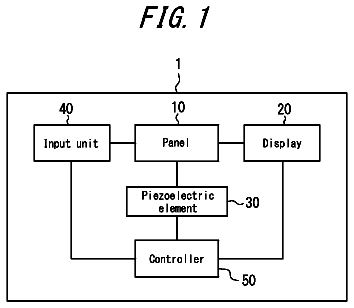
FIG. 1 is a schematic diagram of one exemplary matshup system, in an embodiment.
FIG. 2 is a block diagram of the matshup system of FIG. 1 , showing greater detail.
FIG. 3 is a flow chart illustrating one exemplary process of the matshup system of FIGS. 1 and 2 .
FIG. 4 is a block diagram illustrating an exemplary advanced matshup system, in an embodiment.
FIG. 5 is a flow chart illustrating one exemplary process of the advanced matshup system of FIG. 4 .
FIG. 6 shows one exemplary media device for automatically remixing digital media, in an embodiment.
Detailed description of the figures
The concepts found in this application expand on the system and method for extracting features from a mixture of signals and detecting temporally related portions of multi-modal signals as described in the U.S. Pat. No. 6,321,200 granted Nov. 20, 2001, U.S. Pat. No. 7,218,755 granted May 15, 2007, and U.S. Pat. No. 7,318,005 granted Jan. 8, 2008, each of which is incorporated herein by reference. The paper, titled “iMatsh—method and apparatus for automatic audio sub-sequence deconstruction, matching and recombination for a novel music player device”, which describes a novel base iMatsh system and method and its extension, is also included herein by reference.
Disclosed are systems and methods that create a transformed digital media, called an automatic matching-mashup, henceforth referred to as a matshup, of media which exists on a computing device, a matshup device. The matshup device utilizes a combination of audio analysis and computational processes to determine and extract features (base matshup system, FIG. 1-3 ) and/or feature-based component (extension to the base system, FIGS. 4-5 ), matching based on the extracted features or components and produce a mashup via mashup processes. That is, multi-dimensional time-series matching using extracted audio source features ( FIGS. 1-3 ) or component ( FIGS. 4-5 ) and subsequent re-combination of matched features or components is an aspect of the current invention and is an important arrangement for automatic production of a convincing mashups.
The current invention improves previous systems for polyphonic audio matching by isolating and extracting multiple separate audio components then matching and blending extracted audio components (feature and/or components) with a target media file based on an assigned probabilistic weight derived from a distance function. The improvement (extension to the base system, FIGS. 4-5 ) of isolating and extracting multiple separate audio components, which correspond approximately to perceptual sound objects (e.g., a guitar notes, vocal notes, base drum, snare, cymbal, etc.), can be performed on one or more physical transport channels, i.e. a mono, stereo or multi-channel mixture of sound sources. The isolated and extracted audio components can then be combined with, for example, a target track, to generate a convincing mashup, using a novel matching process disclosed herein. To improve component extraction, the present system and method extracts PLCA components, then extracts frequency and time marginal sparseness features from the components and clusters them into classes representing roles in music, for example, percussive and non-percussive roles. In one embodiment, by inverting the components in each cluster, offsetting them and mixing simultaneously occurring components in each class, separated audio tracks for each role are obtained.
Application to video media is a trivial extension of the application to audio media, with feature extraction and matching steps (described below) performed entirely on the audio part of a video stream. A re-combination process for video mixes audio signals and video signals to form an output video matshup.
FIGS. 1, 2, and 3 show a base matshup system and method and their arrangement in a reduction to practice. An extension of the base matshup system and methods to better approximate the underlying audio sources in a mixture of sources using latent component analysis, feature extraction, sparseness, grouping by role clustering, audio matching and re-combination and re-synthesis of audio to form a component-wise matshup is shown in FIGS. 4 and 5 .
Audio Time-Series Matching
FIG. 1 is a schematic diagram of one exemplary matshup system 100 for automatically remixing digital media from two or more digital media files (e.g., target 11 , sources 12 ) to form a transformed digital media 40 . System 100 is implemented on a computing device, such as a mobile phone, a portable digital music player, and a desk top computer. Transformed digital media 40 , target 11 and sources 12 represent stored digital media, such as found on digital music players or digital video player, known in the art. System 100 includes a media store 10 for storing digital media, a pre-processor 20 for extracting musical features from digital media, and a matshup processor 30 for matching and compiling closely related features. Media store 10 , pre-processor 20 and matshup processor 30 cooperate to produce transformed digital media 40 .
Target 11 is any digital media selected by a user, or selected by an algorithm such as most-played-track, for remixing with one or more sources 12 to form transformed digital media 40 . First source 13 through Nth source 19 , collectively called sources 12 , represent N digital media sources that may be selected by the user (or optionally by a source selection algorithm) for augmenting target 11 to form transformed digital media 40 . Target 11 is automatically augmented with features selected from sources 12 . Optionally, features of target 11 may be replaced with features from selected sources 12 .
Pre-processor 20 processes target 11 and the one or more selected source digital media from sources 12 to extract and store features of the digital media. Extracted features are utilized in the matching process performed in the matshup processor 30 . Pre-processor 20 also segments target 11 's extracted features into granulated temporal portions. For example, where target 11 represent audio of 2 minute duration, pre-processor 20 may segment target 11 into 120 one second duration temporal portions or segments. Temporal portions or segments may have other durations (e.g., between 100 milliseconds and 30 seconds, 2-5 seconds typically) without departing from the scope hereof.
Each target 11 and sources 12 are analyzed and information is extracted and stored, for example within at least one matrix m×n, where rows represent m identified features within the audio and columns represent n temporal portions into which target 11 and sources 12 are segmented. For example, where target 11 is 120 seconds in duration and includes four identified features, and the frame rate of a Time-Frequency Distribution (TFD) analyzer (e.g., Time-Frequency Distribution (TFD) analyzer 106 , FIG. 2 ) produces 10 frames per second, for example, the m=4 and n=1200 for a segmentation process configured with one second temporal non-overlapping portions. The segments may also overlap by, for example, 50%. In the 50% overlapping example, m=4 and n=2400 for the same segmentation process. Target 11 is thus divided up into 120 temporal portions, each consisting of 10 frames of a TFD, such that each musical feature stored in the m-rows is divided into 120 time-aligned, contiguous portions and stored in the appropriate nth column of target 11 's 4×120 matrix. Two or more of these matrices may be processed by matshup processor 30 . Entries in the m rows and the n columns may be reversed, that is the m rows may store the temporal portions and the n columns may store the identified features, without departing form the scope herein.
Matshup processor 30 automatically matches features of target 11 with features of sources 12 . In one example of operation, matshup processor 30 compares each feature of target 11 with features of sources 12 (stored as rows in target 11 and sources 12 matrix) to identify matches. Matching may be performed for example by forming probability weighted matches of target 11 segments with features of sources 12 based on a distance function, described in more detail below. This type of comparison algorithm may be based, at least in part, on user optimizations. Finally, matshup processor 30 retrieves target 11 and matched features of sources 12 from media store 10 and forms transformed digital media 40 from target 11 and the most likely (probability weighted) matches found in sources 12 . System 100 is described in more detail in FIG. 2 .
FIG. 2 shows one exemplary block diagram showing a more detailed description of matshup system 100 , FIG. 1 . In this embodiment pre-processor 20 is shown with a decoder 104 , a Time-Frequency Distribution (TFD) analyzer 106 , a feature extractor 108 , a feature store 110 , and a segmenter 112 . Matshup processor 30 is shown with a multi-matcher 114 , a triple store 115 , and a matshup compiler 116 . Sources 12 , which include a 1.sup.st source 13 through an N.sup.th source 19 , and target 11 are not shown in media store 10 for clarity of illustration.
In one example of operation, a user selects both a target 11 and a set of sources 12 (each of target 11 and sources 12 may be referred to herein as digital media files) for processing by system 100 , the goal of which is to reconstruct the target 11 using recognizable segments from the sources 12 to form a transformed digital media 40 . In one embodiment, system 100 may automatically select sources 12 using an algorithm, for example selecting most-played-track(s), and may automatically select target 11 .
Selected target 11 and sources 12 are passed 152 to pre-processor 20 . If one or more of target 11 and sources 12 are compressed or stored in a format pre-processor 20 is unable to process, then they are passed 152 to and decoded by a decoder 104 , which decodes target 11 and sources 12 into decoded (DC) target 51 and decoded (DC) sources 52 , for processing by pre-processor 20 , each formed of a series of samples sets. In the example of FIG. 2 , decoder 104 decodes target 11 and sources 12 to generate DC target 51 and DC sources 52 that include sample sets (time series of sample frames) of uncompressed pulse-code modulated audio information in mono, stereo or multi-channel format for each digital media. Decoder 104 passes 154 DC target 51 and DC sources 52 to TFD 106 .
The sample sets of DC target 51 and DC sources 52 are processed by TFD 106 , yielding target TFD 61 and sources TFD 62 , each of which is a sample set based time-frequency distribution for its respective digital media. In one example, time-frequency distributions (TFDs) are representations the energy density of a signal simultaneously in time and frequency. Examples of TFD 106 processing techniques include a short-time Fourier transform, a full-rate band-pass filterbank decomposition, wavelet analysis, and a Wigner-Ville decomposition. Target TFD 61 and sources TFD 62 is passed 156 to feature extractor 108 .
Feature extraction 108 (described in detail in U.S. Pat. No. 6,321,200,) processes the target TFD 61 and sources TFD 62 to extract musical features in each sample set yielding target Frequency Extraction (FE) 71 and source Frequency Extraction (FE) 72 . The extracted features are, for example, coefficients used in the matching process (see below). In the present embodiment, target FE 71 and sources FE 71 include a frequency time-series contiguous sample sets for each extracted musical feature contained within the respective digital media file. In the present embodiment, musical features in target FE 71 and sources FE 72 may include: constant-Q frequency re-binning to map linear frequency FFT frames to logarithmic frequency constant-Q spectral bands, Mel-frequency cepstral coefficients (MFCCs), cepstral coefficients (e.g., a full set of 80+ coefficients, which differs from the typical extraction of 13 or 20 coefficients), and pitch-class profiles (chroma) yielded by folding the energy in the constant-Q spectrum into bins corresponding to equal-temperament pitch classes in Western tonal music.
The folding sums all octave-equivalent pitches onto a single octave provide a profile of pitch usage in the sample set. At this stage, power features may also be extracted. Power features may be used to detect silent passages and to balance the audio output at a matshup compiler 116 stage. Further information of the use of automatic feature extraction and audio matching using multi-dimensional time series are contained in, Casey, M. et al.
“Sound replacement, beat unmixing and audio mosaics: content-based audio processing with MPEG-7”; Casey, M.
“SoundSpotter—software external for PureData computer music environment, system for live audio matching in performance”; Casey, M. et al.
“Soundspotter and REMIX-TV: fast approximate matching for audio and video performance”; Casey et al.
“Song Intersection by Approx-imate Nearest Neighbour Searching”; Casey et al.
“The Importance of Sequences in Music Similarity,” each of which is incorporated herein by reference.
Target FE 71 and sources FE 72 are then passed 158 to feature store 110 (e.g., a database or file-system) to be stored along with a media ID 73 such that extracted musical features are associated with its corresponding digital media file (e.g., target 11 , sources 12 ). Having target FE 71 and sources FE 72 stored in feature store 110 constitute a cache, for example, stored in secondary storage, that may be used at a later time, thus bypassing decoded 104 , TFD 106 and feature extractor 108 for previously pre-processor 20 processed digital media. Additionally or alternatively, target FE 71 , sources FE 72 , and media ID 73 may be stored in media store 10 for long term storage. Prior to processing by matshup processor 30 , target FE 71 is passed 160 to segmenter 112 and sources FE 72 is passed 162 to segmenter 112 . In one embodiment, where sources FE 72 are not processed by segmenter 112 , sources FE 72 are passed from feature store 110 to multi-matcher 114 .
Segmenter 112 segments target FE 71 into temporal segments, for example, consisting of a few beats (if using beat tracking) or a few second (if using periodic segmentation), yielding segmented target 81 . The segment type (beats or seconds) and size (e.g., one beat, 0.5 seconds, etc.) utilized by segmenter 112 may be set by default during manufacturing of system 100 or controllable by the user. The segmented target 81 and the source FE 72 are then passed 164 to the multi-matcher 114 of matshup processor 30 . In the separate embodiment where sources FE 72 are not passed from feature store 110 to segmenter 112 but instead passed from feature store 110 to multi-matcher 114 , and only segmented target 81 is passed from segmenter 112 to multi-matcher 114 .
In one embodiment, when a new media source (e.g., a digital media file) is stored on matshup system 100 , a background feature-extraction service (not shown) processed the new media source to automatically extract musical features without requiting activation by the user. This background feature-extraction service may utilize at least one or more of decoded 104 , TFD 106 , feature extractor 108 , feature store 110 , segmenter 112 and media store 10 to perform a background feature-extraction service process on source 14 .
Multi-matcher 114 determines the closest matches of musical features in segmented target 81 with musical features in sources FE 72 , that is, given a target track (selected by the user or by an algorithm) a mashup is generated automatically by fast content-based searching using the features. One example of finding a closest match is multi-matcher 114 implementing a distance function, to find near neighbor time-series for segmented target 81 's feature time-series and sources FE 72 sample set feature time-series. One example of a distance function is the Normed Euclidean distance function. The dot product form of the Euclidean-squared distance function is,
d 2 ( x , y ) = .Math. .Math. x .Math. .Math. + .Math. .Math. y .Math. .Math. - ( 2 .Math. .Math. x .Math. .Math. .Math. .Math. y .Math. .Math. ) ( x .Math. y ) , where (x.Math.y) is the vector dot product of vectors x and y, and ∥x∥ and ∥y∥ are the Euclidean norms (L2 norms) of vectors x and y respectively. If the vectors are unit-normed, which is some embodiments they are, the above equation reduces to, d .sup.2( x,y )=2−2( x.Math.y ).
The above distance function equations define the distance function between two time-series, x and y, consisting of a sequence of l vectors of d-dimensional features. In one example, this is done by comparing one segment of one feature of segmented target 81 against all the sample sets for the same feature in sources FE 72 using a multi-dimensional time-series matching. For systems with fast memory access in secondary storage, the data may be accessed in secondary storage.
Alternatively, for systems where secondary storage has high latency seek times and low throughput, the sources FE 72 are moved to a primary storage. One exemplary distance measure is a normed Euclidean distance that is implemented as a recursive matched filter yielding an O(N) algorithm in the size of sources FE 72 . Alternatively, approximate matching using locality sensitive hashing (LSH) enables musical feature matching to a much larger source databases (not shown), in real time. The length of the sequences to be matched may be determined by the user, who, in an embodiment, controls the segment size of segmenter 112 . In addition, the search algorithm(s) utilized by matshup processor 30 may include unique aspects, for example, recursive matched filtering over sequences of features, memorization of partial sums for speeding up processing, use of locality sensitive hashing for sublinear-time lookup, and automatic setting of locality-sensitive hashing parameters from media statistics for fast (real-time) search and playback.
The novel aspect of the multi-matcher is that it maintains a sort of the closest matches and outputs each match as a (id, s, d) triple 90 . Here the id is the corresponding source media identifier, ID 73 , s is a location (for example, offset in milliseconds or beats) of the matched feature within the associated digital media file identified by ID 73 , and d is the distance of the match to the target segment within segmented target 81 for a current target time location (t). Triples 90 are passed 166 to triple store 115 . Triple store 115 may store triples 90 for later use or may pass 167 triples 90 to matshup compiler 116 for use in constructing transformed digital media 40 from target 11 and sources 12 matched features.
Recombination of Sequences
The matshup automatic mixing algorithm is a probabilistic algorithm. A plurality of feature from a plurality of sources 12 are mixed at each instant in the mashup (matching the target 11 track) to generate transformed digital media 40 . Each feature is automatically scaled by its distance from the target 11 by a probabilistic weight derived from the distance function calculated by the multi-matcher 114 , above. In one embodiment, scaling is selecting the volume of a mixed feature proportional to a probabilistic weight (one example of which is the probabilistic mixing algorithm, below) derived from the distance function. When mixing, for example, two extracted features with one temporally segmented portion of a target (e.g., a segment of target 11 ), the mixing process avoids one error that may occur, switching back and forth between the two features, which can result in an unconvincing mashup. Instead, the two features are be mixed together at volumes proportional to their distance from the target.
Forming transformed digital media 40 utilizing matshup compiler 116 involves
retrieving, from media store 10 , all the relevant media corresponding to a segment of target 11 at a time (t) and the portions of sources 12 which have been determined, by multi-matcher 114 and described by the triples 90 , to match that segment,
decoding, for example, with decoder 95 , the corresponding target 11 segment and sources 11 sample sets and
applying a mixing algorithm (described below), to combine the target 11 segments with the corresponding sources 12 sample sets. The probabilistic mixing algorithm is of the following form:
p n = e ( - bd n ) / .Math. i e ( - bd i ) , which assigns a probabilistic weighting p to each source based on the distance d from target 11 at a time (t). The distance is computed using the multi-dimensional time-series distance function described on the Equation above. The user can control the degree of stiffness (b) of the probability distribution with a user interface, with high b corresponding to selecting the maximum probability components and low b corresponding to equal weight to all sources. In one embodiment, values for b are in the range 0.5 to 20.0.
The recombination process performed by matshup compiler 116 requires only the digital media and the passed 166 match triples, which admits the possibility for caching matshups and sharing them with other users who have the same media on their devices. Thus, the recombination process executed by multi-matcher 116 is a process which may be performed separate from the processes performed by pre-processor 20 and multi-matcher 114 . It takes as inputs the passed 167 triples, called a matshup description file (MDF) and a stiffness parameter b for controlling the mixing.
The resulting audio matshup, transformed digital media 40 , is passed 168 to the audio output buffer 118 to continue an ongoing audio stream or may be stored in media store 10 for later use. In one example, the entire process executes in less time than it takes for the audio corresponding to a segment to drain from the audio output buffer 118 , thus it is a real-time system. Alternatively, the audio may be written to a media store 10 , after encoding the audio buffers into one of the device's supported formats (e.g. mp3, aac).
FIG. 3 is a flow chart illustrating one exemplary process 300 of matshup system 100 for converting a target and one or more sources into a transformed media.
In step 302 , a user may optionally determine remixing settings. One example of determining remix settings is a user selecting segment type (beats or seconds) and size (e.g., one beat, 0.5 seconds, etc.) which is utilized by segmenter 112 , FIG. 2 . Step 302 then moves to step 304 , where a target file is selected. A target file, e.g., target 11 , may be selected by a user or selected automatically. Step 304 then moves to step 306 where one or more source files are selected. The one or more source files may be selected automatically via an algorithm, such as most played file(s). Step 306 then moves to optional step 308 where one or both of the target file and the sources file are decoded into processible sample sets. One example of target and source files being decoded is target 11 and sources 12 decoded to generate DC target 51 and DC sources 52 . Step 308 then moves to step 310 .
In step 310 the target and sources files are processed to generate a time frequency distribution file for each of the target file and the source files. One example of step 310 is Time-Frequency Distribution (TFD) analyzer 106 processing DC target 51 and DC sources 52 to generate target TFD 61 and sources TFD 62 . Examples of TFD 106 processing techniques include a short-time Fourier transform, a full-rate band-pass filterbank decomposition, wavelet analysis, and a Wigner-Ville decomposition. Step 310 then moves to step 312 .
In step 312 , musical features are extracted from the Time-Frequency Distribution analyzed target and sources. One example of step 312 is feature extractor 108 extracting musical features from TFD target 61 and TFD sources 62 to generate target FE 71 and sources FE 72 . Step 312 then moves to step 314 .
In step 314 feature extracted target is segmented into temporal portions. One example of step 314 is segmenter 112 segmenting target FE 71 into ‘n’ temporal portions to generate seg. target 81 . Step 314 then moves to step 316 .
In step 316 each target feature segment is compared to each sources sample set to find matches. One example of step 316 is multi-matcher 114 comparing seg. target 81 with sources FE 72 to determine matches. Step 316 then moves to step 318 where triples are generated according to the matches determined in the previous step. One example of generating triples is generating triple 90 (id, s, d) where ‘id’ corresponds to a source media identifier, ‘s’ corresponds to a location (for example, offset in milliseconds or beats) of the matched feature within the source, and ‘d’ is a “distance” of the match between the target and the source generated by a distance function. Step 318 then moves to step 320 .
In step 320 a transformed version of the target is generated by combining the target file with matched features described by the triples. Process 300 then ends.
FIG. 4 is a block diagram showing exemplary detail of an advanced matshup system 200 . System 200 expands on the base matshup system 100 , for example, by separating components in audio source separation and perfolining musical role clustering.
Advance matshup system 200 includes a media store 10 , similar to media store 10 of FIGS. 1 and 2 , a preprocessor 22 , and a matshup processor 32 to generate a transformed digital media 42 .
Preprocessor 22 includes a decoder 104 , similar to decoded 104 of FIG. 2 , a TFD 106 , similar to TFD 106 of FIG. 2 , a separator 202 , a component store 210 , a feature extractor 208 , a feature store 210 and a segmenter 212 . Feature extractor 208 , feature store 210 and segmenter 212 are similar to feature extractor 108 , feature store 110 and segmenter 112 with the exception that feature extractor 208 , feature store 210 and segmenter 212 take as inputs, output and process and store audio files (e.g., target 11 and sources 12 ) that have been decomposed by a separator 202 , into separate components based on audio sources, which are grouped into musical roles corresponding to tracks. In an embodiment, separator 202 decomposes the audio into separate components, separated target 63 and separated source 64 , based on audio sources and groups them into musical roles corresponding approximately to “tracks” in a musical recording (e.g., vocal track, percussion track, bass track, harmony track, etc.). In the present embodiment, separator 202 utilizes sparcity filtering novelly applied to Probabilistic Latent Component Analysis (PLCA) (Smaragdis, P. & Raj, B. [2007], U.S. Pat. No. 7,318,005 granted Jan. 8, 2008). Applying a sparcity filter creates coherent groups of components delineated, for example, by percussive and non-percussive roles. The separated target 63 and separated source 64 are passed 256 to, and stored in, component store 210 . Component store 210 passes 257 separated target 63 and separated source 64 to feature extractor 208 and passes 266 separated target 63 and separated source 64 to a component re-synthesis 218 , which re-synthesizes each separated component of source 11 into a re-synthesized (RS) source 13 utilizing, for example, an inverse TFD transform. Feature extractor 208 processes the separated target 63 and separated source 64 to extract musical features in each “track,” yielding target Frequency Extraction (FE) 74 and source Frequency Extraction (FE) 75 , similarly to the process utilized by feature extractor 108 of FIG. 2 , with the difference being feature extractor 208 extracts features from each track of separated target 63 and separated source 64 . Extracting features from each track in this way eliminates unwanted musical features from the final transformed digital media 42 . Feature Extractor 208 then passes 258 target FE 74 and source FE 75 to feature store 210 .
Feature store passes 260 target FE 74 and 262 source FE 75 to segmenter 212 . Optionally, feature store 210 may pass sources FE 75 to matshup processor 32 because sources FE 75 are not segmented by segmenter 212 . Segmenter 212 segments target FE 74 into n-temporal portions and stores them into a matrix (e.g., an m×n matrix) as segmented target 82 . Segmenter 212 is similar to segmenter 112 with the exception that segmenter 212 temporally segments each “track” extracted feature, extracted from each “track” or musical role of target FE 74 and sources FE 75 , thereby generating more m-rows in the m×n matrix of segmented target 82 .
Segmented target 82 and optionally, sources 75 are passed 264 to multi-matcher 214 of matshup processor 32 . Multi-matcher 214 is similar to multi-matcher 114 , with the exception that multi-matcher 214 processes segmented target 82 and source FE, which have been separated by separator 202 in an earlier step. In a separate embodiment multi-matcher 214 is the same as multi-matcher 114 . Multi-matcher 214 generates triples 92 which are passed 266 to and stored in triple store 215 , which is similar to triple store 115 .
Triples 92 are then passed 267 to matshup compiler 216 , which also takes as inputs target 11 passed 170 from media store 10 and RS source 13 from component re-synthesis 218 . With the exception that matshup complier 216 utilizes triples 92 and RE sources 13 , matshup compiler 216 generates transformed digital media 42 similar to matshup compiler 116 .
FIG. 5 is a flow chart illustrating one exemplary process 500 of advanced matshup system 200 , FIG. 4 , for converting a target and one or more sources into a transformed media. FIG. 5 is best viewed in combination with FIG. 4 .
In step 502 , a user may optionally determine remixing settings. One example of determining remix settings is a user selecting segment type (beats or seconds) and size (e.g., one beat, 0.5 seconds, etc.) which is utilized by segmenter 212 , FIG. 4 . Step 502 then moves to step 504 , where a target file is selected. A target file, e.g., target 11 , may be selected by a user or selected automatically. Step 504 then moves to step 506 where one or more source files are selected. The one or more source files may be selected automatically via an algorithm, such as most played file(s). Step 506 then moves to optional step 508 where one or both of the target file and the sources file are decoded into processible sample sets. One example of target and source files being decoded is target 11 and sources 12 decoded to generate DC target 51 and DC sources 52 . Step 508 then moves to step 510 .
In step 510 the target and sources files are processed to generate a time frequency distribution file for each of the target file and the source files. One example of step 510 is Time-Frequency Distribution (TFD) analyzer 106 , FIG. 4 , processing DC target 51 and DC sources 52 to generate target TFD 61 and sources TFD 62 . Examples of TFD 106 processing techniques include a short-time Fourier transform, a full-rate band-pass filterbank decomposition, wavelet analysis, and a Wigner-Ville decomposition. Step 510 then moves to step 512 .
In step 512 , TFD target file and TFD source file are separated into “tracks” to generate a separated target file and a separated source file. One example of step 512 is separator 202 , FIG. 4 , processing target TFD 61 and sources TFD 62 to generate s. target 63 and s. sources 64 . Step 512 then moves to step 514 .
In step 514 , musical features are extracted from the separated Time-Frequency Distribution analyzed target and sources. One example of step 514 is feature extractor 208 extracting musical features from s. target 63 and s. sources 64 to generate target FE 74 and sources FE 75 . Step 514 then moves to step 516 .
The description continues in the full USPTO document.
 Lapsed, fee not paid8 drawings