Cross-reference to related application
This application is based upon and claims the benefit of priority from Japanese Patent Application No. 2013-196053, filed on Sep. 20, 2013; the entire contents of which are incorporated herein by reference.
Field
An embodiment described herein relates generally to an information processing device, a management apparatus, an information processing system, an information processing method, and a computer program product.
Background
When renewable energy such as sunlight and wind is used in addition to conventional power generation such as nuclear power and thermal power, a next-generation power network (smart grid) is structured for stabilization of electric power quality.
Here, an apparatus or equipment capable of performing communication is referred to as a “device”. In the smart grid, a Metering Data Management System (MDMS), a dispersed power source, a power storage apparatus, a power transmission and distribution controller, an Energy Management System (EMS), a BEMS (Building Energy Management. System), a HEMS (Home Energy Management System), and a smart meter (SM) are the devices.
In a system such as the smart grid, there is a case where two or more devices need to perform encrypted communication. As a technique of the encrypted communication, there is a technique of an MKB (media key block). In this technique, the devices are classified into a plurality of groups according to a predetermined rule. Then, for each group called an MKB, common data is broadcast to the devices belonging to the group. Among the devices belonging to each group, encrypted communication is performed by an authentication method using a group key derived based on the MKB.
However, the encrypted communication based on the authentication method by the key exchange method has not been able to be performed with the devices not belonging to the group.
Brief description of the drawings
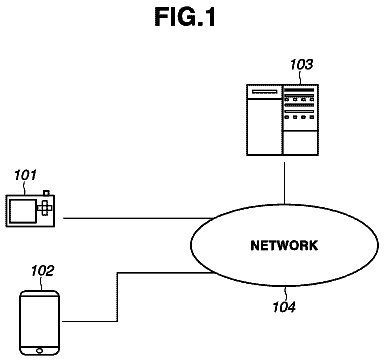
FIG. 1 is a block diagram of an information processing system according to an embodiment;
FIG. 2 is a block diagram illustrating a function configuration of an information processing device;
FIG. 3 is a diagram illustrating a data structure of a third storage;
FIG. 4 is a diagram illustrating a data structure of a first storage;
FIG. 5 is a diagram illustrating a data structure of a second storage;
FIG. 6 is a block diagram illustrating a function configuration of a management apparatus;
FIG. 7 is a diagram illustrating an example of a data structure of a sixth storage;
FIG. 8 is a flowchart illustrating a procedure of management processing;
FIGS. 9A and 9B illustrate a flowchart of a procedure of information processing; and
FIG. 10 is a hardware configuration diagram of a management apparatus and devices.
Detailed description
According to an embodiment, an information processing device is connected to a management apparatus via a network. The device includes a first receiver, an acquisition unit, an MKB processor, and an authentication unit. The first receiver is configured to receive communication information. The acquisition unit is configured to acquire a media key block from the management apparatus, in response to receipt of the communication information from a first external device not belonging to a group previously classified on a management unit basis by the management apparatus, the first external device and the information processing device being enabled to derive a first group key based on the media key block.
The MKB processor is configured to generate the first group key from a device key of the information processing device and the media key block. The authentication unit is configured to perform encrypted communication with the first external device based on a first authentication method using the first group key.
An embodiment will be explained in detail below with reference to the accompanying drawings. FIG. 1 is a block diagram illustrating an example of an information processing system 10 according to the present embodiment. The information processing system 10 includes a management apparatus 12 and a plurality of devices 19 . The management apparatus 12 and the plurality of devices 19 are connected via a network 20 . As the network 20 , any network form such as the Internet can be applied.
The management apparatus 12 is an apparatus that manages, for example, a key used for encrypted communication among the devices 19 . The devices 19 perform encrypted communication among the devices 19 .
The devices 19 are, for example, a Metering Data Management System (MDMS), a dispersed power source, a power storage apparatus, a power transmission and distribution controller, an Energy Management System (EMS), a BEMS, a HEMS, and a Smart Meter (SM).
The devices 19 are previously classified into a plurality of groups on a management unit basis by the management apparatus 12 (see dotted line G in FIG. 1 ). The management unit is, for example, a multicast unit of an MKB. That is, the group indicates a management unit by the management apparatus 12 . In other words, the group indicates a management unit into which the plurality of devices 19 is classified according to a predetermined rule. One or more devices 19 belong to each group. Furthermore, there is the device 19 not belonging to any group. The management unit is previously determined according to, for example, an installation region, an installation space and an administrator of the device 19 .
The devices 19 each have a similar configuration, but are classified into a plurality of types depending on the group to which each of the devices 19 belongs. In the present embodiment, the devices 19 include an information processing device 14 , a first external device 18 , a second external device 16 , and a third external device 17 . The information processing device 14 is the device 19 that accepts communication information from another device 19 to initiate encrypted communication. In the present embodiment, explanation will be made based on an assumption that one device 19 that belongs to a certain group is the information processing device 14 .
Among the devices 19 , the first external device 18 is a device that does not belong to any group. Among the devices 19 , the second external device 16 and the third external device 17 are the device 19 that transmits communication information to the information processing device 14 to initiate encrypted communication. The second external device 16 is the device 19 that belongs to a group different from the information processing device 14 . The third external device 17 is the device 19 that belongs to the same group as the information processing device 14 .
In the group to which the information processing device 14 belongs, a plurality of third external devices 17 A to 17 B may be included. The third external device 17 A to the third external device 17 B are collectively referred to as the third external device 17 in the explanation. In the group that is different from the group to which the information processing device 14 belongs, a plurality of second external devices 16 A to 16 C may be included. The second external device 16 A to the second external device 16 C are collectively referred to as the second external device 16 in the explanation.
In FIG. 1 , a case where classification is made into two groups is exemplified for simple explanation. However, the classification may be made into three or more groups.
FIG. 2 is a block diagram illustrating a function configuration of the information processing device 14 . Here, the second external device 16 , the third external device 17 , and the first external device 18 each have a similar function configuration to that of the information processing device 14 .
The information processing device 14 includes a first receiver 15 A, a first transmitter 15 B, a determination unit 15 C, an acquisition unit 15 D, an MKB processor 15 E, an authentication unit 15 M, a storage controller 15 G, a transmission controller 15 P, and a storage 15 I. The first receiver 15 A, the first transmitter 15 B, the determination unit 15 C, the acquisition unit 15 D, the MKB processor 15 E, the authentication unit 15 M, the transmission controller 15 P, and the storage controller 15 G may be achieved, for example, by allowing a processing device such as a CPU (Central Processor) to execute a program, that is, by software; by hardware such as an IC (Integrated Circuit); or by a combination of software and hardware.
The storage 15 I is a storage medium such as a hard disk drive (HDD), and stores various data. The storage 15 I includes a first storage 15 J, a second storage 15 K, a third storage 15 L and a fourth storage 15 N. The first storage 15 J, the second storage 15 K, the third storage 15 L and the fourth storage 15 N may be separate storage media or the like, or may be different storage areas in one storage medium.
FIG. 3 is a diagram illustrating an example of a data structure of the third storage 15 L. The third storage 15 L previously stores a communication purpose and an importance level of the communication purpose in a corresponded manner. In the present embodiment, it is assumed that another device 19 accesses the information processing device 14 for transmitting communication information for the purpose of maintenance, inspection and the like. Therefore, in the present embodiment, the explanation will be made based on an assumption that the communication purpose is, for example, basic operation confirmation, firewall (F/W) update, and data update of a key or the like, of the information processing device 14 . Regarding the importance level of a communication purpose, a higher importance level is previously assigned as the communication content has higher confidentiality and secrecy. For this reason, for example, the communication purpose “basic operation confirmation” is previously corresponded to the importance level of a communication purpose “low”. The communication purposes “F/W update” and “data update” are previously corresponded to the importance level of a communication purpose “high”.
Here, allocation of a type of communication purpose and an importance level of the corresponding communication purpose is not limited to the above-described form. For example, the third storage 15 L may store further types of communication purposes and further finely classified importance levels in a corresponded manner.
FIG. 4 is a diagram illustrating an example of a data structure of the first storage 15 J. The first storage 15 J stores type information, an importance level of a communication purpose, an authentication method, a group key, a device key, and a secret key in a corresponded manner.
The type information indicates the type of the device 19 . The type information is information indicating a relationship of belonging to a group of another device 19 with respect to the group to which the information processing device 14 belongs. Specifically, there are three types of information including first type information, second type information, and third type information. The first type information indicates a first external device that does not belong to any group. The second type information indicates the second external device 16 that belongs to a group different from the information processing device 14 . The third type information indicates the third external device 17 that belongs to the same group as the information processing device 14 .
The authentication method is previously determined for each combination of type information and an importance level of a communication purpose. The authentication method is a method of authentication by an authenticated key exchange. The authenticated key exchange includes a method based on a public key cryptosystem and a method based on a pre-shared key. In the present embodiment, as a method based on the pre-shared key, a first authentication method is employed. Also, as a method based on the public key cryptosystem, a second authentication method is employed.
The first authentication method is a publicly known method of performing authenticated key exchange (that is, mutual authentication (hereinafter, referred to as first authentication in some cases)) using a group key as a shared key. The second authentication method is authenticated key exchange (that is, mutual authentication (hereinafter, referred to as second authentication in some cases)) by a publicly known public key cryptosystem.
The authentication method stored in the first storage 15 J includes one or more authentication methods each containing at least the first authentication method. In the present embodiment, as an example, the explanation will be made based on an assumption that there are two authentication methods. One is a case of only the first authentication method, and the other is a case of a combination of the first authentication method and the second authentication method. Here, the authentication method may further have a configuration of a combination of three or more types of authentication methods.
In the present embodiment, the first storage 15 J stores the authentication method of a combination of the first authentication method and the second authentication method so as to be previously corresponded to the importance level of a communication purpose “medium” or “high”. Also, the first storage 15 J stores only the first authentication method so as to be previously corresponded to the importance level of a communication purpose “low”. As the importance level is higher, the first storage 15 J previously stores a combination of more types of authentication methods so as to be previously corresponded to the higher importance level.
The group key is a key used during encrypted communication based on the first authentication method. There are three types of group keys including a first group key, a second group key, and a third group key. The first group key is a group key used when performing encrypted communication based on the first authentication method with the first external device 18 . The second group key is a group key used when performing encrypted communication based on the second authentication method with the second external device 16 . The third group key is a group key used when performing encrypted communication based on the first authentication method with the third external device 17 . Here, the first group key, the second group key and the third group key are collectively referred to as merely the “group key”.
In the present embodiment, one type of group key is previously determined for each combination of type information and an importance level of a communication purpose. That is, the first group key, the second group key and the third group key each are further classified into a plurality of types depending on an importance level of a communication purpose.
In an example illustrated in FIG. 4 , as the first group key corresponding to the first type information, two types of first group keys are presented. Specifically, “KMT1” and “KMT2” are presented. The “KMT1” is the first group key corresponding to the importance level of a communication purpose “low”, and the “KMT2” is the first group key corresponding to the importance level of a communication purpose “high”. Also, as the second group key corresponding to the second type information, one type of second group key is presented. That is, the second group key “KALL” corresponding to the importance level of a communication purpose “medium” is presented. The “KALL” is, for example, a key shared and used in the whole area (for example, in all buildings) managed by the information processing system 10 .
Also, as the third group key corresponding to the third type information, two types of third group keys are presented. Specifically, “KG1” and “KG2” are presented. The “KG1” is the third group key corresponding to the importance level of a communication purpose “low”, and the “KG2” is the third group key corresponding to the importance level of a communication purpose “high”. The third group key is a key shared and used only in a specific device 19 in a specific group.
Here, as will be described in detail later, the first group keys corresponding to the first type information indicating the first external device 18 (see an inside of dotted line D in FIG. 4 ), among the group keys stored in the first storage 15 J, are controlled to be temporarily stored and deleted by the later-described information processing. That is, the group keys corresponding to the second type information and the third type information are previously stored in the first storage 15 J. On the other hand, the group key corresponding to the first type information (see an inside of dotted line D in FIG. 4 ) is not previously stored in the first storage 15 J, and is temporarily stored and then deleted through the later-described information processing (described in detail later).
The device key is identification information for uniquely identifying each of the devices 19 . The device key is previously determined for each of the devices 19 . The secret key is a key used during encrypted communication based on the second authentication method.
FIG. 5 is a diagram illustrating an example of a data structure of the second storage 15 K. The second storage 15 K stores a group key and a valid period in a corresponded manner. The group key is similar to the group key stored in the first storage 15 J. The valid period indicates a valid period of the corresponding group key. In the present embodiment, the explanation will be made based on an assumption that the valid period is expressed by year, month and date as well as a time period (hereinafter, referred to as a date and time). Here, the valid period may be one or a combination of some of year, month, date and time.
The second storage 15 K previously stores a group key and a valid period corresponding to the second type information and the third type information. On the other hand, a group key and a valid period corresponding to the first type information (see an inside of dotted line D in FIG. 5 ) are not previously stored in the second storage 15 K, and are controlled to be temporarily stored and then deleted by the later-described information processing.
Returning to FIG. 2 , the first receiver 15 A receives communication information from another device 19 via the network 20 . The communication information contains a device key and an importance level of a communication purpose for the device 19 that is a transmission source of the communication information. The first transmitter 15 B transmits various information to another device 19 (the third external device 17 , the first external device 18 , or the second external device 16 ) and the management apparatus 12 .
The determination unit 15 C determines which of the first external device 18 , the second external device 16 and the third external device 17 is the transmission source of the communication information received by the first receiver 15 A. The determination unit 15 C performs the determination by, for example, transmitting a group inquiry request to the management apparatus 12 , and reading a determination result received from the management apparatus 12 in response to the group inquiry request. Here, the determination method of the determination unit 15 C is not limited to this form. For example, the storage 15 I previously stores the identification information of each group and the device key of the device 19 belonging to each group, in a corresponded manner. The determination unit 15 C may perform the determination by searching the storage 15 I to determine if the device key contained in the communication information received by the first receiver 15 A belongs to the same group as the information processing device 14 , or belongs to another group, or does not belong to any group.
The acquisition unit 15 D acquires a media key block (hereinafter, referred to as an MKB) and a valid period from the management apparatus 12 , in response to receipt of communication information from the first external device 18 , the first external device 18 and the information processing device 14 being enabled to derive a first group key based on the media key block.
This MKB is an MKB that has been prepared in the management apparatus 12 from the device key of the first external device 18 and the device key of the information processing device 14 . The valid period is a valid period of the group key derived based on the MKB.
Specifically, the determination unit 15 C is assumed to have determined that the transmission source of the communication information is the first external device 18 . At this time, the acquisition unit 15 D transmits request information to the management apparatus 12 . The request information contains the device key and the importance level of a communication purpose contained in the communication information received from the first external device 18 , and the device key of the information processing device 14 . The acquisition unit 15 D receives an MKB and a valid period from the management apparatus 12 in response to the request information, to acquire the MKB and the valid period.
In the present embodiment, the acquisition unit 15 D acquires, in response to receipt of the communication information from the first external device 18 , a public key certificate of the first external device 18 in addition to the MKB and the valid period, from the management apparatus 12 .
Also, from the present embodiment, the acquisition unit 15 D acquires, in response to receipt of the communication information from the second external device 16 , a public key certificate of the second external device 16 from the management apparatus 12 .
Specifically, the determination unit 15 C is assumed to have determined that the transmission source of the communication information is the second external device 16 . At this time, the acquisition unit 15 D transmits request information to the management apparatus 12 . The request information contains the device key and the importance level of a communication purpose contained in the communication information received from the second external device 16 , and the device key of the information processing device 14 . The acquisition unit 15 D acquires a public key certificate of the second external device 16 from the management apparatus 12 in response to the request information.
The MKB processor 15 E executes MKB processing. The MKB processing is a process of generating a group key from the MKB acquired in the acquisition unit 15 D and the device key of the information processing device 14 stored in the first storage 15 J.
The storage controller 15 G controls storing and deletion of various data to and from the storage 15 I. In the present embodiment, the storage controller 15 G controls, when a first group key is generated in the MKB processor 15 E in response to receipt of the communication information from the first external device 18 , to store the first group key in the first storage 15 J so as to be corresponded to the first type information and the importance level of a communication purpose contained in the communication information. The storage controller 15 G also controls, in response to termination of encrypted communication with the first external device 18 based on the first authentication method using the first group key by the later-described processing of the authentication unit 15 M, to delete the first group key from the first storage 15 J.
The storage controller 15 G also controls, when the valid period is acquired together with the MKB from the management apparatus 12 in response to the receipt of the communication information from the first external device 18 , to store the first group key generated from the acquired MKB and the valid period in a corresponded manner in the second storage 15 K. The storage controller 15 G also controls, in response to termination of encrypted communication with the first external device 18 using the first group key by the later-described processing of the authentication unit 15 M, to delete the first group key and the valid period corresponding to the first group key from the second storage 15 K.
The authentication unit 15 M performs mutual authentication (authenticated key exchange) with another device 19 , and performs encrypted communication with the another device 19 . The authentication unit 15 M includes a first authentication unit 15 F and a second authentication unit 15 H. The first authentication unit 15 F performs authentication by the first authentication method (that is, authenticated key exchange using a group key (first authentication)), and performs encrypted communication with another device 19 . The second authentication unit 15 H performs authentication by the second authentication method (that is, authenticated key exchange by the public key cryptosystem using a public key and a secret key (second authentication)), and performs encrypted communication with another device 19 .
The transmission controller 15 P performs control when the information processing device 14 transmits communication information to another device 19 .
FIG. 6 is a block diagram illustrating a function configuration of the management apparatus 12 . The management apparatus 12 includes a second receiver 12 A, an MKB generator 12 B, an issuance unit 12 C, a second transmitter 12 D, a determining unit 12 E, a calculator 12 I, and a storage 12 F. The second receiver 12 A, the MKB generator 12 B, the issuance unit 12 C, the second transmitter 12 D, the calculator 12 I and the determining unit 12 E may be achieved, for example, by allowing a processing device such as a CPU to execute a program, that is, may be achieved by software; may be achieved by hardware such as an IC; or may be achieved by a combination of software and hardware.
The storage 12 F stores various data. The storage 12 F includes a fifth storage 12 G and a sixth storage 12 H.
The fifth storage 12 G stores a group ID of each group to which the device 19 belongs, and a device key of the device 19 belonging to the group identified by the group ID, in a corresponded manner. The fifth storage 12 G stores the device key of the device 19 that does not belong to any group, without being corresponded to a group ID.
In the present embodiment, the fifth storage 12 G previously stores one or more group IDs. Here, the group ID and the device key stored in the fifth storage 12 G may be appropriately changeable according to an operation instruction to an unillustrated operation unit by a user, a request signal indicating group addition from the device 19 , or the like.
The sixth storage 12 H stores a valid period calculation formula so as to be corresponded to each combination of type information and an importance level of a communication purpose. FIG. 7 is a diagram illustrating an example of a data structure of the sixth storage 12 H. The valid period calculation formula is a calculation formula for calculating a valid period of a group key corresponding to the combination of type information and an importance level of a communication purpose, from the present date and time. The valid period calculation formula is previously defined for each combination of type information of the device 19 and an importance level of a communication purpose. For example, the valid period calculation formula is previously defined so that as the importance level of a communication purpose is higher, the valid period becomes shorter. The valid period calculation formula is also previously defined so that the valid period becomes shorter depending on the type of the device 19 identified by type information, in the order third type information, second type information, and then first type information. Here, the valid period calculation formula is not limited to such a rule.
Returning to FIG. 6 , the second receiver 12 A receives request information and group inquiry information from the device 19 . The request information includes at least one of an MKB request and a public key certificate issuance request. The MKB request includes an MKB request instruction requesting MKB generation, the device key of the information processing device 14 , the device key of the first external device 18 , and the importance level of a communication purpose of the first external device 18 . The public key certificate issuance request includes a certificate request instruction requesting issuance of a public key certificate, the device key of the information processing device 14 , and the device key of the first external device 18 .
The group inquiry information includes an inquiry request of the group to which the device 19 belongs, the device key of the information processing device 14 that is the transmission source of the group inquiry information, and the device key of the device 19 that is the inquiry object.
The MKB generator 12 B generates an MKB, when the request information received in the second receiver 12 A contains an MKB request. Specifically, the MKB generator 12 B generates an MKB from which only the information processing device 14 and the first external device 18 are enabled to derive a first group key, using the device key of the information processing device 14 and the device key of the first external device 18 contained in the MKB request. As a method of generating the MKB, a CS method, an SD (Subset Difference) method, an LKH (Logical Key Hierarchy) method and the like are already known, and any method including such methods can be employed.
The calculator 12 I calculates, when the request information received by the second receiver 12 A contains an MKB request, the valid period of the first group key derived based on the MKB generated in the MKB generator 12 B. The calculator 12 I reads the device keys of the information processing device 14 and the first external device 18 from the MKB request. Then, the calculator 12 I searches the fifth storage 12 G for the group corresponding to the read device keys. Thus, the calculator 12 I determines if the type information of the first external device 18 is the first type information, the second type information, or the third type information. Next, the calculator 12 I searches the fifth storage 12 G for the valid period calculation formula corresponding to the determined type information and the importance level of a communication purpose contained in the MKB request. Furthermore, the calculator 12 I calculates the valid period of the first group key generated in the MKB generator 12 B, using the valid period calculation formula searched for and the present date and time.
The issuance unit 12 C issues a public key certificate, when the request information received in the second receiver 12 A contains a public key certificate issuance request. The issuance unit 12 C is a certificate authority that issues a public key necessary for authentication between the information processing device 14 and the first external device 18 which are identified by the device keys contained in the public key certificate issuance request.
The determining unit 12 E determines, in response to receipt of the group inquiry information in the second receiver 12 A, if the device 19 identified by the device key contained in the group inquiry information is the third external device 17 , the second external device 16 , or the first external device 18 . Specifically, the determining unit 12 E searches the fifth storage 12 G for the group ID corresponding to the device key of the device 19 as the inquiry object. The device key is contained in the group inquiry information. Thus, the determining unit 12 E determines whether or not the device 19 is the first external device 18 that does not belong to any group. The determining unit 12 E also determines whether or not the group ID of the group to which the device 19 belongs coincides with the group ID of the group to which the information processing device 14 belongs. Thus, the determining unit 12 E determines if the device 19 as the inquiry object is the third external device 17 which belongs to the same group as the information processing device 14 , or the second external device 16 which belongs to a different group from the information processing device 14 .
Next, a management process to be executed in the management apparatus 12 will be explained. FIG. 8 is a flowchart illustrating a procedure of the management process to be executed in the management apparatus 12 .
The second receiver 12 A determines whether or not request information is received (step S 100 ). When the request information is received (step S 100 : Yes), the MKB generator 12 B determines whether or not an MKB request is contained in the request information (step S 102 ). When the MKB request is not contained in the request information (step S 102 : No), the process proceeds to the later-described step S 108 .
When the MKB request is contained in the request information received in step S 100 (step S 102 : Yes), the MKB generator 12 B performs an MKB generation process (step S 104 ). The MKB generator 12 B generates an MKB from which only the information processing device 14 and the first external device 18 are enabled to derive the first group key, using the device keys of the information processing device 14 and the first external device 18 contained in the MKB request.
Next, the calculator 12 I calculates the valid period of the first group key, using the device keys of the information processing device 14 and the first external device 18 contained in the MKB request, and an importance level of communication information (step S 106 ).
Next, the issuance unit 12 C determines whether or not a public key certificate issuance request is contained in the request information (step S 108 ). When the public key certificate issuance request is determined to be not contained (step S 108 : No), the process proceeds to the later-described step S 112 . When the public key certificate issuance request is determined to be contained (step S 108 : Yes), the issuance unit 12 C issues a public key certificate (step S 110 ).
Next, the second transmitter 12 D prepares response information containing the MKB generated in the above step S 104 , the valid period calculated in step S 106 , and the public key certificate issued in the above step S 110 . Then, the second transmitter 12 D transmits the prepared response information to the information processing device 14 as the transmission source of the request information received in the above step S 100 , and to the second external device 16 or the first external device 18 identified by the device key contained in the request information (step S 112 ). Then, the present routine is terminated.
Here, when processing by any one of step S 104 , step S 106 and step S 110 is not performed, the second transmitter 12 D transmits response information which does not contain the information to be obtained by each processing (any one of the MKB, the valid period and the public key certificate).
On the other hand, when a negative determination is made in the above step S 100 (step S 100 : No), the second transmitter 12 D determines whether or not group inquiry information is received (step S 114 ). When a negative determination is made in step S 114 (step S 114 : No), the present routine is terminated. When a positive determination is made in step S 114 (step S 114 : Yes), the determining unit 12 E determines if the device 19 identified by the device key contained in the group inquiry information is the third external device 17 , the second external device 16 , or the first external device 18 (step S 116 ).
Next, the second transmitter 12 D transmits the determination result determined in the determining unit 12 E, to the information processing device 14 as the transmission source of the group inquiry information received in the above step S 114 (step S 118 ). The determination result contains any one of the third type information indicating the third external device 17 , the second type information indicating the second external device 16 , and the first type information indicating the first external device 18 . Then, the present routine is terminated.
Next, information processing to be executed in the information processing device 14 will be explained. FIGS. 9A and 9B illustrate a flowchart of a procedure of the information processing to be executed in the information processing device 14 .
First, the first receiver 15 A determines whether or not communication information is received (step S 200 ). When the communication information is determined to be received (step S 200 : Yes), the determination unit 15 C determines whether or not the transmission source of the communication information is the third external device 17 (step S 202 ). In the present embodiment, the determination unit 15 C transmits a group inquiry request to the management apparatus 12 . Then, the determination unit 15 C determines whether or not the third type information is contained in the determination result received from the management apparatus 12 in response to the group inquiry request, thereby to perform the determination of step S 202 .
When the determination unit 15 C determines that the transmission source of the communication information is the third external device 17 (step S 202 : Yes), the authentication unit 15 M selects an authentication method (step S 204 ). In step S 204 , the authentication unit 15 M reads the importance level of a communication purpose contained in the communication information received in step S 200 . The authentication unit 15 M reads the authentication method corresponding to the read importance level of a communication purpose and the third type information as the type information of the third external device 17 determined in the determination unit 15 C, from the first storage 15 J. Accordingly, the authentication unit 15 M selects an authentication method.
Next, the authentication unit 15 M reads the third group key corresponding to the importance level of a communication purpose read in step S 204 and the third type information as the type information of the third external device 17 determined in the determination unit 15 C, from the first storage 15 J (step S 205 ).
Next, the authentication unit 15 M determines whether or not the authentication method selected in step S 204 is only the first authentication method (step S 206 ). When the authentication method selected in step S 204 is only the first authentication method (step S 206 : Yes), the process proceeds to step S 208 .
For example, the authentication method selected by the authentication unit 15 M is assumed to have been the “first authentication method” corresponding to the third type information and the importance level of a communication purpose “low” in the first storage 15 J (see FIG. 4 ). In this case, the authentication unit 15 M makes a positive determination in step S 206 .
Next, the authentication unit 15 M determines whether or not the reception date and time of the communication information in the above step S 200 is within the valid period of the third group key read in step S 205 (step S 208 ). The authentication unit 15 M reads the valid period corresponding to the third group key in the second storage 15 K, and performs the determination.
The description continues in the full USPTO document.
 Lapsed, fee not paid13 drawings