Background
1. Technical field
The present disclosure relates to a printing system and a printing device.
2. Related art
Systems that print receipts using a printer connected to a device such as a computer are known from the literature. See, for example, Japanese Unexamined Patent Appl. Pub. JP-A-2009-187078, and JP-A-2012-123597. The system disclosed in JP-A-2012-123597 has a printer that prints receipts and a printer that prints coupons, and prints receipts and coupons using plural printers.
However, in order to print using plural printers as described in JP-A-2012-123597 in a system that controls a single printer as described in JP-A-2009-187078, the configuration may be changed by adding another printer, for example. When the configuration of printers is changed, the configuration of the control device must also be changed to match the configuration of printers. For example, in order to detect an error in any of the printers and then report the error or print again, the control device must be reconfigured by adding the ability to control a printer that was added by changing the printer configuration. As a result, major changes must be made to the entire system, and modifying the system configuration is therefore not simple.
Summary
The disclosure is a printing system including: a host device configured to transmit data; a first printing device including a connection unit configured to receive the data transmitted by the host device and to transmit the data, and a first print unit configured to print; and a second printing device including a second print unit configured to receive the data transmitted by the connection unit of the first printing device and to print based on the data, and an output unit configured to send a printing result by the second printing device to the connection unit of the first printing device. The first printing device includes a detection unit configured to detect if the printing result of the second printing device received by the connection unit is an error, and a storage unit configured to store the data transmitted to the second printing device when the detection unit detects the error in the printing result of the second printing device, and a control unit configured to determine if a predetermined specific condition is met.
In such a printing system, the control unit sends the data stored in the storage unit when the detection unit detects the error in the printing result of the second printing device to the second printing device when the specific condition is met; and the second printing device prints based on the data transmitted as controlled by the control unit.
In a printing system, the first printing device generates print data based on the data transmitted by the host device, and sends the generated print data by the connection unit to the second printing device.
In a printing system, a data input device is connected to the host device and configured to acquire identification information. The data transmitted by the host device includes the identification information acquired by the data input device; and the control unit determines that the specific condition is met when the host device transmits second data different from the data, and the identification information contained in the second data received by the connection unit matches the identification information contained in the data.
In a printing system, when the identification information contained in the second data matches the identification information contained in the data, the first printing device sends the data and the second data to the second printing device; and the second printing device prints based on the data and the second data.
In a printing system, when the detection unit detects that the printing result is an error, the control unit of the first printing device controls printing the data stored in the storage unit of the first printing device by the first print unit.
In a printing system, the control unit stores the data in the storage unit when the data could not be printed by the first print unit.
A printing system includes a storage device connected to the first printing device; and the control unit controls the connection unit to transmit the print data stored in the storage unit to the storage device.
In a printing system, the data transmitted by the host device contains transaction information; the first printing device includes a print data acquisition unit configured to acquire print data based on the transaction information contained in the data; and the second print unit of the second printing device prints a coupon based on the print data transmitted by the connection unit.
The disclosure is a printing device comprising: a connection unit configured to transmit received data and to receive a printing result for the transmitted data; a detection unit configured to detect if the printing result received by the connection unit is an error; a storage unit configured to store the data when the detection unit detects the error in the printing result; a print unit configured to print; and a control unit configured to determine if a predetermined specific condition is met. The control unit controls the connection unit to transmit the data that is stored in the storage unit when the detection unit detects the error in the printing result when the specific condition is met.
The control unit may include a print data acquisition unit configured to acquire print data based on the transaction information when the data contains transaction information.
Brief description of the drawings
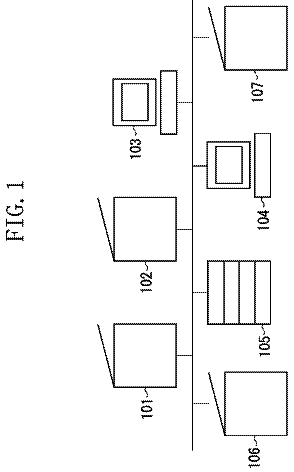
FIG. 1 is a block diagram of a POS system according to a preferred embodiment of the disclosure.
FIG. 2 is a function block diagram of devices in the POS system.
FIG. 3 is a flowchart showing the operating sequence of parts in the preferred embodiment of the disclosure.
FIG. 4 is a flow chart showing the reprint process.
Description of embodiments
A preferred embodiment of the present disclosure is described below with reference to the accompanying figures.
FIG. 1 shows the configuration of a POS system 1 according to a preferred embodiment of the disclosure, and FIG. 2 is a function block diagram of devices in the POS system 1 . The configuration of the POS system 1 is described first below with reference to FIG. 1 and FIG. 2 .
The POS (point of sale) system 1 described as a printing system according to the disclosure includes a first printer 60 (printing device, first printing device), a POS terminal 10 (host device), that runs an application program to generate documents and output print instructions, and a second printer 20 (second printing device) that prints according to the print instructions output by the POS terminal 10 .
The first printer 60 is connected through USB cable 1 A to the POS terminal 10 , and the second printer 20 is connected through USB cable 1 B to the first printer 60 . In other words, the first printer 60 and second printer 20 are connected to the POS terminal 10 in a daisy chain.
The POS terminal 10 and first printer 60 are both also connected to an in-store LAN 100 . A third printer 30 (third printing device) is also connected to the in-store LAN 100 , and the POS terminal 10 , third printer 30 , and first printer 60 can communicate with each other through the in-store LAN 100 .
The POS system 1 is used in a shopping center, department store, or other retail business, and is part of a POS management system that is used to manage product marketing, product inventory, and product sales in the business.
The POS terminal 10 is a device that runs a transaction process related to a purchase transaction by a customer and outputs transaction result information at a particular checkout counter in the business. A POS terminal 10 may be installed at each of plural checkout counters.
The POS terminal 10 includes a control unit 11 that controls other parts of the POS terminal 10 , and a storage unit 12 , input unit 13 , and display unit 14 connected to the control unit 11 . The POS terminal 10 has a LAN interface 17 or USB interface 18 , or both, as interfaces for connecting external devices.
The control unit 11 includes a CPU and memory such as RAM or ROM, and controls other parts of the POS terminal 10 and executes the functions of a POS terminal 10 by running a program stored in the storage unit 12 . The control unit 11 has an application execution unit 11 A that runs a POS application program and executes a transaction process and receipt printing function, and a device driver execution unit 11 B that runs a device driver program and controls a printer connected through the LAN interface 17 or USB interface 18 .
The storage unit 12 stores the programs executed by the control unit 11 and data related to those programs.
The input unit 13 connects to an input device such as a keyboard for operating the POS terminal 10 , and outputs data input from the input device to the control unit 11 .
The display unit 14 displays data processed by the control unit 11 and the operating status of the POS terminal 10 , for example, on an LCD or other type of display screen. The display unit 14 could include a customer display that displays the purchased products and price information for the customer when the POS terminal 10 executes the transaction process.
The LAN interface 17 has an Ethernet (R) connector or IEEE 802.11 wireless communication circuit, connects to the in-store LAN 100 , and sends and receives data with other devices over the in-store LAN 100 .
The USB interface 18 includes a USB connector and interface circuit conforming to the USB standard, and handles data communication with the second printer 20 and first printer 60 .
A card reader 19 (data input device) connects to the USB interface 18 . The card reader 19 reads information from a card such as a magnetic stripe card to which information is magnetically recorded, or a contactless smart card that has a chip that stores information and can transmit information by radio frequency communication, and outputs the read information to the POS terminal 10 . The card reader 19 may read information by radio communication with the RF communication circuit in a cell phone or other mobile terminal, or by optically reading information from a card medium having information recorded as text or a barcode, for example. Using the card reader 19 , the POS system 1 captures member information (such as a customer number) identifying a particular customer from the customer or member card of the person making a purchase. In other words, member information is assigned to a customer that has previously registered as a member, and individual customers can be identified by this member information.
A barcode scanner, electronic cash drawer, or other devices can also connect to the USB interface 18 , but are not shown in the figure.
The POS terminal 10 may also have an RS-232C or other interface in addition to the LAN interface 17 and USB interface 18 .
The application execution unit 11 A executes a transaction process related to a product sale based on information input from the input unit 13 or the barcode scanner or other input device connected to USB interface 18 , for example. The transaction process includes registering the products purchased by a customer, calculating the total price, registering the amount received, and calculating the amount of change due. Information read from the product barcode, or a product code, is input during the transaction process to the application execution unit 11 A. The application execution unit 11 A queries the store server 101 based on the input information, and acquires the product name and product price from a product database (not shown) maintained on the store server 101 .
The application execution unit 11 A outputs data to be printed and a print instruction to print a content of the transaction as a receipt after the transaction process is completed. If member information was read by the card reader 19 , the member information is contained in the print data output by the application execution unit 11 A, and the member information is also printed on the receipt.
The application execution unit 11 A sends the result of the transaction process and/or data compiling the results of transaction processes during a specific period of time through the in-store LAN 100 to the store server 101 . If member information was captured by the card reader 19 , the application execution unit 11 A sends the transaction process results linked to the member information to the store server 101 . The store server 101 acquires the data sent by the POS terminal 10 , acquires and compiles data sent by each POS terminal 10 when multiple POS terminals 10 are connected to the store server 101 , and stores the data in a storage device not shown. When member information is contained in the data received from the POS terminal 10 , the store server 101 may also store the data relationally to the member information. The store server 101 could also send the stored data to the data center server 111 at predetermined times.
The device driver program run by the device driver execution unit 11 B is compatible with the device connected through the LAN interface 17 , or the device connected through the USB interface 18 . More specifically, the device driver execution unit 11 B in this embodiment is compatible with the second printer 20 , and runs a device driver program that causes the second printer 20 to print a receipt. The device driver execution unit 11 B acquires the print instruction and data output by the application execution unit 11 A, generates a print command and print data for printing the output data according to the received print instruction, and outputs the print command and print data to an external device. The interface to which the target device (the device to control) is connected is set in the device driver execution unit 11 B. The device driver execution unit 11 B outputs the print command and print data (print job) to the LAN interface 17 or USB interface 18 , and more specifically to the interface to which the second printer 20 is connected.
The second printer 20 is connected through the first printer 60 to the USB interface 18 in this embodiment, but the device driver program run by the device driver execution unit 11 B does not need to be compatible with the first printer 60 . The device driver execution unit 11 B executes a device driver program compatible with the second printer 20 , and outputs print commands and print data compatible with the second printer 20 . The USB interface 18 transmits the print commands and print data sent from the device driver execution unit 11 B through a USB cable 1 A conforming to the USB standard. The POS terminal 10 therefore operates in the same way as when the second printer 20 is connected to the USB interface 18 , and does not need a function for controlling the first printer 60 .
The second printer 20 includes a USB interface 22 and a second printer control unit 24 that receives commands through the USB interface 22 . The second printer control unit 24 receives print command and print data through the USB interface 22 , and executes the received print command and controls the second printer print unit 25 to print. The second printer control unit 24 also sends status information describing the current operating status from the USB interface 22 when printing is successful, when an error occurs, and when a status report request is received from the USB interface 22 .
The second printer print unit 25 includes a printhead 26 that forms characters and images on roll paper, cut-sheet paper, or other print medium as controlled by the second printer control unit 24 ; a paper feed motor 27 that conveys the print medium as controlled by the second printer control unit 24 ; and a cutter unit 28 that cuts the print medium as controlled by the second printer control unit 24 .
The second printer 20 is a thermal printer with a thermal printhead that applies heat to thermal paper as the printhead 26 .
If data (text data) that specifies the characters to be printed using character codes is included in the print data received by the USB interface 22 , the second printer control unit 24 reads the font data corresponding to the character codes from a storage unit in the second printer 20 , and prints with the second printer print unit 25 .
Because the device driver execution unit 11 B generates print data according to the specifications of the second printer 20 as described above, when characters are contained in the data output by the application execution unit 11 A, the device driver execution unit 11 B generates and sends print data containing the character codes for those characters to the USB interface 18 .
The print commands and print data output by the POS terminal 10 from the USB interface 18 are first received by the first printer 60 , and then sent by the first printer 60 to the second printer 20 . The first printer 60 thus relays the data output by the POS terminal 10 .
The first printer 60 has a function for relaying data sent from the POS terminal 10 to the second printer 20 . The first printer 60 also has a function for acquiring and sending to the second printer 20 print commands and print data for coupons related to the receipt when the POS terminal 10 sends print commands and print data containing transaction information.
In this instance, the first printer 60 prints a receipt based on the print command and print data the POS terminal 10 sent to the second printer 20 , and causes the second printer 20 to print the coupon.
The second printer 20 receives print commands and print data from the first printer 60 , but operates in this event based on the received print commands and print data in the same way as when the second printer 20 is connected directly through a USB cable to the POS terminal 10 instead of through the first printer 60 . Providing the second printer 20 with a function for operating as controlled by the first printer 60 is therefore not necessary.
The POS system 1 also has a dedicated third printer 30 for printing coupons. The third printer 30 has a LAN interface 33 that connects to the in-store LAN 100 , and a third printer control unit 34 that receives print data sent by the POS terminal 10 through the LAN interface 33 . The third printer control unit 34 controls printing coupons based on the received print data.
For example, the third printer 30 receives the print data sent by the POS terminal 10 to the third printer 30 , analyzes the text data (character codes) contained in the received data, and detects a predetermined character or string in the text data. If the predetermined character or string is detected, the third printer control unit 34 accesses the store server 101 through the LAN interface 33 , and retrieves data for printing a coupon corresponding to the detected character or string.
The third printer control unit 34 prints the print data for a coupon acquired from the store server 101 with the print unit 35 .
The third printer print unit 35 includes a printhead 36 that prints characters and images on roll paper, cut-sheet paper, or other print medium as controlled by the third printer control unit 34 ; a paper feed motor 37 that conveys the print medium as controlled by the third printer control unit 34 ; and a cutter unit 38 that cuts the print medium as controlled by the control unit 34 .
The first printer 60 includes a first printer print unit 71 (print unit) that prints on roll paper or cut-sheet paper, print operation control unit 70 (print control unit) that controls the printing operation of the first printer print unit 71 , and a data processing unit 61 .
The data processing unit 61 includes a control unit 62 (control unit), a LAN interface 63 , a USB interface 64 , a storage unit 65 , and a communication unit 69 (first printer communication unit). The first printer control unit 62 includes CPU, RAM, ROM, and other peripheral circuits and controls parts of the first printer 60 by running a program stored in the storage unit 65 .
The LAN interface 63 has an Ethernet® connector or IEEE 802.11 wireless communication circuit, can connect to the in-store LAN 100 or other network, and exchanges data with other devices. The LAN interface 63 also has a plurality of connectors 63 A, 63 B, and can exchange data with each of the other devices connected to the connectors. In this embodiment, for example, the LAN interface 63 exchanges data with the POS terminal 10 , third printer 30 , store server 101 , and other devices connected through the in-store LAN 100 as controlled by the communication unit 69 .
The LAN interface 63 also functions as a network hub with a relay function, and can output data received through either connector 63 A, 63 B from the other connector.
The USB interface 64 includes a USB connector and interface circuit conforming to the USB standard, and handles data communication with the POS terminal 10 . The USB interface 64 has a plurality of USB connectors that can connect to a USB cable, and in this embodiment has two connectors 64 A, 64 B.
In this embodiment, connector 64 A is a type-B female connector (receptacle) with the shape and pins specified by the USB standard for a target device connector, and can connect to a standard USB cable. The USB interface 64 has the functions of a USB device controller that operates as a target device as defined in the USB standard, reports the USB device class ID and device ID to the device connected through a USB cable to connector 64 A, and communicates according to the control data sent from the connected device. The connector 64 A may be a mini-USB B-connector or a micro-USB B-connector.
The other connector 64 B of the USB interface 64 is a type-A female connector with the shape and pins specified by the USB standard for a host device connector, and can connect to a standard USB cable. The USB interface 64 has the functions of a USB host controller that operates as a host device as defined by the USB standard, operates as a host to the connected device when a device classified as a target device by the USB standard is connected to connector 64 B, the USB interface 64 , and can recognize the device and communicate with the device. The connector 64 B may be a mini-USB A-connector or a micro-USB A-connector. The number of connectors 64 B in the USB interface 64 is not specifically limited.
Note that a target device as used herein is an input/output device that connects to a device operating as a host, outputs data to the host as controlled by the host, or outputs data input from the host.
A host as used herein is a computer or other control device that sends commands controlling the I/O devices to the I/O devices operating as target devices.
The USB interface 64 functions as a connection unit connected to the POS terminal 10 and second printer 20 in this embodiment, but when the POS terminal 10 is connected to the first printer 60 through the in-store LAN 100 , and the second printer 20 is connected to the first printer 60 through the USB interface 64 , the LAN interface 63 and USB interface 64 function as connection units. When the POS terminal 10 sends print commands and print data through the in-store LAN 100 to the third printer 30 , the LAN interface 63 functions as a connection unit.
The first printer control unit 62 acquires the print command and print data sent by the POS terminal 10 through the LAN interface 63 or USB interface 64 , whichever is used as the connection interface, and based on the acquired print data, sends the data for printing to the print operation control unit 70 .
The print operation control unit 70 controls the first printer print unit 71 based on the print data sent by the first printer control unit 62 , and prints on the roll paper, cut-sheet paper, or other print medium.
The first printer print unit 71 includes a printhead 72 that forms characters and images on the print medium, a paper feed motor 73 that conveys the print medium, and a cutter unit 74 that cuts the print medium, and these units operate as controlled by the print control unit 70 (first printer print control unit).
The data processing unit 61 may be an inkjet printer or thermal printer, for example. When the first printer 60 is an inkjet printer, the first printer 60 has an inkjet printhead 72 that ejects four colors of ink, CMYK, onto the printing surface of the print medium to form characters and images. The printhead 72 could be a printhead that uses two colors of ink, red and black, or a printhead that uses the four CMYK colors plus additional colors of ink. When the first printer 60 is a thermal printer, the printhead 72 is a thermal head that applies heat to the printing surface of the print medium.
When configured as an inkjet printer, the first printer 60 is suited to printing graphic data (image data). In this embodiment the first printer control unit 62 generates image data by page unit specifying the position, size, and color of the characters and images printed on the print medium, and sends this image data to the print control unit 70 .
When the first printer 60 is a thermal printer, the first printer 60 is suited to printing text data. In this configuration the first printer control unit 62 sends data containing the character codes of the characters to print on the print medium to the print operation control unit 70 . The print operation control unit 70 then reads the font data corresponding to the character codes from a storage unit not shown of the print operation control unit 70 , and controls the first printer print unit 71 to print.
When a problem with a part of the first printer print unit 71 is detected, or a problem in a process executed by the print operation control unit 70 is detected, the print operation control unit 70 reports an error to the first printer control unit 62 . The first printer control unit 62 may also be configured so that it can communicate with the print operation control unit 70 to detect a problem in the print operation control unit 70 or first printer print unit 71 .
The first printer control unit 62 includes a print data acquisition unit 62 A that acquires print data; a detection unit 62 B that detects errors in the second printer 20 and print operation control unit 70 ; an error control unit 62 C (reporting unit) that controls reporting errors to the POS terminal 10 when the detection unit 62 B detects an error; a substitute printing control unit 62 D that controls a substitute printing operation that substitutes for the second printer 20 or print operation control unit 70 in which an error was detected; an output unit 62 E that sends print commands and print data; and a reprint control unit 62 F.
The print data acquisition unit 62 A acquires the print commands and print data sent by the POS terminal 10 to the second printer 20 . When the POS terminal 10 is connected to the USB interface 64 as shown in FIG. 1 and FIG. 2 , the print data acquisition unit 62 A receives and acquires the print data by means of the USB interface 64 through the communication unit 69 .
When the LAN interface 63 is connected to the in-store LAN 100 or other network, the print data acquisition unit 62 A can receive by means of the communication unit 69 print data sent by the POS terminal 10 over the network to another printer. In this event, the communication unit 69 controls the LAN interface 63 , and can also receive other data than data addressed to the network address assigned to the LAN interface 63 . Based on the network address assigned to the received data, the communication unit 69 extracts the print data sent to the target printer from the received data.
The print data acquisition unit 62 A temporarily stores the print command and print data sent from the POS terminal 10 to the storage unit 65 , and passes the data to the second printer 20 .
The print data acquisition unit 62 A acquires new print data based on the print data received by the communication unit 69 . More specifically, the print data acquisition unit 62 A can acquire print data for a coupon based on the receipt print data sent by the POS terminal 10 to the second printer 20 . For example, the print data acquisition unit 62 A interprets the text data (character codes) contained in the print data sent from the POS terminal 10 , and detects a predetermined character or string from this text data. When the predetermined character or string is detected, the print data acquisition unit 62 A controls the communication unit 69 , accesses the store server 101 through the LAN interface 63 , and acquires data for printing based on the detected character or string. The print data acquired by the print data acquisition unit 62 A here is print data for a coupon.
For example, when an error occurs in the second printer 20 , and the second printer 20 outputs an error report, the detection unit 62 B detects an error in the second printer 20 as a result of receiving this error report.
The detection unit 62 B also detects errors in the print operation control unit 70 by communicating command data with the print operation control unit 70 , and receiving an error report output by the print operation control unit 70 when a problem occurs in the first printer print unit 71 or the control operation of the print operation control unit 70 .
The error control unit 62 C sends an error report to the POS terminal 10 when the detection unit 62 B detects an error. The conditions for sending a report to the POS terminal 10 can be preset in the error control unit 62 C. The storage unit 65 also stores data setting the conditions for the error control unit 62 C to report an error to the POS terminal 10 .
Based on the data stored in the storage unit 65 , the error control unit 62 C determines if the error detected by the detection unit 62 B meets a condition for sending an error report, controls the communication unit 69 based on this decision, and can send an error report from the USB interface 64 to the POS terminal 10 . This error report could relay an error report command received from the second printer 20 through the USB interface 64 , or an error report command generated by the error control unit 62 C. The error report could report that an error occurred, or report that the print job output by the POS terminal 10 is unfinished or cannot be executed.
When printing by the first printer print unit 71 is completed (successful), the error control unit 62 C could also report that printing was successful to the POS terminal 10 .
When the detection unit 62 B detects a second printer 20 error, the substitute printing control unit 62 D executes a substitute printing process to print with the first printer print unit 71 instead of the second printer 20 . More specifically, when the detection unit 62 B detects a second printer 20 error, the substitute printing control unit 62 D outputs the print commands and print data sent to the second printer 20 by the POS terminal 10 from the output unit 62 E to the print operation control unit 70 , and prints a coupon with the print operation control unit 70 . The substitute printing control unit 62 D could alternatively use the third printer 30 to print the coupon to be printed with the second printer 20 . In this instance, the substitute printing control unit 62 D outputs the print commands and print data sent to the second printer 20 by the POS terminal 10 from the output unit 62 E to the third printer 30 .
When an error occurs in the second printer 20 and the first printer 60 could not print the print data sent to the second printer 20 , the reprint control unit 62 F temporarily stores the data for that print job (print data) in the storage unit 65 , and when a specific condition is then met, sends the print job data stored in the storage unit 65 to the second printer 20 and prints with the second printer 20 . The print job data as used here includes the print commands and print data.
A reprint storage unit 65 A is included in the storage area of the storage unit 65 as shown in FIG. 2 . The reprint storage unit 65 A stores print job data as controlled by the reprint control unit 62 F. The reprint storage unit 65 A can also store data for plural print jobs.
Whether or not to reprint a job can be set in the reprint control unit 62 F separately for the print operation control unit 70 and the second printer 20 . For example, print jobs that are printed by the print operation control unit 70 could be reprinted, while print jobs that are printed by the second printer 20 are not reprinted.
Conditions for causing the reprint control unit 62 F to print include conditions
to
below.
A second printer 20 error occurred.
The substitute printing control unit 62 D is set to not substitute print, and a second printer 20 error was cleared.
The POS terminal 10 output a print command and print data, and member information contained in the print data is the same as the member information contained in data stored in the reprint storage unit 65 A.
The reprint control unit 62 F determines that conditions
and
have been met when the detection unit 62 B determines based on an error report sent by the second printer 20 that the error was resolved and the printer returned to the normal operating state.
When condition
is set, if data for plural print jobs is stored in the reprint storage unit 65 A, the reprint control unit 62 F determines if member information contained in the data for each print job matches the member information contained in the print data sent by the POS terminal 10 , and reprints any print job containing matching member information.
Data describing settings content, that is, whether or not to reprint and the specific content related to setting a specific condition, is stored in the storage unit 65 . Operation of the reprint control unit 62 F can also be set by combining plural conditions.
To print the data for a print job stored in the reprint storage unit 65 A when a specific condition is determined met, the reprint control unit 62 F sends the print job data to the second printer 20 and deletes the data for the transmitted print job from the reprint storage unit 65 A.
If an error occurs while printing after the reprint control unit 62 F sends print job data for reprinting to the second printer 20 , another function of the reprint control unit 62 F stores the print command and print data in the reprint storage unit 65 A. Because this enables reprinting again after an error occurs during reprinting, printing can be reliably completed and the same data is not duplicated in the reprint storage unit 65 A. The reprint control unit 62 F can thus avoid duplicating data by deleting the data from the reprint storage unit 65 A after outputting print job data read from the reprint storage unit 65 A.
Another method of avoided data duplication is to regularly execute a process of comparing print job data stored in the reprint storage unit 65 A to detect duplicates. This method is particularly effective when unique identification information (such as a receipt number) is contained in the data for each print job.
The first printer 60 has a mechanical assembly embodying the first printer print unit 71 , a main circuit board not shown to which the print operation control unit 70 is disposed, and the data processing unit 61 as a discrete circuit board separate from the main circuit board. More specifically, the first printer control unit 62 , LAN interface 63 , USB interface 64 , storage unit 65 , and communication unit 69 are mounted on a circuit board separate from the main board, and connect to the print operation control unit 70 through an inter-board interface.
FIG. 3 is a sequence diagram showing the operation of parts of the POS system 1 , column (A) showing the operation of the POS terminal 10 , (B) showing the operation of the first printer 60 , and (C) showing the operation of the second printer 20 . FIG. 3 describes operation when an error is detected when the second printer 20 prints a receipt.
When the application execution unit 11 A runs the POS application program, executes a transaction process and outputs a print instruction for a receipt (step S 11 ), the device driver execution unit 11 B generates a print command and print data for the second printer 20 (step S 12 ), and sends the generated print command and print data from the USB interface 18 to the first printer 60 (step S 13 ).
The print data acquisition unit 62 A of the first printer 60 receives the print command and print data sent from the POS terminal 10 through the communication unit 69 and the USB interface 64 , and temporarily stores the received command and data in the storage unit 65 (step S 21 ).
The print data acquisition unit 62 A then analyses the print data stored in the storage unit 65 (step S 22 ), selectively acquires the appropriate data from the print data for coupon printing previously stored in the storage unit 65 , and generates coupon print data (print command and print data) (step S 23 ). Data for coupon printing could be previously stored in the storage unit 65 of the first printer 60 , and the print data acquisition unit 62 A could selectively acquire data with a high correlation to the print data sent from the POS terminal 10 from the stored coupon print data. Further alternatively, the print data acquisition unit 62 A could access the store server 101 to acquire the the data for printing a coupon.
The reprint process is then executed (step S 24 ) based on the member information contained in the print data received in step S 21 . This reprint process is described below with reference to FIG. 4 .
The print data acquisition unit 62 A then sends the generated print command and print data from the USB interface 64 to the second printer 20 (step S 25 ). When print command and print data to be sent to the second printer 20 is acquired in the reprint process in step S 24 , that print command and print data is also sent to the second printer 20 in step S 25 .
The second printer control unit 24 of the second printer 20 receives the paper conveyance device through the USB interface 22 (step S 41 ), and prints a coupon (step S 42 ).
If an error occurs in the second printer 20 (step S 43 returns YES), the second printer control unit 24 generates an error report, which is a command reporting that an error occurred (step S 44 ), and sends the error report from the USB interface 22 (step S 45 ). An error in the second printer 20 could be the second printer print unit 25 running out of paper, overheating, a mechanical failure, or a software error in the second printer control unit 24 , for example. If the second printer 20 finished printing normally (step S 43 returns NO), the second printer control unit 24 sends a printing success report from the USB interface 22 .
The detection unit 62 B of the first printer 60 receives the report sent by the second printer 20 through the USB interface 64 (step S 26 ), and based on the received report determines if an error occurred in the second printer 20 (step S 27 ).
If an error occurred (step S 27 returns YES), the substitute printing control unit 62 D determines if the first printer print unit 71 can be used to print instead of the second printer 20 (step S 28 ). The substitute printing control unit 62 D can include the third printer 30 connected through the in-store LAN 100 as a substitute printer in addition to the first printer print unit 71 .
The description continues in the full USPTO document.
 Lapsed, fee not paid11 drawings