Lapsed, fee not paid8 drawings
Software & Apps · US 9,764,243 B2
Integrating topic of study content into video games
Integrating topic of study content into video games is provided.
US 9,766,695 B2 · Assignee: NEC Coproration · Inventors: Kobayashi; Yoshikazu
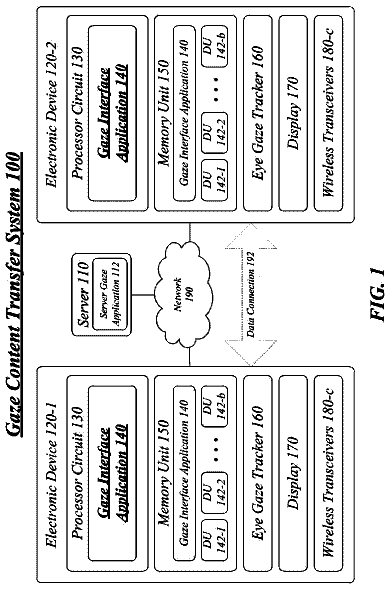
Sheet 1 of 47 from the published document. All sheets in the USPTO PDF
An apparatus of this invention is directed to an information processing apparatus that continues detection of an instruction of an operator even if the reliability of instruction information detection has lowered due to a device fault, degradation of the environment, and the like. The information processing apparatus includes an instruction history accumulator that accumulates a history of at least two different pieces of instruction information detected from a user and an instruction of the user in association with each other, an instruction information receiver that receives the instruction information, an instruction recognizer that recognizes the instruction of the user from the received instruction information by referring to the history of the instruction information, a reliability determiner that determines the reliability of the received instruction information by referring to the history of the instruction information, and an instruction information changer that changes the instruction information to be received to another instruction information by referring to the history of the instruction information when the reliability determiner determines that the reliability of the received instruction information has lowered.
In the above technical field, patent literature 1 discloses a technique of determining an instruction of an operator from an utterance and a nod or a wink. Patent literature 2 discloses a technique of determining an utterance of an operator from an audio signal and a myoelectric signal. CITATION LIST Patent Literature Patent literature 1: Japanese Patent Laid-Open No. 04-372012 Patent literature 2: Japanese Patent Laid-Open No. 2003-316387 SUMMARY OF THE INVENTION Technical Problem In the techniques described in the above literatures, however, if the reliability of instruction information detection has lowered due to a device fault, degradation of the environment, and the like, it is impossible to continue detection of the instruction of the operator. The present invention enables to provide a technique of solving the above-described problem. Solution to Problem One aspect of the present
1 of 47 drawing sheets so far from the published document, cropped to the drawing. Every sheet is in the USPTO PDF.
What the patent claimed, word for word. All of it is now free to use.
This application is a national stage application of International Application No. PCT/JP2013/074189 entitled “User Instruction Recognition System, User Instruction Recognition Method, Information Processing Apparatus, Portable Terminal, and Control Methods and Control Programs of Information Processing Apparatus and Portable Terminal,” filed on Sep. 9, 2013, which claims the benefit of the priority of Japanese Patent Application No. 2012-222560, filed on Oct. 4, 2012, the disclosures of each of which are hereby incorporated by reference in their entirety.
The present invention relates to a technique of recognizing a user instruction.
In the above technical field, patent literature 1 discloses a technique of determining an instruction of an operator from an utterance and a nod or a wink. Patent literature 2 discloses a technique of determining an utterance of an operator from an audio signal and a myoelectric signal. CITATION LIST Patent Literature
Patent literature 1: Japanese Patent Laid-Open No. 04-372012
Patent literature 2: Japanese Patent Laid-Open No. 2003-316387 SUMMARY OF THE INVENTION Technical Problem
In the techniques described in the above literatures, however, if the reliability of instruction information detection has lowered due to a device fault, degradation of the environment, and the like, it is impossible to continue detection of the instruction of the operator.
The present invention enables to provide a technique of solving the above-described problem. Solution to Problem
One aspect of the present invention provides an information processing apparatus comprising:
an instruction history accumulator that accumulates a history of at least two different pieces of instruction information detected from a user and an instruction of the user in association with each other;
an instruction information receiver that receives the instruction information;
an instruction recognizer that recognizes the instruction of the user from the received instruction information by referring to the history of the instruction information;
a reliability determiner that determines a reliability of the received instruction information by referring to the history of the instruction information; and
an instruction information changer that changes the instruction information to be received to another instruction information by referring to the history of the instruction information when the reliability determiner determines that the reliability of the received instruction information has lowered.
Another aspect of the present invention provides a control method of an information processing apparatus, the method comprising:
receiving instruction information;
recognizing an instruction of a user from the received instruction information by referring to a history of at least two different pieces of instruction information detected from the user, which is accumulated in association with the instruction of the user;
determining a reliability of the received instruction information by referring to the history of the instruction information; and
changing the instruction information to be received to another instruction information by referring to the history of the instruction information when it is determined in the determining the reliability that the reliability of the received instruction information has lowered.
Still other aspect of the present invention provides a control program of an information processing apparatus, the program causing a computer to execute:
receiving instruction information;
recognizing an instruction of a user from the received instruction information by referring to a history of at least two different pieces of instruction information detected from the user, which is accumulated in association with the instruction of the user;
determining a reliability of the received instruction information by referring to the history of the instruction information; and
changing the instruction information to be received to another instruction information by referring to the history of the instruction information when it is determined in the determining the reliability that the reliability of the received instruction information has lowered.
Still other aspect of the present invention provides a portable terminal comprising:
a connector that connects a detection device configured to detect an instruction of a user;
an instruction information transmitter that transmits instruction information detected by the detection device connected to the connector to an information processing apparatus that recognizes the instruction of the user;
a change notification receiver that receives, from the information processing apparatus, a notification to change the instruction information to be transmitted, to another instruction information in correspondence with a decrease in a reliability of the transmitted instruction information; and
a connection notifier that notifies the information processing apparatus that a detection device configured to detect the changed other instruction information is connected to the connector.
Still other aspect of the present invention provides a control method of a portable terminal including a connector that connects a detection device configured to detect an instruction of a user, the method comprising:
transmitting instruction information detected by the detection device connected to the connector to an information processing apparatus that recognizes the instruction of the user;
receiving, from the information processing apparatus, a notification to change the instruction information to be transmitted, to another instruction information in correspondence with a decrease in a reliability of the transmitted instruction information; and
notifying the information processing apparatus that a detection device configured to detect the changed other instruction information is connected to the connector.
Still other aspect of the present invention provides a control program of a portable terminal including a connector that connects a detection device configured to detect an instruction of a user, the program causing a computer to execute:
transmitting instruction information detected by the detection device connected to the connector to an information processing apparatus that recognizes the instruction of the user;
receiving, from the information processing apparatus, a notification to change the instruction information to be transmitted, to another instruction information in correspondence with a decrease in a reliability of the transmitted instruction information; and
notifying the information processing apparatus that a detection device configured to detect the changed other instruction information is connected to the connector.
Still other aspect of the present invention provides a user instruction recognition system comprising:
an instruction history accumulator that accumulates a history of at least two different pieces of instruction information detected from a user and an instruction of the user in association with each other;
at least two detectors that detects the instruction information;
an instruction recognizer that recognizes the instruction of the user from the instruction information detected by the at least two detectors by referring to the history of the instruction information;
a reliability determiner that determines a reliability of the instruction information by referring to the history of the instruction information; and
an instruction information changer that changes the instruction information to another instruction information by referring to the history of the instruction information when the reliability determiner determines that the reliability of the instruction information has lowered.
Still other aspect of the present invention provides a user instruction recognition method comprising:
detecting at least two different pieces of instruction information from a user by at least two detectors;
recognizing an instruction of the user from the instruction information detected by the at least two detectors by referring to a history of the at least two different pieces of instruction information detected from the user, which is accumulated in association with the instruction of the user;
determining a reliability of the instruction information by referring to the history of the instruction information; and
changing the instruction information to another instruction information by referring to the history of the instruction information when it is determined in the determining the reliability that the reliability of the received instruction information has lowered. Advantageous Effects of Invention
According to the present invention, it is possible to continue detection of an instruction of an operator even if the reliability of instruction information detection has lowered due to a device fault, degradation of the environment, and the like.
FIG. 1 is a block diagram showing the arrangement of an information processing apparatus according to the first embodiment of the present invention;
FIG. 2 is a view showing the outline of a user instruction recognition system including a cloud server according to the second embodiment of the present invention;
FIG. 3 is a view showing the arrangement of the user instruction recognition system including the cloud server according to the second embodiment of the present invention;
FIG. 4A is a sequence chart showing the operation procedure of the user instruction recognition system including the cloud server according to the second embodiment of the present invention;
FIG. 4B is a sequence chart showing the operation procedure of the user instruction recognition system including the cloud server according to the second embodiment of the present invention;
FIG. 4C is a sequence chart showing the control procedure of USB-connected USB devices according to the second embodiment of the present invention;
FIG. 4D is a sequence chart showing the control procedure of the USB-connected USB devices according to the second embodiment of the present invention;
FIG. 5 is a block diagram showing the functional arrangement of the cloud server according to the second embodiment of the present invention;
FIG. 6 is a block diagram showing the functional arrangement of a portable terminal according to the second embodiment of the present invention;
FIG. 7 is a view showing the arrangement of a user registration DB according to the second embodiment of the present invention;
FIG. 8 is a view showing the arrangement of an application DB according to the second embodiment of the present invention;
FIG. 9A is a view showing the arrangement of an instruction history DB according to the second embodiment of the present invention;
FIG. 9B is a view showing the arrangement of the instruction history DB according to the second embodiment of the present invention;
FIG. 9C is a view showing the arrangement of the instruction history DB according to the second embodiment of the present invention;
FIG. 9D is a view showing the arrangement of the instruction history DB according to the second embodiment of the present invention;
FIG. 9E is a view showing the arrangement of the instruction history DB according to the second embodiment of the present invention;
FIG. 10 is a view showing the arrangement of a device driver DB according to the second embodiment of the present invention;
FIG. 11 is a block diagram showing the hardware arrangement of the cloud server according to the second embodiment of the present invention;
FIG. 12 is a view showing the arrangement of an instruction information table according to the second embodiment of the present invention;
FIG. 13 is a view showing the arrangement of an instruction recognition table according to the second embodiment of the present invention;
FIG. 14 is a view showing the arrangement of a reliability determination table according to the second embodiment of the present invention;
FIG. 15 is a view showing the arrangement of an instruction information change table according to the second embodiment of the present invention;
FIG. 16 is a flowchart showing the processing procedure of the cloud server according to the second embodiment of the present invention;
FIG. 17A is a flowchart showing the procedure of initialization processing according to the second embodiment of the present invention;
FIG. 17B is a flowchart showing the procedure of instruction information accumulation processing according to the second embodiment of the present invention;
FIG. 17C is a flowchart showing the procedure of reliability determination processing according to the second embodiment of the present invention;
FIG. 17D is a flowchart showing the procedure of instruction information recognition processing according to the second embodiment of the present invention;
FIG. 17E is a flowchart showing the procedure of instruction information change processing according to the second embodiment of the present invention;
FIG. 18 is a block diagram showing the hardware arrangement of the portable terminal according to the second embodiment of the present invention;
FIG. 19 is a flowchart showing the processing procedure of the portable terminal according to the second embodiment of the present invention;
FIG. 20 is a view showing the outline of a user instruction recognition system including a cloud server according to the third embodiment of the present invention;
FIG. 21 is a view showing the arrangement of the user instruction recognition system including the cloud server according to the third embodiment of the present invention;
FIG. 22 is a sequence chart showing the operation procedure of the user instruction recognition system including the cloud server according to the third embodiment of the present invention;
FIG. 23 is a block diagram showing the functional arrangement of the cloud server according to the third embodiment of the present invention;
FIG. 24 is a flowchart showing the procedure of instruction information change processing according to the third embodiment of the present invention;
FIG. 25 is a view showing the outline of a user instruction recognition system including a cloud server according to the fourth embodiment of the present invention;
FIG. 26 is a sequence chart showing the operation procedure of the user instruction recognition system including the cloud server according to the fourth embodiment of the present invention;
FIG. 27 is a block diagram showing the functional arrangement of the cloud server according to the fourth embodiment of the present invention;
FIG. 28 is a view showing the characteristic arrangement of an instruction history DB according to the fourth embodiment of the present invention;
FIG. 29 is a view showing the arrangement of a preparation device determination table according to the fourth embodiment of the present invention;
FIG. 30 is a flowchart showing the procedure of initialization processing according to the fourth embodiment of the present invention;
FIG. 31 is a view showing the outline of a user instruction recognition system including a cloud server according to the fifth embodiment of the present invention;
FIG. 32 is a block diagram showing the functional arrangement of the cloud server according to the fifth embodiment of the present invention;
FIG. 33 is a view showing the characteristic arrangement of an instruction history DB according to the fifth embodiment of the present invention;
FIG. 34 is a view showing the arrangement of an instruction information sorting table according to the fifth embodiment of the present invention;
FIG. 35A is a flowchart showing the procedure of initialization processing according to the fifth embodiment of the present invention; and
FIG. 35B is a flowchart showing the procedure of reliability determination processing according to the fifth embodiment of the present invention.
Preferred embodiments of the present invention will now be described in detail with reference to the drawings. It should be noted that the relative arrangement of the components, the numerical expressions and numerical values set forth in these embodiments do not limit the scope of the present invention unless it is specifically stated otherwise. Note that “device” in this specification is a general term for devices that are connected to a communication terminal by a wire or wirelessly to attain a predetermined input/output function, and basically perform data transmission/reception to/from an outside via the communication terminal. First Embodiment
An information processing apparatus 100 according to the first embodiment of the present invention will be described with reference to FIG. 1 . The information processing apparatus 100 is an apparatus that recognizes a user instruction from a plurality of pieces of instruction information representing the user instruction.
As shown in FIG. 1 , the information processing apparatus 100 includes an instruction history accumulator 101 , an instruction information receiver 102 , an instruction recognizer 103 , a reliability determiner 104 , and an instruction information changer 105 . The instruction history accumulator 101 accumulates the history of at least two different pieces of instruction information detected from a user in association with a user instruction. The instruction information receiver 102 receives instruction information. The instruction recognizer 103 refers to the history of instruction information and recognizes a user instruction from received instruction information. The reliability determiner 104 refers to the history of instruction information and determines the reliability of received instruction information. When the reliability determiner 104 determines that the reliability of received instruction information has lowered, the instruction information changer 105 refers to the history of instruction information and changes instruction information to be received to another instruction information.
According to this embodiment, instruction information whose reliability has lowered is changed to another instruction information by referring to the history of instruction information. It is therefore possible to continue detection of an instruction of the operator even if the reliability of instruction information detection has lowered due to a device fault, degradation of the environment, and the like. Second Embodiment
A user instruction recognition system including an information processing apparatus according to the second embodiment of the present invention will be described next. Note that in this embodiment, a description will be made using a cloud server as an example of a server that is an information processing apparatus. In this embodiment, the reliability of instruction information from a device is determined by referring to an instruction history. If the reliability has lowered, a reliable device is selected by referring to the instruction history, and the user is instructed to exchange the device.
According to this embodiment, when the reliability of instruction information from a device has lowered, the device is changed to another reliable device. It is therefore possible to continue detection of an instruction of the operator even if the reliability of instruction information detection has lowered.
Note that in this embodiment, an example will be described in which a device is basically connected to the USB (Universal Serial Bus) connector of a portable terminal such as a smartphone so as to easily install or change the device at the site. However, some devices may be connected to a desktop or notebook personal computer (to be referred to as a PC hereinafter), or may independently have a communication function to a cloud server.
<<User Instruction Recognition System>>
A user instruction recognition system 200 including a cloud server 210 that is an information processing apparatus according to this embodiment will be described with reference to FIGS. 2 to 4D .
(Outline of System)
FIG. 2 is a view showing the outline of the user instruction recognition system 200 including the cloud server 210 according to this embodiment. Referring to FIG. 2 , the cloud server 210 recognizes an instruction of a worker who is a user at an outdoor worksite based on instruction information acquired from a device connected to a portable terminal 220 that is a smartphone. The cloud server 210 determines the reliability of the instruction information from the device connected to the portable terminal 220 , and if the reliability has lowered, instructs the portable terminal 220 to exchange the device.
Referring to FIG. 2 , an earphone 230 with microphone is connected to the portable terminal 220 to detect a speech instruction of the worker. In addition, a video camera 240 having a communication function detects an action of the worker. A display screen 220 a of the portable terminal 220 displays that an input speech from the microphone and an input action from the camera are used as the current instruction input of the worker, and also displays the association between a speech or action and an instruction command. Note that an explanation by speech is preferably done from the earphone of the earphone 230 with microphone at the same time as the display.
The cloud server 210 receives the input speech from the microphone and the input action from the camera as instruction information, refers to the accumulated history of instruction information, and recognizes the instruction of the worker. This obviates the necessity of instruction input using keys and the like and allows the worker to use both hands for the work.
If ambient noise increases during a work at a construction site or the like, the cloud server 210 determines that it is difficult to identify the speech of the worker from microphone input, and displays an instruction message “The reliability of the microphone input is low because of ambient noise. Change the input to the lip camera” on a display screen 220 b of the portable terminal 220 . Note that it can be determined that there is a difficulty in identifying the speech of the worker when the microphone input is stuck at a high level to disable speech extraction or when the instruction recognition ratio lowers. Although not illustrated in FIG. 2 , tips to, for example, make the lip motion big may be displayed because the input is changed to the lip camera. The worker himself/herself or another worker exchanges the earphone 230 with microphone with a lip camera 250 . The cloud server 210 recognizes the exchange with the lip camera 250 , and recognizes an instruction of the worker using a lip change from the lip camera 250 and an input action from the camera as instruction information. A display screen 220 c of the portable terminal 220 displays that a lip change from the lip camera and an input action from the camera are used as the current instruction input of the worker, and also displays the association between a lip change or action and an instruction command.
On the other hand, when it grows dark around the worksite in the evening, the cloud server 210 determines that it is difficult to identify the action of the worker from camera input, and displays an instruction message “The reliability of the camera input is low because it is dark. Change the input to neck actions using a conduction sensor” on a display screen 220 d of the portable terminal 220 . Note that it can be determined that there is a difficulty in identifying the action of the worker when the camera input is stuck at a low level to disable image extraction or when the instruction recognition ratio lowers. Although not illustrated in FIG. 2 , tips about the neck action may be displayed because the input is changed to the neck action. The worker himself/herself or another worker connects the earphone 230 with microphone and a conduction sensor 260 to the portable terminal 220 via a router. The cloud server 210 determines the exchange with the conduction sensor 260 , and recognizes an instruction of the worker using an electrical signal representing a neck motion from the conduction sensor 260 and an input action from the camera as instruction information. A display screen 220 e of the portable terminal 220 displays that a neck motion from the conduction sensor and an input action from the camera are used as the current instruction input of the worker, and also displays the association between a neck motion or action and an instruction command.
Note that in FIG. 2 , a decrease in the reliability of microphone input caused by ambient noise and a decrease in the reliability of camera input caused by darkening have been described. However, a device fault or a communication failure can also be determined by the cloud server 210 as a decrease in the reliability. For example, the level of a received signal, an instruction recognition ratio, or the like also serves as a reliability determination condition.
[Arrangement of System]
FIG. 3 is a view showing the arrangement of the user instruction recognition system 200 including the cloud server 210 according to this embodiment.
The user instruction recognition system 200 includes the cloud server 210 and various worksites 310 to 330 each having an instruction information acquisition device group configured to acquire the instruction information of a worker at the worksite, which are connected via a network 340 . Note that in each instruction information acquisition device group, a device suitable for the worksite is selected. These devices may be connected to a portable terminal such as a smartphone or a PC, or may have an independent communication function. However, when device exchange or reserve device connection is taken into consideration, as in this embodiment, a portable terminal that has little restrictions on devices to be connected and is convenient to carry and easy to connect to the cloud server 210 is preferable.
The basic arrangement of the cloud server 210 according to this embodiment includes an instruction information receiver 301 , an instruction history database (to be referred to as a DB hereinafter) 302 , an instruction recognizer 303 , a reliability determiner 304 , an instruction information change instructor 305 , and an instruction processor 306 . The instruction information receiver 301 receives instruction information from an instruction information acquisition device group via the network 340 . The instruction history DB 302 accumulates the history of instruction information received by the instruction information receiver 301 directly or, for example, after organization to associate the information with a work application to be used. The instruction recognizer 303 refers to the history of instruction information accumulated in the instruction history DB 302 and recognizes an instruction of the worker from the instruction information. The reliability determiner 304 refers to the history of instruction information accumulated in the instruction history DB 302 and determines the reliability of received instruction information. When the reliability determiner 304 determines that the reliability of received instruction information has lowered, the instruction information change instructor 305 instructs, from the portable terminal, the worker to change instruction information to be received. The instruction processor 306 processes an instruction of the worker recognized by the instruction recognizer 303 . For example, if the instruction of the worker is an instruction to the cloud server 210 , the instruction processor 306 executes a response operation by itself. If the instruction is an instruction to another device at the worksite, the instruction processor 306 performs an operation for the device. If the instruction is an instruction to an outside such as a work enforcement company or a company to which the worker belongs, the instruction processor 306 transmits the instruction message to the outside. The instruction of the worker is not limited to these.
(Operation Procedure of System)
FIGS. 4A and 4B are sequence charts showing operation procedures 400 - 1 and 400 - 2 of the user instruction recognition system 200 including the cloud server 210 according to this embodiment.
The operation procedure 400 - 1 shown in FIG. 4A is an operation procedure from work information input by the worker to work application activation and work processing by the cloud server 210 while recognizing an instruction from the worker.
In step S 401 , the portable terminal 220 of the worker transmits work information including work contents, working location, and working environment to the cloud server 210 . In step S 403 , each device that detects instruction information transmits device information used to identify the device to the cloud server 210 . In FIG. 4A , the earphone 230 with microphone transmits the device information to the cloud server 210 via the portable terminal 220 , and the video camera 240 transmits the device information to the cloud server 210 directly using the communication function in accordance with the arrangement shown in FIG. 2 .
In step S 405 , the cloud server 210 receives the work information from the portable terminal 220 and the device information from the connected devices, and selects a corresponding work application from a work application DB 407 . In step S 407 , the work application is activated synchronously using the portable terminals and devices associated with the work, and the work at the site starts. The work application includes instruction information processing according to this embodiment which is processing of recognizing and processing an instruction of the worker.
Steps S 409 to S 423 represent the operation procedure of instruction information processing of recognizing and processing an instruction of the worker.
In step S 409 , the portable terminal 220 acquires speech information including a speech instruction of the worker from the earphone 230 with microphone and transmits it to the cloud server 210 . In step S 411 , the cloud server 210 refers to the instruction history DB 302 and recognizes the speech instruction from the received speech information. In step S 413 , the cloud server 210 accumulates the speech information and the recognized speech instruction information in the instruction history DB 302 .
In step S 415 , the video camera 240 acquires video information including an action instruction of the worker and transmits it to the cloud server 210 . In step S 417 , the cloud server 210 refers to the instruction history DB 302 and recognizes the action instruction from the received video information. In step S 419 , the cloud server 210 accumulates the video information and the recognized action instruction information in the instruction history DB 302 .
In step S 421 , the cloud server 210 refers to the instruction history in the instruction history DB 302 and recognizes the user instruction based on the combination of the recognized speech instruction and action instruction. The recognition result is accumulated in the instruction history DB 302 in association with the speech information, video information, and the like so as to be used for recognition later. In step S 423 , the cloud server 210 performs instruction response processing in accordance with the recognized instruction of the worker.
The operation procedure 400 - 2 shown in FIG. 4B is the operation procedure of instruction information change by device change in case where some failure has occurred to lower the reliability of the speech instruction from the earphone 230 with microphone.
In step S 433 , the cloud server 210 refers to the instruction history accumulated in the instruction history DB 302 and determines a decrease in the reliability of instruction information. Note that if the failure is, for example, a fault that can be determined by the device itself, failure information may be transmitted from the earphone 230 with microphone to the cloud server 210 to notify the failure, as in step S 431 .
In step S 435 , the cloud server 210 refers to the instruction history accumulated in the instruction history DB 302 and selects another appropriate instruction information when changing the instruction information. As the condition of another appropriate instruction information, for example, the instruction information raises the reliability of instruction recognition in combination with instruction information from the video of the video camera 240 , the instruction information is prepared or can easily be prepared at the worksite, or the instruction information is not affected by a change in the environment of the worksite. However, the instruction information is not limited to these. Note that the cloud server 210 may present a list of effective instruction information and cause the worker to do selection.
In step S 437 , the cloud server 210 instructs, from the portable terminal 220 , the worker to acquire and transmit the selected instruction information. If the instructed change is impossible, the portable terminal 220 may notify the cloud server 210 , and another instruction information may further be selected (not shown).
In FIG. 4B , the lip camera 250 is connected to the portable terminal 220 . In step S 441 , the portable terminal 220 acquires device information (for example, descriptors) from the lip camera 250 and transmits it to the cloud server 210 as a connection notification (for details, see FIGS. 4C and 4D ). In step S 443 , the cloud server 210 receives the device information, recognizes that the change to instruction information from the lip camera 250 has been done, and performs instruction information processing using a different combination of instruction information to recognize the instruction of the worker. In step S 445 , a work application using portable terminals associated with the work and the changed device returns.
(Control Procedure of Connected Device)
FIGS. 4C and 4D are sequence charts showing control procedures 410 and 420 of the USB-connected devices 230 to 260 according to this embodiment.
FIG. 4C is a sequence chart showing the control procedure 410 when connecting the devices 230 to 260 to the USB connector of the portable terminal 220 .
In step S 451 , the portable terminal 220 detects USB connection of the device. In step S 453 , the portable terminal 220 reads out descriptors from the device by a USB general-purpose driver. In step S 455 , the portable terminal 220 transmits the descriptor to the cloud server 210 . After receiving the descriptors, the cloud server 210 refers to a device DB 413 and specifies the connected device from the descriptors in step S 457 . In step S 459 , the cloud server 210 refers to a device driver DB 414 and selects and activates a device driver based on the specified device.
In step S 461 , the portable terminal 220 detects USB connection of another device. In step S 463 , the portable terminal 220 reads out descriptors from the other device by a USB general-purpose driver. In step S 465 , the portable terminal 220 transmits the descriptor to the cloud server 210 . In step S 467 , the cloud server 210 refers to the device DB 413 and specifies the connected device from the descriptors. In step S 469 , the cloud server 210 refers to the device driver DB 414 and selects and activates a device driver based on the specified device.
After that, as in FIG. 4A , the work application is activated in step S 407 . Note that FIG. 4A does not illustrate details, for example, when the work application is activated, the cloud server 210 provides a shared screen to each display in step S 471 . Additionally, if an input from each terminal or device is received, the cloud server 210 executes input response processing in step S 473 .
FIG. 4D is a sequence chart showing the control procedure 420 of acquiring the descriptors of the USB-connected devices.
The descriptors set in the devices 230 to 260 are acquired by a USB request such as GET_DESCRIPTOR. The USB request is exchanged with the devices 230 to 260 by control transfer. Each control transfer includes a set stage, a data stage, and a status stage. Each stage includes a token packet, a data packet, and a handshake packet. The descriptors are acquired by the data packet in each data stage.
The descriptors acquired from the devices 230 to 260 are IP-encapsulated in the IP header or TCP header and transmitted from the portable terminal 220 to the cloud server 210 .
Note that the data input/output procedure of the USB device including the data output procedure from the cloud server 210 to the devices 230 to 260 and the data input procedure from the devices 230 to 260 to the cloud server 210 complies with the standard of the USB protocol, and a description thereof will be omitted.
<<Functional Arrangement of Cloud Server>>
FIG. 5 is a block diagram showing the functional arrangement of the cloud server 210 according to this embodiment.
The cloud server 210 includes a communication controller 501 that controls communication via the network 340 . A user registration information receiver 502 receives received user registration information. For example, the user registration information includes information such as the nationality and language of the user, company to which the user belongs, address, age, and gender. A user registrar 503 registers, in a user registration DB 504 , the user registration information received by the user registration information receiver 502 (see FIG. 7 ). A work information receiver 505 receives work information from the portable terminal 220 . Note that the work information includes environment information of the worksite, and the work information receiver 505 also receives the environment information. A device information receiver 506 receives descriptors and the like used to identify a device from the device directly or via the portable terminal 220 . A work application selector 507 selects a work application corresponding to work information and device information from the work application DB 407 (see FIG. 8 ) based on the work information and the device information.
A work application executor 508 executes the work application selected by the work application selector 507 . The work application executor 508 includes the instruction recognizer 303 that refers to the instruction history DB 302 and recognizes an instruction of the worker from received instruction information, and the instruction processor 306 that performs processing in accordance with the recognized instruction of the worker. The recognition result of the instruction recognizer 303 is accumulated in the instruction history DB 302 in association with the instruction information. Note that the instruction recognizer 303 includes instruction information extraction that extracts instruction information intended by the user from received instruction information, and instruction content discrimination that discriminates the instruction contents of the extracted instruction information.
The instruction information receiver 301 receives instruction information detected by the device directly or via the portable terminal 220 . The received instruction information is used for worker instruction recognition by the instruction recognizer 303 of the work application executor 508 . The instruction information is also used for instruction information reliability determination of the reliability determiner 304 . If the instruction information is an instruction of processing at the worksite, an instruction transmitter 509 transmits the instruction from the instruction processor 306 of the work application executor 508 to the device or portable terminal at the worksite.
The description continues in the full USPTO document.
About 6,231 words. The USPTO PDF has it with every drawing.
Fees are due 3.5, 7.5 and 11.5 years after grant. This patent expired on September 19, 2025, so the fee marked "not paid" was the one that went unpaid.
USER INSTRUCTION RECOGNITION SYSTEM, USER INSTRUCTION RECOGNITION METHOD, INFORMATION PROCESSING APPARATUS, PORTABLE TERMINAL, AND CONTROL METHODS AND CONTROL PROGRAMS OF INFORMATION PROCESSING APPARATUS AND PORTABLE TERMINAL
Filed Sep 2013 · published Oct 2015User instruction recognition system and methods
Filed Sep 2013 · granted Sep 2017Earlier publications, parents and continuations. None of them can still be enforced, or this patent would not be listed.
Prior art cited by the examiner or applicant. Useful when you check your own idea for novelty.
Everything on this page comes from the documents linked above.