Background
Wireless communication systems are widely deployed to provide various types of electronic communication content such as voice, data, and so on. While electronic forms of communication (e.g., email, text messages, voicemail, phone calls) have enabled people to conveniently contact and interact with others, the richness of electronic communications falls short of direct, face-to-face communication.
Electronic communications, by themselves, do not generally convey the full emotional state of the sending party. For example, research suggests that 7% of emotional context in a given message is conveyed by the words (e.g., text in an electronic communications). Another 38% of the emotional context is conveyed vocally by the tone of the voice. The final 55% is expressed using non-verbal communication, such as facial expression and other body gestures. (See generally Mehrabian, Albert; Ferris, Susan R. (1967). “Inference of Attitudes from Nonverbal Communication in Two Channels”. Journal of Consulting Psychology 31 (3): 248-252).
With regard to traditional electronic communications, the emotional context or emotional state of the sending party may be misinterpreted by the receiving party. As a result, electronic communications may not provide the level of richness that face-to-face communications provide.
Summary
The described features generally relate to one or more improved systems, methods, and/or devices for enhancing electronic communications with emotional context information. In one configuration, a user of a first device may originate an electronic communication. Expressions of the user may be captured in connection with the origination of the communication. The electronic communication and data based on the captured expressions may be transmitted to a second device. The data may be analyzed to determine an emotional state of the user based on the expressions. A haptic-based response may be generated at the second device and associated with the received electronic communications. The haptic-based response may represent the emotional state of the first user. In one example, the haptic response may be provided to the user of the second device when that user accesses the electronic communications.
In one configuration, the generation of data based on the captured expression may include identifying an arousal level and a valence level associated with the captured expression. The arousal level and the valence level may be representative of an emotional state of the user of the first device. A time indicator representative of the real-time emotional state of the user of the first device may also be identified. Data representative of the identified arousal level, valence state, and time indicator may be encoded.
In one example, the arousal level may indicate a level of intensity associated with the captured expression of the user of the first device. The valence level may indicate a level of pleasure associated with the captured expression of the user of the first device.
In one configuration, the generation of data based on the captured expression may also include identifying an arousal level and a valence level associated with the captured expression at each of a plurality of different time periods. The arousal level and the valence level may be representative of an emotional state of the user of the first device at each of the plurality of different time periods. Data representative of the identified arousal level and valence state at each of the plurality of different time periods may be encoded.
A method to enhance electronic communications with emotional context is also described. In one example, electronic communications may be received from a first device including data based on an expression of a user captured at the first device. A haptic response may be generated for the received data based on the captured expression. The haptic response may be associated with the received electronic communications.
The received data may be analyzed to extract an indicator representative of an emotional state of the user of the first device. The emotional state of the user of the first device may be determined based on the extracted indicator. The indicator may include an arousal level and a valence level associated with the captured expression of the user of the first device. The arousal level may indicate a level of intensity associated with the captured expression of the user of the first device. The valence level may indicate a level of pleasure associated with the captured physical express of the user of the first device. The haptic response may be generated based on the determined emotional state.
The received data may also be analyzed to extract a time indicator representative of the real-time emotional state of the user of the first. The generation of the haptic response may be synchronized with the playback of the received electronic communications using the time indicator.
The received data may also be analyzed to extract a plurality of indicators. In one configuration, each extracted indicator may represent an emotional state of the user of the first device at each of a plurality of different time periods. An emotional state of the user of the first device may be determined based on each of the extracted indicators. A plurality of haptic responses may be generated. Each haptic response may be representative of one of the determined emotional states.
In one example, an image may be generated in response to the received data based on the captured expression of the user of the first device. The generated image may be displayed concurrently with the generated haptic response. The image and the haptic response may be representative of an emotional state of the user of the first device. In one configuration, an audio cue may be generated in response to the generated data based on the captured expression of the user of the first device. The generated audio cue may be outputted concurrently with the generated haptic response. The audio cue and the haptic response may be representative of an emotional state of the user of the first device.
In one configuration, the haptic response may be generated based on a preference selected by a user. In one example, the haptic response may be generated based on a type of the electronic communications received from the first device. The haptic response may also be generated based on location information. Further, the haptic response may be generated based on a level of received noise.
In one example, the captured expression of the user may include a vocal expression, a facial expression, or physiological data. The haptic response may include a temperature-based haptic response, a vibration-based haptic response, a pressure-based haptic response, a texture-based haptic response, or a tapping-based haptic response.
A device to enhance electronic communications with emotional context is also described. The device may include a receiver configured to receive electronic communications from a first device including data based on an expression of a user captured at the first device. The device may also include a response generation module configured to generate a haptic response for the received data based on the captured expression. The haptic response may be associated with the received electronic communications.
A system to enhance electronic communications with emotional context is also described. The system may include means for capturing an expression of a user of a first device, and means for generating data based on the captured expression of the user. The system may further include means for transmitting the generated data, and means for receiving, at a second device, the generated data based on the captured expression. In addition, the system may include means for generating, at the second device, a haptic response for the generated data based on the captured expression.
A computer program product including a non-transitory computer-readable medium is also described. The computer-readable medium may include code to receive electronic communications from a first device including data based on an expression of a user captured at the first device. The medium may further include code to generate a haptic response for the received data based on the captured expression. In one example, the haptic response may be associated with the received electronic communications.
Brief description of the drawings
A further understanding of the nature of the present invention may be realized by reference to the following drawings. In the appended figures, similar components or features may have the same reference label. Further, various components of the same type may be distinguished by following the reference label by a dash and a second label that distinguishes among the similar components. If only the first reference label is used in the specification, the description is applicable to any one of the similar components having the same first reference label irrespective of the second reference label.
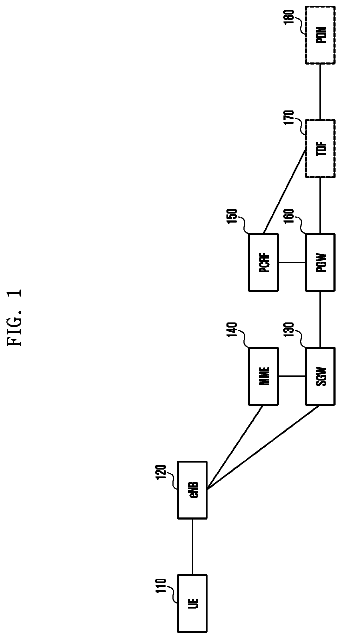
FIG. 1 illustrates a block diagram of a wireless communications system;
FIG. 2 is a block diagram illustrating one example of a first mobile device communicating emotional context information to a second mobile device;
FIG. 3 is a block diagram illustrating an example of the first mobile device transmitting emotional context data;
FIG. 4 is a block diagram illustrating one example of the second mobile device receiving the emotional context data;
FIG. 5 illustrates one example of a haptic response generating module;
FIG. 6 is a flow chart illustrating one example of a method to enhance electronic communications with emotional context;
FIG. 7 is a flow chart illustrating one example of a method to determine a type of haptic response to generate;
FIG. 8 is a flow chart illustrating a further example of a method to enhance electronic communications with emotional context; and
FIG. 9 is a flow chart illustrating one example of a method to determine an emotional state of a user based on an arousal level and a valence level of the user.
Detailed description of the invention
Methods, devices, and systems are described to augment electronic communications with emotional context. A first device may generate and transmit electronic communications to a second device. The first device may also capture an expression of a user of the first device (referred to hereafter as a first user) and generate data that infers an emotional state of the first user. The generated data may be transmitted to the second device. In one configuration, the second device may receive the data and determine the emotional state of the first user based on the received data. The second device may render a haptic response based on the determined emotional state. The haptic response may be provided to a user of the second device (referred to hereafter as a second user) in connection with the electronic communications received from the first device.
In one example, the first device may capture a number of expressions and generate data that indicates the emotional state of the first user over a period of time. The data may be transmitted to the second device along with electronic communications from the first device. The second device may determine the emotional states of the first user over a period of time. In one configuration, an electronic communication may be provided to the second user together with a haptic response that may vary over time to indicate the changing emotional state of the first user. As a result, the second user may watch, listen, read, etc. electronic communications while concurrently receiving a haptic response in real-time that indicates the range of emotional states of the first user.
The following description provides examples, and is not limiting of the scope, applicability, or configuration set forth in the claims. Changes may be made in the function and arrangement of elements discussed without departing from the spirit and scope of the disclosure. Various embodiments may omit, substitute, or add various procedures or components as appropriate. For instance, the methods described may be performed in an order different from that described, and various steps may be added, omitted, or combined. Also, features described with respect to certain embodiments may be combined in other embodiments.
Referring first to FIG. 1 , a block diagram illustrates an example of a wireless communications system 100 . The system 100 includes base stations 105 (or cells), mobile devices 115 , a base station controller 120 , and a core network 125 (the controller 120 may be integrated into the core network 125 ). The system 100 may support operation on multiple carriers (waveform signals of different frequencies).
The base stations 105 may wirelessly communicate with the mobile devices 115 via a base station antenna (not shown). The base stations 105 may communicate with the mobile devices 115 under the control of the base station controller 120 via multiple carriers. Each of the base station 105 sites may provide communication coverage for a respective geographic area. The coverage area for each base station 105 here is identified as 110 - a , 110 - b , or 110 - c . The coverage area for a base station may be divided into sectors (not shown, but making up only a portion of the coverage area). The system 100 may include base stations 105 of different types (e.g., macro, micro, and/or pico base stations). There may be overlapping coverage areas for different technologies.
The mobile devices 115 may be dispersed throughout the coverage areas 110 . The mobile devices 115 may be referred to as mobile stations, mobile devices, access terminals (ATs), user equipments (UEs), subscriber stations (SSs), or subscriber units. The mobile devices 115 may include cellular phones and wireless communications devices, but may also include personal digital assistants (PDAs), other handheld devices, netbooks, notebook computers, etc.
The base stations 105 may allow users of the mobile devices 115 to communicate with each other. For example, a first mobile device may send electronic communications (e.g., email, text message, voicemail messages, real-time conversations associated with a phone call etc.) to a second mobile device. The mobile devices 115 may include an input device to capture an expression of a use that is sending the electronic communications. Examples of input devices may include cameras, microphones, biosensors, etc. A biosensor may include a galvanic skin response (GSR) sensor, an electrocardiogram sensor (ECG), a pulse oximeter, a thermistor or a thermopile for skin temperature, and the like. A sending mobile device 115 being used by the user creating the electronic communications may create data representing the captured expression. The data and the electronic communications may be transmitted from the sending device 115 to a receiving device 115 . The receiving mobile device 115 may analyze the data to determine the emotional state of the user that created the communications. In one configuration, the receiving device 115 may generate a haptic response. The response may be associated with the received electronic communications. The receiving device 115 may also provide the electronic communications and the haptic response to a user of the receiving device 115 . The haptic response may indicate the emotional state of the sending user in connection with the electronic communications. As used herein, the term “first user” may refer to a user that creates and sends electronic communications via a first mobile device. The term “second user” may refer to a user that receives and accesses the electronic communications via a second mobile device.
FIG. 2 is a block diagram 200 illustrating one example of a first mobile device 115 - a - 1 communicating emotional context information to a second mobile device 115 - a - 2 . The first mobile device 115 - a - 1 and the second mobile device 115 - a - 2 may be examples of the mobile devices 115 of FIG. 1 . The devices may communicate across a network 125 connection. In one example, the emotional context information may be transmitted to the second mobile device 115 - a - 2 via the network 125 .
The first device 115 - a - 1 may include a capture module 205 , a generating module 210 , and a transmitter 215 . The second device 115 - a - 2 may include a receiver 220 , an analysis module 225 and a response generating module 230 . In one configuration, the capture module 205 may capture raw data that represents an expression of a first user (e.g., data representative of a vocal, facial, and/or other physiological expression of the first user, captured by a sensor). The raw data may indicate an emotional state of the first user with respect to an electronic communication transmitted to the second mobile device 115 - a - 2 . The generating module 210 may analyze the raw data to generate succinct data that infers the emotional state of the first user. For example, the raw data may be interpreted and compressed and/or categorized. The transmitter 215 may transmit this data to the receiver 220 of the second mobile device 115 - a - 2 across the network 125 .
In one configuration, the analysis module 225 may analyze the received data to determine the emotional state of the first user. The response generating module 230 may generate a response representative of the determined emotional state. In one example, the response may be linked to the electronic communications received from the first mobile device 115 - a - 1 . In one configuration, a second user may access the electronic communications via the second mobile device 115 - a - 2 . Examples of electronic communications may include, but are not limited to, email messages, text messages, voicemail messages, real-time telephone conversations, video messages, status updates via social networking websites, and the like. When the second user accesses the electronic communications, the response generated by the response generating module 230 may be provided to the second user. As a result, the second user may be aware of the emotional state of the first user as it relates to the particular electronic communications being accessed.
These components of each device 115 may, individually or collectively, be implemented with one or more Application Specific Integrated Circuits (ASICs) adapted to perform some or all of the applicable functions in hardware. Alternatively, the functions may be performed by one or more other processing units (or cores), on one or more integrated circuits. In other embodiments, other types of integrated circuits may be used (e.g., Structured/Platform ASICs, Field Programmable Gate Arrays (FPGAs) and other Semi-Custom ICs), which may be programmed in any manner known in the art. The functions of each component may also be implemented, in whole or in part, with instructions embodied in a memory, formatted to be executed by one or more general or application-specific processors.
Referring now to FIG. 3 a block diagram 300 illustrates an example of a first mobile device 115 - b - 1 that may transmit emotional context data. The first mobile device 115 - b - 1 may be an example of the mobile devices illustrated in either FIG. 1 or 2 . The first mobile device 115 - b - 1 may include a capture module 205 - a , a generating module 210 - a , and a transmitter 215 . The capture module 205 - a may include a vocal capture module 305 , a facial capture module 310 , and a physiological capture module 315 . In one configuration, the capture module 205 - a may capture an expression of a first user. For example, the vocal capture module 305 may capture a vocal expression from the first user. The module 305 may include a microphone or other vocal input device to capture the vocal expression of the first user. The facial capture module 310 may capture facial expressions manifested from the user. In one example, the facial capture module 310 may include a camera or other input device to capture the facial expressions. The physiological capture module 315 may capture physiological data, such as, but not limited to, GSR data, heart rate, skin temperature, etc. of the first user. The module 315 may include biosensors to capture this data.
In one configuration, the generating module 210 - a may receive the captured data and generate one or more indicators that represent the captured data. For example, the generating module 210 - a may include an identifying module 320 and an encoding module 325 . The identifying module may analyze the captured data and identify one or more indicators to represent the captured data. For example, the identifying module 320 may analyze the vocal data by examining the prosody, speech rate, volume, etc. of the vocal expressions. The identifying module 320 may analyze the facial expressions by mapping the facial structure and by using action units to determine the movement of the facial muscles. The analysis may include performing feature extraction and pattern classification on the expression data captures by a biosensor, camera, microphone, etc. Feature extraction from data captured by biosensors may include extracting data relating to heart rate, heart rate variability, GSR responses, skin temperature, and the like. Pattern classification may be performed via k-Nearest Neighbor, Neural Nets, Naïve Bayesian classifiers, etc. The analysis of the expressions may be used to determine information indicative of the first user's emotional state.
The identifying module 320 may identify one or more indicators that represent the analyzed captured data. For example, the identifying module 320 may identify an arousal level indicator and a valence level indicator based on the analysis of the data. In other words, a capture device (sensor, camera, microphone, etc.) may capture a raw measurement of a signal (e.g., skin conductance from a GSR sensor) representing an expression. Feature extraction techniques may be performed (e.g., skin conductance), and pattern classification may be performed with other extracted features. The arousal level indicator and the valence level indicator may be determined based on the feature extraction and pattern classification. These indicators may provide an indication of the emotional state of the first user. The arousal level indicator may be, for example, an integer on a scale of 1-10 (while noting that a number of other indicator types/schemes are contemplated). In one configuration, the arousal level indicator may indicate a level of intensity determined from the captured expression of the user. The valence level indicator may also be, for example, an integer on the scale of 1-10. This indicator may represent a level of pleasure determined from the expression of the user. As an example, a “10” may represent a high arousal or valence level while a “1” represents low levels. In one example, the identifying module 320 may also identify a time indicator that indicates a time period that the identified arousal level and valence level are manifested.
The encoding module 325 may encode the indicators representing the raw data captured by the capture module 205 - a . For example, the encoding module 210 - a may encode the arousal level indicator and the valence level indicator as integers on the scale between 1-10. The encode module 325 may also encode the time indicator representing the time period the user experienced the indicated arousal and valence levels. The transmitter 215 may transmit the encoded data to a receiving mobile device.
FIG. 4 is a block diagram 400 illustrating one example of a second mobile device 115 - b - 2 that may receive emotional context data. The second mobile device 115 - b - 2 may be an example of the mobile devices 115 illustrated in either FIG. 1, 2 or 3 . The device 115 - b - 2 may include a receiver 220 , an analysis module 225 - a , and a response generating module 230 - a . The receiver 220 may receive encoded data from the first mobile device 115 - b - 1 . The analysis module 225 - a may analyze the encoded data to determine an emotional state of the first user. In one configuration, the analysis module 225 - a may include an arousal level module 405 , a valence level module 410 , and an emotional state module 415 . The arousal level module 405 may analyze the encoded data to extract the arousal level indicator that represents the arousal level of the first user. The valence level module 410 may analyze the data to extract the valence level indicator that indicates the valence level of the first user. As previously described, the arousal level indicator and the valence level indicator may be an integer. As an example, the arousal level module 405 may extract the integer “2” representing the arousal level indicator. The valence level module 410 may analyze the data to extract the integer “1” representing the valence level indicator. In this example, the arousal integer “2” may indicate that the first user experienced a level of low intensity while creating the electronic communications. The valence integer “1” may indicate that the user experienced a level of low pleasure while creating the communications. The emotional state module 415 may determine an emotional state of the first user based on the arousal level indicator and the valence level indicator. In one example, the module 415 may be include a look-up table to translate a particular arousal and valence level indicator to an emotional label. In the example above, the emotional state module 415 may translate the arousal integer of “2” and the valence integer of “1” to a label representing the emotional state of the user. The label for this example may be “sad”, “depressed”, etc. (e.g., low intensity and low pleasure).
The response generating module 230 - a may include a preference input module 410 , a visual response generation module 420 , an audio response generation module 425 , and a haptic response generation module 430 . In one configuration, the response generating module 230 - a may generate a response indicative of the determined emotional state of the first user. The generated response may be provided to a second user via the second mobile device 115 - b - 2 . The response may be provided together with the electronic communications created by the first user and received from the first device 115 - b - 1 . For example, the visual response generation module 420 may generate a visual response for certain forms of electronic communications (e.g., emails, text messages, video messages, etc.) that indicates the emotional state of the first user. Examples of visual responses may include, but are not limited to, a background color applied to the electronic communications, text displayed with the communications, a border color included with the electronic communications, an image displayed with the electronic communications, an animated avatar linked to the electronics communication, etc.
The audio response generation module 425 may generate an audio response for certain types of electronic communications that indicate the emotional state of the first user. Examples of audio responses may include, but are not limited to, beeps, cues, audible text, and the like. The audio response may be linked to the electronic communications created by the first user. The haptic response generation module 430 may generate haptic responses that represent the emotional state of the first user. Examples of haptic responses may include temperature, vibrations, pressure, tapping, texture, and the like. The second user may receive the response generated by the module 230 - a concurrently with receiving the electronic communications created by the first user. As a result, the electronic communications may be augmented with emotional context. The recipient of the electronic communications may better understand the emotional state of the party that sent the electronic communications. The response generating module 230 - a may also generate responses in real-time. Thus, participants in real-time communications, (e.g., phone calls) may become aware of the real-time emotional state of the other party via the generated responses during the communications.
In one configuration, the preference input module 410 may receive input from second user. The input may include preferences of the second user relating to which response(s) to generate for different types of electronic communications. For example, the second user may desire to generate haptic-based responses for certain electronic communications (e.g., phone calls, voicemails, etc.) and visual responses for other types of communications (e.g., emails, text messages, etc.) The preference input module 410 may also allow the second user to select whether to generate multiple types of responses for electronic communications. For example, the second user may desire to generate haptic-based responses in combination with audio responses for certain electronic communications. The preference input module 410 may also allow the second user to select the type of response to generate based on the location of the mobile device 115 - b - 2 , the level of background noise present at the mobile device 115 - b - 2 , and the like.
The response generating module 230 - a may further generate and provide a response in synch with an electronic communication. The synchronization may be achieved by using the time indicator extracted by the analysis module 225 - a . For example, the second mobile device 115 - b - 2 may receive and store a voicemail (or other type of electronic communication) at a first time period. The analysis module 225 - a may determine the emotional state of sending party at the time the voicemail was originated. The determined emotional state may be linked to the stored voicemail. At a second time period, the receiving party may access the stored voicemail. The response generating module 230 - a may generate a response representing the previously determined emotional state of the sending party. The response may be provided to the receiving party while he/she is listening to the voicemail. As an example, the response may include an animated avatar. The avatar may be animated during the playback of the voicemail to portray the emotional state of the sender of the voicemail. As another example, the response may be a haptic-based response. For example, if the emotional state of the sender of the voicemail is “anger”, the second mobile device 115 - b - 2 may heat up during the playback of the voicemail. As a result, the receiving party is aware of the emotional state of the sending party at the time the voicemail was created. Additional examples of various types of electronic communications and the possible responses that may be generated and associated with the communications are provided below. The various examples below may refer to the examples of the mobile devices described in FIG. 1, 2, 3 , or 4 . Other types of electronic communications, in addition to those described below, may also be used with the present systems and methods.
Telephone call: As mentioned above, users of the mobile devices 115 may engage in real-time telephone calls. In one configuration, the physiological capture module 315 on the first mobile device 115 - b - 1 may capture physiological input from the first user. For example, biosensors on the first mobile device 115 - b - 1 may monitor emotional context of the first user during the call. Additional expressions of the first user may also be captured with the physiological input. For example, the vocal capture module 305 may capture vocal expressions and perform vocal expression recognition as a secondary input to the physiological input. Arousal and valence level indicators may be identified from the captured data and transmitted to the second mobile device 115 - b - 2 .
The analysis module 225 - a of the second device 115 - b - 2 may analyze the arousal and valence level indicators to determine an emotional state of the first user. The determined emotional context may be conveyed to the second user of the second mobile device 115 - b - 2 via a haptic response, for example. The response may be provided in the form of heat using a Peltier element. Other forms of haptic responses may also be used such as, but not limited to, vibration bursts. Additional response may also be used together with the haptic response. For example audible cues may be generated. The audible cues may be chimes that indicate when the first user changes emotional state. For example, if the first user is upset or aroused, the second mobile device 115 - b - 2 may begin to warm up. Audible chimes of a particular frequency, intensity, or duration may also be provided to convey the emotional context of the first user. If the first user becomes calmer during the telephone call, the second device 115 - b - 2 may start to cool down. A short audible chime may also be provided indicating this change in the emotional state of the first user. If the haptic-based response includes vibrations, the vibration intensity, duration, and frequency may vary depending on the first user's emotional state. For hands free calls, a visual response (e.g., an image or background color) may be provided to contextualize the first user's emotional state. As a result, the second user (or receiving party) may deduce the emotional state of the first user (or the sending party) by touching the second mobile device 115 - b - 2 , hearing audible cues, and/or viewing a visual response that represent the emotional status of the first user.
Writing/Reading a text message: Examples of the text message may include an email message, a short message service (SMS) message, a post to a social networking website, an instant messaging (IM) message, and the like. For example, the first user may compose a text message. Facial features/expressions of the first user may be captured via the facial capture module 310 . The physiological capture module 315 may also capture physiological information about the first user. Arousal and valence level indicators may be identified from the captured expressions. The indicators may be encoded as integers, for example, and transmitted to the second device 115 - b - 2 . The second device 115 - b - 2 may determine the emotional context of the first user from the encoded integers. The response generating response module 230 - a may generate a response to represent the emotional state of the first user. For example, the visual response generation module 420 may generate an image corresponding to the emotional state of the first user. The image may include an avatar image, a background color for the message, or border color for the message. The image may be provided to the second user when the text message is viewed.
In another example, the first user's facial expression may be captured in real-time as the first user writes the message. An animated avatar may be provided to the second user when the message is viewed. In another example, the animated avatar (or other abstract image) may move in sync with a text-to-speech system as the message is being read to the second user.
Recording/Listening to a voicemail message: Vocal expression recognition (and perhaps biosensor data) may be used to capture emotional state information when the first user records a voicemail message. The captured information may be condensed to arousal and valence level indicators by encoding the information as integers representing these levels. The encoded information may be transmitted to the second device 115 - b - 2 . The encoded information indicating the arousal and valence level of the first user may be conveyed as metadata to a voicemail message inbox of the second user. When the second user accesses the inbox to listen to the message, the encoded data may be rendered as a haptic response on the second device 115 - b - 2 , such as heat or vibration. Audible cues may also be used to provide the second user with the emotional context of the first user while the voicemail message was recorded.
Incoming call/message notification: In one example, when the first user places a call, facial expressions and/or physiological data may be captured to determined the emotional state of the first user. Metadata representing the current and/or past emotional state of the first user may be sent to the second mobile device 115 - b - 2 . The response generating module 230 - a may render the metadata as a visual image reflecting the emotional status of the first user. The visual image may include a background color being displayed on a display section of the second mobile device 115 - b - 2 , an avatar image, or some other image to convey the emotional state of the first user. For example, a fire image may be displayed to represent an “angry” emotional state of the first user. The metadata may also be rendered as a haptic response and/or an audio response. These responses may vary the intensity, frequency, and/or duration to cue the second user as to the emotional status of the first user. The generated responses may be provided when the second user is notified of an incoming call from the first user's device. The second user may use the responses to decide whether or not to answer the incoming call or message from the first user.
Logged calls, messages, voicemails: In one example, a call, message, or voicemail originating from the first user may be missed by the second user. The second mobile device 115 - b - 2 may log missed electronic communications. In one configuration, a response may be generated, as described above, by the response generating module 230 - a and logged with the missed communications. For example, a static image may be generated that represents the emotional status of the first user when the call or voicemail was made or when the message was sent. The response may be provided to the second user when the second user accesses information regarding the logged communications.
Real-time status: In one configuration, the first user may wear biosensors to yield real-time streaming emotional status. The real-time emotional context may be rendered using visual images, haptic-based responses, and/or audible cues to augment electronic information. For example, a profile of the first user on a social networking website may be updated in real-time with the emotional status of the first user. Viewers of the first user's profile may be aware of the emotional state of the first user in real-time via the generated responses. Similarly, profiles of people in an electronic address book may also be updated in real-time with their current emotional status. As a result, the owner of the electronic address book may know in real-time the emotional status of the individuals included in his/her electronic address book.
Networked gaming: Networked gaming environments may also convey the emotional status of participating users to enhance game play and communications between networked parties. Basic emotional status may be determined via facial expressions, biosensors, and/or vocal expressions. The emotional status may be logged and rendered as a gaming avatar facial expression to mimic the user that provided the expressions. Other responses may also be generated as described above to represent the emotional status of the users.
The description continues in the full USPTO document.
 Lapsed, fee not paid7 drawings