 Lapsed, fee not paid20 drawings
Biotech & Lab · US 9,738,605 B2
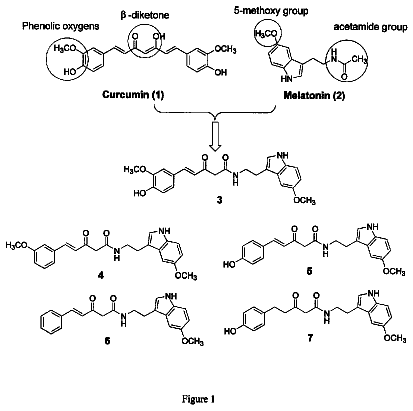
Hybrid compounds of curcumin and melatonin as neuroprotectants for neurodegenerative disorders
Hybrid compounds of curcumin and melatonin as neuroprotectants are provided.
US 9,738,612 B2 · Assignee: Shanghai Nature Standard R&D and Biotech Co., Ltd · Inventors: Li; Jiapeng et al.
Sheet 1 of 3 from the published document. All sheets in the USPTO PDF
Disclosed are a use of a methylacryloyl benzimidazolone derivative, an optical isomer or a pharmaceutically acceptable salt or prodrug thereof in the preparation of: (a) a pharmaceutical composition or reagent for down-regulating the activity of PI3K/Akt pathways; (b) a pharmaceutical composition or reagent for treating or inhibiting a tumour; and/or inhibiting tumour cell growth; and/or (c) a pharmaceutical composition or reagent for blocking the cell cycle. The compounds involved in the present invention can down-regulate the level of Akt phosphorylation in P13K/Akt signaling pathways, and the functional effects of the compounds are equivalent to those of a novel small-molecular targeting drug MK2206; while the research at the cellular level has found that the methylacryloyl benzimidazolone derivatives represented by FD1 have a good proliferation inhibiting effect on tumour cells. What is different from MK2206 is that FD1 has better effects on a PTEN deleted cell.
Currently tumour is the most serious public health problem mankind is facing, and recently itcauses millions of deaths worldwide each year. Developing anti-tumor drugs with high efficacies and low toxicitities is the key to tumor therapy. At present, the focus of the research and development of anti-tumour drugs has shifted from cytotoxic drugs to targeted therapy drug. The success in marketing imatinibmakes people see the hope for curing tumor, thereby small molecular targeted drug development has entered a vigorous period and various inhibitors of tumour-associated signaling pathways enter the market and achieved great success. Previous studies have found that aberrant activation of PI3K/Akt signaling pathway, in which Akt phosphorylation and then activation is a key step, is present in a variety of tumors. Simultaneous activation of the T308 and S473 sites of Akt is necessary for Akt
All 3 drawing sheets from the published document, cropped to the drawing.
What the patent claimed, word for word. All of it is now free to use.
The present invention belongs to biomedical field, and particularly relates to the use of methylacryloyl benzimidazolone derivative for antitumor.
Currently tumour is the most serious public health problem mankind is facing, and recently itcauses millions of deaths worldwide each year. Developing anti-tumor drugs with high efficacies and low toxicitities is the key to tumor therapy. At present, the focus of the research and development of anti-tumour drugs has shifted from cytotoxic drugs to targeted therapy drug. The success in marketing imatinibmakes people see the hope for curing tumor, thereby small molecular targeted drug development has entered a vigorous period and various inhibitors of tumour-associated signaling pathways enter the market and achieved great success.
Previous studies have found that aberrant activation of PI3K/Akt signaling pathway, in which Akt phosphorylation and then activation is a key step, is present in a variety of tumors. Simultaneous activation of the T308 and S473 sites of Akt is necessary for Akt activation. The development of PI3K/Akt signaling pathway inhibitors has become a hot spot in the research and development of antitumour drugs. There are dozens of this typeof drugs in clinical trials so far, and MK2206 and Triciribine are two typicaldrugs of such kind with significant clinical efficacies, and have a very good prospect for further development. Since the PI3K/Akt signaling pathway aberrant activation exists prevalently in tumors, the successful development of such drugs will achieve good social and economic benefits.
Benzimidazolone is an oxidized derivative of the carbon atom at the 2-position of imidazole ring, and has been widely used as an intermediate in dye industry (Jolanta S.et al. Dyes and pigments. 2001, 15-27). In addition, the benzimidazole derivatives also are widely used clinically because they possess significant pharmacological activity. For example, oxatomide, a second-generation anti-histamine drug, belongs to benzimidazole derivatives (Iwamoto K., et al. Arzneimittel-forschung-drug Research. 2001, 51: 971-976). In a Chinese patent application CN201110326737.9, the applicants introduce methylacryloyl group on nirogen at 3-position of benzimidazolone, resulting methylacryloyl-benzimidazolone (methylacryloyl-benzimidazole (thio) ketone) derivatives that show a extremely high antibacterial activity. Also in this patent application a method for preparing such compounds has been disclosed, and concrete chemical structures are presented.
One object of the present invention is to provide a use of methylacryloyl benzimidazolone derivative for anti-tumor therapy.
In the first aspect of the present invention, it provides a use of methylacryloyl benzimidazolone derivative, an optical isomer thereof, or a pharmaceutically acceptable salt or prodrug thereof for preparing:
(a) a pharmaceutical composition or agent for down-regulating the activity of PI3K/Akt pathway;
(b) a pharmaceutical composition or agent for treating or inhibiting tumor and/or tumor cell growth;
(c) a pharmaceutical composition or agent for arresting cell cycle; and/or
(d) a pharmaceutical composition or agent for inhibiting the activity of mTOR kinase.
In another preferred embodiment, the methylacryloyl benzimidazolone derivative has the structure of Formula I;
wherein:
R represents:
hydrogen; C.sub.1˜C.sub.8 alkyl; or C.sub.1˜C.sub.8 alkyl optionally substituted by cyano, halogen, benzene ring, C.sub.1˜C.sub.4 alkoxy or C.sub.1˜C.sub.4 alkylthio; C.sub.3˜C.sub.8 alkenyl or C.sub.3˜C.sub.8 alkynyl; or C.sub.3˜C.sub.8 alkenyl or C.sub.3˜C.sub.8 alkynyl optionally substituted by cyano, halogen, C.sub.1˜C.sub.4 alkoxy or C.sub.1˜C.sub.4 alkylthio; phenyl or phenyl optionally substituted by 1˜3 substituents selected from the group consisting of halogen, C.sub.1˜C.sub.8 alkyl, C.sub.3˜C.sub.8 cycloalkyl, hydroxyl, C.sub.1˜C.sub.4 alkoxy, C.sub.1˜C.sub.4 haloalkyl, C.sub.1˜C.sub.4 haloalkoxy, C.sub.1˜C.sub.4 haloalkylthio, C.sub.1˜C.sub.4 haloalkyl sulfonyl, carboxy, nitro, cyano, phenyl, phenoxy, benzoyl;
Y represents:
Hydrogen; or 1˜4 substituents selected from the group consisting of halogen, nitro, C.sub.1˜C.sub.8 alkyl, C.sub.3˜C.sub.8 cycloalkyl, C.sub.1˜C.sub.4 haloalkyl;
wherein, when Y represents hydrogen, R is not isopropenyl;
or Y represents:
wherein, Z.sub.1 represents hydroxyl, C.sub.1˜C.sub.8 alkoxy, C.sub.3˜C.sub.8 alkenyloxy or C.sub.3˜C.sub.8 alkynyloxy, amino, or amino substituted with one or two C.sub.1˜C.sub.8 alkyl;
or Y represents:
—O(S)—Z.sub.2
wherein, Z.sub.2 represents hydrogen, C.sub.1˜C.sub.4 alkyl, C.sub.3˜C.sub.8 alkenyl or C.sub.3˜C.sub.8 alkynyl, C.sub.1˜C.sub.4 haloalkyl, C.sub.1˜C.sub.8 aliphatic acyl, C.sub.1˜C.sub.8 haloaliphatic acyl, carbamoyl, N-methylcarbamoyl, N-ethylcarbamoyl, N, N-dimethylcarbamoyl, N, N-diethylcarbamoyl, phenyl, benzoyl, phenylacetyl, phenylsulfonyl or phenyl, benzoyl, phenylsulfonyl optionally substituted with 1˜3 substituents selected from the group consisting of: halogen, C.sub.1˜C.sub.8 alkyl, C.sub.3˜C.sub.8 cycloalkyl, hydroxyl, C.sub.1˜C.sub.4 alkoxy, C.sub.1˜C.sub.4 haloalkyl, C.sub.1˜C.sub.4 haloalkoxy, C.sub.1˜C.sub.4 haloalkylthio, C.sub.1˜C.sub.4 haloalkylsulfonyl, carboxy, nitro, and cyano;
or Y represents:
wherein, Z.sub.3 represents hydrogen, C.sub.1˜C.sub.8 alkyl, C.sub.3˜C.sub.8 cycloalkyl, C.sub.3˜C.sub.8 alkenyl, C.sub.3˜C.sub.8 alkynyl, C.sub.1˜C.sub.4 haloalkyl, C.sub.1˜C.sub.8 acyl, or a 5- or 6-membered heterocyclic group having 1˜3 heteroatoms selected from nitrogen, oxygen and sulfur, phenyl, benzoyl, phenylacetyl, phenylsulfonyl, or phenyl, benzoyl, phenylsulfonyl optionally substituted with 1˜3 substituents selected from the group consisting of: halogen, C.sub.1˜C.sub.8 alkyl, C.sub.3˜C.sub.8 cycloalkyl, hydroxy, C.sub.1˜C.sub.4 alkoxy, C.sub.1˜C.sub.4 haloalkyl, C.sub.1˜C.sub.4haloalkoxy, C.sub.1˜C.sub.4 haloalkylthio, haloalkylsulfonyl, carboxy, nitro, cyano; Z.sub.4 represents hydrogen, C.sub.1˜C.sub.8 alkyl, C.sub.3˜C.sub.8 cycloalkyl, C.sub.3˜C.sub.8 alkenyl, C.sub.3˜C.sub.8 alkynyl, C.sub.1˜C.sub.4 haloalkyl, or Z.sub.3 and Z.sub.4 together with the nitrogen atom to which they are attached form a 5-7-membered heterocyclic group which may contain one or two or more than two heteroatoms selected from nitrogen and oxygen in addition to the nitrogen atom.
In another preferred embodiment, R represents: hydrogen, ethyl, n-propyl, isopropyl, propenyl, isopropenyl, 2-cyanoethyl, benzyl, 2-fluoroethyl, 2-chloroethyl, 2-bromoethyl, 2-methoxyethyl, 2-methoxypropyl, 2-methoxyisopropyl, 2-ethoxyethyl, 2-ethoxypropyl, 2-ethoxyisopropyl, phenyl or phenyl optionally substituted with 1˜3 substituents selected from the group consisting of: fluorine, chlorine, bromine, methyl, ethyl, n-propyl, isopropyl, cyclopropyl, hydroxy, methoxy, ethoxy, propoxy, isopropoxy, 2-chloroethyl, 2-chloropropyl, 2-chloroethoxy, 2-chloropropoxy, carboxy, nitro, cyano;
Y represents: hydrogen or 1-4 substituents selected from the group consisting of fluorine, chlorine, bromine, nitro, methyl, ethyl, n-propyl, isopropyl, 2-chloroethyl, 2-chloropropyl, 2-chlorobutyl, 2-bromoethyl, 2-bromopropyl, 2-bromobutyl;
wherein, when Y represents hydrogen, R is not isopropenyl;
or Y represents:
wherein, Z.sub.1 represents hydroxyl, methoxy, ethoxy, n-propoxy, isopropoxy, n-butoxy, amino, N-methylamino, N-ethylamino, N, N-dimethylamino, N, N-diethylamino;
or Y represents:
—O(S)—Z.sub.2
wherein, Z.sub.2 represents hydrogen, methyl, ethyl, propyl, isopropyl, 2-chloromethyl, 2-chloroethyl, 2-chloropropyl, formyl, acetyl, phenyl, benzoyl, phenylsulfonyl, or phenyl, benzoyl, phenylacetyl, or phenylsulfonyl optionally substituted with 1˜3 substituents selected from the group consisting of fluorine, chlorine, bromine, methyl, ethyl, propyl, isopropyl, 2-chloroethyl, 2-chloropropyl, cyclopropyl, hydroxy, methoxy, ethoxy, 2-chloroethyl, 2-chloropropyl, 2-chlorobutyl, 2-bromoethyl, 2-bromopropyl, 2-bromobutyl, chloromethoxy, 2-chloroethoxy, 2-chloropropoxy, bromomethoxy, 2-bromoethoxy, 2-bromopropoxy, carboxy, nitro, cyano;
or, Y represents:
wherein, Z.sub.3 represents hydrogen, methyl, ethyl, n-propyl, isopropyl, cyclopropyl, propenyl, isopropenyl, propynyl, 2-chloroethyl, 2-chloropropyl, 2-chlorobutyl, 2-bromoethyl, 2-bromopropyl, 2-bromobutyl, formyl, acetyl, n-propionyl, isopropionyl, phenyl, benzoyl, phenylacetyl, phenylsulfonyl, or phenyl, benzoyl, phenylsulfonyl optionally substituted with 1˜3 substituents selected from the group consisting of halogen, C.sub.1˜C.sub.8 alkyl, C.sub.3˜C.sub.8 cycloalkyl, hydroxy, C.sub.1˜C.sub.4 alkoxy, C.sub.1˜C.sub.4 haloalkyl, C.sub.1˜C.sub.4 haloalkoxy, C.sub.1˜C.sub.4 haloalkylthio, C.sub.1˜C.sub.4 haloalkylsulfonyl, carboxy, nitro, cyano; Z.sub.4 represents hydrogen, methyl, ethyl, n-propyl, isopropyl, propenyl, isopropenyl, propynyl, 2-chloroethyl, 2-chloropropyl, 2-chlorobutyl, 2-bromoethyl, 2-bromopropyl, 2-bromobutyl, or Z.sub.3 and Z.sub.4 together with the nitrogen atom to which they are attached form a 5-7-membered heterocyclic group.
In another preferred embodiment, R represents : hydrogen, propenyl, isopropenyl, benzyl, 2-fluoroethyl, 2-chloroethyl, 2-bromoethyl, 2-methoxyethyl, 2-methoxypropyl, 2-methoxyisopropyl, 2-ethoxyethyl, 2-ethoxypropyl, 2-ethoxyisopropyl;
Y represents:
wherein, Z.sub.1 represents hydroxyl, methoxy, ethoxy, n-propoxy, isopropoxy, n-butoxy, amino, N-methylamino, N-ethylamino, N, N-dimethylamino, N, N-diethylamino;
or Y represents:
—O(S)—Z.sub.2
wherein, Z.sub.2 represents hydrogen, formyl, acetyl, benzoyl, phenylsulfonyl, or benzoyl, phenylacetyl, or phenylsulfonyl optionally substituted with 1˜3 substituents selected from the group consisting of fluorine, chlorine, bromine, hydroxy, methoxy, ethoxy, nitro, cyano;
or Y represents:
wherein, Z.sub.3 represents hydrogen, formyl, acetyl, n-propionyl, isopropionyl, benzoyl, phenylacetyl, phenylsulfonyl; Z.sub.4 represents hydrogen, methyl, ethyl, n-propyl, isopropyl, propenyl, isopropenyl, propynyl, 2-chloroethyl, 2-chloropropyl, 2-chlorobutyl, 2-bromoethyl, 2-bromopropyl, 2-bromobutyl, or Z.sub.3 and Z.sub.4 together with the nitrogen atom to which they are attached form a 5-7-membered heterocyclic group.
In another preferred embodiment, R represents : hydrogen, propenyl, isopropenyl, 2-fluoroethyl, 2-chloroethyl, 2-bromoethyl, 2-methoxyethyl, 2-methoxypropyl, 2-methoxyisopropyl;
Y represents:
wherein, Z.sub.1 represents hydroxyl, methoxy, ethoxy, n-propoxy, isopropoxy, n-butoxy.
In another preferred embodiment, the methylacryloyl benzimidazolone derivative has the structure of Formula II,
in Formula II,
A is C, or N;
R.sub.1 and R.sub.5 are each independently selected from hydrogen, halogen, C1˜C10 alkyl, C2˜C8 alkenyl, C2˜C8 alkynyl, CN, NO.sub.2;
R.sub.2 and R.sub.3 are each independently selected from hydrogen, halogen, C1˜C10 alkyl, C2˜C8 alkenyl, C2˜C8 alkynyl, C3˜C10 cycloalkyl, heterocyclic group, aryl, heteroaryl, C1˜C10 aldehyde group, C2˜C10 acyl, C2˜C10 ester group, CN, NO.sub.2;
R.sub.4 is selected from O, S, halogen;
“ ” represents a single bond or a double bond;
the alkyl, alkenyl, alkynyl, cycloalkyl, heterocyclyl, aryl, heteroaryl, aldehyde group, acyl, ester group are substituted or unsubstituted, and/or linear or branched.
In another preferred embodiment, A is N.
In another preferred embodiment, R.sub.1 is selected from hydrogen, halogen and trifluoromethyl.
In another preferred embodiment, R.sub.5 is selected from hydrogen, halogen and trifluoromethyl.
In another preferred embodiment, R.sub.2 and R.sub.3 are each independently selected from substituted or unsubstituted C1˜C8 alkyl, C2˜C8 alkenyl, C2˜C8 alkynyl, C2˜C8 aldehyde group, C2˜C8 acyl, C2˜C8 ester group.
In another preferred embodiment, R.sub.4 is O.
In another preferred embodiment, the pharmaceutical composition or agent is used to reduce the activation level of Akt.
In another preferred embodiment, the pharmaceutical composition or agent is further used to inhibit the phosphorylation of Akt.
In another preferred embodiment, the phosphorylation comprises the phosphorylation of the Akt S473 site.
In another preferred embodiment, the methylacryloyl benzimidazolone derivative is selected from the group consisting of compounds represented by the formulas FD1 to FD18 or a combination thereof:
In another preferred embodiment, the methylacryloyl benzimidazolone derivative is selected from the compounds represented by the formulas FD1 and FD162 or a combination thereof:
In another preferred embodiment, the tumor or tumor cell is a tumor or a cell of tumor selected from the group consisting of liver cancer, cervical cancer, glioma, colon cancer, kidney cancer, breast cancer, lung cancer, prostate cancer, pancreatic cancer, skin cancer, nasopharynx cancer, esophageal cancer, gastric cancer, ovarian cancer, and melanoma.
In another preferred embodiment, the tumor or tumor cell is a tumor or tumor cell with a PTEN mutation (decreased expression of PTEN) or deletion.
In another preferred embodiment, the tumor or tumor cell is prostate cancer or prostate cancer cell.
In another preferred embodiment, the tumor cell is selected from the group consisting of PC-3, A549, SGC-7901, Hela, H4, FHCC98, SMMC7721, BEL7404, A498, SW1116, MDA-MB-231, MDA-MB-468, DU145, U87-MG, Wi38, H1299 , or a combination thereof.
In another preferred embodiment, the tumor cell is selected from the group consisting of PC-3, A549, SGC-7901, Hela, H4, FHCC98, SMMC7721, or a combination thereof.
In the second aspect of the present invention, it provides a pharmaceutical composition comprising: (a) a methylacryloyl benzimidazolone derivative, an optical isomer thereof, or a pharmaceutically acceptable salt or prodrug thereof; and (b) a pharmaceutically acceptable carrier.
In another preferred embodiment, the methylacryloyl benzimidazolone derivative comprises a compound of formula I.
In another preferred embodiment, the medicament or pharmaceutical composition further comprises a cytotoxic drug (e.g., but not limited to, a DNA interfering agent (e.g., cisplatin or doxorubicin)) and/or an antimetabolite drug (e.g., but are not limited to, pyrimidine antagonists, purine antagonists, folate antagonists).
In another preferred embodiment, the cytotoxic drug is selected from the group consisting of anthracycline antibiotics, paclitaxel, vinca alkaloids, camptothecin, alkylating agents, platinum or combinations thereof.
In another preferred embodiment, the antimetabolite drug is selected from the group consisting of methotrexate, 5-Fluorouracil, hydroxyurea, cytosine arabinoside, or a combination thereof.
In another preferred embodiment, in the medicament or pharmaceutical composition, the content of the methylacryloyl benzimidazolone derivative is 0.01 to 99 wt %, preferably 0.1 to 90 wt %.
In another preferred embodiment, the medicament or pharmaceutical composition is further used to induce tumor cell apoptosis.
In another preferred embodiment, the medicament or pharmaceutical composition is further used to interfere with tumor cell proliferation.
In another preferred embodiment, the medicament or pharmaceutical composition is further used to regulate the cell cycle of a tumor cell; and/or the medicament or pharmaceutical composition is further used to arrest cell cycle.
In another preferred embodiment, the medicament or pharmaceutical composition is used to induce G1 cell arresting in tumor cells.
In another preferred embodiment, the medicament or pharmaceutical composition is further used to inhibit metastasis of tumor cells.
In the third aspect of the present invention, it provides a non-therapeutic method in vitro for down-regulating the activity of PI3K/Akt pathway and/or regulating cell cycle, comprising a step of culturing the cell in the presence of a methylacryloyl benzimidazolone derivative, an optical isomer thereof, or a pharmaceutically acceptable salt or prodrug thereof thereby down-regulating the activity of PI3K/Akt pathway in the cell and/or regulating the cell cycle.
In another preferred embodiment, the cell is a tumor cell, preferably the tumor cell is a cell of tumor selected from the group consisting of liver cancer, cervical cancer, glioma, colon cancer, kidney cancer, breast cancer, lung cancer, prostate cancer, pancreatic cancer, skin cancer, nasopharynx cancer, esophageal cancer, gastric cancer, ovarian cancer, and melanoma.
In another preferred embodiment, the tumor cell is selected from the group consisting of PC-3, A549, SGC-7901, Hela, H4, FHCC98, SMMC7721, BEL7404, A498, SW1116, MDA-MB-231, MDA-MB-468, DU145, U87-MG, Wi38, H1299, or a combination thereof; more preferably selected from the group consisting of PC-3, A549, SGC-7901, Hela, H4, FHCC98, SMMC7721, or a combination thereof.
In another preferred embodiment, the effective concentration of the compound of Formula I is 0.01 nM-1 mM, preferably 0.1 nM-500 μM, and most preferably 1 nM-100 μM (micromoles per liter).
In another preferred embodiment, the action time of the compound of Formula I is 2˜96h.
In another preferred embodiment, the action time of the compound of Formula I is 1˜30 days.
In the forth aspect of the present invention, it provides an non-therapeutic method in vitro for inhibiting cell growth or inducing apoptosis comprising a step of culturing the cell in the presence of a methylacryloyl benzimidazolone derivative, an optical isomer thereof, or a pharmaceutically acceptable salt or prodrug thereof.
In another preferred embodiment, the cell is a tumor cell.
In another preferred embodiment, the effective concentration of the methylacryloyl benzimidazolone derivative is 0.01 nM/L-1 mM/L, preferably 0.1 nM/L-500 μM/L, and most preferably 0.1 nM/L-100 μM/L.
In another preferred embodiment, when the compound of Formula I acts in vitro, the action time of the compound of Formula I is 2˜96h.
In the fifth aspect of the present invention, it provides a use of a methylacryloyl benzimidazolone derivative of Formula I or Formula II or a pharmaceutically acceptable salt thereof for preparing a composition, wherein the composition is used for one or more applications selected from the group consisting of:
(i) inhibiting tumor cell growth;
(ii) inducing tumor cell apoptosis;
(iii) interfering with tumor cell proliferation;
(iv) regulating cell cycle of tumor cell;
(v) inhibiting tumor cell metastasis;
(vi) down-regulating the activity of PI3K/Akt pathway;
(vii) reducing Akt activation level;
(viii) inhibiting the Akt phosphorylation;
(ix) inhibiting the Akt phosphorylation at S473 site;
(x) treating or preventing tumor;
(xi) reducing mTOR activation level;
(xii) inhibiting mTOR phosphorylation;
(xii) down-regulating the activity of PI3K/Akt/mTOR signaling pathway.
In another preferred embodiment, the composition is a pharmaceutical composition.
In the sixth aspect of the present invention, it provides a method for treating tumor comprising a step of administering a therapeutically effective amount of a compound of Formula I and/or Formula II, an optical isomer thereof, or a pharmaceutically acceptable salt or prodrug thereof, or a pharmaceutical composition thereof to a subject in need.
In another preferred embodiment, the administration lasts 1 to 360 days, preferably 1 to 180 days, more preferably 1 to 60 days.
In the seventh aspect of the present invention, it provides a pharmaceutical composition for treating or inhibiting tumor comprising (a) a pharmaceutically acceptable carrier and (b) a compound of Formula I and/or Formula II, an optical isomer thereof, or a pharmaceutically acceptable salt or prodrug thereof,
wherein, each group is as defined above.
In another preferred embodiment, the dosage form of the pharmaceutical composition is an oral dosage form, an injection.
In the eighth aspect of the present invention, it provides a kit, comprising:
a container, and a methylacryloyl benzimidazolone derivative of Formula I and/or Formula II, an optical isomer thereof, or a pharmaceutically acceptable salt or prodrug thereof contained therein, and a pharmaceutically acceptable carrier;
a specification describing that the methylacryloyl benzimidazolone derivative is used for one or more applications selected from the group consisting of:
(i) inhibiting tumor cell growth;
(ii) inducing tumor cell apoptosis;
(iii) interfering with tumor cell proliferation;
(iv) regulating cell cycle of tumor cell;
(v) inhibiting tumor cell metastasis;
(vi) down-regulating the activity of PI3K/Akt pathway;
(vii) reducing the Akt activation level;
(viii) inhibiting the Akt phosphorylation;
(ix) inhibiting the Akt phosphorylation at S473 site;
(x) treating or preventing tumor;
(xi) reducing mTOR activation level;
(xii) inhibiting mTOR phosphorylation;
(xii) down-regulating the activity of PI3K/Akt/mTOR signaling pathway.
In another preferred embodiment, the kit further comprises an additional anti-cancer medicament.
In the ninth aspect of the present invention, it provides a compound having the structure of Formula II,
in Formula II,
A is selected from: C, and N;
R.sub.1 and R.sub.5 are each independently selected from hydrogen, halogen, C1˜C10 alkyl, C2˜C8 alkenyl, C2˜C8 alkynyl, CN, NO.sub.2;
R.sub.2 and R.sub.3 are each independently selected from hydrogen, halogen, C1˜C10 alkyl, C2˜C8 alkenyl, C2˜C8 alkynyl, C3˜C10 cycloalkyl, heterocyclic, aryl, heteroaryl, C1˜C10 aldehyde group, C2˜C10 acyl, C2˜C10 ester group, CN, NO.sub.2;
R.sub.4 is selected from O, S, halogen;
“ ” represents a single bond or a double bond;
the alkyl, alkenyl, alkynyl, cycloalkyl, heterocyclic, aryl, heteroaryl, aldehyde group, acyl, and ester group are substituted or unsubstituted, and/or linear or branched.
In another preferred embodiment, A is N.
In another preferred embodiment, R.sub.1 is selected from hydrogen, halogen and trifluoromethyl.
In another preferred embodiment, R.sub.5 is selected from hydrogen, halogen and trifluoromethyl.
In another preferred embodiment, R.sub.2 and R.sub.3 are each independently selected from substituted or unsubstituted C1˜C8 alkyl, C2˜C8 alkenyl, C2˜C8 alkynyl, C2˜C8 aldehyde group, C2˜C8 acyl, C2˜C8 ester group.
In another preferred embodiment, R.sub.4 is O.
In another preferred embodiment, the compound is
It should be understood that in the present invention, the technical features specifically described above and hereinafter (such as the Examples) can be combined with each other, thereby constituting a new or preferred technical solution, which needs not be specified one by one.
FIG. 1 shows the effect of some FD series compounds on Akt phosphorylation measured by Western blotting.
As shown in the figure, MK2206 (a candidate drug developed by Merck, in Phase II clinical trial), FD1 and FD162 can significantly reduce the Akt phosphorylation level. Inhibition of Akt hyperactivity that commonly existed in tumors is an important strategy for the development of oncology drugs. The results indicate that the FD series of compounds act similarly to MK2206, and both of them can significantly inhibit the Akt phosphorylation and thus play an antitumor effect.
FIG. 2 shows that the compounds of the present invention are able to generally inhibit the proliferation of tumor cells, and have extremely high inhibition to Hela cell proliferation.
FIG. 3 shows that the half inhibitory concentration of the compound of the invention against Hela cell proliferation was 3.67 micromole.
FIG. 4 shows that the compounds of the present invention are capable of down-regulating PI3K/Akt/mTOR signaling pathway in a concentration-dependent manner.
FIG. 5 shows the tumor inhibiting effect of the compounds of the present invention.
After an intensive and long-term research, the inventors have unexpectedly discovered that methylacryloyl benzimidazolone derivatives could effectively inhibit the growth of tumor cells. Further experiments demonstrate that these compounds could effectively inhibit PI3K/Akt signaling pathway. Based on the above, the inventors have completed the present invention.
Specifically, the experimental results show that methylacryloyl benzimidazolone derivatives (FD series) can significantly inhibit the Akt phosphorylation at S473 site, reduce the Akt activation level, thereby inhibit the activity of PI3K/Akt signaling pathway, resulting in a targeted anti-tumor effect. Morevoer, methylacryloyl benzimidazolone derivatives have a extremely significant inhibiting effect on mTOR kinase.
Definition
As used herein, the term “substituted” refers to one or more hydrogen atoms on a group are substituted with a substituent selected from the group consisting of C1˜C10 alkyl, C3˜C10 cycloalkyl, C1˜C10 alkoxy, halo, hydroxy, carboxy (—COOH), C1˜C10 aldehyde group, C2˜C10 acyl, C2˜C10 ester group, amino, phenyl; the phenylincludes unsubstituted phenyl or substituted phenyl having 1 to 3 substituents, the substituent is selected from the group consisting of halogen, C1-C10 alkyl, cyano, OH, nitro, C3˜C10 cycloalkyl, C1˜C10 alkoxy, amino.
The term “C1˜C10 alkyl” refers to a linear or branched alkyl having 1 to 10 carbon atoms, such as methyl, ethyl, propyl, isopropyl, butyl, isobutyl, sec-butyl, tert-butyl, or their similar groups.
The term “C3˜C10 cycloalkyl” refers to a cycloalkyl having 3 to 10 carbon atoms, such as cyclopropyl, cyclobutyl, cyclopentyl, cycloheptyl, or their similar groups.
The term “C2˜C10 alkenyl” refers to an alkenyl having 1 to 10 carbon atoms, e.g., ethenyl, propenyl, isopropenyl, butenyl, isobutenyl, sec-butenyl, tert-butenyl, or their similar groups.
The term “C2˜C10 alkynyl” refers to an alkynylhaving 1 to 10 carbon atoms, e.g., ethynyl, propynyl, iso-propynyl, butynyl, isobutynyl, sec-butynyl, tert-butynyl, or their similar groups.
The term “C6˜C10 aryl” refers to an aryl having 6 to 10 carbon atoms, including monocyclic or bicyclic aryl, e.g., phenyl, naphthyl, or their similar groups.
The term “C1˜C10 heteroaryl” refers to a heteroaryl having 1 to 10 carbon atoms, e.g., pyrrolyl, pyridyl, furyl, or their similar groups.
The term “C1˜C10 alkoxy” refers to a linear or branched alkoxy having 1 to 10 carbon atoms, such as methoxy, ethoxy, propoxy, isopropoxy, butoxy, isobutoxy, sec-butoxy, tert-butoxy, or their similar groups.
The term “C6˜C10 aryloxy” refers to a linear or branched aryloxy having 6 to 10 carbon atoms, e.g., phenyloxy, naphthyloxy, or their similar groups.
The term “C1˜C10 heteroaryloxy” refers to a linear or branched heteroaryloxy having 1 to 10 carbon atoms, such as pyridyloxy, furyloxy, or their similar groups.
The term “C1˜C10 acyl” refers to a “—CO-alkyl” structure, preferably a “—CO—C1˜C10 alkyl” structure, such as methyl acyl, ethyl acyl, propyl acyl, isopropyl acyl, butyl acyl, isobutyl acyl, sec-butyl acyl, tert-butyl acyl, or their similar groups.
The term “C1˜C10 ester group” refers to an alkyl-COO— structure, preferably a C1˜C10 alkyl-COO— structure, e.g., CH.sub.3COO—, C.sub.2H.sub.5COO—, C.sub.3H.sub.8COO—, (CH.sub.3) .sub.2CHCOO—, nC.sub.4H.sub.9COO—, tC.sub.4H.sub.9COO—, or their similar groups. The term “C1˜C10 sulfonyl” refers to an “—SO.sub.2-alkyl” structure, preferably a “—SO.sub.2-C1˜C10 alkyl” structure, e.g., methylsulfonyl, ethylsulfonyl, propylsulfonyl, isopropylsulfonyl, butylsulfonyl, iso-butylsulfonyl, sec-butylsulfonyl, tert-butylsulfonyl, or their similar groups.
The term “C1˜C20 heterocycloalkyl” refers to a heterocycloalkyl having 1 to 20 carbon atoms, such as oxiranyl, tetrahydrofuryl, tetrahydropyrrolyl, or their similar groups.
The term “halogen” refers to F, Cl, Br or I.
Active Ingredient
In present invention, “the compound of the present invention”, “the compound of FD Series of the present invention” and “the active ingredient of the present invention”, which can be used interchangeably, refer to methylacryloyl benzimidazolone derivatives (methylacryloyl benzimidazole (thio) ketone derivatives), or an optical isomer thereof, a pharmaceutically acceptable salt or prodrug thereof.
In the present invention, a kind of methylacryloyl benzimidazolone derivatives have the structure as shown in Formula I,
in formula I, R, Y are defined as above.
In addition, in the formula, “═O (S)” represents “═O” (ketone) or “═S” (thione).
In the present invention, in a particularly preferred kind of methylacryloyl benzimidazole (thio) ketone derivatives, R represents hydrogen, propenyl, isopropenyl, 2-fluoroethyl, 2-chloroethyl, 2-bromoethyl, 2-methoxyethyl, 2-methoxypropyl, 2-methoxy isopropyl;
Y represents:
wherein, Z.sub.1 represents: hydroxy, methoxy, ethoxy, n-propoxy, isopropoxy, n-butoxy.
Representative methylacryloyl benzimidazolone derivatives include those compounds (shown below) as disclosed in Tables 1-4 in CN201110326737, or a pharmaceutically acceptable salt thereof:
compounds IA-01 to IA-195;
compounds Ia-01 to Ia-195;
compounds IB-01 to IB-195;
compounds Ib-01 to Ib-195;
compounds IC-01 to IC-195;
compounds Ic-01 to Ic-195;
compounds ID-01 to ID-195;
compounds Id-01 to Id-195;
compounds IIA-01 to IIA-45;
compounds IIa-01 to IIa-45;
compounds IIB-01 to IIB-45;
compounds llb-01 to IIb-45;
compounds IIC-01 to IIC-45;
compounds IIc-01 to IIc-45;
compounds IID-01 to IID-45;
compounds IId-01 to IId-45;
compounds IIIA-01 to IIIA-60;
compounds IIIa-01 to IIIa-60;
compounds IIIB-01 to IIIB-60;
compounds IIIb-01 to IIIb-60;
compounds IIIC-01 to IIIC-60;
compounds IIIc-01 to IIIc-60;
compounds IIID-01 to IIID-60;
compounds IIId-01 to IIId-60;
compounds IVA-01 to IVA-51;
compounds IVa-01 to IVa-51;
compounds IVB-01 to IVB-51;
compounds IVb-01 to IVb-51;
compounds IVC-01 to IVC-51;
compounds IVc-01 to IVc-51;
compounds IVD-01 to IVD-51;
compounds IVd-01 to IVd-51.
Pharmaceutically Acceptable Salts or Prodrugs
The compounds of the present invention also include the pharmaceutically acceptable salts of the methylacryloyl benzimidazole (thio) ketone derivatives as shown in Formula I.
As used herein, the term “pharmaceutically acceptable salt” refers to salts formed by a compound of the present invention with a pharmaceutically acceptable inorganic and organic acid. The inorganic acid includes: hydrochloric acid, hydrobromic acid, phosphoric acid, nitric acid, sulfuric acid; and the organic acid includes: formic acid, acetic acid, propionic acid, succinic acid, naphthalene disulfonic acid (1,5), asiatic acid, oxalic acid, tartaric acid, lactic acid, salicylic acid, benzoic acid, pentanoic acid, diethyl acetic acid, malonic acid, succinic acid, fumaric acid, pimelic acid, adipic acid, maleic acid, malic acid, sulfamic acid, phenylpropionic acid, gluconic acid, ascorbic acid, nicotinic acid, isonicotinic acid, methanesulfonic acid, p-toluenesulfonic acid, citric acid, and amino acid. The term “pharmaceutically acceptable salt” may also refer to the sodium salt, potassium salt or ammonium salt of the compounds of the present invention.
As used herein, the term “pharmaceutically acceptable prodrug” refers to a compound that is inactive in vitro but capable of being converted into the active substance of Formula I in vivo, therby to exert its pharmacological action.
Pharmaceutical Composition
The present invention also provides a pharmaceutical composition, which has a significant anti-tumor effect, comprising a therapeutically effective amount of a compound of Formula I, or a pharmaceutically acceptable salt thereof, and one or more pharmaceutically acceptable carriers. In another preferred embodiment of the present invention, the pharmaceutical composition comprises a therapeutically effective amount of anagrelide hydrochloride, and one or more pharmaceutically acceptable carriers.
A mixture formed by a compound itself or a pharmaceutically acceptable salt thereof with a medicinal excipient, diluent or the like, can be orally administered in the form of tablets, capsules, granules, powders or syrups, or non-orally administered in the form of injection. The pharmaceutical composition preferably contains 0.01-99wt % of the compound of Formula I or a pharmaceutically acceptable salt thereof as an active ingredient, and more preferably contains 0.1-90wt % of the active ingredient.
The above formulations may be prepared by conventional methods of pharmacy. Examples of available medicinally adjuvants include excipients (e.g. sugar derivatives such as lactose, sucrose, glucose, mannitol and sorbitol; starch derivatives such as corn starch, potato starch, dextrin and carboxymethyl starch; cellulose derivatives such as crystalline cellulose, hydroxypropyl cellulose, carboxymethyl cellulose, calcium carboxymethyl cellulose, sodium carboxymethyl cellulose; gum arabic; dextran; silicate derivative such as metasilicate magnesium aluminum; phosphate derivatives such as calcium phosphate; carbonate derivatives such as calcium carbonate; sulfate derivatives such as calcium sulfate), binders (e.g., gelatin, polyvinyl pyrrolidone, and polyethylene glycols), disintegrants (e.g., cellulose derivatives such as sodium carboxymethyl cellulose, polyvinylpyrrolidone), lubricants (e.g., talc, calcium stearate, magnesium stearate, spermaceti, boric acid, sodium benzoate, leucine), stabilizers (methyl paraben, propyl paraben, etc.), flavoring agents (e.g., common sweeteners, sour agents, perfumes and the like), diluents and injection solvents (such as water, ethanol, glycerol, etc.).
The dose of the compounds of the present invention, pharmaceutically acceptable salts or prodrugs thereof, or pharmaceutical compositions thereof varies with age, gender, race, and conditions. The daily dose for a adult is about 10 mg-2000 mg, preferably 50 mg-1000 mg, generally.
PI3K/Akt/mTOR Signaling Pathway
The present invention finds that methylacryloyl benzimidazolone derivatives can inhibit PI3K/Akt signaling pathway. Therefore, it has many functions such as regulating cell cycle (arresting effect), inhibiting the growth of tumor cell, inducing apoptosis and so on, and can be applied in the treatment of tumors and the like.
In one embodiment of the present invention, the enzyme-linked immunosorbent assay results show methylacryloyl benzimidazolone derivatives (FD series) could significantly inhibit Akt phosphorylation at 5473 site, and reduce Akt activation levels, thereby inhibit the activity of PI3K/Akt signaling pathway, to achieve a targeted anti-tumor effect.
In one embodiment of the present invention, the protein electrophoresis results indicate that the compounds of the present invention could significantly inhibit the Akt phosphorylation at the cellular level after the compounds of the present invention act on tumor cells (such as A549 cells) for a period of time.
In one embodiment of the present invention, the results of sulforhodamine B method show that compound FD1 of the FD series compounds of the present invention could significantly inhibit the proliferation of tumor cell lines with high selectivity, and it has a more potent inhibiting effect on the growth of PTEN-deficient PC-3 cells line.
PI3K are important intracellular signal transduction molecules, which can be divided into three classes, based on the structural characteristics of P110 subunit and different substrates of PI3K, and the function of Class I is most important.
PI3K is mainly composed of a catalytic subunit P110 and a regulatory subunit P85. PI3K can be activated by external signals, including growth factors, cytokines, hormones and so on. PI3K activation makes phosphoinositides phosphorylation in the cell membrane. It converts 3-hydroxy of inositol ring into phosphatidylinositol 3,4-bisphosphate PtdIns (PI-3,4P2) and phosphatidylinositol 3,4,5-trisphosphate (PI-3,4,5P3), and both of them can be used as a second messenger to convey signals and mediate variouscellular functions of PI3K, for example, these lipid products can activate Akt by binding to the PH (pleckstrin homology) domain of Akt. The expressing product of the tumor suppressor gene PTEN (phosphatase and tensinhomologdelet-edonchromosometen) can induce dephosphorylation of 3 phosphoinositide, therebynegatively regulate PI3K pathway.
Akt
Akt is a Ser/Thr protein kinases. With the synergistic action of phosphatidylinositol-dependent protein kinase (PDK), PI-3,4P2 and PI-3,4,5P3 can bind Akt, makeing that Akt translocates from the cytoplasm to the cell membrane, and promoting the Akt phosphorylation at Ser473 and Thr308.
The phosphorylation at Ser473 and/or Thr308 is a necessary condition for Akt activationwhich is an important prerequisite for its function of promoting cell survival. Activated Akt exerts its wide biological effects, including anti-apoptosis, promoting cell survival and other functions, primarily through promoting the phosphorylation of Bad (pro-apoptotic member of Bc1-2 family), mTOR, Caspase 3, glycogen synthase kinase −3 (GSK −3) and other downstream substrates.
mTOR
mTOR is also called FRAP (FKBP-rapamycin-associated protein), which belongs to a family of phosphoinositide kinase 3-related kinase (PIKKs), is a downstream substrate of PI3K/Akt, and can start the translation process by changing the phosphorylation status of translation regulatory factor 4EBP1 (eukaryotic cell initiation factor 4E binding protein) and p70S6k.
Dephosphorylated 4EBP1 can bind to translation initiation factor eIF-4E thereby inactivating eIF-4E; while phosphorylated 4EBP1 can dissociate and release eIF-4E, so as to making eIF-4E bind to mRNA 5′ end of the starting point to start the translation process. Phosphorylation of p70S6k can promote phosphorylation of 40S ribosomal protein S6 to start translation . PI3K/Akt/mTOR signaling pathway plays an important role in both normal and tumor cell proliferation and survival, and the antitumour drugs working mainly by inhibiting mTOR have entered the early clinical stages.
Cell Cycle Regulation
The present invention provides a method for regulating cell cycle comprising a step of administering to a cell an effective amount of a compound of Formula I or a pharmaceutical composition comprising a compound of Formula I.
Preferably, the compounds of Formula I may be used to arrest cell cycle, such as inducing G1 cell cycle arrest, thereby regulating cell cycle, or alter cell division process.
The compounds of Formula I or a pharmaceutical composition thereof can selectively regulate cell cycle of some cells, while as for the other non-sensitive cells these compounds do not induce cell cycle arrest. In a preferred embodiment of the present invention, the compounds of Formula I, or a pharmaceutical composition thereof are used to regulate the cell cycle of tumor cell.
In another preferred embodiment, the tumor cell is selected from a group consisting of: Hela, H4, FHCC98, SMMC7721, BEL7404, A498, SW1116, MDA-MB-231, MDA-MB-468, DU145, U87- MG, Wi38, H1299 cells, or the combinations thereof; preferably selected from the group of: Hela, H4, FHCC98, SMMC7721 cells, or the combinations thereof.
The compounds of Formula I can act on cells and induce or regulate cell cycle to generate cell cycle arrest at a lower concentration, preferably at a concentration of ≦1 mM/L. In another preferred embodiment, the effective concentration of the compound of Formula I is 0.01 nM/L-1 mM/L, preferably 0.1 nM/L-500 μM/L, and most preferably 1 nM/L-100 μM/L.
The action time of the compounds of Formula I, not particularly limited, may be, for example, 2h˜30 days. Preferably the action time of the compounds of Formula I will vary depending on the acting environmentand the subject. In a preferred embodiment of the present invention, the action time of the compounds of Formula I is 2 to 96h. In another preferred embodiment, the action time of the compounds of Formula I is 1 to 30 days.
Apoptosis Induction
The description continues in the full USPTO document.
About 5,401 words. The USPTO PDF has it with every drawing.
Fees are due 3.5, 7.5 and 11.5 years after grant. This patent expired on August 22, 2025, so the fee marked "not paid" was the one that went unpaid.
METHYLACRYLOYL BENZIMIDAZOLONE DERIVATIVE AND ANTI-TUMOUR USE THEREOF
Filed Mar 2015 · published May 2017Methylacryloyl benzimidazolone derivative and anti-tumour use thereof
Filed Mar 2015 · granted Aug 2017Earlier publications, parents and continuations. None of them can still be enforced, or this patent would not be listed.
Prior art cited by the examiner or applicant. Useful when you check your own idea for novelty.
Everything on this page comes from the documents linked above.

