 Lapsed, fee not paid6 drawings
Cameras, Displays & Optics · US 9,733,577 B2
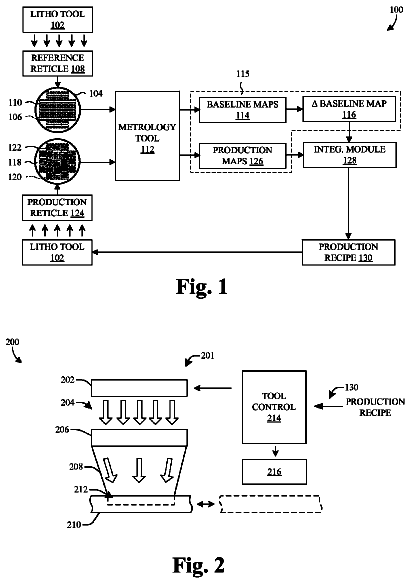
Intra-field process control for lithography
In some embodiments, the present application is directed to a method and system for process control of a lithography tool.
US 9,733,586 B2 · Assignee: FUJI XEROX CO., LTD. · Inventors: Yoshimura; Kousaku et al.
Sheet 1 of 3 from the published document. All sheets in the USPTO PDF
A resin composite particle includes a continuous phase formed of a polyester resin, and a dispersed phase formed of a vinyl resin and dispersed in the continuous phase, the volume average particle diameter of the resin composite particles being from 50 nm to 1,000 nm.
Various resin composite particles have been proposed.
1 of 3 drawing sheets so far from the published document, cropped to the drawing. Every sheet is in the USPTO PDF.
What the patent claimed, word for word. All of it is now free to use.
This application is based on and claims priority under 35 USC 119 from Japanese Patent Application No. 2015-163226 filed Aug. 20, 2015.
The present invention relates to a resin composite particle, an electrostatic charge image developing toner, and an electrostatic charge image developer.
Various resin composite particles have been proposed.
According to an aspect of the invention, there is provided a resin composite particle including:
a continuous phase formed of a polyester resin; and
a dispersed phase formed of a vinyl resin and dispersed in the continuous phase,
a volume average particle diameter of the resin composite particles being from 50 nm to 1,000 nm.
Exemplary embodiments of the present invention will be described in detail based on the following figures, wherein:
FIG. 1 is a schematic configuration view illustrating an example of an image forming apparatus according to an exemplary embodiment;
FIG. 2 is a schematic configuration view illustrating an example of a process cartridge according to an exemplary embodiment;
FIG. 3 is a schematic cross-sectional view illustrating a resin composite particle according to an exemplary embodiment; and
FIG. 4 is an image obtained by observing resin composite particles of Example 1 using a transmission electron microscope.
Hereinafter, exemplary embodiments of the present invention will be described. The descriptions and examples of these exemplary embodiments are merely provided for illustrating the exemplary embodiments and are not intended to limit the scope of the invention.
In the specification, the term “electrostatic charge image developing toner” is also simply referred to as “toner” and the term “electrostatic charge image developer” is also simply referred to as “developer”.
Resin Composite Particle
The resin composite particle according to an exemplary embodiment has a continuous phase formed of a polyester resin and a dispersed phase formed of a vinyl resin dispersed in the continuous phase, and the volume average particle diameter (D50v) of the resin composite particles is from 50 nm to 1,000 nm.
FIG. 3 is a schematic view illustrating the resin composite particle according to the exemplary embodiment. As shown in FIG. 3 , in the resin composite particle 10 , a dispersed phase 14 formed of a vinyl resin is included in a continuous phase 12 formed of a polyester resin.
In other words, in the resin composite particle according to the exemplary embodiment, plural vinyl resin particles are included in a polyester resin particle, and the volume average particle diameter (D50v) of the resin composite particles is from 50 nm to 1,000 nm.
The resin composite particle according to the exemplary embodiment is provided in the form of a dispersion including the resin composite particles, a dried powder of resin composite particles, or the like.
In the related art, a polyester resin has been used as a base material for various resin products. On the other hand, since the physical properties formed of a vinyl resin is generally easily adjusted compared to a polyester resin, a vinyl resin is used in combination together with a polyester resin for the purpose of adjusting the characteristics of a resin product having a polyester resin as a main resin component (in the specification, referred to as “polyester resin product”).
The resin composite particle according to the exemplary embodiment has a continuous phase formed of a polyester resin, and accordingly, the polyester resin is present on the surface of the particle. Thus, the resin composite particles may be easily blended at the time of preparing a polyester resin product and the characteristics of the polyester resin product may be easily adjusted by using a vinyl resin. Moreover, since the vinyl resin in the resin composite particle according to the exemplary embodiment is included as a dispersed phase (of course, particle smaller than the resin composite particle), the vinyl resin is arranged as a dispersed phase having a nanometer order particle diameter in the polyester resin product in which the resin composite particles are blended.
Since the dispersed phase (vinyl resin particles) derived from the resin composite particles according to the exemplary embodiment arranged in the polyester resin product has a small diameter of a nanometer order, it is assumed that
the effect of enhancing the hardness of the polyester resin product (also referred to as a filler effect) is exhibited,
the storage elastic modulus of the polyester resin product is increased, and further,
the transparency or the original color of the polyester resin product is not easily deteriorated.
Accordingly, the resin composite particles according to the exemplary embodiment may be applied to various uses, for example, a toner, an adhesive, a coating material, a resin molded article such as a drink bottle, or a device housing, an optical material such as a lens, a resin for a 3D printer, and a nanoimprint mold, and are useful.
For example, in the technical field of toner, toner particles containing a polyester resin as a binder resin and vinyl resin particles as a dispersed phase have been known. The resin composite particles according to the exemplary embodiment are easily blended in toner particles including a polyester resin as a binder resin and vinyl resin particles having a nanometer order particle diameter may be arranged in the toner particles.
In addition, as toner particles, toner particles having a so-called core-shell structure composed of a core (core particle) and a coating layer (shell layer) that is coated on the core have been known. When the resin composite particles according to the exemplary embodiment are used for forming a core, vinyl resin particles having a nanometer order particle diameter may be arranged in the core and when the resin composite particles are used for forming a coating layer, vinyl resin particles having a nanometer order particle diameter may be arranged in the coating layer.
When the vinyl resin particles derived from the resin composite particles according to the exemplary embodiment is arranged in the toner particles, the characteristics of toner may be adjusted by using the vinyl resin and the filler effect of the vinyl resin particles having a nanometer order particle diameter is exhibited.
Particularly, in the toner particles having a so-called core-shell structure, when the vinyl resin particles derived from the resin composite particles according to the exemplary embodiment are arranged in the coating layer, the filler effect of the vinyl resin particles is high. This is because the vinyl resin particles having a small diameter of a nanometer order are arranged to be closer to the surfaces of the toner particles. Thus, an external additive is prevented from being embedded in the toner particles and as a result, aggregation of toner particles and an image defect caused by the aggregation of toner particles are prevented.
In addition, since the filler effect is effectively exhibited as described above, the amount of the vinyl resin blended may be prevented. The vinyl resin particles are present in the continuous phase formed of the polyester resin of the resin composite particle and thus the vinyl resin particles are prevented from being exposed when the vinyl resin particles are arranged to be closer to the surfaces of the toner particles. Accordingly, when the resin composite particles according to the exemplary embodiment are applied to the coating layer, the low temperature fixability of a toner is less likely to be deteriorated.
Hereinafter, the resin composite particle according to the exemplary embodiment will be described in detail.
Structure of Resin Composite Particle
In the resin composite particle according to the exemplary embodiment, the polyester resin and the vinyl resin are mixed in an incompatible state and the vinyl resin, which is a dispersed phase, is included in the polyester resin, which is a continuous phase. In other words, in the resin composite particle according to the exemplary embodiment, plural vinyl resin particles are included in the polyester resin particle.
The volume average particle diameter (D50v) of the resin composite particles is from 50 nm to 1,000 nm.
When the volume average particle diameter of the resin composite particles is 1,000 nm or less, the vinyl resin particles included in the resin composite particle have a particle diameter of a nanometer order. Accordingly, the vinyl resin particles are arranged in a polyester resin product in which the resin composite particles are blended as a dispersed phase having a particle diameter of a nanometer order. The volume average particle diameter of the resin composite particles is preferably 800 nm or less and more preferably 600 nm or less.
On the other hand, when the volume average particle diameter of the resin composite particles is 50 nm or more, the vinyl resin is stably included as a dispersed phase. The volume average particle diameter of the resin composite particles is preferably 60 nm or more and more preferably 80 nm or more.
The volume average particle diameter (D50v) of the resin composite particles is preferably from 100 nm to 500 nm. When the volume average particle diameter of the resin composite particles is within the above range, a dispersion that contains the resin composite particles is preferably used as a resin particle dispersion to be used when toner particles are prepared in an aggregation and coalescence method.
The volume average particle diameter (D50v) of the resin composite particles is more preferably from 100 nm to 300 nm and even more preferably from 150 nm to 300 nm. From the viewpoint of easiness in preparing of resin composite particles, the volume average particle diameter of the resin composite particles is preferably 100 nm or more and more preferably 150 nm or more. On the other hand, when the volume average particle diameter of the resin composite particles is 300 nm or less, a dispersion that contains the resin composite particles is preferably used as a resin particle dispersion used for forming a shell layer when toner particles having a core-shell structure are prepared in an aggregation and coalescence method.
Regarding the volume average particle diameter of the resin composite particles, in the case of resin composite particles in a dispersion, a cumulative distribution is drawn from the side of the smallest diameter using the particle size distribution obtained by the measurement using a laser diffraction type particle size distribution measuring device (for example, LA-700, manufactured by Horiba, Ltd.) and a particle diameter when the volume cumulative percentage becomes 50% is determined as a volume average particle diameter (D50v).
Regarding the volume average particle diameter of the resin composite particles, in the case in which the resin composite particles are in the form of a dried powder, a cumulative distribution is drawn from the side of the smallest diameter using a particle size distribution obtained by the measurement using a scanning electron microscopic (SEM) (for example, S4700, manufactured by Hitachi, Ltd.) and a particle diameter when the volume cumulative percentage becomes 50% is determined as a volume average particle diameter (D50v).
The volume average particle diameter (D50v) of the resin composite particles may be controlled by the volume average particle diameter of polyester resin particles included in a polyester resin particle dispersion used for preparing in a method of preparing resin composite particles, which will be described later.
The average particle diameter of the dispersed phase formed of the vinyl resin (vinyl resin particles) included in the resin composite particles is preferably from 10 nm to 50 nm.
When the average particle diameter of the dispersed phase formed of the vinyl resin (vinyl resin particles) is 50 nm or less, a filler effect is exhibited effectively in a polyester resin product in which the resin composite particles are blended and the transparency of the polyester resin product is less likely to be deteriorated. From this viewpoint, the average particle diameter of the dispersed phase formed of the vinyl resin (vinyl resin particles) is more preferably 45 nm or less, even more preferably 40 nm or less, and still even more preferably 35 nm or less.
On the other hand, when the average particle diameter of the dispersed phase formed of the vinyl resin (vinyl resin particles) is 10 nm or more, the toughness and moldability of the polyester resin are less likely to be deteriorated. From this viewpoint, the average particle diameter of the dispersed phase formed of the vinyl resin (vinyl resin particles) is more preferably 15 nm or more and even more preferably 20 nm or more.
The average particle diameter of the dispersed phase formed of the vinyl resin (vinyl resin particles) included in the resin composite particles is obtained by the following measurement method.
A dried powder of resin composite particles is dyed with ruthenium tetraoxide in a desiccator at 30° C. A TEM image of the dyed dried powder is obtained using a transmission electron microscope (TEM). In the TEM image, the long diameters (the maximum length connecting two arbitrary points on the outline) of all particles observed in 100 resin composite particles, which are randomly extracted, are respectively measured to obtain the average value. The average value is determined as the average particle diameter of the dispersed phase formed of the vinyl resin (vinyl resin particles).
The average particle diameter of the dispersed phase formed of the vinyl resin (vinyl resin particles) may be controlled by the amount of vinyl monomers used for preparing in a method of preparing resin composite particles, which will be described later.
The content of the vinyl resin included in the resin composite particles is preferably from 10% by weight to 50% by weight with respect to the total resin composite particles.
When the content of the vinyl resin is 50% by weight or less, the vinyl resin is stably included as a dispersed phase. From this viewpoint, the content of the vinyl resin is more preferably 45% by weight or less and even more preferably 40% by weight or less.
On the other hand, when the content of the vinyl resin is 10% by weight or more, in the case in which the resin composite particles are blended in a polyester resin product, the characteristics of the polyester resin product is effectively adjusted by the vinyl resin. From this viewpoint, the content of the vinyl resin is more preferably 15% by weight or more and even more preferably 20% by weight or more.
Polyester Resin
Examples of the polyester resin contained in the resin composite particle according to the exemplary embodiment include known polyester resin. For example, polycondensates of polyvalent carboxylic acids and polyols may be used.
Specific examples of the polyester resin include polyester resins used as a binder resin in toner particles which will be described later.
In the case in which the resin composite particles according to the exemplary embodiment are applied to a toner, the glass transition temperature (Tg) of the polyester resin is preferably from 50° C. to 80° C., and more preferably from 50° C. to 65° C. The weight average molecular weight (Mw) of the polyester resin is preferably from 5,000 to 1,000,000, and more preferably from 7,000 to 500,000. The number average molecular weight (Mn) of the polyester resin is preferably from 2,000 to 100,000. The molecular weight distribution Mw/Mn of the polyester resin is preferably from 1.5 to 100 and more preferably from 2 to 60. The weight average molecular weight and the number average molecular weight of the polyester resin are measured in the following manner.
From the viewpoint of phase inversion emulsification, the acid value of the polyester resin (the amount by mg of KOH required for neutralizing 1 g of a resin) is preferably from 3 mgKOH/g to 30 mgKOH/g, more preferably 5 mgKOH/g to 25 mgKOH/g, and even more preferably from 6 mgKOH/g to 20 mgKOH/g. The acid value of the polyester resin is adjusted by controlling the amount of a carboxy group of the polyester resin according to the blending ratio and reaction rate between a polyvalent carboxylic acid and a polyol. The acid value of the polyester resin is measured by a neutralization titration method in accordance with JIS K0070.
Vinyl Resin
Examples of vinyl monomers used for obtaining a vinyl resin to be contained in the resin composite particle according to the exemplary embodiment include styrenes such as styrene, alkyl-substituted styrene (for example, α-methylstyrene, 2-methylstyrene, 3-methylstyrene, 4-methylstyrene, 2-ethylstyrene, 3-ethylstyrene, 4-ethylstyrene, and the like), halogen-substituted styrenes (for example, 2-chlorostyrene, 3-chlorostyrene, 4-chlorostyrene, and the like), and vinyl naphthalene; (meth)acrylic esters such as methyl (meth)acrylate, ethyl (meth)acrylate, n-propyl (meth)acrylate, n-butyl (meth)acrylate, lauryl (meth)acrylate, 2-ethylhexyl (meth)acrylate, phenyl (meth)acrylate, biphenyl (meth)acrylate, and trimethylolpropane trimethacrylate (TMPTMA); (meth)acrylic ester derivatives such as dimethylaminoethyl (meth)acrylate, diethylaminoethyl (meth)acrylate, methoxyethyl (meth)acrylate, 2-hydroxyethyl (meth)acrylate, and β-carboxyethyl (meth)acrylate; (meth)acrylamides and derivatives thereof; ethylenically unsaturated nitriles such as acrylonitrile and methacrylonitrile; vinyl ethers such as vinyl methyl ether and vinyl isobutyl ether; vinyl ketones such as vinyl methyl ketone, vinyl ethyl ketone, and vinyl isopropenyl ketone; acids having a vinyl group such as (meta)acrylic acid, maleic acid, cinnamic acid, fumaric acid, and vinyl sulfonic acid; and bases having a vinyl group such as ethylene imine, vinyl pyridine, and vinyl amine. The above expression “(meth)acryl” refers to both or any one of acryl and methacryl.
Examples of other monomers which may be copolymerized with the above monomers include monofunctional monomers such as vinyl acetate; difunctional monomers such as ethylene glycol dimethacrylate, nonane diacrylate, and decanediol diacrylate; and polyfunctional monomers such as trimethylolpropane triacrylate and trimethylolpropane trimethacrylate.
As the vinyl resin, homopolymers of the above-described monomers may be used or copolymers thereof may be used. As the vinyl resin, polymers of styrenes; and copolymers of styrenes and at least one selected from (meth)acrylic esters and (meth)acrylic acids; are preferable and here, styrenes may be used alone or in combination of two or more kinds thereof. As the styrenes, from the viewpoint of easiness of polymerization reaction and easiness of control of polymerization reaction, styrene is preferable.
The glass transition temperature (Tg) of the vinyl resin is, for example, from 40° C. to 200° C. and preferably from 50° C. to 150° C.
The glass transition temperature of the vinyl resin is preferably higher (for example, by more than 10° C.) than the glass transition temperature of polyester resin particles which constitute a binder resin when the resin composite particles according to the exemplary embodiment are applied to toner particles prepared by an aggregation and coalescence method. Thus, while the polyester resin particles which are to constitute a binder resin coalesce, the dispersed phase formed of the vinyl resin derived from the resin composite particles is prevented from coalescing or being compatible with the binder resin and thus the dispersed phase remains in the toner particle as it is.
The weight average molecular weight (Mw) of the vinyl resin is preferably from 10,000 to 1,000,000, and more preferably from 20,000 to 500,000.
The weight average molecular weight and the number average molecular weight of the vinyl resin are measured by gel permeation chromatography (GPC). The molecular weight measurement by GPC is performed using HLC-8120GPC which is GPC manufactured by Tosoh Corporation as a measuring device, TSKGEL Super HM-M (15 cm) which is a column manufactured by Tosoh Corporation, and a tetrahydrofuran (THF) as a solvent. The weight average molecular weight and the number average molecular weight are calculated using a molecular weight calibration curve plotted from a monodisperse polystyrene standard sample from the results of the above measurement.
The glass transition temperatures (Tg) of the polyester resin and the vinyl resin included in the resin composite particle according to the exemplary embodiment are obtained from a DSC curve obtained by differential scanning calorimetry (DSC). More specifically, the glass transition temperature is obtained from “extrapolated glass transition onset temperature” described in the method of obtaining a glass transition temperature in JIS K7121-1987 “testing methods for transition temperatures of plastics”. The respective glass transition temperatures of the polyester resin and the vinyl resin are read out from plural peaks shown in the DSC curve.
Method of Preparing Resin Composite Particles
The resin composite particle according to the exemplary embodiment has a continuous phase formed of a polyester resin and a dispersed phase formed of a vinyl resin, and the volume average particle diameter of the resin composite particles is from 50 nm to 1,000 nm. As a method for preparing the resin composite particles, from the viewpoint of dispersing the vinyl resin in the polyester resin, a preparing method of polymerizing vinyl monomers in polyester resin particles is preferable. Specifically, a preparing method including a phase inversion emulsion process of obtaining polyester resin particle dispersion by subjecting a chlorinated polyester resin to phase inversion emulsion, and a polymerization process of polymerizing vinyl monomers in the polyester resin particles of the polyester resin particle dispersion may be exemplified as a preferable example. Here, the expression “in the polyester resin particles” refers to a region disposed on the inner side of the polyester resin particles than to the surface thereof.
The reasons why the above preparing method is preferable are considered as follows.
Since the polyester resin having a carboxy group which is chlorinated by abase is self-emulsifying, the carboxy group which is chlorinated by a base is directed to the outer side in the polyester resin particles obtained by subjecting the polyester resin to phase inversion emulsion. When vinyl monomers are placed into the polyester resin particle dispersion, it is assumed that the vinyl monomers easily enter the polyester resin particles. Then, in the resin composite particles obtained by polymerizing the vinyl monomers in the polyester resin particles, the vinyl resin is obtained as a dispersed phase by adjusting the amount of the vinyl monomers to be placed into the polyester resin particle dispersion.
Hereinafter, the aforementioned preferable example of the method of preparing the resin composite particles according to the exemplary embodiment will be described in detail.
Phase Inversion Emulsion Process
The phase inversion emulsion process includes respective processes of, for example, a dissolution process of preparing a polyester resin solution by dissolving a polyester resin in an organic solvent; a phase inversion process of obtaining a polyester resin particle dispersion by preparing a polyester resin chlorinated by mixing the polyester resin solution and a base, and further mixing water to conduct phase inversion emulsion; and an organic solvent removal process of removing the organic solvent from the polyester resin particle dispersion.
Dissolution Process
The dissolution process is a process of dissolving a polyester resin in an organic solvent. Examples of the organic solvent for dissolving the polyester resin include ketones such as acetone, methyl ethyl ketone, and methyl isobutyl ketone; ethers such as tetrahydrofuran, 1,4-dioxane, and 1,3-dioxane; halogen containing organic solvents such as chloroform and methylene chloride; alcohols such as n-butanol and isopropanol; and esters such as ethyl acetate. These organic solvents may be used alone or in combination of two or more kinds thereof. Among these organic solvents, from the viewpoint of removing the organic solvent in the subsequent process, an organic solvent having a boiling point lower than that of water is preferable and for example, organic solvents in which ketones and alcohols are used in combination are preferable.
The amount of the organic solvent used is preferably from 10 parts by weight to 200 parts by weight, more preferably from 20 parts by weight to 150 parts by weight, and even more preferably from 25 parts by weight to 100 parts by weight with respect to 100 parts by weight of the polyester resin from the viewpoint of the efficiency for obtaining a polyester resin particle dispersion, and the particle size distribution and dispersibility of the polyester resin particles in the subsequent process.
Phase Inversion Process
The phase inversion process is a process of obtaining a polyester resin particle dispersion by preparing a polyester resin chlorinated by mixing the polyester resin solution prepared in the dissolution process with a base and further mixing the polyester resin with water to conduct phase inversion emulsion.
The chlorinated polyester resin is a polyester resin having a structure in which a carboxy group is chlorinated by a base.
Examples of a base for obtaining the chlorinated polyester resin include amine compounds such as monomethylamine, dimethylamine, trimethylamine, monoethylamine, diethylamine, and triethylamine; and inorganic bases such as ammonia aqueous solution, sodium hydroxide, and potassium hydroxide.
The amount of the base to be mixed with the polyester resin solution is determined according to the amount of the carboxy group of the polyester resin from the viewpoint of conducting phase inversion emulsion of the polyester resin, and the amount of the base is preferably from 0.4 to 2.0 equivalents, and more preferably from 0.5 to 1.0 equivalent to the total carboxy group of the polyester resin. The acid value of the chlorinated polyester resin is preferably in a range of 5 mgKOH/g to 30 mgKOH/g and more preferably in a range of 5 mgKOH/g to 20 mgKOH/g.
After the polyester resin is chlorinated, the polyester resin is mixed with water to conduct phase inversion emulsion. The liquid containing the chlorinated polyester resin and water may be mixed at one time but preferably the liquid containing the chlorinated polyester resin and water may be slowly mixed. For example, a method in which water is added dropwise while stirring a liquid containing a chlorinated polyester resin at room temperature (for example, 20° C. to 25° C.) and is slowly mixed with the liquid may be used.
Organic Solvent Removal Process
The organic solvent removal process is a process of removing the organic solvent from the polyester resin particle dispersion obtained from the phase inversion process. The organic solvent may be removed under reduced pressure or normal pressure and under heating or without heating.
The volume average particle diameter of the polyester resin particles to be dispersed in the polyester resin particle dispersion obtained through the organic solvent removal process may be selected according to a target particle size of the resin composite particles. For example, the volume average particle diameter is from 50 nm to 1,000 nm, preferably from 100 nm to 500 nm, more preferably from 100 nm to 300 nm, and even more preferably from 150 nm to 300 nm.
Regarding the volume average particle diameter, a cumulative distribution by volume is drawn from the side of the smallest diameter with using the particle size distribution obtained by the measurement with a laser diffraction-type particle size distribution measuring device (for example, LA-700 manufactured by Horiba, Ltd.), and a particle diameter when the volume cumulative percentage becomes 50% is determined as a volume average particle diameter (D50v).
The content of the polyester resin particles included in the polyester resin particle dispersion is preferably from 1% by weight to 50% by weight and more preferably from 2% by weight to 40% by weight.
Polymerization Process
The polymerization process is a process of polymerizing a vinyl monomers in the polyester resin particles by mixing the polyester resin particle dispersion obtained in the phase inversion emulsion process and the vinyl monomers.
As a specific example of the method of the polymerization process, vinyl monomers and a chain transfer agent are mixed, and the mixture is emulsified with water and a surfactant to prepare a vinyl monomer emulsion. Next, the polyester resin particle dispersion and a polymerization initiator are mixed, and further, the aforementioned vinyl monomer emulsion is slowly mixed with the mixture. Thereafter, the resultant mixture is heated and thus the vinyl monomers are polymerized in the polyester resin particles.
The vinyl monomer emulsification may be optionally performed. For example, the vinyl monomer emulsification is performed by mixing vinyl monomers, a surfactant, and water and stirring the mixture with a dispersing machine.
The chain transfer agent and the surfactant are components which are optionally added.
Examples of the chain transfer agent include compounds having a thiol moiety such as hexylthiol, heptanethiol, octanethiol, nonanethiol, decanethiol, dodecanethiol, tetradecanethiol, and hexadecanethiol.
Examples of the polymerization initiator include peroxides such as hydrogen peroxide, acetyl peroxide, cumyl peroxide, tert-butyl peroxide, propionyl peroxide, benzoyl peroxide, chlorobenzoyl peroxide, dichlorobenzoyl peroxide, bromomethylbenzoyl peroxide, lauroyl peroxide, ammonium persulfate, sodium persulfate, potassium persulfate, diisopropyl peroxycarbonate, tetralin hydroperoxide, 1-phenyl-2-methylpropyl-1-hydroperoxide, tert-butylhydroperoxide pertriphenylacetate, tert-butyl performate, tert-butyl peracetate, tert-butyl perbenzoate, tert-butyl perphenylacetate, tert-butyl permethoxyacetate, tert-butyl per-N-(3-toluyl)carbamate, ammonium bisulfate, and sodium bisulfate; and azo compounds such as 2,2′-azobis(isobutyronitrile) (AIBN) and 2,2′-azobis-(2,4′-dimethylvaleronitrile).
In the exemplary embodiment, from the viewpoint of arranging the vinyl resin in the polyester resin particles as a dispersed phase, the amount of the vinyl monomers to be added to the polyester resin particle dispersion is preferably from 10% by weight to 50% by weight and more preferably from 10% by weight to 40% by weight with respect to the total amount of the polyester resin particles and the vinyl monomers.
From the viewpoint of incorporating the vinyl monomers into the polyester resin particles, it is preferable that the vinyl monomers are slowly mixed with the polyester resin particles and for example, dropwise addition is preferable.
The temperature at which the vinyl monomers are polymerized in the polyester resin particles is preferably from a temperature 30° C. lower than the glass transition temperature of the polyester resin to a temperature 30° C. higher than the glass transition temperature of the polyester resin.
The resin composite particles according to the exemplary embodiment are provided in the form of, for example, a dispersion including the resin composite particles. The dispersion is, for example, a reaction liquid after the phase inversion process and the polymerization process.
The amount (solid content amount) of the resin composite particles included in the dispersion of the resin composite particles is, for example, from 5% by weight to 50% by weight and preferably from 10% by weight to 40% by weight.
The resin composite particles according to the exemplary embodiment are provided in the form of, for example, a dried powder. The dried powder of resin composite particles is obtained by drying (for example, freeze drying, flash jet drying, fluidized drying, vibrating fluidized drying, vacuum drying, and the like) the reaction liquid after the phase inversion process and the polymerization process. Before the drying, displacement washing by ion exchange water, and solid-liquid separation by suction filtration, or pressure filtration may be performed.
Electrostatic Charge Image Developing Toner
As an example of use of the resin composite particles according to the exemplary embodiment, an example in which the resin composite particles are applied to a toner will be described. The use of the resin composite particles is not limited thereto.
A toner according to this exemplary embodiment includes toner particles, and optionally, an external additive.
The toner according to the exemplary embodiment includes toner particles that contain a binder resin including a polyester resin and have a dispersed phase formed of a vinyl resin derived from the resin composite particles according to the exemplary embodiment.
In the related art, for the purpose of adjusting the characteristics of a toner, a technique of using a vinyl resin in combination with a polyester resin has been known. According to the resin composite particles according to the exemplary embodiment, in the toner particle containing a polyester resin as a binder resin, a vinyl resin may be arranged as a dispersed phase.
Toner Particles
The toner particle contains a binder resin including a polyester resin and have a dispersed phase formed of a vinyl resin (vinyl resin particles) derived from resin composite particles according to the exemplary embodiment. The toner particle may further include a colorant, a release agent, and other additives.
The toner particle may have a single layer structure, or a so-called core-shell structure composed of a core (core particle) and a coating layer (shell layer) that is coated on the core.
In the case of toner particle having a core-shell structure, it is preferable that the toner particle is provided with, a core configured to include at least a polyester resin, and a coating layer configured to include at least a polyester resin, and have at least a dispersed phase formed of a vinyl resin derived from the resin composite particles according to the exemplary embodiment in the coating layer. The core may have a colorant, a release agent, and other additives.
When the toner particle having a core-shell structure has a dispersed phase formed of a vinyl resin derived from the resin composite particles according to the exemplary embodiment in the shell layer, the hardness of the surfaces of the toner particles is increased and an external additive is prevented from being embedded. As a result, aggregation of toner particles and an image defect caused by aggregation of toner particles are prevented.
Dispersed Phase of Vinyl Resin Derived from Resin Composite Particles
In the toner according to the exemplary embodiment, the toner particle has a dispersed phase formed of a vinyl resin (vinyl resin particles) derived from the resin composite particles. The toner particle may include the dispersed phase formed of the vinyl resin by, for example, using the resin composite particles according to the exemplary embodiment when the toner particle is prepared by an aggregation and coalescence method.
It is preferable that the size of the dispersed phase formed of the vinyl resin included in the toner particle reflects the size of the dispersed phase formed of the vinyl resin in the resin composite particles according to the exemplary embodiment. Specifically, the size of the dispersed phase formed of the vinyl resin is preferably an average size of 10 nm to 50 nm. The average size of the dispersed phase formed of the vinyl resin in the toner particles is obtained in the following measurement method.
The toner is mixed with an epoxy resin and the epoxy resin is solidified. The obtained solid material is cut using an ultramicrotome (UlTRACUT UCT, manufactured by Leica Microsystems) to prepare a flake sample having a thickness of 80 nm to 130 nm. Next, the flake sample is dyed with ruthenium tetraoxide in a desiccator at 30° C. for 3 hours. Then, a TEM image of the dyed flake sample is obtained using a transmission electron microscope (TEM). Each component is recognized according to shading caused by dyeing degrees. In a case where the shading is difficult to determine due to the state of the sample, the dyeing time is adjusted.
The cross sections of toner particles having various sizes are included in the TEM image, and the cross sections of toner particles in which the long diameter (the maximum length connecting two arbitrary points on the outline) is 85% or more of the volume average particle diameter of the toner particles are selected. Among the cross sections of the toner particles, the cross sections of 20 toner particles are randomly selected and are observed. The reason for selecting the cross sections of the toner particles as described above is that a cross section in which the long diameter is less than 85% of the volume average particle diameter is presumed as a cross section of the end of the toner particle, and a state of a domain in the toner particle is not sufficiently reflected in the cross section of the end of the toner particle.
The long diameters (the maximum length connecting two arbitrary points on the outline) of all the dispersed phases formed of the vinyl resin shown in the cross sections of 20 toner particles selected as described above are measured and an average value thereof is obtained. The obtained average value is determined as an average diameter of the dispersed phases formed of the vinyl resin in the toner particles.
In the case of toner particle having a core-shell structure, it is preferable that at least the coating layer has the dispersed phase formed of the vinyl resin derived from the resin composite particles.
The amount of the vinyl resin derived from the resin composite particles included in the coating layer (that is, the amount of vinyl resin constituting the dispersed phase in the coating layer) is preferably in a range of 1% by weight to 5% by weight with respect to the total toner particles. When the amount of the vinyl resin is 1% by weight or more, the filler effect of the dispersed phase formed of the vinyl resin is effectively exhibited. From this viewpoint, the amount of the vinyl resin is more preferably 2% by weight or more and even more preferably 3% by weight or more. On the other hand, when the amount of the vinyl resin is 5% by weight or less, the low temperature fixability of the toner is less likely to be deteriorated.
Binder Resin
Examples of the binder resins include a homopolymer composed of monomers such as styrenes (for example, styrene, p-chlorostyrene, α-methyl styrene, or the like), (meth)acrylic esters (for example, methyl acrylate, ethyl acrylate, n-propyl acrylate, n-butyl acrylate, lauryl acrylate, 2-ethylhexyl acrylate, methyl methacrylate, ethyl methacrylate, n-propyl methacrylate, lauryl methacrylate, 2-ethylhexyl methacrylate, or the like), ethylenic unsaturated nitriles (for example, acrylonitrile, methacrylonitrile, or the like), vinyl ethers (for example, vinyl methyl ether, vinyl isobutyl ether, or the like), vinyl ketones (for example, vinyl methyl ketone, vinyl ethyl ketone, vinyl isopropenyl ketone, or the like), olefins (for example, ethylene, propylene, butadiene, or the like), or a vinyl resin formed of a copolymer obtained by combining two or more kinds of these monomers.
The description continues in the full USPTO document.
About 6,202 words. The USPTO PDF has it with every drawing.
Fees are due 3.5, 7.5 and 11.5 years after grant. This patent expired on August 15, 2025, so the fee marked "not paid" was the one that went unpaid.
RESIN COMPOSITE PARTICLE, ELECTROSTATIC CHARGE IMAGE DEVELOPING TONER, AND ELECTROSTATIC CHARGE IMAGE DEVELOPER
Filed Feb 2016 · published Feb 2017Resin composite particle, electrostatic charge image developing toner, and electrostatic charge image developer
Filed Feb 2016 · granted Aug 2017Earlier publications, parents and continuations. None of them can still be enforced, or this patent would not be listed.
Prior art cited by the examiner or applicant. Useful when you check your own idea for novelty.
Everything on this page comes from the documents linked above.


