Lapsed, fee not paidUS 9,725,704 B2
Biotech & Lab · US 9,725,704 B2
Expression method
In a microbial fermentation, the aim is to increase the product yield of protein.
US 9,725,728 B2 · Assignee: Mendel Biotechnology, Inc. · Inventors: Sherman; Bradley K. et al.
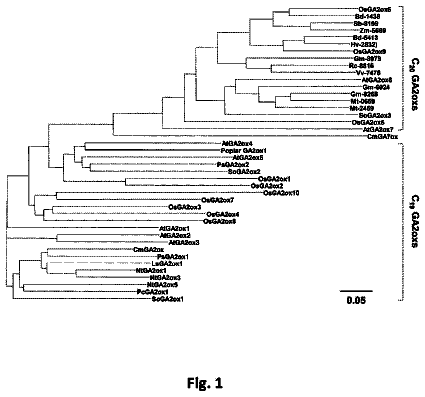
Sheet 1 of 14 from the published document. All sheets in the USPTO PDF
The invention relates to plant transcription factor polypeptides, polynucleotides that encode them, homologs from a variety of plant species, and methods of using the polynucleotides and polypeptides to produce transgenic plants having advantageous properties compared to a reference plant. Sequence information related to these polynucleotides and polypeptides can also be used in bioinformatic search methods and is also disclosed.
A plant's traits, such as its biochemical, developmental, or phenotypic characteristics, may be controlled through a number of cellular processes. One important way to manipulate that control is through transcription factors—proteins that influence the expression of a particular gene or sets of genes. Transformed and transgenic plants that comprise cells having altered levels of at least one selected transcription factor, for example, possess advantageous or desirable traits. Strategies for manipulating traits by altering a plant cell's transcription factor content can therefore result in plants and crops with new and/or improved commercially valuable properties. Transcription factors can modulate gene expression, either increasing or decreasing (inducing or repressing) the rate of transcription. This modulation results in differential levels of gene expression at various developmental s
1 of 14 drawing sheets so far from the published document, cropped to the drawing. Every sheet is in the USPTO PDF.
What the patent claimed, word for word. All of it is now free to use.
The claimed invention, in the field of functional genomics and the characterization of plant genes for the improvement of plants, was made by or on behalf of Mendel Biotechnology, Inc. and Monsanto Company as a result of activities undertaken within the scope of a joint research agreement, said agreement having been in effect on or before the date the claimed invention was made.
This invention relates to the field of plant biology. More particularly, the present invention pertains to compositions and methods for modifying a plant phenotypically.
A plant's traits, such as its biochemical, developmental, or phenotypic characteristics, may be controlled through a number of cellular processes. One important way to manipulate that control is through transcription factors—proteins that influence the expression of a particular gene or sets of genes. Transformed and transgenic plants that comprise cells having altered levels of at least one selected transcription factor, for example, possess advantageous or desirable traits. Strategies for manipulating traits by altering a plant cell's transcription factor content can therefore result in plants and crops with new and/or improved commercially valuable properties.
Transcription factors can modulate gene expression, either increasing or decreasing (inducing or repressing) the rate of transcription. This modulation results in differential levels of gene expression at various developmental stages, in different tissues and cell types, and in response to different exogenous (e.g., environmental) and endogenous stimuli throughout the life cycle of the organism.
Because transcription factors are key controlling elements of biological pathways, altering the expression levels of one or more transcription factors can change entire biological pathways in an organism. For example, manipulation of the levels of selected transcription factors may result in increased expression of economically useful proteins or biomolecules in plants or improvement in other agriculturally relevant characteristics. Conversely, blocked or reduced expression of a transcription factor may reduce biosynthesis of unwanted compounds or remove an undesirable trait. Therefore, manipulating transcription factor levels in a plant offers tremendous potential in agricultural biotechnology for modifying a plant's traits. A number of the agriculturally relevant characteristics of plants, and desirable traits that may be imbued by gene expression are listed below.
Useful Plant Traits
Category: Abiotic Stress; Desired Trait: Chilling Tolerance
The term “chilling sensitivity” has been used to describe many types of physiological damage produced at low, but above freezing, temperatures. Most crops of tropical origins such as soybean, rice, maize and cotton are easily damaged by chilling. Typical chilling damage includes wilting, necrosis, chlorosis or leakage of ions from cell membranes. The underlying mechanisms of chilling sensitivity are not completely understood yet, but probably involve the level of membrane saturation and other physiological deficiencies. For example, photoinhibition of photosynthesis (disruption of photosynthesis due to high light intensities) often occurs under clear atmospheric conditions subsequent to cold late summer/autumn nights. By some estimates, chilling accounts for monetary losses in the United States (US) second only to drought and flooding. For example, chilling may lead to yield losses and lower product quality through the delayed ripening of maize. Another consequence of poor growth is the rather poor ground cover of maize fields in spring, often resulting in soil erosion, increased occurrence of weeds, and reduced uptake of nutrients. A retarded uptake of mineral nitrogen could also lead to increased losses of nitrate into the ground water.
Category: Abiotic Stress; Desired Trait: Freezing Tolerance.
Freezing is a major environmental stress that limits where crops can be grown and reduces yields considerably, depending on the weather in a particular growing season. In addition to exceptionally stressful years that cause measurable losses of billions of dollars, less extreme stress almost certainly causes smaller yield reductions over larger areas to produce yield reductions of similar dollar value every year. For instance, in the US, the 1995 early fall frosts are estimated to have caused losses of over one billion dollars to corn and soybeans. The spring of 1998 saw an estimated $200 M of damages to Georgia alone, in the peach, blueberry and strawberry industries. The occasional freezes in Florida have shifted the citrus belt further south due to $100 M or more losses. California sustained $650 M of damage in 1998 to the citrus crop due to a winter freeze. In addition, certain crops such as Eucalyptus , which has the very favorable properties of rapid growth and good wood quality for pulping, are not able to grow in the southeastern states due to occasional freezes.
Inherent winter hardiness of the crop determines in which agricultural areas it can survive the winter. For example, for wheat, the northern central portion of the US has winters that are too cold for good winter wheat crops. Approximately 20% of the US wheat crop is spring wheat, with a market value of $2 billion. Areas growing spring wheat could benefit by growing winter wheat that had increased winter hardiness. Assuming a 25% yield increase when growing winter wheat, this would create $500 M of increased value. Additionally, the existing winter wheat is severely stressed by freezing conditions and should have improved yields with increased tolerance to these stresses. An estimate of the yield benefit of these traits is 10% of the $4.4 billion winter wheat crop in the US or $444 M of yield increase, as well as better survival in extreme freezing conditions that occur periodically.
Thus plants more resistant to freezing, both midwinter freezing and sudden freezes, would protect a farmers' investment, improve yield and quality, and allow some geographies to grow more profitable and productive crops. Additionally, winter crops such as canola, wheat and barley have 25% to 50% yield increases relative to spring planted varieties of the same crops. This yield increase is due to the “head start” the fall planted crop has over the spring planted crop and its reaching maturity earlier while the temperatures, soil moisture and lack of pathogens provide more favorable conditions.
Category: Abiotic Stress; Desired Trait: Salt Tolerance.
One in five hectares of irrigated land is damaged by salt, an important historical factor in the decline of ancient agrarian societies. This condition is only expected to worsen, further reducing the availability of arable land and crop production, since none of the top five food crops—wheat, corn, rice, potatoes, and soybean—can tolerate excessive salt.
Detrimental effects of salt on plants are a consequence of both water deficit resulting in osmotic stress (similar to drought stress) and the effects of excess sodium ions on critical biochemical processes. As with freezing and drought, high saline causes water deficit; the presence of high salt makes it difficult for plant roots to extract water from their environment (Buchanan et al.
in Biochemistry and Molecular Biology of Plants , American Society of Plant Physiologists, Rockville, Md.). Soil salinity is thus one of the more important variables that determines where a plant may thrive. In many parts of the world, sizable land areas are uncultivable due to naturally high soil salinity. To compound the problem, salination of soils that are used for agricultural production is a significant and increasing problem in regions that rely heavily on agriculture. The latter is compounded by over-utilization, over-fertilization and water shortage, typically caused by climatic change and the demands of increasing population. Salt tolerance is of particular importance early in a plant's lifecycle, since evaporation from the soil surface causes upward water movement, and salt accumulates in the upper soil layer where the seeds are placed. Thus, germination normally takes place at a salt concentration much higher than the mean salt level in the whole soil profile.
Category: Abiotic Stress; Desired Trait: Drought Tolerance.
While much of the weather that we experience is brief and short-lived, drought is a more gradual phenomenon, slowly taking hold of an area and tightening its grip with time. In severe cases, drought can last for many years, and can have devastating effects on agriculture and water supplies. With burgeoning population and chronic shortage of available fresh water, drought is not only the number one weather related problem in agriculture, it also ranks as one of the major natural disasters of all time, causing not only economic damage, but also loss of human lives. For example, losses from the US drought of 1988 exceeded $40 billion, exceeding the losses caused by Hurricane Andrew in 1992, the Mississippi River floods of 1993, and the San Francisco earthquake in 1989. In some areas of the world, the effects of drought can be far more severe. In the Horn of Africa the 1984-1985 drought led to a famine that killed 750,000 people.
Problems for plants caused by low water availability include mechanical stresses caused by the withdrawal of cellular water. Drought also causes plants to become more susceptible to various diseases (Simpson (1981). “The Value of Physiological Knowledge of Water Stress in Plants”, In Water Stress on Plants , (Simpson, G. M., ed.), Praeger, N.Y., pp. 235-265).
In addition to the many land regions of the world that are too arid for most if not all crop plants, overuse and over-utilization of available water is resulting in an increasing loss of agriculturally-usable land, a process which, in the extreme, results in desertification. The problem is further compounded by increasing salt accumulation in soils, as described above, which adds to the loss of available water in soils.
Category: Abiotic Stress; Desired Trait: Heat Tolerance.
Germination of many crops is very sensitive to temperature. A transcription factor that would enhance germination in hot conditions would be useful for crops that are planted late in the season or in hot climates.
Seedlings and mature plants that are exposed to excess heat may experience heat shock, which may arise in various organs, including leaves and particularly fruit, when transpiration is insufficient to overcome heat stress. Heat also damages cellular structures, including organelles and cytoskeleton, and impairs membrane function (Buchanan, supra).
Heat shock may result a decrease in overall protein synthesis, accompanied by expression of heat shock proteins. Heat shock proteins function as chaperones and are involved in refolding proteins denatured by heat.
Category: Abiotic Stress; Desired Trait: Tolerance to Low Nitrogen and Phosphorus.
The ability of all plants to remove nutrients from their environment is essential to survival. Thus, identification of genes that encode polypeptides with transcription factor activity may allow for the generation of transgenic plants that are better able to make use of available nutrients in nutrient-poor environments.
Among the most important macronutrients for plant growth that have the largest impact on crop yield are nitrogenous and phosphorus-containing compounds. Nitrogen- and phosphorus-containing fertilizers are used intensively in agriculture practices today. An increase in grain crop yields from 0.5 to 1.0 metric tons per hectare to 7 metric tons per hectare accompanied the use of commercial fixed nitrogen fertilizer in production farming (Vance
Plant Physiol. 127: 390-397). Given current practices, in order to meet food production demands in years to come, considerable increases in the amount of nitrogen- and phosphorus-containing fertilizers will be required (Vance, supra).
Nitrogen is the most abundant element in the Earth's atmosphere yet it is one of the most limiting elements to plant growth due to its lack of availability in the soil. Plants obtain N from the soil from several sources including commercial fertilizers, manure and the mineralization of organic matter. The intensive use of N fertilizers in present agricultural practices is problematic, the energy intensive Haber-Bosch process makes N fertilizer and it is estimated that the US uses annually between 3-5% of the nation's natural gas for this process. In addition to the expense of N fertilizer production and the depletion of non-renewable resources, the use of N fertilizers has led to the eutrophication of freshwater ecosystems and the contamination of drinking water due to the runoff of excess fertilizer into ground water supplies.
Phosphorus is second only to N in its importance as a macronutrient for plant growth and to its impact on crop yield. Phosphorus (P) is extremely immobile and not readily available to roots in the soil and is therefore often growth limiting to plants. Inorganic phosphate (Pi) is a constituent of several important molecules required for energy transfer, metabolic regulation and protein activation (Marschner
Mineral Nutrition of Higher Plants, 2nd ed., Academic Press, San Diego, Calif.). Plants have evolved several strategies to help cope with P and N deprivation that include metabolic as well as developmental adaptations. Most, if not all, of these strategies have components that are regulated at the level of transcription and therefore are amenable to manipulation by transcription factors. Metabolic adaptations include increasing the availability of P and N by increasing uptake from the soil though the induction of high affinity and low affinity transporters, and/or increasing its mobilization in the plant. Developmental adaptations include increases in primary and secondary roots, increases in root hair number and length, and associations with mycorrhizal fungi (Bates and Lynch
Plant Cell Environ. 19: 529-538; Harrison
Annu. Rev. Plant Physiol. Plant Mol. Biol. 50: 361-389).
Category: Biotic Stress; Desired Trait: Disease Resistance.
Disease management is a significant expense in crop production worldwide. According to EPA reports for 1996 and 1997, US farmers spend approximately $6 billion on fungicides annually. Despite this expenditure, according to a survey conducted by the food and agriculture organization, plant diseases still reduce worldwide crop productivity by 12% and in the United States alone, economic losses due to plant pathogens amounts to 9.1 billion dollars (FAO, 1993). Data from these reports and others demonstrate that despite the availability of chemical control only a small proportion of the losses due to disease can be prevented. Not only are fungicides and anti-bacterial treatments expensive to growers, but their widespread application poses both environmental and health risks. The use of plant biotechnology to engineer disease resistant crops has the potential to make a significant economic impact on agriculture and forestry industries in two ways: reducing the monetary and environmental expense of fungicide application and reducing both pre-harvest and post-harvest crop losses that occur now despite the use of costly disease management practices.
Fungal, bacterial, oomycete, viral, and nematode diseases of plants are ubiquitous and important problems, and often severely impact yield and quality of crop and other plants. A very few examples of diseases of plants include:
Powdery mildew, caused by the fungi Erysiphe, Sphaerotheca, Phyllactinia, Microsphaera, Podosphaera , or Uncinula , in, for example, wheat, bean, cucurbit, lettuce, pea, grape, tree fruit crops, as well as roses, phlox, lilacs, grasses, and Euonymus;
Fusarium -caused diseases such as Fusarium wilt in cucurbits, Fusarium head blight in barley and wheat, wilt and crown and root rot in tomatoes;
Sudden oak death, caused by the oomycete Phytophthora ramorum ; this disease was first detected in 1995 in California tan oaks. The disease has since killed more than 100,000 tan oaks, coast live oaks, black oaks, and Shreve's oaks in coastal regions of northern California, and more recently in southwestern Oregon (Roach
National Geographic News , Dec. 6, 2001);
Black Sigatoka, a fungal disease caused by Mycosphaerella species that attacks banana foliage, is spreading throughout the regions of the world that are responsible for producing most of the world's banana crop;
Eutypa dieback, caused by Eutypa lata , affects a number of crop plants, including vine grape. Eutypa dieback delays shoot emergence, and causes chlorosis, stunting, and tattering of leaves; Pierce's disease, caused by the bacterium Xylella fastidiosa , precludes growth of grapes in the southeastern United States, and threatens the profitable wine grape industry in northern California. The bacterium clogs the vasculature of the grapevines, resulting in foliar scorching followed by slow death of the vines. There is no known treatment for Pierce's disease;
Bacterial Spot caused by the bacterium Xanthomonas campestris causes serious disease problems on tomatoes and peppers. It is a significant problem in the Florida tomato industry because it spreads rapidly, especially in warm periods where there is wind-driven rain. Under these conditions, there are no adequate control measures;
Diseases caused by viruses of the family Geminiviridae are a growing agricultural problem worldwide. Geminiviruses have caused severe crop losses in tomato, cassava, and cotton. For instance, in the 1991-1992 growing season in Florida, geminiviruses caused $140 million in damages to the tomato crop (Moffat
Science 286: 1835). Geminiviruses have the ability to recombine between strains to rapidly produce new virulent varieties. Therefore, there is a pressing need for broad-spectrum geminivirus control;
The soybean cyst nematode, Heterodera glycines , causes stunting and chlorosis of soybean plants, which results in yield losses or plant death from severe infestation. Annual losses in the United States have been estimated at $1.5 billion (University of Minnesota Extension Service).
The aforementioned pathogens represent a very small fraction of diverse species that seriously affect plant health and yield. For a more complete description of numerous plant diseases, see, for example, Vidhyasekaran
Fungal Pathogenesis in Plants and Crops: Molecular Biology and Host Defense Mechanisms , Marcel Dekker, Monticello, N.Y.), or Agrios
Plant Pathology , Academic Press, New York, N.Y.). Plants that are able to resist disease may produce significantly higher yields and improved food quality. It is thus of considerable importance to find genes that reduce or prevent disease.
Category: Light Response; Desired Trait: Reduced Shade Avoidance.
Shade avoidance describes the process in which plants grown in close proximity attempt to out-compete each other by increasing stem length at the expense of leaf, fruit and storage organ development. This is caused by the plant's response to far-red radiation reflected from leaves of neighboring plants, which is mediated by phytochrome photoreceptors. Close proximity to other plants, as is produced in high-density crop plantings, increases the relative proportion of far-red irradiation, and therefore induces the shade avoidance response. Shade avoidance adversely affects biomass and yield, particularly when leaves, fruits or other storage organs constitute the desired crop (see, for example, Smith
Annu. Rev. Plant Physiol. 33: 481-518; Ballare et al.
Science 247: 329-332; Smith
Annu. Dev. Plant Physiol. Mol. Biol., 46: 289-315; and Schmitt et al. (1995), American Naturalist, 146: 937-953). Alteration of the shade avoidance response in tobacco through alteration of phytochrome levels has been shown to produce an increase in harvest index (leaf biomass/total biomass) at high planting density, which would result in higher yield (Robson et al.
Nature Biotechnol. 14: 995-998).
Category: Flowering Time Desired Trait: Altered Flowering Time and Flowering Control.
Timing of flowering has a significant impact on production of agricultural products. For example, varieties with different flowering responses to environmental cues are necessary to adapt crops to different production regions or systems. Such a range of varieties have been developed for many crops, including wheat, corn, soybean, and strawberry. Improved methods for alteration of flowering time will facilitate the development of new, geographically adapted varieties.
Breeding programs for the development of new varieties can be limited by the seed-to-seed cycle. Thus, breeding new varieties of plants with multi-year cycles (such as biennials, e.g. carrot, or fruit trees, such as citrus) can be very slow. With respect to breeding programs, there would be a significant advantage in having commercially valuable plants that exhibit controllable and modified periods to flowering (“flowering times”). For example, accelerated flowering would shorten crop and tree breeding programs.
Improved flowering control allows more than one planting and harvest of a crop to be made within a single season. Early flowering would also improve the time to harvest plants in which the flower portion of the plant constitutes the product (e.g., broccoli, cauliflower, and other edible flowers). In addition, chemical control of flowering through induction or inhibition of flowering in plants could provide a significant advantage to growers by inducing more uniform fruit production (e.g., in strawberry)
A sizable number of plants for which the vegetative portion of the plant forms the valuable crop tend to “bolt” dramatically (e.g., spinach, onions, lettuce), after which biomass production declines and product quality diminishes (e.g., through flowering-triggered senescence of vegetative parts). Delay or prevention of flowering may also reduce or preclude dissemination of pollen from transgenic plants.
Category: Growth Rate: Desired Trait: Modified Growth Rate.
For almost all commercial crops, it is desirable to use plants that establish more quickly, since seedlings and young plants are particularly susceptible to stress conditions such as salinity or disease. Since many weeds may outgrow young crops or out-compete them for nutrients, it would also be desirable to determine means for allowing young crop plants to out compete weed species. Increasing seedling growth rate (emergence) contributes to seedling vigor and allows for crops to be planted earlier in the season with less concern for losses due to environmental factors. Early planting helps add days to the critical grain-filling period and increases yield.
Providing means to speed up or slow down plant growth would also be desirable to ornamental horticulture. If such means be provided, slow growing plants may exhibit prolonged pollen-producing or fruiting period, thus improving fertilization or extending harvesting season.
Category: Growth Rate; Desired Trait: Modified Senescence and Cell Death.
Premature senescence, triggered by various plant stresses, can limit production of both leaf biomass and seed yield. Transcription factor genes that suppress premature senescence or cell death in response to stresses can provide means for increasing yield. Delay of normal developmental senescence could also enhance yield, particularly for those plants for which the vegetative part of the plant represents the commercial product (e.g., spinach, lettuce).
Although leaf senescence is thought to be an evolutionary adaptation to recycle nutrients, the ability to control senescence in an agricultural setting has significant value. For example, a delay in leaf senescence in some maize hybrids is associated with a significant increase in yields and a delay of a few days in the senescence of soybean plants can have a large impact on yield. In an experimental setting, tobacco plants engineered to inhibit leaf senescence had a longer photosynthetic lifespan, and produced a 50% increase in dry weight and seed yield (Gan and Amasino
Science 270: 1986-1988). Delayed flower senescence may generate plants that retain their blossoms longer and this may be of potential interest to the ornamental horticulture industry, and delayed foliar and fruit senescence could improve post-harvest shelf-life of produce.
Further, programmed cell death plays a role in other plant responses, including the resistance response to disease, and some symptoms of diseases, for example, as caused by necrotrophic pathogens such as Botrytis cinerea and Sclerotinia sclerotiorum (Dickman et al. Proc. Natl. Acad. Sci., 98: 6957-6962). Localized senescence and/or cell death can be used by plants to contain the spread of harmful microorganisms. A specific localized cell death response, the “hypersensitive response”, is a component of race-specific disease resistance mediated by plant resistance genes. The hypersensitive response is thought to help limit pathogen growth and to initiate a signal transduction pathway that leads to the induction of systemic plant defenses. Accelerated senescence may be a defense against obligate pathogens, such as powdery mildew, that rely on healthy plant tissue for nutrients. With regard to powdery mildew, Botrytis cinerea and Sclerotinia sclerotiorum and other pathogens, transcription factors that ameliorate cell death and/or damage may reduce the significant economic losses encountered, such as, for example, Botrytis cinerea in strawberry and grape.
Category: Growth Regulator; Desired Trait: Altered Sugar Sensing
Sugars are key regulatory molecules that affect diverse processes in higher plants including germination, growth, flowering, senescence, sugar metabolism and photosynthesis. Sucrose, for example, is the major transport form of photosynthate and its flux through cells has been shown to affect gene expression and alter storage compound accumulation in seeds (source-sink relationships). Glucose-specific hexose-sensing has also been described in plants and is implicated in cell division and repression of “famine” genes (photosynthetic or glyoxylate cycles).
Category: Morphology; Desired Trait: Altered Morphology
Trichomes are branched or unbranched epidermal outgrowths or hair structures on a plant. Trichomes produce a variety of secondary biochemicals such as diterpenes and waxes, the former being important as, for example, insect pheromones, and the latter as protectants against desiccation and herbivorous pests. Since diterpenes also have commercial value as flavors, aromas, pesticides and cosmetics, and potential value as anti-tumor agents and inflammation-mediating substances, they have been both products and the target of considerable research. In most cases where the metabolic pathways are impossible to engineer, increasing trichome density or size on leaves may be the only way to increase plant productivity. Thus, it would be advantageous to discover trichome-affecting transcription factor genes for the purpose of increasing trichome density, size, or type to produce plants that are better protected from insects or that yield higher amounts of secondary metabolites.
The ability to manipulate wax composition, amount, or distribution could modify plant tolerance to drought and low humidity or resistance to insects, as well as plant appearance. In particular, a possible application for a transcription factor gene that reduces wax production in sunflower seed coats would be to reduce fouling during seed oil processing. Antisense or co-suppression of transcription factors involved in wax biosynthesis in a tissue specific manner can be used to specifically alter wax composition, amount, or distribution in those plants and crops from which wax is either a valuable attribute or product or an undesirable constituent of plants.
Other morphological characteristics that may be desirable in plants include those of an ornamental nature. These include changes in seed color, overall color, leaf and flower shape, leaf color, leaf size, or glossiness of leaves. Plants that produce dark leaves may have benefits for human health; flavonoids, for example, have been used to inhibit tumor growth, prevent of bone loss, and prevention lipid oxidation in animals and humans. Plants in which leaf size is increased would likely provide greater biomass, which would be particularly valuable for crops in which the vegetative portion of the plant constitutes the product. Plants with glossy leaves generally produce greater epidermal wax, which, if it could be augmented, resulted in a pleasing appearance for many ornamentals, help prevent desiccation, and resist herbivorous insects and disease-causing agents. Changes in plant or plant part coloration, brought about by modifying, for example, anthocyanin levels, would provide novel morphological features.
In many instances, the seeds of a plant constitute a valuable crop. These include, for example, the seeds of many legumes, nuts and grains. The discovery of means for producing larger seed would provide significant value by bringing about an increase in crop yield.
Plants with altered inflorescence, including, for example, larger flowers or distinctive floral configurations, may have high value in the ornamental horticulture industry.
Modifications to flower structure may have advantageous or deleterious effects on fertility, and could be used, for example, to decrease fertility by the absence, reduction or screening of reproductive components. This could be a desirable trait, as it could be exploited to prevent or minimize the escape of the pollen of genetically modified organisms into the environment.
Manipulation of inflorescence branching patterns may also be used to influence yield and offer the potential for more effective harvesting techniques. For example, a “self pruning” mutation of tomato results in a determinate growth pattern and facilitates mechanical harvesting (Pnueli et al.
Plant Cell 13(12): 2687-2702).
Alterations of apical dominance or plant architecture could create new plant varieties. Dwarf plants may be of potential interest to the ornamental horticulture industry.
Category: Seed Biochemistry; Desired Trait: Altered Seed Oil
The composition of seeds, particularly with respect to seed oil quantity and/or composition, is very important for the nutritional value and production of various food and feed products. Desirable improvements to oils include enhanced heat stability, improved nutritional quality through, for example, reducing the number of calories in seed, increasing the number of calories in animal feeds, or altering the ratio of saturated to unsaturated lipids comprising the oils.
Category: Seed Biochemistry; Desired Trait: Altered Seed Protein
As with seed oils, seed protein content and composition is very important for the nutritional value and production of various food and feed products. Altered protein content or concentration in seeds may be used to provide nutritional benefits, and may also prolong storage capacity, increase seed pest or disease resistance, or modify germination rates. Altered amino acid composition of seeds, through altered protein composition, is also a desired objective for nutritional improvement.
Category: Seed Biochemistry; Desired Trait: Altered Prenyl Lipids.
Prenyl lipids, including the tocopherols, play a role in anchoring proteins in membranes or membranous organelles. Tocopherols have both anti-oxidant and vitamin E activity. Modified tocopherol composition of plants may thus be useful in improving membrane integrity and function, which may mitigate abiotic stresses such as heat stress. Increasing the anti-oxidant and vitamin content of plants through increased tocopherol content can provide useful human health benefits.
Category: Leaf Biochemistry: Desired Trait: Altered Glucosinolate Levels
Increases or decreases in specific glucosinolates or total glucosinolate content can be desirable depending upon the particular application. For example: (i) glucosinolates are undesirable components of the oilseeds used in animal feed, since they produce toxic effects; low-glucosinolate varieties of canola have been developed to combat this problem; (ii) some glucosinolates have anti-cancer activity; thus, increasing the levels or composition of these compounds can be of use in production of nutraceuticals; and (iii) glucosinolates form part of a plant's natural defense against insects; modification of glucosinolate composition or quantity could therefore afford increased protection from herbivores. Furthermore, tissue specific promoters can be used in edible crops to ensure that these compounds accumulate specifically in particular tissues, such as the epidermis, which are not taken for human consumption.
Category: Leaf Biochemistry; Desired Trait: Flavonoid Production.
Expression of transcription factors that increase flavonoid production in plants, including anthocyanins and condensed tannins, may be used to alter pigment production for horticultural purposes, and possibly to increase stress resistance. Flavonoids have antimicrobial activity and could be used to engineer pathogen resistance. Several flavonoid compounds have human health promoting effects such as inhibition of tumor growth, prevention of bone loss and prevention of lipid oxidation. Increased levels of condensed tannins in forage legumes would provide agronomic benefits in ruminants by preventing pasture bloat by collapsing protein foams within the rumen. For a review on the utilities of flavonoids and their derivatives, see Dixon et al.
Trends Plant Sci. 4: 394-400.
The present invention relates to methods and compositions for producing transgenic plants with modified traits, particularly traits that address the agricultural and food needs described in the above background information. These traits may provide significant value in that they allow the plant to thrive in hostile environments, where, for example, temperature, water and nutrient availability or salinity may limit or prevent growth of non-transgenic plants. The traits may also comprise desirable morphological alterations, larger or smaller size, disease and pest resistance, alterations in flowering time, light response, and others.
We have identified polynucleotides encoding transcription factors, developed numerous transgenic plants using these polynucleotides, and have analyzed the plants for a variety of important traits. In so doing, we have identified important polynucleotide and polypeptide sequences for producing commercially valuable plants and crops as well as the methods for making them and using them. Other aspects and embodiments of the invention are described below and can be derived from the teachings of this disclosure as a whole.
Transgenic plants and methods for producing transgenic plants are provided. The transgenic plants comprise a recombinant polynucleotide having a polynucleotide sequence, or a sequence that is complementary to this polynucleotide sequence, that encodes a transcription factor.
The polynucleotide sequences that encode the transcription factors are listed in the Sequence Listing and include any of any of SEQ ID NO: 2N-1, wherein N=1-229, SEQ ID NO: 459-466; 468-487; 491-500; 504; 506-511; 516-520; 523-524; 527; 529; 531-533; 538-539; 541-557; 560-568; 570-586; 595-596; 598-606; 610-620; 627-634; 640-664; 670-707; 714-719; 722-735; 740-741; 743-779; 808-823; 825-834; 838-850; 855-864; 868-889; 892-902; 908-909; 914-921; 924-925; 927-932; 935-942; 944-952; 961-965; 968-986; 989-993; 995-1010; 1012-1034; 1043-1063; 1074-1080; 1091-1104; 1111-1121; 1123-1128; 1134-1138; 1142-1156; 1159-1175; 1187-1190; 1192-1199; 1202-1220; 1249-1253; 1258-1262; 1264-1269; 1271-1287; 1292-1301; 1303-1309; 1315-1323; 1328-1337; 1340-1341; 1344-1361; 1365-1377; 1379-1390; 1393-1394; 1396-1398; 1419-1432; 1434-1452; 1455-1456; 1460-1465; 1468-1491; 1499; 1502; 1505-1521; 1523-1527; 1529-1532; 1536-1539; 1542-1562; 1567-1571; 1573-1582; 1587-1592; 1595-1620; 1625-1644; 1647-1654; 1659-1669; 1671-1673; 1675-1680; 1682-1686; 1688-1700; 1706-1709; 1714-1726; 1728-1734; 1738-1742; 1744-1753; 1757-1760; 1763-1764; 1766-1768; 1770-1780; 1782-1784; 1786-1789; 1791-1804; 1806-1812; 1814-1837; 1847-1856; 1858-1862; 1864-1873; 1876-1882; 1885-1896; 1902-1910; 1913-1916; 1921-1928; 1931-1936; 1940-1941; 1944-1946, or SEQ ID NO: 2N-1, wherein N=974-1101.
The transcription factors are comprised of polypeptide sequences listed in the Sequence Listing and include any of SEQ ID NO: 2N, wherein N=1-229, SEQ ID NO: 467; 488-490; 501-503; 505; 512-515; 521-522; 525-526; 528; 530; 534-537; 540; 558-559; 569; 587-594; 597; 607-609; 621-626; 635-639; 665-669; 708-713; 720-721; 736-739; 742; 780-807; 824; 835-837; 851-854; 865-867; 890-891; 903-907; 910-913; 922-923; 926; 933-934; 943; 953-960; 966-967; 987-988; 994; 1011; 1035-1042; 1064-1073; 1081-1090; 1105-1110; 1122; 1129-1133; 1139-1141; 1157-1158; 1176-1186; 1191; 1200-1201; 1221-1248; 1254-1257; 1263; 1270; 1288-1291; 1302; 1310-1314; 1324-1327; 1338-1339; 1342-1343; 1362-1364; 1378; 1391-1392; 1395; 1399-1418; 1433; 1453-1454; 1457-1459; 1466-1467; 1492-1498; 1500-1501; 1503-1504; 1522; 1528; 1533-1535; 1540-1541; 1563-1566; 1572; 1583-1586; 1593-1594; 1621-1624; 1645-1646; 1655-1658; 1670; 1674; 1681; 1687; 1701-1705; 1710-1713; 1727; 1735-1737; 1743; 1754-1756; 1761-1762; 1765; 1769; 1781; 1785; 1790; 1805; 1813; 1838-1846; 1857; 1863; 1874-1875; 1883-1884; 1897-1901; 1911-1912; 1917-1920; 1929-1930; 1937-1939; 1942-1943; or SEQ ID NO: 2N, wherein N=974-1101.
The transgenic plant that comprises the recombinant polynucleotide has a polynucleotide sequence, or a sequence that is complementary to this polynucleotide sequence, selected from any of the following:
(a) a polynucleotide sequence that encodes one of the transcription factor polypeptide sequences of Paragraph 2 of this Summary; or
(b) a polynucleotide sequence that comprises one of the polynucleotide sequences of paragraph 3 of this Summary.
The transgenic plant may also comprise a polynucleotide sequence that is a variant of the sequences in (a) and (b) that encode a polypeptide and regulate transcription, including:
(c) a sequence variant of the polynucleotide sequences of (a) or (b);
(d) an allelic variant of the polynucleotide sequences of (a) or (b);
(e) a splice variant of the polynucleotide sequences of (a) or (b);
(f) an orthologous sequence of the polynucleotide sequences of (a) or (b);
(g) a paralogous sequence of the polynucleotide sequences of (a) or (b);
(h) a polynucleotide sequence encoding a polypeptide comprising a conserved domain that exhibits at least 70% sequence homology with the polypeptide of (a), and the polypeptide comprises a conserved domain of a transcription factor that regulates transcription; or
(i) a polynucleotide sequence that hybridizes under stringent conditions to a polynucleotide sequence of one or more polynucleotides of (a) or (b), and the polynucleotide sequence encodes a polypeptide that regulates transcription.
A transcription factor sequence variant is one having at least 26% amino acid sequence similarity, or at least 40% amino acid sequence identity. A preferred transcription factor sequence variant is one having at least 50% amino acid sequence identity and a more preferred transcription factor sequence variant is one having at least 65% amino acid sequence identity to the transcription factor polypeptide sequences of paragraph 3 of this Summary, and that contains at least one functional or structural characteristic of the similar transcription factor polypeptide sequences. Sequences having lesser degrees of identity but comparable biological activity are considered to be equivalents.
The description continues in the full USPTO document.
About 5,835 words. The USPTO PDF has it with every drawing.
Fees are due 3.5, 7.5 and 11.5 years after grant. This patent expired on August 8, 2025, so the fee marked "not paid" was the one that went unpaid.
Polynucleotides and polypeptides in plants
Filed Feb 2003 · published Jan 2004Polynucleotides and polypeptides in plants
Filed Feb 2003 · published Jul 2006Polynucleotides and polypeptides in plants
Filed Feb 2003 · granted Mar 2009Polynucleotides and Polypeptides in Plants
Filed Dec 2008 · published Nov 2009Polynucleotides and polypeptides in plants
Filed Dec 2008 · granted Feb 2012POLYNUCLEOTIDES AND POLYPEPTIDES IN PLANTS
Filed Feb 2012 · published Jun 2012Polynucleotides and polypeptides in plants
Filed Feb 2012 · granted Aug 2014POLYNUCLEOTIDES AND POLYPEPTIDES IN PLANTS
Filed Aug 2014 · published Feb 2015Polynucleotides and polypeptides in plants
Filed Aug 2014 · granted Aug 2017Earlier publications, parents and continuations. None of them can still be enforced, or this patent would not be listed.
Prior art cited by the examiner or applicant. Useful when you check your own idea for novelty.
Everything on this page comes from the documents linked above.