Lapsed, fee not paidUS 8,795,838 B2
Cameras, Displays & Optics · US 8,795,838 B2
Composite material for optical use and method for obtaining same
A composite material for optical use as well as the method for obtaining it.
US 8,795,936 B2 · Assignee: Canon Kabushiki Kaisha · Inventors: Sekido; Kunihiko et al.
Sheet 1 of 1 from the published document. All sheets in the USPTO PDF
An undercoat layer of an electrophotographic photosensitive member contains a polymer having a specific repeating structural unit in order to provide an electrophotographic photosensitive member that suppresses positive ghost, and a process cartridge and an electrophotographic apparatus having the electrophotographic photosensitive member.
Among electrophotographic photosensitive members, since those using an organic photoconductive material have good film formability and can be produced by coating, these have an advantage of being capable of providing electrophotographic photosensitive members having a high productivity and a low price. Although electrophotographic photosensitive members are broadly classified into positively charging ones and negatively charging ones depending on polarities of charges when their surfaces are charged, in the case of electrophotographic photosensitive members using an organic photoconductive material, more thereof are negatively charging electrophotographic photosensitive members. Although electrophotographic photosensitive members generally have a support and a photosensitive layer formed on the support, for a photosensitive layer of a negatively charging electrophotographic photosensitiv
All 1 drawing sheet from the published document, cropped to the drawing.
What the patent claimed, word for word. All of it is now free to use.
The present invention relates to an electrophotographic photosensitive member, and a process cartridge and an electrophotographic apparatus having an electrophotographic photosensitive member.
Among electrophotographic photosensitive members, since those using an organic photoconductive material have good film formability and can be produced by coating, these have an advantage of being capable of providing electrophotographic photosensitive members having a high productivity and a low price.
Although electrophotographic photosensitive members are broadly classified into positively charging ones and negatively charging ones depending on polarities of charges when their surfaces are charged, in the case of electrophotographic photosensitive members using an organic photoconductive material, more thereof are negatively charging electrophotographic photosensitive members.
Although electrophotographic photosensitive members generally have a support and a photosensitive layer formed on the support, for a photosensitive layer of a negatively charging electrophotographic photosensitive member, a photosensitive layer containing a charge generation material and a hole transport material (hereinafter, also referred to simply as "photosensitive layer") is used. The photosensitive layer containing a charge generation material and a hole transport material includes a photosensitive layer in which a charge generation layer containing a charge generation material and a hole transport layer containing a hole transport material are provided in this order from the support, and a photosensitive layer in which a charge generation material and a hole transport material are contained in the same layer.
If a photosensitive layer (charge generation layer) is provided directly on the support, exfoliation of the photosensitive layer (charge generation layer) is generated and defects (shape defects such as flaws or material defects such as impurities) on the surface of the support are reflected on images as they are, and image defects such as black spots and blank areas are generated in some cases.
In order to solve these problems, in many electrophotographic photosensitive members, a layer called an undercoat layer (also called an intermediate layer) is provided between the photosensitive layer and support.
However, deteriorations of characteristics of an electrophotographic photosensitive member, considered to be caused by the undercoat layer, are observed in some cases.
Then, attempts have conventionally been made to improve characteristics of the undercoat layer by making an electron transport material contained in the undercoat layer (Patent Literatures 1 and 2) to convert the undercoat layer to an electron transport layer.
Patent Literature
PTL 1: Japanese Patent Application Laid-Open No. 2001-83726 PTL 2: Japanese Patent Application Laid-Open No. 2003-345044
Technical Problem
In recent years, the demands on the quality of electrophotographic images have been increase steadily. For example, the acceptable range for positive ghost has been made strict markedly. The positive ghost refers to, in the case where an area irradiated with light turns to a halftone image on the subsequent rotation of an electrophotographic photosensitive member in the course of forming an image on one sheet of paper, a phenomenon in which only the area irradiated with light becomes high in the density.
With respect to suppression (reduction) of the positive ghost, the conventional techniques described above still have room for improvement.
It is an object of the present invention to provide an electrophotographic photosensitive member with suppressed positive ghost, and a process cartridge and an electrophotographic apparatus having the electrophotographic photosensitive member.
Solution to Problem
As a result of exhaustive studies, the present inventors have found that making a polymer having a specific structure contained in the undercoat layer of an electrophotographic photosensitive member allows the achievement of suppression of the positive ghost at a higher level.
That is, the present invention provides an electrophotographic photosensitive member having a support, an undercoat layer formed on the support, and a photosensitive layer formed on the undercoat layer and containing a charge generation material and a hole transport material,
wherein the undercoat layer includes a polymer having a repeating structural unit represented by the following formula
with the proviso that a polymer further having a repeating structural unit represented by the following formula
is excluded from the polymer having the repeating structural unit represented by the following formula (1): [Formula 1] Z.sup.1-A.sup.1-Z.sup.2-W.sup.1-B.sup.1-W.sup.2
Z.sup.3-A.sup.2-Z.sup.4-W.sup.3-B.sup.2-W.sup.4
Wherein, in the formulae
and (2), Z.sup.1 to Z.sup.4 each independently represents a single bond, an alkylene group, an arylene group, an arylene group substituted with an alkyl group, or an aralkylene group; W.sup.1 to W.sup.4 each independently represents a single bond, a urethane bond, or a urea bond; B.sup.1 represents an arylene group substituted with a carboxyl group or a sulfo group, an arylene group substituted with a carboxyl group and an alkyl group, or an alkylene group substituted with a carboxyl group or a sulfo group; B.sup.2 represents an arylene group, an alkylene group, an aralkylene group, an arylene group substituted with an alkyl group, a halogen atom, a cyano group or a nitro group, an alkylene group substituted with a halogen atom, a cyano group or a nitro group, an aralkylene group substituted with an alkyl group, a halogen atom, a cyano group or a nitro group, an arylene group interrupted by ether or sulfonyl, or an alkylene group interrupted by ether; and A.sup.1 and A.sup.2 each independently represents a divalent group represented by any of the following formulae (A-1) to (A-8):
wherein, in the formula (A-1), R.sup.101 to R.sup.104 each independently represents a hydrogen atom, an aryl group, an aryl group substituted with a halogen atom, a nitro group, a cyano group, an alkyl group or a halogenated alkyl group, an alkyl group, a cyano group, or a bonding site; and R.sup.105 and R.sup.106 each independently represents an aryl group, an aryl group substituted with an alkyl group or a halogen atom, an alkyl group, or a bonding site; provided that two of R.sup.101 to R.sup.106 are each a bonding site;
in the formula (A-2), R.sup.201 to R.sup.208 each independently represents a hydrogen atom, an aryl group, an aryl group substituted with a halogen atom, a nitro group, a cyano group, an alkyl group or a halogenated alkyl group, an alkyl group, a cyano group, or a bonding site; and R.sup.209 and R.sup.210 each independently represents a hydrogen atom, an aryl group, an aryl group substituted with an alkyl group or a halogen atom, an alkyl group, or a bonding site; provided that two of R.sup.201 to R.sup.210 are each a bonding site;
in the formula (A-3), R.sup.301 to R.sup.308 each independently represents a hydrogen atom, an aryl group, an aryl group substituted with a halogen atom, a nitro group, a cyano group, an alkyl group or a halogenated alkyl group, an alkyl group, a cyano group, a nitro group, or a bonding site; R.sup.309 represents an oxygen atom, or a dicyanomethylene group; R.sup.310 and R.sup.311 each independently represents a carbon atom, or a nitrogen atom; in the case where R.sup.310 is a nitrogen atom, R.sup.304 is not present, and in the case where R.sup.311 is a nitrogen atom, R.sup.305 is not present; provided that two of R.sup.301 to R.sup.308 are each a bonding site;
in the formula (A-4), R.sup.401 to R.sup.406 each independently represents a hydrogen atom, an aryl group, an aryl group substituted with a halogen atom, a nitro group, a cyano group, an alkyl group or a halogenated alkyl group, an alkyl group, a cyano group, a nitro group, or a bonding site; and R.sup.407 represents an oxygen atom, or a dicyanomethylene group; provided that two of R.sup.401 to R.sup.406 are each a bonding site;
in the formula (A-5), R.sup.501 to R.sup.508 each independently represents a hydrogen atom, an aryl group, an aryl group substituted with a halogen atom, a nitro group, a cyano group, an alkyl group or a halogenated alkyl group, an alkyl group, a cyano group, a nitro group, or a bonding site; R.sup.509 and R.sup.510 each independently represents an oxygen atom, or a dicyanomethylene group; R.sup.511 and R.sup.512 each independently represents a carbon atom, or a nitrogen atom; in the case where R.sup.511 is a nitrogen atom, R.sup.501 is not present, and in the case where R.sup.512 is a nitrogen atom, R.sup.505 is not present; provided that two of R.sup.501 to R.sup.508 are each a bonding site;
in the formula (A-6), R.sup.601 to R.sup.608 each independently represents a hydrogen atom, an aryl group, an aryl group substituted with a halogen atom, a nitro group, a cyano group, an alkyl group or a halogenated alkyl group, an alkyl group, a cyano group, a nitro group, a carboxylate ester group, or a bonding site; R.sup.610 and R.sup.611 each independently represents a carbon atom, or a nitrogen atom; in the case where R.sup.610 is a nitrogen atom, R.sup.604 is not present, and in the case where R.sup.611 is a nitrogen atom, R.sup.605 is not present; and R.sup.609 represents a dicyanomethylene group; provided that two of R.sup.601 to R.sup.608 are each a bonding site;
in the formula (A-7), R.sup.701 to R.sup.713 each independently represents a hydrogen atom, an aryl group, an aryl group substituted with a halogen atom, a nitro group, a cyano group, an alkyl group or a halogenated alkyl group, an alkyl group, a cyano group, a nitro group, a carboxylate ester group, or a bonding site; R.sup.714 and R.sup.715 each independently represents a carbon atom, or a nitrogen atom; in the case where R.sup.714 is a nitrogen atom, R.sup.704 is not present, and in the case where R.sup.715 is a nitrogen atom, R.sup.705 is not present; provided that two of R.sup.701 to R.sup.713 are each a bonding site; and
in the formula (A-8), R.sup.801 to R.sup.808 each independently represents a hydrogen atom, an aryl group, an aryl group substituted with a halogen atom, a nitro group, a cyano group, an alkyl group or a halogenated alkyl group, an alkyl group, a cyano group, a nitro group, or a bonding site; provided that two of R.sup.801 to R.sup.808 are each a bonding site.
Examples of the halogen atom include a fluorine atom, a chlorine atom, and a bromine atom. Examples of the alkyl group include a methyl group, an ethyl group, a propyl group, and a butyl group. Examples of the halogenated alkyl group include a trifluoromethyl group. Examples of the aryl group include a phenyl group, a naphthyl group, and a biphenylyl group. Examples of the alkylene group include a methylene group, an ethylene group, a propylene group, and a butylene group. Examples of the arylene group include a phenylene group, a naphthylene group, and a biphenylylene group. The aralkylene group (also called an alkarylene group) means a divalent group made by combining an alkylene group and an arylene group, and examples thereof include groups made by combining a methylene group, an ethylene group, a propylene group or a butylene group with a phenylene group, a naphthylene group or a biphenylylene group.
The present invention also provides a process cartridge characterized in that the electrophotographic photosensitive member and at least one device selected from the group consisting of a charging device, a developing device, a transfer device and a cleaning device are supported integrally, and detachably mountable to a main body of an electrophotographic apparatus.
The present invention further provides an electrophotographic apparatus characterized by having the electrophotographic photosensitive member, and a charging device, an exposure device, a developing device and a transfer device.
Advantageous Effects of Invention
The present invention can provide an electrophotographic photosensitive member with suppressed positive ghost, and a process cartridge and an electrophotographic apparatus having the electrophotographic photosensitive member.
Concerning the reason that an electrophotographic photosensitive member having an undercoat layer containing a polymer having a repeating structural unit represented by the formula
shown above has an excellent effect of suppressing the positive ghost, the present inventors presume as follows.
That is, the polymer having a repeating structural unit represented by the formula
shown above is a polymer having a structure in which a site or moiety (-Z.sup.1-A.sup.1-Z.sup.2-, especially A.sup.1) having electron transportability and a site or moiety (-W.sup.1-B.sup.1-W.sup.2-, especially B.sup.1) having no electron transportability and containing carboxyl groups or sulfo groups are alternately present. In such a polymer, structures having electron transportability are not relatively unevenly distributed. The interaction between the carboxyl groups or the sulfo groups permits the structure with electron transportability to be adequately arranged in an undercoat layer containing the polymer. The present inventors presume that this structure can provide an excellent effect of suppressing the positive ghost.
Further features of the present invention will become apparent from the following description of exemplary embodiments with reference to the attached drawings.
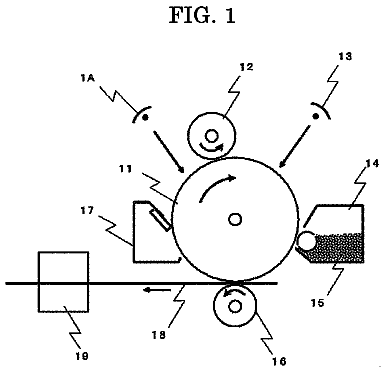
FIG. 1 is a diagram illustrating a schematic structure of an electrophotographic apparatus having a process cartridge equipped with the electrophotographic photosensitive member according to the present invention.
FIG. 2 is a diagram illustrating an image for ghost evaluation (print for ghost evaluation).
FIG. 3 is a diagram illustrating a one-dot keima (similar to knight's move) pattern image.
The electrophotographic photosensitive member according to the present invention has a support, an undercoat layer formed on the support, and a photosensitive layer formed on the undercoat layer and containing a charge generation material and a hole transport material.
[Support]
The support is desirably one having conductivity (conductive support), and examples thereof include a support made of a metal or alloy such as aluminum, nickel, copper, gold and iron, and a support in which a thin film of a metal such as aluminum, silver and gold, or a conductive material such as indium oxide and a tin oxide is formed on an insulating support such as of polyester, polycarbonate, polyimide or glass.
The surface of the support, in order to improve the electric characteristics and suppress interference fringes liable to be generated on irradiation of coherent light such as semiconductor laser light, may be subjected to an electrochemical treatment such as anodic oxidation, and treatments such as wet honing, blasting and cutting.
[Undercoat Layer]
In the present invention, an undercoat layer containing a polymer having a repeating structural unit represented by the formula
shown above with the proviso that the polymer further having a repeating structural unit represented by the formula
shown above is excluded from the polymer having the repeating structural unit represented by the formula
shown above, is provided on a support. Hereinafter, the polymer is also referred to as "polymer according to the present invention".
The content of the polymer according to the present invention in an undercoat layer is desirably 50% by mass or more and 100% by mass or less, and more desirably 80% by mass or more and 100% by mass or less, with respect to the total mass of the undercoat layer.
Hereinafter, specific examples of Z.sup.1 to Z.sup.4 in the formulae
and
will be shown. Here, right and left directions in the formulae
and
shown above are identical with right and left directions of each group in Table 1-1.
TABLE-US-00001 TABLE 1 ##STR00003## Z11 ##STR00004## Z12 ##STR00005## Z13 ##STR00006## Z14 ##STR00007## Z15 --(CH.sub.2).sub.2-- Z16 ##STR00008## Z17 --(CH.sub.2).sub.6-- Z18 ##STR00009## Z19 ##STR00010## Z20 ##STR00011## Z21 ##STR00012## Z22 ##STR00013## Z23 ##STR00014## Z24 --(CH.sub.2).sub.12-- Z25
Hereinafter, specific examples other than a single bond of W.sup.1 and W.sup.2 in the formulae
and
will be shown. Here, right and left directions of the formulae
and
and right and left directions of each group in Table 1-2 are identical.
Hereinafter, specific examples of B.sup.1 in the formula
will be shown. Here, right and left directions of the formula
shown above and right and left directions of each group in Table 1-3 are identical.
TABLE-US-00003 TABLE 3 ##STR00018## B11 ##STR00019## B12 ##STR00020## B13 ##STR00021## B14 ##STR00022## B15 ##STR00023## B16 ##STR00024## B17 ##STR00025## B18 ##STR00026## B19 ##STR00027## B20 ##STR00028## B21
Hereinafter, specific examples of A.sup.1 in the formula
(a divalent group represented by one of the formulae (A-1) to (A-8) shown above) will be shown. Here, right and left directions of the formulae
and
and right and left directions of each group in Tables 3-1 to 3-8 are identical.
In Tables 3-1 to 3-8, "bo" means a bonding site, "H" means a hydrogen atom, "Cl" means a chlorine atom, "N" means a nitrogen atom, "O" means an oxygen atom, "C" means a carbon atom, "dcyme" means a dicyanomethylene group, "me" means a methyl group, "et" means an ethyl group, "che" means a cyclohexyl group, "cy" means a cyano group, "ni" means a nitro group, "ph" means a phenyl group, "4flph" means 4-fluorophenyl group, "pflph" means a perfluorophenyl group, "4clph" means 4-chlorophenyl group, "4meph" means 4-methylphenyl group, "3me4flph" means a 3-methyl-4-fluorophenyl group, "4tflmeph" means a 4-(trifluoromethyl)phenyl group, "4cyph" means a 4-cyanophenyl group, "2niph" means a 2-nitrophenyl group, and "3niph" means a 3-nitrophenyl group.
TABLE-US-00004 TABLE 3-1 (A-1) R.sup.101 R.sup.102 R.sup.103 R.sup.104 R.sup.105 R.sup.106 A101 H H H H bo bo A102 H ph ph H bo bo A103 H 3niph 3niph H bo bo A104 H pflph pflph H bo bo A105 H 4cyph H H bo bo A106 H 4meph 4meph H bo bo A107 H 4tflmeph 4tflmeph H bo bo A108 H me me H bo bo A109 H cy cy H bo bo A110 H bo bo H ph ph A111 H bo bo H 4meph 4meph A112 H bo bo H pflph pflph A113 H bo bo H me me A114 H bo bo H che che
TABLE-US-00005 TABLE 3-2 (A-2) R.sup.201 R.sup.202 R.sup.203 R.sup.204 R.sup.205 R.sup.206 R.sup.20- 7 R.sup.208 R.sup.209 R.sup.210 A201 H H H H H H H H bo bo A202 H ph H H H ph H H bo bo A202 H 3niph H H H 3niph H H bo bo A203 H pflph H H H pflph H H bo bo A204 H 4cyph H H H 4cyph H H bo bo A205 H 4meph H H H 4meph H H bo bo A206 H 4tflmeph H H H 4tflmeph H H bo bo A207 H me H H H me H H bo bo A207 H cy H H H cy H H bo bo A208 H Cl H H H Cl H H bo bo A209 H bo H H H bo H H 3me4flph che
TABLE-US-00006 TABLE 3-3 (A-3) R.sup.301 R.sup.302 R.sup.303 R.sup.304 R.sup.305 R.sup.306 R.sup.30- 7 R.sup.308 R.sup.309 R.sup.310 R.sup.311 A301 H H bo H H bo H H O C C A302 H bo H H ni H bo H O C C A303 bo H et H H et H bo O C C A304 bo H cy H H cy H bo O C C A305 H H bo H H bo H H dcyme C C A306 H bo H H H H bo H dcyme C C A307 H bo H H H H bo H O N N A308 me bo H H H H bo me O N N A309 ph bo H H H H bo ph O N N A310 H bo H H H H bo 2niph O N N A311 4flph bo H H H H bo 4flph O N N
TABLE-US-00007 TABLE 3-4 (A-4) R.sup.401 R.sup.402 R.sup.403 R.sup.404 R.sup.405 R.sup.406 R.sup.40- 7 A401 H H bo bo H H O A402 H H bo bo H ph O A403 H H bo bo H 4clph O A404 H bo H H bo 3niph O A405 H bo H H bo 4cyph O A406 H bo H H bo 4meph O A407 H bo H H bo 4tflmeph O A408 H bo H H bo et O A409 H H bo bo H cy O A410 H bo H bo H ni O A411 H H bo bo H H dcyme A412 H bo H H bo H dcyme
TABLE-US-00008 TABLE 3-5 (A-5) R.sup.501 R.sup.502 R.sup.503 R.sup.504 R.sup.505 R.sup.506 R.sup.50- 7 R.sup.508 R.sup.509 R.sup.510 R.sup.511 R.sup.512 A501 H H bo H H H bo H O O C C A502 bo H H bo H H H H O O C C A503 bo H H bo ph H H ph O O C C A504 bo H H bo 4flph H H 4flph O O C C A505 bo H H bo 3niph H H 3niph O O C C A506 bo H H bo 4cyph H H 4cyph O O C C A507 bo H H bo 4meph H H 4meph O O C C A508 bo H H bo 4tflmeph H H 4tflmeph O O C C A509 bo me me bo H H H H O O C C A510 bo cy cy bo H H H H O O C C A511 bo Cl Cl bo H H H H O O C C A512 bo H H bo F F F F O O C C A513 bo H H ni bo H H ni O O C C A514 -- H bo H -- H bo H O O N N A515 H H bo H H H bo H dcyme dcyme C C A516 bo H H H bo H H H dcyme dcyme C C A517 H H bo H H H bo H dcyme dcyme N N
TABLE-US-00009 TABLE 3-6 (A-6) R.sup.601 R.sup.602 R.sup.603 R.sup.604 R.sup.605 R.sup.606 R.sup.60- 7 R.sup.608 R.sup.609 R.sup.610 R.sup.611 A601 H bo H ph ph H bo H O C C A602 H bo H 4flph 4flph H bo H O C C A603 H bo H 3niph 3niph H bo H O C C A604 H bo H 4cyph 4cyph H bo H O C C A605 H bo H 4meph 4meph H bo H O C C A606 H bo H me me H bo H O C C A607 H bo H H ni H bo H O C C A608 H bo H H COO(CH.sub.2).sub.8H H bo H O C C A609 H bo H H COO(CH.sub.2).sub.2H H bo H O C C A610 H bo H H H H bo H O N N A611 H bo H H H H bo H dcyme C C A612 H bo H H COO(CH.sub.2).sub.2H H bo H dcyme C C A613 H bo H H H H bo H dcyme N N
TABLE-US-00010 TABLE 3-7 (A-7) R.sup.701 R.sup.702 R.sup.703 R.sup.704 R.sup.705 R.sup.706 R.sup.70- 7 R.sup.708 R.sup.709 R.sup.710 R.sup.711 R.sup.712 R.sup.713 R.sup.714 R.- sup.715 A701 H H H H H H H H H bo H bo H C C A702 H H H ph ph H H H H bo H bo H C C A703 H H H 4flph 4flph H H H H bo H bo H C C A704 H H H 3niph 3niph H H H H bo H bo H C C A705 H H H 4cyph 4cyph H H H H bo H bo H C C A706 H H H 4meph 4meph H H H H bo H bo H C C A707 H H H 4tflmeph 4tflmeph H H H H bo H bo H C C A708 H H H me me H H H H bo H bo H C C A709 H bo H H H H bo H et H H H et C C A710 H H H H ni H H H H bo H bo H C C A711 H ni H H ni H ni H H bo H bo H C C A712 H bo H H H H bo H H H ni H H C C A713 H bo H H H H bo H H H cy H H C C A714 H bo H H H H bo H H H Cl H H C C A715 H H H H COO(CH.sub.2).sub.8H H H H H bo H bo H C C A716 H bo H H H H bo H H H H H H N N A717 H H H H H H H H H bo H bo H N N
TABLE-US-00011 TABLE 3-8 A-8 R.sup.801 R.sup.802 R.sup.803 R.sup.804 R.sup.805 R.sup.806 R.sup.807 - R.sup.808 A801 bo H H H bo H H H A802 bo H H H H H H bo A803 bo H H ph ph H H bo A804 bo H H 4flph 4flph H H bo A805 bo H H 3niph 3niph H H bo A806 bo H H 4cyph 4cyph H H bo A807 bo H H 4meph 4meph H H bo A808 bo H H 4tflmeph 4tflmeph H H bo A809 bo H H et bo H H et A810 bo H H H ni H H bo A811 bo H H cy cy H H bo A812 bo H H Cl Cl H H bo
Hereinafter, specific examples of the repeating structural unit represented by the formula
will be shown. Here, right and left directions of the formula
and right and left directions of each group in Tables 4-1 to 4-4 are identical. In Tables 4-1 to 4-4, "bo" means a bonding site.
TABLE-US-00012 TABLE 4-1 A.sup.1 B.sup.1 W.sup.1 W.sup.2 Z.sup.1 Z.sup.2
A101 B11 bo bo bo bo
A101 B13 bo bo bo bo
A101 B15 bo bo bo bo
A101 B17 bo bo bo bo
A102 B16 bo bo bo bo
A104 B18 bo bo bo bo
A109 B11 bo bo bo bo
A110 B11 bo bo bo bo
A201 B11 bo bo bo bo
A201 B11 bo bo bo bo
A201 B13 bo bo bo bo
A201 B15 bo bo bo bo
A207 B11 bo bo bo bo
A207 B12 bo bo bo bo
A207 B14 bo bo bo bo
A208 B11 bo bo bo bo
A208 B17 bo bo bo bo
TABLE-US-00013 TABLE 4-2 A.sup.1 B.sup.1 W.sup.1 W.sup.2 Z.sup.1 Z.sup.2
A301 B11 bo bo Z11 Z11
A303 B12 bo bo Z11 Z11
A304 B14 bo bo Z13 Z13
A305 B15 bo bo Z11 Z11
A307 B11 bo bo Z11 Z11
A308 B17 bo bo Z11 Z11
A309 B18 bo bo Z11 Z11
A401 B11 bo bo Z11 Z11
A411 B14 bo bo Z12 Z12
A412 B16 bo bo Z13 Z13
TABLE-US-00014 TABLE 4-3 A.sup.1 B.sup.1 W.sup.1 W.sup.2 Z.sup.1 Z.sup.2
A501 B11 bo bo Z11 Z11
A515 B14 bo bo Z11 Z11
A503 B16 bo bo Z13 Z13
A611 B11 bo bo Z11 Z11
A613 B14 bo bo Z11 Z11
A607 B16 bo bo Z13 Z13
TABLE-US-00015 TABLE 4-4 A.sup.1 B.sup.1 W.sup.1 W.sup.2 Z.sup.1 Z.sup.2
A717 B11 bo bo Z11 Z11
A711 B14 bo bo Z11 Z11
A708 B16 bo bo Z13 Z13
A802 B11 bo bo Z11 Z11
A803 B14 bo bo Z11 Z11
A807 B16 bo bo Z13 Z13
In order to enhance film formability and electric characteristics, the undercoat layer may contain, in addition to the polymer according to the present invention, other resin, a crosslinking agent, organic particles, inorganic particles, a leveling agent and the like. Here, the content thereof in an undercoat layer is desirably less than 50% by mass, and more desirably less than 20% by mass, with respect to the total mass of the undercoat layer.
The polymer according to the present invention may further have a repeating structural unit other than the repeating structural unit represented by the formula
shown above with the proviso that the polymer further having the repeating structural unit represented by the formula
shown above is excluded from the polymer having the repeating structural unit represented by the formula
shown above. Here, the proportion of the repeating structural unit represented by the formula
shown above in the polymer according to the present invention is desirably 50 mol % or more and 100 mol % or less, and more desirably 70 mol % or more and 100 mol % or less, with respect to the total repeating structural unit in the polymer.
Hereinafter, specific examples of a repeating structural unit other than the repeating structural unit represented by the formula
shown above will be shown.
The weight-average molecular weight (Mw) of the polymer according to the present invention is desirably in the range of 5,000 to 15,000.
In order to form a structure of W.sup.1 in the formula
shown above of the polymer according to the present invention, for example, the following reaction process may be used.
In the case where W.sup.1 is a urethane bond, the urethane bond can be formed, for example, by causing a compound having a hydroxyl group to react with a compound having an isocyanate group ("FUNDAMENTAL FOUNDATION AND APPLICATION OF POLYURETHANE", published by CMC Publishing Co., Ltd., p. 3 (1986), in Japanese).
In the case where W.sup.1 is a urea bond, the urea bond can be formed, for example, by causing a compound having an amino group to react with a compound having an isocyanate group ("SYNTHESIS AND REACTION OF POLYMER (2)", published by Kyoritsu Shuppan Co., Ltd., p. 326 (1991), in Japanese).
In the case where W.sup.1 is a single bond, the single bond can be formed, for example, by a coupling reaction using a halogenated material and a boronic acid derivative as raw materials and using a palladium catalyst (for example, tetrakistriphenylphosphine palladium) under a basic condition (Angew. Chem. Int. Ed. 2005, 44, 4442). A single bond is also known to be produced by other types of reactions.
The polymer according to the present invention can be synthesized by the polymerization between compounds having a polymerizable functional group such as an amino group, a hydroxyl group, an isocyanate group, a halogen group, a boronic acid group and a carboxylic anhydride group. In the case where a polymer is synthesized in such a way, it is needed that a compound having a polymerizable functional group and a skeleton corresponding to A.sup.1, and a compound having a polymerizable functional group and a skeleton corresponding to B.sup.1 are prepared, and a polymerization reaction to form a single bond, a urethane bond or a urea bond of W.sup.1 is carried out using the prepared compounds.
A derivative having a structure of (A-1) as a main skeleton (which means a compound having a polymerizable functional group and a skeleton corresponding to the formula (A-1) shown above; hereinafter the same) can be synthesized, for example, by using synthesis methods described in U.S. Pat. No. 4,442,193, U.S. Pat. No. 4,992,349, U.S. Pat. No. 5,468,583, and Chemistry of materials, Vol. 19, No. 11, 2703-2705 (2007). The compound can be synthesized, for example, by the reaction of naphthalenetetracarboxylic dianhydride with a monoamine derivative, which are commercially available as reagents from Tokyo Chemical Industry Co., Ltd., Sigma-Aldrich Japan Corp. and Johnson Matthey Japan Inc.
In order to make the compound have a polymerizable functional group, there are, for example, a method in which a skeleton corresponding to the formula (A-1) shown above is synthesized, and thereafter, a polymerizable functional group is incorporated into the skeleton, and additionally a method using a naphthalenetetracarboxylic dianhydride derivative or monoamine derivative having a polymerizable functional group, a functional group as a precursor of a polymerizable functional group, or a functional group capable of bonding to another compound having a polymerizable functional group.
There is also a method of synthesizing the polymer according to the present invention directly by causing a naphthalenetetracarboxylic dianhydride derivative to react with a diamine derivative. In this case, Z.sup.1, Z.sup.2 and W.sup.1 in the formula
shown above are single bonds.
A derivative having a structure of (A-2) as a main skeleton can be synthesized, for example, by using a synthesis method described in Journal of the American chemical society, Vol. 129, No. 49, 15259-78 (2007). The compound can be synthesized, for example, by the reaction of perylenetetracarboxylic dianhydride with a monoamine derivative, which are commercially available as reagents from Tokyo Chemical Industry Co., Ltd., Sigma-Aldrich Japan Corp. and Johnson Matthey Japan Inc.
In order to make the compound have a polymerizable functional group, there are, for example, a method in which a skeleton corresponding to the formula (A-2) shown above is synthesized, and thereafter, a polymerizable functional group is incorporated into the skeleton, and additionally a method using a perylenetetracarboxylic dianhydride derivative or monoamine derivative having a polymerizable functional group, a functional group as a precursor of the polymerizable functional group, or a functional group capable of bonding to another compound having a polymerizable functional group.
There is also a method of synthesizing the polymer according to the present invention directly by causing a perylenetetracarboxylic dianhydride derivative to react with a diamine derivative. In this case, Z.sup.1 and W.sup.1 in the formula
shown above are single bonds.
A derivative having a structure of (A-3) as a main skeleton is, for example, commercially available as a reagent from Tokyo Chemical Industry Co., Ltd., Sigma-Aldrich Japan Corp. or Johnson Matthey Japan Inc. The compound can also be synthesized by synthesis methods described in Bull. Chem. Soc. Jpn., Vol. 65, 1006-1011 (1992), Chem. Educator No. 6, 227-234 (2001), Journal of Synthetic Organic Chemistry, Japan, vol. 15, 29-32
and Journal of Synthetic Organic Chemistry, Japan, vol. 15, 32-34 (1957), based on a phenanthrene derivative or phenanthroline derivative, which are commercially available. A dicyanomethylene group can also be incorporated by the reaction with malononitrile.
In order to make the compound have a polymerizable functional group, there are, for example, a method in which a skeleton corresponding to the formula (A-3) shown above is synthesized, and thereafter, a polymerizable functional group is incorporated, and additionally a method of incorporating a polymerizable functional group or a structure having a functional group as a precursor of a polymerizable functional group (for example, a method using a cross-coupling reaction using a palladium catalyst, based on a halogenated material of a phenanthrene derivative or a phenanthroline derivative).
A derivative having a structure of (A-4) as a main skeleton is, for example, commercially available as a reagent from Tokyo Chemical Industry Co., Ltd., Sigma-Aldrich Japan Corp. or Johnson Matthey Japan Inc. The compound can also be synthesized by synthesis methods described in Tetrahedron Letters, 43(16), 2991-2994
and Tetrahedron Letters, 44(10), 2087-2091 (2003), based on an acenaphthenequinone derivative, which is commercially available. A dicyanomethylene group can also be incorporated by the reaction with malononitrile.
In order to make the compound have a polymerizable functional group, there are, for example, a method in which a skeleton corresponding to the formula (A-4) shown above is synthesized, and thereafter, a polymerizable functional group is incorporated, and additionally a method of incorporating a polymerizable functional group or a structure having a functional group as a precursor of a polymerizable functional group (for example, a method using a cross-coupling reaction using a palladium catalyst, based on a halogenated material of an acenaphthenequinone derivative).
A derivative having a structure of (A-5) as a main skeleton is, for example, commercially available as a reagent from Tokyo Chemical Industry Co., Ltd., Sigma-Aldrich Japan Corp. or Johnson Matthey Japan Inc. The compound can also be synthesized by a synthesis method described in Synthesis, Vol. 5, p. 388-389 (1988), by using compounds commercially available. A dicyanomethylene group can also be incorporated by the reaction with malononitrile.
In order to make the compound have a polymerizable functional group, there are, for example, a method in which a skeleton corresponding to the formula (A-5) shown above is synthesized, and thereafter, a polymerizable functional group is incorporated, and additionally a method of incorporating a polymerizable functional group or a structure having a functional group as a precursor of a polymerizable functional group (for example, a method using a cross-coupling reaction using a palladium catalyst, based on a halogenated material of an anthraquinone derivative).
A derivative having a structure of (A-6) as a main skeleton can be synthesized, for example, through a synthesis method described in U.S. Pat. No. 4,562,132 by using a fluorenone derivative and malononitrile, which are commercially available as reagents from Tokyo Chemical Industry Co., Ltd., Sigma-Aldrich Japan Corp. or Johnson Matthey Japan Inc.
In order to make the compound have a polymerizable functional group, there are, for example, a method in which a skeleton corresponding to the formula (A-6) shown above is synthesized, and thereafter, a polymerizable functional group is incorporated, and additionally a method of incorporating a polymerizable functional group or a structure having a functional group as a precursor of a polymerizable functional group.
A derivative having a structure of (A-7) as a main skeleton can also be synthesized, for example, by using synthesis methods described in Japanese Patent Application Laid-Open No. H5-279582 and Japanese Patent Application Laid-Open No. H7-70038 by using a fluorenone derivative and an aniline derivative, which are commercially available from Tokyo Chemical Industry Co., Ltd., Sigma-Aldrich Japan Corp. or Johnson Matthey Japan Inc.
In order to make the compound have a polymerizable functional group, there are, for example, a method in which a skeleton corresponding to the formula (A-7) shown above is synthesized, and thereafter, a polymerizable functional group is incorporated, and additionally a method of incorporating a polymerizable functional group or a structure having a functional group as a precursor of a polymerizable functional group, and a method using an aniline derivative having a polymerizable functional group, a functional group as a precursor of a polymerizable functional group, or a functional group capable of bonding to another compound having a polymerizable functional group.
A derivative having a structure of (A-8) as a main skeleton can be synthesized by using synthesis methods described in Japanese Patent Application Laid-Open No. H1-206349 and PPCI/Japan Hard Copy '98 Proceedings, p. 207 (1998). The compound can be synthesized, for example, by using as a raw material a phenol derivative commercially available as a reagent from Tokyo Chemical Industry Co., Ltd. or Sigma-Aldrich Japan Corp.
In order to make the compound have a polymerizable functional group, there are, for example, a method in which a skeleton corresponding to the formula (A-8) shown above is synthesized, and thereafter, a polymerizable functional group is incorporated, and additionally a method of incorporating a polymerizable functional group or a structure having a functional group as a precursor of a polymerizable functional group.
The description continues in the full USPTO document.
About 7,148 words. The USPTO PDF has it with every drawing.
Fees are due 3.5, 7.5 and 11.5 years after grant. This patent expired on August 5, 2026, so the fee marked "not paid" was the one that went unpaid.
ELECTROPHOTOGRAPHIC PHOTOSENSITIVE MEMBER, PROCESS CARTRIDGE, AND ELECTROPHOTOGRAPHIC APPARATUS
Filed Jun 2011 · published Sep 2012Electrophotographic photosensitive member, process cartridge, and electrophotographic apparatus
Filed Jun 2011 · granted Aug 2014Earlier publications, parents and continuations. None of them can still be enforced, or this patent would not be listed.
Prior art cited by the examiner or applicant. Useful when you check your own idea for novelty.
Everything on this page comes from the documents linked above.