 Lapsed, fee not paid2 drawings
Materials & Chemistry · US 8,785,337 B2
Glass container composition
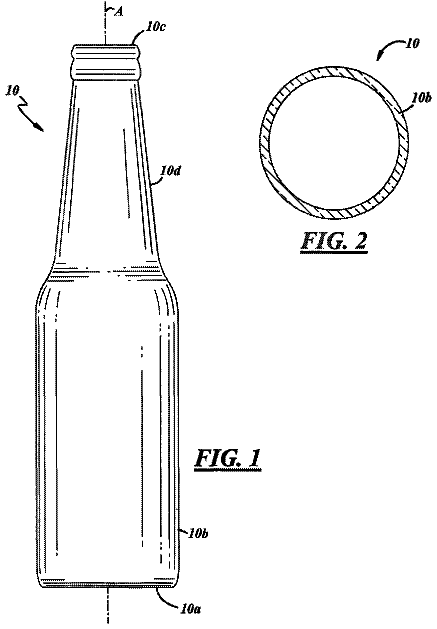
A glass container and related methods of manufacturing.
US 8,785,359 B2 · Assignee: JX Nippon Oil & Energy Corporation · Inventors: Yaguchi; Akira et al.
Claude can sketch it from the patent text.
A lubricant oil composition comprising: a lubricant base oil whose kinematic viscosity at 100.degree. C. is 1 to 6 mm.sup.2/s, % C.sub.p is not less than 70, and % C.sub.A is not more than 2; a first viscosity index improver in which the ratio A/B of a viscosity increasing effect A in the equation (1) to a viscosity increasing effect B in the equation (2) when added to the lubricant base oil is a value of not less than 4.5, and a PSSI is not more than 30; and a second viscosity index improver in which the ratio A/B when added to the lubricant base oil is a value less than 4.5: A=X-X.sub.0 (1) B=Y-Y.sub.0 (2) wherein A represents a viscosity increasing effect of the kinematic viscosity at 100.degree. C., B represents a viscosity increasing effect of the HTHS viscosity at 150.degree. C., X represents a kinematic viscosity at 100.degree. C. of a mixture of the lubricant base oil with 3% by mass of the first or second viscosity index improver, X.sub.0 represents a kinematic viscosity at 100.degree. C. of the lubricant base oil, Y represents an HTHS viscosity at 150.degree. C. of a mixture of the lubricant base oil with 3% by mass of the first or second viscosity index improver, and Y.sub.0 represents an HTHS viscosity at 150.degree. C. of the lubricant base oil.
Lubricant oils are used for internal combustion engines, transmissions, and other machinery in order to smooth the action. Particularly, high performance is demanded of the lubricant oils for internal combustion engines (engine oils) along with higher performance and higher output of the internal combustion engines, and severer operation conditions, and the like. Accordingly, in order to satisfy such required performances, a variety of additives such as a wear-resistant agent, a metallic detergent, an ash-free dispersant, and an antioxidant are blended with the conventional engine oil (see Patent Literatures 1 to 3 below, for example.). Recently, a demand for fuel efficiency performance of the lubricant oil has been increased more and more, and use of a high viscosity index base oil or use of a variety of friction modifiers has been examined (see Patent Literature 4 below, for example.).
Ask Claude for concept sketches based only on the patent's text. They are not part of the patent.
What the patent claimed, word for word. All of it is now free to use.
The present invention relates to a lubricant oil composition.
Lubricant oils are used for internal combustion engines, transmissions, and other machinery in order to smooth the action. Particularly, high performance is demanded of the lubricant oils for internal combustion engines (engine oils) along with higher performance and higher output of the internal combustion engines, and severer operation conditions, and the like. Accordingly, in order to satisfy such required performances, a variety of additives such as a wear-resistant agent, a metallic detergent, an ash-free dispersant, and an antioxidant are blended with the conventional engine oil (see Patent Literatures 1 to 3 below, for example.). Recently, a demand for fuel efficiency performance of the lubricant oil has been increased more and more, and use of a high viscosity index base oil or use of a variety of friction modifiers has been examined (see Patent Literature 4 below, for example.).
Patent Literature
[Patent Literature 1] Japanese Patent Application Laid-Open Publication No. 2001-279287 [Patent Literature 2] Japanese Patent Application Laid-Open Publication No. 2002-129182 [Patent Literature 3] Japanese Patent Application Laid-Open Publication No. 08-302378 [Patent Literature 4] Japanese Patent Application Laid-Open Publication No. 06-306384
Technical Problem
It cannot be said, however, that the conventional lubricant oil is sufficient from the viewpoint of fuel efficiency.
For example, as a conventional method for reducing fuel consumption, reduction in kinematic viscosity and improvement in a viscosity index of the lubricant oil (multi-grading by a combination of a low viscosity base oil with a viscosity index improver) are known. In this case, however, reduction in the viscosity of the lubricant oil or the base oil that forms the lubricant oil may cause the lubricating performance to be reduced under a severe lubricant condition (under a high temperature high shear condition), resulting in malfunctions such as wear, seizure, and fatigue breaking. Namely, in the conventional lubricant oil, it is difficult to give sufficient fuel efficiency while other practical performances such as durability are kept.
Moreover, in order to prevent the malfunctions above and give fuel efficiency while the durability is kept, it is effective that an HTHS viscosity at 150.degree. C. ("HTHS viscosity" is also referred to as a "high temperature high shear viscosity.") is higher while a kinematic viscosity at 40.degree. C., a kinematic viscosity at 100.degree. C., and an HTHS viscosity at 100.degree. C. are lower; however, it is very difficult for the conventional lubricant oil to satisfy all the requirements.
The present invention has been made in consideration of such a situation, and an object of the present invention is to provide a lubricant oil composition whose HTHS viscosity at 150.degree. C. is sufficiently high, and kinematic viscosity at 40.degree. C., kinematic viscosity at 100.degree. C., and HTHS viscosity at 100.degree. C. are sufficiently low.
Solution to Problem
In order to solve the problems, the present invention provides a lubricant oil composition comprising: a lubricant base oil whose kinematic viscosity at 100.degree. C. is 1 to 6 mm.sup.2/s, % C.sub.p is not less than 70, and % C.sub.A is not more than 2; a first viscosity index improver in which the ratio A/B of a viscosity increasing effect A of a kinematic viscosity at 100.degree. C. represented by the following equation
to a viscosity increasing effect B of an HTHS viscosity at 150.degree. C. represented by the following equation
when added to the lubricant base oil is a value of not less than 4.5 and a PSSI is not more than 30; and a second viscosity index improver in which the ratio A/B of the viscosity increasing effect A of the kinematic viscosity at 100.degree. C. represented by the following equation
to the viscosity increasing effect B of the HTHS viscosity at 150.degree. C. represented by the following equation
when added to the lubricant base oil is a value less than 4.5: A=X-X.sub.0
wherein A represents a viscosity increasing effect of the kinematic viscosity at 100.degree. C., X represents a kinematic viscosity at 100.degree. C. (units: mm.sup.2/s) of a mixture of the lubricant base oil with 3% by mass of the first or second viscosity index improver, and X.sub.0 represents a kinematic viscosity at 100.degree. C. (units: mm.sup.2/s) of the lubricant base oil, B=Y-Y.sub.0
wherein B represents a viscosity increasing effect of the HTHS viscosity at 150.degree. C., Y represents an HTHS viscosity at 150.degree. C. (units: mPas) of a mixture of the lubricant base oil with 3% by mass of the first or second viscosity index improver, and Y.sub.0 represents an HTHS viscosity at 150.degree. C. (units: mPas) of the lubricant base oil.
The ratio (A/B) of the viscosity increasing effect A of the kinematic viscosity at 100.degree. C. represented by the above equation
to the viscosity increasing effect B of the HTHS viscosity at 150.degree. C. represented by the above equation
is an index indicating fuel efficiency under a shear condition in use (the number of rotation of the engine); it can be said that at a ratio of not less than 4.5, the viscosity index improver is the one whose fuel efficiency ability in the high shear range is high but the fuel efficiency ability in the low shear range is poor. On the other hand, it can be said that at a ratio less than 4.5, the viscosity index improver is the one whose fuel efficiency ability in the low shear range is high but the fuel efficiency ability in the high shear range is poor.
By use of a viscosity index improver with the A/B of not less than 4.5 and a viscosity index improver with the AB less than 4.5 in combination, the fuel efficiency in the high shear range and that in the low shear range can be obtained at the same time.
The "kinematic viscosity at 100.degree. C." in the present invention refers to the kinematic viscosity at 100.degree. C. specified in ASTM D-445. The "% C.sub.p" and "% C.sub.A" mean a percentage of the number of carbon atoms in paraffin based on the number of the whole carbon atoms and a percentage of the number of carbon atoms in aromatic rings based on the number of the whole carbon atoms, respectively, determined by a method according to ASTM D 3238-85 (n-d-M ring analysis). The "HTHS viscosity at 150.degree. C." means the high temperature high shear viscosity at 150.degree. C. specified by ASTM D4683. The "PSSI" means the permanent shear stability index (Permanent Shear Stability Index) of a polymer calculated based on the data measured by ASTM D 6278-02 (Test Method for Shear Stability of Polymer Containing Fluids Using a European Diesel Injector Apparatus) according to ASTM D 6022-01 (Standard Practice for Calculation of Permanent Shear Stability Index).
It is preferable that the second viscosity index improver used in the present invention is polymethacrylate in which the PSSI is not more than 30.
Advantageous Effects of Invention
As described above, according to the present invention, a lubricant oil composition is provided in which the HTHS viscosity at 150.degree. C. is sufficiently high, and the kinematic viscosity at 40.degree. C., kinematic viscosity at 100.degree. C., and HTHS viscosity at 100.degree. C. are sufficiently low. For example, according to the lubricant oil composition of the present invention, without using a synthetic oil such as a poly-.alpha.-olefin base oil or an ester base oil or a low viscosity mineral oil base oil, sufficient fuel efficiency can be demonstrated while the HTHS viscosity at 150.degree. C. is kept at a desired value (not less than 2.9 mPas in the case of oils whose SAE viscosity grade is 0W-30 or 5W-30).
Hereinafter, a suitable embodiment of the present invention will be described in detail.
In the lubricant oil composition according to the present embodiment, a lubricant base oil whose kinematic viscosity at 100.degree. C. is 1 to 6 mm.sup.2/s, % C.sub.p is not less than 70, and % C.sub.A is not more than 2 (hereinafter, referred to as a "lubricant base oil according to the present embodiment") is used.
The lubricant base oil according to the present embodiment is not particularly limited as long as the kinematic viscosity at 100.degree. C., % C.sub.p and % C.sub.A satisfy the condition. Specifically, of paraffin mineral oils obtained by refining a lubricant oil fraction obtained by normal pressure distillation and/or reduced pressure distillation of a crude oil by one or two or more of refining treatments selected from solvent deasphalting, solvent extraction, hydrocracking, solvent dewaxing, catalytic dewaxing, hydrorefining, sulfuric acid washing, and clay treatment, or normal paraffin base oils, isoparaffin base oils, and the like, base oils whose kinematic viscosity at 100.degree. C., % C.sub.p and % C.sub.A satisfy the condition described above can be used.
Preferable examples of the lubricant base oil according to the present embodiment can include base oils obtained by using base oils
to
shown below as a raw material, refining the raw material oil and/or a lubricant oil fraction recovered from the raw material oil by a predetermined refining method, and recovering a lubricant oil fraction:
a distilled oil obtained by normal pressure distillation of a paraffin-base crude oil and/or a mixed-base crude oil,
a distilled oil obtained by reduced pressure distillation of a residue of a paraffin-base crude oil and/or a mixed-base crude oil subjected to normal pressure distillation (WVGO),
a wax obtained by a lubricant oil dewaxing step (such as slack wax) and/or a synthetic wax obtained by a gas-to-liquid (GTL) process or the like (such as Fischer-Tropsch wax and GTL wax),
one selected from the base oils
to
or a mixed oil of two or more selected from the base oils
to
and/or a mild hydrocracked oil of the mixed oil,
a mixed oil of two or more selected from the base oils
to (4),
a deasphalted oil of the base oil (1), (2), (3), (4), or
a mild hydrocracked oil of the base oil
(MHC), and
a mixed oil of two or more selected from the base oils
to (7).
As the predetermined refining method, hydrorefining such as hydrocracking and hydrofinishing; solvent refining such as furfural solvent extraction; dewaxing such as solvent dewaxing and catalytic dewaxing; clay refining using acid clay, activated clay, or the like; and chemical (acid or alkali) washing such as sulfuric acid washing and sodium hydroxide washing are preferable. In the present embodiment, one of these refining methods may be performed alone, or two or more thereof may be performed in combination. In the case where two or more of the refining methods are combined, the order is not particularly limited, and can be properly determined.
Further, as the lubricant base oil according to the present embodiment, a base oil
or
below obtained by performing a predetermined treatment on the base oil selected from the base oils
to
or a lubricant oil fraction recovered from the base oil is particularly preferable:
a hydrocracked mineral oil obtained by hydrocracking the base oil selected from the base oils
to
or a lubricant oil fraction recovered from the base oil, performing a dewaxing treatment such as solvent dewaxing and catalytic dewaxing on the product or a lubricant oil fraction recovered from the product by distillation or the like, or performing the dewaxing treatment and distilling the dewaxed product; or
a hydrogenation isomerized mineral oil obtained by hydrogenation isomerizing the base oil selected from the base oils
to
or a lubricant oil fraction recovered from the base oil, performing a dewaxing treatment such as solvent dewaxing and catalytic dewaxing on the product or a lubricant oil fraction recovered from the product by distillation or the like, or performing the dewaxing treatment and distilling the dewaxed product.
The kinematic viscosity at 100.degree. C. of the lubricant base oil according to the present embodiment needs to be not more than 6 mm.sup.2/s, preferably not more than 5.7 mm.sup.2/s, more preferably not more than 5.5 mm.sup.2/s, still more preferably not more than 5.2 mm.sup.2/s, particularly preferably not more than 5.0 mm.sup.2/s, and most preferably not more than 4.5 mm.sup.2/s. On the other hand, the kinematic viscosity at 100.degree. C. needs to be not less than 1 mm.sup.2/s, and is preferably not less than 1.5 mm.sup.2/s, more preferably not less than 2 mm.sup.2/s, still more preferably not less than 2.5 mm.sup.2/5, particularly preferably not less than 3 mm.sup.2/s, and most preferably not less than 3.5 mm.sup.2/s. In the case where the kinematic viscosity at 100.degree. C. of the lubricant base oil is more than 6 mm.sup.2/s, the low temperature viscosity properties may be reduced, and sufficient fuel efficiency may not be obtained; at a kinematic viscosity at 100.degree. C. of not more than 1 mm.sup.2/s, lubricating properties may be poor because oil film formation in a lubricated place is insufficient, and evaporation loss of the lubricant oil composition may be increased.
The kinematic viscosity at 40.degree. C. of the lubricant base oil according to the present embodiment is preferably not more than 50 mm.sup.2/s, more preferably not more than 45 mm.sup.2/s, still more preferably not more than 40 mm.sup.2/s, particularly preferably not more than 35 mm.sup.2/s, and most preferably not more than 30 mm.sup.2/s. On the other hand, the kinematic viscosity at 40.degree. C. is preferably not less than 6.0 mm.sup.2/s, more preferably not less than 8.0 mm.sup.2/s, still more preferably not less than 12 mm.sup.2/s, particularly preferably not less than 14 mm.sup.2/s, and most preferably not less than 15 mm.sup.2/s. In the case where the kinematic viscosity at 40.degree. C. of the lubricant base oil is more than 50 mm.sup.2/s, the low temperature viscosity properties may be reduced, and sufficient fuel efficiency may not be obtained; at a kinematic viscosity at 40.degree. C. not more than 6.0 mm.sup.2/s, the lubricating properties may be poor because oil film formation in a lubricated place is insufficient, and evaporation loss of the lubricant oil composition may be increased. In the present embodiment, it is also preferable that the lubricant oil fraction whose kinematic viscosity at 40.degree. C. is within the range below be fractionated by distillation or the like, and used.
The viscosity index of the lubricant base oil according to the present embodiment is preferably not less than 120, more preferably not less than 130, still more preferably not less than 135, and particularly preferably not less than 140. At a viscosity index less than the lower limit, the viscosity-temperature properties, heat and oxidation stabilities, and anti-volatilization tend to be reduced, a coefficient of friction tends to be increased, and wear resistance tends to be reduced.
The viscosity index in the present invention means a viscosity index measured according to JIS K 2283-1993.
While the density at 15.degree. C. (.rho..sub.15) of the lubricant base oil according to the present embodiment depends on the viscosity grade of the lubricant base oil, it is preferable that the density at 15.degree. C. be not more than a value p represented by the following equation (3), namely, .rho..sub.15.ltoreq..rho.: .rho.=0.0025.times.X.sub.0+0.816
wherein X.sub.0 represents the kinematic viscosity at 100.degree. C. of the lubricant base oil (mm.sup.2/s).
If .rho..sub.15>.rho., the viscosity-temperature properties, heat and oxidation stabilities, anti-volatilization, and low temperature viscosity properties tend to be reduced, and the fuel efficiency may be reduced. In the case where an additive is blended with the lubricant base oil, the effect of the additive may be reduced.
Specifically, the density at 15.degree. C. (.rho..sub.15) of the lubricant base oil according to the present embodiment is preferably not more than 0.860, more preferably not more than 0.850, still more preferably not more than 0.840, and particularly preferably not more than 0.822.
The density at 15.degree. C. in the present invention means the density measured at 15.degree. C. according to JIS K 2249-1995.
The pour point of the lubricant base oil according to the present embodiment depends on the viscosity grade of the lubricant base oil, and for example, the pour point of the lubricant base oils (I) and (IV) is preferably not more than -10.degree. C., more preferably not more than -12.5.degree. C., and still more preferably not more than -15.degree. C. The pour point of the lubricant base oils (II) and (V) is preferably not more than -10.degree. C., more preferably not more than -15.degree. C., and still more preferably not more than -17.5.degree. C. The pour point of the lubricant base oils (III) and (VI) is preferably not more than -10.degree. C., more preferably not more than -12.5.degree. C., and still more preferably not more than -15.degree. C. At a pour point more than the upper limit, the low temperature fluidity of the whole lubricant oil using the lubricant base oil tends to be reduced. The pour point in the present invention means the pour point measured according to JIS K 2269-1987.
The aniline point (AP (.degree. C.)) of the lubricant base oil according to the present embodiment depends on the viscosity grade of the lubricant base oil, and it is preferable that the aniline point be not less than a value AP.sub.0 represented by the following equation (4), namely, AP.gtoreq.AP.sub.0: AP.sub.0=4.3.times.X.sub.0+100
wherein X.sub.0 represents the kinematic viscosity at 100.degree. C. of the lubricant base oil (mm.sup.2/s).
If AP<AP.sub.0, the viscosity-temperature properties, heat and oxidation stabilities, anti-volatilization, and low temperature viscosity properties tend to be reduced; in the case where an additive is blended with the lubricant base oil, the effect of the additive tends to be reduced.
For example, the AP of the lubricant base oils (I) and (IV) is preferably not less than 108.degree. C., and more preferably not less than 110.degree. C. The AP of the lubricant base oils (II) and (V) is preferably not less than 113.degree. C., and more preferably not less than 119.degree. C. The AP of the lubricant base oils (III) and (VI) is preferably not less than 125.degree. C., and more preferably not less than 128.degree. C. The aniline point of the present invention means the aniline point measured according to JIS K 2256-1985.
The iodine number of the lubricant base oil according to the present embodiment is preferably not more than 3, more preferably not more than 2, still more preferably not more than 1, particularly preferably not more than 0.9, and most preferably not more than 0.8. The iodine number may be less than 0.01, but because the effect worth to the iodine number is small and because of cost efficiency, the iodine number is preferably not less than 0.001, more preferably not less than 0.01, still more preferably not less than 0.03, and particularly preferably not less than 0.05. At an iodine number of the lubricant base oil not more than 3, heat and oxidation stabilities can be significantly improved. The iodine number of the present invention means the iodine number measured according to JIS K 0070 by a method for titrating an indicator, "The acid value, saponification value, iodine number, hydroxyl value, and non-saponification value of chemical products."
The amount of the sulfur content in the lubricant base oil according to the present embodiment depends on the sulfur content of the raw material. For example, in the case where a raw material substantially containing no sulfur such as a synthetic wax component obtained by the Fischer-Tropsch reaction or the like is used, the lubricant base oil substantially containing no sulfur can be obtained. In the case where a raw material containing sulfur such as a slack wax obtained by a refining process of the lubricant base oil and a microcrystalline wax obtained by a wax refining process is used, the sulfur content in the lubricant base oil to be obtained is usually not less than 100 mass ppm. In the lubricant base oil according to the present embodiment, from the viewpoint of further improvement in heat and oxidation stabilities and reduction of sulfur, the sulfur content is preferably not more than 100 mass ppm, more preferably not more than 50 mass ppm, still more preferably not more than 10 mass ppm, and particularly preferably not more than 5 mass ppm.
The amount of the nitrogen content in the lubricant base oil according to the present embodiment is not particularly limited, and is preferably not more than 7 mass ppm, more preferably not more than 5 mass ppm, and still more preferably not more than 3 mass ppm. At a nitrogen content more than 5 mass ppm, the heat and oxidation stabilities tend to be reduced. The nitrogen content of the present invention means the nitrogen content measured according to JIS K 2609-1990.
The % C.sub.p of the lubricant base oil according to the present embodiment needs to be not less than 70, preferably not less than 80, more preferably not less than 85, still more preferably not less than 87, and particularly preferably not less than 90. The % C.sub.p of the lubricant base oil is preferably not more than 99, more preferably not more than 96, still more preferably not more than 95, and particularly preferably not more than 94. In the case where the % C.sub.p of the lubricant base oil is less than the lower limit, the viscosity-temperature properties, and heat and oxidation stabilities tend to be reduced; further, in the case where an additive is blended with the lubricant base oil, the effect of the additive tends to be reduced. If the % C.sub.p of the lubricant base oil is more than the upper limit, the low temperature fluidity tends to be reduced and the solubility of the additive tends to be reduced.
The % C.sub.A of the lubricant base oil according to the present embodiment needs to be not more than 2, more preferably not more than 1.5, still more preferably not more than 1, particularly preferably not more than 0.8 and most preferably not more than 0.5. If the % C.sub.A of the lubricant base oil is more than the upper limit, the viscosity-temperature properties, and heat and oxidation stabilities tend to be reduced.
The % C.sub.N of the lubricant base oil according to the present embodiment is preferably not more than 30, more preferably 4 to 25, still more preferably 5 to 13, and particularly preferably 5 to 8. If the % C.sub.N of the lubricant base oil is more than the upper limit, the viscosity-temperature properties, heat and oxidation stabilities, and friction properties tend to be reduced. If the % C.sub.N is less than the lower limit, the solubility of the additive tends to be reduced. The "% C.sub.N" in the present invention means a percentage of the number of carbon atoms in naphthene based on the number of the whole carbon atoms determined by a method according to ASTM D 3238-85 (n-d-M ring analysis).
The amount of the saturated content in the lubricant base oil according to the present embodiment is not particularly limited as long as the kinematic viscosity at 100.degree. C., and % C.sub.p and % C.sub.A satisfy the condition described above, and is preferably not less than 90% by mass, preferably not less than 95% by mass, and more preferably not less than 99% by mass based on the whole amount of the lubricant base oil; the proportion of the cyclic saturated content in the saturated content is preferably not more than 40% by mass, preferably not more than 35% by mass, preferably not more than 30% by mass, more preferably not more than 25% by mass, and still more preferably not more than 21% by mass. The proportion of the cyclic saturated content in the saturated content is preferably not less than 5% by mass, and more preferably not less than 10% by mass. If the proportion of the saturated content and that of the cyclic saturated content in the saturated content each satisfy the conditions described above, the viscosity-temperature properties and the heat and oxidation stabilities can be improved; in the case where an additive is blended with the lubricant base oil, the additive can sufficiently stably be dissolved and kept in the lubricant base oil to demonstrate the function of the additive at a higher level. Further, according to the present embodiment, the friction properties of the lubricant base oil itself can be improved; as a result, improvement in reduction in friction and reduction in energy can be achieved.
The saturated content in the present invention is measured by the method according to ASTM D 2007-93.
The aromatic content of the lubricant base oil according to the present embodiment is not particularly limited as long as the kinematic viscosity at 100, % C.sub.p and % C.sub.A satisfy the condition described above; the aromatic content is preferably not more than 5% by mass, more preferably not more than 4% by mass, still more preferably not more than 3% by mass, and particularly preferably not more than 2% by mass, and preferably not less than 0.1% by mass, more preferably not less than 0.5% by mass, still more preferably not less than 1% by mass, and particularly preferably not less than 1.5% by mass based on the whole amount of the lubricant base oil. At an amount of the aromatic content more than the upper limit, the viscosity-temperature properties, heat and oxidation stabilities, friction properties, anti-volatilization properties, and low temperature viscosity properties tend to be reduced; further, in the case where an additive is blended with the lubricant base oil, the effect of the additive tends to be reduced. While the lubricant base oil according to the present embodiment may be those containing no aromatic content, at an amount of the aromatic content not less than the lower limit, the solubility of the additive can be further enhanced.
The aromatic content in the present invention means a value measured according to ASTM D 2007-93.
In the lubricant oil composition according to the present embodiment, the lubricant base oil according to the present embodiment may be used alone, or the lubricant base oil according to the present embodiment may be used in combination with other one or two or more lubricant base oils. In the case where the lubricant base oil according to the present embodiment is used in combination with other lubricant base oil, the proportion of the lubricant base oil according to the present embodiment in the mixed base oils is preferably not less than 30% by mass, more preferably not less than 50% by mass, and still more preferably not less than 70% by mass.
The other lubricant base oil used in combination with the lubricant base oil according to the present embodiment is not particularly limited, and examples of mineral base oils include solvent refined mineral oils, hydrocracked mineral oils, hydrorefined mineral oils, solvent dewaxed base oils in which the kinematic viscosity at 100.degree. C. is 1 to 100 mm.sup.2/s, and the % C.sub.p and % C.sub.A do not satisfy the conditions described above.
Examples of synthetic base oils include poly-.alpha.-olefins or hydrogenated products thereof, isobutene oligomers or hydrogenated products thereof, isoparaffin, alkylbenzenes, alkylnaphthalenes, diesters (such as ditridecylglutarate, di-2-ethylhexyladipate, diisodecyladipate, ditridecyladipate, and di-2-ethylhexylsebacate), polyol esters (such as trimethylolpropanecaprylate, trimethylolpropanepelargonate, pentaerythritol-2-ethylhexanoate, and pentaerythritolpelargonate), polyoxyalkylene glycol, dialkyldiphenyl ethers, polyphenyl ethers in which the kinematic viscosity at 100.degree. C. does not satisfy the condition described above; among them, poly-.alpha.-olefins are preferable. Examples of poly-.alpha.-olefins include oligomers or co-oligomers of .alpha.-olefins with typically 2 to 32 carbon atoms, and preferably 6 to 16 carbon atoms (such as 1-octene oligomers, decene oligomers, and ethylene-propylene co-oligomer) and hydrogenated products thereof.
In addition to the lubricant base oil according to the present embodiment, the lubricant oil composition according to the present embodiment comprises a first viscosity index improver in which the ratio A/B of the viscosity increasing effect A of the kinematic viscosity at 100.degree. C. represented by the following equation
to the viscosity increasing effect B of the HTHS viscosity at 150.degree. C. represented by the following equation
is a value of not less than 4.5, and the PSSI is not more than 30; and a second viscosity index improver in which the ratio A/B of the viscosity increasing effect A of the kinematic viscosity at 100.degree. C. represented by the following equation
to the viscosity increasing effect B of the HTHS viscosity at 150.degree. C. represented by the following equation
when added to the lubricant base oil is a value less than 4.5: A=X-X.sub.0
wherein A represents a viscosity increasing effect of the kinematic viscosity at 100.degree. C., X represents a kinematic viscosity at 100.degree. C. (units: mm.sup.2/s) of a mixture of the lubricant base oil with 3% by mass of the first or second viscosity index improver, X.sub.0 represents a kinematic viscosity (units: mm.sup.2/s) at 100.degree. C. of the lubricant base oil, B=Y-Y.sub.0
wherein B represents a viscosity increasing effect of the HTHS viscosity at 150.degree. C., Y represents an HTHS viscosity at 150.degree. C. (units: mPas) of a mixture of the lubricant base oil with 3% by mass of the first or second viscosity index improver, and Y.sub.0 represents an HTHS viscosity at 150.degree. C. (units: mPas) of the lubricant base oil.
The viscosity increasing effects A and B of the first and second viscosity index improvers can be determined as follows: each of the kinematic viscosities at 100.degree. C. X.sub.0 and X and each of the HTHS viscosities at 150.degree. C. Y.sub.0 and Y before and after a predetermined amount (for example, 3% by mass) of the viscosity index improver is added to the lubricant base oil according to the present embodiment are measured, and the difference X-X.sub.0 or Y-Y.sub.0 is calculated.
As described above, the ratio A/B of the viscosity increasing effect of the first viscosity index improver needs to be not less than 4.5, and is preferably not less than 4.6, more preferably 4.8, and most preferably not less than 5.0.
The PSSI (permanent shear stability index) of the first viscosity index improver needs to be not more than 30, and is preferably not more than 20, more preferably not more than 10, still more preferably not more than 8, and particularly preferably not more than 6. The lower limit of the PSSI of the viscosity index improver (A) is preferably not less than 1, and more preferably not less than 3. At a PSSI more than 30, the shear stability is reduced; therefore, an initial kinematic viscosity needs to be increased, and the fuel efficiency may be reduced. At a PSSI less than 1, an effect of improving the viscosity index when the first viscosity index improver is dissolved in the lubricant base oil is small, the fuel efficiency and low temperature viscosity properties are poor, and cost may be increased.
As described above, the ratio A/B of the viscosity increasing effect of the second viscosity index improver needs to be less than 4.5, and is preferably not more than 4.0, more preferably not more than 3.8, and particularly preferably not more than 3.5.
The upper limit of the PSSI of the second viscosity index improver is preferably not more than 50, more preferably not more than 40, still more preferably not more than 30, particularly preferably not more than 20, and most preferably not more than 10. The lower limit of the PSSI of the second viscosity index improver is preferably not less than 1, and more preferably not less than 3. At a PSSI more than 50, the shear stability is reduced; therefore, an initial kinematic viscosity needs to be increased, and the fuel efficiency may be reduced. At a PSSI less than 1, an effect of improving the viscosity index when the second viscosity index improver is dissolved in the lubricant base oil is small, the fuel efficiency and low temperature viscosity properties are poor, and cost may be increased.
In each of the first and second viscosity index improvers, the ratio (M.sub.W/PSSI) of the weight-average molecular weight to the PSSI is preferably not less than 0.3.times.10.sup.4, more preferably not less than 0.5.times.10.sup.4, still more preferably not less than 0.7.times.10.sup.4, and particularly preferably not less than 1.times.10.sup.4. At an M.sub.W/PSSI less than 0.3.times.10.sup.4, the fuel efficiency, low temperature starting properties, i.e., viscosity temperature properties, and low temperature viscosity properties may be reduced.
In each of the first and second viscosity index improvers, the ratio (M.sub.W/M.sub.N) of the weight-average molecular weight (M.sub.W) to the number-average molecular weight (M.sub.N) is preferably not more than 5.0, more preferably not more than 4.0, still more preferably not more than 3.5, and particularly preferably not more than 3.0. The M.sub.W/M.sub.N is preferably not less than 1.0, more preferably not less than 2.0, still more preferably not less than 2.5, and particularly preferably not less than 2.6. At an M.sub.W/M.sub.N not less than 4.0 or not more than 1.0, the solubility and an effect of improving the viscosity temperature properties are reduced, and sufficient storing stability and fuel efficiency may not be kept.
The first viscosity index improver is not particularly limited as long as the ratio AB of the viscosity increasing effect and PSSI satisfy the conditions described above. For example, among non-dispersion type or dispersion type poly(meth)acrylates, styrene-diene hydrogenated copolymers, non-dispersion type or dispersion type ethylene-.alpha.-olefin copolymers or hydrogenated products thereof, polyisobutylene or hydrogenated products thereof, styrene-maleic anhydride ester copolymers, and polyalkylstyrenes and (meth)acrylate-olefin copolymers or a mixture of these, examples of the first viscosity index improver include those in which the ratio A/B and PSSI of the viscosity increasing effect satisfy the conditions described above.
The second viscosity index improver is not particularly limited as long as the ratio A/B of the viscosity increasing effect satisfy the conditions described above. For example, among non-dispersion type or dispersion type poly(meth)acrylates, styrene-diene hydrogenated copolymers, non-dispersion type or dispersion type ethylene-.alpha.-olefin copolymers or hydrogenated products thereof, polyisobutylenes or hydrogenated products thereof, styrene-maleic anhydride ester copolymers, and polyalkylstyrenes and (meth)acrylate-olefin copolymers or a mixture of these, examples of the second viscosity index improver include those in which the ratio A/B of the viscosity increasing effect satisfy the conditions described above.
The poly(meth)acrylate compound (poly(meth)acrylate compound here refers to polyacrylate compounds and polymethacrylate compounds inclusively) used as the first and second viscosity index improvers is preferably a polymer of a polymerizable monomer containing (meth)acrylate monomer represented by the following formula
(hereinafter, referred to as "Monomer M-1"):
##STR00001## wherein R.sup.1 represents hydrogen or a methyl group, and R.sup.2 represents a linear or branched hydrocarbon group with 1 to 200 carbon atoms.
While one homopolymer of the monomer represented by the formula
or two or more poly(meth)acrylate compounds obtained by copolymerization are the so-called non-dispersion type poly(meth)acrylate, the poly(meth)acrylate compound according to the present embodiment may be a dispersion type poly(meth)acrylate obtained by copolymerization of the monomer represented by the formula
with one or more monomers selected from the following formulas
and
(hereinafter, referred to as "Monomer M-2" and "Monomer M-3," respectively):
##STR00002## wherein R.sup.3 represents a hydrogen atom or a methyl group, and R.sup.4 represents an alkylene group with 1 to 18 carbon atoms, E.sup.1 represents an amine residue or heterocyclic residue with 1 to 2 nitrogen atoms and 0 to 2 oxygen atoms, and a represents 0 or 1;
##STR00003## wherein R.sup.5 represents a hydrogen atom or a methyl group, E.sup.2 represents an amine residue or heterocyclic residue with 1 to 2 nitrogen atoms and 0 to 2 oxygen atoms.
Examples of the group represented by E.sup.1 and E.sup.2 can specifically include a dimethyl amino group, a diethylamino group, a dipropylamino group, a dibutylamino group, an anilino group, a toluidino group, a xylidino group, an acetylamino group, a benzoylamino group, a morpholino group, a pyrrolyl group, a pyrrolino group, a pyridyl group, a methylpyridyl group, a pyrrolidinyl group, a piperidinyl group, a quinonyl group, a pyrrolidonyl group, a pyrrolidono group, an imidazolino group, and a pyrazino group.
Preferable examples of Monomer M-2 and Monomer M-3 can specifically include dimethylaminomethyl methacrylate, diethylaminomethyl methacrylate, dimethylaminoethyl methacrylate, diethylaminoethyl methacrylate, 2-methyl-5-vinylpyridine, morpholinomethyl methacrylate, morpholinoethyl methacrylate, N-vinylpyrrolidone, and a mixture thereof.
The copolymerization molar ratio of Monomer M-1 to Monomers M-2 and M-3 in the copolymer is not particularly limited, and preferably approximately M-1:M-2 and M-3=99:1 to 80:20, more preferably 98:2 to 85:15, and still more preferably 95:5 to 90:10.
The weight-average molecular weight (M.sub.W) of the poly(meth)acrylate compound is preferably not less than 5,000, more preferably not less than 10,000, still more preferably not less than 20,000, and particularly preferably not less than 50,000. The weight-average molecular weight is preferably not more than 700,000, more preferably not more than 500,000, still more preferably not more than 200,000, and particularly preferably not more than 100,000. At a weight-average molecular weight less than 5,000, the effect of improving the viscosity index when the viscosity index improver is dissolved in the lubricant base oil is small, the fuel efficiency and low temperature viscosity properties are poor, and cost may be increased; at a weight-average molecular weight more than 1,000,000, the shear stability, solubility in the lubricant base oil, and storing stability may be reduced.
The styrene-diene hydrogenated copolymer that can be used as the first and second viscosity index improvers is a compound obtained by hydrogenation of a copolymer of styrene and diene. As diene, specifically, butadiene, isoprene, and the like are used. Particularly, it is preferably a hydrogenated copolymer of styrene and isoprene.
The weight-average molecular weight (M.sub.W) of the styrene-diene hydrogenated copolymer is preferably not less than 5,000, more preferably not less than 10,000, and still more preferably not less than 15,000. The weight-average molecular weight (M.sub.W) is preferably not more than 100,000, more preferably not more than 80,000, and still more preferably not more than 70,000. At a weight-average molecular weight less than 5,000, the effect of improving the viscosity index when the viscosity index improver is dissolved in the lubricant base oil is small, the fuel efficiency and low temperature viscosity properties are poor, and cost may be increased; at a weight-average molecular weight more than 100,000, the shear stability, solubility of the lubricant base oil, and storing stability may be reduced.
The description continues in the full USPTO document.
About 6,304 words. The USPTO PDF has it with every drawing.
Fees are due 3.5, 7.5 and 11.5 years after grant. This patent expired on July 22, 2026, so the fee marked "not paid" was the one that went unpaid.
LUBRICANT OIL COMPOSITION
Filed Jan 2010 · published Mar 2012Lubricant oil composition
Filed Jan 2010 · granted Jul 2014Earlier publications, parents and continuations. None of them can still be enforced, or this patent would not be listed.
Prior art cited by the examiner or applicant. Useful when you check your own idea for novelty.
Everything on this page comes from the documents linked above.
