Background of the invention
1. Field of the invention
The present invention relates to a toner for developing an electrostatic latent image in electrophotography, electrostatic recording and electrostatic printing, and to a developer and a process cartridge using the toner.
2. Discussion of the Background
Recent strong demands from the market for higher quality image and energy saving accelerate developing suitable toners and developers therefor. The suitable toner essentially needs to have a small particle diameter and a sharp particle diameter distribution. Individual toner particles having a sharp particle diameter distribution uniformly behave when developing and eminently improve fine dot reproducibility. As a method of preparing such a toner having a sharp particle diameter distribution, polymerization methods such as a suspension polymerization method, an emulsion polymerization method easily deforming toners and a solution suspension method are being used recently.
In order to fix a toner at a lower temperature, a polyester resin having good low-temperature fixability and thermostable preservability is now being used as a binder resin instead of styrene-acrylic resins having conventionally been used. In order to further improve the low-temperature fixability, thermal properties of the resin need controlling. When the resin has too low a glass transition temperature (Tg), the thermostable preservability of the resultant toner deteriorates. When the resin has too low a softening point [T (F1/2)], hot offset occurrence temperature of the resultant toner lowers. Therefore, even the polyester resin has not yet prepared a toner having good low-temperature fixability and a high hot offset occurrence temperature. Further, since developers in copiers producing images for a long time are stirred for long periods, release agents and polyester resins having a low melting point in toners adhere to carriers, resulting in deterioration of chargeability of the carrier and charge amount of the developer.
Since silica as a fluidizer does not adhere well and moves to concavities of a toner having concavities and convexities, the toner is likely to contaminate a photoreceptor and adhere to a fixing roller. Although having a merit of using a low-temperature fixable polyester resin, the solution suspension method adds a polymeric material in a solution or a dispersion of a resin and a colorant to improve releasability of the resultant toner so as to be an oilless fixable toner. Therefore, the solution or the dispersion has high viscosity and likely to lower the productivity. Japanese published unexamined application No. 9-15903 discloses a method of preparing a toner a developing an electrostatic latent image, including a process of mixing a binder resin and a colorant in a solvent which is not miscible with water to prepare a composition, a process of dispersing the composition in an aqueous medium under the presence of a dispersion stabilizer to prepare a suspension, a process of removing the solvent from the suspension upon application of heat and/or depressure to form particles having concave and convex surfaces and a process of spheronizing or deforming the particles. However, the resultant irregular-formed toner us unstably charged and is not designed to be polymeric to have basic durability and releasability.
Because of these reasons, a need exists for a toner having a small particle diameter and a sharp particle diameter distribution to produce high-definition images having good fine dot reproducibility, good hot offset resistance, low-temperature fixability, and no deterioration of chargeability adhering less to a carrier even when used for long periods.
Summary of the invention
Accordingly, an object of the present invention is to provide a toner having a small particle diameter and a sharp particle diameter distribution to produce high-definition images having good fine dot reproducibility, good hot offset resistance, low-temperature fixability, and no deterioration of chargeability adhering less to a carrier even when used for long periods.
Another object of the present invention is to provide a developer including the toner.
A further object of the present invention is to provide a process cartridge using the toner.
Another object of the present invention is to provide an image forming apparatus using the toner.
These objects and other objects of the present invention, either individually or collectively, have been satisfied by the discovery of an image forming toner, comprising:
a mother particle, comprising: a paraffin wax having a melting point of from 60 to 90.degree. C.; and a binder resin,
wherein the mother particle has an endothermic peak of the paraffin wax of from 2.0 J/g to 5.5 J/g when measured by a DSC and an aspect ratio of from 0.8 to 0.90.
These and other objects, features and advantages of the present invention will become apparent upon consideration of the following description of the preferred embodiments of the present invention taken in conjunction with the accompanying drawings.
Brief description of the drawings
Various other objects, features and attendant advantages of the present invention will be more fully appreciated as the same becomes better understood from the detailed description when considered in connection with the accompanying drawings in which like reference characters designate like corresponding parts throughout and wherein:
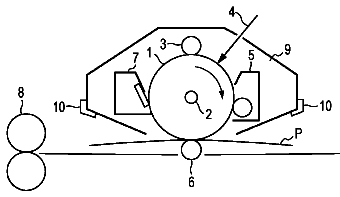
FIG. 1 is a schematic vertical cross-sectional view illustrating an embodiment of the process cartridge of the present invention;
FIG. 2 is a schematic view illustrating an embodiment of the image forming apparatus of the present invention;
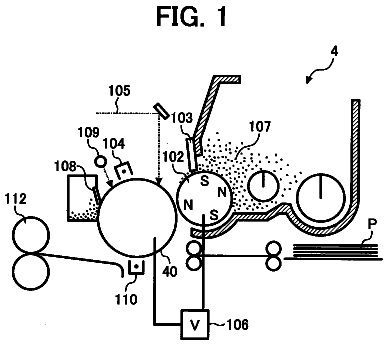
FIG. 3 is a schematic vertical cross-sectional view illustrating an embodiment of the image forming unit of the present invention;
FIG. 4 is a schematic view illustrating an embodiment of lubricators;
FIG. 5 is a schematic view illustrating another embodiment of lubricators; and
FIG. 6 is a schematic view illustrating a further embodiment of lubricators.
Detailed description of the invention
The present invention provides a toner having a small particle diameter and a sharp particle diameter distribution to produce high-definition images having good fine dot reproducibility, good hot offset resistance, low-temperature fixability, and no deterioration of chargeability adhering less to a carrier even when used for long periods.
Particularly, the present invention relates to an image forming toner, comprising:
a mother particle, comprising: a paraffin wax having a melting point of from 60 to 90.degree. C.; and a binder resin,
wherein the mother particle has an endothermic peak of the paraffin wax of from 2.0 J/g to 5.5 J/g when measured by a DSC and an aspect ratio of from 0.8 to 0.90.
The aspect ratio and an average circularity are measured by a flow-type particle image analyzer FPIA-3000 from SYSMEX CORPORATION and analyzed with an auxiliary analysis software. The aspect ratios and the average circularities of the particles having a diameter of from 2 to 200 .mu.m are measured. The aspect ratios and the average circularity are defined as follows:
average circularity=a circumferential length of a circle having an area equivalent to that of a particle/a circumferential length of a particle; and
aspect ratio=the maximum vertical length of a particle/the maximum length of a particle.
The average circularity mainly represents a level of concavity and convexity of a particle, and the aspect ratio mainly represents a level of spicula.
The present inventors discovered that there are the following trends
to
between the shape of a toner and charging properties thereof.
The more spherical a toner, the more the toner contacts a carrier at a point. The toner contacts the carrier while rotating thereon and toner constituents such as a paraffin wax and a low-molecular-weight resin are likely to firmly fix on the carrier, resulting in deterioration of chargeability of the carrier. This occurs when a contact area between a toner and a carrier is small (two-component developing method), and when a contact area between a toner and a developing sleeve is small (one-component developing method).
A toner having many concavities and convexities contacts a carrier at a surface. Although the toner is difficult to rotate on the carrier, toner constituents such as a paraffin wax and a low-molecular-weight resin are likely to firmly fix on the carrier because the contact area is large, resulting in deterioration of chargeability of the carrier. This occurs when a contact area between a toner and a carrier is large (two-component developing method), and when a contact area between a toner and a developing sleeve is large (one-component developing method).
When a toner and a carrier are stirred for a long time, the shape of the toner affects more than the concavities and convexities thereof. The concavities and convexities of a toner are scarped off or deformed when the toner and a carrier are stirred in an image developer for a long time, resulting in (1).
Therefore, the aspect ratio representing a level of spicula is more relationship with deterioration of the chargeability of a carrier than the average circularity representing a level of concavity and convexity of a toner. The lower the aspect ratio, the more difficult to rotate a toner on a carrier. The higher the aspect ratio, the easier to rotate a toner on a carrier because the toner is close to a sphere. Therefore, a mother toner particle preferably has an aspect ratio of from 0.80 to 0.90 such that the toner constituents are not firmly fixed on a carrier while the toner maintains a suitable contact thereto. In the meantime, the mother toner particle preferably has an average circularity of from 0.950 to 0.980. Further, the mother toner particle preferably has a shape factors SF-1 of from 130 to 160 and SF-2 of from 110 to 140.
A wax having a low melting point of from 50 to 120.degree. C. is effectively used as a release agent. When such a wax is included in the toner, the wax is dispersed in the binder resin and serves as a release agent at a location between a fixing roller and the toner particles. Thereby, hot offset resistance can be improved without applying an oil to the fixing roller used. Particularly, a paraffin wax having a melting point of from 60 to 90.degree. C. is preferably used.
Specific examples of the release agent include natural waxes such as vegetable waxes, e.g., carnauba wax, cotton wax, Japan wax and rice wax; animal waxes, e.g., bees wax and lanolin; mineral waxes, e.g., ozokelite and ceresine; and petroleum waxes, e.g., paraffin waxes, microcrystalline waxes and petrolatum. In addition, synthesized waxes can also be used. Specific examples of the synthesized waxes include synthesized hydrocarbon waxes such as Fischer-Tropsch waxes and polyethylene waxes; and synthesized waxes such as ester waxes, ketone waxes and ether waxes. In addition, fatty acid amides such as 1,2-hydroxylstearic acid amide, stearic acid amide and phthalic anhydride imide; and low molecular weight crystalline polymers such as acrylic homopolymer and copolymers having a long alkyl group in their side chain, e.g., poly-n-stearyl methacrylate, poly-n-laurylmethacrylate and n-stearyl acrylate-ethyl methacrylate copolymers, can also be used.
The release agent can be kneaded together with a masterbatch pigment and resin, and can be added when the toner constituents are dissolved or dispersed in an organic solvent.
The toner of the present invention includes a mother particle including a paraffin wax having a melting point of from 60 to 90.degree. C. as a release agent. The mother particle has an endothermic peak of the paraffin wax of from 2.0 J/g to 5.5 J/g when measured by a DSC. The release agent is preferably used much for a toner to have hot offset resistance and preferably used less for a carrier to maintain its chargeability for long periods. From this point view, the release agent is preferably included in a toner to have an endothermic peak of from 2.0 J/g to 5.5 J/g, and more preferably from 3.5 to 5.5 J/g for the toner to have hot offset resistance and for the carrier to maintain its chargeability.
TA-60WS and DSC-60 from Shimadzu Corporation are used to measure the endothermic peak of the paraffin wax under the following conditions.
TABLE-US-00001 Sample container: Sample pan made of aluminum (with a lid) Sample amount: 5 mg Reference: Sample pan made of aluminum (10 mg of alumina) Atmosphere: Nitrogen (flow rate 50 ml/min) Starting temperature: 20.degree. C. Rising speed of temperature: 10.degree. C./min Maximum temperature: 150.degree. C. Holding time: 0 Lowering speed of temperature: 10.degree. C./min Minimum temperature: 20.degree. C. Holding time: 0 Rising speed of temperature: 10.degree. C./min Maximum temperature: 150.degree. C.
The measurement results are analyzed using data analysis software TA-60 version 1.52 from Shimadzu Corporation. On a DSC differential curve of the second rise of temperature, two base lines of low temperature side and high temperature side of an endothermic peak equivalent to an endotherm of a release agent when melting are fixed and the endothermic peak is determined with a peak analytical function of the analysis software. The endothermic peak equivalent to an endotherm of a release agent when melting represents all endothermic peaks. Among the plural endothermic peaks of a toner, the same endothermic peak when a release agent alone is subjected to a DSC measurement is determined as an endothermic peak of the release agent.
In addition, the glass transition temperature (Tg) of the mother particle of a toner is similarly measured. Namely, a range of .+-.5.degree. C. is specified with a central focus on a maximum peak point on the lowest temperature side of a DSC differential curve in the second rise of temperature, and a peak temperature is determined using a peak analysis function of the analysis software. Next, the maximum endothermic temperature is determined of the DCS curve using the peak analysis function of the analysis software in the range of the peak temperature .+-.5.degree. C. This is the glass transition temperature.
In the present invention, the mother particle of a toner typically has a Tg of from 40 to 70.degree. C., and preferably from 40 to 60.degree. C. When less than 40.degree. C., the resultant toner deteriorates in its heat resistance. When higher than 70.degree. C., the resultant toner does not have sufficient low-temperature fixability. The toner of the present invention has better thermostable preservability when including a modified polyester resin such as a urea-modified polyester resin than known polyester resins even when having a low Tg.
The mother particle of a toner preferably has a weight-average particle diameter (D4) of from 3 to 8 .mu.m to produce images having fine dot not less than 600 dpi. A ratio of the weight-average particle diameter (D4) to a number-average particle diameter (Dn) of the mother particle of a toner is preferably from 1.00 to 1.30. The closer to 1.00, the sharper a particle diameter distribution thereof. The mother particles preferably includes particles having a diameter not greater than 2 .mu.m in an amount of from 1 to 10% by number. Such toners having a small particle diameter and a narrow particle diameter distribution are evenly charged to produce high-definition images having less background fouling and increase developing efficiency of electrostatic transfer methods. However, such a toner nonelectrostatically adheres more to a carrier than a toner having a large particle diameter. The toner stays long on the surface of the carrier, and is likely to receive a stirring stress and firmly fixed thereon to deteriorate the chargeability of the carrier. Therefore, the mother particles preferably includes particles having a diameter not greater than 2 .mu.m in an amount of from 1 to 10% by number. A toner and a mother particle thereof have no difference in their diameters.
The particle diameter distribution of the toner can be measured by a Coulter counter TA-II or Coulter Multisizer II from Beckman Coulter, Inc. as follows:
0.1 to 5 ml of a detergent, preferably alkylbenzene sulfonate is included as a dispersant in 100 to 150 ml of the electrolyte ISOTON-II from Coulter Scientific Japan, Ltd., which is a NaCl aqueous solution including an elemental sodium content of 1%;
2 to 20 mg of a toner sample is included in the electrolyte to be suspended therein, and the suspended toner is dispersed by an ultrasonic disperser for about 1 to 3 min to prepare a sample dispersion liquid; and
a volume and a number of the toner particles for each of the following channels are measured by the above-mentioned measurer using an aperture of 100 .mu.m to determine a weight distribution and a number distribution:
2.00 to 2.52 .mu.m; 2.52 to 3.17 .mu.m; 3.17 to 4.00 .mu.m; 4.00 to 5.04 .mu.m; 5.04 to 6.35 .mu.m; 6.35 to 8.00 .mu.m; 8.00 to 10.08 .mu.m; 10.08 to 12.70 .mu.m; 12.70 to 16.00 .mu.m; 16.00 to 20.20 .mu.m; 20.20 to 25.40 .mu.m; 25.40 to 32.00 .mu.m; and 32.00 to 40.30 .mu.m, and
D4 and Dn can determined therefrom.
The content of the toner particles having a diameter not greater than 2 .mu.m is measured by a flow-type particle image analyzer FPIA-2000 from SYSMEX CORPORATION, and analyzed with a analysis software FPIA-2100 Data Processing Program for FPIA version 00-10. A specific measuring method includes stirring with a micro spatel 0.1 to 0.5 ml of a surfactant (alkylbenzenesulfonate Neogen SC-A from Dai-ichi Kogyo Seiyaku Co., Ltd.) having a concentration of 10% by weight with 0.1 to 0.5 g of the mother particle in a glass beaker having a capacity of 100 ml to prepare a mixture and adding 80 ml of ion-exchanged water thereto; dispersing the mixture with an ultrasonic disperser from HONDA ELECTRONICS CO., LTD. for 3 min to prepare a dispersion having a concentration of from 5,000 to 15,000 pieces/.mu.l; and measuring the toner shape and distribution with the above-mentioned measurer. It is essential that the dispersion has a concentration of from 5,000 to 15,000 pieces/.mu.l. Namely, the contents of the surfactant and mother particle need controlling. The content of the surfactant depends on the hydrophobicity of the mother particle. When too much, bubbles cause noises. When too little, the mother particle is not fully wetted, resulting in insufficient dispersion. The content of the mother particle depends on its particle diameter. The smaller the diameter, the less the content. The larger the diameter, the more the content. When the diameter is from 3 to 7 .mu.m, 0.1 to 0.5 g of the mother particles are mixed to prepare a dispersion having a concentration of from 5,000 to 15,000 pieces/.mu.l.
Most developers in full-color image forming apparatuses include toners in an amount of from 3 to 12% by weight. The toner occupies 100% or less of the surface area of a carrier This maintains sufficient contacts between the toner and the carrier to prevent the toner from being insufficiently charged. A developer having a high toner concentration is likely to have a problem of deterioration of chargeability of the carrier because a wax having a low melting point or a resin is firmly fixed on the surface thereof. However, the toner of the present invention solves these problems.
The toner of the present invention preferably includes a modified polyester (i) as a binder resin. The modified polyester (i) includes a bonding group except an ester bond or covalently-bonded or ion-bonded resins having different constitutions. Specifically, a functional group such as a carboxylic acid group and an isocyanate group reactive with a hydroxyl group is introduced to the end of polyester, and which is further reacted with a compound including an active hydrogen atom to be modified.
Specific examples of the modified polyester (i) include reaction products between polyester prepolymers (A) having an isocyanate group and amines (B). The polyester prepolymer (A) is formed from a reaction between polyester having an active hydrogen atom formed by polycondensation between polyol (PO) and a polycarboxylic acid (PC), and polyisocyanate (PIC). Specific examples of the groups including the active hydrogen include a hydroxyl group (an alcoholic hydroxyl group and a phenolic hydroxyl group), an amino group, a carboxyl group, a mercapto group, etc. In particular, the alcoholic hydroxyl group is preferably used.
As the polyol (PO), diol (DIO) and triol (TO) can be used, and the DIO alone or a mixture of the DIO and a small amount of the TO is preferably used. Specific examples of the DIO include alkylene glycol such as ethylene glycol, 1,2-propylene glycol, 1,3-propylene glycol, 1,4-butanediol, and 1,6-hexanediol; alkylene ether glycol such as diethyleneglycol, triethylene glycol, dipropylene glycol, polyethylene glycol, polypropylene glycol and polytetramethylene ether glycol; alicyclic diol such as 1,4-cyclohexanedimethanol and hydrogenated bisphenol A; bisphenol such as bisphenol A, bisphenol F and bisphenol S; adducts of the above-mentioned alicyclic diol with an alkylene oxide such as ethylene oxide, propylene oxide and butylene oxide; and adducts of the above-mentioned bisphenol with an alkylene oxide such as ethylene oxide, propylene oxide and butylene oxide. In particular, alkylene glycol having 2 to 12 carbon atoms and adducts of bisphenol with an alkylene oxide are preferably used, and a mixture thereof is more preferably used. Specific examples of the TO include multivalent aliphatic alcohol having 3 to 8 or more valences such as glycerin, trimethylolethane, trimethylolpropane, pentaerythritol and sorbitol; phenol having 3 or more valences such as trisphenol PA, phenolnovolak, cresolnovolak; and adducts of the above-mentioned polyphenol having 3 or more valences with an alkylene oxide.
As the polycarbonate (PC), dicarboxylic acid (DIC) and tricarboxylic acid (TC) can be used. The DIC alone, or a mixture of the DIC and a small amount of the TC are preferably used. Specific examples of the DIC include alkylene dicarboxylic acids such as succinic acid, adipic acid and sebacic acid; alkenylene dicarboxylic acid such as maleic acid and fumaric acid; and aromatic dicarboxylic acids such as phthalic acid, isophthalic acid, terephthalic acid and naphthalene dicarboxylic acid. In particular, alkenylene dicarboxylic acid having 4 to 20 carbon atoms and aromatic dicarboxylic acid having 8 to 20 carbon atoms are preferably used. Specific examples of the TC include aromatic polycarboxylic acids having 9 to 20 carbon atoms such as trimellitic acid and pyromellitic acid. PC can be formed from a reaction between the PO and the above-mentioned acids anhydride or lower alkyl ester such as methyl ester, ethyl ester and isopropyl ester.
The PO and PC are mixed such that an equivalent ratio ([OH]/[COOH]) between a hydroxyl group [OH] and a carboxylic group [COOH] is typically from 2/1 to 1/1, preferably from 1.5/1 to 1/1, and more preferably from 1.3/1 to 1.02/1.
Specific examples of the PIC include aliphatic polyisocyanate such as tetramethylenediisocyanate, hexamethylenediisocyanate and 2,6-diisocyanatemethylcaproate; alicyclic polyisocyanate such as isophoronediisocyanate and cyclohexylmethanediisocyanate; aromatic diisocyanate such as tolylenedisocyanate and diphenylmethanediisocyanate; aroma aliphatic diisocyanate such as .alpha.,.alpha.,.alpha.',.alpha.'-tetramethylxylylenediisocyanate; isocyanurate; the above-mentioned polyisocyanate blocked with phenol derivatives, oxime and caprolactam; and their combinations.
The PIC is mixed with polyester such that an equivalent ratio ([NCO]/[OH]) between an isocyanate group [NCO] and polyester having a hydroxyl group [OH] is typically from 5/1 to 1/1, preferably from 4/1 to 1.2/1 and more preferably from 2.5/1 to 1.5/1. When [NCO]/[OH] is greater than 5, low temperature fixability of the resultant toner deteriorates. When [NCO] has a molar ratio less than 1, a urea content in ester of the modified polyester decreases and hot offset resistance of the resultant toner deteriorates.
A content of the PIC in the polyester prepolymer (A) having a polyisocyanate group is from 0.5 to 40% by weight, preferably from 1 to 30% by weight and more preferably from 2 to 20% by weight. When the content is less than 0.5% by weight, hot offset resistance of the resultant toner deteriorates, and in addition, the heat resistance and low temperature fixability of the toner also deteriorate. In contrast, when the content is greater than 40% by weight, low temperature fixability of the resultant toner deteriorates.
The number of the isocyanate groups included in a molecule of the polyester prepolymer (A) is at least 1, preferably from 1.5 to 3 on average, and more preferably from 1.8 to 2.5 on average. When the number of the isocyanate group is less than 1 per 1 molecule, the molecular weight of the urea-modified polyester decreases and hot offset resistance of the resultant toner deteriorates.
Specific examples of the amines (B) reacted with the polyester prepolymer (A) include diamines (B1), polyamines (B2) having three or more amino groups, amino alcohols (B3), amino mercaptans (B4), amino acids (B5) and blocked amines (B6) in which the amines (B1-B5) mentioned above are blocked.
Specific examples of the diamines (B1) include aromatic diamines (e.g., phenylene diamine, diethyltoluene diamine and 4,4'-diaminodiphenyl methane); alicyclic diamines (e.g., 4,4'-diamino-3,3'-dimethyldicyclohexyl methane, diaminocyclohexane and isophoronediamine); aliphatic diamines (e.g., ethylene diamine, tetramethylene diamine and hexamethylene diamine); etc. Specific examples of the polyamines (B2) having three or more amino groups include diethylenetriamine, triethylenetetramine. Specific examples of the amino alcohols (B3) include ethanol amine and hydroxyethyl aniline. Specific examples of the amino mercaptan (B4) include aminoethyl mercaptan and aminopropyl mercaptan. Specific examples of the amino acids (B5) include amino propionic acid and amino caproic acid. Specific examples of the blocked amines (B6) include ketimine compounds which are prepared by reacting one of the amines B1-B5 mentioned above with a ketone such as acetone, methyl ethyl ketone and methyl isobutyl ketone; oxazoline compounds, etc. Among these amines (B), diamines (B1) and mixtures in which a diamine is mixed with a small amount of a polyamine (B2) are preferably used.
mixing ratio (i.e., a ratio [NCO]/[NHx]) of the content of the prepolymer (A) having an isocyanate group to the amine (B) is from 1/2 to 2/1, preferably from 1.5/1 to 1/1.5 and more preferably from 1.2/1 to 1/1.2. When the mixing ratio is greater than 2 or less than 1/2, molecular weight of the urea-modified polyester decreases, resulting in deterioration of hot offset resistance of the resultant toner.
The urea-modified polyester may include an urethane bonding as well as a urea bonding. The molar ratio (urea/urethane) of the urea bonding to the urethane bonding is from 100/0 to 10/90, preferably from 80/20 to 20/80 and more preferably from 60/40 to 30/70. When the content of the urea bonding is less than 10%, hot offset resistance of the resultant toner deteriorates.
The modified polyester (i) can be prepared by a method such as a one-shot method or a prepolymer method. The weight-average molecular weight of the modified polyester (i) is not less than 10,000, preferably from 20,000 to 10,000,000 and more preferably from 30,000 to 1,000,000. When the weight-average molecular weight is less than 10,000, hot offset resistance of the resultant toner deteriorates. The number-average molecular weight of the urea-modified polyester is not particularly limited when the after-mentioned unmodified polyester resin is used in combination. Namely, the weight-average molecular weight of the modified polyester (i) has priority over the number-average molecular weight thereof when combined with an unmodified polyester (ii) mentioned later. However, when the modified polyester (i) is used alone, the number-average molecular weight is from 2,000 to 15,000, preferably from 2,000 to 10,000 and more preferably from 2,000 to 8,000. When the number-average molecular weight is greater than 20,000, the low temperature fixability of the resultant toner deteriorates, and in addition the glossiness of full color images deteriorates.
A reaction terminator can optionally be used in the crosslinking and/or elongation reaction between the (A) and (B) to control a molecular weight of the resultant urea-modified polyester. Specific examples of the reaction terminators include monoamines such as diethylamine, dibutylamine, butylamine and laurylamine; and their blocked compounds such as ketimine compounds.
In the present invention, an unmodified polyester resin (ii) can be used in combination with the modified polyester resin (i) as a toner binder resin. It is more preferable to use the unmodified polyester resin (ii) in combination with the modified polyester resin than to use the modified polyester resin alone because a low-temperature fixability and a glossiness of full color images of the resultant toner improve. Specific examples of the unmodified polyester resin (ii) include polycondensated products between the polyol (PO) and polycarboxylic acid (PC) similarly to the modified polyester resin (i), and products preferably used are the same as those thereof. The unmodified polyester (ii) can be substituted with another modified polyester other than a urea-modified polyester such as a urethane-modified polyester. It is preferable that the modified polyester resin (i) and unmodified polyester resin (ii) are partially soluble each other in terms of the low-temperature fixability and hot offset resistance of the resultant toner. Therefore, the modified polyester resin (i) and unmodified polyester resin (ii) preferably have similar compositions. When the unmodified polyester resin (ii) is used in combination, a weight ratio ((i)/(ii)) between the modified polyester resin (i) and unmodified polyester resin (ii) is from 5/95 to 75/25, preferably from 10/90 to 25/75, more preferably from 12/88 to 25/75, and most preferably from 12/88 to 22/78. When the modified polyester resin (i) has a weight ratio less than 5%, the resultant toner has a poor hot offset resistance, and has a difficulty in having a thermostable preservability and a low-temperature fixability.
The unmodified polyester resin (ii) preferably has a peak molecular weight of from 1,000 to 10,000, preferably from 2,000 to 8,000, and more preferably from 2,000 to 5,000. When less than 1,000, the thermostable preservability of the resultant toner deteriorates. When greater than 10,000, the low-temperature fixability thereof deteriorates. The unmodified polyester resin (ii) preferably has a hydroxyl value not less than 5 mg KOH/g, more preferably of from 10 to 120 mg KOH/g, and most preferably from 20 to 80 mg KOH/g. When less than 5 mg KOH/g, the resultant toner has a difficulty in having a thermostable preservability and a low-temperature fixability. The unmodified polyester resin (ii) preferably has an acid value of from 1 to 5 mg KOH/g, and more preferably from 2 to 4 mg KOH/g. A wax having a high acid value is used in the present invention, and a binder preferably has a low acid value because the resultant toner has good chargeability and volume resistivity, which is suitable for a two-component developer.
The binder resin of the present invention preferably has a glass transition temperature (Tg) of from 35 to 70.degree. C., and more preferably from 55 to 65.degree. C. When less than 35.degree. C., a thermostable preservability of the resultant toner deteriorates. When greater than 70.degree. C., a low-temperature fixability thereof is insufficient. The toner of the present invention has a better thermostable preservability than known polyester toners even though the glass transition temperature is low because the urea-modified polyester is easy to be present at the surface of the mother particle.
Specific examples of the colorants for use in the present invention include any known dyes and pigments such as carbon black, Nigrosine dyes, black iron oxide, NAPHTHOL YELLOW S, HANSA YELLOW (10G, 5G and G), Cadmium Yellow, yellow iron oxide, loess, chrome yellow, Titan Yellow, polyazo yellow, Oil Yellow, HANSA YELLOW (GR, A, RN and R), Pigment Yellow L, BENZIDINE YELLOW (G and GR), PERMANENT YELLOW (NCG), VULCAN FAST YELLOW (5G and R), Tartrazine Lake, Quinoline Yellow Lake, ANTHRAZANE YELLOW BGL, isoindolinone yellow, red iron oxide, red lead, orange lead, cadmium red, cadmium mercury red, antimony orange, Permanent Red 4R, Para Red, Fire Red, p-chloro-o-nitroaniline red, Lithol Fast Scarlet G, Brilliant Fast. Scarlet, Brilliant Carmine BS, PERMANENT RED (F2R, F4R, FRL, FRLL and F4RH), Fast Scarlet VD, VULCAN FAST RUBINE B, Brilliant Scarlet G, LITHOL RUBINE GX, Permanent Red F5R, Brilliant Carmine 6B, Pigment Scarlet 3B, Bordeaux 5B, Toluidine Maroon, PERMANENT BORDEAUX F2K, HELIO BORDEAUX BL, Bordeaux 10B, BON MAROON LIGHT, BON MAROON MEDIUM, Eosin Lake, Rhodamine Lake B, Rhodamine Lake Y, Alizarine Lake, Thioindigo Red B, Thioindigo Maroon, Oil Red, Quinacridone Red, Pyrazolone Red, polyazo red, Chrome Vermilion, Benzidine Orange, perynone orange, Oil Orange, cobalt blue, cerulean blue, Alkali Blue Lake, Peacock Blue Lake, Victoria Blue Lake, metal-free Phthalocyanine Blue, Phthalocyanine Blue, Fast Sky Blue, INDANTHRENE BLUE (RS and BC), Indigo, ultramarine, Prussian blue, Anthraquinone Blue, Fast Violet B, Methyl Violet Lake, cobalt violet, manganese violet, dioxane violet, Anthraquinone Violet, Chrome Green, zinc green, chromium oxide, viridian, emerald green, Pigment Green B, Naphthol Green B, Green Gold, Acid Green Lake, Malachite Green Lake, Phthalocyanine Green, Anthraquinone Green, titanium oxide, zinc oxide, lithopone and the like. These materials are used alone or in combination. The toner particles preferably include the colorant in an amount of from 1 to 15% by weight, and more preferably from 3 to 10% by weight.
The colorant for use in the present invention can be used as a master batch pigment when combined with a resin. Specific examples of the resin for use in the master batch pigment or for use in combination with master batch pigment include the modified and unmodified polyester resins mentioned above; styrene polymers and substituted styrene polymers such as polystyrene, poly-p-chlorostyrene and polyvinyltoluene; or their copolymers with vinyl compounds; polymethyl methacrylate, polybutylmethacrylate, polyvinyl chloride, polyvinyl acetate, polyethylene, polypropylene, polyesters, epoxy resins, epoxy polyol resins, polyurethane resins, polyamide resins, polyvinyl butyral resins, acrylic resins, rosin, modified rosins, terpene resins, aliphatic or alicyclic hydrocarbon resins, aromatic petroleum resins, chlorinated paraffin, paraffin waxes, etc. These resins are used alone or in combination.
The master batch for use in the toner of the present invention is typically prepared by mixing and kneading a resin and a colorant upon application of high shear stress thereto. In this case, an organic solvent can be used to heighten the interaction of the colorant with the resin. In addition, flushing methods in which an aqueous paste including a colorant is mixed with a resin solution of an organic solvent to transfer the colorant to the resin solution and then the aqueous liquid and organic solvent are separated and removed can be preferably used because the resultant wet cake of the colorant can be used as it is. Of course, a dry powder which is prepared by drying the wet cake can also be used as a colorant. In this case, a three-roll mill is preferably used for kneading the mixture upon application of high shear stress.
The toner of the present invention may optionally include a charge controlling agent. Specific examples of the charge controlling agent include any known charge controlling agents such as Nigrosine dyes, triphenylmethane dyes, metal complex dyes including chromium, chelate compounds of molybdic acid, Rhodamine dyes, alkoxyamines, quaternary ammonium salts (including fluorine-modified quaternary ammonium salts), alkylamides, phosphor and compounds including phosphor, tungsten and compounds including tungsten, fluorine-containing activators, metal salts of salicylic acid, salicylic acid derivatives, etc. Specific examples of the marketed products of the charge controlling agents include BONTRON 03 (Nigrosine dyes), BONTRON P-51 (quaternary ammonium salt), BONTRON S-34 (metal-containing azo dye), E-82 (metal complex of oxynaphthoic acid), E-84 (metal complex of salicylic acid), and E-89 (phenolic condensationproduct), which are manufactured by Orient Chemical Industries Co., Ltd.; TP-302 and TP-415 (molybdenum complex of quaternary ammonium salt), which are manufactured by Hodogaya Chemical Co., Ltd.; COPY CHARGE PSY VP2038 (quaternary ammonium salt), COPY BLUE (triphenyl methane derivative), COPY CHARGE NEG VP2036 and NX VP434 (quaternary ammonium salt), which are manufactured by Hoechst AG; LRA-901, and LR-147 (boron complex), which are manufactured by Japan Carlit Co., Ltd.; copper phthalocyanine, perylene, quinacridone, azo pigments and polymers having a functional group such as a sulfonate group, a carboxyl group, a quaternary ammonium group, etc. Particularly, a charge controlling agent controlling a toner to be negatively charged is preferably used.
The content of the charge controlling agent is determined depending on the species of the binder resin used, whether or not an additive is added and toner manufacturing method (such as dispersion method) used, and is not particularly limited. However, the content of the charge controlling agent is typically from 0.1 to 10 parts by weight, and preferably from 0.2 to 5 parts by weight, per 100 parts by weight of the binder resin included in the toner. When the content is too high, the toner has too large charge quantity, and thereby the electrostatic force of a developing roller attracting the toner increases, resulting in deterioration of the fluidity of the toner and decrease of the image density of toner images.
The description continues in the full USPTO document.
 Lapsed, fee not paid5 drawings