Cross reference to related applications
This application is based upon and claims the benefit of priority from the prior Japanese Patent Application No. 2010-244678, filed on Oct. 29, 2010, the entire contents of which are incorporated herein by reference.
Field
Embodiments of the present invention relate to an access authorizing apparatus.
Background
When one service on the Internet causes a third party (such as a third party application) other than the service and a user to use information and functions (hereinafter, referred to as "resources") related to various services, including personal information on the user of the service, there is Non Patent Literature 1 as a technique for transferring only access authority, without publishing authentication information (such as a user ID (approver ID) and a password) for accessing the resources, to the service.
Non Patent Literature 1 (E. Hammer-Lahav, Ed., D. Recordon, D. Hardt "The OAuth 2.0 Protocol", Network Working Group, IETF, Jun. 15, 2010) has a merit that there is no need to publish the authentication information to the service when the authority to access the resources is transferred, and in addition, has a merit that not only the user but also a manager of the service can prevent unauthorized access to the resources by the third party.
Non Patent Literature 1 assumes that a trust relationship (contractual relationship) has been able to be directly constructed in advance, mainly between a resource managing entity (the above described service on the Internet) and the third party. Consequently, if the service cannot directly construct the relationship because the number of resource managing entities is enormous and the resource managing entities are ubiquitous, or the like (for example, if household electrical appliances are assumed as the resource managing entities, or the like), Non Patent Literature 1 cannot be used. Accordingly, a manager of the resource managing entity other than the user cannot prevent the unauthorized access to the resources by the third party.
As described above, a conventional art has a problem that, in a case where the third party cannot directly construct the trust relationship with the resource managing entities because the number of the resource managing entities is enormous and the resource managing entities are ubiquitous, or the like, the authority to access the resources cannot be transferred to the third party. Furthermore, there is a problem that the manager of the resource managing entity other than the user cannot prevent the unauthorized access to the resources by the third party.
Brief description of the drawings
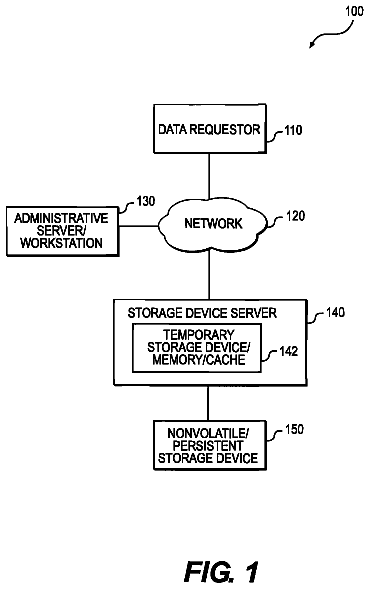
FIG. 1 is a block diagram showing a configuration of a system according to a first embodiment of the present invention;
FIG. 2 is a block diagram showing the configuration of the system according to a second embodiment of the present invention;
FIG. 3 is a diagram showing an example of a data structure of approval information;
FIG. 4 is a diagram showing an example of a data structure of token information;
FIG. 5 is a diagram
showing a variation of a network configuration of the system according to the first embodiment of the present invention;
FIG. 6 is a diagram
showing a variation of the network configuration of the system according to the first embodiment of the present invention;
FIG. 7 is a communication sequence diagram
related to a token issuing process in the first embodiment of the present invention;
FIG. 8 is a communication sequence diagram related to access control in the first embodiment of the present invention;
FIG. 9 is a communication sequence diagram related to token invalidation in the first embodiment of the present invention;
FIG. 10 is a flowchart showing operations in the token issuing process in the first embodiment of the present invention;
FIG. 11 is a communication sequence diagram related to developer/user registration in the second embodiment of the present invention;
FIG. 12 is a communication sequence diagram related to approver/device registration in the second embodiment of the present invention;
FIG. 13 is a communication sequence diagram related to token issuance in the second embodiment of the present invention;
FIG. 14 is a communication sequence diagram related to user information invalidation in the second embodiment of the present invention; and
FIG. 15 is a communication sequence diagram
related to the token issuing process in the first embodiment of the present invention.
Detailed description
According to an aspect of the embodiments, there is provided an access authorizing apparatus that is connected to a device having a resource used by a first application, and an access approving apparatus, respectively via a network, the access authorizing apparatus.
The access authorizing apparatus includes a receiving unit, a first transmitting/receiving unit, a token issuer and a transmitting unit.
The receiving unit receives first approval information indicating that access to the resource in the device has been approved by an access approver, from the first application via the network.
The first transmitting/receiving unit transmits an access approval request including the first approval information to the access approving apparatus, and receives access enable/disable information indicating whether the access to the resource by the first application is permitted, from the access approving apparatus.
The token issuer, when the access enable/disable information indicates that the access to the resource is permitted, issues token information that gives authority to access the resource to the first application.
The transmitting unit transmits the token information issued by the token issuer, to the first application.
In the following, embodiments of the present invention will be described in detail by reference to the drawings.
First Embodiment
FIG. 1 is a system configuration diagram showing functional blocks of an access authorizing apparatus according to a first embodiment of the present invention. A system according to the first embodiment is configured with an access authorizing apparatus 101, an access approving apparatus 102, a user authenticating apparatus 103, a device 104 and an application (first application) 110. The access authorizing apparatus 101, the access approving apparatus 102, the user authenticating apparatus 103, and the device 104 are connected via a network 201.
Next, a hardware configuration of the access authorizing apparatus 101 according to the present embodiment will be described. The access authorizing apparatus 101 of the present embodiment includes a controlling unit such as a CPU (Central Processing Unit) that controls the entire apparatus, a main storage such as a ROM (Read Only Memory) or a RAM (Random Access Memory) that stores various data and various programs, an auxiliary storage such as an HDD (Hard Disk Drive) that stores various data such as GUI information and various programs, and a bus that connects these units. This hardware configuration uses an ordinary computer. Moreover, in the access authorizing apparatus 101, a wireless or wired communication I/F (interface) that controls communication with external apparatuses (102 to 104) is provided. The communication with each external apparatus is performed via the network 201. The access authorizing apparatus 101 has at least a unit that transmits and receives information to and from the access approving apparatus 102, the user authenticating apparatus 103, the device 104, and the application (user) installed on the device 104, via the network 201. The access authorizing apparatus 101 is realized, for example, as a server apparatus existing on the Internet. In the present embodiment, the access authorizing apparatus 101 is assumed to be the server apparatus on the Internet.
It should be noted that hardware configurations of the access approving apparatus 102 and the user authenticating apparatus 103 are similar to the access authorizing apparatus 101. In the present embodiment, similarly to the access authorizing apparatus 101, they are assumed to be server apparatuses existing on the Internet.
Next, a hardware configuration of the device 104 will be described. Similarly to the access authorizing apparatus 101, the device 104 of the present embodiment has the hardware configuration using an ordinary computer. A difference from the access authorizing apparatus 101 is that a GUI displaying unit such as a liquid crystal display, and an operation inputting unit, such as a keyboard, a mouse or a remote controller, which accepts an instruction input from the user, are provided in order for the user to approve access to an internal resource in the device by the application 110. Similarly to the access authorizing apparatus 101, a communication I/F is provided, and a unit that transmits and receives the information to and from the access authorizing apparatus 101 via the network 201 is included. The device 104 is realized, for example, as a personal computer, a digital television, a hard disk recorder, or a mobile device such as a slate pc or a smart phone. In the present embodiment, the device 104 is assumed to be the digital television. Furthermore, the resource provided to the application 110 by this device 104 is assumed to be a recorded program list for digital terrestrial broadcasting that is accumulated in a hard disk included in the television.
The network 201 is, for example, the Internet, an NGN (Next Generation Network) that is a quality-assured, closed network, or the like. In the present embodiment, the network 201 is assumed to be the Internet.
The application 110 is software downloaded from a server or a recording medium such as a CD-ROM (not shown), onto the device 104. This may be a native application that is distributed and installed in a binary format that can be directly executed by hardware (a processor) of the device 104, or may be a non-native application that is described in a program language executed on a VM (Virtual Machine) and is executed by the processor on the device 104 via the VM, like Java (R). The latter application further may be a Web application that is described in HTML (HyperText Markup Language), CSS (Cascading Style Sheet) or JavaScript and is equivalent to a so-called Web page. In a case of the Web application, the Web application may be arranged on a local HTTP (HyperText Transfer Protocol) server within the device 104, may be placed on a premise LAN as a private server arranged in a premise network, or may be arranged on an external server that realizes a service on the Internet. In the present embodiment, it is assumed to be the Web application arranged on the local HTTP server. In other words, the application 110 is assumed to be Web content that operates on a Web browser installed on the device 104 (digital television) (or on middleware that realizes a Web browser, such as Webkit).
Next, in the above described hardware configurations, various functions realized by the CPU of the access authorizing apparatus 101 executing the various programs stored in the main storage and the auxiliary storage will be described according to FIG. 1. The access authorizing apparatus 101 has a first transmitting/receiving unit 301, a second transmitting/receiving unit 302, a token issuance determining unit 303, a token issuer 304, a token information storage 305, a token information provider 306, a token invalidating unit 307, an approval request permission information issuer 351, an approval request permission information storage 352, and an approval request permission information authenticating unit 353.
Among them, the first transmitting/receiving unit 301, the second transmitting/receiving unit 302, the token issuance determining unit 303, the token issuer 304, the token information provider 306, the token invalidating unit 307, the approval request permission information issuer 351, and the approval request permission information authenticating unit 353 are realized by executing a code expanded on the main storage such as the RAM when the CPU executes the program.
Moreover, the token information storage 305 and the approval request permission information storage 352 are, for example, database management systems constructed in the main storing or auxiliary storage. This may be a relational database, or may be an XML (eXtensible Markup Language) database. Moreover, this does not need to be constructed with a single database management system, and a plurality of database management systems, for example, SQLite3, Oracle, MySQL and the like may also be used together. Moreover, this may be constructed on a single physical storage, or may be a database management system configured with a plurality of physical auxiliary storages such as an NAS (Network Attached Storage) and an SAN (Storage Area Network). Moreover, a data storage area may be nonvolatile or may be volatile. Alternatively, if a unit that can acquire unit information (entry) on each data to be stored in each storage is provided, this may be a simple data managing module based on a list structure that is generated on the main storage when the CPU executes the program, may be a CSV format file managing module, or may be configured with a Key/Value store.
Subsequently, each unit included in the present embodiment will be described in detail below.
The first transmitting/receiving unit 301 performs data communication with the access approving apparatus 102. The first transmitting/receiving unit 301 transmits user identification information that identifies the application 110, device identification information that identifies the device 104, and approval information (first approval information) indicating that the application 110 has been approved by a corresponding access approver for the access to the resource in the device 104, to the access approving apparatus 102, and receives access enable/disable information representing whether the access to the resource in the device 104 by the application 110 is enabled or disabled. This transmitting/receiving process is performed on the network 201, and for example, is realized by HTTP (Hypertext Transfer Protocol) communication. At this time, generally, the first transmitting/receiving unit 301 becomes an HTTP client, and the access approving apparatus 102 becomes an HTTP server. However, as a form of realization, they are not limited thereto. A configuration is also conceivable in which communication connection from the access approving apparatus 102 to the first transmitting/receiving unit 301 is established. In this case, conversely, the first transmitting/receiving unit 301 behaves as the HTTP server. This communication via the network 201 is not limited to HTTP. As long as the above described data can be transmitted and received, another existing communication protocol may be used, or a proprietary communication protocol may be designed and used. This assumption applies to all the communication via the network 201 according to the present invention. Hereinafter, each piece of the information transmitted and received by the first transmitting/receiving unit 301 will be explained.
First, the user identification information is information issued to the application (user) 110 by the user authenticating apparatus 103. The user identification information uniquely identifies the application 110. A developer of the application 110 receives the issuance of the user identification information from the user authenticating apparatus 103 before publishing/distributing the application 110, and sets the user identification information within the application 110. This issuance may be performed, for example, by preparing a Web page for registering the application, by the user authenticating apparatus 103, and inputting necessary information into a registration format on this Web page and applying for the issuance by the above described developer. Alternatively, the issuance of the user identification information may be requested based on an e-mail. As long as the setting within the application is performed before the application 110 is published/distributed, any issuance form may be used. The user identification information includes a user ID that can uniquely identify the user in the user authenticating apparatus 103, and can further include confidential information for authenticating validity of the user ID.
The device identification information is information that can uniquely identify the device 104. Specifically, a combination of an MAC (Media Access Control) address, a UUID (Universal Unique Identifier), a product model name and a manufacturing number, or the like is conceivable. A format of the device identification information may be any format as long as the device can be uniquely identified in the access authorizing apparatus 101 or the access approving apparatus 102.
The approval information (first approval information) is information that is issued to the application 110 by the access approving apparatus 102, and is information indicating that the application 110 has been approved by the access approver (for example, an owner of the device 104, a device manufacturer that has developed the device 104, or the like) for the access to the resource in the device 104. The approval information includes at least an access enable/disable verification code indicating that the approval has been obtained, and can further include confidential information for proving validity of this access enable/disable verification code, and class information, attribute information, or range information on the resource in the approved device 104. A specific configuration example of the approval information is shown in FIG. 3.
The access enable/disable information returned by the access approving apparatus 102 is a logical value representing whether or not the above described approval information is correct, that is, whether or not the access has been approved.
The second transmitting/receiving unit 302 performs data communication with the user authenticating apparatus 103. The second transmitting/receiving unit 302 transmits the user identification information to the user authenticating apparatus 103, and receives user authentication result information. This user authentication result information includes at least a logical value representing whether or not user authentication (that is, authentication of whether or not the application related to the user identification information is valid (has been previously registered)) executed in the user authenticating apparatus 103 has succeeded. The second transmitting/receiving unit 302 communicates with the user authenticating apparatus 103 via the network 201. This communication is assumed to be realized, generally, by HTTP communication, which, however, is not limited thereto as described in a description of the first transmitting/receiving unit 301.
The token issuance determining unit 303 determines whether token issuance is enabled or disabled, based on the access enable/disable information received from the access approving apparatus 102 by the first transmitting/receiving unit 301, and the user authentication result information received from the user authenticating apparatus 103 by the second transmitting/receiving unit 302. If the access enable/disable information indicates "enabled" and the user authentication result information indicates "success", the token issuance is permitted. Otherwise, the token issuance is not permitted.
The token issuer 304 acquires the user identification information, the device identification information and the approval information from the application 110. The token issuer 304 receives these pieces of information from the application by a receiving unit (not shown). The token issuer 304 passes these pieces of the acquired information to the above described token issuance determining unit 303, and requests to determine whether the token issuance is enabled or disabled. When acquiring a determination result indicating that the issuance is "enabled", from the token issuance determining unit 303, the token issuer 304 generates token information including a token, and transmits the token information to the application 110 from a transmitting unit (not shown). Conversely, if a determination result indicating that the issuance is "disabled" is acquired, a token issuance error message is generated, and the token issuance error message is transmitted to the application 110 from the transmitting unit (not shown). The generated token information is registered in the token information storage 305 to be described later. Communication related to this token issuance, between the application 110 (the device 104 in which the application 110 operates) and the token issuer 304, is also performed via the network 201. Generally, it is assumed to be realized by the HTTP communication, which, however, is not limited thereto as described in the description of the first transmitting/receiving unit 301. Similarly to the token issuer and the like, the above described receiving unit and transmitting unit (not shown) may be realized by executing the code expanded on the main storage such as the RAM when the CPU executes the program.
Here, the token is an identifier of the token information, and for example, can be realized as a fixed length bit sequence. The token may be in any format as long as "access to a particular resource by a particular application" can be specified in the access authorizing apparatus 101.
The token information includes at least the token, and can further include the user identification information, the device identification information, the approval information, user information that is information related to the application 110, device information that is information related to the device 104, information on a term of validity of the token, and logical value information indicating whether or not the token is valid. Here, the user information includes various kinds of information on the application (such as an application name, application summary information, date and time of development, a version, and a pointer to developer information), and the developer information (such as a developer name, a developing company name, and contact information), which are registered into the user authenticating apparatus 103 by the developer of the application 110 when the above described user identification information is issued. Moreover, the device information can include a product name, a model number, a manufacturing number, resource information to be published, and the like of the device. A specific configuration example of the token information is shown in FIG. 4.
The token information storage 305 stores the token information generated by the token issuer 304.
The token information provider 306 acquires a token acquisition request from the device 104, and provides corresponding token information from the token information storage 305 to the device 104. The token acquisition request may be a request for the token information for a particular token, may be a request for entire token information for a particular device, or may be a request for entire token information for a particular application. Alternatively, it may be a request for all valid token information accumulated in the token information storage 305, or conversely, it may be a request for all invalid token information. It should be noted that communication related to the token acquisition request is also performed via the network 201. Generally, it is assumed to be realized by the HTTP communication. In this case, the token information provider 306 functions as the HTTP server. A communication protocol to be used is not limited to HTTP. The communication protocol is not limited thereto as described in the description of the first transmitting/receiving unit 301. Furthermore, if the token has been invalidated or content thereof has been updated, the token information provider 306 may notify a corresponding device of this change. In this case, the token information provider 306 may previously establish and maintain a communication channel to the device, and simultaneously with occurrence of the change, may use this communication channel to notify content thereof. This may be realized by using HTTP long polling such as Comet, or may be realized by using the HTTP communication to use WebSocket that constructs a TCP (Transmission Control Protocol) session for two-way communication. In addition, any technique may be used in a framework that realizes a Push-type asynchronous notification from the server side.
The token invalidating unit 307 acquires an invalidation request for an issued token, and as invalidation of this token, deletes the token information including a corresponding token in the token information storage 305, or sets the above described logical value information representing "valid" or "invalid" that is included in the token information, to be "invalid". Furthermore, in order to notify the corresponding device of the invalidation of the token simultaneously with occurrence thereof, the token information is passed to the token information provider 306, and the notification of the invalidation is requested. It should be noted that the invalidation request may be realized by the communication via the network 201, or may be realized offline. For example, when the user of the device calls a call center and reports an unauthorized application, it can also be regarded as the invalidation request. Alternatively, it may be a mail-based report. The invalidation of the token may be realized by operating a database system that is an entity of the token information storage 305, by an operator of the access authorizing apparatus 101 in response to such an invalidation request.
The approval request permission information issuer 351 issues approval request permission information required for acquiring the approval information, based on the user authentication result information. This approval request permission information includes an approval request permission ID that can be uniquely identified in the approval request permission information storage 352 to be described later, and can further include confidential information for authenticating validity of this ID.
The approval request permission information storage 352 stores the approval request permission information issued by the approval request permission information issuer 351. This approval request permission information storage 352 may be realized in a form integrated with the token information storage 305, as a form of realization.
In response to an authentication request for the approval request permission information from the access approving apparatus 102, the approval request permission information authenticating unit 353 performs the authentication based on the information stored in the approval request permission information storage 352, and returns authentication information. For example, the approval request permission ID, a hash value of confidential information, and information on a used hash function are passed to the approval request permission information authenticating unit 353 from the access approving apparatus 102. The approval request permission information authenticating unit 353 obtains a hash value of confidential information accumulated in the approval request permission information storage 352, based on the passed information on the hash function, and determines whether or not there is a match. Alternatively, instead of the hash values, a message and a signature attached by using this confidential information may be used to perform the authentication.
Next, operations of the access authorizing apparatus 101 according to the present embodiment will be described using FIGS. 3, 4, 7, 8, 9 and 10. FIG. 3 shows the approval information issued by the access approving apparatus 102 in the present embodiment. FIG. 4 shows the token information acquired for accessing the resource in the device 104 by the application 110, which is stored by the token information storage 305 in the present embodiment.
FIG. 7 shows a basic sequence of a token issuing process according to the present embodiment. Moreover, FIG. 8 shows a basic sequence of an access controlling process according to the present embodiment. FIG. 9 shows a basic sequence of a token invalidating process according to the present embodiment. FIG. 10 is a flowchart showing the token issuing process in the access authorizing apparatus 101.
It should be noted that, in the present embodiment, the device 104 is the digital television, and the resource that is an access target is recorded program information accumulated in the television. Moreover, the application 110 is a recording navigation application that uses this recorded program information to browse and operate a recording list.
Hereinafter, first, a process procedure from the issuance of the user identification information and the token issuance, to the resource access based on the issued token will be described based on a sequence diagram of FIG. 7.
First, as a premise, the user registers the user himself as the access approver for the device 104 (the digital television), into the access approving apparatus 102 (step S101). It is conceivable to perform this step in a stepwise manner by registering the user as the access approver (in this case, also registering the user ID, a password and the like), and subsequently registering the information on the user's own device as appropriate, or the like. Specifically, it may be realized by preparing a Web page for performing the registration of the access approver and the registration of the device owned by the access approver, by the access approving apparatus 102. Alternatively, each registration may be realized by presetting a URI (Uniform Resource Identifier) of the access approving apparatus 102 into the device 104 so that when the device 104 is connected to the network 201, this device information is automatically registered and the device and the user (the access approver) are bound to each other by using a PIN code, a two-dimensional barcode or the like. In either case, in the present embodiment, since the access approving apparatus 102 is the external apparatus, this embodiment is not questioned.
Next, the user authenticating apparatus 103 issues the user identification information to the application 110 (the recording navigation application) (step S102). For this step, as described above, a form of realization is conceivable in which the developer of the application 110 has performed presetting within the application before a recording application is published/distributed. However, also in this step, since the user authenticating apparatus 103 is the external apparatus, the embodiment is not questioned. Subsequently, the application 110 is published/distributed and downloaded onto the device 104 (step S103).
Here, the user performs an application operation involving the resource access (step S104). In the present embodiment, since the application 110 is the recording navigation application, the access to the resource (the recorded program list) can occur in a startup phase. When the resource access occurs (specifically, when a recorded program list acquiring API (Application Programming Interface) published to the application by the device 104 is called), the application 110 transmits an access approval request to the access authorizing apparatus 101 (step S105). At this time, since redirection to the access approving apparatus 102 is performed in steps S108 and S109 in a latter part, in order to display a screen of the application 110 again, a callback URI is designated for this access approval request. Furthermore, as information required for the access approval, the user identification information and the device identification information are included as parameters. It should be noted that, in the present embodiment, this step is realized by an HTTP GET request.
Subsequently, the access authorizing apparatus 101 receives the access approval request, and redirects the request to the access approving apparatus 102 (steps S106 and S107). In the present embodiment, it is realized by designating a URI of an approval screen of the access approving apparatus 102, in a Refer header in an HTTP GET response. At this time, the user identification information, the device identification information and the callback URI, which have been designated in step S105, are included as query parameters into a URL of a redirection destination.
Here, according to the redirection, an object operated by the user is switched from the application 110 on the device 104 to Web page access through the Web browser that is also on the device 104. The Web browser requests an access approval screen, with the user identification information, the device identification information and the callback URI, according to the Refer header (step S108). The user ID, the password and the like may be included in this request.
The access approving apparatus 102 returns the access approval screen as a response (step S109). At this time, the user identification information and the device identification information are incorporated into the approval screen so that the user can recognize "what application attempts to access which resource". In the present embodiment, "the recording navigation application requests access to the recorded program list accumulated in the digital television" is displayed.
Subsequently, the user gives a response indicating whether or not the access to the device 104 by the application 110 is permitted, to the access approving apparatus 102 via an interface on a displayed Web page (step S110). If the response indicates consent, the access approving apparatus 102 issues the approval information (see FIG. 3) including content of the permission, and includes the approval information into the response (step S111). At this time, for re-transition from the access approval screen to the screen of the application 110, the callback URI passed in step S108 is designated as the redirection destination, in the Refer header. The above described approval information may be set as a query parameter of this callback URI. The access approving apparatus 102 stores the issued approval information to be associated with a set of the user identification information and the device identification information.
The Web browser is redirected to the screen of the application 110, according to this Refer header included in an access approval response (step S112).
In addition to the approval information set as a query of an accessed URI (the callback URI), the application 110 includes the user identification information and the device identification information into a token issuance request, and transmits the token issuance request to the access authorizing apparatus 101 (step S113).
When the access authorizing apparatus 101 receives the token issuance request, the token issuer 304 passes the approval information, the user identification information and the device identification information that have been received, to the token issuance determining unit 303. The token issuance determining unit 303 transmits the user identification information to the user authenticating apparatus 103 (step S114), and receives the user authentication result information (step S115), via the second transmitting/receiving unit 302. When the received user identification information has already been registered therein, the user authenticating apparatus 103 returns "authentication has succeeded", and otherwise, returns "authentication has failed". Moreover, the token issuance determining unit 303 transmits the approval information, the user identification information, and the device identification information to the access approving apparatus 102 (step S116), and receives the access enable/disable information (step S117), via the first transmitting/receiving unit 301. In the access approving apparatus 102, if there is the approval information stored to be associated with the set of the user identification information and the device identification information, and if its access enable/disable verification code is identical to that included in the received approval information, it is determined that the access is enabled. Otherwise, it is determined to be disabled. The token issuance determining unit 303 determines whether the token issuance is enabled or disabled, from the access enable/disable information and the user authentication result information that have been acquired. In a case of "enabled" and "success", it is determined that the token issuance is "enabled", and otherwise, it is determined to be "disabled", respectively. The token issuance determining unit 303 passes a result of the determination to the token issuer 304. Based on this determination result, if the token issuance is "enabled", the token issuer 304 generates the token information including the token (step S118), and stores the generated token information into the token information storage 305 (step S119). The token issuer 304 responds to the application 110, with the token or the token information that has been issued (step S120).
A flowchart of the above token issuing process in the access authorizing apparatus 101 (the token issuance determining unit 303 and the token issuer 304) is shown in FIG. 10.
Lastly, the application 110 accesses the resource (step S121), and displays a result of the resource access, to the user (step S122). Here, in S121, the application acquires the recorded program list accumulated in the digital television, and presents a result of the acquisition to the user.
Here, a process procedure of the resource access in step S121 will be described in detail based on a sequence diagram of FIG. 8.
First, the application 110 calls the recorded program list acquiring API (step S1210). In the present embodiment, since the application 110 is the Web application arranged on the local HTTP server within the device 104, this API may be realized as a plug-in bound to JavaScript that can be called from the Web page, or may be realized as a Web API arranged on the same local HTTP server. This may be an API of a native library in a binary format depending on a form of the application, and a format of the API is not questioned. At this time, the application passes the token (and the confidential information issued along with the token) as an argument of the API.
In response to the API call, the device 104 transmits a request to acquire the token information corresponding to the token passed as the argument, to the token information provider 306 on the access authorizing apparatus 101 (step S1211). At this time, along with the token, the confidential information issued along with the token, the device identification information, device model type information and the like may be transmitted together. It should be noted that communication between the device 104 and the token information provider 306 is desirably encrypted. For example, HTTPS communication using an SSL (Secure Socket Layer) or TLS (Transport Layer Security) protocol may be used, IPSec may be used, or as long as data (the token or the token information) to be transmitted and received does not directly flow on the network 201, proprietary cryptographic communication may be used.
The description continues in the full USPTO document.
 Lapsed, fee not paid9 drawings