Background information
With the advent of computers, interactive electronic communications, and the Internet, as well as advances in the digital realm of consumer information, has come a reinvention of conventional entertainment and communication services to enhance programming, recording, and viewing of multimedia, such as broadcast television programs. Traditionally, broadcast media, being based on pre-computer age technology, has developed on its own path, without any regard to other media systems. However, with readily available, cost-effective broadband services, bandwidth intensive applications, such as video streaming, have become viable alternatives to legacy broadcast systems.
For example, internet protocol television (IPTV) service providers are currently offering subscribers various video services ranging from multi-channel video programming that mimics traditional broadcast television, to true video-on-demand (VOD) programming. These services are further supplemented with interactive video applications that enable robust programming information, selection. and navigation functionality, as well as integrated digital video recording, and data services to enhance the video experience. However, in adopting these advancements, the media industry faces a number of challenges hindering the convergence of broadband rich data content (e.g., traditional IP-based content) with live television productions and targeted advertisements.
Therefore, there is a need for an approach that seamlessly integrates expanded access to broadband digital content, live television productions, and targeted advertisements.
Brief description of the drawings
Various exemplary embodiments are illustrated by way of example, and not by way of limitation, in the figures of the accompanying drawings in which like reference numerals refer to similar elements and in which:
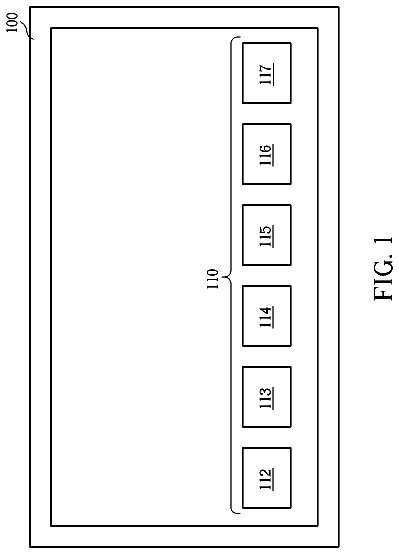
FIG. 1 is a diagram of a system capable of providing expanded widgets including content retrieved over a data network and augmented content, according to an exemplary embodiment;
FIG. 2 is a diagram of a set-top box configured to provide expanded widgets, according to an exemplary embodiment;
FIGS. 3a and 3b are flowcharts of processes for providing expanded widgets using the set-top box of FIG. 2, according to exemplary embodiments;
FIG. 4 is a diagram of a television display providing an expanded weather widget, according to an exemplary embodiment;
FIG. 5 is a diagram of a television display providing an expanded traffic widget, according to an exemplary embodiment;
FIG. 6 is diagram of an interface for providing targeted advertisements via expanded widgets, according to various embodiments;
FIGS. 7a and 7b are flowcharts of processes for providing targeted advertisements using the interface of FIG. 6, according to exemplary embodiments;
FIG. 8 is a diagram of a television display providing targeted advertisements via expanded widgets, according to various embodiments; and
FIG. 9 is a diagram of a computer system that can be used to implement various exemplary embodiments.
Description of the preferred embodiment
A preferred apparatus, method, and software for presenting displayable applications including content retrieved over a data network and augmented content are described. In the following description, for the purposes of explanation, numerous specific details are set forth in order to provide a thorough understanding of the preferred embodiments of the invention. It is apparent, however, that the preferred embodiments may be practiced without these specific details or with an equivalent arrangement. In other instances, well-known structures and devices are shown in block diagram form in order to avoid unnecessarily obscuring the preferred embodiments of the invention.
Although various exemplary embodiments are described with respect to a set-top box (STB), it is contemplated that these embodiments have applicability to any device capable of processing video signals for presentation to a user, such as a home communication terminal (HCT), a digital home communication terminal (DHCT), a stand-alone personal video recorder (PVR), a television set, a digital video disc (DVD) player, a video-enabled phone, a video-enabled personal digital assistant (PDA), and/or a personal computer (PC), as well as other like technologies and customer premises equipment (CPE).
FIG. 1 is a diagram of a system capable of providing expanded widgets including content retrieved over a data network and augmented content, according to an exemplary embodiment. A system 100 can be configured to display applications (e.g., widgets) that present content retrieved over a data network (e.g., sports coverage, weather forecasts, traffic reports, horoscopes, daily news, commentary, community service information, etc.) and augmented content (e.g., advertisements, broadcasts, video-on-demand (VOD), links, marketplace information, etc.) to a user of an STB. In this manner, a subscriber of the displayable application service may seamlessly obtain traditional IP-based data combined with supplemental media rich information. It is contemplated that system 100 may embody many forms and include multiple and/or alternative components and facilities.
It is observed that digital media formats are increasing in popularity among individuals seeking the most up-to-date information regarding sports coverage, weather forecasts, traffic reports, horoscopes, daily news, commentary, community service information, and the like. Further, society desires quick, mercurial access to supplemental forms of related and relevant information. To satisfy these thirsts, people are increasingly turning to specialized television programs and/or the Internet. The approach, according to certain embodiments, stems from the recognition that information seekers may benefit from an enhanced body of information, while appreciating the necessity to alleviate the associated burdens, expenses, and inefficiencies of having to supply and rummage through dedicated and disparate content sources.
Currently, little attention has been afforded to extending and enhancing the distribution of information within and among the entertainment arena and other commutations media. Thus, it is apparent that improvements are needed.
As seen in FIG. 1, it is noted that television remains the prevalent global medium for entertainment and information as individuals spend a great deal of time tuning into televised media. Accordingly, the service provider network 101 of system 100 integrates this medium with that of the telecommunications, computing, and media environments, thereby broadening the scope of devices and sources available to individuals for receiving concurrent and/or related sources of information. In this manner, system 100 relieves network operators from the burden and expense of providing dedicated and disparate content sources, by enabling users via user equipment, to automatically locate and receive content, such as sports coverage, weather forecasts, traffic reports, horoscopes, daily news, commentary, or community service information, in displayable overlay applications (e.g., widget 103) selectively including augmented content (e.g., advertisements, broadcasts, VOD, links, marketplace information, etc.). Although the user equipment is described with respect to an STB, it is contemplated that various embodiments have applicability to any device capable of processing video streams.
In a typical scenario, an individual (e.g., a subscriber of the displayable application service) may tune into a televised media program using an STB 105a, while retaining the ability to stay informed with sports, weather, traffic, horoscope, daily news, commentary, and community service information specific to their environment via an informational widget 103. Moreover, the displayable application service can enable subscribers to receive augmented information to supplement or further satisfy their curiosity. In other examples, service provider network 101 may enable subscribers to interact and share content with one another through personalized communications channels utilizing, for instance, a communicational widget 103, e.g., a displayable application enabling short messaging capabilities or voice application capabilities. In other instances, widget 103 can convey proprietary information to the service provider, such as an available content line up or service subscription options.
In the depicted embodiment, a plurality of STBs 105a-105n are configured to communicate with and receive signals and/or data streams, e.g., media content including at least one overlay instance, from a media service provider (MSP) 107 or other transmission facility. An overlay instance includes content retrieved over a data network (e.g., service provider network 101, packet-based network 109, and/or telephony network 111) and/or augmented content. STBs 105a-105n can be located at one or more subscriber sites that are geographically associated with one or more geospatial regions.
Exemplary MSPs 107 may comprise one or more media content servers (not illustrated) and/or data repositories (not shown). Alternatively, the servers and/or repositories may be accessed via one or more service provider networks 101 or packet-based networks 109, such as user profile repository 113, content repository 115, or server 117. Further, a service provider network 101 may include a system administrator 119 for operational and management functions to deploy the displayable application services using, for instance, an internet protocol television (IPTV) system. In this manner, STBs 105a-105n may utilize any appropriate technology to draw, receive, or transmit media content (including overlay instances) from/to an MSP 107 or other content source/sink. A more detailed explanation of an exemplary STB will be provided with respect to FIG. 2.
Media content generally includes audio-visual content (e.g., broadcast television programs, VOD programs, pay-per-view programs, IPTV feeds, DVD related content, etc.), pre-recorded media content, data communication services content (e.g., commercials, advertisements, videos, movies, songs, images, sounds, etc.), Internet services content and/or other equivalent media forms. In this manner, an MSP 107 may provide (in addition to their own media content) content obtained from sources, such as one or more television broadcast systems 121, one or more third-party content provider systems 123, content residing in a repository 115 or server 117 accessible over a packet-based network 109, or available via one or more telephony networks 111, etc.
Exemplary embodiments enable MSPs 107 to transmit and/or interlace content retrieved over, for instance, the packet-based network 109 and augmented content with conventional media content streams. In alternative embodiments, STBs 105a-105n may be concurrently configured to draw/receive/transmit content from (or to) multiple sources, thereby alleviating the burden on any single source, e.g., MSP 107, to gather, supply, or otherwise meet the content demands of any user or site. Thus, particular embodiments enable authenticated third-party television broadcast systems 121, content provider systems 123, or servers 117 to transmit media content and/or overlay instances to STBs 105a-105n either apart from, or in conjunction with, MSP 107.
Overlay content may include, but is certainly not limited to, information regarding weather, traffic, news, sports, current events, breaking stories, commentary, headlines, advertisements, horoscopes, solicitations, financial advice, stocks, markets, events, schools, governments, blog entries, podcasts, and the like. Moreover, overlay content may be provided by any authenticated source, including grassroots groups or individuals, non-profits, governmental organizations, public/private institutions, etc. Further, overlay content may be specific to certain geographic locations or selectively distributed based on user demographics (e.g., ethnicity, gender, age, occupation, etc.), geography (e.g., zip code), interests, affiliations, and the like. Additionally, overlay content may be generated based on information corresponding to STB users, i.e., overlay content may be tailored to specific individuals or focus groups. In other instances, overlay content may include information proprietary to the service provider, such as a content line up, service subscription options, data about subscribers, and the like. It is noted that overlay content can be any type of information provided from any source having connectivity to system 100.
Augmented content may include supplemental information to the aforementioned forms of overlay content. In particular embodiments, the augmented content may include targeted advertisements, video channels, marketplace information, VOD programs, and the like, as well as links to the same. In still more specific embodiments, the augmented content may include information targeted to a subscriber based on user profiles, overlay content, augmented content, or a configuration of the subscriber's STB.
Moreover, the overlay content and augmented content may be distinguished (or otherwise categorized) utilizing metadata included therewith or appended thereto. Metadata can be generally considered data about data; but more specifically, it can be utilized to describe all aspects of, and content distributed by, system 100. Namely, metadata can include descriptions about: data aspects (file name, type, administrator, size, location, version, or include timestamps, mode bits, arbitrary attribute-value pairs, etc.), titles, activities/events, individuals and organizations involved, intended audiences (e.g., ethnicities, ages, genders, incomes, educational levels, disabilities, mobilities, as well as other like demographic statistics), geospatial identifications (intended zip codes, school districts, communities, etc.), locations of supplementary information and processes, access methods, limitations, timing of activities/events (e.g., start/end dates), as well as motivations, policies and rules. As such, metadata may be utilized by various components of system 100 for control or guiding purposes.
In particular embodiments, system 100 may structure and encode metadata to describe characteristics of the content-bearing entities to aid in the creation, identification, discovery, assessment, and management of the overlay and/or augmented content. Alternative embodiments may utilize metadata to optimize compression algorithms or perform other computational tasks by the components of system 100. The metadata might be utilized to specify overlay or augmented content that is to be presented to a plurality of STBs. Various other embodiments might use metadata to correlate overlay content or augmented content with user profiles to determine the overlay and/or augmented content that is to be presented to a user. A more detailed explanation of user profiles is provided with respect to FIG. 2.
Accordingly, STBs 105a-105n may communicate with MSPs 107, television broadcast systems 121, third-party content provider systems 123, or servers 117 via one or more service provider networks 101. These networks 401 may employ various access technologies (including broadband methodologies) including, but certainly not limited to, cable networks, satellite networks, subscriber television networks, digital subscriber line (DSL) networks, optical fiber networks, hybrid fiber-coax networks, worldwide interoperability for microwave access (WiMAX) networks, wireless fidelity (WiFi) networks, other wireless networks (e.g., 3G wireless broadband networks, mobile television networks, radio networks), terrestrial broadcasting networks, provider specific networks (e.g., a Verizon FiOS network, a TiVo network, etc), and the like.
Further, content may be transmitted from (or to) one or more packet-based networks 109 and/or telephony networks 111, such as the Internet, various intranets, local area networks (LAN), wide area networks (WAN), the public switched telephony network (PSTN), integrated services digital networks (ISDN), other private packet switched networks or telephony networks, as well as any additional equivalent system or combination thereof. These networks may utilize any suitable protocol supportive of data communications, e.g., transmission control protocols (TCP), internet protocols (IP), file transfer protocols (FTP), telnet, hypertext transfer protocols (HTTP), asynchronous transfer mode (ATM), socket connections, Ethernet, frame relay, and the like, to connect STBs 105a-105n to the various content sources. In alternative embodiments, STBs 105a-105n may be directly connected to the one or more various content sources, including MSP 107.
In various embodiments, the service provider network 101 may include one or more video processing modules (not shown) for acquiring and transmitting video feeds from MSP 107, the television broadcast systems 121, other third-party content provider systems 123, or servers 117 over one or more of the networks 101, 109, 111 to particular STBs 105a-105n. Accordingly, service provider network 101 may include facilities to support compression/decompression, coding/decoding, modulation/demodulation, optical/electrical conversion, and analog/digital conversion, as well as any other suitable signal processing and/or transmission operation. Further, service provider network 101 can optionally support end-to-end data encryption in conjunction with video streaming services such that only authorized users are able to view content and interact with other legitimate users/sources.
Accordingly, system 100 may include an authentication module (not shown) configured to perform authorization/authentication services and determine whether users or content sources are indeed subscribers to, or providers of, the displayable application service. An authentication schema may require a user name and password, a key access number, a unique machine identifier (e.g., media access control (MAC) address), etc., as well as any combination thereof. Thus, once an STB or content source is authenticated, connections between the STBs 105a-105n and the content sources may be established directly. Further, the authentication module may grant users the right to receive overlay and/or augmented content concerning one or more geographic regions serviced by system 100 by revoking existing sets of digital certificates associated with a particular region, and issuing new sets of digital certificates mapped to a second region. In this regard, an STB may receive new overlay and/or augmented content concerning the second region, whereas the previous session can be automatically closed when the "old" or prior certificates associated with the first region are revoked. This enables users to initiate secure sessions at any given STB 105a-105n linked to system 100, whether or not the STB belongs to that individual user. It is additionally contemplated that multiple rights sessions may exist concurrently.
In particular embodiments, MSP 107 may comprise an IPTV system configured to support the transmission of television video programs from the broadcast systems 121 as well as other content, such as overlay instances from the various third-party sources (e.g., 117, 121, 123) utilizing Internet Protocol (IP). That is, the IPTV system 107 may deliver video streams, including overlay and augmented data, in form of IP packets. Further, the transmission network (e.g., service provider network 101) may optionally support end-to-end data encryption in conjunction with the video streaming services, as mentioned earlier.
In this manner, the use of IP permits television services to be integrated with broadband Internet services, and thus, share common connections to a user site. Also, IP packets can be more readily manipulated, and therefore, provide users with greater flexibility in terms of control and offers superior methods for increasing the availability of content including overlay and augmented content. Delivery of video content, by way of example, may be through a multicast from the IPTV system 107 to the STBs 105a-105n. Any individual STB may tune to a particular source, e.g., channel, by simply joining a multicast of the video content, utilizing an IP group membership protocol (IGMP). For instance, the IGMP v2 protocol may be employed for joining STBs to new multicast groups. Such a manner of video delivery avoids the need for expensive tuners to view television broadcasts; however, other video delivery methods, such as directly modulated carriers (e.g., national television systems committee (NTSC), advanced television systems committee (ATSC), quadrature amplitude modulation (QAM)), may still be used. It should be noted that conventional delivery methods may still be implemented and combined with the advanced methods of system 100. Also, the video content may be provided to various IP-enabled devices, such as PCs, PDAs, web-appliances, mobile phones, etc.
Accordingly, an STB (e.g., STB 105a) may integrate all the functions of an IPTV system, as well as combine the overlay and augmented content functions of the various online or off-line environments, in a manner that seamlessly toggles among the functions. It is contemplated that the displayable application service may be extended to users with a presence on the Internet or retrieve content stored at a database 115 connected the packet-based network 109. In alternative embodiments, the services of system 100 could be extended to still further users having an end terminal (not shown), such as a plain old telephone service (POTS) device, connected to the telephony network 111. While system 100 is illustrated in FIG. 1, the exemplary components are not intended to be limiting, and indeed, additional or alternative components and/or implementations may be utilized.
FIG. 2 is a diagram of a set-top box configured to provide expanded widgets, according to an exemplary embodiment. STB 201 may comprise any suitable technology to receive one or more content streams, including at least one overlay instance, from a media source 203, such as the IPTV system of FIG. 1. The overlay instance includes content retrieved over a data network and/or augmented content for presentation via widget 205.
Accordingly STB 201 may comprise computing hardware (such as described with respect to FIG. 9) and include additional components configured to provide specialized services related to the reception and display of media content and overlay instances (e.g., remote control capabilities, conditional access functions, tuning functions, presentation functions, multiple network interfaces, audio/video signal ports, etc.). Alternatively, the functions and operations of STB 201 may be governed by a controller 207 that interacts with each of the STB components to provide overlay and/or augmented content that is generated based on predetermined criteria. In turn, a user may be afforded greater functionality utilizing a control device 209 to control these services, as will be more fully described below.
As such, STB 201 may be configured to process a content stream 211, including causing a displayable application (e.g., widget 205) and/or one or more components of the media content (e.g., video component 213 and/or an audio component) to be presented on (or at) display 215. Presentation of the media content and widget 205 may include: displaying, recording, playing, rewinding, forwarding, toggling, selecting, zooming, or any other processing technique that enables users to experience content streams 211. For instance, STB 201 may provide one or more signals 217 to a display 215 (e.g., television) so that the display 215 may present (e.g., display) the overlay instance (e.g., widget 205) on the media content (e.g., video 213) to a user, wherein the overlay instance includes content retrieved over a data network and augmented content.
STB 201 may also interact with a PVR, such as digital video recorder (DVR) 219, to store received signals that can then be manipulated by a user at a later point in time. In various embodiments, DVR 219 may be network-based, e.g., included as a part of the service provider network 101, collocated at a subscriber site having connectivity to STB 201, and/or integrated into STB 201. A display 215 may present content provided via STB 201 to a user. In alternative embodiments, STB 201 may be configured to communicate with a number of additional peripheral devices (not illustrated), including: PCs, laptops, PDAs, cellular phones, monitors, mobile devices, handheld devices, as well as any other equivalent technology capable of presenting content to a user. These peripherals may be configured to access content (including overlay and augmented content) stored and/or processed by STB 201. For example, a media content stream 211 may be received by STB 201 and recorded by DVR 219, wherein a PC may later access and view the stored content. Moreover, the peripheral devices may be configured to program or otherwise control the functions of STB 201.
Furthermore, STB 201 may include a communication interface 221 configured to receive content streams from an MSP 107 or other content source. Communication interface 221 may optionally include single or multiple port interfaces. For example, STB 201 may establish a broadband connection to multiple sources transmitting content to STB 201 via a single port, whereas in alternative embodiments, multiple ports may be assigned to the one or more sources. In still other embodiments, communication interface 221 may be configured to permit users, via STB 201, to transmit data (including media content and overlay instances) to other users with STBs, an MSP 107, or other content source/sink.
According to various embodiments, STB 201 also includes inputs/outputs (e.g., connectors 223) to display 215 and DVR 219, as well as an audio system (not illustrated). The audio system may comprise a conventional audio-video receiver capable of monaural or stereo sound, as well as multichannel surround sound. Further, the audio system may include speakers, ear buds, headphones, or any other suitable component configured for personal or public dissemination. As such, STB 201, display 215, DVR 219, and the audio system for example, may support high resolution video streams, such as high definition television (HDTV) or digital theater systems high definition (DTS-HD) audio. Therefore, STB 201 may be configured to encapsulate data into a proper format with required credentials before transmitting onto one or more of the networks of FIG. 1 and de-encapsulate incoming traffic to dispatch data to display 215 and/or the audio system.
In an exemplary embodiment, display 215 and/or the audio system may be configured with Internet Protocol (IP) capability (i.e., includes an IP stack, or is otherwise network addressable), such that the functions of STB 201 may be assumed by display 215 and/or the audio system. In this manner, an IP ready. HDTV display or DTS-HD audio system may be directly connected to one or more service provider networks 101, packet-based networks 109, and/or telephony networks 111. Although STB 201, display 215, and DVR 219 are shown separately, it is contemplated that these components, as well as the audio system, may be integrated into a single component, or other combination of components.
An authentication module 225 may be provided at STB 201 to initiate or respond to authentication schemes of, for instance, service provider network 101 or various other content providers, e.g., broadcast television systems 121, third-party content provider systems 123, or servers 117. Authentication module 225 may provide sufficient authentication information, e.g., a user name and password, a key access number, a unique machine identifier (e.g., MAC address), and the like, as well as combinations thereof, to a corresponding network interface for establishing connectivity. As described earlier, one or more digital certificates may be simultaneously mapped. Further, authentication information may be stored locally at memory 227, in a repository (not illustrated) connected to STB 201, or at a remote repository, e.g., user profile repository 113.
Authentication module 225 may also facilitate the reception of media content, as well as overlay and augmented content, from single or disparate sources. For instance, STB 201 may receive a video stream from a first source (e.g., IPTV system 107), overlay content from a second source (e.g., content provider system 123), and augmented content from a third source (e.g., server 117). As such, display 215 will present the video stream, overlay content, and augmented content to the user, wherein a displayable application (e.g., widget 205) can permit users to experience the overlay and augmented content from a variety of sources. This presentation may be experienced separately, concurrently, in a toggled fashion, or with zooming, maximizing, and minimizing capabilities, or in any other like mode. In other exemplary embodiments, authentication module 225 can authenticate a user to allow them to specify metadata for content of the widget 205 that is to be presented to multiple STBs.
A presentation module 229 may be configured to receive data streams (e.g., video feed(s), overlay content, and/or augmented content) and output a result via one or more connectors 223 to display 215 and/or the audio system. It is noted that aural aspects of widget 205 may be presented via the audio system and/or display 215. In this manner, a displayable application (in the form of widget 205) may be provided by presentation module 229 that is overlaid on video content output to the display 215. The presented overlay and augmented content may be generated and/or distributed based on information corresponding to the STB user. Additionally, the augmented content may also be generated and/or distributed based on overlay content.
Connector(s) 223 may provide various physical interfaces to display 215 and the audio system, as well as other peripherals; the physical interfaces may include, for example, RJ45, RJ11, high definition multimedia interface (HDMI), optical, coax, FireWire, wireless, and universal serial bus (USB), or any other suitable connector. The presentation module 229 may also interact with a control device 209 for determining particular content sources that a user desires to experience. In an exemplary embodiment, the control device 209 may comprise a remote control (or other access device having control capability, such as a PC, wireless device, mobile phone, etc.) that provides a user with the ability to readily manipulate and dynamically change parameters affecting the content (including overlay instances) being viewed. In other examples, STB 201 may be configured for voice recognition such that STB 201 may be controlled with spoken utterances.
In this manner, the control device 209 may include a cursor controller (not illustrated) and/or key pad (not illustrated) for activating a displayable application, navigating through IPTV channels and/or overlay instances, as well as performing other control functions. For instance, control device 209 may be utilized to maximize an overlay instance, search for content, retrieve augmented content, modify widget parameters, or toggle through previously displayed overlay instances. Further, the control device 209 may comprise a memory (not illustrated) for storing preferences affecting the content viewed, which can be conveyed to STB 201 through an input interface 231. The input interface 231 may support any type of wired and/or wireless link, e.g., infrared, radio frequency (RF), BLUETOOTH, and the like. Thus, control device 209 may store user preferences with respect to overlay and/or augmented content, such as favorite sources, etc. Alternatively, user preferences may be tracked, recorded, or stored in STB 201 or in a network user profile repository 113. The preferences may be automatically retrieved and activated by a user at any time. It is noted that the control device 209 may be separate from STB 201 or may be integrated within STB 201 (in which case certain input interface hardware and/or software may not be necessary).
Particular embodiments enable users, via remote control, to populate or otherwise configure a user profile. For instance, a user profile application may be provided or accessed by STB 201 to enable users to populate a plurality of entry fields with user information. A user profile may include one or more customized or personalized settings that affect any aspect of media content or overlay instance accessible via STB 201. More specifically, the profile may include: subscription information (account number, user name, password, avatar, moniker, etc.), subscriber demographics (age, gender, ethnicity, location of residence, zip code, school district, community, socioeconomic status, religion, marital status, ownerships, languages, mobility, life cycles, etc.), group/organizational affiliations (e.g., political), memberships, interests, buddies, friends, cohorts, system configurations, policies, associated users, etc., as well as any other like personal information. Additionally, a user profile may include a "whitelist" specifying one or more accessible media content and/or overlay instance sources/subjects, a "blacklist" specifying one or more media content and/or overlay instance sources/subjects, as well as other equivalent customized settings, such as color schemes, active/inactive widgets, display size/position, etc.
In other embodiments, the user profile may be established using the additional access devices described earlier, e.g., PC, PDA, mobile phone, handheld device, etc. As such, user profile information may be stored in STB 201 (e.g., in memory 227) and/or at a user site repository (not illustrated) directly connected to STB 201. Additionally or alternatively, user profile information may be stored in a network-based repository (e.g., remote user profile repository 113), control device 209, and/or any other storage medium.
STB 201 may also include a correlation module 233 configured to correlate the displayable application with the user information and/or overlay content to determine the augmented content of the displayable application. For instance, an MSP 107 may provide a comprehensive, global weather forecast overlay stream. Correlation module 233 may be selectively configured to control what part(s) of the weather forecast stream are to be accepted at communication interface 221, or what amount to include as an initial widget to be presented by presentation module 229. More specifically, the correlation module 233 may only accept weather forecasts for a particular user zip code and limit the initial widget presentation to "today's" weather. The subscriber may then interact with the initial widget presentation, via control device 209, to obtain more information about the weather. Correlation module 233 may then supplement the presentation with augmented content, such as a weekly weather forecast, a video channel about weather, or selectable areas to permit the user to launch a linked program. These policies may be based on various data stored within a user profile or related to the overlay content initially presented. A more detailed explanation of the process for providing widgets including overlay and augmented content will be provided in conjunction with FIGS. 3a and 3b.
Alternatively, the functions of correlation module 233 may be network-based, i.e., provided, for instance, by the service provider network 101 or other system 100 component, such as the video processor module. Thus, the augmented content may be "proactively" tailored based on a user profile or initial overlay presentation. Similarly, augmented content may be generated "on-demand" (or "reactively" tailored) when requested by a user of STB 201.
Thus, under arrangements of FIG. 2, a user may receive and/or transmit overlay instances, e.g., widgets including content retrieved over a data network and/or augmented content, while viewing a media content production, such as a television program. For instance, notification of sports coverage, weather forecasts, traffic reports, horoscopes, daily news, commentary, community service information, etc., may be visually provided on display 215, in which a widget 205 "pops-up" to present content retrieved over a data network as it becomes available. A user may then interact with the widget to obtain augmented content. Alternatively, overlay and/or augmented content may be obtained periodically (based on a predetermined time interval), continuously, or on an "on-demand" basis.
The operation of STB 201, control device 209, and widget 205 will now be explained with respect to content retrieved over a data network and augmented content. FIGS. 3a and 3b are flowcharts of processes for providing expanded widgets using the set-top box of FIG. 2, according to exemplary embodiments. The processes of FIGS. 3a and 3b will be described in conjunction with FIGS. 4 and 5.
In particular. FIG. 3a shows a process for providing "proactive" augmented content using the set-top box of FIG. 2, according to an exemplary embodiment. FIG. 4 is a diagram of a television display providing an expanded weather widget, according to an exemplary embodiment.
In step 301, a new user subscribes to the displayable application service utilizing STB 201 (which is capable of processing multiple video channels or streams). That is, the user can interact with STB 201 using the control device 209 to activate software resident on the STB 201. The software may then establish a connection to the service provider network 101 through an Internet Protocol (IP) based connection. The user may register as a new subscriber of the displayable application service, as well as obtain sufficient authentication information for establishing future sessions. Once registered and/or authenticated, the STB 201 may communicate with MSP 107 for customizing a user profile to embody user-defined attributes or policies for searching, receiving, transmitting, and/or generating overlay and augmented content to be presented via widget 205. These parameters can include information, such as: which one or more content sources to receive information from, which policy within a user profile should govern, time limits for transmitting content, allowances for "pop-up" content to be received, other devices to receive content at, etc.
After generating a user profile, an MSP 107 may store a list of subscribers to the service, as well as, a list of subscriber STB identifiers, authentication information, and user-defined profiles. In step 303, the subscriber may interact with STB 201 using control device 209 to enable receipt of widgets including overlay content retrieved over a data network and augmented content. Having at least one activated subscriber account, an MSP 107 may retrieve overlay content, for instance weather forecast information, from various content sources. This information may be retrieved specifically tailored to individual subscribers utilizing information stored within a user profile (e.g., a weather forecast for zip code 58101), or may be exhaustive (e.g., grouped weather forecasts for multiple zip codes). In alternative embodiments, an MSP 107 may generate its own overlay content.
The description continues in the full USPTO document.
 Lapsed, fee not paid8 drawings

