Background
The challenge of specifying problems (i.e., problem capture) and methods for statistical inference and nonlinear/combinatorial optimization is well known. These challenges include, for example, the automatic derivation of effective inference and optimization algorithms (especially those based on Monte Carlo methods, local and systematic search as well as stochastic variants), as well as hybrids between automatically derived and user-specified algorithms; the automatic transformation and optimization of these algorithms; and the execution of these algorithms either in simulation or natively on commercial off-the-shelf (COTS) (i.e., von Neumann) computers, including massively parallel high-performance computers and Beowulf clusters.
Summary
Conventional mechanisms for solving probabilistic inference problems and the like suffer from a variety of deficiencies. One such deficiency is that conventional techniques require the describing, modeling and solving of such problems using tools that are both labor intensive and compute intensive.
Embodiments of the invention significantly overcome such deficiencies and provide mechanisms and techniques that provide probabilistic inference solutions by means of: a language (hereinafter referred to as Blaise) for specifying probabilistic models, an inference engine for transforming the problem specification to automatically provide an appropriate inference algorithm or to restructure the existing problem specification to be more efficient, and a virtual machine for answering queries on the models in terms of optimization and integration such that solutions can be determined in an efficient manner.
In a particular embodiment of a method for providing a solution to a problem of interest (e.g. a probabilistic inference type problem or simulation), the method includes defining at least one state space (SS) for variables of interest relating to the problem of interest. The method also includes: defining none or more densities (D) relating to a fitness or confidence measure of a point in the at least one state space, and determining none or more kernels (K) for resolving the problem of interest using the at least one SS and the at least one D. The method further includes executing the at least one K on a virtual machine (VM) to determine a solution for the problem of interest and/or compiling a program for providing a solution to the problem of interest.
Other embodiments include a computer readable medium having computer readable code thereon for providing a solution to a problem of interest. The computer readable medium includes instructions for defining at least one state space (SS) for variables of interest relating to the problem of interest. The computer readable medium also includes instructions defining none or more densities (D) relating to a fitness or confidence measure of a point in the at least one state space, and instructions for determining none or more kernels (K) for resolving the problem of interest using the at least one SS and the at least one D. The computer readable medium further includes instructions for executing the at least one K on a virtual machine (VM) to determine a solution for the problem of interest and/or compiling a program for providing a solution to the problem of interest.
Still other embodiments include a computerized device, configured to process all the method operations disclosed herein as embodiments of the invention. In such embodiments, the computerized device includes a memory system, a processor, and a communications interface in an interconnection mechanism connecting these components. The memory system is encoded with a process that provides a solution to a problem of interest as explained herein that when performed (e.g. when executing) on the processor, operates as explained herein within the computerized device to perform all of the method embodiments and operations explained herein as embodiments of the invention. Thus any computerized device that performs or is programmed to perform up processing explained herein is an embodiment of the invention.
Other arrangements of embodiments of the invention that are disclosed herein include software programs to perform the method embodiment steps and operations summarized above and disclosed in detail below. More particularly, a computer program product is one embodiment that has a computer-readable medium including computer program logic encoded thereon that when performed in a computerized device provides associated operations providing a solution to a problem of interest as explained herein. The computer program logic, when executed on at least one processor with a computing system, causes the processor to perform the operations (e.g., the methods) indicated herein as embodiments of the invention. Such arrangements of the invention are typically provided as software, code and/or other data structures arranged or encoded on a computer readable medium such as an optical medium (e.g., CD-ROM), floppy or hard disk or other a medium such as firmware or microcode in one or more ROM or RAM or PROM chips or as an Application Specific Integrated Circuit (ASIC) or as downloadable software images in one or more modules, shared libraries, etc. The software or firmware or other such configurations can be installed onto a computerized device to cause one or more processors in the computerized device to perform the techniques explained herein as embodiments of the invention. Software processes that operate in a collection of computerized devices, such as in a group of data communications devices or other entities can also provide the system of the invention. The system of the invention can be distributed between many software processes on several data communications devices, or all processes could run on a small set of dedicated computers, or on one computer alone.
It is to be understood that the embodiments of the invention can be embodied strictly as a software program, as software and hardware, or as hardware and/or circuitry alone.
Note that each of the different features, techniques, configurations, etc. discussed in this disclosure can be executed independently or in combination. Accordingly, the present invention can be embodied and viewed in many different ways. Also, note that this summary section herein does not specify every embodiment and/or incrementally novel aspect of the present disclosure or claimed invention. Instead, this summary only provides a preliminary discussion of different embodiments and corresponding points of novelty over conventional techniques. For additional details, elements, and/or possible perspectives (permutations) of the invention, the reader is directed to the Detailed Description section and corresponding figures of the present disclosure as further discussed below.
Brief description of the drawings
The foregoing will be apparent from the following more particular description of preferred embodiments of the invention, as illustrated in the accompanying drawings in which like reference characters refer to the same parts throughout the different views. The drawings are not necessarily to scale, emphasis instead being placed upon illustrating the principles of the invention.
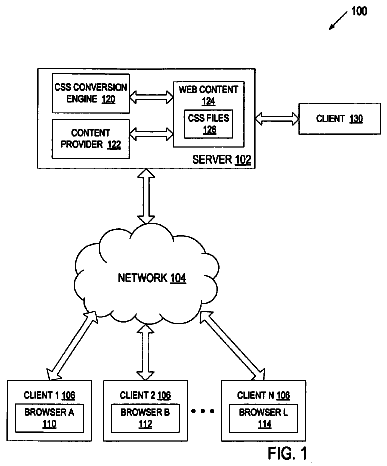
FIG. 1 depicts a block diagram of an environment for performing probabilistic inference and providing related solution methods in accordance with embodiments of the invention;
FIGS. 2A through 2D depict a flow diagram of a particular embodiment of a method of performing probabilistic inference and providing related solution methods in accordance with embodiments of the invention; and
FIG. 3 depicts a flow diagram of another particular embodiment of a method of performing probabilistic inference and providing related solution methods in accordance with embodiments of the invention.
Detailed description
A software toolkit for high performance probabilistic inference is described. In a particular embodiment the software is realized as a Java-based toolkit, referred to hereafter as Blaise. Blaise includes three pieces; a flexible, powerful language for specifying probabilistic models, a set of transformations for restructuring a model in the Blaise language to improve the model's efficiency or to extend the model's capabilities, and a virtual machine well suited for answering queries on those models in terms of optimization and integration (which can be used effectively on optimization and integration problems arising outside of probabilistic modeling).
Blaise provides efficient implementations of the algorithmic and representational primitives for the computations arising in probabilistic inference, along with means of composition that support easy incremental development of high-performance algorithms.
Blaise is believed to be the only inference system that integrates advanced stochastic search primitives in a fully generic way. For example, every Markov Chain Monte Carlo (MCMC) search built from this toolkit can benefit from advanced techniques such as parallel tempering while maintaining efficiency and with almost no additional code.
Blaise provides primitives for the development of inference algorithms over structured domains, in contrast to existing toolkits which either emphasize inference for continuous parameters or top out at Bayes nets (but don't support natural development of other structured models, such as Hierarchical Dirichlet Process (HDPs) or the Latent Dirichlet Allocation (LDA) family, in terms of standard pieces). The primitives in Blaise emphasize the algorithmic commonalities between a variety of very different inference strategies. This architecture supports the creation of novel hybrid inference algorithms, such as the use of advanced MCMC techniques for optimizing the objective functions of variational inference.
In order to fully specify a probabilistic modeling application, three things must be described. One thing the modeler must describe is the state space (SS). The state space typically describes a vast number of possible variable instantiations, most of which the modeler is not very interested in. The second central abstraction, Density (D), allows the modeler to describe how interesting a particular state configuration is. For discrete probabilistic models, this is typically the joint probability mass function. If continuous variables are used, then Density would represent the joint probability density function (from which the abstraction derives is name). When describing how to score a State, the modeler expresses things such as: how the joint score decomposes into common pieces, such as standard probability distributions, and how the score accommodates state spaces with unknown numbers of objects. The Density abstraction is designed to represent the modeler's answers to these questions.
With State and Density in hand, the modeler can now express models, but cannot yet say how to extract information from these models. Blaise focuses on those inference techniques that can be described as history-free stochastic walks through a State space, guided by the Density. All such walks can be completely described by a transition kernel, defined as an expression of the probability that the stochastic walk will make a particular step in the state space, given the state the walk is currently at. To describe a transition kernel, a modeler will have to make choices such as which variables in the state space will change on this step, how exactly will these variables be updated (e.g., are there common update procedures that can be used), how will these update rules be coordinated so that the whole state space is explored efficiently (how are fragments of an inference algorithm composed) and how the inference method accommodates state spaces with unknown numbers of objects. Often the modeler will want to maintain a certain relationship between the Density and the exploration of the state space; for example, a modeler designing an Markov Chain Monte Carlo-based inference method will want to ensure that the transition kernel converges to the Density as an invariant distribution.
A common design tenet runs throughout the entire modeling language: support composability. That is, it should be easy for the modeler to reuse existing models in the creation of new models. For example, if the modeler has constructed a State-Density-Kernel (SDK) representation of a Chinese Restaurant Process (CRP), it should be easy for the modeler to reuse this representation to create a CRP-based mixture model. In most cases, in fact, the SDK for the original model should not need to be modified at all--even the same inference procedure should continue to work in the new model, despite the fact that there are now other States in the state space and other Densities affecting the joint probability density. Realizing this design philosophy means that if a modeler extends an existing model or composes several existing models, development resources can be reserved for the truly novel parts of the new model. Such an approach provides the leverage required to effectively engineer sophisticated models of increasing complexity, such as are becoming ever more important in artificial intelligence, cognitive science, and commercial applications.
The SDK foundation (consisting of a domain described using States, functions over the domain described using Densities, and a stochastic process for domain exploration described using Kernels, together with simple composition and locality rules for each of these representations) can also serve as a general framework for expressing and manipulating any stochastic (or deterministic) automaton.
A state space (SS) is represented using containment links, and is closed under composition (i.e. a language for building up state spaces out of pieces, with well-defined mathematical semantics). The state space represents variables of interest with respect to the problem being solved. The SS structure (i.e. topology of containment) is mutable, permitting compact representation of state spaces of changing topology over the course of inference or optimization (e.g. addition/removal of variables and objects). The SS contains constraints on its own structure via substrates that maintain validity and allow for derived quantities to be automatically computed and manipulated.
The state space describes the domain of the inference problem; that is, the variables and their valid settings. All probabilistic modeling languages have some representation of the state space: graphical modeling languages, such as Bayes nets and factor graphs, use nodes to represent variables, whereas programmatic modeling languages allow the user to declare variables. Blaise follows in the graphical modeling tradition by representing variables as graph nodes called States. State nodes are also typed, carrying information about what values the represented variable can take on. For example, a State node might be typed as a continuous variable, indicating that it will take real numbers as values.
Unlike classical graphical modeling languages, however, Blaise requires that its State nodes be organized into a rooted tree via containment (has-a) links in the graph. This organization is the foundation of State composition in Blaise as it allows the modeler to take several States and bundle them together as children of some parent State. Note that the space of States is closed under this composition structure: composing several States produces another State. The tree-structured organization of States is a critical enabler in modeling repeated structure in the state space. Information about repeated structure is commonly represented in a graphical modeling language using "plate notation"--drawing a box (a "plate") containing the variables that will be repeated, and writing a number in the corner of the box to indicate how many times that structure will be repeated. Blaise uses State composition to capture repeated structure. Blaise allows States to have arbitrarily-sized collections of children. Such Collection States are used to capture the idea of repetition. For example, a model that would be denoted in plate notation as a single variable x inside a plate would be captured in Blaise as a Collection State with a collection of x.
Composition allows the same containment mechanism to be used for repeated state structure rather than just single states. For example, a model that would be denoted in plate notation as two variables x and y inside a plate would be captured in Blaise as a Collection State with a collection of composite States, where each composite has an x and a y.
In variants of Blaise, the SS can also be realized as nodes organized into a single rooted direct acyclic graph (DAG). This generalization beyond trees may be used to indicate shared structures in the SS.
A density (D) is built up out of pieces glued together via functional composition; densities depend on state spaces and subdensities, and represent scores or unnormalized log probability densities, supporting efficient, compositional evaluation. Together, the state and density mechanism generalizes the algebraic representation of score functions/log joint densities/energy functions provided by factor graphs, Markov random fields, and Bayesian networks. The joint state and scoring structures include mechanisms for maintaining relations between states and scoring as they undergo changes to the structure; these tools can be viewed as a stochastic generalization of ideas from functional reactive programming.
Whereas States are used to model the domain of the state space for a probabilistic model, Densities are used to describe the joint probability density function over that state space. It is often advantageous to decompose the joint probability density function into a number of simpler Densities that only depend on a subset of the state space variables (i.e., a projection of the state space onto a lower-dimensional subspace). For example, Bayes nets decompose the joint Density into a product of conditional probabilities and factor graphs decompose the joint Density into a product of factors.
Decomposing the density is beneficial for several reasons. Just as the Blaise State representation can be viewed as an extension of the Bayes net/factor graph representation of variables, the Blaise Density representation is an extension of the factor nodes in a factor graph. Like factor nodes, Blaise Densities are graph nodes that have edges connecting them to each of the States on which the value of the Density depends.
Unlike factor graph nodes, however, Blaise Densities are structured into a rooted tree. In addition to Density-State edges, a Density might also have edges connecting it to other Densities, the value of which it might depend upon. These Density-Density edges form a rooted tree where the root node represents the joint probability density function for the entire state space. Leaf nodes in the Density tree typically represent common (primitive) probability densities. Internal nodes in the Density tree represent functional composition of Densities. Whereas the only functional composition rule permitted (implicitly) in factor graphs is multiplication (i.e. the total joint density is the product of the factors), the Blaise modeling language allows great freedom in the functional form of a Density.
In variants of Blaise, the D can be realized as nodes organized into a rooted DAG, representing shared use of Density values.
Stochastic transitions (kernels) on SS are also represented via another parallel structure representing algorithmic decomposition. The kernel (K) structure (and the domain of the densities touched by a kernel structure) defines abstract machines, which if executed, perform inference or optimization. Kernels can be composed in many ways, including stochastic or deterministic cycles and stochastic mixtures, permitting the construction of large algorithms from small algorithmic pieces. Stochastic transitions include virtual hybrid transitions, cycles or mixtures that dispatch more primitive transitions onto collections in the state space. The caching of partial scores is provided for improved operation, while also allowing for all evaluation in terms of root score. Thus, the SS and D define the problem of interest and K defines a solution. The K can be realized as nodes organized into a single rooted tree and/or a single rooted DAG.
A State-Density graph describes a complete probabilistic model in terms of a joint density over a state space. While existing probabilistic modeling languages typically stop here, Blaise goes one step farther by also graphically representing the inference procedure that will be executed on the model. Blaise focuses on those inference techniques that can be described as history-free stochastic walks through a State space, guided by a Density. Restricting inference to methods that can be implemented as history-free stochastic walks is actually not as restrictive as it may first appear, given that deterministic walks are a subset of stochastic walks, and that the state space may be augmented with any information that would normally be considered the history of the kernel.
The central abstraction for inference procedures in Blaise is the Transition Kernel, typically abbreviated to just Kernel. It should be understood that, despite their name, Transition Kernels are unrelated to the kernels used in "kernel methods'" such as support vector machines, or to kernels of homomorphisms in algebra, etc. Mathematically, a transition kernel is an expression of the probability that the stochastic walk will make a particular step in the state space, given the state the walk is currently at. That is, if the walk is currently at State S.sub.t, a transition kernel will specify, for any State S* in the state space, the probability that the next state S.sub.t+1=S*. This probability could be written p(S.sub.t+1=S*|S.sub.t) however, the alternate notation K(S.sub.t.fwdarw.S*) is used to emphasize the directionality of the transition being evaluated.
In Blaise graphical models, a Kernel operates on some subgraph of the State hierarchy. Most Kernels operate on only a single State and may only inspect or modify that State and its descendents. The State that the Kernel operates on is indicated graphically using a directed edge from the Kernel to the State. For example, a Kernel that will resample the value of a continuous State variable must have a directed edge to that State or one of its ancestors. More complex Kernels may use multiple Kernel.fwdarw.State edges, indicating that the Kernel operates on a sub-forest of the State graph (rather than a simple sub-tree in the single-edge case). For example, if a mixture model's components were represented as Collection States, then a datapoint reassignment Kernel would change the assignment of a datapoint by removing the datapoint from one component's Collection State and adding it to another component's Collection State. Such a Kernel could be implemented with a single edge to a common ancestor of the two components. Alternately, the Kernel could be implemented with two edges: one to the source component and one to the target component. The latter implementation allows the Kernel to be reused more flexibly by separating the datapoint reassignment logic from the component selection logic.
Kernels also have limited access to the Density graph: Kernels may evaluate the root node of the Density tree, but may not inspect the Density tree in any other way. Specifically, Kernels may not inspect the structure of the Density tree, nor may they modify the Density tree, nor may they evaluate any node but the root node of the Density tree. These restrictions are motivated by two points: first, all density calculations required for standard inference can be couched as evaluations of the root Density node. Second, it is a central design goal for Blaise to support composition of models, including inference algorithms on those models, and further including that it should be possible to mix-and-match fragments of models with minimal effort. If the Kernel were permitted to inspect the Density tree, it would be much more difficult to perform these types of composition.
Variants of Blaise explicitly model the dependence of a Kernel on the value of a specific Density. In such variants, rather than assuming that all Kernels depend on the root Density, it is assumed that each Kernel has an edge connecting it to each Density upon which it depends. Under this scheme, model composition may be more challenging, however an inference engine may be able to perform additional optimizations by taking advantage of the explicit dependency information.
Every Blaise Kernel provides a SAMPLE-NEXT-STATE operation; this operation considers the current state S.sub.t and samples a next state S* for the stochastic walk from the transition distribution encoded in the kernel, i.e. S*.about.K(S.sub.t.fwdarw.S*). Standard Markov Chain Monte Carlo inference in Blaise, then, is a matter of initializing the State structure so that it is in the domain and it matches the observed evidence, repeatedly calling SAMPLE-NEXT-STATE on an appropriate Kernel (i.e. a Kernel with the correct invariant distribution), and recording the states visited by the stochastic walk as samples from the target distribution.
The observed variables should be held constant either by attaching Kernels only to the unobserved variables or by attaching Dirac delta Densities to the observed variables (such that any value but the observed value causes the Density to evaluate to 0).
Blaise Kernels may also support two optional operations: SAMPLE-NEXT-MOVE and ENUMERATE-POSSIBLE-MOVES. SAMPLE-NEXT-MOVE is much like SAMPLE-NEXT-STATE, except that instead of producing just a sample S*, SAMPLE-NEXT-MOVE produces a Move object:
.times..fwdarw..times. ##EQU00001## A Move object carries several pieces of information. The next state is still available:
.times..times..times..fwdarw..times..times..DELTA..times. ##EQU00002##
Move objects also carry additional information, such as the probability that the Kernel's SAMPLE-NEXT-MOVE will produce this move:
.times..times..times..times..times..times..times..fwdarw..times..times..D- ELTA..times..function..fwdarw. ##EQU00003##
and the probability that the Kernel's SAMPLE-NEXT-MOVE would produce the inverse move from the target state:
.times..times..fwdarw..times..times..DELTA..times..function..fwdarw. ##EQU00004##
Finally, in order to support transdimensional MCMC, Moves also carry information about the Jacobian of the Move under the Kernel, accessible via MOVE-JACOBIAN.
SAMPLE-NEXT-MOVE enables the fully generic implementation of algorithms such as Metropolis-Hastings and particle filtering. Note that any Kernel implementing SAMPLE-NEXT-MOVE can implement SAMPLE-NEXT-STATE simply as
Sample-next-state( )=move-target(sample-next-move).
The other optional operation of a Kernel is ENUMERATE-POSSIBLE-MOVES, which produces the set of all possible Move objects that that could be returned by a call to SAMPLE-NEXT-MOVE. Note that implementing ENUMERATE-POSSIBLE-MOVES may be impossible; for example, if the Kernel operates on continuous variables, it probably can produce an infinite number of distinct moves, and thus can't implement ENUMERATE-POSSIBLE-MOVES. ENUMERATE-POSSIBLE-MOVES enables the fully generic implementation of algorithms such as Gibbs sampling for enumerable variables. Any Kernel that implements ENUMERATE-POSSIBLE-MOVES can implement SAMPLE-NEXT-MOVE simply by sampling from the set of Moves produced by ENUMERATE-POSSIBLE-MOVES, with each Move
.times..fwdarw..times..times..times. ##EQU00005## sampled with probability proportional to
.times..times..function..times..times..function..times..fwdarw..times..ti- mes..times. ##EQU00006##
Like States and Densities, Kernels are also composed into trees. In the case of Kernels, the tree structure represents algorithmic composition: a Kernel may call operations on any of its child Kernels any number of times as part of its operation. Composition Kernels may also be viewed as analogous to the control-flow operations in other programming languages (e.g. for, case, if-then-else, etc.), including stochastic generalizations of these constructs.
Hybrid Kernels are the most common composite Kernels because they are stationary distribution-preserving; that is, if all of a hybrid Kernel's child Kernels share a stationary distribution on the State space, then the hybrid Kernel is guaranteed to share that stationary distribution as well. The two standard hybrid Kernels are the cycle and mixture hybrids. A concrete cycle Kernel can have an arbitrary number of child Kernels and implements SAMPLE-NEXT-STATE by calling SAMPLE-NEXT-STATE on each of its child Kernels one after another. If the child Kernels are unrelated, the resulting sequential control flow will be similar to a series of statements in an imperative language like Java or C, or like the body of a "begin" statement in Scheme. If, instead, each child Kernel performs the same operation but targets a different State, the resulting control flow is akin to a "for" statement.
A concrete mixture kernel has an arbitrary number of child Kernels and associates a weight with each child Kernel; when the hybrid Kernel's SAMPLE-NEXT-STATE operation is called, the Kernel first selects one of its child Kernels, sampled proportional to their weights, then delegates to the selected child's SAMPLE-NEXT-STATE method. The resulting control flow is analogous to a "case" statement, where the expression being switched upon is a random number drawn according to the child Kernels' weights.
Blaise also introduces a novel class of hybrid Kernels: conditional hybrid Kernels. A (binary) conditional hybrid Kernel has two child Kernels; a TRUE-Kernel and a FALSE-Kernel. It also has a deterministic binary predicate that is defined over the Kernel's operating State Space. A conditional hybrid Kernel interprets calls to SAMPLE-NEXT-STATE by evaluating the predicate, then delegating to the child Kernel associated with the predicate's result (i.e. if the predicate evaluates to true, then the conditional hybrid Kernel delegates to its TRUE-Kernel's SAMPLE-NEXT-STATE operation). Conditional hybrid Kernels are not restricted to binary predicates; the predicate may be replaced with any deterministic function of the State, so long as the conditional hybrid Kernel can map any value of the function to exactly one child Kernel. If all the children of a conditional hybrid Kernel share a stationary distribution, and if no child can change the value of the conditional hybrid Kernel's predicate/expression, then the resulting conditional hybrid Kernel is guaranteed to have the same stationary distribution as its children. The control flow resulting from a conditional hybrid Kernel is much like an "if" statement or a "case" statement.
As State spaces vary in dimension, it is also important to ensure that Kernels are dispatched appropriately to explore the entire State space. For example, in the mixture model example, it is important to make sure that Kernels for component parameter inference are applied to each of the components, no matter how many components exist. If the number of components is known a priori, the designer can simply use a concrete hybrid kernel (either a mixture or a cycle).
Blaise introduces a novel kind of Kernel, called a virtual hybrid Kernel, to manage Kernel dispatch over Collection States. A virtual hybrid Kernel can be thought of as a concrete hybrid Kernel that has, as children, a copy of a subkernel for each element of the Collection State. For example, a virtual cycle Kernel for the components of a mixture model would act as if it had one copy of the component-parameter-adjustment-kernel for each component in the mixture. When a component is added, the virtual cycle acts as if it has had added a new component-parameter-adjustment-kernel with an edge to the new component.
Virtual hybrid Kernels are called "virtual'" because they only actually need one copy of the child Kernel; rather than making many copies of the child Kernel, the virtual hybrid just calls the same child Kernel multiple times, directing it at a different state each time. Virtual hybrid Kernels are possible because Kernels are history-free, that is, stateless.
Like concrete hybrid Kernels, virtual hybrid Kernels have the property that the hybrid Kernel shares the same stationary distribution as its child Kernel, so long as it can be guaranteed that the child Kernel is unable to change the number of children in the Collection State that the virtual hybrid Kernel is operating on. This restriction can be understood by considering the reduction of a virtual hybrid Kernel to a conditional hybrid of concrete hybrids. The conditional hybrid would use the size of the Collection State as its partitioning function--that is, it would partition the State space into subspaces in which the Collection State has a fixed number of children (for example, one subspace might contain only those states where the Collection State has two children). The hypothetical conditional hybrid would have a concrete hybrid kernel for each subspace, where that concrete hybrid kernel would have a copy of the virtualized subkernel for each child of the Collection State. Such a Kernel structure will have the correct stationary distribution, so long as the virtualized hybrid Kernel cannot change the value of the partition function; that is, cannot change the size of the Collection State.
Kernels are normally invoked by calling SAMPLE-NEXT-STATE on the root of the Kernel hierarchy, with each such call advancing the Markov Chain to the next state. Blaise supports decoupled State initialization by introducing a second way for Kernels to be invoked: when new elements of State are added to the State structure and need to have an initial value sampled for them, an Initialization Kernel is triggered. Initialization Kernels are bound to specific locations in the State space; for example, one Initialization Kernel might be triggered only by new States being created as a specific Collection State's children, while a different Initialization Kernel might be responsible for initializing State elsewhere in the State hierarchy.
Initialization Kernels are automatically invoked on pieces of State that needs to be initialized. For example, in a mixture model, when a new component is created as part of some Kernel's SAMPLE-NEXT-STATE operation, any component parameter .theta. in the State is given a dummy value, before the component is added to the components Collection State. This triggers an invocation of the Initialization Kernel's SAMPLE-NEXT-STATE on the new mixture component, allowing .theta. to be initialized. Modifications to the State space as a result of a constraint are considered to be part of the operation that triggered the constraint; this includes any State initialization done by Initialization Kernels. In the mixture model example, this implies that a component birth/death Kernel would produce Moves for which operations such as MOVE-FORWARD-TRANSITION-DENSITY include the probability of any triggered Initialization Kernels sampling the values they did. In other words, there are two ways for one Kernel A to invoke another Kernel B: either A could have B as a child and invoke it directly, or A could cause some change to the State space which triggers an invocation of B as an initialization Kernel; in either case, though, any sampling performed by B on behalf of A will be accounted for by MOVE-FORWARD-TRANSITION-DENSITY, etc. Similar patterns allow the automatic invocation of Initialization Kernels as part of SAMPLE-NEXT-MOVE and ENUMERATE-POSSIBLE-MOVES operations.
Initialization Kernels are also invoked when a previously initialized State is about to be destroyed. The Initialization Kernel is signaled that this is a destroy operation rather than a construction operation, enabling the Kernel to make the appropriate contributions to the Move (e.g., incorporating into to the Move's MOVE-REVERSE-TRANSITION-DENSITY value the probability of sampling this exact configuration on a subsequent Initialization).
It is worth noting that hybrid Kernels may also be used to construct Initialization Kernels via composition. For example, one might choose to use a concrete mixture Kernel to randomly choose between two different initialization strategies.
In some embodiments a virtual machine (VM) is provided for executing the programs specified by the structured representation to perform inference and optimization (both directly and by reduction to machine code). The VM may also include a transactional undo/redo mechanism, allowing for efficient Markov Chain construction including rollback of unapplied transitions and maintenance of detailed balance conditions.
The Blaise Virtual Machine comprises a software framework that executes the stochastic processes described by SDK graphs on common off-the-shelf computers. In a particular embodiment, the Blaise VM is implemented in Java. Each State, Density, and Kernel in a Blaise model is represented as a Java object. Blaise provides abstract base classes for States, Densities, and Kernels; each of these classes extends a common graph node base class, Node, which provides support for assembling the SDK graphical model from the individual State, Density, and Kernel objects. Node provides support for directed graph semantics, and allows edges to be efficiently traversed in either direction. Node also allows specific edges to be efficiently located based on a number of criteria, including the role the edge plays (e.g. State.fwdarw.State versus State.fwdarw.Density), incidence (i.e. incoming versus outgoing),and user-specified tags (for example, a State containing two children, one representing a random variable .alpha. and one representing a random variable .beta., might tag its outgoing State.fwdarw.State edges "alpha'" and "beta", respectively.) The Node abstraction also provides facility for passing messages across incoming edges (e.g. from a Node to its "parents'"). Messages can be selectively propagated across only those incoming edges that have certain roles in the graph (e.g. a message might propagate across only State.fwdarw.Density or Density.fwdarw.Density edges). The specific messages used by the Blaise VM will be described below.
The VM supplies abstract base classes for each of the central representations (State, Density, Kernel) as well as standard modeling components for each of those representations. Specifically, the VM provides a State abstract base class, along with States for primitive variables (e.g. Integer State, Real State, Boolean State, etc.) and Collection States. The VM also makes it easy to create composite States. The VM also provides a Density abstract base class, along with Densities for common probability distributions (e.g. Gaussian, Poisson, Chinese Restaurant Process, etc.), Densities for conjugate models (e.g. a Beta-Binomial Density) and Multiplicative and Associated Collection Densities. The VM also makes it easy to create composite Densities. Further the VM provides a Kernel abstract base class, along with Concrete Hybrid Kernels (i.e. Concrete Mixture Kernels, Concrete Cycle Kernels, Concrete Conditional Kernels), Virtual Hybrid Kernels (i.e. Virtual Mixture Kernels, Virtual Cycle Kernels), Kernels for specifying the piece of a state space that another Kernel should operate on (called "Let Kernels"), Kernels for Metropolis-Hastings and enumerative Gibbs Sampling and Kernels for performing simple inference on primitive variables (for example, the Gaussian Perturbation Kernel used for Metropolis-Hastings on real-valued States).
The description continues in the full USPTO document.
 Lapsed, fee not paid6 drawings