Lapsed, fee not paid4 drawings
Software & Apps · US 8,775,251 B1
Allocating advertising budgets
Methods, systems, and apparatus for allocating advertising budgets.
US 8,775,280 B2 · Assignee: SAP AG · Inventors: Zech; Sandra et al.
Sheet 1 of 66 from the published document. All sheets in the USPTO PDF
A business object model, which reflects data that is used during a given business transaction, is utilized to generate interfaces. This business object model facilitates commercial transactions by providing consistent interfaces that are suitable for use across industries, across businesses, and across different departments within a business during a business transaction. In some operations, software creates, updates, or otherwise processes information related to a financial plan, a financials notification, a bank directory entry file and/or a direct debit mandate business object.
Transactions are common among businesses and between business departments within a particular business. During any given transaction, these business entities exchange information. For example, during a sales transaction, numerous business entities may be involved, such as a sales entity that sells merchandise to a customer, a financial institution that handles the financial transaction, and a warehouse that sends the merchandise to the customer. The end-to-end business transaction may require a significant amount of information to be exchanged between the various business entities involved. For example, the customer may send a request for the merchandise as well as some form of payment authorization for the merchandise to the sales entity, and the sales entity may send the financial institution a request for a transfer of funds from the customer's account to the sales entity's account. E
1 of 66 drawing sheets so far from the published document, cropped to the drawing. Every sheet is in the USPTO PDF.
What the patent claimed, word for word. All of it is now free to use.
A portion of the disclosure of this patent document contains material which is subject to copyright protection. The copyright owner has no objection to the facsimile reproduction by anyone of the patent document or the patent disclosure, as it appears in the Patent and Trademark Office patent file or records, but otherwise reserves all copyright rights whatsoever.
The subject matter described herein relates generally to the generation and use of consistent interfaces (or services) derived from a business object model. More particularly, the present disclosure relates to the generation and use of consistent interfaces or services that are suitable for use across industries, across businesses, and across different departments within a business.
Transactions are common among businesses and between business departments within a particular business. During any given transaction, these business entities exchange information. For example, during a sales transaction, numerous business entities may be involved, such as a sales entity that sells merchandise to a customer, a financial institution that handles the financial transaction, and a warehouse that sends the merchandise to the customer. The end-to-end business transaction may require a significant amount of information to be exchanged between the various business entities involved. For example, the customer may send a request for the merchandise as well as some form of payment authorization for the merchandise to the sales entity, and the sales entity may send the financial institution a request for a transfer of funds from the customer's account to the sales entity's account.
Exchanging information between different business entities is not a simple task. This is particularly true because the information used by different business entities is usually tightly tied to the business entity itself. Each business entity may have its own program for handling its part of the transaction. These programs differ from each other because they typically are created for different purposes and because each business entity may use semantics that differ from the other business entities. For example, one program may relate to accounting, another program may relate to manufacturing, and a third program may relate to inventory control. Similarly, one program may identify merchandise using the name of the product while another program may identify the same merchandise using its model number. Further, one business entity may use U.S. dollars to represent its currency while another business entity may use Japanese Yen. A simple difference in formatting, e.g., the use of upper-case lettering rather than lower-case or title-case, makes the exchange of information between businesses a difficult task. Unless the individual businesses agree upon particular semantics, human interaction typically is required to facilitate transactions between these businesses. Because these "heterogeneous" programs are used by different companies or by different business areas within a given company, a need exists for a consistent way to exchange information and perform a business transaction between the different business entities.
Currently, many standards exist that offer a variety of interfaces used to exchange business information. Most of these interfaces, however, apply to only one specific industry and are not consistent between the different standards. Moreover, a number of these interfaces are not consistent within an individual standard.
In a first aspect, a tangible computer readable medium includes program code for providing a message-based interface for exchanging files of bank directory entry data produced by a bank data provider for updating bank directory entries. The medium comprises program code for receiving via a message-based interface derived from a common business object model, where the common business object model includes business objects having relationships that enable derivation of message-based interfaces and message packages, the message-based interface exposing at least one service as defined in a service registry and from a heterogeneous application executing in an environment of computer systems providing message-based services, a first message for providing a response concerning an inquiry about a bank directory transmission that includes a first message package derived from the common business object model and hierarchically organized in memory as a bank directory entry message entity and a bank directory entry package comprising at least one bank directory entry entity, where each bank directory entry entity includes an action code and a country code.
The medium further comprises program code for processing the first message according to the hierarchical organization of the first message package, where processing the first message includes unpacking the first message package based on the common business object model.
The medium further comprises program code for sending a second message to the heterogeneous application responsive to the first message, where the second message includes a second message package derived from the common business object model to provide consistent semantics with the first message package.
Implementations can include the following. The bank directory entry package further comprises a national bank identification package. Each bank directory entry entity further includes at least one of the following: a bank standard identifier (ID), a country code, a bank account ID check digit calculation method code, a bank catalogue provider ID, a validity period, a bank directory provider code, an organization formatted name, a region code, a street name, a city name, a common bank standard ID main indicator, and a bank directory entry file universally unique identifier (UUID).
In another aspect, a distributed system operates in a landscape of computer systems providing message-based services defined in a service registry. The system comprises a graphical user interface comprising computer readable instructions, embedded on tangible media, for providing a response concerning an inquiry about a bank directory transmission using a request.
The system further comprises a first memory storing a user interface controller for processing the request and involving a message including a message package derived from a common business object model, where the common business object model includes business objects having relationships that enable derivation of message-based service interfaces and message packages, the message package hierarchically organized as a bank directory entry message entity and a bank directory entry package comprising at least one bank directory entry entity, where each bank directory entry entity includes an action code and a country code.
The system further comprises a second memory, remote from the graphical user interface, storing a plurality of message-based service interfaces derived from the common business object model to provide consistent semantics with messages derived from the common business object model, where one of the message-based service interfaces processes the message according to the hierarchical organization of the message package, where processing the message includes unpacking the first message package based on the common business object model.
In another aspect, a tangible computer readable medium includes program code for providing a message-based interface for exchanging information for direct debit mandates, including an authorization given by a debtor to a company to initiate instructions to debit funds owed to the company from a specified debtor's account, and an authorization to a debtor bank to comply with instructions issued by the company. The medium comprises program code for receiving via a message-based interface derived from a common business object model, where the common business object model includes business objects having relationships that enable derivation of message-based interfaces and message packages, the message-based interface exposing at least one service as defined in a service registry and from a heterogeneous application executing in an environment of computer systems providing message-based services, a first message for providing a request to authorize a provisionally completed direct debit mandate form that includes a first message package derived from the common business object model and hierarchically organized in memory as a direct debit mandate message entity and a direct debit mandate package comprising a direct debit mandate entity.
The medium further comprises program code for processing the first message according to the hierarchical organization of the first message package, where processing the first message includes unpacking the first message package based on the common business object model.
The medium further comprises program code for sending a second message to the heterogeneous application responsive to the first message, where the second message includes a second message package derived from the common business object model to provide consistent semantics with the first message package.
Implementations can include the following. The direct debit mandate entity includes at least one of the following: a direct debit mandate identifier (ID), a business partner name, a business partner address, a company name, a business partner internal ID, a company ID, a company formatted address, a creditor reference ID, a bank account standard ID, a bank standard ID, an alternate business partner internal ID, an alternate business partner name, a single use indicator, a signature date, a signature city name, a direct debit scheme code, a valid from date, and a valid to date.
In another aspect, a distributed system operates in a landscape of computer systems providing message-based services defined in a service registry. The system comprises a graphical user interface comprising computer readable instructions, embedded on tangible media, for providing a request to authorize a provisionally completed direct debit mandate form using a request.
The system further comprises a first memory storing a user interface controller for processing the request and involving a message including a message package derived from a common business object model, where the common business object model includes business objects having relationships that enable derivation of message-based service interfaces and message packages, the message package hierarchically organized as a direct debit mandate message entity and a direct debit mandate package comprising a direct debit mandate entity.
The system further comprises a second memory, remote from the graphical user interface, storing a plurality of message-based service interfaces derived from the common business object model to provide consistent semantics with messages derived from the common business object model, where one of the message-based service interfaces processes the message according to the hierarchical organization of the message package, where processing the message includes unpacking the first message package based on the common business object model.
In another aspect, a tangible computer readable medium includes program code for providing a message-based interface for exchanging financial plan information that projects financial key figures of a company for a particular set of books and a planning horizon. The medium comprises program code for receiving via a message-based interface derived from a common business object model, where the common business object model includes business objects having relationships that enable derivation of message-based interfaces and message packages, the message-based interface exposing at least one service as defined in a service registry and from a heterogeneous application executing in an environment of computer systems providing message-based services, a first message for providing a notification of claims or liabilities for delivered goods and rendered services that includes a first message package derived from the common business object model and hierarchically organized in memory as a financial plan message entity and a financial plan package comprising a financial plan entity, a characteristic package, a description package, and a key figure package.
The medium further comprises program code for processing the first message according to the hierarchical organization of the first message package, where processing the first message includes unpacking the first message package based on the common business object model.
The medium further comprises program code for sending a second message to the heterogeneous application responsive to the first message, where the second message includes a second message package derived from the common business object model to provide consistent semantics with the first message package.
Implementations can include the following. The financial plan package further comprises at least one of the following: a version package and a view package. The financial plan entity includes at least one of the following: a universally unique identification (UUID), an identifier (ID), a company identifier, a company ID, a set of books ID, a horizon start fiscal year accounting period ID, a horizon end fiscal year accounting period ID, a chart of accounts code, a cost revenue element chart code, a balance sheet structure code, an income statement structure code, a cost revenue reporting structure code, a contribution margin schema code, a fiscal year variant code, an employee responsible employee identifier, and a multidimensional analytical view key.
In another aspect, a distributed system operates in a landscape of computer systems providing message-based services defined in a service registry. The system comprises a graphical user interface comprising computer readable instructions, embedded on tangible media, for providing a notification of claims or liabilities for delivered goods and rendered services using a request.
The system further comprises a first memory storing a user interface controller for processing the request and involving a message including a message package derived from a common business object model, where the common business object model includes business objects having relationships that enable derivation of message-based service interfaces and message packages, the message package hierarchically organized as a financial plan message entity and a financial plan package comprising a financial plan entity, a characteristic package, a description package, and a key figure package.
The system further comprises a second memory, remote from the graphical user interface, storing a plurality of message-based service interfaces derived from the common business object model to provide consistent semantics with messages derived from the common business object model, where one of the message-based service interfaces processes the message according to the hierarchical organization of the message package, where processing the message includes unpacking the first message package based on the common business object model.
In another aspect, a tangible computer readable medium includes program code for providing a message-based interface for exchanging financials notification information representing operational business transactions in a form that is standardized for multiple kinds of operational business transactions and contains data needed to operate follow-up processes in financials and to enter the business transactions in a set of books. The medium comprises program code for receiving via a message-based interface derived from a common business object model, where the common business object model includes business objects having relationships that enable derivation of message-based interfaces and message packages, the message-based interface exposing at least one service as defined in a service registry and from a heterogeneous application executing in an environment of computer systems providing message-based services, a first message for providing a notification of financials notification information that includes a first message package derived from the common business object model and hierarchically organized in memory as a financials notification bundle notification message entity; and a financials notification package comprising at least one financials notification entity, where each financials notification entity includes a reconciliation period counter value, a company identifier (ID), an original entry document reference, an accounting business transaction date, and an accounting business transaction type code.
The medium further comprises program code for processing the first message according to the hierarchical organization of the first message package, where processing the first message includes unpacking the first message package based on the common business object model.
The medium further comprises program code for sending a second message to the heterogeneous application responsive to the first message, where the second message includes a second message package derived from the common business object model to provide consistent semantics with the first message package.
Implementations can include the following. The financials notification package further comprises at least one of the following: a cash item package, a debtor item package, a product tax item package, a sales item package, and a cancelled business transaction package. Each financials notification entity further includes at least one of the following: an original entry document external ID and a note.
In another aspect, a distributed system operates in a landscape of computer systems providing message-based services defined in a service registry. The system comprises a graphical user interface comprising computer readable instructions, embedded on tangible media, for providing a notification of financials notification information using a request. The system further comprises a first memory storing a user interface controller for processing the request and involving a message including a message package derived from a common business object model, where the common business object model includes business objects having relationships that enable derivation of message-based service interfaces and message packages, the message package hierarchically organized as financials notification bundle notification message entity; and a financials notification package comprising at least one financials notification entity, where each financials notification entity includes a reconciliation period counter value, a company identifier (ID), an original entry document reference, an accounting business transaction date, and an accounting business transaction type code. The system further comprises a second memory, remote from the graphical user interface, storing a plurality of message-based service interfaces derived from the common business object model to provide consistent semantics with messages derived from the common business object model, where one of the message-based service interfaces processes the message according to the hierarchical organization of the message package, where processing the message includes unpacking the first message package based on the common business object model.
Implementations can include the following. The first memory is remote from the graphical user interface. The first memory is remote from the second memory. The details of one or more implementations of the subject matter described in this specification are set forth in the accompanying drawings and the description below. Other features, aspects, and advantages of the subject matter will become apparent from the description, the drawings, and the claims.
FIG. 1 depicts a flow diagram of the overall steps performed by methods and systems consistent with the subject matter described herein.
FIG. 2 depicts a business document flow for an invoice request in accordance with methods and systems consistent with the subject matter described herein.
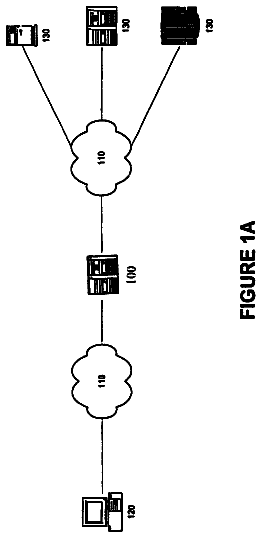
FIGS. 3A-B illustrate example environments implementing the transmission, receipt, and processing of data between heterogeneous applications in accordance with certain embodiments included in the present disclosure.
FIG. 4 illustrates an example application implementing certain techniques and components in accordance with one embodiment of the system of FIG. 1.
FIG. 5A depicts an example development environment in accordance with one embodiment of FIG. 1.
FIG. 5B depicts a simplified process for mapping a model representation to a runtime representation using the example development environment of FIG. 5A or some other development environment.
FIG. 6 depicts message categories in accordance with methods and systems consistent with the subject matter described herein.
FIG. 7 depicts an example of a package in accordance with methods and systems consistent with the subject matter described herein.
FIG. 8 depicts another example of a package in accordance with methods and systems consistent with the subject matter described herein.
FIG. 9 depicts a third example of a package in accordance with methods and systems consistent with the subject matter described herein.
FIG. 10 depicts a fourth example of a package in accordance with methods and systems consistent with the subject matter described herein.
FIG. 11 depicts the representation of a package in the XML schema in accordance with methods and systems consistent with the subject matter described herein.
FIG. 12 depicts a graphical representation of cardinalities between two entities in accordance with methods and systems consistent with the subject matter described herein.
FIG. 13 depicts an example of a composition in accordance with methods and systems consistent with the subject matter described herein.
FIG. 14 depicts an example of a hierarchical relationship in accordance with methods and systems consistent with the subject matter described herein.
FIG. 15 depicts an example of an aggregating relationship in accordance with methods and systems consistent with the subject matter described herein.
FIG. 16 depicts an example of an association in accordance with methods and systems consistent with the subject matter described herein.
FIG. 17 depicts an example of a specialization in accordance with methods and systems consistent with the subject matter described herein.
FIG. 18 depicts the categories of specializations in accordance with methods and systems consistent with the subject matter described herein.
FIG. 19 depicts an example of a hierarchy in accordance with methods and systems consistent with the subject matter described herein.
FIG. 20 depicts a graphical representation of a hierarchy in accordance with methods and systems consistent with the subject matter described herein.
FIGS. 21A-B depict a flow diagram of the steps performed to create a business object model in accordance with methods and systems consistent with the subject matter described herein.
FIGS. 22A-F depict a flow diagram of the steps performed to generate an interface from the business object model in accordance with methods and systems consistent with the subject matter described herein.
FIG. 23 depicts an example illustrating the transmittal of a business document in accordance with methods and systems consistent with the subject matter described herein.
FIG. 24 depicts an interface proxy in accordance with methods and systems consistent with the subject matter described herein.
FIG. 25 depicts an example illustrating the transmittal of a message using proxies in accordance with methods and systems consistent with the subject matter described herein.
FIG. 26A depicts components of a message in accordance with methods and systems consistent with the subject matter described herein.
FIG. 26B depicts IDs used in a message in accordance with methods and systems consistent with the subject matter described herein.
FIGS. 27A-E depict a hierarchization process in accordance with methods and systems consistent with the subject matter described herein.
FIG. 28 illustrates an example method for service enabling in accordance with one embodiment of the present disclosure.
FIG. 29 is a graphical illustration of an example business object and associated components as may be used in the enterprise service infrastructure system of the present disclosure.
FIG. 30 illustrates an example method for managing a process agent framework in accordance with one embodiment of the present disclosure.
FIG. 31 illustrates an example method for status and action management in accordance with one embodiment of the present disclosure.
FIG. 32 depicts an example Bank Directory Entry File Object Model.
FIG. 33 depicts an example BankDirectoryTransmissionResponse Message Data Type.
FIGS. 34-1 through 34-4 collectively depict an example BankDirectoryTransmissionResponse Element Structure.
FIG. 35 depicts an example Direct Debit Mandate Object Model.
FIG. 36 depicts an example FormDirectDebitMandateRequest Message Data Type.
FIGS. 37-1 through 37-4 collectively depict an example FormDirectDebitMandateRequest Element Structure.
FIGS. 38-1 through 38-3 collectively depict an example Financial Plan Object Model.
FIG. 39 depicts an example Financials Notification Object Model.
FIG. 40 depicts an example FinancialsNotificationBundleNotification Message Data Type.
FIGS. 41-1 through 41-13 collectively depict an example FinancialsNotificationBundleNotification Element Structure.
A. Overview
Methods and systems consistent with the subject matter described herein facilitate e-commerce by providing consistent interfaces that are suitable for use across industries, across businesses, and across different departments within a business during a business transaction. To generate consistent interfaces, methods and systems consistent with the subject matter described herein utilize a business object model, which reflects the data that will be used during a given business transaction. An example of a business transaction is the exchange of purchase orders and order confirmations between a buyer and a seller. The business object model is generated in a hierarchical manner to ensure that the same type of data is represented the same way throughout the business object model. This ensures the consistency of the information in the business object model. Consistency is also reflected in the semantic meaning of the various structural elements. That is, each structural element has a consistent business meaning. For example, the location entity, regardless of in which package it is located, refers to a location.
From this business object model, various interfaces are derived to accomplish the functionality of the business transaction. Interfaces provide an entry point for components to access the functionality of an application. For example, the interface for a Purchase Order Request provides an entry point for components to access the functionality of a Purchase Order, in particular, to transmit and/or receive a Purchase Order Request. One skilled in the art will recognize that each of these interfaces may be provided, sold, distributed, utilized, or marketed as a separate product or as a major component of a separate product. Alternatively, a group of related interfaces may be provided, sold, distributed, utilized, or marketed as a product or as a major component of a separate product. Because the interfaces are generated from the business object model, the information in the interfaces is consistent, and the interfaces are consistent among the business entities. Such consistency facilitates heterogeneous business entities in cooperating to accomplish the business transaction.
Generally, the business object is a representation of a type of a uniquely identifiable business entity (an object instance) described by a structural model. In the architecture, processes may typically operate on business objects. Business objects represent a specific view on some well-defined business content. In other words, business objects represent content, which a typical business user would expect and understand with little explanation. Business objects are further categorized as business process objects and master data objects. A master data object is an object that encapsulates master data (i.e., data that is valid for a period of time). A business process object, which is the kind of business object generally found in a process component, is an object that encapsulates transactional data (i.e., data that is valid for a point in time). The term business object will be used generically to refer to a business process object and a master data object, unless the context requires otherwise. Properly implemented, business objects are implemented free of redundancies.
The architectural elements also include the process component. The process component is a software package that realizes a business process and generally exposes its functionality as services. The functionality contains business transactions. In general, the process component contains one or more semantically related business objects. Often, a particular business object belongs to no more than one process component. Interactions between process component pairs involving their respective business objects, process agents, operations, interfaces, and messages are described as process component interactions, which generally determine the interactions of a pair of process components across a deployment unit boundary. Interactions between process components within a deployment unit are typically not constrained by the architectural design and can be implemented in any convenient fashion. Process components may be modular and context-independent. In other words, process components may not be specific to any particular application and as such, may be reusable. In some implementations, the process component is the smallest (most granular) element of reuse in the architecture. An external process component is generally used to represent the external system in describing interactions with the external system; however, this should be understood to require no more of the external system than that able to produce and receive messages as required by the process component that interacts with the external system. For example, process components may include multiple operations that may provide interaction with the external system. Each operation generally belongs to one type of process component in the architecture. Operations can be synchronous or asynchronous, corresponding to synchronous or asynchronous process agents, which will be described below. The operation is often the smallest, separately-callable function, described by a set of data types used as input, output, and fault parameters serving as a signature.
The architectural elements may also include the service interface, referred to simply as the interface. The interface is a named group of operations. The interface often belongs to one process component and process component might contain multiple interfaces. In one implementation, the service interface contains only inbound or outbound operations, but not a mixture of both. One interface can contain both synchronous and asynchronous operations. Normally, operations of the same type (either inbound or outbound) which belong to the same message choreography will belong to the same interface. Thus, generally, all outbound operations to the same other process component are in one interface.
The architectural elements also include the message. Operations transmit and receive messages. Any convenient messaging infrastructure can be used. A message is information conveyed from one process component instance to another, with the expectation that activity will ensue. Operation can use multiple message types for inbound, outbound, or error messages. When two process components are in different deployment units, invocation of an operation of one process component by the other process component is accomplished by the operation on the other process component sending a message to the first process component.
The architectural elements may also include the process agent. Process agents do business processing that involves the sending or receiving of messages. Each operation normally has at least one associated process agent. Each process agent can be associated with one or more operations. Process agents can be either inbound or outbound and either synchronous or asynchronous. Asynchronous outbound process agents are called after a business object changes such as after a "create", "update", or "delete" of a business object instance. Synchronous outbound process agents are generally triggered directly by business object. An outbound process agent will generally perform some processing of the data of the business object instance whose change triggered the event. The outbound agent triggers subsequent business process steps by sending messages using well-defined outbound services to another process component, which generally will be in another deployment unit, or to an external system. The outbound process agent is linked to the one business object that triggers the agent, but it is sent not to another business object but rather to another process component. Thus, the outbound process agent can be implemented without knowledge of the exact business object design of the recipient process component. Alternatively, the process agent may be inbound. For example, inbound process agents may be used for the inbound part of a message-based communication. Inbound process agents are called after a message has been received. The inbound process agent starts the execution of the business process step requested in a message by creating or updating one or multiple business object instances. Inbound process agent is not generally the agent of business object but of its process component. Inbound process agent can act on multiple business objects in a process component. Regardless of whether the process agent is inbound or outbound, an agent may be synchronous if used when a process component requires a more or less immediate response from another process component, and is waiting for that response to continue its work.
The architectural elements also include the deployment unit. Each deployment unit may include one or more process components that are generally deployed together on a single computer system platform. Conversely, separate deployment units can be deployed on separate physical computing systems. The process components of one deployment unit can interact with those of another deployment unit using messages passed through one or more data communication networks or other suitable communication channels. Thus, a deployment unit deployed on a platform belonging to one business can interact with a deployment unit software entity deployed on a separate platform belonging to a different and unrelated business, allowing for business-to-business communication. More than one instance of a given deployment unit can execute at the same time, on the same computing system or on separate physical computing systems. This arrangement allows the functionality offered by the deployment unit to be scaled to meet demand by creating as many instances as needed.
Since interaction between deployment units is through process component operations, one deployment unit can be replaced by other another deployment unit as long as the new deployment unit supports the operations depended upon by other deployment units as appropriate. Thus, while deployment units can depend on the external interfaces of process components in other deployment units, deployment units are not dependent on process component interaction within other deployment units. Similarly, process components that interact with other process components or external systems only through messages, e.g., as sent and received by operations, can also be replaced as long as the replacement generally supports the operations of the original.
Services (or interfaces) may be provided in a flexible architecture to support varying criteria between services and systems. The flexible architecture may generally be provided by a service delivery business object. The system may be able to schedule a service asynchronously as necessary, or on a regular basis. Services may be planned according to a schedule manually or automatically. For example, a follow-up service may be scheduled automatically upon completing an initial service. In addition, flexible execution periods may be possible (e.g. hourly, daily, every three months, etc.). Each customer may plan the services on demand or reschedule service execution upon request.
FIG. 1 depicts a flow diagram 100 showing an example technique, perhaps implemented by systems similar to those disclosed herein. Initially, to generate the business object model, design engineers study the details of a business process, and model the business process using a "business scenario" (step 102). The business scenario identifies the steps performed by the different business entities during a business process. Thus, the business scenario is a complete representation of a clearly defined business process.
After creating the business scenario, the developers add details to each step of the business scenario (step 104). In particular, for each step of the business scenario, the developers identify the complete process steps performed by each business entity. A discrete portion of the business scenario reflects a "business transaction," and each business entity is referred to as a "component" of the business transaction. The developers also identify the messages that are transmitted between the components. A "process interaction model" represents the complete process steps between two components.
After creating the process interaction model, the developers create a "message choreography" (step 106), which depicts the messages transmitted between the two components in the process interaction model. The developers then represent the transmission of the messages between the components during a business process in a "business document flow" (step 108). Thus, the business document flow illustrates the flow of information between the business entities during a business process.
FIG. 2 depicts an example business document flow 200 for the process of purchasing a product or service. The business entities involved with the illustrative purchase process include Accounting 202, Payment 204, Invoicing 206, Supply Chain Execution ("SCE") 208, Supply Chain Planning ("SCP") 210, Fulfillment Coordination ("FC") 212, Supply Relationship Management ("SRM") 214, Supplier 216, and Bank 218. The business document flow 200 is divided into four different transactions: Preparation of Ordering ("Contract") 220, Ordering 222, Goods Receiving ("Delivery") 224, and Billing/Payment 226. In the business document flow, arrows 228 represent the transmittal of documents. Each document reflects a message transmitted between entities. One of ordinary skill in the art will appreciate that the messages transferred may be considered to be a communications protocol. The process flow follows the focus of control, which is depicted as a solid vertical line (e.g., 229) when the step is required, and a dotted vertical line (e.g., 230) when the step is optional.
The description continues in the full USPTO document.
About 5,803 words. The USPTO PDF has it with every drawing.
Fees are due 3.5, 7.5 and 11.5 years after grant. This patent expired on July 8, 2026, so the fee marked "not paid" was the one that went unpaid.
MANAGING CONSISTENT INTERFACES FOR FINANCIAL BUSINESS OBJECTS ACROSS HETEROGENEOUS SYSTEMS
Filed Jul 2011 · published Jan 2013Managing consistent interfaces for financial business objects across heterogeneous systems
Filed Jul 2011 · granted Jul 2014Earlier publications, parents and continuations. None of them can still be enforced, or this patent would not be listed.
Prior art cited by the examiner or applicant. Useful when you check your own idea for novelty.
Everything on this page comes from the documents linked above.