Field of use
The present invention relates to a system for assisting or managing a sales operation. More particularly, the invention relates to a computerized method for assisting or managing a sales force.
Background
Managing a sales force team poses numerous challenges to a business. Ensuring that sales force personnel are properly trained, focusing on key customers or other key clients, engaging in the right behaviors, or reaching sales targets can be a daunting task for a business, especially when sales force personnel are widely scattered across many locations. Many software tools, such as the Sales Force Automation suite of SalesForce.com, a business located in San Francisco, Calif., U.S.A. (see, for example, http://www.salesforce.com/products/sales-force-automation.jsp; as viewed Jun. 1, 2006). In addition, the tools of Sales Force Automation, Inc. (Carson City, Nev., U.S.A.), have been developed to address various aspects of sales force management or customer relationship management, and other tools have been produced for contact management, such as ACT! 2006 by Sage Software SB (Scottsdale, Ariz., U.S.A.). However, major shortcomings remain. Previous tools have typically been directed toward managing a territory or keeping track of information, but have not provided adequate coaching assistance or adequate ways for sales people to identify what they are doing well and what they are doing poorly. There remains a need for coaching and management tools that can better drive the behavior of sales force personnel to achieve success and fulfill corporate objectives. In particular, there remains a need for an improved system and technique which can better track behaviors associated with account calling, and can better relate the behaviors to predetermined success criteria.
Summary
A sales force automation method, comprises providing instructions which operatively direct a computer system to employ one or more predetermined input-parameters, wherein each input-parameter is applicable to one or more clients. Sets of input-values are operatively sorted to the input-parameters for a corresponding, individual client, and the input-values that pertain to a selected client-set are operatively gathered. The computer system can sort the input-values from the client-set according to sales-parameters that pertain to the selected client-set, and the sorted input-values can be compiled and analyzed to generate a sales-performance-value for each sales-parameter. Upon a comparison between the sales-performance-value for a sales-parameter and a corresponding parameter-target-value or target-range, the computer system can determine an appropriate sales performance-rating. Upon such determination of the sales performance-rating, the computer system can be operatively directed to display a graphical indicator that corresponds to the sales performance-rating.
By incorporating its various features and aspects, alone or in selected combinations, the sales force automation system and method can provide desired benefits and improvements. The system and method can help sales force personnel focus their efforts on the highest priorities and monitor their own performance metrics. Sales calls and other events can be planned and targeted toward high-priority customers or clients and toward meeting key objectives. For example, the system and method can provide a planning guide that interacts with planning or scheduling tools to help schedule appointments, linking them with customer (or client) data and other information that are associated with the client and with the objectives for the client. Results of sales activities can be more quickly and efficiently reported, and the results can be more efficiently distributed and compared to planned objectives. Areas of desired improvement can be more readily identified, and appropriate attention and resources can be more efficiently directed to those areas. Accordingly, the system and method can allow management to better track, guide, and reward the efforts of the sales force. Shared systems and individual activities can all be brought together in the system and method. The system and method can also allow management to provide improved monitoring of performance, and more efficient training. In a particular aspect, a graphical indicator or performance scorecard feature can be used to quickly assess behavior and identify areas that need improvement. Activities and results can be more effectively mapped to established targets, and the graphical input can quickly show whether the performance exceeds, meets, or is below expectations.
Brief description of the drawings
The invention will be better understood by reference to the following description of the invention taken in conjunction with the accompanying drawings, wherein:
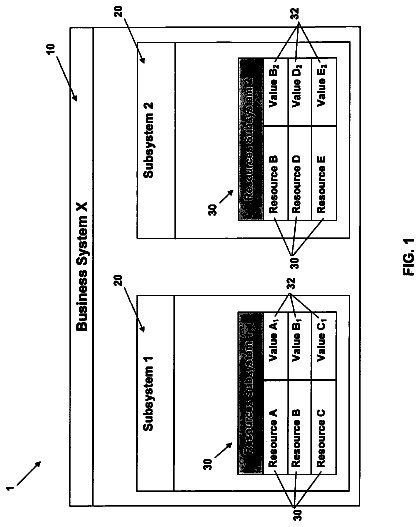
FIG. 1 representatively shows a block flow diagram which illustrates a framework for the sales force automation method.
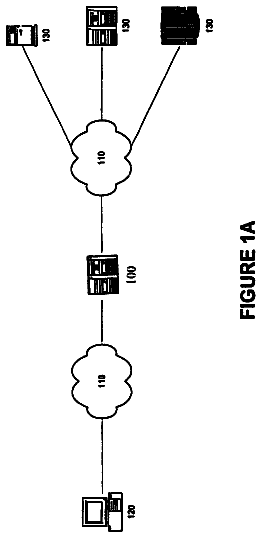
FIG. 1A representatively shows another block flow diagram relating to the sales force automation method.
FIG. 2 representatively shows a schematic layout of hardware in a computer system that can be employed with the sales force automation method.
FIG. 3 representatively shows a further block flow diagram relating to the handling of information and data by the sales force automation method.
FIG. 4 representatively shows a matrix-grid having selected sales-parameters and an array of matrix-cells that can display values and graphical indicators.
FIG. 5 representatively shows a screen shot of a portion of a scorecard system that can be employed with the sales force automation method.
FIG. 5A representatively shows a matrix-grid that employs a first, composite parameter and a second, composite parameter.
FIG. 6 representatively shows a screen shot of another portion of the scorecard system that can be employed with the sales force automation method.
FIG. 7 representatively shows still another portion of the scorecard system that has been extended to summary data sets that can cover multiple sales persons for one or more sales districts or groups.
FIG. 7A representatively shows a portion of the scorecard system that has been extended to summary data sets covering sales persons for another sales district or group.
FIG. 8 representatively shows a portion of a screen shot that can be employed in a scheduling system to display appointments for a particular sales person for a particular week.
FIG. 9 representatively shows a screen shot of a reporting system that can be employed with the sales force automation method to update a database for a hypothetical company.
FIG. 10 shows a representative matrix-grid that can be employed to assess a client.
Corresponding reference characters indicate corresponding parts throughout the drawings.
Detailed description
It should also be noted that, when employed in the present disclosure, the terms "comprises", "comprising" and other derivatives from the root term "comprise" are intended to be open-ended terms that specify the presence of any stated features, elements, integers, steps, or components, and are not intended to preclude the presence or addition of one or more other features, elements, integers, steps, components, or groups thereof.
With reference to FIGS. 1 and 1A, the system and method 30 can help sales force personnel focus their efforts on the highest priorities and monitor their own performance metrics. Sales calls and other events can be planned and targeted toward high-priority customers or clients and toward meeting key objectives. For example, the system and method can provide a planning guide that interacts with planning or scheduling tools to help schedule appointments, linking them with customer (or other client) data and other information that are associated with the customer and with the objectives for the customer. Results of sales activities can be reported quickly and efficiently, and the results can be efficiently distributed and compared to planned objectives. Areas of desired improvement can be more readily identified, and appropriate attention and resources can be more efficiently directed to those areas. Accordingly, the system and method can allow management to better track, guide, and reward the efforts of the sales force. Shared systems and individual activities can all be brought together in the system and method. The system and method can also allow management to provide improved monitoring of performance, and more efficient training. In a particular aspect, a graphical indicator or performance scorecard feature can be used to quickly assess behaviors and identify areas that need improvement. Activities and results can be more effectively mapped to established targets, and the graphical input can quickly show whether the performance exceeds, meets, or is below expectations.
The automated management system and method 30 can provide a distinctive enterprise system which can better track the performance of sales force personnel, and can improve the management and training of the personnel. In a particular aspect, a Focused Account Calling Tool (FACT) can be employed to allow many aspects of sales performance to be tracked in ways that help drive positive behaviors and help sales staff focus their efforts in the most productive areas. The automation method 30 can also allow management to better track, guide, and reward the efforts of the sales force. The system may also include a planning guide feature that can operatively interact with conventional planning or scheduling systems, such as MICROSOFT OUTLOOK, to help in scheduling appointments, and in linking the appointments with customer data and other information that pertain to the status of the customer and the objectives for the customer. The automation system can help sales force personnel concentrate their efforts on the highest priorities and monitor their own performance metrics. For example, the automation method 30 can be configured to monitor the number of calls made, show sales personnel how to prepare for each call (e.g., identify product samples that may be needed, and facilitate the ordering of suitable samples), track the results of the calls against their objectives, and provide resources that help management train and evaluate the sales personnel.
Planned sales calls and other events can be targeted to high-priority customers and toward meeting key objectives. Providing this information in a flexible, hyperlinked interface can dramatically improve behavior in many cases. When employed with wireless laptops or other wireless devices capable of communicating to a central database, the system can assist sales staff and other personnel throughout the day. Shared systems, such as national accounts, distributor plans, and marketing initiatives, and shared databases can all be brought together in the automated method 30 and effectively coordinated with individual activities.
In one aspect of the automated system and method 30, sales force personnel can readily screen for high priority accounts in given geographical areas, identify accounts and contact information, determine where the accounts obtain their materials (e.g., there may be more than one distributor), and help identify the product codes that should be targeted for the customer. When decisions are made at various levels about accounts, e-mails or other communications can be automatically sent to the appropriate sales force staff to help ensure that they are aware of the information. Activities with the client-accounts can then be entered in the system, which can automatically update a performance scorecard system, and archive information relative to the client-account and the sales person, for review by management or the sales person.
A graphical performance scorecard system is an aspect of the system and method that can be used to quickly assess behavior and identify areas in need of improvements. Activities and results can be mapped relative to established targets, and graphical input can quickly show whether the performance exceeds, meets, or is below expectations.
In one aspect of the present invention, the system can include a graphical scorecard system that incorporates a selected variety of performance metrics to establish standards or targets, so that areas needing improvement can be readily identified, and overall performance can be quickly accessed. The scorecard can display metrics of performance on a grid, and each metric can be operatively associated with a graphical indicator of performance. For example, the graphical indicator may include a background color of "red", "yellow", or "green" (or other colors, icons, symbols, background images, font styles, or the like, as well as combinations thereof). The graphical indicator can be selected in accordance with how the performance metric compares to the established standard of performance. Thus, with the graphical scorecard system, management can quickly see areas for increased training by scanning for "red" zones, and individuals can also see where they need to improve, and can readily determine what behaviors are needed to drive the metrics into the desired "green" zone.
FIG. 1A shows a diagram of a representative technique that a sales person might use with the FACT system which has been included in the present system and method. Using a graphical user interface, such as a Web-based interface associated with a PDA (Personal Digital Assistant), laptop, cell phone, or other electronic device in communication with a central sales force management server (not shown), the sales person can first select a target client (e.g., an end user or distributor). Several tools may be employed with the FACT (Focused Account Calling Tool) system to assist in selecting the target client. For example, an expiring contracts tool 32 can provide an automatically generated list of expiring contracts 32 in the sales person's territory. Results from a distributor planning tool 34 can show managerial targets for sales and focus clients. Other classification tools may designate each potential client as high, medium or low priority, and may assign other classifications based on potential sales volume, profitability, customer relationship, or the like. The classifications can be useful in assessing the priority of work with an individual client. Once a target client is selected, the graphical user interface of a client-information system 44 may be configured to display contact information for the client, if the client is already in the database. Alternatively, the client-information system 44 may be configured to allow the sales person to enter or update contact information that can then be stored in a central database. The sales person then uses the contact information to schedule an appointment with a scheduling system 46. This step or the previous steps can also include obtaining additional information to support the appointment (not shown), such as displaying via the graphical user interface recent sales data with the client, contract status, notes from previous visits by the sales person or other sales staff, news about the client, complaints or other matters of potential relevance to future sales, etc. There may also be automated tools provided to order samples, prepare for scheduling a trial, proposing modifications in price or contracts, etc.
The appointments can be scheduled using a graphical user interface that can resemble MICROSOFT OUTLOOK or include OUTLOOK or other known calendaring programs or scheduling tool. In one arrangement, an Internet, Web-based scheduling program or scheduling tool can be configured to generate an input signal to the sales person's separate MICROSOFT OUTLOOK program, to automatically update the person's schedule in OUTLOOK. The Web-based scheduling program can show appointments already in OUTLOOK, or may simply block out time already blocked in OUTLOOK rather than identifying details of non-sales events, or may be used independently of OUTLOOK data (e.g., only displaying sales-related events that have been entered into the FACT system). The scheduling program may be a Web application that resides on a central Web application server, or may use software installed on the user's computer or other electronic device.
Once the desired appointment has been scheduled on a given day, other events for that day may be built with a day-schedule tool or system 48 around the scheduled appointment, as appropriate. Typically, the first appointment made for a given day may be a high-priority appointment that will help the sales person achieve specific sales goals or behavioral goals (e.g., visits with high-priority clients), and subsequent appointments on that day may be with clients of relatively lower priority but that are located near the high-priority initial appointment in order to increase efficiency and reduce travel time. Experience indicates that about three additional appointments per day in a local region can be desirable, though the number may vary, as needed. To assist in optimizing travel, the FACT system may include a capability for identifying target clients near a specified location (e.g., the location of a high-priority client). In a particular feature of the automated method 30, the client information in the sales force management database can include latitude and longitude information, and such information can be used in conjunction with an external service, such as Mapquest.com, to automatically generate driving directions to get from one client to another.
The process of selecting a high-priority appointment and building a day around that appointment may be repeated for other days until a work week has been built with a week-schedule tool or system 50. Experience has demonstrated that good results can be obtained when appointments are created one week or more in advance, and also that the entry and review of results on a weekly basis can be helpful.
At least on a weekly basis and desirably on a daily basis, when possible, results and other information regarding the sales calls can be entered into the FACT system with an operative reporting system 52 to ensure that the information and results of the sales calls are archived and made available for review. The entered information can include details of the sales calls (e.g., recording the outcome), identifying sales trials that are being planned, identifying support needs, etc. The support needs, such as number of samples needed, amendments to contracts or price agreements, etc., can then be communicated to support groups with a support communication system 54 (e.g., communication via email or other operative communication technique).
Once the sales-call data have been entered, the FACT system can summarize results and behavior and compare them to goals using a review system 56. In a particular feature, the review system 56 can include a graphical scorecard system that can readily enable a convenient visualization of performance levels and needed improvements. Each sales person may use the graphical scorecard system for introspective guidance and coaching, relative to behaviors that need to be strengthened or modified. For example, the call information for a week can indicate how many clients a sales person visited or what percentage of a sales person's time was spent meeting with priority clients. These parameters can be displayed in a graphical user scorecard indicating how the actual performance compares with established criteria for success, thereby signaling what behavioral changes may be needed.
The graphical scorecard in various forms can also be made available for review by management with any operative training-assist system 58 to help identify the strengths and weaknesses associated with the behaviors and results-obtained by sales force personnel, thereby allowing management to more accurately identify opportunities for more effective coaching and training.
The automation method 30 can be implemented using input and display devices that are used by sales staff, and are operatively coordinated with a computer network for communication with a central, sales force server. Software that resides fully or partly on the input and display devices or other portions of the computer network can help share data between the server and the input and display devices, and help perform calculations, conduct scheduling, and perform other tasks in the automation system and method 30. In one aspect, the automation system and method 30 can be configured to provide a Web-based system which employs ASP (Active Server Page) and SQL (Structured Query Language) technology and databases, though other approaches and systems may alternatively be employed, if desired.
As representatively shown in FIG. 2, a hardware configuration for the automation system or method 30 can include a computerized, management apparatus or system 100, which is adapted for access and operation in cooperation with the Internet 140. As representatively shown, the system hardware can include a firewall 160, a primary DNS (Domain Name System) server 108, a secondary DNS server 110, and an Internet Application Server 112 which can desirably be configured to provide a graphical user interface for Internet users. Each of the employed components can, for example, be configured in an operative communication with the firewall 160 via a system of routers 184, 186. The employed components of the computer apparatus 100 may be interconnected with wired cable systems 196, with wireless systems or with combinations thereof, as desired.
In the computer apparatus or system 100, internet access may be established by sales force personnel 156 using monitors 183 and computer devices 181 connected with a system of wired cables 141, and/or by other sales force personnel 154 connected with wireless systems or devices, such as wireless handheld devices 182. The wireless devices may, for example, include a PDA (Personal Digital Assistant) device with graphic display and user input capabilities, a mobile phone, a portable computer tablet, or the like, as well as combinations thereof.
When users access the management, computer system 100 through the firewall 160, an ID/password server 194 can verify their identity and permit access to a sales management server that can contain a sales force database and associated data such as client information, account information, scheduling data, sales results and projections, etc. Information may also be shared from an operations server 198. The calculations from software residing thereon or in communication therewith may be used by an operations system 152 in conjunction with other software tools (e.g., production forecasting tools, client management tools, etc.). The operations system may desirably employ an operative arrangement of computer devices 210.
A manager or administrator 200, such as an IT administrator or a sales force manager or director over multiple sales force managers, may access the system using a system of management-computer devices 208, which may operate within the firewall or via the Internet (not shown), as desired. The manager or administrator may view performance results and other data from multiple sales force personnel, or may make systematic changes, broadcast notices, modify software operation, etc., as desired.
The software system can have elements to help sales force personnel focus on key customers in making plans. Thus, contact data in the sales force database can include any desired client-information, such as information regarding: an end-user (purchaser) name, an ID (identification) number, address information including geographical latitude and longitude for automated directions or travel optimization, the associated account manager, the status of the account (e.g., active or inactive), the identified strategy for working with the client, and the like.
Data displayed in any display-screen or provided in any generated file can be hyperlinked to additional information. For example, the present invention can include conventional tools to review past calls and their outcome. A manager or sales person can request a display of all calls or recent calls with a particular client, or for calls dealing with particular products, geographical regions, sales volume criteria, and the like. Relevant calls can then be displayed along with appointment dates and the party involved, the seller, the outcome of the visit, reasons for the outcome, and comments. Hyperlinks associated with the displayed information can then result in a display of more detailed information or related records, as desired.
The system and method 30 can be configured to display data related to clients. In addition to contact information, such as information pertaining to region, business priority, sales targets, and so forth, other information can be displayed, such as information pertaining to metrics for the sales to the client. Hyperlinks with the metrics, for example, may provide access to scorecard displays to show how the metrics compare to established criteria, parameters and/or target-values, and links may also provide a means to generate comparison scorecards for additional clients, for the region as a whole, or for other groupings.
With reference to FIGS. 3 and 4, the sales force automation method 30 can be configured to operatively direct a computer system 100 to employ one or more predetermined input-parameters 60, wherein each input-parameter can be applicable or pertinent to one or more clients. Collections or other sets of input-values 40 can be operatively sorted to the input-parameters for a corresponding, individual client. The input-values that pertain to a selected client-set 62 can be operatively gathered, and the computer system can sort the input-values from the client-set according to sales-parameters 64 that pertain to the selected client-set. The sorted input-values can be compiled and analyzed to generate a sales-performance-value 84 for each sales-parameter. Upon a comparison between the sales-performance-value for a sales-parameter and a corresponding parameter-target-value or target-range, the computer system 100 can determine an appropriate sales performance-rating. Upon such determination of the sales performance-rating, the computer system can be operatively directed to display a graphical indicator 68 that corresponds to the sales performance-rating.
In more particular aspects, the sales force automation method 30 can include a providing of instructions which can operatively direct a computer system 100 to employ one or more predetermined input-parameters 60. Desirably, the computer system can be directed to employ a plurality of input-parameters. Additionally, each input parameter 60 may be operatively associated and coordinated with a more comprehensive, or more encompassing sales-force plan.
The system and method 30 can be configured to provide operative instructions, which operatively direct the computer system to operatively accept the one or more individual sets of input information 40. Each individual item or set of input information can pertain to a corresponding individual client. Additionally, each individual item or set of input information can be operatively sorted to a corresponding set of the input-parameters for the corresponding, individual client by employing instructions provided by the system and method 30. It should be readily appreciated that the individual client may, for example, be an end-user, a distributor, a national account or the like.
The system and method can also be configured to provide instructions, which operatively direct the computer system to accept an operative input-value for each item of input-information 40. In addition, the system and method can be configured to provide instructions which operatively direct the computer system to sort the input-values according to the input-parameters.
In the various arrangements of the system and method 30, the input-value may be in any operative form, and the sorting can be conducted or accomplished in any operative manner. For example, the input-value may include an operative check-box or target-circle in an active web page, an "on" or "yes" entry, a null or "no" entry, a selection from an operative menu listing, an entry of a number amount into an operative field, an entry of text into an operative field, or the like, as well as combinations thereof. In particular arrangements, the entry and/or sorting of the input-values can include filling in the blanks on "activities" call-sheets, gathering data regarding "business results" from shared systems or shared databases, and the like. The shared systems or shared databases may be generated and/or maintained in configurations that are operatively separate from the system and method 30. Accordingly, an appropriate input-value can be selectively generated and entered with respect to each desired input-parameter for each client. Additionally, the input-values can be operatively configured for storage and retrieval in a conventional, computerized database.
The system and method 30 can be further configured to provide instructions which operatively direct the computer system to gather the input-values that pertain to a selected client-set 62. Any operative client-set may be employed. For example, the client-set may be an individual client 62d, or a plurality of two or more clients that are serviced or otherwise handled by a particular sales-person. In another aspect, the client-set may be one or more individual clients that are serviced or otherwise handled by a particular group of sales-persons (e.g. FIG. 3; flow path (a)), and the group of sales-persons may or may not be associated with a particular geographical district. Accordingly, the client-set would correspond to a sales-group, and the sales-group may be coordinated or otherwise handled by a group-manager or district-manager (e.g. FIG. 3; path (b)). In a further aspect, the client-set may be one or more individual clients that are serviced or otherwise handled by a particular collection of sales-groups, and the group of sales-groups may or may not be associated with a particular geographical district. Accordingly, the client-set would correspond to a sales-force (e.g. FIG. 3; path (c)), and the sales-force (e.g. FIG. 3; path (c)), and the sales-force may be coordinated or otherwise handled by a sales-force-manager. Other collections of relatively larger or smaller sets of clients may optionally be arranged and employed.
The system and method 30 can also be configured to provide instructions to operatively direct the computer system to sort the input-values from the client-set according to sales-parameters 74 that pertain to the selected client-set 62. Additionally, each sales-parameter may be operatively associated with a scorecard aspect of the system and method 30. A particular client-set may have sales-parameters that are the same as, similar to, or different than the sales-parameters of another client-set. For example, the sales-parameters that pertain to the client-set of a sales-person can be the same as, similar to, or different than the sales-parameters that pertain to the client-set of a sales-group or sales-district. Additionally, the sales-parameters that pertain to the client-set of a sales-force can be the same as, similar to, or different than the sales-parameters that pertain to the client-set of a sales-group.
To allow a more effective comparison, different sales-persons within the overall sales organization can desirably have corresponding sets of sales-parameters that are the same or similar. In a like manner, the set of sales-parameters that pertain to one sales-group within the overall sales organization can be same as or similar to the set of sales-parameters that pertain to another sales-group within the sales organization.
In the various arrangements of the system and method 30, any operative sales-parameter or combination of sales-parameters may be employed. The sales-parameters may, for example, include selected metrics. Additionally, the sales-parameters may pertain to selected sales-activities, and the sales-activities may pertain to one or more individual sales-persons. The sales-parameters may also include metrics that pertain to selected sets of clients, or to selected business-results. Such business-result parameters can, for example, pertain or be related to product volume, revenue, net-revenue, sales contribution, profit and the like.
In particular aspects, the system and method 30 can be configured to provide instructions which operatively direct the computer system to compile and analyze the sorted input-values to generate a sales-performance-value for each sales-parameter. Thus, a sales-performance-value can be derived from the input-information that is compiled according to the sales-information gathered or otherwise accumulated in accordance with a selected client-set. For example, information or data regarding the sales-parameter of the sales-person can be gathered from all of the clients associated with that sales-person. The gathered data can then be compiled and analyzed to produce a sales-performance-value for the particular sales-parameter of the sales-person. The gathered data may be analyzed in any operative manner. For example, the data may be analyzed in accordance with a mathematical formula or mathematical procedure, or with a combination of mathematical formulas or procedures to generate the performance value.
In a like manner, a particular sales-parameter may pertain to a sales-group. Information or data regarding the sales-parameter of the sales-group can be gathered from all of the clients associated with that sales-group. The gathered data can then be compiled and analyzed to produce a sales-performance-value for the particular sales-parameter of the sales-group. Similarly, a performance-value can be generated, derived or otherwise produced for a sales-parameter of a selected sales-force or of other operative collection of sales-persons.
It should be readily appreciated that the sales-performance-values pertaining to the sales-parameters of a particular sales-person or collection of sales-persons (e.g. sales-group or sales-force) can be operatively processed in accordance with any selected time period. The time period may be a day, group of days, week, group of weeks, month, group of months, year, group of years, or the like. Accordingly, sales-person-performance-values, sales-group performance-values, and/or sales-force performance-values can be operatively generated, calculated or otherwise compiled with respect to any desired set of hours, days, weeks, months and/or years.
In another aspect, the system and method 30 can be configured to provide instructions which operatively direct the computer system to display the sales-performance-value for each sales-parameter. For example, the performance value may be the actual performance value obtained by a sales-person, sales-group or sales-force. The system and method can be further configured to provide instructions which operatively direct the computer system to provide a parameter-target-value for each sales-parameter. The target-value may be a particular, individual value or a predetermined range of values. Additionally, the target-value (or range of values) may or may not be displayed.
The system and method can further be configured to provide instructions which operatively direct the computer system to provide a series of performance-ratings for each sales-parameter. The performance-ratings can be arranged in a graduated series. For example, the performance-ratings can include rankings, such as "below target", "meets target", "exceeds target", and the like. Additionally, the system and method can be configured to provide instructions which operatively direct the computer system to provide a corresponding graphical indicator 66 for each sales-performance-rating. Any operative graphical indicator may be employed in any of the various arrangements of the system and method 30. For example, the graphical indicator may include a symbol, pattern, name, shading, color or the like, as well as combinations thereof. The computer system can be configured to provide a graduated series of performance-ratings for each sales-parameter. In a desired arrangement, the graphical indicator can include a color-coded indicator. Accordingly, the graphical indicator can be a series of colors, such as a series that includes the color "red", the color "yellow", and/or the color "green".
It should be readily appreciated that for the various arrangements of the system and method, the values of the various targets can be operatively determined in accordance with a corresponding business plan and derived in a manner that is conventional and well known. Additionally, the selected target-values may or may not be static, and may or may not change from time to time. For the present disclosure, the term "below target", or the like, desirably refer to an actual performance-value which is below a predetermined target-value. The term "meets target", or the like, desirably refers to an actual performance-value which at least meets the predetermined target-value. The term "exceeds target", or the like, desirably refers to an actual performance-value which at least meets the predetermined target-value and is beyond the target-value by at least a selected, significantly larger premium amount. It should be readily appreciated that for the various arrangements of the system and method, the value of the various premium amounts can be operatively determined in accordance with the corresponding business plan and derived in a manner that is conventional and well known. Additionally, the values of the selected premium amounts may be dynamic or static, and may or may not change from time to time.
In other features, the system and method 30 can be configured to provide instructions which operatively direct the computer system to compare the sales-performance-value for each sales-parameter to its corresponding parameter-target-value. Upon such comparison between the sales-performance-value for each sales-parameter and its corresponding parameter-target-value, the system and method can be configured to provide instructions which operatively direct the computer system to determine the appropriate sales performance-rating. Upon such determination of the sales performance-rating, the system and method can be configured to provide instructions which operatively direct the computer system to display the graphical indicator 66 that corresponds to the sales performance-rating. The display of graphical indicator can be simultaneous or non-simultaneous with the display of performance-value. The display of the graphical indicator can be in the same or different display-cell as the display of performance-value.
In the various descriptions in the present disclosure that pertain to the providing of instructions, the instructions can be provided in any operative manner. For example, the instructions can be provided by commands or inputs from a keyboard or other operative input device. In a desired arrangement, the instructions can be provided in a machine-readable form. The machine-readable-form may include magnetic media, optical media, a magnetic-memory device, an optical-memory device, a flash-memory device, a magnetic disk, an optical disk or the like, as well as combinations thereof.
The description continues in the full USPTO document.
 Lapsed, fee not paid10 drawings