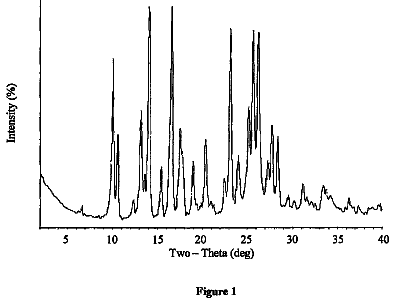
Cross-reference to related applications
The present application claims the benefits of the filing of Application Nos. EP 09153188.9 filed Feb. 19, 2009, EP 09163409.7 filed Jun. 22, 2009 and PCT/EP2010/051843 filed Feb. 15, 2010. The complete disclosures of the aforementioned related patent applications are hereby incorporated herein by reference for all purposes.
Field of the invention
The present invention is concerned with novel substituted benzoxazole, benzimidazole, oxazolopyridine and imidazopyridine derivatives useful as gamma secretase modulators. The invention further relates to processes for preparing such novel compounds, pharmaceutical compositions comprising said compounds as an active ingredient as well as the use of said compounds as a medicament.
Background of the invention
Alzheimer's Disease (AD) is a progressive neurodegenerative disorder marked by loss of memory, cognition, and behavioral stability. AD afflicts 6-10% of the population over age 65 and up to 50% over age 85. It is the leading cause of dementia and the third leading cause of death after cardiovascular disease and cancer. There is currently no effective treatment for AD. The total net cost related to AD in the U.S. exceeds $100 billion annually.
AD does not have a simple etiology, however, it has been associated with certain risk factors including
age,
family history and
head trauma; other factors include environmental toxins and low levels of education. Specific neuropathological lesions in the limbic and cerebral cortices include intracellular neurofibrillary tangles consisting of hyperphosphorylated tau protein and the extracellular deposition of fibrillar aggregates of amyloid beta peptides (amyloid plaques). The major component of amyloid plaques are the amyloid beta (A-beta, Abeta or A.beta.) peptides of various lengths. A variant thereof, which is the A.beta.1-42-peptide (Abeta-42), is believed to be the major causative agent for amyloid formation. Another variant is the A.beta.1-40-peptide (Abeta-40). Amyloid beta is the proteolytic product of a precursor protein, beta amyloid precursor protein (beta-APP or APP).
Familial, early onset autosomal dominant forms of AD have been linked to missense mutations in the .beta.-amyloid precursor protein (.beta.-APP or APP) and in the presenilin proteins 1 and 2. In some patients, late onset forms of AD have been correlated with a specific allele of the apolipoprotein E (ApoE) gene, and, more recently, the finding of a mutation in alpha2-macroglobulin, which may be linked to at least 30% of the AD population. Despite this heterogeneity, all forms of AD exhibit similar pathological findings. Genetic analysis has provided the best clues for a logical therapeutic approach to AD. All mutations found to date, affect the quantitative or qualitative production of the amyloidogenic peptides known as Abeta-peptides (A.beta.), specifically A.beta.42, and have given strong support to the "amyloid cascade hypothesis" of AD (Tanzi and Bertram, 2005, Cell 120, 545). The likely link between A.beta. peptide generation and AD pathology emphasizes the need for a better understanding of the mechanisms of A.beta. production and strongly warrants a therapeutic approach at modulating A.beta. levels.
The release of A.beta. peptides is modulated by at least two proteolytic activities referred to as .beta.- and .gamma.-secretase cleavage at the N-terminus (Met-Asp bond) and the C-terminus (residues 37-42) of the A.beta. peptide, respectively. In the secretory pathway, there is evidence that .beta.-secretase cleaves first, leading to the secretion of s-APP.beta. (s.beta.) and the retention of a 11 kDa membrane-bound carboxy terminal fragment (CTF). The latter is believed to give rise to A.beta. peptides following cleavage by .gamma.-secretase. The amount of the longer isoform, A.beta.42, is selectively increased in patients carrying certain mutations in a particular protein (presenilin), and these mutations have been correlated with early-onset familial Alzheimer's disease. Therefore, A.beta.42 is believed by many researchers to be the main culprit of the pathogenesis of Alzheimer's disease.
It has now become clear that the .gamma.-secretase activity cannot be ascribed to a single protein, but is in fact associated with an assembly of different proteins.
The gamma (.gamma.)-secretase activity resides within a multiprotein complex containing at least four components: the presenilin (PS) heterodimer, nicastrin, aph-1 and pen-2. The PS heterodimer consists of the amino- and carboxyterminal PS fragments generated by endoproteolysis of the precursor protein. The two aspartates of the catalytic site are at the interface of this heterodimer. It has recently been suggested that nicastrin serves as a gamma-secretase-substrate receptor. The functions of the other members of gamma-secretase are unknown, but they are all required for activity (Steiner, 2004. Curr. Alzheimer Research 1(3): 175-181).
Thus, although the molecular mechanism of the second cleavage-step has remained elusive until now, the .gamma.-secretase-complex has become one of the prime targets in the search for compounds for the treatment of Alzheimer's disease.
Various strategies have been proposed for targeting gamma-secretase in Alzheimer's disease, ranging from targeting the catalytic site directly, developing substrate-specific inhibitors and modulators of gamma-secretase activity (Marjaux et al., 2004. Drug Discovery Today: Therapeutic Strategies, Volume 1, 1-6). Accordingly, a variety of compounds were described that have secretases as targets (Larner, 2004. Secretases as therapeutics targets in Alzheimer's disease: patents 2000-2004. Expert Opin. Ther. Patents 14, 1403-1420).
Indeed, this finding was recently supported by biochemical studies in which an effect of certain NSAIDs on .gamma.-secretase was shown (Weggen et al
Nature 414, 6860, 212 and WO 01/78721 and US 2002/0128319; Morihara et al
J. Neurochem. 83, 1009; Eriksen
J. Clin. Invest. 112 , 440). Potential limitations for the use of NSAIDs to prevent or treat AD are their inhibition activity of COX enzymes, which can lead to unwanted side effects, and their low CNS penetration (Peretto et al., 2005, J. Med. Chem. 48, 5705-5720).
US 2008/0280948 A1 relates to aminophenyl derivatives which are modulators for amyloid beta.
WO-2009/005729 relates to heterocyclic compounds and their use as gamma secretase modulators.
WO-2008/097538 encompasses 2-[4-imidazolyl)-phenyl]vinyl-heterocycle derivatives which selectively attenuate production of Abeta(1-42) and are useful in the treatment of Alzheimer's disease.
WO-2004/017963 discloses benzimidazoles as coagulation factor Xa inhibitors for the treatment of thromboembolic illnesses.
WO-2005/115990 discloses cinnamide compounds that are useful for the treatment of neurodegenerative diseases caused by amyloid .beta. proteins such as Alzheimer's disease, senile dementia, Down's syndrome and amyloidosis.
WO-2007/044895 discloses diaromatic amines and their use in lubricating oil compositions and stabilizer-containing compositions.
WO-2008/156580 discloses triazole derivatives for treating diseases associated with deposition of A.beta. in the brain, in particular Alzheimer's disease.
There is a strong need for novel compounds which modulate .gamma.-secretase activity thereby opening new avenues for the treatment of Alzheimer's disease. It is an object of the present invention to overcome or ameliorate at least one of the disadvantages of the prior art, or to provide a useful alternative. It is accordingly an object of the present invention to provide such novel compounds.
Summary of the invention
It has been found that the compounds of the present invention are useful as gamma secretase modulators. The compounds according to the invention and the pharmaceutically acceptable compositions thereof, may be useful in the treatment or prevention of Alzheimer's disease.
The present invention concerns novel compounds of Formula (I):
##STR00002## and stereoisomeric forms thereof, wherein R.sup.1 is hydrogen, cyano, CF.sub.3, halo, or C.sub.1-4alkyl optionally substituted with one or more substituents each independently selected from the group consisting of hydroxyl and C.sub.1-4alkyloxy; R.sup.2 is hydrogen, C.sub.1-4alkyl or halo; X is CR.sup.5 or N; R.sup.5 is hydrogen or halo; A.sup.1 is CR.sup.6 or N; R.sup.6 is hydrogen, halo or C.sub.1-4alkyloxy; A.sup.2, A.sup.3 and A.sup.4 each independently are CH, CF or N; provided that no more than two of A.sup.1, A.sup.2, A.sup.3 and A.sup.4 are N; Y.sup.1 is CH or N; Y.sup.2 is CR.sup.4 or N; Y.sup.3 is CH or N; provided that only one of Y.sup.1, Y.sup.2 and Y.sup.3 may represent N; R.sup.4 is hydrogen, halo, C.sub.1-4alkyloxy, cyano, cycloC.sub.3-7alkyl, C.sub.2-4alkenyl, or C.sub.1-4alkyl optionally substituted with one or more substituents each independently selected from the group consisting of halo and C.sub.1-4alkyloxy; R.sup.3 is C.sub.2-6alkyl substituted with one or more halo substituents; C.sub.1-6alkyl optionally substituted with one or more substituents each independently selected from the group consisting of piperidinyl, morpholinyl, pyrrolidinyl, Ar, C.sub.1-6alkyloxy, tetrahydropyranyl, cycloC.sub.3-7alkyloxy and cycloC.sub.3-7alkyl; cycloC.sub.3-7alkyl substituted with one or more phenyl substituents optionally substituted with one or more halo substituents; cycloC.sub.3-7alkyl; piperidinyl; morpholinyl; pyrrolidinyl; tetrahydropyranyl; O--Ar; NR.sup.7R.sup.8; C.sub.1-6alkyloxy; C.sub.1-6alkylthio; Ar; CH.sub.2--O--Ar; S--Ar; NCH.sub.3--Ar; NH--Ar; or 1,6-dihydro-1-methyl-6-oxo-3-pyridinyl; wherein each piperidinyl, morpholinyl and pyrrolidinyl may be substituted with one or more substituents each independently selected from the group consisting of C.sub.1-4alkyl, C.sub.2-6alkenyl, C.sub.1-4alkylcarbonyl, halo and C.sub.1-4alkyloxycarbonyl; wherein each Ar independently is phenyl optionally substituted with one or more substituents each independently selected from the group consisting of halo, C.sub.1-4alkyloxy, cyano, NR.sup.7R.sup.8, morpholinyl, C.sub.1-4alkyl, C.sub.1-4alkyloxy substituted with one or more halo substituents, and C.sub.1-4alkyl substituted with one or more halo substituents; or a 5- or 6-membered heteroaryl selected from the group consisting of pyridinyl, pyrimidinyl, oxazolyl, furanyl, thiophenyl, pyrazolyl, isoxazolyl, thiazolyl, isothiazolyl, thiadiazolyl, oxadiazolyl, pyridazinyl and pyrazinyl; wherein said 5- or 6-membered heteroaryl is optionally substituted with one or more substituents each independently selected from the group consisting of halo, C.sub.1-4alkyloxy, cyano, C.sub.1-4alkyl, C.sub.1-4alkyloxy substituted with one or more halo substituents, and C.sub.1-4alkyl substituted with one or more halo substituents; each R.sup.7 is selected independently from hydrogen or C.sub.1-4alkyl; each R.sup.8 is selected independently from hydrogen, C.sub.1-4alkyl or C.sub.1-4alkylcarbonyl; Z is O or NR.sup.9; R.sup.9 is hydrogen, or C.sub.1-6alkyl optionally substituted with one or more substituents each independently selected from the group consisting of halo, cyano, phenyl, cycloC.sub.3-7alkyl and C.sub.1-4alkyloxy; and the pharmaceutically acceptable addition salts, and the solvates thereof.
The present invention also concerns methods for the preparation of compounds of Formula (I) and pharmaceutical compositions comprising them.
The present compounds surprisingly were found to modulate the .gamma.-secretase activity in vitro and in vivo, and are therefore useful in the treatment or prevention of Alzheimer's disease, traumatic brain injury, mild cognitive impairment (MCI), senility, dementia, dementia with Lewy bodies, cerebral amyloid angiopathy, multi-infarct dementia, Down's syndrome, dementia associated with Parkinson's disease and dementia associated with beta-amyloid, preferably Alzheimer's disease and other disorders with Beta-amyloid pathology (eg glaucoma).
In view of the aforementioned pharmacology of the compounds of Formula (I), it follows that they are suitable for use as a medicament.
More especially the compounds are suitable in the treatment or prevention of Alzheimer's disease, cerebral amyloid angiopathy, multi-infarct dementia, dementia pugilistica or Down syndrome.
The present invention also concerns to the use of a compound according to the general Formula (I), the stereoisomeric forms thereof and the pharmaceutically acceptable acid or base addition salts and the solvates thereof, for the manufacture of a medicament for the modulation of .gamma.-secretase activity.
Use of a compound of Formula (I) for the modulation of .gamma.-secretase activity resulting in a decrease in the relative amount of A.beta.42-peptides produced are preferred.
One advantage of the compounds or a part of the compounds of the present invention may lie in their enhanced CNS-penetration.
The present invention will now be further described. In the following passages, different aspects of the invention are defined in more detail. Each aspect so defined may be combined with any other aspect or aspects unless clearly indicated to the contrary. In particular, any feature indicated as being preferred or advantageous may be combined with any other feature or features indicated as being preferred or advantageous.
Detailed description
When describing the compounds of the invention, the terms used are to be construed in accordance with the following definitions, unless a context dictates otherwise.
Whenever the term "substituted" is used in the present invention, it is meant, unless otherwise is indicated or is clear from the context, to indicate that one or more hydrogens, in particular from 1 to 4 hydrogens, preferably from 1 to 3 hydrogens, more preferably 1 hydrogen, on the atom or radical indicated in the expression using "substituted" are replaced with a selection from the indicated group, provided that the normal valency is not exceeded, and that the substitution results in a chemically stable compound, i.e. a compound that is sufficiently robust to survive isolation to a useful degree of purity from a reaction mixture, and formulation into a therapeutic agent.
The term "halo" or "halogen" as a group or part of a group is generic for fluoro, chloro, bromo, iodo unless otherwise is indicated.
The term "C.sub.1-6alkyl" as a group or part of a group refers to a hydrocarbyl radical of Formula C.sub.nH.sub.2n+1 wherein n is a number ranging from 1 to 6. C.sub.1-6alkyl groups comprise from 1 to 6 carbon atoms, preferably from 1 to 4 carbon atoms, more preferably from 1 to 3 carbon atoms, still more preferably 1 to 2 carbon atoms. Alkyl groups may be linear or branched and may be substituted as indicated herein. When a subscript is used herein following a carbon atom, the subscript refers to the number of carbon atoms that the named group may contain. Thus, for example, C.sub.1-6alkyl includes all linear, or branched alkyl groups with between 1 and 6 carbon atoms, and thus includes such as for example methyl, ethyl, n-propyl, i-propyl, 2-methyl-ethyl, butyl and its isomers (e.g. n-butyl, isobutyl and tert-butyl), pentyl and its isomers, hexyl and its isomers, and the like.
The term "C.sub.2-6alkyl" as a group or part of a group refers to a hydrocarbyl radical of Formula C.sub.nH.sub.2n+1 wherein n is a number ranging from 2 to 6. C.sub.2-6alkyl groups comprise from 2 to 6 carbon atoms, in particular from 2 to 4 carbon atoms, more in particular from 2 to 3 carbon atoms. Alkyl groups may be linear or branched and may be substituted as indicated herein. Thus, for example, C.sub.2-6alkyl includes all linear, or branched alkyl groups with between 2 and 6 carbon atoms, and thus includes such as for example ethyl, n-propyl, i-propyl, 2-methyl-ethyl, butyl and its isomers (e.g. n-butyl, isobutyl and tert-butyl), pentyl and its isomers, hexyl and its isomers, and the like.
The term "C.sub.1-4alkyl" as a group or part of a group refers to a hydrocarbyl radical of Formula C.sub.nH.sub.2n+1 wherein n is a number ranging from 1 to 4. C.sub.1-4alkyl groups comprise from 1 to 4 carbon atoms, preferably from 1 to 3 carbon atoms, more preferably 1 to 2 carbon atoms. The term "C.sub.1-3alkyl" as a group or part of a group refers to a hydrocarbyl radical of Formula C.sub.nH.sub.2n+1 wherein n is a number ranging from 1 to 3. Alkyl groups may be linear or branched and may be substituted as indicated herein. Thus, for example, C.sub.1-4alkyl includes all linear, or branched alkyl groups with between 1 and 4 carbon atoms, and thus includes such as for example methyl, ethyl, n-propyl, i-propyl, 2-methyl-ethyl, butyl and its isomers (e.g. n-butyl, isobutyl and tert-butyl), and the like.
The term "C.sub.1-6alkyloxy" as a group or part of a group refers to a radical having the Formula --OR.sup.b wherein R.sup.b is C.sub.1-6alkyl. Non-limiting examples of suitable alkyloxy include methyloxy, ethyloxy, propyloxy, isopropyloxy, butyloxy, isobutyloxy, sec-butyloxy, tert-butyloxy, pentyloxy, and hexyloxy.
The term "C.sub.1-4alkyloxy" as a group or part of a group refers to a radical having the Formula --OR.sup.c wherein R.sup.c is C.sub.1-4alkyl. Non-limiting examples of suitable alkyloxy include methyloxy (also methoxy), ethyloxy (also ethoxy), propyloxy, isopropyloxy, butyloxy, isobutyloxy, sec-butyloxy and tert-butyloxy.
In the framework of this application, C.sub.2-6alkenyl is a straight or branched hydrocarbon radical having from 2 to 6 carbon atoms containing a double bond such as ethenyl, propenyl, butenyl, pentenyl, 1-propen-2-yl, hexenyl and the like.
The term "cycloC.sub.3-7alkyl" alone or in combination, refers to a cyclic saturated hydrocarbon radical having from 3 to 7 carbon atoms. Non-limiting examples of suitable cycloC.sub.3-7alkyl include cyclopropyl, cyclobutyl, cyclopentyl, cyclohexyl and cycloheptyl.
The term "cycloC.sub.3-7alkyloxy" alone or in combination, refers to a radical having the Formula --OR.sup.d, wherein R.sup.d is cycloC.sub.3-7alkyl. Non-limiting examples of suitable cycloC.sub.3-7alkyloxy include cyclopropyloxy, cyclobutyloxy, cyclopentyloxy, cyclohexyloxy and cycloheptyloxy.
The term "thiophenyl" is equivalent to "thienyl".
The chemical names of the compounds of the present invention were generated according to the nomenclature rules agreed upon by the Chemical Abstracts Service.
In case of tautomeric forms, it should be clear that the other non-depicted tautomeric form is also included within the scope of the present invention.
When any variable occurs more than one time in any constituent, each definition is independent.
It will be appreciated that some of the compounds of Formula (I) and their pharmaceutically acceptable addition salts and stereoisomeric forms may contain one or more centers of chirality and exist as stereoisomeric forms.
The term "stereoisomeric forms" as used hereinbefore defines all the possible isomeric forms that the compounds of Formula (I) may possess. Unless otherwise mentioned or indicated, the chemical designation of compounds denotes the mixture of all possible stereochemically isomeric forms. More in particular, stereogenic centers may have the R- or S-configuration; substituents on bivalent cyclic (partially) saturated radicals may have either the cis- or trans-configuration. Compounds encompassing double bonds can have an E or Z-stereochemistry at said double bond. Stereoisomeric forms of the compounds of Formula (I) are embraced within the scope of this invention.
When a specific stereoisomeric form is indicated, this means that said form is substantially free, i.e. associated with less than 50%, preferably less than 20%, more preferably less than 10%, even more preferably less than 5%, further preferably less than 2% and most preferably less than 1% of the other isomer(s).
When a specific regioisomeric form is indicated, this means that said form is substantially free, i.e. associated with less than 50%, preferably less than 20%, more preferably less than 10%, even more preferably less than 5%, further preferably less than 2% and most preferably less than 1% of the other isomer(s).
For therapeutic use, salts of the compounds of Formula (I) are those wherein the counterion is pharmaceutically acceptable. However, salts of acids and bases which are non-pharmaceutically acceptable may also find use, for example, in the preparation or purification of a pharmaceutically acceptable compound. All salts, whether pharmaceutically acceptable or not are included within the ambit of the present invention.
The pharmaceutically acceptable acid and base addition salts as mentioned hereinabove or hereinafter are meant to comprise the therapeutically active non-toxic acid and base addition salt forms which the compounds of Formula (I) are able to form. The pharmaceutically acceptable acid addition salts can conveniently be obtained by treating the base form with such appropriate acid. Appropriate acids comprise, for example, inorganic acids such as hydrohalic acids, e.g. hydrochloric or hydrobromic acid, sulfuric, nitric, phosphoric and the like acids; or organic acids such as, for example, acetic, propanoic, hydroxyacetic, lactic, pyruvic, oxalic (i.e. ethanedioic), malonic, succinic (i.e. butanedioic acid), maleic, fumaric, malic, tartaric, citric, methanesulfonic, ethanesulfonic, benzenesulfonic, p-toluenesulfonic, cyclamic, salicylic, p-aminosalicylic, pamoic and the like acids. Conversely said salt forms can be converted by treatment with an appropriate base into the free base form.
The compounds of Formula (I) containing an acidic proton may also be converted into their non-toxic metal or amine addition salt forms by treatment with appropriate organic and inorganic bases. Appropriate base salt forms comprise, for example, the ammonium salts, the alkali and earth alkaline metal salts, e.g. the lithium, sodium, potassium, magnesium, calcium salts and the like, salts with organic bases, e.g. primary, secondary and tertiary aliphatic and aromatic amines such as methylamine, ethylamine, propylamine, isopropylamine, the four butylamine isomers, dimethylamine, diethylamine, diethanolamine, dipropylamine, diisopropylamine, di-n-butylamine, pyrrolidine, piperidine, morpholine, trimethylamine, triethylamine, tripropylamine, quinuclidine, pyridine, quinoline and isoquinoline; the benzathine, N-methyl-D-glucamine, hydrabamine salts, and salts with amino acids such as, for example, arginine, lysine and the like. Conversely the salt form can be converted by treatment with acid into the free acid form.
The term solvate comprises the hydrates and solvent addition forms which the compounds of formula (I) are able to form, as well as the salts thereof. Examples of such forms are e.g. hydrates, alcoholates and the like.
The compounds of Formula (I) as prepared in the processes described below may be synthesized in the form of racemic mixtures of enantiomers that can be separated from one another following art-known resolution procedures. A manner of separating the enantiomeric forms of the compounds of Formula (I) involves liquid chromatography using a chiral stationary phase. Said pure stereochemically isomeric forms may also be derived from the corresponding pure stereochemically isomeric forms of the appropriate starting materials, provided that the reaction occurs stereospecifically. Preferably if a specific stereoisomer is desired, said compound would be synthesized by stereospecific methods of preparation. These methods will advantageously employ enantiomerically pure starting materials.
In the framework of this application, a compound according to the invention is inherently intended to comprise all isotopic combinations of its chemical elements. In the framework of this application, a chemical element, in particular when mentioned in relation to a compound according to formula (I), comprises all isotopes and isotopic mixtures of this element. For example, when hydrogen is mentioned, it is understood to refer to .sup.1H, .sup.2H, .sup.3H and mixtures thereof.
A compound according to the invention therefore inherently comprises a compound with one or more isotopes of one or more element, and mixtures thereof, including a radioactive compound, also called radiolabelled compound, wherein one or more non-radioactive atoms has been replaced by one of its radioactive isotopes. By the term "radiolabelled compound" is meant any compound according to formula (I), or a pharmaceutically acceptable salt thereof, which contains at least one radioactive atom. For example, a compound can be labelled with positron or with gamma emitting radioactive isotopes. For radioligand-binding techniques, the .sup.3H-atom or the .sup.125I-atom is the atom of choice to be replaced. For imaging, the most commonly used positron emitting (PET) radioactive isotopes are .sup.11C, .sup.18F, .sup.15O and .sup.13N, all of which are accelerator produced and have half-lives of 20, 100, 2 and 10 minutes respectively. Since the half-lives of these radioactive isotopes are so short, it is only feasible to use them at institutions which have an accelerator on site for their production, thus limiting their use. The most widely used of these are .sup.18F, .sup.99mTc, .sup.201Tl and .sup.123I. The handling of these radioactive isotopes, their production, isolation and incorporation in a molecule are known to the skilled person.
In particular, the radioactive atom is selected from the group of hydrogen, carbon, nitrogen, sulfur, oxygen and halogen. In particular, the radioactive isotope is selected from the group of .sup.3H, .sup.11C, .sup.18F, .sup.122I, .sup.123I, .sup.125I, .sup.131I, .sup.75Br, .sup.76Br, .sup.77Br and .sup.82Br.
As used in the specification and the appended claims, the singular forms "a", "an," and "the" also include plural referents unless the context clearly dictates otherwise. By way of example, "a compound" means one compound or more than one compound.
The terms described above and others used in the specification are well understood to those in the art.
Preferred features of the compounds of this invention are now set forth.
The present invention concerns novel compounds of Formula (I):
##STR00003## and stereoisomeric forms thereof, wherein R.sup.1 is hydrogen, cyano, CF.sub.3, halo, or C.sub.1-4alkyl optionally substituted with one or more substituents each independently selected from the group consisting of hydroxyl and C.sub.1-4alkyloxy; R.sup.2 is hydrogen, C.sub.1-4alkyl or halo; X is CR.sup.5 or N; R.sup.5 is hydrogen or halo; A.sup.1 is CR.sup.6 or N; R.sup.6 is hydrogen, halo or C.sub.1-4alkyloxy; A.sup.2, A.sup.3 and A.sup.4 each independently are CH, CF or N; provided that no more than two of A.sup.1, A.sup.2, A.sup.3 and A.sup.4 are N; Y.sup.1 is CH or N; Y.sup.2 is CR.sup.4 or N; Y.sup.3 is CH or N; provided that only one of Y.sup.1, Y.sup.2 and Y.sup.3 may represent N; R.sup.4 is hydrogen, halo, C.sub.1-4alkyloxy, cyano, cycloC.sub.3-7alkyl, C.sub.2-4alkenyl, or C.sub.1-4alkyl optionally substituted with one or more substituents each independently selected from the group consisting of halo and C.sub.1-4alkyloxy; R.sup.3 is C.sub.2-6alkyl substituted with one or more halo substituents; C.sub.1-6alkyl optionally substituted with one or more substituents each independently selected from the group consisting of piperidinyl, morpholinyl, pyrrolidinyl, Ar, C.sub.1-6alkyloxy, tetrahydropyranyl, cycloC.sub.3-7alkyloxy and cycloC.sub.3-7alkyl; cycloC.sub.3-7alkyl substituted with one or more phenyl substituents optionally substituted with one or more halo substituents; cycloC.sub.3-7alkyl; piperidinyl; morpholinyl; pyrrolidinyl; tetrahydropyranyl; O--Ar; NR.sup.7R.sup.8; C.sub.1-6alkyloxy; C.sub.1-6alkylthio; Ar; CH.sub.2--O--Ar; S--Ar; NCH.sub.3--Ar; NH--Ar; or 1,6-dihydro-1-methyl-6-oxo-3-pyridinyl; wherein each piperidinyl, morpholinyl and pyrrolidinyl may be substituted with one or more substituents each independently selected from the group consisting of C.sub.1-4alkyl, C.sub.2-6alkenyl, C.sub.1-4alkylcarbonyl, halo and C.sub.1-4alkyloxycarbonyl; wherein each Ar independently is phenyl optionally substituted with one or more substituents each independently selected from the group consisting of halo, C.sub.1-4alkyloxy, cyano, NR.sup.7R.sup.8, morpholinyl, C.sub.1-4alkyl, C.sub.1-4alkyloxy substituted with one or more halo substituents, and C.sub.1-4alkyl substituted with one or more halo substituents; or a 5- or 6-membered heteroaryl selected from the group consisting of pyridinyl, pyrimidinyl, oxazolyl, furanyl, thiophenyl, pyrazolyl, isoxazolyl, thiazolyl, isothiazolyl, thiadiazolyl, oxadiazolyl, pyridazinyl and pyrazinyl; wherein said 5- or 6-membered heteroaryl is optionally substituted with one or more substituents each independently selected from the group consisting of halo, C.sub.1-4alkyloxy, cyano, C.sub.1-4alkyl, C.sub.1-4alkyloxy substituted with one or more halo substituents, and C.sub.1-4alkyl substituted with one or more halo substituents; each R.sup.7 is selected independently from hydrogen or C.sub.1-4alkyl; each R.sup.8 is selected independently from hydrogen, C.sub.1-4alkyl or C.sub.1-4alkylcarbonyl; Z is O or NR.sup.9; R.sup.9 is hydrogen, or C.sub.1-6alkyl optionally substituted with one or more substituents each independently selected from the group consisting of halo, cyano, phenyl, cycloC.sub.3-7alkyl and C.sub.1-4alkyloxy; and the pharmaceutically acceptable addition salts, and the solvates thereof.
In an embodiment, the invention relates to compounds of Formula (I) and stereoisomeric forms thereof, wherein R.sup.1 is hydrogen, cyano, CF.sub.3, halo, or C.sub.1-4alkyl optionally substituted with one or more substituents each independently selected from the group consisting of hydroxyl and C.sub.1-4alkyloxy; R.sup.2 is hydrogen, C.sub.1-4alkyl or halo; X is CR.sup.5 or N; R.sup.5 is hydrogen or halo; A.sup.1 is CR.sup.6 or N; R.sup.6 is hydrogen, halo or C.sub.1-4alkyloxy; A.sup.2, A.sup.3 and A.sup.4 each independently are CH, CF or N; provided that no more than two of A.sup.1, A.sup.2, A.sup.3 and A.sup.4 are N; Y.sup.1 is CH or N; Y.sup.2 is CR.sup.4 or N; Y.sup.3 is CH or N; provided that only one of Y.sup.1, Y.sup.2 and Y.sup.3 may represent N; R.sup.4 is hydrogen, halo, C.sub.1-4alkyloxy, cyano, cycloC.sub.3-7alkyl, C.sub.2-4alkenyl, or C.sub.1-4alkyl optionally substituted with one or more substituents each independently selected from the group consisting of halo and C.sub.1-4alkyloxy; R.sup.3 is C.sub.2-6alkyl substituted with one or more halo substituents; C.sub.1-6alkyl optionally substituted with one or more substituents each independently selected from the group consisting of piperidinyl, morpholinyl, pyrrolidinyl, Ar, C.sub.1-6alkyloxy, tetrahydropyranyl, cycloC.sub.3-7alkyloxy and cycloC.sub.3-7alkyl; cycloC.sub.3-7alkyl substituted with one or more phenyl substituents optionally substituted with one or more halo substituents; cycloC.sub.3-7alkyl; piperidinyl; morpholinyl; pyrrolidinyl; tetrahydropyranyl; O--Ar; NR.sup.7R.sup.8; C.sub.1-6alkyloxy; C.sub.1-6alkylthio; Ar; CH.sub.2--O--Ar; S--Ar; NCH.sub.3--Ar; NH--Ar; or 1,6-dihydro-1-methyl-6-oxo-3-pyridinyl; wherein each piperidinyl, morpholinyl and pyrrolidinyl may be substituted with one or more substituents each independently selected from the group consisting of C.sub.1-4alkyl, C.sub.2-6alkenyl, C.sub.1-4alkylcarbonyl, halo and C.sub.1-4alkyloxycarbonyl; wherein each Ar independently is phenyl optionally substituted with one or more substituents each independently selected from the group consisting of halo, C.sub.1-4alkyloxy, cyano, NR.sup.7R.sup.8, morpholinyl, C.sub.1-4alkyl, C.sub.1-4alkyloxy substituted with one or more halo substituents, and C.sub.1-4alkyl substituted with one or more halo substituents; or a 5- or 6-membered heteroaryl selected from the group consisting of pyridinyl, pyrimidinyl, oxazolyl, furanyl, thiophenyl, pyrazolyl, isoxazolyl, thiazolyl, isothiazolyl, thiadiazolyl, oxadiazolyl, pyridazinyl and pyrazinyl; wherein said 5- or 6-membered heteroaryl is optionally substituted with one or more substituents each independently selected from the group consisting of halo, C.sub.1-4alkyloxy, cyano, C.sub.1-4alkyl and C.sub.1-4alkyl substituted with one or more halo substituents; each R.sup.7 is selected independently from hydrogen or C.sub.1-4alkyl; each R.sup.8 is selected independently from hydrogen, C.sub.1-4alkyl or C.sub.1-4alkylcarbonyl; Z is O or NR.sup.9; R.sup.9 is hydrogen, or C.sub.1-6alkyl optionally substituted with one or more substituents each independently selected from the group consisting of halo, phenyl and C.sub.1-4alkyloxy; and the pharmaceutically acceptable addition salts, and the solvates thereof.
In an embodiment, the invention relates to compounds of Formula (I) and stereoisomeric forms thereof, or any subgroup thereof as mentioned in any of the other embodiments, wherein one or more, preferably all, of the following restrictions apply: (a) R.sup.1 is hydrogen, cyano, halo, or C.sub.1-4alkyl optionally substituted with one or more substituents each independently selected from the group consisting of hydroxyl and C.sub.1-4alkyloxy; (b) R.sup.5 is hydrogen; (c) Y.sup.1 is CH or N; Y.sup.2 is CR.sup.4 or N; Y.sup.3 is CH; provided that only one of Y.sup.1 and Y.sup.2 may represent N; (d) R.sup.4 is hydrogen, halo, C.sub.1-4alkyloxy, cycloC.sub.3-7alkyl, C.sub.2-4alkenyl, or C.sub.1-4alkyl optionally substituted with one or more substituents each independently selected from the group consisting of halo and C.sub.1-4alkyloxy; (e) R.sup.3 is C.sub.2-6alkyl substituted with one or more halo substituents; C.sub.1-6alkyl optionally substituted with one or more substituents each independently selected from the group consisting of piperidinyl, Ar, C.sub.1-6alkyloxy, tetrahydropyranyl and cycloC.sub.3-7alkyl; cycloC.sub.3-7alkyl substituted with one or more phenyl substituents optionally substituted with one or more halo substituents; cycloC.sub.3-7alkyl; piperidinyl; morpholinyl; tetrahydropyranyl; O--Ar; C.sub.1-6alkyloxy; C.sub.1-6alkylthio; Ar; CH.sub.2--O--Ar; NH--Ar; or 1,6-dihydro-1-methyl-6-oxo-3-pyridinyl; wherein each piperidinyl and morpholinyl may be substituted with one or more substituents each independently selected from the group consisting of C.sub.1-4alkyl, C.sub.1-4alkylcarbonyl, halo and C.sub.1-4alkyloxycarbonyl; wherein each Ar independently is phenyl optionally substituted with one or more substituents each independently selected from the group consisting of halo, C.sub.1-4alkyloxy, cyano, NR.sup.7R.sup.8, C.sub.1-4alkyl, C.sub.1-4alkyloxy substituted with one or more halo substituents, and C.sub.1-4alkyl substituted with one or more halo substituents; or a 5- or 6-membered heteroaryl selected from the group consisting of pyridinyl and thiophenyl; wherein said 5- or 6-membered heteroaryl is optionally substituted with one or more substituents each independently selected from the group consisting of halo and C.sub.1-4alkyl substituted with one or more halo substituents; (f) each R.sup.8 is selected independently from C.sub.1-4alkyl or C.sub.1-4alkylcarbonyl.
In an embodiment, the invention relates to compounds of Formula (I) and stereoisomeric forms thereof, or any subgroup thereof as mentioned in any of the other embodiments, wherein one or more, preferably all, of the following restrictions apply: (a) R.sup.1 is hydrogen, cyano, Br, or methyl optionally substituted with one or more substituents each independently selected from the group consisting of hydroxyl and methoxy; (b) R.sup.2 is hydrogen, methyl or I; (c) X is CH or N; (d) R.sup.6 is hydrogen, F or methoxy; (d) Y.sup.1 is CH or N; Y.sup.2 is CR.sup.4 or N; Y.sup.3 is CH; provided that only one of Y.sup.1 and Y.sup.2 may represent N; (e) R.sup.4 is hydrogen, F, methoxy, cyclopropyl, 1-propen-2-yl, or C.sub.1-4alkyl optionally substituted with one or more substituents each independently selected from the group consisting of F and methoxy; (f) R.sup.3 is n-propyl substituted with one or more F substituents; C.sub.1-4alkyl optionally substituted with one or more substituents each independently selected from the group consisting of piperidinyl, Ar, methoxy, tetrahydropyranyl and cyclopropyl; cyclopropyl substituted with one or more phenyl substituents optionally substituted with one or more Cl substituents; cyclopentyl; cyclohexyl; piperidinyl; morpholinyl; tetrahydropyranyl; O--Ar; C.sub.1-4alkyloxy; C.sub.1-4alkylthio; Ar; CH.sub.2--O--Ar; NH--Ar; or 1,6-dihydro-1-methyl-6-oxo-3-pyridinyl; wherein each piperidinyl and morpholinyl may be substituted with one or more substituents each independently selected from the group consisting of methyl, methylcarbonyl, F and tert-butyloxycarbonyl; wherein each Ar independently is phenyl optionally substituted with one or more substituents each independently selected from the group consisting of halo, methoxy, ethoxy, isopropoxy, cyano, NR.sup.7R.sup.8, methyl, isopropyl, methoxy substituted with one or more F substituents, and C.sub.1-4alkyl substituted with one or more F substituents; or a 5- or 6-membered heteroaryl selected from the group consisting of pyridinyl and thiophenyl; wherein said 5- or 6-membered heteroaryl is optionally substituted with one or more substituents each independently selected from the group consisting of F and C.sub.1-4alkyl substituted with one or more F substituents; (g) each R.sup.7 is selected independently from hydrogen or methyl; (h) each R.sup.8 is selected independently from methyl or methylcarbonyl; (i) R.sup.9 is hydrogen, or C.sub.1-4alkyl optionally substituted with one or more substituents each independently selected from the group consisting of F, phenyl and methoxy.
In an embodiment, the invention relates to compounds of Formula (I) and stereoisomeric forms thereof, or any subgroup thereof as mentioned in any of the other embodiments, wherein one or more, preferably all, of the following restrictions apply: (a) R.sup.1 is C.sub.1-4alkyl; in particular methyl; (b) R.sup.2 is hydrogen; (c) X is CH or N; (d) A.sup.1 is CR.sup.6; (e) R.sup.6 is hydrogen, methoxy or halo; in particular hydrogen, methoxy or F; (f) A.sup.2 is CH or N; (g) A.sup.3 and A.sup.4 are CH; (h) Y.sup.1 is CH or N; Y.sup.2 is CR.sup.4; Y.sup.3 is CH; (i) R.sup.4 is hydrogen, halo or C.sub.1-4alkyl; in particular hydrogen, F, methyl or isopropyl; (j) R.sup.3 is phenyl optionally substituted with one or more substituents each independently selected from the group consisting of halo, C.sub.1-4alkyloxy, NR.sup.7R.sup.8 and C.sub.1-4alkyl substituted with one or more halo substituents; in particular phenyl substituted with one or more substituents each independently selected from the group consisting of F, Cl, methoxy, NR.sup.7R.sup.8 and CF.sub.3; (k) R.sup.7 is hydrogen; (l) R.sup.8 is C.sub.1-4alkylcarbonyl; in particular methylcarbonyl; (m) Z is NR.sup.9; (n) R.sup.9 is C.sub.1-6alkyl; in particular C.sub.1-4alkyl; more in particular methyl or isopropyl.
The description continues in the full USPTO document.