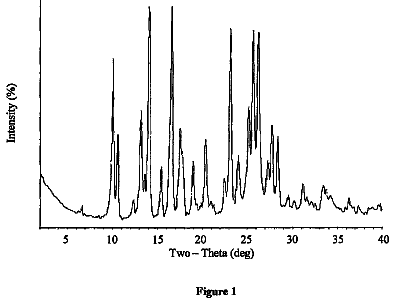
Lapsed, fee not paid10 drawings
Lapsed, fee not paid
TRPV3 modulators
US 8,772,499 B2 · Assignee: AbbVie Inc. · Inventors: Bayburt; Erol K. et al.
Overview
This document has no drawings.
Claude can sketch it from the patent text.
Abstract From the patent
Disclosed herein are modulators of TRPV3 of Formula (I) ##STR00001## wherein p is 1, 2, 3, or 4, and G.sup.1, X.sup.1, X.sup.2, X.sup.3, X.sup.4, X.sup.5, G.sup.2, Z.sup.1, R.sup.a, R.sup.b, and u are as defined in the specification. Compositions comprising such compounds and methods for treating conditions and disorders using such compounds and compositions are also presented.
Why it's free to use
- The USPTO Official Gazette of September 1, 2026 lists it as expired on July 8, 2026 for an unpaid maintenance fee.
- It isn't on any reinstatement notice published since.
- Its 3 US relatives have also lapsed, expired or never issued.
- It lapsed only recently. Owners can still pay late and reinstate it, most often in the first months; we check every new notice. We check US rights only. Check foreign counterparts before selling abroad.
FiledOctober 23, 2012
GrantedJuly 8, 2014
Expired (fee)July 8, 2026
Application number13/658355
Classification (CPC)C07D213/38 +7 more
Length45 claims · 80 pages
Background From the patent
A subset of the vanilloid channels (TRPV1-4) are referred to as thermoTRPs to reflect the observation that heat elicits channel opening across a continuum of temperatures with thresholds ranging from 25.degree. C. to 52.degree. C. (Caterina, M. J.; Rosen, T. A.; Tominaga, M.; Brake, A. J.; Julius, D., Nature 1999, 398, 436-441). TRPV3 characteristically responds to innocuous heat >31.degree. C., exhibits exquisite sensitivity around the physiological temperature of humans, 37.degree. C., and sensitizes dramatically following repetitive heating (Smith, G. D.; Gunthorpe, M. J.; Kelsell, R. E.; Hayes, P. D.; Reilly, P.; Facer, P.; Wright, J. E.; Jerman, J. C.; Walhin, J. P.; Ooi, L.; Egerton, J.; Charles, K. J.; Smart, D.; Randall, A. D.; Anand, P.; Davis, J. B., Nature 2002, 418, 186-190; Xu, H.; Ramsey, I. S.; Kotecha, S. A.; Moran, M. M.; Chong, J. A.; Lawson, D.; Ge, P.; Lilly, J.; S
Drawings
This document has no drawings.
Ask Claude for concept sketches based only on the patent's text. They are not part of the patent.
Claims 45 total, 1 independent
What the patent claimed, word for word. All of it is now free to use.
- 1Independent claimA compound according to Formula (I): ##STR00026## or a salt thereof, wherein: R.sup.a and R.sup.b are each absent; u is 0; X.sup.3 is CH.sub.2; X.sup.4 is (CH.sub.2).sub.m; X.sup.5 is (CH.sub.2).sub.n; m and n are each 1; each Z.sup.1 group is a substituent on the X.sup.3 carbon atom of the ring containing X.sup.3, X.sup.4, and X.sup.5 and is independently halogen oxo C.sub.1-C.sub.4-alkyl, or --OR.sup.c; or two Z.sup.1 groups that are situated on the X.sup.3 carbon atom, together with the carbon atom to which they are attached, form a 5-membered monocyclic heterocycle ring comprising two oxygen ring atoms; R.sup.c is hydrogen C.sub.1-C.sub.4-alkyl; p is 1 or 2; X.sup.1 is --OH and X.sup.2 is hydrogen; G.sup.1 is pyridinyl or pyrimidinyl; each of which is optionally substituted with 1, 2, or 3 substituents independently selected from the group consisting of halogen C.sub.1-C.sub.6-alkyl, C.sub.1-C.sub.6-haloalkyl, and N(R.sup.gc).sub.2; R.sup.gc is hydrogen or C.sub.1-C.sub.6-alkyl; G.sup.2 is G.sup.2d; G.sup.2d is phenyl, pyridinyl, or pyrimidinyl; each of which is optionally substituted with 1, 2, or 3 substituents independently selected from the group consisting of halogen, --CN, C.sub.1-C.sub.6-alkyl, C.sub.1-C.sub.6-haloalkyl, and --OR.sup.f; and R.sup.f is C.sub.1-C.sub.6-alkyl or C.sub.1-C.sub.6-haloalkyl.
- 2The compound according to claim 1, or a salt thereof, wherein the compound has the configuration of Formula (I-i-a): ##STR00027##
- 3The compound according to claim 1, or a salt thereof, wherein: G.sup.1 is pyridinyl; which is optionally substituted with 1 or 2 substituents independently selected from the group consisting of halogen, C.sub.1-C.sub.4-alkyl, C.sub.1-C.sub.4-haloalkyl, and N(R.sup.gc).sub.2; R.sup.gc is hydrogen or C.sub.1-C.sub.4alkyl; G.sup.2d is phenyl or pyridinyl; each of which is optionally substituted with 1, 2, or 3 substituents independently selected from the group consisting of halogen, C.sub.1-C.sub.4-alkyl, C.sub.1-C.sub.4-haloalkyl, and --OR.sup.f; and R.sup.f is C.sub.1-C.sub.4-alkyl or C.sub.1-C.sub.4-haloalkyl.
- 4The compound according to claim 1, or a salt thereof, wherein G.sup.1 is unsubstituted pyridinyl; G.sup.2d is phenyl or pyridinyl; each of which is optionally substituted with 1, 2, or 3 substituents independently selected from the group consisting of halogen, C.sub.1-C.sub.4-alkyl, C.sub.1-C.sub.4-haloalkyl, and --OR.sup.f; and R.sup.f is C.sub.1-C.sub.4alkyl or C.sub.1-C.sub.4-haloalkyl.
- 5The compound according to claim 3, or a salt thereof, wherein: G.sup.1 is unsubstituted pyridin-2-yl; G.sup.2d is phenyl or pyridinyl; each of which is optionally substituted with 1, 2, or 3 substituents independently selected from the group consisting of halogen, C.sub.1-C.sub.3-alkyl, C.sub.1-C.sub.3-haloalkyl, and --OR.sup.f; and R.sup.f is C.sub.1-C.sub.3-alkyl or C.sub.1-C.sub.3-haloalkyl.
- 6The compound according to claim 5, or a salt thereof, wherein: G.sup.2d is phenyl which is optionally substituted with 1, 2, or 3 substituents independently selected from the group consisting of halogen, C.sub.1-C.sub.3-alkyl, C.sub.1-C.sub.3-haloalkyl, and --OR.sup.f; and R.sup.f is C.sub.1-C.sub.3-alkyl or C.sub.1-C.sub.3-haloalkyl.
- 7The compound according to claim 5, or a salt thereof, wherein: G.sup.2d is pyridinyl which is optionally substituted with 1, 2, or 3 substituents independently selected from the group consisting of halogen, C.sub.1-C.sub.3-alkyl or C.sub.1-C.sub.3-haloalkyl haloalkyl, and --OR.sup.f; and R.sup.f is C.sub.1-C.sub.3alkyl or C.sub.1-C.sub.3-haloalkyl.
- 8The compound according to claim 2, or a salt thereof, wherein: p is 2; the two Z.sup.1 groups are situated on the X.sup.3 carbon atom and, together with the carbon atom to which they are attached, form an unsubstituted 5-membered monocyclic heterocycle ring comprising two oxygen ring atoms; G.sup.1 is unsubstituted pyridin-2-yl; G.sup.2d is phenyl or pyridinyl; each of which is optionally substituted with 1, 2, or 3 substituents independently selected from the group consisting of halogen, C.sub.1-C.sub.3-alkyl, C.sub.1-C.sub.3-haloalkyl, and --OR.sup.f; and R.sup.f is C.sub.1-C.sub.3-alkyl or C.sub.1-C.sub.3-haloalkyl.
- 9The compound according to claim 2, or a salt thereof, wherein: each Z.sup.1 group is independently halogen, oxo, C.sub.1-C.sub.3-alkyl, or --OR.sup.c; R.sup.c is hydrogen or C.sub.1-C.sub.3-alkyl; G.sup.1 is unsubstituted pyridin-2-yl; G.sup.2d is phenyl or pyridinyl; each of which is optionally substituted with 1, 2, or 3 substituents independently selected from the group consisting of halogen, C.sub.1-C.sub.3-alkyl, C.sub.1-C.sub.3-haloalkyl, and --OR.sup.f; and R.sup.f is C.sub.1-C.sub.3-alkyl or C.sub.1-C.sub.3-haloalkyl.
- 10The compound according to claim 2, or a salt thereof, wherein: p is 1; Z.sup.1 is oxo; G.sup.1 is unsubstituted pyridin-2-yl; G.sup.2d is phenyl or pyridinyl; each of which is optionally substituted with 1, 2, or 3 substituents independently selected from the group consisting of halogen, C.sub.1-C.sub.3-alkyl, C.sub.1-C.sub.3-haloalkyl, and --OR.sup.f; and R.sup.f is C.sub.1-C.sub.3-alkyl or C.sub.1-C.sub.3-haloalkyl.
- 11The compound according to claim 2, or a salt thereof, wherein: each Z.sup.1 group is independently halogen, C.sub.1-C.sub.3-alkyl, or --OR.sup.c; R.sup.c is hydrogen or C.sub.1-C.sub.3-alkyl; G.sup.1 is unsubstituted pyridin-2-yl; G.sup.2d is phenyl or pyridinyl; each of which is optionally substituted with 1, 2, or 3 substituents independently selected from the group consisting of halogen, C.sub.1-C.sub.3-alkyl, C.sub.1-C.sub.3-haloalkyl, and --OR.sup.f; and R.sup.f is C.sub.1-C.sub.3-alkyl and C.sub.1-C.sub.3-haloalkyl.
- 12The compound according to claim 2, or a salt thereof, wherein: p is 1; Z.sup.1 is halogen, C.sub.1-C.sub.3-alkyl, or --OR.sup.c; R.sup.c is hydrogen or C.sub.1-C.sub.3-alkyl; G.sup.1 is unsubstituted pyridin-2-yl; G.sup.2d is phenyl or pyridinyl; each of which is optionally substituted with 1, 2, or 3 substituents independently selected from the group consisting of halogen, C.sub.1-C.sub.3-alkyl, C.sub.1-C.sub.3-haloalkyl, and --OR.sup.f; and R.sup.f is C.sub.1-C.sub.3-alkyl or C.sub.1-C.sub.3-haloalkyl.
- 13The compound according to claim 12, or a salt thereof, wherein Z.sup.1 is C.sub.1-C.sub.3-alkyl.
- 14The compound according to claim 12, or a salt thereof, wherein Z.sup.1 is methyl.
- 15The compound according to claim 12, or a salt thereof, wherein: Z.sup.1 is --OR.sup.c; and R.sup.c is hydrogen.
- 16The compound according to claim 12, or a salt thereof, wherein: Z.sup.1 is --OR.sup.c; and R.sup.c is C.sub.1-C.sub.3-alkyl.
- 17The compound according to claim 12, or a salt thereof, wherein: Z.sup.1 is --OR.sup.c; and R.sup.c is methyl.
- 18The compound according to claim 2, or a salt thereof, wherein: p is 2; each Z.sup.1 group is independently halogen, C.sub.1-C.sub.3-alkyl, or --OR.sup.c; R.sup.c is hydrogen or C.sub.1-C.sub.3-alkyl; G.sup.1 is unsubstituted pyridin-2-yl; G.sup.2d is phenyl or pyridinyl; each of which is optionally substituted with 1, 2, or 3 substituents independently selected from the group consisting of halogen, C.sub.1-C.sub.3-alkyl, C.sub.1-C.sub.3-haloalkyl, and --OR.sup.f; and R.sup.f is C.sub.1-C.sub.3-alkyl or C.sub.1-C.sub.3-haloalkyl.
- 19The compound according to claim 2, or a salt thereof, wherein: p is 2; each Z.sup.1 group is independently halogen, C.sub.1-C.sub.3-alkyl, or --OR.sup.c; R.sup.c is hydrogen or C.sub.1-C.sub.3-alkyl, or --OR.sup.c; G.sup.1 is unsubstituted pyridin-2-yl; G.sup.2d is phenyl which is optionally substituted with 1, 2, or 3 substituents independently selected from the group consisting of halogen, C.sub.1-C.sub.3-alkyl, C.sub.1-C.sub.3-haloalkyl, and --OR.sup.f; and R.sup.f is C.sub.1-C.sub.3-alkyl or C.sub.1-C.sub.3-haloalkyl.
- 20The compound according to claim 2, or a salt thereof, wherein: p is 2; each Z.sup.1 group is independently halogen, C.sub.1-C.sub.3-alkyl, or --OR.sup.c; R.sup.c is hydrogen or C.sub.1-C.sub.3-alkyl; G.sup.1 is unsubstituted pyridin-2-yl; G.sup.2d is pyridinyl which is optionally substituted with 1, 2, or 3 substituents independently selected from the group consisting of halogen, C.sub.1-C.sub.3-alkyl, C.sub.1-C.sub.3-haloalkyl, and --OR.sup.f; and R.sup.f is C.sub.1-C.sub.3-alkyl or C.sub.1-C.sub.3-haloalkyl.
- 21The compound according to claim 18, or a salt thereof, wherein both Z.sup.1 groups are halogen.
- 22The compound according to claim 18, or a salt thereof, wherein both Z.sup.1 groups are C.sub.1-C.sub.3-alkyl.
- 23The compound according to claim 18, or a salt thereof, wherein both Z.sup.1 groups are methyl.
- 24The compound according to claim 18, or a salt thereof, wherein both Z.sup.1 groups are --OR.sup.c wherein R.sup.c is C.sub.1-C.sub.3-alkyl.
- 25The compound according to claim 18, or a salt thereof, wherein both Z.sup.1 groups are --OR.sup.c wherein R.sup.c is methyl.
- 26The compound according to claim 18, or a salt thereof, wherein one Z.sup.1 group is C.sub.1-C.sub.3-alkyl and the other Z.sup.1 group is --OR.sup.c wherein R.sup.c is hydrogen.
- 27The compound according to claim 18, or a salt thereof, wherein one Z.sup.1 group is methyl and the other Z.sup.1 group is --OR.sup.c wherein R.sup.c is hydrogen.
- 28The compound according to claim 27, or a salt thereof, wherein the substituent containing X.sup.1 and the --OR.sup.c substituent have a cis configuration.
- 29The compound according to claim 27, or a salt thereof, wherein the substituent containing X.sup.1 and the --OR.sup.c substituent have a trans configuration.
- 30The compound according to claim 1, or a salt thereof, selected from the group consisting of: [1-(3,4-dichlorophenyl)-3,3-difluorocyclobutyl](pyridin-2-yl)methanol; (S)-[1-(3,4-dichlorophenyl)-3,3-difluorocyclobutyl](pyridin-2-yl)methanol- ; {3,3-difluoro-1-[4-(trifluoromethoxy)phenyl]cyclobutyl}(pyridin-2-yl)met- hanol; {3,3-difluoro-1-[3-(trifluoromethyl)phenyl]cyclobutyl}(pyridin-2-yl- )methanol; {3,3-difluoro-1-[3-(trifluoromethoxy)phenyl]cyclobutyl}(pyridin- -2-yl)methanol; 3-(3,4-dichlorophenyl)-3-[(S)-hydroxy(pyridin-2-yl)methyl]cyclobutanone; (trans)-3-(3,4-dichlorophenyl)-3-[(S)-hydroxy(pyridin-2-yl)methyl]cyclobu- tanol; (cis)-3-(3,4-dichlorophenyl)-3-[(S)-hydroxy(pyridin-2-yl)methyl]cyc- lobutanol; (R)-{3,3-difluoro-1-[4-(trifluoromethyl)pyridin-2-yl]cyclobutyl- }(pyridin-2-yl)-methanol; (S)-{3,3-difluoro-1-[4-(trifluoromethyl)pyridin-2-yl]cyclobutyl}(pyridin-- 2-yl)-methanol; (S)-{3,3-difluoro-1-[4-(trifluoromethoxy)phenyl]cyclobutyl}(pyridin-2-yl)- -methanol; {3,3-dimethoxy-1-[4-(trifluoromethoxy)phenyl]cyclobutyl}(pyridi- n-2-yl)methanol; cis-3-[(S)-hydroxy(pyridin-2-yl)methyl]-3-[4-(trifluoromethoxy)phenyl]-cy- clobutanol; (trans)-3-[(S)-hydroxy(pyridin-2-yl)methyl]-3-[4-(trifluoromethoxy)phenyl- ]-cyclobutanol; {3,3-difluoro-1-[4-(trifluoromethyl)phenyl]cyclobutyl}(pyridin-2-yl)metha- nol; cis-3-[(S)-hydroxy(pyridin-2-yl)methyl]-1-methyl-3-[4-(trifluorometho- xy)phenyl]-cyclobutanol; {3,3-difluoro-1-[5-(trifluoromethyl)pyridin-2-yl]cyclobutyl}(pyridin-2-yl- )-methanol; {1-[4-chloro-3-(trifluoromethyl)phenyl]-3,3-difluorocyclobutyl}(pyridin-2- -yl)-methanol; {3,3-difluoro-1-[4-fluoro-3-(trifluoromethyl)phenyl]cyclobutyl}(pyridin-2- -yl)-methanol; (S)-[cis-1-(3,4-dichlorophenyl)-3-methoxycyclobutyl](pyridin-2-yl)methano- l; (S)-[1-(3,4-dichlorophenyl)-3-methoxycyclobutyl](pyridin-2-yl)methanol; (S)-{3,3-difluoro-1-[4-(trifluoromethyl)phenyl]cyclobutyl}(pyridin-2-yl)m- ethanol; (R)-{3,3-difluoro-1-[4-(trifluoromethoxy)phenyl]cyclobutyl}(pyrid- in-2-yl)-methanol; 3-[hydroxy(pyridin-2-yl)methyl]-3-[4-(trifluoromethyl)phenyl]cyclobutanon- e; pyridin-2-yl{2-[4-(trifluoromethyl)phenyl]-5,8-dioxaspiro[3.4]oct-2-yl}- methanol; 3-[(S)-hydroxy(pyridin-2-yl)methyl]-3-[4-(trifluoromethyl)phenyl- ]cyclobutanone; 3-[(R)-hydroxy(pyridin-2-yl)methyl]-3-[4-(trifluoromethyl)phenyl]cyclobut- anone; 3-[(S)-hydroxy(pyridin-2-yl)methyl]-3-[4-(trifluoromethyl)phenyl]cy- clobutanol; 3-[(R)-hydroxy(pyridin-2-yl)methyl]-3-[4-(trifluoromethyl)phenyl]cyclobut- anol; cis-3-[(S)-hydroxy(pyridin-2-yl)methyl]-3-[4-(trifluoromethyl)phenyl- ]cyclobutanol; trans-3-[(S)-hydroxy(pyridin-2-yl)methyl]-3-[4-(trifluoromethyl)phenyl]-c- yclobutanol; pyridin-2-yl{2-[4-(trifluoromethoxy)phenyl]-5,8-dioxaspiro[3.4]oct-2-yl}m- ethanol; trans-3-[(S)-hydroxy(pyridin-2-yl)methyl]-1-methyl-3-[4-(trifluor- omethoxy)-phenyl]-cyclobutanol; cis-3-[(S)-hydroxy(pyridin-2-yl)methyl]-1-methyl-3-[4-(trifluoromethyl)ph- enyl]-cyclobutanol; trans-3-[(S)-hydroxy(pyridin-2-yl)methyl]-1-methyl-3-[4-(trifluoromethyl)- phenyl]-cyclobutanol; pyridin-2-yl{2-[3-(trifluoromethoxy)phenyl]-5,8-dioxaspiro[3.4]oct-2-yl}m- ethanol; cis-3-[(S)-hydroxy(pyridin-2-yl)methyl]-1-methyl-3-[3-(trifluorom- ethyl)phenyl]-cyclobutanol; 3-[hydroxy(pyridin-2-yl)methyl]-3-[3-(trifluoromethoxy)phenyl]cyclobutano- ne; 3-[(S)-hydroxy(pyridin-2-yl)methyl]-3-[3-(trifluoromethyl)phenyl]cyclo- butanone; pyridin-2-yl{2-[3-(trifluoromethyl)phenyl]-5,8-dioxaspiro[3.4]oc- t-2-yl}methanol; 3-[(R)-hydroxy(pyridin-2-yl)methyl]-3-[3-(trifluoromethyl)phenyl]cyclobut- anone; trans-3-[(S)-hydroxy(pyridin-2-yl)methyl]-1-methyl-3-[3-(trifluorom- ethyl)phenyl]-cyclobutanol; 3-[hydroxy(pyridin-2-yl)methyl]-3-[3-(trifluoromethyl)phenyl]cyclobutanon- e; cis-3-(3,4-dichlorophenyl)-3-[(R)-hydroxy(pyridin-2-yl)methyl]cyclobuta- nol; cis-3-[(R)-hydroxy(pyridin-2-yl)methyl]-1-methyl-3-[4-(trifluorometho- xy)phenyl]-cyclobutanol; 3-[(S)-hydroxy(pyridin-2-yl)methyl]-3-[4-(trifluoromethoxy)phenyl]cyclobu- tanone; [2-(3-chloro-4-fluorophenyl)-5,8-dioxaspiro[3.4]oct-2-yl](pyridin-- 2-yl)methanol; 3-[(S)-hydroxy(pyridin-2-yl)methyl]-3-[3-(trifluoromethoxy)phenyl]cyclo-b- utanone; 3-[(R)-hydroxy(pyridin-2-yl)methyl]-3-[3-(trifluoromethoxy)phenyl- ]cyclo-butanone; 3-(3-chloro-4-fluorophenyl)-3-[hydroxy(pyridin-2-yl)methyl]cyclobutanone; cis-3-[(S)-hydroxy(pyridin-2-yl)methyl]-3-[3-(trifluoromethyl)phenyl]cycl- obutanol; cis-3-[(S)-hydroxy(pyridin-2-yl)methyl]-1-methyl-3-[3-(trifluoro- methoxy)phenyl]-cyclobutanol; trans-3-[(S)-hydroxy(pyridin-2-yl)methyl]-1-methyl-3-[3-(trifluoromethoxy- )-phenyl]cyclobutanol; trans-3-[(S)-hydroxy(pyridin-2-yl)methyl]-3-[3-(trifluoromethyl)phenyl]-c- yclobutanol; 3-(3-chloro-4-fluorophenyl)-3-[(S)-hydroxy(pyridin-2-yl)methyl]cyclobutan- one; cis-3-[(S)-hydroxy(pyridin-2-yl)methyl]-3-[3-(trifluoromethoxy)phenyl- ]-cyclobutanol; trans-3-[(S)-hydroxy(pyridin-2-yl)methyl]-3-[3-(trifluoromethoxy)phenyl]-- cyclobutanol; 3-(3-chloro-4-fluorophenyl)-3-[(S)-hydroxy(pyridin-2-yl)methyl]cyclobutan- ol; 3-[(S)-hydroxy(pyridin-2-yl)methyl]-3-[4-(trifluoromethyl)pyridin-2-yl- ]cyclo-butanone; 3-[(R)-hydroxy(pyridin-2-yl)methyl]-3-[4-(trifluoromethyl)pyridin-2-yl]-c- yclobutanone; cis-3-[(S)-hydroxy(pyridin-2-yl)methyl]-3-[4-(trifluoromethyl)pyridin-2-y- l]-cyclobutanol; trans-3-[(S)-hydroxy(pyridin-2-yl)methyl]-3-[4-(trifluoromethyl)pyridin-2- -yl]-cyclobutanol; cis-3-[(S)-hydroxy(pyridin-2-yl)methyl]-1-methyl-3-[4-(trifluoromethyl)py- ridin-2-yl]cyclobutanol; trans-3-[(S)-hydroxy(pyridin-2-yl)methyl]-3-[4-(trifluoromethyl)pyridin-2- -yl]-cyclobutanol; cis-3-[(R)-hydroxy(pyridin-2-yl)methyl]-3-[4-(trifluoromethyl)pyridin-2-y- l]-cyclobutanol; 3-[(R)-hydroxy(pyridin-2-yl)methyl]-3-[6-methyl-4-(trifluoromethyl)pyridi- n-2-yl]-cyclobutanone; 3-[hydroxy(pyridin-2-yl)methyl]-3-[4-(trifluoromethyl)pyridin-2-yl]cyclob- utanone; 3-[(S)-hydroxy(pyridin-2-yl)methyl]-3-[4-(trifluoromethyl)pyridin- -2-yl]cyclo-butanol; 3-[hydroxy(pyridin-2-yl)methyl]-3-[5-(trifluoromethyl)pyridin-3-yl]cyclob- utanone; 3-[(S)-hydroxy(pyridin-2-yl)methyl]-3-[5-(trifluoromethyl)pyridin- -3-yl]cyclobutanone; pyridin-2-yl{2-[2-(trifluoromethyl)pyridin-4-yl]-5,8-dioxaspiro[3.4]oct-2- -yl}-methanol; 3-[hydroxy(pyridin-2-yl)methyl]-3-[2-(trifluoromethyl)pyridin-4-yl]cyclob- utanone; 3-[(S)-hydroxy(pyridin-2-yl)methyl]-3-[2-(trifluoromethyl)pyridin- -4-yl]-cyclobutanone; cis-3-[(S)-hydroxy(pyridin-2-yl)methyl]-1-methyl-3-[2-(trifluoromethyl)py- ridin-4-yl]cyclobutanol; cis-3-[(S)-hydroxy(pyridin-2-yl)methyl]-3-[5-(trifluoromethyl)pyridin-3-y- l]-cyclobutanol; trans-3-[(S)-hydroxy(pyridin-2-yl)methyl]-3-[5-(trifluoromethyl)pyridin-3- -yl]-cyclobutanol; cis-3-[(S)-hydroxy(pyridin-2-yl)methyl]-3-[2-(trifluoromethyl)pyridin-4-y- l]-cyclobutanol; trans-3-[(S)-hydroxy(pyridin-2-yl)methyl]-3-[2-(trifluoromethyl)pyridin-4- -yl]-cyclobutanol; trans-3-[(S)-hydroxy(pyridin-2-yl)methyl]-1-methyl-3-[2-(trifluoromethyl)- pyridin-4-yl]cyclobutanol; cis-3-[(S)-hydroxy(pyridin-2-yl)methyl]-1-methyl-3-[5-(trifluoromethyl)py- ridin-3-yl]cyclobutanol; trans-3-[(S)-hydroxy(pyridin-2-yl)methyl]-1-methyl-3-[5-(trifluoromethyl)- pyridin-3-yl]cyclobutanol; (trans)-3-((S)-hydroxy(pyrimidin-2-yl)methyl)-1-methyl-3-(4-(trifluoromet- hoxy)-phenyl)-cyclobutanol; (trans)-3-((R)-hydroxy(pyrimidin-2-yl)methyl)-1-methyl-3-(4-(trifluoromet- hoxy)-phenyl)-cyclobutanol; (trans)-3-(3,4-dichlorophenyl)-3-((S)-hydroxy(pyrimidin-2-yl)methyl)cyclo- butanol; (trans)-3-(3,4-dichlorophenyl)-3-((R)-hydroxy(pyrimidin-2-yl)meth- yl)cyclobutanol; and salts thereof.
- 31The compound, or a salt thereof, of claim 1, wherein the salt is a pharmaceutically acceptable salt.
- 32A pharmaceutical composition comprising a therapeutically effective amount of a compound of Formula (I) according to claim 1, or a pharmaceutically acceptable salt thereof, in combination with a pharmaceutically acceptable carrier.
- 33The compound according to claim 2, or a salt thereof, wherein: G.sup.1 is pyridinyl; which is optionally substituted with 1 or 2 substituents independently selected from the group consisting of halogen, C.sub.1-C.sub.4-alkyl, C.sub.1-C.sub.4-haloalkyl, and N(R.sup.gc).sub.2; R.sup.gc is hydrogen or C.sub.1-C.sub.4-alkyl; G.sup.2d is phenyl or pyridinyl; each of which is optionally substituted with 1, 2, or 3 substituents independently selected from the group consisting of halogen, C.sub.1-C.sub.4-alkyl, C.sub.1-C.sub.4-haloalkyl, and --OR.sup.f; and R.sup.f is C.sub.1-C.sub.4-alkyl or C.sub.1-C.sub.4-haloalkyl.
- 34The compound according to claim 2, or a salt thereof, wherein G.sup.1 is unsubstituted pyridinyl; G.sup.2d is phenyl or pyridinyl; each of which is optionally substituted with 1, 2, or 3 substituents independently selected from the group consisting of halogen, C.sub.1-C.sub.4-alkyl, C.sub.1-C.sub.4-haloalkyl, and --OR.sup.f; and R.sup.f is C.sub.1-C.sub.4-alkyl or C.sub.1- -C.sub.4-haloalkyl.
- 35The compound according to claim 33, or a salt thereof, wherein: G.sup.1 is unsubstituted pyridin-2-yl; G.sup.2d is phenyl or pyridinyl; each of which is optionally substituted with 1, 2, or 3 substituents independently selected from the group consisting of halogen, C.sub.1-C.sub.3-alkyl, C.sub.1-C.sub.3-haloalkyl, and --OR.sup.f; and R.sup.f is C.sub.1-C.sub.3-alkyl or C.sub.1-C.sub.3-haloalkyl.
- 36The compound according to claim 35, or a salt thereof, wherein: G.sup.2d is phenyl which is optionally substituted with 1, 2, or 3 substituents independently selected from the group consisting of halogen, C.sub.1-C.sub.3-alkyl, C.sub.1-C.sub.3-haloalkyl, and --OR.sup.f; and R.sup.f is C.sub.1-C.sub.3-alkyl or C.sub.1-C.sub.3-haloalkyl.
- 37The compound according to claim 35, or a salt thereof, wherein: G.sup.2d is pyridinyl which is optionally substituted with 1, 2, or 3 substituents independently selected from the group consisting of halogen, C.sub.1-C.sub.3-alkyl, C.sub.1-C.sub.3-haloalkyl, and --OR.sup.f; and R.sup.f is C.sub.1-C.sub.3-alkyl or C.sub.1-C.sub.3-haloalkyl.
- 38The compound or salt of claim 1 that is cis-3-[(S)-hydroxy(pyridin-2-yl)methyl]-1-methyl-3-[4-(trifluoromethoxy)-- phenyl]cyclobutanol, or a pharmaceutically acceptable salt thereof.
- 39The pharmaceutical composition of claim 32, wherein the compound or salt is cis-3-[(S)-hydroxy(pyridin-2-yl)methyl]-1-methyl-3-[4-(trifluorom- ethoxy)-phenyl]cyclobutanol, or a pharmaceutically acceptable salt thereof.
- 40The compound or salt of claim 1 that is cis-3-[(S)-hydroxy(pyridin-2-yl)methyl]-3-[4-(trifluoromethyl)pyridin-2-y- l]cyclobutanol, or a pharmaceutically acceptable salt thereof.
- 41The pharmaceutical composition of claim 32, wherein the compound or salt is cis-3-[(S)-hydroxy(pyridin-2-yl)methyl]-3-[4-(trifluoromethyl)pyr- idin-2-yl]cyclobutanol, or a pharmaceutically acceptable salt thereof.
- 42The compound or salt of claim 1 that is trans-3-[(S)-hydroxy(pyridin-2-yl)methyl]-3-[4-(trifluoromethyl)pyridin-2- -yl]cyclobutanol, or a pharmaceutically acceptable salt thereof.
- 43The pharmaceutical composition of claim 32, wherein the compound or salt is trans-3-[(S)-hydroxy(pyridin-2-yl)methyl]-3-[4-(trifluoromethyl)p- yridin-2-yl]cyclobutanol, or a pharmaceutically acceptable salt thereof.
- 44The compound or salt of claim 1 that is cis-3-[(S)-hydroxy(pyridin-2-yl)methyl]-1-methyl-3-[4-(trifluoromethyl)-p- yridin-2-yl]cyclobutanol, or a pharmaceutically acceptable salt thereof.
- 45The pharmaceutical composition of claim 32, wherein the compound or salt is cis-3-[(S)-hydroxy(pyridin-2-yl)methyl]-1-methyl-3-[4-(trifluorom- ethyl)-pyridin-2-yl]cyclobutanol, or a pharmaceutically acceptable salt thereof.
Description
Cross-reference to related patent applications
This patent application claims the benefit of International Patent Application No. PCT/CN2011/001761 (filed Oct. 24, 2011). The entire text of that International Patent Application is incorporated by reference into this application.
Technical field
Compounds that are Transient Receptor Potential Vanilloid 3 (TRPV3) modulators, compositions comprising such compounds, and methods for treating conditions and disorders using such compounds and compositions, are disclosed herein.
Background of the invention
A subset of the vanilloid channels (TRPV1-4) are referred to as thermoTRPs to reflect the observation that heat elicits channel opening across a continuum of temperatures with thresholds ranging from 25.degree. C. to 52.degree. C. (Caterina, M. J.; Rosen, T. A.; Tominaga, M.; Brake, A. J.; Julius, D., Nature 1999, 398, 436-441). TRPV3 characteristically responds to innocuous heat >31.degree. C., exhibits exquisite sensitivity around the physiological temperature of humans, 37.degree. C., and sensitizes dramatically following repetitive heating (Smith, G. D.; Gunthorpe, M. J.; Kelsell, R. E.; Hayes, P. D.; Reilly, P.; Facer, P.; Wright, J. E.; Jerman, J. C.; Walhin, J. P.; Ooi, L.; Egerton, J.; Charles, K. J.; Smart, D.; Randall, A. D.; Anand, P.; Davis, J. B., Nature 2002, 418, 186-190; Xu, H.; Ramsey, I. S.; Kotecha, S. A.; Moran, M. M.; Chong, J. A.; Lawson, D.; Ge, P.; Lilly, J.; Silos-Santiago, I.; Xie, Y.; DiStefano, P. S.; Curtis, R.; Clapham, D. E., Nature 2002, 418, 181-186; Peier, A. M.; Reeve, A. J.; Andersson, D. A.; Moqrich, A.; Earley, T. J.; Hergarden, A. C.; Story, G. M.; Colley, S.; Hogenesch, J. B.; McIntyre, P.; Bevan, S.; Patapoutian, A., Science 2002, 296, 2046-2049).
TRPV3 is a nonselective cation channel with permeability for calcium, but also to other cations, for example sodium. Multiple compounds that have been shown to activate TRPV3, include: monoterpenes, camphor (Peier, A. M. et al., 2002; Moqrich, A.; Hwang, S. W.; Earley, T. J.; Petrus, M. J.; Murray, A. N.; Spencer, K. S.; Andahazy, M.; Story, G. M.; Patapoutian, A., Science 2005, 307, 1468-1472; Xu, H.; Blair, N. T.; Clapham, D. E., J Neurosci. 2005, 25, 8924-8937), carvacrol, and thymol (Xu, H.; Delling, M.; Jun, J. C.; Clapham, D. E. Nat. Neurosci. 2006, 9, 628-635; Vogt-Eisele, A. K.; Weber, K.; Sherkheli, M. A.; Vielhaber, G.; Panten, J.; Gisselmann, G.; Hatt, H., Br J Pharmacol. 2007, 151, 530-540; Story, G. M., Mol Cell Neurosci. 2006, 32, 335-343; Vogt-Eisele, A. K. et al., 2007); cinnamaldehyde (Macpherson, L. J. et al., 2006); incensole acetate (Moussaieff, A.; Rimmerman, N.; Bregman, T.; Straiker, A.; Felder, C. C.; Shoham, S.; Kashman, Y.; Huang, S. M.; Lee, H.; Shohami, E.; Mackie, K.; Caterina, M. J.; Walker, J. M.; Fride, E.; Mechoulam, R., FASEB J. 2008, 22, 3024-3034.); and vanilloid analogs, eugenol and ethyl vanillin (Hu, H. Z.; Gu, Q.; Wang, C.; Colton, C. K.; Tang, J.; Kinoshita-Kawada, M.; Lee, L. Y.; Wood, J. D.; Zhu, M. X., J Biol. Chem. 2004, 279, 35741-35748; Vogt-Eisele, A. K. et al., 2007; Xu, H. et al., 2006). Though relatively weak (EC.sub.50, .about.40 .mu.M) and nonspecific across TRPs, 2-aminoethoxydiphenylborate (2-APB) and diphenylboronic anhydride (DPBA) have been widely and productively used to characterize key attributes of TRPV3 in cellular assays and electrophysiology (Hu, H. Z. et al., 2004; Chung, M. K.; Lee, H.; Mizuno, A.; Suzuki, M.; Caterina, M. J. J Neurosci. 2004, 24, 5177-5182; Chung, M. K.; Giller, A. D.; Caterina, M. J., J Biol. Chem. 2005, 280, 15928-15941). While heat and direct ligand binding are clearly central to TRPV3 pharmacology, accumulating evidence of potentiation by arachidonic acid, other unsaturated fatty acid derivatives (Hu, H. Z.; Xiao, R.; Wang, C.; Gao, N.; Colton, C. K.; Wood, J. D.; Zhu, M. X., J Cell Physiol. 2006, 208, 201-212), and nitric oxide (Aley, K. O.; McCarter, G.; Levine, J. D., J Neurosci. 1998, 18, 7008-7014; Yoshida, T.; Inoue, R.; Morii, T.; Takahashi, N.; Yamamoto, S.; Hara, Y.; Tominaga, M.; Shimizu, S.; Sato, Y.; Mori, Y., Nat Chem. Biol. 2006, 2, 596-607) suggests that authentic activation involves stimulation of G protein-coupled receptors and downstream second messenger signal cascades (e.g., phospholipase C, protein kinase C) that mediate local inflammatory responses and nociceptor sensitization that could enhance TRPV3 function (Xu, H. et al., 2006) in a pathophysiological, as compared to basal state.
Evidence suggests that transcriptional regulation of the TRPV3 gene restricts its basal expression and is responsible for enhanced expression following nerve injury. Levels of TRPV3 mRNA recovered from rat L4 and L5 DRG neurons is elevated in the spinal nerve ligation model of neuropathic pain, as compared to uninjured rats (U.S. Pat. No. 7,396,910). Similar upregulation of TRPV3 has been observed in sensory neurons following peripheral nerve injury in humans (Facer, P.; Casula, M. A.; Smith, G. D.; Benoham, C. D.; Chessell, I. P.; Bountra, C.; Sinisi, M.; Birch, R.; Anand, P., BMC Neurol. 2007, 7, 11-22; Smith G. D. et al., 2002).
One feature that distinguishes TRPV3 from the other thermoTRPs is its relatively prominent localization in skin (Peier, A. M. et al., 2002; Xu, H. et al., 2002). TRPV3 is also expressed in dorsal root ganglion, trigeminal ganglion, spinal cord and brain (Xu, H. et al., 2002; Smith G. D. et al., 2002). Its distinctive tissue profile, with significant expression in keratinocytes proximal to nociceptive neurons (Chung, M. K.; Lee, H.; Caterina, M. J., J Biol. Chem. 2003, 278, 32037-32046; Chung, M. K.; Lee, H.; Mizuno, A.; Suzuki, M.; Caterina, M. J. J Biol. Chem. 2004, 279, 21569-21575; Peier, A. M. et al., 2002; Xu, H. et al., 2002) as well as upregulation of TRPV3 in disease states is consistent with a likely role of TRPV3 in pain (Caterina M J., Am J Physiol Regul Integr Comp Physiol. 2007, 292, R64-R76; Lee, H.; Caterina, M. J., Pflugers Arch. 2005, 451, 160-167; Guller, A. D.; Lee, H.; Iida, T.; Shimizu, I.; Tominaga, M.; Caterina, M., J Neurosci. 2002, 22, 6408-6414; Chung, M. K. et al., 2003; Chung, M. K.; Lee, H.; Mizuno, A.; Suzuki, M.; Caterina, M. J. J Biol. Chem. 2004, 279, 21569-21575). In a keratinocyte cell line, stimulation of TRPV3 leads to release of inflammatory mediators including interleukin-1. Thus TRPV3 may also play an important role in regulating inflammation, itch (Steinhoff, M. and Biro, T. J. Invest. Dermatology, 2009, 129, 531-535) and pain that results from the release of inflammatory stimuli. In addition, localization of TRPV3 in non-neuronal tissues, especially skin, suggests also that pharmacological modulation of the channel may provide a therapy to treat diseases that impair the skin barrier (Montell, C. Cell, 2010, April 16, 218-220) and have additional, as yet unidentified, benefit for disease states beyond pain. Accordingly, compounds that can modulate one or more functions of TRPV3 can have various therapeutic utilities.
Summary
Disclosed herein are compounds of Formula (I):
##str00002##
and pharmaceutically acceptable salts, solvates, salts of solvates, or solvates of salts thereof, wherein:
each occurrence of R.sup.a and R.sup.b, are each independently hydrogen, alkyl, haloalkyl, halogen, OH, O(alkyl), or a phenyl group which is optionally substituted with 1, 2, 3, 4, or 5 substituents independently selected from the group consisting of alkyl, haloalkyl, and halogen;
u is 0, 1, or 2;
X.sup.3 is CH.sub.2, O, S, S(O).sub.2, or N(R.sup.1x) wherein R.sup.1x is hydrogen, alkyl, --C(O)alkyl, or --C(O)O(alkyl);
X.sup.4 is a bond or (CH.sub.2).sub.m and X.sup.5 is (CH.sub.2).sub.n, with the proviso that when X.sup.4 is a bond and n is 1, then X.sup.3 is CH.sub.2;
m and n are integers that can be the same or different, and are each independently 1, 2, 3, 4, or 5;
each Z.sup.1 group is an optional substituent on any substitutable carbon atom of the ring containing X.sup.3, X.sup.4, and X.sup.5, and is independently alkyl, C(O)R.sup.cz, S(O).sub.2R.sup.cz, N(R.sup.1d)(R.sup.2d), OR.sup.c, oxo, .dbd.NOR.sup.z1, .dbd.NNR.sup.z1R.sup.z2, .dbd.NR.sup.z3 halogen, haloalkyl, --(C.sub.1-C.sub.6 alkylenyl)-OR.sup.c, --(C.sub.1-C.sub.6 alkylenyl)-C(O)R.sup.cz, --(C.sub.1-C.sub.6 alkylenyl)-S(O).sub.2R.sup.cz, or --(C.sub.1-C.sub.6 alkylenyl)-N(R.sup.1d)(R.sup.2d); two Z.sup.1 groups that are resided on the same carbon atom, together with the carbon atom to which they are attached optionally form a 4-6 membered monocyclic cycloalkyl or monocyclic heterocycle ring; wherein said ring is optionally substituted with 1, 2, 3, or 4 substituents independently selected from the group consisting of alkyl, haloalkyl, and halogen;
R.sup.z1, R.sup.z2, R.sup.z3 are each independently hydrogen, alkyl, --C(O)(alkyl), --C(O)-G.sup.d, or haloalkyl;
R.sup.cz, at each occurrence, is independently alkyl, haloalkyl, NH.sub.2, N(H)(alkyl), or N(alkyl).sub.2;
R.sup.1d, at each occurrence, is independently hydrogen, alkyl, haloalkyl, C(O)alkyl, or C(O)O(alkyl);
R.sup.2d and R.sup.c, at each occurrence, are each independently hydrogen, alkyl, or haloalkyl;
p is 0, 1, 2, 3, or 4;
--X.sup.1 is --OH and X.sup.2 is hydrogen; or --X.sup.1 is .dbd.O or .dbd.NOR.sup.10 and X.sup.2 is absent;
R.sup.10 is hydrogen, alkyl, or --C(O)alkyl;
G.sup.1 is aryl, heteroaryl, cycloalkyl, heterocycle, or cyclaoalkenyl; each of which is optionally substituted with 1, 2, 3, 4, or 5 substituents independently selected from the group consisting of alkyl, alkenyl, alkynyl, halogen, haloalkyl, OR.sup.gc, N(R.sup.gc).sub.2, N(R.sup.gc)C(O)alkyl, heteroaryl, and heterocycle; wherein the heteroaryl and the heterocycle moieties are each independently unsubstituted or substituted with 1, 2, 3, 4, or 5 substituents selected from the group consisting of alkyl, O(alkyl), halogen, and haloalkyl; and wherein each R.sup.gc is independently hydrogen, alkyl, or haloalkyl; G.sup.2 is G.sup.2d or --(CR.sup.1gR.sup.2g).sub.r-G.sup.2d wherein: r is 1, 2, or 3; R.sup.1g and R.sup.2g are the same or different, and are each independently hydrogen, alkyl, halogen, OR.sup.1gc, N(R.sup.1gc).sub.2, C(O)alkyl, or haloalkyl; wherein each R.sup.1gc is independently hydrogen, alkyl, or haloalkyl;
G.sup.2d is aryl, heteroaryl, cycloalkyl, heterocycle, or cyclaoalkenyl, each of which is optionally substituted with 1, 2, 3, 4, or 5 substituents independently selected from the group consisting of G.sup.d, alkyl, alkenyl, alkynyl, halogen, haloalkyl, --CN, --OR.sup.f, --OC(O)R.sup.f, --OC(O)N(R.sup.f).sub.2, --S(O).sub.2R.sup.e, --S(O).sub.2N(R.sup.f).sub.2, --C(O)R.sup.f, --C(O)OR.sup.f, --C(O)N(R.sup.f).sub.2, --N(R.sup.f).sub.2, --N(R.sup.f)C(O)R.sup.f, --N(R.sup.f)S(O).sub.2R.sup.e, --N(R.sup.f)C(O)O(R.sup.e), --N(R.sup.f)C(O)N(R.sup.f).sub.2, --(CR.sup.1aR.sup.1b).sub.q-G.sup.d, --(CR.sup.1aR.sup.1b).sub.q--OR.sup.f, --(CR.sup.1aR.sup.1b).sub.q--OC(O)R.sup.f, --(CR.sup.1aR.sup.1b).sub.q--C(O)N(R.sup.f).sub.2, --(CR.sup.1aR.sup.1b).sub.q--S(O).sub.2R.sup.c, --(CR.sup.1aR.sup.1b).sub.q--S(O).sub.2N(R.sup.f).sub.2, --(CR.sup.1aR.sup.1b).sub.q--C(O)R.sup.f, --(CR.sup.1aR.sup.1b).sub.q--C(O)OR.sup.f, --(CR.sup.1aR.sup.1b).sub.q--C(O)N(R.sup.f).sub.2, --(CR.sup.1aR.sup.1b).sub.q--N(R.sup.f).sub.2, --(CR.sup.1aR.sup.1b).sub.q--N(R)C(O)R.sup.f, --(CR.sup.1aR.sup.1b).sub.q--N(R)S(O).sub.2R.sup.c, --(CR.sup.1aR.sup.1b).sub.q--N(R.sup.f)C(O)O(R.sup.e), --(CR.sup.1aR.sup.1b).sub.q--N(R)C(O)N(R.sup.f).sub.2, and --(CR.sup.1aR.sup.1b).sub.q--CN;
R.sup.1a and R.sup.1b, are the same or different, and at each occurrence are each independently hydrogen, halogen, alkyl, or haloalkyl;
each occurrence of R.sup.f is independently hydrogen, alkyl, halolalkyl, G.sup.d, or --(CR.sup.1aR.sup.1b).sub.q-G.sup.d;
each occurrence of R.sup.e is independently alkyl, halolalkyl, G.sup.d, or --(CR.sup.1aR.sup.1b).sub.q-G.sup.d;
q, at each occurrence, is independently 1, 2, or 3;
each occurrence of G.sup.d is independently aryl, heteroaryl, cycloalkyl, heterocycle, or cyclaoalkenyl; and is each optionally substituted with 1, 2, 3, 4, or 5 substituents independently selected from the group consisting of alkyl, alkenyl, alkynyl, halogen, haloalkyl, --CN, --OR.sup.j, --OC(O)R.sup.j, --OC(O)N(R.sup.j).sub.2, --S(O).sub.2R.sup.k, --S(O).sub.2N(R.sup.j).sub.2, --C(O)R.sup.j, --C(O)OR.sup.j, --C(O)N(R.sup.j).sub.2, --N(R.sup.j).sub.2, --N(R.sup.j)C(O)R.sup.j, --N(R.sup.j)S(O).sub.2R.sup.k, --N(R.sup.j)C(O)O(R.sup.k), --N(R.sup.j)C(O)N(R.sup.j).sub.2, --(CR.sup.1aR.sup.1b).sub.q--OR.sup.j, --(CR.sup.1aR.sup.1b).sub.q--OC(O)R.sup.j, --(CR.sup.1aR.sup.1b).sub.q--OC(O)N(R.sup.j).sub.2, --(CR.sup.1aR.sup.1b).sub.q--S(O).sub.2R.sup.k, --(CR.sup.1aR.sup.1b).sub.q--S(O).sub.2N(R.sup.j).sub.2, --(CR.sup.1aR.sup.1b).sub.q--C(O)R.sup.j, --(CR.sup.1aR.sup.1b).sub.q--C(O)OR.sup.j, --(CR.sup.1aR.sup.1b).sub.q--C(O)N(R.sup.j).sub.2, --(CR.sup.1aR.sup.1b).sub.q--N(R.sup.j).sub.2, --(CR.sup.1aR.sup.1b).sub.q--N(R.sup.j)C(O)R.sup.j, --(CR.sup.1aR.sup.1b).sub.q--N(R.sup.j)S(O).sub.2R.sup.k, --(CR.sup.1aR.sup.1b).sub.q--N(R.sup.j)C(O)O(R.sup.k), --(CR.sup.1aR.sup.1b).sub.q--N(R.sup.j)C(O)N(R.sup.j).sub.2, and --(CR.sup.1aR.sup.1b).sub.q--CN;
each occurrence of R.sup.j is independently hydrogen, alkyl, or halolalkyl; and
each occurrence of R.sup.k is independently alkyl or halolalkyl.
Another aspect relates to pharmaceutical compositions comprising therapeutically effective amount of a compound described herein or pharmaceutically acceptable salt, solvate, salt of a solvate, or solvate of a salt thereof, in combination with a pharmaceutically acceptable carrier. Such compositions can be administered in accordance with methods described herein, typically as part of a therapeutic regimen for treatment or prevention of conditions and disorders related to TRPV3 activity. More particularly, the methods are useful for treating itch and conditions related to pain such as, but not limited to, chronic pain, acute pain, neuropathic pain, nociceptive pain, osteoarthritic pain, inflammatory pain, fibromyalgia, post herpetic neuralgia, cancer pain (e.g. bone cancer pain), lower back pain, post operative pain, migraine, diabetic neuropathy, and eye pain, or combinations thereof.
Further, provided herein are uses of present compounds or pharmaceutically acceptable salts, solvates, or salts of solvates thereof, in the manufacture of medicaments for the treatment of the disease or conditions described above, alone or in combination with a pharmaceutically acceptable carrier, particularly for the treatment of itch or pain such as, but not limited to, chronic pain, acute pain, neuropathic pain, nociceptive pain, osteoarthritic pain, inflammatory pain, fibromyalgia, post herpetic neuralgia, cancer pain (e.g. bone cancer pain), lower back pain, post operative pain, migraine, diabetic neuropathy, and eye pain, or combinations thereof.
The compounds, compositions comprising the compounds, pharmaceutically acceptable salts, solvates, salts of the solvates, or solvates of the salts thereof, and methods for treating or preventing conditions and disorders by administering the compounds or compositions thereof, are further described herein.
These and other objectives are described further in the following paragraphs. These objectives should not be deemed to narrow the scope of the invention.
Detailed description of the invention
Compounds of Formula (I):
##str00003##
wherein G.sup.1, X.sup.1, X.sup.2, X.sup.3, X.sup.4, X.sup.5, G.sup.2, Z.sup.1, R.sup.a, R.sup.b, u, and p are as defined above in the Summary and below in the Detailed Description, are disclosed. Compositions comprising such compounds and methods for treating conditions and disorders using such compounds and compositions are also disclosed.
In various embodiments, compounds described herein may contain variables that occur more than one time in any substituent or in the compound described or any other formulae herein. Definition of a variable on each occurrence is independent of its definition at another occurrence. Further, combinations of variables are permissible only if such combinations result in stable compounds. Stable compounds are compounds that can be isolated from a reaction mixture.
a.
Definitions
It is noted that, as used in this specification and the intended claims, the singular form "a," "an," and "the" include plural referents unless the context clearly dictates otherwise. Thus, for example, reference to "a compound" includes a single compound as well as one or more of the same or different compounds, reference to "optional a pharmaceutically acceptable carrier" refers to a single optional pharmaceutically acceptable carrier as well as one or more pharmaceutically acceptable carriers, and the like.
As used in the specification and the appended claims, unless specified to the contrary, the following terms have the meaning indicated:
The term "alkenyl" as used herein, means a straight or branched hydrocarbon chain containing from 2 to 10 carbons and containing at least one carbon-carbon double bond. The term "C.sub.2-C.sub.4 alkenyl" means an alkenyl group containing 2-4 carbon atoms. Non-limiting examples of alkenyl include buta-2,3-dienyl, ethenyl, 2-propenyl, 2-methyl-2-propenyl, 3-butenyl, 4-pentenyl, 5-hexenyl, 2-heptenyl, 2-methyl-1-heptenyl, and 3-decenyl.
The term "alkenylene" means a divalent group derived from a straight or branched chain hydrocarbon of 2 to 4 carbon atoms and contains at least one carbon-carbon double. Representative examples of alkenylene include, but are not limited to, --CH.dbd.CH-- and --CH.sub.2CH.dbd.CH--.
The term "alkyl" as used herein, means a straight or branched, saturated hydrocarbon chain containing from 1 to 10 carbon atoms. The term "C.sub.x--C.sub.y alkyl" means a straight or branched chain, saturated hydrocarbon containing x to y carbon atoms. For example "C.sub.1-C.sub.6 alkyl" means a straight or branched chain, saturated hydrocarbon containing 1 to 6 carbon atoms. Examples of alkyl include, but are not limited to, methyl, ethyl, n-propyl, iso-propyl, n-butyl, sec-butyl, iso-butyl, tert-butyl, n-pentyl, isopentyl, neopentyl, n-hexyl, 3-methylhexyl, 2,2-dimethylpentyl, 2,3-dimethylpentyl, n-heptyl, n-octyl, n-nonyl, and n-decyl.
The term "alkylene" means a divalent group derived from a straight or branched, saturated hydrocarbon chain of 1 to 10 carbon atoms, for example, of 1 to 6 carbon atoms. The term "C.sub.1-C.sub.6 alkylenyl" means a divalent group derived from a straight or branched, saturated hydrocarbon chain of 1 to 6 carbon atoms. Examples of alkylene include, but are not limited to, --CH.sub.2--, --C(H)(CH.sub.3)--, --CH.sub.2CH.sub.2--, --CH.sub.2CH.sub.2CH.sub.2--, --CH.sub.2CH.sub.2CH.sub.2CH.sub.2--, and --CH.sub.2CH(CH.sub.3)CH.sub.2--.
The term "alkynyl" as used herein, means a straight or branched chain hydrocarbon group containing from 2 to 10 carbon atoms and containing at least one carbon-carbon triple bond. The term "C.sub.2-C.sub.4 alkynyl" means an alkynyl group containing from 2 to 4 carbon atoms. Representative examples of alkynyl include, but are not limited, to acetylenyl, 1-propynyl, 2-propynyl, 3-butynyl, 2-pentynyl, and 1-butynyl.
The term "aryl" as used herein, means phenyl or a bicyclic aryl. The bicyclic aryl is naphthyl, or a phenyl fused to a monocyclic cycloalkyl, or a phenyl fused to a monocyclic cycloalkenyl. Non-limiting examples of the aryl groups include dihydroindenyl (e.g. 2,3-dihydro-1H-inden-1-yl), indenyl, naphthyl, dihydronaphthalenyl, and tetrahydronaphthalenyl (e.g. 1,2,3,4-tetrahydronaphthalen-1-yl). The aryl groups can be unsubstituted or substituted, and the bicyclic aryl is attached to the parent molecular moiety through any substitutable carbon atom contained within the bicyclic ring system.
The term "cycloalkyl" or "cycloalkane" as used herein, means a monocyclic or a bicyclic. The monocyclic cycloalkyl is a carbocyclic ring system containing three to eight carbon atoms, zero heteroatoms and zero double bonds. Examples of monocyclic ring systems include cyclopropyl, cyclobutyl, cyclopentyl, cyclohexyl, cycloheptyl, and cyclooctyl. The bicyclic cycloalkyl is a monocyclic cycloalkyl fused to a monocyclic cycloalkyl ring. The monocyclic or bicyclic cycloalkyl ring may contain one or two alkylene bridges, each consisting of one, two, three, or four carbon atoms, each linking two non-adjacent carbon atoms of the ring system. Non-limiting examples of such bridged cycloalkyl ring systems include bicyclo[3.1.1]heptane, bicyclo[2.2.1]heptane, bicyclo[2.2.2]octane, bicyclo[3.2.2]nonane, bicyclo[3.3.1]nonane, bicyclo[4.2.1]nonane, tricyclo[3.3.1.0.sup.3,7]nonane (octahydro-2,5-methanopentalene or noradamantane), and tricyclo[3.3.1.1.sup.3,7]decane (adamantane). The monocyclic and the bicyclic cycloalkyls can be unsubstituted or substituted, and are attached to the parent molecular moiety through any substitutable atom contained within the ring system.
The term "cycloalkenyl" or "cycloalkene" as used herein, means a monocyclic or a bicyclic hydrocarbon ring system. The monocyclic cycloalkenyl has four-, five-, six-, seven-, or eight-carbon atoms and zero heteroatoms. The four-membered ring systems have one double bond, the five- or six-membered ring systems have one or two double bonds, and the seven- or eight-membered ring systems have one, two, or three double bonds. Representative examples of monocyclic cycloalkenyl groups include, but are not limited to, cyclobutenyl, cyclopentenyl, cyclohexenyl, cycloheptenyl, and cyclooctenyl. The bicyclic cycloalkenyl is a monocyclic cycloalkenyl fused to a monocyclic cycloalkyl group, or a monocyclic cycloalkenyl fused to a monocyclic cycloalkenyl group. The monocyclic or bicyclic cycloalkenyl ring may contain one or two alkylene bridges, each consisting of one, two, three, or four carbon atoms, each linking two non-adjacent carbon atoms of the ring system. Representative examples of the bicyclic cycloalkenyl groups include, but are not limited to, 4,5,6,7-tetrahydro-3aH-indene, octahydronaphthalenyl, and 1,6-dihydro-pentalene. The monocyclic and bicyclic cycloalkenyl can be attached to the parent molecular moiety through any substitutable atom contained within the ring systems, and can be unsubstituted or substituted.
The term "halo" or "halogen" as used herein, means Cl, Br, I, or F.
The term "haloalkyl" as used herein, means an alkyl group, as defined herein, in which one, two, three, four, five or six hydrogen atoms are replaced by halogen. The term "C.sub.1-C.sub.4 haloalkyl" means a C.sub.1-C.sub.4 alkyl group, as defined herein, in which one, two, three, four, five or six hydrogen atoms are replaced by halogen. Representative examples of haloalkyl include, but are not limited to, chloromethyl, 2-fluoroethyl, 2,2,2-trifluoroethyl, trifluoromethyl, difluoromethyl, pentafluoroethyl, 2-chloro-3-fluoropentyl, trifluorobutyl (such as, but not limited to, 4,4,4-trifluorobutyl), and trifluoropropyl (such as, but not limited thereto, 3,3,3-trifluoropropyl).
The term "heterocycle" or "heterocyclic" as used herein, means a monocyclic heterocycle or a bicyclic heterocycle. The monocyclic heterocycle is a three-, four-, five-, six-, seven-, or eight-membered ring containing at least one heteroatom independently selected from the group consisting of O, N, and S. The three- or four-membered ring contains zero or one double bond, and one heteroatom selected from the group consisting of O, N, and S. The five-membered ring contains zero or one double bond and one, two, or three heteroatoms selected from the group consisting of O, N, and S. The six-membered ring contains zero, one, or two double bonds and one, two, or three heteroatoms selected from the group consisting of O, N, and S. The seven- and eight-membered rings contains zero, one, two, or three double bonds and one, two, or three heteroatoms selected from the group consisting of O, N, and S, Non-limiting examples of monocyclic heterocycles include azetidinyl, azepanyl, aziridinyl, diazepanyl, 1,3-dioxanyl, 1,3-dioxolanyl, 1,3-dithiolanyl, 1,3-dithianyl, imidazolinyl, imidazolidinyl, isothiazolinyl, isothiazolidinyl, isoxazolinyl, isoxazolidinyl, morpholinyl, oxadiazolinyl, oxadiazolidinyl, oxazolinyl, oxazolidinyl, oxetanyl, piperazinyl, piperidinyl, pyranyl, pyrazolinyl, pyrazolidinyl, pyrrolinyl, pyrrolidinyl, tetrahydrofuranyl, tetrahydropyranyl, tetrahydrothienyl, thiadiazolinyl, thiadiazolidinyl, thiazolinyl, thiazolidinyl, thiomorpholinyl, 1,1-dioxidothiomorpholinyl (thiomorpholine sulfone), thiopyranyl, and trithianyl. The bicyclic heterocycle is a monocyclic heterocycle fused to a phenyl group, or a monocyclic heterocycle fused to a monocyclic cycloalkyl, or a monocyclic heterocycle fused to a monocyclic cycloalkenyl, or a monocyclic heterocycle fused to a monocyclic heterocycle. Non-limiting examples of bicyclic heterocycles include e.g. dihydrochromenyl (e.g. 3,4-dihydro-2H-chromen-4-yl), benzopyranyl, benzothiopyranyl, 2,3-dihydrobenzofuranyl, 2,3-dihydrobenzothienyl, and 2,3-dihydro-1H-indolyl. The monocyclic and the bicyclic heterocycles may contain an alkenylene bridge of two, three, or four carbon atoms, or one or two alkylene bridges of 1, 2, 3, or 4 carbon atoms, or combinations thereof, wherein each bridge links two non-adjacent atoms of the ring system. Non-limiting examples of such bridged heterocycles include octahydro-2,5-epoxypentalene, azabicyclo[2.2.1]heptyl (including 2-azabicyclo[2.2.1]hept-2-yl), hexahydro-2H-2,5-methanocyclopenta[b]furan, hexahydro-1H-1,4-methanocyclopenta[c]furan, aza-admantane (1-azatricyclo[3.3.1.1.sup.3,7]decane), and oxa-adamantane (2-oxatricyclo[3.3.1.1.sup.3,7]decane). The monocyclic and the bicyclic heterocycles can be unsubstituted or substituted, and are connected to the parent molecular moiety through any substitutable carbon atom or any substitutable nitrogen atom contained within the rings. The nitrogen and sulfur heteroatoms in the heterocycle rings may optionally be oxidized and the nitrogen atoms may optionally be quarternized.
The term "heteroaryl" as used herein, means a monocyclic heteroaryl or a bicyclic heteroaryl. The monocyclic heteroaryl is a five- or six-membered ring. The five-membered ring contains two double bonds. The five membered ring may contain one heteroatom selected from O or S; or one, two, three, or four nitrogen atoms and optionally one oxygen or one sulfur atom. The six-membered ring contains three double bonds and one, two, three or four nitrogen atoms. Representative examples of monocyclic heteroaryl include, but are not limited to, furanyl, imidazolyl, isoxazolyl, isothiazolyl, oxadiazolyl, 1,3-oxazolyl, pyridinyl, pyridazinyl, pyrimidinyl, pyrazinyl, pyrazolyl, pyrrolyl, tetrazolyl, thiadiazolyl, 1,3-thiazolyl, thienyl, triazolyl, and triazinyl. The bicyclic heteroaryl consists of a monocyclic heteroaryl fused to a phenyl, or a monocyclic heteroaryl fused to a monocyclic cycloalkyl, or a monocyclic heteroaryl fused to a monocyclic cycloalkenyl, or a monocyclic heteroaryl fused to a monocyclic heteroaryl, or a monocyclic heteroaryl fused to a monocyclic heterocycle. Non-limiting examples of bicyclic heteroaryl groups include benzofuranyl, benzothienyl, benzoxazolyl, benzimidazolyl, benzoxadiazolyl, 6,7-dihydro-5H-cyclopenta[b]pyridinyl (e.g. 6,7-dihydro-5H-cyclopenta[b]pyridin-7-yl), 6,7-dihydro-1,3-benzothiazolyl, imidazo[1,2-a]pyridinyl, indazolyl, indolyl, isoindolyl, isoquinolinyl, naphthyridinyl, pyridoimidazolyl, quinolinyl, thiazolo[5,4-b]pyridin-2-yl, thiazolo[5,4-d]pyrimidin-2-yl, and 5,6,7,8-tetrahydroquinolinyl (e.g. 5,6,7,8-tetrahydroquinolin-5-yl, 5,6,7,8-tetrahydroquinolin-8-yl). The monocyclic and bicyclic heteroaryl groups can be substituted or unsubstituted and are connected to the parent molecular moiety through any substitutable carbon atom or any substitutable nitrogen atom contained within the ring systems.
The term "heteroatom" as used herein, means a nitrogen, oxygen, or sulfur atom.
The term "oxo" as used herein, means a .dbd.O group.
"Treatment," "treat," or "treating" pain includes acute or chronic pain and refers to:
preventing pain, i.e. causing pain not to develop or occur with less intensity in a subject that may be exposed or predisposed to pain but does not yet experience or display pain,
inhibiting pain, i.e., arresting the development or reversing pain, or
relieving pain, i.e., decreasing the amount of pain experienced by the subject.
The term "subject" includes animals such as mammals, including, but not limited to, primates (e.g., humans), cows, sheep, goats, horses, dogs, cats, rabbits, rats, mice and the like. In preferred embodiments, the subject is a human.
b.
Compounds
Compounds of Formula (I) are as described above.
Particular values of variable groups in compounds of Formula (I) are as follows. Such values may be used where appropriate with any of the other values, definitions, claims, or embodiments defined hereinbefore or hereinafter.
R.sup.a, R.sup.b, and u have values as described in the Summary. For example, in certain embodiments, u is 0 or 1. In certain embodiments, u is 0. In yet other embodiments, u is 1. In conjunction with any of the embodiments described herein above or below, R.sup.a and R.sup.b, for example, are hydrogen or alkyl (e.g. methyl), or for example, R.sup.a and R.sup.b are hydrogen.
Examples of compounds of Formula (I) wherein u is 0 can be exemplified by compounds of Formula (I-a)
##str00004##
wherein G.sup.1, G.sup.2, X.sup.1, X.sup.2, X.sup.3, X.sup.4, X.sup.5, Z.sup.1, and p are as disclosed in the Summary and embodiments herein below.
X.sup.1 and X.sup.2 for Formula (I) and (I-a) have values as described in the Summary and embodiments herein below.
For example, in certain embodiments, --X.sup.1 is --OH and X.sup.2 is hydrogen, as exemplified by Formula (I-i)
##str00005##
Compounds of Formula (I-i) can exist as stereoisomers wherein asymmetric or chiral centers are present. Thus, contemplated are compounds of Formula (I-i-a), (I-i-b), and mixtures (including racemic mixtures) of various ratios thereof:
##str00006##
In certain embodiments, X.sup.2 is absent, and --X.sup.1 is .dbd.O or .dbd.NOR.sup.10 wherein R.sup.10 is hydrogen, alkyl, or --C(O)alkyl. Thus, included, but not limited to, are compounds of Formula (I-ii):
##str00007##
G.sup.1, G.sup.2, X.sup.3, X.sup.4, X.sup.5, Z.sup.1, R.sup.10, R.sup.a, R.sup.b, u, and p for Formula (I-a), (I-i), (I-i-a), (I-i-b), and (I-ii) have values as described in the Summary for Formula (I) and embodiments herein.
In conjunction with any of the embodiments disclosed above and below, R.sup.10 has values as described in the Summary and herein. For example, in certain embodiments R.sup.10 is hydrogen.
X.sup.3, X.sup.4, and X.sup.5 for compounds of Formula (I), (I-a), (I-i), (I-i-a), (I-i-b), and (I-ii) are as described in the Summary. X.sup.3, for example, is CH.sub.2, O, or N(R.sup.1x). In certain embodiments, X.sup.3, for example, is O or N(R.sup.1x). In certain embodiments, X.sup.3, for example, is CH.sub.2 or O. In certain embodiments, X.sup.3 is O. In certain embodiments, X.sup.3 is CH.sub.2. In certain embodiments, X.sup.3, for example, is N(R.sup.1x).
In certain embodiments, X.sup.3 is O or N(R.sup.1x), X.sup.4 is (CH.sub.2).sub.m, and X.sup.5 is (CH.sub.2).sub.n wherein m is 1, 2, or 3, and n is 1 or 2.
In certain embodiments, X.sup.3 is N(R.sup.1x), X.sup.4 is (CH.sub.2).sub.m and X.sup.5 is (CH.sub.2).sub.n wherein m is 1, 2, or 3, and n is 1 or 2.
In certain embodiments, X.sup.3 is N(R.sup.1x), X.sup.4 is a bond, X.sup.5 is (CH.sub.2).sub.n, and n is 2, 3, or 4.
In certain embodiments, X.sup.3 is O, X.sup.4 is (CH.sub.2).sub.n, and X.sup.5 is (CH.sub.2).sub.n wherein m is 1, 2, or 3, and n is 1 or 2.
In certain embodiments, X.sup.3 is O, X.sup.4 is a bond, X.sup.5 is (CH.sub.2).sub.n, and n is 2, 3, or 4.
In certain embodiments, X.sup.3 is CH.sub.2, X.sup.4 is a bond or (CH.sub.2).sub.m, and X.sup.5 is (CH.sub.2).sub.n; wherein m and n are each independently 1 or 2.
In conjunction with embodiments herein above and below, R.sup.1x has values as described in the Summary. For example, R.sup.1x is hydrogen, alkyl (e.g. methyl), or --C(O)O(alkyl) (e.g. --C(O)O(tert-butyl)).
In certain embodiments, X.sup.3, X.sup.4, and X.sup.5 together is
##STR00008## wherein G.sup.3 is O or N(R.sup.1x), q1 is 1, 2, 3, or 4, q2 and q4, are each independently 1, 2, or 3; q3 is 1 or 2; and the curvy lines represent the points of attachment. In certain embodiments, X.sup.3, X.sup.4, and X.sup.5 together is Formula (a). In still other embodiments, X.sup.3, X.sup.4, and X.sup.5 together is Formula (a), and q1 is 1, 2, or 4. In still other embodiments, X.sup.3, X.sup.4, and X.sup.5 together is Formula (a), and q1 is 2. In yet other embodiments, X.sup.3, X.sup.4, and X.sup.5 together is Formula (b) or Formula (c), wherein G.sup.3 is O , and q2, q3, and q4 are each independently 1 or 2.
p is 0, 1, 2, 3, or 4. In certain embodiments, p is 0, 1, or 2. In other embodiments, p is 0 or 1. In yet other embodiments, p is 0. In still other embodiments, p is 1. In still other embodiments, p is 2.
In conjunction with embodiments herein above and below, each Z.sup.1 represents optional substituent on any substitutable carbon atom of the ring containing X.sup.3, X.sup.4, and X.sup.5, and has values as disclosed in the Summary. For example, each Z.sup.1, when present, is independently alkyl (e.g. methyl), OR.sup.c, oxo, or halogen (e.g. F).
In certain embodiments of compounds of Formula (I), (I-a), (I-i), (I-i-a), (I-i-b), and (I-ii), X.sup.3 is CH.sub.2, p is 1 or 2, and each Z.sup.1 is independently alkyl (e.g. methyl) or OR.sup.c.
In the embodiments wherein X.sup.3, X.sup.4, and X.sup.5 together is Formula (a), examples of the compounds of Formula (I) include those as depicted in Formula (I-iii)
##str00009##
wherein q1 is 1, 2, 3, or 4. In certain embodiments, q1 is 2.
In the embodiments wherein q1 is 2 in Formula (I-iii), such compounds can be represented by Formula (I-iv)
##str00010##
The variables G.sup.1, G.sup.2, X.sup.1, X.sup.2, R.sup.a, R.sup.b, u, Z.sup.1, and p of Formula (I-iii) and (I-iv) are as described in the Summary and the embodiments herein above and below.
In the embodiments wherein the variable, p, in Formula (I-iv) is 2, and that two different Z.sup.1 groups are situated on the third carbon atom of the cyclobutyl moiety; or when p is 1 and the Z.sup.1 group is situated on the third carbon atom of the cyclobutyl moiety; various geometric isomers resulting from the disposal of these substituents (Z.sup.1) around such symmetrical cyclobutyl moiety are contemplated and are within the scope of this invention. For example, Formula (I-iv-a) and (I-iv-b) wherein p is 1 and the Z.sup.1 group is OR.sup.c, or p is 2, and one of the Z.sup.1 groups is alkyl and the other is OR.sup.c represent some of the geometric forms that compounds of Formula (I-iv) possess:
##STR00011## wherein the variables G.sup.1, G.sup.2, X.sup.1, X.sup.2, R.sup.a, R.sup.b, R.sup.c, and u of Formula (I-iv-a) and (I-iv-b) are as described in the Summary and the embodiments herein above and below.
In Formula (I-iv-a) the OR.sup.c group is on the same face of the cyclobutane ring as the substituent containing X.sup.1 and is assigned the "cis" configuration while Formula (I-iv-b) is assigned the "trans" configuration with the OR.sup.c group on the opposite face of the cyclobutane ring as the substituent containing X.sup.1. It is understood that both geometric isomers and mixtures thereof of various ratios are within the scope of the present invention.
When u is 0, for example, the compounds of Formula (I-iv-a) and (I-iv-b) having a "cis" or "trans" configuration can be depicted as shown in Formula (I-iv-c) and Formula (I-iv-d), respectively:
##STR00012## wherein the variables G.sup.1, G.sup.2, X.sup.1, X.sup.2, and R.sup.c of Formula (I-iv-c) and (I-iv-d) are as described in the Summary and the embodiments herein above and below.
G.sup.1 for Formula (I), (I-a), (I-i), (I-i-a), (I-i-b), (I-ii), (I-iii), (I-iv), (I-iv-a), (I-iv-b), (I-iv-c), and (I-iv-d) are as described in the Summary. In certain embodiments, G.sup.1 is heteroaryl or cycloalkyl. In certain embodiments, G.sup.1 is heteroaryl. In certain embodiments, G.sup.1 is cycloalkyl. Each ring as represented by G.sup.1 is optionally substituted as described in the Summary and embodiments herein.
In the embodiments wherein G.sup.1 is optionally substituted heteroaryl, G.sup.1, for example, is an optionally substituted monocyclic heteroaryl (e.g. pyridinyl, pyrimidinyl, thiazolyl, oxazolyl, or pyrazolyl, each of which is optionally substituted). In yet other embodiments, G.sup.1 is an optionally substituted bicyclic heteroaryl (e.g. 6,7-dihydro-5H-cyclopenta[b]pyridinyl, and 5,6,7,8-tetrahydroquinolinyl, each of which is optionally substituted). In the embodiments wherein G.sup.1 is an optionally substituted heteroaryl, examples of the heteroaryl group include, but not limited thereto, pyridinyl, pyrimidinyl, thiazolyl, oxazolyl, pyrazolyl, 6,7-dihydro-5H-cyclopenta[b]pyridinyl, and 5,6,7,8-tetrahydroquinolinyl, each of which is optionally substituted as described in the Summary and embodiments herein. In certain embodiments, G.sup.1 is optionally substituted pyridinyl. In yet other embodiments, G.sup.1 is optionally substituted pyridin-2-yl.
In certain embodiments, G.sup.1 is an optionally substituted cycloalkyl. In certain embodiments, G.sup.1 is a substituted cycloalkyl. Examples of the cycloalkyl group include, but are not limited to, cyclobutyl, cyclopentyl, and cyclohexyl.
In conjunction with embodiments described herein above and below, examples of the substituents of G.sup.1, if present, include, but not limited to, alkyl (e.g. methyl, ethyl), halogen, haloalkyl, and N(R.sup.gc).sub.2. In the embodiments wherein G.sup.1 is a substituted cycloalkyl, the cycloalkyl group, for example, can be substituted with one N(R.sup.gc).sub.2 group, and is optionally further substituted with one or two substituents selected from alkyl (e.g. methyl, ethyl), halogen, or haloalkyl. In certain embodiments, the N(R.sup.gc).sub.2 on the cycloalkyl moiety is situated on the carbon atom adjacent to the point of connection. In conjunction with the embodiments herein above and below, R.sup.gc, for example, is hydrogen or alkyl (e.g. methyl).
The description continues in the full USPTO document.
In this description
About 5,287 words. The USPTO PDF has it with every drawing.
Timeline & family
Timeline From USPTO dates
Maintenance fees
Fees are due 3.5, 7.5 and 11.5 years after grant. This patent expired on July 8, 2026, so the fee marked "not paid" was the one that went unpaid.
3.5-year feeDue January 8, 2018Paid
7.5-year feeDue January 8, 2022Paid
11.5-year feeDue January 8, 2026Not paid
US family 4 documents, by filing date
Published applicationUS 2013/0131036 A1
NOVEL TRPV3 MODULATORS
Filed Oct 2012 · published May 2013Published application
Published applicationUS 2014/0080803 A1
NOVEL TRPV3 MODULATORS
Filed Oct 2012 · published Mar 2014Published application
PatentUS 8,772,500 B2
TRPV3 modulators
Filed Oct 2012 · granted Jul 2014Patent, lapsed (fee not paid)
This documentUS 8,772,499 B2
TRPV3 modulators
Filed Oct 2012 · granted Jul 2014Lapsed, fee not paid
Earlier publications, parents and continuations. None of them can still be enforced, or this patent would not be listed.
US patents it cites 23
US 5,112,828US 6,114,532US 7,396,910US 7,511,013US 7,514,068US 7,521,421US 7,528,131US 7,531,685US 7,534,814US 7,538,189US 2009/0082471US 2009/0088416US 2009/0093422US 2009/0093516US 2009/0105147US 2009/0105307US 2009/0105338US 2009/0111840US 2009/0118238US 2009/0131363US 2009/0131485US 2009/0137457US 2012/0010190
Prior art cited by the examiner or applicant. Useful when you check your own idea for novelty.
Sources & verification
Verification
- The USPTO Official Gazette of September 1, 2026 lists it as expired on July 8, 2026 for an unpaid maintenance fee.
- It isn't on any reinstatement notice published since.
- Its 3 US relatives have also lapsed, expired or never issued.
- Rechecked against USPTO records every day.
- It lapsed only recently. Owners can still pay late and reinstate it, most often in the first months; we check every new notice. We check US rights only. Check foreign counterparts before selling abroad.
Confirm it yourself
- Open the file history on Patent Center.
- The status should read "Patent Expired Due to NonPayment of Maintenance Fees Under 37 CFR 1.362".
- Check the documents for any later petition to revive or reinstate.
Official USPTO records
USPTO Official GazetteNotice of Expiration of Patents Due to Failure to Pay Maintenance Fee, issue of September 1, 2026.Where this listing came fromMaintenance fee recordEnter the patent number to see its fee history.USPTO FeesFull published documentText and every drawing sheet as a PDF.USPTOFile historyStatus, office actions, notices, fee records and petitions.USPTO Patent CenterPatent Public Search recordSearchable full text and bibliographic data.USPTO
Everything on this page comes from the documents linked above.