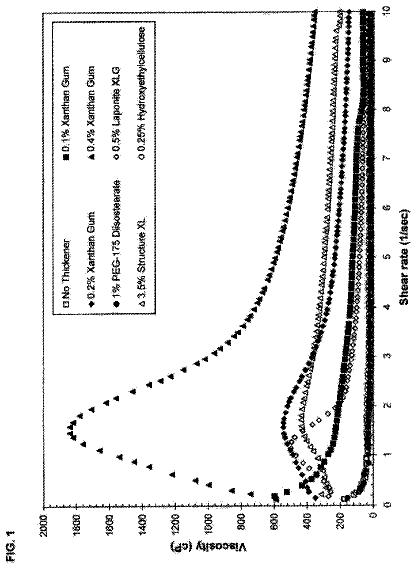
This is an application filed under 35 USC 371 of PCT/GB2008/001968.
The present invention relates to improved cleaning compositions useful in the cleaning of hard surfaces, particularly in the cleaning of hard surfaces.
While the art is replete with a large number of cleaning compositions useful for the cleaning of hard surfaces there nonetheless remains a real and continuing need in the art for further improved cleaning compositions useful in the cleaning of hard surfaces, particularly those having reduced amounts of organic constituents while at the same time providing good cleaning performance.
In one aspect the present invention provides a highly alkaline hard surface cleaning composition particularly adapted to the cleaning of hard surfaces which compositions comprise a cleaning effective amount of an amine oxide surfactant constituent, an alkanolamine constituent, a phenyl containing glycol ether solvent, an antimicrobially active constituent, and water, and optionally minor amounts of one or more constituents which improve one or more aesthetic or functional characteristics of the inventive compositions wherein the said compositions provide excellent cleaning of hard surfaces, particularly hard surfaces laden with greasy soils. In particularly preferred embodiments the inventive compositions are characterized as being essentially free of further organic solvents, except for the essential phenyl containing ether solvent and the alkanolamine constituent. In particularly preferred embodiment the inventive compositions provide a cleaning and/or sanitizing benefit to surfaces, particularly hard surfaces being treated with the composition.
According to a still further aspect of the invention there is provided a highly alkaline hard surface cleaning composition according to the prior inventive aspect which is further characterized as preferably being essentially free of surfactant constituents, except for the essential amine oxide surfactant constituent.
In accordance with a still further aspect of the invention there is provided a highly alkaline hard surface cleaning composition particularly adapted to the cleaning of hard surfaces which compositions exhibit a pH of about 9 or greater, but preferably exhibit a pH of 10 or greater and which comprise at least about 85% wt. water, optionally but preferably at least one detersive surfactants, especially preferably at least one nonionic surfactant constituents with amine oxide surfactants be particularly preferred, an alkalinity constituent, such as an alkanolmine, carbonate an/or bicarbonate compound, and a phenyl containing glycol ether solvent, and further optionally minor amounts of one or more constituents which improve one or more aesthetic or functional characteristics of the inventive compositions wherein the said compositions provide excellent cleaning of hard surfaces, particularly hard surfaces laden with greasy soils. In particularly preferred embodiments the inventive compositions are characterized as being essentially free of further organic solvents, except for the essential phenyl containing ether solvent and when present as an alkalinity constituent, the alkanolamine.
According to a further aspect of the invention there is provided a method for the cleaning of a hard surface, which method comprises the step of:
applying a cleaning effective amount of a highly alkaline hard surface cleaning composition according to any of the prior recited inventive aspects to a hard surface in need of such treatment, and concurrently or subsequently, wiping the surface with a cloth, wipe or wiping article.
According to a further aspect of the invention there is provided a method for the cleaning of greasy soils from a hard surface, which method comprises the step of:
applying a cleaning effective amount of a highly alkaline hard surface cleaning composition according to any of the prior recited inventive aspects to a hard surface in need of such treatment, and concurrently or subsequently, wiping the surface with a cloth, wipe or wiping article.
According to a yet further aspect of the invention there is provided a method of producing an improved cleaning composition as recited herein.
In one aspect of the invention there is provided a highly alkaline hard surface cleaning composition which compositions comprise (preferably consisting essentially of, still more preferably consisting of):
a cleaning effective amount of an amine oxide surfactant constituent,
an alkanolamine constituent,
a phenyl containing glycol ether solvent,
an antimicrobially active constituent,
water; and,
further optionally, minor amounts of one or more constituents which improve one or more aesthetic or functional characteristics of the inventive compositions.
According to a second aspect of the invention there is provided a highly alkaline hard surface cleaning composition which compositions comprise (preferably consisting essentially of, still more preferably consisting of):
a cleaning effective amount of an amine oxide surfactant constituent,
an alkanolamine constituent,
a phenyl containing glycol ether solvent,
an antimicrobially active constituent,
water; and,
further optionally, minor amounts of one or more constituents which improve one or more aesthetic or functional characteristics of the inventive compositions, wherein the compositions are characterized in being essentially free of organic cosolvents as described herein.
According to a third aspect of the invention there is provided a highly alkaline hard surface cleaning composition which compositions comprise (preferably consisting essentially of, still more preferably consisting of):
a cleaning effective amount of an amine oxide surfactant constituent,
an alkanolamine constituent,
a phenyl containing glycol ether solvent,
an antimicrobially active constituent,
water; and,
further optionally, minor amounts of one or more constituents which improve one or more aesthetic or functional characteristics of the inventive compositions, wherein the compositions are characterized in being essentially free of a cosurfactant as described herein.
According to a fourth aspect of the invention there is provided a highly alkaline hard surface cleaning composition which compositions comprise (preferably consisting essentially of, still more preferably consisting of):
a cleaning effective amount of an amine oxide surfactant constituent,
an alkanolamine constituent,
a phenyl containing glycol ether solvent,
an antimicrobially active constituent,
water; and,
further optionally, minor amounts of one or more constituents which improve one or more aesthetic or functional characteristics of the inventive compositions, wherein the compositions are characterized in being essentially free of organic cosolvents as well as being essentially free of cosurfactants as described herein.
According to a fifth aspect of the invention there is provided a highly alkaline hard surface cleaning composition particularly adapted to the cleaning of hard surfaces which compositions exhibit a pH of about 9 or greater, but preferably exhibit a pH of 10 or greater and which comprises:
at least about 85% wt. water,
optionally but preferably at least one detersive surfactants, especially preferably at least one nonionic surfactant constituents with amine oxide surfactants be particularly preferred,
an alkalinity constituent, such as an alkanolmine, carbonate an/or bicarbonate compound; and,
a phenyl containing glycol ether solvent;
an antimicrobially active constituent;
and optionally, further minor amounts of one or more constituents which improve one or more aesthetic or functional characteristics of the inventive compositions wherein the said compositions provide excellent cleaning of hard surfaces, particularly hard surfaces laden with greasy soils.
According to a sixth aspect of the invention there is provided a highly alkaline hard surface cleaning composition particularly adapted to the cleaning of hard surfaces which compositions exhibit a pH of about 9 or greater, but preferably exhibit a pH of 10 or greater according to any of the foregoing aspects of the invention which in addition to a cleaning benefit, also provides a disinfecting or sanitizing benefit to surfaces treated with the said composition.
According to a seventh aspect of the invention there is provided an improved method for the manufacture of a highly alkaline hard surface cleaning composition according to any of the inventive aspects described herein.
According to an eighth aspect of the invention there is provided an improved method for the cleaning treatment of a hard surface in need of same, particularly a greasy soil laden hard surface, which method comprises the step of applying a cleaning effective amount of a highly alkaline hard surface cleaning composition according to any of the inventive aspects described herein.
These and further aspects of the invention will be more clearly understood from a reading of the following specification.
The inventive compositions necessarily comprise a cleaning effective amount of at least one amine oxide surfactant, and may optionally further comprise at least one further detersive surfactants selected from anionic, nonionic, cationic amphoteric or zwitterionic detersive surfactants with one or more further one further nonionic surfactants being especially preferred.
Exemplary amine oxides useful in the compositions of the invention include:
A) Alkyl di(lower alkyl) amine oxides in which the alkyl group has about 10-20, and preferably 12-16 carbon atoms, and can be straight or branched chain, saturated or unsaturated. The lower alkyl groups include between 1 and 7 carbon atoms. Examples include lauryl dimethyl amine oxide, myristyl dimethyl amine oxide, and those in which the alkyl group is a mixture of different amine oxide, dimethyl cocoamine oxide, dimethyl (hydrogenated tallow) amine oxide, and myristyl/palmityl dimethyl amine oxide;
B) Alkyl di(hydroxy lower alkyl) amine oxides in which the alkyl group has about 10-20, and preferably 12-16 carbon atoms, and can be straight or branched chain, saturated or unsaturated. Examples are bis(2-hydroxyethyl) cocoamine oxide, bis(2-hydroxyethyl) tallowamine oxide; and bis(2-hydroxyethyl) stearylamine oxide;
C) Alkylamidopropyl di(lower alkyl) amine oxides in which the alkyl group has about 10-20, and preferably 12-16 carbon atoms, and can be straight or branched chain, saturated or unsaturated. Examples are cocoamidopropyl dimethyl amine oxide and tallowamidopropyl dimethyl amine oxide; and
D) Alkylmorpholine oxides in which the alkyl group has about 10-20, and preferably 12-16 carbon atoms, and can be straight or branched chain, saturated or unsaturated.
Preferably the amine oxide constituent is an alkyl di (lower alkyl) amine oxide as denoted above and which may be represented by the following structure:
##STR00001## wherein each:
R.sub.1 is a straight chained C.sub.1-C.sub.4 alkyl group, preferably both R.sub.1 are methyl groups; and,
R.sub.2 is a straight chained C.sub.8-C.sub.18 alkyl group, preferably is C.sub.10-C.sub.14 alkyl group, most preferably is a C.sub.1-2 alkyl group.
Each of the alkyl groups may be linear or branched, but most preferably are linear. Most preferably the amine oxide constituent is lauryl dimethyl amine oxide. Technical grade mixtures of two or more amine oxides may be used, wherein amine oxides of varying chains of the R.sub.2 group are present. Preferably, the amine oxides used in the present invention include R.sub.2 groups which comprise at least 50% wt., preferably at least 60% wt. of C.sub.1-2 alkyl groups and at least 25% wt. of C.sub.1-4 alkyl groups, with not more than 15% wt. of C.sub.16, C.sub.18 or higher alkyl groups as the R.sub.2 group.
The amine oxide constituent may be a single amine oxide, or may be comprised of a plurality of amine oxide compounds and is necessarily present in the inventive cleaning compositions of the invention in amounts of from about 0.01%-10% by weight, more desirably from about 0.25%-5% by weight, yet most preferably from about 0.25%-3.5% wt. based on the total weight of the compositions of which they form a part.
According to certain particularly preferred embodiments, the sole surfactant constituent present in the inventive composition is an amine oxide surfactant constituent and further surfactant constituents are expressly excluded.
In further preferred embodiments one or more further surfactant constituents different than the amine oxide constituents may be present. Useful further surfactants which may be present in the presence of the amine oxide, or in the absence of the amine oxide surfactant constituent include one or more surfactants selected from one or more further anionic, nonionic, cationic, amphoteric or zwitterionic surfactants, of which one or more of the following nonionic surfactants are particularly preferred.
Exemplary of anionic surfactants which may be present include alcohol sulfates and sulfonates, alcohol phosphates and phosphonates, alkyl ester sulfates, alkyl diphenyl ether sulfonates, alkyl sulfates, alkyl ether sulfates, sulfate esters of an alkylphenoxy polyoxyethylene ethanol, alkyl monoglyceride sulfates, alkyl sulfonates, alkyl ether sulfates, alpha-olefin sulfonates, beta-alkoxy alkane sulfonates, alkyl ether sulfonates, ethoxylated alkyl sulfonates, alkylaryl sulfonates, alkylaryl sulfates, alkyl monoglyceride sulfonates, alkyl carboxylates, alkyl ether carboxylates, alkyl alkoxy carboxylates having 1 to 5 moles of ethylene oxide, alkylpolyglycolethersulfates (containing up to 10 moles of ethylene oxide), sulfosuccinates, octoxynol or nonoxynol phosphates, taurates, fatty taurides, fatty acid amide polyoxyethylene sulfates, acyl glycerol sulfonates, fatty oleyl glycerol sulfates, alkyl phenol ethylene oxide ether sulfates, paraffin sulfonates, alkyl phosphates, isethionates, N-acyl taurates, alkyl succinamates and sulfosuccinates, alkylpolysaccharide sulfates, alkylpolyglucoside sulfates, alkyl polyethoxy carboxylates, and sarcosinates or mixtures thereof. These anionic surfactants may be provided as salts with one or more organic counterions, e.g, ammonium, or inorganic counteraions, especially as salts of one or more alkaline earth or alkaline earth metals, e.g, sodium.
Sarcosinate surfactants which are alkali metal salts of N-alkyl-N-acyl amino acids. These are salts derived from the reaction of
N-alkyl substituted amino acids of the formula: R.sub.1--NH--CH.sub.2--COOH where R.sub.1 is a linear or branched chain lower alkyl of from 1 to 4 carbon atoms, especially a methyl, for example, aminoacetic acids such as N-methylaminoacetic acid (i.e. N-methyl glycine or sarcosine), N-ethyl-aminoacetic acid, N-butylaminoacetic acid, etc., with
saturated natural or synthetic fatty acids having from 8 to 18 carbon atoms, especially from 10 to 14 carbon atoms, e.g. lauric acid, and the like.
The resultant reaction products are salts which may have the formula:
##str00002##
where M is an alkali metal ion such as sodium, potassium or lithium; R.sub.1 is as defined above; and wherein R.sub.2 represents a hydrocarbon chain, preferably a saturated hydrocarbon chain, having from 7 to 17 carbon atoms, especially 9 to 13 carbon atoms of the fatty acyl group
##str00003##
Exemplary useful sarcosinate surfactants include cocoyl sarcosinate, lauroyl sarcosinate, myristoyl sarcosinate, palmitoyl sarcosinate, stearoyl sarcosinate and oleoyl sarcosinate, and tallow sarcosinate. Such materials are also referred to as N-acyl sarcosinates.
Further examples of anionic surfactants include water soluble salts or acids of the formula (ROSO.sub.3).sub.xM or (RSO.sub.3).sub.xM wherein R is preferably a C.sub.6-C.sub.24 hydrocarbyl, preferably an alkyl or hydroxyalkyl having a C.sub.10-C.sub.20 alkyl component, more preferably a C.sub.12-C.sub.18 alkyl or hydroxyalkyl, and M is H or a mono-, di- or tri-valent cation, e.g., an alkali metal cation (e.g., sodium, potassium, lithium), or ammonium or substituted ammonium (e.g., methyl-, dimethyl-, and trimethyl ammonium cations and quaternary ammonium cations, such as tetramethyl-ammonium and dimethyl piperidinium cations and quaternary ammonium cations derived from alkylamines such as ethylamine, diethylamine, triethylamine, and mixtures thereof, and the like) and x is an integer, preferably 1 to 3, most preferably 1. Materials sold under the Hostapur and Biosoft trademarks are examples of such anionic surfactants.
Still further examples of anionic surfactants include alkyl-diphenyl-ethersulphonates and alkyl-carboxylates.
Also useful as anionic surfactants are diphenyl disulfonates, and salt forms thereof, such as a sodium salt of diphenyl disulfonate commercially available as Dowfax.RTM. 3B2. Such diphenyl disulfonates are included in certain preferred embodiments of the invention in that they provide not only a useful cleaning benefit but concurrently also provide a useful degree of hydrotropic functionality.
Other anionic surfactants can include salts (including, for example, sodium, potassium, ammonium, and substituted ammonium salts such as mono-, di- and triethanolamine salts) of soap, C.sub.6-C.sub.20 linear alkylbenzenesulfonates, C.sub.6-C.sub.22 primary or secondary alkanesulfonates, C.sub.6-C.sub.24 olefinsulfonates, sulfonated polycarboxylic acids prepared by sulfonation of the pyrolyzed product of alkaline earth metal citrates, C.sub.6-C.sub.24 alkylpolyglycolethersulfates, alkyl ester sulfates such as C.sub.14-16 methyl ester sulfates; acyl glycerol sulfonates, fatty oleyl glycerol sulfates, alkyl phenol ethylene oxide ether sulfates, paraffin sulfonates, alkyl phosphates, isethionates such as the acyl isethionates, N-acyl taurates, alkyl succinamates and sulfosuccinates, monoesters of sulfosuccinate (especially saturated and unsaturated C.sub.12-C.sub.18 monoesters) diesters of sulfosuccinate (especially saturated and unsaturated C.sub.6-C.sub.14 diesters), acyl sarcosinates, sulfates of alkylpolysaccharides such as the sulfates of alkylpolyglucoside, branched primary alkyl sulfates, alkyl polyethoxy carboxylates such as those of the formula RO(CH.sub.2CH.sub.2O).sub.kCH.sub.2COO.sup.-M.sup.+ wherein R is a C.sub.8-C.sub.22 alkyl, k is an integer from 0 to 10, and M is a soluble salt-forming cation. Examples of the foregoing anionic surfactants are available under the following tradenames: Rhodapon.RTM., Stepanol.RTM., Hostapur.RTM., Surfine.RTM., Sandopan.RTM., Neodox.RTM., Biosoft.RTM., and Avanel.RTM..
An anionic surfactant compound which may be particularly useful in the inventive compositions when the compositions are at a pH of 2 or less are one or more anionic surfactants based on alphasulphoesters including one or more salts thereof. Such particularly preferred anionic surfactants may be represented by the following general structures:
##STR00004## wherein, in each of the foregoing: R.sup.1 represents a C.sub.6-C.sub.22 alkyl or alkenyl group; each of R.sup.2 is either hydrogen, or if not hydrogen is a SO.sub.3.sup.- having associated with it a cation, X.sup.+, which renders the compound water soluble or water dispersible, with X preferably being an alkali metal or alkaline earth metal especially sodium or potassium, especially sodium, with the proviso that at least one R.sup.2, preferably at least two R.sup.2 is a (SO.sub.3.sup.-) having an associated cation X.sup.+, and, R.sup.3 represents a C.sub.1-C.sub.6, preferably C.sub.1-C.sub.4 lower alkyl or alkenyl group, especially methyl.
According to certain preferred embodiments, anionic surfactants are however expressly excluded from the compositions of the present invention.
One class of exemplary useful nonionic surfactants are polyethylene oxide condensates of alkyl phenols. These compounds include the condensation products of alkyl phenols having an alkyl group containing from about 6 to 12 carbon atoms in either a straight chain or branched chain configuration with ethylene oxide, the ethylene oxide being present in an amount equal to 5 to 25 moles of ethylene oxide per mole of alkyl phenol. The alkyl substituent in such compounds can be derived, for example, from polymerized propylene, diisobutylene and the like. Examples of compounds of this type include nonyl phenol condensed with about 9.5 moles of ethylene oxide per mole of nonyl phenol; dodecylphenol condensed with about 12 moles of ethylene oxide per mole of phenol; dinonyl phenol condensed with about 15 moles of ethylene oxide per mole of phenol and diisooctyl phenol condensed with about 15 moles of ethylene oxide per mole of phenol.
Further useful nonionic surfactants include the condensation products of aliphatic alcohols with from about 1 to about 60 moles of ethylene oxide. The alkyl chain of the aliphatic alcohol can either be straight or branched, primary or secondary, and generally contains from about 8 to about 22 carbon atoms. Examples of such ethoxylated alcohols include the condensation product of myristyl alcohol condensed with about 10 moles of ethylene oxide per mole of alcohol and the condensation product of about 9 moles of ethylene oxide with coconut alcohol (a mixture of fatty alcohols with alkyl chains varying in length from about 10 to 14 carbon atoms). Other examples are those C.sub.6-C.sub.11 straight-chain alcohols which are ethoxylated with from about 3 to about 6 moles of ethylene oxide. Their derivation is well known in the art. Examples include Alfonic.RTM. 810-4.5 (also available as Teric G9A5), which is described in product literature from Sasol as a C.sub.8-10 having an average molecular weight of 356, an ethylene oxide content of about 4.85 moles (about 60 wt. %), and an HLB of about 12; Alfonic.RTM. 810-2, which is described in product literature from Sasol as a C.sub.8-10 having an average molecular weight of 242, an ethylene oxide content of about 2.1 moles (about 40 wt. %), and an HLB of about 12; and Alfonic.RTM. 610-3.5, which is described in product literature from Sasol as having an average molecular weight of 276, an ethylene oxide content of about 3.1 moles (about 50 wt. %), and an HLB of 10. Product literature from Sasol also identifies that the numbers in the alcohol ethoxylate name designate the carbon chain length (numbers before the hyphen) and the average moles of ethylene oxide (numbers after the hyphen) in the product.
Further exemplary useful nonionic surfactants include ethoxylated available from Shell Chemical Company which are described as C.sub.9-C.sub.11 ethoxylated alcohols and marketed under the Neodol.RTM. tradename. The Neodol.RTM. 91 series non-ionic surfactants of interest include Neodol 91-2.5, Neodol 91-6, and Neodol 91-8. Neodol 91-2.5 has been described as having about 2.5 ethoxy groups per molecule; Neodol 91-6 has been described as having about 6 ethoxy groups per molecule; and Neodol 91-8 has been described as having about 8 ethoxy groups per molecule. Still further examples of ethoxylated alcohols include the Rhodasurf.RTM. DA series non-ionic surfactants available from Rhodia which are described to be branched isodecyl alcohol ethoxylates. Rhodasurf DA-530 has been described as having 4 moles of ethoxylation and an HLB of 10.5; Rhodasurf DA-630 has been described as having 6 moles of ethoxylation with an HLB of 12.5; and Rhodasurf DA-639 is a 90% solution of DA-630.
Further examples of ethoxylated alcohols include those from Tomah Products (Milton, Wis.) under the Tomadol tradename with the formula RO(CH.sub.2CH.sub.2O).sub.nH where R is the primary linear alcohol and n is the total number of moles of ethylene oxide. The ethoxylated alcohol series from Tomah include 91-2.5; 91-6; 91-8--where R is linear C9/C10/C11 and n is 2.5, 6, or 8; 1-3; 1-5; 1-7; 1-73B; 1-9;--where R is linear C11 and n is 3, 5, 7 or 9; 23-1; 23-3; 23-5; 23-6.5--where R is linear C12/C13 and n is 1, 3, 5, or 6.5; 25-3; 25-7; 25-9; 25-12--where R is linear C12/C13 C14/C15 and n is 3, 7, 9, or 12; and 45-7; 45-13--where R is linear C14/C15 and n is 7 or 13.
Other examples of useful nonionic surfactants include those having a formula RO(CH.sub.2CH.sub.2O).sub.nH wherein R is a mixture of linear, even carbon-number hydrocarbon chains ranging from C.sub.12H.sub.25 to C.sub.16H.sub.33 and n represents the number of repeating units and is a number of from about 1 to about 12. Surfactants of this formula are presently marketed under the Genapol.RTM. tradename. available from Clariant, Charlotte, N.C., include the 26-L series of the general formula RO(CH.sub.2CH.sub.2O).sub.nH wherein R is a mixture of linear, even carbon-number hydrocarbon chains ranging from C.sub.12H.sub.25 to C.sub.16H.sub.33 and n represents the number of repeating units and is a number of from 1 to about 12, such as 26-L-1,26-L-1.6, 26-L-2,26-L-3,26-L-5,26-L-45, 26-L-50, 26-L-60, 26-L-60N, 26-L-75, 26-L-80, 26-L-98N, and the 24-L series, derived from synthetic sources and typically contain about 55% C.sub.12 and 45% C.sub.1-4 alcohols, such as 24-L-3,24-L-45, 24-L-50, 24-L-60, 24-L-60N, 24-L-75, 24-L-92, and 24-L-98N. From product literature, the single number following the "L" corresponds to the average degree of ethoxylation (numbers between 1 and 5) and the two digit number following the letter "L" corresponds to the cloud point in .degree. C. of a 1.0 wt. % solution in water.
A further class of nonionic surfactants which are contemplated to be useful include those based on alkoxy block copolymers, and in particular, compounds based on ethoxy/propoxy block copolymers. Polymeric alkylene oxide block copolymers include nonionic surfactants in which the major portion of the molecule is made up of block polymeric C.sub.2-C.sub.4 alkylene oxides. Such nonionic surfactants, while preferably built up from an alkylene oxide chain starting group, and can have as a starting nucleus almost any active hydrogen containing group including, without limitation, amides, phenols, thiols and secondary alcohols.
One group of such useful nonionic surfactants containing the characteristic alkylene oxide blocks are those which may be generally represented by the formula (A): HO-(EO).sub.x(PO).sub.y(EO).sub.z--H (A) where EO represents ethylene oxide, PO represents propylene oxide, y equals at least 15, (EO).sub.x+y equals 20 to 50% of the total weight of said compounds, and, the total molecular weight is preferably in the range of about 2000 to 15,000. These surfactants are available under the PLURONIC tradename from BASF or Emulgen from Kao.
Another group of nonionic surfactants appropriate for use in the new compositions can be represented by the formula (B): R-(EO,PO).sub.a(EO,PO).sub.b--H (B) wherein R is an alkyl, aryl or aralkyl group, where the R group contains 1 to 20 carbon atoms, the weight percent of EO is within the range of 0 to 45% in one of the blocks a, b, and within the range of 60 to 100% in the other of the blocks a, b, and the total number of moles of combined EO and PO is in the range of 6 to 125 moles, with 1 to 50 moles in the PO rich block and 5 to 100 moles in the EO rich block.
Further nonionic surfactants which in general are encompassed by Formula B include butoxy derivatives of propylene oxide/ethylene oxide block polymers having molecular weights within the range of about 2000-5000.
Still further useful nonionic surfactants containing polymeric butoxy (BO) groups can be represented by formula (C) as follows: RO--(BO).sub.n(EO).sub.x--H (C) wherein R is an alkyl group containing I to 20 carbon atoms, n is about 5-15 and x is about 5-15.
Also useful as the nonionic block copolymer surfactants, which also include polymeric butoxy groups, are those which may be represented by the following formula (D): HO-(EO).sub.x(BO).sub.n(EO).sub.y--H (D) wherein n is about 5-15, preferably about 15, x is about 5-15, preferably about 15, and y is about 5-15, preferably about 15.
Still further useful nonionic block copolymer surfactants include ethoxylated derivatives of propoxylated ethylene diamine, which may be represented by the following formula:
##STR00005## where (EO) represents ethoxy, (PO) represents propoxy, the amount of (PO).sub.x is such as to provide a molecular weight prior to ethoxylation of about 300 to 7500, and the amount of (EO).sub.y is such as to provide about 20% to 90% of the total weight of said compound.
The highly alkaline hard surface cleaning compositions may also include one or more amphoteric surfactants. By way of non-limiting example exemplary amphoteric surfactants which are contemplated to be useful in the cosurfactant constituent include one or more water-soluble betaine surfactants which may be represented by the general formula:
##STR00006## wherein R.sub.1 is an alkyl group containing from 8 to 18 carbon atoms, or the amido radical which may be represented by the following general formula:
##STR00007## wherein R is an alkyl group having from 8 to 18 carbon atoms, a is an integer having a value of from 1 to 4 inclusive, and R.sub.2 is a C.sub.1-C.sub.4 alkylene group. Examples of such water-soluble betaine surfactants include dodecyl dimethyl betaine, as well as cocoamidopropylbetaine.
The inventive compositions may also include an one or more alkylpolyglucosides which are to be understood as including alkylmonoglucoside and alkylpolyglucoside surfactants based on a polysaccharide, which are preferably one or more alkyl polyglucosides. These materials may also be referred to as alkyl monoglucosides and alkylpolyglucosides. Suitable alkyl polyglucosides are known nonionic surfactants which are alkaline and electrolyte stable. Such include alkyl glucosides, alkyl polyglucosides and mixtures thereof. Alkyl glucosides and alkyl polyglucosides can be broadly defined as condensation articles of long chain alcohols, e.g., C.sub.8-C.sub.30 alcohols, with sugars or starches or sugar or starch polymers i.e., glucosides or polyglucosides. These compounds can be represented by the formula (S).sub.n--O--R wherein S is a sugar moiety such as glucose, fructose, mannose, and galactose; n is an integer of from about 1 to about 1000, and R is a C.sub.8-30 alkyl group. Examples of long chain alcohols from which the alkyl group can be derived include decyl alcohol, cetyl alcohol, stearyl alcohol, lauryl alcohol, myristyl alcohol, oleyl alcohol and the like.
Alkyl mono- and polyglucosides are prepared generally by reacting a monosaccharide, or a compound hydrolyzable to a monosaccharide with an alcohol such as a fatty alcohol in an acid medium. Various glucoside and polyglucoside compounds including alkoxylated glucosides and processes for making them are disclosed in U.S. Pat. No. 2,974,134; U.S. Pat. No. 3,219,656; U.S. Pat. No. 3,598,865; U.S. Pat. No. 3,640,998; U.S. Pat. No. 3,707,535; U.S. Pat. No. 3,772,269; U.S. Pat. No. 3,839,318; U.S. Pat. No. 3,974,138; U.S. Pat. No. 4,223,129; and U.S. Pat. No. 4,528,106.
Exemplary useful alkyl glucoside surfactants suitable for use in the practice of this invention may be represented by formula I below: RO--(R.sub.1O).sub.y--(G).sub.xZ.sub.b I wherein: R is a monovalent organic radical containing from about 6 to about 30, preferably from about 8 to about 18 carbon atoms; R.sub.1 is a divalent hydrocarbon radical containing from about 2 to about 4 carbon atoms; O is an oxygen atom; y is a number which has an average value from about 0 to about 1 and is preferably 0; G is a moiety derived from a reducing saccharide containing 5 or 6 carbon atoms; and x is a number having an average value from about 1 to 5 (preferably from 1.1 to 2); Z is O.sub.2M.sup.1,
##STR00008## O(CH.sub.2), CO.sub.2M.sup.1, OSO.sub.3M.sup.1, or O(CH.sub.2)SO.sub.3M.sup.1; R.sub.2 is (CH.sub.2)CO.sub.2M.sup.1 or CH.dbd.CHCO.sub.2M.sup.1; (with the proviso that Z can be O.sub.2M.sup.1 only if Z is in place of a primary hydroxyl group in which the primary hydroxyl-bearing carbon atom, --CH.sub.2OH, is oxidized to form a
##STR00009## group); b is a number of from 0 to 3x+1 preferably an average of from 0.5 to 2 per glycosal group; p is 1 to 10, M.sup.1 is H.sup.+ or an organic or inorganic cation, such as, for example, an alkali metal, ammonium, monoethanolamine, or calcium.
As defined in Formula I above, R is generally the residue of a fatty alcohol having from about 8 to 30 and preferably 8 to 18 carbon atoms.
Further exemplary useful alkylpolyglucosides include those according to the formula II: R.sub.2O--(C.sub.nH.sub.2nO).sub.r--(Z).sub.x II wherein:
R.sub.2 is a hydrophobic group selected from alkyl groups, alkylphenyl groups, hydroxyalkylphenyl groups as well as mixtures thereof, wherein the alkyl groups may be straight chained or branched, and which contain from about 8 to about 18 carbon atoms,
n has a value of 2-8, especially a value of 2 or 3; r is an integer from 0 to 10, but is preferably 0,
Z is derived from glucose; and,
x is a value from about 1 to 8, preferably from about 1.5 to 5.
Preferably the alkylpolyglucosides are nonionic fatty alkylpolyglucosides which contain a straight chain or branched chain C.sub.8-C.sub.15 alkyl group, and have an average of from about 1 to 5 glucose units per fatty alkylpolyglucoside molecule. More preferably, the nonionic fatty alkylpolyglucosides which contain straight chain or branched C.sub.8-C.sub.15 alkyl group, and have an average of from about 1 to about 2 glucose units per fatty alkylpolyglucoside molecule.
Examples of such alkylpolyglucosides as described above include, for example, APG.TM. 325 which is described as being a C.sub.9-C.sub.11 alkyl polyglucoside, also commonly referred to as D-glucopyranoside, (ex. Cognis). Further exemplary alkylpolyglucosides include Glucopon.RTM. 625 CS which is described as being a C.sub.10-C.sub.16 alkyl polyglucoside, also commonly referred to as a D-glucopyranoside, (ex. Cognis), lauryl polyglucoside available as APG.TM. 600 CS and 625 CS (ex. Cognis) as well as other materials sold under the Glucopon.RTM. tradename, e.g., Glucopon.RTM. 215, Glucopon.RTM. 225, Glucopon.RTM. 425, especially one or more of the alkyl polyglucosides demonstrated in one or more of the examples. It is believed that the alkylpolyglucoside surfactants sold under the Glucopon.RTM. tradename are synthesized at least in part on synthetically produced starting constituents and are colorless or only slightly colored, while those sold under the APG.TM. are synthesized at least in part on naturally occurring or sourced starting constituents and are more colored in appearance.
When present in the inventive compositions, the one or more surfactants other than the amine oxide surfactant constituent are desirably present in the hard surface cleaning compositions of the invention in amounts of from about 0.01%-10% by weight, more desirably from about 0.25%-5% by weight, yet most preferably from about 0.25-3.5% wt. based on the total weight of the compositions of which they form a part. It is to be understood that these weight percentages are in addition to the weight percentages of the amine oxide constituent which may be independently present, or absent, from the inventive compositions.
Particularly preferred surfactant constituents and weight percentages are described with reference to one or more of the Examples.
The highly alkaline inventive compositions necessarily also necessarily comprise an alkalinity constituent such as one or more of an alkanolamine, or an inorganic compound such as one or more alkali metal salts of various inorganic acids, such as alkali metal silicates, metasilicates, polysilicates, borates, carbonates, bicarbonates, hydroxides, and mixtures of same.
Advantageously the alkalinity constituent is an alkanolamine constituent which provides alkalinity to the compositions, as well as simultaneously providing excellent removal of hydrophobic soils which may be encountered, e.g., greases and oils. Exemplary useful alkanolamines include monoalkanolamines, dialkanolamines, trialkanolamines, and alkylalkanolamines such as alkyl-dialkanolamines, and dialkyl-monoalkanolamines. The alkanol and alkyl groups are generally short to medium chain length, that is, from 1 to 7 carbons in length. For di- and trialkanolamines and dialkyl-monoalkanolamines, these groups can be combined on the same amine to produce for example, methylethylhydroxypropylhydroxylamine. One of skill can readily ascertain other members of this group. The alkanolamine constituent may be a single alkanolamine, or may be a plurality of alkanolamines as well, and may be used in conjunction with one or more of the foregoing inorganic compounds which may also be used as an alkalinity constituent.
Desirably the alkalinity constituent is present in the hard surface cleaning compositions of the invention in amounts of from about 0.01%-10% by weight, more desirably from about 0.01%-2% by weight, and most preferably from about 0.01-1% wt. based on the total weight of the compositions of which they form a part.
Particularly preferred as the alkalinity constituent is monoethanolamine which has found to be effective both as an alkalinity source and as a cleaning component. In certain particularly preferred embodiments the alkalinity constituent of the invention consists solely of a single alkanolamine, preferably selected from monoalkanolamines, dialkanolamines, trialkanolamines of 1 to 7 carbons in length, preferably is a single monoalkanolamine selected from linear monoethanolamine, monopropanolamine or monobutanolamine, and especially preferably is monoethanolamine.
The inventive compositions also necessarily comprise a phenyl containing glycol ether solvent. These solvents may be distinguished from commonly utilized alkylene glycol ether solvents in that they contain a phenyl group in their structure, and may be also termed as alkylene glycol phenyl ethers. Such phenyl containing glycol ether solvents are typically very slow evaporating materials which are also highly hydrophobic and exhibit very poor miscibility in water. Such properties have dissuaded their use in highly aqueous cleaning compositions, such as prior art hard surface cleaning compositions. The present inventors have surprisingly found however that according to the compositions of the present invention, such phenyl containing glycol ether solvents may be readily dispersed in highly aqueous and highly alkaline compositions and further, that such phenyl containing glycol ether solvents even when dissolved or dispersed in such highly aqueous compositions provide a surprising cleaning benefit to hard surfaces, particularly to greasy soil laden hard surfaces. An exemplary greasy soil is that described in the following examples. The inventors have also surprisingly found that such compositions are also stable over time under adverse storage conditions, e.g., at reduced temperatures, including below freezing, as well as elevated temperatures. Such are particularly advantageous properties not only from a technical cleaning performance standpoint but from a commercial standpoint as well as such suggests good long term storage an shelf stability without separation of the highly hydrophobic phenyl containing glycol ether solvents from the largely aqueous compositions of which they form a part.
Exemplary useful phenyl containing glycol ether solvents include those which may be represented by the following general structural representation (I):
##STR00010## wherein R is a C.sub.1-C.sub.6 alkyl group which contains at least one --OH moiety, and preferably R is selected from: CH.sub.2OH, CH.sub.2CH.sub.2OH, CH(OH)CH.sub.3, CH(OH)CH.sub.2OH, CH.sub.2CH.sub.2CH.sub.2OH, CH.sub.2CH(OH)CH.sub.3, CH(OH)CH.sub.2CH.sub.3, CH(OH)CH.sub.2CH.sub.2OH, CH(OH)CH(OH)CH.sub.3, and CH(OH)CH(OH)CH.sub.2OH, and the phenyl ring may optionally substituted with one or more further moieties such as C.sub.1-C.sub.3 alkyl groups but is preferably unsubstituted.
The description continues in the full USPTO document.