 Lapsed, fee not paid3 drawings
Software & Apps · US 8,769,546 B2
Busy-wait time for threads
Method to selectively assign a reduced busy-wait time to threads is described.
US 8,769,605 B2 · Assignee: Covertix Ltd. · Inventors: Kaufmann; Tzach et al.
Sheet 1 of 16 from the published document. All sheets in the USPTO PDF
A system and method dynamically enforcing security policies on electronic files when the file is used. The system and method preferably delegates the file the ability to protect itself. The file automatically identifies its confidential information and applies them when needed.
The term DRM, or digital rights management, refers to access control technologies used to limit usage of digital media. Digital rights management technologies attempt to control use of digital media by preventing access, copying or conversion by end users to other formats, among the various types of control. Digital media files may be duplicated an unlimited number of times with no degradation in the quality of subsequent copies and, thus need special protection. The protection of digital media is important for many reasons, for example for maintaining the confidentiality of company professional secrets especially when working with partners and also for protecting the privacy of personal information that is kept in organizations such as banks etc. At present, a majority of security systems are based on authentication and authorization methods which are focused on ensuring access to a giv
8 of 16 drawing sheets so far from the published document, cropped to the drawing. Every sheet is in the USPTO PDF.
What the patent claimed, word for word. All of it is now free to use.
The present invention relates generally to control of electronic files technology and in particular to enforcing policies on electronic files.
The term DRM, or digital rights management, refers to access control technologies used to limit usage of digital media. Digital rights management technologies attempt to control use of digital media by preventing access, copying or conversion by end users to other formats, among the various types of control. Digital media files may be duplicated an unlimited number of times with no degradation in the quality of subsequent copies and, thus need special protection. The protection of digital media is important for many reasons, for example for maintaining the confidentiality of company professional secrets especially when working with partners and also for protecting the privacy of personal information that is kept in organizations such as banks etc.
At present, a majority of security systems are based on authentication and authorization methods which are focused on ensuring access to a given system, using schemas of username and password, smart cards or physical device identifiers. Such systems do not take into consideration parameters such as the physical location of the device or the content of the information, etc. Current systems also save the policy for accessing the files in a central server or in a specific device, limiting the usage of the rules to the specific device or a specific network. Unfortunately these systems do not provide protection when electronic data is transferred to another device.
Other systems hold the policy with the file. One example of such a system is Microsoft Windows Rights Management Services (also called Rights Management Services or RMS). RMS provides the encryption of information, and through server-based policies, prevents the protected content from being decrypted, except by specified people or groups. This system controls limited number of operations like printing, copying, editing, forwarding, and deleting. Unfortunately RMS is limited in many ways such as reliance on user set-up, no separation of duties and fixed rather than dynamic policy structure.
The limitations described above do not provide a solution to the problem of information leakage by authorized users such as employees, partners, vendors, customers etc, nor do they provide an easy and transparent solution for sharing data between organizations without losing the security policy that is enforced on the data, nor does it provide any solution to the identification and tracking of key information.
The background art does not teach or suggest a system and method for protecting files anywhere and anytime. The background art also does not teach or suggest such a system and method which is able to provide reports about action taken on a file anytime and anywhere. The background art also does not teach or suggest such a system and method in which control of a file is provided through one or more policies and/or actions taken at the file itself.
The present invention overcomes these deficiencies of the background art by providing a system and method for dynamically checking and preferably also dynamically and flexibly enforcing policies independently at the file itself, such that optionally and preferably such a policy may be enforced even if the file is not in contact with an external server. The policy itself is also preferably dynamic in nature.
According to preferred embodiments of the present invention, the system and method preferably delegates the ability to check a policy, and more preferably also to enforce the policy, to the file itself. The file preferably automatically identifies its contents and context, and applies the appropriate policy, more preferably dynamically and flexibly enforcing the policy. For example, the policy may optionally be applied and enforced to enforce access and usage rights of the information held by this file. Preferably, the file and policy are co-maintained independently, without reference to an external entity, such that the policy is maintained and more preferably enforced even if the file is lost, stolen or moved from its secure place. Such co-maintenance permits the organization to share data resources with other organizations while maintaining the same level and type of policy enforcement as if these data resources were located within the organization boundaries (whether physical or electronic) and/or control.
A default policy is optionally applied to the file to maintain at least a baseline type of policy implementation for an organization, for example optionally related to access control and/or storage and/or movement of the file, even if the file later leaves the control of the organization, for example by being physically moved and/or electronically transferred.
According to other preferred embodiments of the present invention, the delegation of the policy to the file further comprises the ability to monitor and log the authorized and non-authorized activities that are performed on and/or with and/or to this file, and to report the log to a server and/or other external entity. Optionally and preferably, the file may also issue an alarm or perform another action according to the policy, such that enforcement may optionally comprise a positive action and/or a negative action. By "negative action" it is meant, for example, simply blocking an attempted action by the file if such an attempted action is not permitted by the policy.
According to other preferred embodiments of the present invention, the policy is automatically (and optionally and preferably covertly) applied to the file without the need for user interference or other manual action; more preferably, the user is not aware of such a policy, although optionally (additionally or alternatively) the user manually requests and/or adjusts the policy.
According to other preferred embodiments of the present invention, the policy is optionally classified according to a group of users, for example within an organization, such as a department (financial, human resources) and/or users having a given level or type or responsibility and so forth.
According to other preferred embodiments of the present invention, the system and method preferably provides a business-rules engine for defining one or more policies. Optionally and more preferably, polices are defined according to one or more business rules as applied to one or more file parameters, including but not limited to, content, context, location, or users, or a combination thereof.
According to other preferred embodiments of the present invention, the system and method preferably provide a policy that is content aware, by optionally limiting/allowing access and/or providing other types of control, based on the digital data content. The determination of the content and hence of the correct policy is optionally based on an analysis performed with a dictionary of words, regular expression rules and key words for blocking/allowing an operation on a file. Thus, policy can change dynamically based on the information entered into a document.
According to other preferred embodiments of the present invention, each policy can optionally be combined with one or more other policies to provide a more complex set of behaviors. For example print handling may optionally be coupled with date/time handling to limit printing to a specific printer and/or to block printing completely until a specific date.
Examples of policies that are supported by the present invention, in at least some embodiments, include but are not limited to:
Automatically allowing for read only access when the file is outside the corporate firewall and allowing full access only if the file is on an authorized network. Another example is when removing protection of a document after predefined time. Such protection can be, for example, protecting from opening the file or protection from deleting a file. For example if, at a certain date the file should become public, the protection limiting viewing of the file can optionally be removed automatically after that date. Another example occurs if, for a certain period, the file cannot be deleted, because of legal issues for example. This protection can optionally be removed when this period is elapsed.
Dynamic policy setting allowing, for example, restriction based on location, specific directory, network or domain.
Building dynamic, business rules based policies, such as allowing printing only to a certain printer, but only on certain days.
Supporting content awareness--for example updating the policy when the document is updated with customer information or financial information.
Providing advanced reporting features such as aggregation of risk reporting, no tracking while in offline mode, or alerting capabilities.
According to other preferred embodiments of the present invention, the system and method preferably provide risk analysis, for example by enabling the administrator to view log files that are collected by the logging and auditing server from all agents into a repository. Agents and/or even policy from individual files are preferably required to log certain types of data, for example regarding authorized and/or unauthorized actions. Such data may then optionally and preferably be analyzed and audited, for example by a third party analysis tool. Risk analysis may also optionally include determining a score, ranking or other quantifiable and/or qualifiable metric related to the amount of risk.
According to other preferred embodiments of the present invention, the policy can optionally control the number of times the file is used (for example: printed, opened). Control is preferably managed and implemented through the policy of the file (ie locally) and not via a centralized server which eliminates the need for communicating with a server. The system according to this embodiment can optionally control the access to the file even if it is copied by updating the policy of both the original and the copied file. For example, if a file that can be opened up to four times is copied, the new copy can optionally be opened only once and the source copy can optionally be opened only three times, such that the total number of times any instance of the file is opened is equal to the number of times that the original file was permitted to be opened. This is preferably and optionally implemented by updating a counter each time the file is opened or copied. If the file is copied the counter in each copy is preferably updated according to the rule which is defined in the policy. The rule can be for example, dividing the permitted time the file can be opened into two. This feature can optionally be used when charging fees based on the time or number of times the file is opened.
According to other preferred embodiments of the present invention, the system and method prevents the circumventing of copying the file without the agent. When a file is copied, the policy optionally and preferably, adds a signature which is based on the time of the action to the copied file. Before opening the file the policy preferably compares the signature to the last update time for the file or to the creation date. If the file was duplicated without an agent, the signature is not valid and the policy preferably prevents the opening of the file.
According to other embodiments of the present invention, the system supports concurrent licensing and usage for files, for example, by updating a central management server every time a file is in use. Furthermore, the system preferably controls the access and concurrent usage at the file level (ie local level) and not at the server level, hence it doesn't matter if the file is duplicated or not. The architecture is also simpler; the management server doesn't need to keep track of usage of every file with a license, but rather only of the currently opened instance; the management is delegated to the file through the policy.
According to other embodiment of the present invention, the policy may optionally limit the access and usage based on various system attributes such as specific networks which can optionally be identified by IP address and/or MAC address, specific hosts or shared drives. For example, the policy can optionally open the file only if the source of the file is a specific fileshare in a datacenter such as NAS (a NAS unit is a self-contained computer connected to a network, with the sole purpose of supplying file-based data storage services to other devices on the network). This embodiment preferably prevents the leakage of the file.
According to other embodiments of the present invention the system and method can optionally provide a multifactor authentication at the file level, regardless of the system the file is on. The method is optionally and preferably implemented by embedding the authentication in the file's policy. An authentication factor is a piece of information and process used to authenticate or verify a person's identity for security purposes. Multifactor authentication uses more than one factor for delivering a higher level of authentication assurance. The user is authenticated by providing more than one factor. Such factors can optionally be, for example, any type of data which is likely to be known only to the user, including but not limited to user password, private details about the user, such as the elementary school the user went to, mother's maiden name, a fingerprint smart card details or dongle. (the policy can optionally request to authenticate by a dongle).
According to other embodiments of the present invention the system and method can optionally provide a multifactor system authentication at the file level which is transparent to the user. Such authentication can be, for example, by asking for network parameters such as IP or device parameters such as MAC address and the like.
According to other embodiments of the present invention the policy can optionally enable the changing of the file protection based on condition such as elapsing of time, changing of ownership. These conditions optionally and preferably are identified by rules in the policy which can, for example, indicate an event such as the publication of a certain financial document and the like.
According to other embodiments of the present invention the policy can optionally be customized to enable the enterprise to define its own needs. This customization can optionally be done by the operator, using, for example, a design tool, or any other method supported by the invention. This embodiment is preferably and optionally implemented by enabling the enterprise to define custom fields in the policy that can be dynamically changed based on organization preset conditions. For example an organization can optionally create a custom field that is needed to restrict access to sales person based on some predefined criteria. This field creates a value and/or function that is determined by the organization and is changed once the condition has been met and thus can restrict access. Another example is the option for adding new authentication methods to the policy which can optionally be unique for a certain enterprise.
According to other preferred embodiments of the present invention, the system and method preferably support performance of a learning phase in which the administrator can monitor the file behavior in order to determine whether and/or how to apply policy rules and hence polices. The learning phase is optionally performed in order to understand data movements and/or actions inside and/or outside of the organization, preferably at least initially without enforcing a policy on the files. The provided functionality is dedicated for the learning phase and, thus, preferably does not feature protecting functionality; optionally one or more other features of the fully enabled protective application may not be present as well.
This simulation process may optionally be used to send notifications to users who are violating company security regulations. This phase is also helpful for identifying possible policy conflicts. To help ease this problem, the learning policy phase also optionally collects information on policy change decisions made throughout the usage of inspected data files, preferably at least with regard to resolving policy conflicts. During this phase the report server optionally receives as input all the data collected from various files and, using a logic simulation, simulates the enforcement of the requested policies on the collected data. It then optionally generates a list of potential violations that can be analyzed by the administrator, in order to understand what would have happened if this policy was activated.
According to other preferred embodiments of the present invention, the system optionally provides risk score information at different level and across different dimensions; for example, by locating all the files that are scored by the system with a value greater than a certain threshold, or determining the score factor for a given laptop, or identifying the ten most important (in terms of information risk) locations or laptops for the organization. A risk score is optionally calculated for a data file regardless of its policy. In order to assign risk factors, dictionaries are preferably defined for content analysis. These are also optionally and more preferably the same dictionaries that can be used to associate a policy to a given data object. The score calculation is optionally based on comparing all dictionary rules for selected dictionaries against the file's content. Risk scoring method can optionally be applied on any data object including, but not limited, data files, PST files etc. Also optionally, files may be assigned a risk score automatically according to one or more non-content based parameters (for example according to the group originating the file, printing frequency outside the organization, locations of files) and/or manually.
According to other embodiments of the present invention, the policy may optionally limit the access and usage based on the physical location of the file. The policy can optionally identify the location of the device on which the file is installed by, for example, interfacing with a GPS system that is installed on that device, or by interfacing with mobile phone location service, in the cases that the file resides on mobile phone, or by using special transmitters limiting access to the physical range of the signal transmitters such as RF transmitters. It should be understood that these examples for determining the location of the file are given for the purpose of illustration only and that other implementations are contemplated within the scope of the present invention.
According to other embodiments of the present invention, the agent optionally and preferably holds a private key that can decrypt the SDW encrypting symmetric key. The agent can use this symmetric key for decrypting the SDW and optionally but not necessarily for decrypting the data file. The number of encrypted symmetric keys that are added to an SDW depends on the number of target users (AU users/groups) and the key pair distribution method. According to this embodiment, either using a single key pair for internal organization usage can be supported or key pair per user/group. In either case external users, for example those users that reside outside of the firewall or other computer security measures, and are not defined in the organization's Active Directory (customers, suppliers, joint venture members), would use public keys that are unique to their agent and not to the user. This embodiment is called mode 1.
According to other embodiments of the present invention, the system and method address the problem that may occur as a result of too many encrypted symmetric keys added to the SDW. Adding many encrypted symmetric keys can create a large file even with a small amount of data. According to this mode, only a single encrypted symmetric key is added to an SDW (with the exception of external users who are authenticated through their agent, for whom a key per agent is still used). When the SDW needs decryption, the agent preferably transfers the encrypted symmetric key with the CxML and current logged in user credentials to the Cx-Server. The Cx-server preferably decides, based on the received information, if the user can consume the file. If so, then the server returns a user key pair encrypted with the agent self usage key to the agent, as well as the symmetric key encrypted with the enclosed public key. This embodiment is called mode 2.
According to other embodiment of the present invention, the agent is able to transfer from mode 1 to mode 2 and vice versa, in order to better suits a different environment. For example mode 2 is preferred for an instance in which each user has it's own unique key and all files reside inside the enterprise. Mode 1 is preferred for an instance in which most (if not all) files are sent outside of the enterprise.
The switching from mode to mode is preferably set by the Cx Administrator.
As described herein, the term "file" may optionally refer to any data, data object, and collection of data, data entities, emails and the like. As described herein, the term "folder" may optionally refer to a source of file which can optionally be sharepoint repository, application, file management system and the like.
Unless otherwise defined, all technical and scientific terms used herein have the same meaning as commonly understood by one of ordinary skill in the art to which this invention belongs. The materials, methods, and examples provided herein are illustrative only and not intended to be limiting.
Implementation of the method and system of the present invention involves performing or completing certain selected tasks or stages manually, automatically, or a combination thereof. Moreover, according to actual instrumentation and equipment of preferred embodiments of the method and system of the present invention, several selected stages could be implemented by hardware or by software on any operating system of any firmware or a combination thereof. For example, as hardware, selected stages of the invention could be implemented as a chip or a circuit. As software, selected stages of the invention could be implemented as a plurality of software instructions being executed by a computer using any suitable operating system. In any case, selected stages of the method and system of the invention could be described as being performed by a data processor, such as a computing platform for executing a plurality of instructions.
The invention is herein described, by way of example only, with reference to the accompanying drawings. With specific reference now to the drawings in detail, it is stressed that the particulars shown are by way of example and for purposes of illustrative discussion of the preferred embodiments of the present invention only, and are presented in order to provide what is believed to be the most useful and readily understood description of the principles and conceptual aspects of the invention. In this regard, no attempt is made to show structural details of the invention in more detail than is necessary for a fundamental understanding of the invention, the description taken with the drawings making apparent to those skilled in the art how the several forms of the invention may be embodied in practice.
In the drawings:
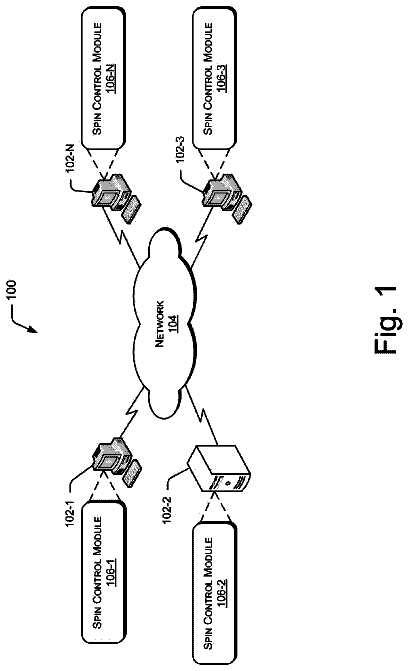
FIG. 1 is a schematic block diagram of an illustrative system according to some embodiments of the present invention.
FIG. 2 is a schematic block diagram of an illustrative SDW according to some embodiments of the present invention.
FIG. 3 is a flow diagram describing a scenario in which conditions that are affecting the file's policy are changed.
and its continuation, FIG. 4
(connections between the two parts are shown with a letter "A" and a letter "B"), together are a flow diagram describing the interaction between the agent and the filter driver upon a user request for opening a file.
FIG. 5 is a flow diagram describing the process of building an SDW.
FIG. 6 is a flow diagram describing the actions taken by the system when a file is saved.
FIG. 7 is a diagram describing the policy association process.
FIG. 8 is a schematic diagram of a data discovery wrapper.
FIG. 9 is a diagram describing the policy inspection process.
FIG. 10 is a flow chart describing the policy learning phase.
FIG. 11 is a diagram describing the structure of a risk score table.
and its continuation, FIG. 12
(connections between the two parts are shown with a letter "A"), together are an exemplary sample screen shot for software according to the present invention.
FIG. 13 shows an exemplary flow diagram of a process for controlling and/or managing a file which leaves the physical and/or electronic boundaries of an organization.
FIG. 14 is a diagram showing an exemplary scenario of opening a file.
The present invention is of a system and method dynamically enforcing policies on electronic files when the file is accessed and/or moved and/or copied and/or any other interaction. The system and method preferably delegates the file the ability to protect itself. The file preferably automatically identifies the policy and more preferably automatically enforces the policy as required. Optionally and more preferably, enforcement is performed through a framework, such as an agent for example, which is optionally and most preferably installed on a computer or other device hosting and/or interacting with the file.
Optionally and preferably, the policy enables the owner of a file (or its contents thereof), such as an organization, to maintain a domain of data control, even if the actual file is not within the actual direct control of the organization, for example optionally by being outside of the physical and/or electronic boundaries of the organization. A policy for the domain of data control may optionally and preferably include but is not limited to one or more of access control, location control and status control.
Status control preferably relates to any time delimited or changeable aspect of the status of a file. Status control optionally and preferably includes but is not limited to one or more of required to store, required to delete, required to block some or all or specific access to the file, required to permit some or all or specific access to the file, and the like. The status may optionally be automatically changed over time, such that a policy may first specify that a file is required to be stored for a certain period of time, after which the file may optionally be required to be deleted after that period of time has elapsed. Access to certain information may optionally be blocked and/or permitted for all, some or specific users in a manner which is also changeable over time; for example, the policy may optionally specify that less or more stringent access is permitted initially, after which access may optionally be broadened.
Another non-limiting example of status control may optionally include permitting a file (or a particular file instance) to only be accessible and/or available for interactions at one location (and/or a specified number of locations) at one time (ie concurrently). For example, if the file comprises a song (music file), then optionally multiple copies of the file may be distributed, but only one or limited number of instances of the file could be accessed at any one time so as to prevent illegal sharing of music. For this embodiment, the agent is preferably required to communicate with some type of monitoring server, for reporting the number of current opened files.
According to another preferred embodiment of the present invention, the files and/or contents thereof may optionally and preferably be logged, and any actions (authorized or unauthorized) may also optionally and preferably be logged. For example, if the agent attempts to contact a server but is not able to contact it, then such an action and lack of response is also preferably logged, more preferably associated with the file.
According to some embodiments, one or more aspects of a policy according to the present invention are preferably constructed in CxML (Covertix Management Language), which is a scripting language and is more preferably a textual, interpreter based programming language.
CxML provides various functionalities embedded within its grammar that enables the administrator to customize the behavior of and/or interactions with and/or actions performed upon files according to any business process. The CxML may optionally be implemented as an open, extensible language.
As an interpreted language, CxML is dependant upon a parser to execute its functions. Therefore, any parsers (such as those preferably contained in agents for example) preferably determine whether the version of the parser is suitable for the version of CxML before attempting to parse the instructions.
The CxML scripts are preferably held in a single textual file. This file is divided into several sections with each section responsible for a different aspect of the CxML action. Each CxML file is called a "CxML policy" and receives its own unique ID and version. The ID preferably does not change; any changes are preferably indicated through version indications.
The following is a list of sections included within the CxML file:
Preprocessing. This section is holds a list of parameters responsible for handling all the administration tasks that should occur before the CxML is actually executed. Examples of such parameters include but are not limited to the CxML policy version, minimum required CxML parser version, check if new CxML version exists etc.
Global. This section is a list of static parameters, responsible for defining global attributes that shall be used later on by the CxML when executed. The parameters may optionally be changed. Examples of such parameters include but are not limited to the Policy phase, if grace period enabled etc.
Assign. This section is a list of parameters that are used to hold values that will change during the course of the CxML execution. Such parameters might be the number of times that a file was opened or any parameter for temporary usage.
States and Conditions. This CxML section holds the CxML code that is responsible for letting the administrator do specific security actions (like block file open) depending on various environmental conditions. The states and conditions receive their input from the Cx-Sense system monitors (Cx-Sense monitors are operating system functionality that provides information on user, network, domain etc. For example a monitor might provide information on the name of the current logged on user, or the network to which the current host is connected) and from the global and assign sections of the CxML.
The states and conditions then return values based on the specific action required by the selected state or condition. For example a state might be an enquiry on the location of the host that opened the file, whether inside or outside of an organization, physically and/or electronically.
The difference between states and conditions is that states may return a value (number, string etc.). A condition always returns a Boolean value, True or False.
Actions. This section is a collection of CxML functions, each handling different aspect of file usage. For instance there may optionally be an action for file deletion, an action for saving a file, for printing a file etc. Inside the action, the administrator can set a set of rules (with logic operations like if, And, OR etc.) that are a group of states and conditions and what needs to be done when these states and conditions match some criteria. For example an action might state that printing a certain file is only permitted inside the office. If a user opens this file outside of the office and tries to print, the print action is preferably blocked.
Main. This CxML section is a collection of CxML syntax that invoke a CxML Action when the user actually performed something. For example, when the user copies a file, the Copy option in the CxML main section is triggered and then the CxML Open Action is preferably executed. This section provides great flexibility as to use different actions for different file usages in different phases of the CxML policy. These phases optionally include but are not limited to one or more of discovery, policy testing and policy association, as described in greater detail below.
FIG. 1 is a schematic drawing of an exemplary, illustrative system according to the present invention. As shown, a system 100 comprises a database 102 which features a plurality of files 104. It should be understood that database 102 is only one example of a repository for files 104 and that files 104 may optionally be maintained at any suitable location. Each file 104 preferably features a policy 106, which optionally and preferably enables the owner of each file 104 (or its contents thereof), such as an organization, to maintain a domain of content control, even if the actual file 104 is not within the actual direct control of the organization, for example optionally by being outside of the physical and/or electronic boundaries of the organization. Policy 106 preferably enables the domain of content control to be provided and preferably also comprises a set of business logic parameters and an interpreter script, which is optionally and most preferably in the Covertix Management Language (CxML). Policy 106 may optionally and preferably include but is not limited to one or more of access control, location control and status control.
Although policy 106 is optionally static, according to other embodiments of the present invention, policy 106 may optionally be changed dynamically at run-time. The usual policy type that is specified is a static type, meaning that all parameters were pre-defined during the policy creation and attachment to a point of association. However, there are special cases in which some of the policy parameters and optionally also the point of association itself needs to be determined at run time, for example according to information provided by a computer or other access device currently storing or holding file 104. This type of policy is called a "Run Time Updatable Policy" and is described in greater detail below.
Another example of the Run Time Updatable Policy is file protection with active folder groups dynamically updated per the origin folder from which this file originated. Each group preferably has one or more business logic rules or other parameters defined, for example for automatic application of policy 106. Each file 104 placed in the origin folder of the group thus automatically receives the respective policy 106. If policy 106 is applied dynamically, then even if one or more business logic rules and/or parameters are changed, i.e a new user is added, then the changes may preferably be propagated dynamically.
Policy 106 is preferably applied, more preferably automatically, by a policy association module 108. Policy association module 108 preferably receives policy 106 and/or one or more components thereof from a policy distribution and enforcement server 110. Policy association module 108 then causes policy 106 to be applied to file 104, preferably through an SDW (secure data wrapper). The SDW is the digital capsule in which the original data of file 104 is placed. The policy 106 is also placed inside the SDW. The SDW optionally also contains information as to the usage of file 104 throughout its life cycle and other service attributes that maintain integrity between file 104 and any relevant scripts which are present in policy 106. Any script(s) present as part of policy 106 preferably interact with the SDW.
The exact structure of the SDW is shown in more detail in FIG. 2 below.
Policy association module 108 preferably comprises one or more scripts 112 for applying policy 106 to the appropriate file(s) 104. Script(s) 112 are capable of generating the SDW for the file(s) 104 that require protection. The scripts 112 are transferred to the file 104 whenever the file 104 is generated and preferably also whenever there are changes in conditions and/or change in policy 106, such as a new user for example, which may optionally include re-generating the SDW. The CxML is optionally activated whenever the file 104 is about to be accessed and/or copied and/or moved or otherwise interacted with. It validates the action according to the policy 106, optionally logs a message and if an action is not validated, optionally generates alarm.
Policy 106 can optionally enforce rules, for example, on registry handling, rules based on time, network location, file content or the application. For example the policy can set rules for enforcing/allowing a certain application to access a specific content in a specific time. A policy 106 can optionally be combined of one or more atomic policies. For example print handling may optionally and preferably be coupled with date/time handling to limit printing to a specific printer and/or to block printing altogether, optionally and more preferably up to a specific expiration date.
Policy 106 can optionally be applied on a file attached to an email. In this case the policy can be used, for example, for blocking e-mail of digital content, blocking e-mail forwarding operation, encapsulating the e-mail body into an SDW and attaching it as a file to new e-mail, if confidential content is found. Policy 106 can optionally be applied for IM (instant messaging) for example by encapsulating the IM body content (ie the content of the instant message) into an SDW and attaching it as a file to a new such message, if confidential content is found. Other types of messaging systems and protocols may optionally be similarly handled.
Policy 106 can optionally limit the actions of a web browser on digital data, for example by blocking access to the file by the web browser.
Policies 106 are preferably built for distribution by a policy builder console 114, which more preferably features an application for generating the policies 106. Policy builder console 114 may optionally generate polices 106 automatically, for example according to a set of business rules; optionally, alternatively or additionally, one or more policies 106 may optionally be constructed manually, as described in greater detail below. The basic mode of the policy builder GUI (graphical user interface) offers a straightforward approach with few options available to the administrative user--maintain policy, priority system and user input- and limited flexibility, while advanced may optionally offer maximum flexibility that will require longer administration.
The description continues in the full USPTO document.
About 6,272 words. The USPTO PDF has it with every drawing.
Fees are due 3.5, 7.5 and 11.5 years after grant. This patent expired on July 1, 2026, so the fee marked "not paid" was the one that went unpaid.
System and method for dynamically enforcing security policies on electronic files
Filed Mar 2009 · published Dec 2009System and method for dynamically enforcing security policies on electronic files
Filed Mar 2009 · granted Jul 2014Earlier publications, parents and continuations. None of them can still be enforced, or this patent would not be listed.
Prior art cited by the examiner or applicant. Useful when you check your own idea for novelty.
Everything on this page comes from the documents linked above.


