Description of the related art
Portable computing devices ("PCDs") are becoming increasingly popular. These devices may include cellular telephones, portable/personal digital assistants ("PDAs"), portable game consoles, portable navigation units, palmtop computers, and other portable electronic devices.
PCDs may run various types of software for providing various functions and features. For example, PCDs may run entertainment software which may provide functions such as watching videos and playing video games. PCDs may also support other types of software such as business software or writing software, such as spreadsheets, e-mail, and/or word processing software.
Usually, the software described above running on a PCD requires actions from various hardware elements that are linked together. The interactions between the software and hardware elements can be controlled by an overall operational framework that can be thought of as a linked node structure. In some instances, the interaction between these elements occurs synchronously, where a request for a particular resource suspends operation of an element until the request is acknowledged and granted. In other instances, the interaction between these elements occurs asynchronously, where a request for a particular resource does not suspend the operation of the element while the request is processed.
However, it would be desirable for the requesting element to be able to determine whether the resource is allowed to continue operation while the request is processed.
Summary
A method and system for managing parallel resource requests in a portable computing device are described. In an embodiment, the method and system includes generating a first request from a first client, the first request issued in the context of a first execution thread. The first request may be forwarded to a resource. The resource may acknowledge the first request and initiate asynchronous processing. The resource may process the first request while allowing the first client to continue processing in the first execution thread. The resource may signal completion of the processing of the first request and may receive a second request. The second request causes completion of the processing of the first request. The completion of the processing of the first request may include updating a local representation of the resource to a new state and invoking any registered callbacks. The resource may become available to service the second request, and may process the second request.
Brief description of the drawings
In the figures, like reference numerals refer to like parts throughout the various views unless otherwise indicated. For reference numerals with letter character designations such as "102A" or "102B", the letter character designations may differentiate two like parts or elements present in the same figure. Letter character designations for reference numerals may be omitted when it is intended that a reference numeral to encompass all parts having the same reference numeral in all figures.
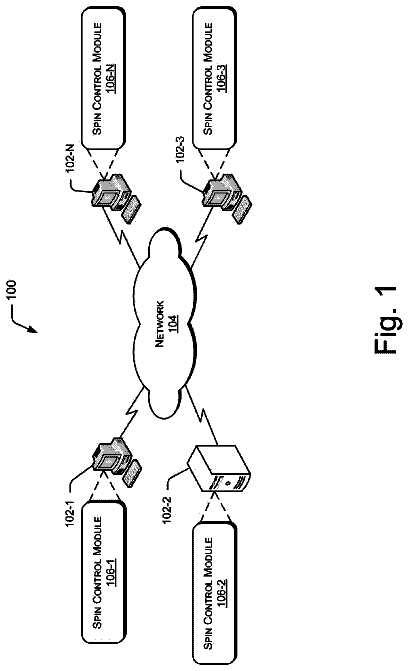
FIG. 1 is a functional block diagram illustrating exemplary elements of a system for managing parallel resource requests in a portable computing device ("PCD");
FIG. 2 is a functional block diagram illustrating an example operating environment for the method and system for managing parallel resource requests in a portable computing device;
FIG. 3 is a diagram illustrating a synchronous thread running on a single resource;
FIG. 4 is a diagram showing the operation of an embodiment of the method and system for managing parallel resource requests in a portable computing device;
FIG. 5 is a timeline diagram showing the operation of an embodiment of the method and system for managing parallel resource requests in a portable computing device;
FIGS. 6A and 6B collectively illustrate a flowchart describing the operation of an embodiment of the method and system for managing parallel resource requests in a portable computing device;
FIG. 7A is a diagram of a first aspect of a node architecture that manages resources of a portable computing device of FIG. 1;
FIG. 7B is a general diagram of a second aspect of the node architecture that manages resources of a portable computing device of FIG. 1;
FIG. 7C is specific diagram of a second aspect of the node architecture that manages resources of a portable computing device of FIG. 1;
FIG. 7D is a flowchart illustrating a method for creating a node architecture for managing resource(s) of a portable computing device;
FIG. 7E is a continuation flowchart of FIG. 7D illustrating a method for creating a node architecture for managing resource(s) of a portable computing device;
FIG. 8 is a flowchart illustrating a sub-method or a routine of FIG. 7D for receiving node structure data in a software architecture in a portable computing device;
FIG. 9 is a flowchart illustrating a sub-method or a routine of FIGS. 7D-7E for creating a node in a software architecture for a portable computing device;
FIG. 10 is a flowchart illustrating a sub-method or a routine of FIG. 9 for creating a client in a software architecture of a portable computing device; and
FIG. 11 is a flow chart illustrating a method for creating a client request against a resource in a software architecture for a portable computing device.
Detailed description
The word "exemplary" is used herein to mean "serving as an example, instance, or illustration." Any aspect described herein as "exemplary" is not necessarily to be construed as preferred or advantageous over other aspects.
In this description, the term "application" may also include files having executable content, such as: object code, scripts, byte code, markup language files, and patches. In addition, an "application" referred to herein, may also include files that are not executable in nature, such as documents that may need to be opened or other data files that need to be accessed.
The term "content" may also include files having executable content, such as: object code, scripts, byte code, markup language files, and patches. In addition, "content" referred to herein, may also include files that are not executable in nature, such as documents that may need to be opened or other data files that need to be accessed.
As used in this description, the terms "component," "database," "module," "system," and the like are intended to refer to a computer-related entity, either hardware, firmware, a combination of hardware and software, software, or software in execution. For example, a component may be, but is not limited to being, a process running on a processor, a processor, an object, an executable, a thread of execution, a program, and/or a computer. By way of illustration, both an application running on a computing device and the computing device may be a component. One or more components may reside within a process and/or thread of execution, and a component may be localized on one computer and/or distributed between two or more computers. In addition, these components may execute from various computer readable media having various data structures stored thereon. The components may communicate by way of local and/or remote processes such as in accordance with a signal having one or more data packets (e.g., data from one component interacting with another component in a local system, distributed system, and/or across a network such as the Internet with other systems by way of the signal).
In this description, the terms "communication device," "wireless device," "wireless telephone," "wireless communication device," and "wireless handset" are used interchangeably. With the advent of third generation ("3G") and fourth generation ("4G") wireless technology, greater bandwidth availability has enabled more portable computing devices with a greater variety of wireless capabilities.
In this description, the term "portable computing device" ("PCD") is used to describe any device operating on a limited capacity power supply, such as a battery. Although battery operated PCDs have been in use for decades, technological advances in rechargeable batteries coupled with the advent of third generation ("3G") and fourth generation ("4G") wireless technology, have enabled numerous PCDs with multiple capabilities. Therefore, a PCD may be a cellular telephone, a satellite telephone, a pager, a personal digital assistant ("PDA"), a smartphone, a navigation device, a smartbook or reader, a media player, a combination of the aforementioned devices, and a laptop computer with a wireless connection, among others.
FIG. 1 is a functional block diagram of an exemplary, non-limiting aspect of a PCD 100 in the form of a wireless telephone for implementing methods and systems for managing parallel resource requests in a portable computing device. As shown, the PCD 100 includes an on-chip system 102 that has a multi-core, central processing unit ("CPU") 110A, a graphics processor 110B, and an analog signal processor 126. These processors 110A, 110B, 126 may be coupled together on one or more system busses or another interconnect architecture, as know to those skilled in the art.
The CPU 110A may comprise a zeroth core 222, a first core 224, and an Nth core 226 as understood by one of ordinary skill in the art. In an alternative embodiment, instead of using a CPU 110A and a graphics processor 110B, one or more digital signal processors ("DSPs") may also be employed as understood by one of ordinary skill in the art. Further, two or more multi-core processors may also be used.
The PCD 100 may comprise internal chip bus ("ICB") driver modules 103 that are executed by processors 110. One of ordinary skill in the art will recognize that each ICB driver module 103 may comprise one or more software modules that may be divided into various parts and executed by different processors 110, 126 without departing from this disclosure.
There may be two types of ICB driver modules 103: an upper layer ("UL") type 103A; and a lower layer ("LL") type 103B. Generally, the UL ICB driver types 103A will usually be executed by one or more processors 110, 126 that may support the various application modules 105. The LL ICB driver types 103B will usually be executed by one hardware element referred to as the resource power manager 107.
The resource power manager 107 running the LL ICB driver 103B will be generally responsible for applying and setting bandwidth values. These bandwidth values will be applied by the resource power manager 107 to one or more buses and/or switch fabrics described below in connection with FIG. 2. The resource power manager 107 is generally responsible for setting the clock speeds for switch fabrics and buses as well as the clock speeds for the slaves. Slaves are generally hardware components that support requests from master processors 110 running application programs 105.
The ICB drivers 103A, B in combination with the resource power manager 107 allow for the dynamic creation of master-slave pairs at runtime for hardware components that may exist within similar switch fabrics and/or across different switch fabrics. The ICB drivers 103A, B and resource power manager 107 may calculate and adjusts bandwidths for switch fabrics and buses on-the-fly or in real-time.
In a particular aspect, one or more of the method steps described herein may implemented by executable instructions and parameters stored in the memory 112 that include the ICB drivers 103A, B. These instructions that form the ICB drivers 103A, B may be executed by the CPU 110A, the analog signal processor 126, and the resource power manager 107. Further, the processors 110A, 126, the resource power manager 107, the memory 112, the instructions stored therein, or a combination thereof may serve as a means for performing one or more of the method steps described herein.
As illustrated in FIG. 1, a display controller 128 and a touchscreen controller 130 are coupled to the multicore CPU 110A. A touchscreen display 132 external to the on-chip system 102 is coupled to the display controller 128 and the touchscreen controller 130.
FIG. 1 also illustrates a video coder/decoder ("codec") 134, e.g., a phase-alternating line ("PAL") encoder, a sequential couleur avec memoire ("SECAM") encoder, a national television system(s) committee ("NTSC") encoder or any other type of video encoder 134 coupled to the multicore CPU 110A. A video amplifier 136 is coupled to the video encoder 134 and the touchscreen display 132. A video port 138 is coupled to the video amplifier 136. A universal serial bus ("USB") controller 140 is coupled to the CPU 110A. Also, a USB port 142 is coupled to the USB controller 140. A subscriber identity module (SIM) card 146 may also be coupled to the CPU 110A. Further, as shown in FIG. 1, a digital camera 148 may be coupled to the CPU 110A. In an exemplary aspect, the digital camera 148 is a charge-coupled device ("CCD") camera or a complementary metal-oxide semiconductor ("CMOS") camera.
As further illustrated in FIG. 1, a stereo audio CODEC 150 may be coupled to the analog signal processor 126. Moreover, an audio amplifier 152 may be coupled to the stereo audio CODEC 150. In an exemplary aspect, a first stereo speaker 154 and a second stereo speaker 156 are coupled to the audio amplifier 152. FIG. 1 shows that a microphone amplifier 158 may be also coupled to the stereo audio CODEC 150. Additionally, a microphone 160 may be coupled to the microphone amplifier 158. In a particular aspect, a frequency modulation ("FM") radio tuner 162 may be coupled to the stereo audio CODEC 150. Also, an FM antenna 164 is coupled to the FM radio tuner 162. Further, stereo headphones 166 may be coupled to the stereo audio CODEC 150.
FIG. 1 further indicates that a radio frequency ("RF") transceiver 168 may be coupled to the analog signal processor 126. An RF switch 170 may be coupled to the RF transceiver 168 and an RF antenna 172. As shown in FIG. 1, a keypad 174 may be coupled to the analog signal processor 126. Also, a mono headset with a microphone 176 may be coupled to the analog signal processor 126. Further, a vibrator device 178 may be coupled to the analog signal processor 126. FIG. 1 also shows that a power supply 180, for example a battery, is coupled to the on-chip system 102. In a particular aspect, the power supply 180 includes a rechargeable DC battery or a DC power supply that is derived from an alternating current ("AC") to DC transformer that is connected to an AC power source.
As depicted in FIG. 1, the touchscreen display 132, the video port 138, the USB port 142, the camera 148, the first stereo speaker 154, the second stereo speaker 156, the microphone 160, the FM antenna 164, the stereo headphones 166, the RF switch 170, the RF antenna 172, the keypad 174, the mono headset 176, the vibrator 178, and the power supply 180 are external to the on-chip system 322.
FIG. 2 is a functional block diagram illustrating an example operating environment 200 for the method and system for managing parallel resource requests in a portable computing device. The operating environment 200 includes two processors, which, in this example, can be the CPU 110A and the resource power manager 107. A resource, which in this embodiment can be a system bus 207, is managed by the resource power manager 107. Another resource, which in this embodiment can be a resource proxy 207A for the system bus 207 is located on and managed by the CPU 110A. A resource proxy is defined as a local representation of a remote resource, whose state mirrors that of the remote resource.
In another embodiment, the resource proxy 207A may be substituted by a framework that serves as an interface between clients and resources, implemented as a library of functions on the CPU 110A. An example of such a framework is described below.
As described above, the CPU 110A comprises a 0th core 222, a first core 224 and an Nth core 226. However, the CPU 110A can also be a single core processor, where the CPU 110A would be the only processor. In the description to follow, while the CPU 110A comprises a plurality of cores, the CPU 110A will be referred to as a singular processor. Similarly, the resource power manager 107 may comprise one or more cores.
Each core on the CPU 110A may run one or more threads. A thread is a unit of execution on the processor and only one thread may be active at any given point in time on a given core. Clients are created and requests are issued in the context of one or more threads. In the below discussion, the terms client (or clients) and thread (or threads) are used interchangeably. When a client issues a request, it means that a client executing in the context of an active thread issued a request. Likewise, a client is said to be synchronous in the sense that it waits for a response to a request before proceeding, meaning that the thread in which the client issued a request is suspended until a response is received. Note that multiple clients can be created in the context of a single thread, but for the purposes of this description, only one client is active in a given thread at a given point in time.
In the example shown in FIG. 2, a first client 201 and a second client 202 are each running on the 0th core 222. A third client 204 is shown as running on the first core 224 and an Nth client 206 is shown as running on the Nth core 226. However, the coupling of the clients to the various cores is arbitrary and shown in FIG. 2 for illustrative purposes only. In an embodiment in which the CPU 110A is a single core processor, all of the clients would be running on the CPU 110A. Further, in the description to follow, any of the operative interactions between the clients and the various cores within the CPU 110A can also be described as occurring directly between the CPU 110A and the respective clients.
The CPU 110A is shown coupled to the system bus 207 by a dotted line 211 via the resource proxy 207A, while the system bus 207 is shown as coupled to the resource power manager 107 through a solid line 212. This connection topology is to indicate that the resource power manager 107 manages the system bus 207, while the CPU 110A has logical access to the system bus 207 via the resource proxy 207A, but does not actively manage it.
The resource proxy 207A is also shown as including a flag 213, which represents the state of a condition variable. A condition variable expresses or represents a certain condition that may or may not be true at a given point in time. The condition variable can be signaled to indicate that the condition expressed is currently true, and can be waited upon until the condition is true. In this example, the condition variable expressed by the flag 213 refers to whether a given request to the bus 207 was serviced or not. When the request is serviced, the condition variable is signaled (CV/S) (or the flag 213 is set) to indicate this state. Until then, the condition variable is not signaled (CV/NS). The operation of the flag 213 will be described in greater detail below.
Generally, the method and system for managing parallel resource requests in a portable computing device will be described using an example of any one of the clients 201, 202, 204 and 206 making a request of a resource, in this example, the system bus 207. Since the CPU 110A does not actively manage the system bus 207, it forwards the client request via the resource proxy 207A to the processor that manages the system bus 207. In this example, the processor that manages the system bus 207 is the resource power manager 107. Accordingly, a request from, for example, client 201 is sent from the CPU 110A to the resource power manager 107, as indicated by line 208. When the request is serviced, a reply, in the form of an interrupt is sent from the resource power manager 107 to the CPU 110A, as indicated by reference numeral 209. The interrupt sent from the resource power manager 107 to the CPU 110A is handled by an interrupt service routine (ISR) on the CPU 110A. The ISR will signal the condition of the variable flag 213, causing it to change state from "condition variable-not signaled" (CV/NS) to "condition variable-signaled" (CV/S). The effect of the interrupt will be described in greater detail below.
The operation of the method and system for managing parallel resource requests in a portable computing device will be described further with reference to FIGS. 3, 4, 5 and 6.
FIG. 3 is a diagram illustrating a client running on a processor, in this example, the CPU 110A. At 216, the client is running and issues a resource request, which is forwarded by the resource proxy 207A on the CPU 110A to the resource power manager 107, as indicated by reference numeral 217. The request can be for any resource that is managed by the resource power manager 107. At point 215, the client ceases to run (or is suspended or blocked) on the CPU 110A, while the request is processed by the resource power manager 107, as indicated by reference numeral 218. Once the request is processed by the resource power manager 107, an acknowledgment (for example, in the form of an interrupt) is sent from the resource power manager 107 to the CPU 110A, as indicated by reference numeral 219, whereby at point 220 the client resumes running on the CPU 110A as shown by reference numeral 221. Such a request is referred to as a synchronous request because the client thread 216 running on the CPU 110A suspends at point 215 while the request is processed by the resource power manager 107, and does not resume until point 220 when the acknowledgment 219 is received by the CPU 110A. However, there are some instances in which it is desirable for the client to perform some other work during the time it is waiting for the request to be processed. It is also possible that the client does not need to wait for the acknowledgement from the resource power manager 107 and can simply continue running Such a request may be called a "fire-and-forget" request. An example of a fire-and-forget request would be a request in which the client is turning off a resource. The client (and by extension, the thread the client is running in) does not have to wait until this action is complete before continuing. An example of such a methodology is described in FIG. 4.
FIG. 4 is a diagram showing the operation of an embodiment of the method and system for managing parallel resource requests in a portable computing device. In FIG. 4, a first thread 231 is begun in the CPU 110A. At point 232, a request from a client in this thread is forwarded by the resource proxy 207A, from the CPU 110A to the resource power manager 107. In an embodiment, the request can be from, for example, the first client 201 requesting a certain amount of bandwidth on the system bus 207. For example, the system bus 207 may be operating at a bandwidth of 100 megabits per second (MB/s), but the client 201 would like it to operate at 200 MB/s. Therefore, the request indicated by reference numeral 234 is a request to the resource power manager 107, which manages the system bus 207, for additional bandwidth on the system bus 207 to allow the first client 201 to operate at the higher bandwidth.
At point 232, the request is forwarded from the resource proxy 207A on the CPU 110A to the resource power manager 107. However, since the first client 201 doesn't have to wait until the available bandwidth on the system bus 207 is increased to continue operating (the first client 201 can run at the lower bandwidth until the resource power manager 107 increases the bandwidth available on system bus 207, at which point the first client 201 automatically begins to use the higher bandwidth), the first client 201 can indicate this to the resource proxy 207A on CPU 110A, by passing in a preference.
The preference can be specified by the first client 201 and determines whether the resource can be forked to allow parallel, or asynchronous, processing. Examples of preferences include, but are not limited to, ALLOWED, DISALLOWED and DEFAULT. The preferences ALLOWED and DISALLOWED explicitly allow or disallow parallel processing as described above. The preference DEFAULT informs the resource that the client allows the resource to make its own decision on whether to fork or not, so long as it does not impact client behavior. For example, if the preference DEFAULT is specified, the resource may choose to fork all requests that turn OFF a resource or cancel a previously required request. A request to turn OFF a resource or cancel a previous request usually indicates that the client is not interested in the state of the resource following such a request and the resource can fork this request and return to the client immediately. However, if the request were for a specific value and the preference is DEFAULT, it cannot fork such a request as the client may expect the resource to be in (at least) this particular state before control returns to the client.
The preference is used by the resource proxy 207A on the CPU 110A to forward the request to the resource power manager 107 in an asynchronous fashion, such that the first client 201 or the thread it is running in is not suspended while the request is serviced. In such an instance, the CPU 110A continues to be available to execute the thread begun at 231 and operate as indicated by reference numeral 237. When a resource request is thus issued but not yet serviced or the request was issued and serviced, but the new state not yet acknowledged by the resource proxy 207A on CPU 110A or visible to clients (i.e. if a client were to query the state of the resource, it would still "see" the old state), the request and resource are marked "forked." The terminology "forked" refers to a condition in which the resource is in an incoherent state, in the sense that the last request to the resource was issued, but is not yet serviced or if serviced, the resources' local representation, as maintained by the resource proxy 207A, is not yet updated to the new state. The resource proxy 207A may also register a callback to be invoked after the request is actually serviced. In this callback, the resource proxy 207A can choose to perform other actions that depend on the resource being in the new (requested) state. For example, it is possible that a clock resource (not shown) should be set to a new value after the bandwidth of the system bus 207 is increased. In such a case, the resource proxy 207A will issue the request to the clock resource (not shown) in the callback, thus ensuring that the request to the clock resource (not shown) is executed only after the request to the system bus 207 is serviced. Simultaneously therewith, the resource power manager 107 processes the request as indicated by reference numeral 235 and sends an acknowledgment to the CPU 110A, indicated at reference numeral 236. The acknowledgement 236 corresponds to an interrupt communicated over connection 209 (as shown in FIG. 2). The interrupt service routine (ISR) that handles/services this interrupt on the CPU 110A sets the condition variable associated with the flag 213 to the "signaled" status, i.e., CV/S. This action indicates that the subject resource is now "joinable." The terminology "joinable" refers to a condition in which the resource, e.g., the system bus 207, has serviced the request, has moved to a new state and has indicated this new state to the resource proxy 207A on the requesting processor. When a subsequent request of the system bus 207 is issued by one of the clients 201, 202, 204 and 206 on the CPU 110A, the resource is "joined". The terminology "joined" refers to an action in which the resource proxy 207A updates the local representation of the resource (in this example, the system bus 207) to the new state, thus rendering the resource coherent and able to service the new request. The resource proxy 207A will also execute any callbacks it has registered at a fork, as described above. It will then handle the new request.
As further shown in FIG. 4, a second client executing in the thread indicated at reference numeral 241, or the same client 201 executing in a new thread, makes a new request to the system bus 207, at point 242. So, at point 242, the resource (in this example, the system bus 207 and its local resource proxy 207A) is "joined," which is possible because the condition variable associated with the flag 213 is set (CV/S) and marks the resource "joinable," as described above. If at point 242, when the second request arrives at the resource proxy 207A, the system bus 207 is not yet "joinable," the request and the thread it is executing in will block until the interrupt from the resource power manager 107 marks the resource as "joinable." Processing in this new thread then continues as indicated by reference numeral 244.
FIG. 5 is a timeline diagram showing the operation of an embodiment of the method and system for managing parallel resource requests in a portable computing device. At time t0, the first client 201, running on CPU 110A, begins work as illustrated using reference numeral 251. At time t1, the first client 201 issues a request for a remote resource, such as the system bus 207, via a local resource proxy 207A, as indicated at reference numeral 252. The request is received at the local resource proxy 207A and begins being performed on the CPU 110A as illustrated using reference numeral 254. At time t2, the resource proxy 207A forwards the request to the second processor (the resource power manager 107), as illustrated using reference numeral 255. When the request is received by the resource power manager 107, the resource power manager 107 begins executing and processing the request as illustrated using reference numeral 256. In accordance with an embodiment of the method and system for managing parallel resource requests in a portable computing device, assuming that the first client 201 allowed `forking` of the request, at time t3, the resource proxy 207A processes the request in an asynchronous fashion (i.e., by issuing the request to the remote processor (the resource power manager 107), but not waiting until the request is serviced and acknowledged) and returns to the first client 201, as indicated using reference numeral 257. The first client 201 now continues work as indicated using reference numeral 260. As shown in the timeline, the work performed by the first client 201 during the period indicated at 260 occurs in parallel with the work performed by the resource power manager 107 during the time period indicated by 256. The point 258 at which the request is returned by the resource proxy 207A to the first client 201 is referred to as the "fork" point. The fork point indicates that at point 258, the resource or request forks to allow parallel processing simultaneously in the resource power manager 107 and in the client 201.
At time t4, a context switch to a second thread occurs as indicated using reference numeral 266. At time t5, the resource power manager 107 send an interrupt, as indicated using reference numeral 261, to the resource proxy 207A on CPU 110A. The interrupt service routine (ISR) that handles this interrupt in the CPU 110A sets the condition variable flag 213 (FIG. 2) to the "signaled" (CV/S) status as indicated using reference numeral 264. At point 265, the system bus 207 is considered to be "joinable" and available to process subsequent requests.
At time t7 the second client 202, executing in the second thread on CPU 110A, issues a request to the system bus 207 via the resource proxy 207A as indicated using reference numeral 268. The request 268 can be considered to be a "subsequent" request from the perspective of the system bus 207. When the subsequent request is received, the resource proxy 207A checks and determines that the system bus 207 is in a joinable state and can be "joined." At point 270, the system bus 207 is joined in the context of the second thread. This means that the system bus 207 is considered "joinable" at point 265, but is "joined" at point 270, in order to process the subsequent request 268 in the second thread from the second client 202. The resource (in this example, the system bus 207) thus can be in one of three states--forked, joinable, and joined. From the point the resource is forked, it is considered to be in an incoherent state, meaning that the request was received but not yet processed or if processed, the local representation of the resource is not yet updated with the actual (new) resource state. In such a state, the resource cannot process subsequent requests. Therefore, the resource is "joined," i.e., rendered coherent at point 270, before it can process the subsequent request 268. The time period indicated at 271 illustrates the time during which the subsequent request 268 from second client 202 is processed by the resource proxy 207A. Note that this request may also "fork," repeating the sequence described above.
It should be mentioned that the subsequent request need not come from a different client, but, in an embodiment, can also come from the first client 201 in the form of a subsequent request. Importantly, any client of the system bus 207 can initiate the subsequent request and consequently "join" at time t7. The previous request which was issued in the context of the first client 201 (and in this embodiment, in a different thread) is thus "completed" (in the sense of updating the local resource representation (the resource proxy 207A) to the new state and thus making the resource (the system bus 207) coherent again) during the processing of the subsequent request, which may, as mentioned above, come from any client on any thread on the CPU 110A. This occurs with no additional management and any request to the system bus 207 can bring the resource back to availability and action at point 270.
FIGS. 6A and 6B collectively illustrate a flowchart describing the operation of an embodiment of the method and system for managing parallel resource requests in a portable computing device. In block 603 a request for a resource is received. In the example above, the request is received by the resource proxy 207A. However, the request can be received by another entity. In this embodiment, the first client 201 makes a request for the system bus 207 that is managed by a remote processor, such as the resource power manager 107. In the example described, the request is made via a local resource proxy 207A on CPU 110A.
In block 604 it is determined whether the first client 201 that issued the request wishes this request to complete synchronously or whether the first client 201 allows the resource proxy 207A to "fork" this request and return immediately to the first client 201. If the first client 201 has disallowed forking and desires the resource request to be completed synchronously, in block 606, the resource proxy 207A forwards the request to the resource power manager 107, blocks the processing thread, and waits until the resource power manager 107 services the request.
In block 608, if the first client 201 has allowed the request to fork, the resource proxy 207A forwards the request to the resource power manager 107 and returns to the client immediately, without waiting for the request to be serviced.
In block 612, control returns to the first client 201 and the thread continues to run, despite the request having not yet been serviced by the resource power manager 107. The resource is marked forked and needs to be joined before it can service any subsequent request.
In block 614, the resource power manager 107 completes processing of the request and sends an interrupt to the CPU 110A indicating this. The interrupt service routine (ISR) on CPU 110A, which handles this interrupt, signals the condition variable, flag 213 set to (CV/S), causing the resource to be set into the `joinable` state. The step described in block 614 may occur in series as illustrated, in parallel, or at any time after the step described in block 612 and before the step described in block 628.
In block 618, a subsequent request is initiated. The subsequent request may be initiated in the same thread or in a second thread. In addition, the subsequent request may be initiated by the same client or by a different client. In this example, the subsequent request is initiated by a different client, i.e., the second client 202 in a different thread.
In another embodiment, the subsequent request may be initiated from the same thread as the first request. Since the processing in the initial thread was not blocked by the first request, the initial thread may do other work and then place a subsequent request on the resource. For example, a thread may issue a request to turn off a remote resource, which is forked by the local resource proxy. After a period of time, the thread (or more specifically, a client in the thread) may want to turn on the resource. In such a case, the subsequent request is initiated in the same thread.
In block 620, the subsequent request is received at the resource proxy 207A.
In block 624, it is determined whether the resource (the system bus 207) is joinable. If it is determined in block 624 that the resource is not joinable, then the process proceeds to block 626 where the thread waits until the resource is joinable. If it is determined in block 624 that the resource is joinable, or after the resource becomes joinable in block 626, the process proceeds to block 628 where the resource is "joined," the resource proxy 207A completes any pending processing from the previous forked request and updates the local representation of the resource to the new state. In this manner, the resource is moved to the `joined` state. The resource now begins to process the second request.
An alternative to the implicit join that ensues when a subsequent request arrives on a resource in the "forked" or "joinable" state is known as an "explicit join." As described above, a forked resource joins implicitly whenever a subsequent request to the resource arrives at the resource proxy (or the framework). However, there may be instances when a client wishes to explicitly join the resource without issuing a subsequent request. In such a case, a means by which a forked resource may be joined and rendered coherent is referred to as an "explicit join." Such an explicit join operation will await the condition variable being signaled, update the local resource representation to mirror the new resource state and return to client. The client will be suspended until this call returns.
An alternative to "forked" requests to remote resources is forked `local` resources/requests. In the example above, it is assumed that the request is serviced remotely and that the client (or caller) wishes to perform other operations on the requesting processor or perhaps yield to other clients or other threads to perform other operations, while its request is serviced. This need not always be the case. Consider a scenario where a request is serviced by another thread on the CPU 110A. In such a case, the client issues a request to this resource which is picked up by the other thread (whenever it is scheduled by the operating system), serviced and an acknowledgement returned to the calling thread. It is possible to apply the method and system above to this scenario by replacing the remote processor with this request processing thread.
The description continues in the full USPTO document.
 Lapsed, fee not paid15 drawings