 Lapsed, fee not paid5 drawings
Telecom & Networks · US 8,767,564 B2
Field communication system and field communication method
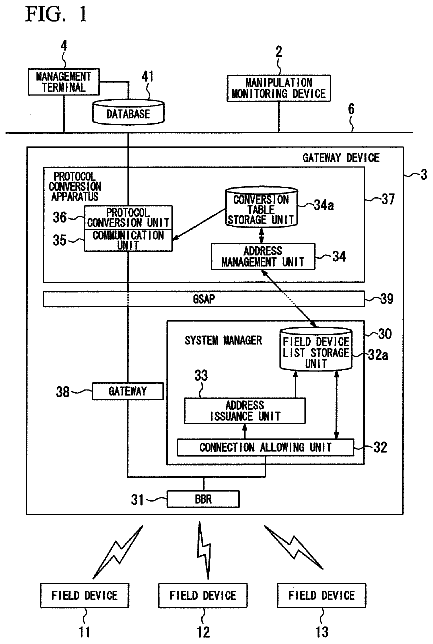
A field communication system may perform wireless communication with field devices.
US 8,767,576 B2 · Assignee: Verizon Patent and Licensing Inc. · Inventors: Aguirre; Sergio et al.
Sheet 1 of 7 from the published document. All sheets in the USPTO PDF
A user device receives an instruction to access an application, of one or more applications being provisioned via one or more base stations; obtains service quality information, associated with the application, where the service quality information identifies one or more quality thresholds associated with one or more frequency bands to be used to access the application; measures a first level of service quality associated with traffic being received via a first frequency band and a second level of service quality associated with traffic being received via a second frequency band; and accesses the application using one of the first frequency band or the second frequency band based on a determination that another one of the first level of service quality or the second level of service quality is less than a threshold, of the one or more quality thresholds.
A user device may communicate with a network via a base station that processes traffic traveling between the user device and the network. The user device may communicate with the network while moving between cells associated with different base stations. User devices may communicate with the base stations to receive services, from the network, via unicast, multicast, and/or broadcast communications. The unicast, multicast, and/or broadcast communications may be received on different frequencies and/or channels. However, the user device may select a channel, via which to access the services, associated with a level of service quality that is less than a threshold. The level of service quality, that is less than the threshold, may render the services unusable by a user of the user device and/or result in a poor user experience for the user.
1 of 7 drawing sheets so far from the published document, cropped to the drawing. Every sheet is in the USPTO PDF.
What the patent claimed, word for word. All of it is now free to use.
A user device may communicate with a network via a base station that processes traffic traveling between the user device and the network. The user device may communicate with the network while moving between cells associated with different base stations. User devices may communicate with the base stations to receive services, from the network, via unicast, multicast, and/or broadcast communications. The unicast, multicast, and/or broadcast communications may be received on different frequencies and/or channels. However, the user device may select a channel, via which to access the services, associated with a level of service quality that is less than a threshold. The level of service quality, that is less than the threshold, may render the services unusable by a user of the user device and/or result in a poor user experience for the user.
FIG. 1 is a diagram of an example environment in which systems and/or methods described herein may be implemented;
FIG. 2 is a diagram of example components of one or more devices of FIG. 1;
FIG. 3 is a diagram of an example user device of FIG. 1;
FIG. 4 is a diagram of an example data structure that stores service quality information associated with an application and/or service;
FIG. 5 is a flow chart of an example process for generating and/or provisioning service quality information, according to an implementation described herein;
FIG. 6 is a flow chart of an example process for selecting a manner in which to access an application and/or service based on service quality information associated with the application and/or service, according to an implementation described herein; and
FIGS. 7A and 7B are diagrams of service level indicators capable of being displayed via a user interface based on service quality information.
The following detailed description refers to the accompanying drawings. The same reference numbers in different drawings may identify the same or similar elements.
Systems and/or methods, described herein, may enable a network to identify service quality thresholds that correspond to levels of service quality (e.g., high, medium, low, etc.) associated with an application and/or service to be accessed by a user device. Levels of service quality may correspond to measures of availability of an application being accessed by the user device, quantities of bandwidth used to access the application, quantity and/or severity of conditions (e.g., jitter, dropped packets, mis-ordered packets, etc.) associated with accessing the application, quality of service (QoS) levels being received by a user device, etc.
The systems and/or methods may transmit the service quality thresholds to a user device that allows the user device to use the service quality thresholds to identify a level of service quality associated with an application being accessed by the user device. The systems and/or methods may allow the user device to measure a level of service quality, being received from the network. The systems and/or methods may enable the user device to render, for display, information associated with the measured level of service quality (e.g., such as a service quality indicator and/or meter) relative to the service quality thresholds.
The systems and/or methods may allow the user device to use the service quality thresholds and/or the measured levels of service quality and/or signal quality to select a manner in which an application and/or service is to be accessed. The systems and/or methods may, for example, allow the user device to select whether to access the application and/or service as unicast traffic or multicast traffic based on the service quality thresholds and/or the measured levels of service quality and/or signal quality. The systems and/or methods may, in another example, allow the user device to select via which frequency band to access the application and/or service based on the service quality thresholds and/or the measured levels of service quality and/or signal quality.
FIG. 1 is a diagram of an example environment 100 in which systems and/or methods described herein may be implemented. As shown in FIG. 1, environment 100 may include a user device 110, a group of base stations 120-1, . . . , 120-N (where N.gtoreq.1) (hereinafter referred to collectively as "base stations 120" and individually as "base station 120"), a serving gateway 130 (hereinafter referred to as "SGW 130"), a mobility management entity device 135 (hereinafter referred to as "MME 135"), a content provisioning gateway 140 (hereinafter referred to as "content gateway 140"), a service quality server 145, a packet data network (PDN) gateway (PGW) 150, a home subscriber server (HSS)/authentication, authorization, accounting (AAA) server 155 (hereinafter referred to as an "HSS/AAA server 155"), a call session control function (CSCF) server 160 (hereinafter referred to as "CSCF server 160"), a content provider 165, and a network 170. The number of devices and/or networks, illustrated in FIG. 1, is provided for explanatory purposes only. In practice, there may be additional devices and/or networks; fewer devices and/or networks; different devices and/or networks; or differently arranged devices and/or networks than illustrated in FIG. 1.
Also, in some implementations, one or more of the devices of environment 100 may perform one or more functions described as being performed by another one or more of the devices of environment 100. Devices of environment 100 may interconnect via wired connections, wireless connections, or a combination of wired and wireless connections.
Implementations are described as being performed within a RAN that is based on a long term evolution (LTE) network for explanatory purposes. In other implementations, the implementations may be performed within a RAN that is not based on a LTE network.
Environment 100 may include an evolved packet system (EPS) that includes a LTE network and/or an evolved packet core (EPC) that operate based on a third generation partnership project (3GPP) wireless communication standard. The LTE network may be a RAN that includes one or more base stations 120 that take the form of evolved Node Bs (eNBs) via which user devices 110 communicate with the EPC. The EPC may include SGW 130, MME 135, and/or PGW 150 that enable user devices 110 to communicate with network 170 and/or an Internet protocol (IP) multimedia subsystem (IMS) core. The IMS core may include HSS/AAA server 155 and/or CSCF server 160 and may manage authentication, session initiation, account information, profile information, etc. associated with user devices 110.
User device 110 may include any computation or communication device, such as a wireless mobile communication device that is capable of communicating with base station 120 and/or a network (e.g., network 170). For example, user device 110 may include a radiotelephone, a personal communications system (PCS) terminal (e.g., that may combine a cellular radiotelephone with data processing and data communications capabilities), a personal digital assistant (PDA) (e.g., that can include a radiotelephone, a pager, Internet/intranet access, etc.), a smart phone, a laptop computer, a tablet computer, a camera, a personal gaming system, or another type of mobile computation or communication device. User device 110 may send traffic to and/or receive traffic from network 170.
User device 110 may receive service quality information from service quality server 145 via base station 120. The service quality information may identify service quality thresholds that correspond to levels of service quality associated with accessing an application and/or service. The service quality thresholds for one application may differ from service quality thresholds associated with another application. For example, a high-bandwidth application, such as, for example, a video game (e.g., that uses a quantity of band that is greater than a threshold), may include service quality thresholds that are different than other service quality thresholds associated with an application that his not a high-bandwidth application, such as an instant messaging application. In another example implementation, the service quality information may be stored in a memory, associated with user device 110, when user device 110 is being fabricated. In yet another example implementation, the service quality information may be stored, in the memory, when user device 110 is registered (e.g., with HSS/AAA server 155 and/or the IMS core). User device 110 may erase or over-write previous service quality information that was stored in the memory at a prior time relative to a current time (e.g., when user device 110 was being fabricated and/or registered with a network.
A service quality threshold, associated with an application may, for example, identify a first quantity of bandwidth (e.g., associated with a high service quality threshold) that corresponds to maximum performance of the application. The maximum performance may correspond to the application being fully available to a user of user device 110, such that the user does not perceive latency when using the application (e.g., such as when waiting for the application to process information, download information, etc.) and/or when all features, associated with the application are operating.
Another service quality threshold, associated with the application, may, for example, identify a second quantity of bandwidth (e.g., associated with a medium service quality threshold) that corresponds to moderate performance with respect to the application. The moderate performance may correspond to the application being available to the user, such that the user perceives some latency (e.g., for a period of time that is less than a latency threshold) and/or reduction in functionality (e.g., when a quantity of features, associated with the application are not operating) when using the application.
Yet another service quality threshold, associated with the high-bandwidth application, may, for example, identify a third quantity of bandwidth (e.g., associated with a low service quality threshold) that corresponds to minimum performance with respect to the application. The minimum performance may correspond to the application being minimally available to the user, such that the user perceives significant latency (e.g., for another period of time that is not less than the latency threshold) and/or a further reduction in functionality (e.g., when a minimum quantity of features is operating) when using the application. Bandwidth used, by user device 110, to access and/or use the application that is below the low threshold may render the application unavailable and/or unable to be used by the user of user device 110. Other service quality thresholds, associated with an application, may be included within the service quality information, such as one or more thresholds associated with different data rates, quantities of dropped packets and/or mis-ordered packets, quantities and/or severity levels of jitter, etc.
User device 110 may measure levels of service quality being received from base station 120. The level of signal quality may correspond to a quantity of bandwidth associated with a frequency band, a quantity of dropped packets, a quantity of mis-ordered packets, detection of jitter, etc. The level of service quality may also correspond to a measure of availability of the application and/or service. The measure of availability may correspond to a period of time when the application is available to be used by a user of user device 110 relative to another period of time associated with a communication session to access the application and/or service.
User device 110 may use the service quality information and/or the measured levels of service quality to select via which frequency band and/or content delivery mode (e.g., via unicast, multicast, broadcast, etc.) to access the application and/or service. User device 110 may also, or alternatively, use the service quality information and/or the measured levels of service quality to render, for display, information associated with the measured level of service quality (e.g., such as a service quality indicator and/or meter) relative to the service quality thresholds.
Base station 120 may include one or more devices that receive, process, and/or transmit traffic, such as audio, video, text, and/or other data, destined for and/or received from user device 110. In an example implementation, base station 120 may be an eNB associated with the LTE network that receives traffic from and/or sends traffic to network 170 via SGW 130 and PGW 150. Base station 120 may send traffic to and/or receive traffic from user device 110 via an air interface. In another example, one or more other base stations 120 may be associated with a RAN that is not associated with the LTE network.
Base station 120 may transmit information associated with traffic load conditions (e.g., hereinafter referred to as "traffic load information") to content gateway 140. Traffic load information may identify a quantity of bandwidth being processed by base station 120, a respective quantity of bandwidth associated with each application and/or service being provisioned by base station 120, a type of traffic being provisioned (e.g., unicast, multicast, video, voice, text, etc.) via base station 120, user devices 110 being served by base station 120, etc.
SGW 130 may include one or more computation or communication devices that gather, process, search, store, and/or provide information in a manner described herein. SGW 130 may include one or more data processing and/or traffic transfer devices, such as a gateway, a router, a modem, a switch, a firewall, a network interface card (NIC), a hub, a bridge, a proxy server, an optical add-drop multiplexer (OADM), or some other type of device that processes and/or transfers traffic. In one example implementation, SGW 130 may aggregate traffic received from one or more base stations 120 associated with the LTE network, and may send the aggregated traffic to network 170 (e.g., via PGW 150) and/or other network devices associated with the IMS core and/or the EPC. SGW 130 may also receive traffic from the other network devices and/or may send the received traffic to user device 110 via base station 120. SGW 130 may perform operations associated with handing off user device 110 from and/or to the LTE network.
MME 135 may include one or more computation or communication devices that gather, process, search, store, and/or provide information in a manner described herein. For example, MME 135 may perform operations associated with handing off user device 110, from a first base station 120 to a second base station 120, when user device 110 is exiting a cell associated with the first base station 120. MME 135 may, in yet another example, perform an operation to handoff user device 110 from the second base station 120 to the first base station 120 when user device 110 is entering the cell associated with first base station 120.
Content gateway 140 may include one or more gateway devices, or other types of computation or communication devices, that gather, process, search, store, and/or provide information in a manner described herein. In an example implementation, content gateway 140 may process unicast and/or multicast traffic to be distributed to one or more user devices 110. For example, content gateway 140 may receive traffic (e.g., streaming video and/or audio, progressive video and/or audio, etc.) from content provider 165. Content gateway 140 may transmit the traffic to user device 110 via network 170, the EPC and/or the LTE. Content gateway 140 may buffer the traffic to ensure that the traffic is transmitted at a bandwidth and/or data rate that conforms to a policy associated with network 170, that abides by a service level agreement (SLA) with user device 110, and/or that can be processed by user device 110.
Content gateway 140 may transmit the traffic as unicast traffic or multicast traffic. For example, content gateway 140 may transmit unicast traffic that is destined for user device 110. In another example, content gateway 140 may transmit the traffic as multicast traffic that is destined for a group of user devices 110 (e.g., associated with a multicast group membership). When transmitting the multicast traffic, content gateway 140 may transmit a multicast stream to base station 120 for distribution to one or more user devices 110 identified by the multicast stream. In another example, content gateway 140 may transmit a copy of the multicast stream to another base station 120 for distribution to another one or more user devices 110 identified by the copy of the multicast stream.
Content gateway 140 may communicate with base stations 120 to obtain traffic load information associated with each base station 120. Content gateway 140 may use the traffic load information to allocate RAN resources among each of base stations 120 and/or among frequency bands that are supported by third generation (3G) and/or fourth generation (4G) technologies that are based on the 3GPP standard. The frequency bands may include, for example, a PCS band, an advanced wireless services (AWS) band, a lower 700 megahertz (MHz) band, an upper 700 MHz band, a cellular band, and/or some other band (e.g., as specified by a 3GPP standard, etc.). For example, content gateway 140 may allocate a first frequency band and/or channel to an application and/or service (e.g., voice-over-IP (VoIP) traffic, voice traffic, etc.). In another example, content gateway 140 may allocate a second frequency band and/or channel to another application and/or service (e.g., Internet traffic, email traffic, etc.). In yet another example, content gateway 140 may allocate a third frequency band and/or channel to a further application and/or service to be transmitted as multicast traffic (e.g., using an evolved multimedia broadcast multicast service (eMBMS) protocol that can be implemented by the LTE network based on 4G technologies).
Service quality server 145 may include one or more server devices, or other types of computation or communication devices, that gather, process, search, store, and/or provide information in a manner described herein. Service quality server 145 may communicate with content gateway 140 to obtain traffic information to identify applications and/or services being provisioned, to user devices 110, via base stations 120. Service quality server 145 may receive service quality thresholds for each of the applications being provisioned by base station 120. In one example, the service quality thresholds may be received from an operator of service quality server 145. In another example, service quality server 145 may communicate with content provider 165 to obtain the service quality thresholds.
Service quality server 145 may generate service quality information, for each application, based on the identified service quality thresholds and/or the traffic load information. Service quality server 145 may transmit, to user devices 110, the service quality information. In one example, service quality server 145 may transmit the service quality information, to user devices 110, using a customer-premises equipment (CPE) wide area network (WAN) Management Protocol (CWMP) (e.g., based on Broadband Forum's Technical Report 069 (TR-69)). Transmitting the service quality information, using CWMP, may allow user devices 110 to receive, store, update, and/or use the service quality information when accessing an application and/or service via base station 120.
PGW 150 may include one or more computation or communication devices that gather, process, search, store, and/or provide information in a manner described herein. PGW 140 may include one or more data processing and/or traffic transfer devices, such as a gateway, a router, a modem, a switch, a firewall, a NIC, a hub, a bridge, a proxy server, an OADM, or some other type of device that processes and/or transfers traffic. In one example implementation, PGW 150 may include a device that aggregates traffic received from one or more SGWs 130, etc. and may send the aggregated traffic to network 170. In another example implementation, PGW 150 may receive traffic from network 170 and may send the traffic toward user device 110 via SGW 130.
HSS/AAA server 155 may include one or more server devices, or other types of computation or communication devices, that gather, process, search, store, and/or provide information in a manner described herein. For example, HSS/AAA server 155 may manage, update, and/or store, in a memory associated with HSS/AAA server 155, profile information associated with user device 110 that identifies applications and/or services that are permitted for and/or accessible by user device 110, information associated with a user of user device 110 (e.g., a username, a password, a personal identification number (PIN), etc.), rate information, minutes allowed, and/or other information. Additionally, or alternatively, HSS/AAA server 155 may include a device that performs authentication, authorization, and/or accounting (AAA) operations associated with a communication session with user device 110.
CSCF server 160 may include one or more server devices, or other types of computation or communication devices, that gather, process, search, store, and/or provide information in a manner described herein. CSCF server 160 may process and/or route calls to and from user device 110 via the EPC. For example, CSCF server 160 may process calls, received from network 170, that are destined for user device 110. In another example, CSCF server 160 may process calls, received from user device 110, that are destined for network 170.
Content provider 165 may include any type or form of content provider. For example, content provider 165 may include free television broadcast providers (e.g., local broadcast providers, such as NBC, CBS, ABC, and/or Fox), for-pay television broadcast providers (e.g., TNT, ESPN, HBO, Cinemax, CNN, etc.), and/or Internet-based content providers (e.g., YouTube, Vimeo, Netflix, Hulu, Veoh, etc.) that stream content from web sites and/or permit content to be downloaded (e.g., via progressive download, etc.). Content provider 165 may include on-demand content providers (e.g., video on demand (VOD) providers, pay per view (PPV) providers, etc.). A media stream, as used herein, may refer to a stream of content that includes video content (e.g., a video stream), audio content (e.g., an audio stream), and/or textual content (e.g., a textual stream).
Network 170 may include one or more wired and/or wireless networks. For example, network 170 may include a cellular network, a public land mobile network (PLMN), a second generation (2G) network, a 3G network, a 4G network, a fifth generation (5G) network, and/or another network. Additionally, or alternatively, network 170 may include a wide area network (WAN), a metropolitan area network (MAN), a telephone network (e.g., the Public Switched Telephone Network (PSTN)), an ad hoc network, an intranet, the Internet, a fiber optic-based network (e.g., FiOS), and/or a combination of these or other types of networks.
FIG. 2 is a diagram of example components of a device 200. Device 200 may correspond to user device 110, SGW 130, MME 135, content gateway 140, service quality server 145, PGW 150, HSS/AAA server 155, CSCF server 160, and/or content provider 165. Alternatively, or additionally, each of user device 110, SGW 130, MME 135, content gateway 140, service quality server 145, PGW 150, HSS/AAA server 155, CSCF server 160, and/or content provider 165 may include one or more devices 200.
Device 200 may include a bus 210, a processor 220, a memory 230, an input component 240, an output component 250, and a communication interface 260. Although FIG. 2 shows example components of device 200, in other implementations, device 200 may contain fewer components, additional components, different components, or differently arranged components than depicted in FIG. 2. For example, device 200 may include one or more switch fabrics instead of, or in addition to, bus 210. Additionally, or alternatively, one or more components of device 200 may perform one or more tasks described as being performed by one or more other components of device 200.
Bus 210 may include a path that permits communication among the components of device 200. Processor 220 may include a processor, microprocessor, or processing logic that may interpret and execute instructions. Memory 230 may include any type of dynamic storage device that may store information and instructions, for execution by processor 220, and/or any type of non-volatile storage device that may store information for use by processor 220.
Input component 240 may include a mechanism that permits a user to input information to device 200, such as a keyboard, a keypad, a button, a switch, etc. Output component 250 may include a mechanism that outputs information to the user, such as a display, a speaker, one or more light emitting diodes (LEDs), etc. Communication interface 260 may include any transceiver-like mechanism that enables device 200 to communicate with other devices and/or systems via wireless communications (e.g., radio frequency, infrared, and/or visual optics, etc.), wired communications (e.g., conductive wire, twisted pair cable, coaxial cable, transmission line, fiber optic cable, and/or waveguide, etc.), or a combination of wireless and wired communications. For example, communication interface 260 may include mechanisms for communicating with another device or system via a network, such as network 170. In one alternative implementation, communication interface 260 may be a logical component that includes input and output ports, input and output systems, and/or other input and output components that facilitate the transmission of data to other devices.
As described herein, device 200 may perform certain operations relating to content delivery based on service level thresholds. Device 200 may perform these operations in response to processor 220 executing software instructions contained in a computer-readable medium, such as memory 230. A computer-readable medium may be defined as a non-transitory memory device. A memory device may include space within a single physical memory device or spread across multiple physical memory devices. The software instructions may be read into memory 230 from another computer-readable medium or from another device. The software instructions contained in memory 230 may cause processor 220 to perform processes described herein. Alternatively, hardwired circuitry may be used in place of or in combination with software instructions to implement processes described herein. Thus, implementations described herein are not limited to any specific combination of hardware circuitry and software.
FIG. 3 is a diagram of an example user device 110. As shown in FIG. 3, user device 110 may include a housing 300, a speaker 310, a display 320, a microphone 330, and/or a camera 340. Housing 300 may include a chassis via which some or all of the components of user device 110 are mechanically secured and/or covered. Speaker 310 may include a component to receive input electrical signals from user device 110 and transmit audio output signals, which communicate audible information to a user of user device 110.
Display 320 may include a component to receive input electrical signals and present a visual output in the form of text, images, videos and/or combinations of text, images, and/or videos which communicate visual information to the user of user device 110. In one implementation, display 320 may display text input into user device 110, text, images, and/or video received from another device, and/or information regarding incoming or outgoing calls or text messages, emails, media, games, phone books, address books, the current time, etc.
Display 320 may be a touch screen that presents one or more images that corresponds to control buttons. The one or more images may accept, as input, mechanical pressure from the user (e.g., when the user presses or touches an image corresponding to a control button or combinations of control buttons) and display 320 may send electrical signals to processor 220 that may cause user device 110 to perform one or more operations. For example, the control buttons may be used to cause user device 110 to transmit information. Display 320 may present one or more other images associated with a keypad that, in one example, corresponds to a standard telephone keypad or another arrangement of keys.
Microphone 330 may include a component to receive audible information from the user and send, as output, an electrical signal that may be stored by user device 110, transmitted to another user device, or cause the device to perform one or more operations. Camera 340 may be provided on a front or back side of user device 110, and may include a component to receive, as input, analog optical signals and send, as output, a digital image or video that can be, for example, viewed on display 320, stored in the memory of user device 110, discarded and/or transmitted to another user device 110.
Although FIG. 3 depicts example components of user device 110, in other implementations, user device 110 may include fewer components, additional components, different components, or differently arranged components than illustrated in FIG. 3. For example, user device 110 may include a keyboard, a keypad, and/or other input components. In still other implementations, one or more components of user device 110 may perform one or more tasks described as being performed by one or more other components of user device 110.
FIG. 4 is a diagram of an example data structure 400 that stores service quality information associated with an application and/or service. Data structure 400 may be stored in a memory and/or storage device associated with service quality server 145 and/or user device 110. Data structure 400 may include a collection of fields, such as a service identifier (ID) field 405, a service type field 410, a frequency band field 415, a base station ID field 420, a coverage field 425, and a service info field 430. Data structure 400 includes fields 405-430 for explanatory purposes. In practice, data structure 400 may include additional fields, fewer fields, different fields, and/or differently arranged fields than are described with respect to flow data structure 400.
Service ID field 405 may store information that identifies a particular application and/or service that is being provisioned by base station 120. For example, the information that identifies the particular application and/or service may include an application and/or service identifier (e.g., an application name, etc.), an access point name (APN) associated with the particular application and/or service, information that identifies a flow (e.g., a flow identifier) associated with the particular application and/or service, etc. Service type field 410 may store information that identifies a type of traffic associated with the particular application and/or service. For example, service type field 410 may store information that identifies whether the type of traffic is unicast, multicast, and/or broadcast traffic. In another example, service type field 410 may store information that identifies whether the traffic is associated with streaming video, streaming audio, messaging traffic (e.g., instant messaging, email, etc.), Internet traffic (e.g., based on browsing, etc.) and/or other types of traffic.
Frequency band field 415 may store information that identifies a frequency band and/or a channel, associated with the frequency band, via which the particular application and/or service can be accessed by user device 110. For example, frequency band field 415 may store information that identifies one or more channels, associated with a particular frequency band, such as, for example, a PCS band (e.g., 1.85-1.99 gigahertz (GHz)), an AWS band (e.g., 1.71 to 1.755 GHz), a lower 700 MHz band, an upper 700 MHz band, a cellular band (e.g., 850 MHz) and/or some other band (e.g., as identified by a 3GPP standard, etc.). Base station ID field 420 may store information that identifies via which base station 120 the particular application and/or service can be obtained. The identified base station 120 may provision the particular application and/or service, to user device 110, at the frequency band and/or channel identified in frequency band field 415.
Coverage field 425 may store coverage information that identifies an area to which a level of service quality (e.g., high, medium, low, and/or some other level of service quality) and/or level of application performance (e.g., maximum, moderate, minimum, and/or some other performance level), associated with the particular application and/or service, corresponds. For example, the coverage information may identify one or more cells that are associated with a low level of service quality and/or a minimum level of application performance. In another example, the coverage information may identify one or more cells that are associated with a medium level of service quality and/or a moderate level of application performance. In yet another example, the coverage information may identify one or more cells that are associated with a high level of service quality and/or a maximum level of application performance.
Service info field 430 may store information that identifies service quality thresholds associated with the particular application and/or service. The service quality levels may, for example, correspond to different quantities of bandwidth, data rates, quantities and/or severity levels of jitter, quantities of dropped and/or mis-ordered packets, etc. that are received, by user device 110, when accessing the particular application and/or service. The service quality levels (e.g., high, medium, low, and/or some other service quality level) may correspond to different levels of performance (e.g., maximum, medium, minimum, and/or some other level of performance) by the particular application and/or service, when being accessed by user device 110.
Service quality server 145 may generate service quality information based on traffic load information obtained from content gateway 140 and/or service quality thresholds, obtained from content provider 165, for an application identified from the traffic load information. Service quality server 145 may store the service quality information in data structure 400. For example, service quality server 145 may store, within data structure 400, information associated with an application (e.g., APP1) and/or an indication that the application can be accessed, using a first frequency band (e.g., band 1), as multicast traffic (e.g., MT) via base station 120 (e.g., 120-1) (e.g., as shown by ellipse 437). Service quality server 145 may store information that identifies a level of service quality (e.g., an average level, a median level, etc.), being received by user devices 110 within an area (e.g., that corresponds to cell coverage area associated with base station 120 or some other area) that is covered by cells associated with base station 120 (e.g., areal) (e.g., as shown by ellipse 437). Service quality server 145 may store values that correspond to the service quality thresholds (e.g., SQ1-L, SQ1-M, and SQ1-H), associated with the application, when accessed using the first band (e.g., as shown by ellipse 437).
In another example, service quality server may store another indication that the application can be accessed, using a second frequency band (e.g., band 2), as the multicast traffic (e.g., MT) via another base station 120 (e.g., 120-2) (e.g., as shown by ellipse 439). Service quality server 145 may store information that identifies a level of service quality, being received by other user devices 110, within another area (e.g., area 2) that is covered by cells associated with the other base station 120 (e.g., as shown by ellipse 439). Service quality server 145 may store values that correspond to other service quality thresholds (e.g., SQ2-L, SQ2-M, and SQ2-H), associated with the application, when accessed using the second band (e.g., as shown by ellipse 439).
In yet another example, service quality server 145 may store a further indication that the application can be accessed, using a third frequency band (e.g., band 3), as unicast traffic (e.g., UT) via a further base station 120 (e.g., 120-3) (e.g., as shown by ellipse 441). Service quality server 145 may store information that identifies a level of service quality, being received by further user devices 110, within a further area (e.g., area 3) that is covered by cells associated with the further base station 120 (e.g., as shown by ellipse 441). Service quality server 145 may store values that correspond to further service quality thresholds (e.g., SQ3-L, SQ3-M, and SQ3-H), associated with the application, when accessing the application using the third frequency band (e.g., as shown by ellipse 441).
FIG. 5 is a flow chart of an example process 500 for generating and/or provisioning service quality information, according to an implementation described herein. In one example implementation, process 500 may be performed by service quality server 145. In another example implementation, some or all of process 500 may be performed by a device or collection of devices separate from, or in combination with service quality server 145.
As shown in FIG. 5, process 500 may include obtaining traffic load information from one or more base stations associated with a radio access network (RAN) (block 505). For example, service quality server 145 may transmit, to content gateway 140, a request for traffic load information associated with base stations 120 associated with a RAN. Service quality server 145 may, for example, determine that traffic load information is to be obtained based on a predetermined time (e.g., based on a particular time of the day, etc.), a time interval (e.g., every five minutes, thirty minutes, one hour, two hours, six hours, etc.), as a result of an occurrence of some event (e.g., in response to a request received from user device 110, etc.), etc.
Content gateway 140 may receive the request and may, in response to the request, transmit an instruction, to base stations 120, to obtain traffic load information from base stations 120 associated with a RAN. Base stations 120 may receive the instruction and may transmit, to content gateway 140, the traffic load information. The traffic load information, obtained from base station 120, may identify a quantity of bandwidth being processed by base station 120, a quantity of bandwidth that is available with respect to each carrier frequency, channel, etc., and/or which applications and/or services are being provisioned via base station 120. The traffic load information may also identify a type of traffic being provisioned (e.g., unicast, multicast, broadcast, video, voice, text, etc.) via base station 120, which user devices 110 are being served by base station 120, a level of service quality being received by user devices 110, etc. The level of service quality may be based on a respective level of service quality being received, by each user device 110, via base station 120. In another example implementation, service control gateway 145 may communicate with base station 120 and/or user devices 110 to obtain the control information.
The description continues in the full USPTO document.
About 6,186 words. The USPTO PDF has it with every drawing.
Fees are due 3.5, 7.5 and 11.5 years after grant. This patent expired on July 1, 2026, so the fee marked "not paid" was the one that went unpaid.
ACCESSING AN APPLICATION BASED ON A LEVEL OF SERVICE QUALITY
Filed Aug 2011 · published Feb 2013Accessing an application based on a level of service quality
Filed Aug 2011 · granted Jul 2014Earlier publications, parents and continuations. None of them can still be enforced, or this patent would not be listed.
Prior art cited by the examiner or applicant. Useful when you check your own idea for novelty.
Everything on this page comes from the documents linked above.


