 Lapsed, fee not paid15 drawings
Medical Devices · US 8,764,850 B2
Bi-modal ankle-foot device
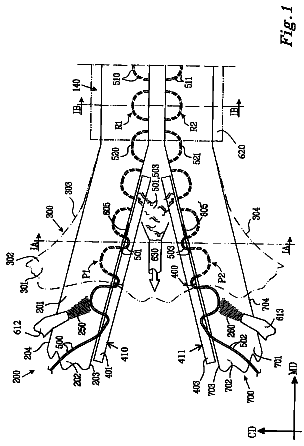
A bi-modal ankle-foot device that provides a curved effective shape appropriate for walking and a flattened effective shape for standing.
US 8,765,265 B2 · Assignee: Kyocera Medical Corporation · Inventors: Kyomoto; Masayuki et al.
Sheet 1 of 9 from the published document. All sheets in the USPTO PDF
Disclosed is a sliding member with excellent durability and capable of maintaining wear resistance over a long period of time. Further disclosed is an artificial joint member for which the film thickness of the polymer base material is reduced. Further disclosed is an artificial joint which is capable of demonstrating high lubricity, biocompatibility, and resistance to dislocation after introduction into the body. Further disclosed are a medical appliance material and a medical appliance which demonstrate excellent biocompatibility. The sliding material or the medical appliance material is formed by a polymer layer or a biocompatible material layer (B) being provided by coating at least a portion of the surface of a polymer base material (A), the surface of which has a ketone group, and the polymer layer or biocompatible layer (B) is characterized by being formed by surface graft polymerization, wherein the polymer base material (A) is immersed in a reaction system which contains a monomer (C), the polymer base material (A) is exposed to light, and polymerization of the monomer is initiated from the surface of the polymer base material (A). Using the sliding material or medical appliance material, an artificial joint member, an artificial joint, a medical appliance material, and a medical appliance are manufactured.
In general, polyethylene (mainly ultrahigh molecular weight polyethylene, hereinafter referred to as PE) has been conventionally used as a component member of artificial joints, such as an artificial hip joint and an artificial knee joint. However, when the artificial joint was used in vivo, there was a tendency that lysis of bone (i.e. osteolysis) had been induced by the wear debris of PE which was produced through a frictional movement. When the osteolysis happened, so-called loosening in which the fixing force of an artificial joint and a bone becomes weaker arose, and the loosening had become a big problem as complication of an arthroplasty. Usual abrasion loss of the above-mentioned PE was about 0.1 to 0.2 mm per year, and there was no problem for a certain period of time (for example, for about several years) after the arthroplasty. However, the amount of the above-mentioned loosen
1 of 9 drawing sheets so far from the published document, cropped to the drawing. Every sheet is in the USPTO PDF.
What the patent claimed, word for word. All of it is now free to use.
The present invention relates to a polymer sliding material to be used as a material for medical materials. The present invention particularly relates to a polymer sliding material which is capable of maintaining the properties of wear resistance, load supportability and fracture resistance for a long period of time, which is applicable to an artificial joint that restores human joints, and artificial joints which are made of the sliding material.
The present invention relates to medical appliances, particularly to medical tools which contact with blood and biotissues inside and/or outside of the body, such as a blood pump for an (auxiliary) artificial heart, an artificial valve, a stent and a pacemaker as well as dental implants.
In general, polyethylene (mainly ultrahigh molecular weight polyethylene, hereinafter referred to as PE) has been conventionally used as a component member of artificial joints, such as an artificial hip joint and an artificial knee joint. However, when the artificial joint was used in vivo, there was a tendency that lysis of bone (i.e. osteolysis) had been induced by the wear debris of PE which was produced through a frictional movement. When the osteolysis happened, so-called loosening in which the fixing force of an artificial joint and a bone becomes weaker arose, and the loosening had become a big problem as complication of an arthroplasty. Usual abrasion loss of the above-mentioned PE was about 0.1 to 0.2 mm per year, and there was no problem for a certain period of time (for example, for about several years) after the arthroplasty. However, the amount of the above-mentioned loosening became remarkable after a lapse of about five years, and thus a re-operation of exchanging the artificial joint should be needed, and that could impose a heavy burden on the patients.
In the artificial hip joint, the size of a femoral head component has been enlarged for the purpose of improving the range of motion and of prevention of dislocation. Since there is a limit for the size of a cup to be housed in an acetabulum, thinning of (the thickness of) the acetabular cup made of PE has been required corresponding to the enlarging the size of the femoral head component. There was a limit in advancing the thinning of the acetabular cup due to the viewpoints of the properties of wear resistance, deformation resistance and fracture resistance.
One of the solutions for the loosening is to decrease the amount of the wear debris of PE, and to this end extensive researches on crosslinked PE wherein molecular chains are crosslinked thereamong (hereinafter referred to as CLPE) by irradiating PE with an electron beam or a gamma ray have been carried out in recent years (Patent Documents 1 to 3). These researches utilize the matter that irradiating a polymer material with a radiation having high energy such as an electron beam or a gamma ray generates free radicals due to cutoff of molecular chains, followed by occurring the recombination or crosslinking reaction of the molecular chains. The above-mentioned CLPE is excellent in the property of wear resistance compared with the conventional PE, so that it is reported that the amount of the abrasion loss can be reduced even to the order of about one fifth to one tenth of the conventional amount.
On the other hand, intensive researches of alternate material of PE to be used for an artificial joint have also been carried out, thereby polyetheretherketone (hereinafter referred to as PEEK) is taken as an example thereof, which is an engineering plastic excellent in the properties of deformation resistance and fracture resistance. Although the property of wear resistance of PEEK itself is not so sufficient, the property is intended to be improved by compositing PEEK with a carbon fiber. However, use of rigid carbon fiber may damage the femoral head component to be combined therewith, and thus a PEEK material having sufficient properties for the artificial joints has not been obtained.
Alternatively, it has also been studied to improve the property of slidability of the surface of the sliding portion by forming a coating layer on the surface of PE. For example, it is known a method of fixing a coating layer of a random copolymer comprising an allylamine and a group analogous to a phosphorylcholine group to the surface of a medical appliance, which is required to have an excellent sliding property such as an artificial joint, thereby providing a biocompatibility and a surface lubricity thereto (Patent Document 4).
Particularly, an artificial joint component made from a polymeric material which is excellent in reducing the abrasion of the artificial joint and is capable of suppressing the generation of wear debris than ever before can be obtained by grafting a polymerizable monomer having a phosphoryl choline group onto the slidable surface of the artificial joint made from PE (Patent Document 5).
In the conventional photo-graft polymerization method, a photopolymerization initiator, for example, benzophenone (BP) was used. A "grafting from" method, wherein the surface of the substrate is used as the starting point of graft polymerization, is advantageous in achieving high densification of the graft layer compared with the other techniques, and it is necessary to preliminarily apply the polymerization initiator to the surface of the substrate which should be treated in order to realize this method. Patent Document 5 discloses an invention to use CLPE as a substrate, 2-methacryloyloxyethyl phosphorylcholine (MPC) as a monomer and BP as a photopolymerization initiator, thereby causing MPC graft polymerization on the surface of the substrate to form a membrane of a layer or MPC on the surface thereof.
The MPC polymer produced by the method of Patent Document 5 is useful as the material for forming an ideal biocompatible surface. However, in the case where the product therefrom is used as a biocompatible material, it is desirable that no photopolymerization initiator remains on the surface of the substrate and in the graft polymer layer after performing the graft polymerization reaction. Therefore, according to the method of Patent Document 5, there was another problem that the radical initiator remaining after performing the graft polymerization reaction should be removed from the surface of the substrate and the graft polymer layer.
It is reported that there are the methods of generating radicals using high-energy radiations, for example, a gamma ray, an electron beam (beta ray), an ionic beam, an X-ray and so on as the methods of performing the graft polymerization without using the polymerization initiator (Patent Document 6).
On the other hand, metal materials used for the medical appliance (for example, an artificial kidney, an artificial lung, an artificial trachea, and a blood pump for an (auxiliary) artificial heart, an artificial valve, an artificial blood vessel, a catheter, a cardiac pacemaker, an artificial bone, an artificial tendon, an artificial knuckle and a bone securing plate, a bone screw and so on) almost satisfies the condition of the mechanical properties, but they are not always sufficient to the biocompatibility (including the hemocompatibility). For example, when blood components produce thrombus by contacting with the surface of the medical appliance, they could inhibit the blood flow and thereby could seriously harm the human body. Therefore, an agent which suppresses the protective response of the body is required in therapeutic interventions using the medical appliance in clinical practice. Side effects caused by prolonged use of the above-mentioned agent are serious problems. For example, side effects caused by frequent use of anticoagulant agents include internal bleeding in the skin, nose bleeding, bleeding from the gums, excessive bleeding from the wound, bleeding such as hypermenorrhea, bloody sputum, hematuria, hematochezia as well as dizziness and wobble. Particularly, bleedings such as gastrointestinal bleeding, intracranial bleeding and intraperitoneal bleeding may place the patient's life in peril when finding of such bleedings would be delayed. For the developments of the medical appliance which can be embedded in a living body and used therein for a long period of time, a material having the biocompatibility (including the hemocompatibility) is essential.
In the present medical practice, a method to use a biologically active substance capable of inhibiting thrombus formation is used so as to impart antithrombotic properties to a surface of a medical device, for example, an artificial organ. To this end, there is a method of fixing a biologically active substance such as urokinase having a function of dissolving thrombus thus formed, heparin capable of inhibiting a function of thrombin as a coagulation factor, or prostaglandin as a platelet activation inhibitor to a surface of a material. However, the side effects caused by these agents can not be disregarded and is a big problem. In addition, it is extremely difficult to control the releasing rate of the agent and the effects therefrom cannot be expected after release of the agents. Most of the drug eluting type medical appliance (particularly stent) use a non-biodegradable polymers including, for example, poly(n-butyl methacrylate), poly(dimethyl siloxane) and so on. Thus, it is reported that polymers which remain on the surface of the stent after the drug eluted may cause an inflammatory reaction and/or a thrombus formation, and also cause a problem of failing to endothelize on the surface of the stent.
In order to impart antithrombotic properties to the surfaces of the medical appliance, for example, the artificial organ, a method utilizing a biological reaction is employed. That is, it is a method in which coagulation factors and platelets are moderately aggregated to a surface of a material to form a thrombus membrane, and endothelial cells constituting a vascular wall are engrafted on the thrombogenic membrane as a footing and a thin neointima is formed on the surface of the material by further growth of the endothelial cells. However, there is a possibility that a thrombus may occur during the period of about one month after an operation until endothelial cells will cover a medical appliance. Then, it became necessary to administer an antiplatelet drug and thus the side effect caused by the drug cannot be neglected.
Furthermore, there is also employed a method in which antithrombotic properties are obtained by surface properties of the material per se without using a biologically active substance or a drug. By the way, thrombus formation occurs due to an adsorption of a plasma protein and a subsequent activation of platelets, and the adsorption of the plasma protein onto the surface of the material physicochemically proceeds. Then, in order to prevent formation of thrombus, it is important to make the interaction between the material and blood as little as possible. Thus, it is desirable to convert the surface of the material into the state almost as close to blood as possible by reforming the surface thereof in order to decrease the above interaction.
Such a reforming method includes, for example, a method in which a water-soluble polymer is bonded by a coupling reaction utilizing functional groups such as hydroxyl and amino groups of the surface of the material.
For example, a method of fixing a random copolymer which consists of an allylamine and a group analogous to a phosphorylcholine group for a medical material is disclosed (Patent Document 7). When the copolymer is used as in the above method, the content of the phosphorylcholine group on the surface of the medical material decreases, thereby causing a problem that each of the biocompatibility (including the hemocompatibility), the hydrophilicity and the surface lubricity could not be attained to a satisfactory extent. On the other hand, when the content of the phosphorylcholine group in the copolymer is excessive, there arises another problem that the copolymer becomes soluble in water and adhesion thereof would not be maintained when used for a long period of time. Actually, it is reported that, in an artificial heart which was coated with an MPC copolymer, merely 5% of MPC copolymer remained after use thereof for ninety-one days (Non-Patent Document 1).
Another reforming method includes a method in which peroxide as a polymerization initiator is produced on a surface of a material by irradiating with ultraviolet rays, electric beams or ion beams in the presence of oxygen, and then a water-soluble vinyl monomer is subjected to radical polymerization to form a water-soluble polymer chain on the surface of the material. It is reported that this water-soluble polymer chain prevents a protein from being directly contacted with the surface of the material and inhibits the adsorption of the protein onto the surface of the material.
For example, it is reported that anti-protein adsorption property can be improved by grafting MPC as a monomer on a polyethylene surface through irradiation with ultraviolet rays (Patent Document 8). According to the method of Patent Document 2, it is designed to improve the wear resistant property of a substrate through imparting the surface of the substrate with highly slidability by causing graft polymerization of MPC onto PE using PE without ketone group as the substrate, MPC as a reactive monomer and BP as a photopolymerization initiator.
Taking a dental implant into account, there has conventionally been carried out a prosthetic treatment with retrievable partial denture or bridge denture for repairing a loss of teeth due to periodontal diseases and dental caries. However, retrievable partial denture has an aesthetic problem attributed from a metal hook and a problem of providing a feeling of resistance to implementation, while bridge denture has a problem that burden for abutment tooth to be ground cannot be avoided. A dental implant treatment has attracted special interest recently as a prosthetic treatment and is one of selection choices, and the number of cases has remarkably increased. In loss of teeth due to fracture of an alveolar bone, teeth are lost together with the alveolar bone around teeth and thus bone width and bone height enough to carry out embedding of implant were not often obtained. However, it has become possible to apply a bone grafting method, a guided bone regeneration (GBR) method, a bone lengthening method, a bone prosthetic material, and a bone augmentation method utilizing cytokines, thus increasing the number of cases of application of a dental implant. In some cases, it becomes possible to impart an occlusion function through embedding due to one-stage implant and mounting of an upper structure at an initial stage after embedding, by improving surface properties of an implant or controlling a load on an implant body after embedding. Establishment of a method of early and surely acquiring oseointegration remarkably contributes to stabilization of the occlusion function of the dental implant. However, even if oseointegration is acquired, it is impossible to persistently avoid the circumstance in which the implant body as foreign matters penetrates through the epithelium. Therefore, how plaque deposition in this gingival penetration portion is inhibited and inflammation around the implant body is prevented, was an important object for enabling the dental implant to function over a long period. Particularly in two-stage implant, the micro-gap existing between the abutment and the fixture bonding portion makes it easy to cause inflammation around the implant. Also, local bone resorption temporarily occurs due to a removal of the bond formed on so-called healing cap or the top portion of the implant body during secondary surgery, and thus down growth of gingival epithelia is likely to occur, thus leading to the situation where plaque deposition is likely to occur, and which situation becomes similar to periodontal diseases, thereby being obliged to remove the dental implant in some situations, which could arise a clinical problem. Patent Document 1: Japanese Patent No. 2984203 Patent Document 2: U.S. Pat. No. 6,228,900 Patent Document 3: International Publication No. WO97/29793 Patent Document 4: International Publication No. WO01/05855 Patent Document 5: Japanese Unexamined Patent Publication (Kokai) No. 2003-310649 Patent Document 6: Japanese Unexamined Patent Publication (Kokai) No. 2008-53041 Patent Document 7: International Publication No. WO01/05855 Patent Document 8: Japanese Unexamined Patent Publication (Kokai) No. 2007-202965 Nonpatent Document 1: In Vivo Evaluation of a MPC Polymer Coated Continuous Flow Left Ventricular Assist System, ARTIFICIAL ORGANS, VOL 27, No. 2, 2003
Problems to be Solved by the Invention
The above-mentioned CLPE shows an excellent wear resistant property rather than PE, but the period of use thereof is so short that it is not sufficiently confirmed whether it can maintain the wear resistant property for a long period of time. When CLPE or surface-modified PE is used for the material of an artificial joint, it may be expected to show an excellent wear resistant property. However, there is no improvement in the mechanical property of the substrate since the substrate itself is still made of PE or CLPE. Thus, there remained a problem that thinning of the acetabular cup has a limitation according to the viewpoints of the properties of deformation resistance and fracture resistance.
Moreover, when the technique of fixing the coating layer of the random copolymer to the surface of the medical appliance made of PE according to Patent Document 4 would be applied to a sliding member of an artificial joint, it is highly possible that the coating layer of the random copolymer would be peeled from the surface of PE under the rigorous friction and wear environment, so that it is difficult to put it into practical use. It is conceivable that these peeling could be resulted from the low bonding force between the surface of PE and the coating layer of the random copolymer. According to the above method, the coating layer of the random copolymer wherein the polymerization reaction has been sufficiently advanced is designed to immobilize to the surface of PE. However, there is no functional group for bonding with the coating layer of the random copolymer to be polymerized on the surface of the PE, and thus a sufficient bonding force seems not to be obtained.
On the other hand, the invention of Patent Document 5 succeeded in improving the bonding force between a polymer chain having a phosphoryl choline group and the surface of PE by graft bonding the polymer chains onto the surface of PE.
The method of Patent Document 5 is shown by the following scheme 1:
According to the method of Patent Document 5, a sliding member of a joint wherein a wear-resistant coating, which hardly peels off even under the rigorous friction and wear environment, is formed on the sliding surface of PE can be obtained, but the substrate is still made of PE. Therefore, there remained a problem that thinning of the acetabular cup has a limitation according to the viewpoints of the properties of deformation resistance and fracture resistance as with the case of the untreated PE and the other surface-modified PE.
The method of Patent Document 6 which do not use the polymerization initiator uses a high-energy radiation, and such a high-energy radiation per se has an increased risk. Furthermore, a large-scale and a special equipment is required for management of the radiation source, so that there is a problem in respect of the safety and the economical efficiency.
According to the simultaneous irradiation method proposed by Patent Document 6 as a specific method for graft polymerization, a sufficient grafting density could not be obtained in the graft polymerization due to generating radicals from both of the substrate and the monomer and unnecessary or undesired breakage of molecular chains could occur inside the substrate since the radiation such as gamma ray could penetrate to inside the substrate. Thus, there is a problem that the substrate could be degraded or embrittled by the method.
According to the pre-irradiation method proposed by Patent Document 6 as another method for graft polymerization, as the period of time after irradiation until the substrate, in which radicals generated, contacts with the monomers, the amount of the available radicals decreases. Thus, there is a possibility of failing to obtain a desired and sufficient grafting density (for example, 0.01 chains/nm.sup.2 or more). There also remains a problem that the substrate degrades (or embrittles) along with the irradiation of the radiation such as gamma ray. The grafting density is described in "New Frontiers in Polymer Synthesis" Advances in Polymer Science, VOL. 217, 2008.
Therefore, it is an object of the present invention to dissolve the above problems accompanied by providing the sliding member having an excellent durability, which is capable of maintaining the wear resistant property for a long period of time. It is another object of the present invention to improve the safety and economical efficiency during the production process of the sliding members, the artificial joint component or the artificial joint. It is another object of the present invention to provide the artificial joint which is designed to advance thinning of the polymer substrate. It is a further object of the present invention to provide an artificial join, which can demonstrate a high lubricity, a biocompatibility and an anti-dislocation function after introduced into the human body.
According to the methods proposed by Patent Document 7 and non-patent document 1, the ratio (or the density) of the phosphoryl choline group, which coat the surface of the substrate, fell below the desired extent in each case. It is also an object of the present invention to provide a medical appliance material that shows desired and excellent biocompatibility (including hemocompatibility), hydrophilicity and surface lubricity in the surface of the medical appliance when a monomer having phosphoryl choline group, particularly MPC is used.
The method of Patent Document 8 is shown by the scheme 1 illustrated above.
According to the method of Patent Document 8, the substrate is still made of PE, so that there is a certain limitation in reduction in thickness and in weight of the substrate in order to secure a sufficient strength of the substrate. Thus, it is yet another object of the present invention to design the reduction in thickness and/of in weight of the substrate, while to provide a medical appliance material which is capable of exerting a desired strength.
The present invention has been made in consideration of the above-mentioned problems and has the object of providing a medical appliance excellent in antithrombotic property and slidability, which hardly forms thrombus and the like, thereby for example, being capable of eliminating use of the drugs inhibiting a biological defense reaction, even where the appliance directly contacts with the biotissues inside and/or outside of the body and such a condition is maintained for a long period of time, and the production method therefor. It is desirable that the above medical appliance is excellent for the functions such as cellular adhesion inhibiting potency, biocompatibility, antibacterial properties (inhibition of biofilm formation and adhesion) and so on. Furthermore, it is yet another object of the present invention to provide a dental implant, which demonstrates cellular adhesion inhibiting effect and which is capable of inhibiting the periodontal diseases and the deposition of dental plaque.
Means for Solving the Problems
The inventors, on the one hand, focused on the matter that a membrane obtained through polymerizing the monomers containing phosphoryl choline groups shows similar behavior to the cellular membrane, and on the other hand, found the matter that the monomers having vinyl groups such as acrylates can be graft polymerized on the surface of the polymer substrate having ketone groups thereon, and then the above objects have been attained by combining the above matters.
The present application provides, as a first invention, an invention of a polymer sliding material comprising a polymer substrate (A) having ketone groups on the surface thereof and a coating layer (B) which coats at least a portion of the surface of the polymer substrate (A), wherein the coating layer (B) is formed by a surface graft polymerization comprising immersing the polymer substrate (A) in a reaction system containing a monomer (C), irradiating the polymer substrate (A) with light, thereby polymerizing the monomer from the surface of the substrate.
The present application provides, as a second invention, an invention of an artificial joint component made of the polymer sliding material of the first invention, wherein a polymer substrate (A) constructs the proximal of the artificial joint component, and a coating layer (B) is formed on at least the sliding face of the artificial joint component.
The present application provides, as a third invention, an invention of an artificial joint, which is made of the artificial joint component of the above second invention.
The present application provides, as a fourth invention, an invention of a medical appliance material comprising a biocompatible material layer (B) covering at least a portion of the surface of the polymer substrate (A) having ketone groups on the surface thereof, wherein the biocompatible material layer (B) is formed by a surface graft polymerization comprising immersing the polymer substrate (A) in a reaction system containing a monomer (C), irradiating the polymer substrate (A) with light, thereby polymerizing the monomer from the surface of the substrate.
The present application provides, as a fifth invention, an invention of a medical appliance produced with using the medical appliance material of the above fourth invention.
The present application provides, as a sixth invention, an invention of a method of producing a medical appliance material comprising a polymer substrate (A) and a coating layer (B) which coats at least a portion of the surface of the polymer substrate (A), the method comprising immersing a polymer substrate (A) in a reaction system containing a monomer (C) for forming a biocompatible material layer (B), irradiating the polymer substrate (A) with light, thereby initiating the polymerization of the monomer from the surface of the polymer substrate (A), wherein the polymer substrate (A) is a polymer having ketone groups on the surface thereof, and the reaction system containing the monomer (C) as well as the surface and the inside of the polymer substrate (A) includes no polymerization initiator.
These inventions of the present application have been accomplished based on the confirmation performed by the present inventors that when a monomer having vinyl group is graft polymerized through the surface-starting graft polymerization, i.e. the "grafting from" method, a covalent bonding having a favorable and high bonding may be formed between a polymer layer (or a polymer film) or a biocompatible material layer obtained from the graft polymerization and a polymer substrate, and a desired polymerization reaction may be performed without using a polymerization initiator by using a particular kind of polymer as the polymer substrate.
The polymer sliding material of the first invention, in one embodiment, may be characterized in that the coating layer (B) is formed through the graft polymerization without including a polymerization initiator in the surface and inside of the polymer substrate (A) and the reaction system containing the monomer (C). The polymer sliding material of the first invention, in one embodiment, can be characterized in that the polymer substrate (A) is the polymer substrate having an aromatic ketone.
In the polymer sliding material of the first invention, in one embodiment thereof, the polymer substrate (A) is a polymer selected from the group consisting of polyether ketone (PEK), PEEK, polyether ketone ketone (PEKK), Polyetheretherketone ketone (PEEKK), polyether ketone ether ketone ketone (PEKEKK) and poly aryl ether ketone (PAEK), a composited polymer wherein at least two kinds of polymers from the above group are composited, and a fiber-reinforced polymer formed by a polymer selected from the above polymer and the composited polymer. In the polymer sliding material of the first invention, in one embodiment thereof, the monomer (C) is selected from (meth)acrylate compounds.
In the polymer sliding material of the first invention, in one embodiment thereof, the monomer (C) is at least a compound selected from the group consisting of an epoxy(meth)acrylate compound, an urethane (meth)acrylate compound, a polyester (meth)acrylate compound, a polybutadiene (meth)acrylate compound and a silicone (meth)acrylate compound. In the polymer sliding material of the first invention, in one embodiment thereof, the monomer (C) contains a compound having a phosphoryl choline group.
In the polymer sliding material of the first invention, in one embodiment thereof, the compound having a phosphoryl choline group is MPC. In the polymer sliding material of the first invention, in one embodiment thereof, the surface graft polymerization was performed in a solvent which disperses or dissolves the monomer (C) without dissolving the polymer substrate (A).
The polymer sliding material of the first invention, in one embodiment thereof, shows the coefficient of dynamic friction in a range from 0.01 to 0.04 under the load of 0.98N, the slide distance of 25 mm, the bounce frequency of 1 Hz, the room temperature and the water lubrication environmental condition.
In the polymer sliding material of the first invention, in one embodiment thereof, the polymer substrate (A) constructs at least a portion of an artificial joint component, for example, the whole or a part of the acetabular cup and/or the whole or a part of the bone head portion of the artificial joint. In the polymer sliding material of the first invention, in one embodiment thereof, the coating layer (B) has a thickness of 10 to 200 nm. In the polymer sliding material of the first invention, in one embodiment thereof, the surface of the sliding material shows a static water-contact angle of not more than 20.degree. using a sessile drop method under the conditions in which the contact angle was measured after 60 seconds. In the polymer sliding material of the first invention, in one embodiment thereof, each concentration of a phosphorus atom and a nitrogen atom on the surface of the sliding material measured by X-ray photoelectron spectroscopy is not less than 4 atom %. An artificial joint component of the second invention, in one embodiment thereof, is an artificial joint component produced by polymer sliding material of the first invention, wherein the polymer substrate (A) constructs the base portion of the artificial joint component and at least a sliding face of the artificial joint component is coated with a coating layer (B). In the polymer sliding material of the second invention, in one embodiment thereof, the ball head to be combined has a thickness of not less than 32 mm and the polymer substrate has a thickness in the range from 3 to 6 mm. An artificial joint of the third invention, in one embodiment thereof, can be characterized by being formed from the artificial joint component.
In the medical appliance material of the fourth invention, in one embodiment thereof, a biocompatible material layer (B) is formed through the graft polymerization without including a polymerization initiator in the surface and inside of the polymer substrate (A) and the reaction system containing the monomer (C).
In the medical appliance material of the fourth invention, in one embodiment thereof, the polymer substrate (A) is the polymer substrate that contains an aromatic ketone.
In the medical appliance material of the fourth invention, in one embodiment thereof, the polymer substrate (A) is a polymer selected from the group consisting of PEK, PEEK, PEKK, PEEKK, PEKEKK and PAEK, a composited polymer wherein at least two kinds of polymers from the above group are composited, and a fiber-reinforced polymer formed by a polymer selected from the above polymer and the composited polymer.
In the medical appliance material of the fourth invention, in one embodiment thereof, the monomer (C) is selected from (meth)acrylate compounds.
In the medical appliance material of the fourth invention, in one embodiment thereof, the monomer (C) is at least one compound selected from the group consisting of an epoxy(meth)acrylate compound, an urethane (meth)acrylate compound, a polyester (meth)acrylate compound, a polybutadiene (meth)acrylate compound and a silicone (meth)acrylate compound.
In the medical appliance material of the fourth invention, in one embodiment thereof, the monomer (C) contains a compound having a phosphoryl choline group.
In the medical appliance material of the fourth invention, in one embodiment thereof, the compound having a phosphoryl choline group is MPC.
In the medical appliance material of the fourth invention, in one embodiment thereof, the surface graft polymerization was performed in a solvent which disperses or dissolves the monomer (C) without dissolving the polymer substrate (A).
In the medical appliance material of the fourth invention, in one embodiment thereof, the surface of the biocompatible material layer (B) shows the coefficient of dynamic friction in a range from 0.01 to 0.04, preferably from 0.01 to 0.02 using a Pin-on-plate type friction tester under the load of 0.98N, the slide distance of 25 mm, the bounce frequency of 1 Hz, the room temperature and the water lubrication environmental condition.
In the medical appliance material of the fourth invention, in one embodiment thereof, the biocompatible material layer (B) has a thickness of 10 nm to 1 micrometer, preferably at least 50 nm, more preferably at least 100 nm up to about 250 nm, more preferably up to about 200 nm.
In the medical appliance material of the fourth invention, in one embodiment thereof, the surface of the biocompatible material layer (B) shows a static water-contact angle of not more than 40.degree., preferably not more than 20.degree., more preferably not more than 10.degree. using a sessile drop method under the conditions in which the contact angle was measured after 60 seconds.
In the medical appliance material of the fourth invention, in one embodiment thereof, the surface each concentration of a phosphorus atom and a nitrogen atom on the surface of the biocompatible material layer (B) measured by X-ray photoelectron spectroscopy is not less than 4 atom %, preferably not less than 4.5 atom %, more preferably not less than 5.0 atom %.
In the medical appliance material of the fourth invention, in one embodiment thereof, the adsorption of protein (albumin or fibrinogen) of the surface of the biocompatible material layer (B) obtained through the micro BCA method is not more than 0.2 microgram/cm.sup.2, preferably not more than 0.1 microgram/cm.sup.2, more preferably not more than 0.08 microgram/cm.sup.2.
In relation to the fifth invention, a medical appliance can be formed by forming a portion, which forms the fundamental skeleton of each medical appliance, is made of a polymer substrate (A), and coating a portion of the surface of the polymer substrate (A), which may directly contact with the biotissues including blood and body fluid, with a biocompatible material layer (B).
Therefore, the medical appliance of the fifth invention, in one embodiment thereof, is selected from the group consisting of an artificial kidney, an artificial lung, an artificial trachea, and a blood pump for an (auxiliary) artificial heart, an artificial valve, an artificial blood vessel, a catheter, a cardiac pacemaker, a dental implant, an artificial tooth, an artificial bone, an artificial tendon, an artificial knuckle, a bone securing plate, a bone screw and so on.
In relation to the production method of the medical appliance of the sixth invention, a biocompatible material layer (B) is formed through the graft polymerization without including a polymerization initiator in the surface and inside of the polymer substrate (A) and the reaction system containing the monomer (C).
In relation to the production method of the medical appliance of the sixth invention, the polymer substrate that contains an aromatic ketone is used as the polymer substrate (A).
In relation to the production method of the medical appliance of the sixth invention, any polymer selected from the group consisting of PEK, PEEK, PEKK, PEEKK, PEKEKK and PAEK, a composited polymer wherein at least two kinds of polymers from the above group are composited, and a fiber-reinforced polymer formed by a polymer selected from the above polymer and the composited polymer is used as the polymer substrate (A). In relation to the production method of the medical appliance of the sixth invention, the monomer (C) is selected from (meth)acrylate compounds.
In relation to the production method of the medical appliance of the sixth invention, the monomer (C) is at least one compound selected from the group consisting of an epoxy(meth)acrylate compound, an urethane (meth)acrylate compound, a polyester (meth)acrylate compound, a polybutadiene (meth)acrylate compound and a silicone (meth)acrylate compound.
In relation to the production method of the medical appliance of the sixth invention, the monomer (C) contains a compound having a phosphoryl choline group. In relation to the production method of the medical appliance of the sixth invention, the compound having a phosphoryl choline group is MPC.
In relation to the production method of the medical appliance of the sixth invention, the surface graft polymerization was performed in a solvent which disperses or dissolves the monomer (C) without dissolving the polymer substrate (A).
Effects of the Invention
According to the first invention of the present application, the polymer substrate and the coating layer formed through polymerizing monomers are bonded (covalently bonded) by graft polymerization, so that a polymer sliding material which can be manufactured safely and economically and is excellent in the durability, which is capable of maintaining the wear resistant property for a long period of time, can be provided. In particular, according to the first invention, a polymer sliding material excellent in the durability, which is capable of preventing remarkable decrease of the wear resistant property for a long period of time such as over five to ten years when applied to an artificial joint can be provided. Since a polymer substrate having ketone groups on the surface thereof, such as PEEK, which is an engineering plastic which is excellent in deformation resistance and fracture resistance, is used as the polymer substrate, a polymer sliding member having less thickness can be provided, while attaining a sufficient wear resistance property, load support property and fracture resistance property even when the thickness of the polymer substrate would be made relatively thinner.
According to the second invention of the present application, the artificial joint component having the properties of the polymer sliding material of the above first invention can be provided.
The description continues in the full USPTO document.
About 6,263 words. The USPTO PDF has it with every drawing.
Fees are due 3.5, 7.5 and 11.5 years after grant. This patent expired on July 1, 2026, so the fee marked "not paid" was the one that went unpaid.
POLYMER SLIDING MATERIAL, ARTIFICIAL JOINT MEMBER, MEDICAL APPLIANCE, AND MANUFACTURING METHOD THEREFOR
Filed Dec 2009 · published Jan 2012Polymer sliding material, artificial joint member, medical appliance, and manufacturing method therefor
Filed Dec 2009 · granted Jul 2014Earlier publications, parents and continuations. None of them can still be enforced, or this patent would not be listed.
Prior art cited by the examiner or applicant. Useful when you check your own idea for novelty.
Everything on this page comes from the documents linked above.