Technical field
The present invention relates to a method of manufacturing a tablet.
Background art
With increase in an aging population and change in the life environment, it is desired to develop an oral disintegrating-type solid preparation which can be easily taken, and can be handily and arbitrarily taken at any time anywhere without water, while maintaining convenient handling characteristics of tablets.
On the other hand, when a physiologically active substance is a substance exhibiting bitterness, from a viewpoint of drug taking observance, desirably, bitterness is masked by coating this substance. In addition, when a physiologically active substance is a substance liable to be degraded with an acid, it is necessary to coat the substance to prevent degradation by gastric acid and sufficiently deliver the substance to intestines. For these subjects, usually, coating tablets and capsules are used.
Although both are inconsistent requirements, as preparations which satisfy these requirements simultaneously, tablets comprising coated fine particles have been developed heretofore in the prior art. For example, JP 6-502194 A (U.S. Pat. No. 5,464,632) discloses a rapidly disintegrating multi-particle tablet characterized in that an effective substance is present in the form of coated fine particles and the like. Further, JP 2000-281564 A discloses an oral disintegrating tablet comprising coated fine particles in the tablet.
However, in the manufacture of a tablet comprising coated granules, there is a problem that, sometimes, a part of a coating film of the granules is ruptured during table compression, and there are problems that this decreases the aforementioned effect of masking bitterness, and reduces the acid resistance.
Objects of the invention
Therefore, an object of the present invention is to prevent rupture of a part of a coating film of coated granules at the time of tablet compression in the manufacture of a tablet comprising the coated granules.
Summary of the invention
The present inventors have found that rupture of a coating film of coated granules at the time of tablet compression can be decreased by compressing the granules at a temperature exceeding room temperature. Thus, the present invention has been completed.
That is, the present invention provides:
A method of manufacturing a tablet, which comprises compressing coated granules containing a physiologically active substance at a temperature exceeding room temperature;
The method according to the above (1), wherein the physiologically active substance is a physiologically active substance which is unstable to an acid;
The method according to the above (2), wherein the physiologically active substance which is unstable to an acid is a proton pump inhibitor (PPI);
The method according to the above (3), wherein the PPI is a benzimidazole compound or a salt thereof;
The method according to the above (4), wherein the benzimidazole compound is lansoprazole or an optically active isomer thereof;
The method according to the above (1), wherein the coated granules are enteric-coated granules;
The method according to the above (6), wherein the enteric coating layer contains an aqueous enteric polymer base;
The method according to the above (7), wherein the aqueous enteric polymer base is a methacrylic copolymer;
The method according to the above (1), wherein the temperature exceeding room temperature is about 25.degree. C. or higher;
The method according to the above (1), wherein the temperature exceeding room temperature is a temperature of about 25.degree. C. to about 50.degree. C.;
The method according to the above (1), wherein the temperature exceeding room temperature is a temperature of about 25.degree. C. to about 40.degree. C.;
The method according to the above (1), wherein the tablet is an oral disintegrating tablet;
A method for manufacturing an oral disintegrating tablet, which comprises compressing enteric-coated granules containing a physiologically active substance which is unstable to an acid, and warmed at about 25.degree. C. to about 50.degree. C.;
The method according to the above (13), wherein a tablet compressing machine is warmed;
The method according to the above (14), wherein the tablet compressing machine is a rotary tablet compressing machine, and compressing is performed after a rotary turn table thereof is warmed;
A method of decreasing rupture of a coating film of coated granules containing a physiologically active substance, which comprises warming the coated granules to a temperature exceeding room temperature to compress the granules;
A method of reducing the dissolved percentage in the acid stage of a tablet comprising coated granules containing a physiologically active substance, which comprises warming the coated granules to a temperature exceeding room temperature to compress the granules;
A method of improving hardness of a tablet, which comprises warming coated granules containing a physiologically active substance to a temperature exceeding room temperature to compress the granules;
A tablet obtainable by coating a composition containing a physiologically active substance with a coating layer, adding additive(s) to the resulting coated granules, warming a mixture of the coated granules and the additive(s) to a temperature exceeding room temperature, and compressing the mixture;
The tablet according to the above (19), wherein the physiologically active substance is a physiologically active substance which is unstable to an acid;
The tablet according to the above (20), wherein the physiologically active substance which is unstable to an acid is PPI of a benzimidazole compound or a salt thereof;
The tablet according to the above (21), wherein the benzimidazole compound is lansoprazole or an optically active isomer thereof;
A tablet obtained by the method according to the above (1);
A tablet, wherein its dissolved percentage in the acid stage is improved by tablet compression under warming;
A tablet, wherein its hardness is increased by tablet compression under warming;
A tablet comprising coated granules, wherein rupture of a coating film of the coated granules is decreased by tablet compression under warming;
A tablet comprising coated granules, wherein its dissolved percentage in the acid stage is about 10% or less, its hardness is improved, and rupture of a coating film of the coated granules is decreased;
An enteric-coated granule which comprises lansoprazole or an optically active isomer, and is warmed to a temperature exceeding room temperature;
The granule according to the above (28), wherein the enteric-coated layer comprises an aqueous enteric polymer base;
The granule according to the above (28), wherein the aqueous enteric polymer base is a methacrylic copolymer;
The granule according to the above (28), wherein the temperature exceeding room temperature is about 25.degree. C. or higher;
The granule according to the above (28), wherein the temperature exceeding room temperature is a temperature of about 25.degree. C. to about 50.degree. C.;
The particle according to the above (30), wherein the temperature exceeding room temperature is a temperature of about 25.degree. C. to about 40.degree. C.;
Use of an enteric-coated granule comprising a physiologically active substance which is unstable to an acid, and warmed to a temperature exceeding room temperature, for manufacturing a tablet having improved acid resistance; and the like.
Brief description of the drawings
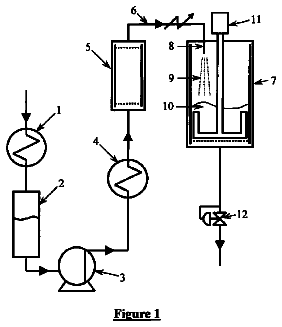
FIG. 1 illustrates a schematic configuration of a rotary tablet compressing machine which is one embodiment of the tablet compressing apparatus used in the present invention.
FIG. 2 illustrates a schematic block diagram for controlling a warming device of the apparatus of FIG. 1.
FIG. 3 illustrates a program for actuating the warming device of FIG. 2.
Detailed description of the invention
As used herein, the "coated granules" means that subject granules to be coated have been coated with a coating agent. Here, "coated" includes not only a case where a subject (granules) to be coated is completely coated, but also a case where a part of the subject is exposed.
The "physiologically active substance" contained in the "granules" is not particularly limited as far as it is preferably coated for the purpose of, for example, masking a taste or an odor, rendering soluble in intestines, or sustained release. Examples of the substance which is preferably coated include a physiologically active substance exhibiting bitterness, a physiologically active substance which is unstable to an acid, and the like.
The "physiologically active substance" may be any substance in the form of solids, powders, crystals, oils and solutions, and examples thereof to be used include one or more drug ingredients selected from nourishing and health-promoting agents, antipyretic-analgesic-antiinflammatory agents, antipsychotic drugs, antianxiety drugs, antidepressants, hypnotic-sedatives, spasmolytics, central nervous system affecting drugs, cerebral metabolism ameliolators, cerebral circulation ameliolators, antiepileptics, sympathomimetic agents, gastrointestinal function conditioning agents, antacids, antiulcer agents, antitussive-expectorants, antiemetics, respiratory stimulants, bronchodilators, antiallergic agents, dental buccal drugs, antihistamines, cardiotonics, antiarrhythmic agents, diuretics, hypotensive agents, vasoconstrictors, coronary vasodilators, peripheral vasodilators, antihyperlipidemic agents, cholagogues, antibiotics, chemotherapeutic agents, antidiabetic agents, drugs for osteoporosis, antirheumatics, skeletal muscle relaxants, antimotion sickness drugs, hormones, alkaloid narcotics, sulfa drugs, drugs for treatment of gout, anticoagulants, anti-malignant tumor agents, agents for Alzheimer's disease, and the like. These physiologically active substances may be any of free compounds and salts thereof. Further, they may be racemic compounds or optically active compounds. Furthermore, they may be prodrugs thereof.
Examples of the nourishing and health-promoting agents include vitamins such as vitamin A, vitamin D, vitamin E (d-.alpha.-tocopherol acetate and the like), vitamin B, (dibenzoylthiamine, fursultiamine hydrochloride and the like), vitamin B.sub.2 (riboflavin butyrate and the like), vitamin B.sub.6 (pyridoxine hydrochloride and the like), vitamin C (ascorbic acid, sodium L-ascorbate and the like), vitamin B.sub.12 (hydroxocobalamin acetate and the like) and the like; minerals such as calcium, magnesium and iron; amino acids; oligosaccharides; galenical; and the like.
Examples of the antipyretic-analgesic-antiinflammatory agents include aspirin, acetaminophen, ethenzamide, ibuprofen, diphenhydramine hydrochloride, dl-chlorpheniramine maleate, dihydrocodeine phosphate, noscapine, methylephedrine hydrochloride, phenylpropanolamine hydrochloride, caffeine, anhydrous caffeine, serrapeptase, lysozyme hydrochloride, tolfenamic acid, mefenamic acid, diclofenac sodium, flufenamic acid, salicylamide, aminopyrine, ketoprofen, indomethacin, bucolome, pentazocine, and the like.
Examples of the antipsychotic drugs include chlorpromazine, reserpine, and the like.
Examples of the antianxiety drugs include alprazolam, chlordiazepoxide, diazepam, and the like.
Examples of the antidepressants include imipramine, maprotiline hydrochloride, amphetamine, and the like.
Examples of the hypnotic-sedatives include estazolam, nitrazepam, diazepam, perlapine, phenobarbital sodium, and the like.
Examples of the spasmolytics include scopolamine hydrobromide, diphenhydramine hydrochloride, papaverine hydrochloride, and the like.
Examples of the central nervous system affecting drugs include citicoline, and the like.
Examples of the cerebral metabolism ameliolators include meclofenoxate hydrochloride, and the like.
Examples of the cerebral circulation ameliolators include vinpocetine, and the like.
Examples of the antiepileptics include phenytoin, carbamazepine, and the like.
Examples of the sympathomimetic agents include isoproterenol hydrochloride, and the like.
Examples of the gastrointestinal function conditioning agents include stomachic-digestives such as diastase, saccharated pepsin, scopolia extract, cellulase AP3, lipase AP, cinnamon oil, etc.; intestinal function controlling drugs such as berberine chloride, resistant lactic acid bacterium, Lactobacillus bifidus, etc.; and the like.
Examples of the antacids include magnesium carbonate, sodium hydrogen carbonate, magnesium aluminometasilicate, synthetic hydrotalcite, precipitated calcium carbonate, magnesium oxide, and the like.
Examples of the antiulcer agents include PPI such as benzimidazole compounds or salts thereof, for example, lansoprazole, omeprazole, rabeprazole, pantoprazole, etc. (including respective optical active isomers); histamine H.sub.2 receptor antagonists such as famotidine, cimetidine, ranitidine hydrochloride, etc.; and the like.
Examples of the antitussive-expectorants include chloperastine hydrochloride, dextromethorphan hydrobromide, theophylline, potassium guaiacolsulfonate, guaifenesin, codeine phosphate, and the like.
Examples of the antiemetics include diphenidol hydrochloride, metoclopramide, and the like.
Examples of the respiratory stimulants include levallorphan tatrate and the like.
Examples of the bronchodilators include theophylline, salbutamol sulfate, and the like.
Examples of the antiallergic agents include amlexanox, seratrodast, and the like.
Examples of the dental buccal drugs include oxytetracycline, triamcinolone acetonide, chlorhexidine hydrochloride, lidocaine, and the like.
Examples of the antihistamines include diphenhydramine hydrochloride, promethazine, isothipendyl hydrochloride, dl-chlorpheniramine maleate, and the like.
Examples of the cardiotonics include caffeine, digoxin, and the like.
Examples of the antiarryhythmic agents include procainamide hydrochloride, propranolol hydrochloride, pindolol, and the like.
Examples of the diuretics include isosorbide, furosemide, thiazide agents such as HCTZ, etc.; and the like.
Examples of the hypotensive agents include delapril hydrochloride, captopril, hexamethonium bromide, hydralazine hydrochloride, labetalol hydrochloride, manidipine hydrochloride, candesartan cilexetil, methyldopa, losartan, valsartan, eposartan, irbesartan, tasosartan, telmisartan, and the like.
Examples of the vasoconstrictors include phenylephrine hydrochloride, and the like.
Examples of the coronary vasodilators include carbocromen hydrochloride, molsidomine, verapamil hydrochloride, and the like.
Examples of the peripheral vasodilators include cinnarizine and the like.
Examples of the antihyperlipidemic agents include cerivastatin sodium, simvastatin, pravastatin sodium, and the like.
Examples of the cholagogues include dehydrocholic acid, trepibutone, and the like.
Examples of the antibiotics include cephem antibiotics such as cefalexin, cefaclor, amoxicillin, pivmecillinam hydrochloride, cefotiam hexetil hydrochloride, cefadroxil, cefixime, cefditoren pivoxil, cefteram pivoxil, cefpodoxime proxetil, cefotiam hydrochloride, cefozopran hydrochloride, cefmenoxime hydrochloride, cefsluodin sodium, etc.; synthetic antibacterials such as ampicillin, cyclacillin, sulbenicillin sodium, nalidixic acid, enoxacin, etc.; monobactam antibiotics such as carumonam sodium; penem antibiotics; carbapenem antibiotics; and the like.
Examples of the chemotherapeutic agents include sulfamethizole hydrochloride, thiazosulfone, and the like.
Examples of the antidiabetic agents include tolbutamide, voglibose, pioglitazone hydrochloride, troglitazone, glibenclamide, troglitazone, rosiglitazone maleate, acarbose, miglitol, emiglitate, and the like.
Examples of the drugs for osteoporosis include ipriflavone, and the like.
Examples of the skeletal muscle relaxants include methocarbamol, and the like.
Examples of the antimotion sickness drugs include meclizine hydrochloride, dimenhydrinate, and the like.
Examples of the antirheumatics include methotrexate, bucillamine, and the like.
Examples of the hormones include riothyroinine sodium, dexamethasone sodium phosphate, prednisolone, oxendolone, leupororelin acetate, and the like.
Examples of the alkaloid narcotics include opium, morphine hydrochloride, ipecac, oxycodone hydrochloride, opium alkaloids hydrochlorides, cocaine hydrochloride, and the like.
Examples of the sulfa drugs include sulfamine, sulfisomidine, sulfamethizole, and the like.
Examples of the drugs for treatment of gout include allopurinol, colchicine, and the like.
Examples of the anticoagulants include dicoumarol, and the like.
Examples of the anti-malignant tumor agents include 5-fluorouracil, uracil, mitomycin, and the like.
Examples of the agents for Alzheimer's disease include idebenone, vinpocetine and the like.
Among the above drug ingredients, those preferably used are nourishing and health-promoting agents, antipyretic-analgesic-antiinflammatory agents, hypnotic-sedatives, central nervous system affecting drugs, gastrointestinal function conditioning agents, antiulcer agents, antitussive-expectorants, antiallergic agents, antiarrhythmic agents, diuretics, hypotensive agents, vasoconstrictors, coronary vasodilators, antihyperlipidemic agents, antidiabetic agents, drugs for osteoporosis, skeletal muscle relaxants, antimotion sickness drugs, and the like.
In the present invention, drug ingredients which are particularly preferably used are antiulcer agents such as lansoprazole, etc.; antidiabetic agents such as voglibose, pioglitazone hydrochloride, etc.; and hypotensive agents such as manidipine hydrochloride, candesartan cilexetil, etc.
Further, two or more kinds of these drug ingredients may be incorporated in the rapidly disintegrating solid preparation of the present invention.
The drug ingredients may be diluted with diluents generally used in medical and food fields. In addition, they may be those subjected to treatment for masking bitterness of the drug ingredients.
The above drug ingredients are used in an amount of, for example, 0.01 to 90 parts by weight, preferably 0.02 to 50 parts by weight, more preferably 0.05 to 30 parts by weight based on 100 parts by weight of the solid preparation.
As the above "physiologically active substance which is unstable to an acid", there are compounds which become unstable in an acidic region and/or are inactivated with an acid (in particular, drug ingredients), and specific examples thereof include PPI. Examples of PPI include benzimidazole compounds having the antiulcer activity or salts thereof (including racemic compounds and optically active isomers) (e.g., lansoprazole, omeprazole, rabeprazole, pantoprazole, perprazole, leminoprazole, TU-199, etc.). Among them, preferred PPI are lansoprazole, omeprazole, rabeprazole, pantoprazole, etc., and particularly preferred PPI are lansoprazole and an optically active isomer thereof. As the optically active isomer of lansoprazole, R-isomer is particularly preferable. In addition, examples of PPI include tenatoprazole.
The "granules" may contain binding agents, lubricants, excipients, etc., which are used in manufacturing the following general preparations, in addition to the physiologically active substance. The amounts thereof to be used are those used in manufacturing the general preparations. When the physiologically active substance is a "physiologically active substance which is unstable to an acid", it is preferable to incorporate a basic inorganic salt into the granules in order to stabilize the physiologically active substance in the preparations. Examples of the "basic inorganic salt" include basic inorganic salts of sodium, potassium, magnesium and/or calcium (e.g. sodium carbonate, sodium bicarbonate, potassium carbonate, potassium bicarbonate, ground magnesium carbonate, magnesium carbonate, magnesium oxide, magnesium hydroxide, etc.), and the like.
The "granules" are not particularly limited as far as they are in granular forms. They may have or may not have cores. In addition, when the granules have cores, the cores may contain, or may not contain the physiologically active substance. The particle diameter of granules may be determined according to that of the desired coated granules. The granules may be prepared by a per se known method or a similar method according to a particular form thereof.
When the granules do not have cores, they can be prepared by a per se known granulation method.
As the "granulation method", there are a tumbling granulation method (e.g. centrifugal tumbling granulation method), a fluidized granulation method (e.g. tumbling fluidized bed granulation, fluidized granulation etc.), an agitation granulation method, and the like. Among them, a fluidized granulation method is preferable. Particularly preferable is a tumbling fluidized bed granulation method.
Examples of the tumbling granulation method include a method using "CF apparatus" manufactured by Freund. Examples of the tumbling fluidized bed granulation method include a method using "Spiralflow", "Multiplex" manufactured by Powrex, or "Newmalme" manufactured by Fujipowdal. A spraying method of a mixture can be appropriately selected according to a particular kind of a granulation apparatus, and may be any of top spray system, bottom spray system, tangential spray system, etc. Among them, tangential spray system is preferable.
On the other hand, the granules having cores can be prepared by coating the cores with the physiologically active substance by a per se known method.
For example, according to the method described in JP 5-092918 A (coating method), granules can be prepared by coating cores containing crystalline cellulose and lactose with a physiologically active substance which is unstable to an acid and, if necessary, a basic inorganic salt, a binding agent, a lubricant, an excipient, a water-soluble polymer, etc. (hereinafter, sometimes, abbreviated as coated layer), and the like.
The average particle diameter of the "cores" is about 40 to 350 .mu.m, preferably about 50 to 250 .mu.m, more preferably about 100 to 250 .mu.m, particularly preferably about 100 to 200 .mu.m. Examples of the cores having such an average particle diameter include particles, 100% of which pass through No. 50 (300 .mu.m) sieve, and in which particles remaining on No. 60 (250 .mu.m) are about 5 w/w % or less of the whole, and particles passing through No. 282 (53 .mu.m) are about 10 w/w % or less of the whole. The specific volume of the "cores" are 5 ml/g or less, preferably 4 ml/g or less, more preferably 3 ml/g or less.
Examples of the "cores" include
a spherical granulated product of crystalline cellulose and lactose,
a 150-250 .mu.m spherical granulated product of crystalline cellulose (manufactured by Asahi Chemical industry Co., Ltd., Avicel SP),
a 50-250 .mu.m agitation granulated product containing lactose (9 parts) and .alpha. starch (1 parts),
250 .mu.m or less finely divided particles obtained by classifying microcrystalline cellulose spherical granules described in JP 61-213201 A,
processed products such as waxes which are formed into spheres by spray chilling or melt cooling granulation,
a processed product such as a gelatin bead product of an oil component,
calcium silicate,
starch,
porous particles of chitin, cellulose, chitosan, etc., and
a bulk product such as granulated sager, crystalline lactose, crystalline cellulose, sodium chloride, etc., and preparation processed products thereof. Farther, these cores may be prepared by a per se known grinding method or granulation method, and passed through a sieve to prepare particles having the desires particle diameter.
Examples of the "spherical granulated product of crystalline cellulose and lactose" include (i) a 100-200 .mu.m spherical granulated product containing crystalline cellulose (3 parts) and lactose (7 parts) (e.g., Nonparel 105 (70-140) (particle diameter 100 to 200 .mu.m), manufactured by Freund) (ii) a 150-250 .mu.m spherical granulated product containing crystalline cellulose (3 parts) and lactose (7 parts) (e.g., Nonparel NP-7:3, manufactured by Freund), (iii) a 100-200 .mu.m spherical granulated product containing crystalline cellulose (4.5 parts) and lactose (5.5 parts) (e.g., Nonparel 105T (70-140) (particle diameter 100 to 200 .mu.m), manufactured by Freund) etc.], (iv) a 150-250 .mu.m spherical granulated product containing crystalline cellulose (5 parts) and lactose (5 parts) [e.g., Nonparen NP-5:5, manufactured by Freund], and the like.
In order to prepare a preparation, which is excellent in the solubility, while maintaining the suitable strength, preferred examples of the "cores" include a spherical granulated product containing crystalline cellulose and lactose, more preferably a spherical granulated product containing crystalline cellulose and lactose (containing about 50% or weight or more of lactose). A preferred product contains crystalline cellulose in an amount of about 20 to 50% by weight, preferably about 40 to 50% by weight and lactose in an amount of about 50 to 80% by weight, preferably about 50 to 60% by weight.
As the cores used in the present invention, a spherical granulated product of crystalline cellulose and lactose is preferable, and a 100-200 .mu.m spherical granulated product containing crystalline cellulose (4.5 parts) and lactose (5.5 parts) is further preferable.
The "cores" may contain a physiologically active substance such as the aforementioned drug ingredients. However, since a coating layer containing the physiologically active substance can control release of the physiologically active substance, the cores may not contain any physiologically active substance.
The "cores" may be fine particles and, in order to decrease a variation in coating, it is preferable that the cores are as uniformly spherical as possible.
By coating the granules thus obtained with a coating agent by a per se known method, the "coated granules" are obtained. Examples of the coating agent include enteric polymers (e.g., cellulose acetate phthalate, methacrylic acid (hereinafter, referred to as methacrylic acid) copolymer L, methacrylic acid copolymer LD [Eudragit L30D-55 (trade name: manufactured by Rohm), methacrylic acid copolymer S, hydroxypropylmethylcellulose phthalate, hydroxymethylcellulose acetate succinate, hydroxypropylmethylcellulose acetate succinate, carboxymethylethylcellulose, Colicoat MAE30DP (trade name; manufactured by BASF), Polykid PA30 (trade name: manufactured by Sanyo Chemical Industries, Ltd.) etc.], carboxymethylethylcellulose, shellac, methacrylic acid copolymer [e.g. Eudragit NE30D (trade name), Eudragit RL30D (trade name), Eudragit RS30D (trade name), etc.], triethyl citrate, polyethylene glycol, acetylated monoglyceride, triacetin, castor oil, etc.), polymers soluble in stomach (e.g., polyvinyl acetal diethylaminoacetate, aminoalkyl methacrylate copolymer, etc.), water-soluble polymers (e.g., hydroxypropylcellulose, hydroxypropylmethylcellulose, etc.), slightly soluble polymers (e.g. ethylcellulose, aminoalkyl methacrylate copolymer RS, ethyl acrylate-methyl methacrylate copolymer etc.), waxes, and the like. These may be used alone, or two or more of them may be used by mixing.
As the preferred coating agent for enteric coating, there are coating agents containing an aqueous enteric polymer base such as cellulose acetate phthalate (CAP), hydroxypropylmethylcellulose phthalate (hereinafter, described as HP-55), hydroxymethylcellulose acetate succinate, methacrylic acid copolymer [e.g. Eudragit L30D-55, Colicoat MAE30DP, Polykid PA30, etc.], carboxymethylethylcellulose, shellac, and the like are preferable. The preferable aqueous enteric polymer base is a methacrylic acid copolymer.
The coating layer may be composed of plural layers. For example, there is a method of coating granules with an enteric coating layer containing a methacrylic acid copolymer and polyethylene glycol, coating the resultant granules with an enteric coating layer containing a methacrylic acid copolymer and triethyl citrate and further coating the resultant granules with an enteric coating layer containing a methacrylic acid copolymer and polyethylene glycol. Further, for example, in order to improving the strength of a tablet, an enteric coating layer may be overcoated with a water-soluble sugar alcohol such as mannitol and the like.
Preferably, an enteric coating layer is a layer of 10 to 100 .mu.m, preferably 20 to 70 .mu.m, more preferably 30 to 50 .mu.m in thickness, which coats the whole surface of a composition containing the physiologically active substance. Therefore, as the particle diameter of the coated granules is smaller, weight % of the enteric coating layer occupied in the whole coated granules becomes larger. Usually, the enteric coating layer is 20 to 90% by weight, preferably 30 to 70% by weight, more preferably 50 to 70% by weight based on the whole coated granules.
The particle diameter of the coated granules is not particularly limited, but fine granules or granules are preferable and, in the case of an oral rapidly disintegrating tablet, the average particle diameter thereof is about 400 .mu.m or less so as to avoid rough mouthfeel and a feeling of disorder. The preferred average particle diameter is 200 to 400 .mu.m, and a further preferred average particle diameter is 300 to 400 .mu.m.
As the "coated granules", fine granules described in JP 2000-281564 A and JP 2000-103731 A are particularly preferable.
In the method of manufacturing a tablet of the present invention, the coated granules alone may be compressed, but preferably, the coated granules and additive(s) are mixed, followed by compressing. At this time, the additive(s) may be granulated in advance, followed by mixing. As the additives, those used in manufacturing general preparations may be used, and the amounts thereof to be added are those used in manufacturing general preparations.
As the "additive(s)" to be used, there are, for example, water-soluble sugar alcohol, crystalline cellulose, low-substituted hydroxypropylcellulose, and the like and, further, the additive(s) to be used include binding agents, acidulants, foaming agents, artificial sweeteners, flavors, lubricants, coloring agents, stabilizers, excipients, disintegrants, and the like.
The "water-soluble sugar alcohol" means sugar alcohol which requires less than 30 ml of water to dissolve it, when 1 g of the sugar alcohol is added to water, and the sugar alcohol is dissolved within about 30 minutes by strongly shaking at 20.degree. C. for 30 seconds every 5 minutes.
Examples of the "water-soluble sugar alcohol" include sorbitol, mannitol, maltitol, reduced starch saccharified product, xylitol, reduced palatinose, erythritol, and the like. These may be used by mixing two or more kinds of them at an appropriate ratio.
Examples of the "water-soluble sugar alcohol" include preferably mannitol, xylitol and erythritol, further preferably mannitol and erythritol, particularly preferably mannitol. Erythritol which is usually used is that produced by fermentation with yeast, etc., using glucose as a raw material and having a particle size of 50 mesh or smaller. Such erythritol is available as a commercial product [Nikenkagaku (K.K.) etc.].
In case of an oral disintegrating agent, in order to obtain sufficient preparation strength and a sufficient oral disintegrating property, the "water-soluble sugar alcohol" is used usually in an amount of about 5 to 97 parts by weight, preferably about 10 to 90 parts by weight, more preferably about 20 to 80 parts by weight based on 100 parts by weight of a total of additives.
In case of mannitol or erythritol, desirably, it may be contained usually at about 5 to 90 parts by weight, preferably about 10 to 80 parts by weight, more preferably about 20 to 80 parts by weight, most preferably about 50 to 80 parts by weight based on 100 parts by weight of a total of additives.
The "crystalline cellulose" is not specifically limited as far as it is obtained by partially depolymerizing and purifying .alpha.-cellulose. In addition, the crystalline cellulose includes cellulose called microcrystalline cellulose. Examples of the crystalline cellulose include Ceolas KG 801, Avicel PH 101, Avicel PH 102, Avicel PH 301, Avicel PH 302, Avicel RC-591 (crystalline cellulose-sodium carmelose), and the like. Preferable examples thereof include Ceolus KG 801 called high compactible Avicel. These crystalline celluloses may be used alone, or in combination two or more thereof. These crystalline celluloses are available as commercial products [manufactured by Asahi Chemical Industry Co., Ltd.].
The crystalline cellulose may be incorporated at about 3 to 50 parts by weight, preferably about 5 to 40 parts by weight, most preferably about 5 to 20 parts by weight based on 100 parts by weight of a total of additives.
The "low-substituted hydroxylpropylcellulose" means low-substituted hydroxypropylcellulose in which a content of a hydroxypropoxyl group (hereinafter, sometimes, abbreviated as HPC group content) in the hydroxypropylcellulose is about 5.0 to 9.9% by weight, inter alia, low-substituted hydroxypropylcellulose in which the HPC group content is about 5.0 to 7.0% by weight, low-substituted hydroxypropylcellulose in which the HPC group content is about 7.0 to 9.9% by weight, etc.
Examples of the low-substituted hydroxypropylcellulose in which the HPC group content is about 7.0 to 9.9% include LH-22, LH-32 and a mixture thereof, and these are available as a commercial product [manufactured by Shin-Etsu Chemical Co., Ltd.]. Alternatively, they may be prepared by a per se known method, for example, the method described in JP 57-53100 B disclosed hereinafter, or a similar method.
Examples of the low-substituted hydroxypropylcellulose in which the HPC group content is about 5.0 to 7.0% include LH-23, LH-33 and a mixture thereof described in Reference Examples hereinafter. These can be prepared by a per se known method, for example, the method described in JP 57-53100 B, or a similar method.
The particle diameter of the "low-substituted hydroxylpropylcellulose in which a content of a hydroxypropoxyl group is 5.0 to 7.0% by weight" is, for example, about 5 to 60 .mu.m, preferably about 7 to 50 .mu.m, more preferably about 10 to 40 .mu.m as an average particle diameter.
Among such range, when L-HPC having a relatively large particle diameter (e.g., L-HPC having an average particle diameter of about 26 to 40 .mu.m) is used, a preparation having an excellent disintegrating property can be prepared. On the other hand, when L-HPC having a relatively small particle diameter (e.g., L-HPC having an average particle diameter of about 10 to 25 .mu.m) is used, a preparation having excellent preparation strength can be prepared. Therefore, a particle diameter of L-HPC can be appropriately selected depending on the properties of the desired preparation.
In case of an oral disintegrating tablet, in order to obtain a sufficient oral disintegrating property and sufficient preparation strength, the low-substituted hydroxypropylcellulose in which the HPC group content is 5.0 to 7.0% by weight or the low-substituted hydroxypropylcellulose in which the HPC group content is 7.0 to 9.9% is used usually at about 3 to 50 parts by weight, preferably about 5 to 40 parts by weight, further preferably 5 to 20 parts by weight based on 100 parts by weight of a total of additives.
Examples of the "binding agent" include hydroxypropylcellulose, hydroxypropylmethylcellulose, crystalline cellulose, .alpha. starch, polyvinylpyrrolidone, gum arabic powder, gelatin, pullulan, low-substituted hydropropylcellulose, and the like. When crystalline cellulose is used as the binding agent, a solid preparation having further higher preparation strength can be obtained, while maintaining the excellent oral disintegrating property.
Examples of the "acidulant" include citric acid (citric acid anhydride), tartaric acid, malic acid, and the like.
Examples of the "foaming agent" include sodium bicarbonate, and the like.
Example of the "artificial sweetener" include saccharine sodium, glycyrrhizin dipotassium, aspartame, stevia, somatin, and the like.
The "flavor" may be synthetic and natural ones, and examples thereof include lemon, lime, orange, menthol, strawberry, and the like.
Examples of the "lubricant" include magnesium stearate, sucrose fatty acid ester, polyethylene glycol, talc, stearic acid, and the like.
Examples of the "coloring agent" include edible pigments such as edible Yellow No. 5, edible Red No. 2, and edible Blue No. 2; edible lake pigments; red iron oxide; and the like.
Examples of the "stabilizing agent" include the aforementioned basic inorganic salts, and the like.
Examples of the "excipient" include lactose, sucrose, D-mannitol, starch, corn starch, crystalline cellulose, light silisic acid anhydride, titanium dioxide, and the like.
As the "disintegrating agent", there are disintegrating agents which are conventionally used in the field of pharmacy can be used, and examples thereof include
crosspovidone,
disintegrating agents called superdisintegrating agnet such as crosscarmelose sodium (FMC-manufactured by Asahi Chemical Industry Co., Ltd.), and carmelose calcium (Gotokuyakuhin),
carboxymethylstarch sodium (e.g. manufactured by Matsutani Chemical Industry Co., Ltd.),
low-substituted hydroxypropylcellulose (e.g. manufactured by Shin-Etsu Chemical Co., Ltd.),
corn starch, and the like. A particularly preferable disintegrating agent is, for example, crosspovidone.
The "crosspovidone" may be any of cross-linked polymers having a chemical name of 1-ethenyl-2-pyrrolidinone homopolymer including those called polyvinyl polypyrrodione (PVPP) and 1-vinyl-2-pyrolidinone homopolymer, and examples thereof include Corridone CL (manufactured by BASF), Polyplasdone XL (manufactured by ISP), Polyplasdone XL-10 (manufactured by ISP), Polyplasdone INF-10 (manufactured by ISP), and the like. Usually, the molecular weight thereof exceeds 1,000,000.
These disintegrating agents may be used alone, or in a combination of two or more thereof. For example, crosspovidone may be used alone, or in a combination of crosspovidone and another disintegrating agent.
Such the disintegrating agent is contained usually in an amount of 1 to 15 parts by weight, preferably about 1 to 10 parts by weight, more preferably about 3 to 7 parts by weight based on 100 parts by weight of a total of additives in an oral disintegrating tablet.
The method of manufacturing a tablet of the present invention is characterized in that coated granules at a temperature exceeding room temperature are compressed. In the present specification, sometimes, compression of a raw material powder or granules heated at a temperature exceeding room temperature like this is simply referred to as "compression under warming". "Room temperature" used herein refers to a temperature in a room at which compression is performed in manufacturing of a normal tablet, and the temperature usually refers to as about 20.degree. C. to about 23.degree. C. That is, a "temperature exceeding room temperature" refers to a temperature exceeding this temperature, and a lower limit may be preferably about 25.degree. C. The temperature varies depending on a coating agent, a raw material powder or granules and the like to be used, but usually the temperature is preferably about 25.degree. C. to about 50.degree. C., further preferably about 25.degree. C. to about 40.degree. C. The temperature can be changed depending on the quality of the desired tablet. For example, when the dissolved percentage in the acid stage of the tablet obtained by the present method exceeds the desired numerical value, it is enough to raise a temperature of coated granules.
The description continues in the full USPTO document.