Background of the invention
The present invention relates generally to systems for moving data through limited bandwidth channels efficiently and more particularly to having data available in response to a request for data over a limited channel faster than if the data were sent unprocessed in response to the request.
Many applications and systems that operate well over high-speed connections need to be adapted to run on slower speed connections. For example, operating a file system over a local area network (LAN) works well, but often files need to be accessed where a high-speed link, such as a LAN, is not available along the entire path from the client needing access to the file and the file server serving the file. Similar design problems exist for other network services, such as e-mail services, computational services, multimedia, video conferencing, database querying, office collaboration, etc.
In a networked file system, for example, files used by applications in one place might be stored in another place. In a typical scenario, a number of users operating at computers networked throughout an organization and/or a geographic region share a file or sets of files that are stored in a file system. The file system might be near one of the users, but typically it is remote from most of the users, but the users often expect the files to appear to be near their sites.
As used herein, "client" generally refers to a computer, computing device, peripheral, electronics, or the like, that makes a request for data or an action, while "server" generally refers to a computer, computing device, peripheral, electronics, or the like, that operates in response to requests for data or action made by one or more clients.
A request can be for operation of the computer, computing device, peripheral, electronics, or the like, and/or for an application being executed or controlled by the client. One example is a computer running a word processing program that needs a document stored externally to the computer and uses a network file system client to make a request over a network to a file server. Another example is a request for an action directed at a server that itself performs the action, such as a print server, a processing server, a control server, an equipment interface server, and I/O (input/output) server, etc.
A request is often satisfied by a response message supplying the data requested or performing the action requested, or a response message indicating an inability to service the request, such as an error message or an alert to a monitoring system of a failed or improper request. A server might also block a request, forward a request, transform a request, or the like, and then respond to the request or not respond to the request.
In some instances, an object normally thought of as a server can act as a client and make requests and an object normally thought of as a client can act as a server and respond to requests. Furthermore, a single object might be both a server and a client, for other servers/clients or for itself. For example, a desktop computer might be running a database client and a user interface for the database client. If the desktop computer user manipulated the database client to cause it to make a request for data, the database client would issue a request, presumably to a database server. If the database server were running on the same desktop computer, the desktop computer would be, in effect, making a request to itself. It should be understood that, as used herein, clients and servers are often distinct and separated by a network, physical distance, security measures and other barriers, but those are not required characteristics of clients and servers.
In some cases, clients and servers are not necessarily exclusive. For example, in a peer-to-peer network, one peer might a request of another peer but might also serve responses to that peer. Therefore, it should be understood that while the terms "client" and "server" are typically used herein as the actors making "requests" and providing "responses", respectively, those elements might take on other roles not clearly delineated by the client-server paradigm.
Generally, a request-response cycle can be referred to as a "transaction" and for a given transaction, some object (physical, logical and/or virtual) can be said to be the "client" for that transaction and some other object (physical, logical and/or virtual) can be said to be the "server" for that transaction.
Often client-server transactions flow directly between the client and the server across a packet network, but in some environments these transactions can be intercepted and forwarded through transport-level or application-level devices called "proxies". In this case, a proxy is the terminus for the client connection and initiates another connection to the server on behalf of the client. Alternatively, the proxy connects to one or more other proxies that in turn connect to the server. Each proxy may forward, modify, or otherwise transform the transactions as they flow from the client to the server and vice versa. Examples of proxies include
Web proxies that enhance performance through caching or enhance security by controlling access to servers,
mail relays that forward mail from a client to another mail server,
DNS relays that cache DNS name resolutions, and so forth.
As used herein, the terms "near", "far", "local" and "remote" might refer to physical distance, but more typically they refer to effective distance. The effective distance between two computers, computing devices, servers, clients, peripherals, etc. is, at least approximately, a measure of the difficulty of getting data between the two computers. For example, where file data is stored on a hard drive connected directly to a computer processor using that file data, and the connection is through a dedicated high-speed bus, the hard drive and the computer processor are effectively "near" each other, but where the traffic between the hard drive and the computer processor is over a slow bus, with more intervening events possible to waylay the data, the hard drive and the computer processor are said to be farther apart.
Greater and lesser physical distances need not correspond with greater and lesser effective distances. For example, a file server and a desktop computer separated by miles of high-quality and high-bandwidth fiber optics might have a smaller effective distance compared with a file server and a desktop computer separated by a few feet and coupled via a wireless connection in a noisy environment.
In general, where the effective distances are great, more effort is needed to create the impression of a shorter effective distance. Much has been developed to create this impression. For example, when the effective distance is increased due to limited bandwidth, that limitation can be ameliorated using compression or by caching. Compression is a process of representing a number of bits of data using fewer bits and doing so in a way that the original bits or at least a sufficient approximation of the original bits can be recovered from an inverse of the compression process in most cases. Caching is the process of storing previously transmitted results in the hopes that the user will request the results again and receive a response more quickly from the cache than if the results had to come from the original provider.
Compression allows for more efficient use of a limited bandwidth and might result in less latency, but in some cases, no latency improvement occurs. Latency, with respect to client-server transactions, is a measure of the delay between when a request for data is made and the requested data is received. In some cases, compression might add to the latency, if time is needed to compress data after the request is made and time is needed to decompress the data after it is received. This may be able to be improved if the data can be compressed ahead of time, before the request is made, but that may not be feasible if the data is not necessarily available ahead of time for compression, or if the volume of data from which the request will be served is too large relative to the amount of data likely to be used.
Caching also provides some help in reducing effective distance, but in some situations it does not help much. For example, where a single processor is retrieving data from memory it controls and does so in a repetitive fashion, as might be the case when reading processor instructions from memory, caching can greatly speed a processor's tasks. In a typical cache arrangement, a requestor requests data from some memory, device or the like and the results are provided to the requestor and stored in a cache having a faster response time than the original device supplying the data. Then, when the requestor requests that data again, if it is still in the cache, the cache can return the data in response to the request before the original device could have returned it and the request is satisfied that much sooner.
Caching has its difficulties, one of which is that the data might change at the source and the cache would then be supplying "stale" data to the requestor. This is the "cache consistency" problem. Another problem with caching is that the original source of the data might want to track usage of data and would not be aware of uses that were served from the cache as opposed to from the original source. For example, where a Web server is remote from a number of computers running Web browsers that are "pointed to" that Web server, the Web browsers might cache Web pages from that site as they are viewed, to avoid delays that might occur in downloading the Web page again. While this would improve performance in many cases, and reduce the load on the Web server, the Web server operator might try to track the total number of "page views" but would be ignorant of those served by the cache. In some cases, an Internet service provider might operate the cache remote from the browsers and provide cached content for a large number of browsers, so a Web server operator might even miss unique users entirely.
Additionally, the mechanism underlying Web caching provides only a loose model for consistency between the origin data and the cached data. Generally, Web data is cached for a period of time based on heuristics or hints in the transactions independent of changes to the origin data. This means that cached Web data can occasionally become inconsistent with the origin server and such inconsistencies are simply tolerated by Web site operators, service providers, and users as a reasonable performance trade-off. Unfortunately, this model of loose consistency is entirely inappropriate for general client-server communication like networked file systems. When a client interacts with a file server, the consistency model must be wholly correct and accurate to ensure proper operation of the application using the file system.
Some solutions to network responsiveness deal with the problem at the file system or at network layers. One proposed solution is the use of a low-bandwidth network file system, such as that described in Muthitacharoen, A., et al., "A Low-Bandwidth Network File System", in Proceedings of the 18th ACM Symposium on Operating Systems Principles (SOSP '01), pp. 174-187 (Chateau Lake Louise, Banff, Canada, October 2001) (in vol. 35, 5 of ACM SIGOPS Operating Systems Review, ACM Press). In that system, called LBFS, clients employ "whole file" caching whereby upon a file open operation, the client fetches all the data in the file from the server, then operates on the locally cached copy of the file data. If the client makes changes to the file, those changes are propagated back to the server when the client closes the file. To optimize these transfers, LBFS replaces pieces of the file with hashes, and the recipient uses the hashes in conjunction with a local file store to resolve the hashes to the original portions of the file. Such systems have limitations in that they are tied to file systems and generally require modification of the clients and servers between which responsiveness is to be improved. Furthermore, the hashing scheme operates over blocks of relatively large (average) size, which works poorly when files are subject to fine-grained changes over time. Finally, LBFS is by design intimately tied to a network file system protocol. It is not able to optimize or accelerate other types of client-server transactions, e.g., e-mail, Web, streaming media, and so forth.
Another proposed solution is suggested by Spring, N., et al., "A Protocol-Independent Technique for Eliminating Redundant Network Traffic", in Proceedings of ACM SIGCOMM (August 2000). As described in that reference, network packets that are similar to recently transmitted packets can be reduced in size by identifying repeated strings and replacing the repeated strings with tokens to be resolved from a shared packet cache at either end of a network link. This approach, while beneficial, has a number of shortcomings. Because it operates solely on individual packets, the performance gains that accrue are limited by the ratio of the packet payload size to the packet header (since the packet header is generally not compressible using the described technique). Also, because the mechanism is implemented at the packet level, it only applies to regions of the network where two ends of a communicating path have been configured with the device. This configuration can be difficult to achieve, and may be impractical in certain environments. Also, by caching network packets using a relatively small memory-based cache with a first-in first-out replacement policy (without the aid of, for instance, a large disk-based backing store), the efficacy of the approach is limited to detecting and exploiting communication redundancies that are fairly localized in time. Finally, because this approach has no ties into the applications or servers that generate the (redundant) network traffic, there is no ability to anticipate where data might be used and pre-stage that data in the far-end cache providing potential further acceleration and optimization of network traffic.
In a business that spans operations over wide area networks, a number of less than ideal patches have been done in response to the problems described above. For example, some businesses resort to buying more and more bandwidth to keep responsiveness up. Individuals in the organization will attempt local solutions by turning to ad hoc e-mail collaboration (which might make one file more readily accessible by one user, but adds version control problems and adds to the overall network load). Other attempts to solve the problem might involve manually creating copies of data to operate on or pushing read-only replicas to remote servers.
In view of the above problems and the limitations with existing solutions, improvements can be made in how data is transported for transactions over a network.
Brief summary of the invention
In embodiments of a network having transaction acceleration, for an accelerated transaction, a client directs a request to a client-side transaction handler that forwards the request to a server-side transaction handler, which in turn provides the request, or a representation thereof, to a server for responding to the request. The server sends the response to the server-side transaction handler, which forwards the response to the client-side transaction handler, which in turn provides the response to the client. Transactions are accelerated by the transaction handlers by storing segments of data used in the transactions in persistent segment storage accessible to the server-side transaction handler and in persistent segment storage accessible to the client-side transaction handler. When data is to be sent between the transaction handlers, the sending transaction handler compares the segments of the data to be sent with segments stored in its persistent segment storage and replaces segments of data with references to entries in its persistent segment storage that match or closely match the segments of data to be replaced. The data to be sent might be sent from a client to a server, from a server to a client, from a peer to a peer, etc. The receiving transaction store then reconstructs the data sent by replacing the segment references with corresponding segment data from its persistent segment storage. If segments are referred to but do not exist in the receiver's persistent segment store, the receiver can issue requests for the missing segments from the sender via a side channel or via the link used to send the references to the segments. Where the persistent segment storage at each end is populated with segments likely to be repeated, such replacement of segments will occur often, resulting in much less bandwidth use over the network, thus accelerating transactions.
The transaction accelerators could be dedicated, such that the client-side transaction accelerator interacts with only one client and the server-side transaction accelerator interacts with only one server, but the transaction accelerators might also handle more than one client and/or more than one server. Where multiple transactions are handled, either for the same clients and servers, or over possibly different clients and possibly different servers, the segments stored in the persistent segment stores can relate to different transactions, different clients and/or different servers. For example, if a transaction accelerator encounters a segment of data and stores it in its persistent segment store in handling a given transaction, a reference to that segment of data might be used again in a different transaction, relating to a different client or the same client and a different server or the same server, or relating to an entirely different client-server application.
In some embodiments, transaction accelerators' persistent segment stores are pre-populated with segment data from other transaction accelerators, so that when a transaction occurs, more segments are available at the sender end for replacement with references and more segments are available at the receiving end for reconstruction from the references.
Other features and advantages of the invention will be apparent in view of the following detailed description and preferred embodiments.
Brief description of the drawings
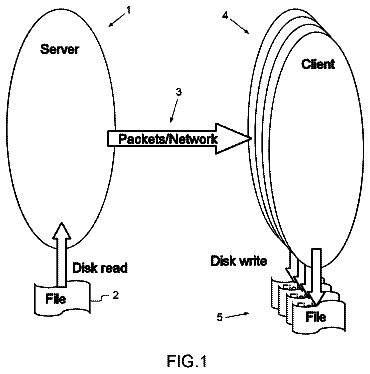
FIG. 1 is a block diagram of a networked client-server system according to embodiments of the present invention.
FIG. 2 is a block diagram of the system of FIG. 1, showing a client-side transaction accelerator ("CTA") and a server-side transaction accelerator ("STA") in greater detail and, for space considerations, showing less detail of the overall system.
FIG. 3 is an illustration of data organization in embodiments of a persistent segment store ("PSS") as might be used with the system shown in FIG. 1.
FIG. 4 is a block diagram of an encoder as might be used in the transaction transformers ("TT") of FIG. 2.
FIG. 5 is a block diagram of a decoder as might be used in the inverse transaction transformers ("TT-1") of FIG. 2.
FIG. 6 is an illustration of an encoding process wherein input data is segmented and represented by references to data segments.
FIG. 7 is a flowchart illustrating a process for decoding data as might be output by the encoder of FIG. 4.
FIG. 8 is a block diagram of a networked system wherein transaction acceleration is implemented and uses a proactive segment distributor ("PSD").
FIG. 9 is a block diagram of a networked peer-to-peer system according to embodiments of the present invention.
FIG. 10 is a block diagram of a networked system wherein transaction acceleration is implemented and the client-side transaction accelerator is integrated in with the client.
FIG. 11 is a block diagram of a networked system wherein transaction acceleration is implemented and the server-side transaction accelerator is integrated in with the server.
FIG. 12 is a block diagram of a networked system wherein transaction acceleration is implemented and a PSS is shared among a plurality of transaction accelerators.
FIG. 13 is a block diagram showing a multicast implementation of the system of FIG. 12, wherein multicast communications are used for updating and reading a shared PSS.
FIG. 14 is a block diagram showing a multicast implementation of a plurality of clients coupled locally through a LAN and to a WAN.
FIG. 15 is a block diagram of a networked system wherein transaction acceleration is implemented and the network handles a variety of protocols and services.
Detailed description of the invention
The present invention has many applications, as will be apparent after reading this disclosure. In describing an embodiment of a transaction acceleration system according to the present invention, only a few of the possible variations are described. Other applications and variations will be apparent to one of ordinary skill in the art, so the invention should not be construed as narrowly as the examples, but rather in accordance with the appended claims.
A transaction, as the term is used herein, is a logical set of steps that result in data moving from one place to another. In some cases, the data being moved exists at its origin independent of the transaction, such as a file read transaction where the file exists on the disk of the server. In other cases, the data is generated for the transaction at the origin, such as in response to a request for computation, lookup, etc. Typically, the computer, computer device, etc. initiating the transaction is referred to as the "client" and the computer, computer device, etc. that responds, or is expected to respond, is referred to as the "server". Data can flow in either direction. For example, a file system client might initiate a transaction by requesting a file read. The corresponding data will be returned from the server responding to the request, so in that case, the bulk of the data flows from the server to the client. However, where a client initiates a file write transaction, the bulk of the data flows from the client to the server, either as part of the initial request or as subsequent messages. A transaction can be in multiple parts, but in a simple transaction, a client sends a request (data, a message, a signal, etc., explicitly being the request or indicative of or representing of the request) to a server and the server responds with a response (data, a message, a signal, etc., explicitly being the response or indicative of or representing of the response) to the client. More complex transactions, for example, might involve some back and forth, as might be needed for a server to clarify a request, verify the authority of the client to receive a response to the request, get additional information needed for preparing the response, etc.
Herein, the typical example of a connection between a client and a server is a packet network, but other connection means can also be used, such as a point-to-point wired or wireless channel. These elements will be generalized and referred to here as "nodes" with a channel assumed for communication between the nodes.
A transaction might begin with a client at one node making a request for file data directed to a server at another node, followed by a delivery of a response containing the requested file data. Other transactions might be a request for a specific part of a file, all the file, all or some of another data construct, or a transaction might relate to data flowing from the requestor or relate to a command. Examples of transactions include "read a block", "read a file", "read a stream", "write a block with this data" (an example of data flowing from the requestor), "open a file", "perform a calculation on this data", "get an e-mail with these characteristics", "send an e-mail", "check for new emails", "list directory contents", etc.
Some transactions might involve large amounts of data flowing in one direction or both directions. Some transactions might even involve interactions having more than one requestor and/or more than one receiver. For clarity of description, these many transaction types are described in terms of a typical simple transaction, where one client makes a request of one server and that one server responds to the request in a manner expected by the client. However, upon reading this disclosure, a person of ordinary skill will be able to apply these concepts to one-to-many and many-to-many transactions between client(s) and server(s) or more generally between two nodes. Where data flow is described in one direction, it should be understood that data might flow in the other direction and/or information might flow in only one direction, but data and/or signals flow in both directions to accomplish the movement of information.
Using some of the systems described herein, client access to a server (and vice versa where needed), can be "tunneled" through transaction accelerators that map transactions onto sequences of variable-length segments with content-induced segment cut points. The segments can be stored at various places, typically within high-speed access of both the clients and the servers, with the segments stored using a scalable, persistent naming system. The segments can be decoupled from file-system and other system data blocks and structures, so that a matching segment might be found in multiple contexts. Instead of caching files, blocks, or other system dependent constructs, segments can be stored and bound to references that are used to represent the segment contents.
FIG. 1 is a block diagram of a networked client-server system 10 according to embodiments of the present invention, where such transactions might occur. As shown there, clients 12 are coupled to servers 14 over a network 16, via client-side transaction accelerators ("CTA's") 20 and server-side transaction accelerators ("STA's") 22. Where the location of a transaction accelerator is not specific, it is referred to herein as a "TA", indicating that it could be referring to a client-side transaction accelerator, a server-side transaction accelerator, a peer transaction accelerator, or possibly even a transaction accelerator that is used by clients and servers (and possibly also peers).
Although not shown in FIG. 1, additional paths between clients and servers (also possibly between clients and clients and between servers and servers) might be present and bypass the TA's. Such additional paths could be used to carry conventional traffic, such as transactions that are not likely to benefit from transaction acceleration. By routing such transactions around the TA's, the state of the TA's can remain focused on the accelerated transaction, for example, by not having the persistent segment storage (described below) of a TA storing segments from transactions not likely to benefit from transaction acceleration.
As shown, a CTA 20 might serve one or more clients and multiple CTA's 20 might be implemented on a network. As used herein and unless otherwise indicated, the index "n" refers to an indefinite integer and each distinct use of the index might refer to a different indefinite integer. For example, FIG. 1 illustrates that there can be some number of CTA's and some number of STA's and there need not be a one-to-one correspondence. In general, the number of CTA's might be based on the number of clients, number of expected clients, network layout, etc., while the number of STA's might be based on the number of servers, the number of expected servers, network layout, etc. In some implementations, each server connects to an STA dedicated to that server. In some implementations, a plurality of servers might be coupled to a server farm manager 24 and in turn coupled to Internet 16 via an STA. In some cases, a client might interact with more than one CTA, as illustrated by line 27 in FIG. 1 and a server might interact with more than one STA, as illustrated by line 29 in FIG. 1.
Where one CTA interacts with one STA and requests are received from multiple clients connected to that CTA, the corresponding STA routes each client request to the server(s) to which the request is directed. However, the TA's might be more closely coupled to their clients/servers, such that all, or nearly all, accelerated transactions from one client pass through that one client's CTA, and all, or nearly all, accelerated transactions to one server, pass through that one server's STA. Additionally, in some implementations, TA's share state, so that transactions in one TA might benefit from segments stored at another TA.
Client connections can be routed to a CTA in a number of ways, similar to how prior art proxies function with respect to clients. For example, redirection using the Domain Name System (DNS) can be used to cause a client to resolve the IP address of the CTA instead of the server and thereby route requests to the CTA. Alternatively, the client or the client's application could be statically configured to use a particular CTA or a set of CTA's on a per-application basis. Once the client connection arrives at a CTA, the CTA can then contact the appropriate STA via a lookup process that could work in a number of ways. For example a mapping table (maintained on a centralized and query-able database or configured into the CTA) could be used to direct the CTA to the appropriate STA; or information conveyed in the transaction could allow the CTA to discover which STA to use; or configurable policies could be programmed into the CTA indicating which transport ports should be relayed to which STA's. Likewise, the STA could use similar lookup processes to decide which server to contact for a new client connection arriving from a CTA. The STA could also use data in the transactions to infer what server to connect to (e.g., an HTTP Web request contains the server's identity, as does a connection setup request for a CIFS file server connection).
It should be understood that while the network shown in FIG. 1 is the Internet, a global internetwork of networks in common use today, other networks can be substituted therefor. For example, network traffic over the Internet can travel through public networks and is largely based on TCP/IP (Transmission Control Protocol/Internet Protocol) packet switching. However, the embodiments of the invention shown herein might also be used on networks that are not public, such as intranets, extranets, and virtual private networks. The embodiments might also be used with WAN's, LAN's, WAN/LAN couplings, wireless connections, mobile links, satellite links, cellular telephone networks, or any other network where responsiveness is a concern. In addition, while TCP/IP is the most common packet switched protocol today and thus serves as a good example, other network protocols might be used (Ethernet, etc.). As for overlying protocols, the clients and servers described herein (and peers, as described below) might use HTTP, FTP, SNMP, POP3, IMAP, SMTP, NFS, CIFS, RPC, or other open or proprietary protocols for transport of data.
In a common transaction, a client sends a request for a file, data block or other unit of data to a server and the server responds with data responsive to the request, if possible. For example, where the client is a computer running a computer-aided design (CAD) program and needs a CAD file stored on a file server, the client might formulate a request for the file, encapsulate the request as a message and send that message over the network to the appropriate file server. The file server might then perform authentication, check for the existence of the file at the file server and, if the client is authorized to have the file and the file exists, the file server might create a message or a set of messages or packets containing the data of the file requested and send those messages/packets to the client that made the request.
Using TA's might improve the responsiveness of the transaction, i.e., accelerate the transaction. In a typical environment, the links 27 between clients and CTA's are fast links, such as local area network (LAN) links and the links over network 16 are slower in terms of latency and bandwidth. "Latency" refers to the time between when a message is sent and when it is received (usually measured in time units) and "bandwidth" refers to how much capacity (usually measured in number of bits per unit time) can be carried over a link for a particular task. In many cases, low bandwidth might result in high latency, but those factors can be independent such that it is possible to have high bandwidth but still have high latency. Other factors might affect responsiveness and/or bandwidth cost, such as the reliability of the link and bandwidth usage.
In a typical file request transaction using the TA's, a client 12 initiates a transaction with a server 14 by sending a request message. As explained above, if the transaction involves a small number of bits or other factors exist, using TA's might not get the transaction done any faster and thus the transaction might go over a conventional packet path. However, the transaction might go through the TA's anyway, which might be useful, as explained below, so that the TA's have a more complete view of the traffic. As one example, if a client request passes through the CTA, the CTA can remember the request and match up the response to the request to provide additional services to the client. The CTA might also use the requests to guess at what future events might be and use those guesses to further optimize the transaction acceleration process.
When a server 14 receives a request, it formulates a response to the request, and sends it towards the client via the STA 22 to which it is coupled. In a basic implementation, each client is coupled to one CTA and each server is coupled to one STA, but in more complex implementations, a server might be coupled to more than one STA and use some optimization logic to determine which STA to use at which time. A client might be coupled to more than one CTA and use some optimization logic to determine which CTA to use at which time.
The CTA 20 could send the request to the appropriate STA 22 unchanged and/or the receiving STA 22 could receive the response from a server and send the response to the appropriate CTA 20 unchanged. However, where the request or the response comprises a large amount of data, significant transaction acceleration might be expected in such instances if the data is "compressed" as described herein by storing segments of data at the receiving end and replacing data at the sending end with reference to the stored segments. In some cases, such substitution does not accelerate a transaction, but might still have benefits, such as "priming the pump" with data, so that the receiving ends have segment data that can be used later in reconstructing transmitted data that references those segments. Such concepts are more clearly described with reference to FIG. 2.
As will be shown in FIG. 2 and other figures in more detail, transaction requests and responses are routed through TA's instead of going directly from a client to a server. Of course, in some configurations, a CTA and client and/or an STA and server are tightly integrated such that an explicit rerouting is not required. Nonetheless, it is useful to assume that the data is routed, at least because it clarifies that traffic from a client can route through a CTA and traffic from a server can route through an STA, but traffic can also bypass the TA's. Since the TA's can operate at the transport network level, they can operate on transactions as the unit of work.
One configuration for easily routing traffic to be accelerated is via the use of connection proxies. Thus, a CTA would serve as a connection proxy for the server with which a client is entering into a transaction and the STA would serve as a connection proxy for the client to which the server is responding. It should be understood that a TA system could be implemented with symmetric TA's, e.g., where a CTA and an STA are arranged to be substantially similar except possibly that the CTA is set up to expect to encounter new transactions from a client, but not from an STA and an STA is set up to not expect to encounter new transactions from a server, but to expect them from a CTA.
FIG. 2 is a block diagram of portions of system 10, showing a CTA 20, an STA 22 and their interconnections in greater detail. While only one client and one server are shown, it should be understood that the various elements of FIG. 1 might also be present, even if not shown. For example, CTA 20 might be handling transactions from more than one client and STA 22 might be handling transactions with more than one server. As illustrated there in FIG. 2, client 12 is coupled to a client proxy 30 of CTA 20. While other forms of multiplexing and de-multiplexing traffic to and from clients could be used, in this example, a client proxy is used to receive data for CTA 20 from one or more clients and to send data for the CTA 20 to the one or more clients. The other elements of CTA 20 shown in FIG. 2 include a transaction transformer (TT) 32, an inverse transaction transformer (TT.sup.-1) 34, a persistent segment store (PSS) 36 and a reference resolver (RR) 38. Server 14 is coupled to a server proxy 40 of STA 22, which is shown including elements similar to those of CTA 20, such as a transaction transformer (TT) 42, an inverse transaction transformer (TT.sup.-1) 44, a persistent segment store (PSS) 46 and a reference resolver (RR) 48.
Client 12 is coupled to client proxy 30, which is coupled to TT 32 and TT.sup.-1 34. TT 32 is coupled to PSS 36 and to the network between CTA 20 and STA 22. TT.sup.-1 34 is coupled to PSS 36, client proxy 30, RR 38 and to the network between CTA 20 and STA 22. RR 38, as shown, is also coupled to PSS 36 and to the network between CTA 20 and STA 22.
On the other side of the figure, server 14 is coupled to server proxy 40, which is coupled to TT 42 and TT.sup.-1 44. TT 42 is coupled to PSS 46 and to the network between STA 22 and CTA 20. TT.sup.-1 44 is coupled to PSS 46, server proxy 40, RR 48 and to the network between STA 22 and CTA 20. RR 48, as shown, is also coupled to PSS 46 and to the network between STA 22 and CTA 20.
It should be understood that some or all of the elements of CTA 20 and/or STA 22 may be integrated within CTA 20 or STA 22, such that explicit connections between the elements are not needed, but a logical coupling would still exist. For example, CTA 20 might be implemented entirely as a single program with data memory, program memory and a processor, with the program memory containing instructions for implementing the client proxy, the TT, the TT.sup.-1 and the RR, when such instructions are executed by the processor. In such an implementation, the data memory could be logically partitioned to hold variables needed for the processor execution of the instructions, state of the client proxy, TT, TT.sup.-1 and RR, as well as the contents of the PSS. The same could be true of STA 22.
The PSS can be a disk subsystem, a memory subsystem, or portions thereof. The PSS can also be a memory subsystem with disk backing store, a database server, a database, etc.
Of the connections shown, arrows indicate the most common direction or directions of flow of information, but information could flow in additional directions and information flow in a single direction might involve data flowing in the reverse direction as well. For example, TT 32 generally sends information in the direction of TT.sup.-1 44, but data such as confirmations, handshakes, etc., may flow from TT.sup.-1 44 to TT 32.
The description continues in the full USPTO document.
 Lapsed, fee not paid7 drawings