Field of the invention
The present invention relates to the field of microbial synthesis of inorganic materials, and more particularly, microbial synthesis of non-oxide semiconductor nanoparticles.
Background of the invention
Nanoparticles having metal non-oxide compositions (i.e., "semiconductor" or "quantum dot" nanoparticles) are increasingly being used in numerous emerging applications. Some of these applications include electronics (e.g., transistors and diode lasers), LED displays, photovoltaics (e.g., solar cells), and medical imaging. Quantum dot nanoparticles are also being investigated as powerful new computer processing elements (i.e., qubits). Semiconductor nanoparticles often possess a metal chalcogenide composition, such as CdSe and ZnS.
As a consequence of its small size, the electron band structure of a quantum dot differs significantly from that of the bulk material. In particular, significantly more of the atoms in the quantum dot are on or near the surface, in contrast to the bulk material in which most of the atoms are far enough removed from the surface so that a normal band structure predominates. Thus, the electronic and optical properties of a quantum dot are related to its size. In particular, photoluminescence is size dependent.
Several physical methods are known for synthesizing semiconductor nanoparticles. Some of the physical techniques include advanced epitaxial, ion implantation, and lithographic techniques. The physical techniques are generally useful for producing minute amounts of semiconductor nanoparticles with well-defined (i.e., tailor-made, and typically, uniform) morphological, electronic, magnetic, or photonic characteristics. The physical techniques are typically not useful for synthesizing semiconductor nanoparticles in commercially significant quantities (e.g., grams or kilograms).
Several chemical processes are also known for the production of semiconductor nanoparticles. Some of these methods include arrested precipitation in solution, synthesis in structured media, high temperature pyrolysis, and sonochemical methods. For example, cadmium selenide can be synthesized by arrested precipitation in solution by reacting dialkylcadmium (i.e., R.sub.2Cd) and trioctylphosphine selenide (TOPSe) precursors in a solvent at elevated temperatures, i.e., R.sub.2Cd+TOPSe.fwdarw.CdSe+byproducts
High temperature pyrolysis of semiconductor nanoparticles generally entails preparing an aerosol containing a mixture of volatile cadmium and selenium precursors, and then subjecting the aerosol to high temperatures (e.g., by carrying through a furnace) in the presence of an inert gas. Under these conditions, the precursors react to form the semiconductor nanoparticles (e.g., CdSe) and byproducts.
Though the chemical processes described above are generally capable of producing semiconductor nanoparticles in more significant quantities, the processes are generally energy intensive (e.g., by generally requiring heating and a post-annealing step), and hence, costly. Accordingly, commercially significant amounts of the resulting nanoparticles tend to be prohibitively expensive. Furthermore, these processes tend to be significantly limited with respect to control of the physical (e.g., size, shape, and crystalline form) and electronic or photonic characteristics of the resulting nanoparticles.
The microbial synthesis of semiconductor nanoparticles is known. See, for example, P. R. Smith, et al., J. Chem. Soc., Faraday Trans., 94(9), 1235-1241
and C. T. Dameron, et al., Nature, 338: 596-7, (1989). However, there are significant obstacles that prevent such microbially-mediated methods from being commercially viable. For example, current microbial methods are generally limited to the production of semiconductor nanoparticles on a research scale, i.e., an amount sufficient for elucidation by analytical methods. In addition, current microbial processes generally produce semiconductor nanoparticles adhered to cell membranes. Accordingly, numerous separation and washing steps are generally needed.
Accordingly, there is a need in the art for a microbial method for the synthesis of semiconductor nanoparticles capable of producing semiconductor nanoparticles on a commercial (i.e., bulk) scale at a non-prohibitive cost. There is also a need for a microbial method of synthesis which provides substantially pure semiconductor nanoparticle product bereft of microbial matter, thereby reducing or eliminating separation and washing steps. There is also a particular need for such a microbial method of synthesis whereby characteristics of the nanoparticles (e.g., particle size, morphology, electronic or photonic characteristics, dopant composition, and doping level) are more precisely or uniformly controlled.
Summary of the invention
In one aspect, the invention is directed to a microbially-mediated method for the production of semiconductor nanoparticles. The method described herein can advantageously produce a variety of semiconductor nanoparticle compositions on a commercially viable scale. In addition, the method can advantageously produce semiconductor nanoparticles of a particular particle size, morphology, electronic or photonic characteristic, dopant composition, or doping level.
In a preferred embodiment, the method involves: (a) subjecting a combination of reaction components to conditions conducive to microbially-mediated formation of non-oxide semiconductor nanoparticles, wherein the combination of reaction components includes i) anaerobic microbes (i.e., "microbes"), ii) a culture medium suitable for sustaining the anaerobic microbes, iii) a chalcophile metal component (i.e., "metals" or "metal component") containing at least one type of metal ion, iv) a non-metal component containing at least one non-metal selected from the group consisting of S, Se, Te, and As, and v) one or more electron donors that provide donatable electrons to the anaerobic microbes during consumption of the electron donor by the anaerobic microbes; and (b) isolating said non-oxide semiconductor nanoparticles, which contain at least one of the metal ions and at least one of the non-metals.
In another aspect, the invention is directed to a nanoparticulate semiconductor composition produced by the above method. In a preferred embodiment the nanoparticles produced by the above method are single-crystalline and have an average size ranging from about 1, 2 or 3 nm to about 20 nm. The semiconductor composition also preferably possesses a photoluminescence peak characterized by a full-width half maximum value of or less than about 20 nm.
The invention advantageously provides a method capable of producing pure semiconductor nanoparticles on a commercial (i.e., bulk) scale at a non-prohibitive cost. A further particular advantage of the method is that it provides the capability of synthesizing semiconductor nanoparticles having selected photoluminescent characteristics over a wide range of such characteristics. For example, by controlling the size, shape, composition, and/or crystalline structure of the nanoparticles, the location or width of the photoluminescence peak can be accordingly controlled or fine-tuned over a wide range.
Numerous electronic and photonic devices can benefit from such precise control of the photoluminescent properties of semiconductor nanoparticles. In particular, photovoltaic devices are currently limited by the use of photoluminescent materials that are not tunable, or semi-tunable with great difficulty. Yet, there is a clear and present need in the art of photovoltaic devices for photoluminescent-tunable materials. Other types of devices that can benefit from such tunable materials include light-emitting and laser diodes. Accordingly, the method and compositions of the invention can greatly advance several types of devices, including photovoltaic devices.
Brief description of the drawings
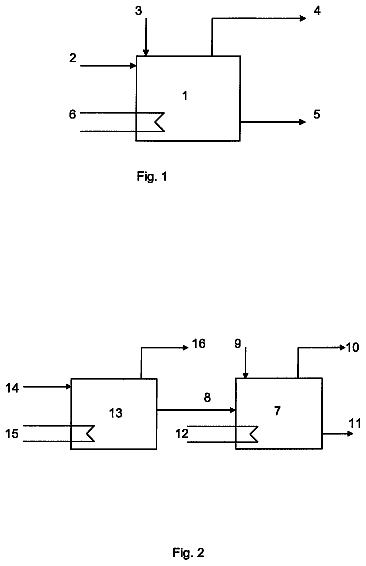
FIG. 1. A process diagram illustrating a preferred embodiment of the invention for forming metal chalcogenide crystalline nanoparticles.
FIG. 2. Depiction of a preferred batch-type reactor useful for the described method.
FIG. 3. Depiction of a continuous-type reactor useful for the described method.
FIG. 4. TEM photographs of CdS nanoparticles produced by the invention using two different sources of sulfur and Thermoanaerobacter strain TOR-39.
FIG. 5. Photoluminescence spectra of CdS produced using different precursor compounds and microbes: TOR-39 with thiosulfate (FIG. A) TOR-39 with sulfite (FIG. B), and Desulfovibrio sp. G-20 with SO.sub.3 (FIG. C), as compared to standard CdS powder (FIG. D).
FIG. 6. Comparative photoluminescence spectra of CdS nanoparticles prepared by inorganic synthetic techniques of the prior art.
FIGS. 7A-7D. X-ray diffraction results for: CuGaS.sub.2 or CuInS.sub.2 product made without microbes (FIG. 7A); CuGaS.sub.2 or CuInS.sub.2 product made with TOR-39 microbes (FIG. 7B); CuIn.sub.0.5Ga.sub.0.5Se.sub.2 product made without microbes (FIG. 7C); and CuIn.sub.0.5Ga.sub.0.5Se.sub.2 product made with microbes.
Detailed description of the invention
The non-oxide semiconductor nanoparticles (i.e., "semiconductor" or "quantum dot" nanoparticles) produced herein are those containing one or more chalcophile metals in a positive oxidation state, and one or more non-metals selected from sulfur (S), selenium (Se), tellurium (Te), and arsenic (As), in a negative oxidation state. Some examples of suitable metals include, for example, V, Cr, Mn, Fe, Co, Ni, Cu, Zn, Mo, W, Pd, Pt, Au, Ag, Cd, Hg, Ga, In, Tl, Ge, Sn, Pb, Sb, and Bi. Some particularly preferred metals include Cd, Cu, Fe, Ga, In, and Zn. Some examples of semiconductor nanoparticle compositions include CdS, CdSe, CdTe, Cd.sub.3As.sub.2, ZnS, ZnSe, ZnTe, Zn.sub.3As.sub.2, Ga.sub.2S.sub.3, Ga.sub.2Se.sub.3, Ga.sub.2Te.sub.3, GaAs, In.sub.2S.sub.3, In.sub.2Se.sub.3, In.sub.2Te.sub.3, InAs, CuS, CuSe, CuTe, Cu.sub.3As.sub.2, FeSe, Fe.sub.3As.sub.2, FeAs, PbS, PbSe, PbTe, Pb.sub.3As.sub.2, HgS, HgSe, HgTe, Cd.sub.xZn.sub.1-xTe, Cd.sub.xHg.sub.1-xTe, Hg.sub.xZn.sub.1-xTe, Cd.sub.xZn.sub.1-xSe, Cd.sub.xHg.sub.1-xSe, Hg.sub.xZn.sub.1-xSe, Pb.sub.xSn.sub.1-xTe, Ga.sub.xIn.sub.2-xSe.sub.3, Ga.sub.xIn.sub.1-xAs, CuIn.sub.xGa.sub.1-xS.sub.2 (e.g., CuIn.sub.0.5Ga.sub.0.5S or CuIn.sub.0.4Ga.sub.0.6S.sub.2), CuGaS.sub.2, CuInS.sub.2, CuIn.sub.xGa.sub.1-xSe.sub.2 (e.g., CuIn.sub.0.5Ga.sub.0.5Se.sub.2 or CuIn.sub.0.4Ga.sub.0.6Se.sub.2), CuGaSe.sub.2, and CuInSe.sub.2, wherein x is an integral or non-integral numerical value greater than 0 and less than or equal to 1. One or more dopant metals can also be included in the composition.
The semiconductor nanoparticles have a size (i.e., "diameter" for spherical or polyhedral nanoparticles) in the nanoscale regime, i.e., less than 1 micron (1.mu.m). In different embodiments, the nanoparticles can have at least one dimension of at least 1 nm, 2 nm, 3 nm, 4 nm, 5 nm, 10 nm, 12 nm, 15 nm, 20 nm, 25 nm, 30 nm, 40 nm, 50 nm, 100 nm, 200 nm, 300 nm, 400 nm, or 500 nm, or any range therebetween (e.g., 1-10, 2-10, 1-20, 2-20, or 3-20 nm), or between any of the foregoing values and up to or less than 1 .mu.m. In one embodiment, the nanoparticles are fairly disperse in size (e.g., having a size variation of 20% or greater from a median size). In another embodiment, the nanoparticles are fairly monodisperse in size (e.g., having a size variation less than 20% from a median size).
The semiconductor nanoparticles can also have any suitable morphology. Some examples of possible nanoparticle shapes include amorphous, fibrous, tubular, cylindrical, rod, needle, spherical, ovoidal, pyramidal, cuboidal, rectangular, dodecahedral, octahedral, plate, and tetrahedral. Often, the semiconductor nanoparticles are equiaxed euhedral crystals (i.e., typically cubes, octahedra, and modifications thereof).
In a preferred embodiment, the semiconductor nanoparticles possess a photoluminescence peak characterized by a full-width half maximum (FWHM) value of about or less than 20 nanometers (20 nm). In different embodiments, the semiconductor nanoparticles possess a photoluminescence peak having a FWHM value of about or less than 15 nm, 10 nm, 8 nm, or 5 nm. In different embodiments, the photoluminescence peak is preferably located at 300 nm, 320 nm, 340 nm, 360 nm, 380 nm, 400 nm, 420 nm, 440 nm, 460 nm, 480 nm, 500 nm, 520 nm, 540 nm, or 560 nm, or within 10 or 20 nm of any of these values (e.g., 435-445 nm or 430-450 nm), or within a range bounded by any of these values (e.g., 400-500 nm).
In a particular aspect, the invention is directed to a method for producing the semiconductor nanoparticles described above. In the method, a precursor chalcophile metal component (i.e., one that can form semiconducting chalcogenide compounds) and a precursor non-metal component (i.e., "non-metal component") are processed by anaerobic microbes in a manner that produces non-oxide semiconductor nanoparticles.
The precursor metal component contains one or more types of metals in ionic form, particularly as described above. The one or more metals is typically in the form of a salt or coordination compound, or a colloidal hydrous metal oxide or mixed metal oxide, wherein "compound" as used herein also includes a "material" or "polymer". Some examples of precursor metal compounds applicable herein include the metal halides (e.g., CdCl.sub.2, ZnCl.sub.2, ZnBr.sub.2, GaCl.sub.3, InCl.sub.3), metal nitrates (e.g., Cd(NO.sub.3).sub.2, Ga(NO.sub.3).sub.3, and Fe(NO.sub.3).sub.3), metal perchlorates, metal carbonates (e.g., CdCO.sub.3), metal sulfates (e.g., CdSO.sub.4, FeSO.sub.4, and ZnSO.sub.4), metal oxides (e.g., Fe.sub.2O.sub.3, CdO, In.sub.2O.sub.3, ZnO), metal hydroxides (e.g., Fe(OH).sub.3 and Zn(OH).sub.2), metal oxyhydroxides (e.g., FeOOH, or FeO(OH), and their alternate forms), metal-EDTA complexes, metal amines (e.g., metal alkylamine, piperidine, pyridine, or bipyridine salt complexes), metal carboxylates (e.g., cadmium acetate), and metal acetylacetonate (i.e., metal-acac) complexes. One or more dopant species can be included in the precursor metal component in order to likewise dope the resulting nanoparticles.
When more than one metals are used as precursors, the molar ratio of metal ions can be adjusted such that a particular molar ratio of metals is provided in the nanoparticle product. Typically, the molar ratio of metal ions in the metal component is the molar ratio of metals found in the nanoparticle product. However, the molar ratio of metals in the product may, in several embodiments, differ from the molar ratio of metals in the metal component. In a particular embodiment, a desired molar ratio of metals is achieved in the nanoparticle product by suitable adjustment of metal ratios in the precursor metal component.
The total metal concentration should be below a concentration at which the metals are toxic to the microbes being used. Typically, the total metal concentration is no more than 100 mM. In different embodiments, the total metal concentration may preferably be no more than 90 mM, 80 mM, 70 mM, 60 mM, 50 mM, 40 mM, 30 mM, 20 mM, 15 mM, 10 mM, 5 mM, 1 mM, 0.5 mM, or 0.1 mM, or within a range resulting from any two of the above exemplary values.
The precursor non-metal component provides the resulting nanoparticle composition with one or more non-metals selected from S, Se, Te, and As. The non-metal component can include any suitable form of these non-metals, including, for example, the elemental or compound forms of these non-metals.
In a first embodiment, the non-metal component includes a sulfur-containing compound. In one instance, the sulfur-containing compound is an inorganic sulfur-containing compound. Some examples of inorganic sulfur-containing compounds include the inorganic sulfates (e.g., Na.sub.2SO.sub.4, K.sub.2SO.sub.4, MgSO.sub.4, (NH.sub.4).sub.2SO.sub.4, H.sub.2SO.sub.4, or a metal sulfate), the inorganic sulfites (e.g., Na.sub.2SO.sub.3, H.sub.2SO.sub.3, or (NH.sub.4)SO.sub.3), inorganic thiosulifates (e.g., Na.sub.2S.sub.2O.sub.3 or (NH.sub.4).sub.2S.sub.2O.sub.3), sulfur dioxide, peroxomonosulfate (e.g., Na.sub.2SO.sub.5 or KHSO.sub.5), and peroxodisulfate (e.g., Na.sub.2S.sub.2O.sub.8, K.sub.2S.sub.2O.sub.8, or (NH.sub.4).sub.2S.sub.2O.sub.8). In another instance, the sulfur-containing compound is an organosulfur (i.e., organothiol or organomercaptan) compound. The organosulfur compound contains at least one hydrocarbon group and is typically characterized by the presence of at least one sulfur-carbon bond. Some examples of suitable organosulfur compounds include the hydrocarbon mercaptans (e.g., methanethiol, ethanethiol, propanethiol, butanethiol, thiophenol, ethanedithiol, 1,3-propanedithiol, 1,4-butanedithiol, thiophene), the alcohol-containing mercaptans (e.g., 2-mercaptoethanol, 3-mercaptopropanol, 4-mercaptophenol, and dithiothreitol), the mercapto-amino acids (e.g., cysteine, homocysteine, methionine, thioserine, thiothreonine, and thiotyrosine), mercapto-peptides (e.g., glutathione), the mercapto-pyrimidines (e.g., 2-thiouracil, 6-methyl-2-thiouracil, 4-thiouracil, 2,4-dithiouracil, 2-thiocytosine, 5-methyl-2-thiocytosine, 5-fluoro-2-thiocytosine, 2-thiothymine, 4-thiothymine, 2,4-dithiothymine, and their nucleoside and nucleotide analogs), the mercapto-purines (e.g., 6-thioguanine, 8-thioadenine, 2-thioxanthine, 6-thioxanthine, 6-thiohypoxanthine, 6-thiopurine, and their nucleoside and nucleotide analogs), the thioethers (e.g., dimethylsulfide, diethylsulfide, diphenylsulfide, biotin), the disulfides (e.g., cystine, lipoic acid, diphenyl disulfide, iron disulfide, and 2-hydroxyethyldisulfide), the thiocarboxylic acids (e.g., thioacetic acid), the thioesters, the sulfonium salts (e.g., trimethylsulfonium or diphenylmethylsulfonium chloride), the sulfoxides (e.g., dimethylsulfoxide), the sulfones (e.g., dimethylsulfone), thioketones, thioamides, thiocyanates, isothiocyanates, thiocarbamates, dithiocarbamates, and trialkylphosphine sulfide (e.g., trioctylphosphine sulfide), thiourea compounds, or any of the inorganic sulfur-containing compounds, such as those enumerated above, which have been modified by inclusion of a hydrocarbon group.
In a second embodiment, the non-metal component includes a selenium-containing compound. In one instance, the selenium-containing compound is an inorganic selenium-containing compound. Some examples of inorganic selenium-containing compounds include the inorganic selenates (e.g., Na.sub.2SeO.sub.4, K.sub.2SeO.sub.4, MgSeO.sub.4, (NH.sub.4).sub.2SeO.sub.4, H.sub.2SeO.sub.4, or a metal selenate), the inorganic selenites (e.g., Na.sub.2SeO.sub.3, H.sub.2SeO.sub.3, or (NH.sub.4).sub.2SeO.sub.3), inorganic selenosulfates (e.g., Na.sub.2SSeO.sub.3 or (NH.sub.4).sub.2SSeO.sub.3), selenium dioxide, and selenium disulfide. In another instance, the selenium-containing compound is an organoselenium compound. The organoselenium compound contains at least one hydrocarbon group and is typically characterized by the presence of at least one selenium-carbon bond. Some examples of suitable organoselenium compounds include the hydrocarbon selenols (e.g., methaneselenol, ethaneselenol, n-propaneselenol, isopropaneselenol, and selenophenol (benzeneselenol)), the seleno-amino acids (e.g., selenocysteine, selenocystine, selenohomocysteine, selenomethionine), the seleno-pyrimidines (e.g., 2-selenouracil, 6-methyl-2-selenouracil, 4-selenouracil, 2,4-diselenouracil, 2-selenocytosine, 5-methyl-2-selenocytosine, 5-fluoro-2-selenocytosine, 2-selenothymine, 4-selenothymine, 2,4-diselenothymine, and their nucleoside and nucleotide analogs), the seleno-purines (e.g., 6-selenoguanine, 8-selenoadenine, 2-selenoxanthine, 6-selenoxanthine, 6-selenohypoxanthine, 6-selenopurine, and their nucleoside and nucleotide analogs), the selenides (e.g., dimethylselenide, diethylselenide, and methylphenyselenide), the diselenides (e.g., dimethyldiselenide, diethyldiselenide, and diphenyldiselenide), the selenocarboxylic acids (e.g., selenoacetic acid, selenopropionic acid), the selenosulfides (e.g., dimethylselenosulfide), the selenoxides (e.g., dimethylselenoxide and diphenylselenoxide), the selenones, the selenonium salts (e.g., dimethylethylselenonium chloride), the vinylic selenides, selenopyrylium salts, trialkylphosphine selenide (e.g., trioctylphosphine selenide, i.e., TOPSe), selenourea compounds, or any of the inorganic selenium-containing compounds, such as those enumerated above, which have been modified by inclusion of a hydrocarbon group.
In a third embodiment, the non-metal component includes a tellurium-containing compound. In one instance, the tellurium-containing compound is an inorganic tellurium-containing compound. Some examples of inorganic tellurium-containing compounds include the inorganic tellurates (e.g., Na.sub.2TeO.sub.4, K.sub.2TeO.sub.4, MgTeO.sub.4, (NH.sub.4).sub.2TeO.sub.4, H.sub.2TeO.sub.4, H.sub.6TeO.sub.6, or a metal tellurate), the inorganic tellurites (e.g., Na.sub.2TeO.sub.3), and tellurium dioxide. In another instance, the tellurium-containing compound is an organotellurium compound. The organotellurium compound contains at least one hydrocarbon group and is typically characterized by the presence of at least one tellurium-carbon bond. Some examples of suitable organotellurium compounds include the hydrocarbon tellurols (e.g., methanetellurol, ethanetellurol, n-propanetellurol, isopropanetellurol, and tellurophenol (benzenetellurol)), the telluro-amino acids (e.g., tellurocysteine, tellurocystine, tellurohomocysteine, telluromethionine), the telluro-pyrimidines and their nucleoside and nucleotide analogs (e.g., 2-tellurouracil), the telluro-purines and their nucleoside and nucleotide analogs, the tellurides (e.g., dimethyltelluride, diethyltelluride, and methylphenyltelluride), the ditellurides (e.g., dimethylditelluride, diethylditelluride, and diphenylditelluride), the telluroxides (e.g., dimethyltelluroxide and diphenyltelluroxide), the tellurones, the telluronium salts, the vinylic tellurides, telluropyrylium salts, tellurourea compounds, 24-telluracholestanol, or any of the inorganic tellurium-containing compounds, such as those enumerated above, which have been modified by inclusion of a hydrocarbon group.
In a fourth embodiment, the non-metal component includes an arsenic-containing compound. In one instance, the arsenic-containing compound is an inorganic arsenic-containing compound. Some examples of inorganic arsenic-containing compounds include the inorganic arsenates (e.g., Na.sub.3AsO.sub.4, Na2HAsO4, NaH.sub.2AsO.sub.4, H.sub.3AsO.sub.4, Mg.sub.3(AsO.sub.4).sub.2, 1-arseno-3-phosphoglycerate, or a transition metal arsenate), inorganic arsenites (e.g., Na.sub.3AsO.sub.3, Na2HAsO3, NaH.sub.2AsO.sub.3, H.sub.3AsO.sub.3, Ag.sub.3AsO.sub.3, Mg.sub.3(AsO.sub.3).sub.2), and arsenic oxides (e.g., As.sub.2O.sub.3 and As.sub.2O.sub.5), and arsenous carbonate (i.e., As.sub.2(CO.sub.3).sub.3). In another instance, the arsenic-containing compound is an organoarsine compound. The organoarsine compound is characterized by the presence of at least one hydrocarbon group and at least one arsenic atom. Some examples of suitable organoarsine compounds include the hydrocarbon arsines (e.g., trimethylarsine, triethylarsine, triphenylarsine, arsole, and 1,2-bis(dimethylarsino)benzene), arsenic-derivatized sugars (e.g., glucose 6-arsenate), arsonic acids (e.g., phenylarsonic acid, 4-aminophenylarsonic acid, 4-hydroxy-3-nitrobenzenearsonic acid, 2,3,4-trihydroxybutylarsonic acid, arsonoacetic acid, diphetarsone, diphenylarsinic acid, and 3-arsonopyruvate), arseno-amino acids and their derivatives (e.g., 3-arsonoalanine, arsenophenylglycine, and arsenate tyrosine), organoarsine oxides (e.g., metlylarsine oxide, 4-aminophenylarsenoxide, oxophenylarsine, and oxophenarsine), 10,10'-oxybis-10H-phenoxarsine, 1-arseno-3-phosphoglycerate, arsenobetaine, arsenocholine, arsenotriglutathione, or any of the inorganic arsenic-containing compounds, such as those enumerated above, which have been modified by inclusion of a hydrocarbon group.
Preferably, the non-metal compound is not a reduced sulfide (e.g., Na.sub.2S, K.sub.2S, H.sub.2S, or (NH.sub.4).sub.2S), reduced selenide (e.g., H.sub.2Se or (NH.sub.4).sub.2Se), reduced telluride (e.g., H.sub.2Te or (NH.sub.4).sub.2Te), or reduced arsenide compound. As known in the art, such reduced compounds have a propensity for precipitating various metals from solution. Since direct reaction of the non-metal compound and metal to form a precipitate is preferably avoided in the method, a reduced non-metal compound is preferably used under conditions where an adverse reaction or precipitation does not occur.
The anaerobic microbes considered herein are any microbes known in the art capable of forming semiconductor nanoparticles from one or more types of metal ions and one or more non-metals selected from S, Se, Te, and As. The microbe can be, for example, a eukaryotic or procaryotic (and either unicellular or multicellular) type of microbe having this ability. Of particular relevance herein are the procaryotic organisms, which are predominantly unicellular, and are divided into two domains: the bacteria and the archaea. The microbes can be, in addition, fermentative, metal-reducing, dissimilatory, sulfate-reducing, thermophilic, mesophilic, psychrophilic, or psychrotolerant. The microbes are preferably those capable of directly reducing (i.e., without the use of chemical means) a sulfur-containing, selenium-containing, tellurium-containing, or arsenic-containing compound to, respectively, a sulfide (i.e., S.sup.2-)-containing, selenide (i.e., Se.sup.2-)-containing, telluride (i.e., Te.sup.2-)-containing, or arsenide (i.e., As.sup.3-)-containing compound, such as H.sub.2S or a salt thereof Preferably, the microbes are capable of reducing the sulfur-, selenium-, tellurium-, or arsenic-containing compound without intermediate production of, respectively, elemental sulfur, selenium, tellurium, or arsenic.
In one embodiment, the microbes considered herein are thermophilic, i.e., those organisms capable of thriving at temperatures of at least about 40.degree. C. (and more typically, at least 45.degree. C. or 50.degree. C.) and up to about 100.degree. C. or higher temperatures. Preferably, the thermophilic microbes are either bacteria or archaea, and particularly, those possessing an active hydrogenase system linked to high energy electron carriers.
A group of thermophilic bacteria particularly considered herein are the species within the genus Thermoanaerobacter. A particular species of Thermoanaerobacter considered herein is Thermoanaerobacter strain TOR-39, a sample of which was deposited with the American Type Culture Collection (10801 University Blvd., Manassas, Va. 20010) on Sep. 7, 2001 as accession number PTA-3695. Strain TOR-39 is a thermophile that grows optimally at temperatures from about 65 to 80.degree. C. The conditions needed to grow and maintain this strain, including basal medium, nutrients, vitamins, and trace elements are detailed in U.S. Pat. No. 6,444,453, the entire contents of which are incorporated herein by reference. Some particular strains of Thermoanaerobacter ethanolicus particularly considered herein include T. ethanolicus strain C1 and T. ethanolicus strain M3.
Another group of thermophilic bacteria particularly considered herein are the species within the class Thermococci. An order of Thermococci particularly considered herein is Thermococcales. A family of Thermococcales particularly considered herein is Thermococcaceae. A genus of Thermococcaceae particularly considered herein is Thermococcus. A species of Thermococcus particularly considered herein is Thermococcus litoralis.
Another group of thermophilic bacteria particularly considered herein are the species within the genus Thermoterrabacterium. A species of Thermoterrabacterium particularly considered herein is Thermoterrabacterium ferrireducens, and particularly, strain JW/AS-Y7.
Still another group of thermophilic bacteria particularly considered herein are the species within the phylum Deinococcus-Thermus. A class of Deinococcus-Thermus particularly considered herein is Deinococci. An order of Deinococci particularly considered herein is Thermales. A genus of Thermales particularly considered herein is Thermus. A species of Thermus particularly considered herein is Thermus sp. strain SA-01.
Other thermophilic bacteria particularly considered herein include thermophilic species within any of the genera Thermoanaerobacterium (e.g., T. thermosulfurigenes, T. polysaccharolyticum, T. zeae, T. aciditolerans, and T. aorearoense), Bacillus (e.g., B. infernus), Clostridium (e.g., C. thermocellum), Anaerocellum (e.g., A. thermophilum), Dictyoglomus (e.g., D. thermophilum), and Caldicellulosiruptor (e.g., C. acetigenus, C. hydrothermalis, C. kristjanssonii, C. kronotskiensis, C. lactoaceticus, C. owensensis, and C. saccharolyticus).
In another embodiment, the microbes considered herein are mesophilic (e.g., organisms thriving at moderate temperatures of about 15-40.degree. C.) or psychrophilic (e.g., organisms thriving at less than 15.degree. C.). As used herein, the term psychrophilic also includes "psychrotolerant". Psychrophilic bacteria are typically found in deep marine sediments, sea ice, Antarctic lakes, and tundra permafrost. Some examples of such microbes include species within the genera Shewanella (e.g., S. alga strain PV-1, S. alga, PV-4, S. pealeana, W3-7-1, S. geldimarina, and S. frigidimarina), Clostridium (e.g., C. frigoris, C. lacusfryxellense, C. bowmanii, C. psychrophilum, C. laramiense, C. estertheticum, and C. schirmacherense), Bacillus (e.g., B. psychrosaccharolyticus, B. insolitus, B. globisporus, B. psychrophilus, B. cereus, B. subtilis, B. circulans, B. pumilus, B. macerans, B. sphaericus, B. badius, B. licheniformis, B. firmus, B. globisporus, and B. marinus), and Geobacter (e.g., G. sulfurreducens, G. bemidjiensis, and G. psychrophilus). Of particular interest are those strains capable of anaerobic growth with nitrate as an electron acceptor.
In yet another embodiment, the microbes considered herein are sulfur-reducing (e.g., sulfate- or sulfite-reducing) microbes. In a preferred embodiment, the sulfur-reducing microbes are one or more species selected from Desulfovibrio (e.g., D. desulfuricans, D. gigas, D. salixigens, and D. vulgaris), Desulfolobus (e.g., D. sapovorans and D. propionicus), Desulfotomaculum (e.g., D. thermocisternum, D. thermobenzoicum, D. auripigmentum, D. nigrificans, D. orientis, D. acetoxidans, D. reducens, and D. ruminis), Desulfomicrobium (e.g., D. aestuarii, D. hypogeium, and D. salsuginis), Desulfomusa (e.g., D. hansenii), Thermodesulforhabdus (e.g., T. norvegica) the order Desulfobacterales, and more particularly, the family Desulfobacteraceae, and more particularly, the genera Desulfobacter (e.g., D. hydrogenophilus, D. postgatei, D. giganteus, D. halotolerans, and D. vibrioformis), Desulfobacterium (e.g., D. indolicum, D. anilini, D. autotrophicum, D. catecholicum, D. cetonicum, D. macestii, D. niacini, D. phenolicum, D. vacuolatum), Desulfobacula (e.g., D. toluolica and D. phenolica), Desulfobotulus (D. sapovorans and D. marinus), Desulfocella (e.g., D. halophila), Desulfococcus (e.g., D. multivorans and D. biacutus), Desulfofaba (e.g., D. gelida and D. fastidiosa), Desulfofrigus (e.g., D. oceanense and D. fragile), Desulfonema (e.g., D. limicola, D. ishimotonli, and D. magnum), Desulfosarcina (e.g., D. variabilis, D. cetonica, and D. ovata), Desulfospira (e.g., D. joergensenii), Desulfotalea (e.g., D. psychrophila and D. arctica), and Desulfotignum (D. balticum, D. phosphitoxidans, and D. toluenicum). Several of the sulfur-reducing microbes are either thermophilic or mesophilic. The sulfur-reducing microbes may also be psychrophilic or psychrotolerant.
In still other embodiments, the microbes considered herein are selenium-reducing (e.g., selenate- or selenite-reducing), tellurium-reducing (e.g., tellurate- or tellurite-reducing), or arsenic-reducing (e.g., arsenate- or arsenite-reducing). In one embodiment, the selenium-, tellurium-, or arsenic-reducing microbe is one of the sulfur-reducing microbes described above. In another embodiment, the selenium- or tellurium-reducing microbe is selected from other microbes not described above, e.g., Thauera selenatis, Sulfospirillum barnesii, Selenihalanerobacter shriftii, Bacillus selenitireducens, Pseudomonas stutzeri, Enterobacter hormaechei, Klebsiella pneumoniae, and Rhodobacter sphaeroides. In yet another embodiment, the arsenic-reducing microbe is selected from any of the microbes described above, or in particular, from Sulfurospirillum arsenophiturn or Geospirillum arsenophilus. It will also be appreciated that, in addition to the exemplary microorganisms listed above, other types of cultures, including mixed microbial cultures or uncharacterized microbial cultures from natural enviromnents, and the like, may also be used in the invention. For example, cultures not yet characterized from natural hot springs where various metals are known to be present can demonstrate suitably high metal-reducing or selenium-reducing activity to carry out the inventive methods even though the exact species or genus of the microbes may be unknown and more than one species or genus may be present in said culture.
The microbes can also be dissimilatory iron-reducing bacteria. Such bacteria are widely distributed and include some species in at least the following genera: Bacillus, Deferribacter, Desulfuromonas, Desulfuromusa, Ferrimonas, Geobacter, Geospirillum, Geovibrio, Pelobacter, Sulfolobus, Thermoanaerobacter, Thermoanaerobium, Thermoterrabacterium, and Thermus.
The choice of microbe generally involves trade-offs relating to cost, efficiency, and properties of the nanoparticle product. For example, thermophiles may be preferred when more product per unit of time is the primary consideration, since a high temperature process generally produces product at a faster rate. Conversely, psychrophilic or psychrotolerant microbes may be preferred in a case where one or more improved characteristics are of primary consideration, and where the improved characteristics are afforded to the product by virtue of the cooler process.
The microbes used in the method described herein can be obtained and cultured by any of the methods known in the art. Some of the general processes by which such bacteria may be used is taught in U.S. Pat. Nos. 6,444,453 and 7,060,473, the entire disclosures of which are incorporated herein by reference. The isolation, culturing, and characterization of thermophilic bacteria are described in, for example, T. L. Kieft et al., "Dissimilatory Reduction of Fe(III) and Other Electron Acceptors by a Thermus Isolate," Appl. and Env. Microbiology, 65 (3), pp. 1214-21 (1999). The isolation, culture, and characterization of several psychrophilic bacteria are described in, for example, J. P. Bowman et al., "Shewanella gelidimarina sp. nov. and Shewanella frigidimarina sp. nov., Novel Antarctic Species with the Ability to Produce Eicosapentaenoic Acid (20:5.omega.3) and Grow Anaerobically by Dissimilatory Fe(III) Reduction," Int. J. of Systematic Bacteriology 47 (4), pp. 1040-47 (1997). The isolation, culture, and characterization of mesophilic bacteria are described in, for example, D. R. Lovley et al., "Geobacter metallireducens gen. nov. sp. nov., a microorganism capable of coupling the complete oxidation of organic compounds to the reduction of iron and other metals," Arch. Microbiol., 159, pp. 336-44 (1993), the disclosure of which is incorporated herein by reference in its entirety.
The culture medium for sustaining the microbes can be any of the known aqueous-based media known in the art useful for this purpose. The culture medium may also facilitate growth of the microbes. As is well known in the art, the culture medium includes such components as nutrients, trace elements, vitamins, and other organic and inorganic compounds, useful for the sustainment or growth of microbes.
In the method of the invention, the microbes are provided with at least one electron donor. An electron donor is any compound or material capable of being oxidatively consumed by the microbes such that donatable electrons are provided to the microbes by the consumption process. The produced electrons are used by the microbes to reduce one or more non-metal compounds and/or metal ions.
In one embodiment, the electron donor includes one or more carboxylate-containing compounds that can be oxidatively consumed by the microbes. Some examples of suitable carboxylate-containing compounds include formate, acetate, propionate, butyrate, oxalate, malonate, succinate, fumarate, glutarate, lactate, pyruvate, glyoxylate, glycolate, and citrate.
In another embodiment, the electron donor includes one or more sugars (i.e., saccharides, disaccharides, oligosaccharides, or polysaccharides) that can be oxidatively consumed by the microbes. Some examples of suitable sugars include glucose, fructose, sucrose, galactose, maltose, mannose, arabinose, xylose, lactose, and disaccharides therefrom, oligosaccharides therefrom, or polysaccharides therefrom.
In another embodiment, the electron donor includes one or more inorganic species that can be oxidatively consumed by the microbes. The inorganic species can be, for example, an oxidizable gas, such as hydrogen or methane. Such gases can be oxidized by hydrogen-consuming or methane-consuming microbes which have the capacity to reduce one or more metals or non-metal compounds by the produced electrons.
The five reaction components described above (i.e., anaerobic microbes, culture medium, metal component, non-metal component, and electron donor component) are combined in a suitable container and subjected to conditions (e.g., temperature and reaction time) suitable for producing the nanoparticles from the reaction components. A preferred process is shown in a flow diagram of FIG. 1. In one embodiment, the container for holding the reaction components is simple by containing no more than container walls, a bottom, and a lid. In another embodiment, the container is more complex by including additional features, such as inlet and outlet elements for gases, liquids, or solids, one or more heating elements, nanoparticle separation features (e.g., traps or magnets), one or more agitating elements, fluid recirculating elements, electronic controls for controlling one or more of these or other conditions, and so on.
The components may be combined in any suitable manner. For example, each of the five reaction components or a combination thereof (e.g., the anaerobic microbes and cell culture) may be prepared before the components are combined, or alternatively, obtained in a pre-packaged form before the components are combined. When components or combinations thereof are provided in package form, the packaged forms may be designed to be used in their entireties, or alternatively, designed such that a portion of each is used (e.g., as aliquots of a concentrate).
In one embodiment, the reaction components are combined immediately before the reaction components are subjected to suitable reaction conditions for producing semiconductor nanoparticles. This embodiment is particularly useful for the case when the reaction components react on contact with each other (i.e., upon being combined) to produce nanoparticles.
The description continues in the full USPTO document.
 Lapsed, fee not paid4 drawings