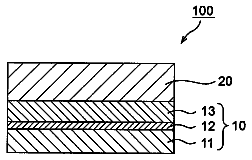
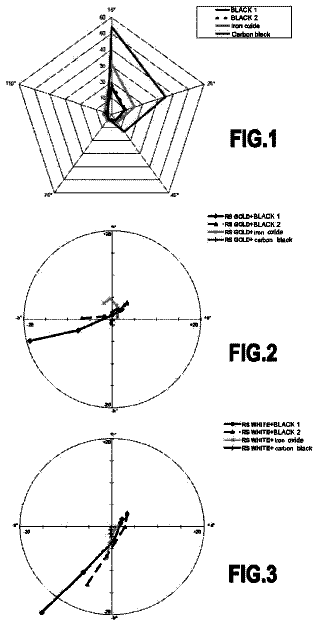
The present invention relates to nanoparticulate UV protectants, to the preparation and use thereof. The present invention furthermore relates to novel compositions for topical application which are intended, in particular, for light protection of the skin and/or the hair against UV radiation (compositions which are referred to below simply as sunscreen compositions), and to the use thereof in the above-mentioned cosmetic application.
It is known that the human epidermis can be tanned by light radiation having a wavelength in the range from 280 to 400 nm and that radiation having a wavelength in the range from 280 to 320 nm, which is known under the term UV-B, causes erythema and skin burning, which may be detrimental to the formation of a natural tan. The UV-B radiation should therefore be filtered out.
It is furthermore known that UV-A radiation having a wavelength in the range from 320 to 400 nm, which tans the skin, can cause a change in the skin, in particular in the case of sensitive skin or skin which is exposed continuously to sunlight. UV-A radiation causes, in particular, a loss in skin elasticity and wrinkling, which results in premature ageing. It favours the triggering of erythema formation or increases this reaction in some people, and it can even be the cause of toxic or allergic reactions triggered by light. It is therefore desirable also to filter out the UV-A radiation.
In cosmetics, numerous organic sunscreen filters which are able to absorb the harmful UV-A radiation more or less selectively have been indicated to date.
A group of UV-A filters which is particularly interesting in this respect currently consists of dibenzoylmethane derivatives, in particular 4,4'-methoxy-tert-butyldibenzoylmethane, which have a strong intrinsic absorption capacity. These dibenzoylmethane derivatives, which are currently well-known products per se as filters which are effective in the UV-A region, are described, in particular, in the French patent applications FR-A-2 326 405 and FR-A-2 440 933 and in European patent application EP-A-0 114 607. 4,4'-Methoxy-tert-butyldibenzoylmethane is in addition currently commercially available from Merck under the trade name Eusolex.RTM. 9020.
These dibenzoylmethane derivatives can be combined with a UV-B filter in order to obtain complete protection over the entire spectrum of sunlight in the UV region.
It is furthermore known that the addition of an inorganic pigment and in particular of a titanium dioxide (TiO.sub.2) pigment enables the light-protection properties of sunscreen compositions comprising UV filters to be improved.
The combination of dibenzoylmethane derivatives and nanoparticulate metal oxides of metal oxides is therefore highly regarded in the area of sunscreen compositions.
However, it is found that the combinations of dibenzoylmethane derivatives and inorganic nanoparticulate metal oxides and in particular the combination of 4,4'-methoxy-tert-butyldibenzoylmethane and metal oxides has a number of disadvantages which have an effect not only on the type and thus the quality of the products containing them, but also on their attractiveness to the consumers. On the one hand, increased degradation of dibenzoylmethane derivatives in formulations is frequently observed if titanium dioxide particles are present in the compositions comprising this type of combination On the other hand, difficulties repeatedly arise in cosmetic formulations comprising this combination due to complexes of the dibenzoylmethane derivative crystallising out. Furthermore, a colour change which is perceived in a more or less intense yellow or red coloration of the formulations is frequently observed. Apart from the fact that this phenomenon reduces the light-protection capacity of the dibenzoylmethane derivatives and in particular of 4,4'-methoxy-tert-butyldibenzoylmethane, this coloration is of course undesired from a cosmetic point of view.
It is furthermore observed that these phenomena are particularly pronounced in the case of TiO.sub.2 nanopigments.
Various attempts to solve some of these problems have already been indicated in the prior art: Japanese patent application JP61-215314 recommended the use of masking agents selected from edetic acid, metaphosphoric acid, polyphosphoric acid and/or the salts of these acids in order to reduce the phenomenon of the yellow coloration. However, this solution is not entirely satisfactory.
It is observed in European Patent Application EP-A-0 748 624 that the use of nanoparticulate metal oxides of titanium dioxide which have been treated with a silicone (silane derivative or siloxane derivative) significantly reduces the yellow coloration which is usually observed in the sunscreen compositions comprising conventional combinations of the dibenzoylmethane derivatives/TiO.sub.2 pigment type.
Furthermore, the specification WO-A-94/04131 discloses light-stable filter compositions which comprise a dibenzoylmethane derivative in combination with a benzylidenecamphor derivative in well-defined proportions. According to this specification, the dibenzoylmethane derivative can be stabilised to light by the benzylidenecamphor in the stated proportions, i.e. its decomposition under the action of UV radiation and in particular UV-A radiation can be restricted. It is stated in the same specification that these photostable compositions may furthermore comprise an organic pigment which blocks UV radiation and in particular a titanium dioxide pigment, which may be coated with a compound and in particular with a silicone-containing compound.
In spite of these attempts to solve the above-mentioned problems on combination of dibenzoylmethane derivatives with metal-oxide particles, there is still a demand for a metal-oxide grade which simultaneously solves all the said problems in a satisfactory manner.
Surprisingly, it has now been found that it is possible to employ certain nanoparticulate UV protectants which have a silicon dioxide coating in cosmetic formulations comprising dibenzoylmethane derivatives and at the same time to solve the said problems in a satisfactory manner.
The present invention firstly relates to a nanoparticulate UV protectant which has a silicon dioxide coating which is obtainable by hydrothermal treatment of a nanoparticulate metal oxide and subsequent application of a silicon dioxide coating.
Hydrothermal treatment is taken to mean the heating of an aqueous solution or suspension or dispersion in a closed container, optionally under pressure (cf. also Ullmanns Enzyklopadie der Technischen Chemie [Ullmann's Encyclopaedia of Industrial Chemistry], 4th Edition, 1978, Volume 15, pp. 117 ff: K. Recker, The Growing of Single Crystals).
For the purposes of the present invention, a nanoparticulate UV protectant is preferably taken to mean a nanoparticulate metal oxide with silicon dioxide coating. The crystallite size of the nanoparticulate metal oxide in the nanoparticulate UV protectant, determined by the Scherrer method, is usually in the range from 5 nm to 100 nm, preferably in the range from 8 to 50 nm and particularly preferably below 25 nm. The dimensions of the nanoparticulate metal oxide, which can be determined in a transmission electron microscope, are usually at a length of 5 to 150 nm and a width of 5 to 60 nm. The length is preferably in the range from 20 to 60 nm and the width in the range from 8 to 30 nm.
The nanoparticulate metal oxides used here for the use according to the invention are, in particular, titanium dioxide, iron oxides, zinc oxide or also cerium oxides, where titanium dioxide is particularly preferred in accordance with the invention as metal oxide since it achieves the objects according to the invention in a particular manner. Titanium dioxide can be in rutile or anatase form or in amorphous form, but preferably in rutile and/or anatase form here. The preferred primary particle size is in the range from 5 to 50 nm. The primary particles here, in particular in the case of anatase, are preferably round, while rutile primary particles frequently occur in needle or spindle form right up to ovals ("egg-shaped"). However, round rutile primary particles can also be employed in accordance with the invention.
The silicon dioxide coating should cover the nanoparticulate metal oxide as completely as possible and, since it is, however, inert as UV filter, should nevertheless not be present in excessive amounts. It has been found that it is advantageous for the silicon dioxide content, based on the nanoparticulate UV protectant as a whole, to be 5 to 50% by weight, preferably 8 to 30% by weight and particularly preferably 12 to 20% by weight.
The resultant nanoparticulate UV protectant usually exhibits a particle size determined by the Scherrer method in the range from 5 nm to 100 nm, preferably in the range from 8 to 50 nm and particularly preferably below 25 nm. The dimensions of the nanoparticulate UV protectant, which can be determined in a transmission electron microscope, are usually at a length of 5 to 160 nm and a width of 10 to 70 nm. The length is preferably in the range from 30 to 70 nm and the width in the range from 18 to 40 nm.
The nanoparticulate UV protectant according to the invention exhibits advantageous properties here compared with the prior art with respect to: UV absorption, in particular broad-band or UV-B absorption, transparency in visible light (VIS), good, in particular increased photostability, reduced or inhibited photoactivity, hydrophilic surface, good incorporation and settling stability in aqueous phases; silica surface, which can, if desired, easily be hydrophobically modified using known techniques, ready dispersibility in aqueous and oily phases, in combination with dibenzoylmethane derivatives, in particular: reduced discoloration of the formulation and/or diminishing discoloration of the formulation during storage and/or no or reduced crystallisation of complexes of the dibenzoylmethane derivatives and/or increased storage stability of the dibenzoylmethane derivatives and/or improved light-protection action, in particular after storage, in combination with self-tanning agents, in particular dihydroxyacetone, reduced destabilisation of the self-tanning agent compared with the prior art, or none at all, is observed, in combination with benzophenone derivatives, in particular 2-hydroxy-4-methoxybenzophenone, stabilisation of the benzophenone derivatives is observed.
It has been found here, in particular, that it may be advantageous for simultaneous realisation of the above-mentioned advantages if the nanoparticulate metal oxide is doped with cerium or iron, preferably iron.
In another, likewise preferred variant of the present invention, however, the nanoparticulate metal oxide is free from dopants.
The diminishing discoloration of the formulation during storage on combination with dibenzoylmethane derivatives is evident at all usual storage temperatures for cosmetic formulations, in particular at 4.degree. C., room temperature and 50.degree. C. This positive effect begins immediately after preparation of the formulation. Re-intensification of the discoloration does not occur--if known to date--in the usual service life of a cosmetic formulation.
As already mentioned above, the nanoparticulate UV protectants having the properties according to the invention are obtained, for example, if a certain preparation process is observed.
Correspondingly, the present invention furthermore relates to a process for the preparation of a nanoparticulate metal oxide having light-protection properties which is characterised in that a) a nanoparticulate metal oxide is subjected to hydrothermal treatment and b) a silicon dioxide coating is subsequently applied.
As already stated above, it may be preferred in this process for the nanoparticulate metal oxide employed in step a) to be a nanoparticulate titanium dioxide, which may preferably be doped with iron.
The hydrothermal treatment here is preferably carried out at temperatures in the range from 40 to 360.degree. C., preferably in the range from 80 to 220.degree. C. and particularly preferably in the range from 140 to 200.degree. C.
The hydrothermal treatment results in the formation of stable nanocrystallites of uniform size and shape. At low temperatures, "needle-shaped" crystallites form. With increasing temperature, the crystallites become rounded. Oval shapes form which become round particles at very high temperatures. In addition, uniform crystal growth occurs, which results in a reduction in the reactivity and photoactivity.
Advantages of the hydrothermal treatment compared with a conventional thermal treatment (heat treatment of a dried powder) are: formation of uniform crystallite sizes with a narrow particle-size distribution prevention of sintering effects (formation of undesired aggregates)
The silicon dioxide coating in step b) is preferably carried out as a sol-gel process, in which a water-glass solution is particularly preferably added to a suspension of the metal oxide.
In an advantageous variant of the present invention, the sol-gel process here is carried out with the pH kept constant. The pH kept constant can be in a range from pH 2 to pH 11, with the pH preferably being in the range from pH=5 to pH=8, particularly preferably in the range from pH=6 to pH=7.
A further advantageous variant of the present invention is addition of all of the water-glass necessary for the post-treatment at a pH=7 to pH=11 without keeping the pH constant. The pH is subsequently lowered to a value of pH=5 to pH=8, preferably to pH=6 to pH=7.
It is furthermore preferred for step b) to be carried out at elevated temperature, preferably at a temperature in the range from 50.degree. C. to 110.degree. C.
In all the said variants of the process according to the invention, a maturing time after the coating is complete is advantageous. The maturing time should be between 1 h and 8 h, preferably 2 h to 4 h, and should be carried out at a temperature of 50.degree. C. to 110.degree. C.
It may furthermore be advantageous with respect to the agglomerate sizes desired during later processing for the product subsequently to be ground. The conventional grinding techniques which can be used for nanoparticulate materials can be employed here.
Owing to the above-mentioned advantages, the present invention furthermore relates to a composition having light-protection properties which comprises at least one nanoparticulate UV protectant according to the invention.
In a variant of the invention, the compositions are preferably compositions which can be applied topically, for example cosmetic or dermatological formulations. The compositions in this case comprise a cosmetically or dermatologically suitable carrier and, depending on the desired property profile, optionally further suitable ingredients.
Further compositions which are preferred in accordance with the invention are selected from the group consisting of fibres, textiles, including coatings thereof, paints, coating systems, films and packaging for the protection of foods, plants or industrial products.
Accordingly, the present invention furthermore relates to the use of a nanoparticulate UV protectant according to the invention or of a nanoparticulate UV protectant prepared by a process according to the invention for incorporation into paints, coating systems, films, packaging, fibres, textiles and rubber or silicone rubber mouldings, such as tyres or insulators.
Besides the advantages already mentioned above, the use of the nanoparticulate UV protectants according to the invention in compositions which are emulsions can, in particular, also contribute towards stabilisation of the emulsion. In general, this can reduce the use of emulsifiers or, in an individual case (Pickering emulsion), even obviate the use of emulsifiers entirely. Preference is therefore also given in accordance with the invention to emulsifier-free emulsions which comprise the nanoparticulate UV protectants according to the invention.
Preferred compositions having light-protection properties comprise at least one dibenzoylmethane derivative. The dibenzoylmethane derivatives used for the purposes of the present invention are, as already indicated, products which are already well known per se and which are described, in particular, in the above-mentioned specifications FR-A-2 326 405, FR-A-2 440 933 and EP-A-0 114 607. The dibenzoylmethane derivatives which can be used in accordance with the invention can be selected, in particular, from the dibenzoylmethane derivatives of the following formula:
##STR00001## in which R.sup.1, R.sup.2, R.sup.3 and R.sup.4, which are identical or different from one another, denote hydrogen, a straight-chain or branched C.sub.1-8-alkyl group or a straight-chain or branched C.sub.1-8-alkoxy group. In accordance with the present invention, it is of course possible to use one dibenzoylmethane derivative or a plurality of dibenzoylmethane derivatives. Of the dibenzoylmethane derivatives to which the present invention specifically relates, mention may be made, in particular, of: 2-methyldibenzoylmethane, 4-methyldibenzoylmethane, 4-isopropyldibenzoylmethane, 4-tert-butyldibenzoylmethane, 2,4-dimethyldibenzoylmethane, 2,5-dimethyldibenzoylmethane, 4,4'-diisopropyldibenzoylmethane, 4,4'-methoxy-tert-butyldibenzoylmethane, 2-methyl-5-isopropyl-4'-methoxydibenzoylmethane, 2-methyl-5-tert-butyl-4'-methoxydibenzoylmethane, 2,4-dimethyl-4'-methoxydibenzoylmethane and 2,6-dimethyl-4-tert-butyl-4'-methoxydibenzoylmethane, this list being non-restrictive.
Of the above-mentioned dibenzoylmethane derivatives, particular preference is given in accordance with the invention to 4,4'-methoxy-tert-butyldibenzoylmethane and especially 4,4'-methoxy-tert-butyldibenzoylmethane, which is commercially available under the trade name Eusolex.RTM. 9020 from Merck, this filter conforming to the following structural formula:
##str00002##
A further dibenzoylmethane derivative which is preferred in accordance with the invention is 4-isopropyldibenzoylmethane.
Further preferred compositions having light-protection properties comprise at least one benzophenone or benzophenone derivative, such as, particularly preferably, 2-hydroxy-4-methoxybenzophenone (for example Eusolex.RTM. 4360) or 2-hydroxy-4-methoxybenzophenone-5-sulfonic acid and the sodium salt thereof (for example Uvinul.RTM. MS-40).
The dibenzoylmethane derivative(s) or the benzophenone derivative(s) may be present in the compositions according to the invention in proportions which are generally in the range from 0.1 to 10% by weight and preferably in proportions which are in the range from 0.3 to 5% by weight, where these proportions are based on the total weight of the composition.
Owing to the above-mentioned advantages, the present invention furthermore also relates to the use of a nanoparticulate metal oxide having light-protection properties according to the invention for the stabilisation of UV filters, in particular dibenzoylmethane and dibenzoylmethane derivatives or benzophenone and benzophenone derivatives.
It may furthermore be preferred in accordance with the invention for the compositions to comprise further inorganic UV filters. Preference is given here both to those from the group consisting of titanium dioxides, such as, for example, coated titanium dioxide (for example Eusolex.RTM. T-2000, Eusolex.RTM. T-AQUA), zinc oxides (for example Sachtotec.RTM.), iron oxides, also cerium oxides. These inorganic UV filters are generally incorporated into cosmetic compositions in an amount of 0.5 to 20 percent by weight, preferably 2-10%. In particular, it may be preferred here for a nanoparticulate UV protectant according to the invention to be present in one phase in emulsions and a further inorganic UV filter to be present in the other phase.
In a further, likewise preferred embodiment of the present invention, the composition according to the invention comprises at least one self-tanning agent.
Advantageous self-tanning agents which can be employed are, inter alia:
##str00003##
Mention should also be made of 5-hydroxy-1,4-naphthoquinone (juglone), which is extracted from the shells of fresh walnuts
##STR00004## and 2-hydroxy-1,4-naphthoquinone (lawsone), which occurs in henna leaves.
##str00005##
Very particular preference is given to 1,3-dihydroxyacetone (DHA), a trifunctional sugar which occurs in the human body, and derivatives thereof.
##str00006##
The present invention furthermore relates to the use of a nanoparticulate UV protectant according to the invention for the stabilisation of self-tanning agents, in particular dihydroxyacetone or dihydroxyacetone derivatives.
Furthermore, the compositions according to the invention may also comprise dyes and coloured pigments. The dyes and coloured pigments can be selected from the corresponding positive list in the German Cosmetics Regulation or the EC list of cosmetic colorants. In most cases, they are identical with the dyes approved for foods. Advantageous coloured pigments are, for example, titanium dioxide, mica, iron oxides (for example Fe.sub.2O.sub.3, Fe.sub.3O.sub.4, FeO(OH)) and/or tin oxide. Advantageous dyes are, for example, carmine, Berlin Blue, Chromium Oxide Green, Ultramarine Blue and/or Manganese Violet. It is particularly advantageous to select the dyes and/or coloured pigments from the following list. The Colour Index numbers (CINs) are taken from the Rowe Colour Index, 3rd Edition, Society of Dyers and Colourists, Bradford, England, 1971.
TABLE-US-00001 Chemical or other name CIN Colour Pigment Green 10006 Green Acid Green 1 10020 Green 2,4-Dinitrohydroxynaphthalene-7-sulfonic acid 10316 Yellow Pigment Yellow 1 11680 Yellow Pigment Yellow 3 11710 Yellow Pigment Orange 1 11725 Orange 2,4-Dihydroxyazobenzene 11920 Orange Solvent Red 3 12010 Red 1-(2'-Chloro-4'-nitro-1'-phenylazo)-2-hydroxynaphthalene 12085 Red Pigment Red 3 12120 Red Ceres Red; Sudan Red; Fat Red G 12150 Red Pigment Red 112 12370 Red Pigment Red 7 12420 Red Pigment Brown 1 12480 Brown 4-(2'-Methoxy-5'-sulfodiethylamido-1'-phenylazo)-3-hydroxy- 12490 Red 5''-chloro-2'',4''-dimethoxy-2-naphthanilide Disperse Yellow 16 12700 Yellow 1-(4-Sulfo-1-phenylazo)-4-aminobenzene-5-sulfonic acid 13015 Yellow 2,4-Dihydroxyazobenzene-4'-sulfonic acid 14270 Orange 2-(2,4-Dimethylphenylazo-5-sulfonyl)-1-hydroxynaphthalene- 14700 Red 4-sulfonic acid 2-(4-Sulfo-1-naphthylazo)-1-naphthol-4-sulfonic acid 14720 Red 2-(6-Sulfo-2,4-xylylazo)-1-naphthol-5-sulfonic acid 14815 Red 1-(4'-Sulfophenylazo)-2-hydroxynaphthalene 15510 Orange 1-(2-Sulfonyl-4-chloro-5-carboxy-1-phenylazo)-2-hydroxy- 15525 Red naphthalene 1-(3-Methylphenylazo-4-sulfonyl)-2-hydroxynaphthalene 15580 Red 1-(4',(8')-Sulfonylnaphthylazo)-2-hydroxynaphthalene 15620 Red 2-Hydroxy-1,2'-azonaphthalene-1'-sulfonic acid 15630 Red 3-Hydroxy-4-phenylazo-2-naphthylcarboxylic acid 15800 Red 1-(2-Sulfo-4-methyl-1-phenylazo)-2-naphthylcarboxylic acid 15850 Red 1-(2-Sulfo-4-methyl-5-chloro-1-phenylazo)-2-hydroxy-naphthalene- 15865 Red- 3-carboxylic acid 1-(2-Sulfo-1-naphthylazo)-2-hydroxynaphthalene-3-carboxylic 15880 Red acid 1-(3-Sulfo-1-phenylazo)-2-naphthol-6-sulfonic acid 15980 Orange 1-(4-Sulfo-1-phenylazo)-2-naphthol-6-sulfonic acid 15985 Yellow Allura Red 16035 Red 1-(4-Sulfo-1-naphthylazo)-2-naphthol-3,6-disulfonic acid 16185 Red Acid Orange 10 16230 Orange 1-(4-Sulfo-1-naphthylazo)-2-naphthol-6,8-disulfonic acid 16255 Red 1-(4-Sulfo-1-naphthylazo)-2-naphthol-3,6,8-trisulfonic acid 16290 Red 8-Amino-2-phenylazo-1-naphthol-3,6-disulfonic acid 17200 Red Acid Red 1 18050 Red Acid Red 155 18130 Red Acid Yellow 121 18690 Yellow Acid Red 180 18736 Red Acid Yellow 11 18820 Yellow Acid Yellow 17 18965 Yellow 4-(4-Sulfo-1-phenylazo)-1-(4-sulfophenyl)-5-hydroxy-pyrazolone- 19140 Yell- ow 3-carboxylic acid Pigment Yellow 16 20040 Yellow 2,6-(4'-Sulfo-2'',4''-dimethyl)bisphenylazo)-1,3-dihydroxy- 20170 Orange benzene Acid Black 1 20470 Black Pigment Yellow 13 21100 Yellow Pigment Yellow 83 21108 Yellow Solvent Yellow 21230 Yellow Acid Red 163 24790 Red Acid Red 73 27290 Red 2-[4'-(4''-Sulfo-1''-phenylazo)-7'-sulfo-1'-naphthylazo]-1- 27755 Black hydroxy-7-aminonaphthalene-3,6-disulfonic acid 4-[4''-Sulfo-1''-phenylazo)-7'-sulfo-1'-naphthylazo]-1-hydroxy- 28440 Blac- k 8-acetylaminonaphthalene-3,5-disulfonic acid Direct Orange 34, 39, 44, 46, 60 40215 Orange Food Yellow 40800 Orange trans-.beta.-Apo-8'-carotene aldehyde (C.sub.30) 40820 Orange trans-Apo-8'-carotinic acid (C.sub.30) ethyl ester 40850 Orange Canthaxanthine 40850 Orange Acid Blue 1 42045 Blue 2,4-Disulfo-5-hydroxy-4'-4''-bis(diethylamino)triphenylcarbinol 42051 Blue- 4-[(4-N-Ethyl-p-sulfobenzylamino)-phenyl-(4-hydroxy-2-sulfo- 42053 Green phenyl)(methylene)-1-(N-ethyl-N-p-sulfobenzyl)-2,5-cyclo- hexadienimine] Acid Blue 7 42080 Blue (N-Ethyl-p-sulfobenzylamino)phenyl-(2-sulfophenyl)methylene- 42090 Blue (N-ethyl-N-p-sulfobenzyl)-.DELTA..sup.2,5-cyclohexadienimine Acid Green 9 42100 Green Diethyldisulfobenzyldi-4-amino-2-chlorodi-2-methylfuchsonimmonium 42170 Gr- een Basic Violet 14 42510 Violet Basic Violet 2 42520 Violet 2'-Methyl-4'-(N-ethyl-N-m-sulfobenzyl)amino-4''-(N-diethyl)- 42735 Blue amino-2-methyl-N-ethyl-N-m-sulfobenzylfuchsonimmonium 4'-(N-Dimethyl)amino-4''-(N-phenyl)aminonaphtho-N- 44045 Blue dimethylfuchsonimmonium 2-Hydroxy-3,6-disulfo-4,4'-bisdimethylaminonaphthofuchsonimmonium 44090 Gr- een Acid Red 52 45100 Red 3-(2'-Methylphenylamino)-6-(2'-methyl-4'-sulfophenylamino)-9- 45190 Violet- (2''-carboxyphenyl)xanthenium salt Acid Red 50 45220 Red Phenyl-2-oxyfluorone-2-carboxylic acid 45350 Yellow 4,5-Dibromofluorescein 45370 Orange 2,4,5,7-Tetrabromofluorescein 45380 Red Solvent Dye 45396 Orange Acid Red 98 45405 Red 3',4',5',6'-Tetrachloro-2,4,5,7-tetrabromofluorescein 45410 Red 4,5-Diiodofluorescein 45425 Red 2,4,5,7-Tetraiodofluorescein 45430 Red Quinophthalone 47000 Yellow Quinophthalonedisulfonic acid 47005 Yellow Acid Violet 50 50325 Violet Acid Black 2 50420 Black Pigment Violet 23 51319 Violet 1,2-Dioxyanthraquinone, calcium-aluminium complex 58000 Red 3-Oxypyrene-5.8.10-sulfonic acid 59040 Green 1-Hydroxy-4-N-phenylaminoanthraquinone 60724 Violet 1-Hydroxy-4-(4'-methylphenylamino)anthraquinone 60725 Violet Acid Violet 23 60730 Violet 1,4-Di(4'-methylphenylamino)anthraquinone 61565 Green 1,4-Bis(o-sulfo-p-toluidino)anthraquinone 61570 Green Acid Blue 80 61585 Blue Acid Blue 62 62045 Blue N,N'-Dihydro-1,2,1',2'-anthraquinonazine 69800 Blue Vat Blue 6; Pigment Blue 64 69825 Blue Vat Orange 7 71105 Orange Indigo 73000 Blue Indigodisulfonic acid 73015 Blue 4,4'-Dimethyl-6,6'-dichlorothioindigo 73360 Red 5,5'-Dichloro-7,7'-dimethylthioindigo 73385 Violet Quinacridone Violet 19 73900 Violet Pigment Red 122 73915 Red Pigment Blue 16 74100 Blue Phthalocyanine 74160 Blue Direct Blue 86 74180 Blue Chlorinated phthalocyanine 74260 Green Natural Yellow 6, 19; Natural Red 1 75100 Yellow Bixin, Nor-Bixin 75120 Orange Lycopene 75125 Yellow trans-alpha-, -beta- or -gamma-Carotene 75130 Orange Keto and/or hydroxyl derivatives of carotene 75135 Yellow Guanine or pearlescent agent 75170 White 1,7-Bis(4-hydroxy-3-methoxyphenyl)-1,6-heptadiene-3,5-dione 75300 Yellow Complex salt (Na, Al, Ca) of carminic acid 75470 Red Chlorophyll a and b; copper compounds of chlorophylls and 75810 Green chlorophyllines Aluminium 77000 White Aluminium hydroxide 77002 White Water-containing aluminium silicates 77004 White Ultramarine 77007 Blue Pigment Red 101 and 102 77015 Red Barium sulfate 77120 White Bismuth oxychloride and mixtures thereof with mica 77163 White Calcium carbonate 77220 White Calcium sulfate 77231 White Carbon 77266 Black Pigment Black 9 77267 Black Carbo medicinalis vegetabilis 77268:1 Black Chromium oxide 77288 Green Chromium oxide, water-containing 77278 Green Pigment Blue 28, Pigment Green 14 77346 Green Pigment Metal 2 77400 Brown Gold 77480 Brown Iron oxides and hydroxides 77489 Orange Iron oxide 77491 Red Iron oxide hydrate 77492 Yellow Iron oxide 77499 Black Mixtures of iron(II) and iron(III) hexacyanoferrate 77510 Blue Pigment White 18 77713 White Manganese ammonium diphosphate 77742 Violet Manganese phosphate; Mn.sub.3(PO.sub.4).sub.2.cndot.7 H.sub.2O 77745 Red Silver 77820 White Titanium dioxide and mixtures thereof with mica 77891 White Zinc oxide 77947 White 6,7-Dimethyl-9-(1'-D-ribityl)isoalloxazine, lactoflavin Yellow Sugar dye Brown Capsanthin, capsorubin Orange Betanin Red Benzopyrylium salts, anthocyans Red Aluminium, zinc, magnesium and calcium stearate White Bromothymol Blue Blue
It may furthermore be favourable to select, as dye, one or more substances from the following group:
2,4-dihydroxyazobenzene, 1-(2'-chloro-4'-nitro-1'-phenylazo)-2-hydroxynaphthalene, Ceres Red, 2-(4-sulfo-1-naphthylazo)-1-naphthol-4-sulfonic acid, the calcium salt of 2-hydroxy-1,2'-azonaphthalene-1'-sulfonic acid, the calcium and barium salts of 1-(2-sulfo-4-methyl-1-phenylazo)-2-naphthylcarboxylic acid, the calcium salt of 1-(2-sulfo-1-naphthylazo)-2-hydroxynaphthalene-3-carboxylic acid, the aluminium salt of 1-(4-sulfo-1-phenylazo)-2-naphthol-6-sulfonic acid, the aluminium salt of 1-(4-sulfo-1-naphthylazo)-2-naphthol-3,6-disulfonic acid, 1-(4-sulfo-1-naphthylazo)-2-naphthol-6,8-disulfonic acid, the aluminium salt of 4-(4-sulfo-1-phenylazo)-2-(4-sulfophenyl)-5-hydroxypyrazolone-3-carboxyli- c acid, the aluminium and zirconium salts of 4,5-dibromofluorescein, the aluminium and zirconium salts of 2,4,5,7-tetrabromofluorescein, 3',4',5',6'-tetrachloro-2,4,5,7-tetrabromofluorescein and its aluminium salt, the aluminium salt of 2,4,5,7-tetraiodofluorescein, the aluminium salt of quinophthalonedisulfonic acid, the aluminium salt of indigodisulfonic acid, red and black iron oxide (GIN: 77491 (red) and 77 499 (black)), iron oxide hydrate (CIN: 77492), manganese ammonium diphosphate and titanium dioxide.
Also advantageous are oil-soluble natural dyes, such as, for example, paprika extract, .beta.-carotene or cochineal.
Also advantageous for the purposes of the present invention are gel creams comprising pearlescent pigments. Particular preference is given to the types of pearlescent pigment listed below: 1. Natural pearlescent pigments, such as, for example, "pearl essence" (guanine/hypoxanthine mixed crystals from fish scales) and "mother-of-pearl" (ground mussel shells) 2. Monocrystalline pearlescent pigments, such as, for example, bismuth oxychloride (BiOCl) 3. Layered substrate pigments: for example mica/metal oxide
The basis for pearlescent pigments is formed by, for example, pulverulent pigments or castor oil dispersions of bismuth oxychloride and/or titanium dioxide as well as bismuth oxychloride and/or titanium dioxide on mica. The lustre pigment listed under CIN 77163, for example, is particularly advantageous.
Also advantageous are, for example, the following pearlescent pigment types based on mica/metal oxide:
TABLE-US-00002 Coating/layer Group thickness Colour Silver-white pearlescent TiO.sub.2: 40-60 nm silver pigments Interference pigments TiO.sub.2: 60-80 nm yellow TiO.sub.2: 80-100 nm red TiO.sub.2: 100-140 nm blue TiO.sub.2: 120-160 nm green Coloured lustre pigments Fe.sub.2O.sub.3 bronze Fe.sub.2O.sub.3 copper Fe.sub.2O.sub.3 red Fe.sub.2O.sub.3 red-violet Fe.sub.2O.sub.3 red-green Fe.sub.2O.sub.3 black Combination pigments TiO.sub.2/Fe.sub.2O.sub.3 gold shades TiO.sub.2/Cr.sub.2O.sub.3 green TiO.sub.2/Berlin Blue dark blue
Particular preference is given to, for example, the pearlescent pigments available from Merck under the trade names Timiron, Colorona or Dichrona.
The list of the said pearlescent pigments is of course not intended to be limiting. Pearlescent pigments which are advantageous for the purposes of the present invention can be obtained by numerous routes known per se. For example, other substrates apart from mica can also be coated with further metal oxides, such as, for example, silica and the like. For example, TiO.sub.2- and Fe.sub.2O.sub.3-coated SiO.sub.2 particles ("Ronasphere" grades), which are marketed by Merck and are particularly suitable for the optical reduction of fine wrinkles, are advantageous.
It may additionally be advantageous to completely omit a substrate such as mica. Particular preference is given to pearlescent pigments prepared using SiO.sub.2. Such pigments, which may additionally also have goniochromatic effects, are available, for example, from BASF under the trade name Sicopearl Fantastico.
It may also be advantageous to employ Engelhard/Mearl pigments based on calcium sodium borosilicate coated with titanium dioxide. These are available under the name Reflecks. Due to their particle size of 40-80 .mu.m, they have a glitter effect in addition to the colour.
Also particularly advantageous are effect pigments available from Flora Tech under the trade name Metasomes Standard/Glitter in various colours (yellow, red, green, blue). The glitter particles here are in the form of mixtures with various assistants and dyes (such as, for example, the dyes with the colour index (CI) numbers 19140, 77007, 77289, 77491).
The dyes and pigments can be in individual form or in the form of a mixture and mutually coated with one another, with different colour effects generally being caused by different coating thicknesses. The total amount of dyes and colouring pigments is advantageously selected from the range from, for example, 0.1% by weight to 30% by weight, preferably from 0.5 to 15% by weight, in particular from 1.0 to 10% by weight, in each case based on the total weight of the compositions.
In accordance with the invention, the nanoparticulate UV protectants may also be provided with a surface treatment which strengthens the hydrophilic or hydrophobic properties. Suitable for hydrophobic modification is, for example, a silicone or silane coating.
The silicones are, as is known, organosilicon polymers or oligomers having a straight-chain or cyclic, branched or crosslinked structure with various molecular weights which are obtained by polymerisation and/or polycondensation of suitably functionalised silanes and are essentially formed from recurring main units in which the silicon atoms are linked to one another via oxygen atoms (siloxane bond), where optionally substituted hydrocarbon groups are bonded directly to the silicon atoms via a carbon atom. The commonest hydrocarbon groups are the alkyl groups and in particular methyl, the fluoroalkyl groups, the aryl groups and in particular phenyl and the alkenyl groups and in particular vinyl. Further types of group which can be bonded to the siloxane chain either directly or via a hydrocarbon group are, in particular, hydrogen, the halogens and in particular chlorine, bromine or fluorine, the thiols, the alkoxy groups, the polyoxyalkylene groups (or polyethers) and in particular polyoxyethylene and/or polyoxypropylene, hydroxyl groups or hydroxyalkyl groups, the optionally substituted amino groups, the amide groups, the acyloxy groups or acyloxyalkyl groups, the hydroxyalkyl-amino groups or aminoalkyl groups, quaternary ammonium groups, amphoteric groups or betaine groups, anionic groups, such as carboxylates, thioglycolates, sulfosuccinates, thiosulfates, phosphates and sulfates, where this list is of course in no way limiting (so-called `organo-modified` silicones).
For the purposes of the present invention, the term `silicones` is also intended to encompass and cover the silanes and in particular the alkylsilanes required for their preparation.
The silicones which are suitable for the present invention, which can be used for sheathing the nanoparticulate UV protectants, are preferably selected from the alkylsilanes, the polydialkylsiloxanes and the polyalkylhydrogenosiloxanes. The silicones are more preferably selected from octyltrimethylsilane, the polydimethylsiloxanes and the polymethylhydrogenosiloxanes.
The nanoparticulate UV protectants can be present in the compositions according to the invention in proportions which are generally in the range from 0.1 to 50% by weight and preferably in proportions which are in the range from 0.5 to 20% by weight, where these proportions are based on the total weight of the composition.
The sunscreen compositions according to the invention may of course comprise one or more additional hydrophilic or lipophilic sunscreen filters which are effective in the UV-A region and/or UV-B region and/or IR and/or VIS region (absorbers). These additional filters can be selected, in particular, from cinnamic acid derivatives, salicylic acid derivatives, camphor derivatives, triazine derivatives, .beta.,.beta.-diphenyl acrylate derivatives, p-aminobenzoic acid derivatives and polymeric filters and silicone filters, which are described in the application WO 93/04665. Further examples of organic filters are indicated in patent application EP-A 0 487 404.
In principle, all UV filters are suitable for combination with the nanoparticulate UV protectants according to the invention. Particular preference is given to UV filters whose physiological acceptability has already been demonstrated. Both for UVA and UVB filters, there are many proven substances which are known from the specialist literature, for example
benzylidenecamphor derivatives, such as 3-(4'-methylbenzylidene)-dl-camphor (for example Eusolex.RTM. 6300), 3-benzylidenecamphor (for example Mexoryl.RTM. SD), polymers of N-{(2 and 4)-[(2-oxoborn-3-ylidene)methyl]benzyl}acrylamide (for example Mexoryl.RTM. SW), N,N,N-trimethyl-4-(2-oxoborn-3-ylidenemethyl)anilinium methylsulfate (for example Mexoryl.RTM. SK) or (2-oxoborn-3-ylidene)toluene-4-sulfonic acid (for example Mexoryl.RTM. SL), methoxycinnamic acid esters, such as octyl methoxycinnamate (for example Eusolex.RTM. 2292), isopentyl 4-methoxycinnamate, for example as a mixture of the isomers (for example Neo Heliopan.RTM. E 1000), salicylate derivatives, such as 2-ethylhexyl salicylate (for example Eusolex.RTM. OS), 4-isopropylbenzyl salicylate (for example Megasol.RTM.) or 3,3,5-trimethylcyclohexyl salicylate (for example Eusolex.RTM. HMS), 4-aminobenzoic acid and derivatives, such as 4-aminobenzoic acid, 2-ethylhexyl 4-(dimethylamino)benzoate (for example Eusolex.RTM. 6007), ethoxylated ethyl 4-aminobenzoate (for example Uvinul.RTM. P25), phenylbenzimidazolesulfonic acids, such as 2-phenylbenzimidazole-5-sulfonic acid and the potassium, sodium and triethanolamine salts thereof (for example Eusolex.RTM. 232), 2,2-(1,4-phenylene)bisbenzimidazole-4,6-disulfonic acid and salts thereof (for example Neoheliopan.RTM. AP) or 2,2-(1,4-phenylene)bisbenzimidazole-6-sulfonic acid; and further substances, such as 2-ethylhexyl 2-cyano-3,3-diphenylacrylate (for example Eusolex.RTM. OCR), 3,3'-(1,4-phenylenedimethylene)bis(7,7-dimethyl-2-oxobicyclo[2.2.1]hept-1- -yl-methanesulfonic acid and salts thereof (for example Mexoryl.RTM. SX) and 2,4,6-trianilino-(p-carbo-2'-ethylhexyl-1'-oxy)-1,3,5-triazine (for example Uvinul.RTM. T 150) hexyl 2-(4-diethylamino-2-hydroxybenzoyl)benzoate (for example Uvinul.RTM. UVA Plus, BASF).
The compounds mentioned in the list should only be regarded as examples. It is of course also possible to use other UV filters. In particular, organic particulate UV filters, as described, for example, in patent application WO 99/66896, may also advantageously be combined with the nanoparticulate UV protectants according to the invention.
These organic UV filters are generally incorporated into cosmetic formulations in an amount of 0.5 to 20 percent by weight, preferably 1-10% by weight.
The description continues in the full USPTO document.