The present invention relates to the use of pectinolytic enzymes or polypeptides having pectinolytic activity for the treatment of fruit or vegetable mash. The invention further relates to the use of pectinolytic enzymes for the preparation of fruit or vegetable juice. At least one of the enzymes is obtainable from Trichoderma reesei. Moreover, the invention relates to polypeptide sequences having pectinolytic activity suitable in the treatment of fruit or vegetable mash as well as to polynucleotides encoding said polypeptide sequences. Particularly, the invention relates to the use of a polygalacturonase from Trichoderma reesei in the treatment of fruit or vegetable mash, particularly apple mash, as well as to the use of said enzyme for the preparation of fruit or vegetable juice, in particular apple juice.
Pectin polymers are important constituents of plant cell walls. Pectin is the major structural polysaccharide of fruit or vegetable lamella and cell walls. The texture of fruit or vegetable depends on the quantity and properties of pectin. Generally, unripe fruit contains insoluble protopectin, whereas ripe fruit contains more soluble pectin. Pectin is a heteropolysaccharide with a backbone composed of alternating homogalacturonans (smooth regions) and rhamnogalacturonans (hairy regions). The smooth regions are linear polymers of 1,4-linked .alpha.-D-galacturonic acid. The galacturonic acid residues can be methylesterified on the carboxyl group.
A fruit contains pectinolytic enzymes, which participate in the natural maceration process during and after ripening. Industrial pectinases are used in processing fruit and vegetable in feed and food. In industrial processes enzymes are used, e.g. in fruit or vegetable processing, in order to hydrolyse pectin and to increase the juice when pressing fruit or vegetable, to lower the viscosity to be able to concentrate cloudy juices or to degrade pectin completely in order to clarify juices and to concentrate them.
Fruit and vegetable juices, especially juice made from apples, can be produced either by a pressing operation or by liquefaction processes. Both processes are supported by the use of pectinolytic enzymes. Basically, the whole fruits are milled and treated with pectinolytic enzymes prior to pressing to loosen cell walls and to promote the free run of the juice. After pressing, the juice usually is heated, which inactivates all the enzymes in the juices. Afterwards the juice is transferred to clarification tanks where additional enzyme is added to the juice to depectinize and hydrolyse starch prior to filtration. Then the enzymes are inactivated during the later pasteurisation of the juice or in the evaporator during concentration. For example, in the production of apple juice a certain structure of the mash is required for a good pressing result. Pectinases that provoke the degradation or maceration of so-called insoluble pectins are unfavourable, since they increase solids in the juice. If the structure is completely destroyed, the so-called apple sauce effect is attained and the juice is very cloudy after pressing. Pectinases act preliminarily on soluble pectins and, thus, result in a lower viscosity of the juice assay and a very easy run off. In the preparation of purees macerative properties are preferred.
In the prior art fruit mashes/fruit juices have already been prepared by using pectinolytic enzymes, containing smooth and hairy region pectinases. "Smooth region" pectinases comprise pectin esterases (or pectin methyl-esterases), polygalacturonases and pectin lyases (or pectin trans-eliminases). "Hairy region" pectinases comprise mainly endo-arabanases, arabinofuranosidases, rhamnogalacturonases, arabino-galactanases, among others. Both enzyme categories are present in standard pectinase preparations derived from Aspergillus niger. In the prior art process the pectinase is added during crushing of the apples in order to achieve suitable distribution of the enzyme in the mash as stirring is not recommended. After a holding time of 30-120 minutes, the mash is pressed by horizontal or belt press systems. The obtained juice is sieved in order to separate coarse particles. Afterwards the juice is pasteurized or essence-stripped in a vacuum evaporator. After re-cooling to about 48-52.degree. C., the juice treatment takes place in order to depectinize and degradate the starch. This treatment takes about 1-2 hrs followed by a filtration process, i.e. ultrafiltration.
Pectinase preparations (pectinase compositions) of the prior art consisting of "smooth region" and "hairy region" pectinases are not suitable for such described press processes, as they liquefy the mash and cause high amounts of solids in the juice. The exclusive application of a specific polygalacturonase in combination with a high pectin esterase supplies much better press results, i.e. shorter press cycles, higher press yields and lower solids in the juice. Furthermore the juice contains less or no residual pectin, which improves subsequent depectinisation and filtering.
At the processing of clear juices, a 2.sup.nd processing step called "depectinisation" is required, in which usually both "smooth region" and "hairy region" pectinases are used. In principle, it is necessary to degrade all present high molecular substances (mainly pectins, starch, etc.) in order to achieve an optimized ultrafiltration process. The pectinases used in the prior art processes are not satisfactory as regards their performance at higher temperatures or the quality of the obtained juice.
Currently pectinases that are active at higher temperatures (>60.degree. C.) are not available. Moreover, pectinases used for the mash treatment yielding directly clear juice after pressing without residual pectin are not satisfactorily available at present. Pectinolytic enzymes are known from the prior art. Aspergillus pectinases are, for example, disclosed in WO 94/14952 and WO 94/14966. Carbohydrate Research 338 (2003), 515-524, describes the isolation and characterisation of two Trichoderma reesei (ATCC 26920) polygalacturonase isoforms belonging to the glycosyl hydrolase family 28. The enzyme is characterised in terms of its pH and temperature properties. A particular use of said polygalacturonases is not described.
Consequently, there has been a need in the prior art for pectinolytic enzymes being suitable for the treatment of fruit or vegetable mash in terms of easier handling as regards the temperature properties and the conduct of the process.
Accordingly, it is an object of the present invention to provide an improved process for the preparation of fruit or vegetable juice. In particular, it is an object of the present invention to provide an improved process for the preparation of fruit or vegetable mash. The method of the invention is to lead to a better yield and quality in terms of the finally obtained juice. Moreover, the process of the invention should be practicable over a wide range of temperatures and should also lead to good results when the process is carried out at high temperatures. The process of the invention is to improve the extractability or degradability and, thus, the press capacity of the mash. It is to lead to juices with a low content of residual pectins after pressing, i.e. the clarity of the obtained juices is to be improved and, thus, avoids laborious filtrations. The process of the invention should be suitable for different fruits.
A further object of the invention is to provide genes encoding pectinolytic enzymes as well as to provide the sequences of polypeptides having pectinolytic activity being suitable in the above-mentioned process. In particular, the sequences of the invention are to encode pectinolytic enzymes having a broad application range and leading to improvements in the process of the treatment of mash and the preparation of fruit or vegetable juice.
It has now surprisingly been found that pectinases from Trichoderma reesei show excellent performance in the treatment of fruit or vegetable mash and specifically in the treatment of a mash from fruits that contain soluble or low esterified pectin. In particular, it has been found that the Trichoderma reesei polygalacturonase (PGA1) shows excellent performance in apple mash treatments. It has surprisingly been found that Trichoderma reesei polygalacturonase (PGA1) can be used as the sole enzyme for the treatment of a mash from fruits that contain soluble or low esterified pectin and the process can favourably be conducted at elevated temperatures. It has further been found that Trichoderma reesei polygalacturonase PGA1 can favourably be used in combination with further pectinolytic enzymes, like pectin methylesterases, polygalacturonases, pectin lyases, pectate lyases, arabinofuranosidases, endo-arabanases or rhamnogalacturonases to improve the treatment of fruit mash even from fruits having high esterified or insoluble pectin, whereby the process has to be conducted at a temperature that is compatible to the enzymes used.
The invention relates to the use of one or more pectinolytic enzymes for the treatment of fruit or vegetable mash, wherein at least one pectinolytic enzyme is obtainable from Trichoderma reesei. In particular, the invention relates to the use of a polygalacturonase from Trichoderma reesei in the treatment of apple mash. Moreover, the invention relates to the process for enzymatic treatment of fruit or vegetable mash comprising the step of adding one or more pectinolytic enzyme(s) as well as to a process for the preparation of a fruit or vegetable juice comprising said process for enzymatic treatment of fruit or vegetable mash, wherein at least one pectinolytic enzyme is obtainable from Trichoderma reesei. In particular, the invention relates to a process for enzymatic treatment of apple mash, whereby a polygalacturonase from Trichoderma reesei having SEQ ID NO: 2 is used.
The invention, moreover, relates to a recombinant DNA molecule that upon expression in a prokaryotic or eukaryotic host cell encodes a polypeptide having endo-polygalacturonase activity, said recombinant DNA molecule comprising a DNA sequence selected from a) DNA sequences having or comprising SEQ ID NO: 1 (pga1), b) DNA sequences hybridizing with the DNA sequences of a) under stringent conditions, c) DNA sequences having a degree of identity of 70% to 98% to the sequences of a) or d) DNA sequences being related to the sequences of a), b) or c) due to the degeneracy of the genetic code.
The invention, moreover, relates to a recombinant DNA molecule that upon expression in a prokaryotic or eukaryotic host cell encodes a polypeptide having exo-polygalacturonase activity. The recombinant DNA molecule comprising a DNA sequence selected from a) DNA sequences having or comprising SEQ ID NO: 3 (pgx1), b) DNA sequences hybridizing with the DNA sequences of a) under stringent conditions, c) DNA sequences having a degree of identity of 60% to 98% to the sequences of a) or d) DNA sequences being related to the sequences of a), b) or c) due to the degeneracy of the genetic code.
Furthermore, the invention relates to a recombinant DNA molecule that upon expression in a prokaryotic or eukaryotic host cell encodes a polypeptide having exo-rhamnogalacturonase activity, the recombinant DNA molecule comprising a DNA sequence selected from a) DNA sequences having or comprising SEQ ID NO: 5 (rgx1), b) DNA sequences hybridizing with the DNA sequences of a) under stringent conditions, c) DNA sequences having a degree of identity of 60% to 98% to the sequences of a) or d) DNA sequences being related to the sequences of a), b) or c) due to the degeneracy of the genetic code.
The invention also relates to a recombinant DNA molecule that upon expression in a prokaryotic or eukaryotic host cell encodes a polypeptide having xylogalacturonase activity, the recombinant DNA molecule comprising a DNA sequence selected from a) DNA sequences having or comprising SEQ ID NO: 7 (xga1), b) DNA sequences hybridizing with the DNA sequences of a) under stringent conditions, c) DNA sequences having a degree of identity of 60% to 98% to the sequences of a) or d) DNA sequences being related to the sequences of a), b) or c) due to the degeneracy of the genetic code.
The invention also relates to a polypeptide having pectinolytic activity and comprising an amino acid sequence selected from: a) a polypeptide comprising an amino acid sequence having at least 77% identity, preferably at least 80% identity, more preferred at least 85% identity, still more preferred at least 90% identity, still more preferred at least 95% identity and still more preferred at least 98% identity to the sequence of the PGAI polypeptide (SEQ ID NO: 2); (b) a variant of a) comprising a fragment having pectinolytic activity; and c) a fragment of a) or b) having pectinolytic activity.
The invention further relates to a polypeptide having exo-polygalacturonase, exo-rhamnogalacturonase or xylogalacturonase activity and comprising an amino acid sequence selected from a) a polypeptide comprising an amino acid sequence having at least 60% identity, preferably at least 70% identity, more preferred at least 80% identity, still more preferred at least 90% identity and still more preferred at least 95% identity to the sequence of the polypeptides SEQ ID NO: 4, SEQ ID NO: 6 or SEQ ID NO: 8, and b) a variant of a).
For the purpose of the present invention the term "pectinolytic enzyme" is to comprise pectinases, pectin esterases (or pectin methyl-esterases), polygalacturonases, pectin lyases (or pectin trans-eliminases), pectate lyases (or pectate trans-eliminases), arabinofuranosidases, endo-arabanases or rhamnogalacturonases.
When preparing a fruit or vegetable mash according to the present invention, the fruit or vegetable in question is first crushed, then the mash is treated with the pectinolytic enzyme of the present invention, then the mash is pressed and the thus obtained juice is optionally pasteurised and optionally further treated with (the) pectinolytic enzyme(s) and/or with other enzymes suitable for the conduct of the process. In this connection the temperature characteristics of the further enzymes to be used should be taken into account as regards the overall conduct of the process at higher temperatures.
The pectinolytic enzyme is added directly during or after crushing and in amounts usual in the art. The preferable application is to use a pectinase preparation consisting of 50.000-100.000 PGU/mg in a 1-5% solution. The recommended dosage of the enzyme is 50-100 g/t of fruits. The recommended reaction temperature is 10-30.degree. C., the reaction time is 30-120 minutes. The average pH of the mash is 3.2-3.6.
The pectinolytic enzyme can be added in any form that is convenient and compatible with the conduct of the process.
The pectinolytic enzyme is preferably added as concentrated or diluted liquid solution.
Preferably, the pectinolytic enzyme is a pectinolytic enzyme having one of the sequences SEQ ID NO: 2, SEQ ID NO: 4, SEQ ID NO: 6 and SEQ ID NO: 8. Most preferable is the polygalacturonase from Trichoderma reesei having SEQ ID NO: 2.
The process described above is suitable for the treatment of any fruit or vegetable mash. Suitable fruits are selected from apples, pears, grapes, white grapes, red grapes, berries and plums. The process is suitable both for fruits that are processed at cold temperatures (p.ex. 10-30.degree. C.) and for fruits that are processed at high temperatures (p.ex. 50.degree. C.). Suitable vegetables are selected from carrots and tomatoes. Other processable material may include coffee or cacao beans and pepper.
Most favourable results are obtained when the fruit mash is an apple mash and the enzyme used is polygalacturonase from Trichoderma reesei. Particularly favourable results are obtained when the fruit mash is a mash from fruits that contain low esterified and soluble pectin like strawberries or plums. It has been found that in this case a juice in high yield and high quality can be obtained by use of Trichoderma PGA1 as single enzyme. In the case of fruits that contain highly esterified and/or insoluble pectin the use of additional pectinolytic enzymes in the process of preparing a corresponding juice may be necessary.
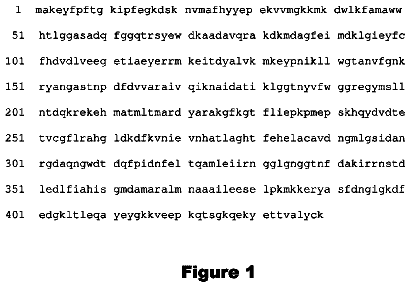
The invention also relates to the DNA and protein sequences of novel pectinolytic enzymes from Trichoderma reesei. Those sequences are an endo-polygalacturonase (pga1), an exo-polygalacturonase (pgx1), an exo-rhamnogalacturonase (rgx1) and a xylogalacturonase (xga1). The sequences are given in the enclosed sequence listing as SEQ ID NO: 1 to SEQ ID NO: 8.
The invention also comprises variants and derivatives of said DNA sequences as long as they encode a polypeptide having the claimed activity. Specifically comprised by the invention are DNA sequences that hybridise to the respective sequence under stringent conditions. Examples of stringent conditions are hybridisation at 65.degree. C., 18 h in dextransulfate solution (GenescreenPlus, Dupont), washing of the filters for 30 min, first with 6.times.SSC, twice with 2.times.SSC, three times with 3.times.SSC, with 0.1% SDS and after that 0.2.times.SSC at 65.degree. C. (membrane transfer and detection method, Amersham).
Preferably, the invention relates to a polynucleotide having a degree of identity of at least 70%, preferably at least 80%, more preferred at least 85%, still more preferred at least 90%, still more preferred at least 95%, still more preferred at least 98% to the sequence of pga1 (SEQ ID NO: 1).
Preferably, the invention relates to a polynucleotide having a degree of identity of at least 60%, preferably at least 70%, more preferred at least 75%, still more preferred at least 80%, still more preferred at least 85%, still more preferred at least 90%, still more preferred at least 95% and still more preferred at least 98% to one of the sequences selected from pgx1 (SEQ ID NO: 3), rgx1 (SEQ ID NO: 5) and xga1 (SEQ ID NO: 7).
Furthermore, the invention relates to DNA sequences that are related to the sequences according to the present invention due to the degeneracy of the genetic code as well as all their allelic variants. The degeneracy of the genetic code may result from a natural degeneracy or from a especially selected use of the codon. Naturally occurring allelic variants can be identified by using well-known techniques of molecular biology, such as the polymerase chain reaction (PCR), or hybridisation techniques.
A DNA sequence encoding a polypeptide according to the present invention may be used to transform any host cell, such as cells of fungi, yeast, bacteria, plants or mammals.
The degree of identity is preferably determined by detecting the number of residues of the shorter sequence taking part in the comparison and having an "appropriate" counterpart in the other sequence. In this respect homology is defined as degree of identity. For the purposes of the present invention identity is preferably determined in the usual way by using standard algorithms. According to the present invention, only the cDNAs of the respective proteins are used for the comparison, and similar, preferably identical, sequence counterparts were determined as homologous sequences by means of known computer programmes. An example of such a programme is Clone Manager Suite, a programme that includes the programme part Align Part and is sold by Scientific & Educational Software, Durham, N.C., USA. Under the option "local alignment" this programme conducts a comparison of two DNA sequences as defined above by using either the FastScan-MaxScore method or the Needleman-Wunsch method and by retaining the default values. According to the present invention, the programme version "Clone Manager 7 Align Plus 5" including the functions "Compare Two Sequences/Global/Compare DNA sequences" was especially used for determining the degree of identity. In this case algorithms available from the following sources were used: Hirschberg, D. S.
A linear space algorithm for computing longest common subsequences, Commun. Assoc. Comput. Mach. 18:341-343; Myers, E. W. and W. Miller.
Optimal alignments in linear space, CABIOS 4:1, 11-17; Chao, K-M, W. R. Pearson and W. Miller.
Aligning two sequences Within a specified diagonal band, CA-BIOS 8:5, 481-487.
Expression of the cloned gene sequence(s) results in the production of the desired protein, or in the production of a fragment of this protein. This expression can take place in a continuous manner in the transformed cells, or in a controlled manner.
Fragments are understood to be parts of polypeptide or nucleic acid molecules long enough to have the desired enzymatic properties or to code for the described pectinolytic polypeptides or a biologically active fragment thereof. Preferably, fragement sequences are the respective mature polypeptide sequences without a signal sequence.
The invention also relates to polypeptides having sequences with a degree of identity of at least 60%, preferably at least 70%, more preferred at least 80%, still more preferred at least 90% and most preferred at least 95% with the above polypeptide sequences SEQ ID NOs: 2, 4, 6 or 8 or fragments thereof or parts of it as long as the polypeptide retains the respective pectinolytic activity. Preferably, the invention relates to a polypeptide having a degree of identity of at least 77%, preferably at least 80%, more preferred at least 85%, still more preferred at least 90%, still more preferred at least 95% and still more preferred at least 98% to the sequence of the the PGA1 polypeptide (SEQ ID NO: 2).
As used in the present context the term "identity" of polypeptides refers to the global identity between two amino acid sequences compared to each other from the first amino acid encoded by the corresponding gene to the last amino acid. The identity of the full-length sequences is measured by using Needleman-Wunsch global alignment program at EMBOSS (European Molecular Biology Open Software Suite; Rice et al., 2000) program package, version 3.0.0, with the following parameters: EMBLOSUM62, Gap penalty 10.0, Extend penalty 0.5. The algorithm is desribed in Needleman and Wunsch
Journal of Molecular Biology 48, 443-453.
The terms "protein", "peptide" and "polypeptide" are to be rendered interchangeable. A polypeptide or enzyme with endo-polygalacturonase, exo-polygalacturonase, exo-rhamnogalacturonase or xylogalacturonase activity denotes an enzyme having said activity according to established assays in the art. The invention also includes variants of the claimed enzymes as long as they retain their original activity. A variant according to the present invention includes variants of polypeptides that are derived by deletion or addition of one or more amino acid(s) to the N-terminal and/or C-terminal end of the native protein; deletion or addition of one or more amino acid(s) to one or more sites in the native protein; or substitution of one or more amino acid(s) to one or more sites in the enzyme. The production of such variants is generally well known to persons skilled in the art. Variants of amino acid sequences of polypeptides can, for example, be produced by mutations in the DNA. Methods of mutagenesis and changes in the nucleotide sequence are well known to persons skilled in the art (cf., for example, Kunkel, Proc. Natl. Acad. Sci. USA, 82:488 (1985), Kunkel et al., Methods in Enzymol., 154:367 (1987), U.S. Pat. No. 4,873,192, Walker and Gaastra, eds., Techniques in Molecular Biology, Mac Millan Publishing Company, New York (1983)). References on appropriate substitutions of amino acids, which do not negatively influence the biological activity of the protein of note, can be found in the model from Dayhoff et al., Atlas of Protein Sequence and Structure, Natl. Biomed. Res. Found., Washington, D.C. (1978). Conservative substitutions are preferred, such as exchanging one amino acid by another one with similar properties.
This kind of amino acids, which are interchangeable within a group, are listed in the following Table but not limited to it.
TABLE-US-00001 aliphatic non-polar G A P M I L V F W polar and uncharged C S T N Q Y polar and charged D E K RH aromatic H F W Y
The invention also relates to isolated or essentially purified nucleic acid preparations (compositions) or protein preparations (compositions). In this respect an isolated and purified polynucleotide/polypeptide or its segment refers to a polynucleotide or polypeptide or its segment that occurs isolated from its natural environment. An isolated segment of a polynucleic acid or polypeptide may occur in a purified form or may occur in a non-native environment, such as in a transgenic host cell.
The present invention also relates to expression cassettes, which can be used to introduce an open reading frame, which encodes a pectinolytic enzyme according to the invention, into a host cell. They preferably include a promoter with a transcription start region, which is linked to the open reading frame of the desired DNA sequence. Such an expression cassette may include a variety of restriction cleavage sites for the insertion of the open reading frame and/or other DNAs, e.g. a transcription regulator region and/or selectable marker genes. In the 5'.fwdarw.3' direction of the transcription, the expression cassette includes a promoter with a transcription and translation start region, the DNA desired sequence and a translation and transcription termination regions. The expression cassette of such is functional in a microbial cell. The termination region may be native to the promoter or the DNA in question or may be derived from any different source.
The term "open reading frame" (ORF) refers to the amino acid sequence that is coded between the translation start and stop codons of an encoding sequence. The terms "start codon" and "stop codon" refer to a unit of three contiguous nucleotides (codons) in a coding sequence, which specify the chain start and chain stop of the protein synthesis (mRNA translation).
In connection with a nucleic acid "functional linkage" refers to a compound as a part of the same nucleic acid molecule in an appropriate position and with an appropriate orientation to the transcription start of the molecule. DNA functionally linked to a promoter is under the transcription initiation regulation of the promoter. Coding sequences may be functionally linked to a regulator sequence in sense orientation or antisense orientation. With reference to polypeptides "functional linkage" refers to the connection as a part of the same polypeptide, i.e. by means of peptidyl bonds.
According to the present invention any promoter may be used. Usually, promoter refers to the upstream of the nucleotide sequence in regard to the coding sequence and controls the expression of the coding sequence by recognition of the RNA polymerase and other factors that are necessary for a correct transcription. The promoter used according to the present invention may include a minimal promoter, i.e. a short DNA sequence from a TATA box and other sequences that specify the transcription start site to which regulator elements are bound for the expression.
The promoter according to the present invention may also include a nucleotide sequence that comprises a minimal promoter and regulator elements; this minimal promoter may check the expression of a coding sequence or functional RNA.
The invention also relates to vectors including the DNA according to the present invention. These vectors comprise any plasmid, cosmid, phage and other vector in a double-stranded or single-stranded, linear or circular form; these vectors themselves might be transmitted or mobilised and can transform a prokaryotic or eukaryotic host via integration into the cellular genome or they occur extrachromosomally (e.g. autonomously replicating plasmids with a replication origin).
The construction of vectors that can be used according to the present invention is, known to the skilled person due to the aforementioned disclosure (cf., e.g., Sambrook et al., Molecular Cloning: A Laboratory manual (2.sup.nd edition, Coldspring Harbor Laboratory Press, Plainview, N.Y. (1989). The expression cassette according to the present invention may include one or more restriction enzyme cleavage site(s) to inserting the nucleotide sequence, which encodes a pectinolytic enzyme, under the regulation of a regulator sequence. The expression cassette may also include a termination signal functionally linked to the polynucleotide as well as regulator sequences, which are necessary for the proper translation of the polynucleotide.
Selecting an appropriate expression vector depends on the host cells. Expression vectors of yeast or fungi may include a replication origin, an appropriate promoter and enhancer as well as any necessary ribosome binding site, polyadenylation site, splice donor and acceptor site, transcription termination sequence and non-transcribed 5'-flanking sequences.
Examples of appropriate host cells are: fungal cells of the genus Aspergillus, Rhizopus, Trichoderma, Hypocrea, Neurospora, Mucor, Penicillium, Chrysosporium, Myceliophthora, Fusarium etc., such as yeasts of the genera Kluyveromyces, Saccharomyces, Schizosaccharomyces, Trichosporon, Schwanniomyces, Hansenula, Pichia and others of this category. Appropriate host systems are, for example, fungi like Aspergilli, e.g. Aspergillus niger (ATCC 9142) or Aspergillus ficuum (NRLL 3135) or Trichoderma (e.g. Trichoderma reesei QM6a and derivatives thereof) and yeasts like Saccharomyces, e.g. Saccharomyces cerevisiae or Pichia, such as Pichia pastoris or Hansenula, e.g. H. polymorpha (DSMZ 70277). Such micro-organisms can be obtained from recognised depositories, e.g. American Type Culture Collection (ATCC), Centraalbureau voor Schimmelcultures (CBS) [Central Office for Mildew Cultures] or Deutsche Sammlung fur Mikroorganismen und Zellkulturen GmbH (DSMZ) [German Collection of Micro-Organisms and Cell Cultures] or any other depository.
Additionally to the use of a special promoter, other types of elements can influence the expression of cloned genes. It was shown in particular that introns have the potential for enhancing the gene expression.
The expression cassette may also include further elements, such as elements that can be regulated by endogenous or exogenous elements like zinc finger proteins, including naturally occurring zinc finger proteins or chimeric zinc finger proteins.
The expression cassette used according to the present invention can also include enhancer elements or upstream promoter elements.
Vectors used according to the present invention can be constructed in such a way that they include an enhancer element. Thus, the constructs according to the present invention include the gene of interest together with a 3'-DNA sequence, which acts as a signal to terminate the transcription and to allow for the polyadenylation of the thus obtained mRNA. Any signal sequence that allows secretion from the selected host organism possible can be used. The most preferred signal sequences for the secretion from filamentous fungi are the glucoamylase (glaA) or phytase signal sequence from Aspergillus niger, the TAKA-amylase signal sequence from A. oryzae, and the cellobiohydrolase I signal sequence from T. reesei, or signal sequences derived from these. Alternatively, the signal sequence of the desired protein could be used.
It is also possible to use a special leader sequence, since the DNA sequence between the transcription start site and the start of the encoding sequence, i.e. the non-translated leader sequence, may influence the gene expression. Preferred leader sequences include sequences that control the optimal expression of the attached gene, i.e. they have a preferred consensus leader sequence that increases or preserves the mRNA stability and avoids an inappropriate translation initiation. The choice of such sequences is well known to the person skilled in the art.
As soon as the expression cassette or DNA sequence according to the present invention is obtained, it can be inserted into vectors by means of known methods to overexpress the encoded polypeptide in appropriate host systems. However, DNA sequences themselves may also be used to transform appropriate host systems of the present invention to attain an overexpression of the encoded polypeptide.
As soon as a DNA sequence according to the present invention is expressed in an appropriate host cell in a suitable medium, the encoded enzyme can be concentrated and/or isolated by known methods either from the medium if the enzyme is secreted into the medium or from the host organism if the enzyme occurs intracellularly, or in periplasmatic space. Known methods for separating the biomass and solids of the culture medium followed by methods for concentrating the enzyme can be used for the production of concentrated enzymatic solutions or as preparation for the dehydration of the enzyme.
The invention also relates to preparations that include the polypeptide according to the invention. In general these preparations are liquid or dry. Liquid preparations preferably include the enzyme in a purified or enriched form. However, adjuvants such as a stabiliser with glycerol, sorbitol or propylene glycol, borate, additives such as salts, sugar, preservatives, means for adjusting the pH value, etc. can be added. Typical liquid preparations are aqueous or oily suspensions. As used in the present context, the "enzyme preparation" refers to any enzyme product which contains at least one pectinolytic enzyme of the invention. Thus, such an enzyme preparation may be a spent culture medium or filtrate. Spent culture medium means the culture medium of the host comprising the produced enzymes. Preferably, the host cells are separated from said medium after the production. If desired, such preparations may be spray-dried, granulated or lyophilized or the the preparations may be otherwise concentrated and/or stabilized for storage. If required, a desired enzyme may be further purified in accordance with conventional methods, such as extraction, precipitation, chromatography, electrophoresis, or the like.
However, it is an advantage of the invention that the culture medium with or without host cells may be utilized as an enzyme preparation as such without further purification, because the pectinolytic enzyme of the invention can be secreted into the culture medium and displays activity in the ambient conditions of the spent culture medium. Such enzyme preparations are very economical to provide and use, because isolation of a specific enzyme from the culture medium is unnecessary.
In addition to the pectinolytic enzyme, the enzyme preparations may comprise one or more other enzymes, which may be, for example, other cellulases, amylases, lipases, proteases, hemicellulases, xylanases, pectinases and/or oxidases such as laccases and peroxidases.
In addition to the pectinolytic enzyme, the enzyme preparation may contain additives such as stabilizers, buffers, preservatives, surfactants and/or culture medium components. Preferred additives are such which are commonly used in enzyme preparations intended for the application where the enzyme preparation is used.
Dry preparations can include freeze-dried, spray-dried, instantized, granulated or extruded preparations, which can solely comprise the enzyme, or have additives like starch, dextrin, sugar, flour, protein or oil.
The enclosed Figures are to illustrate the invention in more detail:
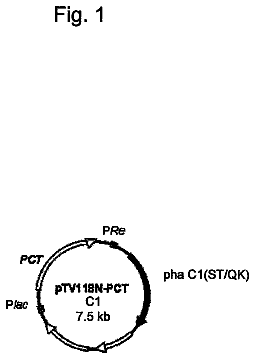
FIG. 1. Schematic picture of the expression cassettes used in the transformation of Trichoderma reesei protoplasts for overproducing the pectinase proteins. The pectinase genes were under the control of T. reesei cbh1 (cel7A) promoter (p cbh1) and the termination of the transcription was ensured by using T. reesei cbh1 terminator sequence (t cbh1). Either the amdS gene or pyr4 gene was included as a transformation selection marker.
FIGS. 2A-C) pH dependencies of the state-of-the-art Aspergillus PG1 (2A), Aspergillus PG2 (2B) and the overproduced crude Trichoderma PGA1 preparation of the invention (2C) determined at various pH-values (40.degree. C., 60 min).
FIGS. 2D-F) Temperature dependency of the state-of-the-art Aspergillus PG1 (2D), Aspergillus PG2 (2E) and the overproduced crude Trichoderma PGA1 preparation of the invention (2F) determined at various temperatures (2D and 2E pH 4.5, 2F pH 5.0, 60 min).
FIG. 3. SDS-PAGE analysis of the Trichoderma reesei PGA1 protein. MW: molecular weight marker, lane 1: culture supernatant of transformant overproducing Trichoderma PGA1 as described in Example 3. Protein bands were visualised by staining with Coomassie Brilliant Blue. The size of the Trichoderma PGA1 is about 38 kDa.
FIG. 4. A) Juice yield after pressing the enzyme treated apple mash preparations. Dosage of 100 ppm of a mixture containing 50 000 PG units/mg of either the Trichoderma PGA1s (F050183 and F050200) or the state-of-the-art Aspergillus PG1 (REFERENCE), all supplied with 2000 PE units/g of A. niger pectin methyl esterase, was used in the experiment. In one of the mash trials no enzyme was added (BLANK). Enzyme incubation time was 60 min at 25.degree. C.
B) Press diagram showing the juice yield after each pressure step.
FIG. 5. Turbidity (measured as NTU) of the juice after enzyme treatment and pressing. Dosage of 100 ppm of a mixture containing 50 000 PG units/mg of either the Trichoderma PGA1s (F050183 and F050200) or the state-of-the-art Aspergillus PG1 (REFERENCE), all supplied with 2000 PE units/g of A. niger pectin methyl esterase, was used in the experiment. In one of the mash trials no enzyme was added (BLANK). Enzyme incubation time was 60 min at 25.degree. C.
FIG. 6. A photo of the sample juices after the enzyme treatment and pressing. Samples from left to right: Blank (no enzyme), F050183, F0510200 and state of art Aspergillus PG1 as a reference.
FIG. 7. Yield (%) of the juice obtained from pressings of mashes of different fruits/vegetables after treatment with Trichoderma reesei PGA1.
The E. coli strain including the plasmid pALK1958 (RF 6249) was deposited at the Deutsche Sammlung von Mikroorganismen und Zellkulturen GmbH (DSMZ), Mascheroder Weg 1 b, D-38124 Braunschweig, Germany on 19 Jul. 2006 and assigned accession number DSM18450. The pALK1958 carries the Trichoderma pga1 gene (Table 2) on a 1690 bp SacII-Xhol fragment (including 305 bp of the gene 3'-region) cloned into similarly cut pBluescript II SK+-vector.
The following non-limiting Examples are intended to illustrate the subject-matter of the present invention in detail.
Example 1
Genome-Wide Screening of T. reesei Pectinolytic Enzymes
Standard molecular biology methods were used in the isolation and enzyme treatments of DNA (plasmids, DNA fragments), in E. coli transformations, etc. The basic methods used are described in the standard molecular biology handbooks, e.g. Sambrook et al. (1989). Molecular cloning, a laboratory manual. Cold Spring Harbor Laboratory, New York, USA and Sambrook and Russell (2001). Molecular cloning, a laboratory manual. Cold Spring Harbor Laboratory, New York, USA.
The Trichoderma reesei (the anamorph of Hypocrea jecorina) genome database (http://gsphere.lanl.gov/trire1/trire1.home.html) was searched with the sequences of various Aspergillus pectinases (Table 1) by using the TBLASTN program (Altschul et al., 1990. Basic local alignment search tool. J. Mol. Biol. 215:403-410).
The description continues in the full USPTO document.
 Lapsed, fee not paid10 drawings