 Lapsed, fee not paid9 drawings
Software & Apps · US 8,745,590 B2
Testing an application
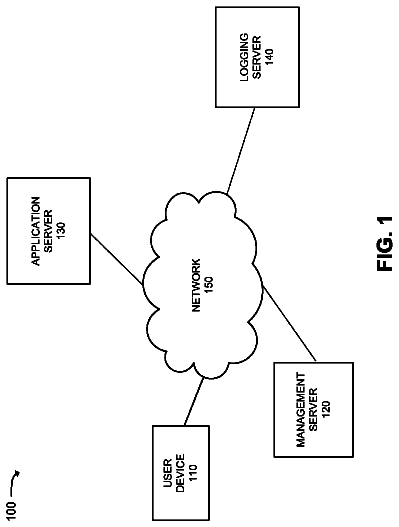
A device receives a test case from a management server.
US 8,745,593 B2 · Inventors: Remollino; Antonio
Sheet 1 of 3 from the published document. All sheets in the USPTO PDF
A process for detecting errors in computer code in C/C++ language in a computer, which comprises the operations of: --making available in said computer a source computer program (P) containing computer codes in C/C++ language; compiling (Z) said source computer program (P) to obtain an executable program (E); and --executing (240) said executable program (E) to generate (245) an error report (R). According to the invention, said method comprises, prior to the operation of compilation (Z): executing an operation of syntactic analysis (AS) to identify variables (x) having a structure of vector or pointer; modifying said source computer program (P) via the application to said identified variables (x) of a test function (f ( . . . ); io_sper; io_sper2; io_sper3; io_sper4) that is able to veriCy, during the operation of execution, whether an index (y) supplied for said variable x is valid.
All 3 drawing sheets from the published document, cropped to the drawing.
What the patent claimed, word for word. All of it is now free to use.
This application is the U.S. national phase of International Application No. PCT/IB2008/003585 filed 17 Dec. 2008 which designated the U.S. and claims priority to IT Patent Application No. TO2007A000915 filed 19 Dec. 2007, the entire contents of each of which are hereby incorporated by reference.
The present invention relates to techniques for verifying computer codes, specifically computer codes in C and C++ language. In the present description, direct reference will be made to instructions and functions of said languages, as is known, for example, from the standard of the C language (ISO 9899) and of the C++ language (ISO/IEC14882:1998 "Information Technology--Programming Languages--C++", updated in 2003).
Specifically, the invention regards techniques for verifying errors during run-time of a computer program, with particular attention paid to the identification of vector buffer-overflow errors.
The invention has been developed with particular attention paid to its possible use in computer programs of an embedded type, for motor-vehicle control units, even though other applications are possible for the process and system proposed.
The production of computer products, such as computer programs, envisages editing of the computer programs in the language chosen, normally a high-level language, such as C or C++ language, but also envisages subjecting the program obtained to tests on operation, such as procedures of verification (testing) and procedures of removal of errors (debugging). Said tests on operation account for a non-indifferent portion of the resources and of the time used for the production of the computer program.
The normal procedures for testing the computer program conducted in a classic way consist in displaying, in the development environment, the behaviour and possible errors, but this does not enable tests to be conducted with high coverage of the possible cases of error. This occurs chiefly both on account of the limited capacities of the development environment for discovering run-time errors, i.e., in the period of execution of the program, and, in the case of step-by-step debugging by the developer of the computer program, on account of the impossibility of testing a sufficiently high number of cases. There derives therefrom the growing need to develop procedures of verification of the computer program during run-time.
The buffer-overflow error, i.e, the anomalous condition during which a process tries to store data beyond the limits of a buffer of fixed length, for example, using an index beyond the maximum index of a vector variable, is one of the main problems that arise during running of computer programs, both for problems of security, in so far as the buffer-overflow technique can be employed to overcome the security systems, and for problems that arise during running of the programs.
In C/C++ languages, said problem is particularly felt in so far as in said languages no check is envisaged on the indices, nor do the compilers make checks on said indices, other than in a mild way.
Known on the market are programs that execute procedures capable of identifying said errors partially, but they fail in the case of multiple vectors, of which they are able to verify only the buffer overflow on the entire structure thereof (and not on each individual index).
This occurs, for example, in the case of three-dimensional vectors, when, for example, the updating operation updates the contents of an element internal to the vector.
Another problem arises in the structures when, for example, writing occurs within the structure.
Also known are programs that carry out a test on the memory, to make a check during execution (run-time checking), but also these have a limited capacity for detecting buffer-overflow errors.
The computer-program product Valgrind is an example of such programs, which, however, is not able to verify the stack memory.
The computer-program product Rational Purify produced by IBM envisages inserting guard zones around each variable in the data-state area of the program, notifying an error if the program tries to read or write in said guard zones. Such product Purify, however, requires the user to check the sizes of the guard zones, which are in any case assigned with low flexibility and selectivity, to obtain good results and is not, in any case, able to operate properly if all the data references are not with known variables. The program Purify uses the technique of insertion of additional memory around the variables. If writing is performed in said memory area, the overflow error is detected; if, instead, said area (containing the additional memory) is exceeded, nothing is detected.
In addition, Purify makes the check on the structures as a whole and not on the internal parts thereof. Since said program is integrated in the development environment (for example, Visual C++), it is possible to execute just a single instance of execution of the program.
The computer-program product Codeguard, associated to the Borland C++ compiler, requires installation of a dynamic-link library (DLL) cg32.dll, which is recalled during run-time. This enables creation of an executable program of an autonomous, i.e., stand-alone, type, but operating only in the Windows environment.
The product Codeguard presents the same disadvantages al Purify in so far as it is able to identify only errors on the structure as a whole.
Hence, the solutions available in the state of the art present numerous drawbacks and limitations when it is a matter of subjecting to verification vectors in C/C++ language codes and to detection of errors.
The object of the present invention is to provide a solution that will enable verification of C/C++ language codes and detection of errors, making the check on buffer overflow also in the case of vectors (whether one-dimensional or multidimensional ones) defined in the stack, and in the case of vectors contained in structures, maintaining the greatest possible independence from the compiler and the operating system used.
In accordance with the present invention, this object is achieved by means of a process having the characteristics recalled in the annexed claims. The present invention also regards a corresponding system, as well as a computer-program product loadable into the memory of at least one computer and comprising software code portions for performing the aforesaid process. As used herein, the reference to such a computer-program product is understood as equivalent to the reference to a computer-readable means containing instructions for controlling a computer system in order to co-ordinate execution of the process according to the invention. The reference to "at least one computer" is intended to highlight the possibility of the present invention being implemented in a distributed and/or modular way.
The claims form an integral part of the description of the invention provided herein.
The invention will now be described, by way of non limiting example, with reference to the figures of the annexed drawings, wherein:
FIG. 1 shows a schematic block diagram illustrating a process of verification according to the known art;
FIG. 2 shows a schematic block diagram illustrating a process of verification according to the invention;
FIG. 3 shows a flowchart illustrating operations of the process of verification of FIG. 2; and
FIG. 4 shows a block diagram of a database employed in a variant of the process of verification according to the invention.
Basically, the solution described herein usually fits within the framework of the process of creation of a computer-program product run totally or partially on a computer, where there are envisaged: steps that comprise editing of portions of source code in C/C++ languages by means of data-input peripherals of the computer; steps of compilation of the portions of source code in lower-level language through microprocessor means and volatile-memory or mass-memory means of the computer; steps of verification of the compiled code through microprocessor means and volatile-memory or mass-memory means of the computer; and steps of generation of a corresponding error report made available to the user via output peripherals of the computer in particular display peripherals or data-printing peripherals in order to introduce modifications in editing of the portion of source code subjected to compilation and hence lead to an optimization of the process of creation of the computer-program product. It is clear, among other things, that in said context in some cases parts or all of the operations of editing of the source code and/or of correction of the portions of code edited on the basis of the report generated can be performed not manually by operators/programmers, but in an automatic way by automatic code-generation software.
In such a framework, there is proposed a process of verification of computer codes based upon the syntax of C/C++ language, hence independent of the compiler and the operating system in the framework of which the process operates in so far as it basically envisages converting a source code into a further, more elaborate, source code. Said process is conceived both for applications of a user type and for applications of an embedded type (e.g., for control units of automobiles, aeroplanes, trains, cellphones, electric household appliances, etc.).
Illustrated in FIG. 1 is a block diagram of the flow of a process of verification of computer codes according to the known art.
Designated by the reference P is a source computer program P in high-level language, specifically C language. Designated by the reference Z is a procedure of compilation of the computer program, via an appropriate compiler program, in an executable program E compiled in low-level language, for example, machine language.
FIG. 2 illustrates a block diagram of the flow of a process according to the invention, which presents a flow of operations modified with respect to the process illustrated in FIG. 1. In fact, the source computer program P in C language undergoes a process of syntactic analysis AS, i.e., a process that performs the so-called `parsing` operation, performing a syntactic analysis of the sequences of instructions in the source computer program P for determining the grammatical structure thereof with respect to a given formal grammar. However, the process of syntactic analysis AS, moreover proceeds, following upon determination of the structure of the source program P according to the criteria that will be set forth hereinafter, to generate a modified source computer program P', once again in C language, which is supplied to the procedure of compilation Z to obtain a compiled modified executable program E'.
Consequently, the process of verification according to the invention is distinguished above all by the presence of the procedure of syntactic analysis AS, which determines the generation of a modified source computer program P'.
The process of verification proposed basically executes the following operations, which can be run on at least one computer or microprocessor and is illustrated also with reference to a flowchart shown in FIG. 3, starting from a project D in C language that comprises the source computer program P: an operation 210 of creation of a copy on the computer or on storage means connected thereto of said project D with the corresponding source codes of the source program P to be subjected to verification; an operation 220 of addition to the copy of the project D of an object file OF that contains the test functions to be introduced, resulting in the new project D'; the operation 220 also comprises inserting an interfacing module IF accessible to a programmer via, for example, the conventional data-input peripherals and display of the computer, for examination and correction of the errors; an operation 230 of substitution of the codes of the source program P of the new project D' with codes created by the program of syntactic analysis AS starting from the source codes of the source program P; the operation of compilation Z of the new project D to obtain the new executable program E', for example, in the volatile-memory or mass-memory means of the processor; an operation 240 of start of execution of the executable program E, which determines an operation 245 of generation of report messages R, i.e., reports on errors, and an operation 250 of verification of said error report messages R, for example, addressed to the display peripheral of the computer; an operation 260 of correction of the errors in the file of the original project D.
Next, the flow returns to the substitution step 230 if it is necessary to verify again the computer program.
In greater detail, the operation 220 of addition to the copy of the project D of an object file OF that contains the test functions to be introduced, resulting in the new project D', envisages adding to the new project D' the following files and the respective header files:
io_sper_functions.obj
io_sper_functions.h
ErrorFunctions.c
ErrorFunctions.h
where: io_sper_functions.obj corresponds to the object file OF, associated to which is the header file io_sper_functions.h; ErrorFunctions.c, with the corresponding header file ErrorFunctions.h, corresponds, instead, to an interfacing module IF accessible to the programmer, which will be described in detail in what follows.
The procedure of syntactic analysis AS, comprised in the operation of substitution 230, basically subjects to testing in the source program P variables x of the source code that have a structure of variable of an x[y] type, where y is an index, i.e., a structure in which the variable x contains all the information involved in the test.
The processing executed by the procedure of syntactic analysis AS is of a local type; i.e., it is not necessary to have information regarding the use in the program P of said variable x. Hence, it is of no importance where said variable x has been defined or how it has been defined: at the moment when the procedure of syntactic analysis AS identifies a variable x of a vector type, identifiable in C language through the symbols denoting square brackets "[ . . . ]", it modifies said variable x and introduces therein a test function f( . . . ), which enables verification during run-time of whether an index y supplied for said variable x is valid.
The procedure of syntactic analysis AS proposed envisages for this reason conversion of the vector structure of an x[y] type into a structure x[f(y, x)]: x[y].fwdarw.x[f(y,x)]
where f is the test function that verifies the validity of the index y and returns the index to be supplied to the vector.
The operations are encapsulated in the vector and are hence irrespective of the context in which the vector is inserted.
It should be noted that, since the variable x is a vector, assuming that the source program P (or rather a fragment thereof) has the following form:
TABLE-US-00001 ii = y; while(x[ii] < 8) { ... ii = ii + rand( ); }
a manual or automatic solution could envisage inserting control codelines in the source program P, modifying the code as follows:
TABLE-US-00002 ii = y; len = sizeo(x)/ sizeo(x[0]); if(ii < len) { while(x[ii] < 8) { ... ii = ii + rand( ); if(ii >= len) { //signalling err Error( ); } } }
Similar operations should be performed for the constructs "for", "switch", "do-while", "if", with all the possible particular cases. For this purpose, there should be developed an extremely elaborate procedure of syntactic analysis, hence difficult to implement and to manage.
The procedure of syntactic analysis AS of the process for verifying computer codes according to the invention envisages, instead, that the source program P will be modified as in the following example:
TABLE-US-00003 ii = y; while(x[f(ii, x,...)] < 8) { ... ii = ii + rand( ); }
The solution delineated above is simple and effective and does not require the development of a particularly complicated parser; in fact, it must only be able to recognize the square brackets "[".
In order to execute an operation of control of the indices, the information regarding the vector subjected to testing is used.
By way of example:
given the variable x thus defined
int x[10];
the instruction sizeo(x) supplies a datum that indicates the sixe in bytes of x;
the instruction sizeo(x[0]) supplies a datum that indicates the size of the individual element.
Via the operation of division: vector size=sizeo(x)/sizeo(x[0])
the number of elements that constitute the vector x is obtained.
What has been set forth above applies only if x is a vector defined in a static way, i.e., if it is not a pointer, or if it is contained within a structure as in the example of the "list" structure that will be described hereinafter with reference to Table 4, where the vectors a, b, and c are contained. In fact, otherwise, the result would always be equal to the division of the size in bytes of a pointer, which, in the case of a 32-bit architecture, is always equal to 4 times the value returned by the instruction of sizeof(x[0]). For this reason, the instruction sizeo(x) assumes the value of size in bytes of the vector if the variable x is a vector, or else assumes the value of size in bytes of a pointer if the variable x is a pointer.
To overcome the above limit, the procedure of syntactic analysis AS envisages introducing a step of comparison between the addresses &x and &x[0] of the variable x and of its first element x[0]: if said addresses &x and &x[0] are the same it is a static vector defined in the stack or else is contained within a structure; see, for example, in Table 4 the code corresponding to "list" (contained in the stack or created dynamically); otherwise, the variable x is a pointer.
By way of example, said step of comparison of the addresses &x and &x[0] can have the following form: if the addresses &x and &x[0] are the same, x is a vector; if the addresses &x and &x[0] are different, x is a pointer.
At the end of the test, the function f( . . . ) receives the following parameters in the case of a structure of a type x[y]: variable x, vector or pointer according to the cases; the address of the variable x, &x; the address of the first element of the variable x, &x[0]; the size of the variable x, sizeof(x); the size of the first element of the variable x, sizeof(x[0]); y, the parameter with which the variable x is indicized; further parameters to trace back to the errors made and for the reports, which will be illustrated in what follows.
By way of example:
from x[y]=1;
we obtain:
x[io_sper(y, 0, io_index, (void *)x, (void *)&x, (void *)&(x[0]), sizeof(x), sizeof(x[0]), macro_arg(y), "x", " ", ORIG_FILE, _LINE_)]=1;
where io_sper( . . . ) corresponds to the test function f( . . . ), as will be shown in greater detail in what follows.
In the case of a two-dimensional vector:
from x[y][z]=3;
we obtain:
x[io_sper(y, 0, io_index, (void *)x, (void *)&x, (void *)&(x[0]), sizeof(x), sizeof(x[0]), macro_arg(y), "x", " ", ORIG_FILE, _LINE_)]
[io_sper(z, 1, io_index, (void *)x[io_index[0]], (void *)&x[io_index[0]], (void *)&(x[io_index[0]][0]), sizeof(x[io_index[0]]), sizeof(x[io_index[0]][0]), macro_arg(z), "x[% d]", "0", ORIG_FILE, _LINE_)]=3;
The test function "io_sper( . . . )", as mentioned previously, in the embodiment described herein, implements the test function f( . . . ) and envisages the following verification steps: a) verifying that the variable x, passed as pointer, is not NULL; b) once the verification step a) has been passed, verifying whether the variable x is a pointer or a vector; c) if in step b) it is found that the variable x is a vector, verifying that both the index y is not negative (buffer underflow), and that the index y does not exceed the limits thereof (buffer overflow); d) if the variable x is a pointer, verifying that the index is not negative; otherwise, a warning signal is emitted.
In the sequel of the present description, with reference to Tables 7-15 and to FIG. 4, a variant of step d) is described, in which operations for handling the pointer are performed.
Simplifying, the cases signalled by the test function "io_sper( . . . )" are four:
a) pointer NULL;
b) negative index in the case of vector;
c) buffer overflow in the case of vector;
d) negative index, in the case of pointer.
At the end of said verification steps, the test function "io_sper( . . . )" returns the index with which it is desired to indicize the vector, as will be illustrated more fully in what follows.
The test function f( . . . ) also enables verification of the indices of pointers, supplying the file name and/or the line number and/or the name of the variable undergoing verification.
Hence, on the basis of what has been said so far, the procedure of syntactic analysis AS, suited to C/C++ language, operates to introduce in the source program P the test function f( . . . ), in the examples of embodiment described above said test function f( . . . ) being implemented by the test function "io_sper( . . . )", as well as, in the case of embedded applications, by the test function "io_sper2( . . . )", as described in what follows.
Basically, all the operations regarding the structures and the pointers have the aim of converting as much of the code as possible into structures of a vector type, i.e., of a type "x[y]".
The procedure of syntactic analysis AS envisages one or more of the following steps of analysis and syntactic conversion executed on the source program P: a) removal of the continents; b) removal of the superfluous round brackets, for example, from "(( . . . ))" to "( . . . )"; c) replacement of the string ").fwdarw." with "+0).fwdarw."; d) subsequent removal of the superfluous round brackets, for example, from "(( . . . )" to "( . . . )"; e) removal of the space before and after the string ".fwdarw.", for example: from "x.fwdarw." to "x.fwdarw."; f) replacement of the string ".fwdarw." with "[0]."; g) removal of the spaces in the names of the variables, for example, from "x [i]" to "x[i]"; h) conversion of the dereferentiation of a pointer into a vector, for example, from "*p" to "(p)[0]"; i) subsequent removal of the superfluous round brackets, for example, from "(( . . . )" to "( . . . )"; j) removal of useless brackets in the names of variables, for example, from "(x[0]).a" to "x[0].a"; k) insertion of the vector "io_index[ . . . ]"; l) insertion of the test functions f in the vectors, i.e., insertion of the functions "io_sper( . . . )" and "io_sper2( . . . )".
It should be noted that steps f) and h) enable an increase in the number of cases tested in the case of pointers:
"*p".fwdarw."(p)[0]"
".fwdarw.".fwdarw."[0]".
In the part of description that follows the parameters of the test function io_sper( ) will be described, by way of non-limiting example, according to the embodiment disclosed herein:
int io_sper(int vett_ind, int io_index_pos, int *io_index, void *vett, void *add_vett, void *add_vett_0, int size_of_vett, int size_of_vett_0, char *vett_ind_str, char *Format, char *IndexStr, char *file_name, int file_line);
Hence, from:
x[y]=1;
we obtain:
x[io_sper(y, 0, io_index, (void *)x, (void *)&x, (void *)&(x[0]), sizeof(x), sizeof(x[0]), macro_arg(y), "x", " ", ORIG_FILE, _LINE_)]=1;
In Table 1 appearing hereinafter by way of example, the first column presents the parameters of the function, the second column presents the form assumed in the case of the example "x[y]=1;", and the third column explains the meaning of each parameter.
Examining in detail the parameters of the test function "io_sper", the vector-index parameter vett_ind is the value with which it is intended to indicize the vector and that is the object of the check.
In the case of
x[y]=1;
it is "y".
The parameter "io_index_pos" is the index to be supplied
TABLE-US-00004 TABLE 1 int io_sper(int int io_sper(y, int io_sper(index of the vett_ind, vector, int 0, index of io_index_pos, io_index, int io_index, vector of the *io_index, indices, void (void *)x, indicized vector, *vett, void (void *)&x, address of the *add_vett, vector, void (void *)&(x[0]), address of the *add_vett_0, 1st element, int sizeof(x), size of size_of_vett, vector, int sizeof(x[0]), size of 1 st size_of_vett_0, element, char macro_arg(y), string of the *vett_ind_str, index, char "x", vector format, *Format, char "", string with *IndexStr, the indices, char ORIG_FILE, file name, *file_name, int _LINE_) file line) file_line)
to the vector "io_index".
The parameter "io_index" is a vector introduced automatically by the procedure of syntactic analysis AS after the opening brace ("{"), before each variable declaration. Its size is equal to the maximum sum of the sizes of the vectors present in an instruction in the part of code before the closing brace ("}").
For example, in the case where the variable x is:
TABLE-US-00005 { x[3] = y[2][ii] + z[2] + 4; // thwere are 4 indicizations y[1][2] = -3; // there are 2 indicizations }
the above is transformed into:
TABLE-US-00006 { int io_index[4]; x[3] = y[2][ii] + z[2] + 4; y[1][2] = -3; }
The task of the parameter "io_index" is to store the indices supplied to a vector.
In the above example (x[y]=1;) we have obtained:
x[io_sper(y, 0, io_index, (void *)x, (void *)&x, (void *)&(x[0]), sizeof(x), sizeof(x[0]), macro_arg(y), "x", " ", ORIG_FILE, _LINE_)]=1;
within the test function io_sper, stored in io_sper[0] is the index value y (or at most the one supplied by the user in the case of error management), i.e., the value that is supplied to the indicized vector (x[ . . . ]), which is the return value of io_sper:
io_index[io_index_pos]=vett_ind;
The values stored in io_index enable, during writing of reports R of the results, the identification of the exact memory location in which the error has occurred.
For example, given:
##EQU00001## .times..times..function..function..function. ##EQU00001.2## ##EQU00001.3## ##EQU00001.4## ##EQU00001.5## .function..function..function..times..times..times..times..times..times..- times..times..times..times..times. ##EQU00001.6##
The report R signals that in x[8][4] a buffer overflow has occurred. It does not supply x[ii][4], but the exact location.
The usefulness of this variable is evident when a multiple vector is indicized. From the example given above, we find that:
from
y=2;
z=7;
x[y][z]=3;
we obtain:
y=2;
z=7;
x[io_sper(y, 0, io_index, (void *)x, (void *)&x, (void *)&(x[0]), sizeof(x), sizeof(x[0]), macro_arg(y), "x", " ", ORIG_FILE, _LINE_)]
[io_sper(z, 1, io_index, (void *)x[io_index[0]], (void *)&x[io_index[0]], (void *)&(x[io_index[0]][0]), sizeof(x[io_index[0]]), sizeof(x[io_index[0]][0]), macro_arg(z), "x[% d]", "0", ORIG_FILE, _LINE_)]=3;
It may be noted that in the second call of the test function io_sper there appears "x[io_index[0]]", where io_index[0] contains the value supplied to the first index via the first call to io_sper, whereas contained in "io_index[1]" is the second index:
io_index[0]=2 (in so far as y=2)
io_index[1]=7 (in so far as z=7)
In practice, the vector io_index stores in chronological order the use of the indices of the vectors inside the instructions during execution.
It should be noted that the foregoing applies if the compiler Z gets the assignments of the indices to be made from left to right; otherwise, the values supplied on the positions are not altogether correct, but the error identified is real.
The parameter "vett" corresponds to the vector that is being tested.
In the case of
x[y]=1;
it is "x".
The parameter "add_vett" corresponds to the address of the vector being tested.
In the case of
x[y]=1;
it is "&x".
The parameter "add_vett_0" corresponds to the address of the first element of the vector being tested.
In the case of
x[y]=1;
it is "&x[0]".
The parameter "size_of_vett" corresponds to the size in bytes of the vector being tested.
In the case of
x[y]=1;
it is "sizeof(x)".
The parameter "size_of_vett_0" corresponds to the size in bytes of the first element of the vector being tested.
In the case of
x[y]=1;
it is "sizeof(x[0])".
The parameter "vett_ind_str" corresponds to the string of the argument of the vector.
In the case of
x[y]=1;
it is "y".
Said string is passed via the macro "macro_arg" defined in the module "io_sper_functions.h" described in what follows:
#define macro_arg(argument) #argument
Hence in this way:
macro_arg(y)
The parameter "Format" corresponds to the format with which the vector with the error is printed.
In the case of
x[y]=1;
it is "x".
In the case of
x[y][z]=1;
it is a vector for the report "x[% d]", which will be illustrated in greater detail in what follows.
The parameter "IndexStr" corresponds to the list of the indices of io_index (described in text format), which contain the indices of the vector with being tested.
In the case of
x[y][z]=1;
it is: an empty string " " for the test of the first index; "0" for the test of the second index
The parameter "file_name" corresponds to the name of the source file, i.e., of the original source program P, not the one of the file obtained from syntactic analysis, in which the error has occurred. Said parameter "file_name" is supplied via the definition instruction define ORIG_FILE, which is inserted at the head of each modified source file, in the case of the file "nomefile.c" we have:
#define ORIG_FILE "nomefile.c"
The parameter "file_line" corresponds to the line of the source file, i.e., of the source program P, in which the error has occurred and is supplied via _LINE_. The value that would insert the procedure of syntactic analysis AS is that of the new modified program P', but account must be taken of the fact that inserted therein at the head of the procedure of syntactic analysis AS are two commands:
#include "io_sper_functions.h"
#define ORIG_FILE "nomefile.c"
on account of which the line number would be two units higher than the numbering of the source computer program P. For this reason, also inserted in the procedure of syntactic analysis AS is the command #line 1.
In conclusion, at the head of the modified source program P' the following instructions are inserted:
#include "io_sper_functions.h"
#define ORIG_FILE "nomefile.c"
#line 1
As mentioned above, there is envisaged a vector for the report in the element "x[% d]". It makes it possible to write in the report which is the badly indicized memory address (the variable).
With this element and the immediately subsequent one ("0") it is possible to reconstruct the string of the memory address:
"x[% d]" supplies the format, whereas "0" contains in ASCII format the number of the index of io_index to which the vector makes reference: in practice, inside it there is created the string to be used for the output with, for example, the instruction sprintf(Out, "x[% d]", io_index[atoi("0")]). If we were to have "x[% d] [% d]" and "0 1" we would have sprintf(Out, "x[% d][% d]", io_index[atoi("0")], io_index[atoi("1")]). As has been said above, it is only an example of possible code. This operation is executed by the function write_str( . . . ).
Given the impossibility of performing any writing on files in the cases of embedded applications, to return at output the information on the errors without requiring an overhead hardware, instead of supplying at output the strings with the names of the files and with the strings of the files and with the names of the variables involved, the process envisages a function "io_sper2( . . . )", which is a variant of the function "io_sper( . . . )" with the following modifications: the name of the file is no longer identified with a string, but with an identifier (a number); the name of the vector under examination is supplied with an identifier.
Said function passes, to the function ErrorFunction2( . . . ), which implements the module of interface IF in the embedded case, a small data structure with the information for tracing back to the error that has occurred.
In order to render use of the software as flexible as possible, the process according to the invention comprises an interfacing module or function for the programmer IF: the test function "io_sper" identifies the four errors mentioned above and signals them to an interfacing function IF, visible to the programmer, which, in the embodiment illustrated here, is the function ErrorFunction, enabling the programmer to decide at his own discretion what actions to undertake on a case-by-case basis, for example, display on the screen the errors identified, write on a file a corresponding report, send them via CAN in the case of control units on motor vehicles, via SMS, or the like. In addition, the programmer can decide whether to interrupt the program with a function "exit( )". If, for example, the index is negative, he can decide to make the function "io_sper" to return the value 0 so as to prevent underflow. In the case of a pointer, he can check that a certain value is not being exceeded.
Hence, according to the process, whenever the function io_sper identifies an error, it calls the interfacing function ErrorFunction that is under the complete control of the programmer, who can to decide the appropriate actions take. Whereas the first three errors referred to above, i.e., null-pointer error, negative index on vector, and buffer overflow on vector, the other is only hypothetical, and it is up to the programmer to decide how to interpret it.
For example: //int x[10]; //int *p, *q; // //p=x; //p[-1]=1; //here there it is an error // //q=&x[1]; //q[-1]=1; //this is not an error (line 85)
This example can be used to show the flexibility of the approach. "q[-1]" is not an error, but this is known only to the programmer. In the interface function ErrorFunctions he can indicate that the case of negative index in line 85 in actual fact is not an error and hence get writing of the error in the report R to be skipped.
In Table 2, provided hereinafter is the code of the header of the function of interface Errorfunctions in the embodiment illustrated here.
TABLE-US-00007 TABLE 2 #ifndef ErrorFunctionsH #define ErrorFunctionsH #include <stdio.h> #include <stdlib.h> #include <string.h> #include <ctype.h> enum {NO_ERROR, NULL_POINTER, BUFFER_UNDERFLOW, BUFFER_OVERFLOW, NEG_POINTER_INDEX, POS_POINTER_INDEX}; typedef struct ErrorInfo_s { unsigned short int usFileId; // File Id unsigned short int usLINE; // Line unsigned short int usVarId; // Variable Id char cErrorId; // Error Id char cVarPosId; // position of index in instruction int ivett_ind; // index supplied } SerrorInfo; int ErrorFunction(char *pcFormatOut, char *pcfile_name, int ifile_line, char *pcvett_ind_str, int ivett_ind, int iMaxDim, int iErrorType); int ErrorFunction2(SErrorInfo ErrorInfo); #endif
The enumerative type in Table 2 indicates the errors:
TABLE-US-00008 enum {NO_ERROR, //no error NULL_POINTER, //null pointer BUFFER_UNDERFLOW, //buffer underflow BUFFER_OVERFLOW, //buffer overflow NEG_POINTER_INDEX, //negative index in a pointer POS_POINTER_INDEX}; //index zero or positive in a pointer
Inside the interfacing function of Table 2 the structure struct "ErrorInfo_s" is defined.
Said structure struct is used for the test for embedded programs. On account of the impossibility of there being little space available in the memory for the executable and on account of the impossibility of storing large amounts of data, there has been introduced the possibility of handling only the information that is essential for the report: usFileId is the Id of the source file; the association is performed off line looking for the name of the file on a file generated during parsing (e.g., "ListFileVariables.txt"); usLINE is the number of lines in the file; usVarId is the Id of the variable with the error; the association is performed off line with the file generated during parsing;
cErrorId indicates the Id of the error as defined in "ErrorFunctions.h":
enum {NO_ERROR, NULL_POINTER, BUFFER_UNDERFLOW, BUFFER_OVERFLOW, NEG_POINTER_INDEX, POS_POINTER_INDEX};
cVarPosId indicates the position of the index of a vector inside an instruction (counting starts from 0); ivett_ind is the index entered in the vector.
Said structure is passed as parameter to the interfacing function "ErrorFunction2", which can be managed by the programmer (for example, it can send on a CAN the datum or store it on a local memory).
Of course, the function of Table 2 is only an example of data structure that can be used to provide a report; there is nothing, for example, that rules out creation of a function similar to the test function io_sper2( . . . ) that uses other data structures.
Indicated, instead, in Table 3, once again by way by way of example of the embodiment illustrated herein, is the code of the interfacing function ErrorFunctions.c.
The description continues in the full USPTO document.
About 6,011 words. The USPTO PDF has it with every drawing.
Fees are due 3.5, 7.5 and 11.5 years after grant. This patent expired on June 3, 2026, so the fee marked "not paid" was the one that went unpaid.
PROCESS FOR VERIFYING COMPUTER CODES AND CORRESPONDING VERIFICATION SYSTEM
Filed Dec 2008 · published Nov 2010Process for verifying computer codes and corresponding verification system
Filed Dec 2008 · granted Jun 2014Earlier publications, parents and continuations. None of them can still be enforced, or this patent would not be listed.
Prior art cited by the examiner or applicant. Useful when you check your own idea for novelty.
Everything on this page comes from the documents linked above.


