 Lapsed, fee not paid12 drawings
Sports & Fitness · US 8,740,729 B2
Golf ball
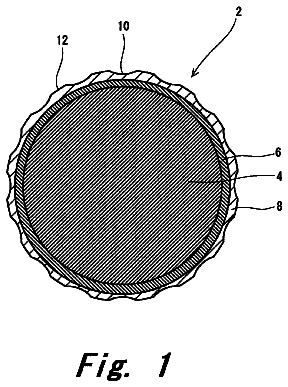
A golf ball 2 has, on a surface thereof, a plurality of types of dimples 10 having different diameters from each other.
US 8,745,494 B2 · Assignee: Zambala LLLP · Inventors: Spivack; Nova T.
Sheet 1 of 20 from the published document. All sheets in the USPTO PDF
Systems and methods for control of a simulated object that is associated with a physical location in the real world environment are herein disclosed. In one aspect, embodiments of the present disclosure include a method, which may be implemented on a system, of determining whether a location data and a timing data satisfy a criterion. Responsive to determining that the location data and the timing data satisfy the criterion, the method enables access of the simulated object in a simulated environment by a user via a device. The simulated object generally includes attributes that are perceived by the user via the device. In one embodiment, the location data includes a location of the device and the timing data includes a time when the device is located at the location.
Miniaturization of consumer electronics with sophisticated graphics capabilities and expansive computing power has augmented the activities one can engage in via consumer electronics and in particular, portable electronics such as cell phones, PDAs, Blackberries, iPhones, and the like. Further, portable electronics or other electronics devices now generally include GPS or other types of location sensing capabilities. Thus, mobile application capabilities and user experiences can be enhanced with the awareness of location information, such as location data that includes the real time or current location of the user or the device.
8 of 20 drawing sheets so far from the published document, cropped to the drawing. Every sheet is in the USPTO PDF.
What the patent claimed, word for word. All of it is now free to use.
Independent claims stand on their own. The others add detail to the claim they name.
This technology relates generally to virtual reality and in particular, to virtual realities representing and associated with a physical location and applications thereof.
Miniaturization of consumer electronics with sophisticated graphics capabilities and expansive computing power has augmented the activities one can engage in via consumer electronics and in particular, portable electronics such as cell phones, PDAs, Blackberries, iPhones, and the like.
Further, portable electronics or other electronics devices now generally include GPS or other types of location sensing capabilities. Thus, mobile application capabilities and user experiences can be enhanced with the awareness of location information, such as location data that includes the real time or current location of the user or the device.
FIG. 1 illustrates an example block diagram of client devices able to communicate with a host server that generates and controls access to simulated objects through a network.
FIG. 2 depicts an example block diagram of the components of a host server that generates and controls simulated objects.
FIG. 3A depicts an example functional block diagram of the host server that generates and controls access to simulated objects.
FIG. 3B depicts an example block diagram illustrating the components of the host server that generates and controls access to simulated objects.
FIG. 4A depicts an example functional block diagram of a client device that presents simulated objects to a user and processes interactions with the simulated objects.
FIG. 4B depicts an example block diagram of the client device that presents simulated objects to a user and facilitates user interactions with the simulated objects.
FIG. 5A illustrates a diagrammatic example of a simulated playing field that is provided via a device.
FIG. 5B illustrates a diagrammatic example of virtual performances with a simulated object that is controlled by a real performer.
FIG. 5C illustrates an example screenshot on a device displaying a simulated environment with a simulated object associated with a physical object in a physical location in the real world environment.
FIG. 5D illustrates a diagrammatic example of an arcade game in a gaming environment that corresponds to a physical location and real players in a real world environment.
FIG. 5E illustrates a diagrammatic example of a virtual game having a simulated combat environment that is played by a real user in a real world environment via a device.
FIG. 5F illustrates a diagrammatic example of a simulated object representing an interactive puzzle or a component thereof.
FIG. 5G illustrates a diagrammatic example of simulated objects that represent real-time or near-real time information/data projected onto geographical locations in a map.
FIG. 6 depicts a flow chart illustrating an example process for time-based control/manipulation of a simulated object that is associated with a physical location in a real world environment.
FIG. 7A depicts a flow chart illustrating an example process for facilitating user interaction with a simulated object that is associated with a physical location in a real world environment.
FIG. 7B depicts a flow chart illustrating example processes for updating the simulated object and the simulated environment according to external stimulus.
FIG. 8 depicts a flow chart illustrating an example process for simulating a virtual sports game played by a real participant in a real world environment.
FIG. 9 depicts a flow chart illustrating an example process for simulating a virtual game played by a real user in a real world environment.
FIG. 10 a flow chart illustrating an example process for simulating a virtual performance in a real world environment.
FIG. 11 shows a diagrammatic representation of a machine in the example form of a computer system within which a set of instructions, for causing the machine to perform any one or more of the methodologies discussed herein, may be executed, according to one embodiment.
The following description and drawings are illustrative and are not to be construed as limiting. Numerous specific details are described to provide a thorough understanding of the disclosure. However, in certain instances, well-known or conventional details are not described in order to avoid obscuring the description. References to one or an embodiment in the present disclosure can be, but not necessarily are, references to the same embodiment; and, such references mean at least one of the embodiments.
Reference in this specification to "one embodiment" or "an embodiment" means that a particular feature, structure, or characteristic described in connection with the embodiment is included in at least one embodiment of the disclosure. The appearances of the phrase "in one embodiment" in various places in the specification are not necessarily all referring to the same embodiment, nor are separate or alternative embodiments mutually exclusive of other embodiments. Moreover, various features are described which may be exhibited by some embodiments and not by others. Similarly, various requirements are described which may be requirements for some embodiments but not other embodiments.
The terms used in this specification generally have their ordinary meanings in the art, within the context of the disclosure, and in the specific context where each term is used. Certain terms that are used to describe the disclosure are discussed below, or elsewhere in the specification, to provide additional guidance to the practitioner regarding the description of the disclosure. For convenience, certain terms may be highlighted, for example using italics and/or quotation marks. The use of highlighting has no influence on the scope and meaning of a term; the scope and meaning of a term is the same, in the same context, whether or not it is highlighted. It will be appreciated that same thing can be said in more than one way.
Consequently, alternative language and synonyms may be used for any one or more of the terms discussed herein, nor is any special significance to be placed upon whether or not a term is elaborated or discussed herein. Synonyms for certain terms are provided. A recital of one or more synonyms does not exclude the use of other synonyms. The use of examples anywhere in this specification including examples of any terms discussed herein is illustrative only, and is not intended to further limit the scope and meaning of the disclosure or of any exemplified term. Likewise, the disclosure is not limited to various embodiments given in this specification.
Without intent to further limit the scope of the disclosure, examples of instruments, apparatus, methods and their related results according to the embodiments of the present disclosure are given below. Note that titles or subtitles may be used in the examples for convenience of a reader, which in no way should limit the scope of the disclosure. Unless otherwise defined, all technical and scientific terms used herein have the same meaning as commonly understood by one of ordinary skill in the art to which this disclosure pertains. In the case of conflict, the present document, including definitions will control.
Embodiments of the present disclosure include systems and methods for control of a simulated object that is associated with a physical location in the real world environment.
FIG. 1 illustrates an example block diagram of client devices 102A-N able to communicate with a host server 124 that generates and controls access to simulated objects through a network 106.
The client devices 102A-N can be any system and/or device, and/or any combination of devices/systems that is able to establish a connection with another device, a server and/or other systems. The client devices 102A-N typically include a display and/or other output functionalities to present information and data exchanged between among the devices 102A-N and the host server 124. For example, the client devices 102A-N can be any of, but are not limited to, a server desktop, a desktop computer, a computer cluster, or portable devices including, a notebook, a laptop computer, a handheld computer, a palmtop computer, a mobile phone, a cell phone, a smart phone, a PDA, a Blackberry device, a Treo, an iPhone, cover headsets, heads-up displays, helmet mounted display, head-mounted display, scanned-beam display, wearable computer such as mobile enabled watches, and/or any other mobile interfaces and viewing devices, etc. The client devices 102A-N may be location-aware devices that are able to determine their own location or identify location information from an external source. In one embodiment, the client devices 102A-N are coupled to a network 106. In some embodiments, the devices 102A-N and host server 124 may be directly connected to one another.
In one embodiment, the host server 124 is operable to provide simulated objects (e.g., objects, computer-controlled objects, or simulated objects) that correspond to real world physical locations to be presented to users on client devices 102A-N. The simulated objects are typically software entities or occurrences that are controlled by computer programs and can be generated upon request when certain criteria are met. The host server 124 also processes interactions of simulated object with one another and actions on simulated objects caused by stimulus from a real user and/or the real world environment. Services and functions provided by the host server 124 and the components therein are described in detail with further references to the examples of FIG. 3A-3B.
The client devices 102A-N are generally operable to provide access (e.g., visible access, audible access) to the simulated objects to users, for example via user interface 104A-N displayed on the display units. The devices 102A-N may be able to detect simulated objects based on location and/or timing data and provide those objects authorized by the user for access via the devices. Services and functions provided by the client devices 102A-N and the components therein are described in detail with further references to the examples of FIG. 4A-4B.
The network 106, over which the client devices 102A-N and the host server 124 communicate, may be a telephonic network, an open network, such as the Internet, or a private network, such as an intranet and/or the extranet. For example, the Internet can provide file transfer, remote log in, email, news, RSS, and other services through any known or convenient protocol, such as, but is not limited to the TCP/IP protocol, Open System Interconnections (OSI), FTP, UPnP, iSCSI, NSF, ISDN, PDH, RS-232, SDH, SONET, etc.
The network 106 can be any collection of distinct networks operating wholly or partially in conjunction to provide connectivity to the client devices 102A-N and the host server 124 and may appear as one or more networks to the serviced systems and devices. In one embodiment, communications to and from the client devices 102A-N can be achieved by, an open network, such as the Internet, or a private network, such as an intranet and/or the extranet. In one embodiment, communications can be achieved by a secure communications protocol, such as secure sockets layer (SSL), or transport layer security (TLS).
In addition, communications can be achieved via one or more wireless networks, such as, but is not limited to, one or more of a Local Area Network (LAN), Wireless Local Area Network (WLAN), a Personal area network (PAN), a Campus area network (CAN), a Metropolitan area network (MAN), a Wide area network (WAN), a Wireless wide area network (WWAN), Global System for Mobile Communications (GSM), Personal Communications Service (PCS), Digital Advanced Mobile Phone Service (D-Amps), Bluetooth, Wi-Fi, Fixed Wireless Data, 2G, 2.5G, 3G networks, enhanced data rates for GSM evolution (EDGE), General packet radio service (GPRS), enhanced GPRS, messaging protocols such as, TCP/IP, SMS, MMS, extensible messaging and presence protocol (XMPP), real time messaging protocol (RTMP), instant messaging and presence protocol (IMPP), instant messaging, USSD, IRC, or any other wireless data networks or messaging protocols.
The host server 124 may include or be coupled to a user repository 128 and/or a simulated object repository 130. The user data repository 128 can store software, descriptive data, images, system information, drivers, and/or any other data item utilized by other components of the host server 124 and/or any other servers for operation. The user data repository 128 may be managed by a database management system (DBMS), for example but not limited to, Oracle, DB2, Microsoft Access, Microsoft SQL Server, PostgreSQL, MySQL, FileMaker, etc.
The user data repository 128 and/or the simulated object repository 130 can be implemented via object-oriented technology and/or via text files, and can be managed by a distributed database management system, an object-oriented database management system (OODBMS) (e.g., ConceptBase, FastDB Main Memory Database Management System, JDOInstruments, ObjectDB, etc.), an object-relational database management system (ORDBMS) (e.g., Informix, OpenLink Virtuoso, VMDS, etc.), a file system, and/or any other convenient or known database management package.
In some embodiments, the host server 124 is able to provide data to be stored in the user data repository 128 and/or the simulated object repository 130 and/or can retrieve data stored in the user data repository 128 and/or the simulated object repository 130. The user data repository 128 can store user information, user preferences, access permissions associated with the users, device information, hardware information, etc. The simulated object repository 130 can store software entities (e.g., computer programs) that control simulated objects and the simulated environments in which they are presented for visual/audible access or control/manipulation. The simulated object repository 130 may further include simulated objects and their associated data structures with metadata defining the simulated object including its associated access permission.
FIG. 2 depicts an example block diagram of the components of a host server 224 that generates and controls simulated objects.
In the example of FIG. 2, the host server 224 includes a network controller 202, a firewall 204, a multimedia server 206, an application server 208, a web application server 212, a gaming server 214, and a database including a database storage 216 and database software 218.
In the example of FIG. 2, the network controller 202 can be a networking device that enables the host server 224 to mediate data in a network with an entity that is external to the host server 224, through any known and/or convenient communications protocol supported by the host and the external entity. The network controller 202 can include one or more of a network adaptor card, a wireless network interface card, a router, an access point, a wireless router, a switch, a multilayer switch, a protocol converter, a gateway, a bridge, bridge router, a hub, a digital media receiver, and/or a repeater.
The firewall 204, can, in some embodiments, govern and/or manage permission to access/proxy data in a computer network, and track varying levels of trust between different machines and/or applications. The firewall 204 can be any number of modules having any combination of hardware and/or software components able to enforce a predetermined set of access rights between a particular set of machines and applications, machines and machines, and/or applications and applications, for example, to regulate the flow of traffic and resource sharing between these varying entities. The firewall 204 may additionally manage and/or have access to an access control list which details permissions including for example, the access and operation rights of an object by an individual, a machine, and/or an application, and the circumstances under which the permission rights stand.
Other network security functions can be performed or included in the functions of the firewall 204, can be, for example, but are not limited to, intrusion-prevention, intrusion detection, next-generation firewall, personal firewall, etc. without deviating from the novel art of this disclosure. In some embodiments, the functionalities of the network controller 202 and the firewall 204 are partially or wholly combined and the functions of which can be implemented in any combination of software and/or hardware, in part or in whole.
In the example of FIG. 2, the host server 200 includes the multimedia server 206 or a combination of multimedia servers to manage images, photographs, animation, video, audio content, graphical content, documents, and/or other types of multimedia data for use in or to supplement simulated content such as simulated objects and their associated deployment environment (e.g., a simulated environment). The multimedia server 206 is any software suitable for delivering messages to facilitate retrieval/transmission of multimedia data among servers to be provided to other components and/or systems of the host server 224, for example when rendering a web page, a simulated environment, and/or simulated objects including multimedia content.
In addition, the multimedia server 206 can facilitate transmission/receipt of streaming data such as streaming images, audio, and/or video. The multimedia server 206 can be configured separately or together with the web application server 212, depending on a desired scalability of the host server 224. Examples of graphics file formats that can be managed by the multimedia server 206 include but are not limited to, ADRG, ADRI, AI, GIF, IMA, GS, JPG, JP2, PNG, PSD, PSP, TIFF, and/or BMP, etc.
The application server 208 can be any combination of software agents and/or hardware modules for providing software applications to end users, external systems and/or devices. For example, the application server 208 provides specialized or generic software applications that manage simulated environments and objects to devices (e.g., client devices). The software applications provided by the application server 208 can be automatically downloaded on-demand on an as-needed basis or manually at the user's request. The software applications, for example, allow the devices to detect simulated objects based on the location of the device and to provide the simulated objects for access, based on permissions associated with the user and/or with the simulated object.
Additionally, nearby users or players can be also be automatically detected. The detected users/players can be represented on the user device for example, as a simulated object controlled by the nearby users/players. In addition, simulated objects having a particular set of temporal/spatial attributes may be detected by the user device. The simulated objects may or may not represent real-life users. The software applications provided by the application server 208 can be used by users to access, manipulate, and/or control simulated objects using their devices. Additional details related to the functions of the software applications are described with further reference to the example of FIG. 4A-B.
The application server 208 can also facilitate interaction and communication with the web application server 212, or with other related applications and/or systems. The application server 208 can in some instances, be wholly or partially functionally integrated with the web application server 212.
The web application server 212 can include any combination of software agents and/or hardware modules for accepting Hypertext Transfer Protocol (HTTP) requests from end users, external systems, and/or external client devices and responding to the request by providing the requesters with web pages, such as HTML documents and objects that can include static and/or dynamic content (e.g., via one or more supported interfaces, such as the Common Gateway Interface (CGI), Simple CGI (SCGI), PHP, JavaServer Pages (JSP), Active Server Pages (ASP), ASP.NET, etc.).
In addition, a secure connection, SSL and/or TLS can be established by the web application server 212. In some embodiments, the web application server 212 renders the user interfaces having the simulated environment as shown in the example screenshots of FIG. 5A-FIG. 5C. The user interfaces provided by the web application server 212 to client users/end devices provide the user interface screens 104A-104N for example, to be displayed on client devices 102A-102N. In some embodiments, the web application server 212 also performs an authentication process before responding to requests for access, control, and/or manipulation of simulated objects and simulated environments.
In one embodiment, the host server 200 includes a gaming server 214 including software agents and/or hardware modules for providing games and gaming software to client devices. The games and gaming environments typically include simulations of real world environments. The gaming server 214 also provides games and gaming environments such that the simulated objects provided therein have characteristics that are affected and can be manipulated by external stimuli (e.g., stimuli that occur in the real world environment) and can also interact with other simulated objects. External stimuli can include real physical motion of the user, motion of the device, user interaction with the simulated object on the device, and/or real world environmental factors, etc.
For example, the external stimuli detected at a client device may be converted to a signal and transmitted to the gaming server 214. The gaming server 214, based on the signal, updates the simulated object and/or the simulated environment such that a user of the client device perceives such changes to the simulated environment in response to real world stimulus. The gaming server 214 provides support for any type of single player or multiplayer electronic gaming, PC gaming, arcade gaming, and/or console gaming for portable devices or non-portable devices. These games typically have real world location correlated features and may have time or user constraints on accessibility, availability, and/or functionality. The objects simulated by the gaming server 214 are presented to users via devices and can be controlled and/or manipulated by authorized users.
The databases 216, 218 can store software, descriptive data, images, system information, drivers, and/or any other data item utilized by other components of the host server for operation. The databases 216, 218 may be managed by a database management system (DBMS), for example but not limited to, Oracle, DB2, Microsoft Access, Microsoft SQL Server, PostgreSQL, MySQL, FileMaker, etc. The databases 216, 218 can be implemented via object-oriented technology and/or via text files, and can be managed by a distributed database management system, an object-oriented database management system (OODBMS) (e.g., ConceptBase, FastDB Main Memory Database Management System, JDOInstruments, ObjectDB, etc.), an object-relational database management system (ORDBMS) (e.g., Informix, OpenLink Virtuoso, VMDS, etc.), a file system, and/or any other convenient or known database management package.
In the example of FIG. 2, the host server 200 includes components (e.g., a network controller, a firewall, a storage server, an application server, a web application server, a gaming server, and/or a database including a database storage and database software, etc.) coupled to one another and each component is illustrated as being individual and distinct. However, in some embodiments, some or all of the components, and/or the functions represented by each of the components can be combined in any convenient or known manner. Furthermore, the functions represented by the devices can be implemented individually or in any combination thereof, in hardware, software, or a combination of hardware and software.
FIG. 3A depicts an example functional block diagram of the host server 324 that generates and controls access to simulated objects.
The host server 324 includes a network interface 302, a simulator module 304, an environment simulator module 306, a virtual sports simulator 308, a virtual game simulator 310, a virtual performance simulator 312, an access permission module 314, an interactions manager module 316, an environmental factor sensor module 318, an object control module 320, and/or a search engine 322. In one embodiment, the host server 224 is coupled to a user data repository 328 and/or a simulated object repository 330. The user data repository 328 and simulated object repository 330 are described with further reference to the example of FIG. 1.
Additional or less modules can be included without deviating from the novel art of this disclosure. In addition, each module in the example of FIG. 3A can include any number and combination of sub-modules, and systems, implemented with any combination of hardware and/or software modules.
The host server 324, although illustrated as comprised of distributed components (physically distributed and/or functionally distributed), could be implemented as a collective element. In some embodiments, some or all of the modules, and/or the functions represented by each of the modules can be combined in any convenient or known manner. Furthermore, the functions represented by the modules can be implemented individually or in any combination thereof, partially or wholly, in hardware, software, or a combination of hardware and software.
In the example of FIG. 3A, the network interface 302 can be a networking device that enables the host server 324 to mediate data in a network with an entity that is external to the host server, through any known and/or convenient communications protocol supported by the host and the external entity. The network interface 302 can include one or more of a network adaptor card, a wireless network interface card, a router, an access point, a wireless router, a switch, a multilayer switch, a protocol converter, a gateway, a bridge, bridge router, a hub, a digital media receiver, and/or a repeater.
One embodiment of the host server 324 includes a simulator module 304. The simulator module 304 can be any combination of software agents and/or hardware modules able to create, generate, modify, update, adjust, edit, and/or delete a simulated object.
A simulated object (or, otherwise referred as, a software object, a computer-controlled object, a simulated object, an object, etc.) typically refers to a software entity/software controlled entity that is controlled by a computer program. A simulated object can include a simulation of a physical entity, a concept/idea, an imaginary entity, a software object, an occurrence, an event, a living object, an inanimate object, and/or a real or imaginary phenomenon/object with strong, partial, or no resemblance to the physical appearances, observable properties of these entities. Simulated objects can be provided for or deployed in various types of simulated environments also controlled/managed by software.
Characteristics and attributes of simulated objects can be perceived by users in reality via a physical device (e.g., a client device or device 102 in the example of FIG. 1). For example, a simulated object typically includes visible and/or audible characteristics that can be perceived by users via a device with a display and/or a speaker. Changes to characteristics and attributes of simulated objects can also be perceived by users in reality via physical devices.
In one embodiment, these simulated objects are associated with physical locations in the real world environment and have associated accessibilities based on a spatial parameter (e.g., the location of a device through which the simulated object is to be accessed). In some instances, the simulated objects have associated accessibilities based on a temporal parameter as well as user-specificities (e.g., certain users may be different access rights to different simulated objects).
Objects may be simulated by the simulator module 304 automatically or manually based on a user request. For example, objects may be simulated automatically when certain criterion (e.g., qualifying location data and/or qualifying timing data) are met or upon request by an application. Objects may also be newly created/simulated when an authorized user requests objects that are not yet available (e.g., object is not stored in the simulated object repository 330). Generated objects can be stored in the simulated object repository 330 for future use.
In one embodiment, the simulated object is implemented using a data structure having metadata. The metadata can include a computer program that controls the actions/behavior/properties of the simulated object and how behaviors of the simulated object are affected by a user or other external factors (e.g., real world environmental factors). The metadata can also include location and/or timing parameters that include the qualifying parameters (e.g., qualifying timing and/or location data) that satisfy one or more criteria for access of the simulated object to be enabled. The location data can be specified with longitude and latitude coordinates, GPS coordinates, and/or relative position. In one embodiment, the object is associated with a unique identifier. The unique identifier may be further associated with a location data structure having a set of location data that includes the qualifying location data for the simulated object.
The metadata can include different criteria for different types of access of the simulated object. The different types of accessibility can include, create, read, view, write, modify, edit, delete, manipulate, and/or control etc. Each of these actions can be associated with a different criterion that is specified in the object's metadata. In addition to having temporal and spatial parameters, some criterion may also include user-dependent parameters. For example, certain users have edit right where other users only have read/viewing rights. These rights may be stored as user access permissions associated with the user or stored as object access permission rights associated with the simulated object. In one embodiment, the metadata includes a link to another simulated object and/or data from an external source (e.g., the Internet, Web, a database, etc.). The link may be a semantic link.
One embodiment of the host server 324 includes an environment simulator module 306. The environment simulator module 306 can be any combination of software agents and/or hardware modules able to generate, modify, update, adjust, and/or delete a simulated environment in which simulated objects are presented.
In one embodiment, the simulated environment is associated with a physical location in the real world environment. The simulated environment thus may include characteristics that correspond to the physical characteristics of the associated physical location. One embodiment of the host server 224 includes the environment simulator module 306 which may be coupled to the simulator module 304 and can render simulated environments in which the simulated object is deployed.
The simulated objects are typically visually provided in the simulated environment for display on a device display. Note that the simulated environment can include various types of environments including but not limited to, a gaming environment, a virtual sports environment, a virtual performance environment, a virtual teaching environment, a virtual indoors/outdoors environment, a virtual underwater environment, a virtual airborne environment, a virtual emergency environment, a virtual working environment, and/or a virtual tour environment.
For example, in a simulated environment with a virtual concert that is visible to the user using a device, the simulated objects in the virtual concert may include those controlled by a real musician (e.g. recorded or in real time). Other simulated objects in the virtual concert may further include simulated instruments with audible characteristics such as sound played by the real instruments that are represented by the simulated instruments. Additional simulated objects may be provided in the virtual concert for decorative purposes and/or to provide the feeling that one is in a real concert. For example, additional simulated objects may include a simulated audience, a simulated applause, etc.
In one example, the simulated environment is associated with a physical location that is a tourist location in the real world environment. The simulated object associated with the tourist location can include video and audio data about the tourist location. The audio data can include commentary about the historical value of the site. The simulated object may also include a link to other simulated objects corresponding to other nearby tourist attractions or sites and serve as a self-serve travel guide or personal travel agent.
In one embodiment, this information is automatically provided to the user when he or she arrives at or near the real world tourist location (e.g., implicit request) via the device. Alternatively, the information is provided upon request by the user (e.g., explicit request). For example, simulated objects associated with various attractions in the tourist location in the real world can be selected by the user (e.g., via input to the device). The simulated objects that are selected may perform playback of the textual, video and/or audio data about the attractions in the real world tourist location.
In one example, the simulated object is an advertisement (e.g., an electronic advertisement) and the user to whom the simulated object is presented is a qualified user targeted by the advertisement. The user may qualify on a basis of a location, identity, and/or a timing parameter. For example, the user may be provided with advertisements of local pizza shops or other late night dining options when the user is driving around town during late night hours when other dining options may not be available.
In one example, the simulated environment is used for education and training of emergency services providers and/or law enforcement individuals. These simulated environments may include virtual drills with simulated objects that represent medical emergencies or hostages. The users that access these simulated virtual drills may include medical service providers, firefighters, and/or law enforcers.
In a further example, simulated objects can represent electronic documents (e.g., files or datasets) that are visible using the device when the device is in a particular physical location in the real world environment. For example, a document or note can be left for a user at a simulated location that corresponds to a real world location. In one embodiment, the simulated object represents an electronic document and the user retrieves the electronic document using the device when the location of the device satisfies a criteria. For example, the electronic document is a reference manual for a physical object and can be accessible to the user when the location of the device is within a range of the physical object.
In another example, simulated objects with access permissions that on spatial and temporal parameters can be used to data protection. The simulated object that represents the protected data may only be viewed using devices located at an authorized location or in an authorized facility. The user viewing the protected data may also be an authorized user. Thus, the protected data cannot be viewed by anyone outside the authorized location/facility or by anyone that is not authorized. The protected data may only be viewed during a certain period of time.
In one example, the simulated environment is a virtual desktop that includes simulated objects. The simulated objects may be associated with real physical locations near a user and be placed in space relative to the user. In one embodiment, access to the simulated objects may be enabled for those associated with the real physical locations visible through an imaging unit of the device (e.g., a camera in a cell phone or PDA). For example, when a user views physical space with a camera on a cell phone, the user can see the simulated objects in the virtual desktop displayed on the cell phone. The virtual desktop appears to the user as if it is in the surrounding space and may include features that correspond to the real surrounding space. The device can be moved in space such that different simulated objects associated with different physical locations are imaged through the cell phone camera and thus accessed.
In another example, a simulated environment can be used for task management. For example, the simulated object can represent or include information related to a task. The simulated tasks can be presented to the user through the device when located at or near the location where the task is to be performed. For example, information about deliveries can be placed for a driver at various real world delivery locations. Thus, the driver can be notified of this information on their devices when they arrive at the delivery locations. The information more relevant to their present location can be displayed as more visible or prominent with higher priority in the user interface displayed on the device.
In one embodiment, the simulated object is a virtual personal assistant of the user. The virtual personal assistant can be pre-programmed or configured to follow the user around as they move around in real physical space. The virtual personal assistant may be visible to the user via the device anywhere they go. The virtual personal assistance may also be visible to others via devices with access permissions.
The simulated environment may be a virtual marketplace associated with the physical location in the real world environment. The simulated objects and represent either real goods or virtual goods for users to sell or purchase when the device is located in the physical location associated with the virtual market place. In general, users with a device with the appropriate software capabilities and/or proper access permissions can see the simulated objects and buy or sell the corresponding goods.
In one embodiment, the simulated object represents an electronic coupon and is accessible to a user using the device when the device is located at the location during a certain period of time that satisfies the criteria. The electronic coupon may be redeemed by the user at a business located at or near the location in the real world environment.
One embodiment of the host server 324 includes an access permission module 314. The access permission module 314 can be any combination of software agents and/or hardware modules able to determine availability and accessibility of a simulated object based on a criterion.
The criteria can include spatio-temporal criteria having a timing parameter and/or a location parameter. For example, a simulated object may be associated with a physical location in the real world environment. The location parameter may include a set of locations including the physical location and/or surrounding regions where the device is to be located to access the simulated object. In addition, the timing parameter includes a time or set of times when the simulated object can be accessed. The timing parameter and the location parameter can be used independently or in conjunction with each other.
The description continues in the full USPTO document.
About 6,114 words. The USPTO PDF has it with every drawing.
Fees are due 3.5, 7.5 and 11.5 years after grant. This patent expired on June 3, 2026, so the fee marked "not paid" was the one that went unpaid.
SYSTEM AND METHOD FOR CONTROL OF A SIMULATED OBJECT THAT IS ASSOCIATED WITH A PHYSICAL LOCATION IN THE REAL WORLD ENVIRONMENT
Filed May 2009 · published Dec 2010System and method for control of a simulated object that is associated with a physical location in the real world environment
Filed May 2009 · granted Jun 2014Earlier publications, parents and continuations. None of them can still be enforced, or this patent would not be listed.
Prior art cited by the examiner or applicant. Useful when you check your own idea for novelty.
Everything on this page comes from the documents linked above.