Lapsed, fee not paid11 drawings
Cameras, Displays & Optics · US 8,741,506 B2
Mask and repairing method therefor
The present invention provides a mask and a repairing method therefor.
US 8,741,517 B2 · Assignee: Samsung Electronics Co., Ltd. · Inventors: Pang; Kyeong et al.
Sheet 1 of 3 from the published document. All sheets in the USPTO PDF
A toner includes a binder including two different weight molecular weight resins, a colorant, and a releasing agent, wherein a gel permeation chromatogram (GPC) molecular weight distribution curve of the toner has a major peak (Mp) present in a range of about 1.0.times.10.sup.4 to about 3.0.times.10.sup.4 g/mol and a shoulder curve starting at 1.0.times.10.sup.5 g/mol or more, and a storage modulus (G') curve of the toner with respect to temperature has T.sub.s, which is a temperature at which a storage modulus value begins to decrease, in a temperature range of about 50 to about 67.degree. C.
1.
All 3 drawing sheets from the published document, cropped to the drawing.
What the patent claimed, word for word. All of it is now free to use.
This application claims the benefit of Korean Patent Application No. 10-2010-0090660, filed on Sep. 15, 2010, in the Korean Intellectual Property Office, the disclosure of which is incorporated herein in its entirety by reference.
1.
The present disclosure relates to a toner for developing an electrostatic image and a method of preparing the toner.
Electrophotographic techniques and electrostatic recording techniques use developers that visualize electrostatic images or electrostatic latent images. Developers can be categorized into two-component developers and one-component developers. Two-component developers include toner and carrier particles. One-component developers include just toner. One-component developers can be sub-categorized into magnetic one-component developers and non-magnetic one-component developers. In this regard, magnetic one-component developers contain a magnetic component and non-magnetic one-component developers do not contain a magnetic component. Non-magnetic one-component developers generally include a plasticizer to increase fluidity of toner. An example of the emulsifier is colloidal silica. In general, as toner, colored particles prepared by dispersing a colorant such as carbon black and additives in latex and forming the dispersion product into particles are used.
Toner can be prepared using a milling method or a polymerizing method. In the milling method, a synthetic resin, a colorant, and if necessary, additives are dissolved and mixed, the mixture is milled and the resultant particles are classified to obtain particles having a desired diameter. In the polymerizing method, a polymerizable monomer, a colorant, a polymerization initiator, and if necessary, additives, such as a crosslinking agent or an antistatic agent, are homogeneously dissolved or dispersed to form a polymerizable monomer composition; the polymerizable monomer composition is dispersed with an agitator in an aqueous dispersion medium containing a dispersion stabilizer so as to form droplet particles of the polymerizable monomer composition; and then the temperature is increased and a suspension-polymerization process is performed thereon to obtain color polymerization particles having desired particle diameters, that is, polymerization toner.
Typically, for use in an image forming apparatus, toner obtained by using the milling method is often used. However, when toner is prepared by using the milling method, the particle size, geometric size distribution, and structure of the toner may not be accurately controlled, and thus, it is difficult to independently control major characteristics required to the toner, such as a electrifying characteristic, a fusing characteristic, a flowing characteristic, or a preservation characteristic.
Recently, a polymerization toner of which a particle size is easily controllable, and which does not require a complicated manufacturing process, such as a classification process, is getting attention. If a toner is prepared by polymerization, a polymerization toner having a desired particle size and a geometric size distribution may be obtainable without a milling process or a classification process. From among various polymerization methods, a toner agglomeration method using a metallic salt, such as MgCl.sub.2 or NaCl, or a polymer-type poly aluminum chloride (PAC) is proposed to uniformly control a particle size and a particle shape.
An agglomerating agent based on such metallic salts, with a certain level of reproducibility, enables the toner particle size or geometric size distribution to be controlled and enables a capsule structure to be constructed based on the introduction of a shell. Thus, toner having such features is used in practice. However, there is still a problem in uniformly controlling the particle size and shape. That is, when the particle size is equal to or greater than the center of the toner geometric size distribution, the toner size and shape are efficiently controlled. However, when the toner particle size is within a relatively small particle size range in the geometric size distribution, the toner particle has a higher circularity than a desired shape. Thus, in an electrostatic latent image process, blade cleaning may occur improperly.
Also, to obtain high gloss and wide fusing latitude of toner simultaneously, the toner structure is controlled to have a capsule shape through the agglomeration process. By doing so, surface exposure of a pigment and a releasing agent is suppressed, thereby contributing to uniform electrification, flowability, and thermal preservation characteristics. An offset-resistant property of toner is a critical factor in securing a stable fusing latitude, and is closely related to a rheology property of toner. The rheology property is dependent upon, for example, a molecular weight or a crosslinking level of a resin, or a releasing agent.
Additional aspects and/or advantages will be set forth in part in the description which follows and, in part, will be apparent from the description, or may be learned by practice of the invention.
According to an aspect of the present disclosure, there is provided a toner for developing an electrostatic latent image, wherein the toner includes: a binder including at least two resins which have a different weight-average molecular weight from each other, a colorant, and a releasing agent, wherein a gel permeation chromatogram (GPC) molecular weight distribution curve of the toner has a major peak (Mp) present in a range of about 1.0.times.10.sup.4 to about 3.0.times.10.sup.4 g/mol and a shoulder curve starting at about 1.0.times.10.sup.5 g/mol or more, and a storage modulus (G') curve of the toner with respect to temperature has Ts, which is a temperature at which a storage modulus value begins to decrease, in a temperature range of about 50 to about 67.degree. C.
In the GPC molecular weight distribution of the toner, an amount of a fraction of 5.times.10.sup.6 g/mol or more in the toner may be in a range of about 0.1 to about 1.0 wt %, an amount of a fraction of 1.times.10.sup.6 g/mol or more and less than 5.times.10.sup.6 g/mol in the toner may be in a range of about 0.5 to about 3.0 wt %, an amount of a fraction of 1.times.10.sup.5 g/mol or more and less than 5.times.10.sup.5 g/mol in the toner may be in a range of about 3.0 to about 10 wt %, and an amount of a fraction of less than 2.times.10.sup.4 g/mol in the toner may be in a range of about 45 to about 70 wt %.
The toner may have a weight average molecular weight of about 3.0.times.10.sup.4 to about 5.0.times.10.sup.5 g/mol and a Z average molecular weight of about 1.0.times.10.sup.6 to about 5.0.times.10.sup.7 g/mol.
In the storage modulus (G') curve of the toner with respect to temperature, S1 (=[Log G'(80)-Log G'(100)]/20) may be in a range of about 0.03 to about 0.1, S2 (=[Log G'(110)-Log G'(160)]/50) may be in a range of about 0.01 to about 0.05, S1/S2 may be in a range of about 1.4 to about 5.0, and G'
may be in a range of about 1.0.times.10.sup.2 to about 3.0.times.10.sup.3, wherein G'(80), G'(100), G'
and G'
respectively denote storage moduli (Pa) at temperatures of 80.degree. C., 100.degree. C., 110.degree. C. and 160.degree. C. at an angular speed of 6.28 rad/second, a temperature increase rate of 2.0.degree. C./minute, and an initial deformation rate of 0.3%.
The toner may include Fe of about 1.0.times.10.sup.3 to about 1.0.times.10.sup.4 ppm and Si of about 1.0.times.10.sup.3 to about 5.0.times.10.sup.3 ppm.
A ratio of [S]/[Fe] may be in a range of about 5.0.times.10.sup.-4 to about 5.0.times.10.sup.-2, wherein [Fe] is an intensity of an iron in the toner evaluated by fluorescent X-ray measurement and [S] is an intensity of a sulfur in the toner evaluated by fluorescent X-ray measurement.
An average particle size of the toner may be in a range of about 3 to about 9 .mu.m. An average circularity of the toner is in a range of about 0.940 to about 0.990.
A GSDv value and a GSDp value of the toner are each about 1.30 or less.
According to an aspect of the present disclosure, there is provided a method of preparing a toner for developing an electrostatic latent image, wherein the method includes: preparing a mixed solution by mixing a primary binder particle including two different weight average molecular weight resin latexes, a colorant dispersion, and a releasing agent dispersion; forming a core layer forming particle by adding an agglomerating agent to the mixed solution; and preparing a toner particle by covering the core layer forming particle with a shell layer forming particle including a secondary binder particle prepared by polymerizing one or more polymerizable monomers, wherein the toner particle is the toner of the present disclosure.
The two different weight average molecular weight resin latexes may include a low molecular weight resin latex having a weight average molecular weight of about 1.3.times.10.sup.4 to about 3.0.times.10.sup.4 g/mol and a high molecular weight resin latex having a weight average molecular weight of about 1.0.times.10.sup.5 to about 5.0.times.10.sup.6 g/mol.
A weight ratio of the low molecular weight resin latex to the high molecular weight resin latex may be in a range of 99:1 to 70:30.
The preparing of the toner particle may include: a) agglomerating the core layer forming particle and the shell layer forming particle in a temperature range in which a shear storage modulus (G') of each of the core layer forming particle and shell layer forming particle is in a range of about 1.0.times.10.sup.8 to about 1.0.times.10.sup.9 Pa; b) stopping the agglomeration reaction when an average particle size of particles formed in the a) process is about 70 to about 100% of the toner particle; and c) fusing-coalescing particles obtained in the b) process in a temperature range in which the shear storage modulus (G') of the particles obtained in the b) process is in a range of about 1.0.times.10.sup.4 to about 1.0.times.10.sup.9 Pa.
A tertiary binder particle further may cover the toner particle.
The releasing agent dispersion may include a paraffin-based wax and an ester-based wax.
An amount of the ester-based wax may be in a range of about 1 to about 35 wt % based on the total weight of the paraffin-based wax and the ester-based wax.
The agglomerating agent may include a Si and Fe-containing metallic salt.
The agglomerating agent may include a polysilicate iron.
The agglomerating agent solution may have a pH of about 2.0 or less.
The above and other features and advantages of the present disclosure will become more apparent by describing in detail exemplary embodiments thereof with reference to the attached drawings in which:
FIG. 1 is a view of a supplying unit for a toner according to an embodiment of the present disclosure,
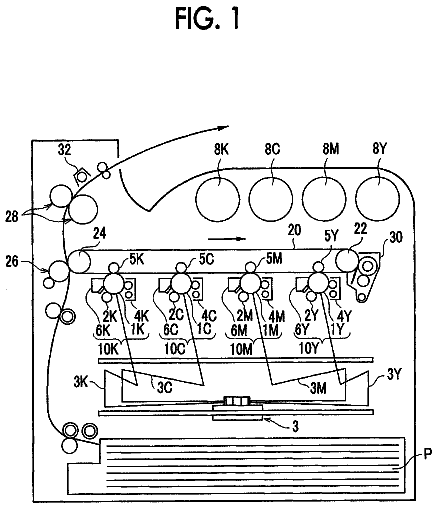
FIG. 2 is a view of an example of an image forming apparatus for housing a toner according to an embodiment of the present disclosure, and
FIG. 3 is a graph showing a molecular weight distribution curve according to an embodiment of the present disclosure.
Reference will now be made in detail to the embodiments, examples of which are illustrated in the accompanying drawings, wherein like reference numerals refer to the like elements throughout. The embodiments are described below to explain the present invention by referring to the figures.
Hereinafter, the present disclosure will be described in detail.
Toner for developing an electrostatic latent image according to the present disclosure includes a binder including at least two resins which have a different weight-average molecular weight from each other, a colorant, and a releasing agent, wherein a gel permeation chromatogram (GPC) molecular weight distribution curve of the toner has a major peak (Mp) present in a range of about 1.0.times.10.sup.4 to about 3.0.times.10.sup.4 g/mol and a shoulder curve starting at about 1.0.times.10.sup.5 g/mol or more, and a storage modulus (G') curve of the toner with respect to temperature has Ts, which is a temperature at which a storage modulus value begins to decrease, in a temperature range of about 50 to about 67.degree. C.
A toner molecular weight affects a gloss property and a fusing property of the toner. A toner molecular weight distribution may be obtained from a GPC of the toner. In this case, a molecular weight distribution of a binder formed of a polymer resin almost corresponds to the toner molecular weight distribution.
Accordingly, if only one binder resin is used, the toner molecular weight distribution curve is one normal distribution curve. However, if two different binder resins including a low molecular weight binder resin and a high molecular weight binder resin are used, the toner molecular weight distribution curve consists of a major distribution curve corresponding to a molecular weight distribution of the low molecular weight resin and a shoulder curve having a gentle slope and low height corresponding to a molecular weight distribution of the high molecular weight resin. If the high molecular weight resin content is too high, a double peak is formed, and in this case, an offset-resistant property is good, but it is difficult to obtain high gloss.
As such, if a toner is prepared using a binder including two different molecular weight resins at an appropriate ratio, the respective resins independently perform their functions. That is, the rheological property of the toner may be controlled in such a way that the low molecular weight resin with a critical molecular weight or less has no entanglement in a molecular chain thereof and thus, shows a function in terms of a minimum fusing temperature (MFT) and gloss, on the other hand, the high molecular weight resin has entanglement in a molecular chain thereof and thus, enables the formed toner to maintain a certain level of elasticity even at high temperature, thereby contributing to an offset-resistant property.
Accordingly, in the toner molecular weight distribution curve, a summit of a major curve, that is, the major peak may be present in, for example, a range of about 8.times.10.sup.3 to about 4.0.times.10.sup.4 g/mol, a range of about 1.0.times.10.sup.4 to about 3.0.times.10.sup.4 g/mol, or a range of about 1.3.times.10.sup.4 to about 2.5.times.10.sup.4 g/mol. If the location of the major peak is in the ranges described above, melt viscosity of the toner is improved and thus, gloss and a fusing property improve.
In the toner molecular weight distribution curve having a major distribution curve and a shoulder curve, a point at which as the molecular weight increases, the downward slope of the major distribution curve finishes and the upward gentle slope starts, is referred to as a shoulder starting point. For example, please refer to an inflexion point indicated by an arrow in the molecular weight distribution curve shown in FIG. 3.
Referring to FIG. 3, the shoulder starting point may be present at about 1.0.times.10.sup.5 g/mol or more, for example, in a range of about 1.5.times.10.sup.5 to about 5.0.times.10.sup.6 g/mol or a range of about 2.0.times.10.sup.5 to about 4.5.times.10.sup.6 g/mol.
If the shoulder starting point is within the ranges described above, an offset-resistant property of toner at high temperature improves and a wide fusing latitude is secured and durability and gloss may be improved. However, if the shoulder starting point is outside the ranges described above, even when two different binder resins including a low molecular weight resin and a high molecular weight resin are used, an offset-resistant property, durability, and gloss may not be obtained simultaneously.
In a storage modulus (G') curve obtained by measuring visco-elasticity of toner with respect to temperature, a slope temperature (Ts), a temperature at which a storage modulus value begins to decrease, is present in a range of about 50 to about 67.degree. C. For example, Ts may be present in a range of about 53 to about 61.degree. C.
The temperature at which a storage modulus value of toner begins to decrease refers to a temperature at which thermal deformation of toner begins as temperature increases when visco-elasticity is measured. When the formed toner is housed in an image forming apparatus, such as a printer, and used in practice, typically, toner is exposed to heat that is generated under driving conditions including a high speed driving and fusing in the image forming apparatus, and as a result, it is highly likely that the temperature of the image forming apparatus increases up to about 50.degree. C. Accordingly, if Ts of toner is about 50.degree. C. or more, blocking between toner particles due to thermal deformation at the toner surface under driving conditions of the image forming apparatus may be preventable. Also, if Ts of toner is about 67.degree. C. or lower, low-temperature a fusing property may be improved. If Ts is present in a range of about 53 to about 61.degree. C., the anti-blocking property and the cold fusing property may be further improved.
As such, if in the GPC molecular weight distribution curve of toner, the major peak (Mp) is present in a range of about 1.0.times.10.sup.4 to about 3.0.times.10.sup.4 g/mol, the shoulder curve beings at about 1.0.times.10.sup.5 g/mol or more, and in the storage modulus (G') curve of toner with respect to temperature, Ts, at which the storage modulus value begins to decrease, is present in a range of about 50 to about 67.degree. C., toner performance properties, such as gloss, a fusing property, offset-resistant property, durability, or prevention of blocking, may be satisfied simultaneously.
According to an embodiment of the present disclosure, in the GPC molecular weight distribution of the toner, an amount of a fraction of 5.times.10.sup.6 g/mol or more in the toner is in a range of about 0.1 to about 1.0 weight (wt) %, an amount of a fraction of 1.times.10.sup.6 g/mol or more and less than 5.times.10.sup.6 g/mol in the toner is in a range of about 0.5 to about 3.0 wt %, an amount of a fraction of 1.times.10.sup.5 g/mol or more and less than 5.times.10.sup.5 g/mol in the toner is in a range of about 3.0 to about 10 wt %, and an amount of a fraction of less than 2.times.10.sup.4 g/mol in the toner is in a range of about 45 to about 70 wt %. Also, the remaining amount of the toner may be occupied with amounts of other fractions. If the toner satisfies the conditions described above, the major peak (Mp) present in the range of about 1.0.times.10.sup.4 to about 3.0.times.10.sup.4 g/mol, and the shoulder curve starting at about 1.0.times.10.sup.5 g/mol or more may be easily accomplished.
According to another embodiment of the present disclosure, the toner may have a weight average molecular weight of about 3.0.times.10.sup.4 to about 5.0.times.10.sup.5 g/mol and about a Z average molecular weight of 1.0.times.10.sup.6 to about 5.0.times.10.sup.7 g/mol.
That is, when the toner weight average molecular weight is about 3.0.times.10.sup.4 or more, durability of toner increases and toner blocking may be prevented during high-temperature preservation. Also, when the toner weight average molecular weight is about 5.0.times.10.sup.5 g/mol or lower, excellent a fusing property of toner may be maintained.
Also, the Z average molecular weight of toner is a main indicator for a polymer distribution in the toner molecular weight distribution, and the polymer distribution is a critical element in determining toughness of molten toner during exfoliation. Accordingly, when the Z average molecular weight of toner is in the range of about 1.0.times.10.sup.6 to about 5.0.times.10.sup.7 g/mol, the toner has improved offset-resistant property and gloss.
In the storage modulus (G') curve of toner with respect to temperature that is used to evaluate visco-elasticity, a value of [Log G'(80)-Log G'(100)]/20 (slope 1, S1) may be in a range of about 0.03 to about 0.1, a value of [Log G'(110)-Log G'(160)]/50 (slope 2, S2) may be in a range of about 0.01 to about 0.05, a value of G'
may be in a range of about 1.0.times.10.sup.2 to about 3.0.times.10.sup.3, and S1/S2 which is a ratio of the slope 1 to the slope 2, may be in a range of about 1.4 to about 5.
In this case, G'(80), G'(100), G'(110), and G'
respectively indicate storage moduli (Pa) at temperatures of 80.degree. C., 100.degree. C., 110.degree. C., and 160.degree. C., which are obtained by measuring dynamic visco-elasticity of toner using a two circular disc-shape rheometer (for example, TA INSTROMENTS ARES rheometer) under conditions including use of a sample disc having a diameter of 8 mm and a height of 1.5 to 2.5 mm, an angular speed of 6.28 rad/second, a temperature increase rate of 1.0.degree. C./minute, and an initial deformation rate of 0.3% (the deformation rate is automatically controlled during measurement).
The toner visco-elasticity may be affected by various causes, such as thermal properties of toner (Tg etc.), a crosslinking level, dispersibility, compatibility, distribution, or used materials. In particular, G'
and G'(80), that is, visco-elasticity at a temperature of 100.degree. C. or lower, are dependent upon Tg or Tm of a binder and a releasing agent, an agglomerating agent, a colorant, etc. Also, G'
and G'(160), that is, visco-elasticity at a temperature of 100.degree. C. or higher, are dependent upon inner-dispersibility, a molecular weight, a crosslinking level, and a particle size distribution of the toner, rather than thermal properties of a binder or a releasing agent. Accordingly, G'(60), G'(80), G'(110), and G'
may be determined by characteristics of raw materials such as a binder, a colorant, a releasing agent, an agglomerating agent, or the like used in preparing a toner, and physical characteristics of the formed toner.
Also, from G'(80), G'(100), G'
and G'(160), fusing related characteristics of the toner, such as a cold offset, a minimum fusing temperature (MFT), or a fusing latitude, may be expected.
Also, if the value of [Log G'(80)-Log G'(100)]/20 of toner is, for example, in a range of about 0.03 to about 0.1 or a range of about 0.04 to 0.07 and a value of [Log G'(60)-Log G'(80)]/20 is within the range described above, the slope of an elastic modulus of toner at around melting point of latex rapidly descends, and thus, the toner is sufficiently molten during fusing, thereby enabling low temperature fusing with a relatively low heat amount in a relatively short period of time during fusing. Thus, a stable image may be easily obtainable and a low temperature high-speed fusing is achievable.
Also, the value of [Log G'(110)-Log G'(160)]/50 of toner may be, for example, in a range of about 0.01 to about 0.05 or about 0.02 to about 0.04. If the value of [Log G'(110)-Log G'(160)]/50 is within the range described above, in a temperature range of about 110 to about 160.degree. C., that is, in a temperature transition range from a low temperature to a high temperature, the storage modulus slope maintains gently and thus, an offset at high temperature during fusing of toner is prevented, and thus gloss staining does not occur. Thus, high image quality, high gloss, and excellent color reproduction may be obtained.
The value of G'
of toner may be in a range of, for example, about 1.0.times.10.sup.2 to about 3.0.times.10.sup.3, about 1.5.times.10.sup.2 to about 1.5.times.10.sup.3, or about 6.0.times.10.sup.2 to about 1.0.times.10.sup.3. In this case, the value of G'
affects the hot offset property and gloss. If the value of G'
is within the ranges described above, toner that is heated and softened during fusing has sufficient rubber elasticity, and thus the toner may be easily separated from a fusing member, a hot offset on the fusing member is prevented, and due to sufficient rubber elasticity of toner, toner may be appropriately adsorbed to a paper sheet, thereby having an improved gloss. That is, if viscosity is too low and thus elasticity is too low, molten toner may permeate into the paper sheet and the paper grain may appear, thereby decreasing a smoothness level of an image and gloss of the image. Accordingly, there is a need to have an appropriate range of elasticity and viscosity values, that is, appropriate visco-elasticity characteristics.
Regarding the toner, [Si]/[Fe] may be in a range of about 5.0.times.10.sup.-4 to about 5.0.times.10.sup.-2 and [S]/[Fe] may be in a range of about 5.0.times.10.sup.-4 to about 5.0.times.10.sup.-2, wherein [Fe] indicates an iron intensity evaluated by fluorescent X-ray measurement, [Si] indicates a silicon intensity evaluated by fluorescent X-ray measurement, and [S] indicates a sulfur intensity evaluated by fluorescent X-ray measurement.
The iron intensity [Fe] corresponds to an amount of iron included in an agglomerating agent that is used to agglomerate a latex, a colorant and a releasing agent when toner is prepared. Accordingly, the iron intensity [Fe] may affect the agglomeration property, particle size distribution, and particle size of an agglomerated toner that constitutes a precursor for preparing a final toner.
The silicon intensity [Si] corresponds to an amount of silicon included in an agglomerating agent used in preparing toner or an amount of silicon included in silica particles that are externally added to secure flowability of toner. Accordingly, the silicon intensity [Si] may affect such properties as described above with the iron and flowability of the toner.
A ratio of the silicon intensity [Si] to the iron intensity [Fe], [Si]/[Fe], may be in a range of, for example, about 5.0.times.10.sup.-4 to about 5.0.times.10.sup.-2, about 8.0.times.10.sup.-4 to about 3.0.times.10.sup.-2, or about 1.0.times.10.sup.-3 to about 1.0.times.10.sup.-2.
If the ratio of [Si]/[Fe] is in the range of about 5.0.times.10.sup.-4 to about 5.0.times.10.sup.-2, an amount of an external additive silica is appropriately controlled, and thus flowability of toner is improved and the interior of a printer housing the toner may not be contaminated.
The sulfur intensity [S] corresponds to an amount of sulfur included in a chain transfer agent, that is, a sulfur-containing compound, that is used to control a molecular weight distribution of a latex for toner. Accordingly, if the sulfur intensity [S] is high, the latex molecular weight may reduce and a new chain may be initiated, and if the sulfur intensity [S] is low, the chain may continuously increase and the latex molecular weight may increase.
In this case, if the ratio of [S]/[Fe] is in the range of about 5.0.times.10.sup.-4 to about 5.0.times.10.sup.-2, an agglomeration property and an electrification property may be improved, and thus a toner having an appropriate molecular weight, particle size distribution, and particle size may be formed.
As described above, the toner includes Fe and Si. The amount of Fe may be in a range of, for example, about 1.0.times.10.sup.3 to about 1.0.times.10.sup.4 ppm, about 2.0.times.10.sup.3 to about 0.8.times.10.sup.4 ppm, or about 4.0.times.10.sup.3 to about 0.6.times.10.sup.4 ppm. Also, the amount of Si may be in a range of, for example, about 1.0.times.10.sup.3 to about 5.0.times.10.sup.3 ppm, about 1.5.times.10.sup.3 to about 4.5.times.10.sup.3 ppm, or about 2.0.times.10.sup.3 to about 4.0.times.10.sup.3 ppm.
In this case, if the amounts of Fe and Si are within the ranges described above, an electrification property of the toner may be improved and the interior of a printer housing the toner may not be contaminated.
A volume average particle size of the toner according to an embodiment of the present disclosure may be in a range of, for example, about 3.0 to about 9.0 .mu.m, about 4.0 to about 8.7 .mu.m, or about 5.0 to about 8.5 .mu.m, and an average of circularity may be in a range of, for example, about 0.940 to about 0.990, about 0.945 to about 0.985, or 0.950 to 0.980.
In general, smaller toner particles are advantageous to high resolution and high image quality. However, they are disadvantageous in terms of a transfer speed and a washing property. Accordingly, it is important to have an appropriate particle size.
The volume average particle diameter of the toner may be measured by electrical impedance analysis.
If the volume average particle diameter of the toner is about 3.0 .mu.m or more, a photo conductor may be cleaned well, the production yield may be increased when mass-produced, scattering-induced harmful effect on the human body may be prevented, and high resolution and high image quality can be obtained. If the volume average particle diameter of the toner is about 9.0 .mu.m or lower, electrification may be uniformly performed, a fusing property of toner may be improved, it is easy for a Dr-blade to control a toner layer.
Circularity of toner may be measured by using FPIA-3000 equipment produced by SYSMEX Co., Inc. using the equation as follows: Circularity=2.times.(.pi..times.area).sup.0.5/circumference. <Equation>
The circularity may be in the range of 0 to 1, and as the circularity approaches 1, the toner particle shape becomes more circular.
If the average circularity of the toner is 0.940 or more, a thickness of an image formed on a transfer medium is appropriate and thus, toner consumption may be reduced. Also, an opening between toner particles may not be too large and thus the image formed on the transfer medium may have a sufficient coverage rate. If the average circularity of the toner is 0.990 or lower, excessive toner supply onto a development sleeve is prevented and thus contamination of the development sleeve due to non-uniform toner coverage thereon may be prevented.
As an indicator for a toner particle-size distribution, a volume average particle-size distribution GSDv or a number average particle-size distribution GSDp may be used, and the GSDv and the GSDp may be measured in the following manner.
First, a toner particle diameter distribution is obtained using toner particle diameters measured using a Multisizer III (manufactured by BECKMAN COULTER INC.). The toner particle diameter distribution is divided at predetermined particle diameter ranges (channels). With respect to the respective divided particle diameter ranges (channels), the cumulative volume distribution of toner particles and the cumulative number distribution of toner particles are measured, wherein, in each of the cumulative volume and number distributions, the particle size in each distribution is increased in a direction from small diameter to large diameter. A particle diameter at 16% of the respective cumulative distributions is defined as a volume average particle diameter D16v and a number average particle diameter D16p, respectively. Likewise, a particle diameter at 50% of the respective cumulative distributions is defined as a volume average particle diameter D50v and a number average particle diameter D50p, respectively. Likewise, a particle diameter at 84% of the respective cumulative distributions is defined as a volume average particle diameter D84v and a number average particle diameter D84p.
In this case, GSDv is defined as (D84v/D16v).sup.0.5, and GSDp is defined as (D84p/D16p).sup.0.5.
In this regard, the GSDv and GSDp are each, for example, about 1.30 or less, in the range of about 1.15 to about 1.30, or in the range of about 1.20 to about 1.25. If the GSDv and GSDp are within the ranges described above, uniform toner particle size may be obtained.
A method of preparing the toner for developing an electrostatic latent image according to an embodiment of the present disclosure includes mixing a primary binder particle including two different weight average molecular weight resin latex, a colorant dispersion, and a releasing agent dispersion to prepare a mixed solution; adding an agglomerating agent solution to the mixed solution to prepare a core layer forming particle; and covering the core layer forming particle with a shell layer forming particle including a secondary binder particle prepared by polymerizing one or more polymerizable monomers, wherein the toner includes a binder including two different weight average molecular weight resins, a colorant, and a releasing agent, a GPC distribution curve of the toner has a major peak (Mp) present in a range of about 1.3.times.10.sup.3 to about 2.5.times.10.sup.3 g/mol and a shoulder starting point at about 1.0.times.10.sup.5 g/mol or more, and a storage modulus (G') curve of the toner with respect to temperature has T.sub.s, which is a temperature at which a storage modulus value begins to decrease, in a temperature range of about 50 to about 65.degree. C.
Regarding the method, the primary binder particle may be a polymer prepared by polymerizing one or more polymerizable monomers, polyester alone, or a mixture thereof (hybrid type). When the polymer is used, the polymerizable monomers may be polymerized together with a releasing agent such as wax. Alternatively, a releasing agent may be separately mixed with the polymer.
The primary binder particle includes two different weight average molecular weight resin latex, that is, a low molecular weight resin latex and a high molecular weight resin latex.
The high molecular weight resin latex has a weight average molecular weight of, for example, about 1.0.times.10.sup.5 to about 5.0.times.10.sup.6 g/mol, about 1.5.times.10.sup.5 to about 3.5.times.10.sup.6 g/mol, or about 2.0.times.10.sup.5 to about 3.0.times.10.sup.6 g/mol. If the weight average molecular weight of the high molecular weight resin latex is within the ranges described above, a wide fusing latitude may be secured, and durability and gloss may be improved.
A weight ratio of the low molecular weight resin latex to the high molecular weight resin latex may be, for example, 99:1 to 70:30, 97:3 to 80:20, or 95:5 to 85:15.
If the weight ratio is in the range of 99:1 to 70:30, durability and hot offset property of the toner may be improved, high glossy toner may be obtained.
That is, in preparing the primary binder particle, the low molecular weight resin latex having a critical molecular weight or less is prepared to have a volume average particle size of about 100 to 300 nm, and the high molecular weight resin latex having a high molecular weight is emulsion-polymerized or dispersed to have a volume average particle size of about 100 to about 300 nm.
If the volume average particle sizes of the low molecular weight resin latex and the high molecular weight resin latex are in the range of about 100 to about 300 nm, the agglomeration level may be easily controlled during the toner preparation, thereby enabling formation of a final toner having a desired particle size.
The low molecular weight resin latex may have a weight average molecular weight of, for example, about 1.3.times.10.sup.4 to about 3.0.times.10.sup.4 g/mol, about 1.5.times.10.sup.4 to about 2.8.times.10.sup.4 g/mol, or about 1.7.times.10.sup.4 to about 2.5.times.10.sup.4 g/mol. If the low molecular weight resin latex is within the molecular weight ranges described above, toner strength may be improved and durability and a fusing property of the toner may be improved.
The polymerizable monomer used herein may include at least one selected from the group consisting of styrene-based monomers such as styrene, vinyltoluene, or .alpha.-methylstyrene; acrylic acids, methacrylic acids; derivatives of (meth)acrylic acid such as methyl acrylate, ethyl acrylate, propyl acrylate, butyl acrylate, 2-ethylhexyl acrylate, dimethylaminoethyl acrylate, methyl methacrylate, ethyl methacrylate, propyl methacrylate, butyl methacrylate, 2-ethylhexyl methacrylate, dimethylaminoethyl methacrylate, acrylonirile, methacrylonirile, acrylamide, or methacrylamide; ethylenically unsaturated mono-olefines such as ethylene, propylene, or butylene; halogenated vinyls such as vinyl chloride, vinylidene chloride, or vinyl fluoride; vinyl esters such as vinyl acetate or vinyl propionate; vinylethers such as vinylmethylether or vinylethylether; vinylketones such as vinylmethylketone or methylisoprophenylketone; nitrogen-containing vinyl compounds such as 2-vinylpyridine, 4-vinylpyridine and N-vinylpyrrolidone.
When the primary binder particle is manufactured, a polymerization initiator and a chain transfer agent may be further used to efficiently perform the polymerization process.
Examples of the polymerization initiator include persulfates such as potassium persulfate or ammonium persulfate; azo compounds such as 4,4-azobis(4-cyano valeric acid), dimethyl-2,2'-azobis(2-methylpropionate), 2,2-azobis(2-amidinopropane)dihydrochloride, 2,2-azobis-2-methyl-N-1,1-bis(hydroxymethyl)-2-hydroxyethylpropioamide, 2,2'-azobis(2,4-dimethylvaleronirile), 2,2'-azobisisobutyronirile, or 1,1'-azobis(1-cyclohexancarbonirile); and peroxides such as methylethylperoxide, di-t-butylperoxide, acetylperoxide, dikumylperoxide, lauroylperoxide, benzoylperoxide, t-butylperoxy-2-ethylhexanoate, di-isopropylperoxydicarbonate, or di-t-butylperoxyisophthalate. In addition, oxidation-reduction initiators prepared by combining these polymerization initiators and reductants may also be used as the polymerization initiator.
The chain transfer agent refers to a material that changes the type of a chain carrier when a chain reaction occurs. The chain transfer agent includes a material that induces new chain activity to be substantially weaker than the existing chain activity. Due to the chain transfer agent, a polymerization degree of polymerizable monomers can be reduced and a novel chain can be initiated. Due to the chain transfer agent, molecular weight distributions can be controlled.
The amount of the chain transfer agent may be, for example, in the range of about 0.1 to about 5 parts by weight, about 0.2 to about 3 parts by weight, or about 0.5 to about 2.0 parts by weight, based on 100 parts by weight of the one or more polymerizable monomers. If the amount of the chain transfer agent is within the range described above, the molecular weight of a polymer is appropriately controlled and agglomeration efficiency and fusing performance may be increased.
Examples of the chain transfer agent include sulfur-containing compounds such as dodecanethiol, thioglycolic acid, thioacetic acid, or mercaptoethanol; phosphorous acid compounds such as a phosphorous acid or sodium phosphite; hypophosphorous acid compounds such as a hypophosphorous acid or a sodium hypophosphite; and alcohols such as methylalcohol, ethylalcohol, isopropylalcohol, or n-butylalcohol. However, the chain transfer agent is not limited to those materials.
The description continues in the full USPTO document.
About 6,019 words. The USPTO PDF has it with every drawing.
Fees are due 3.5, 7.5 and 11.5 years after grant. This patent expired on June 3, 2026, so the fee marked "not paid" was the one that went unpaid.
TONER FOR DEVELOPING ELECTROSTATIC LATENT IMAGE AND METHOD OF PREPARING THE SAME
Filed Sep 2011 · published Mar 2012Toner for developing electrostatic latent image and method of preparing the same
Filed Sep 2011 · granted Jun 2014Earlier publications, parents and continuations. None of them can still be enforced, or this patent would not be listed.
Prior art cited by the examiner or applicant. Useful when you check your own idea for novelty.
Everything on this page comes from the documents linked above.