Background of the invention
Abrasives are often used to clean and/or polish hard surfaces, such as teeth, household fixtures and goods, and the like. Further, such abrasives can also be used in conjunction with personal care compositions, for example as exfoliation products for skin and nails. Generally, the particle size, crystallinity, hardness, and structure, as well as other factors determine whether certain abrasives are more suitable for cleaning or polishing of a surface. The selection of abrasives for any purpose likewise accounts for the surface properties and degree of accompanying mechanical force. Cleaning abrasives are typically used to debride debris, impurities, and stains from a surface. Polishing abrasives create a smooth, glossy appearance on the target surface and can provide further stain removal.
To maximize the effectiveness of a composition that polishes, and preferably also cleans, it is desirable to have increasingly finer or smaller particles contact a surface during processing to provide polishing, also referred to as lapping. Maximizing contact of the particles with the surface provides more efficacious cleaning and/or polishing, particularly when the sequence and duration of contact of different abrasives can be controlled. Further, controlling the physical orientation of polishing particles with respect to the surface is desirable to enhance efficacy of the abrasives. However, there are significant challenges to using both cleaning and polishing abrasives in a single product to achieve the desired effect. Compatibilizing different abrasives in a single carrier can pose difficulties. Additionally, staging release of different species of abrasives, particularly when they are combined in a single product, poses a challenge. Thus, compositions and methods that improve the cleaning and/or polishing of a target surface are desirable.
Brief summary of the invention
In various embodiments, an oral composition is provided that comprises a first abrasive, a film comprising a second abrasive, and a carrier.
In certain embodiments, the present invention provides a method of cleaning or polishing a target surface comprising:
contacting the surface with a composition comprising a first abrasive, a film comprising a second abrasive, and a carrier;
disintegrating at least a portion of the film to expose the second abrasive; and
contacting the surface with the second abrasive.
In certain embodiments, the present invention is directed to a method of cleaning or polishing a target surface with a controlled release composition comprising a first abrasive and a second abrasive is provided. The method comprises:
contacting the first abrasive with the surface; and
subsequently contacting the second abrasive with the surface
In certain embodiments, the present invention is directed to a method of cleaning or polishing an oral surface comprising:
introducing an oral composition into an oral cavity that comprises a film comprising a polishing abrasive into an oral cavity; and
contacting the film with an oral surface and saliva, wherein during the contacting the film disintegrates into a plurality of successively smaller film fragments, and wherein the contacting of the film with the oral surface polishes the oral surface.
In certain embodiments, the present invention is directed to a composition for cleaning and/or polishing a target surface comprising:
a carrier comprising a cleaning abrasive and a polishing abrasive, wherein the polishing abrasive is activated for polishing subsequent to exposure to the surface or a solvent.
Detailed description of the invention
Throughout the present disclosure, all references cited are hereby incorporated by reference in their entireties. In the event of a conflict between a definition in a reference and one herein, the present disclosure controls.
The present disclosure relates to compositions and methods for cleaning or polishing of target surfaces, including industrial, household, human and animal somatic surfaces, particularly oral, dermal, and keratinous surfaces. The compositions described herein clean and/or polish such surfaces. As used herein, the term "cleaning" generally refers to the removal of contaminants, dirt, impurities, and/or extraneous matter on a target surface. For example, in the context of oral surfaces, where the surface is tooth enamel, the cleaning preferably removes at least some of a film or stain, such as plaque biofilm, pellicle or tartar. For personal care compositions, the cleaning can remove dead cells, sebum, oils, dirt, and other contaminants. In the case of household or industrial surfaces, the cleaning can remove dirt, grime, scale, oil or other contaminants. "Polishing" generally refers to a finishing or refining process that makes a surface smoother and/or glossier. Polishing and cleaning can also provide brightening of the surface where stain removal occurs, for example, whitening of a tooth surface.
The compositions described herein provide, in various embodiments, cleaning and/or polishing of a target surface. Non-limiting examples of target surfaces include oral surfaces, such as tooth enamel; dermal surfaces, such as skin; keratinous surfaces, such as nails and hair; household surfaces, such as hardware, fixtures, tableware, home goods, tiles, floors, walls, appliances, ceramics, metals and the like.
Thus, in certain embodiments, a composition for cleaning or polishing a target surface comprises a carrier comprising a first abrasive and a second abrasive. The composition provides controlled release, or controlled activation, of the second abrasive. The second abrasive is preferably activated upon exposure to the target surface to be treated. The term "activated" refers to a process of making the abrasive available for effectively treating the target surface for its intended effect; for example, making a polishing abrasive available for polishing the target surface. The compositions may be maintained such that the first and the second abrasives are either separately kept or stored in localized regions within the carrier (non-homogenously distributed through the carrier). Thus, in accordance with various embodiments, the second abrasive is stored in a non-activated state, where it is not fully available for its intended purpose. The second abrasive is activated upon exposure to a target surface, optionally in the presence of a solvent, and/or a mechanical force, such that it can then be effectively used for its intended purpose, e.g., polishing.
For example, where the composition comprises a film comprising the second abrasive, it may be activated when at least a portion of the film disintegrates to expose a portion of the second abrasive. As used herein, "disintegrate" means that the film breaks or decomposes into smaller pieces, fragments, or parts, for example. The disintegration may be achieved by chemical disruption, mechanical disruption, or both, simultaneously or serially.
In certain embodiments, the film stays substantially suspended and undisintigrated while in the carrier, but the application of shear force and/or exposure to solvent(s), such as water, disrupts and breaks the film into fine pieces. In some embodiments, an abrasive can be totally contained within the film, or partially exposed on the surface of the film. The term "abrasive" as used herein refers to a particle that abrades a target surface. The term encompasses a plurality of abrasive particles. As the disintegration process proceeds, the activation of the second abrasive contained within the film entails sufficient exposure of the surface of the abrasive (i.e., of a sufficient number of abrasive particles) to achieve the desired effect. For example, in various embodiments, at least about 10% of the total surface area of the plurality of abrasives contained in the film are available for contact with the surface after a short time duration of exposure to the target surface. In various embodiments, the available surface area is greater than about 25%, greater than about 30% or greater than about 50%.
Likewise, in certain embodiments, the second abrasive is encapsulated in a protective coating, and is activated by disintegration of at least a portion of the protective coating. In other embodiments, the individual particles of the polishing abrasive can be agglomerated into clusters, where polymers or adhesives bind individual particles of the abrasive species together. The agglomerated second abrasive is suspended within the carrier, and thus is distributed in localized clusters. When the composition is exposed to a target surface and/or a solvent, optionally with mechanical force applied, the polymer or adhesive binding the clusters disintegrates, thus releasing the individual particles of the second abrasive and activating the second abrasive for its intended purpose. Thus, the individual abrasive particles are released and available for polishing the target surface. Accordingly, in various embodiments, the protective coating, adhesive/binding agent, and/or film comprises a material capable of disintegrating in the presence of a solvent, mechanical force or contact with the target surface.
In certain embodiments, a method of cleaning and/or polishing a target surface comprises contacting the surface with a composition that comprises a first abrasive, a film comprising a second abrasive, and a carrier. As described above, in certain embodiments at least a portion of the film is disintegrated to expose at least a portion of the second abrasive, such that it is activated. The exposed portion of the second abrasive is then contacted with a target surface.
In various embodiments, the contacting of the first abrasive and the contacting of the second abrasive occur concurrently. The contacting of the first abrasive with the target surface occurs for a first time duration and the contacting of the second abrasive with the target surface occurs for a second time duration. In various embodiments, the second time duration initiates after the initiation of the first time duration. In this manner, the second abrasive is activated and exposed for its intended purpose after the contacting of the first abrasive with the target surface. This delayed activation of the second abrasive is believed to improve the efficacy of both the first and second abrasives, by sequentially staging the respective exposure of the first and second abrasives to the target surface.
For example, where the first abrasive is a "cleaning abrasive" (that is, an abrasive whose main purpose is cleaning as described above) and the second abrasive is a "polishing abrasive" (that is, an abrasive whose main purpose is polishing as described above), the subsequent activation or release of polishing abrasive is believed to improve the polishing effects. Effective polishing of a surface typically occurs by contacting a target surface with increasingly smaller particles, which is facilitated when the second time duration initiates after the initiation of the first time duration.
Thus, in various embodiments, a composition is provided that comprises a first abrasive, a second abrasive, and a carrier. As appreciated by one of skill in the art, the amount of the abrasive present in the composition is dependent upon various non-limiting factors, including the characteristics of the individual abrasives, the degree of cleaning and polishing to be performed on the target surface, and the compatibility of the abrasives with the carrier and/or film, for example.
In various embodiments, the first abrasive is present in an amount of about 1% to about 70% by weight of the composition, about 5% to about 50% or about 7% to about 40%. In various embodiments, the second abrasive is present in an amount of about 0.5% to about 20% by weight of the composition, about 1% to about 15% and about 2% to about 10%. In certain embodiments where a film comprises the second abrasive, the second abrasive is present in an amount of about 5% to about 40% by weight of the film, or about 3 to about 25% by weight of the film. In certain embodiments, the film is present in an amount of about 0.01% to about 50% by weight of the composition.
As discussed above, cleaning and polishing abrasives can be classified by various physical parameters. A single abrasive species may perform at least some cleaning and polishing simultaneously. However, particles are generally categorized in the art by the predominant effect they have on the target surface. Typically, "polishing abrasives" are considered to be relatively small particles having high hardness, as where abrasives with relatively large particle sizes and low hardness are considered to be "cleaning abrasives." Further, the behavior the abrasive exhibits as it interacts with the surface may indicate how well it will lap or polish the surface, as a desirable polishing agent usually degrades into progressively smaller fragments as contact with the surface proceeds. The lapping behavior relates to the ease with which an abrasive breaks down to a successively finer particle sizes, and is generally believed to be based on the abrasive particle's crystalline shape, lines of cleavage, and friability, for example.
Thus, an abrasive is generally categorized on a gradient extending from softer and larger-particled cleaning abrasives to harder and smaller-particled polishing abrasives, but in various embodiments will have abrasive qualities on at least some surfaces. In certain embodiments, the first abrasive is a distinct species from the second abrasive, meaning that each abrasive has a different effect on the target surface; for example, categorized in a different category on the abrasiveness gradient. Any number of abrasives can be selected in this manner. Thus, in certain embodiments, the first abrasive may be a relatively low cleaning abrasive and the second abrasive may be a relatively high cleaning abrasive. For example, the first abrasive may be a cleaning abrasive and the second abrasive may be a polishing abrasive. The present compositions optionally comprise a plurality of different abrasive species, and are not solely limited to first and second abrasives.
Thus, in certain embodiments, the first abrasive has a first particle size and the second abrasive has a second particle size. In certain embodiments, the first particle size is greater than the second particle size. In certain embodiments, the first abrasive has a particle size of about 5 .mu.m to about 15 .mu.m. In certain embodiments, the second abrasive has a particle size of about 0.5 .mu.m to about 5 .mu.m.
Other parameters are also useful for categorizing abrasiveness of particles, including for example, hardness. Hardness can be expressed by a number of different tests known to those of skill in the art, including the Einlehner, Knoop, Vickers, and Rockwell hardness tests, and the Mohs scale of hardness. In certain embodiments, the first abrasive is a cleaning abrasive that generally has a hardness of less than or equal to the target surface to be treated, and the second abrasive is a polishing abrasive that generally has a hardness of greater than or equal to the target surface to be treated. In various embodiments, an abrasive has a Mohs hardness of greater than 1. In certain embodiments, such as those where the surface is tooth enamel, cleaning abrasives have a Mohs hardness of about 1 to about 4. The desirable hardness varies based on the hardness of the target surface. Likewise, in various embodiments, polishing abrasives have a Mohs hardness of greater than about 4, or about 4 to about 9.
The structure of a particle also often reflects abrasiveness. A relatively low structure tends to have higher abrasiveness and a relatively high structure abrasive tends to have lower abrasiveness. Particle structure may be indicated by absorption of linseed oil or dibutyl phthalate (DBP) per 100 grams. Oil absorption values can be measured using the ASTM Rub-Out Method D281. In certain embodiments, a first particle has an oil absorption structure of greater than about 90 cm.sup.3/100 g, and the second abrasive has an oil absorption structure of less than about 90 cm.sup.3/100 g.
In the context of oral care, the efficacy of the abrasive can be expressed based on a cleaning or an abrasion basis for a dentifrice, namely the pellicle cleaning ratio (PCR) or the radioactive dentin abrasion (RDA) respectively. Methods of performing PCR and RDA are described in U.S. Pat. No. 5,939,051 to Santalucia et al. and U.S. Pat. No. 6,290,933 to Durga et al. Ideally, RDA values for an oral composition should be below about 250 to protect tooth enamel/dentin. In various embodiments where the target surface is an oral surface such as a tooth, an oral composition comprises a first abrasive in an exemplary dentifrice such as those described in the methods above, having a PCR of greater than or equal to about 40, or greater than about 50; and a second abrasive having a PCR of greater than or equal to about 80, or greater than or equal to about 90. In other embodiments, the oral composition has a first abrasive having an RDA of greater than or equal to about 75 and a second abrasive having an RDA of less than or equal to about 250, or less than about 200, but greater than about 100.
In various embodiments, an exemplary polishing abrasive has a particle size of about 0.5 .mu.m to about 5 .mu.m, a Mohs hardness of about 4 to about 8, a pellicle cleaning ratio in an exemplary dentifrice of greater than about 80, an RDA of less than about 250, an oil absorption of less than about 90 cm.sup.3/100 g, in various embodiments less than about 80 cm.sup.3/100 g or less than about 50 cm.sup.3/100 g.
Suitable abrasives include without limitation: silica, silicate, silicon, alumina (including calcined aluminum oxide), aluminosilicates, such as bentonite, zeolite, kaolin, and mica, siliceous or diatomaceous earth, pumice, calcium carbonate, cuttlebone, insoluble phosphates, composite resins, such as melamine resin, phenolic resin, and urea-formaldehyde resin, polycarbonate, silicon carbide, boron carbide, microcrystalline wax, microcrystalline cellulose, including combinations of colloidal microcrystalline cellulose and carboxymethylcellulose, commercially available under the trade name AVICEL.RTM. from FMC Biopolymer (Philadelphia, Pa., USA) and combinations and derivatives thereof. As used herein, "mica" refers to any of a group of hydrous aluminum silicate minerals with plate morphology and perfect basal (micaceous) cleavage. Mica can be, for example, sheet mica, scrap mica or flake mica, as exemplified by muscovite, biotite or phlogopite type micas.
Insoluble phosphates useful as abrasives include orthophosphates, polymetaphosphates and pyrophosphates. Illustrative examples include dicalcium orthophosphate dihydrate, dicalcium phosphate dihydrate, calcium hydrogen phosphate, calcium pyrophosphate, .beta.-calcium pyrophosphate, tricalcium phosphate, calcium metaphosphate, potassium metaphosphate, and sodium metaphosphate.
In certain embodiments, such as those wherein the composition is suitable for cosmetic or oral use with humans or other animals, any orally or cosmetically acceptable abrasive can be used for an oral care or personal care composition. In the case of the oral care composition, abrasive selection may account for the abrasive type, fineness (particle size), particle size distribution, and amount of abrasive, to ensure that tooth enamel is not excessively abraded in normal use of the composition.
In the preparation of an oral or a personal care composition, useful abrasives may include silica abrasives such as precipitated silicas having a mean particle size of up to about 20 microns, such as ZEODENT.RTM.115, marketed by J. M. Huber (Havre de Grace, Md., USA), which has an average particle size of about 8 to about 14 .mu.m with an oil absorption of greater than about 90 cm.sup.3/100 g.
In embodiments where the dentifrice is a clear or transparent gel, an abrasive of colloidal silica, such as those sold under the trademark SYLOID.RTM. as SYLOID.RTM. 72 and SYLOID.RTM. 74 or under the trademark SANTOCEL.RTM. 100 alkali metal alumina-silicate complexes are particularly useful, since they have refractive indices close to the refractive indices of gelling agent-liquid (including water and/or humectant) systems commonly used in dentifrices. Such embodiments may be desirable when the films have an aesthetic or decorative function in the carrier.
Useful polishing abrasive materials for preparing oral compositions include high cleaning, low structure silica abrasives, such as those marketed under the trade designation SYLODENT.RTM. XWA or SYLODENT.RTM. 783 by Davison Chemical Division (W. R. Grace & Co., Baltimore, Md., USA). SYLODENT.RTM. XWA 650 is a silica hydrogel composed of particles of colloidal silica. Exemplary silica hydrogels may comprise colloidal particles of silica having an average particle size of about 3 .mu.m to about 12 .mu.m, or about 5 .mu.m to about 10 .mu.m in other embodiments; with a pH range of about 4 to about 10, or about 6 to about 9, when measured as a 5% by weight slurry. The particles of the XWA 650 contain about 10% to about 35% by weight water, have a mean particle size of about 5 .mu.m to about 12 .mu.m, an Einlehner hardness of greater than or equal to about 5 to about 20 mg loss per 100,000 revolutions, an oil absorption of less than about 90 cm.sup.3/100 g, for example about 40 cm.sup.3/100 g to about 90 cm.sup.3/100 g, typically about 70 cm.sup.3/100 g. The abrasives have a Brunauer, Emmett and Teller (BET) surface area from 100 to 700 m.sup.2/g. XWA 650 has a brightness of 96.8 technidyne. Such abrasives are discussed in U.S. Pat. No. 6,290,933 to Durga et al.
Another useful high cleaning silica abrasive useful with the present invention is marketed as SYLODENT.RTM. XWA 300 and is a silica hydrogel containing about 10% to about 25% water by weight, where the mean particle size is about 2 .mu.m to about 4 .mu.m. The particles have BET surface are in the range of 150 to 400 m.sup.2/g of silica. The XWA 300 abrasive has an oil absorption of less than 90 cm.sup.3/100 g silica; and a pH, in a 5% w/w suspension in boiled (CO.sub.2 free) demineralized water, equal to or greater than 8.5. Such abrasives are discussed in U.S. Pat. No. 5,939,051 to Santalucia et al.
Another suitable high cleaning silica abrasive comprises a silica product, where the particles are about 5% to about 35% by weight water, having a mean particle size of about 7 .mu.m to about 11 .mu.m, an Einlehner hardness of from 12 to about 19, an oil absorption value of about 50 cm.sup.3/100 g to about 65 cm.sup.3/100 g. A BET surface area is about 100 to about 700 m.sup.2/g of silica. The brightness is generally reported to be greater than about 95 technidyne. Such a silica product is commercially available as ZEODENT.RTM. 105 from J. M. Huber (Havre de Grace, Md., USA).
Another high cleaning silica abrasive useful herein has a DBP structure of 100 cm.sup.3/100 g, an average maximum particle size of about 13 .mu.m, a pH of about 6 to about 8 (in a 5% aqueous suspension) and a BET surface area of 50 m.sup.2/g. Such a silica abrasive is commercially available as HC 800 from Grace. Yet another suitable silica abrasive useful as a polishing agent is a substantially monodisperse silica abrasive having an average particle diameter of about 2 .mu.m.
Thus, in certain oral or personal composition embodiments, the first abrasive may be chosen from silica, alumina, calcium carbonate, and dicalcium phosphate. Likewise, in certain embodiments, the composition is safe for oral and/or somatic contact, and the second abrasive can be chosen from silica, silicate, aluminosilicate, alumina, calcium carbonate, calcium hydrogen phosphate, mica, zeolite, kaolin, siliceous or diatomaceous earth, silicon, cuttlebone, pumice, composite resin, polycarbonate, boron carbide, microcrystalline wax, microcrystalline cellulose or derivatives thereof.
Polishing abrasives for household products can be any of those discussed above, but may also include silicon carbide, aluminum oxide and calcium carbonate. Household cleaning solutions typically contain abrasives that may also serve as detergent builders. A non-limiting list of such additional suitable abrasives for household/home care cleaning products includes: polyphosphates, including pyrophosphates, such as tetrasodium or tetrapotassium pyrophosphates, tripolyphosphates, tetrapolyphosphates, alkali metal carbonates and the like. However, selection of such abrasives is known in the art, and typically is highly dependent on the scratch resistance of the household surface/application.
A method of cleaning and/or polishing an oral surface comprises introducing an oral composition into an oral cavity. As discussed above, in certain embodiments, the oral composition comprises a film that comprises a second abrasive, such as a polishing abrasive. The film is then contacted with an oral surface and saliva. The film degrades into a plurality of successively smaller film fragments during the contacting with the oral surface and/or the saliva. While not limiting as to the present invention, it is believed that the successively smaller film fragments that are produced via the disintegration process improve polishing efficacy by exposing the surface to continuously smaller fragments containing the particles. The kinetically delayed release of the polishing particles is believed to improve polishing performance, by increasing local concentration of the polishing abrasive near the oral surface following the treatment with the larger, softer, cleaning abrasive particles, which may occur during the earlier stage of brushing. The contacting of the film having abrasives with the oral surface may augment and improve the cleaning/polishing of the oral surface.
The films of the present invention may have a substantially lamellar structure. A "lamellar" structure has a size in one or two dimensions (e.g., the x- or y-dimensions) that is substantially greater than the thickness of the structure in a third dimension (e.g., the z-direction), and generally including substantially planar, layered, or lamelliform shapes, for example. In certain embodiments, the lamellar structure is substantially planar, having a size in both the x- and y-dimensions that is substantially greater than that in the z-dimension. In other embodiments, the lamellar structure is non-planar.
Expressed in another way, the films may have an aspect ratio of about 5:1 or greater. Generally, an aspect ratio (AR) is defined as AR=L/D where L is the length of the longest dimension and D is the length of its shortest dimension. In certain embodiments, a film comprises a substantially continuous surface that can appear as a substantially flat surface, although in some embodiments the film may be deformed. In such embodiments, the film can have any of a number of shapes, including having a smooth, curved surface. Further, the term "film" encompasses both a single structure as well as a plurality of film fragments. In various embodiments, the film comprises a plurality of fragments independently having a thickness of about 0.1 mils to about 10 mils, about 0.5 mils to 9 mils, or about 1.2 mils to about 3 mils. In certain embodiments, the length of the fragments is at least about 0.2 mm. The film provided in the carrier as fragments can be provided as film flakes or pieces, or cut into a decorative shape, such as a rectangle, a square, a circle, a triangle, a polygon, a star, a diamond, and the like.
Examples of useful films include those described in U.S. Pat. No. 6,669,929 to Boyd et al.; United States Patent Publication Nos. 2004/0126332, 2004/0136924, and 2004/0042976 all to Boyd et al. Useful films may be rigid or plastic, comprising any of a variety of materials, including forming materials, clays, waxes, and mixtures thereof. In some embodiments, a film comprises at least one film-forming material; in certain embodiments, this film-forming material comprises a polymer. Useful polymers include hydrophilic polymers and hydrophobic polymers. In some embodiments, the polymer is soluble in a solvent, for example, water. For example, a water-soluble, breakable polymer that dissolves during application of physical force during use, such as during tooth brushing or scrubbing while cleaning with a brush or pad may be desirable. In some embodiments, the polymer is insoluble but breakable in water by being dispersible, i.e., the polymer breaks down into small fragments, for example, as a result of shearing. In some embodiments, a polymer is insoluble but swellable, so long as at least a portion of the second abrasive is exposed. Where a polymer does not fully break down during use, the polymer can be a water-repellant polymer or an aqueous-stable hydrophilic polymer such as certain types of cellulose, for example paper.
The polymers may be selected and apportioned in the film to provide at least one of the following:
a desired stability of the film in the carrier,
a desired rate of disintegration of the film during use of the composition, or
a desired rate of exposure of the second abrasive during use of the composition. Such polymers may also be suitable as encapsulating materials and/or binding materials for agglomerates.
In certain embodiments, the film is water-soluble. The film thus comprises a polymer chosen from water soluble polymers, water dispersible polymers, and water insoluble polymers. The relative amounts of water-insoluble polymer, water-soluble polymer, and, optionally, water-soluble filler may be selected to expose an amount of second abrasive proportional to how vigorously or how long the composition is used, e.g., by brushing, scrubbing, or other mechanical action during use of the aqueous composition.
In certain embodiments, the polymer is a water-soluble polymer. One example is a cellulose ether polymer, including those chosen from hydroxyalkyl cellulose polymers such as hydroxypropyl methyl cellulose (HPMC) commercially available from the Dow Chemical Company (Midland, Mich., USA) as METHOCEL.RTM. products, including, for example, METHOCEL.RTM. E5LV, METHOCEL.RTM. E50, and METHOCEL.RTM. K100, hydroxypropyl cellulose (HPC), hydroxyethyl cellulose (HEC), methyl cellulose (MC), carboxymethyl cellulose (CMC), or mixtures thereof. Other useful polymers include polyvinylpyrrolidone (PVP), which can have a weight average molecular weight of about 100,000 to about 1.5 million, vinyl acetate, polyvinylpyrrolidone-vinyl acetate copolymers such as KOLLIDON.RTM. VA64 (available from BASF, 60:40 by weight vinyl pyrrolidone) and PLASDONE.RTM. S630 PVP (available from International Specialty Products, Wayne, N.J., USA, 60:40 by weight vinyl pyrrolidone:vinyl acetate), ethylene oxide graft copolymers of PVA such as KOLLICOAT.RTM. IR (available from BASF, 75% by weight PVA, 25% by weight polyethylene glycol graft, polyvinyl alcohol (PVA), acrylates and polyacrylic acid, including polyacrylate polymer, cross-linked polyacrylate polymer, cross-linked polyacrylic acid (e.g, CARBOPOL.RTM.), methacrylates, maleic poly vinylalkyl ether-maleic acid copolymer (e.g., GANTREZ.RTM.), polyalkylene oxides, including polyethylene oxide, i.e. polyethylene glycol, and carboxy vinyl polymer. As appreciated by a skilled artisan, the film may comprise derivatives, copolymers, and further combinations of such polymers, as well.
Useful water-insoluble polymers include polymers soluble in at least one organic solvent. For example, acrylic copolymers (where carboxylic acid functionality has not been neutralized), cross-linked poly(vinyl pyrrolidone), for example KOLLIDON.RTM. CL or CL-M available from BASF, poly(vinyl acetate) [PVAc], certain cellulose derivatives such as cellulose acetate, cellulose nitrate, alkyl cellulose such as ethyl cellulose, butyl cellulose, and isopropyl cellulose, cellulose acetate phthalate, shellac, ethylene-vinyl acetate copolymers, vinyl acetate homopolymer, silicone polymer (e.g., dimethylsilicone), polymethyl methacrylate (PMMA), polymers insoluble in organic solvents, such as cellulose, polyethylene, polypropylene, polyesters, polyurethane and nylon, natural or synthetic rubber, and combinations thereof. An example of a suitable, film-forming acrylic copolymer is LUVIMER.RTM.30E, a 30% by weight solution in ethanol of a tert-butyl acrylate/ethyl acrylate/methyacrylic acid copolymer commercially available from BASF (Florham Park, N.J., USA). The water-insoluble polymers may be prepared as dispersions (e.g., by emulsion polymerization) and may be stabilized with suitable emulsifiers. One useful PVAc emulsion, for example, is KOLLICOAT.RTM. SR 30D, a 30 weight % dispersion of PVAc in water stabilized with 2.7 weight percent PVP and 0.3% sodium lauryl sulfate. An example of an acrylic copolymer dispersion is KOLLICOAT.RTM. EMM 30 D, a 30% by weight aqueous dispersion of an ethyl acrylate: methyl methacrylate copolymer (weight ratio of ethyl acrylate to methyl methacrylate approximately 2 to 1) with a reported average molecular weight of about 800,000, available from BASF.
Other useful polymers or water-soluble fillers include, without limitation: natural gums such as sodium alginate, carrageenan, xanthan gum, gum acacia, Arabic gum, guar gum, pullulan, agar, chitin, chitosan, pectin, karaya gum, zein, hordein, gliadin, locust bean gum, tragacantha and other polysaccharides; starches such as maltodextrin, amylose, high amylose starch, corn starch, potato starch, rice starch, tapioca starch, pea starch, sweet potato starch, barley starch, wheat starch, waxy corn starch, modified starch (e.g., hydroxypropylated high amylose starch), dextrin, levan, elsinan and gluten; and proteins such as collagen, whey protein isolate, casein, keratin, milk protein, soy protein, and gelatin. The film may further include dispersible or swellable fillers such as modified starch, alginate esters, divalent or multivalent ion salts of alginates.
In embodiments directed to an aqueous composition, the relative amounts of water-soluble polymer and water-insoluble and/or partially water-soluble polymer in the film may be such that the film is storage-stable in an aqueous composition but disintegrates during use of the composition. In various embodiments, the film may include an amount of water-soluble polymer of about 0.1 to about 90%, about 1 to about 80%, about 5 to about 70%, about 9 to about 50% or about 10 to about 40% by weight of the film. In addition to, or instead of, the water-soluble polymer(s), the film may include partially water-insoluble or water-swellable polymers in amounts of about 0.1 to about 50% by weight of the film, or about 1 to about 10% in other embodiments. In various embodiments, a method of stabilizing hydrophilic films in an aqueous carrier environment uses water-soluble and water-insoluble materials in the film that are balanced for stability while stored in the product carrier, but disintegrate upon use to activate the second abrasive contained therein.
In certain embodiments, oils are included in the film (or optionally in the carrier) that may adhere to the target surface. When selected to have a proper refractive index, the oil accentuates the intensity of light reflected from the polished surface, thus enhancing perception of gloss/sheen. Other optional materials can be included in the film, such as, without limitation: surfactants, emulsifiers, plasticizers such as mineral oil, glycerol, and propylene glycol, clays, inert starch particles, cellulose, or other fillers, waxes, texture modifiers such as cold water swellable, physically modified and pregelatinized starches, and colorants.
In certain embodiments, the films can be prepared using conventional extrusion or solvent casting processes. For example, to prepare a film by solvent casting, a film forming polymer is soluble or dissolved in a sufficient amount of a solvent that is compatible with the polymer. Examples of typically suitable solvents include water, alcohols, acetone, ethyl acetate or mixtures thereof. After a solution has been formed, a plasticizer can be added with stirring, and heat can be applied if necessary to aid dissolution, until a clear and homogeneous solution has been formed, followed by the addition of the abrasives and any additional ingredients, such as bulking agents, plasticizers, surface active agents, flavors and/or sweeteners. The solution can be coated onto a suitable carrier substrate material and dried to form a film. In certain embodiments, the substrate has a surface tension that allows the polymer solution to spread evenly across the intended substrate width without soaking in to form an impermissibly strong bond between the two substrates. Examples of suitable carrier substrate materials include glass, stainless steel, PTFE commercially available as TEFLON.RTM. (DuPont, Wilmington, Del., USA), polyethylene-impregnated Kraft paper or polyester plastic liners.
Drying of the film can be carried out in a moderate to high-temperature air-bath using a drying oven, drying tunnel, vacuum drier, or any other suitable drying equipment that does not adversely affect the active ingredient(s) or flavor of the film. During drying, the films can undergo preferential stretching or other alignment processes, such as directional air blown along a predetermined axis of the film to align abrasive particles to have a desired alignment within the film. Shaping of the dry film into fragments or shapes in a final form is possible via simple blade cutting, rotary or punch press dies. Optionally, the carrier substrate may have molds formed therein and the slurry may dry in the molds to a pre-determined shape defined by the mold.
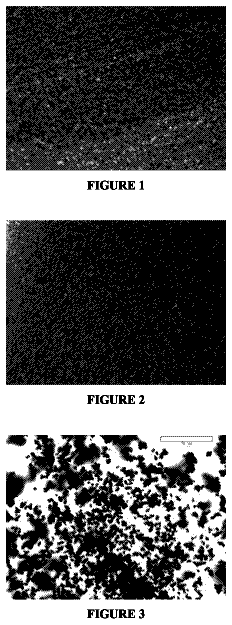
In some embodiments, a substantially axial alignment of abrasive particles is created within the film. An axial alignment refers to the alignment of abrasive particles along at least one axis of the film, such that the abrasive/film matrix has an anisotropic orientation. Thus, the second abrasive in the film may have a substantially axial alignment within the film, meaning each of the plurality of individual particles have substantially the same axial orientation in the film. Since many abrasive particles have irregular shapes, the alignment of abrasives within the film can provide a more planar orientation. Thus, a film comprising an aligned abrasive can provide greater surface area exposure as compared with a primarily spherical and/or irregular shaped particle that is dispersed throughout the carrier (in the absence of a film). Therefore, a substantially axial alignment of abrasive in the film may permit even more exposure and greater contact of the abrasive with the oral surface, which improves polishing and/or cleaning performance.
The description continues in the full USPTO document.