Parent case information
The present invention claims benefit from the following commonly owned earlier applications: 1) Ser. No. 12/944,749, title "Communication Method and System", filed Nov. 12, 2010, claiming priority from FI 20011680, filed Aug. 21, 2001; 2) Ser. No. 13/002,512, title "Method and System for Sending Messages", filed Jul. 3, 2009, claiming priority from F120085701, filed Jul. 4, 2008; 3) Ser. No. 13/074037, title "Authentication Method and System", filed Mar. 29, 2011, claiming priority from FI 20011680, filed Aug. 21, 2001; 4) Ser. No. 13/039338, title "Method and System for the Mass Sending of Messages", filed Mar. 3, 2011, claiming priority from FI 20051245, filed Dec. 2, 2005; 5) Ser. No. 12/972,610, title "Booking Method and System", filed Dec. 20, 2010, claiming priority from FI 20011680, filed Aug. 21, 2001; 6) Ser. No. 12/958,870, title "Communication Method and System", filed Dec. 2, 2010, claiming priority from FI 20011680, filed Aug. 21, 2001; 7) Ser. No. 12/401,392, title "Method and System for Delivery of Goods", filed Mar. 10, 2009; 8) Ser. No. 12/226,878, title "Method and System for Combining Text and Voice Messages in a Communications Dialogue", filed Apr. 26, 2007, claiming priority from FI 20060419, filed May 2, 2006; 9) Ser. No. 12/226,876, title "Method and System for Combining Text and Voice Messages in a Communications Dialogue", filed Apr. 26, 2007, claiming priority from FI 20060420, filed May 2, 2006; and 10) Ser. No. 13/332409, title "Financial Fraud Prevention Method and System", filed 21 Dec. 2011. The entire contents of the above-identified parent applications is incorporated herein by reference.
Field of the invention
The present invention relates to telecommunications. In particular, the invention relates to methods and systems for authentication and/or verification via telecommunications.
Background of the invention
Services that are booked or used via the Internet are constantly increasing. The Internet enables one to use several on-line services such as services connected to banks, health services, travel agencies, vehicle maintenance, and so on.
The increasing popularity of mobile computing and communications devices introduce new challenges to services on the Internet. Mobile terminals are able to deliver information to users when needed and where needed. Users want ubiquitous access to information and applications from the device at hand. They also want to access and update this information wherever they happen to be.
It is important to notice, however, that not all the terminals will be mobile. Future services must be able to communicate with a large variety of terminal devices, both those that are mobile and those that are not. Different terminal devices have very different capabilities.
Interoperability of different services and terminal devices requires standards on several levels. It is not enough to have, say, common communication protocols. It would be very important to share common concepts and understanding what a certain piece of data means in a certain context. However, it has been very difficult to agree on those issues, as there exists an enormous number of companies, organizations, and other actors in the field.
Many services must be able to manage bookings. They include for example booking appointments for health services; booking travel reservations for hotels, airlines, and rental cars; booking tickets for venues; booking appointments for vehicle maintenance; booking maintenance for apartments; and so on. It would be very useful, if those services could get information from one another. For example, if a customer is booking tickets for a concert, he or she might want to book a table in a restaurant also. It helps, if the restaurant's booking service gets basic information, like date and customer's name from the theater's booking system. Unfortunately, there have not been methods to exchange information between different kinds of booking systems.
Additionally, such services as well as other services/companies such as banks and credit card companies have long had the problem of verifying that the user attempting to make a reservation, booking or purchase is the actual user that they claim to be. Similarly, customers would like to know that the information that they are providing to these services/companies is going to the actual company and that their information is secure. With identity fraud resulting from submitting personal information over the internet being a concern for many web users there exists the need for a safer authentication alternative than currently exists.
Companies and organizations, such as software developers and pharmaceutical companies, have for a long time dealt with the problem of piracy. Not only are such entities harmed by lost sales from counterfeit goods but consumers who unknowingly purchase counterfeit goods can be harmed by, for example, malware installed by hacked software or poor quality and mislabeled counterfeit drugs. Currently, such companies are trying to develop methods in which the authenticity of their products can be easily determined by their customers either prior to purchase or prior to use.
For services such as booking or calendar functions, information exchange often takes place as synchronizing booking or calendar entries. For that purpose, several important standardization efforts are going on. For example, SyncML is an industry initiative to develop and promote a single, common data synchronization protocol.
vCalendar is an exchange format for personal scheduling information. It is applicable to a wide variety of calendaring and scheduling products and is useful in exchanging information across a broad range of transport methods. A number of vendors have adopted the specification because it allows their products to exchange calendaring and scheduling information. vCalendar is an open specification based on industry standards such as the x/Open and XAPIA Calendaring and Scheduling API (CSA), the ISO 8601 international date and time standard and the related MIME email standards. The vCalendar format utilizes data normally stored within a calendaring and scheduling application, facilitating the cross platform exchange of information about items such as events and to-do's. An event is a calendaring and scheduling entity that represents a designated amount of time on a calendar. A to-do is a calendaring and scheduling entity that represents an action item or assignment. For instance, it may be an item of work assigned to an individual.
vCard automates the exchange of personal information typically found on a traditional business card. vCard is used in applications such as Internet mail, voice mail, Web browsers, telephony applications, call centers, video conferencing, PIMs (Personal Information Managers), PDAs (Personal Data Assistants), pagers, fax, office equipment, and smart cards. In addition to text, vCard information may include elements like pictures, company logos, live Web addresses, and so on.
A common problem with all of these existing solutions is that they do not provide common semantics for different systems and the transfer of information may not always be as secure, or at least perceived as secure by customers, as many customers wish. Another problem is that booking systems have multiple different and usually quite complex user interfaces. If a customer wants to both make an appointment with a dentist and book a taxi to take him or her there, the customer needs to enter all the booking information to both booking systems in different ways. While the dentist may have in place a secure method of making reservations, authenticating the client who makes the reservation and receiving payment for a booking, the taxi company may not.
Additionally, it becomes challenging to manage client replies for instance when a client has been given a number of questions. For example, it makes sense to use SMS text messages to ask a client which option he or she chooses, because in many countries, like in Finland, it is very common to communicate with SMS text messages and they create revenues to operators. However, if a client replies to several inquiries by sending a number of text messages, it can be troublesome to find out, which answer corresponds to a certain question because the reply does not automatically include a reference to the question. Say, a service asks a client if they want to reserve, in addition to a flight ticket, also a taxi and a hotel room, and the client replies "yes" to one question but "no" to the other, the service does not necessarily know which offer the client has accepted.
Other problems, such as clients not showing up for appointments, not using a service more than once or long intervals between use of a service can be addressed through the use of new systems and methods.
Accordingly, attempts to execute financial transactions wherein clients utilize mobile terminals without additional proprietary software are handicapped by limitations of current mobile communication protocols, such as the short message service (SMS). Notably, the SMS protocol provides no standardized manner for authenticating mobile users or managing sessions. Lack of standardized authentication techniques leaves systems vulnerable to fraud, while lack of standardized session management makes it difficult for service providers to keep track of which of the clients' responses correspond to which questions from the service provider. On the other hand, session management, fraud prevention and introduction of new services should not be overly complex.
Summary of the invention
It is an object of the present invention to alleviate one or more of the problems identified above. Specifically, it is an object of the present invention to provide methods and equipment that provide improvements with regard to one or more of session management, fraud prevention and smooth introduction of services.
Embodiments of the invention can be utilized in a system that comprises or supports one or more payment processor computers, one or more service provider computers and one or more mediator servers. At least one of each computer or server coordinate to provide servers to user that is a holder of one or more payment cards. Some embodiments relate to the payment processor computer, other embodiments relate to the mediator server, while yet further embodiments relate to the server provider computers. It should be noted that while the user is a holder of one or more payment cards, effecting payment does not always require use or even possession of a physical card and mere information suffices in some cases, such as in online shopping. While this is convenient for honest uses, it opens possibilities for fraud.
For instance, one specific embodiment can be implemented as a method for a payment processor computer configured to manage transactions related to one or more services provided by one or more service providers and payable by one or more payment cards. The method comprises performing the following acts at the payment processor: receiving a first request to authorize recurring payments payable by a specific one of the one or more payment cards, the first request globally identifying the specific payment card; creating a token that identifies a specific one of the one or more service providers, wherein the token fails to globally identify the specific payment card but identifies the specific payment card within payment cards issued to a holder of the specific payment card; sending the created token to a mediator server; receiving from the mediator server an acceptance notification indicating that the holder of the specific payment card has used a mobile terminal via a mobile network to authorize recurring payments to the specific service provider.
In another aspect, the invention can be implemented as a payment processor computer configured to perform the acts specified above. For instance, the payment processor computer may be implemented as a server computer configured to communicate with the mediator server over a telecommunication network. The payment processor computer comprises a memory and one or more processing units. The memory stores program instructions whose execution in the one or more processing units causes execution of the acts specified in connection with the method. For high-volume implementations, the payment processor computer may comprise multiple processing units and load-balancing unit for distributing processing load among the multiple processing units.
In some implementations the payment processor computer complies with specifications issued by Payment Card Industry ("PCI") Security Standards Council, while the mediator server operates outside said specifications. This implementation facilitates introduction of new services because transactions relating to the new services can be managed by the mediator server which does not have to comply with the PCI specifications.
For instance, the payment processor computer and mediator server may provide joint authentication of the holder of the payment cards. In one implementation, the holder of the payment cards is authenticated by the payment processor computer using a first terminal and a first set of authentication information. The holder of the payment cards indicates a second terminal also operated by the holder of the payment cards, and the user of the second terminal is authenticated by using the second terminal and a second set of authentication information. The first request is received from a first terminal and indicates a second terminal, wherein the first terminal and second terminal may share a common physical device or reside in separate physical devices but the first terminal and second terminal use different authentication information. In an illustrative but non-limiting example, the first terminal is authenticated by using one or more of: a combination of user identifier and password; a programmed microchip and a PIN code, while the second terminal may be authenticated by using a non-predictable reply address for sending a notification to the second terminal. If the user of the second terminal has been able to respond to the notification, this means that the second terminal has received the notification from the mediator server. Otherwise the second terminal or its user could not know the non-predictable reply address. In view of the fact that the notification is sent to the second terminal which is identified in the first request from the first terminal, any fraudulent action is only possible if both the authentication information used from the first terminal and the second terminal are stolen before the theft is detected and the payment cards are suspended.
To facilitate use of services from a plurality of service providers offering related services, the method of the payment processor computer may further comprise the following acts at the payment processor computer: receiving a second request to authorize second recurring payments to the second service provider, the second recurring payments payable by a second payment card of the one or more payment cards, wherein an association exists between services of the first service provider and services of the second service provider, and wherein the first and second payment cards may be the same payment card or separate payment cards; in response to the second request, using a mediator server to obtain confirmation from the holder of the payment cards that the second service provider may propose services to the holder of the payment cards; creating a token that identifies the second service provider, wherein the token fails to globally identify the second payment card but identifies the second payment card within payment cards issued to a holder of the payment cards; sending the created token to a mediator server; receiving from the mediator server an acceptance notification indicating that the holder of the specific payment card has used a mobile terminal via a mobile network to authorize the second recurring payments to the second service provider.
Another specific embodiment is a method for a mediator server configured to manage transactions, which relate to one or more services provided by one or more service providers and are payable by one or more payment cards. The method comprises performing the following acts at the mediator server: receiving, from a payment processor computer, a token that identifies a specific one of the one or more service providers, wherein the token fails to globally identify the specific payment card but identifies the specific payment card within payment cards issued to a holder of the specific payment card; receiving, from the specific service provider, a proposal for a service that incurs recurring payments payable by one or more payment cards; sending a notification to a mobile terminal operated by the holder of the specific payment card, wherein the notification identifies the proposal for the service that incurs recurring payments, wherein the notification further identifies the specific payment card within payment cards issued to the holder of the specific payment card; receiving, from the mobile terminal operated by the holder of the specific payment card, an acceptance notification indicating that the holder of the specific payment card has used the mobile terminal via a mobile network to authorize recurring payments to the specific service provider; notifying the service provider and the payment processor computer of the acceptance notification.
In another aspect, the invention can be implemented as a mediator server configured to perform the acts specified above.
A still further embodiment can be implemented as a method comprising performing following acts at a service provider computer: receiving information indicating that a holder of a specific payment card may authorize recurring payments for one or more services provided by a service provider in charge of the service provider computer; sending, to a mediator server, a proposal for a service that incurs recurring payments payable by the specific payment card; receiving from the mediator server an acceptance notification indicating that the holder of the specific payment card has used a mobile terminal via a mobile network to authorize recurring payments to the specific service provider.
In another aspect, the invention can be implemented as a service provider computer configured to perform the acts specified above.
Brief description of the drawings
In the following section, specific embodiments of the invention will be described in greater detail in connection with illustrative but non-restrictive examples. A reference is made to the following drawings:
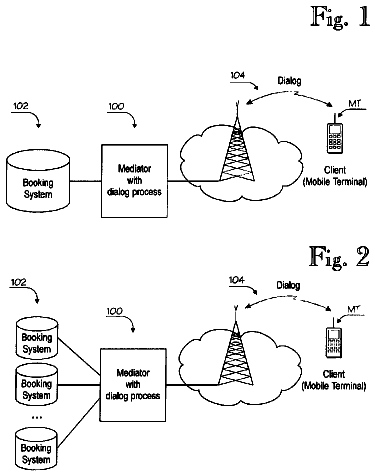
FIG. 1 shows a mediator that mediates services between a service provider and a representative mobile terminal, wherein the service being provided is a booking service;
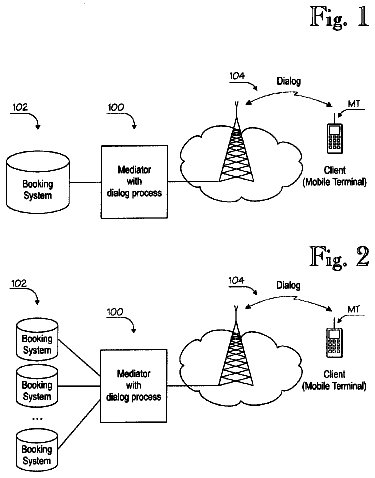
FIG. 2 shows a version of the mediator that is capable of serving multiple service providers;
FIG. 3 represents a more detailed view of the system shown in FIG. 2;
FIGS. 4 and 5 are signaling diagrams depicting typical use cases in a system as shown in FIGS. 1 through 3;
FIG. 6 shows an example of a dynamic dialog matrix being applied to a query and reply;
FIG. 7 shows detailed phases of the booking process which is an example of a service offered by a service provider;
FIG. 8 shows an illustrative example of a dynamic dialog matrix;
FIG. 9A is a block diagram of a system configured to authorize payments from mobile terminals;
FIGS. 9B and 9C are signaling diagrams illustrating typical uses cases in the system shown in FIG. 9A; and
FIG. 10 schematically shows an exemplary block diagram for the various information processing and/or mediating servers in the systems de-scribed earlier.
Detailed description of some specific embodiments
This detailed section begins with a description of session management and authentication, with reference to FIGS. 1 through 8. It will be appreciated that the techniques for session management and authentication, as described in connection with FIGS. 1 through 8, are applicable to a wide range of services. For instance, FIGS. 9A through 9C relate to provisioning of services in a system wherein payments are processed by a payment processor that needs to comply with a strict set of certification requirements. FIG. 10 relates to an exemplary hardware description for the various servers and mediators.
The techniques disclosed herein can be used to provide a wide range of financial services and transactions, including but not limited to: booking of a primary service; booking of a related service that relates to the primary service; executing payment for the primary and/or related services. An illustrative but non-exhaustive list of services includes transportation, accommodation, nutrition, entertainment, services relating to health or appearances, consultation or other services. From the point of view of the technical problems to be solved, namely session management, authentication, fraud prevention and/or ease of service provisioning, no distinction needs to be made between services and physical objects. In other words, acquirement (eg purchase, loan, lease) of an object is an example of a service requested by a mobile user and offered by a service provider.
The service providers are those with whom clients want to make appointments, reservations, or other bookings and comprise the resources for the booking system to allocate. Service providers conduct business through service provider booking services. As used in this application, the mediator is a network based service available to the service provider booking services over the network that provides additional semantics, translation and synchronization services needed for communication of the information needed for a client to complete a transaction with a service provider. The service provider booking services and the mediator are preferably applications operating on network servers such as the Internet or a private intranet. In general, a system will comprise a plurality of service providers and service provider booking systems (implementing service provider booking services), but it is possible to have a simple booking system for only one service provider in which case the mediator and service provider could be tightly integrated into a single application.
Clients preferably include clients communicating on mobile telephones capable of receiving short text messages, such as Short Message Service (SMS) messages.
Of course, a system that is capable of handling SMS messages will also handle other clients with greater capabilities. In some implementations the mediator may communicate with mobile telephone clients through an SMS gateway. As is well known, SMS gateways are operated by mobile network operators. The mediator communicates with clients using dialogs. In some implementations, the dialogs are short messages which present information to the client and allow a simple reply. The dialogs preferably provide users with simple choices, such as a selection between "yes" and "no", or a simple selection from an ordered list. Dialogs can also be one way, such as an acknowledgment to a reservation. A transaction may typically involve a sequence of dialogs each involving a simple response. Dialogs involve asynchronous communication by messages. The system as described makes it possible to coordinate bookings among different service provider systems in order to fill a clients need, for example coordination of an airline booking with transportation to the airport.
FIG. 1 is a diagram of a simple system, wherein reference numeral 100 denotes a mediator, reference numeral 102 denotes a service provider's booking system, which is in communication connection with the mediator 100 over a data network, such as the internet. Reference numeral 104 denotes a user terminal having a dialog with the mediator 100 over a mobile network. FIG. 2 shows a plurality of service provider booking systems communicating with a mediator over a network. FIG. 3 shows a mediator 100 communicating with various service provider systems and users with telephone devices communicating dialogs.
A reason-based customer dialog is a desirable improvement from the client's point of view, because service providers can create their own dialogs for with each different kind of booking event. A dialog is closely related to a certain booking situation. A dialog may become activated automatically at the right moment, or the client can activate the dialog as needed, or another entity in the system can send a message to the dialog process of the mediator to activate the dialog. The dialog process then sends an inquiry to another entity in the system or informs the client and possibly inquires client's choices. By means of this kind of dialog, the client can make reservations in several booking systems using only one user interface. The dialog process connects to remote booking systems over an appropriate data network, such as the Internet or mobile networks.
A mediator service can be capable of transmitting booking information between service provider booking systems. For example, after a booking is entered into an airline booking system, a taxi booking system can offer the client a lift to the airport. In this application, a booking is an allocation of a single resource (either the airline booking or the taxi in the previous example), while a reservation is the union of the bookings for all of the resources for the same event (the airline booking plus the taxi booking in the previous example). The dialog between the client, the mediator and the booking systems as well as stored customer profiles ensure that the client gets the reason-based service he or she needs, not intrusive advertising.
A client can make reservations as well as confirm, change, and cancel them using many kinds of communication means, including but not limited to the Internet, email, and mobile terminals. The client can also synchronize a calendar provided by the mediator or a service provider with a calendar in a terminal device using mediator's synchronization functions.
A service provider can remind clients to make reservations on a regular basis and thus increase customer loyalty. A mediator can help service providers to bring their booking systems together to provide more comprehensive services without extending their businesses unnecessarily. Because of internationalization, the mediator is able to support for example many languages, time zones, currencies, and data formats.
The system, including at least a mediator, a dialog process, a service provider, and a service provider booking system, can be on one of the following levels: 1. There is a predetermined set of dialogs in the system. Their content and the possible choices are set in advance. For example, if a client books a flight, a dialog always offers certain other bookings. Client's prior actions are not taken into consideration. 2. There is an unlimited number of dynamic or "intelligent" dialogs that are based on, for instance, a profile that a client has created himself or herself, usage history records, and client's location. Simple logic supports decisions. It is a low-level expert system. 3. The system is able to make decisions by itself and to support client's decision making. On this level, a dialog process may include a high-level expert system. It can act as an agent and negotiate with several service providers to get the best offer without client's direct involvement.
In one exemplary use case, a client books a service from a service provider. The booking may be carried out using a terminal that is connected to the mediator service. First, the client connects to the mediator service using a dialog. The client inputs a reservation inquiry to the dialog process that sends the inquiry to the mediator. The mediator inquires possible reservations from the service provider's information system using concepts and terminology that those services are able to interpret. The inquiry is based on client's preferences. The client discloses some preferences that are related to the specific booking when they enter the reservation inquiry to the dialog. In addition, the dialog process and the mediator service may have stored a client's general preferences and use them so that the client do not need to input all the preferences each time.
In some implementations, management of the inquiry and booking processes may be based on sophisticated state models. Each booking process involves several phases that are described by states that track its status through its life cycle. For example, when the mediator has inquired about a reservation from a service provider, the corresponding entry in each system has a state that the booking is pending but not confirmed. If the systems do not have common understanding what a certain state means, the mediator translates them. A preferred booking process including the phases and states is described in Example 1.
In addition to inquiring reservations from the service provider, the mediator is able to synchronize bookings in several service providers' systems. The synchronization is based on rules specified in the mediator service. For example, a rule can be that "if a client inquires booking for an airline ticket, inquire also bookings for taxis to the airport." Therefore, an inquiry from the client may be multiplied in the mediator service resulting a number of inquiries. The service providers answer to the mediator if they are able to provide requested service and they may add some additional information, like on seats or timing. The mediator combines gathered information and sends it to the dialog process that shows a simple list of options to the client. For example, the dialog process may show three options for a flight and ask if the client also wants to reserve a taxi that is actually already tentatively booked by the mediator. The client makes his or her decision by choosing the options from the simple list of alternatives. The dialog process sends information on the client's choice to the mediator that confirms the bookings in accordance with client's choices and cancels the unnecessary reservations.
FIG. 4 shows a sequence diagram of an inquiry CINQ1 originated by a client using a dialog DINQ1 sent to the mediator. The mediator initiates the inquiry MINQ1 which corresponds to CINQ1 and DINQ1 to booking system 1 a service provider booking system. Ultimately an answer DANS1 gets back to the client offering a choice which is responded to with a selection CSEL1 resulting in a booking by the client on booking system 1. The mediator recognizes the potential need for a complementary service from booking service 2 and initiates an inquiry, MINQ2, to booking system 2, which ultimately results in a proposal including several choices, DANS2, returned to the client from which a selection, CSEL2, is made, resulting in a complementary booking on booking system 2.
The bookings can be done in other means as well, for instance, by calling the service provider with a telephone or by visiting on site the service provider's office. In that case the service provider may inform the mediator about client's bookings so that the mediator can inform the client on other options. For example, a dentist could tell the mediator that the client has booked an appointment so that the mediator may offer to book a taxi also.
Also, it is possible to add a reminder to the mediator service so that the mediafor asks at certain time if the client wants to make a new booking. For instance, the mediator can send a notice to the client that it has been a year since the client last had an appointment with his or her dentist and ask if the client wants to make a new appointment. This notice can already include a few options for the appointment. The mediator has checked the client's calendar if he or she has allowed that so that the given options are convenient for the client. The dialog shows the options in a simple and handy way.
The client needs only to choose which option is the best for him or her or whether he or she wants to get new options or postpone the booking. FIG. 5 is a time sequence chart for a situation where the original inquiry, MINQ1, was initiated by the mediator.
Example 1
An Exemplary Booking System
Referring now to FIG. 3, an exemplary environment in which the invention can be utilized for management of bookings will be described below. In the implementation currently described, the mediator 100 is designed to interface with various service-specific systems generally denoted by reference numeral 122. These systems may be used to provide the services (including physical goods) described earlier. In a typical implementation, the mediator 100 interfaces to the service-specific systems 122 over a data network such as the Internet. The mediator 100 further interfaces to client terminals, such as mobile terminals capable of receiving text messages, over a mobile network. On a logical level, interfacing of the mediator 100 to the various service-specific systems 122 and other parties may be accomplished by means of generic XML definitions. For the exemplary case of managing of booking reservations, the mediator 100 may support vCard and vCalendar standards, since they are used by many major booking and calendar systems.
In the presently-described implementation, the mediator 100 communicates with the mobile terminals and their users using Short Message Service (SMS) via an SMS Gateway for asynchronous communication. The mediator 100 may comprise a customer dialog process 124 configured to use Dynamic Dialog Matrix (DDM) technique, which may be used to facilitate authentication and/or session management, as will be described in more detail in connection with FIGS. 4 through 8.
A clear distinction needs to be made between the booking processes of the ultimate service providers and those of the mediator. The booking processes of the ultimate service providers only cover normal booking with regard to time and resource reservation. The booking processes of the mediator comprise booking, work, and financing. Both processes lead to the same point. In a typical implementation, the process of the mediator comprises seven phases as follows:
Phases (Status Handling)
The phases set up a coupling (analogous with a bond or rubber band) between the resources. In each phase of the mediator process, data related to the booking will be amended to reflect the needs of the phase in question. For the statuses and values please see the underneath table. The phases are described in more detail in the following discussion.
1. Filing
Filing means initialization of a mediator process and a booking process. As a result of the initialization an entry is inserted in the database with basic information. It will not appear in a calendar since there is no scheduling information. It can be displayed in a separate task list of the owner as an open task.
2. Requesting
In the Requesting phase a booking request is sent to the resources required for the previously filed task. Since there is no scheduling, which in most cases will be essential, this phase may be executed together with the Scheduling phase.
3. Scheduling
Schedule is given to the owner and the resources. As a part and a result of the Scheduling the following data is needed:
a) suggested start-time (ISO time-stamp w/time zone)
b) suggested start-location (coordinates)
c) suggested end-time (ISO time-stamp w/time zone)
d) suggested end-location (coordinates)
4. Confirming
Time and location as it is accepted by the resources that have accepted. Data related to this phase:
a) accepted start-time (ISO time-stamp w/time zone)
b) accepted start-location (coordinates)
c) accepted end-time (ISO time-stamp w/time zone)
d) accepted end-location (coordinates)
By default the data is copied from the Requesting and/or Scheduling phases. In practice, if planned time is not needed, the same data structures can be used for this and status indicates the actual meaning of the data.
5. Working
The resources perform the booked task. Data related to this phase consists of different attributes and their values, which are related to the actual task. In addition, following static structures are needed:
a) actual start-time (ISO time-stamp w/time zone)
b) actual start-location (coordinates)
c) actual end-time (ISO time-stamp w/time zone)
d) actual end-location (coordinates)
e) products used, extras, mileage,
By default the data is copied from the Confirming phase.
6. Accounting
At this point all data stored in the data structures on previous phases is analyzed and processed for invoicing purposes. Data related to this phase: Accounting data. To be defined separately.
7. Completing
The task has been completed. As regards the mediator processes, it is irrelevant whether the task succeeds or not. Success or failure of the task is relevant to the Accounting phase, in which the financial actions to the organizer are handled. In this phase, housekeeping (database contents; temporary files, etc.) is performed in order to complete the mediator process. The following table shows data available in each phase. Booking phase is with "XX".
TABLE-US-00001 Filing X XX Requesting X X XX Scheduling X X X XX Confirming X X X X XX Working X X X X X XX Accounting X X X X X X Completing X X X X X X X Phase/Data Identifying Resources Suggested Accepted Task's Accounting Clos- ing time time work related
Phases, Statuses, Values, and Transitions
The following table describes the phases, their statuses, and values along with transition to next logical phase based on the values gotten. In addition, corresponding vCalendar statuses are shown when applicable.
TABLE-US-00002 Phase Status Next Phase vEvent vTodo Filing Requesting Requesting Scheduling Sent Sent Scheduling Pending Confirming Needs Needs Action Action Scheduling Scheduled Confirming Needs Needs Action Action Scheduling Re-scheduled Confirming Needs Needs Action Action Confirming Accepted Working Confirmed Accepted Confirming Declined Accounting Declined Declined Confirming Tentative Accounting Tentative Confirming Delegated Requesting Delegated Delegated Confirming Re-scheduling Accounting or requested Scheduling Confirming InProgress Working Working InProgress Working Working Delayed Working Working Started Working Working n % ready Working Working Ready Accounting Accounting Completing Completing <Copied from n/a phase before Accounting>
Internal phases Paused, Re-started, and Canceled act as follows for all relevant phases at any point:
TABLE-US-00003 <Phase y> Paused <Status x> <Phase y> Re-started <Status x> <Phase y> Cancelled Accounting
FIG. 7 shows the work flow transitions from phase to phase. For conditions, see the table above. Also, please note that Canceled Status always leads to accounting.
Confirming the (Whole) Reservation
In order for the whole Reservation to be successful, all resources, which accepted the reservation, need to have the same scheduling. In addition, there will resources in different roles and data related to the working phase may vary greatly. The different statuses of the whole reservation are: a) "NoReplies"
for "No-one hasn't replied to the request made by the organizer" b) "NoDeclines"
for "Not all invitees have replied yet. The ones who have replied have accepted" c) "AllAccepts"
for "all invitees have confirmed" d) "SomeDeclines"
for "Some of the invitees have declined" e) "AllDeclines"
for "All of the invitees have declined".
The following decision table helps in evaluating the status of the whole booking. "Maybe" means that this condition only does not incontestably specify true or false result.
The description continues in the full USPTO document.
 Lapsed, fee not paid9 drawings